

AframNews.com
& Historical Realities Affecting Our Community”



Rev. C. Anderson Davis

JUNETEENTH GODFATHER
By: Roy Douglas Malonson
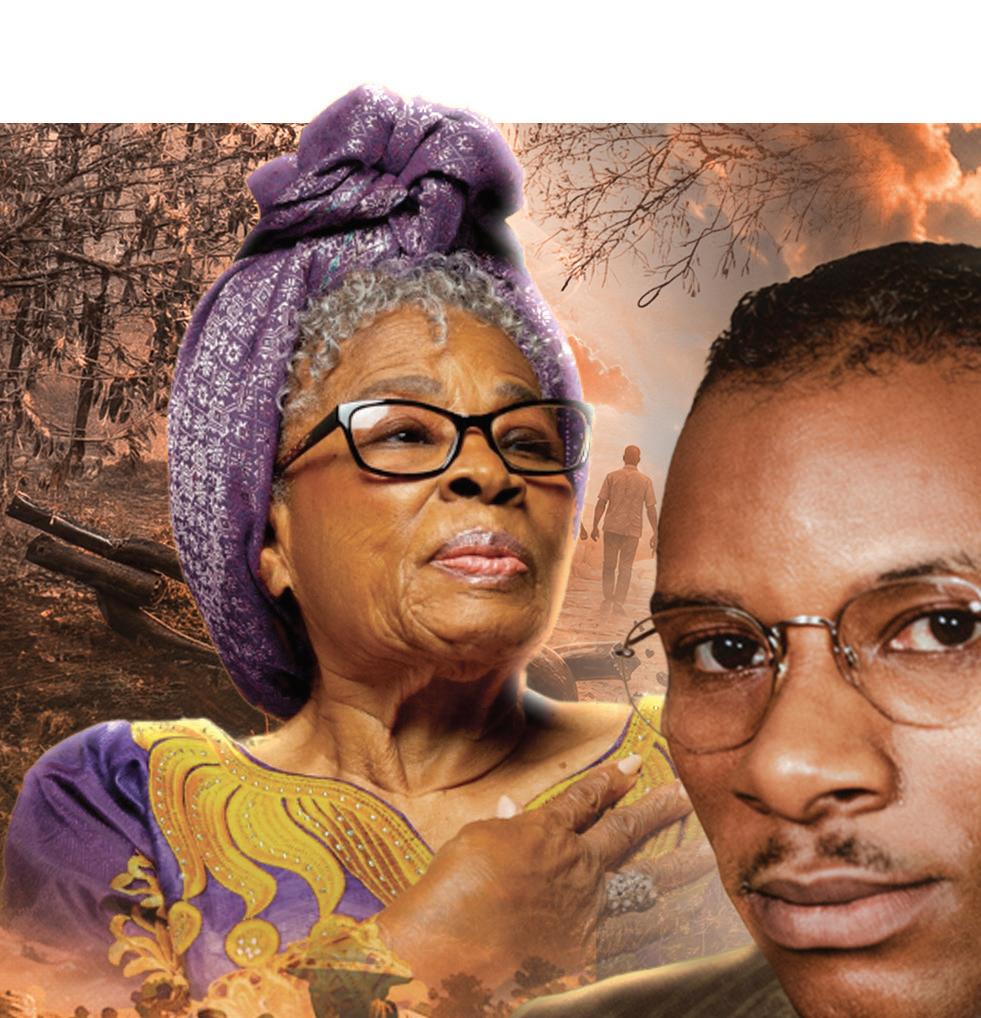
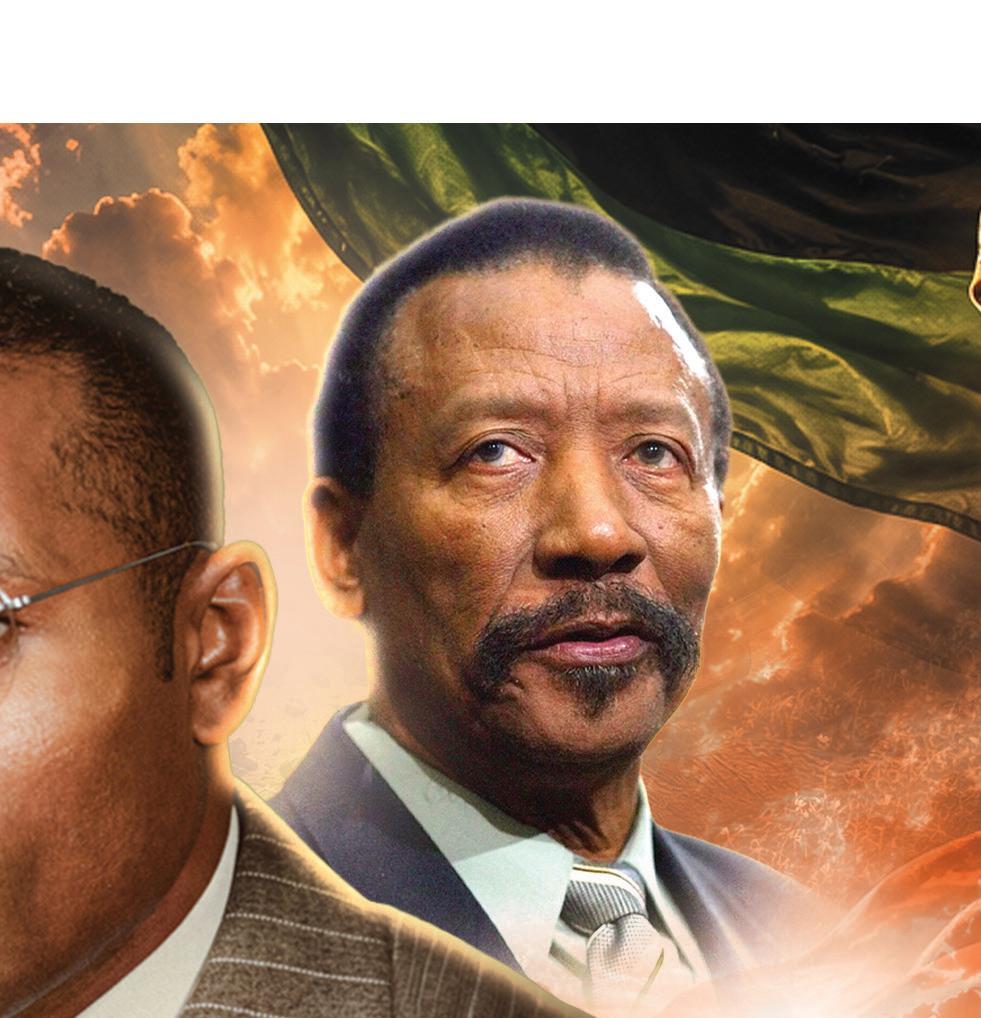
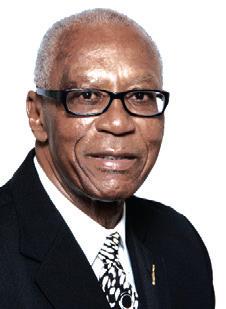
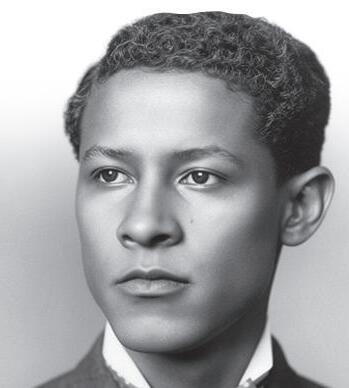
The Reverend C. Anderson Davis was a leader who saved one of America’s most important holidays from being forgotten. Today, people all over the United States celebrate Juneteenth on June 19th. They have parades, play music, and eat delicious food to remember the day in 1865 when enslaved people in Texas finally found out they were free. But holidays do not just stay alive on their own. In the 1970s, Juneteenth was almost completely forgotten by the public. Reverend Davis was the man who stepped up, brought the holiday back to life, and built the foundation for it to become a national celebration.
To understand why Reverend Davis is so important, you have to look at what was happening to Juneteenth y years ago. By the late 1960s, many people had stopped celebrating it. Schools did not teach students about what happened in Galveston, Texas, in 1865. Cities did not plan big events for it, and younger generations did not really know much about the day. It looked like Juneteenth might disappear forever.
Reverend Davis refused to let that happen. He was a minister and a civil rights leader who moved to Houston, Texas, in 1969 to work for the NAACP, which is Godfather on pg. 3

DEACON


By: Family
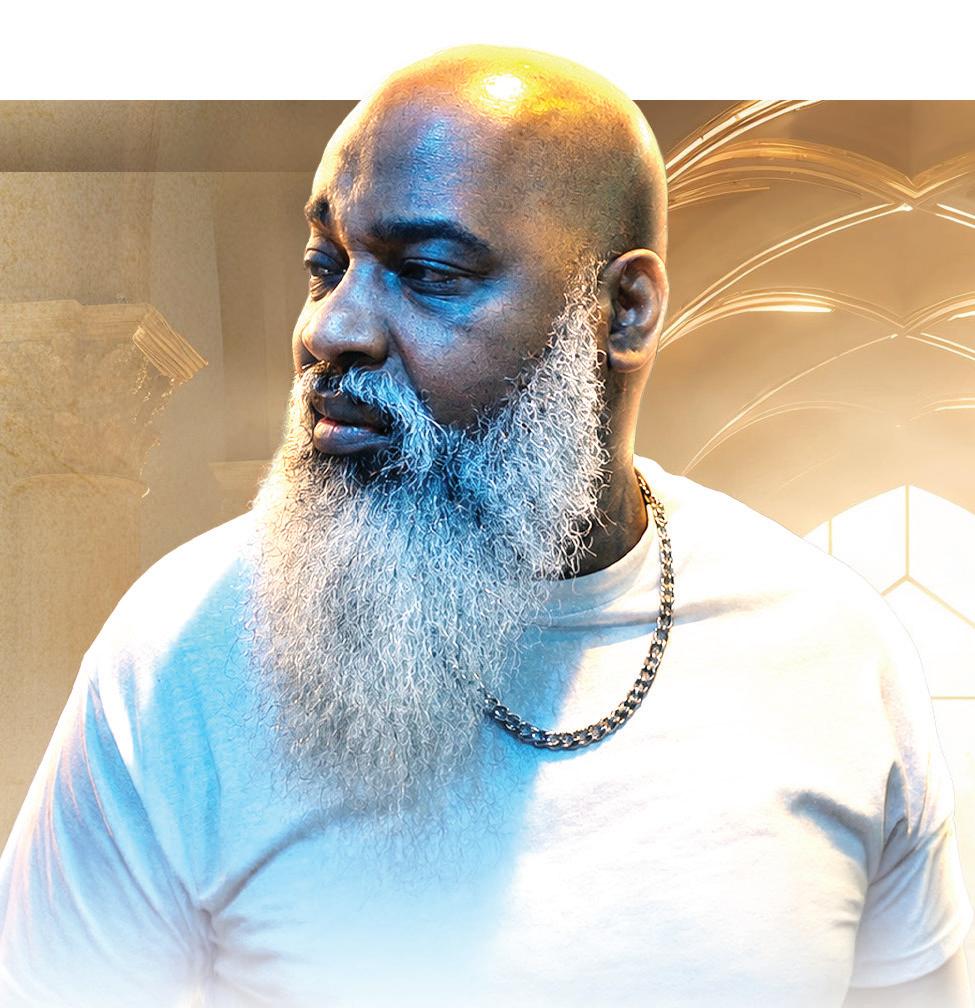
Deacon Derrick Dwaine Peavy, Sr. was born on Wednesday, December 30, 1970, in Houston, Texas, to the proud and loving parents, Gerald and Josey Peavy. He attended schools in the Houston Independent School District and completed his education at Booker T. Washington Senior High School. Following graduation, he continued his studies at Trinity Valley College in Athens, Texas, where he attended for one year.
At a young age, Derrick gave his life to Christ and became a devoted member of Mt. Olive Baptist Church, where he was baptized by his grandfather, Pastor Floyd Henderson. He remained active in the youth ministry until his father became pastor of First Baptist Church. ere, Derrick faithfully served as an ordained deacon and dedicated servant of the Lord. His faith remained steadfast throughout his life, and he trusted God in all things.
Derrick was a rambunctious and loving big brother who was raised in a happy and adventurous household alongside his older sister, Shondra, and his two younger brothers, Gerald Peavy II and Floyd Peavy. He treasured his family relationships and carried that love for family throughout his life.


As he matured into adulthood, Derrick became a hardworking and responsible man. He was employed by Madden Bolt for more than 20 years, where he served as a supervisor and earned the respect of his colleagues through his dedication, leadership, and strong work ethic. Beyond his career, Derrick had an entrepreneurial spirit. Together, he and his devoted ancée, Jessica Ganious, founded and co-owned Peavy Stud Mu ns & Cupcakes. rough their business, they shared not only delicious treats but also their passion, creativity, and commitment to
Opal Lee
A Revival of God Consciousness
Bobby Mills, Ph.D.
THE CHOICE








Life is shaped by moral choices, and every choice has consequences, whether good or bad. In the author’s view, seventy-seven million Americans made an unwise choice in the 2024 presidential election, and the consequences are becoming increasingly clear. e author argues that voters faced a choice between the so-called radical le and an extreme right, yet too many relied on political rhetoric rather than carefully examining the actions of GOP leaders. As a result, the author believes America is in spiritual and moral decline. e nation’s moral standing in international a airs and its global leadership, the author contends, have also suffered greatly. In the author’s view, this crisis stems from so-called Red States (racist states), especially in the South, which are described as still clinging to racism and white privilege, and still ghting the Civil War. e author further argues that institutional racism has never been fully defeated. e author also contends that President Trump redirected the GOP toward identity politics and turned the Justice Department into his personal law rm. In the same view, the IRS has become a means of rewarding the January 6, 2021, insurrectionists. Despite claiming loyalty to the nation, the author argues that the GOP has instead focused on enrich-
EDITORIAL
ing Trump and advancing his personal revenge campaign and socio-economic interests. erefore, for working class individuals “no tax on tips” temporarily for you and yours, but no taxes on me and mine, forever/until I die”. President Trump has successfully transformed e White House into a subsidiary of Trump’s Family Enterprises. e author further claims that President Donald J. Trump is building self-glorifying monuments to preserve his presidential physical legacy. For these reasons alone, the author sees America as continuing in spiritual and moral free-fall and decline. e author condemns what is described as President Trump’s shameless pursuit of personal wealth, along with nancial rewards for those involved in the January 6th, 2021, attempt to overthrow the government. erefore, in the author’s view, these actions send Americans a blunt message: “I don’t care what you think or feel; take your medicine.”
Roy Douglas Malonson, Publisher
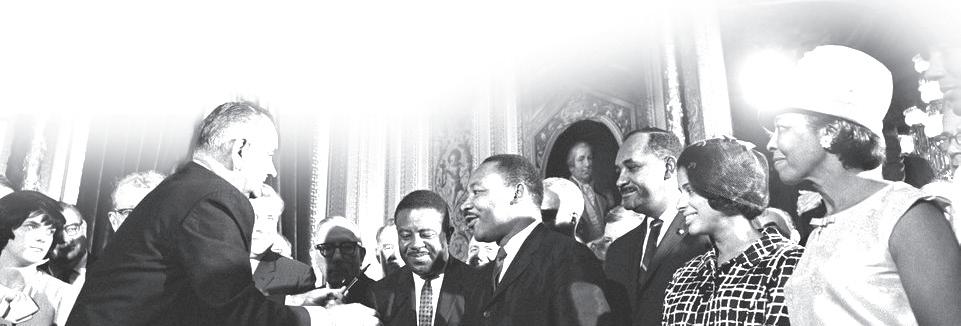
e 1965 Voting Rights Act is one of the most important laws in American history. Signed during the Civil Rights Movement, it was created to make sure that Black Americans could safely exercise their constitutional right to vote, especially in places where they had faced unfair obstacles for decades. For a long time, this law worked like a shield, protecting voters and helping minority communities elect leaders who truly represented them. However, in recent years, the Supreme Court of the United States (SCOTUS) made major decisions that weakened, or “gutted,” this historic law. e biggest change happened in 2013 with a case called Shelby County v. Holder. e Supreme Court got rid of a key rule that forced states with a history of discrimination to get approval from the federal government before changing their voting laws. e Court argued that the country had changed and these protections were no longer needed. But almost immediately a er the ruling, several states passed new, stricter voting laws that made it harder for people to vote.
Another big shi involves “dismantling” Black congressional districts. Congressional districts are areas drawn on a map that determine who represents a community in government. To give minority voters a fair voice, mapmakers sometimes create “majorityminority” districts, where Black voters make up the largest group. is ensures they can elect a leader who understands their speci c needs. Recently, some state lawmakers have redrawn these maps to break up these districts. By splitting Black communities across several di erent areas, their voting power is watered down. is makes it much harder for Black voters to elect their preferred candidates. When the Supreme Court allows these redrawn maps to stand, it essentially reduces Black representation in Congress.
ese decisions have sparked a massive debate across the nation. Critics argue that rolling back the Voting Rights Act and taking apart these voting districts undoes the hardfought progress of the Civil Rights Movement, making it harder for government to look like the diverse country it represents.
Defenders of the rulings believe states should have more freedom to run their own elections without Washington, D.C., stepping in. Ultimately, how we draw districts and protect voting rights shapes who gets a seat at the table to make rules for everyone.
rules for everyone.
Sadly, we have too many petty male children in the GOP. Hence, America is witnessing a staggering amount of governmental corruption, because the GOP is primarily a Southern States based political party continuing to litigate the slavery/property rights issues of the past, the Civil War Experience. is is precisely why the GOP can recommend reparations for White Privilege-MAGA seeking insurrectionists, but not for slaves. President Trump’s MAGA ug Fund is an ungodly insult to the intelligence of GOP politicians who control both the House
Godfather Cont.
an organization that ghts for equal rights. He believed that if you do not know where you came from, you cannot know where you are going. He knew that Juneteenth was not just a fun party; it was a deeply important part of American history that needed to be protected.
In 1973, Reverend Davis became the leader of a group called the National Emancipation Association. is group had one big goal: to bring Juneteenth back into the spotlight. Reverend Davis started knocking on doors, talking to community leaders, and organizing people. Just one year later, in 1974, he did something amazing. He organized a giant modern Juneteenth Freedom Festival at a big theater in Houston. He also started a massive Juneteenth parade down the city streets. ousands of people showed up. For many families, it was the rst time in years they had celebrated Juneteenth out in the open. Reverend Davis proved to everyone that the spirit of the holiday was still alive and well. But Reverend Davis did not just want a one-day party. He wanted the government to o cially recognize June 19th as a holiday so it would be respected forever. To do this, he sat down and wrote a formal proclamation. It explained exactly why Juneteenth mattered and why the state of Texas needed to make it an o cial holiday. He used his words like a tool to build a legal argument for freedom.
A few years later, a Texas lawmaker named State Representative Al Edwards wanted to pass a law to make Juneteenth a state holiday. When he wrote the bill to present to the other
lawmakers, he used the exact ideas and almost the exact same words that Reverend Davis had written in his proclamation. Because of Reverend Davis’s hard work, the law passed in 1979, and Texas became the very rst state to make Juneteenth an o cial holiday. Even though Representative Edwards got a lot of the credit on television, it was Reverend Davis who had written the blueprint behind the scenes.
Reverend Davis also understood that true freedom meant more than just having a day o from work or school. He knew that for Black communities to thrive, they needed to be strong nancially. So, through his association, he helped start a special bank called the NEA Credit Union. is bank gave loans to minority-owned businesses and scholarships to students who wanted to go to college but could not a ord it. He wanted to make sure that the freedom celebrated on Juneteenth was real economic freedom that could change people’s lives for the better. Today, we o en hear about other famous heroes when we talk about Juneteenth, like Opal Lee, the amazing woman who walked to Washington, D.C., to help make it a federal holiday in 2021. But we must always remember the leaders who kept the tradition alive when it was unpopular and ignored.
e Reverend C. Anderson Davis is the “Godfather of Juneteenth.” He did the hard, quiet work of rescuing a piece of history from being erased. Every time Americans gather to celebrate freedom on the nineteenth of June, they are enjoying the fruits of the seeds that Reverend Davis planted decades ago. Al Edwards and Opal Lee will continue on the next June 19th edition.
HISTORY
MAJOR GENERAL GORDON GRANGER
By: Fred Smith
Major General Gordon Granger is best remembered for his pivotal role in American history as the Union o cer who announced the end of slavery in Texas. Born on November 6, 1821, in Joy, New York, Granger pursued a military career and graduated from the United States Military Academy at West Point in 1845. He served with distinction during the Mexican-American War and later rose through the ranks during the Civil War, earning a reputation as a capable and determined leader. roughout the Civil War, Granger commanded Union forces in several important
campaigns. He participated in battles in Kentucky, Tennessee, and Mississippi, demonstrating strong leadership under di cult circumstances. His military service helped strengthen the Union war e ort, and he eventually achieved the rank of major general. Granger’s dedication and e ectiveness made him a respected gure among Union commanders. Granger’s most enduring legacy came a er the Civil War had e ectively ended. On June 19, 1865, he arrived in Galveston, Texas, with Union troops to enforce federal authority and ensure compliance with emancipation policies.

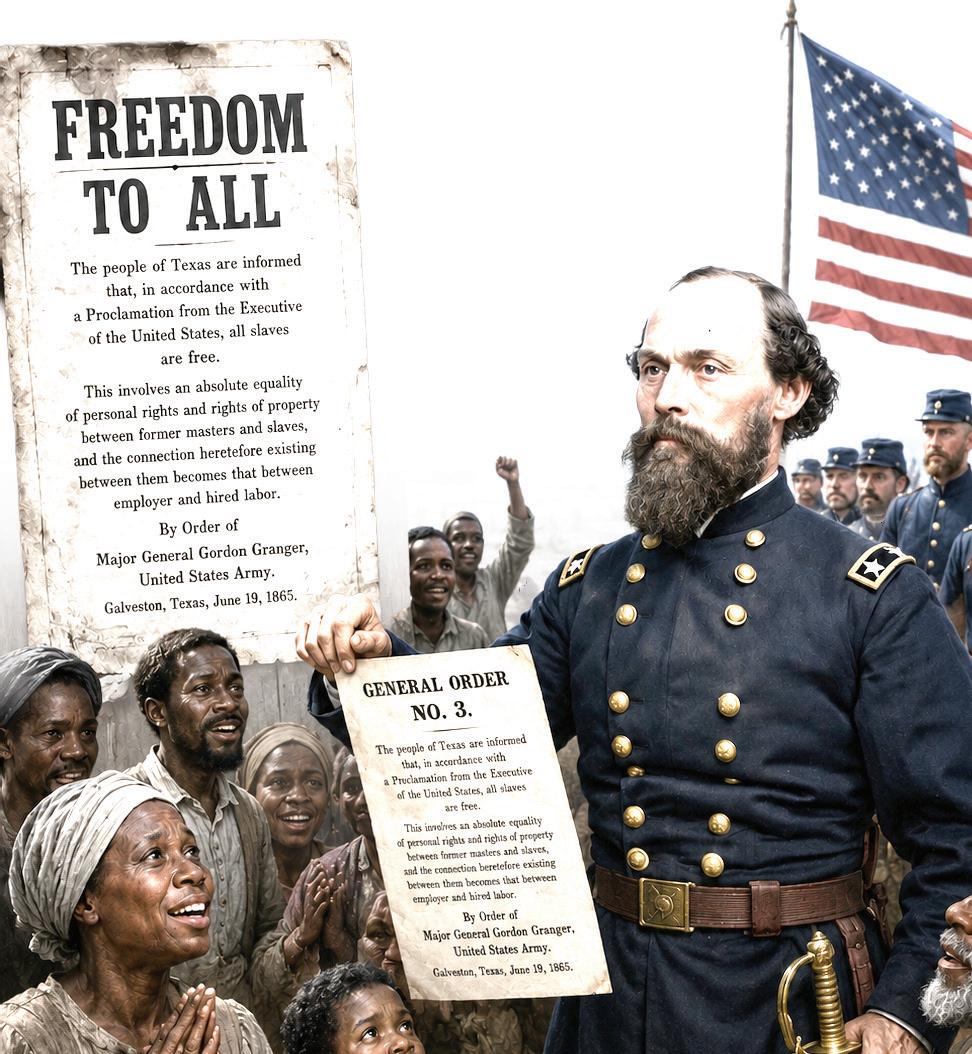
Although President Abraham Lincoln had issued the Emancipation Proclamation more than two years earlier, many enslaved people in Texas had not yet been informed of their freedom or had been prevented from exercising it. Upon arriving in Galveston, Granger issued General Order No. 3, which declared that all enslaved people in Texas were free. e order informed the people of Texas
1760 1772
1777 1789 1773 1781 1770
1760. Jupiter Hammon, an enslaved man from Connecticut, writes an autobiography o en considered to be the rst slave narrative.
1770. Crispus Attucks, who had formerly been enslaved, is killed by British soldiers in the Boston Massacre.
1772. Jean-Baptist-Point Du Sable, a Black pioneer trader, builds a fur-trading post on the Chicago River at Lake Michigan.
1773. Phillis Wheatley, the rst notable Black woman poet in the United States, publishes in England her Poems on Various Subjects, Religious and Moral.

1777. Vermont, not yet part of the United States, becomes the rst colony to abolish slavery in its constitution.
1781. James Armistead (later James Lafayette), an enslaved man, spies on British forces in Virginia for the marquis de Lafayette during the American Revolution.
1789. Olaudah Equiano publishes his two-volume autobiography, e Interesting Narrative of the Life of Olaudah Equiano; or Gustavus Vassa, the African, Written by Himself.
HOUSTON
DALLAS

TEXAS TAKEAWAY


Protests broke out at Houston City Hall after the Houston City Council approved Mayor John Whitmire’s $7.5 billion city budget. Demonstrators gathered outside the council chambers to voice concerns over spending priorities, public services, and funding allocations included in the budget plan. The approval marks one of the largest budgets in the city’s history and highlights ongoing debates over Houston’s fiscal direction.
SAN ANTONIO
High school students in San Antonio’s three largest school districts—Northside ISD, North East ISD, and San Antonio ISD—showed improvement on the 2026 STAAR end-of-course exams, particularly in reading and math. Across the region, Algebra I passing rates increased by more than seven percentage points, while English I scores also posted notable gains. Overall, the 2026 results reflected a positive rebound for San Antonio-area high school students after declines seen in previous years.
BEAUMONT
Plans are advancing for a new tower on Fort Worth’s Panther Island, adding momentum to the area’s ongoing redevelopment efforts. The project is expected to attract new investment and support growth in the emerging waterfront district.
Beaumont city leaders have set a goal of reaching 120,000 residents by 2030 as part of a broader effort to boost economic development and strengthen the local workforce. Officials plan to focus on attracting new businesses, expanding housing opportunities, and improving quality of life to encourage population growth.
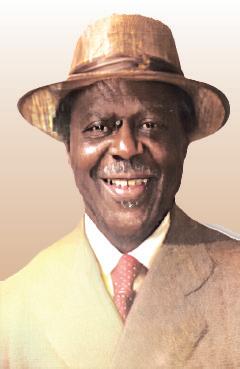
Richard Bowie Spikes was an African American inventor, entrepreneur, and barber who was born on October 2, 1878, in Texas, Throughout his life, he developed numerous inventions that improved transportation and everyday life. Spikes is best known for his innovations in automotive technology, including improvements to automatic gear-shift systems, directional signals, and safety braking systems for trucks and buses. He also invented a beer-tapping device that helped keep beer fresh and became widely used in the brewing industry. His many patents and mechanical innovations made him an important figure in American invention and African American history.
RICHARD BOWIE SPIKES

















































LOCAL
HOUSTON BLCK MARKET JUNETEENTH CULTURAL EXPERIENCE
By: Fred Smith
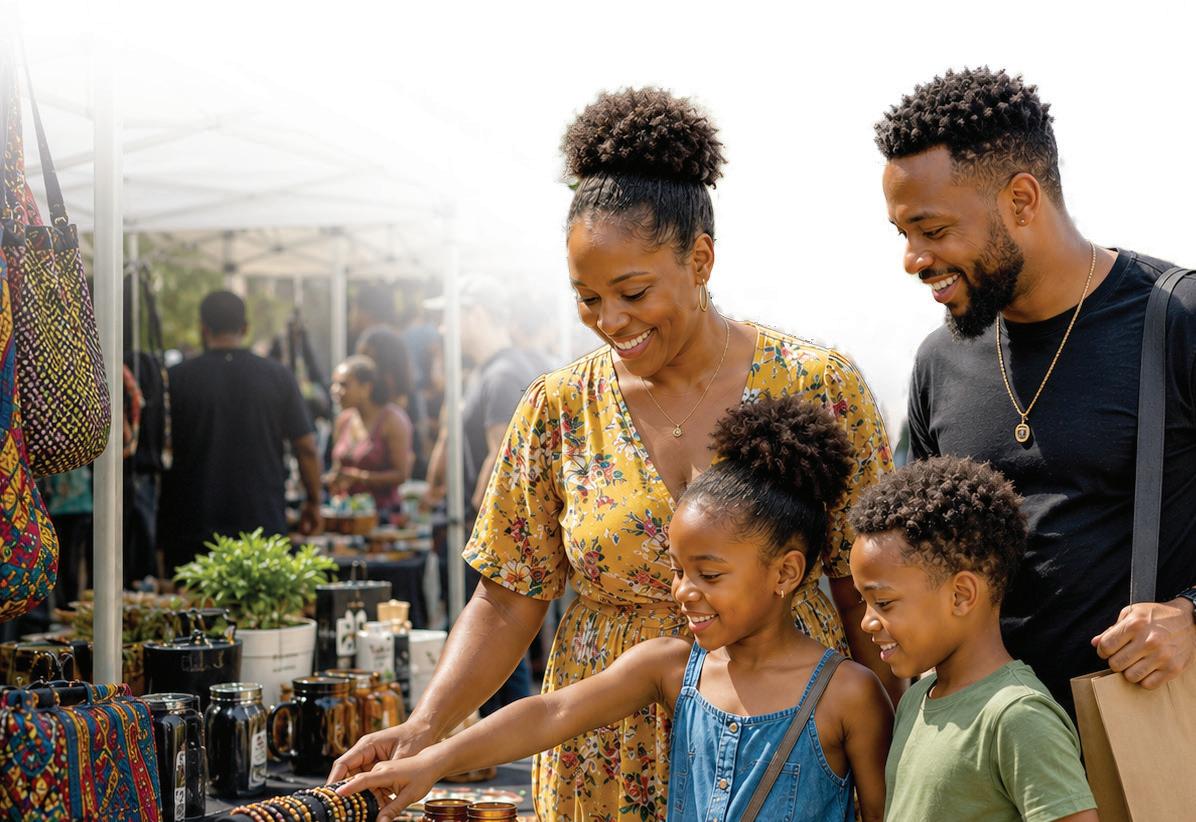
Spending a summer Saturday evening at Houston’s Garden with the BLCK Market o ers a unique opportunity to experience the city’s vibrant culture, creativity, and community spirit. Set against the beautiful backdrop of one of Houston’s premier outdoor destinations, the event brings together local entrepreneurs, artists, musicians, and food vendors for an unforgettable celebration of Black excellence and small business innovation.
e BLCK Market has become a popular platform for showcasing Black-owned businesses throughout the Houston area. Visitors can browse a diverse selection of products, including handmade jewelry, fashion, artwork, home décor, wellness items, and specialty foods.
e market creates an inviting environment
where shoppers can directly support local entrepreneurs while discovering unique products not commonly found in traditional retail settings.
Beyond shopping, the event serves as a gathering place for families, friends, and neighbors to connect and celebrate community. Live entertainment o en lls the air with music, creating a lively atmosphere that encourages guests to relax, dance, and enjoy the evening. e combination of local talent and community engagement helps make each BLCK Market event a memorable experience. Food is another major attraction at the market, with vendors o ering a variety of delicious options that re ect Houston’s diverse
culinary landscape. From savory meals to sweet treats, visitors can sample avors inspired by Southern traditions, international cuisines, and modern food trends. e food o erings add to the festive atmosphere and provide something for every taste.

e Garden setting enhances the experience by providing scenic pathways, lush greenery, and open spaces where guests can unwind while exploring the event. As the sun begins to set and the evening temperatures become more comfortable, the venue transforms into a picturesque destination for a leisurely summer outing. e natural surroundings create an ideal backdrop for photos, conversations, and community gatherings. ongoing commitment to strengthening neighborhoods and fostering opportunities that bring residents together. Beyond the artistic activities, attendees had the opportunity to learn more about community resources, local initiatives, and the value of preserving cultural heritage. e event served as a colorful reminder that art can inspire unity, celebrate identity, and create meaningful experiences that resonate long a er the nal page is lled.

CELEBRATING BLACK HISTORY
By: Fred Smith
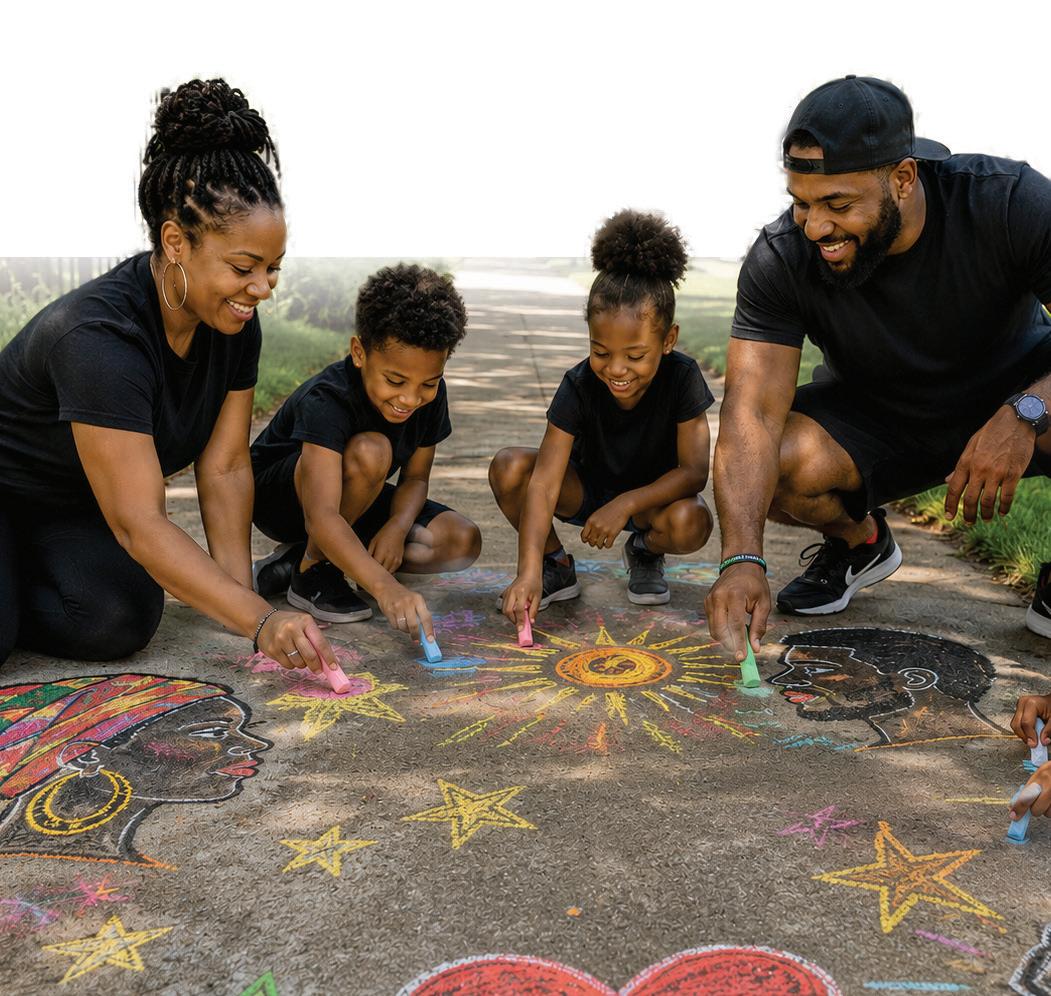
Coloring For the Culture Giant Coloring Book Event, powered by Houston Community Land Trust, brought together families, artists, and community members for a day of creativity, culture, and connection. e unique event celebrated African American history, heritage, and artistic expression through oversized coloring activities designed to engage participants of all ages. Attendees enjoyed an interactive experience that transformed coloring into a communal art project while highlighting stories and themes important to the community.
roughout the event, children and adults worked side by side to add vibrant colors to large-scale illustrations featuring cultural icons, neighborhood landmarks, and upli ing messages. Organizers emphasized the importance of creative activities that encourage learning, self-expression, and community pride.
e giant coloring book format created a welcoming environment where participants could collaborate, share conversations, and build new relationships while contributing to a collective work of art.
Houston Community Land Trust’s support of the event re ects its
CELEBRATES
with a collective commitment to empower, inspire and build a better future for all.