AframNews.com




NEW GUARD IN TEXAS POLITICS
By: Roy Douglas Malonson
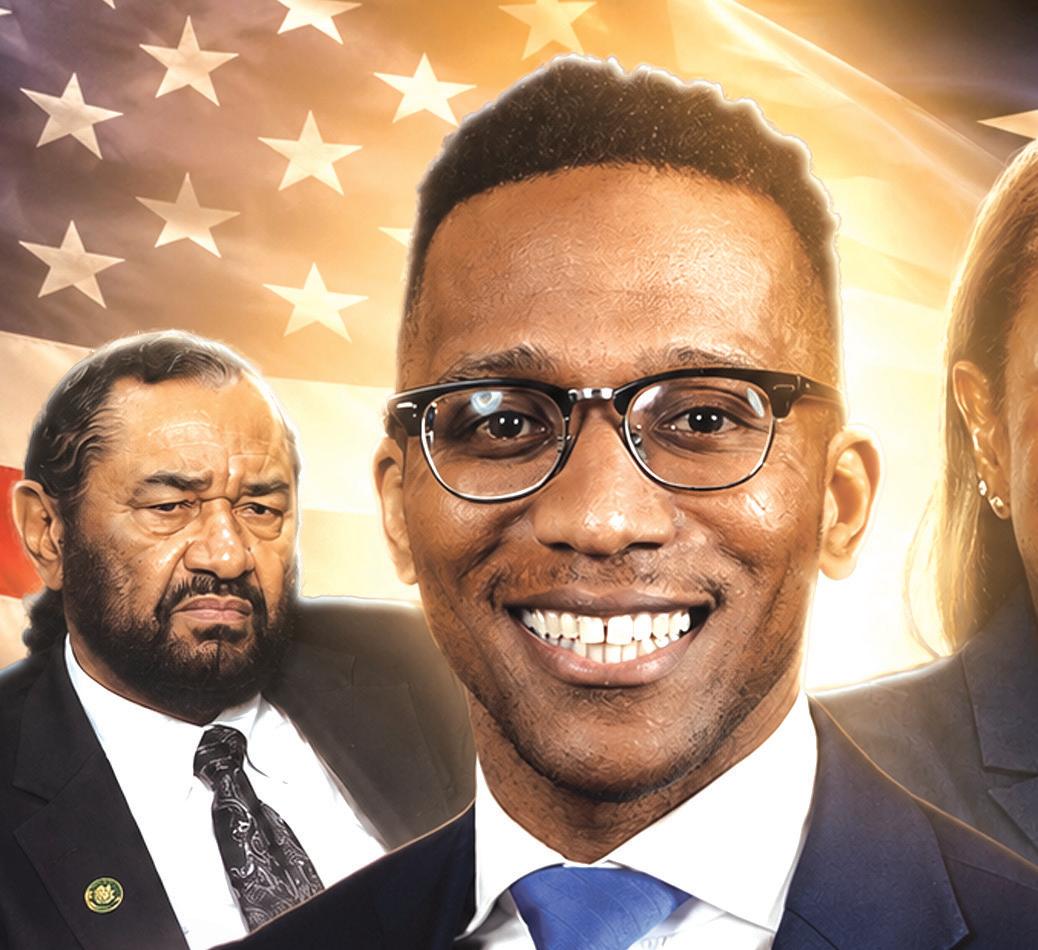
Elections are essentially a massive tug-of-war, with competing factions ghting to pull their city’s future in their preferred direction. Recently, voters in Houston and Harris County, Texas, witnessed two monumental political battles during the primary runo elections—special rematches triggered because no single candidate secured a majority in the rst round. e high-stakes matchups featured veteran Congressman Al Green facing a much younger challenger, and former Houston Mayor Annise Parker squaring o against progressive underdog Letitia Plummer. ough separate races for vastly di erent tiers of government, both contests ultimate-
ly delivered the exact same message: Houston voters are ready for a new generation of leadership. For more than two decades, Al Green stood as one of Houston’s most prominent and in uential voices in Washington, D.C., widely recognized for his staunch advocacy and commanding oratory. However, a major structural shi altered the political landscape ahead of the election. Following the redistricting process, mapmakers redrew voting boundaries and pushed Congressman Green’s residence into the 18th Congressional District—a seat already held by a fellow Democratic incumbent, Christian Politics on pg. 3
By: Fred Smith
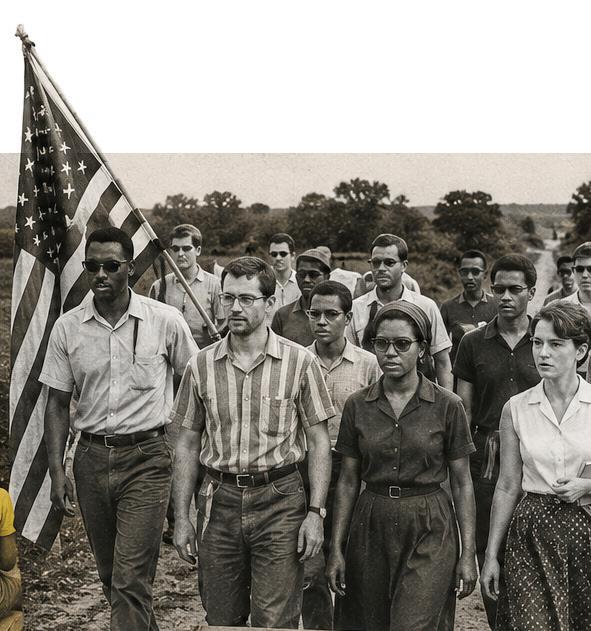
Freedom Summer, also known as the Mississippi Summer Project, began in June 1964 as one of the most signi cant civil rights campaigns in American history. Organized by major civil rights groups including the Student Nonviolent Coordinating Committee (SNCC), the Congress of Racial Equality (CORE) and the NAACP, the movement focused on increasing African American voter registration in Mississippi, one of the most segregated states in the South at the time. Despite African Americans making up a large portion of the state’s population, discriminatory laws, intimidation and violence prevented many Black citizens from voting.
Hundreds of college students and civil rights volunteers traveled from across the country to Mississippi during the summer of 1964 to help register African American voters, teach in Freedom Schools and support local Black communities ghting for equal rights. Volunteers went door-to-door encouraging people to register while also educating communities about constitutional rights and civic participation. Freedom Schools were established to teach African American children subjects o en ignored in segregated schools, including Black history, leadership and political awareness.
e campaign faced intense resistance from segregationists and white supremacist groups. Many volunteers and local activists were threatened, beaten, arrested and attacked during the movement. One of the most tragic moments of Freedom Summer came when civil rights workers James Chaney, Andrew Goodman and Michael Schwerner were kidnapped and murdered near Philadelphia, Mis-


Al Green • Christian Menefee • letitia plummer • Annise Parker
EDITORIAL
A Revival of God Consciousness
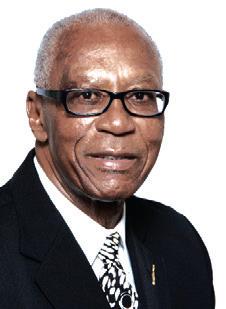
Bobby Mills, Ph.D.




VOTERS’ REMORSE




President Trump realizes that he made a horrible ungodly miscalculation initiating a war with Iran. Now, far too many of his MAGA-Cult supporters are abandoning ship, declaring I did not vote for this! Of course, only God knows what they thought they were voting for! To be sure, President Trump cannot blame “sleepy” Joe Biden or the Democrats for his misguided decision making. Sadly, Trump has no o ramp for face-saving purposes, because he created a never-ending WAR with Iran. America, Iran will never forgive nor forget. To add fuel to the re, President Trump’s governing cabinet serve him, as he serves himself, not the America people. What an ungodly shame! Actions have consequences: good or bad. Trump’s Iran War has had a direct impact on the price of gas, as well as other goods and services, especially ight fares. Recently, Tucker Carlson, a former popular FOX talk show host, and now popular conservative Podcaster said: “I’m sorry for supporting President Trump”. Voter’s remorse. Sorry is a sorry word. It’s too late now! Spiritual forethought is always better than regretful hindsight. is is why the Bible tells us to always “count the costs”. Even President Trump desires to look like what he perceives Jesus to look like, but he never attends church
with his family. Additionally, the sole occasion on which President Trump was observed at a church, he was positioned in the doorway holding a Bible with its cover inverted, potentially indicating disarray. Even Vice President J.D. Vance had the unmitigated Gaul to attempt to lecture the Pope on spiritual interpretations of the Gospel of Good News of Jesus Christ. America, let’s pray and hope that Vice President Vance’s politics is anchored in the TRUTH, not MAGATrumpism ungodly politics. Likewise, let’s pray that President Trump’s governing policies re ect American democratic exceptionalism, not self-serving MAGA-Cult Trumpism. erefore, to be sure, the spiritual redemption of the soul of a nation is very costly.
e Trump Administration has created an unholy intersection and devilish alignment of Power, Money, and Racism in American society to the detriment of multi-cultural democracy. America, empirically there is absolutely nothing exceptional about White Privilege Autocracy. In fact, the notion of racial superiority is the devil’s lie from the pit of hell, because: “God that made the world and all things therein, seeing that he is Lord of heaven and earth, dwelleth not in temples made with hands, as though he needeth anything, seeing he giveth to all life, and breath, and all things, and hath made of one blood all nations of men to dwell on all the face of the earth, and hath determined the times before appointed, and the bounds of their
Remorse on pg. 5
VOTING RIGHTS
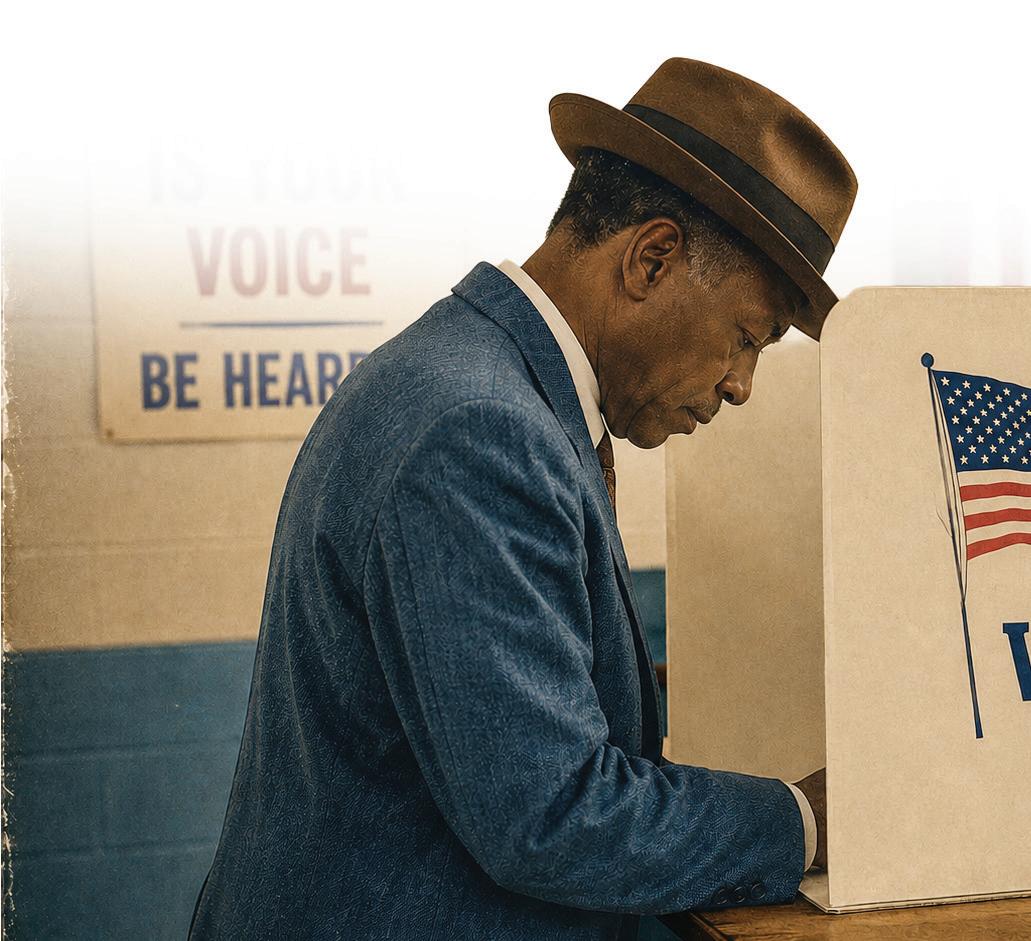
e story of voting rights in America is a long journey. It is about who gets to have a voice in how our country is run. Today, it might seem natural that every adult citizen can vote, but it did not start out that way. e battle over who can vote has been going on for over 250 years, and it is still happening right now. e Early Days: Only a Few Voices
When the United States became a country in 1776, the founders wrote about freedom, but they did not give everyone the right to vote. In fact, voting was mostly limited to white men over the age of 21 who owned property or paid certain taxes. If you were a woman, an enslaved person, a Native American, or a white man without property, you were completely locked out of elections. During this time, only about 6% of the population could vote. Over the next
few decades, states slowly dropped the property rules, which allowed poorer white men to vote. However, the system still excluded millions of other people living in America.
e Reconstruction Era and Shattered Promises
A er the Civil War ended in 1865, the country tried to rebuild. is time was called the Reconstruction Era. e government passed major updates to the Constitution, called Amendments, to help newly freed Black Americans. e 14th Amendment (1868): is gave citizenship to Black Americans. e 15th Amendment (1870): is stated that the right to vote could not be denied based on race or color. For a short time, this worked. Many Black men voted, and some were even elected to high government o ces. But this progress did not last.
Local governments, especially in Southern states, created unfair rules to stop Black citizens from voting without ever mentioning race out loud. ey used poll taxes, which were fees people had to pay just to vote. Since many Black families were extremely poor, they


Menefee. Consequently, two powerful gures from the same party were forced into a head-to-head collision for a single seat.
e resulting campaign became a classic confrontation between established experience and youthful energy. e 78-year-old Green leaned heavily on his decades of legislative service, while the 38-year-old Menefee positioned himself as a forward-looking leader ready to bring a fresh perspective to the nation’s capital. Age, however, was not the only fault line; outside money heavily in uenced the race. A massive cryptocurrency political action committee poured millions into advertising blitzes targeting Green over his past votes against digital currency legislation. Ultimately, the combination of youth and aggressive outside spending carried the day. Menefee defeated Green by a commanding margin, proving that even the most deeply entrenched political veterans can be vulnerable when an electorate decides it is time to move forward.
While the congressional race dominated headlines, an even larger shockwave was forming in the race for Harris County Judge—the top executive role overseeing the local county government. e contest featured Annise Parker, a political heavyweight who had previously served three terms as Houston’s mayor. Widely viewed as the heavy favorite,
early polling showed her holding a comfortable double-digit lead over her opponent, former Houston City Councilmember Letitia Plummer.
During the initial March primary, Parker narrowly missed winning the seat outright. Failing to clear the 50% threshold forced her into a runo with Plummer, completely shi ing the dynamics of the race. While runo elections typically su er from severe voter fatigue and low turnout, Plummer’s passionate base proved highly motivated. Running a progressive campaign, she energized voters with bold proposals targeting climate change, public safety, and natural disaster resilience.
In a crucial twist, the two runo races became fundamentally linked. e intense battle between Menefee and Green mobilized thousands of enthusiastic voters in overlapping neighborhoods. Once at the ballot box, those same voters cast their ballots in the county judge race, overwhelmingly favoring Plummer. In a stunning upset that de ed local expert predictions, Plummer narrowly defeated Parker with 51% of the vote.
Following Parker’s concession the next morning, Plummer o cially secured her spot on the November general election ballot, cementing a historic night of political upheaval in Houston.
EDUCATION
LONE STAR DEGREE AWARD
By: Hakim Briley
On May 4, 2026, West Fork High School, located in Porter, Texas, held their 4th annual FFA banquet with several FFA members and o cers saying their nal goodbyes toward such an amazing program. During the FFA awards ceremony, many FFA members were given awards showing their dedication and many accomplishments throughout their time serving in FFA, but one award shined the brightest. eir 2025 - 2026 FFA Secretary, Hakim Briley Jr., earned the Star Lone Star Degree Award. e Lone Star Degree is the 2nd highest award an FFA member is able to obtain. Before a member is even quali ed to earn this degree, the member must rst obtain their Greenhand Degree, which is earned by simply doing basic things in agricultural classes and FFA. Next a member must obtain their Chapter Degree, which is earned by starting a SAE (Supervised Agricultural Experience), and next comes the Lone Star Degree. e Star Lone Star degree is awarded to only one FFA member who has demonstrated the most drive in obtaining all their degrees, developed an advanced SAE, and exhibits that they have the best chance to succeed in making a change in the agricultural world. While Hakim’s competition had much more traditional and impactful SAE’s which included livestock showing and oriculture, Hakim’s SAE stood out and was something no one anticipated, insects! Hakim’s SAE was all about identifying and collecting species of insects across multiple
orders and areas around Texas, and educating his peers on which insects were benecial to agriculture, which ones were pests, and how each one has its own special purpose in the world. Instead of simply caring for and showing livestock like pigs, cattle, goats, etc., he spent his time catching and studying insects in their own environments, such as examining how ants react to di erent environmental changes to how complex and organized certain parasitic wasps were in controlling pests in crops like cabbage loopers and aphids and the list goes on. He also studied insects in the comfort of his own home by observing the life cycles of numerous insects such as aquatic beetles and dragonies. Hakim Briley has set the standard for not only future African American FFA members, but for all FFA members, proving that being di erent and stepping outside of the box does not mean irrelevant. Now that Hakim has graduated from West Fork High School, his next journey in life is to
obtain his American Degree in college, which is the highest degree to be awarded in FFA. Using his knowledge and experiences in FFA, he strives to increase the usage of insects in the agricultural business to make the food industry better suitable for humankind. Be on the lookout for this future Entomologist, Hakim Briley, Jr. giving bugs a better reputation.
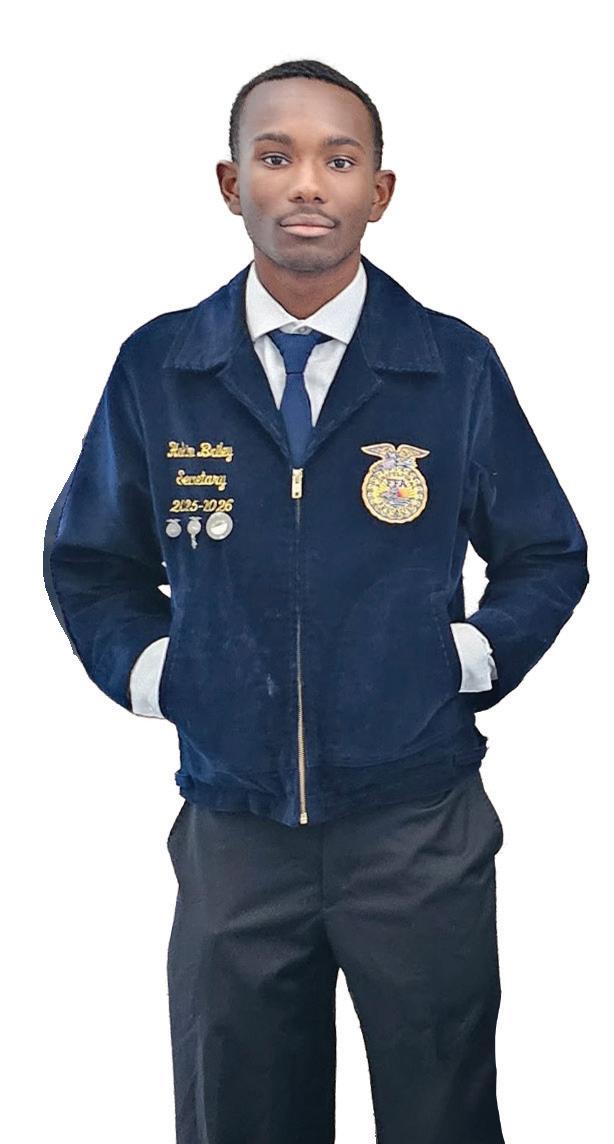


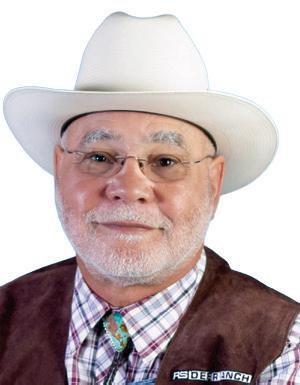
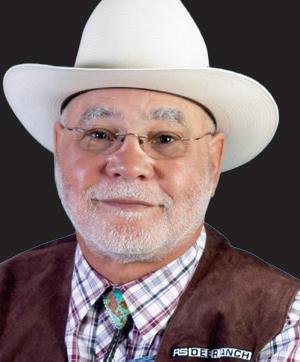
HAKIM BRILEY JR.
1964. e Civil Rights Act of 1964 is passed; it prohibits discrimination in public facilities and in the employment of African Americans.
1965. ree marches are organized from Selma to Montgomery to protest the obstruction of African Americans from voting.
1966. Led by Bobby Seale and Huey P. Newton, the Black Panther Movement rises.
1967. e United States Supreme Court decision Loving v. Virginia strikes down all antimiscegenation laws remaining in sixteen U.S. states.

1968. Shirley Chisholm is the rst black woman elected to the U.S. Congress; she will later run for president in 1972.
1971. Jesse Jackson founds People United to Save Humanity (PUSH), becoming an in uential leader in the civil rights movement a er Martin Luther King Jr.
1978. In Regents of the University of California v. Bakke, the Supreme Court rules that the use of strict racial quotas is unconstitutional.
HOUSTON
AUSTIN

TEXAS TAKEAWAY


The FIFA Fan Festival Houston will showcase the city’s vibrant culture throughout the FIFA World Cup 2026 by bringing together local food, live music and dynamic art experiences for fans from around the world. Visitors will have the opportunity to enjoy Houston’s diverse culinary scene, performances from local musicians and interactive cultural displays that reflect the city’s rich heritage and creative spirit. Organizers say the festival will serve as more than just a watch party for matches, creating a gathering space that highlights Houston’s global identity and welcoming atmosphere.
EL PASO
El Paso City Council approved the sale of the historic A.B. Fall Mansion for more than $840,000, marking a significant step in the future of one of the city’s notable historic properties. The mansion, tied to former U.S. Interior Secretary Albert B. Fall, has long been recognized for its architectural and historical importance in the region. City leaders said the sale is expected to support preservation efforts while opening the door for potential redevelopment and renewed community use of the property.
SAN ANTONIO
Tesla’s Roadster is expected to be manufactured at the company’s Gigafactory in Austin, further strengthening Central Texas’ role in the future of electric vehicle production.
A family-owned Texas dairy is introducing easier-to-digest milk options to San Antonio schools as part of an effort to provide students with more nutritional choices. School officials and dairy representatives say the initiative could help students who experience discomfort with traditional milk.
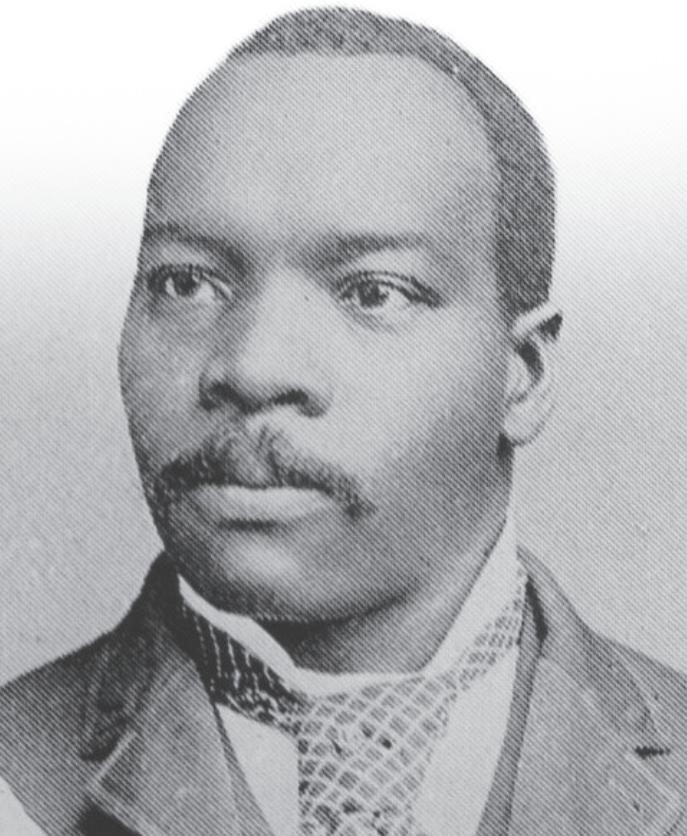
Granville T. Woods (1856–1910) was a pioneering African American inventor and electrical engineer who held nearly 60 patents. Known as the “Black Edison,” he revolutionized transportation and communication, notably inventing the multiplex telegraph, which prevented train collisions by allowing wireless communication between moving trains and stations. Granville T. Woods was inducted into the Texas Trail of Fame.
GRANVILLE T. WOODS
habitation; that they should seek the Lord,” (Acts 17: 24-27). President Trump’s selfserving mentality has gotten him in a devilish leadership bind, especially because of the Iranian War. Sadly, America will pay a hellish international leadership image cost for electing an ungodly self-serving mentality to the Presidency. Unfortunately, (77) million voters did not count the cost. President Trump is a dangerous and desperate man, because the (2026) midterm elections are on the horizon. God is not fooled; individuals get what they deserve.
could not a ord it. ey also used literacy tests. ese were incredibly di cult reading and logic tests. White o cials would give easy tests to white voters and impossible tests to Black voters.
If you failed the test or couldn’t pay the tax, you couldn’t vote. ese unfair laws stripped away the voting rights of Black Americans for nearly one hundred years.
e Fight for Women’s Su rage
While Black Americans were ghting for their rights, women were ghting for their voices too. is was called the Women’s Su rage Movement (“su rage” simply means the right to vote).
Women marched in streets, gave speeches, and even went to jail to demand their rights. Finally, in 1920, the 19th Amendment was rati ed. It gave women the right to vote across the nation. However, because of the cruel local laws in the South, Black women still faced the same poll taxes and literacy tests that Black men did.
e Turning Point: 1965 By the 1950s and 1960s, the Civil Rights Movement was in full swing. Leaders like Dr. Martin Luther King Jr. and John Lewis led peaceful protests, marches, and boycotts to demand real voting rights for Black Americans. Many protestors were hurt or even killed just for trying to register to vote. eir bravery changed
history. In 1964, the 24th Amendment outlawed poll taxes. en, in 1965, President Lyndon B. Johnson signed the Voting Rights Act (VRA).
Historical Milestones of Voting Rights
e timeline below highlights how the laws changed over time to include more Americans in the voting process.
e 15th Amendment
1870
Said that the government cannot stop citizens from voting based on their race.
e 19th Amendment
1920
Granted women the right to vote across the United States.
Indian Citizenship Act 1924
Recognized Native Americans as citizens, though many states still blocked them from voting for decades.
e 24th Amendment
1964
Banned poll taxes, making it illegal to charge people money to vote in federal elections.
e Voting Rights Act 1965
Banned literacy tests and sent federal workers to protect voters at the polls.
e 26th Amendment 1971
Lowered the voting age from 21 down to 18, because young adults argued that if they were old enough to ght in wars, they were old enough to vote.
HISTORY
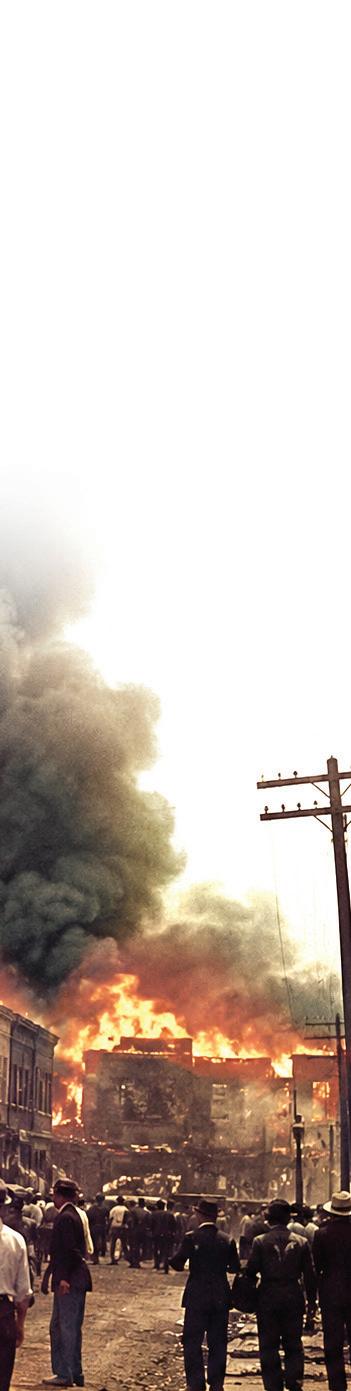
THE LASTING SCARS OF THE TULSA RACE MASSACRE
By: Fred Smith
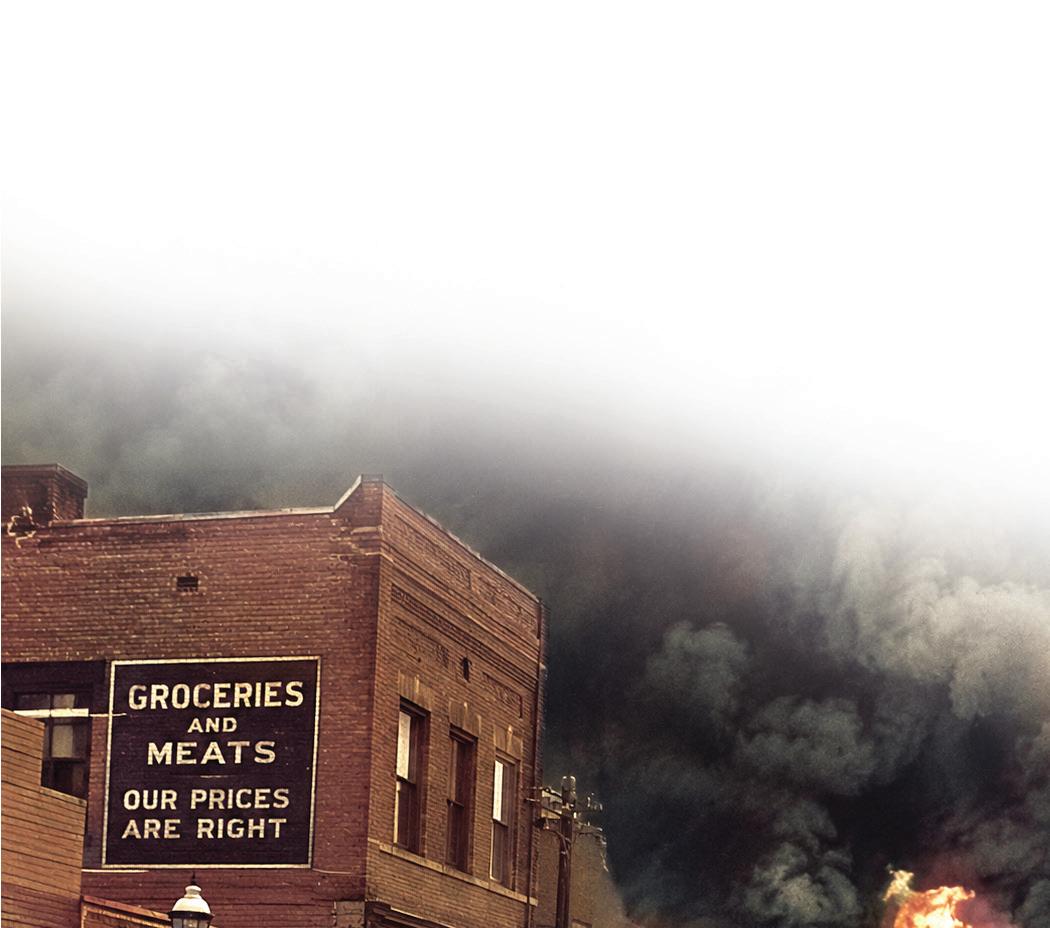
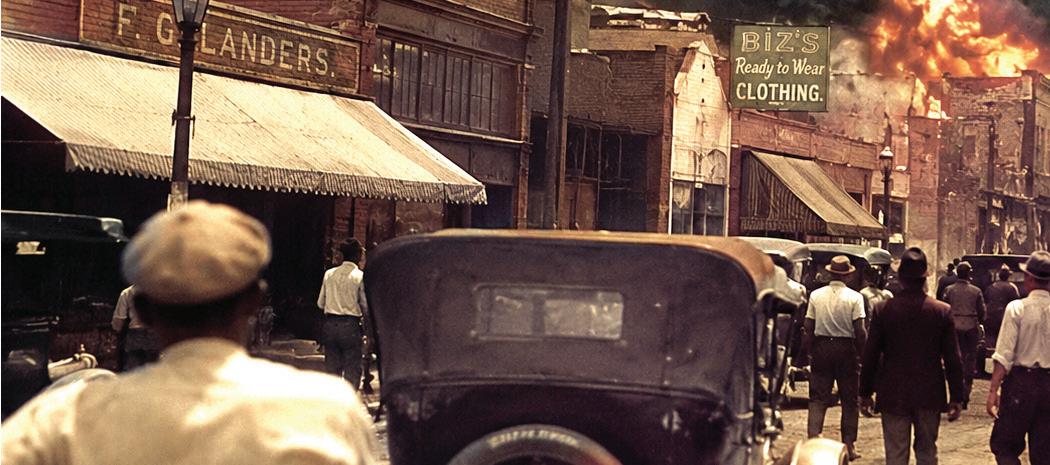
In the a ermath of the 1921 Tulsa Race Massacre, the thriving Greenwood District in Tulsa was le in ruins. Once regarded as “Black Wall Street,” the neighborhood had been home to hundreds of successful African American businesses, churches, schools, and homes. Following the violent attack by white mobs, entire blocks were burned to the ground, leaving thousands of Black residents homeless and nancially devastated. e destruction erased generations of wealth and opportunity within the community. Survivors of the massacre faced enormous hardship in rebuilding their lives. Insurance companies largely refused to honor claims
for destroyed property, and city o cials provided little meaningful support for recovery e orts. Many families were forced to live in temporary shelters and tents for months while attempting to reconstruct homes and businesses with limited resources. Despite these challenges, members of the Greenwood community demonstrated remarkable resilience by slowly rebuilding parts of the district during the years that followed.
For decades, the massacre was largely omitted from history books, public discussions, and classrooms. Many survivors remained silent about their experiences due to fear, trauma, and societal pressure. As a result, generations of Americans
grew up without learning about one of the deadliest acts of racial violence in United States history. Historians, activists, and descendants of survivors later worked to bring national attention to the tragedy and preserve the stories of those who endured it.
In recent years, renewed e orts to acknowledge the Tulsa Race Massacre have led to memorial projects, educational initiatives, and public calls for justice and reparations. e event is now recognized as a de ning moment in African American history and a powerful reminder of the consequences of racial hatred and economic injustice. Commemorations held each year honor the victims, survivors, and enduring legacy of the Greenwood community’s strength and perseverance.







NOTICE TO PROPOSERS
NOTICE TO RESPONDENTS:





















e Houston Independent School District is soliciting Request for Proposals (RFP) via the District’s electronic bidding portal. Proposers may log in to view specications and submit their responses at the following link https://houstonisd.ionwave.net/Login.aspx until 10:00 a.m. (CST) Wednesday, September 30, 2026, for the following supplemental solicitation for the following projects:
RFP / 26-04-46 Instructional Curriculum Materials, Supplies, and Digital Resources
RFP / 26-04-36 Student Services, Enrichment, Tutorials, and Mentoring RFP / 26-04-47 Leadership, Teacher, and Sta Development
RFP / 26-10-10 College, Career, and Military Readiness: Materials and Services
Pre-proposal conferences via Microso Teams will be held in conjunction with this RFP. Information regarding dates, times, and a link to join the meeting can be located within the electronic bidding portal under the “Event Details” tab speci c to this solicitation.
Lone Star College will receive Competitive Sealed Proposals for:
CSP 26-05-04
LSC-NH Star of Tomorrow Exterior Signage
Electronic responses are due by 9:00 AM on 6-22-2026
Contact: Lydia Sterling, Sr Commodity Manager @ Lydia.Sterling@lonestar.edu Must Register to Bid at: http://lonestar.ionwave.net/ Login.aspx.
If registered, please log in to Ion Wave for additional information. For assistance with the online registration process, contact MC-Vendors@lonestar.edu.
NOTICE TO PROPOSERS
Request for Proposal will be received by Lone Star College for:
RFP #26-05-02 – SIP Services. Electronic submittals due by 12:00PM, Friday, June 19, 2026. Contact: clave@lonestar.edu or (832)813-6723.







Must Register to Bid: https:// lonestar.ionwave.net/Login. aspx. If registered, please ensure your registration is up to date. For assistance with the on-line registration process, contact MCvendors@lonestar.edu.