
“Addressing Current & Historical Realities Affecting Our Community”




By:Pamela Holliman
Bella Vista Missionary Baptist Church, a longstanding spiritual anchor in Houston’s Independence Heights—the rst Texas municipality founded by African Americans—has begun a ve-month celebration honoring its 75th anniversary. e milestone holds deep relevance for the Black community, re ecting a legacy of resilience, cultural pride, and communal support that has shaped generations of families in the historic neighborhood.
By: Roy Douglas Malonson
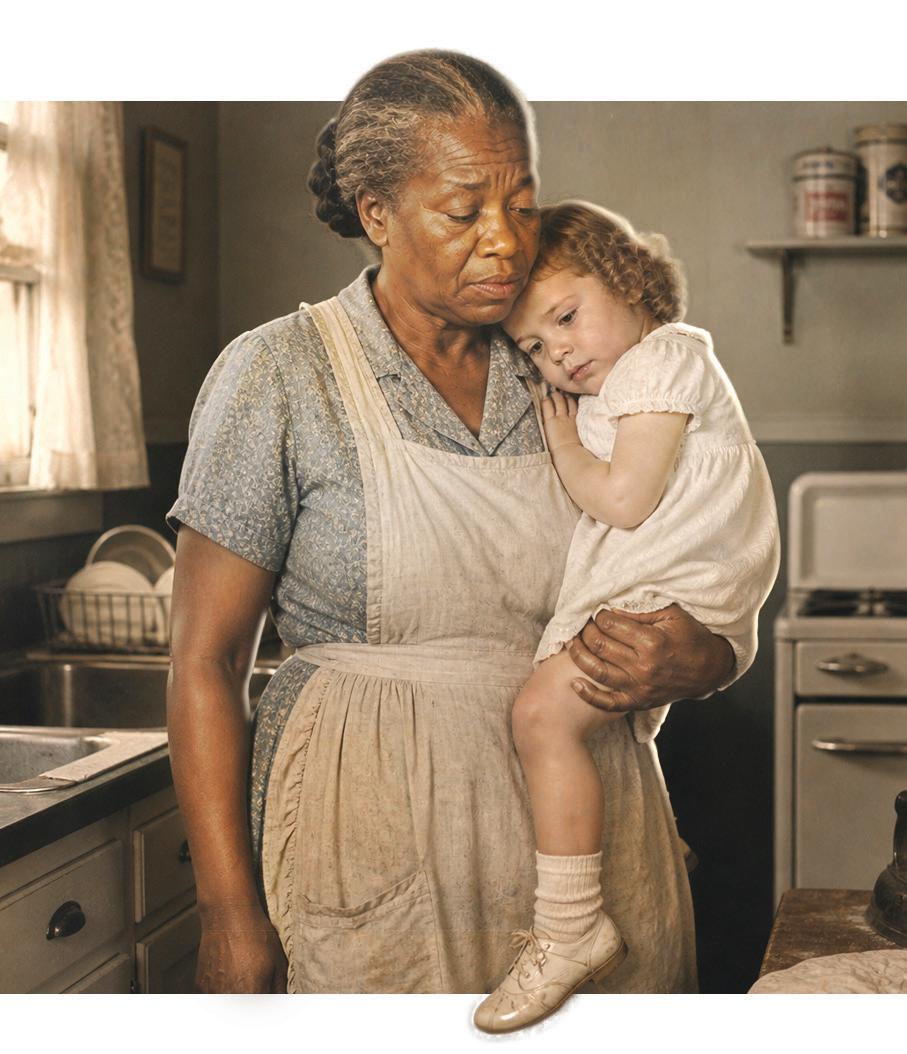
roughout American history, many Black women worked as caregivers, nannies, and domestic workers for white families, helping raise children during some of the nation’s most di cult and divided eras. From the days of slavery through segregation and into the mid-20th century, Black women o en cared for white children while balancing the responsibilities of their own families. eir work involved feeding, teaching, comforting, and
protecting the children placed in their care, even while they themselves faced discrimination and unequal treatment.
During slavery, enslaved Black women were frequently forced to care for the children of slaveholding families. ey cooked meals, cleaned homes, and acted as nurses and caretakers, o en spending more time with white children
Building America on pg. 3
Founded in the 1950s, Bella Vista grew from humble origins in a former beer tavern where early prayer gatherings evolved into a committed congregation. Pauline Nickerson, wife of founding pastor Rev. G. H. Nickerson, bestowed the name “Bella Vista,” meaning “Beautiful View.” Under Rev. Nickerson’s leadership, early members purchased land at East 36th Street and Cornell for $675 and later acquired reclaimed wood from a church tabernacle auction to build their rst structure—an un nished building without windows, ooring, or a door. A protective cage was constructed around the organ to prevent the , underscoring both the challenges and determination of the edgling church.
Over the next four decades, Pastor Emeritus Rev. Dr. C. J. Abraham guided Bella Vista with steadfast
Cornerstone on pg. 7
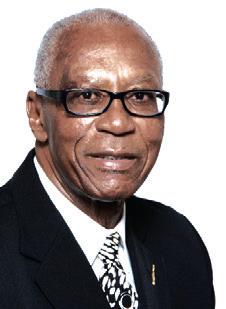
Bobby Mills, Ph.D.




January 10, 1952 -May 1st, 2026







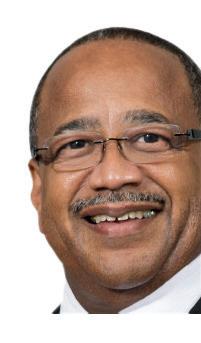
Harris County Deputy Sheri and Constable Perry Wooten passed away on May 1st, 2026. I met Perry Wooten at a community activist meeting in the fall of (1977) concerning the issue of just/equitable policing in the Black community, and presently the issue remains the same. At that time, Perry was a Deputy Sheri in the Harris County Sheri ’s department, as well as the President of the Black Deputy Sheri ’s Association. Like many law enforcement organizations across America, in the 1970’s, the Harris County Sheri ’s Department had more than its fair share of racial and ethnic tensions, especially as it related to personnel complaints, and equal enforcement of the law. To a large degree, Perry’s advocacy activities for just law enforcement placed a “bull’s-eye” on his back; especially since he was a founding member, as well as President of the African American Deputy Association. No doubt about it, challenging institutionalized



us, for several decades, Perry served under the


Roy Douglas Malonson, Publisher
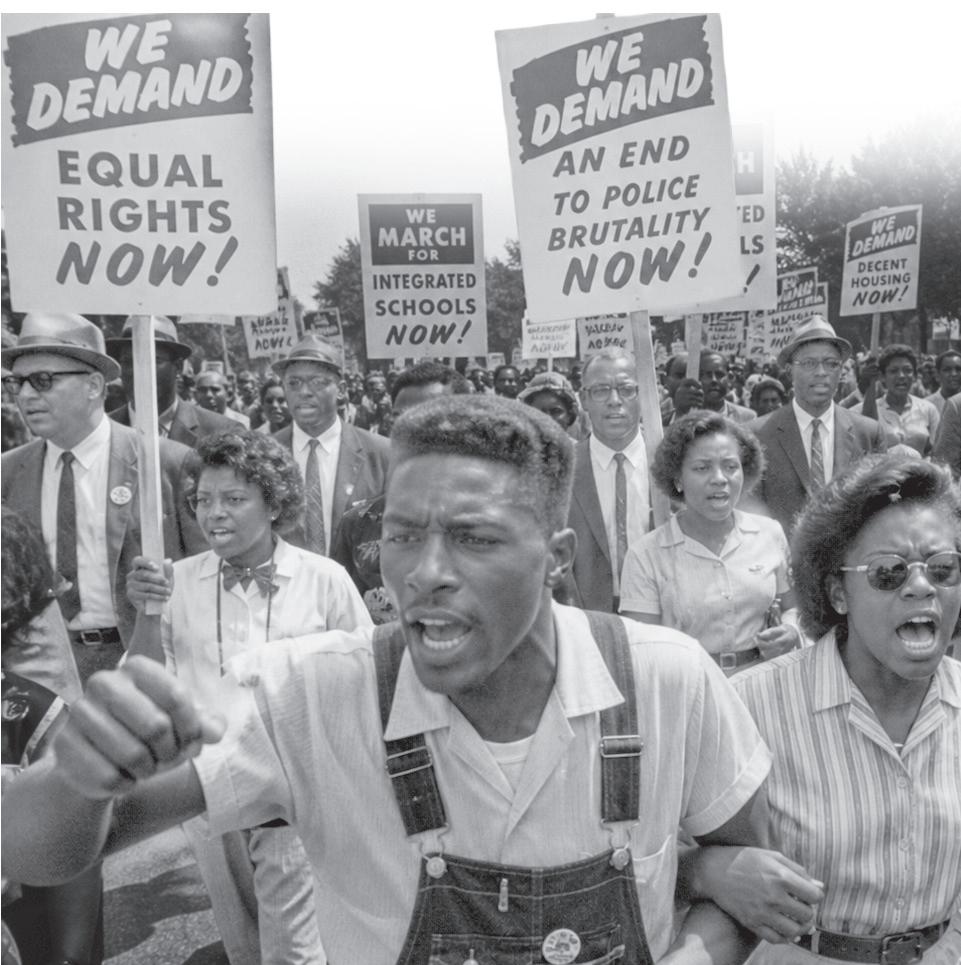
On May 17, 1954, the United States reached a historic milestone in the ght for equality when the Supreme Court issued its landmark decision in Brown v. Board of Education. e ruling declared racial segregation in public schools unconstitutional, overturning the long-standing “separate but equal” doctrine established by the 1896 case Plessy v. Ferguson. is decision became one of the most important victories of the Civil Rights Movement and forever changed the course of American history. Before the ruling, segregation laws across the

Max Miller at


sionary Baptist Church. Perry’s close pastoral friendspiritual lessons: (a) there is organizations




policing authority invariably places a bull’s eye on your back, that is in harm’s way. We all know why police constabularies exist: (1) to serve Whites and to protect their private property rights, and (2) keeping minorities checkmated; especially Blacks through intimidation and murder. Of course, recent encounters are indicative of this historic fact. For example, the brutal police killing of George Floyd. In fact, the Black Lives Matter Movement grew out of historic police abuse of their authority. Perry championed accountable policing rooted in social justice. In 1998, following several years of collaborative pastoral work with prominent leaders and active involvement in the National Baptist Convention, Perry’s deepened spiritual awareness and faith prompted him to formally accept a calling to the pastoral ministry. us, for several decades, Perry served under the esteemed pastoral leadership of Pastor J. J. Roberson and Pastor Max Miller at Mt. Hebron Missionary Baptist Church. Perry’s close pastoral friendships taught him two valuable spiritual lessons: (a) there is a monumental di erence between knowing Caesar’s Laws and (b) knowing the Spiritual Laws of e Divine Lawgiver, expressed in the Two Great Commandments of Jesus Christ.
South and other parts of the country forced African American students to attend separate schools that were o en overcrowded, underfunded, and unequal to those attended by white students. Many Black families and civil rights leaders challenged these injustices through years of legal battles and activism. Organizations such as the National Association for the Advancement of Colored People, commonly known as the NAACP, played a critical role in ghting discriminatory laws and advocating for equal rights under the Constitution. e Brown v. Board of Education case centered around several families, including that of Oliver Brown, a father from Topeka, Kansas, who challenged segregated schools a er his daughter was denied admission to a nearby white school. Led by attorney urgood Marshall, the NAACP legal team argued that
Civil Rights on pg. 5
Perry Lee on pg. 3
In 2000, Perry ran for the O ce of Constable in Precinct Seven in Harris County. e Constable at that time was a

Building America Cont.
than with their own. Many formed emotional bonds with the children they cared for, though these relationships existed within a system built on inequality and lack of freedom. eir labor and emotional support became an overlooked part of daily life in many Southern households. A er emancipation, domestic work became one of the few employment opportunities available to Black women in the South and across the country. Many worked as live-in maids or nannies for wealthy or middle-class white families. ese women woke up before sunrise, prepared meals, dressed children for school, soothed illnesses, and maintained households while earning low wages. Despite di cult conditions, many carried themselves with dignity and professionalism, becoming trusted gures within the homes where they worked.
Black caregivers o en played a major role in shaping the childhood memories of white children. ey taught manners, read stories, comforted
fears, and provided a ection during important stages of development. In some cases, white children developed close emotional attachments to the women who cared for them. However, these bonds were o en shaped by social systems that denied Black women equal recognition, respect, or opportunities outside domestic labor. At the same time, many Black women returned home a er long workdays to continue raising their own children and supporting extended family members. e emotional and physical demands placed on them were enormous. While caring for white families during the day, they still found ways to nurture their own households, preserve family traditions, and encourage their children to pursue education and better opportunities despite segregation and poverty. e role of Black women as caregivers has been represented in books, photographs, lms, and oral histories, though these portrayals have sometimes oversimpli ed
or romanticized their experiences. In reality, their stories re ect a combination of sacri ce, resilience, professionalism, and survival within a deeply unequal society. Many Black women navigated complicated relationships in the homes where they worked, balancing care and compassion with the realities of racial discrimination.
Today, historians and communities continue to recognize the important contributions Black women made in raising generations of children, including those from white families. eir work helped shape households and communities across America, even though their contributions were o en undervalued or ignored at the time. By examining these stories honestly, people gain a deeper understanding of the strength, humanity, and enduring legacy of Black women whose caregiving labor in uenced countless lives throughout history.

Perry Lee Cont.
beloved Law Enforcement Legend, A. B. Chambers. Many Prominent pastoral and community leaders urged Perry not to challenge Constable Chambers. However, Perry chose to go against the civic and political grain. Perry built a strong political, organizational structure, and an equally strong get-out-thevote (GOTV) strategy, and consequently he defeated a law enforcement legend Perry believed that the “SOUL” of law enforcement was in uenced by the so-called “Blue-Code”, which in turn, was the propensity of law enforcement o cers to defend each other whether right or wrong. Perry was a Law Enforcement O cer for over thirty years; serving in various capacities, including Constable PCT. # 7. During his professional career Perry saw the good, bad, as well as the ugly side of the law enforcement equation. When Perry saw the bad and ugly side of law enforcement injustice, he sought to correct the injustice. Perry always let his law enforcement light shine righteously bright. During his career, Perry wrote a timely book about his law enforcement career, seeking to universalize the character of law enforcement, entitled: “From Hell to Glory”. The social commentary in Perry’s book sheds spiritual light on what God demands of law enforcement officials, because God is the Divine Lawgiver. Perry had the moral courage to put in written book form what most Americans, especially Black Americans already knew to be true as nothing but the whole truth, and the brutal murder of George Floyd is the eternal testament. Hence, this editorial is memorial recognition of a pioneering Law Enforcement Leader as well as friend, whose absence will be felt by the writer and the Covenant Glen Methodist Church Family, especially Senior Pastor Dr. Robert Earl Childress. Glory to God!

1887. e ibodaux massacre occurs in Louisiana. An episode of white supremacist violence that occurred. It followed a three-week strike during the critical harvest season.
1896. Plessy v. Ferguson legitimizes state laws reestablishing racial segregation in Southern states.
1900. A majority of Southern states pass laws that required African Americans to be separated from white citizens in railroad cars and depots, and other establishments.
1905. W.E.B. Du Bois calls for social and political change for African Americans during the Niagara Movement.

1906. e Atlanta Race Riot of 1906 was a signi cant episode of violence in Atlanta, Georgia, during which at least 12, and possibly up to 25, African Americans were killed.
1909. e National Association for the Advancement of Colored People (NAACP) is founded.
1916. e Great Migration begins, where more than six million African Americans move from the rural South to various urban metropolitan areas.



Rapid growth in New Caney is driving plans for thousands of new homes and the development of a future healthcare district aimed at serving the expanding population.
Proposed data center developments in Hays County have generated increasing concern among residents, environmental advocates, and local officials regarding their potential impact on regional water resources and continued population growth. Critics argue that the large-scale facilities could significantly increase water consumption and place added pressure on the Edwards Aquifer and surrounding infrastructure during persistent drought conditions.
Federal and local authorities in Houston recently announced a major crackdown on mail theft operations, leading to multiple arrests and the recovery of stolen mail, counterfeit checks, and illegal master keys used to access neighborhood mailboxes. Law enforcement officials warned that mailbox crimes have increased in recent years, prompting stronger enforcement efforts and partnerships with the U.S. Postal Inspection Service.
Educators, parents, and community leaders gathered for the “Crisis in the Classroom” town hall discussion to address growing concerns surrounding school budget challenges and funding shortages.
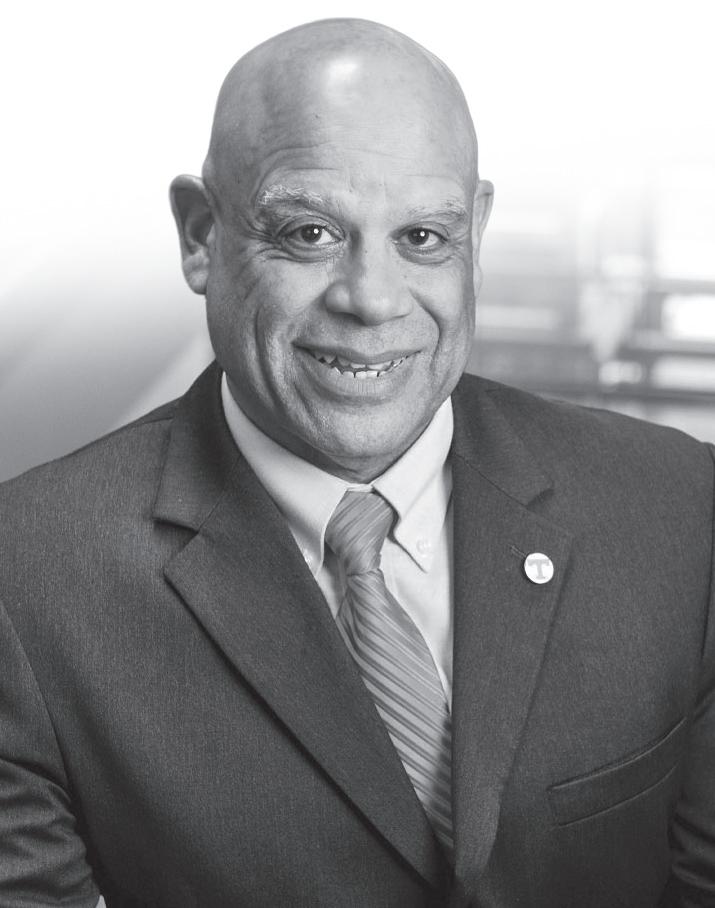
Mark Dean is a pioneering American computer engineer and inventor who revolutionized personal computing while at IBM. He holds three of IBM’s original nine PC patents and led the team that developed the ISA bus, enabling plug-and-play peripherals like printers and monitors, and later, the first gigahertz chip.
Civil Rights Cont.
segregation harmed African American children and violated the Equal Protection Clause of the Fourteenth Amendment.
Marshall’s powerful arguments helped persuade the Supreme Court that separate educational facilities could never truly be equal.
Chief Justice Earl Warren delivered the unanimous decision, stating that segregation in public education created feelings of inferiority that negatively a ected Black children’s educational and personal growth.
e ruling declared that “separate educational facilities are inherently
unequal,” sending shockwaves across the nation. While the decision was celebrated by many African Americans and civil rights supporters, it also faced erce resistance in several Southern states.
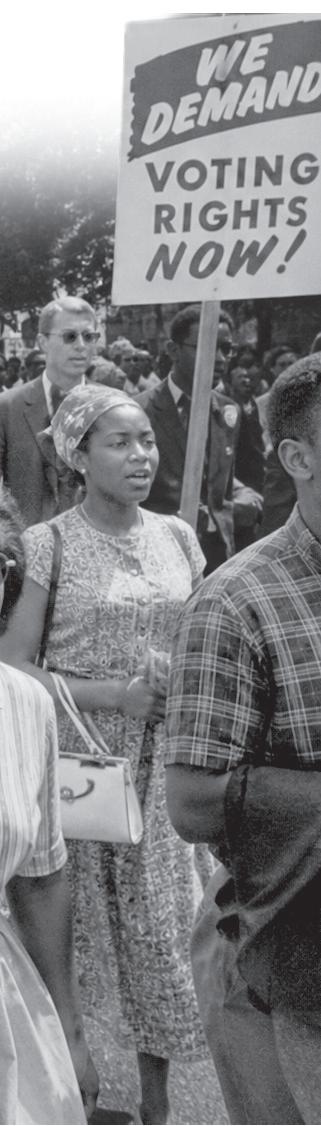
e Brown decision became a major catalyst for the broader Civil Rights Movement of the 1950s and 1960s. It inspired activists, students, churches, and community leaders to continue pushing for equality in transportation, voting rights, housing, and public accommodations.
Leaders such as Martin Luther King Jr. emerged during this era, helping organize peaceful protests and campaigns
that challenged racial discrimination throughout the country.
Although progress was slow and o en met with hostility, the impact of May 17, 1954, remains deeply signi cant today. e ruling opened doors for future generations and demonstrated the power of the courts and grassroots activism to challenge injustice.
Schools across the nation gradually integrated, and the Civil Rights Movement gained momentum that eventually led to historic legislation such as the Civil Rights Act of 1964 and the Voting Rights Act of 1965.











NOTICE TO RESPONDENTS:













Lone Star College will receive “Request for Proposals for Elevator PM Maintenance and Inspection Repair Services:
Lone Star College will receive Competitive Sealed Proposals:




RFP 26-02-04 Elevator Preventive Maintenance and Inspection Repair Services Electronic responses are due by 9:00 AM on 6-062026 Please refer to the Activity Tab in Ion Wave for Site Visits dates, times, and locations. Contact: Lydia Sterling, Sr Commodity Manager @ Lydia.Sterling@ lonestar.edu
Must Register to Bid at: https://lonestar.ionwave. net/Login.aspx If registered, please log in to Ion Wave for additional information. For assistance with the online registration process, contact MC-Vendors@lonestar.edu.
CSP 26-03-13 Roof Replacement for LSC Cy-Fair Arts Building Electronic responses are due by 10:00 AM on 5-25-2026
Please refer to the Activity Tab in Ion Wave for the Site Visit date, time, and location. Contact: Lydia Sterling, Sr Commodity Manager @ Lydia.Sterling@ lonestar.edu
Must Register to Bid at: https://lonestar.ionwave. net/Login.aspx If registered, please log in to Ion Wave for additional information.
For assistance with the online registration process, contact MC-Vendors@lonestar.edu.





























May 8, 2026
leadership. During his 43-year tenure, the congregation purchased additional property, constructed a new sanctuary, and expanded essential ministries, including Boy Scouts, Girl Scouts, Summer Youth Camp, a Food Bag Ministry, Promise Keepers, and a radio broadcast. ese programs strengthened the church’s reputation as “ e Church at Cares,” a title embraced throughout Independence Heights and beyond.
Since 2014, the church has been led by its h pastor, Rev. Dr. Jacari P. Davis. His administration has overseen a half-million-dollar renovation, the purchase of new properties, and a refreshed mission focused on learning, living, and li ing.
Bella Vista’s outreach continues to make an impact through civic alliances, school partnerships, food drives, catastrophic-event workshops, youth mentorship, and Christian education. e membership’s commitment to education and improving lives has resulted in over $100k in scholarships being awarded to deserving students since the program began.
During the COVID-19 pandemic, the church swi ly transitioned to virtual worship to maintain connection and continuity for its members.
e anniversary observance, spanning January through May, invites members and guests to wear blue on the third Sunday of each month as a symbolic tribute to the congregation’s lasting legacy. January’s revival
services opened the celebration with guest preachers Rev. Dr. Joshua Mitchell, Rev. Andre Lewis, Rev. Chris Wesley, and Dr. Marcus Cosby, accompanied by psalmists Karishma Evans, Rhonda McLemore, Leroy





omas, and Kerrylone Asberry.
February’s programming honored African American history and culture with performances by the Texas Southern University Choir and the Marshall High Cornerstone Cont.






School Choir, along with presentations from Bella Vista’s Worship and Arts Ministries. e month concluded with a community Soul Food Dinner on February 22, o ering a space for fellowship rooted in shared heritage.






In March, Bella Vista celebrated the “Legacy of Grace,” culminating in a Palm Sunday concert on March 29 featuring Earnest Pugh, Aaron Fuller, New