Interview with

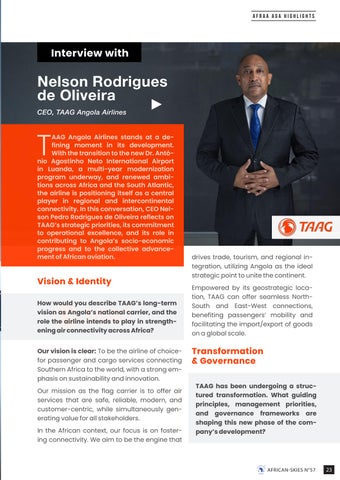
CEO, TAAG Angola Airlines
TAAG Angola Airlines stands at a defining moment in its development. With the transition to the new Dr. António Agostinho Neto International Airport in Luanda, a multi-year modernization program underway, and renewed ambitions across Africa and the South Atlantic, the airline is positioning itself as a central player in regional and intercontinental connectivity. In this conversation, CEO Nelson Pedro Rodrigues de Oliveira reflects on TAAG’s strategic priorities, its commitment to operational excellence, and its role in contributing to Angola’s socio-economic progress and to the collective advancement of African aviation.

How would you describe TAAG’s long-term vision as Angola’s national carrier, and the role the airline intends to play in strengthening air connectivity across Africa?
Our vision is clear: To be the airline of choicefor passenger and cargo services connecting Southern Africa to the world, with a strong emphasis on sustainability and innovation.
Our mission as the flag carrier is to offer air services that are safe, reliable, modern, and customer-centric, while simultaneously generating value for all stakeholders.
In the African context, our focus is on fostering connectivity. We aim to be the engine that
drives trade, tourism, and regional integration, utilizing Angola as the ideal strategic point to unite the continent.
Empowered by its geostrategic location, TAAG can offer seamless NorthSouth and East-West connections, benefiting passengers’ mobility and facilitating the import/export of goods on a global scale.
TAAG has been undergoing a structured transformation. What guiding principles, management priorities, and governance frameworks are shaping this new phase of the company’s development?

TAAG Angola Airlines is actively driving its modernization and holistic transformation journey to ensure the consolidation of a competitive, sustainable, and efficient airline. Six strategic pillars guide our governance and the priorities of our management team:
1- People and Community,
2- Organizational Efficiency,
3- Operational Excellence,
4- Commercial Superiority,
5- Connectivity and Hub,
6- Financial Sustainability.
Within the scope of our 2024-2029 Strategic Plan, we have also defined the following accelerators that will facilitate the achievement of these strategic pillars and the company’s reform. These are considered our critical success factors: Partnerships, Innovation & Technology; Infrastructure and Culture.
Overall, and with the support of specialized partners such as Lufthansa Consulting, we have developed a comprehensive transformation plan. This plan is grounded in technical rigor and innovation, customized specifically for the aviation sector, to optimize our financial structure, reinforce operational capacity, and promote an organizational culture centered on compliance, performance, and service excellence.
With the transition to the new Dr. António Agostinho Neto International Airport, how is TAAG positioning Luanda as a strategic hub for regional and intercontinental passenger and cargo flows?
TAAG Angola Airlines, as the flag carrier and a strategic pillar of Angolan aviation, views the New Dr. António Agostinho Neto International Airport (NBJ) not merely as state-of-the-art infrastructure but as the primary catalyst for a new era of economic and social development in Angola.
The complete transition of our flight operations to NBJ is a testament to our confidence in this project and our commitment to transforming Angola into a connectivity hub for people and goods. This move directly drives the sustainable growth of international mobility and, in particular, regional integration.
The airport has the potential to consolidate itself as a continental hub and a vital link between the North and South and the East and West. Its impact transcends the aviation sector, promising to stimulate the economy on diverse fronts, ranging from tourism and trade to agriculture and industry.
With a capacity for 15 million passengers per year and the distribution of up to 130,000 tons of cargo annually, the New Dr. António Agostinho Neto International Airport fits the concept of an aerotropolis.
By creating a new economic and logistical center with multimodal connectivity (railway, road network) as well as facilities for goods storage and conservation, it offers a set of competitive advantages that boost the development of the country and the region, opening new perspectives for the movement of people and corridors for international import/export.
Which markets and regional corridors are priorities for future network expansion, and what criteria does TAAG use to assess route viability and strategic relevance?
TAAG Angola Airlines is undergoing a fleet modernization plan with synergy with its route expansion agenda, designed to cement the airline’s role as a key facilitator of connectivity between Africa and the world. Our growth plans are expanding reach and depth. Meaning focusing on strengthening new frequencies to our existent and core markets while assessing new destinations to cover.
We are consolidating our regional expansion with the already active connection to East Africa, namely the Nairobi route. We have advanced plans for new destinations in Francophone and Lusophone Africa, thus increasing our network footprint in West and Central Africa.
From an intercontinental perspective, we are very close to announcing regular flights to Asia, where we have mapped China and India as destinations of interest. Furthermore, new connections to Europe and the Americas remain under continuous study, in addition to the routes to Lisbon (Portugal), São Paulo (Brazil), and Havana (Cuba) that we currently operate.
Our route evaluation criteria are rigorous, namely:
• Economic Viability: Analysis of demand and profitability per seat.
• Strategic Value: The route’s ability to feed connections within our network.
• Socioeconomic Impact: The route’s impact on trade and tourism via Angola and its strategic alignment with the hub vision of the country and the Angolan Government.
Collaboration is increasingly essential in today’s aviation ecosystem. How is TAAG approaching partnerships, codeshare agreements, and commercial cooperation to strengthen its network offering?
Partnerships are critical to expanding our reach without the cost of operating aircraft on every route. Our approach is pragmatic and mutually beneficial. We have codeshare and commercial agreements in place that allow us to maximize the international capillarity of our network.
We can mention a partnership on each continent where we operate to illustrate the strategic dimension and value of collaboration. We have codeshare agreements with GOL in Brazil for both passenger and cargo segments, extending our reach deep into the Americas. We partner with IBERIA, facilitating connections for our passengers across Europe and worldwide. We maintain codeshare agreements with South African Airways, reinforcing our reach via the partner’s network.
Thus, we have a technical partnership agreement with Ethiopian Airlines for the provision of MRO (Maintenance, Repair, and Overhaul) services, which is vital for operational efficiency and technical compliance. This strategic collaboration model allows TAAG to enhance the passenger experience and offer a more fluid and comprehensive connection product globally.
Fleet modernization is central to performance and customer experience. What are the key considerations guiding TAAG’s fleet renewal and aircraft standardization strategy?
TAAG Angola Airlines is undergoing a decisive phase of its transformation strategy, driven by the introduction of a new-generation fleet. Far from being a mere aircraft incorporation exercise, the combined choice of the Boeing 787 Dreamliner and the Airbus A220-300 represents a surgical strategic decision focused on the complementarity of missions and maximum efficiency across different market segments.
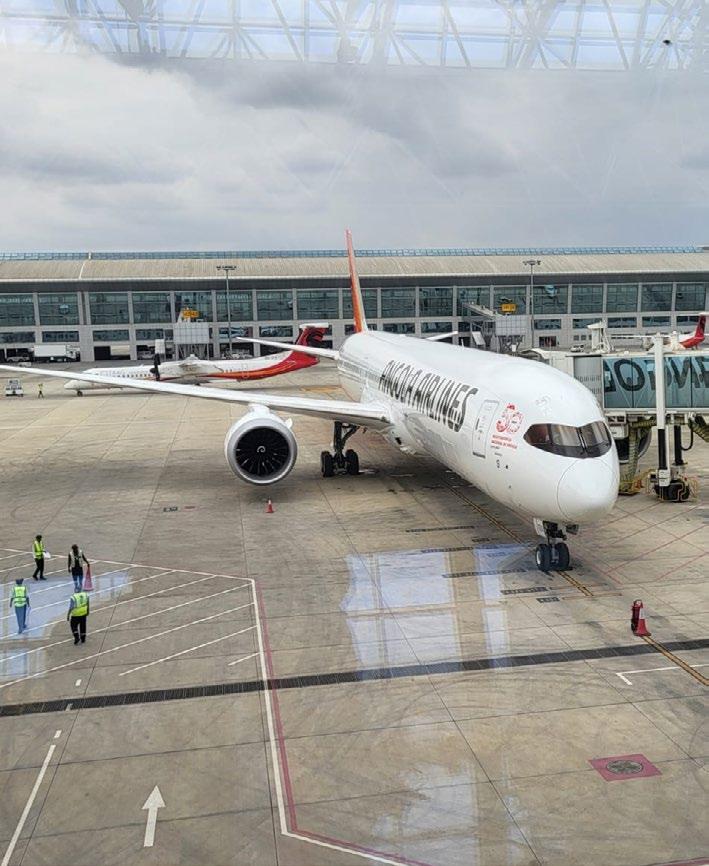
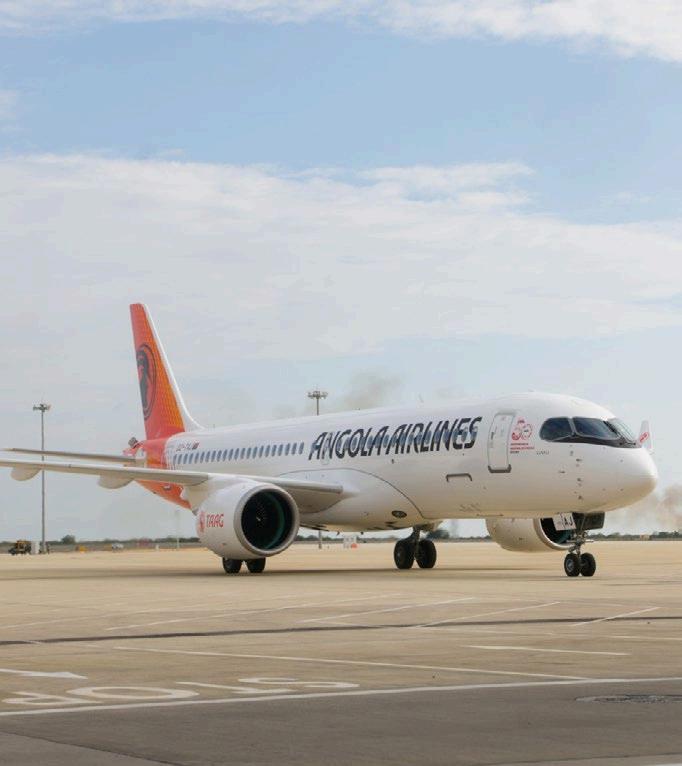
The Boeing 787 Dreamliner (787-9 and 787-10 models) is dedicated to TAAG’s intercontinental routes. In contrast, and in perfect synergy, the Airbus A220-300 serves intra-African connectivity.
These latest-generation aircraft bring enhanced efficiency to our operation and a premium experience for our passengers. Furthermore, they provide evidence of our commitment to sustainability and environmental protection through the reduction of emissions and noise pollution.
In summary, the B787 and A220 dual strategy allows TAAG to maximize revenue and efficiency in each market segment, reinforcing our ambition to be a key player in African aviation through a strategy of complementary and technologically advanced assets.
Passenger expectations are evolving quickly. What initiatives are being introduced to enhance the customer journey, both onboard and through digital channels?
The investment in the new fleet—namely the Boeing 787 Dreamliner for long-haul routes and the Airbus A220-300 for regional routes—has introduced a differentiated level of comfort, convenience, and flight experience. These latest-generation jets offer quieter cabins and ergonomic seating, significantly raising the standard of quality perceived by the passenger.
Complementing this physical advancement, the company is finalizing the BYOD (Bring Your Own Device) concept. This system involves providing onboard Wi-Fi that will allow passengers to consume content, access TAAG’s digital services, and remain connected throughout their flight.
In parallel with the flight experience, TAAG has revolutionized its customer touchpoints on the ground. The launch of a new website and a mobile application grants passengers greater autonomy and easy, intuitive access to all TAAG services, from booking and check-in to trip management.
TAAG ensures that human support complements this digital evolution. The call center teams receive constant training, and the support service is also available via WhatsApp, providing direct and fast communication with interoperability for digital payment solutions, streamlining transactions and purchases of tickets and related services.
Additionally, TAAG’s stores and lounges are designed as pleasant and welcoming spaces that provide comfort and tranquility, offering customers and passengers high-quality contact points throughout their journey with the company.
The pandemic highlighted the strategic role of air cargo in supply chains. How is TAAG strengthening its cargo capabilities and positioning itself within regional and intercontinental logistics flows?
Air cargo is an area of great focus and growth, and it counts on the New Airport (NBJ) as a fundamental piece, given its scalable cargo handling capacity.
Following the airline commercial strategy, focused on empowering the company footprint within the African air cargo market, TAAG Angola Airlines has regular cargo services to Lagos (LOS) in Nigeria, Brazzaville (BZV) in the Republic of Congo, Johannesburg (JNB) in South Africa, and Nairobi (NBO) in Kenya. The company also has plans to expand its cargo operations to other strategic cities, including Libreville (LBV), Kinshasa (FIH), Harare (HRE), Lusaka (LUN), and Accra (ACC), strengthening its presence in the African market.
TAAG is capitalizing on the freighter B737800BCF (Boeing Converted Freighter) incorporated into its fleet. It can transport up to 24 tons of cargo, with 11 pallet positions that accommodate 10 contoured 96 in x 125 in pallets.
Last year, TAAG Angola Airlines and AVIANCA Airlines formed a strategic partnership in the
air cargo transport sector by establishing a Special Prorate Agreement (SPA). The agreement will enable TAAG Angola Airlines to expand its presence in key South American markets, offering customers and the industrial cluster from Europe and Africa access to new routes beyond São Paulo (GRU) in Brazil. These routes include Bogotá (BOG) in Colombia, Santiago (SCL) in Chile, Lima (LIM) in Peru, Montevideo (MVD) in Uruguay, and Quito (UIO) in Ecuador.
The cargo business is strategic for TAAG Angola Airlines, playing a key role in promoting the Angola hub and the New Luanda International Airport as an infrastructure of reference in African import/export circuits. In addition, this initiative contributes directly to the objectives of the African Free Trade Agreement (AfCFTA), promoting greater commercial integration between the countries of the continent.
As a national carrier, TAAG contributes to tourism, trade, and socio-economic development. How do you balance commercial sustainability with your broader national and regional responsibilities?
Commercial sustainability fosters our financial KPI, while serving in-country routes or strategic links gives us a greater purpose and socioeconomic relevance. Balancing this equation means facilitating routes that, while they may not be the most profitable in the short term, are vital, either for territorial inclusion or for the development of key sectors such as tourism and trade, or to attract investors. In the end, aviation connects multiple streams and business sectors in Angola.
Air transport is indispensable to Angola’s current and future economic diversification, while our fleet allows, in addition to passenger transport, air cargo services, which have become essential for the country and Africa’s growth in their import/export capabilities.
TAAG Angola Airlines is the leading airline in the country and the pride of all locals. While Angola has a vast territory, the airline plays a relevant role connecting major cities in-country,thus linking Angola to regional and intercontinental hubs: Kenya, South Africa, Nigeria, Namibia, São Tome, Mozambique, DRC, Congo Republic, Portugal, Brazil, and Cuba.
In a nation undergoing significant transformation, the aviation sector is not just a service provider; it’s a strategic enabler of trade, tourism, and investment, diplomatic ties, etc.
In fact, we act as Angola’s ambassadors, promoting the country as a destination for investment and leisure on every flight we operate, and elevating the Angola brand at every international event we participate in.
How does TAAG view the implementation of the Single African Air Transport Market (SAATM), and what policy, regulatory, or infrastructure conditions do you believe are essential to ensure that liberalized skies translate into fair competition, sustainable connectivity, and shared growth among African carriers?
We emphasize that TAAG is committed to the vision of the Single African Air Transport Market (SAATM) and the African Continental Free Trade Area (AfCFTA), viewing them as pillars for Africa’s economic prosperity.
The Single African Air Transport Market, aimed at liberalizing air transport across the continent, holds the potential to transform regional connectivity, reduce transportation costs, and stimulate economic growth through tourism, trade, and job creation.
SAATM, if fully implemented, is arguably a great catalyst for intra-Africa air traffic growth. To date, the impact is partial. While Angola has affirmed its commitment to SAATM, traffic benefits are delayed by the pace of implementation, which is still ongoing.
Despite notable progress, the full implementation of SAATM continues to face several obstacles. These include restrictive bilateral air service agreements, lack of harmonized regulations, insufficient infrastructure, and fragmented airspace management. As a result, African air travel remains with cost and efficiency challenges, limiting the continent’s ability to harness the full benefits of an integrated air transport market.
Having said that, several factors have already shown positive impacts and can further enhance connectivity, such as visa facilitation, strategic partnerships, infrastructure investment, policy and regulatory convergence, and shared economic objectives within African nations.
Thus, Africa’s air transport and tourism sectors are deeply interconnected, with tourism acting as a key driver for enhanced air connectivity. Tourism is a powerful catalyst for air transport development. Increased tourist arrivals stimulate demand for flights, leading airlines to introduce new routes and increase frequencies. This direct relationship encourages investment in aviation infrastructure and services.
As Angola hosts the AFRAA General Assembly, what key message would you like to share with African airline leaders, regulators, and partners regarding cooperation and shared growth?
To our distinguished colleagues, leaders of African aviation, regulators, and partners, it is an honor for TAAG Angola Airlines to host the AFRAA General Assembly in Luanda.
Receiving the African Airlines Association (AFRAA) 57th Annual General Assembly (AGA) is a significant honor and a strategic opportunity for TAAG and Angola. It solidifies Luanda’s emergence as a major African aviation hub, especially following the operationalization of the new Dr. António Agostinho Neto International Airport.
The vision of a truly connected African continent is within our reach, but its realization requires a collective commitment to strategic transformation, operational excellence, and, above all, cooperation.
A reflection of my tenure as president of AFRAA is that it has been a great challenge and a huge responsibility focused on advancing AFRAA’s primary goals for the year about sustainability, collaboration, and profitability across African airlines.
We believe that the aviation sector in Africa is crucial to the development of our nations and to connectivity with major decision-making centers worldwide.
Let us commit, not just in principle, but in practice, to a transparent and collaborative ecosystem where African airlines rise together. Our shared success depends on it.
African-Skies Managing Editor: Maureen Kahonge Editorial Director: Romuald Ngueyap