African-Skies
AFRAA’s pan-african Journal on Air Transport, Issue N°57, January-March 2026
FREE ROUTE AIRSPACE Finally

AFRAA AGA
“From Recovery to Reform – African Aviation Moves Forward Together” Page 8
SAATM
National Airlines at a Crossroads

The implementation of Free Route Airspace in the WACAF region is a game-changer for African aviation. This is a testament to what we can achieve through collaboration. By cutting flight times and fuel consumption, we are not only boosting the competitiveness and profitability of our airlines but also making a significant commitment to environmental sustainability ”
Abderahmane Berthé
Secretary General, AFRAA
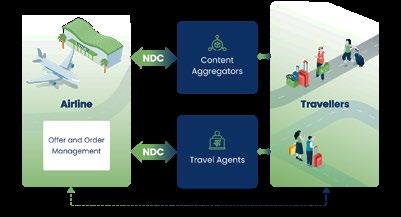
NDC A Five-Step Roadmap to a Retail-Centric Strategy

EDITORIAL

Navigating Africa’s Ascent:
Seizing Our Moment in the Global Sky
In a world where aviation is both a barometer of economic vitality and a catalyst for integration, Africa stands at a defining crossroads. Across our continent, we see not just recovery, but resurgence. New fleets gracing our runways, visionary hub projects taking shape, and a spirit of innovation that refuses to be constrained by legacy challenges. This edition of African Skies captures that momentum, but more importantly, it underscores a collective truth: our potential is boundless, but unlocking it demands unity, courage, and strategic foresight.
At AFRAA, we are filled with profound optimism. The stories within these pages: from the landmark operationalization of the Free Route Airspace in West and Central Africa, to the pioneering intra-African SAF flight by Kenya Airways, and the bold fleet renewals and partnerships shaping our future, are testaments to what we achieve when we collaborate. Yet, we must be clear-eyed. Global headwinds persist:
supply chain pressures, volatile costs, and the urgent imperative of sustainability. Our competitors are not standing still, and neither can we.
This is precisely why the African Airlines Association is embarking on a transformative journey with our new Strategic Plan 2026-2030. This is not merely a document, but a binding commitment to action.
The plan is built on a foundational pledge: to inextricably link every service we provide, every policy we advocate, and every platform we create to tangible, value-added benefits for our members, partners, and stakeholders.
We are shifting our paradigm from being an association to becoming your indispensable strategic partner.
Our mission is to position AFRAA as the premier aviation industry body in Africa—the essential engine that sustains and elevates the competitiveness of every African airline. Through sharper advocacy, deeper data intelligence, and accelerated industry development programmes, we will ensure that your challenges are our command and your growth is our metric of success.
Central to this mission is the relentless pursuit of the Single African Air Transport Market (SAATM). The data is unequivocal: liberalisation fuels connectivity, drives down costs, and stimulates economic growth. While we celebrate the 38 signatory states, we must convert signatures into seamless skies.
The contrasting stories of thriving networks and constrained hubs in this edition highlight the stakes. Protectionism is a cul-de-sac; collaboration is the runway to prosperity. We will work hand-in-glove with the African Union, AFCAC, and governments to break down the remaining barriers—restrictive bilaterals, disproportionate taxes, and fragmented regulation. The recent bold move by ECOWAS to abolish punitive airfare taxes is a model we will champion across every region.
Our competitiveness, however, will be judged not just by our openness, but by our sustainability. The climate challenge is also our

greatest opportunity for innovation. Africa must not be a passive player in the decarbonisation agenda. With our abundant feedstock potential, we can be a global SAF production hub. The strategic partnership between AFRAA and AfriSAF, formalised at our Annual General Assembly, is a concrete step to build this future. From policy harmonisation to project financing, we are creating the ecosystem to turn ambition into reality. Similarly, the launch of our dedicated African MRO event in 2026 will catalyse the retention of technical value, jobs, and safety standards on our continent.
To the CEOs, the engineers, the pilots, the policymakers, and the partners reading this: the journey ahead requires all of us. The new AFRAA Strategic Plan is our flight plan, but you are the crew. It calls for your active engagement, your shared insights, and your steadfast partnership. Let us continue to speak with one powerful voice, advocate with unyielding resolve, and leverage our collective strength.
The horizon is bright with promise. Together, we will navigate Africa’s ascent, transforming our skies into highways of shared opportunity, resilience, and sustainable growth. The world is watching—let us show them the strength of African aviation, united.
Abderahmane Berthé Secretary General, AFRAA





57th AFRAA AGA Marked by Collective Commitment to Sustainable Skies and Enhanced African Connectivity
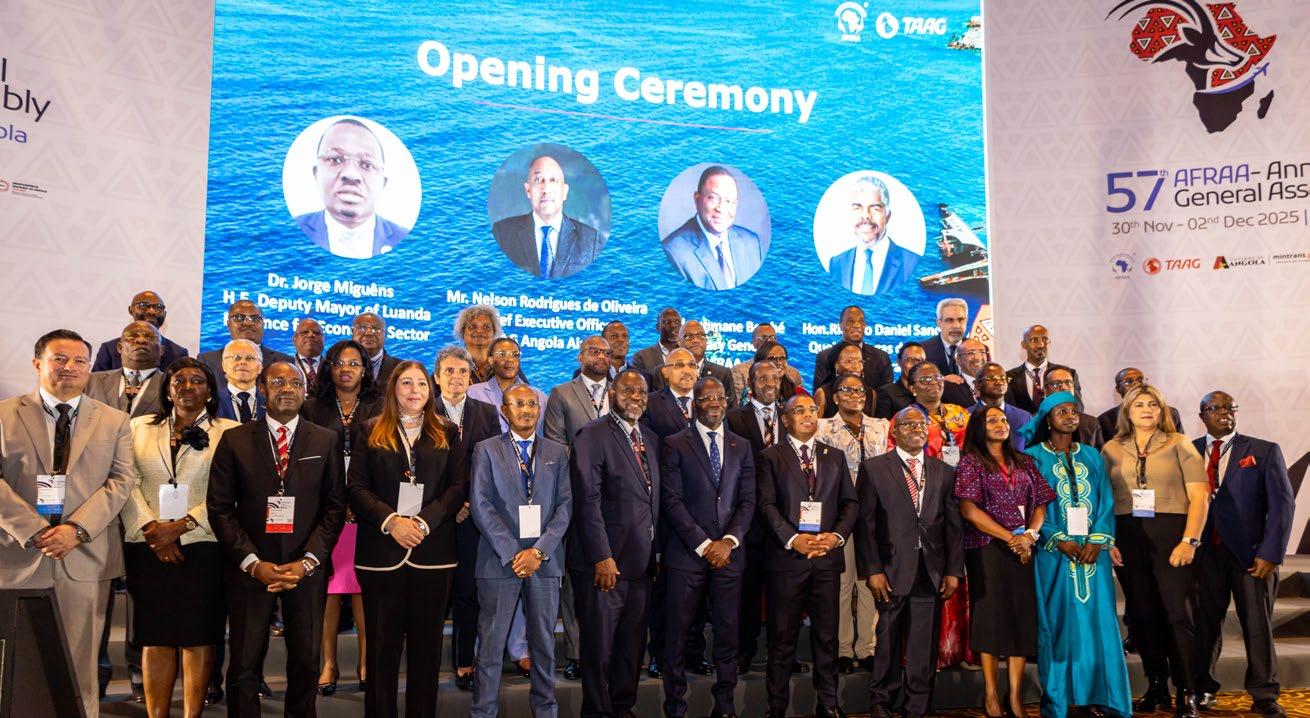
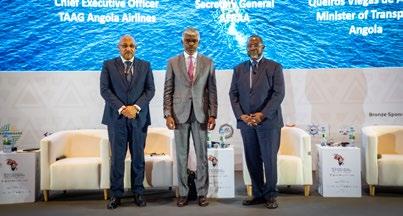
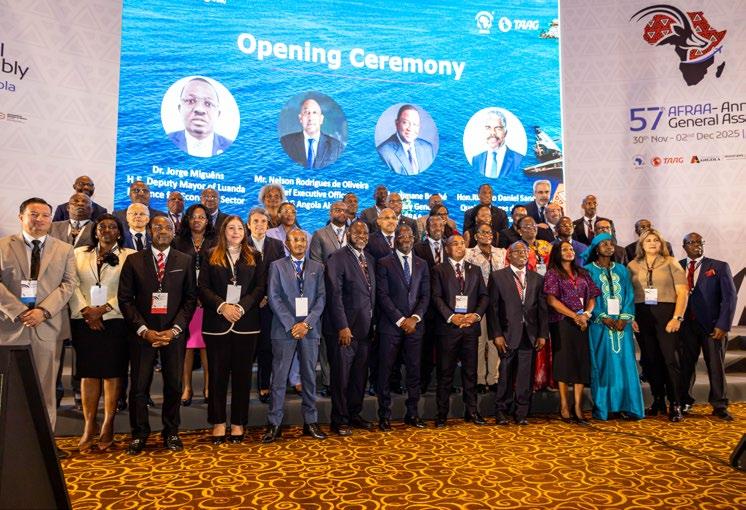
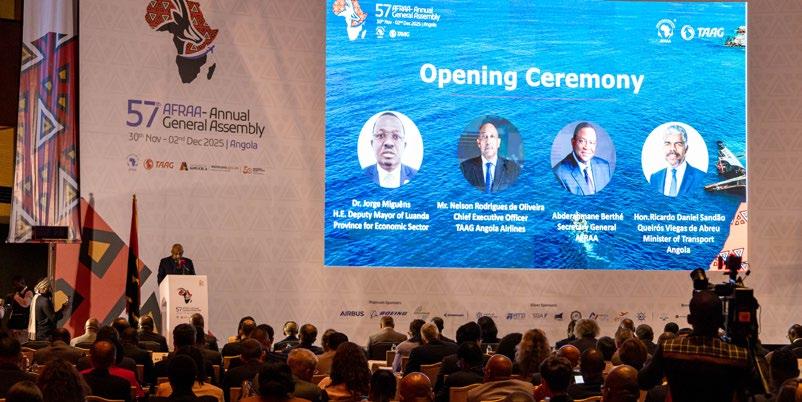
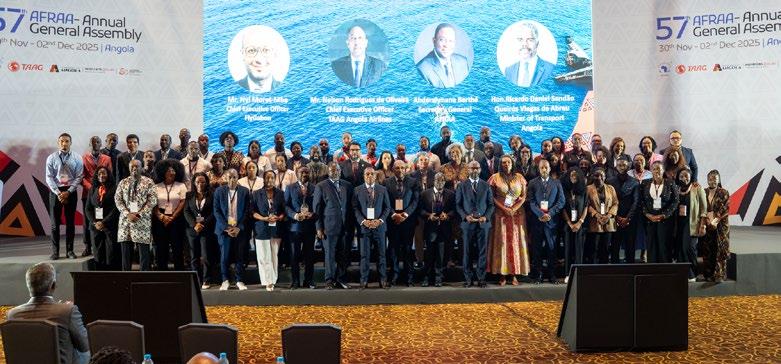
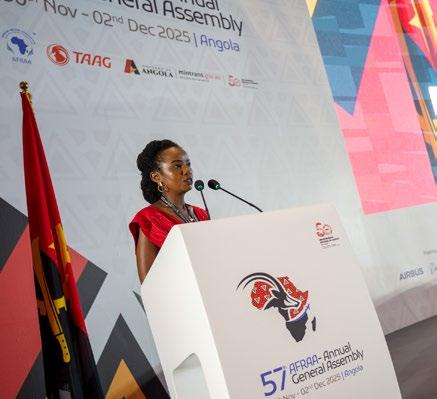
The 57th Annual General Assembly (AGA) and Summit of the African Airlines Association (AFRAA) took place from 30 November – 02 December 2025 at the HCTA Talatona Convention Centre, Luanda.
The event was hosted by TAAG Angola at the high patronage of the Government of Angola under the theme: “Sustainable Skies, Connected Africa”, reflecting a shared commitment to building a more integrated, resilient and sustainable African aviation sector.
The AGA attracted over 500 high profile delegates from the aviation industry in Africa, Europe, Middle East, Asia and North America and was officiated by Hon. Ricardo Viegas d’AbreuMinister of Transport, Government of the Republic of Angola.
In his opening address, Mr. Nelson Rodrigues de Oliveira, Chief Executive Officer of TAAG Angola Airlines, underlined that the theme represents a collective mandate for all stakeholders in African aviation. He called for coordinated action to strengthen intra-African connectivity, while ensuring that the sector’s growth remains environmentally and financially sustainable.
He also highlighted Angola’s ongoing aviation transformation, notably the progressive commissioning of the Dr António Agostinho Neto International Airport in Luanda, presented as a strategic asset to support North–South and East–West connectivity, as well as trade and tourism across the continent.
The official addresses were followed by goodwill messages from institutional and industry partners, reaffirming their support for African airlines and for AFRAA’s role in advancing the sector. In her goodwill message, Ms. Adefunke Adeyemi, Secretary General of the African Civil Aviation Commission (AFCAC), stressed the strategic importance of the Single African Air Transport Market (SAATM) and the need to accelerate its effective implementation. She highlighted the expected multiplier effects on connectivity, airline competitiveness and Africa’s economic integration.
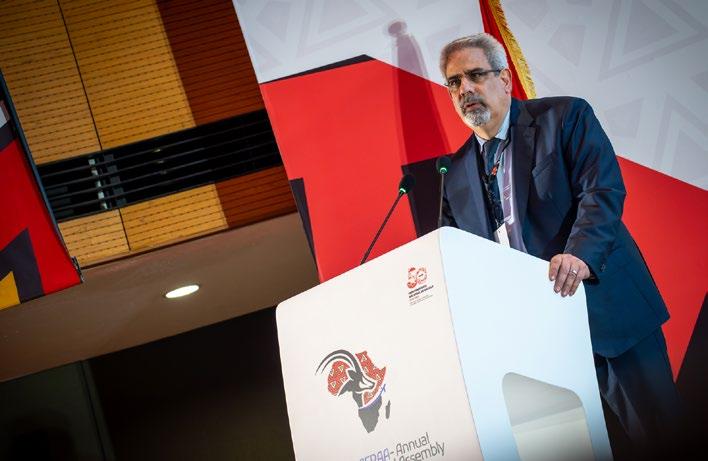
In the same vein, Mr. Aaron Munetsi, Chief Executive Officer of the Airlines Association of Southern Africa (AASA), called for stronger engagement by African airlines within their professional associations. He noted that the credibility and effectiveness of the sector depend on active participation, clear leadership and a collective willingness to move from diagnosis to implementation. He also underlined the responsibility of African stakeholders in improving intra-African connectivity and addressing structural and regulatory constraints.
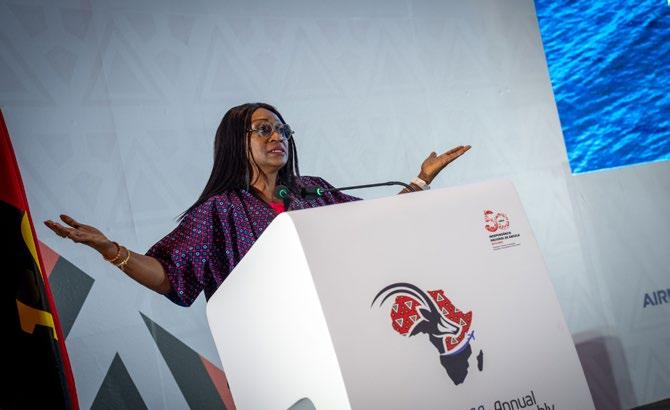
Mr. Kamil Al-Awadhi, Regional Vice President Africa and Middle East at the International Air Transport Association (IATA), reaffirmed IATA’s commitment to supporting the African aviation industry in strengthening safety, improving connectivity and enhancing the sector’s economic sustainability.
He emphasized the importance of closer cooperation between airlines, civil aviation authorities and industry partners to create a more enabling environment for investment and growth.
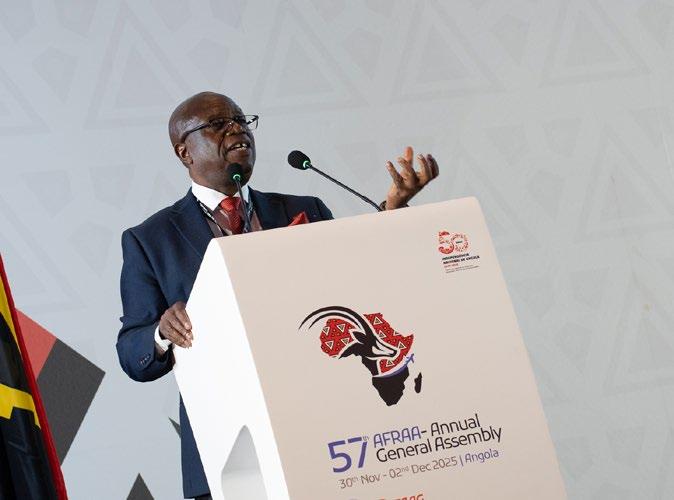

The opening session of the 57th AFRAA Annual General Assembly thus set the overall framework for the discussions that followed, highlighting a convergence of priorities among airlines, continental institutions and industry partners. The proceedings continued through a series of CEOs’ roundtables, thematic panels and specialized presentations, focusing on the reinvention of airline business models, hub development and connectivity, sustainability, technological innovation and the implementation of SAATM.
Programme highlights
The programme discussions were as follows:
AFRAA CEOs Retreat
On the eve of the AGA, airline leaders from member carriers convened in Luanda, Angola, for a new edition of the AFRAA CEOs’ Retreat, hosted by TAAG Angola Airlines. Designed as a strategic forum for high-level dialogue, this initiative recommended by the AFRAA Executive Committee for 3 years provides senior airline executives with an opportunity to reflect on the Association’s priorities and on the evolving dynamics of Africa’s air transport industry.
Discussions focused on AFRAA’s new Strategic Plan 2026-2030, a review of the last Strategic Plan, Strategies for airlines to de-risk opening of new routes.




CEOs Roundtable: “ Radical Reinvention for African Airlines Amidst Ongoing Challenges”
African aviation faces a paradox: while global forums discuss growth and profitability, the continent’s carriers confront turbulence from fuel price shocks, high operating costs, uneven playing field, supply chain challenges and infrastructure gaps.
This session explored how to reinvent strategies—revealing how leading carriers are turning crises into competitive advantages through out-of-the-box strategies.
CEOs on panel:
Mr. Lemma Yadecha Gudeta, Group Chief Commercial Officer - Ethiopian Airlines
Mr. Nelson Pedro Rodrigues de Oliveira, Chief Executive Officer - TAAG Angola Airlines
Mr. Allan Kilavuka, Chief Executive Officer - Kenya Airways
Mr. Thierry Cloutet, Head of Business Growth - Airbus
Moderator: Eng. João Carlos Pó Jorge is currently VP Africa, ME and SEA - HiFly

Government of Angola Roundtable: “A Hub Strategy for Intra-African & Global Connectivity – The Angola Aviation Transformation”

This presentation outlined Angola’s hub strategy and aviation transformation strategy to position itself as a West-Central African hub, leveraging geographic advantages, infrastructure investments, and policy reforms. Key focus areas include: Luanda’s New International Airport (AIAAL), Open Skies, Leadership, TAAG Fleet Modernization and PPPs. The session showcased Angola’s practical steps to enhance continental connectivity while balancing economic and environmental sustainability.
Ms. Augusta Frederico Fortes – Secretary for Trade and Services
Mr. Augusto Laurindo Kalikemala – Secretary of State for Tourism
Ms. Amélia Domingues Kuvingua – Chairperson of the Board of ANAC
Mr. ClÓvis Rosa – Chairman TAAG Angola Airlines
Moderator: Capt. Rui Carreira - Secretary of State for Civil Aviation, Maritime and Port Sectors
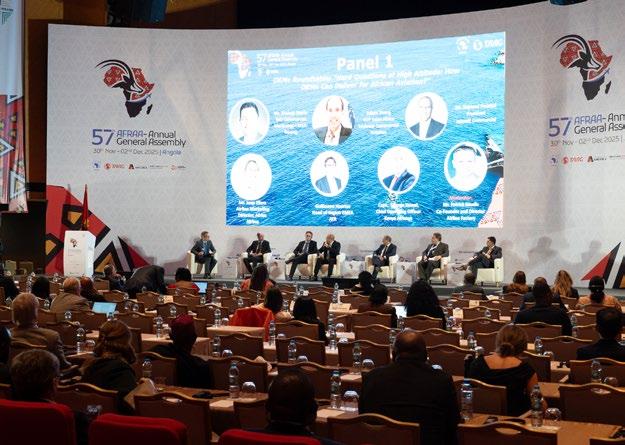
Panel 1: “OEMs Roundtable: “Hard Questions at High Altitude: How OEMs Can Deliver for African Aviation”
Panelists:
Mr. Shahab Matin, Managing Director Commercial Marketing - Middle East and Africa – Boeing Commercial Airplanes
Mr. Joep Ellers, Airline Marketing Director, Africa – Airbus
Mr. Adam Young, RVP Sales Africa - Embraer Commercial Aviation
Mr. Guillaume Huertas, Head of Region, EMEA - ATR
Mr. Raphael Haddad, President - Jetcraft Commercial
Capt. George Kamal, Chief Operating Officer - Kenya Airways
Moderator: Mr. Patrick Baudis, Co-Founder and Director – Airline Factory
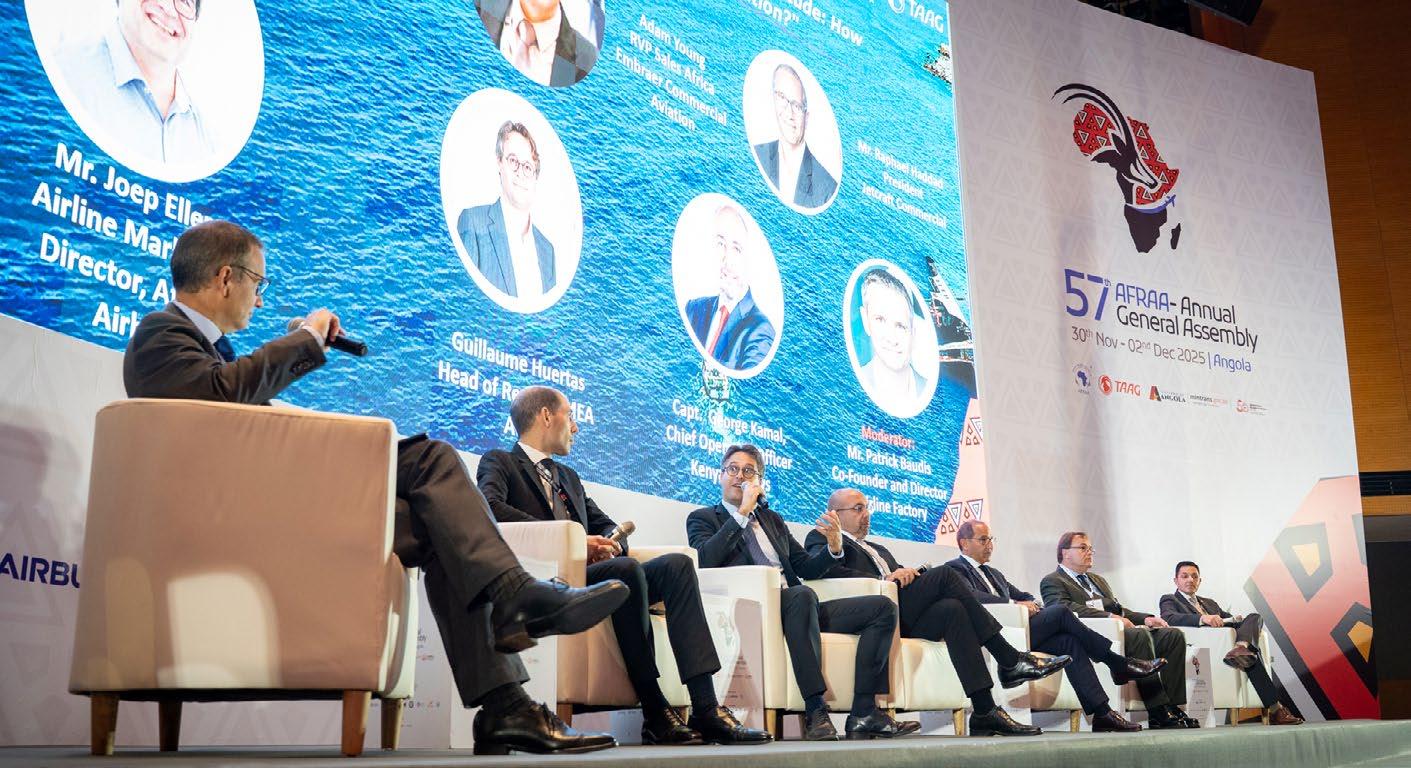
Executive interview session 1
“Leadership Dialogue: Driving Continental Collaboration Under SAATM”
The Single African Air Transport Market (SAATM) represents one of the key aviation projects for Africa yet implementation is slow. This leadership dialogue cut through the rhetoric identified exactly the progress made and which bold collaborations will finally deliver results. We move beyond memoranda to measurable actions.
Executives on panel
Ms. Adefunke Adeyemi, Secretary General – African Civil Aviation Commission
Mr. Mabitsi Legodi, Head of Business Development - Air Traffic and Navigation Services (ATNS),
Moderator: Raphael Kuuchi – Consulting Director Government Legal & Industry Affairs - AFRAA
Moderator: Eng. João Carlos Pó Jorge is currently VP Africa, ME and SEA - HiFly
Panel 2: “The Ancillary Revolution: Paving the Way for African Airlines to Capture the Untapped $2 Billion Market”
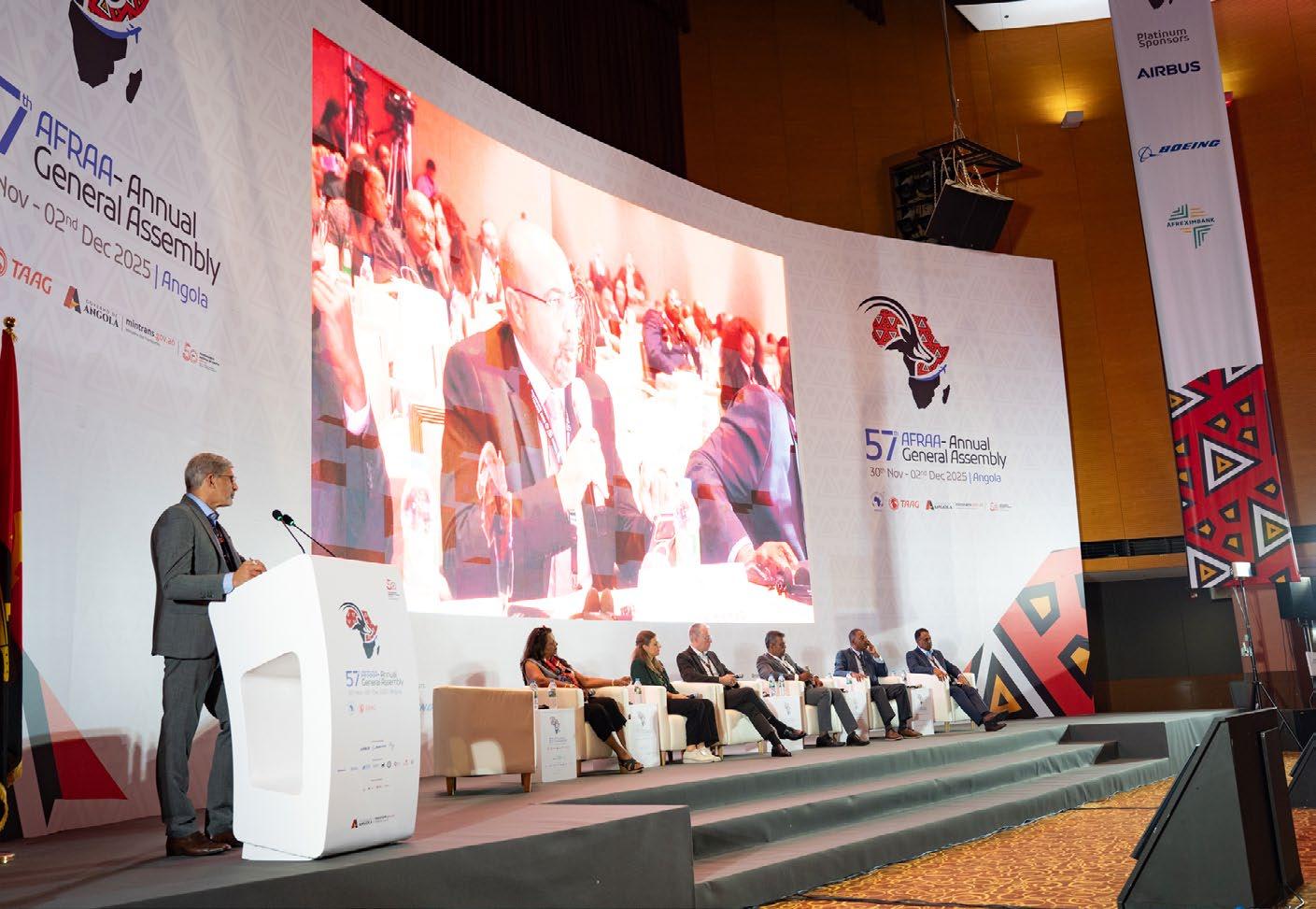
While global airlines generate $65+ per passenger from ancillaries, African carriers average just $9. This session revealed the hidden profit pools and unconventional strategies that will transform African aviation’s financial trajectory - with case studies proving what works on the continent.
Panelists
Ms. Franziska Meier Zu Eissen, Head of Airline Solution for META Region - Amadeus
Mr. Kristiaan van Dijken, VP Airline Account Management - TPConnects
Ms. Achma Asokan Foster, Group CEO - AirlinePros International
Mr. Mahesh Pai, Director Products - Verteil Technologies Private Ltd
Mr. Getaneh Desta Woldemichael, Director Commercial - Eswatini Air
Mr. Somas Appavou, Regional Director External Affairs & Sustainability Africa - IATA
Moderator: Eng. João Carlos Pó Jorge is currently VP Africa, ME and SEA - HiFly
Boeing-AFRAA Sustainability Workshop
The African Airlines Association (AFRAA) and Boeing hosted a sustainable aviation workshop at this year’s AFRAA General Assembly.
The session provided African airlines and other delegates with insights from Sustainable Aviation Fuel (SAF) analysis recently developed by the World Bank and the Boeing supported
work by the Roundtable on Sustainable Biomaterials (RSB).
The session included roundtable discussions that focused on identifying actions and next steps to harness the significant potential of Africa’s SAF ecosystem, and deliver the associated economic, social, and environmental benefits across the continent.
2026 President and Host of the 58th AGA

The 57th AGA Assembly concluded with the handover of the presidency to Mr. Nyl Charles Moret-Mba, Chief Executive Officer of Fly Gabon, who will serve a one-year term, succeeding Mr. Nelson Pedro Rodrigues de Oliveira. He was accompanied by Ms. Edwige Koumby Missambo, Ambassador of the Republic of Gabon to Angola.
AFRAA Executive Committee 2026


Fly Gabon
Member and President of AFRAA
Kenya Airways Chairman

Ethiopian Airlines Member
Tunisair
1st Vice Chairman



RwandAir
2nd Vice Chairman

ASKY Airlines Member

TAAG Angola Airlines Member
Air Tanzania Member
Royal Air Maroc Member
Congo Airways Member

LAM Mozambique Member
EgyptAir Member
AFRAA Annual Awards 2025

The AFRAA annual awards recognize excellence in service delivery, innovation and competitiveness in airlines, individuals and service providers in the African aviation industry. The Assembly conferred for three award categories, namely: the “Distinguished Service Award”, “Airline of the Year Awards” and “Outstanding Service Award”.
Distinguished Service Award
To the Free Route Airspace (FRA) Champions for driving the FRA project in Africa that will continue to result in Air Traffic Management efficiency; Removal of constraints imposed by fixed route structure; Optimized airspace capacity; Fuel burn reduction; Carbon emission reduction and Flight efficiency and flexibility:
Mr. Billy Diabasenga (PMT Chairman)
Mr. Gaoussou Konate AFRAA
Mr. Protus Seda IATA
Ms. Keziah Ogutu ICAO
Mr. Thabani Myeza CANSO

Ghana Civil Aviation Authority (GCAA)
l’Agence pour la Sécurité de la Navigation Aérienne en Afrique et à Madagascar (ASECNA)
Nigerian Airspace Management Agency (NAMA)
AFREXIMBANK
FRA Airlines
• Ethiopian Airlines
• Kenya Airways
• EgyptAir
• Royal Air Maroc
• RwandAir
• ASKY Airlines
Airline of the Year Award – Best Profitability

Airline of the Year Award – Ethiopian Airlines
For Best Profitability - Global Operations for the year 2024
(Meilleure rentabilité – Opérations mondiales pour l’année 2024)

Airline of the Year – ASKY Airlines
For Best Profitability - Regional Operations for the year 2024
(Meilleure rentabilité – Opérations régionales pour l’année 2024)

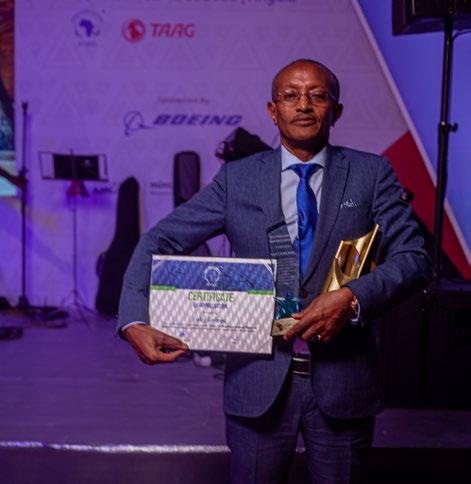
Airline of the Year – Fly Boskies
For Best Profitability - Regional Operations for the year 2024
(Meilleure rentabilité – Opérations régionales pour l’année 2024)


Airline of the Year – Jambojet
For Best Improved results in terms of profit ratio for the year 2024 vs 2023 (Meilleure amélioration des résultats en termes de ratio de rentabilité en 2024 vs 2023)


Airline of the Year – Ethiopian Airlines
For Best Improved in intra-Africa Connectivity for the year 2024 (Meilleure amélioration de la connectivité intra-africaine pour l’année 2024)

Airline of the Year – Precision Air
For Best Improved in intra-Africa Connectivity for the year 2024 (Meilleure amélioration de la connectivité intra-africaine pour l’année 2024)

Outstanding Service Award
Ethiopian Airlines for significant contribution to the African Aviation Industry for the year 2024. (Pour sa contribution significative au développement de l’industrie aéronautique africaine au cours de l’année 2024)



CSR event for Youth Development in Aviation as Part of the 57th AFRAA AGA Programme of Activities

“Empower – Inspire – Innovate for the Future of African Aviation”
AFRAA, in collaboration with TAAG Angola Airlines, incorporated the Youth Development in Aviation Outreach Initiative as part of the AFRAA AGA 57 lineup of activities.
Various activities were staged during and after the 57th AFRAA Annual General Assembly in Luanda, Angola, as part of the industry’s collective effort to empower, motivate, and attract African youth into aviation careers.
During the conference sessions on Monday, University students had the opportunity to join the conference sessions and get industry exposure as well as network with industry professionals. TAAG Angola Airlines Team held workshops for the university students at the AGA.
« Autonomiser – Inspirer –Innover pour l’avenir de l’aviation africaine »
Dans le cadre de la 57e Assemblée Générale Annuelle de l’AFRAA, l’Association des Compagnies Aériennes Africaines, en collaboration avec TAAG Angola Airlines, a mis en œuvre une initiative dédiée au développement de la jeunesse dans l’aviation. Cette action s’inscrit dans l’engagement collectif du secteur visant à encourager, motiver et orienter les jeunes Africains vers des carrières dans l’aviation.
L’initiative a permis à des étudiants universitaires et du secondaire de bénéficier d’une exposition directe au secteur aérien à travers des
Objectives of the initiative were as follows:
• To inspire and motivate youth to pursue education and careers in aviation and aerospace.
• To raise awareness of the diverse career pathways in aviation—from engineering, piloting, and airport operations to AI, sustainability, and data analytics.
• To connect students with mentors and role models from across the African aviation industry.
• To contribute to AFRAA’s strategic focus on building capacity and ensuring the sustainability of the aviation workforce in Africa.
03 Dec student outreach event
AFRAA and TAAG Angola Airlines held a 1-day outreach event for high school students from Instituto Médio Industrial de Luanda and Colégio Elizângela Filomena. The event was held under the Theme: “Empower –Inspire – Innovate for the Future of African Aviation”
A fireside chat session gave the students an opportunity to interact with the industry professionals and gather views on industry trends and ideas on careers in aviation. the speakers during the fireside chat shared their experiences, facts and figures on aviation, their educational journey, what is takes to get qualified for their roles, the role they play in airline operations, their day-to-day experiences in a bid to inspire and motivate the students into aviation careers. The following speakers interacted with the students:
sessions interactives, des échanges avec des professionnels de l’industrie et des activités de sensibilisation. Les participants ont notamment pris part à des discussions inspirantes sur les métiers de l’aviation, les parcours de formation et les opportunités professionnelles.
Le programme s’est conclu par une visite éducative du nouvel Aéroport International Dr António Agostinho Neto de Luanda, offrant aux étudiants une immersion concrète dans l’environnement aéroportuaire et renforçant l’importance du développement des compétences pour l’avenir de l’aviation africaine.



1. Edgar Quessongo, HR Director - National Civil Aviation Authority (ANAC)
2.Maureen Kahonge, Senior Manager Business Development & Communications – AFRAA
3.Bernarda Henriques, Chairman - National Air Navigation Company (ENNA)
4.João Pó Jorge, Former CEO of LAM Mozambique Airlines
5.Neide Teixeira, Chief Legal and RH OfficerTAAG Angola Airlines
6.Monica Cristino, Board Member - TAAG Angola Airlines
7.Captain Alexandra Lima, Captain 777/787 - TAAG Angola Airlines
Following the fireside chat and motivational talks, the students had an opportunity to visit the new Dr. António Agostinho Neto International Airport in Luanda – Angola to cap their day’s experience.


Interview with

Nelson Rodrigues de Oliveira
CEO, TAAG Angola Airlines
TAAG Angola Airlines stands at a defining moment in its development. With the transition to the new Dr. António Agostinho Neto International Airport in Luanda, a multi-year modernization program underway, and renewed ambitions across Africa and the South Atlantic, the airline is positioning itself as a central player in regional and intercontinental connectivity. In this conversation, CEO Nelson Pedro Rodrigues de Oliveira reflects on TAAG’s strategic priorities, its commitment to operational excellence, and its role in contributing to Angola’s socio-economic progress and to the collective advancement of African aviation.
Vision & Identity

How would you describe TAAG’s long-term vision as Angola’s national carrier, and the role the airline intends to play in strengthening air connectivity across Africa?
Our vision is clear: To be the airline of choicefor passenger and cargo services connecting Southern Africa to the world, with a strong emphasis on sustainability and innovation.
Our mission as the flag carrier is to offer air services that are safe, reliable, modern, and customer-centric, while simultaneously generating value for all stakeholders.
In the African context, our focus is on fostering connectivity. We aim to be the engine that
drives trade, tourism, and regional integration, utilizing Angola as the ideal strategic point to unite the continent.
Empowered by its geostrategic location, TAAG can offer seamless NorthSouth and East-West connections, benefiting passengers’ mobility and facilitating the import/export of goods on a global scale.
Transformation & Governance
TAAG has been undergoing a structured transformation. What guiding principles, management priorities, and governance frameworks are shaping this new phase of the company’s development?
TAAG Angola Airlines is actively driving its modernization and holistic transformation journey to ensure the consolidation of a competitive, sustainable, and efficient airline. Six strategic pillars guide our governance and the priorities of our management team:
1- People and Community,
2- Organizational Efficiency,
3- Operational Excellence,
4- Commercial Superiority,
5- Connectivity and Hub,
6- Financial Sustainability.
Within the scope of our 2024-2029 Strategic Plan, we have also defined the following accelerators that will facilitate the achievement of these strategic pillars and the company’s reform. These are considered our critical success factors: Partnerships, Innovation & Technology; Infrastructure and Culture.
Overall, and with the support of specialized partners such as Lufthansa Consulting, we have developed a comprehensive transformation plan. This plan is grounded in technical rigor and innovation, customized specifically for the aviation sector, to optimize our financial structure, reinforce operational capacity, and promote an organizational culture centered on compliance, performance, and service excellence.
Luanda Hub Development (NBJ)
With the transition to the new Dr. António Agostinho Neto International Airport, how is TAAG positioning Luanda as a strategic hub for regional and intercontinental passenger and cargo flows?
TAAG Angola Airlines, as the flag carrier and a strategic pillar of Angolan aviation, views the New Dr. António Agostinho Neto International Airport (NBJ) not merely as state-of-the-art infrastructure but as the primary catalyst for a new era of economic and social development in Angola.
The complete transition of our flight operations to NBJ is a testament to our confidence in this project and our commitment to transforming Angola into a connectivity hub for people and goods. This move directly drives the sustainable growth of international mobility and, in particular, regional integration.
The airport has the potential to consolidate itself as a continental hub and a vital link between the North and South and the East and West. Its impact transcends the aviation sector, promising to stimulate the economy on diverse fronts, ranging from tourism and trade to agriculture and industry.
With a capacity for 15 million passengers per year and the distribution of up to 130,000 tons of cargo annually, the New Dr. António Agostinho Neto International Airport fits the concept of an aerotropolis.
By creating a new economic and logistical center with multimodal connectivity (railway, road network) as well as facilities for goods storage and conservation, it offers a set of competitive advantages that boost the development of the country and the region, opening new perspectives for the movement of people and corridors for international import/export.
Network Strategy & Regional Growth
Which markets and regional corridors are priorities for future network expansion, and what criteria does TAAG use to assess route viability and strategic relevance?
TAAG Angola Airlines is undergoing a fleet modernization plan with synergy with its route expansion agenda, designed to cement the airline’s role as a key facilitator of connectivity between Africa and the world. Our growth plans are expanding reach and depth. Meaning focusing on strengthening new frequencies to our existent and core markets while assessing new destinations to cover.
We are consolidating our regional expansion with the already active connection to East Africa, namely the Nairobi route. We have advanced plans for new destinations in Francophone and Lusophone Africa, thus increasing our network footprint in West and Central Africa.
From an intercontinental perspective, we are very close to announcing regular flights to Asia, where we have mapped China and India as destinations of interest. Furthermore, new connections to Europe and the Americas remain under continuous study, in addition to the routes to Lisbon (Portugal), São Paulo (Brazil), and Havana (Cuba) that we currently operate.
Our route evaluation criteria are rigorous, namely:
• Economic Viability: Analysis of demand and profitability per seat.
• Strategic Value: The route’s ability to feed connections within our network.
• Socioeconomic Impact: The route’s impact on trade and tourism via Angola and its strategic alignment with the hub vision of the country and the Angolan Government.
Partnerships & Cooperation
Collaboration is increasingly essential in today’s aviation ecosystem. How is TAAG approaching partnerships, codeshare agreements, and commercial cooperation to strengthen its network offering?
Partnerships are critical to expanding our reach without the cost of operating aircraft on every route. Our approach is pragmatic and mutually beneficial. We have codeshare and commercial agreements in place that allow us to maximize the international capillarity of our network.
We can mention a partnership on each continent where we operate to illustrate the strategic dimension and value of collaboration. We have codeshare agreements with GOL in Brazil for both passenger and cargo segments, extending our reach deep into the Americas. We partner with IBERIA, facilitating connections for our passengers across Europe and worldwide. We maintain codeshare agreements with South African Airways, reinforcing our reach via the partner’s network.
Thus, we have a technical partnership agreement with Ethiopian Airlines for the provision of MRO (Maintenance, Repair, and Overhaul) services, which is vital for operational efficiency and technical compliance. This strategic collaboration model allows TAAG to enhance the passenger experience and offer a more fluid and comprehensive connection product globally.
Fleet Renewal & Operational Efficiency
Fleet modernization is central to performance and customer experience. What are the key considerations guiding TAAG’s fleet renewal and aircraft standardization strategy?
TAAG Angola Airlines is undergoing a decisive phase of its transformation strategy, driven by the introduction of a new-generation fleet. Far from being a mere aircraft incorporation exercise, the combined choice of the Boeing 787 Dreamliner and the Airbus A220-300 represents a surgical strategic decision focused on the complementarity of missions and maximum efficiency across different market segments.
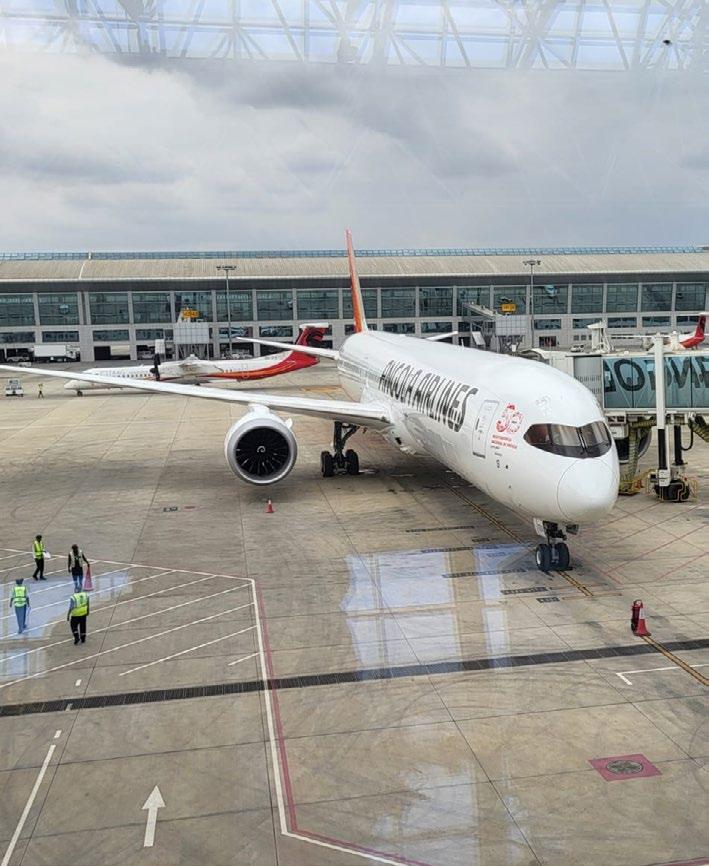
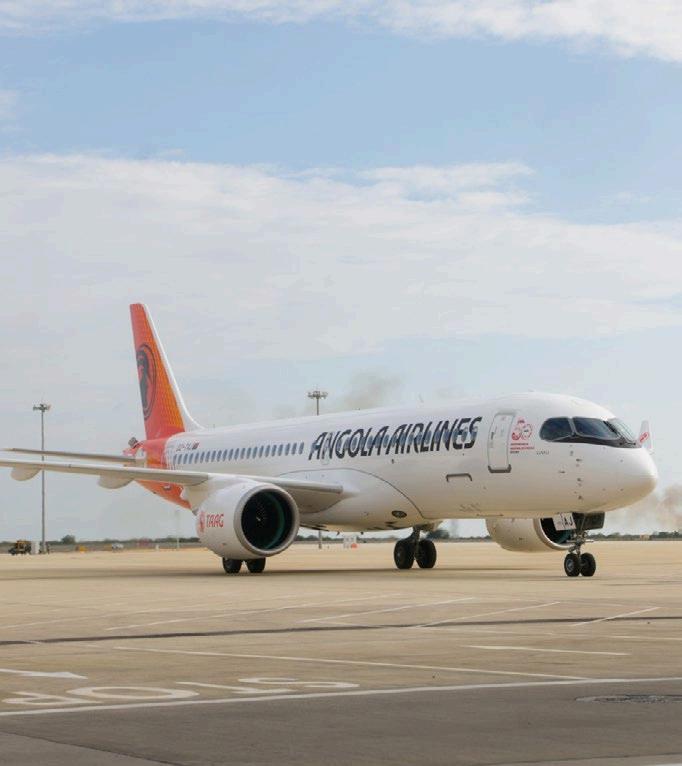
The Boeing 787 Dreamliner (787-9 and 787-10 models) is dedicated to TAAG’s intercontinental routes. In contrast, and in perfect synergy, the Airbus A220-300 serves intra-African connectivity.
These latest-generation aircraft bring enhanced efficiency to our operation and a premium experience for our passengers. Furthermore, they provide evidence of our commitment to sustainability and environmental protection through the reduction of emissions and noise pollution.
In summary, the B787 and A220 dual strategy allows TAAG to maximize revenue and efficiency in each market segment, reinforcing our ambition to be a key player in African aviation through a strategy of complementary and technologically advanced assets.
Customer Experience & Digital Evolution
Passenger expectations are evolving quickly. What initiatives are being introduced to enhance the customer journey, both onboard and through digital channels?
The investment in the new fleet—namely the Boeing 787 Dreamliner for long-haul routes and the Airbus A220-300 for regional routes—has introduced a differentiated level of comfort, convenience, and flight experience. These latest-generation jets offer quieter cabins and ergonomic seating, significantly raising the standard of quality perceived by the passenger.
Complementing this physical advancement, the company is finalizing the BYOD (Bring Your Own Device) concept. This system involves providing onboard Wi-Fi that will allow passengers to consume content, access TAAG’s digital services, and remain connected throughout their flight.
In parallel with the flight experience, TAAG has revolutionized its customer touchpoints on the ground. The launch of a new website and a mobile application grants passengers greater autonomy and easy, intuitive access to all TAAG services, from booking and check-in to trip management.
TAAG ensures that human support complements this digital evolution. The call center teams receive constant training, and the support service is also available via WhatsApp, providing direct and fast communication with interoperability for digital payment solutions, streamlining transactions and purchases of tickets and related services.
Additionally, TAAG’s stores and lounges are designed as pleasant and welcoming spaces that provide comfort and tranquility, offering customers and passengers high-quality contact points throughout their journey with the company.
Cargo & Logistics Contribution
The pandemic highlighted the strategic role of air cargo in supply chains. How is TAAG strengthening its cargo capabilities and positioning itself within regional and intercontinental logistics flows?
Air cargo is an area of great focus and growth, and it counts on the New Airport (NBJ) as a fundamental piece, given its scalable cargo handling capacity.
Following the airline commercial strategy, focused on empowering the company footprint within the African air cargo market, TAAG Angola Airlines has regular cargo services to Lagos (LOS) in Nigeria, Brazzaville (BZV) in the Republic of Congo, Johannesburg (JNB) in South Africa, and Nairobi (NBO) in Kenya. The company also has plans to expand its cargo operations to other strategic cities, including Libreville (LBV), Kinshasa (FIH), Harare (HRE), Lusaka (LUN), and Accra (ACC), strengthening its presence in the African market.
TAAG is capitalizing on the freighter B737800BCF (Boeing Converted Freighter) incorporated into its fleet. It can transport up to 24 tons of cargo, with 11 pallet positions that accommodate 10 contoured 96 in x 125 in pallets.
Last year, TAAG Angola Airlines and AVIANCA Airlines formed a strategic partnership in the
air cargo transport sector by establishing a Special Prorate Agreement (SPA). The agreement will enable TAAG Angola Airlines to expand its presence in key South American markets, offering customers and the industrial cluster from Europe and Africa access to new routes beyond São Paulo (GRU) in Brazil. These routes include Bogotá (BOG) in Colombia, Santiago (SCL) in Chile, Lima (LIM) in Peru, Montevideo (MVD) in Uruguay, and Quito (UIO) in Ecuador.
The cargo business is strategic for TAAG Angola Airlines, playing a key role in promoting the Angola hub and the New Luanda International Airport as an infrastructure of reference in African import/export circuits. In addition, this initiative contributes directly to the objectives of the African Free Trade Agreement (AfCFTA), promoting greater commercial integration between the countries of the continent.
Sustainability & Economic Contribution
As a national carrier, TAAG contributes to tourism, trade, and socio-economic development. How do you balance commercial sustainability with your broader national and regional responsibilities?
Commercial sustainability fosters our financial KPI, while serving in-country routes or strategic links gives us a greater purpose and socioeconomic relevance. Balancing this equation means facilitating routes that, while they may not be the most profitable in the short term, are vital, either for territorial inclusion or for the development of key sectors such as tourism and trade, or to attract investors. In the end, aviation connects multiple streams and business sectors in Angola.
Air transport is indispensable to Angola’s current and future economic diversification, while our fleet allows, in addition to passenger transport, air cargo services, which have become essential for the country and Africa’s growth in their import/export capabilities.
TAAG Angola Airlines is the leading airline in the country and the pride of all locals. While Angola has a vast territory, the airline plays a relevant role connecting major cities in-country,thus linking Angola to regional and intercontinental hubs: Kenya, South Africa, Nigeria, Namibia, São Tome, Mozambique, DRC, Congo Republic, Portugal, Brazil, and Cuba.
In a nation undergoing significant transformation, the aviation sector is not just a service provider; it’s a strategic enabler of trade, tourism, and investment, diplomatic ties, etc.
In fact, we act as Angola’s ambassadors, promoting the country as a destination for investment and leisure on every flight we operate, and elevating the Angola brand at every international event we participate in.
SAATM & African Market Integration
How does TAAG view the implementation of the Single African Air Transport Market (SAATM), and what policy, regulatory, or infrastructure conditions do you believe are essential to ensure that liberalized skies translate into fair competition, sustainable connectivity, and shared growth among African carriers?
We emphasize that TAAG is committed to the vision of the Single African Air Transport Market (SAATM) and the African Continental Free Trade Area (AfCFTA), viewing them as pillars for Africa’s economic prosperity.
The Single African Air Transport Market, aimed at liberalizing air transport across the continent, holds the potential to transform regional connectivity, reduce transportation costs, and stimulate economic growth through tourism, trade, and job creation.
SAATM, if fully implemented, is arguably a great catalyst for intra-Africa air traffic growth. To date, the impact is partial. While Angola has affirmed its commitment to SAATM, traffic benefits are delayed by the pace of implementation, which is still ongoing.
Despite notable progress, the full implementation of SAATM continues to face several obstacles. These include restrictive bilateral air service agreements, lack of harmonized regulations, insufficient infrastructure, and fragmented airspace management. As a result, African air travel remains with cost and efficiency challenges, limiting the continent’s ability to harness the full benefits of an integrated air transport market.
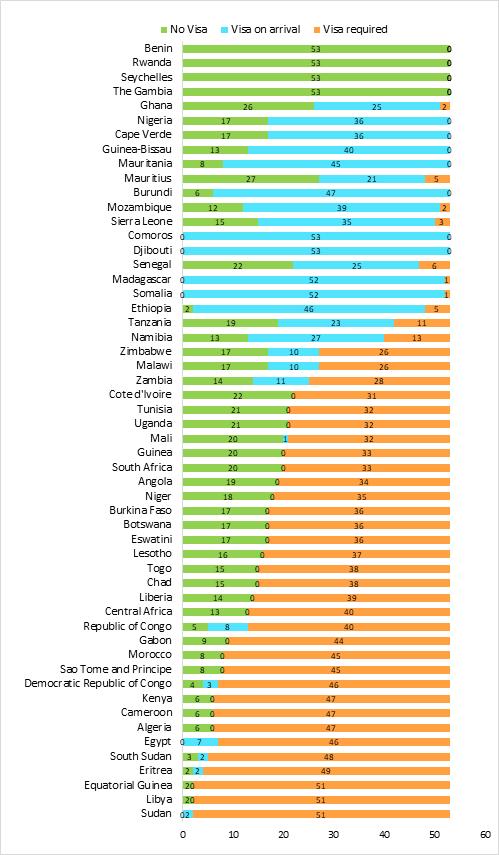
Having said that, several factors have already shown positive impacts and can further enhance connectivity, such as visa facilitation, strategic partnerships, infrastructure investment, policy and regulatory convergence, and shared economic objectives within African nations.
Thus, Africa’s air transport and tourism sectors are deeply interconnected, with tourism acting as a key driver for enhanced air connectivity. Tourism is a powerful catalyst for air transport development. Increased tourist arrivals stimulate demand for flights, leading airlines to introduce new routes and increase frequencies. This direct relationship encourages investment in aviation infrastructure and services.
Message to AFRAA & the African Industry
As Angola hosts the AFRAA General Assembly, what key message would you like to share with African airline leaders, regulators, and partners regarding cooperation and shared growth?
To our distinguished colleagues, leaders of African aviation, regulators, and partners, it is an honor for TAAG Angola Airlines to host the AFRAA General Assembly in Luanda.
Receiving the African Airlines Association (AFRAA) 57th Annual General Assembly (AGA) is a significant honor and a strategic opportunity for TAAG and Angola. It solidifies Luanda’s emergence as a major African aviation hub, especially following the operationalization of the new Dr. António Agostinho Neto International Airport.
The vision of a truly connected African continent is within our reach, but its realization requires a collective commitment to strategic transformation, operational excellence, and, above all, cooperation.
A reflection of my tenure as president of AFRAA is that it has been a great challenge and a huge responsibility focused on advancing AFRAA’s primary goals for the year about sustainability, collaboration, and profitability across African airlines.
We believe that the aviation sector in Africa is crucial to the development of our nations and to connectivity with major decision-making centers worldwide.
Let us commit, not just in principle, but in practice, to a transparent and collaborative ecosystem where African airlines rise together. Our shared success depends on it.
African-Skies Managing Editor: Maureen Kahonge Editorial Director: Romuald Ngueyap

The Single African Air Transportation Market: National Airlines at a Crossroads
Thrive or Struggle?
By Juno Beckers, Ryan Kim, and Arvind Chandrasekhar
Open Skies agreements have transformed global aviation by enhancing connectivity, lowering travel costs, and fostering economic growth. These agreements – implemented in the USA, ASEAN, and the EU – have demonstrated how deregulated air transportation markets stimulate competition, create jobs, and provide broader consumer choice.
Airports benefit from increased passenger volumes, while economies thrive through enhanced trade, business travel, and tourism. Airlines gain access to more markets, expanding networks; however, on the flip side, they face increased competition.
Launched in 2018, the Single African Air Transport Market (SAATM) aims to unlock these benefits for Africa. By the end of 2024, 36 African countries had signed the SAATM agreement, but only nine had fully implemented its requirements. SAATM seeks to establish a single, deregulated air transportation market across the continent; though progress has been hindered by concerns over the viability of national carriers in a more competitive landscape. This article examines SAATM’s objectives, the opportunities it
Le Marché unique du transport aérien africain (SAATM) constitue l’un des projets les plus structurants pour l’aviation du continent, visant à instaurer un espace aérien libéralisé, compétitif et intégré. Inspiré des accords « Open Skies » mis en œuvre aux États-Unis, en Europe et en Asie du Sud-Est, le SAATM ambitionne de renforcer la connectivité intra-africaine, de réduire les coûts du transport aérien et de stimuler les échanges économiques. Lancé en 2018, le dispositif repose sur six piliers clés, dont l’accès libéralisé au marché, la dérégulation tarifaire et la reconnaissance de l’African Civil Aviation Commission comme autorité de supervision. Toutefois, sa mise en œuvre reste inégale : fin 2024, seuls neuf pays appliquaient pleinement ses dispositions, reflétant les craintes persistantes liées à la viabilité des compagnies nationales dans un environnement concurrentiel. Les trajectoires contrastées d’Ethiopian Airlines et de Kenya Airways illustrent cet enjeu. La première a su capitaliser sur une stratégie intégrée et une préparation de
presents, and the challenges that must be overcome to fully unlock the potential of a liberalized African aviation market.
The launch of SAATM
According to “The SAATM Handbook by the African Civil Aviation Commission (AFCAC)” from January 2019, SAATM is built on six fundamental pillars:
•Liberalized market access, allowing eligible airlines to exercise the 1st, 2nd, 3rd, 4th, and 5th Freedoms of the Air traffic rights
•Unrestricted frequency and capacity
•Deregulated airfares Full liberalization of cargo services
•Recognition of AFCAC as the regulatory body
•Adherence to fair competition rules, consumer protection, and dispute resolution mechanisms
These measures aim to foster fair competition, lower fares, and en-
hance connectivity, making air travel more accessible to the wider traveling public. The liberalization of aviation in other regions demonstrates how lower fares and increased competition can drive passenger demand and economic growth.
Though SAATM is not yet fully implemented, early data indicates that countries adopting its principles have experienced significant growth in intra-African seat capacity, suggesting that liberalization also promotes growth within Africa. Yet, resistance from most countries impedes full implementation.
long terme, tandis que la seconde demeure freinée par des contraintes structurelles et infrastructurelles.
L’expérience de South African Airways rappelle enfin que le protectionnisme et les soutiens publics sans réformes profondes ne constituent pas une solution durable. Le SAATM doit ainsi être envisagé non comme une menace, mais comme un catalyseur de transformation, incitant les États et les compagnies africaines à renforcer leur compétitivité, leur gouvernance et leurs partenariats afin de prospérer dans un marché aérien ouvert et durable.
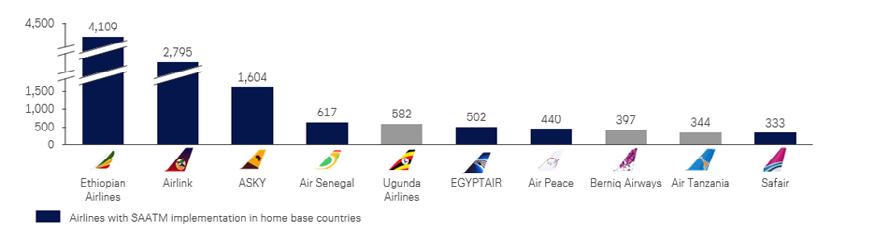
Figure 1: Top 10 International Intra-Africa seat capacity increase after SAATM (2024 vs. 2017, in thousands) Source: OAG
Success stories and challenges
Ethiopian Airlines exemplifies how a well-structured national carrier can thrive in an increasingly competitive African aviation market. While Ethiopia’s adoption of SAATM strengthens its future positioning, Ethiopian Airlines’ success is rooted in a strategic approach that has long prioritized network expansion, operational efficiency, and vertical integration. The close coordination between the airline, airport, regulatory bodies, and government has created a strong foundation, enabling significant growth across Africa and beyond. Comparing 2024 with 2017, Ethiopian Airlines introduced over four million additional seats on the intra-African market and opened new routes to four SAATM member states, demonstrating its ability to seize new opportunities while rein-
forcing its position as the continent’s leading carrier. As SAATM gains traction, Ethiopian Airlines is well-positioned to further capitalize on Africa’s market liberalization, expanding its reach while maintaining its competitive edge.
On the flip side, Kenya Airways faces ongoing challenges at its home airport in Nairobi (NBO). The airport is unable to accommodate growth due to limited capacity, operational inefficiencies, and a lack of vertical integration, all of which have hindered its ability to grow and compete effectively. Efforts to address these constraints suffered a major setback when a USD 2 billion investment fell through at the end of 2024 (according to media reports in The Pan African Review and Al Jazeera from AUG/NOV 2024), further delaying much-needed improvements.
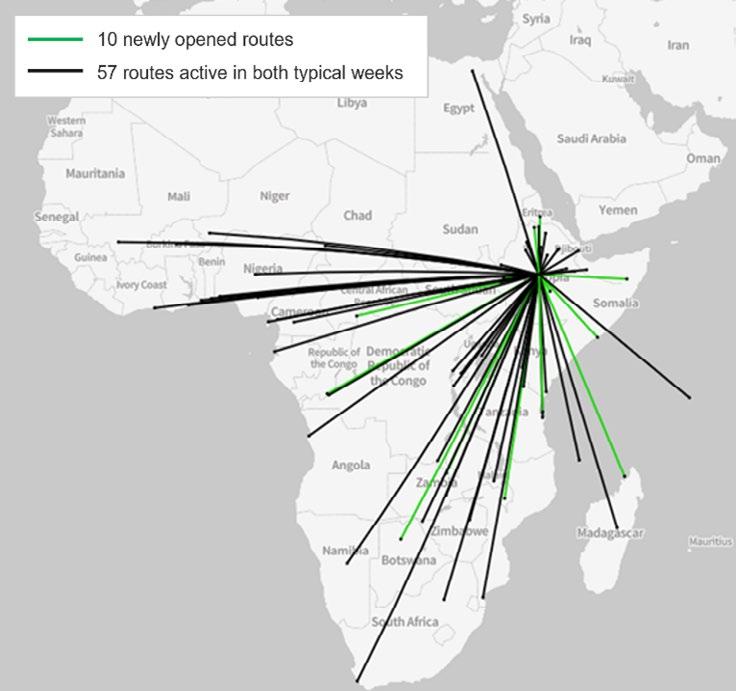
2: Ethiopian Airlines’ direct continental passenger routes from Addis Ababa (ADD) (typical week in June, 2017 vs. 2024) Source: OAG Mapper
Figure
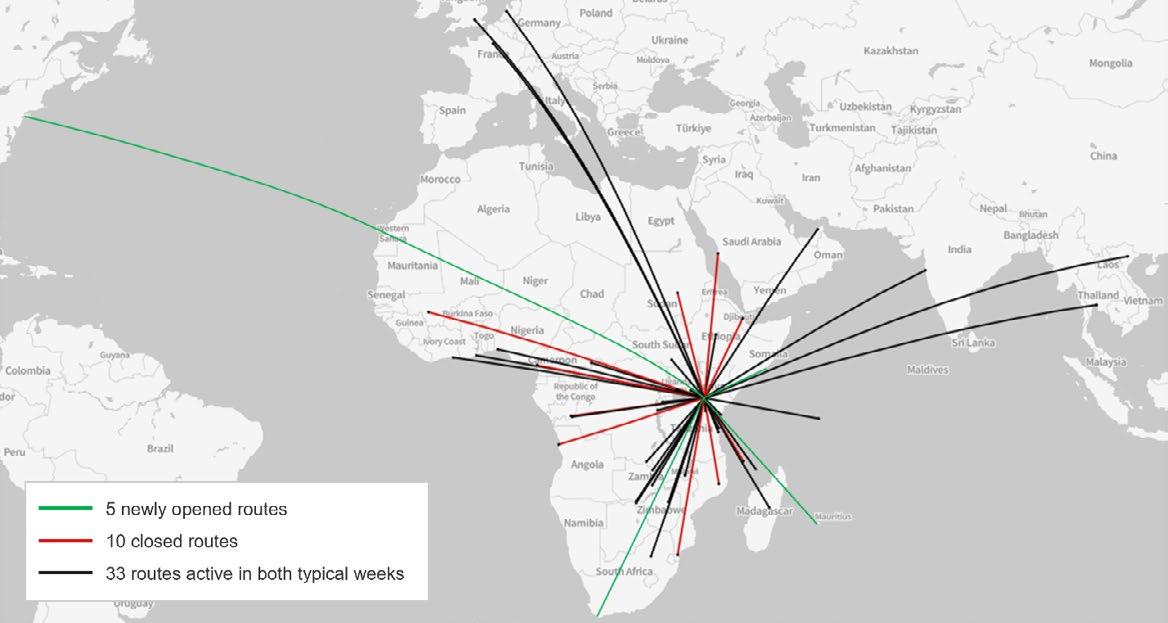
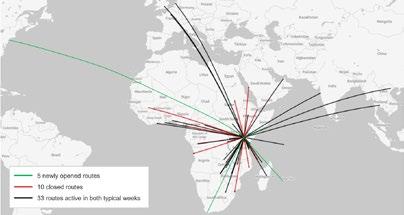
3: Kenya Airways’ direct passenger routes from Nairobi (NBO) (typical week in June, 2017 vs. 2024) Source: OAG Mapper
While striving to compete with Ethiopian Airlines, current stakeholder collaboration has negatively impacted Kenya Airways’ ambition. Kenya Airways has seen a net reduction of five routes since 2017, opening five new ones while discontinuing ten.
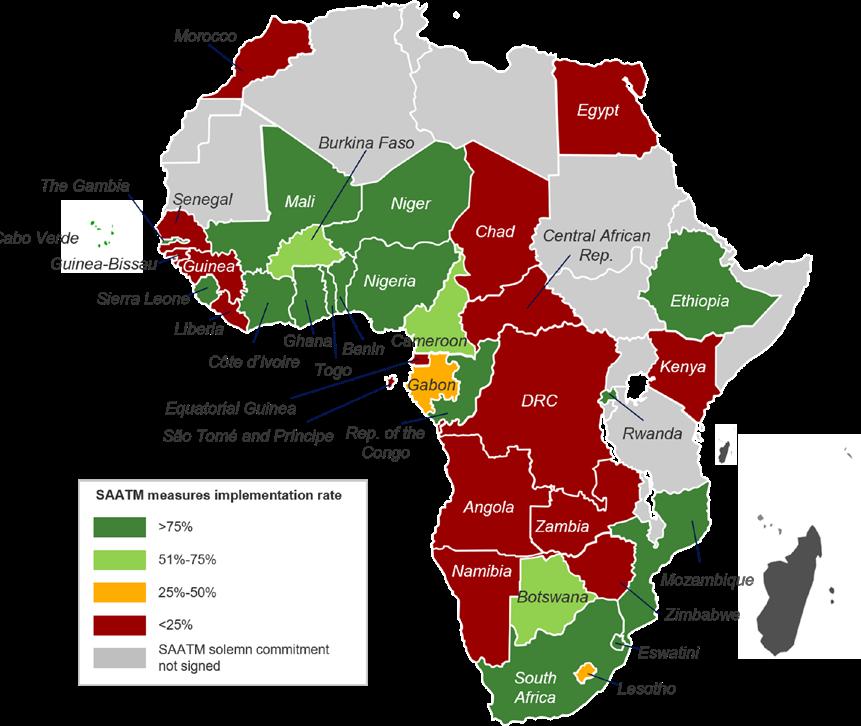
Looking at the differing implementation rates of SAATM: Ethiopia (80%) and Kenya (0%) show clear discrepancies in strategic stances toward SAATM as well. Although Kenya’s stance toward SAATM might be reluctant to protect their national carrier – it will restrict Kenya’s future growth potential.
Figure
Figure 4: Implementation rate of SAATM per country Source: SAATM Dashboard by AFCAC, as of July 2025
Overcoming resistance: ensuring SAATM readiness
Despite the benefits and potential of SAATM, only nine African countries have fully implemented its provisions, highlighting widespread and deep-rooted concerns
about national carriers’ survival in a liberalized market. Many African-flag carriers have relied on government protection and subsidies to survive. Opening the markets could expose them to increased competition, potentially leading to fatal consequences, including collapse. The main risks to underprepared national carriers that SAATM poses are summarized below:
Figure 5: Effect of SAATM introduction on national airlines in Africa (Lufthansa Consulting analysis)
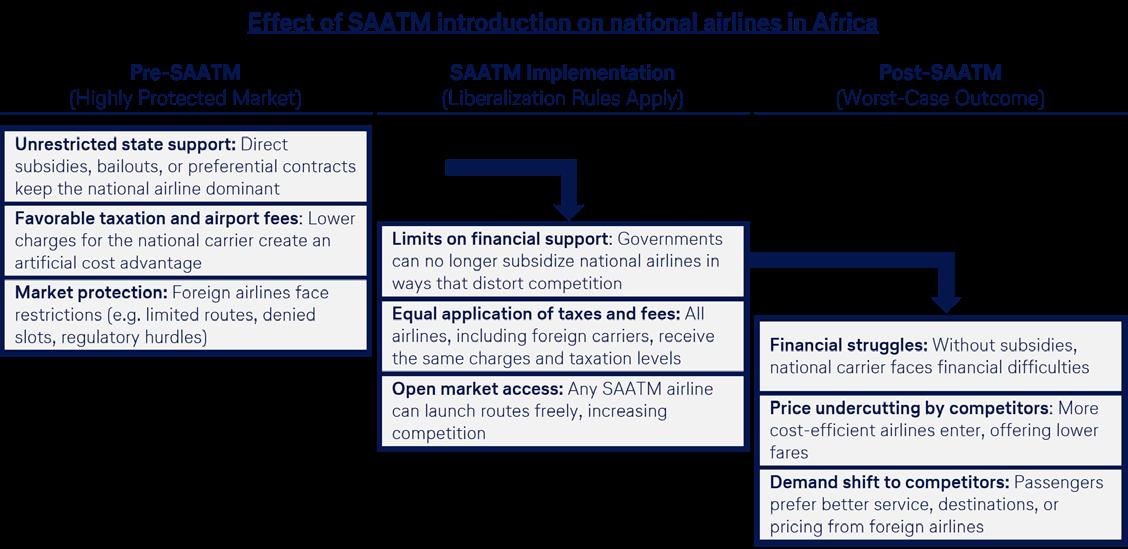
However, these risks are not inevitable. Countries can reinforce their national carriers by focusing on key attributes that help to strengthen an airline’s operations, as illustrated here (Lufthansa Consulting analysis):
Strategic response by airlines and stakeholders
Expected outcome for African aviation
Financial struggles
Price undercutting by competitors
Demand shift to competitors
Targeted strategic investment in modern fleets, digital transformation, and cost-efficient operations before SAATM
Enhancing service quality through premium experiences, loyalty programs, and differentiated offerings
Strategic partnerships (codeshares, interlining, joint ventures) with African and global carriers to extend network reach
Increased cost competitiveness, financial sustainability, and resilience against market shocks
Stronger customer retention, increased demand, and ability to compete beyond national borders
Improved regional and international connectivity, attracting transit and business passengers
By taking these points into consideration, national carriers can transition from protected entities to commercially viable airlines capable of thriving under SAATM rather than fearing it.
Lessons from South African Airways
South African Airways’ (SAA) collapse highlights the risks of continuous government bailouts without structural reforms. Despite receiving over USD 2.7 billion in support between 1994 and 2020, the airline declared bankruptcy, with key factors including inefficient operations, excessive government in-
terference, and a lack of strategic restructuring as reported by Daily Investor in May 2023.
Currently, the airline is merely a shell of its former self, facing challenges in securing new funds and investments. While the gap of flights caused by SAA’s exit has been somewhat filled by other airlines, compared to 2017, ten percent of the destinations from Johannesburg have been lost.
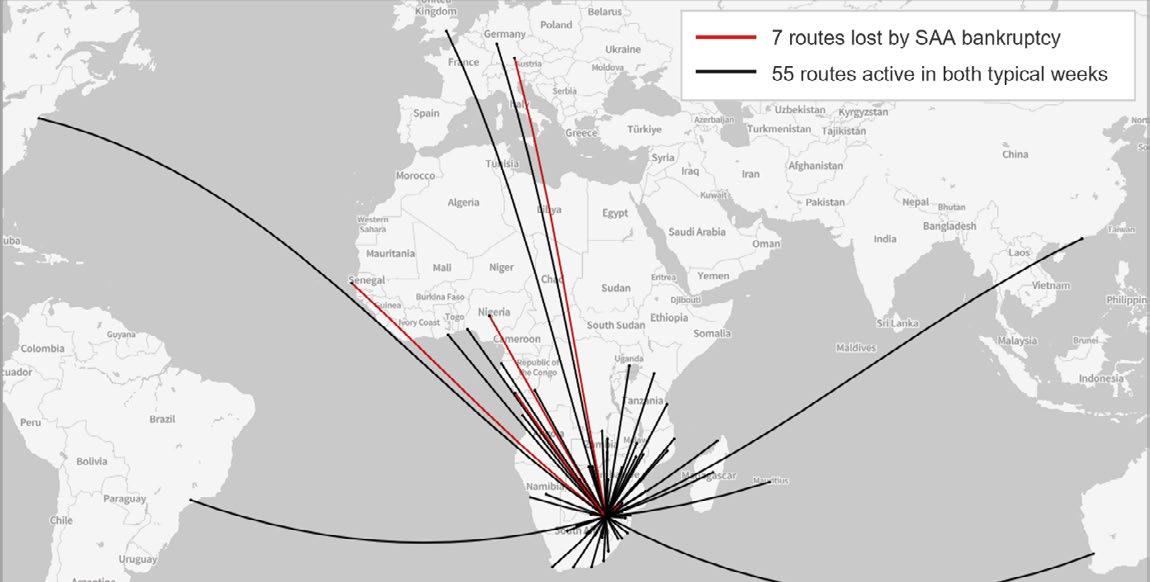
Figure 6: SAA network from Johannesburg (JNB) in 2017, highlighting routes lost due to SAA’s collapse in 2024 (typical week in June)
Source: OAG Mapper
The lessons from SAA’s collapse are clear: The airline was not prepared to compete with more efficient and lean competitors; continuously propping up an unviable airline with financial aid is unsustainable. Instead, struggling African national carriers should embrace SAATM as a catalyst to restructure and prepare them to compete in a deregulated market effectively.
From a policy perspective, however, establishing a national carrier may not always be the most effective solution for ensuring air connectivity.
Governments can achieve more reliable and sustainable air services by supporting efficient, well-scaled operators rather than maintaining smaller national airlines. For essential but commercially unviable routes, mechanisms such as Public Service Obligations (PSOs) can safeguard connectivity without requiring a state-owned carrier. While maintaining a national airline may align
with sovereign ambitions, regional partnerships or multinational carriers can offer a more viable path to strengthening connectivity, maximizing the benefits of SAATM’s liberalization and ensuring long-term aviation growth.
A way forward
While concerns about SAATM’s impact on national carriers are understandable, prolonged protectionism will only hinder long-term growth. A fully implemented SAATM will benefit the entire continent through:
• Lower ticket prices, making air travel more accessible to a broader traveling population
• Increased connectivity, fostering trade, tourism, and economic growth
• More job creation, strengthening the aviation sector and its supporting industries
To succeed under SAATM, African nations should strengthen their national carriers through strategic investment, encour-
aging operational efficiency, service enhancements, and collaboration among stakeholders, including government bodies and airports, rather than providing them unlimited government protection.
Beyond that, secondary revenue streams and airline collaboration can further solidify a national carrier’s
The authors:

Associate Consultant Lufthansa Consulting
right to existence. Therefore, a well-structured and aligned aviation strategy at a national level can position African carriers to thrive in more open markets beyond their national borders.
The time for action is now. Africa must seize the opportunity to build a more competitive and thriving aviation market.


Managing Consultant Lufthansa Consulting
Associate Partner and Head of Solution Group Network and Fleet Management Lufthansa Consulting
Juno Beckers
Ryan Kim
Arvind Chandrasekhar
Jetcraft Commercial: Market insights 2025–2026
Raphael Haddad President, Jetcraft Commercial Limite

As the year draws to a close, Jetcraft Commercial reflects on the trends that shaped the global commercial aircraft market in 2025 and shares its outlook for 2026 and beyond. From shifting fleet strategies and rising lease rates to growing demand in underserved regions, this provides an informed snapshot of current dynamics, and where the industry is heading next.
2025 in a nutshell
Despite persistent supply chain issues and limited inventory, 2025 was marked by strong demand across most aircraft segments. Regional jets and turboprops continued to attract interest from operators seeking versatile, efficient lift, particularly in markets where infrastructure constraints or cost pressures make right-sizing essential. Similarly, narrowbodies saw increased leasing activity, as airlines sought capacity without committing to long OEM backlogs. For Jetcraft Commercial, this climate reinforced the company’s value as a nimble aircraft solutions partner. The company’s transaction with Asman Airlines in
Jetcraft Commercial revient sur une année 2025 marquée par une forte demande malgré des contraintes persistantes sur l’offre, et observe un marché qui entre dans une phase d’ajustement stratégique.
Les opérateurs continuent de privilégier les jets régionaux, les turbopropulseurs et les monocouloirs en leasing afin de gagner en flexibilité face aux délais prolongés des constructeurs. Tandis que l’Europe et l’Asie-Pacifique confirment des dynamiques de croissance solides, les régions sous-desservies comme l’Afrique et l’Amérique latine offrent des opportunités significatives, soutenues par des solutions de financement plus accessibles.
Dans un contexte où les carnets de commandes OEM s’étendent jusqu’aux années 2030, le marché de l’occasion et l’allongement des durées de location s’imposent comme des leviers clés pour accompagner la connectivi-
Kyrgyzstan underscores the company’s role in enabling strategic growth, even in complex markets.
Global aviation trends: resilience to acceleration
While the challenges of 2024 carried over into this year, including aircraft availability and aftermarket parts scarcity, 2025 saw operators adjusting their strategies with greater flexibility and foresight. In Europe, travel demand remained high, prompting airlines to extend planning horizons and secure aircraft earlier. Across APAC, expectations for long-term growth have reached new heights, with market forecasts projecting over 50% expansion in the coming decade. However, infrastructure constraints, particularly at high-traffic hubs, continue to influence aircraft selection, strengthening the case for regional and crossover types.
Africa’s aviation story is one of potential, held back by structural and financial barriers. With a mismatch between capacity growth and
passenger demand, the region remains underserved, but highly promising. Efforts to improve access to financing, such as Jetcraft Commercial’s credit facility with Absa Group, are beginning to reshape the landscape and enable more airlines to act on growth opportunities.
Looking ahead, supply constraints will remain a defining feature of the market. OEM backlogs are stretching into the 2030s, forcing operators to turn to the preowned market and lengthen lease terms. Financing is still a challenge, with borrowing costs varying widely, but there is liquidity available, particularly for operators with a strong business case.
Jetcraft Commercial is preparing for these dynamics by leveraging its balance sheet strength and global sourcing capability.
The company expects growth to pick up in Latin America, where recovery has been slower, and in regions prioritising connectivity and route diversification over longhaul expansion.
10 years of Jetcraft Commercial
This year marks a decade of Jetcraft Commercial delivering aircraft solutions across the regional, turboprop and narrowbody markets.
Since 2015, the company has completed over 85 transactions and
built a reputation for executing complex, multi-aircraft deals with speed and precision.
Notable milestones include the global placement of 19 Dash 8-400s acquired from Horizon Air and the relocation of 14 CRJ1000s from HOP! to operators worldwide.
As the business continues to expand, particularly in emerging markets, its strategy is focused on scaling with agility, which means potentially offering aircraft with leases attached, bespoke financing options and robust leasing solutions.
Jetcraft Commercial is ready to help operators secure the aircraft they need to move forward, whether that means sourcing a single regional jet or managing a complex fleet transition.

AFRAA Marks New Era of African Aviation as Free Route Airspace Takes Flight in West and Central Africa


Nairobi, Kenya, – November 2025: – The African Airlines Association (AFRAA) heralds a transformative milestone in African aviation with the full operational deployment of Free Route Airspace (FRA) in the Western and Central Africa (WACAF) region, effective 30 October 2025. This landmark achievement,
Espace aérien à routes libres (FRA) : une réalité désormais en Afrique de l’Ouest et Centrale (WACAF)
L’Association des Compagnies Aériennes Africaines (AFRAA) annonce la mise en œuvre opéra-
transitioning from successful trials initiated in November 2023, will allow any airline to plan and fly more direct User Preferred Routes (UPRs), significantly enhancing the efficiency and sustainability of air travel across the continent. UPRs allow airlines to fly the most fuel-efficient and timely paths based on current conditions, rather than having to follow fixed,

conventional routes, giving the pilots more flexibility and enabling them to adjust to factors like weather and winds, leading to reduced fuel consumption, shorter flight times and lower carbon emissions.
African Export-Import Bank (Afreximbank) has supported the FRA initiative since the trials begun in 2023, in accordance with its Memorandum of Understanding with AFRAA and in line with the Global Air Navigation Plan of the International Civil Aviation Organisation and the conclusions of the Africa-India (AFI) FRA Planning and Implementation Regional Group.
The deployment of the FRA represents a decisive step resulting from a collaborative effort between air operators and air navigation service providers (ANSPs) who reached a consensus at a joint workshop in Dakar, Senegal to conclude the trial phase and move to full implementation.
“The implementation of Free Route Airspace in the WACAF region is a game-changer for African aviation,” said Mr. Abdérahmane Berthé, AFRAA Secretary General. “This is a testament to what we can achieve through collaboration. By cutting flight times and fuel consumption, we are not only boosting the competitiveness and profitability of our airlines but also making a significant commitment to environmental sustainability.
We extend our profound gratitude to Afreximbank and all stakeholders who have journeyed with us for their unwavering commitment to this vision: the Western and Central African Air Navigation Service Providers (ANSPs), Agence pour la Sécurité de la Navigation Aérienne en Afrique et à Madagascar (ASECNA), Ghana Civil Aviation Authority (GCAA),
tionnelle complète de l’Espace aérien à routes libres (Free Route Airspace – FRA) dans la région Afrique de l’Ouest et Centrale (WACAF), effective depuis le 30 octobre 2025. Cette avancée majeure fait suite aux essais concluants lancés en novembre 2023. Le FRA permet aux compagnies aériennes de planifier et d’exploiter des routes préférentielles plus directes, adaptées aux conditions opérationnelles et météorologiques, en remplacement des itinéraires fixes traditionnels. Cette flexibilité accrue se traduit par des gains significatifs en efficacité opérationnelle, une réduction des temps de vol, de la consommation de carburant, des coûts d’exploitation et des émissions de CO₂.
Soutenue par Afreximbank et mise en œuvre grâce à une étroite collaboration entre les compagnies aériennes, les fournisseurs de services de navigation aérienne (ANSPs) et les organisations internationales, cette initiative marque une étape clé vers une aviation africaine plus compétitive, durable et intégrée.
Déjà adoptée par plusieurs grandes compagnies africaines, l’initiative est désormais ouverte à l’ensemble des opérateurs aériens dans l’espace WACAF, ouvrant la voie à une extension progressive du FRA à l’échelle du continent à partir de 2026.
Nigerian Airspace Management Agency (NAMA), Régie des Voies Aériennes (RVA), Roberts Flight Information Region (Roberts FIR), The International Air Transport Association (IATA), the International Civil Aviation Organization (ICAO) and the Civil Air Navigation Services Organization (CANSO.”
While commenting on the FRA initiative, Mrs. Kanayo Awani, Executive Vice President, Intra-African Trade and Export Development, Afreximbank, said: “Efficient, safe, and well-regulated air services are critical to facilitating intra-African trade, tourism and connectivity in line with the objectives of the Single African Air Transport Market (SAATM) and the African Continental Free Trade Area (AfCFTA).
Afreximbank is fully committed to supporting the full implementation of SAATM and the establishment of an effective and efficient aviation industry through a range of financing instruments, including its aircraft leasing platform as well as trade facilitation interventions.
Substantial Benefits for Launch Airlines In a powerful demonstration of the initiative’s potential, six leading African airlines including Ethiopian Airlines, Kenya Airways, EGYPTAIR, Royal Air Maroc, RwandAir and ASKY Airlines were granted approval for UPRs, connecting 30 key city pairs.
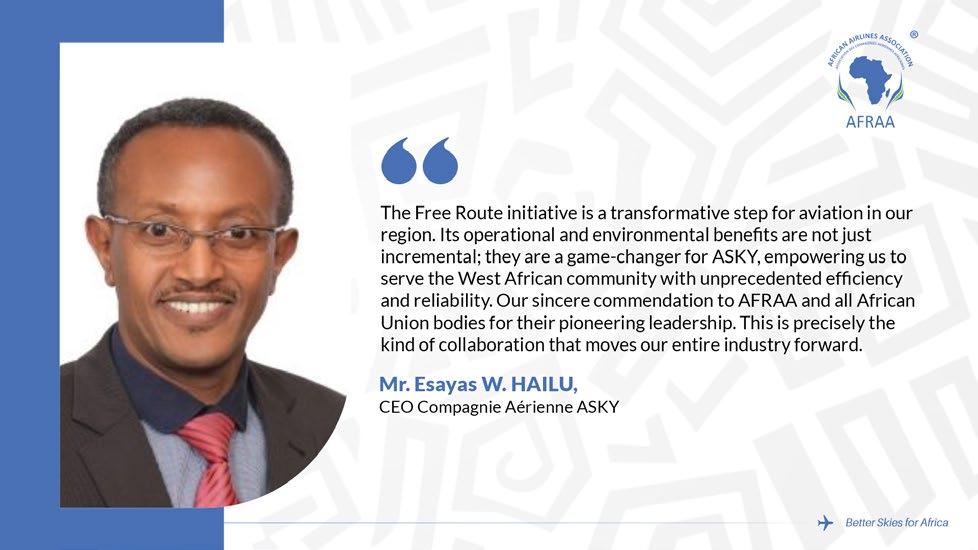
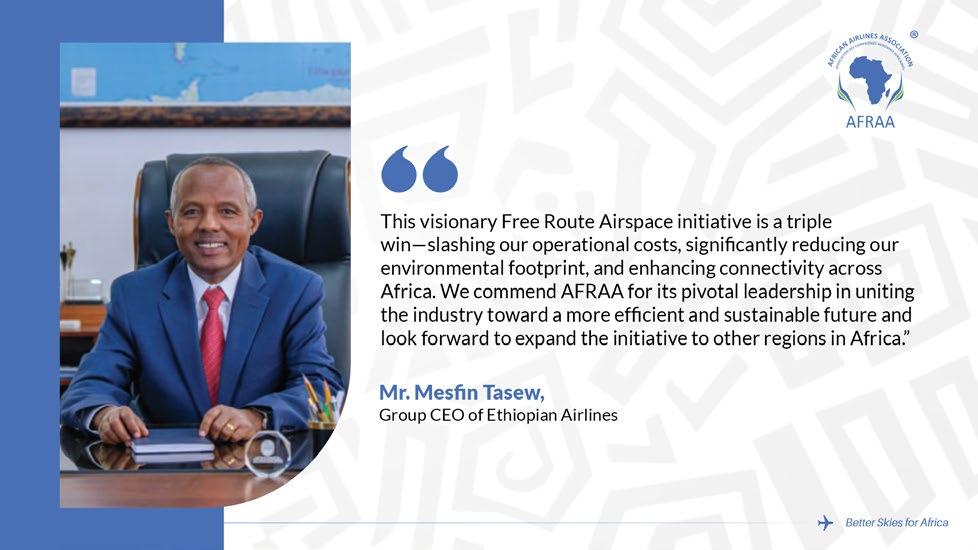
The shift to UPRs is expected to generate significant annual returns to participating airlines including over 1,393 hours of cumulative flight time saved, cutting 5,000 metric tonnesof fuel burn and therefore avoiding some 16,000 metric tonnes of CO2 emissions, and a reduction in annual fuel costs of about US$ 15 million.
A Free Route Airspace for all
Crucially, the WACAF airspace is now open for free routes. Starting 30 October 2025, any airline can plan and operate User Preferred Routes. The region’s ANSPs have committed to approving newly requested UPR within 48 hours. Furthermore, following final administrative work by the 24 WACAF States, this process will be further streamlined, with approvals no longer required for new UPR requests from mid-2026.
A Continent-wide Vision for the Future
The success in WACAF paves the way for the next phase of continental integration. The focus for 2026 will shift to the Eastern and Southern Africa (ESAF) airspace to conclude trials and achieve a similar FRA implementation.
The region is also committed to developing a web-based coordination platform to streamline operations for airlines and ANSPs.
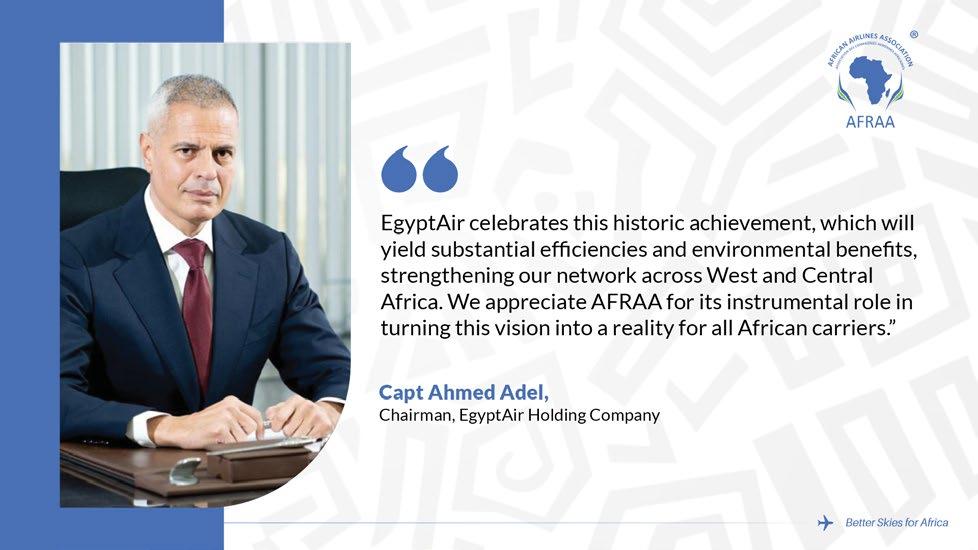
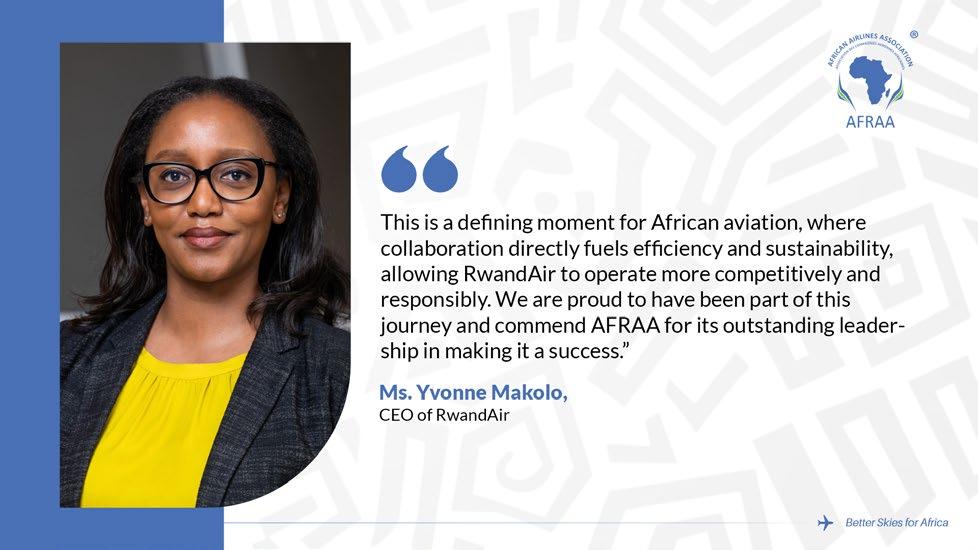
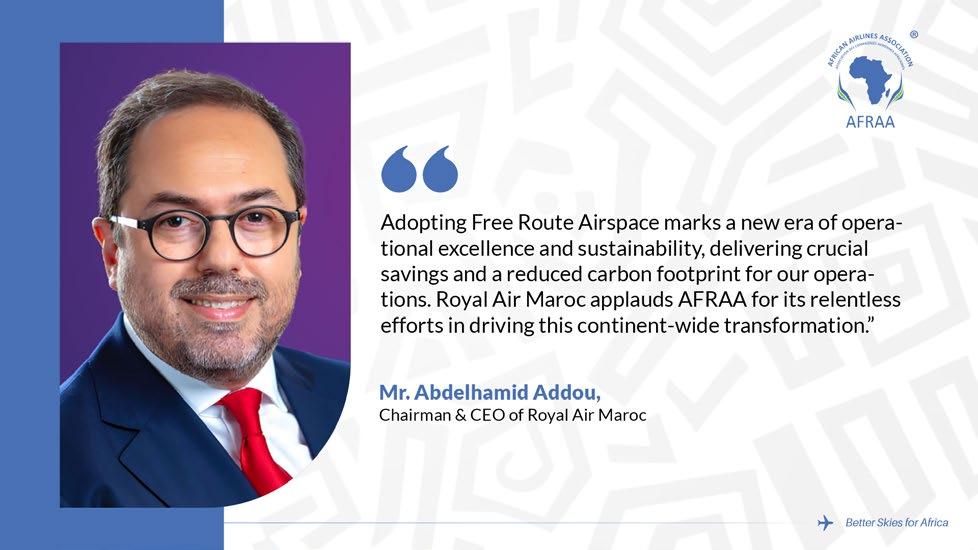
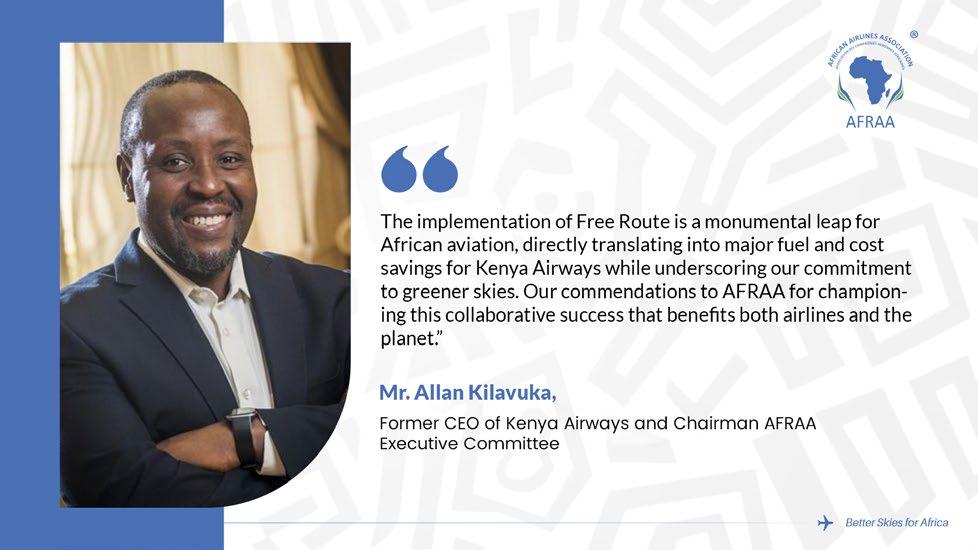
Major Announcements

Air
Sénégal
Launches a Diversified Aviation Group with New Subsidiaries
In October 2025, Air Sénégal officially launched the Groupe de Sociétés d’Aviation Diversifié, a new holding structure designed to anchor the carrier’s restructuring and modernization strategy. Announced on October 17, the initiative establishes six specialized subsidiaries spanning regional operations, maintenance, training, catering, hospitality, and digital services, positioning Air Sénégal at the core of a vertically integrated national aviation ecosystem.
Air Sénégal crée un groupe aéronautique diversifié avec de nouvelles filiales
En octobre 2025, Air Sénégal a officiellement lancé le Groupe de Sociétés d’Aviation Diversifié, une nouvelle structure holding destinée à soutenir sa restructuration et sa modernisation. Annoncée le 17 octobre, cette initiative repose sur la création de six filiales spécialisées couvrant les opérations régionales, la maintenance, la formation, le catering, l’hôtellerie et les services digitaux, afin de structurer un écosystème aéronautique intégré autour du transporteur national.
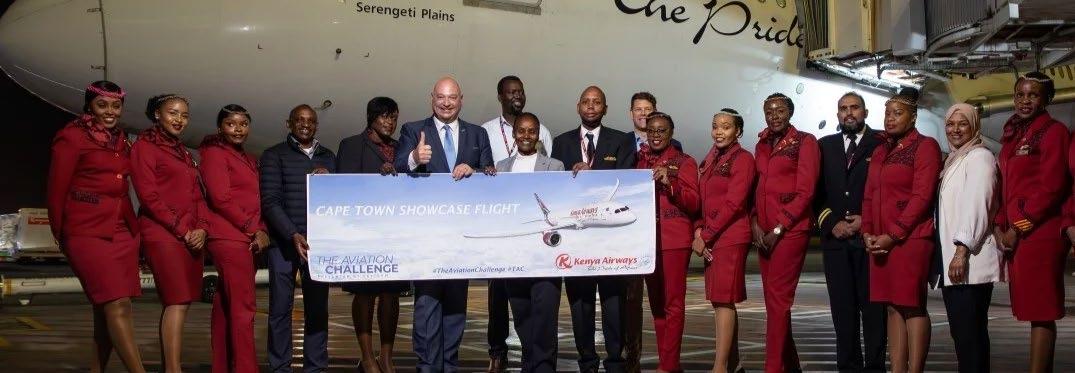
Kenya Airways réalise un vol intraafricain combinant SAF local et mécanisme mass balance
Le 21 octobre 2025, Kenya Airways a opéré un vol Nairobi–Cape Town dans le cadre du SkyTeam Aviation Challenge 2025, en combinant un mélange physique de 2 % de SAF produit localement au Kenya avec des attributs SAF certifiés via un mécanisme de mass balance, portant l’opération à une équivalence environnementale de 50 % SAF. Cette approche hybride marque à la fois la première utilisation commerciale d’un SAF kényan sur un vol intra-africain et une démonstration pragmatique des solutions actuellement mobilisables en Afrique, en attendant la montée en puissance d’une production locale structurée de SAF, visée par la compagnie à partir de 2026.
Kenya Airways operates an intra-African flight combining local SAF and mass balance mechanism
On October 21,2025, Kenya Airways operated a Nairobi–Cape Town flight as part of the SkyTeam Aviation Challenge 2025, combining a 2% physical blend of locally produced SAF in Kenya with certified SAF attributes under a mass balance system, resulting in a 50% SAF-equivalent operation. The flight represents both the first commercial use of Kenya-produced SAF on an intra-African route and a practical illustration of how African airlines can reduce emissions while preparing for scaled local SAF production targeted from 2026.
Mauritania Airlines Selects StandardAero for Boeing 737 Engine Maintenance
Mauritania Airlines selected StandardAero to provide MRO support for the CFM56-7B and LEAP-1B engines that power its Boeing 737NG and 737 MAX 8 aircraft. The agreement supports operational reliability as the carrier consolidates and expands its network across Africa and Europe. Mauritania Airlines currently operates a Boeing 737-700, 737-800 and a 737 MAX 8 in active service within its fleet.

Mauritania Airlines choisit
StandardAero pour la maintenance moteurs de ses Boeing 737
Mauritania Airlines a retenu StandardAero pour assurer la maintenance, la réparation et la révision des moteurs CFM56-7B et LEAP-1B équipant ses Boeing 737NG et 737 MAX 8.
Ce partenariat vise à renforcer la fiabilité opérationnelle de la compagnie dans le cadre de la consolidation et du développement de son réseau en Afrique et en Europe. La compagnie exploite actuellement un Boeing 737700, un 737-800 et un 737 MAX 8.
Air Algérie Unveils Group
Strategy with Tour Operator and MRO Spin-Off
Air Algérie is restructuring into a holding company model, including the launch of a tour operator and the spin-off of its maintenance, repair and overhaul (MRO) activities, according to CEO Hamza Benhamouda. The move is designed to improve operational efficiency, diversify revenues and support the airline’s ongoing network expansion and fleet renewal.
Air Algérie dévoile une stratégie de groupe avec tour-opérateur et filialisation MRO
Air Algérie engage une transformation en holding, avec la création d’un tour-opérateur et la filialisation de ses activités de maintenance, réparation et révision (MRO), selon son PDG Hamza Benhamouda. Cette réorganisation vise à renforcer la performance opérationnelle, diversifier les revenus et accompagner l’expansion du réseau ainsi que le renouvellement de la flotte.
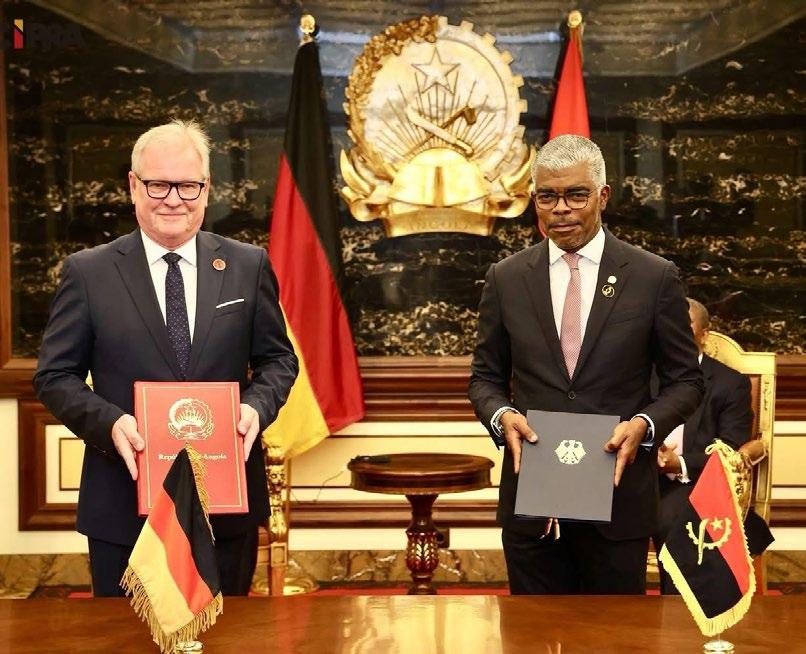
TAAG Angola Airlines Extends Strategic Partnership with Lufthansa Consulting
TAAG Angola Airlines has reinforced its strategic partnership with Lufthansa Consulting, as part of its ongoing restructuring and modernization programme.
The renewed cooperation was formalised on October 5, 2025, by Angola’s Minister of Transport during an official state visit, and builds on a collaboration initiated in 2024 to support TAAG’s transformation into a more efficient, sustainable and internationally competitive carrier, aligned with global aviation standards.
TAAG Angola Airlines prolonge son partenariat stratégique avec Lufthansa Consulting
TAAG Angola Airlines a renforcé son partenariat stratégique avec Lufthansa Consulting dans le cadre de son programme de restructuration et de modernisation.
La poursuite de cette coopération a été officialisée le 5 octobre 2025 par le ministre angolais des Transports, et s’inscrit dans la continuité d’un partenariat lancé en 2024 visant à accompagner la transformation de la compagnie nationale en un transporteur plus efficace, durable et compétitif, conforme aux standards internationaux de l’aviation civile.
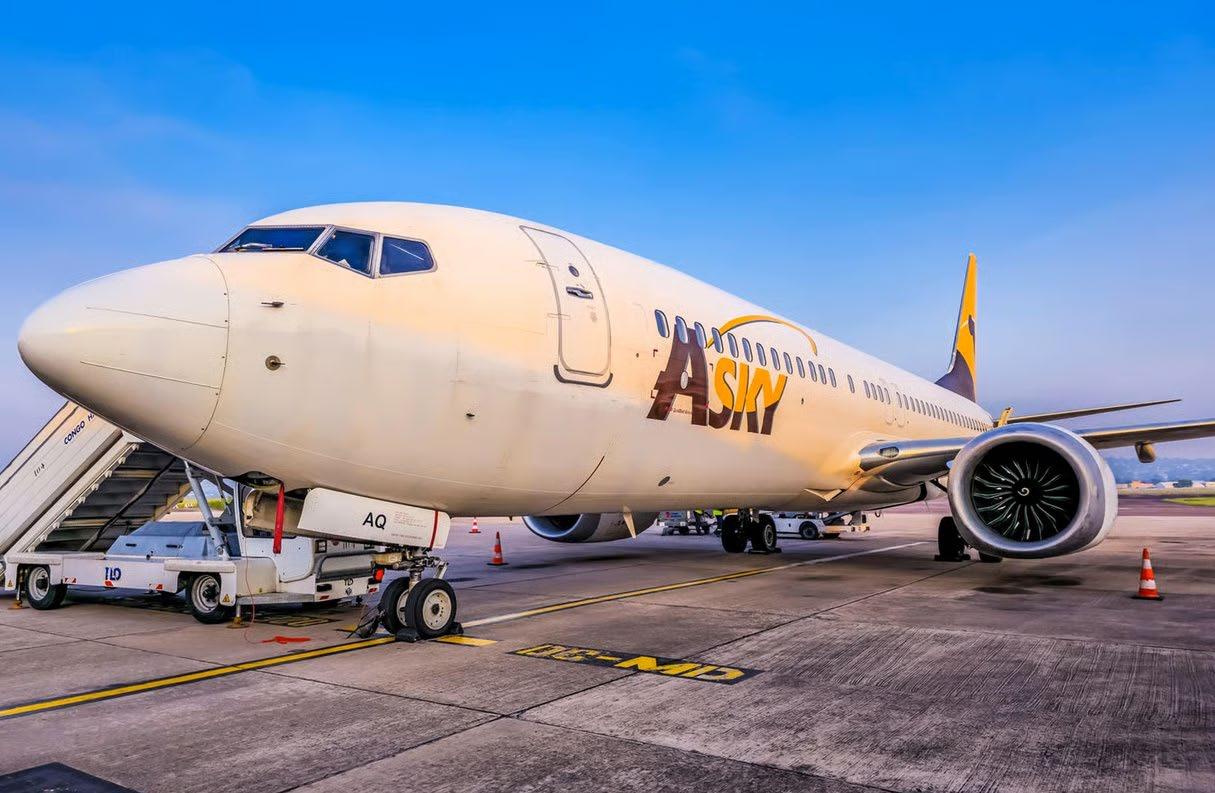
ASKY Breaks Ground on Boeing 737 Simulator Training Centre in Lomé
In November 2025, ASKY Airlines officially launched construction of its first full-flight simulator training centre in Lomé, dedicated to Boeing 737 NG and MAX operations. Fully financed by the airline and scheduled for completion by mid-2026, the facility will support pilot training for ASKY while also serving other African operators, reinforcing the carrier’s strategy to build local training capacity and position Togo as a regional aviation hub.
ASKY lance la construction d’un centre de simulateur Boeing 737 à Lomé
En novembre 2025, ASKY Airlines a lancé les travaux de construction de son premier centre de formation équipé d’un simulateur de vol complet, dédié aux Boeing 737 NG et MAX, à Lomé. Financé intégralement par la compagnie et attendu pour mi-2026, le centre formera les équipages d’ASKY tout en accueillant d’autres opérateurs africains, illustrant l’ambition du transporteur de renforcer l’expertise locale et de positionner le Togo comme pôle régional de formation aéronautique.

Orders ( Dubai Air Show- Nov 2025)
Air Sénégal Places Order for Nine Boeing 737 MAX Aircraft
Air Sénégal confirmed an order for nine Boeing 737 MAX 8 aircraft, marking the airline’s entry into the Boeing narrowbody family and a strategic shift in its fleet policy. Announced at the Dubai Airshow, the order supports Air Sénégal’s ambition to modernize its fleet, stabilize operations and underpin the expansion of its regional and international network, with an option for additional units signaling longer-term growth intent.
Air Sénégal commande neuf Boeing 737 MAX et opère un virage stratégique de flotte
En novembre 2025, Air Sénégal a officialisé une commande de neuf Boeing 737 MAX 8, marquant son entrée dans l’écosystème Boeing et une inflexion majeure de sa stratégie de flotte. Annoncée au Dubai Airshow, cette décision vise à moderniser les opérations, renforcer la performance opérationnelle et soutenir le développement du réseau régional et international de la compagnie, avec une option supplémentaire illustrant ses ambitions à moyen terme.
Air Côte d’Ivoire Orders Up to 12 Embraer E175 Regional Jets
Air Côte d’Ivoire placed a firm order for four Embraer E175s, with purchase rights for eight additional units, during the Dubai Airshow. Deliveries are scheduled to start in 2027, supporting the airline’s strategy to strengthen regional connectivity from Abidjan with right-sized capacity, while progressively replacing its Dash 8-400 turboprops as part of a broader fleet modernisation plan.
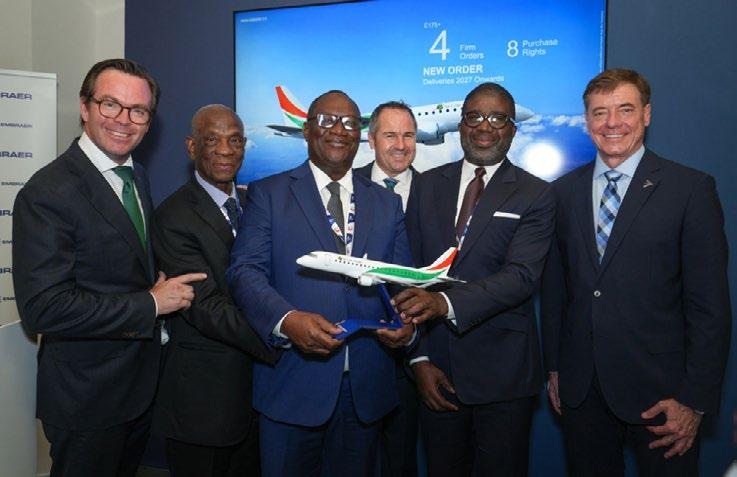
Air Côte d’Ivoire commande jusqu’à 12
Embraer E175
Air Côte d’Ivoire a passé une commande ferme de quatre Embraer E175, assortie de droits d’achat pour huit appareils supplémentaires, à l’occasion du Dubai Airshow. Les premières livraisons sont prévues à partir de 2027 et visent à renforcer le réseau régional au départ d’Abidjan, tout en accompagnant le renouvellement progressif de la flotte court et moyen-courrier.
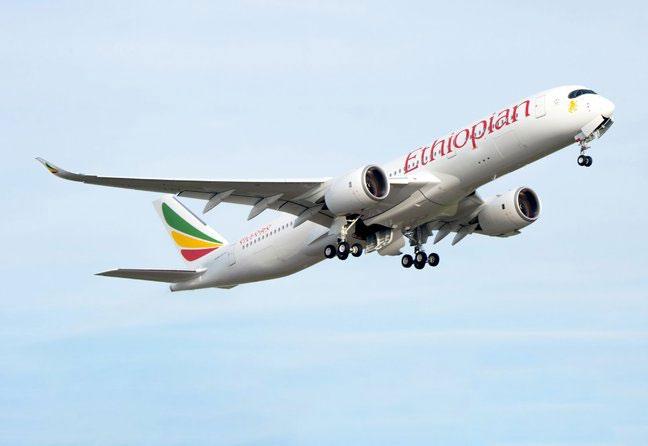
Ethiopian Airlines Expands Fleet Commitments Across Jet and Turboprop Segments
Ethiopian Airlines further consolidated its multi-segment fleet strategy at the Dubai Airshow 2025 through a coordinated set of commitments spanning long-haul, narrowbody and regional operations. Alongside a commitment for 11 additional Boeing 7378s and a firm order for six Airbus A350-900s, reinforcing its position as Africa’s leading A350 operator, the group also concluded its first-ever leasing agreement with CDB Aviation, covering two Boeing 737 MAX 8s scheduled for delivery in 2026. In parallel, Ethiopian confirmed the order of two ATR 72-600s for its 49%-owned subsidiary Air Congo, underlining its continued focus on strengthening domestic and regional connectivity through turboprop operations.
Ethiopian Airlines renforce sa stratégie flotte entre jets et turbopropulseurs
En novembre 2025, Ethiopian Airlines a consolidé sa stratégie de flotte au Dubai Airshow à travers une série de décisions structurantes couvrant l’ensemble de ses segments d’activité. En plus d’un engagement portant sur 11 Boeing 737-8 et d’une commande ferme de six Airbus A350-900, qui confirment son leadership africain sur le long-courrier, le groupe a signé son premier accord de leasing avec CDB Aviation, portant sur deux Boeing 737 MAX 8 livrables à partir de 2026. En parallèle, la commande de deux ATR 72-600 destinés à sa filiale Air Congo (49 %) illustre la priorité accordée au renforcement de la connectivité domestique et régionale en Afrique.
FlySafair s’engage sur cinq Boeing 737 supplémentaires
FlySafair Commits to Five Additional Boeing 737 Aircraft
FlySafair announced new leasing commitments with AerCap covering three Boeing 737 MAX 8s and two 737-800NGs at the Dubai Airshow. The agreement supports FlySafair’s fleet modernisation strategy, with deliveries of the 737-800NGs expected from 2026, followed by the 737 MAX 8s from 2028, reinforcing capacity and fuel efficiency amid sustained domestic and regional demand.
FlySafair a annoncé au Dubai Airshow de nouveaux engagements de location auprès d’AerCap portant sur trois Boeing 737 MAX 8 et deux 737800NG. Ces appareils viendront soutenir la modernisation de la flotte de la compagnie sud-africaine, avec des livraisons prévues à partir de 2026 pour les 737-800NG, puis 2028 pour les 737 MAX, dans un contexte de forte demande sur le marché domestique et régional.
EGYPTAIR Advances A350 Programme with Sale-andLeaseback Financing and Airbus MRO Certification
EGYPTAIR used the Dubai Airshow 2025 to move forward with the execution of its longhaul fleet renewal strategy, formalising saleand-leaseback agreements for five Airbus A350900s while securing a major industrial milestone for its maintenance arm. Two A350-900s will be financed through a transaction with Macquarie AirFinance, with deliveries scheduled for 2026, while BOC Aviation will acquire and lease back three additional aircraft from the same 16-unit order, with deliveries starting in 2025. In parallel, EGYPTAIR Maintenance & Engineering obtained Airbus airframe maintenance certification, strengthening the group’s technical capabilities ahead of the progressive introduction of the A350 family.
À l’occasion du Dubai Airshow 2025, EGYPTAIR a franchi une nouvelle étape dans la mise en œuvre de sa stratégie de renouvellement long-courrier. La compagnie a conclu des accords de sale-andleaseback portant sur cinq Airbus A350-900, avec Macquarie AirFinance pour deux appareils livrables en 2026 et BOC Aviation pour trois unités supplémentaires, dont les premières livraisons débuteront en 2025. En parallèle, sa filiale EGYPTAIR Maintenance & Engineering a obtenu une certification Airbus pour la maintenance cellule, consolidant les capacités industrielles du groupe afin d’accompagner l’entrée en flotte progressive des A350.
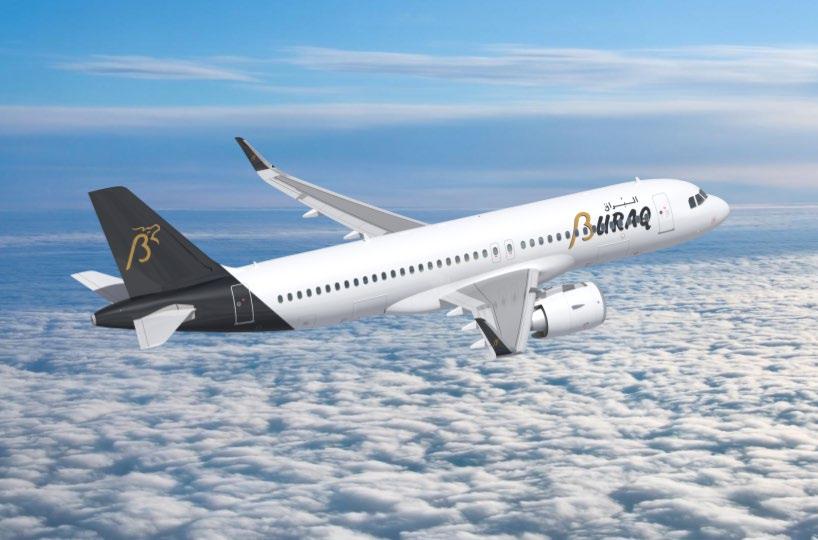
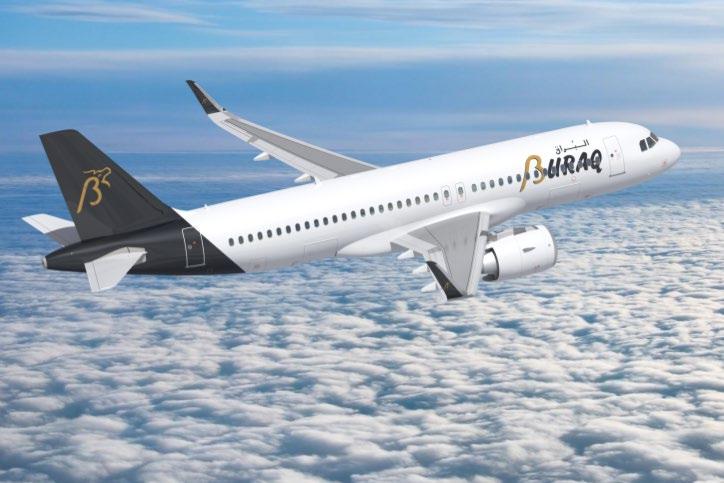
Buraq Air Commits to 10 Airbus A320neo Aircraft
At the Dubai Airshow 2025, Buraq Air signed a Memorandum of Understanding with Airbus for 10 A320neo Family aircraft, supporting fleet renewal and future growth, while reinforcing operational synergies with its strategic partner Medsky Airways.
Current fleet comprises three Airbus A320s (dry lease), one Boeing 737-800, one Boeing 737-400, and one Embraer E190, recently added to support domestic expansion.
Buraq Air s’engage sur 10 Airbus A320neo
Lors du Dubai Airshow 2025, Buraq Air a signé un MoU avec Airbus portant sur 10 A320neo, une décision qui soutient la modernisation de la flotte et consolide la collaboration opérationnelle avec son partenaire stratégique Medsky Airways.
Sa flotte actuelle comprend trois Airbus A320 (en dry lease), un Boeing 737-800, un Boeing 737-400 et un Embraer E190, récemment intégré pour le domestique.

Fleet Additions
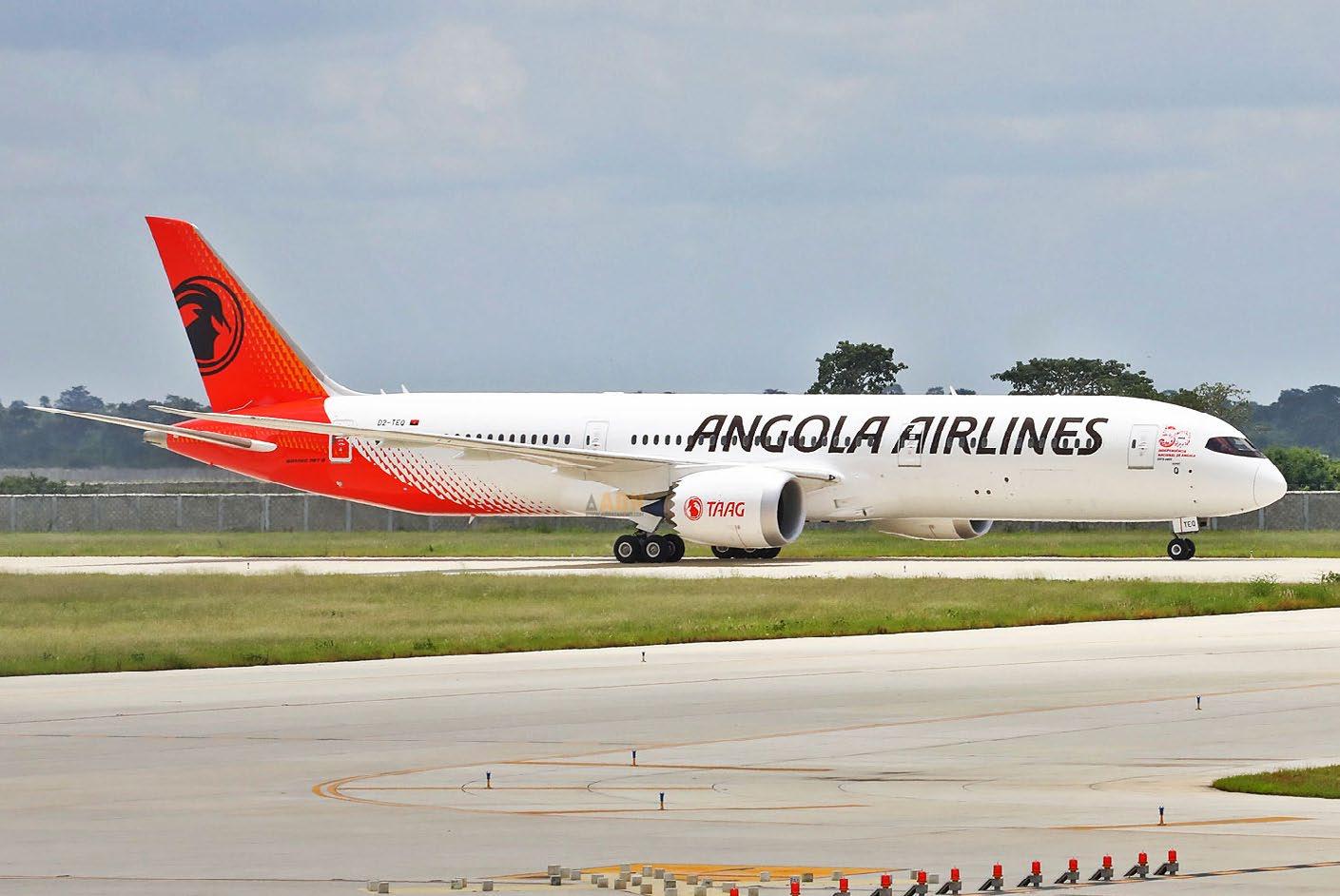
TAAG Accelerates Fleet Renewal with Seven Aircraft Delivered in 2025
In 2025, TAAG Angola Airlines took delivery of seven new aircraft, including its first two Boeing 787-10 Dreamliners, making TAAG the first operator of the 787-10 in Africa. The deliveries also comprised additional Boeing 787-9s (two) and Airbus A220-300s ( three), supporting both long-haul expansion and the overhaul of the regional network under the airline’s transformation plan.
TAAG accélère le renouvellement de sa flotte avec sept avions réceptionnés en 2025
En 2025, TAAG Angola Airlines a réceptionné sept nouveaux appareils, dont ses deux premiers Boeing 78710, devenant ainsi le premier opérateur africain de cette version du Dreamliner. Ces livraisons incluent également des Boeing 787-9 ( deux) et des Airbus A220-300 (trois), renforçant à la fois la flotte long-courrier et le réseau régional dans le cadre du plan de transformation de la compagnie.
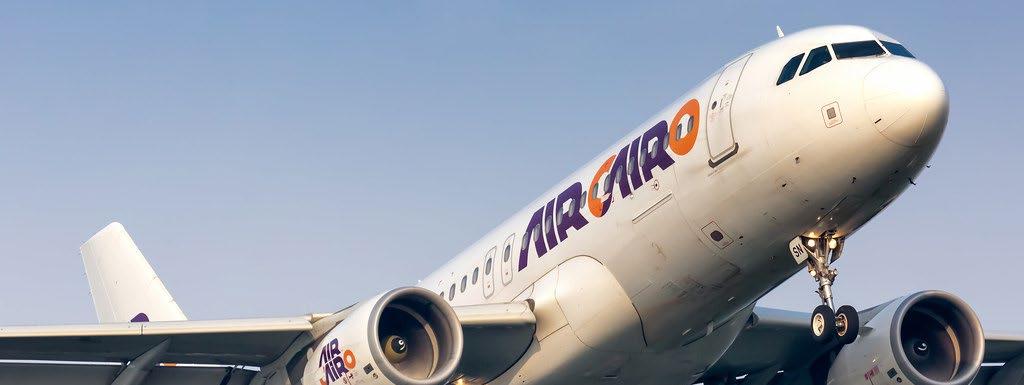
Air Cairo Crosses the 40-Aircraft Milestone With New A320ceo Delivery
Air Cairo has exceeded the 40-aircraft threshold following the delivery of an additional Airbus A320ceo, marking its fourth aircraft induction in 2025, with the most recent arrival recorded in November as part of its Winter 2025/26 capacity ramp-up. The airline now operates a fleet dominated by the Airbus A320 family, complemented by regional aircraft (three Embraer E190s and six ATR 72-600s), and continues to pursue its long-term growth plan targeting 72 aircraft by 2030, including the potential introduction of the A321neo to support medium-haul expansion.
Air Algérie Takes Delivery of Two A330neo Aircraft
In late 2025, Air Algérie took delivery of its first two Airbus A330-900neo aircraft, from a total order of eight units, marking a major step in the renewal of its long-haul fleet. With the progressive integration of the remaining aircraft, Air Algérie is set to become the leading A330neo operator in Africa, supporting its long-term network expansion.
Air Algérie réceptionne deux A330neo
Fin 2025, Air Algérie a réceptionné ses deux premiers Airbus A330-900neo, issus d’une commande totale de huit appareils, marquant une étape clé dans la modernisation de sa flotte long-courrier. Avec
Air Cairo franchit le cap des 40 avions avec une nouvelle livraison d’A320ceo
Air Cairo a dépassé le seuil des 40 appareils à la suite de la réception d’un nouvel Airbus A320ceo, qui constitue sa quatrième livraison en 2025, la dernière étant intervenue en novembre.La flotte de la compagnie est majoritairement composée d’Airbus de la famille A320, complétée par des appareils régionaux (trois Embraer E190 et six ATR 72-600), tandis qu’Air Cairo poursuit son plan de croissance de long terme visant 72 avions à l’horizon 2030, avec l’introduction potentielle de l’A321neo pour soutenir l’expansion moyen-courrier.
l’intégration progressive des unités restantes, la compagnie est appelée à devenir le principal opérateur africain de l’A330neo, au service de son développement long-courrier.
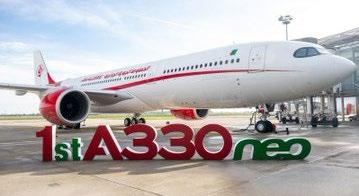
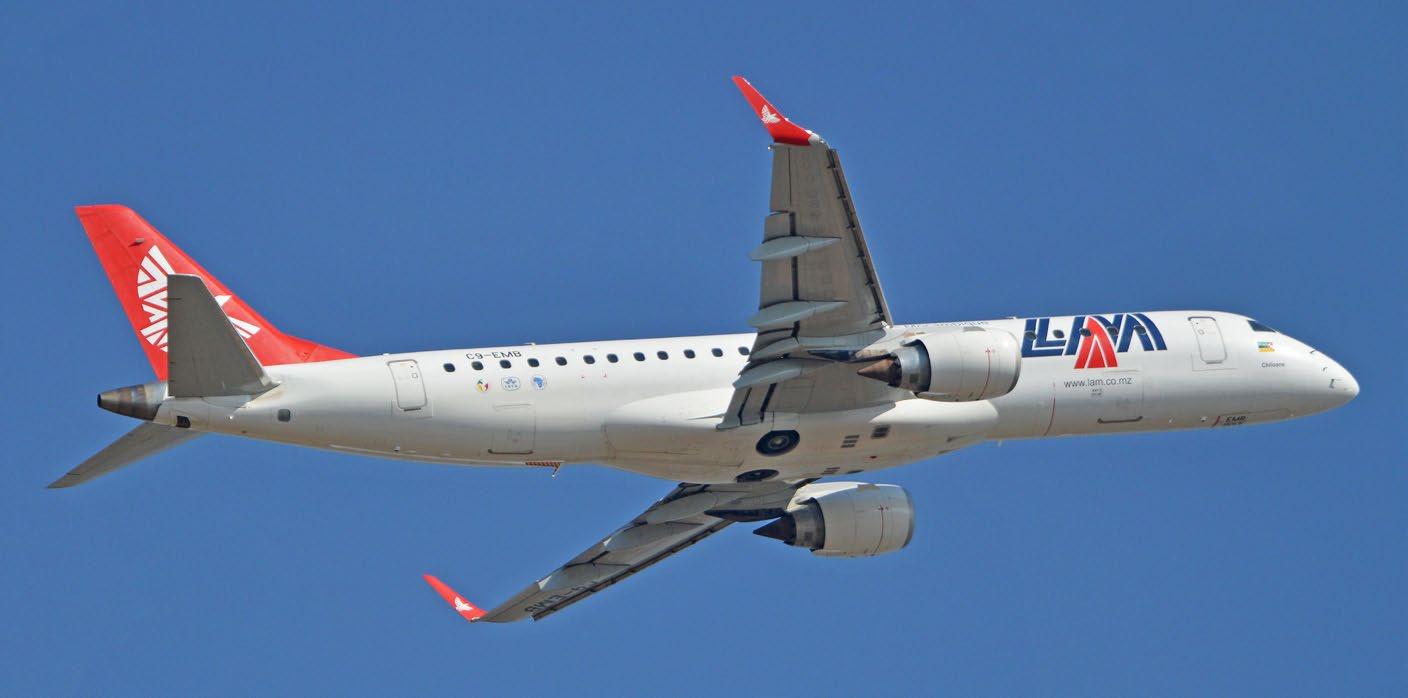
LAM Mozambique Airlines Adds Two Embraer 190s and Rejoins the IATA Clearing House
In December 2025, LAM Mozambique Airlines inducted two Embraer 190 aircraft, marking a key step in its restructuring and operational recovery. This was complemented by the airline’s reinstatement into the IATA Clearing House in October 2025, restoring access to global airline financial settlement mechanisms and strengthening its financial credibility.
LAM Mozambique Airlines renforce sa flotte avec deux Embraer 190 et réintègre l’IATA Clearing House
En décembre 2025, LAM Mozambique Airlines a intégré deux Embraer 190 à sa flotte, une étape clé de son processus de restructuration et de redressement opérationnel. Cette évolution a été complétée par la réintégration officielle de la compagnie à l’IATA Clearing House en octobre 2025, rétablissant son accès aux mécanismes internationaux de compensation financière.
Royal Air Maroc took delivery of 10 Boeing 737 MAX 8 aircraft in 2025
In 2025, Royal Air Maroc inducted 10 Boeing 737 MAX 8 aircraft as part of its narrowbody fleet expansion. This includes several aircraft delivered under a six-unit lease agreement signed with Avolon, while the airline prepares for its long-term expansion plan, which foresees around 15 new aircraft deliveries per year from 2028.
Royal Air Maroc a réceptionné 10 Boeing 737 MAX 8 en 2025
En 2025, Royal Air Maroc a intégré 10 Boeing 737 MAX 8 à sa flotte moyen-courrier dans le cadre de sa montée en capacité. Ce total comprend plusieurs appareils livrés dans le cadre d’un contrat de location portant sur six avions signé avec Avolon, tandis que la compagnie se prépare à son programme de développement à long terme, qui prévoit environ 15 livraisons d’avions par an à partir de 2028.
Air Burkina Strengthens Fleet with Second Embraer E190
Air Burkina is now operating two Embraer E190 aircraft, with its second jet in service since November 7, 2025, reinforcing regional capacity. The fleet expansion supports the airline’s gradual recovery strategy focused on consolidating its West African network.
Air Burkina densifie sa flotte avec un second Embraer E190
Air Burkina exploite désormais deux Embraer E190, son second appareil étant en service depuis le 7 novembre 2025, ce qui renforce ses capacités régionales. Cette montée en flotte s’inscrit dans la stratégie de relance progressive de la compagnie, axée sur la consolidation de son réseau ouest-africain.
Air
Peace
Marks Nigeria’s First Dry-Lease Aircraft Induction in Nearly a Decade
On November 7, 2025, Air Peace took delivery of a Boeing 737-700 NG under a dry-lease agreement with AerCap, marking Nigeria’s first dry lease transaction in almost ten years. The milestone reflects renewed international confidence in Nigeria’s aviation sector and follows close coordination between the airline, the Nigerian authorities and international partners.
Air Peace marque le retour du dry lease au Nigeria après près d’une décennie
Le 7 novembre 2025, Air Peace a réceptionné un Boeing 737-700 NG en dry lease auprès d’AerCap, une première pour le Nigeria depuis près de dix ans.
Cette opération symbolise le retour de la confiance des bailleurs internationaux dans le secteur aérien nigérian et s’inscrit dans le cadre des réformes réglementaires et institutionnelles menées avec l’appui des autorités et des partenaires internationaux.
Air Mauritius Takes Delivery of Its Third ATR 72-600
In November 2025, Air Mauritius took delivery of its third ATR 72-600, further advancing the renewal of its regional turboprop fleet. Leased from DAE Capital, the aircraft strengthens inter-island operations and supports mixed passenger, cargo and ME-
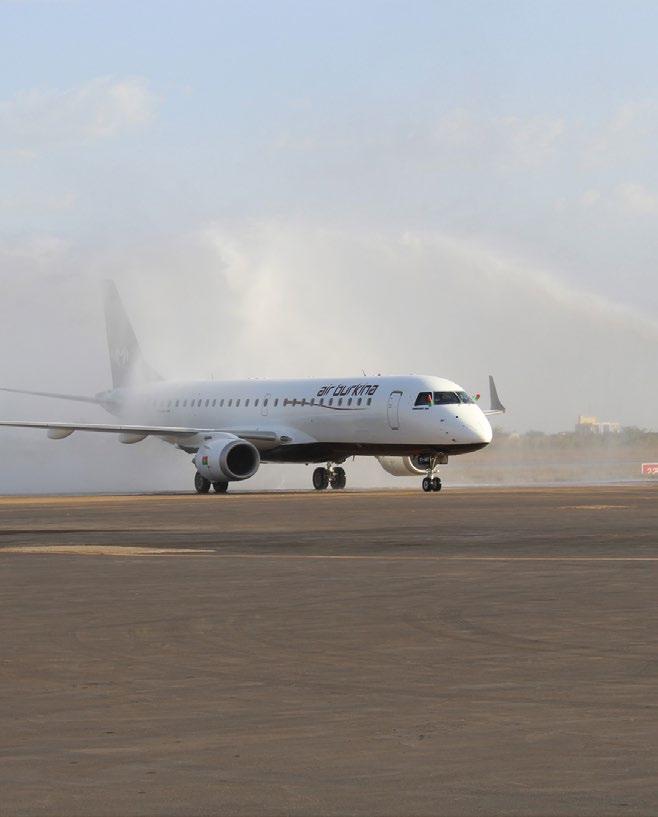
DEVAC missions, as the airline phases out older ATR 72-500s.
Air Mauritius réceptionne son troisième ATR 72-600
En novembre 2025, Air Mauritius a pris livraison de son troisième ATR 72-600, marquant une nouvelle étape dans le renouvellement de sa flotte régionale.
Loué auprès de DAE Capital, l’appareil vient renforcer les opérations inter-îles et les missions mixtes passagers, fret et MEDEVAC, dans le cadre du retrait progressif des ATR 72-500 les plus anciens.
ASKY Airlines Secures Sixth Boeing 737 MAX 8
ASKY Airlines is reinforcing its narrowbody fleet with the induction of a sixth Boeing 737 MAX 8, as part of its ongoing fleet modernisation programme.
The aircraft strengthens ASKY’s position as Africa’s second-largest 737 MAX operator after Ethiopian Airlines, supporting network growth, efficiency gains and preparation for future longhaul expansion.
ASKY Airlines sécurise son sixième Boeing 737 MAX 8
ASKY Airlines renforce sa flotte monocouloir avec l’intégration d’un sixième Boeing 737
MAX 8, dans le cadre de sa stratégie de modernisation progressive.
Cet appareil consolide la position d’ASKY comme deuxième opérateur africain du 737 MAX après Ethiopian Airlines, tout en soutenant l’expansion du réseau, l’amélioration de l’efficacité opérationnelle et la préparation des futurs développements long-courriers.
Jambojet Targets 27 Aircraft Fleet Within Five Years
Jambojet plans to expand its fleet to 27 aircraft within five years, up from 10 aircraft currently in operation, according to its Chairman Ayisi Makatiani. The expansion will follow a phased strategy, first consolidating East African routes before introducing larger jet aircraft to serve longer sectors across West, North and Southern Africa while preserving the carrier’s low-cost model.
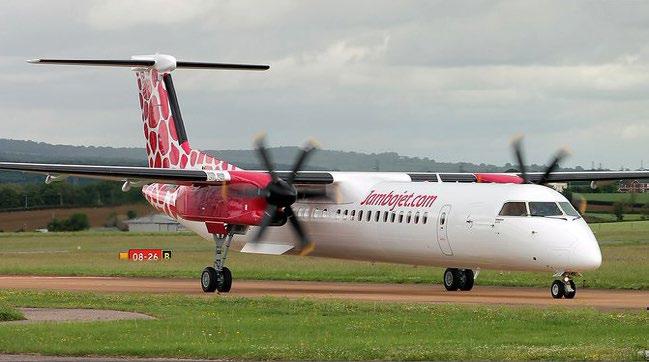
Kenya Bans Importation of Fokker 27 and Fokker 50 Aircraft
In October 2025, Kenya Civil Aviation Authority imposed an immediate ban on the importation of Fokker 27 and Fokker 50 aircraft for registration and operation in Kenya, citing safety and airworthiness concerns. Issued under Aeronautical Information Circular (AIC) 15/25, the directive halts new certifications for the types, while allowing aircraft already on the Kenyan register to continue operating under strict conditions until deregistration or permanent grounding.
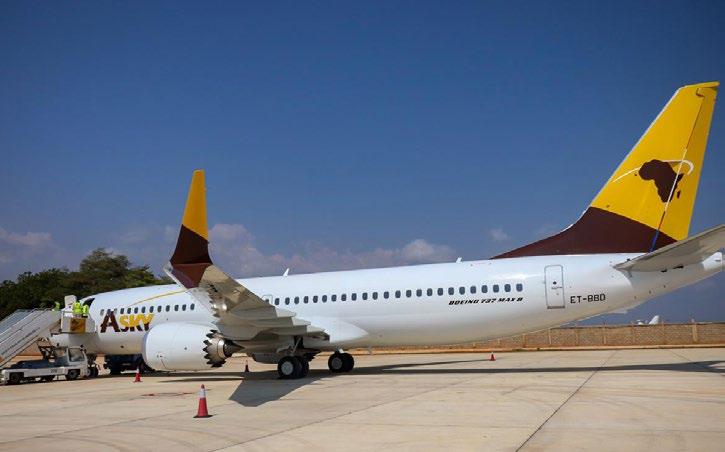
Jambojet vise une flotte de 27 avions sur cinq ans
Jambojet prévoit de porter sa flotte à 27 appareils d’ici cinq ans, contre 10 avions actuellement, a indiqué son président Ayisi Makatiani. La croissance se fera par étapes, avec d’abord un renforcement du réseau est-africain, puis l’introduction d’avions à réaction pour desservir des marchés plus lointains en Afrique de l’Ouest, du Nord et australe, tout en maintenant le modèle low-cost.
Le Kenya interdit
l’importation
des
Fokker 27 et Fokker 50
En octobre 2025, la Kenya Civil Aviation Authority a décidé d’interdire l’importation des avions Fokker 27 et Fokker 50 destinés à l’immatriculation et à l’exploitation au Kenya, invoquant des préoccupations liées à la sécurité et à la navigabilité. Publiée via la circulaire aéronautique AIC 15/25, la mesure bloque toute nouvelle acceptation de type, tout en autorisant la poursuite temporaire des opérations des appareils déjà immatriculés, sous conditions strictes, jusqu’à leur radiation ou immobilisation définitive.

Strategic Partnerships – Codeshares, joint ventures, alliances

Uganda Airlines – Air India: Interline Agreement
Uganda Airlines formalised its interline agreement with Air India in September 2025. The partnership now enables single-ticket travel via Mumbai, combining Uganda Airlines’ A330neo long-haul services with Air India’s extensive network, with Uganda Airlines currently operating three weekly direct flights.
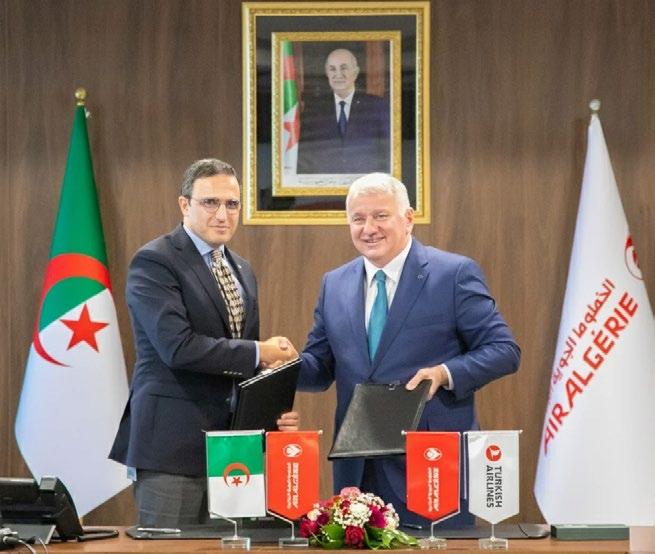
Uganda Airlines – Air India : Accord interline
Uganda Airlines a acté, en septembre 2025, son accord interline avec Air India. Le partenariat permet désormais des voyages en billet unique via Mumbai, en combinant les vols long-courriers A330neo d’Uganda Airlines avec le réseau étendu d’Air India, la compagnie ougandaise opérant actuellement trois vols directs hebdomadaires.
in 2024. The MoU establishes a broader framework covering network development, cargo, maintenance, aircraft leasing, ground handling and training.
Air Algérie et Turkish Airlines scellent un partenariat stratégique
Le 9 octobre 2025, Air Algérie et Turkish Airlines ont signé à Alger un protocole d’accord visant à approfondir leur coopération stratégique, dans la continuité du codeshare lancé en 2016 et élargi en 2024.
L’accord établit un cadre élargi couvrant le développement du réseau, le fret, la maintenance, le leasing d’avions, le handling et la formation.
Air Algérie and Turkish Airlines Seal an Enhanced Strategic Partnership
On October 9, 2025, Air Algérie and Turkish Airlines signed a Memorandum of Understanding in Algiers to deepen their strategic cooperation, building on a codeshare agreement initiated in 2016 and expanded
Airlink and Air Austral Sign Special Prorate Agreement
On October 15, 2025, Airlink and Air Austral formalised a Special Prorate Agreement (SPA) to strengthen connectivity between Southern Africa and the Indian Ocean region. The agreement enables single-ticket journeys and integrated networks, linking Airlink’s extensive Southern African footprint with Air Austral’s services to islands including Mauritius, Madagascar and the Comoros.
Airlink et Air Austral signent un accord SPA
Le 15 octobre 2025, Airlink et Air Austral ont officialisé un accord de Special Prorate Agreement (SPA) visant à renforcer la connectivité entre l’Afrique australe et la région de l’océan Indien. Ce partenariat permet des voyages en billet unique et l’intégration des réseaux, reliant le vaste maillage régional d’Airlink aux destinations insulaires d’Air Austral, dont Maurice, Madagascar et les Comores.
Air
Algérie and Qatar Airways Launch Codeshare Partnership
Air Algérie and Qatar Airways have launched a codeshare agreement effective November 15, 2025, strengthening connectivity between Algeria, the Gulf and Asia. Building on an existing interline arrangement, the partnership allows Air Algérie passengers to access selected Qatar Airways destinations in Asia and the Middle East, while Qatar Airways customers can connect via Algiers to six domestic points across Algeria.
RAM and China Eastern Airlines Sign Strategic Agreement to Strengthen China–Africa Air Links
On October 18, 2025, Royal Air Maroc and China Eastern Airlines signed a Memorandum of Understanding in Shanghai to deepen cooperation and enhance air connectivity between China and Africa.
The agreement provides for a codeshare partnership and a Special Prorate Agreement (SPA), building on the resumption of Casablanca–Beijing flights and the recent launch of Shanghai–Casablanca services.
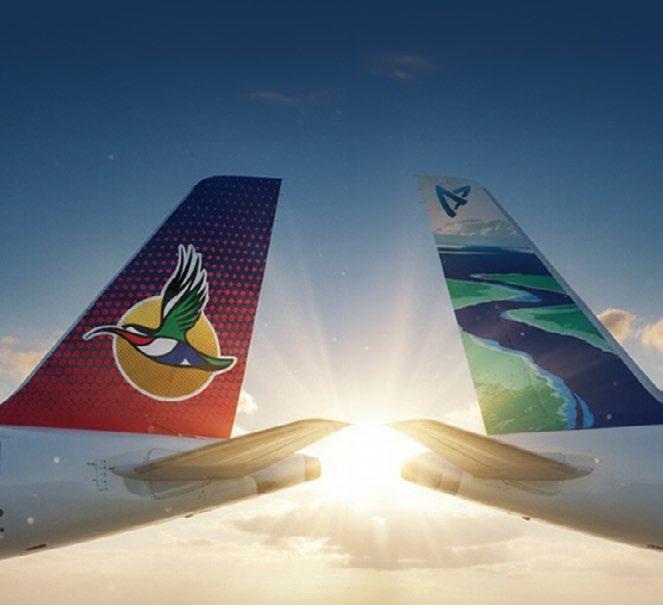
Air Algérie et Qatar Airways lancent un accord de partage de codes
Air Algérie et Qatar Airways ont mis en œuvre un accord de partage de codes à compter du 15 novembre 2025, visant à renforcer la connectivité entre l’Algérie, le Golfe et l’Asie.
S’appuyant sur un accord interligne existant, ce partenariat permet aux clients d’Air Algérie d’accéder à plusieurs destinations moyen-orientales et asiatiques opérées par Qatar Airways, tandis que les passagers de la compagnie qatarie peuvent rejoindre six destinations domestiques algériennes via Alger.
RAM et China Eastern Airlines signent un accord stratégique pour renforcer les liaisons Chine–Afrique
Le 18 octobre 2025, Royal Air Maroc et China Eastern Airlines ont signé à Shanghai un protocole d’accord visant à approfondir leur coopération et à renforcer la connectivité aérienne entre la Chine et l’Afrique. L’accord prévoit la mise en place d’un codeshare et d’un Special Prorate Agreement (SPA), dans la continuité de la reprise des vols Casablanca–Pékin et du lancement récent des liaisons Shanghai–Casablanca.
Kenya
Airways and Qatar
Airways Expand Codeshare to 19 Destina-
tions
On October 20, 2025, Kenya Airways and Qatar Airways officially launched an expanded codeshare agreement covering 19 destinations, following a memorandum of understanding signed in July 2025. Effective from October 26, the partnership enhances connectivity between Africa, the Middle East and Asia, leveraging Qatar Airways’ Doha hub and Kenya Airways’ African network.
Kenya Airways et Qatar Airways étendent leur accord de partage de codes à 19 destinations
Le 20 octobre 2025, Kenya Airways et Qatar Airways ont officiellement lancé un accord de codeshare élargi couvrant 19 destinations, dans la continuité du protocole d’accord signé en juillet 2025. Entrant en vigueur le 26 octobre, ce partenariat renforce la connectivité entre l’Afrique, le Moyen-Orient et l’Asie via le hub de Doha de Qatar Airways et le réseau africain de Kenya Airways.
Airlink and Uganda Airlines Sign Interline Agreement to Boost East Southern Africa Connectivity
Airlink and Uganda Airlines have signed a new interline agreement aimed at strengthening air connectivity between East and Southern Africa.The partnership enables seamless single ticket travel with through checked baggage, positioning Johannesburg as a key hub while offering Uganda Airlines’ passengers access to Airlink’s network of more than 45 destinations and Airlink customers onward connections across Uganda Airlines’ East African network.
Airlink et Uganda Airlines concluent un accord interline pour renforcer la connectivité Afrique de l’Est Afrique australe
Airlink et Uganda Airlines ont officialisé un nouvel accord interline destiné à améliorer la connectivité entre l’Afrique de l’Est et l’Afrique australe. Ce partenariat permet des voyages sur billet unique avec enregistrement des bagages jusqu’à destination finale, faisant de Johannesburg une plateforme stratégique et reliant le vaste réseau régional d’Airlink au réseau est africain en expansion d’Uganda Airlines.
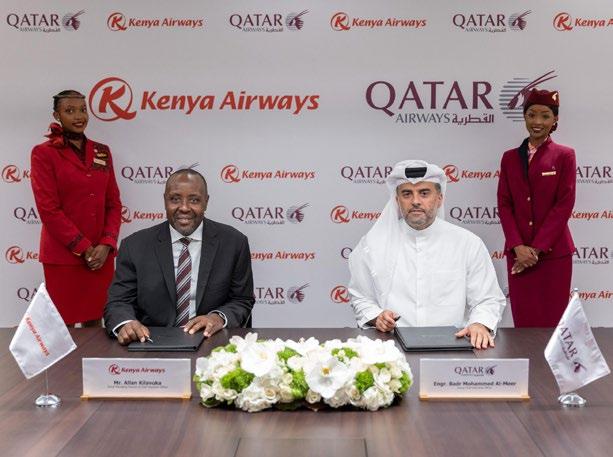
TAAG Angola Airlines and South African Airways Sign Codeshare Agreement
TAAG Angola Airlines and South African Airways have signed a strategic codeshare agreement on the sidelines of AFRAA AGA57 in Luanda, effective since 17 November 2025. The partnership allows joint marketing and seamless connections via Luanda, Johannesburg and Cape Town, covering routes between South Africa and Angola, with onward links to Lisbon and São Paulo, while expanding TAAG’s access to SAA’s regional network in Southern Africa.
TAAG Angola Airlines et South African Airways concluent un accord de partage de codes
TAAG Angola Airlines et South African Airways ont conclu un accord de partage de codes lors de l’AGA57 de l’AFRAA à Luanda, en vigueur depuis le 17 novembre 2025.
Ce partenariat permet la commercialisation conjointe de vols et des correspondances fluides via Luanda, Johannesburg et Cape Town, reliant l’Afrique australe à l’Europe et à l’Amérique du Sud, tout en renforçant la connectivité régionale des deux transporteurs.
Make the Most of the NDC Standard by Becoming an Airline Retailer
A Five-step Roadmap for the Full Adoption of NDC and the Transition to a Retail-centric Strategy
In today’s world, travelers expect more than just a seat on an aircraft. That is why the introduction of the New Distribution Capability (NDC) designed by IATA is a promising step for the airline industry. As this new standard provides more comprehensive product options and real-time pricing, it has the potential to completely change how airlines connect with and cater to their customers. However, the implementation of NDC is not just a simple, one-time technical fix. Airlines must alter their business culture, rethink their processes, and forge closer partnerships in order to meet the high standards of today’s astute travelers and avoid falling behind their competitors. This article examines how airlines can use NDC to transform into true customer-centric retailers.
Why NDC Matters for Airlines
For more than a decade, NDC has been a popular topic in the aviation industry, and several airlines have already started their NDC implementation journey, especially in North America, Europe, and East Asia. Nevertheless, some parts
Le standard NDC (New Distribution Capability), développé par IATA, marque une évolution structurelle de la distribution aérienne en permettant aux compagnies de proposer des offres enrichies, personnalisées et tarifées en temps réel sur l’ensemble de leurs canaux de vente. Toutefois, l’adoption du NDC ne peut être réduite à une simple mise à niveau technologique. Elle implique une transformation profonde des modèles opérationnels, organisationnels et commerciaux des compagnies aériennes.
Pour tirer pleinement parti du NDC, les transporteurs doivent opérer un changement stratégique vers un modèle de retailing centré sur le client, dans lequel l’offre est conçue en fonction des besoins, des préférences et du contexte de chaque voyageur. Cette transition repose sur plusieurs leviers clés : la refonte des processus pour plus d’agilité et d’efficacité, le décloisonnement des équipes internes, l’adoption d’une culture orientée expérience client, la modernisation des systèmes d’offre et de commande, ainsi que le renforcement des partenariats avec les agences de voyages et les fournisseurs technologiques.
of the world lag behind in development, for instance South America, Africa, India, and the CIS. Regardless of the region, at some point all airlines face the realization that implementing NDC is often much more difficult than it seems. Most of the time, this is because airlines have not fully embraced the organizational changes necessary to unlock NDC’s full potential. Instead, they see it as just another technological advancement. Because of this oversight, they may not be able to leverage NDC’s promise of frictionless content delivery, more diverse product options, and tailored offerings that meet the needs and preferences of today’s passengers.
At its heart, NDC is an XML-based standard designed by IATA to improve data exchange between airlines and travel agents. It empowers airlines to take control of their indirect sales channels, crafting tailor-made offers that resonate with each traveler’s unique needs. As IATA studies show, airlines expect to earn USD 5.30 more per passenger when the full potential of NDC is unlocked, while costing a oneoff investment of USD 1 to 2 per
passenger. But seeing NDC purely as a tool to reduce distribution costs or boost revenues sells this new standard short. True success with NDC lies in adopting a mindset of customer-centric retailing, where every traveler’s experience is enhanced at each step of their journey.
Overcoming the Roadblocks to NDC Success
Realizing the full potential of NDC requires a broader, general overhaul of business operations and corporate culture, and even partnerships. But what areas are most important, and where does an airline start? The following five-step roadmap can help airlines to take the necessary steps to fully embrace NDC and make the transition to a retail-centric strategy:

Les analyses du secteur montrent que le déploiement complet du NDC permet à la fois d’améliorer l’expérience passager et de générer des revenus additionnels, tout en renforçant la maîtrise des canaux indirects. Dans un environnement concurrentiel en constante évolution, le NDC s’impose ainsi comme un levier stratégique de différenciation, de performance commerciale et de résilience pour les compagnies aériennes, y compris sur les marchés africains en phase de transformation.
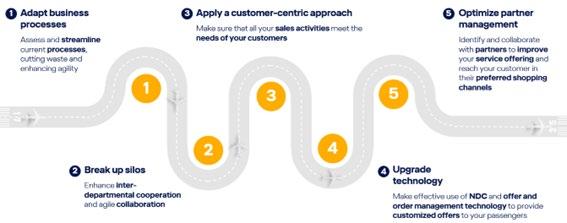
1. Redesigning Processes to Focus on Customer Needs
Rethinking processes is the first step to becoming an airline retailer. This requires a fundamental shift toward lean, streamlined processes that enhance responsiveness and reduce waste, as small adjustments alone will not suffice. Strictly following these lean principles can help airlines to become more flexible and enable them to quickly adjust to the rapidly changing travel market by removing unnecessary steps.
2. Shifting Culture: Building Collaboration Across Departments
Changing processes is the first step, but lasting transformation requires a shift in culture. Airline teams need to work together seamlessly, breaking down the silos that have traditionally separated business units and improving interactions between them. This involves creating low-hierar-
chy structures and fostering a sense of shared purpose focused on delivering the best customer experience. The organization needs to enable employees to make decisions that impact the customer. Furthermore, they must be accountable to clearly established KPIs and empowered to respond accordingly. For NDC to succeed, everyone in the organization, from sales to operations, must collaborate to ensure travelers receive consistent and compelling service across all touchpoints.
3. Adopting a Customer-first Mindset
Airlines need to make a customer-centric mindset a core part of their strategy to succeed with NDC. Understanding passenger needs at every level helps airlines to tailor offers in a better way, boost engagement, and increase customer loyalty. While this shift requires time, investment, and often external guidance, the payoff is substantial. Customized service offers and more effective price differentiation drive customer satisfaction and lead to increased revenues.
This need for customer-first initiatives can be seen around the globe. For example, Lufthansa Group airlines offer customers the option to securely share the location of their AirTag if their baggage is missing. This accelerates the tracking process and helps to reduce stress for the customer.
4. Upgrading Technology to Support Personalization and Agility
By upgrading to NDC as well as modern offer and order management, airlines can adapt their offers in real time through the customization of products and services to each individual passenger. The technology supports the introduction of dynamic pricing, personalized offers, and the distribution of rich content to make the service offer more tangible for the customer.
Airlines can thus deliver a consistent experience across both direct and in-
The roadmap to becoming an airline retailer (Lufthansa Consulting, 2024)
direct channels that meets passenger expectations and preferences at every stage.
5. Strengthening Partnerships to Deliver a Complete Travel Experience
Finally, it is not enough to just change the internal operations of an airline to achieve a true transformation through NDC. External partnerships are essential for an end-to-end travel experience that consists of a well-coordinated service. Airlines need to work closely with providers like travel agencies and technology companies to successfully adopt NDC. This adoption depends on sharing real-time data and aligning KPIs across these partnerships. Many airlines are already strengthening their partnerships. For example, United Airlines has signed an enhanced distribution agreement with Amadeus, while Lufthansa Group airlines have partnered with the German conglomerate Siemens to implement NDC technology for future flight bookings.
The Path to Becoming a Retailer in the Skies
The journey to achieving the full potential of NDC is more than a simple technological implementation. It is a complete realignment of how airlines operate. By focusing on customer-centric processes, embracing cultural shifts, investing in the right technology, and optimizing partnerships, airlines can evolve into agile, customer-focused retailers. The path may be challenging, but for those carriers who are willing to commit, the rewards are substantial: stronger customer loyalty, increased revenue, and a more resilient business position for the future of travel.
The authors:



Marius Jungnickel
Tom Niklas Meyer Esther Samtlebe Associate Consultant Business Analyst Senior Consultant
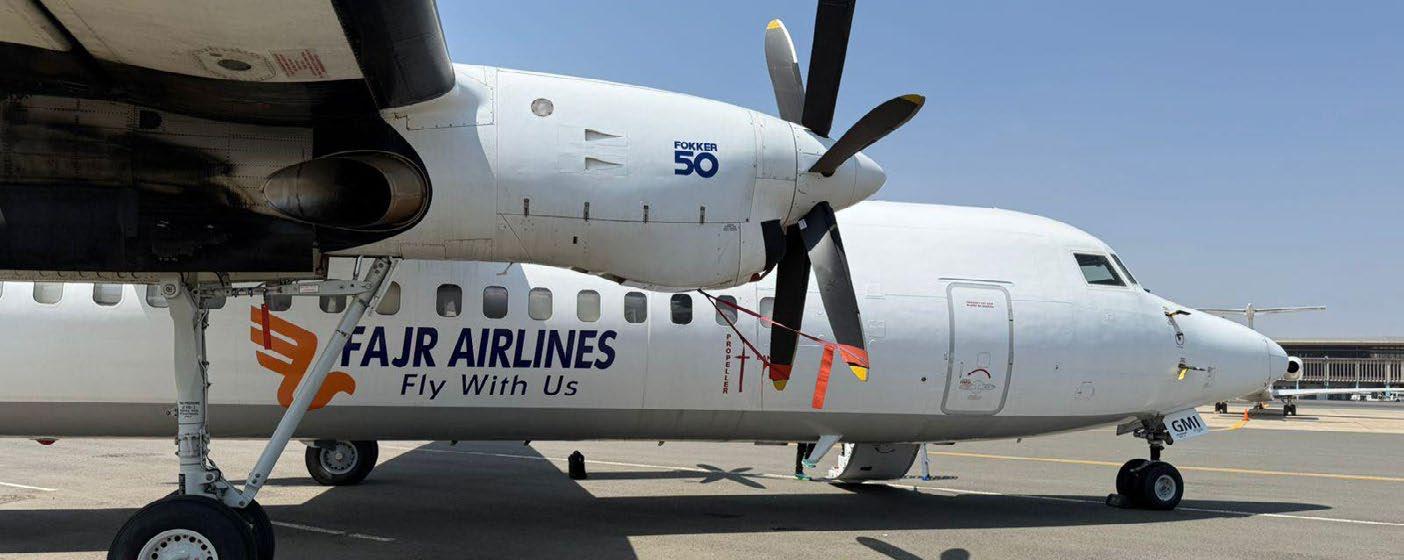
Startup Watch
Somalia: Two New Airlines Reinforce Domestic Air Connectivity
In late 2025, Somalia’s domestic aviation market expanded with the entry of KESOM Air and Fajr Airlines, both commencing operations from Mogadishu. KESOM Air launched services on October 12 with a single Embraer EMB-120 turboprop dedicated to domestic routes, while Fajr Airlines began flying earlier operating a Fokker 50 to support scheduled internal connectivity from the capital.
Somalie : deux nouvelles compagnies renforcent la connectivité domestique
Fin 2025, le marché aérien domestique somalien s’est élargi avec l’entrée en service de KESOM Air et Fajr Airlines, toutes deux basées à Mogadiscio. KESOM Air a démarré ses opérations le 12 octobre avec un Embraer EMB-120 dédié aux liaisons intérieures, tandis que Fajr Airlines opère avec un Fokker 50, contribuant au renforcement de la connectivité aérienne nationale.
Uganda: Three Companies Seek New Air Service Licences
In November 2025, Uganda’s aviation market saw renewed interest as Kampala Executive Aviation, Flight Training Centre, and Aerojet Aviation Ltd presented applications for Air Service Licences before the Uganda Civil Aviation Authority. The bids cover passenger, cargo and aerial work operations, highlighting growing investor confidence and diversification in Uganda’s air transport sector.
Ouganda : trois acteurs candidats à de nouvelles licences de transport aérien
En novembre 2025, le secteur aérien ougandais a enregistré un regain d’intérêt avec les demandes de licences de transport aérien déposées par Kampala Executive Aviation, Flight Training Centre et Aerojet Aviation Ltd auprès de l’Uganda Civil Aviation Authority. Ces projets, portant sur des activités passagers, fret et travaux aériens, traduisent une dynamique renouvelée et une diversification progressive du marché aérien en Ouganda.
Windhoek Selects “Namibia Air” as Official Name for New National Carrier
In November 2025, the Namibian government confirmed Namibia Air (Pty) Ltd as the official name of the country’s future national airline, marking a key step toward restoring a state-owned carrier after the liquidation of Air Namibia in 2021. Approved by Cabinet and to be established under Namibian commercial law with the State as sole shareholder, Namibia Air forms part of a broader strategy to rebuild air connectivity and modernise the country’s aviation sector, supported by a technical committee tasked with defining the airline’s business model, governance and implementation roadmap.
Windhoek retient “Namibia Air” comme nom officiel de sa future compagnie nationale
En novembre 2025, le gouvernement namibien a validé Namibia Air (Pty) Ltd comme nom officiel de la future compagnie aérienne nationale, une étape décisive dans le processus de relance d’un transporteur public après la liquidation d’Air Namibia en 2021. Approuvée par le Cabinet et constituée sous le droit commercial namibien avec l’État comme actionnaire unique, Namibia Air s’inscrit dans une stratégie plus large visant à rétablir la connectivité aérienne du pays, avec l’appui d’un comité technique chargé de définir le modèle économique, la gouvernance et le calendrier de mise en œuvre.
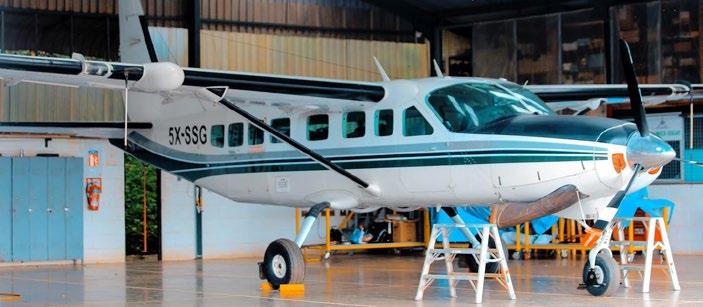
Nigeria: Bayelsa-Backed Pioneer Airlines Takes Delivery of First ATR72-600
Pioneer Airlines has taken delivery of its first ATR72-600, marking a concrete step toward the launch of its regional operations in Nigeria. The aircraft, an 11-year-old ATR72-600 (MSN 1199, 5N-SDD), will be operated under the Air Operator Certificate of 7Star Global, with commercial services expected to ramp up from 2026. Backed by the Bayelsa State Government, the project is designed to support the commercial viability of Bayelsa International Airport and improve air connectivity across the Niger Delta. Pioneer Airlines plans to position itself as a regional carrier serving domestic routes, charters and light cargo, with an initial focus on south-south and south-east corridors.
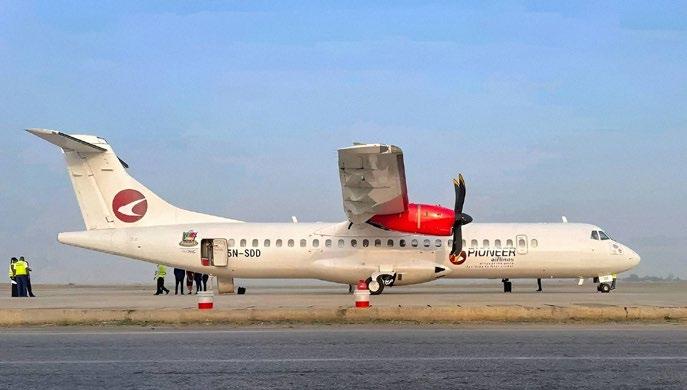
du Niger. La compagnie ambitionne de se positionner sur les liaisons domestiques, le charter et le fret léger, avec une priorité donnée aux axes sud-sud et sud-est du pays.
Tripoli nomme Ziad Farhoud premier CEO de Libyan United Airlines
Nigéria : la compagnie Pioneer Airlines, soutenue par l’État de Bayelsa, réceptionne son premier ATR72-600
Pioneer Airlines a réceptionné son premier ATR72-600, franchissant une étape clé vers le lancement de ses opérations régionales au Nigeria. L’appareil, un ATR72600 âgé de 11 ans (MSN 1199, 5N-SDD), sera exploité sous le certificat de transporteur aérien de 7Star Global, avec une mise en service commerciale progressive attendue à partir de 2026. Soutenu par le gouvernement de l’État de Bayelsa, le projet vise à dynamiser l’aéroport international de Bayelsa et à renforcer la connectivité aérienne dans le delta du Niger. La compagnie ambitionne de se positionner sur les liaisons domestiques, le charter et le fret léger, avec une priorité donnée aux axes sud-sud et sud-est du pays.
Tripoli Appoints Ziad Farhoud as First CEO of Libyan United Airlines
Pioneer Airlines a réceptionné son premier ATR72600, franchissant une étape clé vers le lancement de ses opérations régionales au Nigeria. L’appareil, un ATR72-600 âgé de 11 ans (MSN 1199, 5N-SDD), sera exploité sous le certificat de transporteur aérien de 7Star Global, avec une mise en service commerciale progressive attendue à partir de 2026. Soutenu par le gouvernement de l’État de Bayelsa, le projet vise à dynamiser l’aéroport international de Bayelsa et à renforcer la connectivité aérienne dans le delta
Les autorités libyennes ont nommé Ziad Farhoud en qualité de premier directeur général de Libyan United Airlines, étape fondatrice du projet de nouveau transporteur national basé à Tripoli. Ancien dirigeant de Crown Airlines et de Libyan Wings, et fort d’une carrière de près de vingt ans chez Airbus à des postes de haut niveau, il est chargé de structurer le lancement, la gouvernance et les premières opérations de la compagnie.
Mali Airlines Holds First Board Meeting
Mali Airlines held its inaugural board meeting on December 4, 2025, in Bamako, marking a formal governance milestone as the statebacked carrier advances its institutional and operational setup. Chaired by ADM CEO Lassina Togola and attended by CEO Aristide de Balla Moro Sidibé, the board approved the continuation of the airline’s operationalisation process without disclosing a launch timeline.
Mali Airlines tient son premier conseil d’administration
Mali Airlines a tenu son premier conseil d’administration le 4 décembre 2025 à Bamako, marquant une étape institutionnelle importante dans la structuration et la mise en œuvre du projet. Présidé par Lassina Togola et en présence du directeur général Aristide de Balla Moro Sidibé, le conseil a validé la poursuite du processus de mise en exploitation, sans calendrier annoncé.
Cogs to turn African aviation into a lively logistics sector
Across the continent, we are witnessing economies diversifying beyond oil and minerals into technology, manufacturing, and services. Africa leads in fintech, with innovations like M-Pesa in Kenya inspiring the rest of the world. Tech hubs in Lagos, Nairobi, Kigali, and Cape Town are driving a digital economy that is transforming the business landscape.
The African Continental Free Trade Area — AfCFTA —, along with the AU’s Agenda 2063, is bringing our economies closer together than ever before. With more than 60% of its population under the age of 25, Africa’s youth are shaping governance, demanding accountability, and driving democratic reforms. While challenges remain, this young, dynamic population is our greatest asset for development.
Africa is the fastest-growing and most urbanising region in the world. African cities are not only economic hubs but also social and cultural centres with African music, cinema, literature, cuisine, and fashion increasingly resonating on the global stage.
At the same time, climate change is an undeniable reality. Droughts, floods, and desertification are impacting millions of Africans. Nonetheless, Africa is also investing in renewable energy, particularly solar power, showing the world that sustainability and economic growth can go hand in hand.
Across the continent, we are witnessing economies diversifying beyond oil and minerals into technology, manufacturing, and services. Africa leads in fintech, with innovations like M-Pesa in Kenya inspiring the rest of the world. Tech hubs in Lagos, Nairobi, Kigali, and Cape Town are driving a digital economy that is transforming the business landscape.
The African Continental Free Trade Area — AfCFTA —, along with the AU’s Agenda 2063, is bringing our economies
closer together than ever before. With more than 60% of its population under the age of 25, Africa’s youth are shaping governance, demanding accountability, and driving democratic reforms. While challenges remain, this young, dynamic population is our greatest asset for development. Africa is the fastest-growing and most urbanising region in the world. African cities are not only economic hubs but also social and cultural centres with African music, cinema, lit-
The African airline industry cannot remain unaffected by these transformation dynamics
The Single African Air Transport Market now has 38 signatories. Although implementation varies, liberalisation
remains vital for reducing fares, improving connectivity, and boosting intra-African trade. Encouragingly, visa openness is also increasing, making African skies and borders more accessible to African citizens.
The issue of blocked funds is easing. Airlines’ trapped revenues have fallen to $1.3 billion in April 2025, down from
$1.7 billion just six months earlier. This progress — especially in Nigeria — is enhancing airlines’ financial capacity for investment and growth. Airlines facing blocked funds many times end up reducing flight frequencies or suspending routes to the impacted States. To facilitate aviation’s economic and social benefits, AFRAA is calling upon governments to remove all barriers to airline revenue repatriation.

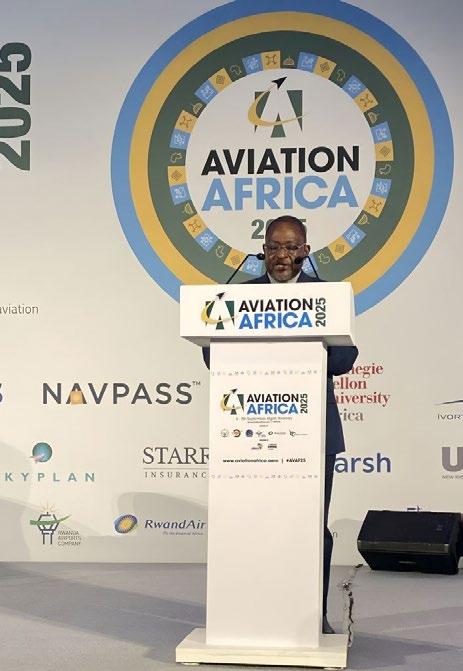
erature, cuisine, and fashion increasingly resonating on the global stage. At the same time, climate change is an undeniable reality. Droughts, floods, and desertification are impacting millions of Africans. Nonetheless, Africa is also investing in renewable energy, particularly solar power, showing the world that sustainability and economic growth can go hand in hand.
Call for more collaboration among airlines
African aviation remains resilient. Passenger traffic has increased by 15% year-onyear, with AFRAA projecting 113 million passengers in 2025. The passenger revenue trend indicates a strong recovery.
African carriers now hold over 52% of international capacity; however, in terms of intercontinental services, non-African carriers still dominate.
This emphasises the importance of our regional airlines continuing to expand, improve efficiency, and enhance global competitiveness. Mr. Berthé highlighted that new long-haul routes from nontraditional hubs — including Nigeria, Uganda, Côte d’Ivoire, and Angola — are reshaping the network map. AFRAA, under the auspices of the AFRAA Route Network Coordination & Cargo Committee is actively advocating for cooperation through joint ventures, partnerships, and consolidation. Alone, we are vulnerable, but together
AFRAA
we are strong.
Decarbonisation remains one of our greatest challenges. Africa lacks large-scale SAF production; financing and regulatory frameworks are still weak; and infrastructure inefficiencies contribute to higher emissions. However, Africa also holds unique opportunities. With our abundant biomass resources and renewable energy potential, we can leapfrog into greener aviation if the right policies are implemented and investments are made to achieve the NetZero 2050 roadmap.
Free Route Airspace acing towards reality in Africa
“The Free Routing trials with Ethiopian Airlines, Kenya Airways, Royal Air Maroc, and Air Arabia are paving the way for Free Route Airspace in West and Central Africa by the end of 2025; a concrete step towards greater efficiency and lower CO₂ emissions.” He stated. Our airlines need modern, fuel-efficient fleets to stay competitive. We urge financial institutions and partners to expand access to affordable financing, enabling African carriers to update their fleets and prepare for future demands. Safety remains a top priority.
The AFRAA Safety and Operations Summit in Kigali this year generated eight key recommendations, including runway safety and training.
Launch of
African
MRO event to foster collaboration, reduce costs
Meanwhile, Africa’s MRO market is growing, but a large part of our maintenance is still outsourced outside the continent. That is why we are proud to unveil the AFRICA MRO event that will be staged in 2026. The date and venue shall be announced in the coming days. This collaboration among our four major MROs (MS, KQ, ET, SAA) will help reduce costs, improve efficiency, and enhance safety across the sector.
Aviation is not just part of this transformation; it is a driver of it. The dynamics of the new African landscape require coordinated efforts and close collaboration among all stakeholders, including governments, regulatory authorities, airlines, airports, air navigation service providers, suppliers, and customers.
In concluding, Mr. Berthé stated: “At AFRAA, we believe in the collaborative approach. Together, we can turn African aviation into a lively logistics sector, supporting economic growth. Together, we can develop the aviation sector Africa deserves.”
It is time to transform sustainability from a challenge into Africa’s greatest competitive advantage
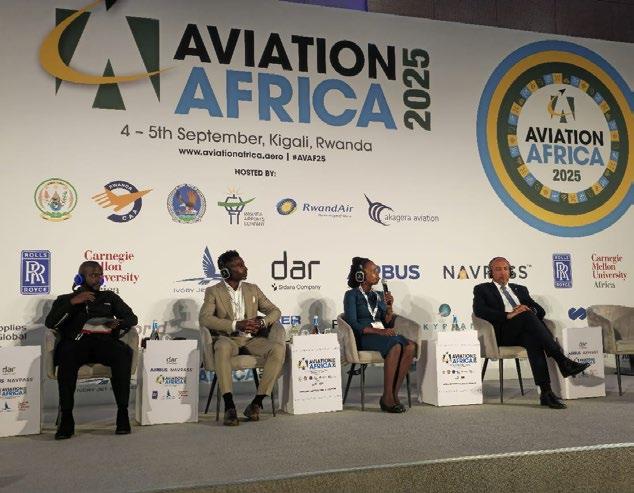
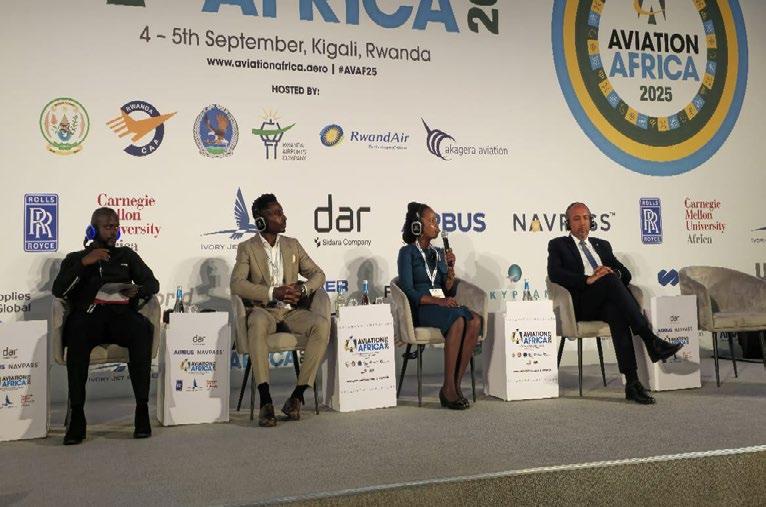
AFRAA intervention on the Panel: “Creating a sustainable African aviation industry, encompassing environmental, social and economic dimensions” at Aviation Africa Summit, 05 September
The panel focused on the critical actions that need to be done to help create a sustainable African aviation industry which encompasses environmental, social, governance and economic dimensions.
•Triple focus: Sustainability in African aviation must encompass environmental (SAFs, carbon offsetting, technology, operations & infrastructure), social (jobs, inclusivity, connectivity) and economic (profitability, resilience, competitiveness) pillars. Framing Sustainability in African Aviation
•AFRAA’s role: Driving collaborative strategies among airlines, regulators, financiers, and manufacturers to ensure African aviation thrives.
Focus on Environmental Dimension – SAFs as the Game Changer
Maureen Kahonge, Senior Manager Business Development & Communications AFRAA highlighted the SAF Readiness Survey by AFRAA:
Current status: AFRAA’s 2025 SAF Readiness Survey shows:
About
80% of African airlines have no access to SAF at their operational airports. About
70% of African airlines say that SAF must be price-competitive with Jet A1; only 24% accept even a small premium.
92%
are open to collaboration, and 84% are ready to join an AFRAA SAF Taskforce.
More than half of airlines are interested in green financing solutions to support SAF adoption.
Barriers on SAF adoption highlighted were: Limited availability, high cost, regulatory gaps, and lack of technical readiness (few feasibility studies completed) and the cost challenge. SAF adoption hinges on financial viability, with jet fuel already a major cost driver (30–40% of airline OPEX), African airlines cannot absorb SAF premiums.
Sustainability requires bold regulatory clarity and regional alignment; fragmented national policies will only slow our progress. There are opportunities for Africa, the continent could achieve 0.6 million tonnes of SAF capacity by 2030 of 5–10% of projected global supply. Local feedstocks (biomass, waste, solarpowered hydrogen) make Africa well-positioned to be a regional SAF production hub.
Airlines have asked for AFRAA actions: Advocate for tax exemptions, subsidies, harmonized certification frameworks, and regional SAF production clusters to accelerate adoption. Strengthen capacity building through training programs, workshops, and technical briefs, Operationalize the AFRAA SAF Taskforce for joint procurement, knowledge sharing, and advocacy.
AFRAA’s Roadmap on Decarbonisation Pathway to Net Zero and Call to Action
AFRAA has published the AFRAA Roadmap on Decarburization Pathway to Net Zero and Call to Action which serves as a blueprint of actions that African airlines should take at the minimum towards global decarburization. It outlines key pathways that include:
• adopting Sustainable Aviation Fuel (SAF)
• investing in new technologies
• optimizing operations and infrastructure
• implementing effective carbon offsetting strategies
•developing human capital to support the transition
AFRAA DIARY
As the market evolves rapidly, it is crucial to remain adaptable. This coordinated effort requires active participation from AFRAA, airlines, governments, and other stakeholders to ensure that the African aviation industry not only meets global environmental targets but also remains competitive and sustainable in a rapidly evolving global market. AFRAA will continue to track airline progress through surveys to establish successes and challenges as well as take steps to address the bottlenecks.
AFRAA meets the Principal Secretary, State Department for Aviation and Aerospace Development of the Republic of Kenya
On01 September 2025, AFRAA Secretary General –Mr Abderahmane Berthé, paid a courtesy visit to the Principal Secretary of the State Department for Aviation and Aerospace Development of the Republic of Kenya – Hon.
Teresia Mbaika to discuss areas of engagement with the Ministry for the overall objective of developing the air transport sector. Among others, the meeting discussed:
• Kenya Aviation Policy implementation
• Market access
• Infrastructure
• Environment
• Taxes and Charges
• International conventions
• Data, statistics and communications
AFRAA and State Department for Aviation and Aerospace Development of the Republic of Kenya will concretize a framework of engagement to support the development of the air transport sector in Kenya.




AFRAA Applauds Abolition Of Airfare Taxes Across West Africa
Abderahmane Berthe, AFRAA Secretary General.
Credit: AFRAA
The Economic Community of West African States Commission (ECOWAS) is set to abolish air ticket taxes in the region by Jan. 1, 2026, as part of an initiative to make air travel more affordable and enhance regional integration.
The African Airlines Association (AFRAA) said it “warmly welcomes” the landmark decision.
West Africa is regarded as one of the most expensive regions in the world for air travel, a situation long attributed to government-imposed taxes and aviation charges that significantly inflate ticket prices and suppress passenger demand.
Under the new reforms, ECOWAS will remove non-cost-related taxes, most notably the controversial security tax, and reduce aviation charges by 25%.
Chris Appiah, who is the director of transport at the ECOWAS Commission, says high airfare costs in the region are largely driven by taxes and charges that contradict international aviation standards.
“These taxes are against the International Civil Aviation Organization’s guidelines and suppress demand rather than support growth,” he says. He adds that four major levies, including the security tax, will be eliminated entirely because they are not directly linked to the provision of aviation services.

Speaking to Aviation Week, AFRAA Secretary General Abderahmane Berthe describes the move as a “turning point” that reflects years of advocacy by the association.
“For years, excessive and often unjustified levies have made regional air travel in Africa among the most expensive in the world, stifling demand, hindering connectivity, and undermining the competitiveness of African carriers,” Berthe says.
“ECOWAS has taken a decisive step toward reversing this trend by recognizing that high taxes suppress growth and contradict ICAO’s principles of cost-relatedness and transparency.”
Berthe says the policy will help restore affordability, stimulate intra-African travel and reposition aviation as a driver of regional integration rather than a barrier. He also praises ECOWAS for implementing directives adopted at the bloc’s 2023 summit and reinforced by a 2024 supplementary act.
However, Berthe adds that the success of the policy will depend on effective implementation, urging all stakeholders, including airlines and regulators, to ensure that cost savings are passed on to travelers, as pledged.
“We see this as a model for other African regions to follow, in support of the African Continental Free Trade Area goals and the collective vision of a more connected, prosperous Africa,” he says.
Source: Aviation Week Network

AFRAA and AfriSAF Formalise Strategic Partnership to Advance SAF Development in Africa
African Airlines Association (AFRAA) and AfriSAF have signed a Memorandum of Understanding to accelerate the development, production and uptake of Sustainable Aviation Fuel (SAF) across Africa.
The agreement was formalised on the margins of the 57th AFRAA Annual General Assembly in Luanda on 2 December 2025 by AFRAA Secretary General Abderahmane Berthé and AfriSAF Chief Executive Officer Kwame Bekoe.
The partnership establishes a structured cooperation framework to support African airlines’ decarbonisation efforts, covering policy advocacy, SAF project identification and structuring, feedstock supply-chain optimisation, training and capacity building.
AfriSAF will contribute technical expertise in feedstock mapping, project design and digital traceability, while AFRAA will mobilise its airline members around early offtake
AFRAA et AfriSAF formalisent un partenariat stratégique pour accélérer le développement du SAF en Afrique
African Airlines Association (AFRAA) et AfriSAF ont signé un protocole d’accord visant à accélérer le développement, la production et l’adoption des carburants d’aviation durables (SAF) sur le continent africain. L’accord a été formalisé en marge de la 57ᵉ
Assemblée générale annuelle de l’AFRAA à Luanda, le 2 décembre 2025, par le Secrétaire général de l’AFRAA, Abderahmane Berthé, et le Directeur général d’AfriSAF, Kwame Bekoe.
Ce partenariat instaure un cadre de coopération structuré destiné à accompagner les compagnies aériennes africaines dans leurs trajectoires de décarbonation. Il couvre notamment le plaidoyer réglementaire, l’identification et la structuration de projets SAF, l’optimisation des chaînes d’approvisionnement en biomasse, ainsi que la formation et le renforcement des capacités des acteurs du secteur. AfriSAF apportera son expertise technique en matière de cartographie des in-
commitments and provide sector-wide coordination to enhance project bankability. Through this alliance, both organisations will work jointly to promote enabling regulatory frameworks, develop SAF-focused training programmes, support the emergence of viable production projects, and engage development finance institutions, climate funds and international partners to accelerate project preparation and investment.
AFRAA underscored SAF’s central role in the aviation sector’s pathway toward carbon neutrality by 2050, while AfriSAF highlighted Africa’s significant untapped sustainable biomass potential and the opportunity for the continent to position itself as a competitive SAF producer in global
trants, de conception de projets et de traçabilité digitale, tandis que l’AFRAA mobilisera ses compagnies membres autour d’engagements d’achat anticipés et assurera une coordination sectorielle pour renforcer la bancabilité des projets. Les deux organisations travailleront conjointement à la promotion de cadres réglementaires favorables, au développement de programmes de formation dédiés au SAF, à l’émergence de projets de production viables et à la mobilisation d’institutions de financement du développement, de fonds climat et de partenaires internationaux.
L’AFRAA a souligné le rôle déterminant du SAF dans l’atteinte de la neutralité carbone du transport aérien à l’horizon 2050, tandis qu’AfriSAF a mis en avant
markets.
The agreement comes at a critical juncture for Africa’s SAF ecosystem, as continental and international initiatives gain momentum. By directly linking airlines, technical expertise and project development, the AFRAA–AfriSAF partnership represents a concrete institutional step toward building a sustainable, scalable SAF value chain in Africa, supporting energy security, airline competitiveness and long-term climate objectives.
le potentiel considérable et encore inexploité de la biomasse durable en Afrique, ainsi que l’opportunité pour le continent de se positionner comme un fournisseur compétitif de SAF à l’échelle mondiale. Cet accord intervient à un moment clé pour l’écosystème SAF africain, alors que les initiatives continentales et internationales se multiplient. En reliant directement compagnies aériennes, expertise technique et développement de projets, le partenariat AFRAA–AfriSAF constitue une avancée institutionnelle concrète vers la construction d’une filière SAF africaine durable et scalable, contribuant à la sécurité énergétique, à la compétitivité des transporteurs et aux objectifs climatiques de long terme.

AFRAA DIARY





AFRAA New Members







Join the African Airlines Association (AFRAA) the leading trade association of African airlines for a sustainable, interconnected and affordable Air Transport industry in Africa where African Airlines become key players and drivers to African economic development. AFRAA membership comprises all the major intercontinental African operators and the Association’s members represent over 85% of total international traffic carried by all African airlines.
As a non-airline entity, join the partnership programme to collaborate with a comprehensive, efficient, knowledgeable and influential air transport trade organization for Africa to establish relationships and expand your footprint in the African continent on the one hand, while supporting the development of the air transport industry in Africa on the other hand.
AFRAA Membership
AFRAA Partnership
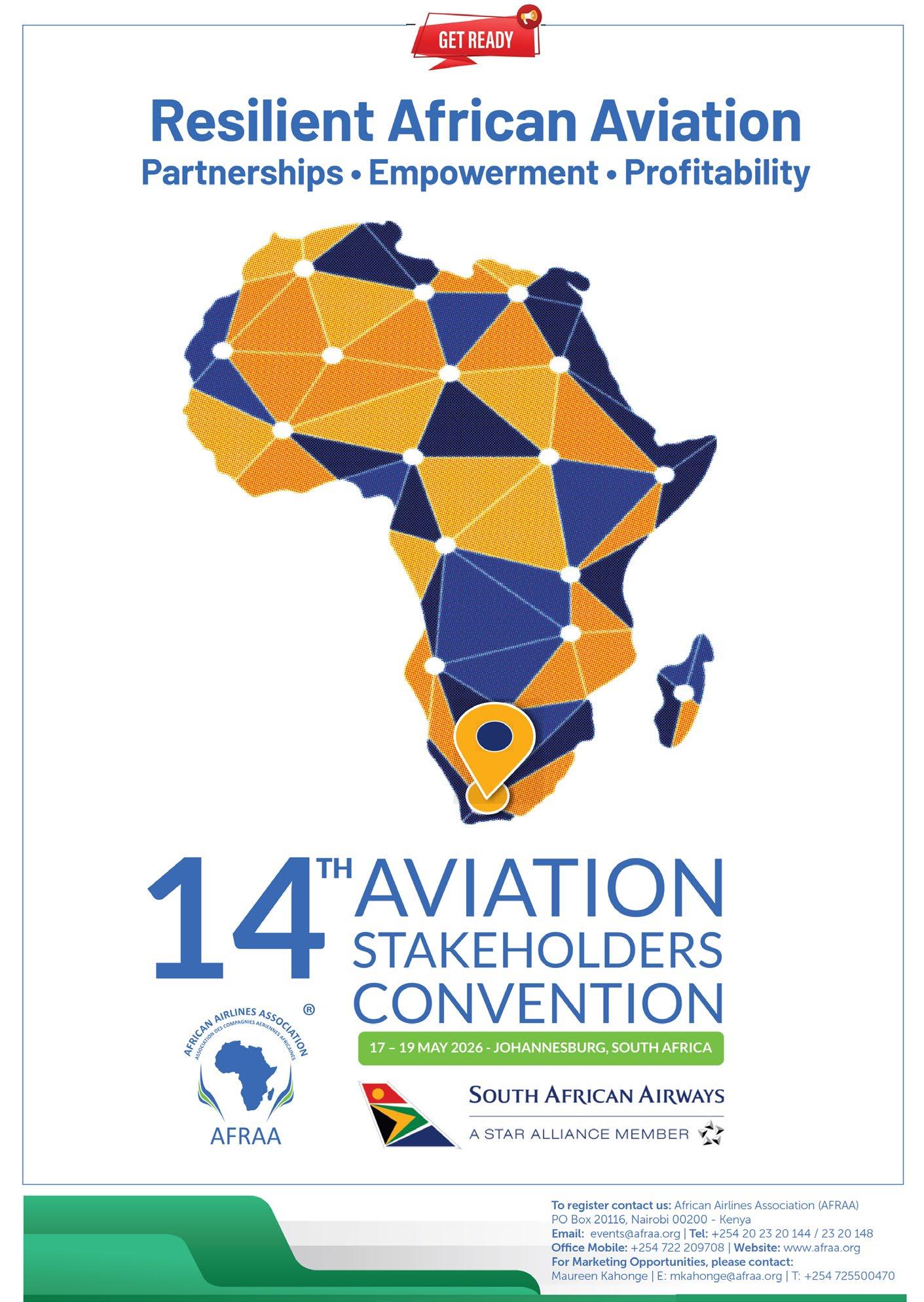
Routes Alerts

Air Côte d’Ivoire : Abidjan – Paris / Beyrouth
Launched on October 15, 2025, the Abidjan–Paris service marked Air Côte d’Ivoire’s entry into long-haul operations with the induction of its first Airbus A330-900neo. Building on this milestone, the carrier plans to open Beirut (Lebanon) as from March 29, 2026.


Lancée le 15 Octobre 2025, la liaison Abidjan–Paris a marqué l’entrée de Air Côte d’Ivoire sur le long-courrier grâce à l’introduction de ses premiers Airbus A330-900neo. Dans la continuité, la compagnie prévoit d’ouvrir Beyrouth (Liban) à partir du 29 mars 2026.
EgyptAir Targets Los Angeles and Chicago in the United States
In October 2025, EgyptAir filed applications with the U.S. Department of Transportation to launch flights to Los Angeles from May 2026 and to Chicago from June 2026.
The carrier already serves New York-JFK, Newark and Washington-Dulles from Cairo and relies on a long-haul fleet of Boeing 787-9s and 777-300ERs, set to be strengthened by incoming Airbus A350-900s.
EgyptAir vise Los Angeles et Chicago aux États-Unis
En octobre 2025, EgyptAir a déposé auprès du U.S. Department of Transportation des demandes d’autorisation pour lancer des vols vers Los Angeles à partir de mai 2026 et vers Chicago à compter de juin 2026. La compagnie dessert déjà New York-JFK, Newark et Washington-Dulles depuis Le Caire et s’appuie sur une flotte long-courrier de Boeing 787-9 et 777-300ER, appelée à être renforcée par des Airbus A350-900.
Ethiopian Airlines Resumes Daily Addis Ababa–Port Sudan Flights

On October 15, 2025, Ethiopian Airlines resumed passenger services to Port Sudan, restoring a key air link to Sudan’s Red Sea coast. The route is currently operated daily from Addis Ababa using Boeing 737 MAX aircraft.
Ethiopian Airlines reprend ses vols quotidiens Addis-Abeba – Port-Soudan
Le 15 octobre 2025, Ethiopian Airlines a relancé ses vols passagers vers PortSoudan, rétablissant une liaison stratégique avec la côte soudanaise de la mer Rouge. La ligne est actuellement opérée quotidiennement depuis Addis-Abeba en Boeing 737 MAX.
Malawi Airlines Launches New Entebbe Route and Adds Nonstop Johannesburg Service

In December 2025, Malawi Airlines expanded its regional network with the launch of a Lilongwe–Entebbe route on 15 December, creating the first-ever direct air link between Malawi and Uganda, operated three times weekly with a Boeing 737-700. The carrier also introduced a nonstop Lilongwe–Johannesburg service from 6 December, enhancing connectivity to South Africa and bringing its total capacity to 10 weekly flights on the Johannesburg market.
Malawi Airlines ouvre Entebbe et renforce
Johannesburg en vols directs
En décembre 2025, Malawi Airlines a élargi son réseau régional avec l’ouverture de la liaison Lilongwe–Entebbe le 15 décembre, établissant la première connexion aérienne directe entre le Malawi et l’Ouganda, exploitée trois fois par semaine en Boeing 737-700. La compagnie a également lancé un vol direct Lilongwe–Johannesburg à compter du 6 décembre, renforçant l’accès à l’Afrique du Sud et portant son offre à 10 fréquences hebdomadaires sur le marché de Johannesburg.
Air Tanzania Secures Approval to Launch Accra
Flights

On October 14, 2025, Air Tanzania received a Validated Foreign Air Operator Certificate from the Ghana Civil Aviation Authority, clearing the carrier to begin scheduled services between Dar es Salaam and Accra. Once launched, Accra will become Air Tanzania’s second West African destination after Lagos, where the airline began operating direct flights in September 2025.
Air Tanzania obtient le feu vert pour lancer ses vols vers Accra
Le 14 octobre 2025, Air Tanzania a obtenu de la Ghana Civil Aviation Authority un certificat VFAOC, autorisant le lancement de vols réguliers entre Dar es Salaam et Accra. Accra deviendra ainsi la deuxième destination ouest-africaine de la compagnie après Lagos, desservie en vols directs depuis septembre 2025.
Medsky Airways Launches Athens Services, Expands European Network

In October 2025, Medsky Airways launched new services linking Benghazi and Tripoli to Athens, with operations starting on October 23 and three days later respectively, using Airbus A320-200 aircraft under a wet-lease with MedAir. In Europe, the Libyan carrier already serves Rome and Milan (Italy), Malta, and Istanbul, further consolidating its expansion to European markets following EASA certification.
Medsky Airways lance Athènes et renforce son réseau européen
En octobre 2025, Medsky Airways a inauguré des liaisons entre Benghazi et Tripoli vers Athènes, respectivement à compter du 23 octobre et quelques jours plus tard, opérées en Airbus A320-200 en wet lease avec MedAir. En Europe, le transporteur libyen dessert déjà Rome et Milan (Italie), Malte et Istanbul, consolidant ainsi son expansion progressif sur les marchés européens après l’obtention de la certification EASA.
Air Sénégal Reinforces European Network with Brussels as Second Gateway
On December 9, 2025, Air Sénégal commenced operations on the Dakar–Brussels route, establishing Brussels as the carrier’s second European gateway after Paris–Charles de Gaulle. Operated three times weekly from Blaise Diagne International Airport, the service supports a selective re-expansion of the airline’s European network following prior restructuring.
Air Sénégal renforce son réseau européen avec l’ouverture de Bruxelles
Le 9 décembre 2025, Air Sénégal a lancé la liaison Dakar–Bruxelles, faisant de la capitale belge sa deuxième porte d’entrée européenne après Paris–Charles de Gaulle. Exploitée trois fois par semaine au départ de l’aéroport international Blaise Diagne, cette ouverture s’inscrit dans une stratégie de redéploiement ciblé du réseau européen de la compagnie.
RAM Unveils 2026 International Expansion Plan with New African and Long-Haul Routes
Royal Air Maroc has outlined its 2026 expansion plan, including the resumption of Casablanca–Pointe-Noire and Casablanca–Tripoli services in April 2026, adding to earlier reopening of N’Djamena from September 2025. The programme also launches two long-haul routes: Casablanca–St. Petersburg from January 2026 and Casablanca–Los Angeles from 7 June 2026 (operated three times weekly), alongside other new services to Beirut, Bilbao, Alicante, Palma, Verona and Lille, and increased frequencies on key intercontinental markets.
RAM dévoile son plan d’expansion internationale 2026 avec de nouvelles liaisons africaines et long-courrier
Royal Air Maroc a présenté son plan d’expansion 2026, comprenant la reprise des liaisons Casablanca–Pointe-Noire et Casablanca–Tripoli en avril 2026, complétant la réouverture de N’Djamena en septembre 2025. Le programme comprend également deux nouvelles lignes long-courrier : Casablanca–Saint-Pétersbourg à partir de janvier 2026 et Casablanca–Los Angeles dès le 7 juin 2026 (trois fréquences hebdomadaires), ainsi que des nouvelles destinations vers Beyrouth, Bilbao, Alicante, Palma, Vérone et Lille et des renforts de fréquences sur plusieurs marchés intercontinentaux.
South African Airways Returns to Gaborone
On November 4, 2025, South African Airways officially resumed direct flights between Johannesburg and Gaborone, marking its return to the Botswana market. Operated twice daily with Airbus A320 aircraft, the route strengthens regional connectivity and supports SAA’s renewed focus on Southern African network expansion.
South African Airways reprend ses vols vers Gaborone
Le 4 novembre 2025, South African Airways a officiellement relancé les vols directs entre Johannesburg et Gaborone, signant son retour sur le marché botswanais. Exploitée deux fois par jour en Airbus A320, cette liaison s’inscrit dans la stratégie de renforcement du réseau régional de la compagnie en Afrique australe.
RAM to Make Saint Petersburg Its Second Gateway into the Russian Market
Royal Air Maroc has announced the launch of a new Casablanca–Saint Petersburg route, set to begin on January 20, 2026, making the Russian city the airline’s second gateway into the Russian market alongside Moscow. The service supports RAM’s broader network expansion strategy centered on Casablanca as a hub, backed by ongoing fleet densification.
RAM fera de Saint-Pétersbourg sa deuxième porte d’entrée sur le marché russe
Royal Air Maroc a annoncé l’ouverture d’une nouvelle liaison Casablanca–Saint-Pétersbourg, dont le lancement est prévu le 20 janvier 2026, faisant de la ville russe la deuxième porte d’entrée du transporteur sur le marché russe après Moscou. Cette ouverture s’inscrit dans la stratégie d’expansion du réseau de la compagnie autour du hub de Casablanca, soutenue par le renforcement progressif de sa flotte.
Airlink to Launch Nacala Flights in February 2026

Airlink will launch a Johannesburg–Nacala route in February 2026, adding its seventh destination in Mozambique. Operated twice weekly, the service complements Airlink’s existing Mozambican network serving Maputo, Beira, Nampula, Pemba, Tete and Vilanculo, further strengthening regional connectivity.
Airlink lancera des vols vers Nacala en février 2026
Airlink ouvrira une liaison Johannesburg–Nacala en février 2026, faisant de Nacala sa septième destination au Mozambique. Exploitée deux fois par semaine, cette nouvelle route vient compléter le réseau de la compagnie dans le pays, qui dessert déjà Maputo, Beira, Nampula, Pemba, Tete et Vilanculo.

CEO SPOTLIGHT
Lake Aviation
Powering East African Skies with Precision and Partnership
Interview with Mr. Osman Adeeb
CEO of Lake Aviation
Lake Aviation, a cornerstone of the Lake Group, has established itself as a critical partner for the aviation industry in East and Central Africa. With over 18 years of experience and a network spanning Tanzania, Zambia, DRC, Burundi, Rwanda, and Uganda, the company is on a mission to be the region’s preferred provider.
We had an interview with Mr. Osman Adeeb - CEO, to discuss their unique approach, the evolving challenges of aviation fueling, and their vision for supporting a thriving African aviation sector.
1. Vision & Leadership
Lake Aviation’s vision is to be the preferred aviation fuel provider in East Africa. Beyond competitive pricing, what does being ‘preferred’ truly mean to you and your team? How do you embed that into your company’s culture?
2. Strategic Expansion & African Connectivity
With operations in six African nations, you have a significant footprint. How does Lake Aviation’s expansion strategy intentionally support the growth of intra-African connectivity? How does your joining AFRA Partnership align to bring about your strategic expansion?

Lake Aviation is unique as it’s backed by the Lake Group’s extensive petroleum trading network. How does this integrated supply chain model directly benefit airline operators in terms of reliability, cost-efficiency, and security of supply, especially in challenging operating environments?
Your profile emphasizes strict compliance with Joint Inspection Group (JIG), IATA, and other international standards.
In a region where operational practices can vary, how does Lake Aviation not only maintain but also champion these global safety benchmarks, and how do you ensure this rigor is felt by your airline partners at every touchpoint?
5. Innovation in Service
Beyond the physical supply of fuel, you offer a suite of specialized services like HSSE Risk Assessments and specialized training. Why was it strategic to build this ‘ecosystem’ of services, and how does it create a more resilient partnership with your clients?
6. Navigating the Future
The global aviation industry is focused on sustainability and the energy transition. From your vantage point, what role does Lake Aviation see itself playing in the introduction and scaling of Sustainable Aviation Fuel (SAF) and other green initiatives within the African context?
7. A Message to AFRAA Members
For the airline leaders and operators reading this in AFRAA’s publication, what is your core message about partnership? Why should they choose Lake Aviation not just as a supplier, but as a strategic ally in their own success across East and Central Africa?
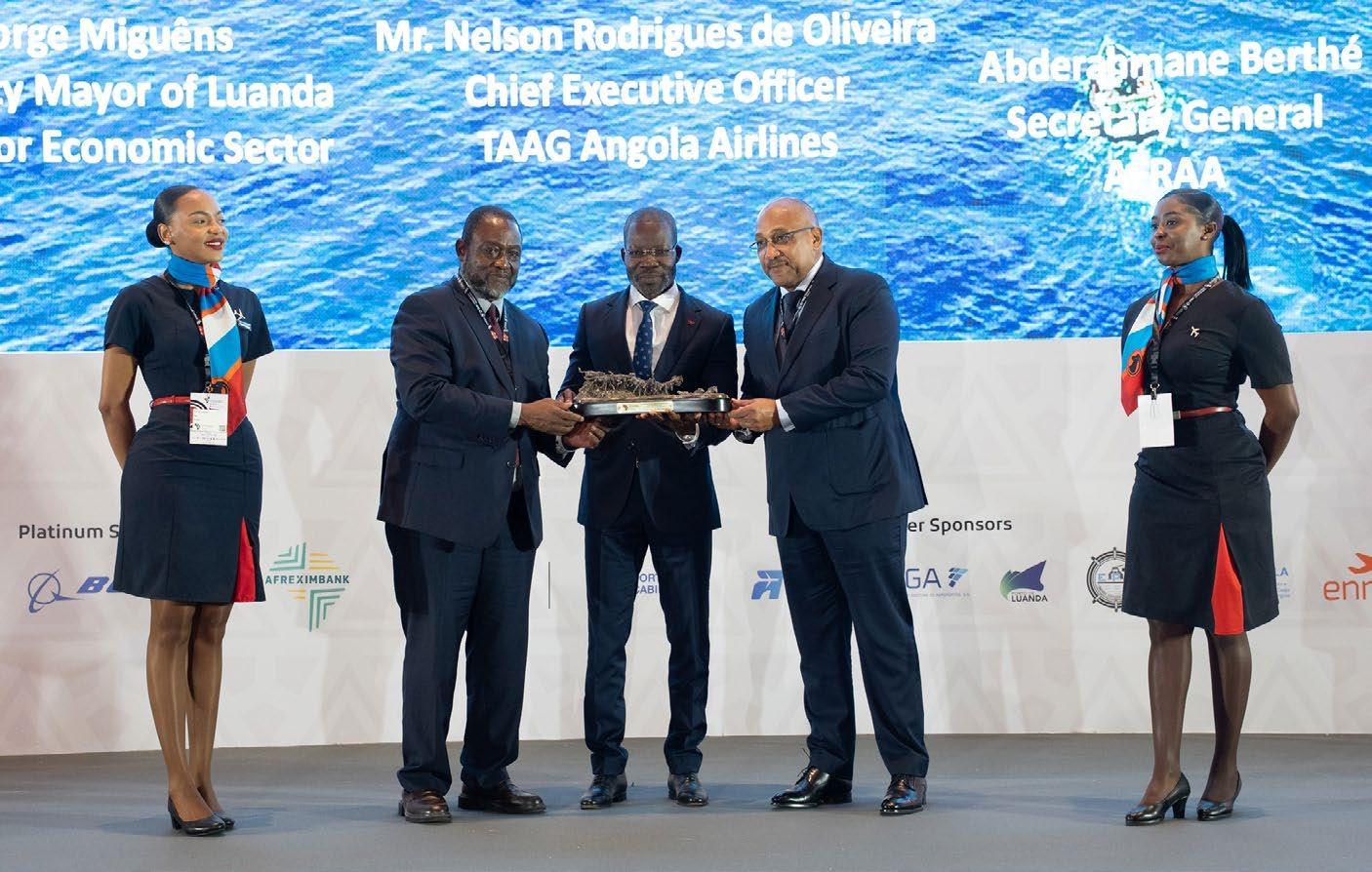
Leadership Moves


Madagascar Airlines Appoints Mahery Andriamamonjy as Acting CEO
In October 2025, Madagascar Airlines appointed Mahery Andriamamonjy as Acting Chief Executive Officer, marking a return to local leadership following the resignation of Thierry de Bailleul. He will be supported by a collegiate management structure, tasked with ensuring operational continuity and maintaining partner confidence during the carrier’s recovery phase.
Madagascar Airlines : Mahery Andriamamonjy nommé Directeur général par intérim
En octobre 2025, Madagascar Airlines a nommé Mahery Andriamamonjy Directeur général par intérim, marquant le retour d’une direction malgache après la démission de Thierry de Bailleul. Il sera accompagné par une direction collégiale, chargée d’assurer la continuité des opérations et de renforcer la confiance des partenaires dans le cadre de la phase de relance.
Air Botswana Confirms Boikanyo Ntwaagae as Acting General Manager
On October 21, 2025, Air Botswana confirmed that Boikanyo Ntwaagae will continue to serve as Acting General Manager, a role he has held since July 2, 2025, replacing Naomi Rasebotsa, who has departed the airline. The Board indicated that a recruitment process for a permanent General Manager will be initiated with ministerial approval, while interim leadership ensures operational continuity.


Air Botswana confirme Boikanyo Ntwaagae comme
Directeur général par intérim
Le 21 octobre 2025, Air Botswana a confirmé que Boikanyo Ntwaagae poursuivra ses fonctions de Directeur général par intérim, poste qu’il occupe depuis le 2 juillet 2025, en remplacement de Naomi Rasebotsa, dont le départ a été acté. Le Conseil d’administration a précisé qu’un processus de recrutement pour un Directeur général titulaire sera lancé avec l’aval des autorités, afin d’assurer la continuité du leadership et des opérations.
Astral Aviation nomme Darryl Judd pour piloter sa transformation stratégique
Le 7 octobre 2025, Astral Aviation a nommé Darryl Judd Chief Strategy & Transformation Officer et membre du conseil d’administration afin de conduire son virage vers des opérations cargo programmées. Cette nomination accompagne une transition stratégique plus large, incluant l’évaluation de nouvelles capacités cargo telles que le Boeing 777F pour renforcer les corridors Afrique–Moyen-Orient–Asie.


Astral Aviation Appoints Darryl Judd to Lead Strategic Transformation
On October 7, 2025, Astral Aviation appointed Darryl Judd as Chief Strategy & Transformation Officer and Board member to steer its shift toward scheduled cargo operations. The appointment supports a broader strategic transition, including the evaluation of new freighter capacity such as the Boeing 777F to strengthen Africa–Middle East–Asia cargo corridors.
Jambojet Appoints Ayisi Makatiani as Board Chair
Jambojet has appointed Ayisi Makatiani as Chairman of its Board of Directors, effective 17 November 2025, succeeding Vincent Rague, who had held the role since 2014. A governance specialist and former founding Chair of Jambojet during his tenure on the board of Kenya Airways, Makatiani returns as the airline enters a new phase focused on fleet expansion, operational scale-up, and enhanced regional connectivity.
Jambojet nomme Ayisi Makatiani
Président de son Conseil d’administration
Jambojet a nommé Ayisi Makatiani Président de son Conseil d’administration à compter du 17 novembre 2025, en remplacement de Vincent Rague, en poste depuis 2014. Spécialiste de la gouvernance et ancien président fondateur de Jambojet lors de son passage au conseil de Kenya Airways, Makatiani revient à la tête de la compagnie alors qu’elle s’engage dans une nouvelle phase axée sur l’expansion de la flotte, le passage à l’échelle opérationnelle et le renforcement de la connectivité régionale.


Air Mauritius Appoints Dheerendra Kumar Dabee as Chairman, Reports Strong H1 FY2025/26 Profit
AirMauritius has appointed Dheerendra Kumar Dabee as Chairman, effective November 28, 2025, following the resignation of Kishore Beegoo in October.
The appointment comes as the airline reported a solid financial performance for the first half of FY2025/26, posting a net profit of MUR 1.1 billion (about USD 23 million) for the April–September period, extending a return to profitability amid ongoing restructuring alongside CEO André Viljoen.

Air Cairo Reappoints Hussein Sherif as Chairman and CEO
AirCairo has reappointed Hussein Sherif as Chairman of the Board and Chief Executive Officer, replacing Captain Ahmed Shannan, who had led the airline since March 2024.
Sherif previously headed Air Cairo from 2020 until March 2024, a period marked by rapid network and fleet growth; he returns as the carrier operates a fleet of 38 aircraft and targets expansion to 72 aircraft by 2030.

Air Mauritius nomme
Dheerendra Kumar Dabee président et affiche un bénéfice solide au S1 2025/26
Air Mauritius a nommé Dheerendra Kumar Dabee au poste de président avec effet immédiat au 28 novembre 2025, après la démission de Kishore Beegoo en octobre.
Cette décision intervient alors que la compagnie nationale a publié des résultats financiers solides pour le premier semestre de l’exercice 2025/26, avec un bénéfice net de 1,1 milliard de roupies mauriciennes (environ 23 millions USD) sur la période avril–septembre, confirmant le redressement financier en cours dans le cadre de la restructuration menée avec le nouveau directeur général, André Viljoen.
Air Cairo reconduit Hussein Sherif comme Présidentdirecteur général
Air Cairo a reconduit Hussein Sherif aux fonctions de Président du Conseil et Directeur général, en remplacement du commandant Ahmed Shannan, en poste depuis mars 2024. Déjà à la tête de la compagnie entre 2020 et mars 2024, période de forte croissance, il reprend les commandes alors qu’Air Cairo exploite 38 avions et vise une flotte de 72 appareils à l’horizon 2030.

15-17-NOVEMBER 2026
AFRAA AIR TRANSPORT REPORT
Quarter 3 - 2025
Global Airline industry performance
In Q3 2025, the global airline industry showed steady but uneven strength. Passenger demand continued to grow at a moderate pace, driven mainly by international travel, with Asia-Pacific and parts of Latin America outperforming other regions. Load factors remained high, indicating that airlines generally matched capacity well with demand. Financially, many major carriers posted solid profits, supported by strong premium travel, diversified revenue streams, and disciplined cost management, although performance varied significantly by region and airline business model.
Despite positive momentum, the industry continued to face structural challenges. Aircraft delivery delays, supply-chain constraints and operational efficiency. At the same time, fuel costs and the slow availability of sustainable aviation fuel (SAF) weighed on margins and long-term decarbonization plans. Overall, Q3 2025 reflected an industry that is profitable and resilient, but still operating on thin margins and exposed to cost pressures .
Global RPKs rose by 6.2% year on year in Q3 2025, while Global ASKs increased by 9.4% as compared to RPKs and ASKs in Q3 2024.
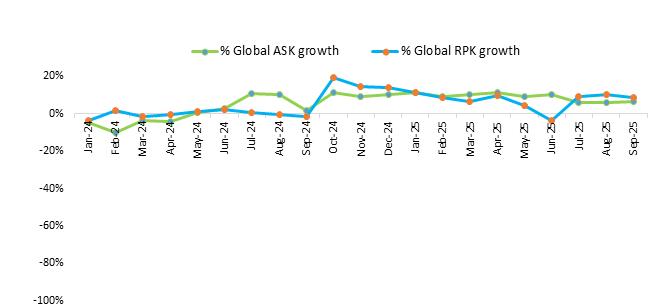
African airlines performance
Passenger Revenue
Passenger revenue in Q3 2025 decreased by 0.2 % compared to Q3 2024.Figure 2 provides a graphical comparison of passenger revenue between Year 2024 and Year 2025.
Figure 2: Quarterly Passenger Revenue
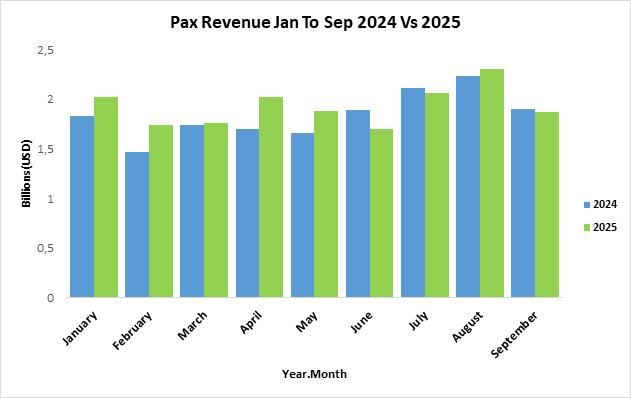
Figure 1: Global Industry ASK and RPK growth, Source: AFRAA /OAG
Figure 2: Quarterly Passenger Revenue Source: OAG
Passenger traffic Evolution
In Q3 2025, African airlines continued to show resilient performance, with Available Seat Kilometers (ASKs) and Revenue Passenger Kilometers (RPKs) maintaining positive growth trends in 2025.
The increase in both metrics are by 3.5% and 6.6%, respectively, compared to Q3 2024. Figure 3 below provides a detailed view of the Month-on-Month (MoM) and Year-onYear (YoY) trends in ASK and RPK for African airlines from January 2024 to September 2025.
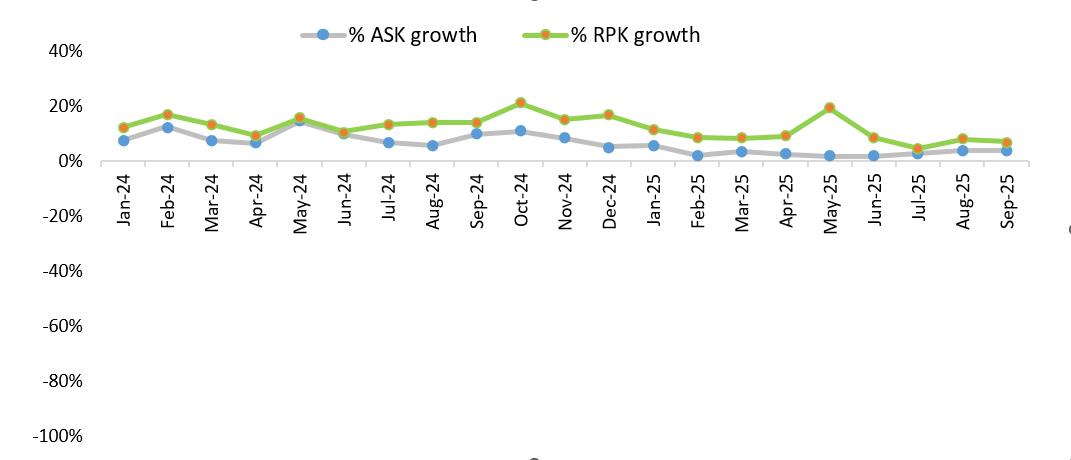
Source: OAG
Passenger traffic distribution
In the third quarter of 2025, Domestic traffic accounted for 32%,of the total traffic, Intra-African flights accounted 31% of the traffic, while intercontinental flights represented 37%. This is illustrated in Figure 4 below;
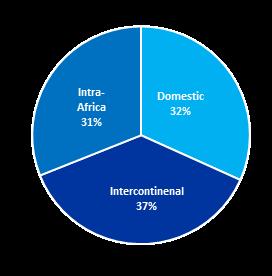
The Top Ten countries contributing to the 32% of domestic are as in Figure 5 below;
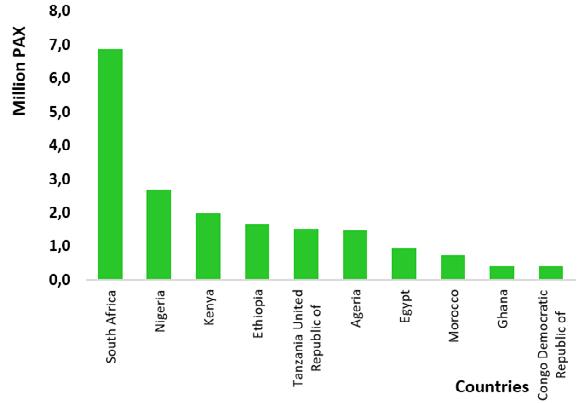
Figure 3: African airlines ASK and RPK growth
Figure 4: African Airlines passenger distribution Q3 - 2025
Source: OAG
Figure 5: Top 10 Ranking by Country on Domestic Traffic Q3 - 2025
Source: AFRAA /OAG
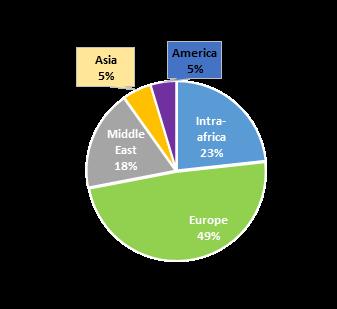
passengers destinations Q3– 2025
Source: OAG
Regional Insights
In the third quarter 2025, Northern Africa led the continent in passenger traffic, accounting for 43.1% of the total. Domestic traffic in this region was relatively low, representing only 13% of the total traffic.
Intercontinental travel dominated, comprising 91% of the traffic, while intra-African travel made up just 9%.
Egypt and Morocco are the top two primary source of traffic from Northern Africa to Europe, with France,Saudi Arabia,German, United Kingdom,Spain and Italy being the top destinations.
The Middle East is the second most popular destination region, with Egypt as the leading contributor.
In the third quarter of 2025, the Southern African region accounted for 19.4% of the continent’s traffic. The domestic market was the largest contributor, making up 65% of the region’s traffic. Intra-African travel was above international traffic, with a 50.6% share. Regarding destinations outside Africa, Europe and Asia were the leading regions, with 25.5% and 10.2% of traffic respectively. The America and the Middle East accounted for 7.9% and 5.7% respectively during this period.
In Q3 2025, international traffic is primarily driven by intra-African routes and flights to Europe, each accounting for 49% and 23% respectively. Europe remains the top destination region for African airlines Egypt is the leading country of origin, while France is the primary destination.
Traffic to the Middle East is also notable, comprising around 18%, while routes to Asia and the Americas each account 5% respectively.
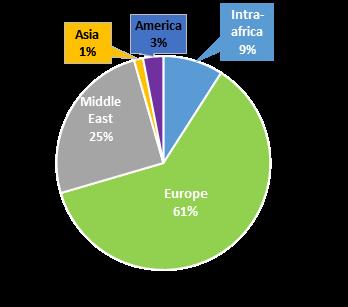
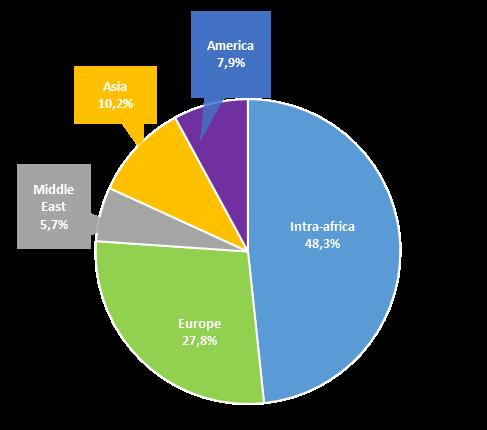
Eastern Africa represented 18.6% of the continental traffic during the third quarter of 2025. Domestic traffic constituted to 47% in the third quarter 2025. The Top destinations outside Africa are Europe and Middle East with 23% and 15%.
Source: OAG
Figure 7: Traffic repartition - Northern Africa Q3 2025
Source: OAG
Figure 8: Traffic repartition - Southern Africa Q3 2025
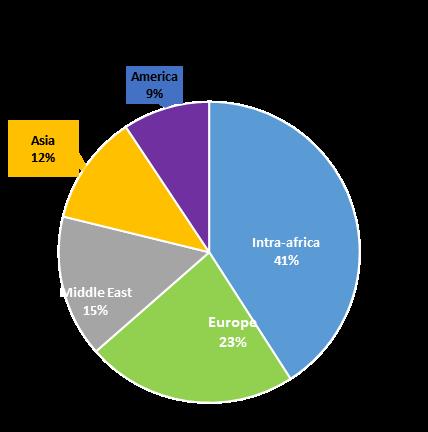
Figure 9: Traffic repartition - Eastern Africa Q3 2025
Source: OAG
Central and Western Africa regions together represented 18.8%
of the African traffic during the third quarter 2025.The intra-African traffic accounted for 44% of the non-domestic.
African Airlines Ranking by Traffic (OAG estimations)
Figure 10 below presents a ranking of African airlines, with Ethiopian Airlines leading, followed closely by EgyptAir. Ethiopian Airlines dominance is attributed to its extensive network, reliable service, and strategic hub in Addis Ababa, which facilitates broad inter-
national connectivity. EgyptAir’s strong perfomance underscores its historical significance and extensive operational reach across the continent and beyond. These rankings emphasize the growing importance of these airlines in enhancing regional connectivity and fostering economic development within Africa.
Figure 11: African Airlines ranking by traffic Q3 2025
Source: OAG
(*) The data here are estimations and have not been confirmed by airlines
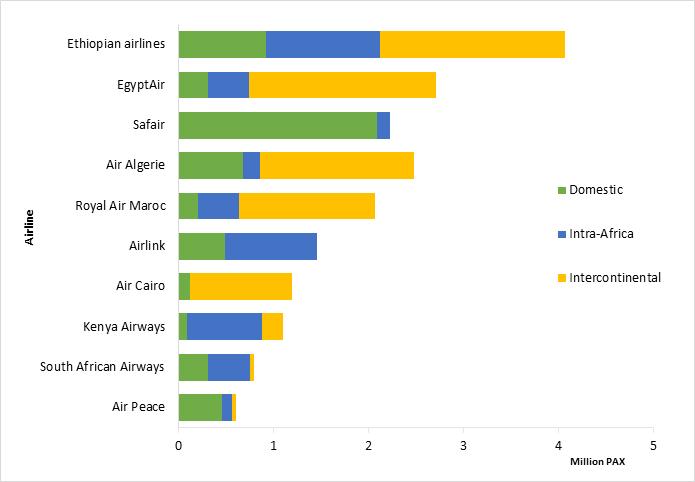
Routes Ranking by Traffic (OAG estimations)
Top 10 domestic routes by passengers carried Q3 2025(OAG estimations)
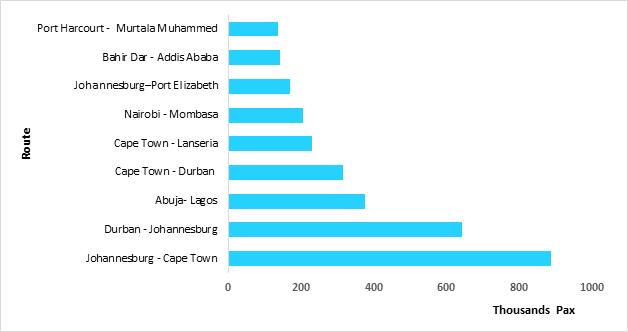
12: Domestic routes ranking
Figure 13 shows the top ten intra-African routes by passengers carried in the third quarter of 2025. The busiest intra-African routes are primarily within Southern, Eastern and Northern Africa.
However, routes from Western Africa (Accra–Lagos) also ranked among the top ten in the third quarter 2025.
Figure 12 shows the top ten domestic routes in Africa. South Africa dominates the African market in domestic traffic, with 5 of its routes ranked among the top ten in the third quarter of 2025. Additionally Nigeria,Ethiopia and Kenya each have a domestic route represented in the top ten busiest routes.
Top 10 Intra - African routes by passengers carried Q3 2025 (OAG estimations)
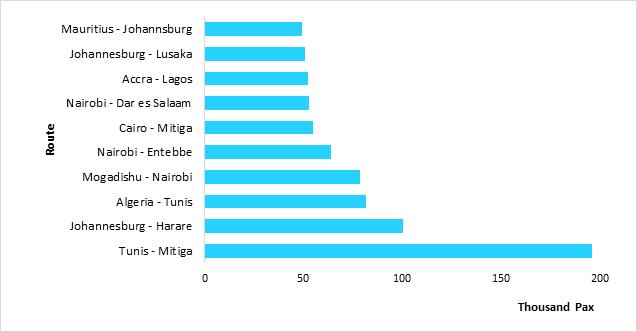
Top 10 Intercontinental routes by passengers carried Q3 2025 (OAG estimations).
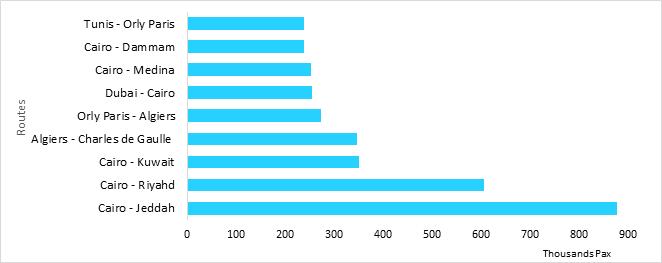
Figure 14 show the intercontinental routes ranking and EgyptAir is the leading carrier on these routes, achieving the highest passenger volume during the third quarter 2025.
Figure
Source: OAG
Figure 14: Intercontinental routes ranking Source: OAG
Figure 13: Intra-African routes rankingSource: OAG
Airport Ranking by Passengers
Northern African airports featured prominently among the top 10 hubs in the third quarter 2025 with Addis Ababa, Cairo and Johannesburg, ranking as the three leading airports.
Figure 15: African airports ranking by passengers Q3 2025 (OAG estimations)
Source: AFRAA /OAG
Air Cargo Market Trends in Africa
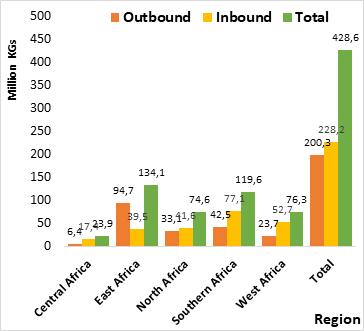
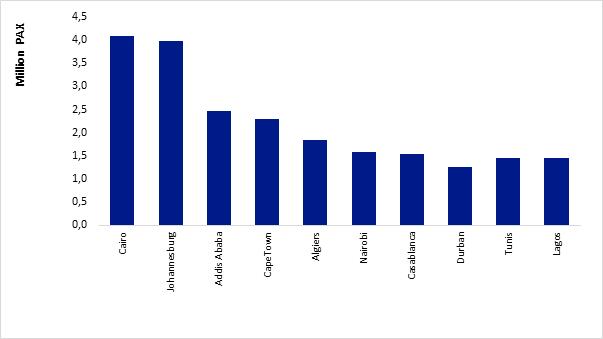
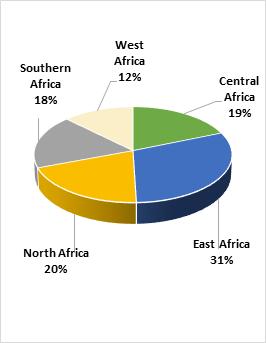
Figure 16: African Air Cargo Trends Q3 2025 (World ACD estimations)
Source: OAG
Airport charges
Methodology:
A comparative study based on a single aircraft type applies to all airports with more than 300 thousand passengers in Q3 2025.
The aircraft type chosen is the B737, the most popular aircraft type in the region.
Following the applied criteria:
Metric Ton
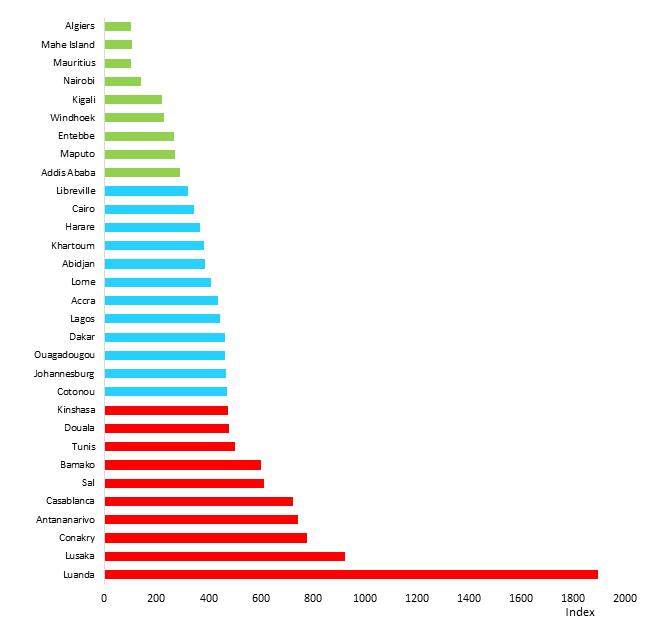
Source: IATA ACIC
Intra-African Connectivity
Methodology:
We calculate the total number of possible Intra-African connections between inbound and outbound flights on 20 important African hubs in Q3 2025. The rules selected for the computation are as follows:
• Single connections only to/from the chosen airports,
Luanda has the highest charges among the selected airports, while Algiers has the lowest. Johannesburg, Addis Ababa and Cairo, Africa’s busiest airports, have charges that fall below the average.
This indicates that reducing airport charges could potentially boost traffic levels.
• Minimum Connection Time from OAG table,
• Maximum Connection Window of 6 hours
The intra-African connectivity reached new heights in Q3 2025 showcasing a significant expansion in air travel links within the Africa continent.
Figure 17: African airports ranking by charge index Q3 2025
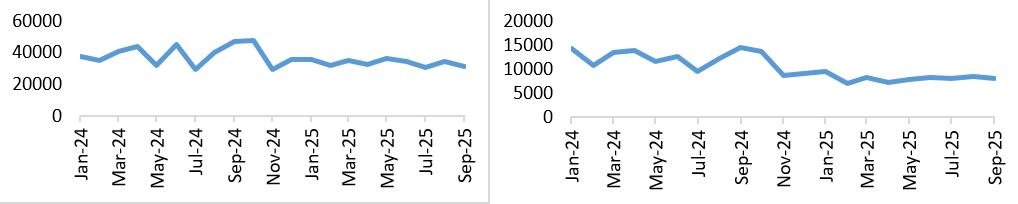
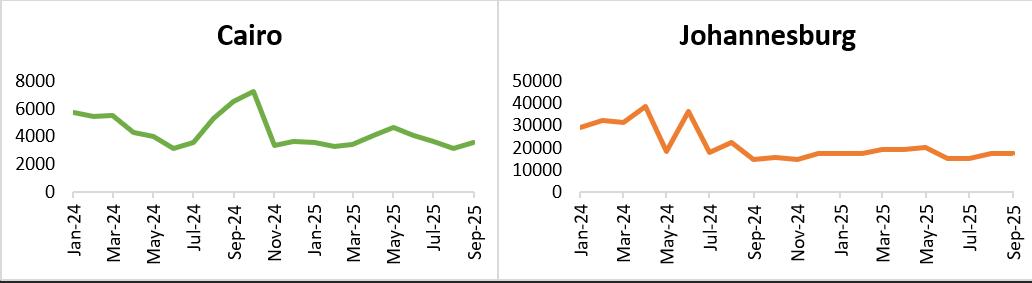
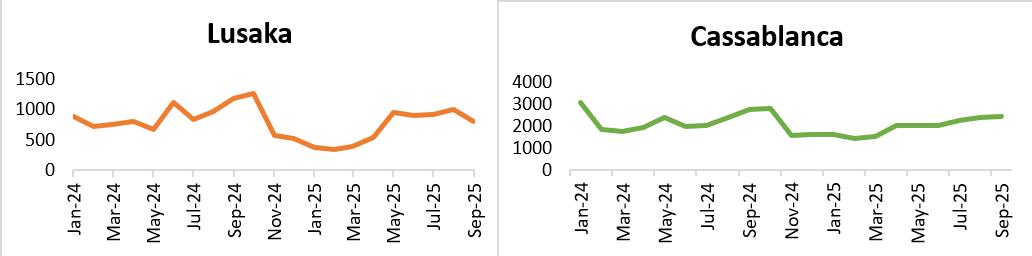
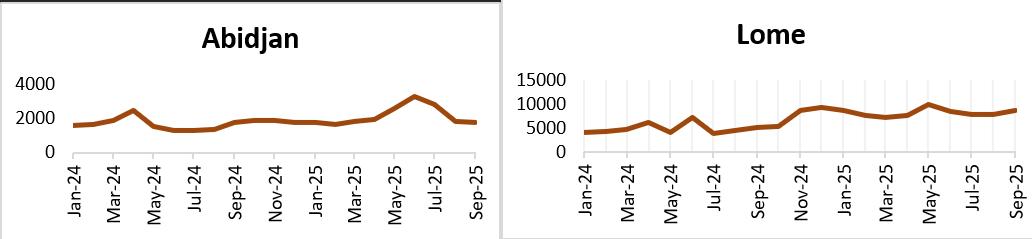
18: Intra-African connectivity index per Regional hubs in Q3 2025
Source: OAG
Direct flights between African countries
During the third quarter of 2025, 7 out of the 54 countries in the African continent offered direct flights to more than 20 other African nations. Ethiopia leads with the most extensive network of direct flights within Africa.
Figure
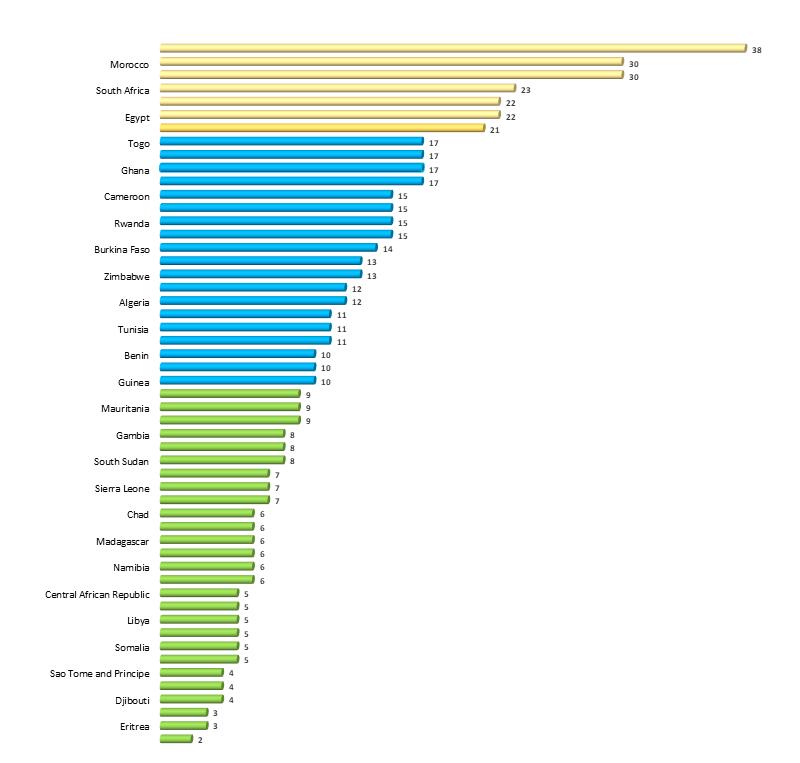
Source: OAG
Table 1 below presents the proportion of direct connections within countries of the same region and between different African regions, expressed as a percentage of the total number of possible connections.
In Q3 2025, the overall connectivity index is relatively high, particularly in Northern Africa, which reported a connectivity rate of 72%. However, inter-regional connectivity remains constrained, with the highest connectivity rate observed between Northern and West-
ern Africa, at only 35%.
The low levels of connectivity between subregions indicate significant opportunities for improvement.
Enhancing these transport links could potentially improve economic integration and regional cooperation.
Addressing these connectivity deficits may stimulate trade, tourism, and overall economic growth across the continent.
Figure 19: Number of direct flights between African countries
Visa Openness within Africa
According to the Visa Openess Index, the Gambia and Rwanda offer visa free access to all Africans.11 countries improved their score since last year: one is in the top 10, another is in the top 20.
In 28% of country to country travel scenar ios within Africa, African citizens do not need a visa to cross the border, a marked improvement over 20% in 2016.
In 2025, 31 African countries representing 57% of the continent offered an e Visa for Africans, up from nine African countries representin 17% of the continent in 2016.39 countries have improved their score since 2016.
Of the 10 that have most progressed, five are in West Africa, three are in East Africa, and two are in Southern Africa. Nine top 20 ranked performers are lower income coun tries; four of them are landlocked. Anoth er ten top 20 ranked performers are lower middle-income countries. Lower income countries continue to make progress.
Figure 20: Visa openness in African countries
Source: Source: visaopenness.com