The Australian Federal Police Association acknowledges the traditional owners and custodians of country throughout Australia and acknowledges their continuing connection to land, waters and community. We pay our respects to the people, the cultures and the elders past, present and emerging.
Executive Editor
Alex Caruana | Phone (02) 6285 1677 www.afpa.org.au
Disclaimer
The contents of this publication is for general information only. The publication has been formulated in good faith; however, the contents do not amount to a recommendation (either expressly or by implication) and should not be relied upon in lieu of specific professional and/ or legal advice. The Australian Federal Police Association make no representation, nor give any warranty or guarantee concerning the information provided.
Copyright
All advertisements appearing in this publication are subject to copyright and may not be reproduced except with the consent of the owner of the copyright.
Advertising
Advertisements in this journal are solicited from organisations and businesses on the understanding that no special considerations other than those normally accepted in respect of commercial dealings, will be given to any advertiser.
AFPA Executive Members
AFPA Staff Members
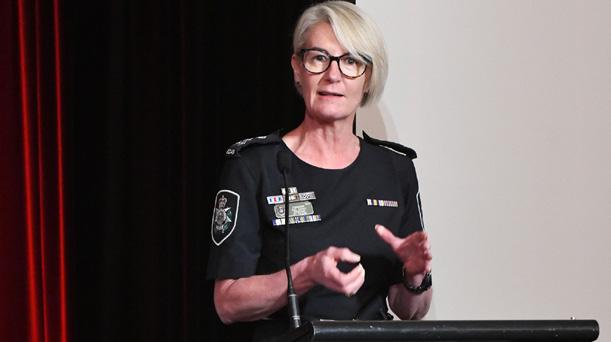
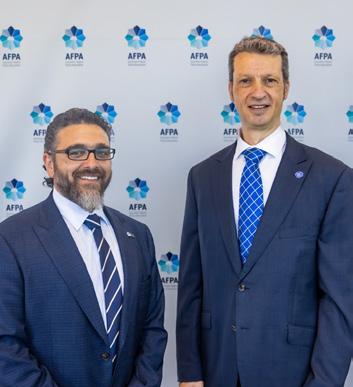
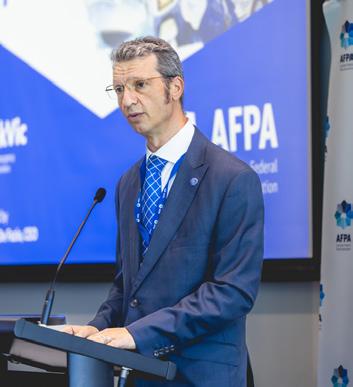
Alex Caruana, President, Australian Federal Police Association
President Report
The past reporting period has again shown why strong, visible and practical AFPA advocacy matters.
Capability Under Pressure
Our media work has focused on a clear message. AFP and ACT Policing members are being asked to do more, in more complex environments, while pressure continues to increase across operational, protective, investigative and corporate areas.
A major focus has been on national security capability. The AFP is expected to respond to terrorism, child exploitation, cybercrime, foreign interference, organised crime, protective security, international operations and serious criminal threats. These responsibilities cannot be delivered properly without the right staffing, funding, training, equipment and support.
That has been central to our recent public advocacy. We have continued to warn against any reduction in AFP capability, including possible staffing reductions or budget-driven savings measures. The AFPA has also written to the AFP seeking clarity on discussions about a possible 400 FTE reduction in 2026, including whether any proposal was driven by Commonwealth budget pressure, internal reprioritisation, recruitment restraint, attrition, voluntary separation, or other workforce mechanisms.
In response, the AFP advised that 2026-27 staffing planning would be aligned to the Federal Budget outcome and internal budget allocations. The AFP also stated that following workforce growth of approximately 18 per cent over the past five years, staffing numbers were expected to stabilise and remain at that level in 2026-27, subject to final budget outcomes and any future budget pressures.
The AFP further advised that, where internal budget shifts are required, workforce strategies may include natural attrition, mobility to realign skills and capabilities, and internal career transition pathways.
We have also asked what impact any reduction would have on national security capability, ACT Policing, investigations, protective functions, AUKUS-related work, Western Sydney Airport obligations and corporate support. These are not abstract matters. Staffing reductions affect workloads, fatigue, response capability, morale and the safety of members and the community.
“AFPA members are being asked to do more, in more complex environments, while pressure continues to increase.”
Public Safety & Legislative Reform
ACT Policing has remained a major focus in the media. Knife crime, public safety and police search powers have been central issues. Recent incidents involving knives, machetes and other edged weapons have reinforced the AFPA’s view that the ACT cannot wait for a more serious tragedy before giving police better preventative tools.
The Canberra Hospital incident was another clear example. Police had searched a person before taking them to hospital, yet a knife was later produced inside the facility. This incident showed the limits of relying only on traditional searches. It also showed why frontline police, health workers and the public need practical safeguards.
The AFPA has called on the ACT Government to expand police search powers to allow electronic wand searches of people in custody or protected custody, and to fund the purchase of wands for ACT Policing. Our position is simple. Police need modern, non-invasive tools that can help detect knives and other metal weapons before they are used to harm police, health staff, venue staff, members of the public or the person carrying the weapon.
We are not fixated on the label of “Jack’s Law”. We are focused on practical search powers that work. The ACT already has legislative precedent for wanding under major events laws. The task now is to consider how that model can be adapted for daily operational use, with proper safeguards, training and accountability.
The AFPA’s policy work has also influenced public safety reform in the ACT. The AFPA Policy Proposal Paper helped shape and influence the ACT Government’s decision to move towards banning the public display of outlaw motorcycle gang insignia. OMCG colours are not harmless clothing. They are used to project power, intimidate the community and reinforce criminal
identity. The AFPA has consistently argued that the ACT needs modern laws to stop OMCGs using public spaces to promote criminal organisations and intimidate the community. We have made clear that human rights issues should be addressed carefully, but community safety must remain the focus.
The AFPA’s reform agenda remains broader than one issue. We continue to support Firearm Prohibition Orders in the ACT, stronger firearms regulation, the National Firearms Register, intelligence-informed licensing systems and better national consistency. Police need timely information, clear legal tools and workable powers. Laws must support frontline enforcement, not just look strong on paper.
Supporting Frontline Operations
Infrastructure and custody issues have also remained prominent. We have continued to raise concerns about the ACT Watch House, Woden and Belconnen facilities, custody safety, workplace conditions and the need for the ACT Government to fund fit-for-purpose policing infrastructure. Frontline police should not be left to absorb the risk created by ageing buildings, poor design, limited capacity or systems that are not keeping pace with operational demand.
Member welfare has also been a central theme. The PSO survey, SES survey, and other recent engagements have given members a direct way to report on workload pressure, fatigue, overtime, lack of transparency, and the effects of current operating models. The SES survey showed serious concern about excessive hours, informal on-call expectations, unclear remuneration processes and poor consultation. The PSO survey has also helped identify operational pressure points and areas requiring further attention.
This data is important because it provides the AFPA with a stronger evidence base when dealing with the AFP and the government. It moves the discussion beyond anecdotes. It shows patterns, and it helps us identify where pressure is building and where change is needed.
Work has already commenced towards the next enterprise agreement, with the AFPA working hard to collect the data we need to properly represent members during bargaining. The two recent surveys have provided excellent information and have helped sharpen our understanding of the pressures being experienced across different parts of the organisation.
As part of this process, we have identified ongoing issues with members’ pay not being in full or on time. Recently, we have been contacted by members regarding superannuation, penalty payments, allowances, and workers’ compensation payments. We continue to work within the Court system and through engagement with payroll at the management level directly to counter these matters as we become aware of them. We remind all members to check their payslips and to reach out as soon as they notice any inconsistencies. You have rights and protections under your Enterprise Agreement and under the Fair Work Act – we are committed to seeing these upheld through all the means at our disposal.
National Security
Members protect Australia every day — they deserve proper support, staffing and safety.
Staffing Pressure
Staffing reductions affect workloads, fatigue, morale and community safety.
Public Safety
Police need modern tools that help prevent harm before tragedy occurs.
Policy Reform
Community safety must remain the focus.
Infrastructure
Frontline police should not absorb the risk created by ageing facilities.
Member Welfare
The evidence shows pressure is building across the organisation.
Pay & Conditions
Pay, conditions, workload and morale are all connected.
Advocacy
Practical advocacy delivers practical outcomes.
The AFPA will shortly conduct its 2026 Pay and Morale Survey. We hope this survey will provide important information about how people are feeling within the organisation, what is driving workplace pressure, and what can be done to improve members’ financial situation. Pay, conditions, workload, morale and retention are all connected. If members are struggling financially, working excessive hours, missing family time or feeling undervalued, that must be reflected in bargaining priorities.
Strengthening the Workplace Network
The AFPA also recently held a two-day training program for Convenors and Delegates. The program was successful, with more than 40 Convenors and Delegates attending, along with key partners and stakeholders. This was an important investment in our workplace network. Convenors and Delegates are often the first people members turn to when issues arise. Giving them better training, stronger information, and direct access to AFPA staff and partners improves our ability to support members at the local level.
The AFPA recently visited Pine Gap as part of our ongoing workplace engagement. More musters are being planned for the near future, and we will continue to ensure members in remote, specialist, and operational environments have direct access to the AFPA.
Members should not wait for a muster to raise workplace issues. The AFPA Convenor and Delegate network is here to support you. If issues arise in your workplace, speak with your Convenor or Delegate early. They can help you understand how the AFPA can assist, determine whether the issue affects other members, and ensure concerns are raised through the right channels.
Long-Term Support for Members
The Blue Card campaign remains another major priority. The AFPA continues to advocate for lifelong, government-funded medical and psychological support for operational AFP appointees. This is a practical welfare reform. Members who serve the Commonwealth and are exposed to trauma, danger and operational stress deserve a system that supports them properly during and after their service.
Advocacy That Delivers
Throughout all this work, the AFPA has continued routine yet important member-facing activities. This includes letters to the AFP Commissioner, correspondence with ministers, media statements, meeting talking points, campaign planning, member updates, survey analysis and direct workplace engagement. These tasks may not always attract public attention, but they are central to effective representation.
The next period will be significant. Enterprise bargaining will require discipline, evidence and member participation. Budget and staffing issues will require scrutiny, and reform will require sustained public pressure. Member welfare will require practical outcomes, not just words.
Our message remains clear. AFPA members protect Australia every day and they deserve laws that support them, facilities that are safe, equipment that works, staffing that matches demand, fair pay, strong conditions and a government that treats policing capability as essential national infrastructure.
AFP Consultation in the Workplace
Effective workplace consultation ensures employees have a genuine voice in workplace decisions.
The Importance of Genuine Consultation
In today’s workplace, genuine employer consultation has become increasingly important. The traditional policing attitude of command and control in the approach to decision-making has fallen way to a more collaborative and inclusive model where the AFP is required to engage with their employees, as part of that decision-making process. This shift is driven not only by legislation, but also the recognition that employees’ perspectives, concerns, and feedback are essential for a productive and harmonious work environment.
Since the replacement of the old AFP Enterprise Agreement 2017 - 2020 and the current AFP Enterprise Agreement 2024 -2027 (the EA) came into operation in December 2024, the emphasis has change from the requirement for the AFP to recognise an appointed representative, to one that specifically acknowledges that the AFPA (or other relevant union) should have a genuine opportunity to influence decisions, that consultation with the AFPA on workplace matters that significantly affect employees is sound management practice, and that there are significant benefits of having union involvement and employees represented by the union.
While the AFP have, in the last few years, taken the requirement for a work area to consult more seriously, there are still areas that do not consult effectively, despite the requirements under the EA and internal governance providing guidance as to best practice. The purpose of this article is therefore to ensure members are fully aware of the consultation requirements and the AFP’s obligations under them.
When Consultation Is Required
Under the EA, the AFP is required to consult with the workplace about:
• changes to work practices which materially alter how an employee carries out their work;
• changes to or the introduction of policies or guidelines relevant to workplace matters (unless the changes are minor or procedural);
• major change that is likely to have a significant effect on employees;
• implementation of decisions that significantly affect employees;
• changes to employees’ regular roster or ordinary hours of work (subject to any other relevant provisions in this Agreement); and
• other workplace matters that are likely to significantly or materially impact employees
“Genuine consultation is not just a legal obligation — it is sound management practice.”
Giles Snedker Legal and Industrial Manager
Understanding Major Change Obligations
There are some fundamental differences in the approach to consulting with the workforce, depending upon if the change is considered a “major change” or not. For the purposes of consultation, a major change is one that is likely to have a significant effect on employees if it results in:
• the termination of the employment of employees; or
• major change to the composition, operation or size of the AFP’s workforce or to the skills required of employees; or
• the elimination or diminution of job opportunities (including opportunities for promotion or tenure); or
• the alteration of hours of work; or
• the need to retrain employees; or
• the need to relocate employees to another workplace; or
• the restructuring of jobs.
This list is not exhaustive.
What Proper Consultation Looks Like
Where a major change is proposed, the AFP is required to notify the employees and AFPA as soon as practicable and to consult with employees and the AFPA prior to any decision being made. Consultation that comes after the AFP has made a decision is not consultation that meets the AFP’s obligations as an employer. In addition, where practicable a change manager or primary point of contact will be appointed and details provided to all relevant parties.
As soon as possible after the AFP have notified the employees and the AFPA about the proposed change(s), the AFP must:
• discuss with the affected employees and the AFPA (or other recognised representatives) the proposed change, the effect the proposed change is likely to have on the employees, and proposed measures to avert or mitigate the adverse effect of the proposed change on the employees; and
• for the purposes of the discussion – provide, in writing, to employees and the AFPA all relevant information about the proposed change, including the nature of the change proposed, information about the expected effects of the proposed change on the employees, and any other matters likely to affect the employees.
Following this process, the AFP must give prompt and genuine consideration to matters raised about the major change by employees and the AFPA, however, the AFP is not required to disclose confidential or commercially sensitive information to employees or the AFPA.
Where there is a proposed change that is not a major change, such as a change to rostered hours or ordinary hours of work, then there is still a requirement for the AFP to consult using the procedure above with the only differences being that the AFP does not need to appoint a change manager or provide relevant information in writing. Of course, this is still open for the AFP to do so.
The Benefits of Effective Consultation
Consultation that meets the AFP’s obligations involves genuine engagement with their employees or their representatives to gather input, feedback, and suggestions on various workplace matters.
The benefits of proper consultation are numerous and include:
• Developing employee engagement
• Improving any final decision-making
• Enhancing workplace culture
• Addressing employee concerns
• Compliance with employment laws
• Employee wellbeing and work-life balance
For this process to be effective it needs to align with various principles, including transparency to allow for open and honest communication, all parties approaching consultation with mutual respect, and the acknowledgement of each other’s perspectives and experiences.
Conclusion
In today’s work environment, the role of employer consultation is more critical than ever. It is not just a legal obligation; it is a fundamental practice that can transform an organisation’s culture, decision-making, and ultimately, its success. Employers who actively engage with their employees, listen to their concerns, and value their input will create a workplace that is more inclusive, productive, and fulfilling. By fostering a culture of consultation, organisations are able adapt to change, address challenges, and create a thriving workplace for everyone involved.
EOFY, Budgets and Getting the Most Bang for Your Buck
As we roll toward the end of the financial year, many of us start doing the same thing: reviewing our budgets, scrutinising our expenses, and looking for ways to tighten the belt where we can. EOFY has a way of making even the most financially relaxed among us suddenly very interested in spreadsheets and receipts.
There’s no denying that the current financial climate is putting pressure on households across the country. Rising interest rates, fuel prices and everyday living costs mean many members are looking closely at where their money is going — and where they might be able to save.
The Value of Protection & Representation
While trimming expenses can be sensible, it’s just as important to think carefully about what you cut. Some costs are optional luxuries, but others represent protection, value and long-term peace of mind. AFPA membership falls squarely into the latter category.
More Than Just a Subscription
One of the simplest EOFY strategies is to make sure you’re actually getting full value from the services and benefits you already pay for. Many AFPA members are surprised to learn just how much they can save each year through our Member Advantage program alone. Everyday essentials — fuel, groceries, insurance, health services, tax assistance and more — can add up to significant savings over 12 months. For many members, these savings more than offset the cost of membership.
Tax time is also a reminder of the importance of professional support. Accessing discounted tax services through AFPA-approved partners can help ensure deductions aren’t missed and returns are completed correctly, reducing the risk of errors or costly followups later. In a role as complex and unique as policing, having someone who understands your circumstances can make a real difference.
Courtney Posantzis Membership Services Manager
“Small changes made now can create breathing room in your budget heading into the new financial year.”
Preparing for the Year Ahead
EOFY is also a good time to reassess other regular expenses like subscriptions, utilities and insurance policies. Are you paying for services you no longer use? Could you consolidate providers or take advantage of member-only discounts? Small changes made now can create breathing room in your budget heading into the new financial year.
Investing in Support When It Matters Most
What we don’t want to see, however, is members feeling they need to cancel their association membership as a cost-saving measure. AFPA membership is not just another bill — it is an investment in protection. Industrial representation, legal support, advocacy and welfare assistance are difficult (and often expensive) to access when you need them urgently. Having that support already in place provides peace of mind that simply can’t be replaced once it’s gone.
A Membership That Supports You
History shows us that many members only fully appreciate the value of their association at the point they need help. By then, it’s often too late to join. Maintaining your membership ensures you remain protected, supported and informed — regardless of what the next financial year brings.
As always, if there’s a benefit or partnership you’d like to see the AFPA explore, we’d love to hear from you. Our focus remains on supporting members not just professionally, but financially, too.
As EOFY approaches, take the opportunity to review, reset and make informed decisions — and remember that some of the smartest savings come from keeping the right protections firmly in place.
“While we do our best to connect members with useful services and trusted partners, AFPA isn’t a financial advisor and can’t take responsibility for advice or services provided by third parties.”
EOFY AND YOUR SUPER
Are You Across the Rules That Matter?
You spend your working life making sure other people follow the rules. But when it comes to your own superannuation, are you across the ones that could put more money in your pocket?
From a financial planning perspective, it’s less about complex strategies and more about knowing which options are available, which ones apply to your situation, and avoiding the mistakes that quietly cost people money every year.
Here are some key things worth knowing before 30 June. They won’t all apply to everyone, but being across them means you can make informed decisions with confidence. Did you max out your concessional contributions? You might be able to fix that and reduce your tax.
Concessional contributions are before-tax contributions made into super. These include your employer’s super guarantee, any salary sacrifice arrangements, and personal contributions you claim as a tax deduction. For the 2025–26 financial year, the annual concessional cap is $30,000.
Some people don’t realise that a “catch-up” rule exists. If your total super balance is under $500,000, you may be able to utilise unused concessional caps from the past five financial years. This means that if there were years where little or nothing went into your super, you could potentially contribute a larger amount in a single year and still stay within the rules.
For AFP members, this is particularly relevant, as annual income often fluctuates due to overtime and shift penalties, meaning that in some years your contributions fall short of the cap without you ever noticing. The catch-up rule is designed for exactly that situation. You can check your available carry-forward amounts through the ATO portal on MyGov.
Example of how it can work
Say you earn $110,000 a year and you make a $10,000 concessional contribution before 30 June. Your super fund pays $1,500 in tax on that contribution, but you claim it as a deduction and receive a $3,000 tax refund. Net result: you are $1,500 ahead, and your super balance has grown by $10,000.
This is an illustrative example only and does not take into account individual objectives, financial situation, or needs. Outcomes will vary based on personal circumstances.
Important step you can’t afford to miss
If you make a personal concessional contribution to super, you will need to submit a form called the Notice of Intent to Claim a Deduction to your super fund. This step is critical, and it is the single most missed step for EOFY requirement.
Without it, your contribution won’t be treated as concessional, and you won’t receive the tax deduction. The form needs to be lodged with your super fund before you submit your tax return. Contact your fund directly to find out where to access it.
Two-income
household? Here’s a tax offset worth knowing about.
EOFY planning doesn’t need to focus solely on one person. If your partner has a lower taxable income from work (under $40,000, with the full benefit available where income is $37,000 or below), contributing to their super account could earn you a tax offset of up to $540. It’s a straightforward strategy that’s easy to overlook.
The government will add to your super if you do.
The government co-contribution scheme is designed to help low- and middle-income earners build their retirement savings. If you’re eligible, contributing $1,000 of after-tax money into super could see the government add up to $500.
Eligibility is income-based. The full co-contribution applies to incomes of $47,488 or less, with a reduced amount available for incomes up to $62,488. You also need at least 10 per cent of your income to come from employment or business. Not everyone will qualify, but for those who do, it is one of the easier wins available before 30 June.
Got a very large super balance? Here’s what’s changing.
For members with significant superannuation balances, a measure known as Division 296 tax will apply from future financial years. This affects individuals with total super balances above $3 million.
In simple terms, a portion of the investment earnings attributable to balances above $3 million will be taxed at an additional 15 per cent. This can apply even if no money is withdrawn from your super. Given the dollar amounts and complexity involved, some people may consider paying this tax personally rather than from their super fund, depending on their broader financial position. This is an area where tailored advice is essential.
30 June is a deadline, not a finish line.
While EOFY tends to focus attention on tax outcomes, it is also a useful checkpoint for broader financial wellbeing and planning to maximise future outcomes. That might mean reviewing insurance held inside super, taking stock of whether your debts are manageable, or checking your contributions are aligned with where you want to be in 10 or 20 years.
You don’t need to act on everything at once. Even taking the time to understand your position and making one or two informed decisions before 30 June can make the year ahead feel more structured and less uncertain. Think of EOFY as an opportunity rather than a source of stress, and it tends to become exactly that.
AFPA Supports the Red Shield Appeal
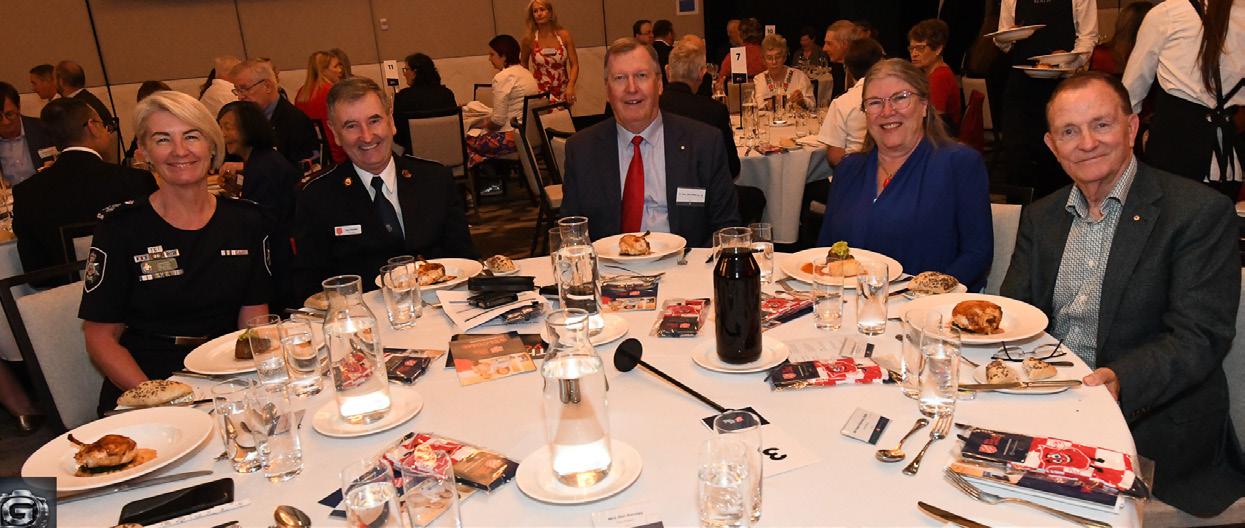
The Australian Federal Police Association was proud to attend the launch of the The Salvation Army Red Shield Appeal in Canberra recently, joining community leaders, emergency services representatives, and local organisations in support of one of Australia’s most important annual fundraising campaigns.
Held in Canberra, the launch brought together organisations and individuals committed to strengthening our local community and supporting Australians doing it tough. The Red Shield Appeal remains one of the country’s most recognised fundraising initiatives, helping provide emergency relief, housing assistance, financial counselling, family violence support, crisis accommodation, and other critical frontline services for individuals and families facing hardship.
For the AFPA, attending the launch was a strong reminder of how closely policing and community wellbeing are connected. For many of our members responding to vulnerability and crisis is a part of their everyday operational reality.
Police are often among the first to attend incidents involving homelessness, domestic and family violence, mental health emergencies, financial hardship, and personal crisis. In many situations, the immediate police response is only the beginning. Long-term safety and stability often depend on whether that person can access crisis accommodation, emergency relief, counselling, and practical community support.
“The AFPA is proud to stand alongside organisations delivering meaningful, real-world support where it is needed most.”
This is where organisations like The Salvation Army play such an important role. Crisis housing services and emergency accommodation provide vital pathways for people who may otherwise have nowhere safe to go, particularly women and children escaping violence, young people facing homelessness, and individuals facing sudden hardship.
For frontline police, having trusted referral pathways and strong community support services makes all the difference. They allow AFPA members to connect vulnerable people with help beyond the immediate incident, reducing repeat crises and improving long-term outcomes for both individuals and the wider community. Supporting organisations like The Salvation Army aligns closely with the AFPA’s commitment to advocacy, not only for our members in the workplace, but for the broader communities they serve. Advocacy extends beyond industrial representation and legal support. It also means supporting stronger, safer communities where people have access to help before situations escalate further.
The event also highlighted the importance of practical community action. Whether through workplace fundraising, volunteering, local donation drives, or direct support, every contribution helps strengthen the reach of frontline services provided through the Red Shield Appeal.
The AFPA is proud to stand alongside organisations delivering meaningful, real-world support where it is needed most. Community partnerships like these reflect the values shared by many of our members: service, support, and looking after others when it matters most.
If you’re a police officer it pays to learn what you can claim
To claim a deduction for work-related expenses:
• You must have spent the money yourself and weren’t reimbursed.
• It must directly relate to earning your income.
• You must have a record to prove it.*
You can only claim the work-related portion of an expense. You can’t claim a deduction for any part of an expense that does not directly relate to earning your income.
* You can use the myDeductions tool in the ATO app to keep track of your expenses and receipts throughout the year.
Car expenses
You can’t claim the cost of normal trips between home and work, even if you live a long way from your usual workplace or have to work outside normal business hours - for example, night or public holiday shifts.
You can claim the cost of using a car you own when you drive:
• directly between separate jobs on the same day (but not if one of the places is your home) - for example, from your first job as a police officer to your second job as a security guard
• to and from an alternative workplace for the same employer on the same day - for example, travelling from the police station to a crime scene
• from home directly to an alternative workplace - for example, travelling from home to work at a station other than your normal station for the day.
In limited circumstances, you can claim the cost of trips between home and work, where you carry bulky tools or equipment for work. All of the following must apply:
• the tools or equipment are essential to perform your employment duties and you don’t carry them merely as a matter of choice
• the tools or equipment are bulky - meaning that because of the size and weight they are awkward to transport and can only be transported conveniently using a motor vehicle
• there is no secure storage for the items at the workplace.
If you claim car expenses, you can use the logbook method or the cents per kilometre method to calculate your deduction.
If you claim your work-related car expenses using one of the above methods, you can’t claim any further deductions in the same tax return for the same car. For example, petrol, servicing or insurance costs.
Clothing and laundry expenses (including footwear)
You can claim buying, hiring, repairing or cleaning clothing if it is:
• a compulsory uniform-clothing you are explicitly required to wear by a workplace agreement or policy, which is strictly and consistently enforced, and is sufficiently distinctive to your organisation
• protective - items that have protective features and functions which you wear to protect you from specific risks of injury or illness at work.
You can’t claim the cost to buy, hire, repair or clean conventional clothing you wear for work, even if your employer requires you to wear it and you only wear these items of clothing at work. ‘Conventional clothing’ is everyday clothing worn by people - for example, business attire or gym wear.
If you’re working as an undercover police officer, you may be able to claim a deduction for the cost of conventional clothing you wore during a specific operation. The clothing must be directly related to your income-earning activities as a police officer. For example, clothing worn to pose as a member of a gang.
You can’t claim a deduction if your employer pays for or reimburses you for these expenses.
Phone, data and internet expenses
You can claim phone, data and internet costs apportioned for private and work use, with records showing your work-related use.
You can’t claim phone, data and internet use where you only use your phone to communicate with your manager about your shifts or use the internet to check payslips, rosters or income statements.
Self-education and study expenses
You can claim self-education and study expenses if your course relates directly to your employment as a police officer and it:
• maintains or improves the skills and knowledge you need for your current duties
• results in or is likely to result in an increase in income from your current employment.
You can’t claim a deduction if your study is only related in a general way or is designed to help you get a new job. For example, you can’t claim for your Bachelor of Nursing if you’re working as a police officer.
Other expenses
You can claim the work-related portion of other expenses that relate to your employment, including:
• union and professional association fees
• technical or professional publications
You can’t claim private expenses such as:
• haircuts, grooming, weight loss programs or supplies even though there may be specific regulations
• attending social functions
• fitness expenses (except if your role requires a level of fitness well above ordinary police standards, such as special operations)
• flu shots and other vaccinations, even if you’re required to have them for work.
ACT Policing members deserve safe workplaces, not failing buildings
ACT Policing members already work in difficult and unpredictable environments. They respond to violent incidents, manage high-risk offenders, support victims, attend emergencies and protect the Canberra community. The least they should expect is a safe and functional workplace.
A Pattern of Infrastructure Failure
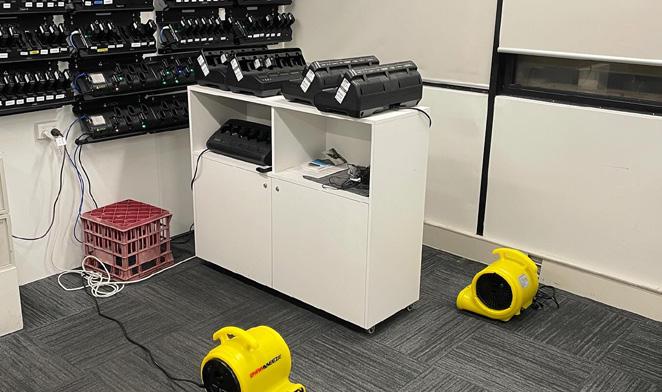
Recent media reporting has again exposed the unacceptable condition of ACT Policing facilities across the Territory. According to the article, 26 facility failures have been recorded across ACT Policing sites since July 2020, including flooding, water ingress, sewage leaks, lead-containing dust, lightning damage and a sinkhole.
The AFPA condemns the ACT Government and the Justice and Community Safety Directorate for allowing these issues to continue. This is not an isolated maintenance problem. It is a pattern of infrastructure failure across essential policing sites.
The most recent reported incident involved a sinkhole at Tuggeranong Police Station on 1 April 2026, in which soil washed away beneath pavers, causing a minor
“Safe policing starts with safe workplaces. Our members deserve buildings that are safe, functional and fit for purpose.”
collapse. Repairs were still pending later that month. A sinkhole at a police station should concern every person responsible for police infrastructure in the ACT.
The reporting also shows that facility failures have become more frequent in recent years. At least six incidents were recorded in the 2025–26 financial year, four in 2024–25, and nine in 2023–24. That means 19 reported incidents have occurred over the past three financial years.
City Police Station recorded the highest number of reported failures, with 14 incidents since July 2020. These included eight flooding events, three sewage leaks and one water ingress event. The article reported flooding across the ground floor, first floor, basement gym, armoury adjudication and practices office, muster and conference rooms, vest area, and offices used by senior police. Sewage leaks and smells reportedly affected the plant room, the basement security control room and the officer-in-charge’s office.
These conditions would not be accepted in many other government workplaces. They should not be accepted in police facilities.
Critical Facilities Under Pressure
The ACT Watch House, located under City Police Station, reportedly experienced two back-to-back sewage overflow incidents in November 2025, with sewage
overflowing from cell 21 due to Canberra Metro works on London Circuit. The Watch House is a high-risk custody environment used by police, detainees and support staff. Any sewage overflow in that setting raises obvious health, hygiene, safety and operational concerns.
Winchester Police Centre has also been repeatedly affected. According to the article, the centre has recorded seven facility failures since July 2020, including repeated flooding in areas used by police intelligence team members in 2022, 2024, 2025 and twice in 2026. Repairs were still occurring in May 2026 following water damage recorded on 7 March and 26 March.
The affected areas reportedly include Intelligence, Legislation and Governance, the carers room, Crime, the Executive General Manager’s corporate office, the gym, the Traffic Operations Centre training room, and the emergency management and planning office. These are not spare rooms. These are critical operational and support areas that help ACT Policing function.
The Joint Emergency Services Centre, which includes Gungahlin Police Station, was reportedly forced to close in February 2024 due to lead-containing dust. The ACT Road Policing Centre in Hume also reportedly experienced water ingress in April 2025, affecting police vehicle fit bays and caged storage areas. This shows the problem is not limited to one ageing building. It is occurring across multiple ACT Policing sites and affecting different parts of the organisation.
The Impact on Members & Capability
AFPA President Alex Caruana said members had every right to expect better. “ACT Policing members should not be forced to work in buildings affected by flooding, sewage, water damage, lead-containing dust and structural failure,” Mr Caruana said.
“These are not minor inconveniences. When intelligence areas, training rooms, custody spaces, offices and operational work areas are damaged or closed, it affects members and it affects policing capability.”
The AFPA has repeatedly warned that safe policing starts with safe workplaces. Poor infrastructure affects morale, safety, productivity and operational readiness. Members should not have to work around leaking buildings, unsafe areas, sewage smells or repeated disruption while trying to deliver policing services to the Canberra community.
Reporting Hazards & Protecting Members
It is also critical that members report every facility issue through the proper workplace safety channels. If members identify flooding, water ingress, sewage leaks, structural damage, unsafe flooring, mould, electrical concerns, contamination risks or any other workplace hazard, they should report the matter to ACT Policing and submit a workplace incident or hazard report.
These reports matter. They create a formal record, help identify repeated problems, support work health and safety action, and ensure the employer is aware of the risk. Members should not assume someone else has reported the issue.
Members should also ensure the AFPA is informed of any incident or hazard affecting their workplace. This allows the AFPA to monitor recurring problems, raise concerns directly with ACT Policing and JACS, and advocate for safe conditions across all ACT Policing sites.
The Need for Long-Term Investment
The ACT Government owns this problem. JACS is responsible for ensuring police facilities are safe, functional and fit for purpose. Members are tired of hearing that repairs are pending or remediation is continuing. The ACT Government needs to stop patching problems after they occur and start funding a proper long-term police infrastructure plan.
The AFPA is calling on the ACT Government to release a full audit of ACT Policing facilities, including known risks, outstanding repairs, funding gaps and completion dates. The government must urgently fund repairs to affected buildings and publish a clear capital works plan for replacing or upgrading ageing police infrastructure.
JACS must also consult directly with ACT Policing members and the AFPA about workplace safety, disruption and operational impacts.
Safe Facilities Support Safe Policing
The Canberra community expects ACT Policing to respond quickly, professionally and safely. Police should be able to expect the ACT Government to provide safe buildings, reliable infrastructure and basic workplace standards.
ACT Policing members deserve better. The Canberra community deserves better.
Preferred legal service provider for Police Association Members, their families
and retired Members.
Comcare Claims
Lodging claims | Disputing decisions affecting payment of medical costs and incapacity payments | Disputing rejected claims | Permanent impairment claims | Reconsideration applications | Filing appeals to the AAT and Federal Court of Australia
Key Contacts
Tim White - Partner twhite@tgb.com.au
Tim leads our Comcare Claims team for AFPA, working with 5 other lawyers nationally.
Criminal and Disciplinary
All criminal matters | Protection orders (FVO/PPO) | Discipline/ misconduct (PRS matters) | Coronial Inquiries (deaths in custody)
Key Contacts
Luke Officer - Partner lofficer@tgb.com.au
Family & Divorce
Luke leads our Criminal & Disciplinary team for AFPA, working with 6 other lawyers nationally.
Property settlements | Children’s issues | Child Support matters | Pre-nuptial style agreements | Mediation & family dispute resolution | Defacto & same sex relationships | Divorce & international divorce
Key Contacts
Dina Paspaliaris - Partner dpaspaliaris@tgb.com.au
Dina leads our Family & Divorce law team for AFPA, working with 15 other lawyers nationally.
Leading law firm, Tindall Gask Bentley is the preferred legal services provider of the Australian Federal Police Association, offering 30 minutes of free initial advice and a 10% fee discount*.
* Conditions apply
To arrange a preliminary in-person or phone appointment contact TGB on 1800 730 842
AFP Budget delivers short-term support, but long-term questions remain
The 2026–27 Federal Budget gives the Australian Federal Police a stronger immediate funding position, but it also raises serious questions about longterm capability, National Policing capacity, and the pressure already being felt by members across the organisation.
The headline numbers are positive. Total AFP resourcing rises from $2.481 billion in 2025–26 to $2.662 billion in 2026–27, while total departmental resourcing rises from $2.356 billion to $2.543 billion. The AFP’s Average Staffing Level also rises from 8,094 to 8,195, an increase of 101 ASL. On paper, this gives the AFP more funding and more staffing capacity in the Budget year.
That increase should be acknowledged. The AFP operates in a complex and expanding environment, covering Commonwealth policing, ACT Policing, external territories, airport protection, protective security, international policing, witness protection, proceeds of crime and support to domestic and foreign law enforcement partners. The Budget recognises that the AFP remains central to Australia’s national security, law enforcement and public safety framework.
Pressure on National Policing Capability
The concern is that the headline increase does not tell the full story. The most significant issue for members is the reduction in National Policing ASL. Outcome 1, National and International Policing, falls from 3,998 ASL in 2025–26 to 3,956 in 2026–27. This is a reduction of 42 ASL in the area responsible for many of the AFP’s most complex functions, including terrorism, human exploitation, serious and organised crime, cybercrime, fraud, corruption, espionage, foreign interference and Commonwealth criminal law. That reduction is difficult to reconcile with the threat environment facing the AFP. National Policing work is becoming more complex, not less. Matters often involve encrypted communications, digital evidence, offshore actors, organised networks, financial trails, sensitive intelligence and lengthy prosecution processes. A reduction in staffing may not appear immediately as a visible service cut, but members can feel it through heavier caseloads, tighter prioritisation, longer timeframes, reduced access to specialist support and increased fatigue.
Short-Term Funding vs Long-Term Demand
The forward estimates add to that concern. Outcome 1 expenses rise slightly from $1.144 billion in 2025–26 to $1.159 billion in 2026–27, before falling to $1.022 billion in 2027–28, $998.096 million in 2028–29 and $959.989 million in 2029–30. This means the Budgetyear uplift does not appear to provide an enduring funding base for National Policing.
Areas Receiving Additional Support
There are positive elements. ACT Policing receives a stronger profile, with expenses rising from $263.137 million in 2025–26 to $275.886 million in 2026–27, and to $291.290 million by 2029–30. ASL also rises from 1,065 to 1,108. This is welcome, particularly given the pressure ACT Policing members face through community demand, watch house issues, facility failures, family violence, mental health demand, road policing and public order work.
Protective Services also receives a stronger position. Outcome 3 rises from $1.002 billion in 2025–26 to $1.082 billion in 2026–27, with ASL increasing from 3,030 to 3,131. This recognises the importance of protective services, aviation policing, major events, protected locations, critical infrastructure, dignitary protection and international policing partnerships. The Budget also provides targeted funding for important work. The AFP receives $41.449 million in 2026–27 under Home Affairs additional resourcing, $13.810 million for Supporting Border Security, $1.268 million for the National Strategy to Prevent and Respond to Child Sexual Abuse, and ongoing funding across the forward estimates for NDIS integrity work. These measures support important operational priorities, but several appear limited to 2026–27, creating uncertainty about what will happen when the short-term funding ends.
“Members deserve more than headline funding. They deserve sustainable staffing, safe workloads, proper equipment, modern systems and long-term health support.”
Risks Behind the Savings Measures
The 2029–30 savings measure also requires close scrutiny. The AFP faces a $54.358 million reduction under the Government’s broader savings measure on consultants, contractors, labour hire and non-wage expenses. Reducing waste is sensible, but nonwage expenses can also include operational travel, training, ICT, equipment, facilities, technical support and surge capacity. If these savings fall in the wrong places, members may experience slower systems, reduced backfill, fewer training opportunities, delayed equipment and weaker operational support.
Funding Capability Means Funding People
The Budget papers also do not identify a dedicated AFP member wellbeing, psychological injury prevention, fatigue management, rehabilitation or Blue Card-style health measure. That absence matters. AFP members, including sworn police, PSOs, unsworn specialists, and corporate members, carry the operational and psychological risks associated with the work. A Budget that funds capability must also fund the people who deliver it.
Beyond the Headlines
The AFPA’s position is balanced with the Budget, which gives the AFP important short-term support, and the positive measures should be recognised. At the same time, the Budget does not yet prove that the AFP has the enduring workforce base, operational support and health framework needed to meet demand safely.
The AFPA will continue pressing the AFP and Government for clear answers on National Policing reductions, staffing distribution, internal reprioritisation, future savings, AUKUS-related protective security, capital investment, fatigue management and dedicated member wellbeing support. Members deserve more than headline funding. They deserve sustainable staffing, safe workloads, proper equipment, modern systems and long-term health support.
Why banning OMCG colours matters for the ACT
The ACT Government’s move to ban outlaw motorcycle gang colours and insignia is an important and overdue step to strengthen community safety, disrupt organised crime, and give police the practical tools they need to respond to a real and visible threat.
Outlaw motorcycle gang colours, patches, logos and insignia are not harmless clothing or simple expressions of identity. They are symbols used to show membership, project power, claim territory, and intimidate the public. When these items are worn in public places, they are often designed to send a message, not just to rival gangs, but to business owners, venue staff, families and members of the broader community.
This is particularly important in the ACT, where Canberra’s status as the national capital creates a unique public safety environment. The Territory is home to Parliament House, national institutions, diplomatic missions, defence sites, major events and busy entertainment precincts. It should not be a place where outlaw motorcycle gangs can gather, display their colours and promote their presence without consequence.
The ACT cannot afford to become a soft target for organised crime. Other jurisdictions have already moved to restrict the public display of gang insignia, and if the ACT does not keep pace, there is a risk that criminal groups will see the Territory as a more convenient location to meet, recruit, intimidate and conduct their business. Organised crime groups are well aware of the differences between jurisdictions, and they will exploit gaps where they exist.
Banning OMCG colours is not about criminalising clothing for its own sake. It is about recognising that these symbols serve a purpose within gang culture and organised crime networks. They help gangs advertise their presence, reinforce internal discipline and project fear. Removing that public platform is a practical way to reduce intimidation and make it harder for gangs to normalise their presence in the community.
The AFPA has played a significant role in bringing this issue to the attention of the government and the public. The AFPA has consistently argued that the ACT needed stronger, more practical laws to deal with outlaw motorcycle gangs, including restrictions on the public display of colours and insignia. Importantly, the AFPA’s Policy Proposal paper helped influence the ACT Government’s approach and provided a clear, memberinformed case for reform.
That advocacy was grounded in the experience of frontline police, who understand the operational risks and community impact of organised crime. The AFPA argued that OMCG colours are not symbolic in a harmless or abstract sense. They are part of how these groups operate, recruit, and intimidate, and the law should reflect that reality.
The AFPA has also been clear that any legislation must be targeted, proportionate and carefully drafted so that it achieves its public safety purpose while respecting human rights obligations. These issues can be managed through sensible exemptions, clear definitions and proper safeguards, but they should not be used as an excuse for inaction.
This reform is a positive step for the ACT, and the AFPA welcomes the Government’s decision to act. Banning OMCG colours will not solve organised crime on its own, but it will give police another useful tool to disrupt gang activity, reduce public intimidation and send a clear message that Canberra is not open for gang business.
Maximise your interest with BankVic’s Bonus Saver account
BankVic’s Bonus Saver account rewards consistent saving behaviour with a very competitive rate, when conditions are met.
Here are the easy steps to help you reliably earn bonus interest every month.
Deposit at least $100 each calendar month
To qualify for bonus interest, you must deposit at least $100 into your Bonus Saver account during the defined calendar month period.
Tip: Automate your $100 transfer on the 1st of each month so you never miss eligibility.
Make no withdrawals during the month
BankVic requires zero withdrawals from the Bonus Saver during the month to earn bonus interest. Any withdrawal forfeits that month’s bonus rate.
Tip: Use a separate account for bills, transfers, or emergencies to keep the Bonus Saver untouched.
Timing your deposit is just as important as the amount you save
Ensure you have deposited $100 before 5:00pm, Melbourne time, on the last day of the calendar month. Interest is calculated daily and paid monthly. Depositing earlier in the month increases the number of days your money earns interest.
Tip: Deposit early in the month to avoid timing issues.
Deposit early to maximise daily interest
Interest is calculated daily and paid monthly. Depositing earlier in the month increases the number of days your money earns interest.
Enjoy the financial rewards
Once you’ve met the eligibility criteria and set up your Bonus Saver to maximise the interest you can earn, you’ll start seeing the benefits from the following month onward. If you’ve arranged an automated deposit into your Bonus Saver account, you’ll continue to enjoy the rewards each month - sit back, relax, and let your money work for you.
Example
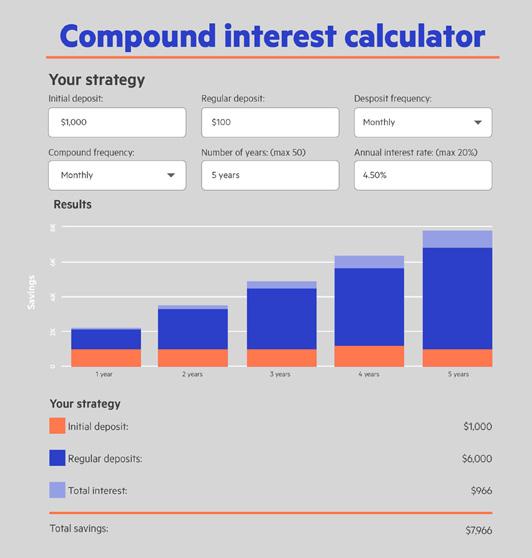
If you open a Bonus Saver account at a variable rate of 4.5%, (this includes a bonus rate of 4.45% plus a standard rate of 0.05%), with $1,000 as an initial deposit, making $100 regular monthly contributions then over 5 years you could earn approx. $966 in interest*.
* This assumes the interest rate remains at the rate listed above.
Opening
a Bonus Saver
To open a Bonus Saver account, visit bankvic.com.au, click ‘Login” to access internet banking and then enter your member number and password. Alternatively, you can compare our accounts to find the right one for you.
We’re here to help
If you have any questions, call us on 13 63 73.
Angela Martin
Proud to be your bank
We were delighted to attend the recent AFPA Convenor & Delegate Training Course. It was a valuable opportunity to connect in person and discuss how we can support you in achieving your financial goals.
Why your choice of bank matters
During the conference we spoke about the current economic environment and its impact on interest rates.
Inflation is elevated, and cost-of-living pressures continue to challenge police households and family budgets. These conditions increase the risk of upward pressure on rates.
For police members and their families, it affects mortgage repayments, household budgets and financial planning. At BankVic, our focus is on protecting members and providing financial security.
When economic conditions tighten, the fundamentals matter even more. Now is the time to ensure your banking is structured properly and working for you.
Many institutions rely on layers of fees: monthly account fees, annual fees and service charges that have become accepted as standard.
At BankVic, that is not our model. We are 100% member-owned. We do not charge monthly or annual account fees, and all of the bank’s profits are reinvested into better rates and improved services for members.
Supporting your financial wellbeing
Beyond products and rates, one of the most consistent messages we receive from members is the need for financial guidance and support.
Recently, one of our police members contacted us after being injured on duty and unable to work. They were worried about how they would keep up with their mortgage repayments. Our team stepped in immediately, worked through a new repayment arrangement, and gave them the breathing room they needed to focus on recovery.
The realities of policing, including shift work, overtime and operational demands, create unique financial challenges.
That’s why we’ve strengthened our Financial Wellbeing Hub, giving members practical tools and guidance to build their financial knowledge at bankvic.com.au/financial-wellbeing
We provide practical workshops, education sessions and resources designed specifically for police. We want to ensure members are informed, prepared and confident in their financial decisions.
Our team can help you
More information about how BankVic can help you is available on our website, or by contacting your Senior Relationship Manager, Rebecca Attard on 0419 041 735 or rattard@bankvic.com.au
Michael Leake (Head of Brand & Marketing), Eddie Prunty (Senior Mobile Lending Manager) Betty Gouramanis (Partnership & Events Specialist), Michelle Ferry (Relationship Manager).
BankVic CEO Anthony De Fazio speaking with delegates.
Alex Caruana and Anthony De Fazio
Jacinda Hansen Special Counsel
Quiet
quitting a marriage: What it means legally in Western Australia*
* Appointments can be made for any state in Australia.
There are many reasons why people feel unable to leave their spouse at a particular time, despite no longer being happy in the relationship.
Concerns about finances, care of the children, housing availability and employment uncertainty all play a role in when an individual ultimately feels ready to physically leave a marriage.
It is becoming increasingly common for people to either actively or inadvertently “quietly quit” their marriage.
What is “Quiet Quitting” a marriage?
“Quiet quitting” a marriage refers to a situation where spouses remain legally married but gradually disengage from the relationship—emotionally, socially and sometimes financially—without formally ending it. Rather than an explicit separation, the relationship slowly ceases to function as a partnership.
A practical example
Sarah and Daniel had been married for 12 years with two children. Over time, Sarah became increasingly unhappy in the relationship and despite efforts to improve the division of labour and her resentment towards Daniel, she began to accept that the situation would not improve and gradually disengaged from the relationship.
Sarah stopped including Daniel in the weekend plans with the children, ceased cooking meals and doing laundry for him and eventually stopped sharing a bedroom. She also withdrew from joint social activities, and began managing her finances independently.
Although they continued living in the same home for practical and financial reasons, their relationship had effectively ended. This was a classic example of “quiet quitting.”
After 14 months, Sarah obtained a rental property and shortly thereafter applied for divorce in the Family Court of Western Australia, relying on “separation under one roof”. To support her application, she filed affidavit evidence outlining the breakdown of the marital relationship—separate sleeping arrangements, minimal communication, and independent financial management. A friend also provided corroborating evidence.
The court accepted that separation had occurred despite cohabitation and granted the divorce.
The legal framework: separation and divorce
Under the Family Law Act 1975 (Cth), Australia adopts a no-fault divorce system., This means the court does not examine why a marriage ended. Instead, a party must prove that the marriage has broken down irretrievably, demonstrated by 12 months of separation.
Importantly, separation can occur even if parties continue to live in the same home. This is known as “separation under one roof”, where spouses lead separate lives despite sharing accommodation. In practice, many situations described as quiet quitting resemble this arrangement.
In Western Australia, divorce applications are heard in the Family Court of Western Australia under the Family Court Act 1997 (WA). The court will consider evidence of separation—such as changes in sleeping arrangements, finances, and social lives—when determining whether the statutory separation period has been satisfied.
Accordingly, while “quiet quitting” is not a legal term, the law recognises that a marriage may effectively end well before a formal divorce application is filed.
How “Quiet Quitting” can affect property and parenting matters
However, the “quiet quitting” period can have further legal implications. When determining property settlement, the court may consider that the parties have already been functioning financially independently for a period of time. This can influence how post-separation contributions are assessed.
Additionally, parenting arrangements may be shaped by the reality that parties have already been informally co-parenting with limited interaction.
Therefore “quiet quitting” can have significant evidentiary and practical consequences in family law proceedings, particularly in proving separation and shaping financial and parenting outcomes.
When does separation legally occur?
The matters of Pavey v Pavey (1976) FLC 90-319) found that separation occurs when:
1. One party forms an intention to end the marital relationship, and
2. That intention is communicated or acted upon in a way that makes it clear to the other party, and
3. There is a corresponding change in the marital relationship (consortium vitae).
Is express communication required?
The authorities do not require a formal statement such as “the marriage is over with no prospect of reconciliation.” However:
• The 12-month separation period generally runs from the date the intention is communicated.
• Separation is commonly said to begin when one party communicates the decision to end the relationship, even if the other disagrees.
Importantly, courts recognise that communication can be:
• Express (e.g. telling the spouse), or
• Implied through conduct, such as:
- moving into a separate bedroom;
- ceasing a sexual relationship;
- separating finances;
- presenting publicly as separated.
Conclusion
There is no strict legal requirement to verbally tell the other party that the relationship is over. However, Australian case law requires that:
• The intention to separate must be communicated or made objectively clear,
• And the relationship must have functionally ended with no reasonable likelihood of reconciliation.
Get in touch
If you are in a situation where you and your partner remain living together but your relationship has broken down, it is important to obtain legal advice early.
Understanding how separation is recognised can be critical in protecting your rights in relation to divorce, property settlement, and parenting arrangements.
Arrange an appointment today:
Swipe, send… subpoena?
The legal trap in your back pocket.
That work-issued mobile phone in your back pocket, in reality, is not actually yours. It is your employer’s property and
potentially
their evidence. In reality, every search and call can be monitored, accessed, or seized. What might feel like harmless personal use can quickly become a legal and professional liability.
When Workplace Monitoring Becomes Personal
Unfortunately, using a work-issued mobile phone for personal purposes carries a set of practical and legal risks which are easy to underestimate. At a basic level, the device and the data on it are typically your employer’s property or at, the very least, subject to their control under workplace policies. That means your expectation of privacy is reduced considerably compared with a personal device. What employees (police officers or otherwise) do not always appreciate is that employers reserve the right to monitor, access or audit communications on work devices, sometimes on short notice and without your consent at the time. Even if that monitoring is infrequent in practice, the legal right to do so often looms dangerously in the background.
The Legal Risks During Investigations
Critically, a work-issued mobile phone may be accessed or seized in the context of an internal investigation. If allegations of misconduct are being investigated within the police force – whether in relation to you, or in relation to another police officer – investigators may insist on reviewing relevant emails, messages, call logs, application usage and in some circumstances even deleted data. There is a real risk of personal content being swept up in that process, particularly where it is intertwined with work-related material.
“Confidence comes from preparation, not prediction.”
The line between personal and professional use on mobile devices is becoming increasingly blurred.
An added complexity for police officers is the requirement under s 40VE of the Australian Federal Police Act 1979 (Act) to do anything reasonably necessary for the purposes of obtaining evidence in relation to an investigation or enquiry into AFP practices issues. That is to say, the failure to direction to furnish information – including digital information contained on a work-issued device – may in and of itself amount to an offence under s 40VH breach of discipline capable of exposing an officer to substantial penalties.
Why Personal Devices Matter
In some cases, devices may also be subject to external legal processes such as subpoenas, court orders or regulatory investigations. Once that happens, anything stored on the device (including ostensibly private messages, photographs or browsing history) has the potential to become disclosable.
Protecting Yourself & Your Privacy
That disclosure may well go beyond standard investigation materials, lines of enquiry and correspondence with complainants, prospective witnesses and other investigating officers. For example, a police officer identified as a witness in criminal proceedings may see their credibility and reliability an issue in those proceedings. In those circumstances, there is a plausible argument to be made that all documents, objects and material within the possession
of the investigating authority which might affect the credibility or reliability of that police witness must be disclosed to the accused. Where personal materials contained on device belonging to the investigating authority might affect credit or reliability of a key police witness in proceedings, there is arguably a duty to disclose those materials. Of course, prosecution disclosure obligations will always be subject to legitimate considerations of privilege and public interest immunity. However, prosecution disclosure obligations will always be exercised with the primary aim of ensuring an accused’s trial is fair, meaning that an officer’s privacy may very well become a secondary consideration.
The important takeaway point? The personal use of a work-issued mobile phone is often tolerated (or even encouraged), it comes with reduced privacy, potential exposure during investigations and legal processes and a real risk of personal data being accessed, disclosed or lost. Keeping a clear separation between personal and work use is generally the safest and most risk-averse approach.
For confidential advice or to discuss your circumstances, contact Hanna Rogers 08 8205 1259 hrogers@tgb.com.au
AFPA Supports Members Riding for a Cause in Tour de Cure 2026
The AFPA was proud to recently support two AFPA members in the annual Tour de Cure, helping raise vital funds for cancer research across Australia.
This year, AFPA members Jeremy Hickson and Hannah Hewlett took on the significant challenge of riding from Canberra to Hobart as part of the 2026 Tour de Cure, joining fellow participants in an inspiring show of endurance, resilience and commitment to a cause that touches countless Australians.
To help mark the occasion, AFPA President Alex Caruana joined Channel 7’s Sunrise program on the morning of the Canberra launch, helping shine a spotlight on the event, the importance of cancer research fundraising, and the incredible efforts of those taking part.
“This is a fight that reaches far beyond any one workplace or profession. Cancer impacts every corner of our community, which makes supporting research, awareness and fundraising efforts something we can all stand behind”, said Mr. Caruana.
The AFPA team was also on hand in Canberra to see Jeremy and Hannah off at the official launch, cheering them on as they began the journey south toward Hobart.
Tour de Cure has become one of Australia’s most recognised charity cycling events, bringing together riders, supporters and communities to raise funds for cancer research, support services and prevention programs. Supporting members who dedicate their time and energy to causes such as this reflects the AFPA’s broader commitment to backing members both in and outside the workplace.
As a final wrap-up to the campaign, members of the AFPA were also proud to attend the Qure Ball 2026, continuing to support fundraising efforts and congratulating all participants involved in the ride and the wider Tour de Cure community.
We congratulate Jeremy and Hannah on this incredible achievement and thank them for representing both the policing community and the spirit of giving so strongly.
“A cause like this reminds us that some battles belong to all of us.”
“Nine
days. Hundreds of kilometres. One incredible journey from Canberra to Hobart, made even more meaningful through the
Erin Fry, Lucy Flannagan, Courtney Posantzis, Katherine Eames, Kirsty McAllister, Paul McCue, Sairam Poosarla.
INTERVIEW - SCOTT THORPE
Career Reflection
Scott Thorpe has spent 13 years working across various contracts, ICT, and international deployment within the AFP. From Canberra to Papua New Guinea, his career reflects a strong focus on people, unique opportunities, and ultimately the realities of navigating complex challenges without support. While this perspective comes too late for his own situation, it carries an important message for others, and he hopes his experience encourages them to act earlier.
Your
Career Journey
What first inspired you to join policing?
I wanted the opportunity to advance my career and learn.
Can you tell us a little about your career path and the different roles you held?
I spent most of my career in ICT in differing roles, mainly contract management and procurement. Later on, I was involved in the recruitment side of contractors which I really enjoyed.
Were there any moments or postings that had a major impact on you professionally or personally?
I absolutely loved PNG, both the people and the work. Sadly, my time there was drastically cut short thanks to Covid, but I enjoyed every minute.
What are some of the proudest moments of your career?
As I was involved in the recruitment side of things I often saw people that I recruited years ago become permanent fixtures and be promoted into higher roles. A few times people came up to me and thanked me for giving them a go back then, small moments of appreciation that meant the world to me.
Support and Representation
During your career, what kinds of workplace challenges did you face?
Mainly organisational change, this seemed to occur every year with a restructure which always brought up challenges.
Were there times where stronger support, advocacy, or representation would have made a real difference for you?
Yes. For a time I was the chair of the Cultural change committee, and I was often contacted by those concerned about how cultural inclusion initiatives were being experienced across the workforce. In my role, I tried to strike a balance where inclusion didn’t leave anyone feeling excluded or unable to have a voice.
At the time, what influenced your decision not to join the AFPA?
I deeply regret not joining the AFPA. At the time with 3 kids and a mortgage I couldn’t justify the cost to myself but knowing what I know now I would have made it work. Unfortunately, I didn’t have a crystal ball, so I didn’t know what was going to happen.
Looking back, were there situations where having union or association support may have helped?
Absolutely. I was injured through contracting COVID 19, and I have been in a constant battle with COMCARE over the past 4 years not just over my claim but my incapacity payments. Dealing with an insurer on your own is tough, more so because I’m still injured.
Luckily I have been successful so far, but it’s taken a toll on myself and my family not just emotionally but financially. And sadly, with my injury, I have been left permanently disabled and with a reduced life span.
Do you feel differently about that decision now? Why?
The ongoing battle with Comcare has taken its toll. Having someone there to do the fighting on my behalf would have been great.
Reflection on AFPA and Membership
What do you now see as the value of having professional representation and support?
The financial impact alone, comparing the legal fee’s I‘ve had to endure alone far outweigh the cost of membership.
Have your views on the AFPA changed over time? If so, how?
Having professionals there to take up your fight when you are either injured or unable is worth it, and everyday since my injury I’ve wished I had that support in my corner.
What would you say to current members - or those considering joining - about the importance of representation?
Knowing what I know now? It’s a no brainer. You never know when you’ll need support, and if I could join today I would.
Lessons and Advice
What have been the biggest lessons from your career overall?
Don’t get involved in office politics. Go to work, enjoy the mateship and banter, but never lose sight of your goals and what you want to achieve.
What advice would you give to younger officers or professional staff starting out today?
Some days you’ll hate the AFP. Some days you’ll want to quit. But over time the AFP gets into your blood, and it becomes you. The thin blue line becomes a reality for sworn and unsworn staff alike.
What would you tell someone who is unsure whether joining the AFPA is worthwhile?
It might feel like a financial hit at first but just drop the daily coffee. The support from membership is more than worth it.
Looking Back - If you could go back and give your younger self one piece of advice, what would it be?
Enjoy life, try and make a difference. You never know when it could all change in a flash.
Is there anything you would have done differently?
Joined the AFPA sooner.
What legacy or message would you most like to leave behind?
I hope the happy memories of banter with my colleagues. I look back now think maybe there were times I wasn’t the greatest person to be around, but I hope I made some people laugh. That’s all I wanted to do.
Is there anything else you would like to add that we haven’t asked?
“Dealing with an insurer on your own - especially when you’re still injured - is tough.”
Unless you’ve been through a life changing situation like I have, you can’t understand the roller coaster of emotions. The anger and frustration I’ve felt, going through what I’ve been through, it’s hard to convey. Having to give up a career is tough, but having the AFPA there to help would have made all the difference. But even now, if there’s any readers who’ve been through something similar I’d love to have a talk as a confident. Even now with all I’ve been through, the thin blue line never dies.