FLOATING FLOWERS
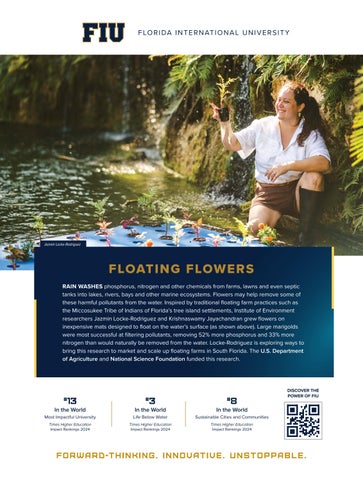
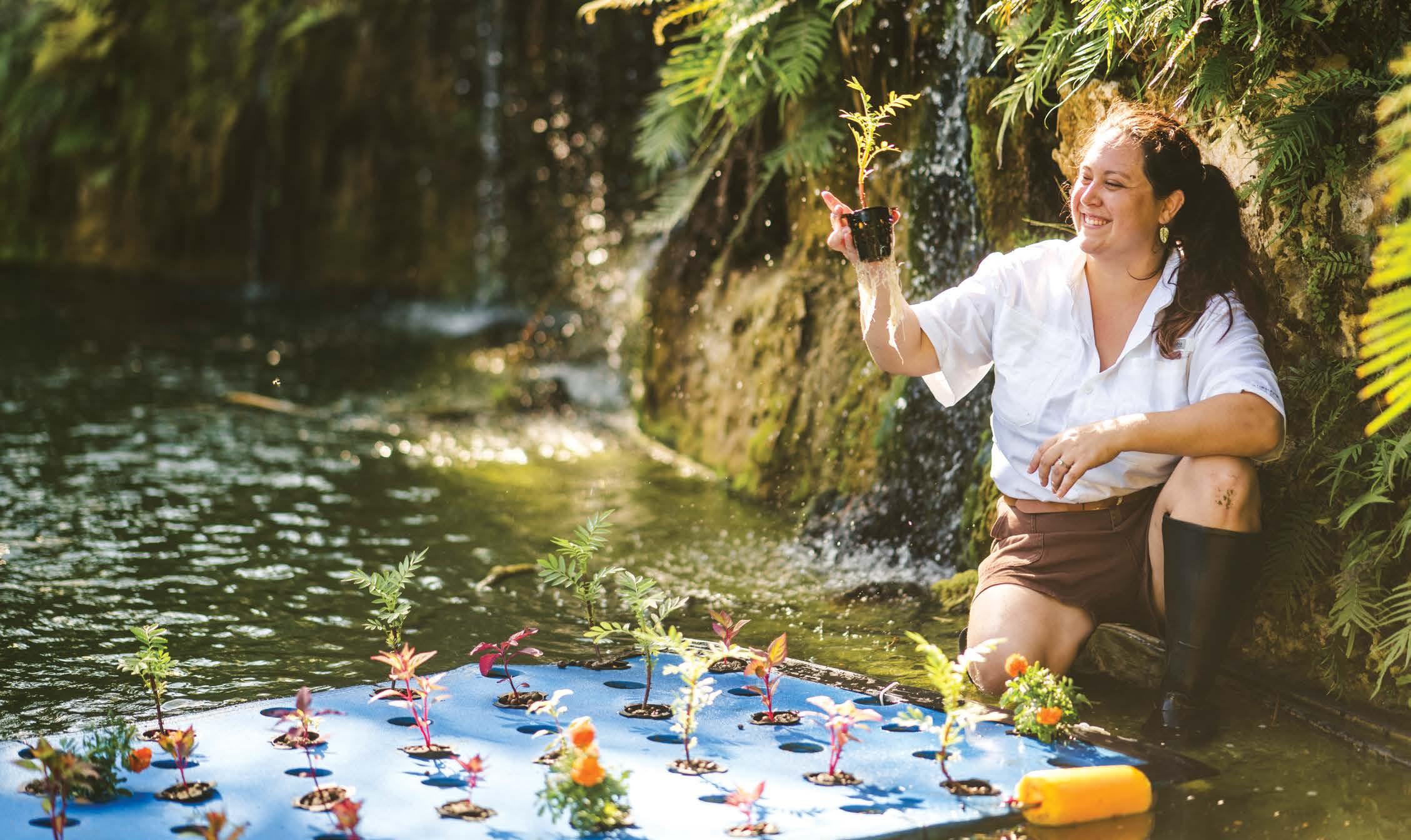
RAIN WASHES phosphorus, nitrogen and other chemicals from farms, lawns and even septic tanks into lakes, rivers, bays and other marine ecosystems. Flowers may help remove some of these harmful pollutants from the water. Inspired by traditional floating farm practices such as the Miccosukee Tribe of Indians of Florida’s tree island settlements, Institute of Environment researchers Jazmin Locke-Rodriguez and Krishnaswamy Jayachandran grew flowers on inexpensive mats designed to float on the water’s surface (as shown above). Large marigolds were most successful at filtering pollutants, removing 52% more phosphorus and 33% more nitrogen than would naturally be removed from the water. Locke-Rodriguez is exploring ways to bring this research to market and scale up floating farms in South Florida. The U.S. Department of Agriculture and National Science Foundation funded this research.
Jazmin Locke-Rodriguez