AS OF JUNE 2026


AS OF JUNE 2026
444 farmers (including 46 women) trained and supported
1,165 hectares cultivated across 5 selected value chains (2024 season)
EUR 1,967 – average additional income per farmer
141 seasonal jobs created in rural areas
70 farmers in commercial seed potato schemes earned on average EUR 9,662 more than from ware potatoes
Yield increases: +17% for onions, +28% for sweet peppers, +22–44% for other crops
2 food processors certified under FSSC 22000 and ISO 22000 standards
3 public laboratories – 17 new testing methods introduced
~35 tons of CO₂ emissions reduced in onion, pepper, and potato schemes
+70% water productivity increase with drip irrigation for sweet peppers
+153% increase in project’s social media reach (12,586 views in Q1 2025)
Onion: 71 farmers on 103 ha, 17% yield increase, +€170/farmer
Sweet pepper: 50 farmers, 28% yield increase, +€1,059/farmer
Seed potato: 70 commercial farmers earned +€9,662/farmer
Sugar beet: 100 farmers, 44% yield increase, +€817/farmer
Wheat: 755 ha cultivated, good crop conditions observed
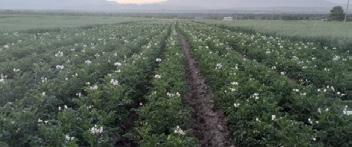
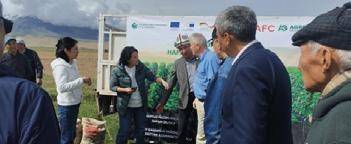
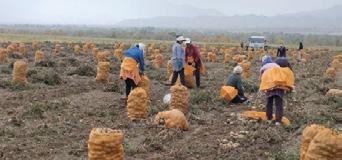
In the mountainous heart of Kyrgyzstan, nestled in Acha-Kayyngdy village, a young entrepreneur is quietly transforming agriculture. Altynbek Aibashov, head of the “Kurmanbek Ata” cooperative, has brought innovation to the age-old practice of potato farming. With just small plots at first, his cooperative expanded rapidly after receiving 25 hectares through local development support.
Traditionally growing the Picasso variety, Altynbek’s team took a bold step in 2023—testing Dutch seed varieties like Silvano, Camelia, Colombo, and Perdis. With training from Dutch experts and backing from the Value Chain Agro Finance project, they achieved impressive yields: up to 40 tons per hectare. To meet the needs of these elite seeds, they also mastered drip irrigation—uncommon in At-Bashy before. This modern method saved water, prevented weeds, and allowed for precise fertilization, doubling their usual harvest. With growing interest from local farmers and ambitions to export to Central Asia and Europe, Altynbek now dreams of a logistics center to handle over 1,000 tons of annual harvest. He offers quality seeds at affordable prices, aiming to regain Kyrgyzstan’s potato reputation and help other farmers succeed. “Farming isn’t just planting and watering anymore,” he says. “It’s about precision, patience, and partnership”.

further information, please contact: mareike.decker@gopa.eu

Rural areas of Kyrgyzstan face challenges like limited employment and income opportunities, and loss of soil productivity caused by poor management of natural resources that leads to soil degradation and additional CO2 emissions. Coal remains a major source of energy, and its increasing consumption and inefficient use contribute significantly to the carbon footprint. At the same time, value chains with strong income and market potential exist that, if developed, can reduce measurable negative environmental impact at practically no additional cost.
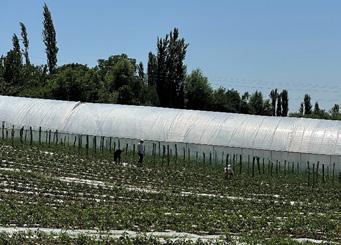
We support the Ministry of Economy and Commerce of Kyrgyzstan in advancing the transition towards a Green Economy by promoting sustainable value chain development, implemented in close collaboration with capable local partners to ensure long-term impact and scalability. The main focus has been on value chains with strong market potential, high return on investments for farmers, and opportunities to increase water and soil productivity. Findings were disseminated through a stakeholder workshop and training for the staff of the Department of Cooperatives.

Project name: Value chain and market system development in fruits and vegetables sector
Project region: Kyrgyz Republic
Financed by: EU, Swiss Agency for Development and Cooperation (SDC), German Federal Ministry of Economic Cooperation and Development (BMZ), Deutsche Gesellschaft für Internationale Zusammenarbeit (GIZ)
Implemented by : GOPA AFC
Duration: Phase I: 02/2016 - 03/2021
Phase II: 04/2021 - 04/2023
Phase III: 05/2023 - 08/2025
Partners: Ministry of Economy and Commerce of Kyrgyzstan
Originally limited to the promotion of agricultural export of Kyrgyzstan, the scope of the project significantly expanded, focusing now more extensively on establishing successful examples for the development towards a Green Economy within selected value chains.
GOPA AFC experts have been reliable partners over the past 9 years. They have demonstrated excellent diligence and dedication, and always supported us on any unexpected issues occurring.”
Saidrakhim Kyrgyzbaev, Deputy Director, “Burgondu” Commercial Agricultural Cooperative
Increased sweet pepper exports to 1,000 tonnes/year and reduced carbon footprint by 60%.
Transitioned 3,000+ hectares to regenerative agriculture, eliminating yield losses.
Enabled regular exports of 50–100 tonnes of dried plums through certification and new markets.
Supported sustainable advisory services and green finance for multiple value chains.
Developed the heat pump value chain with better technology and financing.
Introduced international food safety standards across value chains.
Created a Green Economy Curriculum adopted by 15 universities, reaching 1,000+ students annually.
In the past 5 years of the project:
2,500 farmers increased annual income by 30% through green practices.
3,000 new permanent and seasonal jobs created.
400+ MSMEs accessed new markets.
3,000 tonnes of CO₂ sequestered and 1,000 tonnes of CO₂ emissions avoided annually.
1,200 vulnerable households adopted business models to boost income and reduce climate risks.
Main agricultural advisory services strengthened through training in Green Economy and organizational development.
Over €500,000 in green investments mobilized.
250+ lecturers trained in Green Economy topics, reaching thousands of students.
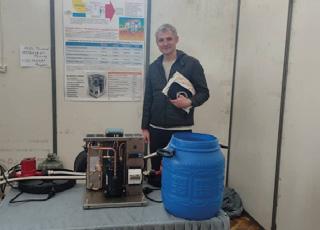
Farkhad Iarullin, 36, a local innovator from Bishkek, established Kyrgyzstan’s first small-scale production of geothermal heat pumps but faced challenges with limited capital and low public awareness. The project intervened by demonstrating the environmental and energy efficiency benefits of heat pumps, facilitating product demonstrations, providing seed capital for R&D, and connecting Farkhad with impact investors.
Analysis with university partners showed that largescale adoption of heat pumps would not strain the electricity grid, as over 90% of Kyrgyzstan’s electricity comes from renewable hydropower, making the environmental impact highly positive. The project also supported strategic planning and developed a green financing mechanism with carbon credits, ensuring heat pumps are competitive with coal and accessible to all client groups.
“GOPA AFC’s expert support has laid the right foundation for the sustainable development of our organization. They have taught us how to develop and offer farmers the most viable solutions, and how to adapt to changing situations through constant selflearning. It is because of this support that TES-Centre is rightly regarded as one of the foremost organizations in its field.”
Baktygul Satykulova, Director, “TES-Centre” Agricultural Advisory and Training Extension Service
For further information, please contact: ninakristin.thurn@gopa.eu


The agricultural sector in Uzbekistan faces low productivity, limited access to finance, outdated technologies, and lack of compliance with international food safety standards. These factors hinder competitiveness and sustainable development of value chains.

We aim to enhance financial access and strengthen the horticulture value chain by providing funds to horticulture crop growers and agro-related companies through participating banks and leasing companies. We also assist in improving the implementation capacity of these financial institutions and enhance farm management skills and horticulture value chain techniques for end-users. This initiative contributes to the development of the agriculture sector and promotes employment by boosting the export capacity of horticulture crops.
Project name: Horticulture Value Chain Promotion
Project region: Uzbekistan
Financed by: Japan International Cooperation Agency (JICA)
Implemented by: GOPA AFC, Eurasia
Duration: August 2023 – April 2025
Partners: Ministry of Agriculture Uzbekistan
We are managing the USD 200 million “Two-step Loan” initiative, which involves extensive capacity building for various stakeholders. We provide training to partner financial institutions (PFIs) on credit risk management and support the project implementation unit (PIU) and PFIs in developing robust Environment and Social Management systems. Additionally, we focus on mainstreaming women in these initiatives and offer capacity building to horticulture crop growers, small farmers, and agrorelated companies. Our efforts also include training the PIU on monitoring project indicators, coordinating public relations, and developing strategies for seedling development, greenhouses, processing, product quality improvement, and logistics.

290 million dollars lend for agro-sector
186 trainings conducted
2,952 farmers (including 1,254 women) trained and supported
4,000 new jobs created in rural areas
Agriculture products export increased
Developed 5 strategies (seedlings, greenhouses, logistics, quality, processing)

Onion: water usage decreased by 75%
Berry sector: water usage decreased by 82%
New leasing and banking products introduced
Automation of business-processes for enterprises in the food industry
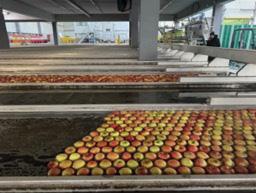
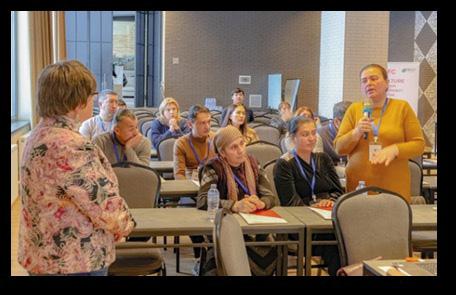
One of the project highlights was the visit of Uzbek farmers and processors to Dohler, the largest apple processing plant in Poland, accompanied by a B2B event with 12 Polish companies specializing in horticulture technology. Both sides recognized significant potential for establishing business relations and technology transfer from Poland to Uzbekistan and are committed to following up on the contacts made.
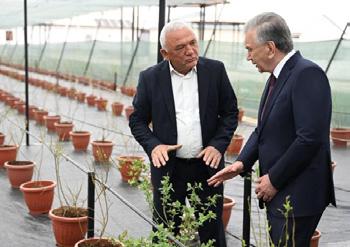
One of the major events for the Project was the visit of the President of Uzbekistan, Mr. Shavkat Mirziyoyev, to one of the project’s demonstration partners, specialized in berry production. This event demonstrates the importance of the horticulture sector for the Uzbek economy and support of the Government to its further development. The visited farmer, Mr. Tolibjon Khalmatov has been active in the project since its early stage and benefited from the advisory provided by local and international experts, which contributed to his success in production of berries.
“I very much enjoyed the trip, it was so informative! Visiting so huge companies as Dohler gave me a lot of new thoughts of widening my production. Visiting Polish orchards and being informed about methods of growing fruits, gives me the bright idea: as much you love fruit trees, as much harvest it gives you!”
Mr. Sherzod Niyazinbetov, the owner of the farm “Biogumus
To
For further information, please contact:

Uzbekistan’s new Development Strategy and Agriculture and Food Strategy include, among other priorities, economic development and liberalisation, as well as ensuring food security for population. Therefore, it is important to strengthen state services of Veterinary and Animal Husbandry Committee (VAHC) and the Plant Quarantine and Protection Agency (PQPA).
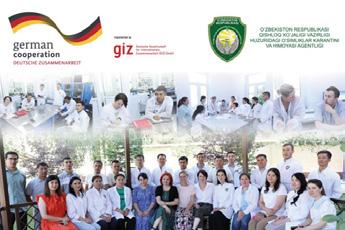
Project activities are aimed at reducing food safety risks for consumers in Uzbekistan, improving animal and plant health, and further economic development through increased food and agricultural exports that meet international sanitary and phytosanitary standards (SPS). This in turn has positive impact on poverty reduction, increased productivity, food security, economic development as well as improved public health and food safety.
Project name: Development of Animal Husbandry and Plant Health in Uzbekistan
Project region: Uzbekistan
Financed by: German Society for International Cooperation - GIZ
Implemented by: GOPA AFC GmbH
Duration: 11/2022 – 03/2025
Partners: Hochschule Weihenstephan Triesdorf University of Applied Science (HSWT)
With GIZ funding, we supported economic reforms and sustainable economic development of the veterinary, livestock and plant protection, enhancing the laboratories’ capacity of Uzbekistan’s partner institutions and establishing Private Public Dialogues in the agriculture sector.
“Our laboratory staffs believe that every challenge faced is an opportunity to grow, so support and motivation received through project activities are inspiring us even more to improve our daily work.”
Staff of the Scientific Veterinary Research Institute from Samarkand
“Through workshops and trainings, we acquired the knowledge and skills needed for further development of food control system.”
Laboratories staff from partner institutions
“Public Private Dialogues are good opportunity for exchange information between public and private sector.”
Members of the Public Private Dialogues
42 trainings and workshops conducted
32 recommendations on improving products/ services given
21 documents on introduction of new standards developed
18 sector specific strategic papers and action plans developed
11 analysis of capacity building of relevant institutions carried on
6 Public Private Dialogues established
11 Memorandums of Understating with international institutions signed
Within the first 15 months of the project, we achieved the following:
Human resources
- Strengthening of institutional and human resources in the respective areas
- Improvement of professional approach in public sector
- More efficient performance and human resources management in public sector
Strategic and legal framework
- Development of strategic approach in the respective areas
- Improvement of general policy in veterinary, plant health and food safety area
- Improvement of legislative framework in the selected areas
Food safety and laboratories development
- Further adoption and implementation of international sanitary and phytosanitary standards
- Development of risk-based approach and proper risk management
- Development of standard operating procedures and working instructions
Economic development
- Enhancement of primary production in plant and livestock sector
- Preparation of the framework for increasing trade and export of agricultural products
Cooperation between public and private sector
- Development of Pubic Private Dialogues with representatives of state and private sector
- Enhancement of the Business Development Services in veterinary and plant health area
International cooperation
- Development of international collaboration and further opening of Uzbekistan to Western countries
- Strengthening international network and promote international exchange between partner institutions
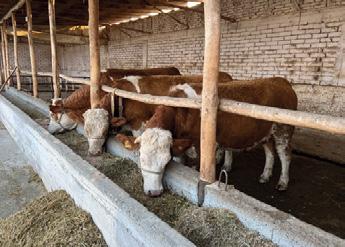
Within the Project, institutional framework, general policy, organization and official procedures in the VAHC and PQPA have been analysed in details. Not less important, an insight has been gained on development objectives, strategies, communication, professional cooperation, corporative culture and work approach in Uzbekistan. Strong points, opportunities, weaknesses and constraints related to the VAHC and PQPA itself, but also to general veterinary and phytosanitary policy are detected.
Uzbekistan has a potential for successful and efficient integration into global economy. Governmental policy is focusing on radical improvements in food safety, veterinary and phytosanitary area.
However, many internationally relevant standards have not been fully developed, adopted and implemented yet. Institutional framework is still insufficient developed for effective performance of tasks according to Western norms and requirements, which are obliged for export to EU.
A huge area for all types of capacity building is evident. The Project specifically contributed to the objective of full integration of Uzbekistan in developed international economic and social community (WTO, OECD, IPPC).




To scale up investments in green technologies, resulting in savings in energy, water and materials, deployment of renewable energy, and reduced soil erosion and/or land degradation, the EBRD has launched the GEFF Programme. The GEFF will provide USD 50 million funding to participating financial institutions (PFIs) for on-lending to eligible private sector agricultural-, residential- and commercial sub-borrowers for investment in high performance technologies and services supporting green economy transition in a gender-responsive way. Furthermore, sub-borrowers are rewarded with investment incentives upon the successful completion of climate change mitigation and adaptation sub-projects.
Project name: Implementation Support to the Green Economy Financing Facility Tajikistan, phase II (GEFF - II)
Project region: Central Asia, Tajikistan
Financed by: EBRD
Implemented by: GOPA TECH, GOPA AFC and ISM (CAICo) Tajikistan
Duration: April 2024 – April 2029
Participation Finance Institutions (PFIs): Bank Arvand, Investment and Credit Bank (ICB), MDO Humo, MDO Imon International
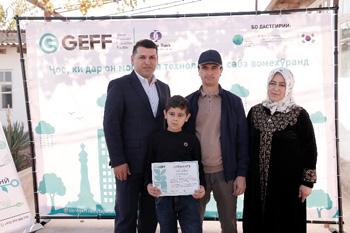
Our diverse expert team of financial sector professionals and engineers, jointly with the PFIs works towards achieving the GEFF objective - contribute to the creation of a demand-driven, self-sustaining market for investments in high performance technologies and services supporting a green economy.
“The GEFF aims to enhance energy security in Tajikistan, making businesses more resilient to climate risks and mitigate the effects of climate change. I trust all these actions facilitate a long-term and sustainable economic growth of my country.”
Firuza
Safarova, Deputy Team Leader, GEFF-II
“As a woman, I am proud to contribute to the development of green economy in a manner that is inclusive to all gender identities and, in particular, addresses finance pertinent barriers faced by women-led businesses”
Tahmina Azizova, Gender Finance Expert, GEFF-II
We transfer strategic know-how and awareness raising about modern energy performance and environmental standards while taking into consideration gender aspect in green on-lending.
We support PFIs in all implementation aspects, such as GEFF facilitation through marketing activities, development of green financial products and focused gender mainstreaming activities. All these efforts are enhanced by specific knowledge products, targeted communication and relevant educational materials to disseminate lessons learnt as well as promote new products within the entrepreneurs, farmers and wide public across the country.
On top of it, our engineers conduct assessments of sub-projects’ technical eligibility in line with the GEFF Guidelines.
Assess market to pinpoint priority areas for GEFF-II investments
Develop Green financial products and adjust the PFIs’ policies, procedures and operations that are relevant for facilitate green finance
Increase professional capacity of PFIs’ employees to finance green investments
Advise PFIs in developing a pipeline of eligible subprojects (investments)
Raise awareness among entrepreneurs to identify measures that increase the energy security of their businesses
Advise entrepreneurs on how to turn eco-friendly projects into sound and bankable investments
Regular update and upgrade eligible (or define new) technologies and climate change mitigation and adaptation measures that are financed under the GEFF.
Loan portfolio development
As of Q1 2025, more than one thousand loans totalling almost USD 9 million have been disbursed so far. Thereof,
- 15% in terms of volume (or 363 loans in number) were issued to women-entrepreneurs, and
- 93% were allocated in the commercial sector and 7% in residential.
The following climate measures have been funded:
- Water and resource efficiency
- Energy efficiency (in transport)
- Renewable energy
- Sustainable land management
- Waste management
Deepening Outreach
We conducted 9 awareness-raising campaigns to the benefit of 729 farmers and entrepreneurs. Notably, 21% (or 126) of the participants were women.
Enhanced professional capacity of banks
- As of Q1 2025, we have conducted 84 trainings to the benefit of all 4 PFIs, covering 32 districts and cities.
- A total of 1,201 bankers were trained, including 373 women (31%).
These trainings covered GEFF-II Programs’ eligibility criteria and qualified green technologies. The PFIs’ staff learned about the sub-project verification and investment incentives, advanced renewable energy sources and gender-specific green financing.
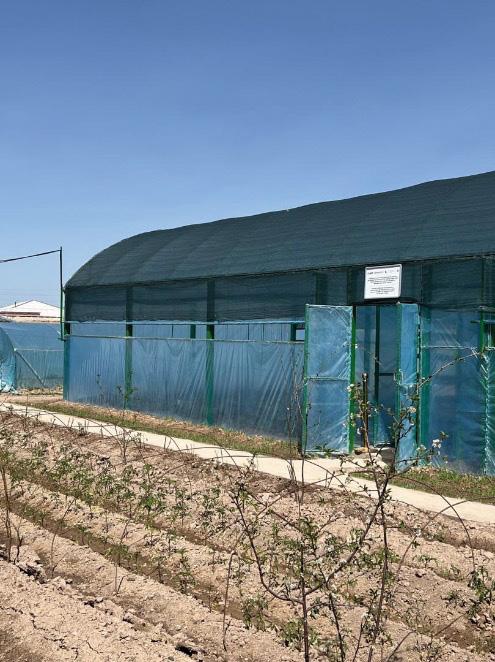
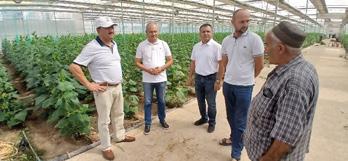
Beginning of April 2025, the city of Bokhtar celebrated the opening of two demonstration sites showcasing sustainable energy and agriculture solutions.
A hybrid solar photovoltaic system at the microcredit organization MDO Humo in Bokhtar reduces energy costs and enhances efficiency, particularly in rural areas. Features include solar panels generating renewable energy, and energy storage systems.
In addition, the Tanzila dehkan farm in Vakhsh district showcases:
• Greenhouses with drip irrigation, reducing water consumption by 50-70%
• Energy-efficient solar panels
• Biogas production systems converting organic waste into energy
• Vertical farming maximizing output in limited spaces
To learn more about GOPA AFC visit our websites:
For further information, please contact: elena.yunatska@gopa.eu

Pakistan’s power sector is featured by significant gap of up to 6 GW between generation and demand, which is even worsened by insufficient transmission and distribution facilities. Taking into consideration, that at present the most energy supply is provided to urban areas and industrial zones, rural areas are mostly left in the dark; the load shedding of up to 18 hours are common and even they are not connected with the grid. Since this deficient access to central electricity grid is not expected to improve in the anticipatable future, decentralized electrification seems to be the most feasible solution to improve electricity supply of rural areas.

Thus, in August 2019, KfW launched the Renewable Energy Initiative through Microfinance (PRIME) Programme, and granted a subordinated loan to the Pakistan Microfinance Investment Company Limited (PMIC) – a national apex institution for micro finance producers, with the objective to
1) facilitate implementation of the PRIME Programme, and support of financing of Solar Home Systems (SHS) and Soral Irrigation Pumps (SIP) through partner MFIs/ MFPs of PMIC,
2) develop respective local facilities/ capabilities and
3) increase access to energy for households and small businesses in poor grid and off-grid locations in the rural areas of Pakistan via improving affordability of SHS and SIP products and increasing the quality of supply.

Project name: “Access to Financial Services (PMIC SOLAR)”
Project region: Pakistan
Financed by: German Society for International Cooperation - GIZ
Implemented by: GOPA AFC, with consortium partners GOPA Tech and EuroConsult Pakistan
Duration: August 2022 – July 2027
Partners: Pakistan Microfinance Investment Company Limited (PMIC)
One of the core tasks of the project is to enhance PMIC’s capacity and ability to implement the PRIME in compliance with the respective Program Agreement, including all requirements to the ESMS-framework, technical and quality audit systems, monitoring, verification, pipeline building and reporting systems. In addition, PMIC shall be enabled to disburse loans to pre-qualified MFIs, monitor their compliance with the framework conditions, and apply best quality standards and best management practices. Particularly, partners (vendors and microfinance providers) are going to be closely engaged in this project to address any identified supply quality issues and assess capacities in this regard (such as for standard enforcement).
Further, PMIC and its partners shall clearly understand the market and be fully aware of the financial products available for financing SHS and SIP, as well as understand aspects related to technology. They should become fully capable to duly and fully apply the eligibility criteria of PRIME, and to provide sustainable financing to the target group. This requires capacity building of the PMIC staff, and staff of partner MFIs.
To stimulate selected MFIs’ engagement in PRIME, incentive schemes for financing of SHS and SIPs were designed, piloted and adjusted as needed and finally incorporated.
The program involves activities at various levels with different stakeholders, aiming to ensure a stable and sustainable:
- supply of financial resources (PMIC/ MFIs), accompanying services (energy auditors, testing facilities) and technical equipment providers, incl. its installation/ maintenance.
- demand from households and small businesses for SHS and SIPs, as well as financial resources to acquire them and accompanying services.
Crafted the following technical documents:
Quality Assurance Framework Document
- Minimum technical standards and guidelines for SIP
- Solar Home and Solar Irrigation Pumps system guidelines
- Concept Note on Technical Audit of Installations
- ESMS and the Grievance Redressal Mechanism (GRM) document of PRIME
Conducted various trainings to partner FIs of the PMIC and the staff of PMIC
Developed methodology and crafted the CO2 abatement tool, supported by the User Manual and training.
Crafted the Concept on the Grant Subsidy
Evaluated various vendors of DHD and SIP vendors
Diagnostic report on existing local testing facilities.
In February 2024, we trained 122 staff members (including 18 women) from 13 PMIC partner MFIs in Hyderabad, Multan, and Lahore.
The installation of solar panels has significantly reduced electricity costs for residents, allowing them to allocate funds to other essential needs and improve their quality of life.
The project also created local job opportunities during installation and ongoing maintenance, providing valuable skills and boosting the local economy.
Additionally, the increased availability of clean, renewable energy has reduced the area’s carbon footprint and promoted a healthier ecosystem.
Community engagement has flourished through workshops and training sessions, empowering residents with knowledge about solar energy and sustainability. This has fostered a sense of ownership and pride among locals.
AFC visit our websites:
“I envision our project becoming a cornerstone of sustainable energy in our Pakistani community, empowering residents to harness solar power for their homes, businesses, flourmills, and agriculture while reducing our overall carbon footprint. I hope to inspire neighbouring communities to adopt similar initiatives, creating a ripple effect of environmental awareness and action.”
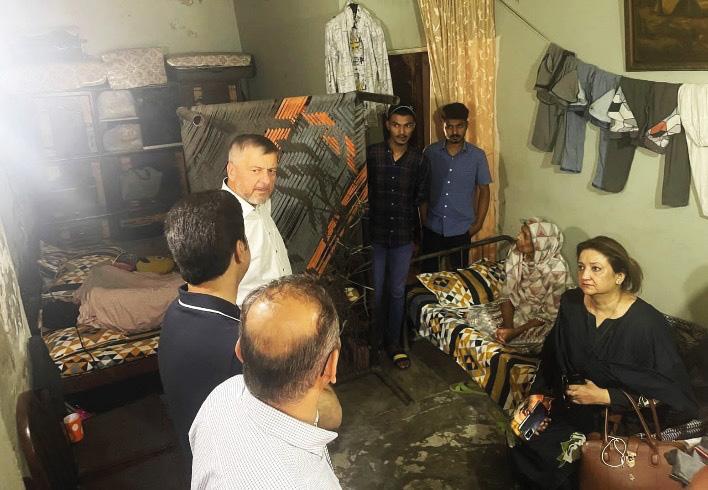
“In Lahore, I had an unforgettable meeting with clients of a micro finance company that received a loan for the purchase and installation of Solar Home Systems Component Based.”



Housing finance in emerging countries faces numerous challenges, including unaffordability, insufficient housing supply, renovation backlogs—especially in terms of energy efficiency—and risk management. Additionally, securing long-term funding sources for mortgage loans requires specialized knowledge.
At the project start, we faced the following key challenges:
• Difficulties with the allocation of energy efficient (EE) mortgage loans.
• The economy and housing market were affected by the Covid-19 pandemic, and escalation of the armed conflict in Nagorno-Karabakh (Artsakh).
• Effective and constructive communication
• Focus on specific bottlenecks and flexible approach in tailoring customized solutions to address needs and deficiencies of beneficiaries
• In-depth assessment of existing loan products, development of adjustment of loan products with modified lending conditions
• Making sure that the programme adheres to KfW’s environmental and social requirements
• Development of own approach towards EE labels for residential buildings recognized by NMC and PFIs => “B” and higher recognized eligible
• Establishment of linkages between engineering consultants and developers to issue EE labels
• Focus on awareness raising campaign, using all accessible channels and tools, such as:
- Marketing on the internet and social media
- Printed materials (posters, leaflets)
- Animation videos, press releases
- Co-operation with donor organizations (UNDP)
• Great team spirit and strong local expertise
• Trainings

Project name: Housing Finance Programme – V
Project region: Armenia
Financed by: BMZ, via KfW
Implemented by: GOPA AFC, in consortium with EV Consulting (Civitta)
Duration: Apr 2021 – Dec 2025
Partners: National Mortgage Company (NMC), & its 11 PFIs
To cope with the 1st challenge, KfW tasked GOPA AFC to support the National Mortgage Company (NMC) with development of sustainable, needs-oriented and efficient mortgage products, with the focus on investment in viable EE-solutions both in Yerevan as well as in rural areas of Armenia.
KfW has channeled EUR 20 million to the Green Loan Program of NMC, which on lent funds in local currency to partner financial institutions (PFI) in Armenia. The Green Loan Program aims to stimulate energy-efficient renovations, single-family house construction, and the acquisition of energy-efficient homes in Armenia. Targeting lower and middle-income households, NMC collaborates with partner banks, which provide housing loans to them.
Spectacular lending results:
The credit line was allocated in just 9 months
40% for EE housing, 55% for rural areas.
In total, 351 staff (including 141 female) were trained in 39 capacity building events (training events and workshops).
Development of an online tool to assess EE projects and measure the climate impact.
Development of two brands: “Im Tanik” for EE housing loans in urban and “Eco Marz” for EEloans in rural areas.
10 EE labelling certificates issued for 13 buildings, totalling 118,800 m2 of living surface area.
Focus on awareness raising
We developed for the Green Loan Program of NMC a set of promotional materials:
- The Programme logo and brand book
- A promotional video about the project
- Online posters and leaflets (distributed via social media)17F.
In addition, we accompanied NMC during various promo activities with its PFIs, and crafted e.g. press releases, articles on programme activity and EE construction, which were also distributed in local printed and online media.
As a result, the brand, Im Tanik with all four loan products, including Eco Marz became popular among households, and the EE-housing loans were successfully provided by all NMC PFIs: Armbusinessbank, Ardshinbank, Evocabank, Armeconombank, IDBank, Byblos Bank, Inecobank, Armswissbank, Converse Bank and ACBA Bank, as well as Kamurj, First Mortgage Company, Fast Credit and Global Credit universal credit organizations.
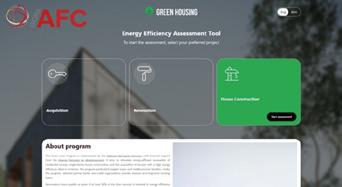
This web-based tool was designed to assess the eligibility of the projects, it helps calculate financing needed for realization of a specific project and to evaluate the corresponding energy savings and climate impact of the project (reduction of CO2 emission, reduction of energy consumption, monetary saving on exploitation of the building).
Developed by GOPA AFC, the tool is a significant milestone in promoting energy-efficient housing and efficient loan processing, because it:
- Simplifies work of loan officers on the assessment of EE housing investment projects
- Allows for assessment of EE projects for loan officers with no engineering background
- Allows the general public to assess their capacity to apply for EE financing
The tool is publicly available: https://green.nmc.am/en
“Within the frames of the Project we have established an energy efficiency standard for newly constructed buildings. In cooperation with several partners, including UNDP, we managed to persuade real-estate developers to obtain energy passports for new construction projects. I am glad that the construction of energy-efficient districts and the demand for energy-efficient apartments and houses have increased in our country.”
Edmond Vardumyan, the CEO of the National Mortgage Company
“Im Taniq is one of the brands which set a strong foundation to further development of energy efficient housing financing in Armenia. The success of the Project demonstrates that Armenia can have leading positions in CO2 emission reduction in the region.”
AFC Team Leader, Sebastian Faryniarz
For further information, please contact: elena.yunatska@gopa.eu



Both Bangladesh and Nepal rank among the most climate-vulnerable countries of the world. While Bangladesh experiences frequent floods, cyclones, droughts, and extreme heat, Nepal faces a rise in monsoon intensity and accelerated glacial retreat. In both countries, these extreme weather events threaten lives, livelihoods, and economic stability.
Despite the urgency, there remains a wide gap between climate investment needs and financial sector capacity. Bangladesh requires around USD 405 billion by 2050 to meet its climate adaptation and mitigation objectives; for Nepal, the USD 4.87 billion total funding requirement by 2030 represents one of the largest financing challenges facing any least developed country.
Project name: Accelerating Climate Finance Investments through the Financial Sector in Bangladesh and Nepal. Climate Finance Study
Project region: Nepal, Bangladesh
Financed by: ADB
Implemented by: GOPA AFC, Services and Solutions International Ltd. (SSIL)
Duration: 06/2024 – 12/2025
The project’s goal is to address a critical knowledge gap in Bangladesh’s and Nepal’s climate finance landscape. It aims to devise energy, climate, and financial sector policy recommendations that can support increased sustainable, gender-inclusive private sector investments in energy efficiency, renewable energy, and adaptation through financial institutions in Nepal and Bangladesh. These recommendations aim to contribute to commitments under the Paris Agreement, the countries’ Nationally Determined Contributions (NDCs), and other national strategies.
Ultimately, the project seeks to build a financial system that drives inclusive, sustainable growth, enabling the two countries not only to cope with climate impacts but also to seize new opportunities for prosperity and improved quality of life.
We conduct market analysis and engage with financial institutions and the private sector to map climate risks, energy consumption and emissions by corporates and small and medium enterprises (SMEs). Through consultations and surveys, our team identifies key barriers, including limited technical capacity, shortterm funding cycles, and inadequate tools to measure and manage climate impacts. Our focus includes:
Identifying investment opportunities in energy efficiency, renewable energy, and adaptation
Diagnosing investment baselines and identifying gaps to meet national policy priorities and NDCs
Conducting market surveys and consultations
Analyzing financing best practices
Assessing barriers to female participation
We develop financing solutions and toolkits to monitor and measure climate benefits. Further, we will facilitate cross-sectoral discussions among financial institutions, the private sector, and policymakers. These efforts aim to support capacity building, knowledge sharing, and systemic integration of climate finance.
Our team has mapped climate risks and investment gaps and opportunities across key economic sectors, including agriculture, energy, industry, buildings, transport, and waste management.
In a second phase of the project, we drafted two summary reports – one for Nepal and one for Bangladesh – of available financing modalities and the key challenges in undertaking the financing, suggestions to overcome the identified barriers and regarding capacity enhancement of financial institutions’ staff, an actionable “toolkit” for implementation for financial institutions, and policy recommendations. These reports will be published by ADB to share the findings with as many financial sector stakeholders as possible.
In parallel, we will organize and moderate a knowledge dissemination session, separately for both countries, to get an opportunity to present the report to the local stakeholders, exchange experiences, explore synergies between various components of the climate finance universe, and finally validate the findings of the study.
To
For further information, please contact: marilena.kuenzel@gopa.eu
Sigitas Bubnys Director / Senior Consultant sigitas.bubnys@gopa.eu