Advanced automatic fire detection for wind turbines
same Pertronic

Active, networked fire protection
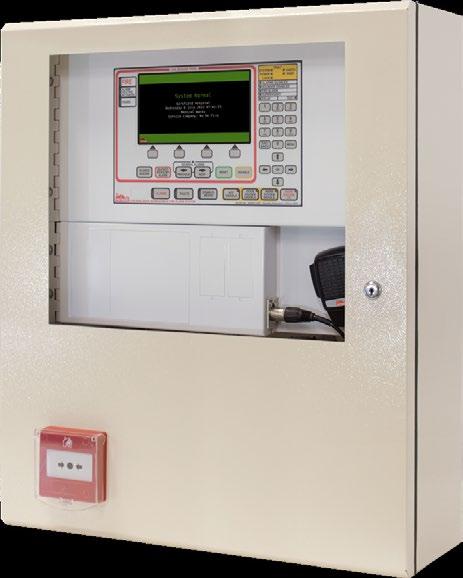
Up to 160 Pertronic F220 panels can be networked, observed and controlled from a central point. Panels detect fire instantly and quickly trigger alarms and fire suppression systems, including:
• Aerosol-based
• Clean agent
• Carbon dioxide
• Water-based
• Wind turbine shut-down
www.pertronic.com.au
Turbine image via Freepik
CELEBRATING AND CONNECTING THE SECTOR
ROB WEBB CEO, AFAC

Welcome to the December edition of Fire Australia where we shine a spotlight on ‘Real-life community safety’ to mark September’s National Fire Protection Month. The theme resonates deeply with the work we do across Australia and New Zealand to protect lives, property, and the environment.
I hope you enjoy reading the highlights of our annual AFAC25 Conference and Exhibition powered by INTERSCHUTZ. The event was a powerful reflection of our collective momentum as a fire and emergency service sector. With record delegate attendance and engagement, and alongside our concurrent events—the Australian Disaster Resilience Conference, the Institution of Fire Engineers Australia Conference, and the Women and Firefighting Australasia Conference—it truly showcased the strength of our partnerships and connections in Australia and across the world.
The AFAC Seasonal Bushfire Outlook Spring 2025 was launched at the exhibition, with state and territory fire and emergency service leaders coming together for a live press conference to provide vital information on risk and preparedness for communities ahead of the spring season.
I’m pleased to announce AFAC’s new Bushfire Emerging Technologies Hub Project—a major leap in using AI and cutting-edge tech to boost bushfire resilience for our communities across Australia and New Zealand. Thanks to support from Google.org, we’ve joined the global AI Collaborative: Wildfires, and launched the Bushfire Emerging Technologies Hub.
Crews from Australia and New Zealand have returned home after being deployed in Canada to assist during their challenging wildfire season. Coordinated through AFAC’s National Resource Sharing Centre, their journey wrapped up on 18 September, marking the end of 109 consecutive days of deployment management; I sincerely thank all who contributed to help Canada in their time of need.
As we look ahead to the summer season, I encourage all readers to engage with the resources and reflections shared in this edition. Let them inspire action, spark conversation, and strengthen our collective resolve to keep Australians safer and more resilient. Thank you to everyone contributing to this important work. Your efforts matter and together we are making a difference.
ADVERTISING LISTING
communications@fpaa.com.au FPA Australia, PO Box 1049, Box Hill VIC 3128, Australia
12
19

43
IN THIS ISSUE
6 Australasian crews return home after a challenging Canadian wildfire season
9 NSW Planning reform 2025—chance to get bushfire safety right
10 WS51W AND WS52W Classification System: What is the difference?
12 Hardening your home for bushfire
14 Be the change: Shaping the fire industry
15 Summer reading list 2025
16 From local insights to global impact
18 Beyond tick boxes: Owning your building’s fire safety
19 Rain and fire: Human action and human error on the fireground
23 Improving fire safety knowledge with Victaulic’s fire protection workshops
24 Intern draws parallels between Perth and LA fires
25 Affiliate program update: Building momentum and strengthening engagement
26 Warning for the unprecedented: How do authorities convince communities to act
29 Rob Llewellyn honoured with the 2025 Viscogliosi Award
29 As 1851-2012 and NSW fire safety assessors: Bridging the responsibility gap
30 Learnings from the Lessons Management Forum 2025
33 Overview of the second round of 2025 TAC and SIG meetings
35 A smarter approach to home fire safety
43 Protecting our oceans and communities: Sustainable fire safety in the maritime sector
REGULAR FEATURES
5 News
8
ABOUT FIRE AUSTRALIA
Advocacy corner: Yearly condition reports (YCR) versus annual compliance statements—why we need both
Standards update
36 Perspectives from the sector: NSW Rural Fire Service Commissioner Rob Rogers AFSM
40 Burning ambition: The United Nations Global Fire Management Hub Plenary
42 Blast from the past: MGM Grand Hotel fire, Las Vegas, 1980 45 Movers and shakers 46 Calendar of events
Fire Australia is a joint publication of Fire Protection Association Australia and AFAC. We aim to bring the latest news, developments and technical information to the fire protection industry, fire and emergency services organisations, and hazard and emergency management agencies. Fire Australia is produced quarterly and distributed throughout Australia and New Zealand. Editorial submissions and letters to the editor are welcome and can be sent to magazine@fpaa.com.au. For more details on submitting a contribution, please contact the editors.
JOINT EDITORS
HUDA SHARAIA (FPA Australia) Tel +61 477 268 972 huda.sharaia@fpaa.com.au
TOULA ELEFSINIOTIS (AFAC) Tel +61 3 9418 5233 toula.elefsiniotis@afac.com.au
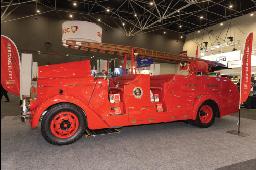
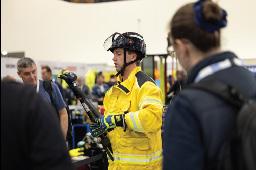
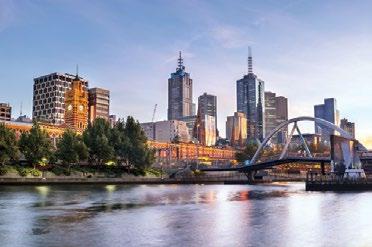
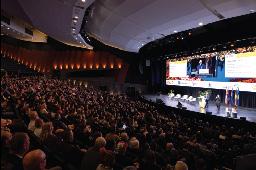

18-21 August 2026 | Melbourne Convention and E xhibition Centre (MCEC)
THEMED | Leading together: Integrity, inclusion and impact
Across 3 days of conference programming and exhibition, AFAC26 will examine how transformational leadership grounded in integrity, equity and inclusion can shape the future of our industry. We will explore and celebrate how diverse voices and inclusive cultures foster innovation, strengthen social licence, and build community trust.
WITHIN | These industry groups, who protect life and property
Encapsulating


BUSHFIRE EMERGING TECHNOLOGIES PROJECT
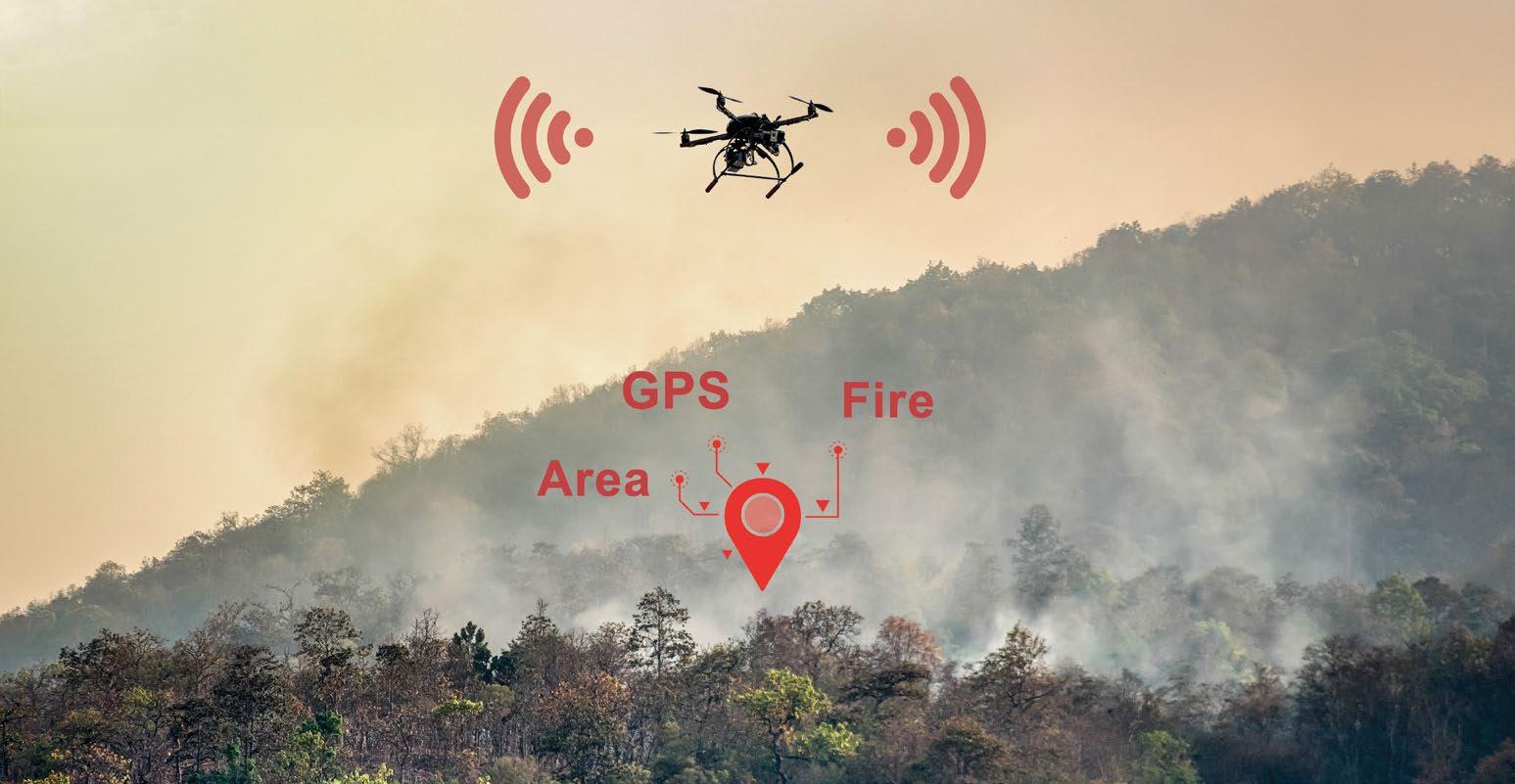
AFAC has become a member of the global AI Collaborative: Wildfires, a strategic initiative by Google.org (the philanthropic arm of Google) bringing together leading not-for-profits, academic institutions, government agencies, and companies to help people and communities better manage fires by using AI.
With support from Google.org, AFAC has established the Bushfire Emerging Technologies Hub Project, with the intention to support member bushfire and land management agencies to improve how Australia detects, tracks, and responds to bushfires.
Major areas of the project involve:
an environmental scan to assess the current state of satellite technologies, aircraft and drones, cameras and sensor detection equipment, and communications and warnings technologies— this will dive into the risks and challenges while identifying pathways for future opportunities
a grant application process for member agencies to fund innovative projects that demonstrate the practical application of technological benefits in real-world scenarios
collaboration and capacity building across agencies to maximise the effectiveness of new technologies and support coordinated bushfire management efforts—this will be facilitated through the new Bushfire Emerging Technologies Hub. Since the grant was awarded, the AFAC project team and member-led Steering Committee have both been established. The Steering Committee is a working group of AFAC’s Rural and Land Management Group and is chaired by NSW Rural Fire Service Deputy Commissioner Peter McKechnie. Other Steering Committee members include James Carter from Forestry Corporation of NSW, Frazer
Wilson from Department of Energy, Environment and Climate Action, Steph Rotarangi from Fire and Emergency New Zealand, Jake Bradley from ACT Environment Significance Opinion, Troy Spinks from Queensland Parks and Wildlife Service, Jackson Parker from Department of Fire and Emergency Services WA, Alen Slijepcevic from Victorian Country Fire Authority, and Sandra Whight from AFAC.
This initiative marks a significant step forward in harnessing the potential of AI and emerging technologies to strengthen bushfire resilience across Australia and New Zealand.
Grant applications for AFAC member participation have now closed. Applicants will be notified by the project team if their submission has been successful.
For more information on the AI Collaborative: Wildfires or the grant submission process, please contact AFAC via our website: www.afac.com.au/contact
PHOTO: SHUTTERSTOCK
AUSTRALASIAN CREWS RETURN HOME AFTER A CHALLENGING CANADIAN WILDFIRE SEASON
AFAC Communications Officer
Australasian firefighters have returned home after being on the ground in Canada since 2 June 2025. Canada experienced more than 3,300 wildfires, burning upwards of 5.58 million hectares, making 2025 one of the most severe wildfire years the country has experienced.
Coordinated through the AFAC National Resource Sharing Centre (NRSC), a total of 352 personnel filling incident management teams, fire ground leadership, and arduous crew roles joined local and international resources across Alberta, Manitoba, and Saskatchewan in battling Canada’s second-worst fire season on record.
For the third year in a row, the AFAC NRSC coordinated the deployment of Australian and New Zealand
emergency management personnel to Canada. An early start to the fire season and significant fire activity in provinces that are not usually prone to large and long-duration landscape fires prompted Canadian agencies to reach out to their international partners through the Canadian Interagency Forest Fire Centre.
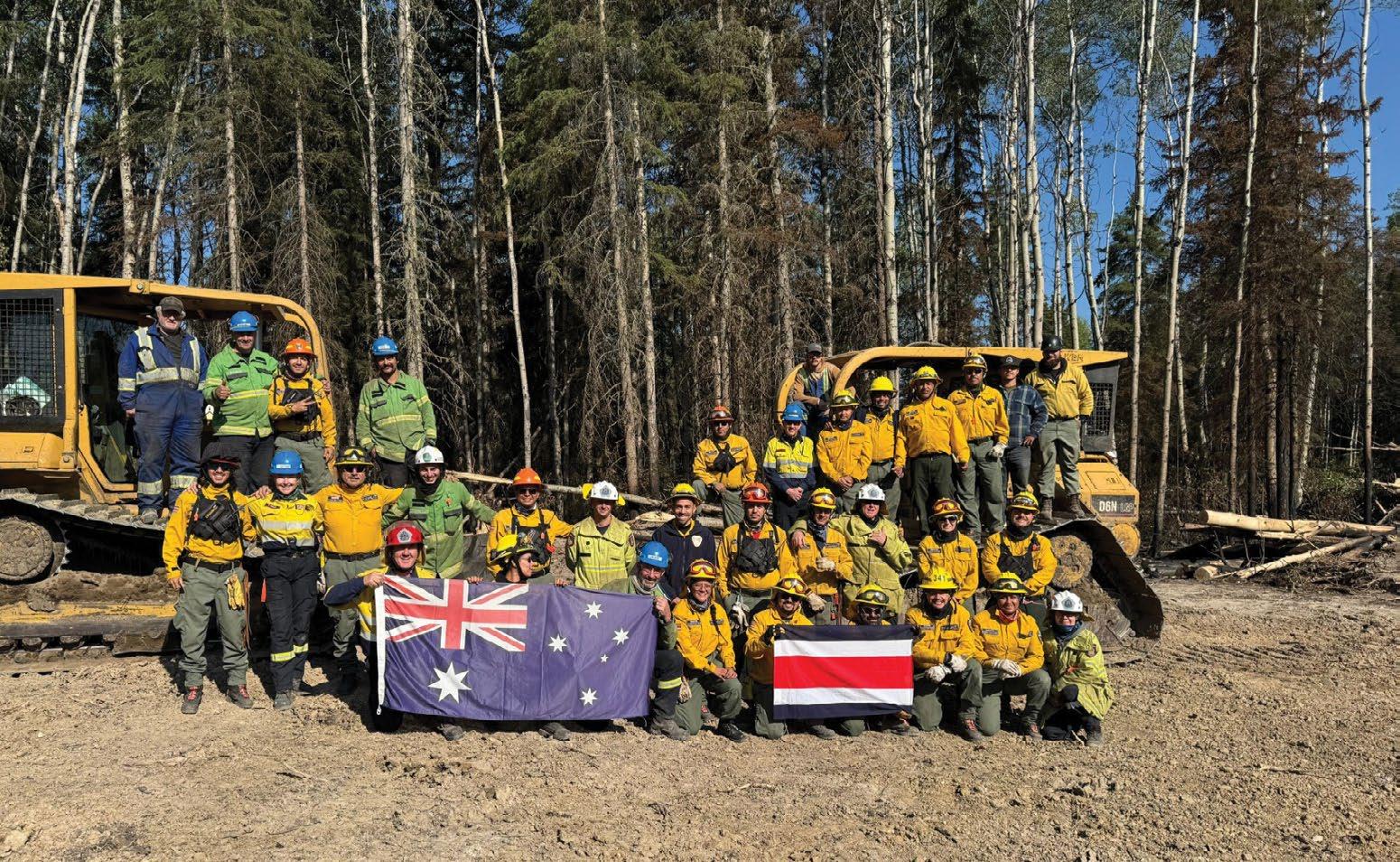
Firefighters from Australia and New Zealand joined their counterparts from the US, Mexico, Brazil, Costa Rica, and Chile, working to protect communities and their livelihoods through the challenging season.
Feedback from crews and teams was that the work was relentless, following the usual deployment peaks and troughs of fire activity as weather fronts move through.
NT Fire and Emergency Services Deputy Chief Fire Officer Stephen Hunter served as the deployment’s International Liaison Officer—Australia
and New Zealand, and said the professionalism and skill from the deployed personnel were exceptional.
“This deployment demonstrates the strength of international partnerships during times of crisis,” Mr Hunter said.
“Our teams were integrated into Canadian operations at all levels, from frontline suppression to strategic coordination. The professionalism, skill, and adaptability of our people has been exceptional.”
AFAC CEO Rob Webb said the event’s focus on knowledge exchange and collaboration was more important than ever.
“We are witnessing increasingly complex disasters across the globe,” Mr Webb said.
“Through shared challenges come shared opportunities and, like never before, global networks can become local networks. It’s vital that we actively seek to connect, share knowledge, and
LISA JAUNALKSNIS
Australian and Costa Rican crews connecting, sharing knowledge, and working together.
PHOTO: NSW RURAL FIRE SERVICE
collectively accelerate along the path towards reducing disaster risk.
“The emergency management sectors across the globe are working as one to meet these challenges for the benefits of lives and livelihoods everywhere.”
There are strong links being made with local communities and other agencies, and members are reporting many growth opportunities.
The last of the deployed teams arrived home on 18 September, which completed 109 consecutive days of deployment management for the AFAC NRSC and Resource Managers Group, the key link to national capacity. The Group works alongside AFAC and agencies to ensure local capacity is maintained while we support our international partners.
AFAC would like to thank all agencies and personnel who assisted in these deployments.

VOLUNTEERS EMBRACE NEW ‘RESPONSE TO ELECTRIC VEHICLE INCIDENTS’ TRAINING PROGRAM
In the two months since its launch, more than 1,000 first responders have completed the Response to Electric Vehicle Incidents—Foundation Training course and have given the course an average rating of 4.6 stars out of 5.
With 99% of participants recommending it to their peers, the free online course is making a significant impact. Notably, 71% of those who have completed the course are in voluntary or on-call roles, and 64% are from rural or remote districts, highlighting the course’s accessibility and wide reach.
Many participants have shared positive feedback about their experience.
“Great to see all fire agencies in the country coming together to form a unified EV response plan with the increasing prevalence of EVs and the associated hazards,” said Bryce from WA.
“Through shared challenges come shared opportunities and, like never before, global networks can become local networks.
It’s vital that we actively seek to connect, share knowledge, and collectively accelerate along the path towards reducing disaster risk.”
Rob Webb, CEO AFAC
David in New Zealand said: “I found this course a brilliant way to raise my level of understanding for my own safety and that of my crew mates.”
Bruce from Queensland shared: “I have recommended this course to my crew. I found the course engaging and easy to complete. I gained knowledge in the subject matter giving me a greater depth and understanding on how to respond to incidents involving EVs.”
Agency chiefs and commissioners are urging all members to take advantage of this critical training. Watch their video here: https://youtu.be/gk_h7YcJIAs?si=qb4yfrKu71hS6k8H
Enrol now at https://ev-training.afac.com.au or through your agency’s learning management system to access the eight modules and a suite of extra resources.
EMMA CONWAY
AFAC Deputy Director Operations, National Capability
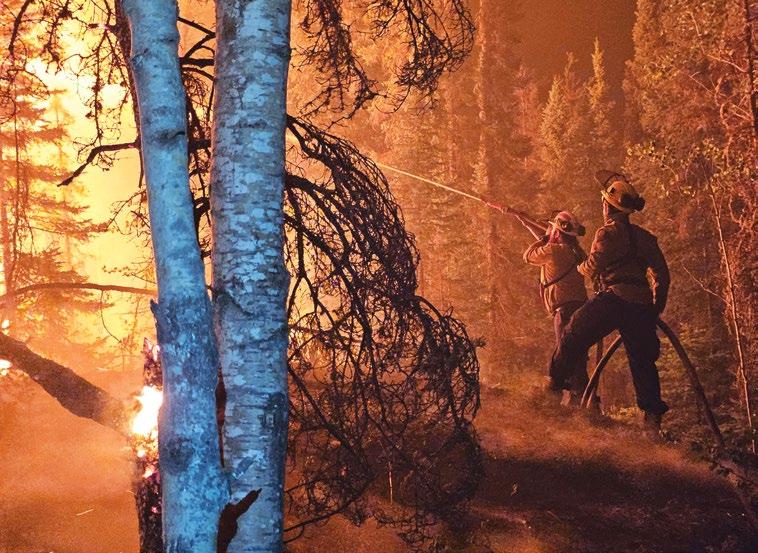
Deployed personnel working throughout the night to try to control a forest fire.
PHOTO: SARAH BLACK
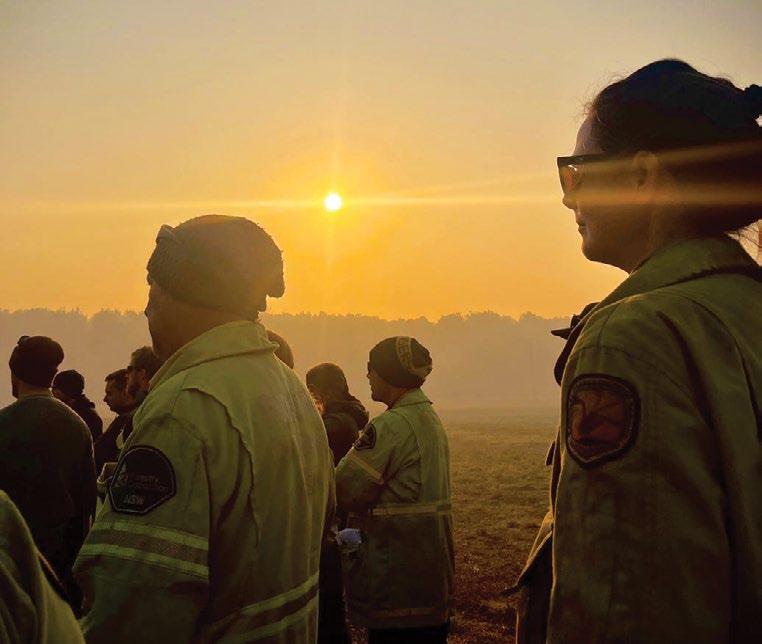
Crews receive their morning briefing in the smoke as the sun rises. PHOTO: STEPHEN HUNTER, NT FIRE AND EMERGENCY SERVICES
YEARLY CONDITION REPORTS VERSUS ANNUAL COMPLIANCE STATEMENTS—WHY WE NEED BOTH
How these two essential documents work hand in hand for effective fire safety management.
KAYLA ROKS-WEBB
FPA Australia State Manager, Victoria, SA and Tasmania
When it comes to fire protection and building safety, two key documents play distinct but complementary roles: the Yearly Condition Report (YCR) and the Annual Compliance Statement (ACS). While each serves a different purpose, they are designed to work together to ensure buildings are not only safe in practice but are also compliant with legal obligations.
The Yearly Condition Report (YCR) is a technical report prepared by a fire protection contractor or technician. It provides evidence that essential safety measures—such as sprinklers, hydrants, alarms, and extinguishers— have been inspected, tested, and are in good working order. The YCR is essentially a professional assessment of the physical condition of a building’s fire safety systems. It answers the question: Are the systems operational and maintained to the required standards?
On the other hand, the Annual Compliance Statement (ACS) is a

formal declaration made by the building owner or responsible person to the relevant authority, such as local council, authority, or the fire service. It confirms that all essential safety measures have been properly maintained and comply with the requirements of the Building Code of Australia and other regulations. Unlike the YCR, which is technical in nature, the ACS is a legal document. It shifts the responsibility squarely to the owner to demonstrate that compliance is being met across the property. Together, these two documents provide a complete picture. The YCR offers detailed technical evidence from qualified professionals, while the ACS demonstrates accountability and compliance at the ownership level. Having both ensures the following:
1. Technical integrity is verified—fire protection contractors provide the expert assurance that systems are functional, tested, and maintained to Australian Standards.
2. Legal obligations are met—building owners cannot rely solely on contractors. By signing an ACS, they accept responsibility for compliance and are held accountable under legislation.
3. Transparency and oversight are strengthened—authorities receive both professional reports and an official declaration, reducing the risk of oversight, mismanagement, or negligence.
4. Public safety is prioritised—ultimately, the dual approach ensures that fire systems are not only maintained in practice but are also recognised as compliant in law, which enhances safety for occupants, visitors, and the broader community. Without this two-step process, gaps could emerge. A contractor may confirm equipment is operational, but if the owner fails to maintain records or demonstrate compliance, the building could still fall short of legal requirements. Conversely, a signed compliance statement without supporting technical evidence would lack credibility and expose owners to liability.
In short, Yearly Condition Reports and Annual Compliance Statements are two sides of the same coin. One provides the professional verification; the other provides the legal assurance. Together, they uphold both the safety and compliance standards our community relies on.
FPA AUSTRALIA EXPANDS ADVOCACY TEAM WITH IRMA BEGANOVIC
FPA Australia welcomes Irma Beganovic as its new National Framework and Policy Manager.
Ms Beganovic will lead member services in Queensland and the Northern Territory while contributing nationally to policy, accreditation, and workforce initiatives in the fire protection sector. She brings extensive government and industry advocacy experience, including as Director of Government Relations for a peak construction body, and senior executive roles in the Queensland Government advising ministers on building, construction, energy, and procurement.
Ms Beganovic has also held appointments with the Electrical Safety Board and National Construction Industry Forum.
Her arrival reflects FPA Australia’s commitment to advocacy, collaboration, and community safety.
NSW PLANNING REFORM 2025— CHANCE TO GET BUSHFIRE SAFETY RIGHT
Proposed planning changes in NSW could be a turning point for bushfire safety, if done right.
DR MARIA KORNAKOVA
FPA Australia National Bushfire Manager
Disclaimer: This is an opinion piece. At the time of writing the NSW Government had only just published its proposed Bill to reform the Environmental Planning and Assessment Act 1979 (EP&A Act) and planning system. The details of how these reforms will be implemented have not yet been released and this article is an industry reflection of the proposed changes.
NSW’s planning reform is an opportunity to finally mandate accredited bushfire practitioners in development approvals and bring clarity, consistency, and confidence to the process.
The NSW Government’s proposed reforms to the Environmental Planning and Assessment Act 1979 (EP&A Act) framework represent one of the most significant changes to the planning system in decades. Their stated aim to streamline development applications, reduce red tape, and improve housing affordability deserves recognition. We welcome this intent.
However, ambition alone does not guarantee success, and the crucial test will be how these reforms are designed and delivered. Proposed reforms are critical across a number of state agencies, including bushfire planning, and the stakes could not be higher with community safety on the line.
Bushfire is not a hypothetical risk in Australia but a lived reality, with the
most recent, unprecedented Black Summer fire season of 2019–20 revealing a number of deficiencies in the NSW planning system.
A Government inquiry post-event led to a number of interventions to the planning system, including changes required to both administrative processes and technical documents, for example, Planning for Bush Fire Protection (PBP). However, it also reminded us that planning systems alone do not fully account for exposure of the community to unacceptable risks. Rather, the system requires a multidisciplinary approach to reduce risks and requires the involvement of a number of stakeholders.
Bushfire Planning and Design (BPAD) accredited practitioners exist for this reason. They undergo rigorous training and accreditation to ensure that risk is not only identified but managed with practical, evidencebased solutions. They understand how fire behaves, how risk can be reduced using site-specific features, and how to design developments that are safer without sacrificing liveability. But unlike other professions whose expertise is automatically recognised in the development approval process, for example, environmental consultants, heritage experts, and engineers, BPAD professionals are not consistently mandated. This leaves room for inconsistency, disputes, and, in some cases, decisions made without the right technical foundation.
Reform is the chance to fix this. Mandating the use of accredited bushfire practitioners would:
lift consistency—every bushfire assessment would be held to the same professional standard, removing ambiguity
save time—clear requirements would reduce potential disputes, limit back and forth between applicants and
authorities, and help streamline approvals
build trust—communities could gain confidence that safety has been assessed by experts rather than left open to interpretation
support housing goals—safe, resilient homes are the foundation of affordability. A house is not truly affordable if it is unsafe or at risk of destruction.
The logic is simple. If the system already insists on qualified ecologists for environmental studies or accredited engineers for structural design, then bushfire safety should demand the same level of assurance. If reforms accelerate approvals without embedding bushfire expertise, we risk creating housing supply that is cheaper and faster on paper, but costlier and more dangerous in reality. Communities will ultimately pay the price through higher insurance costs, increased rebuilding after disasters, and reduced confidence in the planning system.
The Government deserves credit for its courage in taking on reform of this scale. It is not easy to modernise entrenched systems. But now is the moment to ensure that bushfire resilience is not sidelined in the pursuit of speed.
We will be advocating strongly for the role of BPAD practitioners to be hardwired into the reformed system. This is not about slowing development but about making sure reforms deliver on their promise: a faster, clearer process that also keeps communities safe.
Done well, these reforms can achieve the best of both worlds—more affordable homes, delivered more efficiently, and built to stand strong in the face of bushfire risk. That is the success story communities expect, and it is the benchmark against which these reforms should be judged.
PHOTO: UNSPLASH
WS51W AND WS52W Classification System: What is the difference?
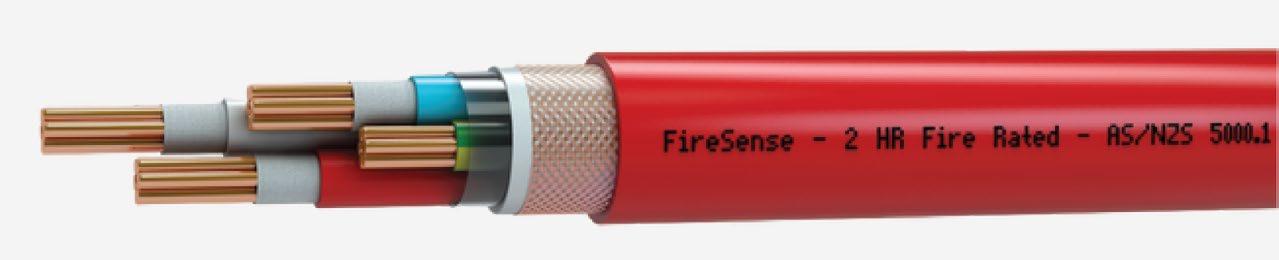
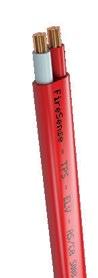
AS 1670.1 clause 3.26 and AS 1670.1 Appendix B call for cables with increased fire and mechanical protection. In this article, we explain the differences in cable classifications.
By ROBERT KASLIK FireSense Managing Director
AS/NZS 3013 covers the fire and mechanical performance of wiring system elements for electrical installations. Within this standard, it summarises the classification system that was established to define the performance of a wiring system. This means that all elements of a cabling system have been tested and have passed the tests defined in this standard. These tests ensure that a cabling system can and will maintain circuit integrity under fire conditions for a specified time period and from mechanical impacts during non-fire conditions.
These tests classify each element with a three-part rating, ‘WSxxx’, e.g. WS51W or WS52W measuring:
• Fire Resistance
• Impact Resistance
• Water Spray Resistance.
5 Fire Resistance
The fire resistance test subjects cables to intense heat and flame conditions designed to simulate real fire scenarios. The cables must maintain circuit integrity, meaning they continue to function without failure while exposed to fire for a specified duration. This ensures that essential services relying on these cables remain operational during emergencies, providing critical safety and reliability.
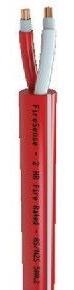
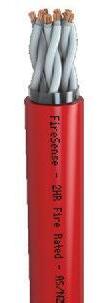
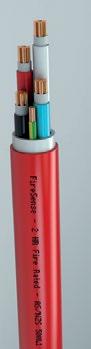
All FireSense Fire Rated series cables provide a two-hour (120-minute) fire resistance rating of WS51W or WS52W.
Cables failing to achieve a two-hour fire rating should not be used where fire-rated cables are required.
Degree of protection indicated by the first characteristic numeral (protection against fire conditions)
SOURCE: AS/NZS 3013
2 Impact Resistance
This represents the degree of mechanical impact and cutting force that a cable can be subjected to without failure when operating at maximum allowable continuous operating temperature (i.e. 110°C).
This rating specifically tests the strength of the protective outer sheath and the quality of the cable’s construction and materials. Generally:
• FR cables with conductors <1.50mm or TPS cable will only have a Level 1 Protection (Light).
• FR cables with conductors >=1.50mm should have at least a Level 2 Protection (Moderate).
Most mechanical services standards will require a cable with WS52W as a minimum. This represents 6x improvement in impact strength and 3x improvement in cutting strength over a WS51W cable.
WS51W cables CANNOT be used in applications where WS52W is required.
Note: A WSX1 TPS cable has light impact resistance and no fire resistance.
Degree of protection indicated by the second characteristic numeral (protection
damage)
SOURCE: AS/NZS
W Water Spray
Once the cable has been tested in the fire test for 120 minutes, the cable is then subjected to water spray to simulate a sprinkler in a true condition. The mica tape insulation must not break down during a water spray of 12.5L/min for 180 seconds. All FireSense Fire Rated series cables have been awarded a W rating.
FireSense are the Fire Rated cable specialists and our cables have been designed and manufactured by experts ensuring they meet the needs of the fire, electrical and mechanical industries.
FireSense cables have all relevant certifications and approvals, are independently certified, environmentally friendly meeting Green Building Council of Australia guidelines, and are the only full range of ActivFire certified fire cables in Australia. www.firesense.com.au
Scan to view the FireSense cable range

SOURCE: AS/NZS
HARDENING YOUR HOME FOR BUSHFIRE
FPA Australia’s webinars stressed that bushfire protection starts at home, focusing on the critical Home Ignition Zone.
JASON MCFADYEN
FPA Australia Bushfire Technical Officer
In September, as part of National Fire Protection Month, FPA Australia worked closely with Bushfire Resilience Inc to deliver two community engagement webinars on the topic of ‘Hardening your home for bushfire’. The message of these sessions was clear: focus on the space that matters most—the Home Ignition Zone.
US researcher Jack Cohen and Australian CSIRO researcher Justin Leonard shared their expertise in the webinars. The following article summarises some of their insights.
Zone Zero
When you see images of rows of destroyed houses after a bushfire, it’s natural to assume that huge flames swept through and nothing could stop them. But research tells a different story. In most cases, homes ignite not because of a rolling wall of flame but because of embers, small surface fires, or neighbouring houses burning hours after the fire front has passed. That distinction matters. It means the real problem is not just the forest, scrub, or paddock beyond the fence. It’s the homes themselves and what immediately surrounds them.
“Wildland urban fire is a structure ignition problem, not a wildfire control problem, which of course during extreme conditions can’t be controlled,”

Mr Cohen said. “It’s not about stopping the firestorm in the bush, it’s about stopping homes from igniting when the embers arrive.”
In Australia, the concepts of defendable space and asset protection zones have long been central to bushfire management. They are used in planning and regulation to define areas where fuel is reduced to lower risk and enable safer firefighter access. They remain important in regulation, but to households, the lack of national consistency means the terms can lose meaning. We’ve also repeated the call to “prepare your property”, but that feels like it needs to be reframed in a changing climate with increasing risk.
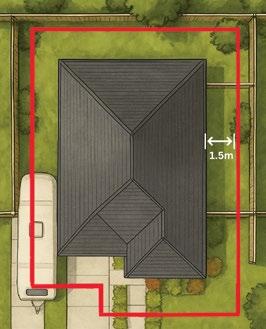
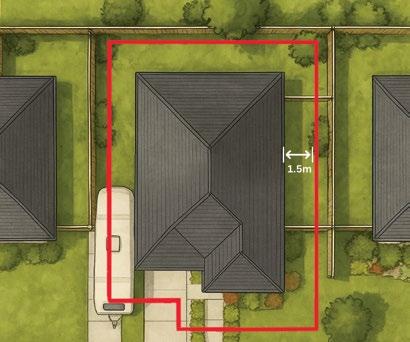
This is where the Home Ignition Zone and Zone Zero come in, the critical space within 30 metres of a house that decides whether or not it burns. And the closest metre and a half, Zone Zero, is where any combustible items can tip the balance.
Mr Leonard explained how closely this matches our own experience.
“Roughly a third of our asset losses across Australia in big bushfires are attributed to the fire spreading within the urban environment; houses igniting each other,” he said.
“It is really about that combination of high winds, dry conditions, and ignition sources lining up.
“That metre and a half out from the structure is really the ultimate critical zone. It begins that journey of working out where the landscaping is

going to work with your house and its immediate vulnerabilities.”
The challenge for many households is knowing where to start. The long lists of things to do can feel overwhelming, so it’s easy to do nothing. Zone Zero simplifies things to anything combustible in the first metre and a half is a direct threat. Common items like plants, doormats, outdoor furniture, or timber fences all present a potential ignition source and must go from Zone Zero.
Mr Leonard gave a real example of a new home built to regulation with masonry cladding and toughened glass windows: “A simple garden bed of pine bark 1m wide was enough to melt blinds through a toughened glass window in a new house built to regulation. That is why being ruthless about Zone Zero is absolutely critical.”
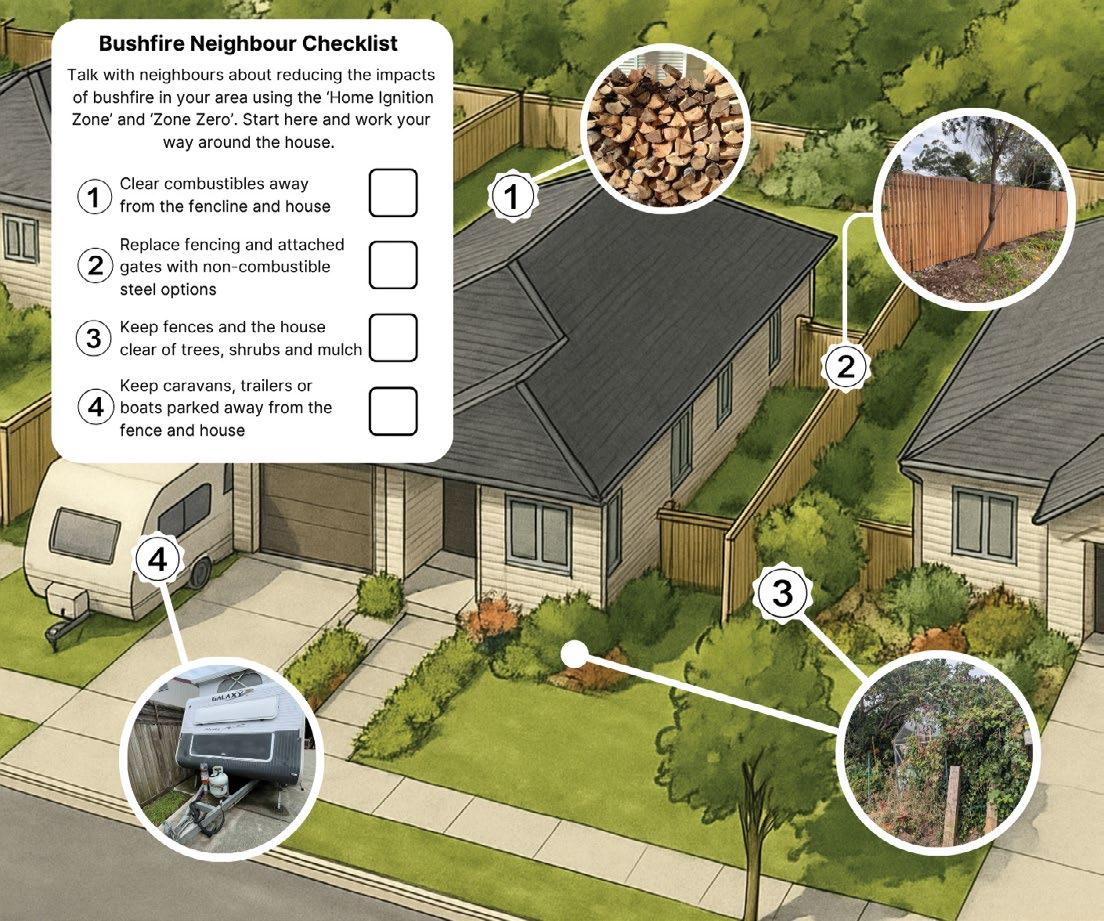
But the story doesn’t stop at the fence line. A house is only as safe as its neighbour’s. If one home catches alight, flame, radiant heat, and embers can take the next. In suburbs and country towns, this chain reaction can continue until the fire runs out of houses. If neighbours tackle home hardening, fences, sheds, parked vehicles, rubbish piles, and garden clutter together they reduce the shared risk of burning each other down. Neighbourhood engagement is often difficult but framing it this way provides a constructive pathway forward as a community, not individuals.
Mr Leonard highlighted that bushfire resilience is also a generational one.
SOURCE:
Left: The metre and a half out from the structure is the critical zone where combustible items can ignite.
“If we can make our houses resistant to each other, the mutual risk of burning each other down is dramatically reduced,” he said.
“And if you sell your house, pass that knowledge on to the next owner so the cycle of risk reduction continues.”
Extending the Home Ignition Zone
The experts said that the first step in any approach is a well-practised bushfire emergency plan. Hardening the home only works if households know how bushfires behave, how to monitor conditions, when to leave or how to defend, and how to make difficult decisions under pressure. Planning must be tested well before summer so it becomes second nature.
Beyond the plan, house survival doesn’t come down to a single measure and, in some cases, the extreme risk means hardening alone may not be enough. Retrofitting can become a major undertaking, including sealing ember entry points, upgrading glazing, redesigning roofs, addressing the subfloor and exposed timber, and managing vegetation. The investment can be significant, and still may not overcome the broader risk, making it necessary to also consider the wider property.
In the US, the Home Ignition Zone is described in three layers. Zone Zero, or the Immediate Zone, covers that crucial metre and a half around the house, including from any decking. The Intermediate Zone extends to about 10 metres, where spacing and

“If we can
make our houses resistant to each other, the mutual risk of burning each other down is dramatically reduced”
CSIRO researcher, Justin Leonard
SOURCE: FPA AUSTRALIA
vegetation management are key, and beyond that is the Extended Zone, from 10 to 30 metres, which focuses on reducing fire intensity as it approaches.
In Australia, defendable space and asset protection zones recognise similar inner and outer areas of risk, but as Max Garner from Bushfire Resilience Inc has observed, that language itself can be misleading.
‘Defendable’ suggests that a property can be safely defended, and ‘asset protection’ implies a guarantee of protection. In reality, neither is assured. The strength of the Home Ignition Zone is that it goes straight to the point: ignition. If a house has ignition points from flammable materials or vulnerabilities within the zone, once they ignite the house is lost.
The task is to prevent ignition in the first place, and it makes clear that the solution is not somewhere out in the forest. It’s right at the doorstep. And it also adds a wake-up call, putting responsibility back to the homeowner.
When things go wrong, communities often blame the lack of warnings, tankers, or fuel reduction and, while these can play a role, the expectation that agencies alone can prevent house loss is misplaced. The primary responsibility sits with homeowners to reduce their immediate ignition vulnerabilities.
Extreme bushfires will keep happening and that’s beyond our control. But whether a street is left standing often comes down to decisions made well in advance and applying Home Ignition Zone and Zone Zero principles.
When households and neighbours harden their homes, eliminate ignition points, and act collectively, the story starts to change. It not only builds confidence for residents to leave safely but also strengthens the case for insurers to recognise and reward ongoing risk reduction.
Above: A bushfire neighbour checklist.
CSIRO researcher Justin Leonard and Malcolm Hackett from Bushfire Resilience Inc during the ‘Hardening your home for bushfire’ webinar in September. PHOTO: CSIRO
BE THE CHANGE: SHAPING THE FIRE INDUSTRY
FPA Australia’s technical committee members are passionate about the future of the fire protection industry. In this article they share the value they have found as a TAC and/or SIG member.
FPA AUSTRALIA TECHNICAL TEAM
FPA Australia’s technical committees offer a unique platform for communication, collaboration, and influence within the fire protection industry. Through Technical Advisory Committees (TACs) and Special Interest Groups (SIGs), these committees help shape the sector and drive FPA Australia’s contributions.
A voice that shapes the industry
The technical committees consist of a broad range of knowledgeable people who share the common goal of improving their areas of the industry.
For example, Ivan Steed joined “to contribute to shaping the future of the industry, playing an active role in influencing standards, policies, and best practices that guide its development”, and Juan Castro joined “to contribute meaningfully to the industry and its practices”.
The committees provide an opportunity to share your perspective and influence the direction of your sector. “I wanted to stay up to date with the latest policies and technical advances in the bushfire planning and safety space,” Paola Rickard said.
Growth, connection, and shared learning
Technical committees provide opportunities to learn from industry experts and create lasting connections across the broader industry.
“Round-the-table discussions enable one to review current applications, share new ideas, and cultivate personal growth. It also allows for the sharing of thoughts and ideas with people from the private and public sectors,”
Norm Winn said.
Growing knowledge has been one of the greatest assets to many members. “The most valuable part for me is developing knowledge, which helps me make better day-today decisions, as well as helping me to inform the people I work with on deeply technical matters,”
Martin Stirling said.
Along with sharing knowledge, members have also enjoyed the chance to broaden their connections across the fire protection industry.
“From a networking perspective, being a member of a TAC has been a very beneficial outcome, but also looking at other areas of the fire industry that I would not normally look at,”
John Lynch said.

Take your seat at the table
Joining a technical committee allows you to connect with knowledgeable and motivated people who are striving to improve the world of fire protection. “I’d highly recommend getting involved in a TAC or SIG. It’s a great way to stay at the forefront of industry developments, contribute to shaping standards, and build valuable networks. While it requires a time commitment, the professional and personal rewards make it well worth it,”
Antonio Serianni said.
“The shared learning and diverse experiences that the committee brings together are incredibly valuable, not just from a technical standpoint, but also in understanding how others approach challenges, interpret standards, and prioritise outcomes,” Ramees Abdul Rahim said. “It’s a true opportunity to grow while making a meaningful contribution.”
The technical committees present an opportunity not only for professional growth and connection, but also to take an active role in the direction of the fire protection sector.
“If you’re someone who wants to stop feeling like you’re just reacting to ever-shifting compliance requirements, and instead want to be part of shaping how the industry interprets and implements those requirements, then this is where you belong,” Michael Slatter said. “The TACs and SIGs provide the structure, the forum, and the collective horsepower to make a difference.”
Now is the time to step up. Become a TAC or SIG member and help drive the future of fire protection in Australia.
For more information visit: fpaa.com.au/Web/Web/Technical_ Advice/Committees.aspx
Joining a technical committee allows you to connect with knowledgeable and motivated people who are striving to improve the world of fire protection.
PHOTO: SHUTTERSTOCK
SUMMER READING LIST 2025
COLLIE
FPA Australia CEO
As the summer approaches, many of us look forward to a well-deserved break; a chance to recharge, reflect, and perhaps delve into some insightful reading. To aid in this, I’ve curated a selection of 15 titles that span technical references, global perspectives, leadership insights, and narratives that underscore the importance of our work in fire protection.
Fire protection and practice
1. Fire Protection Handbook (NFPA, 21st edition)
A comprehensive resource covering the latest in fire protection, including updates on lithium-ion battery hazards and wildland–urban interface (WUI) risks.
2. AS 1851 Companion Guide: Practical Advice on Routine Service (FPA Australia)
A practical guide to implementing AS 1851-2012 so fire protection systems are properly maintained and reliable when needed in an emergency.
3. NSW Fire Safety Industry Reference Group - Good practice guide (Building Commission NSW)

4. SFPE Engineering Guide to Performance-Based Fire Protection (2nd edition)
An essential reference for those involved in performance-based design, blending risk analysis with regulatory compliance.
4. Fire Safety Journal (Elsevier, latest issues)
Stay abreast of cutting-edge research
on fire dynamics, material behaviours, and fire safety engineering through this peer-reviewed journal.
Global trends and hazards
5. Global Assessment Report 2025: Resilience Pays (UNDRR)
The UN’s biennial report offering insights into disaster risk reduction and resilience investment strategies.
6. Wildland Fire Embers and Flames: Home Mitigations That Matter (IBHS, 2023)
A detailed guide by the Insurance Institute for Business & Home Safety (IBHS) focusing on home vulnerabilities to embers and flames, providing actionable mitigation strategies.
7. Firefighting Operations in High-Rise and Standpipe-Equipped Buildings (David McGrail)
An in-depth look into the operational challenges and strategies for firefighting in high-rise structures, offering valuable insights for designers and assessors.
Leadership, systems and perspective
8. The Fifth Discipline (Peter Senge)
A seminal work on systems thinking, essential for leaders aiming to foster learning organisations.
9. Range: Why Generalists Triumph in a Specialized World (David Epstein)
Explores the value of broad knowledge and adaptability in complex fields, relevant to the multifaceted nature of fire protection.
10. The Ministry for the Future (Kim Stanley Robinson)
A speculative yet research-based novel that delves into climate policy and resilience, prompting reflection on future challenges.
11. The Obstacle is the Way (Ryan Holiday)
A modern interpretation of Stoic philosophy, offering strategies to navigate challenges and drive progress.
Australian relevance
12. Black Summer: Stories of loss, courage and community (ABC Books)
A poignant collection of firsthand accounts from the 2019–20 bushfires, highlighting the human impact of fire events.
13. Fire Country (Victor Steffensen)
Insights into Indigenous fire management practices, advocating for the integration of traditional knowledge in modern fire mitigation.
14. Community Recovery Handbook 2 (AIDR)
Guidance on community-led recovery post-disaster, emphasising the importance of resilience and local engagement.
15. Annual Progress Report 2023–24 (Natural Hazards Research Australia)
Dive into this incredible catalogue of journal articles and reports from our friends at Natural Hazards Research Australia (NHRA).

16. Inferno! And the Miracles of the Colorado Marshall Fire (Tom Gormley)
Gormley’s coverage takes a multifaceted approach, outlining the area’s history, the fire’s causes, the response efforts, evacuation routes and personal accounts from victims and firefighters.
17. ‘Hazard Note 1: Understanding the Black Summer bushfires through research’. (Report by Natural Hazards Research Australia)
This Hazard Note summarises key findings from the Black Summer bushfires research program, conducted by Natural Hazards Research Australia and the Bushfire and Natural Hazards CRC following the 2019–20 season.

Final thoughts
This curated list aims to provide valuable insights and perspectives to professionals in the fire protection industry. Whether you’re seeking technical knowledge, strategic frameworks, or narratives that underscore the significance of our work, these titles offer a wealth of information to inform and inspire.
JOHN
FROM LOCAL INSIGHTS TO GLOBAL IMPACT
TOULA ELEFSINIOTIS
AFAC Communications Manager
AFAC25 Conference and Exhibition powered by INTERSCHUTZ, Australasia’s largest emergency management conference and exhibition, returned to Perth for the first time in seven years with recordbreaking energy and a renewed focus on resilience, innovation, and collaboration.
From 26 to 29 August, more than 4,400 emergency management professionals, industry leaders, and innovators from across Australia, New Zealand, and the globe gathered at the Perth Convention and Exhibition Centre to discuss new sector developments, share insights, showcase technology, and build connections.
AFAC25 offered increased connectivity to Asia and Europe thanks to its strategic location in Perth, allowing international agency representatives to attend the conference and strengthening several of our international partnerships.

Working together to find solutions
This year’s theme, ‘From local to global: leveraging systems, capability and connection’, led conversations that explored how local and international learnings can shape stronger, more responsive systems to help prevent, manage, and recover from emergencies.
It also highlighted the reality that emergency events are no longer contained by international borders, and neither are their solutions. Through our international colleagues, presenters, and attendees, we gained valuable insights into global trends and solutions in the emergency management industry.
With a focus on critical infrastructure, resilience, and disaster recovery, AFAC25 supported professionals dedicated to safeguarding essential services and rebuilding communities.
The conference featured more than 200 speakers across eight streams, including the Australian Disaster Resilience Conference, the Institution of Fire Engineers (Australia) National Conference, and the Women and Firefighting Australasia (WAFA) Conference. Delegates explored cutting-edge topics, from spatial technology and electric vehicle safety to gender diversity in leadership and systemic thinking for disaster resilience.
Informative and insightful
AFAC25 had a strong start with Research and Innovation Day setting the tone for an informative and insightful week of presentations. The program explored current and pressing topics like workforce health, research utilisation, and data and the future. It also featured the innovation stream that included Pitchfest sessions and an introduction to the inaugural AFAC Hackathon Challenge.
As the AFAC25 program commenced, the standout line-up of keynote speakers continued, offering critical perspectives on disaster resilience, risk reduction, recovery, planning, and communication.
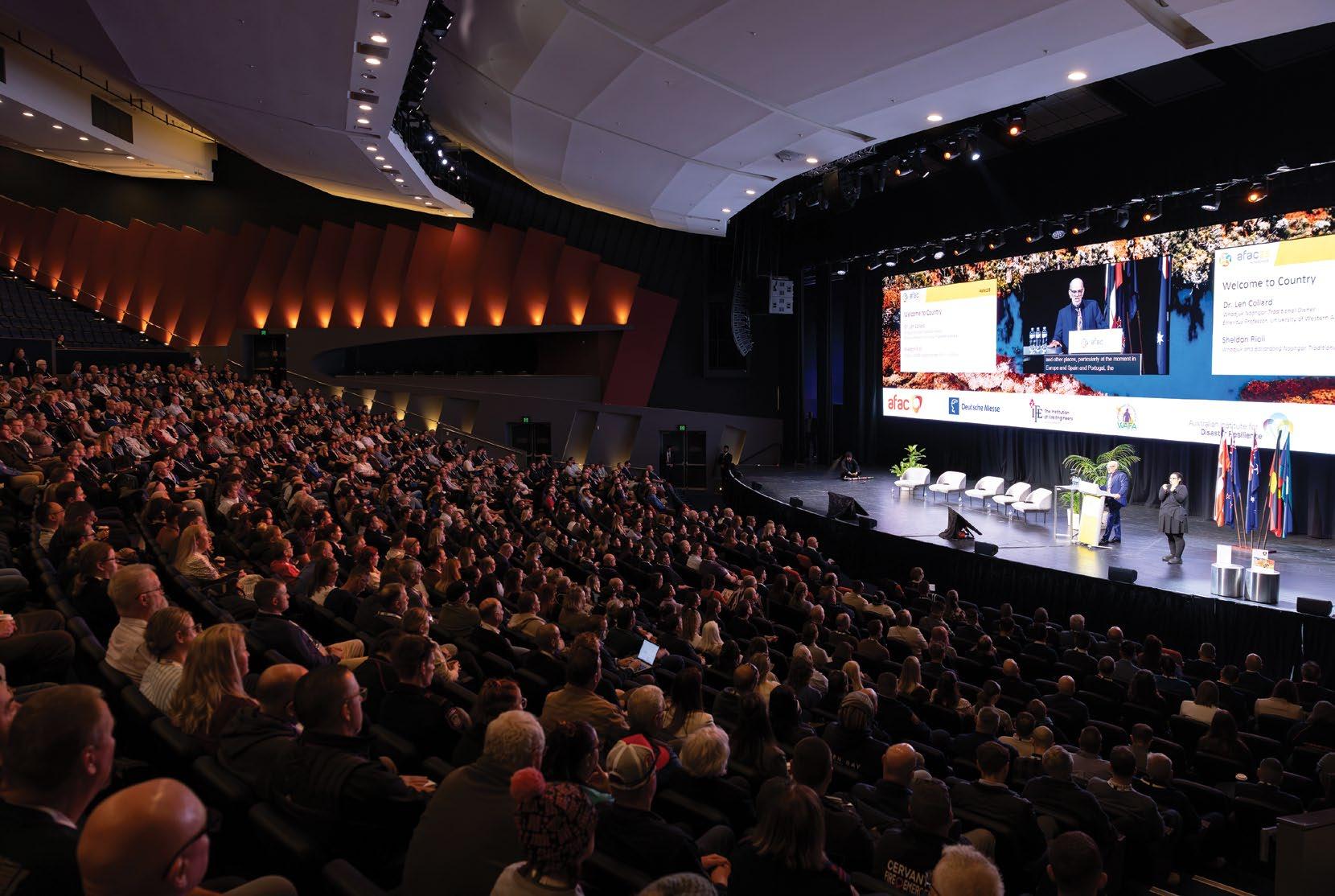
Ingrid Ngoorlak Cumming, Honorary Fellow from Murdoch University, opened
Day 1 of the conference with her keynote presentation ‘Walking together— Leadership, legacy, and reconciliation’, followed by keynote speaker Mami Mizutori, former Special Representative of the UN Secretary-General for Disaster Risk Reduction, Head of the UN Office for Disaster Risk Reduction, and Specially Appointed Professor at Tohoku University. Ms Mizutori presented ‘We can do a better job to stay safe and alive’, captivating delegates with her extensive sector expertise.
Day 2 of the AFAC25 program began with keynote speaker Mark Hardingham CBE QFSM, former Chair of the UK National Fire Chiefs Council, as he delved into the learnings from the public inquiry on the Grenfell Tower fire. Mr Hardingham’s presentation highlighted the importance of safety standards not only in the emergency services, but for the construction and housing industries as well. His keynote address was followed by the keynote panel ‘Local to global: How are we capitalising on connections and collaboration to build a safe future together?’ featuring AFAC’s very own Sandra Whight, Executive Director of National Capability; Chief Ernest Malone from Indianapolis Fire Department and the Metropolitan Fire Chiefs Association; Melissa Pexton, Deputy Commissioner Strategy and Emergency Management at the Department of Fire and Emergency Services, WA; and Commissioner Eric Yap from Singapore Civil Defence Force.
As the program came to a close, delegates were treated to a closing keynote address by Leigh Sales AM, author and journalist. Ms Sales’s presentation, ‘Any ordinary day: Blindsides, resilience, and what happens after the worst day of your life’, reminded delegates of the personal and emotional hardships that are closely tied with natural hazards and disasters.
In addition to the conference’s exceptional keynote presentations, the AFAC25 program featured speakers from global institutions, academia, research, and media, including industry leaders from around the world— Hong Kong, Singapore, Samoa, UK, US, and more, reinforcing AFAC’s
Below:
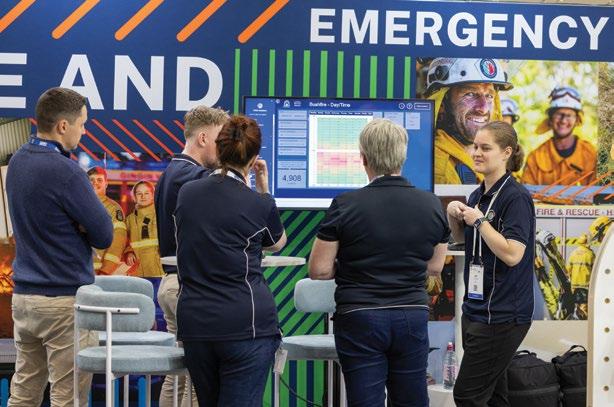
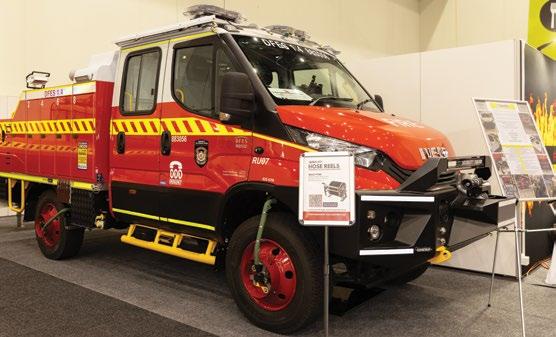
The AFAC25 Exhibition filled all six halls at the Perth Convention and Exhibition Centre.
Fire Australia on display at the AFAC stall.
PHOTOS: AFAC
place in the international emergency management sector.
Bumper offering at exhibition
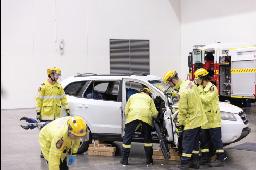
Alongside the conference offerings, the AFAC25 Exhibition filled all six halls at the Perth Convention and Exhibition Centre, representing a 40% increase since last time the event was held in Perth in 2018. Of the 228 exhibitors, 52 were first-time participants and 32 came from overseas. Some key features of this year’s exhibition included the Demonstration Zone, Resource Rescue Theatre, Solutions Theatre, and the Australian Institute for Disaster Resilience (AIDR) Knowledge Centre, which once again featured the popular poster display.
Year after year, the AFAC Exhibition provides a rare insight into just how broad the emergency management sector is, through live techniques and best practice, thought-provoking presentations, and new and emerging technologies.
Networking flourished at the Gala Dinner which was themed ‘From outback to ocean’, celebrating WA’s unique landscape and cultural richness.
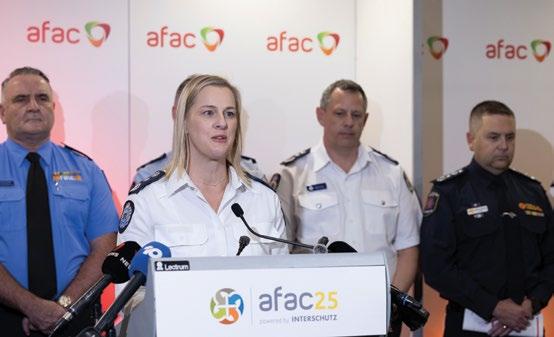
The AFAC Seasonal Bushfire Outlook Spring 2025 was launched at the exhibition, with state and territory fire and emergency leaders coming
together for a live press conference to provide insights and preparedness information for the fire season ahead. With increased risk of fire identified for multiple locations, the message remained one of caution.
AIDR hosted the eighth Australian Disaster Resilience Conference 2025, bringing together a diverse and passionate crowd from a range of sectors to share knowledge and build connections for a more resilient Australia. This year’s conference featured 21 Resilience Lane exhibitors, more than 70 speakers, and more than 300 delegates.
Advancing the national discussion
The AFAC25 Conference and Exhibition, supported by targeted media campaigns, significantly advanced national discussion on bushfire preparedness and emergency response. The campaign generated 513 media pieces, reaching 8.9 million people, and received 140 social media mentions, engaging WA and national audiences with sector-specific stories in aviation, environment, Indigenous affairs, and technology.
The conference and exhibition wouldn’t have been possible without our host agencies for this year’s event,
the Department of Fire and Emergency Services, WA, and the Department of Biodiversity, Conservation and Attractions. AFAC acknowledges their invaluable assistance, helping showcase WA’s strengths and capabilities. We also thank the volunteers from these organisations who were on hand at the venue to assist our conference operations.
AFAC25 reaffirmed its role as a catalyst for sector-wide transformation. As the curtains close, the conversations sparked will continue to shape the future of emergency management across Australasia and beyond.
On behalf of AFAC, Deutsche Messe, the Institution of Fire Engineers (Australia), WAFA, and AIDR, thank you to all our exhibitors, sponsors, speakers, partners, and attendees for making AFAC25 such an outstanding success.
AFAC looks forward to welcoming you to AFAC26 in Melbourne from 18 to 21 August at the Melbourne Convention and Exhibition Centre.
The AFAC25 Conference proceedings are now available to explore via www.afac.com.au/afac-conference
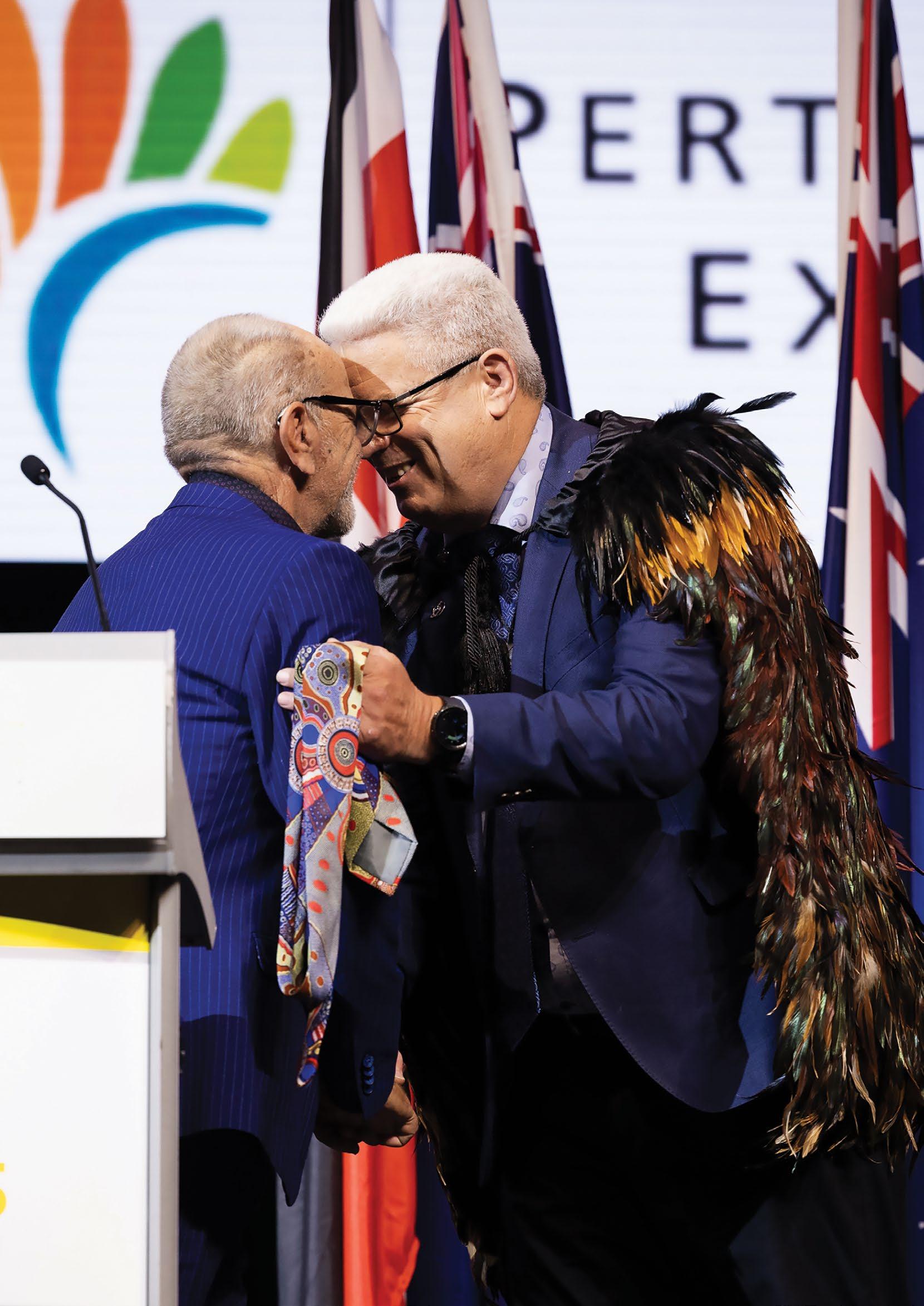
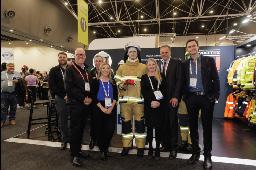
Day 1 opening of AFAC25. PHOTO:AFAC
Inset above left: Day 1 in the Exhibition Hall.
Inset above right: AFAC Seasonal Bushfire Outlook Spring 2025 was launched at the AFAC25 Exhibition.
PHOTOS: AFAC
BEYOND TICK BOXES: OWNING YOUR BUILDING’S FIRE SAFETY
A recent FPA Australia webinar featuring industry experts explored how true fire safety requires proactive leadership, teamwork, and a commitment beyond compliance.
SIMON RICKARD
FPA Australia National Technical Manager
Ensuring fire safety in buildings requires proactiveness, consistency, and teamwork. It is more than a regulatory checkbox; it is about protecting lives, preserving property, and maintaining trust. For owners, responsibility extends beyond minimum obligations or compliance paperwork. True ownership requires leadership, foresight, and a commitment to keeping fire protection systems in a state of constant readiness.
As part of FPA Australia’s National Fire Protection Month, the webinar ‘Owning your building’s fire safety’ brought together industry experts Matthew Harrison, Director and Senior Facilities Manager at CBRE Property Management, and Ben Heazlewood, Operations Manager of the QV Melbourne precinct at Dexus. They shared insights on the cultural and operational responsibilities that drive their fire safety outcomes.
Setting the standard
The strongest contribution an owner can make is cultural. Leadership in fire safety means actively setting expectations, modelling behaviours, and fostering an environment where safety is a clear priority. This leadership extends beyond attitudes—it requires planning for routine and long-term servicing, resourcing remedial works, and remaining engaged with reports to ensure that obligations are met and safety outcomes achieved. A strong culture ensures issues are reported, remedial works are promptly addressed, and that everyone— occupants, tenants, and contractors— shares responsibility.
“It’s about having a good relationship, good partnership, honesty, and truth,” Mr Harrison explained.
“This builds trust and reframes
compliance as an essential part of keeping people safe, supported by a consistent commitment to act on reports and invest in necessary works.”
When owners lead with this mindset, compliance shifts from obligation to confidence. Occupants feel protected, service providers become trusted partners, and the shared goal of safeguarding lives and property is upheld. By embedding culture with practical engagement—planning, resourcing, and acting—owners not only meet obligations, they also strengthen protection for people, property, and reputations.
Reliable routine
That goal is anchored in servicing standards. Across Australia (except NSW, where it becomes mandated February 2026), owners must maintain fire safety measures under Australian Standards: AS 1851-2012 for fire protection systems and AS 2293.2 for emergency lighting.
“It’s inexcusable to not be compliant, and the contractor is an extension of us,” Mr Harrison reinforced. “Even though there are sometimes difficult conversations, having safe buildings is what is important.”
Fires do not wait for budgets or maintenance windows. Readiness must be constant, led by owners.
Safety synergy
Owners must support service providers. Technicians need access to systems, equipment, and design records, along with open communication with occupants.
As Mr Heazlewood noted: “It’s about the relationship and communication, making sure the service providers feel supported.”
Owners must also act on inspection findings. AS 1851 requires critical defects be rectified immediately, with non- critical ones addressed promptly. Each unresolved issue erodes reliability.
“It’s about having the right information, listening, and having the confidence in what our service provider is saying,” Mr Heazlewood said.
Record keeping reinforces this. AS 1851 mandates service records and reports be maintained for at least seven years. Beyond satisfying auditors, they prove compliance and readiness. In the aftermath of an incident, they demonstrate due diligence.
“We’re all just one piece of the jigsaw; if we’re missing a piece, it’s not a complete picture,” Mr Heazlewood stressed.
Building confidence
Fire safety is built on confidence that systems work, that people are protected, and that buildings remain safe. That confidence begins with owners, who set culture and ensure compliance. But safety is not achieved alone; it depends on strong partnerships with service providers, working together with trust, expertise, and collaboration.
Owners must support service providers.
Technicians need access to systems, equipment, and design records, along with open communication with occupants.
PHOTO: SHUTTERSTOCK

RAIN AND FIRE: HUMAN ACTION AND HUMAN ERROR ON THE FIREGROUND
Marc Coenen is a career officer with the Fire and Rescue Service of South-West Limburg, stationed in Beringen, Belgium. One night in August 2019, he found out the hard way that firefighter fatalities rarely stem from a single cause, but rather from a complex and often unconscious interplay between human cognition, environmental uncertainty, and experience-driven decision-making on the fireground.
MARC COENEN
Captain, Fire and Rescue Service of South-West Limburg, Belgium
Fire is just one of the many factors at play in on-duty firefighter fatalities. These incidents never have a single cause. They’re the unfortunate outcome of an unforeseen and often unforeseeable interplay of human actions and environmental factors. In this contribution, I focus on our role in this tangle and examine the covert thought processes underlying our performance at a fireground.
Our brains are housed in an airtight, soundproof, and lightproof skull. Not particularly the best place to house the organ with which we have to figure out how the world works. Relevant information perceived through the senses is converted in the brain automatically into assumptions and predictions. Our brains build a mental model of what is happening around us, and they’re constantly testing that mental model against what we perceive. That way of working is strongly guided by experience, which implies that our perceptions, thoughts, and actions have an irresistible urge
to wander in the direction of known regularities and expected patterns.
In his SRK model of human behavior, the Danish scientist J. Rasmussen distinguishes three levels of performance, which correspond to decreasing levels of familiarity with the environment and/or task.These performance levels are:
1. Skill-based behaviour
2. Rule-based behaviour
3. Knowledge-based behaviour. At skill-based level, everything revolves around routines and automatisms. This is the basic level, and here you automatically carry out your intentions, or you react to input
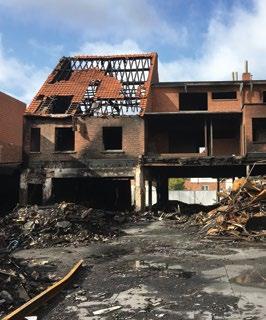
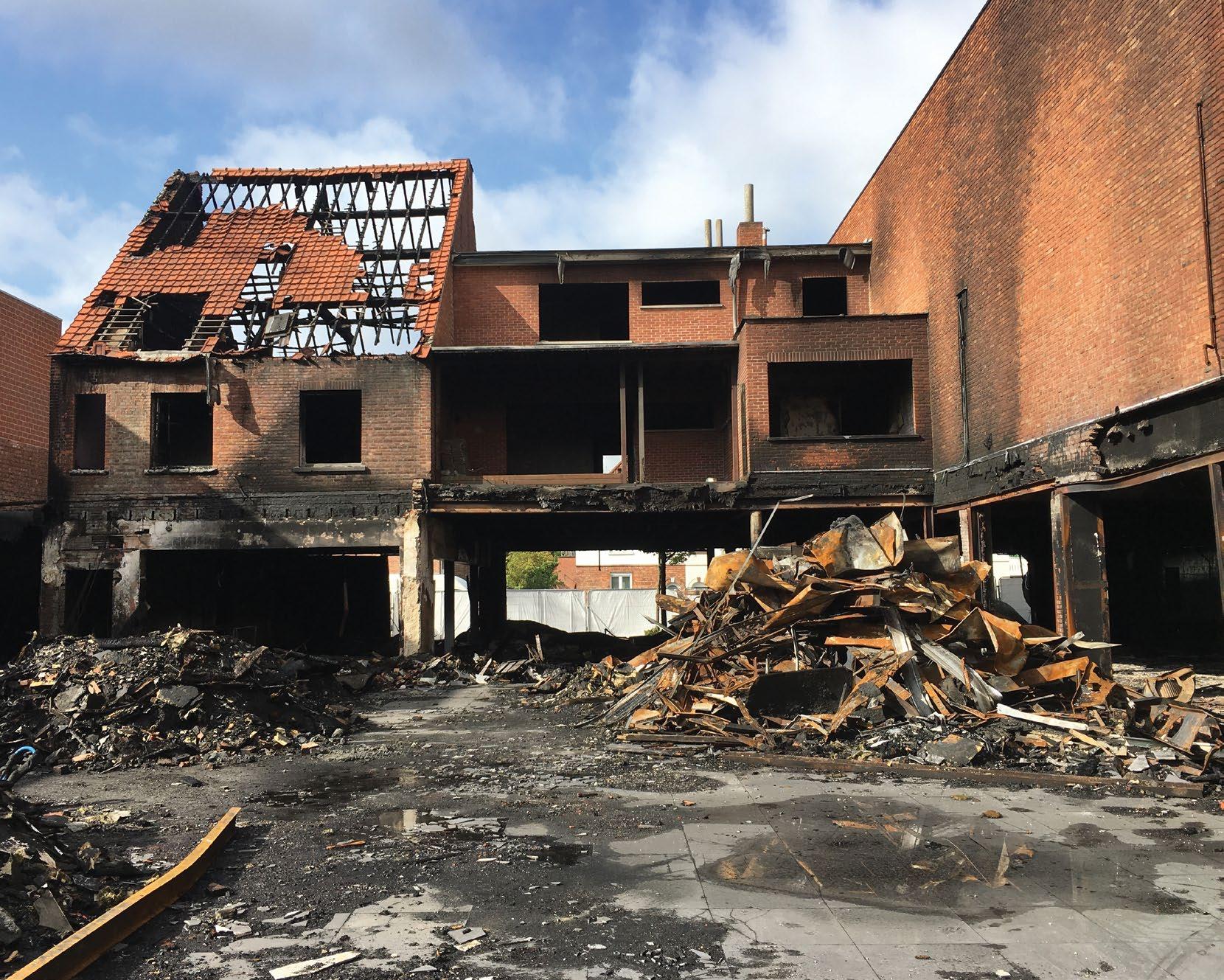
Back side of the building with the completely destroyed roof. PHOTO: SUPPLIED
from the environment without thinking. With no attention and little conscious control, you carry out highly automated and highly integrated procedural routines, which the brain constantly synchronises with changes in the environment. For example, fleeing from a fire or riding a bike.
At rule-based level, your actions are also unconsciously controlled and monitored, but this time by rules or procedures that you have once put consciously in your brain. These rules and procedures can be based on empirical experience or learned through training. Think, for example, of arithmetic or writing.
If you’re confronted with a problem with which you’ve no experience or for which there are no rules, you come up against the limits of your mental model. You consciously start to look for a solution. What you then experience in your head as a coherent linear sequence is, in reality, a complex cycling of unconscious pattern recognition and conscious thought, with the latter generating fresh input for a new round of unconscious pattern recognition.
Experience and task determine whether you use one, two, or all three levels of cognitive activity. No matter how many levels you use, you tend to default to the lower levels. We perform most of our actions at the level of skills and, if necessary, we shift one or two gears higher to the rule-based or knowledge-based level, to almost immediately fall back to the basic level of skills. Instead of thinking through situations carefully, we prefer to react immediately to what appear to be familiar cues, and instantaneously we move on to a quick application of a well-tried problem solution. The less
“Skill-based mistakes or lapses occur most often during the execution of habitual activities. Even tasks that you have successfully completed countless times are still susceptible to this kind of mistake.”
MARC COENEN
information available and the more ambiguous it is, the more we do this.
All our levels of cognitive activity have the same defect: they’re prone to errors. In his research on human error, the British researcher J. Reason builds on Rasmussen’s SRK model. The starting point of human error is surprisingly simple. Only two factors form the basis: similarity and frequency.
Skill-based mistakes or lapses occur most often during the execution of habitual activities. Even tasks that you have successfully completed countless times are still susceptible to this kind of mistake. As you become more familiar with a routine task, you perform it with less attention. In a familiar environment, mistakes can then creep into those routines when your thoughts are not on the task. Filling your tank with the wrong fuel is such an unfortunate slip-up. On average, around 7,500 incidents of misfuelling occur in Australia each year.
Rule-based errors are the result of ignoring or abusing certain rules or procedures. Each one of us has assembled IKEA furniture or at least tried to do that. I’ll leave aside whether you’ve followed the instructions carefully or just glanced at them from a distance. The result is often the same: a piece of furniture that is finished, but you find that there’s a suspiciously large number of parts left over still in the box.
Just like everyone else, you and I make mistakes. Fortunately, we immediately realise that something is going wrong. Skill-based slips and lapses, as well as rule-based mistakes, are easy to spot. Here there is an automatic feed-forward control. When
the outcome of an action doesn’t match what you expect based on experience, you automatically sense that something is wrong. You don’t have that luxury with knowledge-based mistakes. When you perform a task for the first time, you’re in uncharted territory. No matter how great the gap between your mental model and the state of affairs in reality might be, at that very moment there’s no observable discrepancy between the results of your actions and your expectations. In the worst case, there’s no feedback at all. In the best case, it’s open to contradictory interpretations.
Thinking like a brain
Now imagine the following incident. On a Sunday morning at 2.18 am, you arrive at a fireground and see a fierce, raging fire. Barely 10 minutes earlier, you happened to drive past that same empty building and you didn’t notice anything out of the ordinary. Upon arrival, you immediately recognise the derelict supermarket, because in the past year there have been two fires in that building.
What happens inside your brain? Your brain is flooded with stimuli. Contrary to what you might think, the majority of these stimuli aren’t generated externally by the environment you’re in, but internally by the brain itself based on experiences you’ve had in the past. A certain cluster of brain cells begins to send tiny electrochemical signals to another cluster, with a certain pattern, during a certain time, and at a certain frequency. There’s always a multitude of clusters distributed across the brain competing for dominance, and the winner emerges as the neural system underlying that moment’s conscious experience.
Now put yourself in the place of your subconscious, where this battle of pattern recognition is fought out on the cutting edge. A cacophony of electrochemical signals is turning the whole household upside down. It urgently needs to determine what is going on and how to respond appropriately. How would you do that? Your subconscious will always go for the most probable and globally consistent interpretation that best matches the current input, and for that it falls back on those interventions that show the greatest similarity to the new situation, and on the strategy that you’ve used most often during those interventions. Everything is reduced to similarity and frequency.
The morning after.
PHOTO: HANS PUT
In our scenario, this translates into the idea that you’re dealing with arson for the third time. After all, gas and electricity have long been cut off, as the supermarket should already have been demolished years ago. And the fire had started not so long ago. Barely 10 minutes ago, at the time of your passage, the arsonist was probably still lavishly pouring accelerants in the store, because that is the only way you can get such a fierce fire in such a short period of time. The conscious idea of arson unconsciously initiates a new pattern of expectations: multiple seats of fire are to be expected.
That night, your intervention runs like clockwork. It is business as usual. The raging fire at the front is quickly extinguished, but smoke continues to escape quietly from the side and back of the building. There must be a second seat of fire. You send in a second team from the right side. Almost immediately, they report a kitchen fire. That message has a greater impact on the working of your brain than you might think. Predictions that are confirmed are a boost for your brain. However, the good feeling created by this explosion of neurotransmitters significantly diminishes the sensitivity of the brain’s error-detection mechanisms.
At 2.50 am a fire engine from a neighbouring fire station arrives on the scene. The colleagues get out and you guide them to a narrow opening in the back wall of the building. There, you want them to enter the supermarket, where they have to detect and extinguish any additional fires. You brief them on the course of the intervention: “On arrival we found a raging fire at the front. It has been extinguished. A
second team was sent in from the side. They came across a kitchen fire, and have already extinguished it. They are now damping down.”
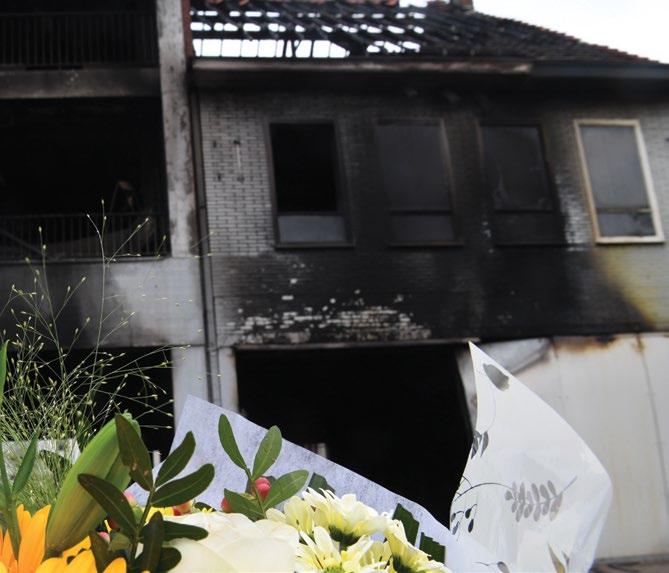
This scenario isn’t fictional. It’s the course of a fatal fire that, on Sunday 11 August 2019, occurred in Beringen, Belgium. That night, I did what each incident commander does at every fireground: I briefed my colleagues and gave a situation report. We do this to create a shared mental model or a shared representation and understanding of the situation. This all seems more obvious than it really is. What if you miss the ball from the start and slip into a wrong mental model? When you then, as always, brief colleagues that arrive later on scene, you end up with ‘The Parable of the Blind’, as put on canvas by Pieter Bruegel the Elder in 1568. In this painting, six blind, disfigured men are walking hand in hand. The leader of the group has fallen on his back into a ditch. The others will follow suit.
Getting trapped in a wrong mental model at a fireground isn’t difficult. Getting out of it is the tricky bit. Only a fresh pair of eyes can puncture such a bubble of flawed assumptions, as was the case in London with the Grenfell Tower fire (2017). After having seen footage of the burning tower on Sky News, dispatch advises callers from inside the high-rise to no longer stay in their flat. Their fire-survival guidance is from then onward to leave the building if possible. Ten minutes later, a highranking fireground commander who had just arrived on scene and taken over command does exactly the same. He revokes the stay-put policy. In the end, my incorrect mental model also burst like a soap bubble.
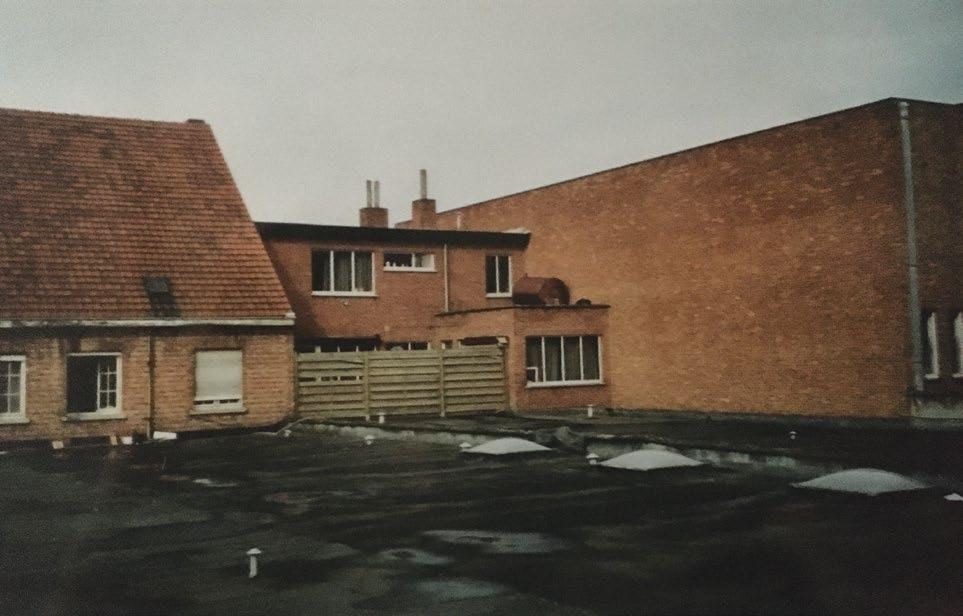
At 3.18 am, hot smoke came crashing down out of the ceiling. Suddenly, the entire building was shrouded in darkness. Immediately, the hot smoke ignited and the entire supermarket lit up. That night two colleagues lost their lives. Based on similarity and frequency, an incorrect pattern was recognised. After the incident, the actual course of the fire was determined. Right from the start, I was on the wrong track. When I earlier that night accidently passed by the building, the fire was already burning for half an hour. The fire started near the place where, in the supermarket, concrete vaults connect to a wooden roof structure. On the one hand, the fire moved to the front, and there it developed into a raging fire. But it also managed to get into the wooden roof structure, and through the ceiling the fire advanced toward the rear of the building. The back wall of the store was clad with chipboards. The high temperature inside the ceiling initiated their thermal decomposition. The decomposition gases released through this process of pyrolysis literally pulled the fire out of the ceiling. Meanwhile, the pressure in the flat roof was rising steadily. An everincreasing amount of isolation turned into gas at an ever-increasing speed. Unfortunately for us, the underside was the weakest point of the roof.
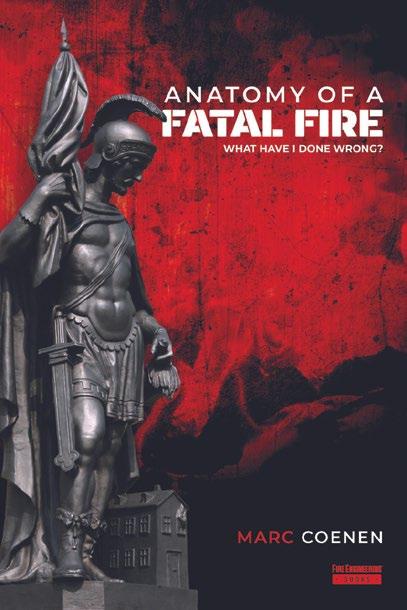
Author’s note: More information on the Beringen fire and how the mind works can be found in my book, Anatomy of a Fatal Fire. What Have I Done Wrong? (Fire Engineering Books, 2024, bit.ly/43tTNnB).
On top of the roof in 2001. In 2007 the skylights and ventilation holes disappeared under a thick layer of petroleum-based insulation boards.
PHOTO: BEN BOSMANS


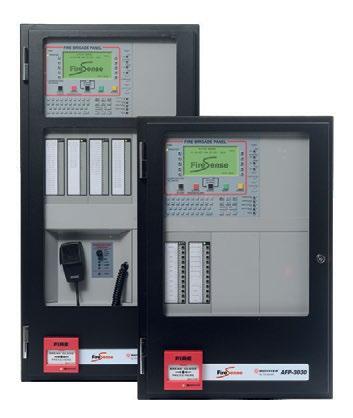
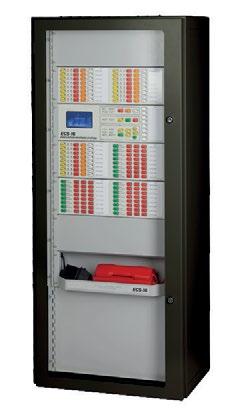
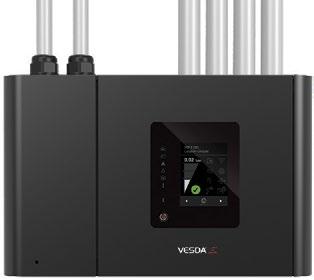
Control
IMPROVING FIRE SAFETY KNOWLEDGE WITH VICTAULIC’S FIRE PROTECTION WORKSHOPS
As fire safety regulations and technologies evolve, so too must the knowledge of those who design, install, and maintain protection systems.
offering participants access to purpose-built facilities equipped for both theoretical and hands-on instruction.
With the fire protection industry continually evolving, ongoing education and hands-on training remain essential for staying aligned with current technologies and safety standards. In response to this need, Victaulic offers Fire Protection Workshops in Australia, designed to support the professional development of those working across various sectors of the fire safety field.
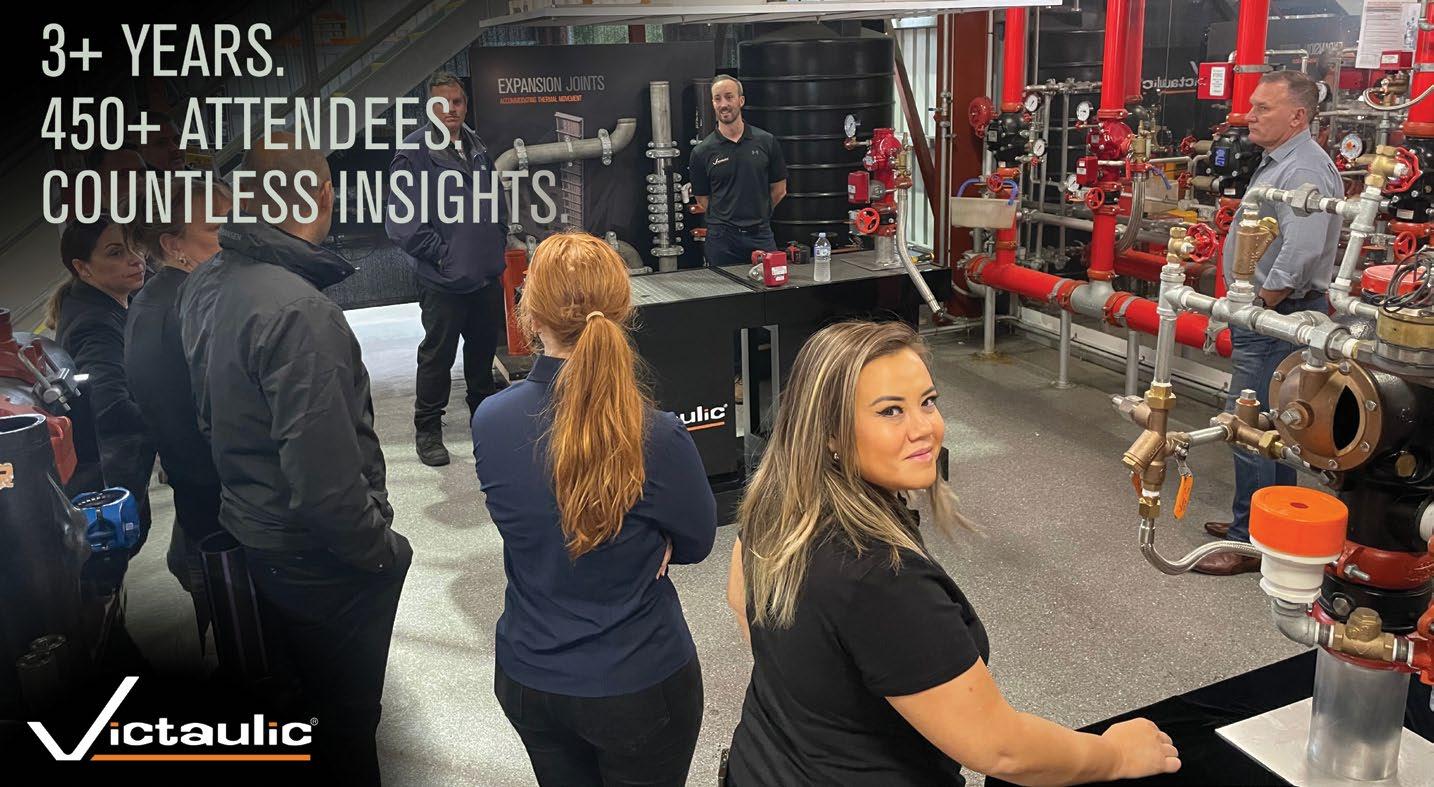
For more than three years, Victaulic has proudly delivered the workshops across Australia, helping professionals strengthen their expertise in fire safety systems. With more than 450 participants trained to date, these workshops have become a trusted platform for industry knowledge and practical skills.
Blending theory with hands-on learning
The Fire Protection Workshops are held at Victaulic’s demonstration centres in Brisbane and Melbourne,
Over the course of two days, attendees engage in a structured program that combines classroom discussions with direct interaction with fire protection components.
Key areas of focus
The workshop covers a range of technical and regulatory topics, including:
historical and current trends in fire protection
operation and inspection of fire protection valves
principles of hydraulic control solutions
design and use of flexible sprinkler systems and dry sprinklers
introduction to hybrid fire suppression methods
review of fire protection codes and compliance standards.
The curriculum is designed to support a clear understanding of both product functionality and the broader regulatory framework shaping fire protection systems.
Continuing professional development
The workshops are accredited by the International Association for Continuing Education and Training (IACET).
Completion of the program delivers 10 hours of continuing professional development (CPD).
Supporting industry practice
Every session concludes with a live demonstration of Victaulic Vortex™ Hybrid Fire Extinguishing technology, a powerful highlight that showcases the next generation of fire suppression methods in action.
These sessions aim to strengthen the knowledge base of professionals working in the field, whether in design, installation, maintenance, or inspection roles. By offering both conceptual grounding and practical skills, the program helps participants make informed decisions and apply best practices in their daily work.
To learn more or register for an upcoming workshop, visit: www.victaulic.com/australia-customertraining-fire-protection-workshop
DAVID GREENWOOD AND ADAM HICKS
Regional Sales Managers—Fire Protection, Victaulic
INTERN DRAWS PARALLELS BETWEEN PERTH AND LA FIRES
JOANNA WOOD Natural Hazards Research Australia Communications Manager
The January 2025 fires in Los Angeles (LA) were among the most expensive natural hazards in history.
These fires occurred in the middle of winter, outside the regular fire season and were driven by extreme conditions, particularly winds, that drove fires into the suburbs of LA.
Fire risk at the wildland–urban interface was brought into sharp focus with these fires, in particular, the Palisades and Eaton fires. These two fires burnt deeply into urban landscapes, resulting in 31 fatalities and the loss of an estimated 16,000 structures. This led many planners, government agencies, and researchers around the world to query whether a similar urban conflagration could occur in their local areas.
Department of Fire and Emergency Services, WA (DFES) is one such organisation learning practical lessons from the LA fires. Perth’s rural– urban interface shares some
similar characteristics with LA, including climate, topography, and urban development. DFES partnered with Natural Hazards Research Australia and APR. Intern to create an internship position with the aim of understanding whether lessons from the January 2025 LA fires could apply to the Perth hinterland and connecting urban areas.
This internship studies the conditions that led to the urban conflagration during the LA fires and compares them with the conditions and potential risks of Perth’s rural– urban interface.
“I was fascinated by the LA fires due to the unexpected intrusion into urban environments,” internship recipient, Anna Durkin, said.
“Although I now know this has occurred in other cases, the LA fires changed my perspective on how bushfires can put urban populations at risk.”
The similarities and differences in rural–urban fire risk between LA and Perth will help to identify areas of Perth’s urban landscape that contribute to fire risk, and suggest ways to mitigate the increased risk,
WA’s Department of Fire and Emergency Services (DFES) is one such organisation learning practical lessons from the LA fires. Perth’s rural–urban interface shares some similar characteristics with LA, including climate, topography, and urban development.
as well as support improved responses with a focus on identified vulnerable areas and populations.
Conducted using a comparative case study approach, the research also incorporates geospatial analysis and aerial photography. Together, these methods will help develop a comprehensive view of the fires, particularly the preparedness and response phases of this disaster. They will also examine the conditions of previous fires at Perth’s rural–urban interface.
“When the opportunity came up to compare the LA fires to Perth’s conditions, I was excited to apply,” Ms Durkin said.
“I saw the opportunity to use the skills I have gained throughout my PhD study, as well as my skills with GIS analysis, and it has become a great opportunity to gain experience in working with practitioners who are faced with the responsibility of responding to disasters and who are seeking insight from the research community.”
Ms Durkin is being supervised by Matt Watson, Acting Director Risk, Capability and Analysis at DFES.
AFFILIATE PROGRAM UPDATE: BUILDING MOMENTUM AND STRENGTHENING ENGAGEMENT
Driving stronger connections across fire protection, the Affiliate Program continues to evolve.
FPA Australia Business Development Manager
Since its soft launch, the FPA Australia Affiliate Program has been well received, with those who have joined now accessing peak body resources, guidance, and expertise. Already, participation is demonstrating real value—not just in the knowledge gained, but also in the confidence and capability affiliates bring back to their workplaces and communities.
Experiences so far
The affiliate community has reported strong value in the ability to demystify the complexities of fire protection, including state-based legislation and varying regulatory requirements. With access to resources that translate codes, standards, and obligations into clear, practical guidance, affiliates feel better equipped to make informed compliance and safety decisions for themselves and their clients when navigating issues that once seemed daunting.
A further benefit has been the ability to better understand their individual responsibility and role in fire safety—not only as professionals but also as key contributors to safer workplaces and communities. This awareness reinforces that fire protection is not a task left to others, but a shared obligation requiring proactive engagement and informed decision-making.
Engagement through events
FPA Australia’s participation in major industry events has been central to building awareness of the Affiliate
Program and the broader fire protection industry. At FM Connect, we highlighted the critical role of fire protection within facility management, showcasing how safety integrates into wider operational strategies. At AFAC25, we engaged directly with the emergency management sector, emphasising the importance of crossindustry collaboration to strengthen resilience and risk management.
These events provided important platforms to promote the Affiliate Program while also creating valuable opportunities for affiliates and professionals to network, share knowledge, and exchange practical insights.
To further support engagement and community awareness, FPA Australia successfully delivered National Fire Protection Month (NFPM) in September. This nationwide initiative focused on raising fire safety awareness across workplaces and communities. Affiliates played an active role in amplifying campaign messages, extending the reach of the initiative and reinforcing their role as informed advocates for fire protection and safety.
Affiliate Committee and SPARK—coming soon
To strengthen engagement and ensure affiliates have a strong voice in shaping the program, FPA Australia will soon establish an Affiliate Committee. This committee will serve as a formal platform for affiliates to raise issues, provide input, and collaborate on solutions that benefit the entire community.
Complementing this, the SPARK group will be introduced as a dynamic
forum for affiliates to share ideas, case studies, and practical experiences. Designed as an innovative and interactive space, SPARK will foster peer-to-peer dialogue and encourage affiliates to co-create solutions to realworld challenges. Together, the Affiliate Committee and SPARK will provide meaningful new opportunities for affiliates to connect, collaborate, and influence.
Looking forward
The early uptake of the Affiliate Program confirms its importance in strengthening industry capability and fostering collaboration. Affiliates are not only gaining knowledge but also contributing fresh perspectives that enrich the broader fire protection sector.
In the months ahead, the Affiliate Program will continue to expand through a range of initiatives, including dedicated webinars, in-person events, targeted communications, and new opportunities for companies to partner or sponsor. These partnerships will create valuable pathways for direct input into the development of content, education, and training—further strengthening fire safety knowledge across the community.
By more closely integrating affiliates into the broader work of FPA Australia, we aim to cultivate a collaborative network where every participant has access to the resources, connections, and confidence they need to succeed. Together, we will not only support workplaces in remaining safe and compliant, but also champion fire protection as a shared responsibility across industry and community.
CHRIS MCALINDEN
WARNING FOR THE UNPRECEDENTED: HOW DO AUTHORITIES CONVINCE COMMUNITIES TO ACT

ANDREW GISSING
Natural Hazards Research Australia CEO
While communities in the NSW Manning Valley catchment are familiar with flood, this year the Manning River (Boolumbahtee in the local Biripi language) at Taree made history by exceeding the 1929 flood of record. Emergency services were faced with warning communities of an event for which no one had living memory. This resembled the Lismore community’s experiences in 2022, when the previous flood of record was exceeded by more than two metres.
Climate change means a greater chance emergency services will encounter more situations when they will need to warn communities of unprecedented natural hazards. The World Meteorological Organization’s State of the Global Climate 2024 report lists 152 unprecedented times of extreme weather throughout 2024. This highlights the critical need to understand how we can improve warnings to ensure community members act when they have no personal prior reference for such natural hazards.
Initial anecdotal evidence, including from emergency crews rescuing people from homes around Taree, suggested residents were caught off guard by the severity of the flood. Residents recounted their experiences in media reports:
This is next level. We didn’t expect this. There were no warnings … nobody
knew how bad this was going to get. It’s taken us completely by surprise. The water came in really, really quickly, and it just started to flow into the house that quickly—I didn’t have a chance … I went upstairs with my dog, and we stayed there last night and a little today, until we were able to get rescued.
A NSW State Emergency Service representative said:
What we are seeing is that some locations on the eastern seaboard had not seen this sort of flooding before … until you have seen it and witnessed it, you do not know how quicky those waters can rise and how dangerous it is.
Natural Hazards Research Australia (the Centre) research in exploring the experiences of residents in the Northern Rivers and South East Queensland 2022 floods found that residents experienced floods that were worse than expected and, for some, totally unexpected. Some had no idea they were actually at risk of flooding.
The NSW Flood Inquiry concluded: Community flood plans were based on the highest recorded flood or the most severe flood in living memory. For many this was the 1974 flood which reached a height of 12.11 m in Lismore. This assumption proved destructive and is indicative of a greater flaw in the flood warning system.
When warning of extreme natural hazards, emergency services are often challenged by individuals’ decisionmaking process during stressful and uncertain circumstances. People use mental short cuts or unwritten rules to
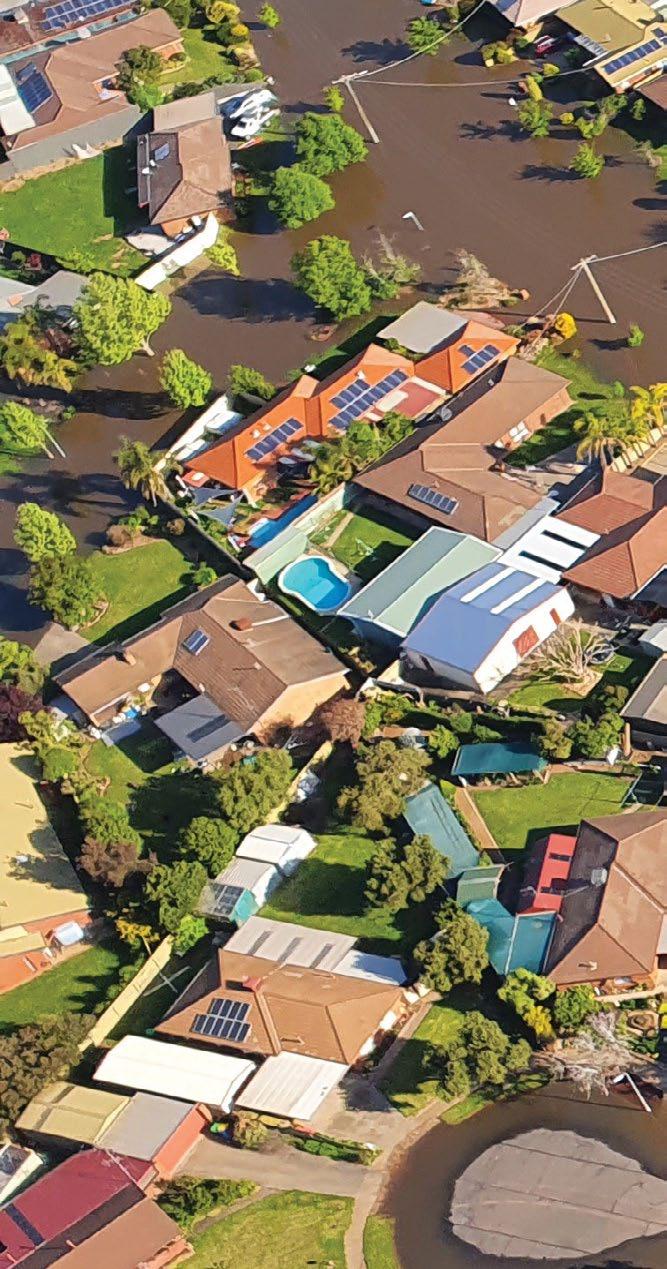
inform their decisions, called heuristics. Heuristics predispose people to rely on comparison to similar past disasters to guide their behaviour. Optimism bias also means people tend to overestimate the probability of positive outcomes.
Deciding not to evacuate is not uncommon behaviour during floods. For example, in 2022 in the Northern Rivers and South East Queensland, 60% of residents did not evacuate despite receiving an evacuation warning from emergency services. Often, reliance on past experience results in people choosing to shelter in their homes as they have successfully done previously. However, during extreme events floodwaters rise faster and higher than expected, quickly overwhelming preparations and placing people in peril. Other reasons for staying can include caring for pets and worrying about property theft.
Without specific local flood knowledge of likely impacts, it is well established that communities struggle to correctly interpret warnings. Weather bureau forecasts
When warning of extreme natural hazards, emergency services are often challenged by individuals’ decision-making process during stressful and uncertain circumstances. There is much to learn from the experiences of people who have experienced flooding.
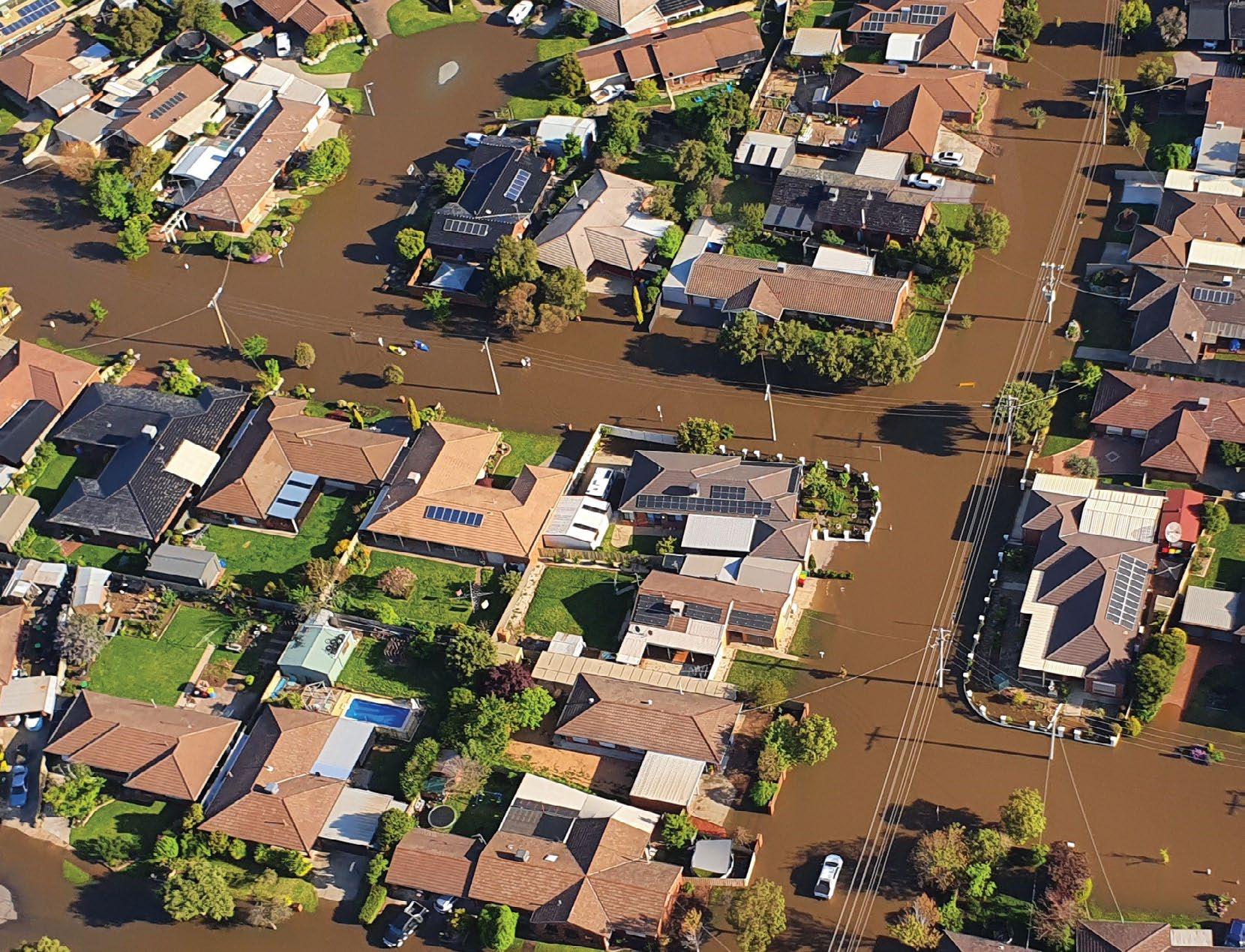
provide technical information about predicted flood heights and timing, but this may not be easily accessible to or interpreted by everyone. And a decades-old flood classification system of minor, moderate, and major flooding only communicates broad possible consequences. Terminology such as ‘minor flooding’ may lead to the underestimation of risk, despite fatalities frequently occurring during minor floods, while ‘major flooding’ is open-ended and may not fully communicate catastrophic or unprecedented events.
So how can the communication of flood warnings be improved to convince individuals to act in response to events they have never experienced? There is much to learn from exploring the experiences of those who have suffered the recent flood in NSW’s Manning Valley; however, existing research and previous government inquiries already give some suggestions.
Flood modelling provides the ability to estimate the extent and behaviour of floods beyond historical experience
to appreciate potential flood consequences for local flood scenarios up to and including the largest floods possible. This is a valuable capability, with the NSW Flood Inquiry and previous research suggesting that communicating such information in a visual form may aid community responses to and compliance with flood warnings.
Flood mapping is not systematically used to communicate flood impacts in Australia, although it has been used by some local governments, for example, Brisbane and Gold Coast, in recent events. Recent US research found individuals preferred 3D street view visualisations of flood impacts over 2D maps. A national flood risk information portal would provide a useful resource for households to understand their flood risks well in advance of any flood threat.
Current Centre projects that could also help enhance warnings include:
Developing an integrated predictive capability for extreme rainfall and inundation
This project will develop a prototype predictive capability, in collaboration
with stakeholders and supported by social scientists, to improve forecasts of extreme rainfall and inundation, and the communication of risk to emergency management.
Communicating flood risk
This research will improve the communication of flood risk to people in at-risk areas, including expected intensity and conditions, insurance information, improved flood-risk messaging (such as language, ratings, terminology), messaging suitability and social acceptance, and implementation of changes into planning frameworks, community messaging, and warning systems.
Predictions in public: understanding the design, communication and dissemination of predictive maps to the public This project uses empirical and collaborative processes to contribute to and support a national approach to the future use of public-facing predictive fire spread products during an emergency.
PHOTO: JOHN BATES SES

What could your company achieve with more financial support?
• Have you considered, a supportive business partner to share the load?
We are looking to join with professional fire protection and training companies through mergers or acquisitions. We understand the mindset of small - medium business and can provide the needed support to achieve corporate and personal Goals. CALL
Lets have a chat about your needs and how we can assist.
Our company valuations are very generous and well above market norms.


ROB LLEWELLYN HONOURED WITH THE 2025 VISCOGLIOSI AWARD
Few figures have shaped Australia’s fire protection landscape quite like Rob Llewellyn. This year, as FPA Australia celebrates its 65-year anniversary, the longstanding industry figure was recognised with the prestigious Viscogliosi Award 2025, marking more than six decades of outstanding service and leadership.
Mr Llewellyn’s journey began in the mid-1970s when he joined the Australian Fire Protection Association (now FPA Australia). Over the following 55 years, he became a driving force behind initiatives that strengthened the industry’s professional standards and technical foundations.
A former President of FPA Australia, Mr Llewellyn’s influence extended across numerous committees, including TAC 1, 17, 18, FP1, FP17, and FP18, as well as the Victorian State Committee. His contributions were instrumental in developing accreditation standards, organisational rules, and management frameworks that continue to guide the Association today.

Beyond Australia, Mr Llewellyn’s vision reached international levels with the establishment of Fire Protection Asia, expanding collaboration and knowledge exchange across the region. As a longstanding member of Standards Australia, he chaired FP18 and helped shape the Hose Reel Standard and the influential HB 183: Crowd Management for Crowded Places handbook.
As the Association celebrates his achievements, Mr Llewellyn’s enduring legacy continues to reflect exactly what FPA Australia stands for: commitment, community, and a safer future for all.
AS 1851-2012 AND NSW FIRE SAFETY ASSESSORS: BRIDGING THE RESPONSIBILITY GAP
FPA Australia National Technical Manager
In NSW, there is no regulatory link between the activities of a Fire Safety Assessor (FSA) when endorsing fire safety measures on an Annual Fire Safety Statement (AFSS) and compliance to AS 1851- 2012. Importantly, though FSAs are accredited to assess fire safety measures, their endorsement does not extend to confirmation that a building has been maintained in accordance with AS 1851-2012.
In endorsing fire safety measures, FSAs are required to exercise their
professional judgement and to draw on their technical expertise when determining whether a lack of maintenance has impacted the ability of an Essential Safety Measure (ESM) to perform.
Their judgement is critical, as an ESM may still appear functional, yet be unable to perform adequately in an emergency as a result of not being maintained appropriately.
The baseline data requirement of AS 1851-2012 is limited to the information necessary to confirm that a sprinkler and hydrant system meets the flow and pressure requirements of the approved design. The FSA will rely on this data when deciding
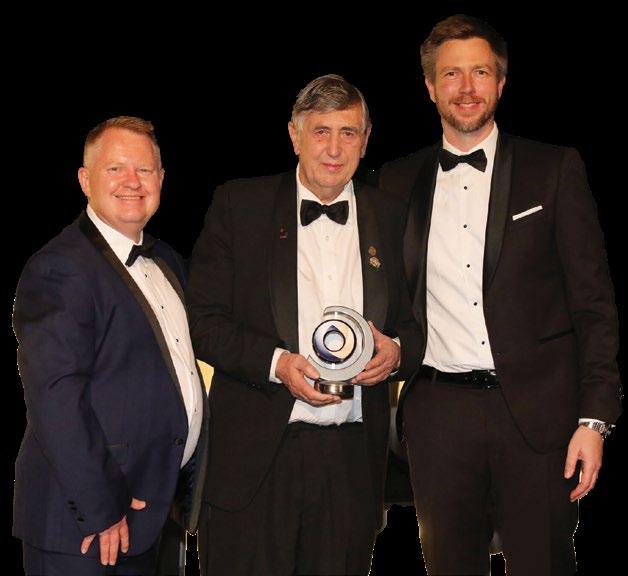
whether to endorse the sprinkler and hydrant measures—the review of this information has always been required for the AFSS.
For all other measures which require endorsement, the FSA should review the design documentation that formed part of the approved design when determining whether to endorse the measure in accordance with that design.
It is important to highlight that although there is no regulatory link between endorsing an AFSS and verifying compliance with AS 18512012, it is the duty of FSAs to make building owners aware of their legal responsibilities. Owners must ensure that their premises are maintained in accordance with AS 1851-2012.
By reinforcing this responsibility, FSAs not only support building owners in meeting their statutory duties, they help develop a stronger culture of safety and compliance across the built environment. Through a proactive approach, accredited professionals help ensure that essential safety measures remain reliable and effective at all times.
SIMON RICKARD
Above
L–R: Russ Porteous, FPA Australia President; Rob Llewellyn; and John Collie, FPA Australia CEO.
PHOTO: FPA AUSTRALIA
LEARNINGS FROM THE LESSONS MANAGEMENT FORUM 2025
AFAC Aviation Research and Evaluation Manager
The Lessons Management Forum 2025 was a hybrid event held on 20 to 22 May in Wellington, New Zealand, and online. The event brought together leaders, practitioners, researchers, and policy-makers from across Australia, New Zealand, and the broader Asia-Pacific region.
This year’s forum focused on operational learning, cultural transformation, data-informed decision-making, and the active role of communities in shaping emergency responses.
Building a culture of learning and accountability
Throughout the forum, participants heard speakers emphasise the need to embed lessons management as a core organisational function, rather than a post-crisis exercise. This requires agencies to rethink how they frame learning. Many attendees shared how their agencies are moving beyond documenting lessons into actioning them at scale, including integrating learnings into policy, training, and operational procedures.
Creating psychological safety was also a recurring theme. The need to feel safe when sharing mistakes, near misses, and ideas without fear of blame is an important element of lessons management that promotes authentic and reflective debriefs to occur.
Presentations from Fire and Emergency New Zealand, NSW Rural Fire Service, and Queensland Fire and Emergency Services highlighted internal reforms aimed at fostering continuous improvement in these areas.
Case studies from major emergencies
A range of high-impact incidents were dissected to uncover systemic lessons throughout the forum, including Cyclone Gabrielle (New Zealand, 2023), Murray–Darling Basin Floods
(Australia, 2022–23), and wildfires in Victoria and WA.
Through the exploration of Cyclone Gabrielle, presenters outlined the complexity of logistics, communications, and resource allocation in an event that disrupted infrastructure across large regions. Notably, participants learnt about the critical role of trusted local leaders and the need for real-time mapping of isolated communities during disastrous events.
Case studies that focused on the Murray–Darling Basin Floods explored jurisdictional handovers and datasharing bottlenecks between federal, state, and local governments. A reoccurring issue that agencies faced was delays in information dissemination to communities, creating challenges in conveying safety messaging and instruction. Agencies reflected on how they can better pre-event scenario plan, which could help reduce friction in future emergencies.
The presentations on the wildfires in Victoria and WA delved into how predictive services and community education efforts helped mitigate risk. Across all cases, one clear message emerged: resilience is built before a disaster, not during the event.
The role of data and digital tools in learning
Many sessions explored the growing reliance on digital systems, data analytics, and AI tools to support decision-making and capturing lessons.
Several agencies are tracking incidents in real-time for later analysis, allowing operational data to feed directly into learning systems. This includes spatial data from drones, call logs, resource movements, and community engagement patterns.
While tools like Power BI dashboards and integrated customer relationship management systems were showcased as essential platforms for linking incident data with organisational learning functions, speakers warned of “data dumping without insight”. Attendees learnt that simply collecting
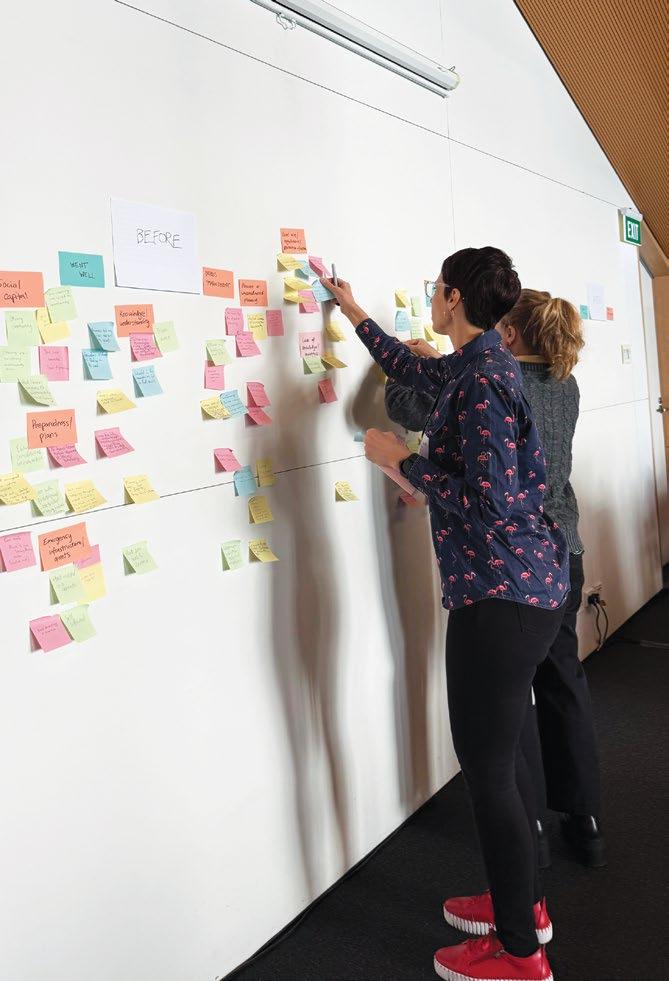
information is not enough; there must be skilled analysis to translate that data into meaningful lessons.
One fire service explored their experience in training cross-functional data-literacy teams, ensuring that field officers and analysts can work together to identify weak signals before they become systemic risks.
Embedding lessons in strategy and structure
The forum highlighted how strategic planning and organisational design must reflect a commitment to learning. New Zealand Defence Force described integrating lessons into its doctrine- development cycle, ensuring that field-level experience influences strategic choices.
Fire and emergency agencies from Australia spoke about restructuring their incident management teams to include ‘Lessons Observers’ during operations. These individuals are tasked with real-time notetaking, reflection, and feedback.
Several agencies also discussed introducing ‘Lessons Managers’ as dedicated roles sitting across operations, planning, and learning, rather than treating learning as a siloed function in human resources or training.
Forum workshop attendees collaborate on ways resilience can be built before natural hazards occur to reduce the likelihood of disaster.
DEB SPAKES
PHOTO: AFAC
Local and Indigenous knowledge in emergency preparedness
A standout theme of the forum was the role of community and cultural knowledge in shaping effective, inclusive emergency responses.
Presenters from Māori iwi and Aboriginal communities shared how traditional knowledge and cultural protocols can contribute meaningfully to preparedness, early warning, and evacuation.
This sentiment is supported by the co-design model. This model is a collaborative approach that allows communities and agencies to jointly create response plans, which increases compliance, trust, and real-world effectiveness.
In one powerful session, an Elder described how centuries-old fire knowledge in their community informed hazard reduction burns that were later validated by Western science. Case studies demonstrated that where community voices were integrated early, responses were more agile and aligned with local values.
Interagency and cross-jurisdiction collaboration
Several sessions addressed how lessons must be shared across agencies and borders to help our communities stay safe when disasters occur.
During the forum, joint exercises between New Zealand’s National Emergency Management Agency and Australian counterparts were praised as effective testbeds for building shared language, procedures, and expectations.
One cross-Tasman working group described how they harmonised their lessons’ taxonomy, allowing agencies to compare like-for-like lessons despite different terminologies.
Multiple presenters stressed that pre-disaster collaboration is key, and that relationships and trust built in ‘blue sky periods’ are what enable smooth coordination during ‘black sky crises’.
Learning from near misses and operational friction
A significant focus was on learning not just from disasters, but from normal events where something nearly went wrong.
Several agencies discussed how they are formally capturing ‘operational friction points’—minor delays, confusions, or miscommunications that didn’t cause harm but revealed systemic weaknesses.
The Australian Maritime Safety Authority shared a compelling system where after-action reviews are required even for routine responses, ensuring continuous feedback from the field.
“We tend to focus on big bangs,” one presenter said. “But small bangs tell us more about the daily resilience of our systems.”
Transformational leadership and systemic change
Leadership emerged as a critical enabler to organisational learning. Presentations focused on the capabilities leaders need, such as humility, listening, systems thinking, and the ability to turn discomfort into growth.
In one presentation, speakers contrasted command-and-control leadership with adaptive learning leadership, suggesting that the latter is better suited to dynamic, uncertain environments.
Several leaders spoke candidly about the challenges of driving cultural change in organisations that remain oriented toward command hierarchies and risk avoidance.
“Leadership isn’t about having the answers, it’s about creating the space where new answers can emerge,” one speaker said.
Evaluation, feedback, and continuous improvement
Multiple agencies showcased digital evaluation platforms used to collect structured feedback after every incident, from minor technical responses to full-scale disasters. Others emphasised live debriefing techniques, including facilitated peer conversations and psychological safety principles.
Importantly, attendees heard how some organisations have adopted independent peer reviews, where external experts review the application of lessons to keep accountability high.
Vision for the future of lessons management
On the final day, presentations focused on looking toward the future. Suggestions were made for a transTasman lessons-sharing platform, possibly through Australian Institute for Disaster Resilience or AFAC, with standard taxonomies, metadata tagging, and analytics capability.
There was consensus that emergency learning must be embedded in governance and not simply treated as a technical afterthought, including resourcing, executive sponsorship, and integration with performance metrics.
Many imagined a future where AI-supported foresight tools, combined with rich historical data and scenario planning, could anticipate risks before they occur.
The Lessons Management Forum 2025 reinforced that learning is not just about capturing the past, but transforming the future. When reflection is taken seriously, systems are designed to evolve, and communities are trusted as co-creators of safety, emergency management can become not just reactive but regenerative.
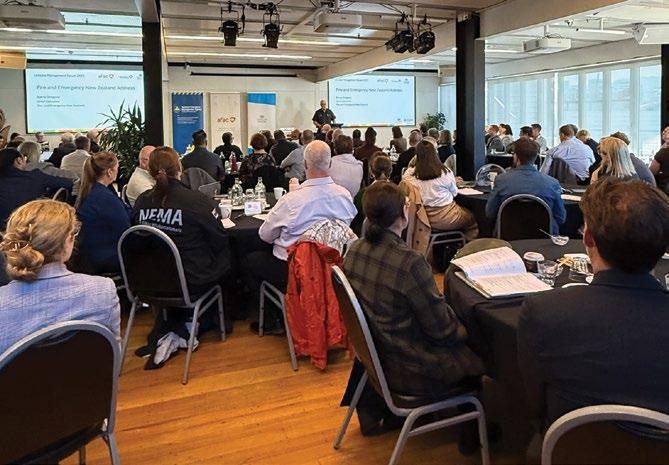
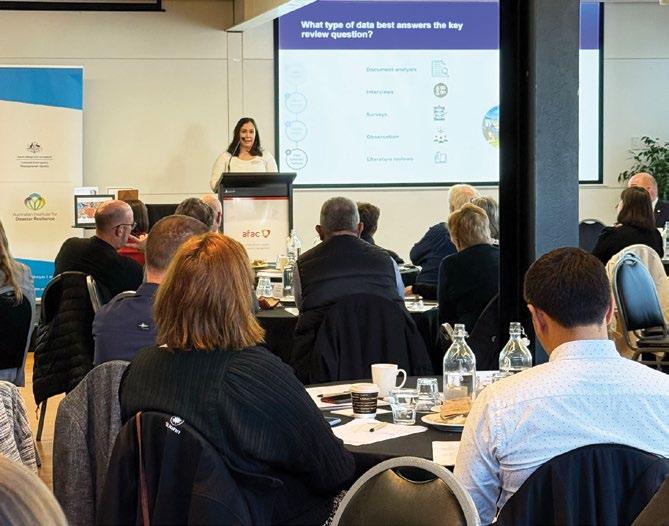
Top right: Kerry Gregory, Chief Executive of Fire and Emergency New Zealand, welcomes Lessons Management Forum attendees and speakers from across the sector and Aotearoa, New Zealand.
Right: Dr Lauren Banting explores how Victoria’s Inspector-General for Emergency Management is applying a strategic lens to tailor its assurance and continuous improvement methods. PHOTOS: AFAC
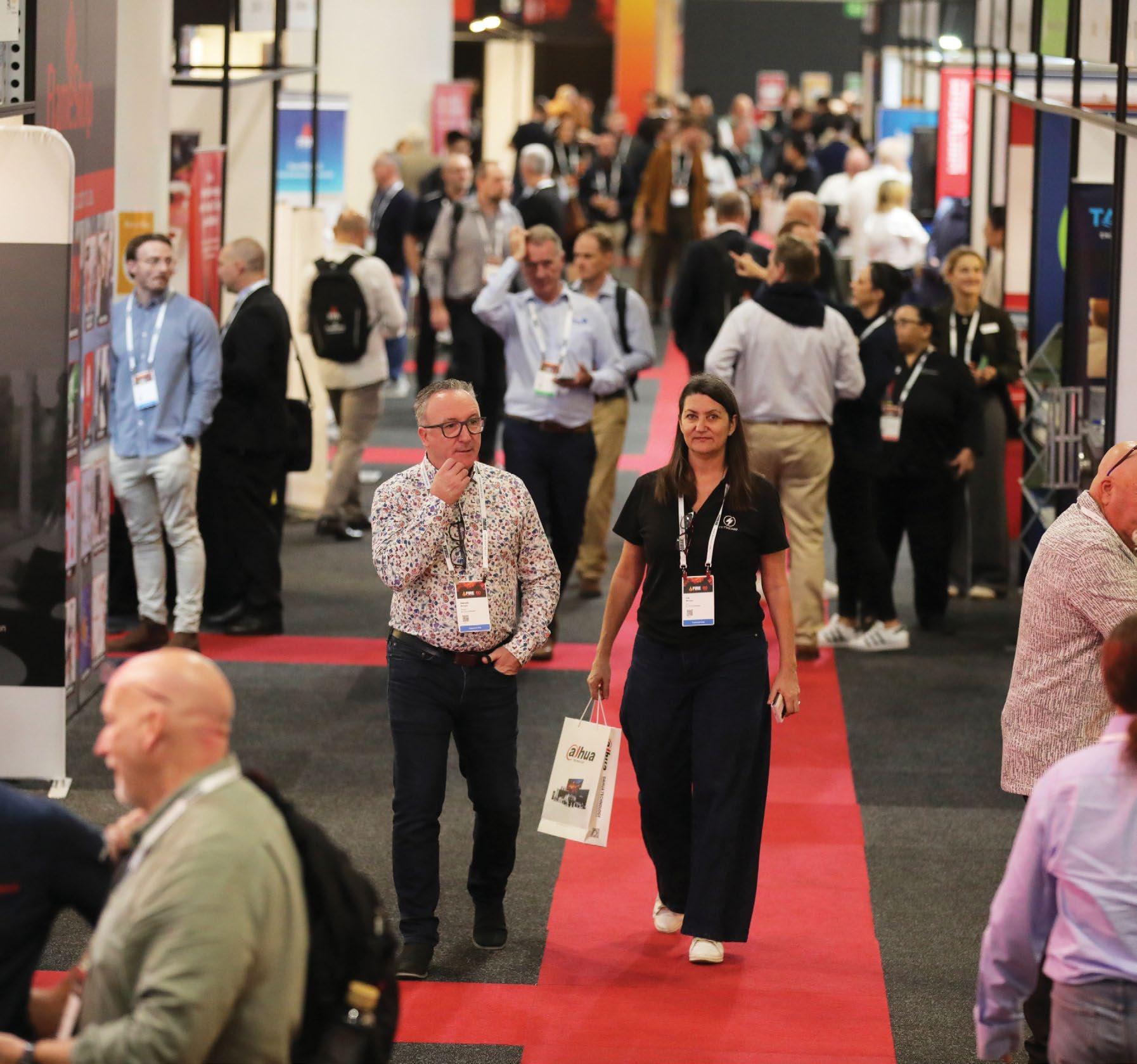

Hosted by
OVERVIEW OF THE SECOND ROUND OF 2025 TAC AND SIG MEETINGS
FPA Australia’s TACs and SIGs continue to drive technical clarity, regulatory influence, and member support through advancements across fire protection.
FPA AUSTRALIA TECHNICAL TEAM
FPA Australia’s Technical Advisory Committees (TACs) and Special Interest Groups (SIGs) continue to deliver strong outcomes for members by driving technical clarity, supporting compliance, and influencing regulatory and standards development across the fire protection industry.
Following our second round of 2025 TAC and SIG meetings, we provide the following update that highlights significant progress across a wide spectrum of focus areas, all designed to strengthen member capability and confidence.
Maintenance (TAC/1): Work is progressing on the revision of AS 1851-2012. FPA Australia’s recently published Technical Advisory Note TAN-12 was discussed. TAN-12 is aimed at service providers and building owners in support of defect identification and classification to achieve consistency in routine service and compliance.
Fire detection and alarms (TAC/2): Clarification on NCC 2022 requirements has been escalated to Australian Building Codes Board (ABCB), while new guidance on occupant warning and intercom systems is being finalised, offering members practical tools to apply in their projects.
Portable equipment (TAC/3/7): Upcoming revisions to extinguisher standards, lithium battery fire-risk guidance, and a workshop on TAN-09 ensure members stay at the forefront of standards alignment and safety practices.
Sprinklers and hydrants (TAC/4/8/9): Members benefit from updates on critical standards (AS 2118, AS 2419, AS 2941) and practical issues such as commissioning data, booster assembly compliance, valve monitoring devices, and seismic considerations regarding the design of fire sprinkler and hydrant systems.
Passive fire protection (TAC/18/19): National training and licensing frameworks are being reviewed, along with regulatory gap analysis and guidance on BESS installations, giving members forward-looking resources in an evolving risk environment.
Emergency planning (TAC/17): Good Practice Guides for schools, shopping centres, and apartments are under development, providing members with practical frameworks that can influence future standards.
Foams (TAC/11/22): Transition work on fluorine-free alternatives and updated bulletins prepare members for upcoming regulatory shifts.
Member benefit
Through these activities, FPA Australia’s TACs and SIGs deliver direct value by equipping members with timely guidance, influencing national standards, and strengthening industry advocacy. This ensures our members remain informed, supported, and positioned as leaders in building safety and compliance.

PHOTO:
STANDARDS UPDATE
BD-012 Building Commissioning
◆ AS 5342 Building commissioning, public comment opened 5 June 2025 and closed 2 October 2025
BD-111 Prefabricated building
◆ AS 5482 Pre-fabricated and modular building design and construction, in drafting
◆ SA HB 268 Prefabricated building: Glossary of terms, in drafting.
CE-030 Maritime structures
◆ AS 4997 Maritime structures, public comment closed December 2024. Committee resolving public comments.
EL-031 Alarm and electronic security systems
◆ AS/NZS 2201.1 Intruder alarm systems, Part 1: Client’s premises—Design, installation, commissioning and maintenance, in drafting.
FP-001 Maintenance of fire protection equipment
◆ AS 1851 Routine service of fire protection systems and equipment, in drafting.
FP-002 Fire detection, warning, control and intercom systems
◆ AS 7240.2 Fire detection and alarm systems, Part 2: Fire detection control and indicating equipment (ISO 7240-2: 2017, MOD), public comment closed January 2025. Committee preparing for ballot.
◆ AS 1670.4-2018 Amd 2 Fire detection, warning, control and intercom systems—System design, installation and commissioning, Part 4: Emergency warning and intercom systems in drafting.
FP-003 Fire extinguishers
◆ AS/NZS 1841.1 Portable fire extinguishers, Part 1: General requirements, in drafting.
◆ AS/NZS 1850 Portable fire extinguishers—Classification, rating and performance testing, in drafting.
◆ AS 2444 Portable fire extinguishers and fire blankets—Selection and location, in drafting.
FP-004 Automatic fire sprinkler installations
◆ AS 2118.4 Automatic fire sprinkler systems, Part 4: Sprinkler protection for accommodation buildings not exceeding four storeys in height, in drafting.
FP-019 Passive fire protection
◆ AS 1905.1 Components for the protection of openings in fire-resistant walls, Part 1: Fire-resistant doorsets, in drafting.
FP-020 Construction in bushfire prone areas
◆ AS 3959 Construction of buildings in bushfire-prone areas, resolving public comments.
◆ AS 5414 Bushfire water spray systems, in drafting.
◆ SA HB 208.1 Maintenance of construction in bushfire-prone areas— Part 1: Practitioners guide, in drafting.
◆ SA HB 208.2 Maintenance of construction in bushfire-prone areas— Part 2: Consumer manual, in drafting.
LG-007 Emergency lighting in buildings
◆ DR AS/NZS 2293.1-2025 Emergency lighting and exit signs for buildings, Part 1: System design, installation and operation, public comment closed
8 May 2025.
◆ DR AS/NZS 2293.2-2025 Emergency lighting and exit signs for buildings, Part 2: Routine service and maintenance, public comment closed 8 May 2025.
◆ DR AS/NZS 2293.3-2024 Emergency lighting and exit signs for buildings, Part 3: Emergency luminaires and exit signs, public comment closed 8 May 2025.
JOINING TECHNICAL COMMITTEES
ME-002 Gas cylinders
◆ AS 2030.1 Gas cylinders, Part 1: General requirements, in drafting.
◆ AS/NZS ISO 9809-4 Gas cylinders— Design, construction and testing of refillable seamless steel gas cylinders and tubes, Part 4: Stainless steel cylinders with an Rm value of less than 1 100 MPa, in drafting.
ME-062 Ventilation and airconditioning
◆ AS/NZS 3666.1 Air-handling and water systems of buildings—Microbial control, Part 1: Design, installation and commissioning, in drafting.
◆ AS/NZS 3666.2 Air-handling and water systems of buildings—Microbial control, Part 2: Operation and maintenance, in drafting.
◆ AS/NZS 3666.3 Air-handling and water systems of buildings—Microbial control, Part 3: Performance-based maintenance of cooling water systems, in drafting.
◆ AS/NZS 3666.4 Air-handling and water systems of buildings—Microbial control, Part 4: Performance-based maintenance of air-handling systems (ducts and components), in drafting.
FPA Australia encourages members to join our Technical Advisory Committees. Engaging with these committees not only contributes to critical outcomes but also presents an excellent opportunity for professional growth and networking.
Are you interested in lending your expertise and insights on a committee?
Learn more on the FPA Australia website: www.fpaa.com.au
A SMARTER APPROACH TO HOME FIRE SAFETY
MARK WHYBRO AFSM
Chair, Home Fire Sprinkler Coalition Australia; Adjunct Fellow, School of Engineering, Design and Built Environment, Western Sydney University; NSW and ACT Manager for FPA Australia
“In design as in life, ‘smart’ can also mean wise, kind, inspiring— and cost-effective.”
Nancy Gibb, US journalist (1960– )
The Home Fire Sprinkler Coalition Australia (HFSCA) and its stakeholders have developed the HFS102 Interim Standard (HFS102) for Australian Class 1 home fire sprinkler systems. This standard focuses on four key performance criteria: the system must be safe, reliable, fit-for-purpose, and cost-effective. While all four are essential, cost-effectiveness presents a particular challenge, as cost is often a primary concern for homeowners. A compelling economic argument is needed to justify this investment, especially during times of housing affordability pressure, even though such a system could be life-saving.
The pursuit of affordability HFS102 is designed as a fire management system to prevent flashover, allowing occupants to escape safely. Flashover is a critical survival threshold where a compartment becomes untenable for human life. By delaying flashover, the system buys more time for people to exit the building, including partners, children, grandparents, or individuals with a disability.
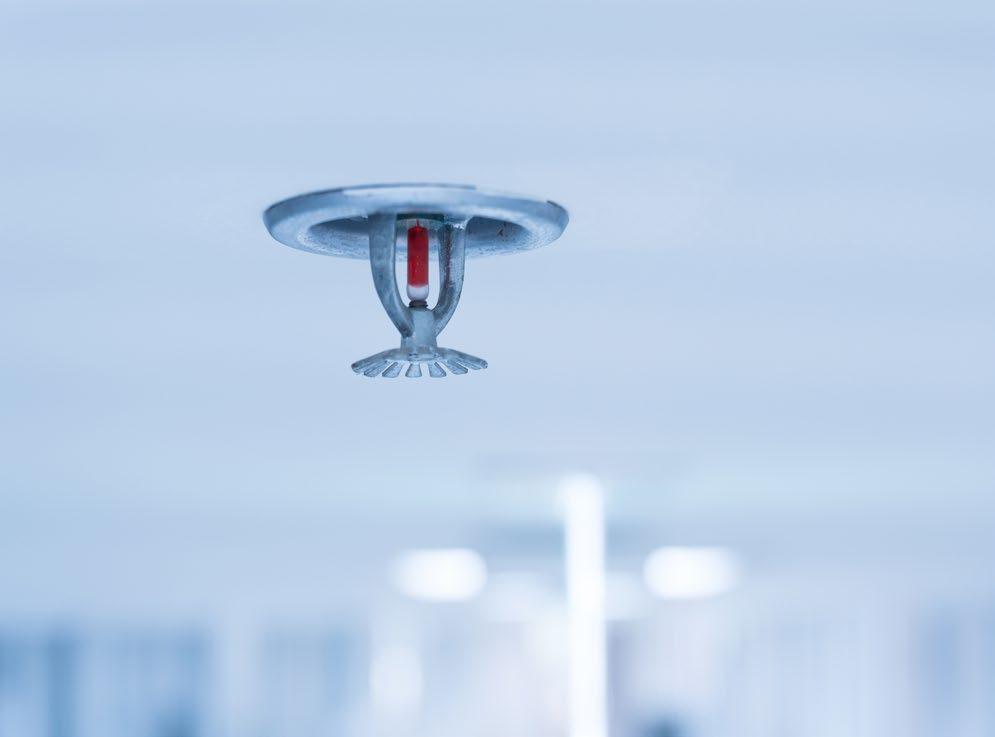
To achieve cost savings, the HFS102 system integrates with existing domestic drinking water infrastructure. It requires minimal plumbing changes, removing the need for tanks, pumps, or costly backflow devices. The system’s design simplifies installation so a single licensed plumber can complete both plumbing and the home fire sprinkler work. This approach reduces labour costs, simplifies construction, and avoids project delays.
Because the HFS102 is a Class 1 integrated system, it includes a built-in reliability check, requiring little maintenance. This reduced need for human intervention helps prevent failures common to other fire safety measures, such as domestic smoke alarms.
A fit-for-purpose solution
HFS102 directly addresses the need for a fit-for-purpose system—scaled and designed specifically for Class 1 homes. It must meet the homeowner’s practical needs while reliably performing its intended function of buying more time to escape from a fire.
“Sprinklers operated in 95 percent of the home fires in which the systems were present and the fires were considered large enough to activate them. They were effective at controlling the fire in 97 percent of the fires in which they operated. Taken together, sprinklers operated effectively in 92 percent of the fires large enough to trigger them. In 89 percent of the home fires with operating sprinklers, only one operated.”
The market for Class 1 sprinklers is still developing, and there remains a gap in understanding their performance requirements compared to those for higher-risk commercial or industrial buildings. For example, most homes rely on a single battery-operated smoke alarm, while commercial buildings feature AS 1670-compliant, fire brigade–monitored systems. Similarly, comparisons with Class 2 and 3 buildings—such as apartments and hotels—are misleading, as the National Construction Code (NCC) mandates additional provisions for those shared residences, including two-head operating systems, fire-isolated stairs, and emergency lighting, none of which apply to Class 1 homes.
HFS102 is compatible with standard Class 1 home infrastructure, including 20 mm domestic water tappings and meters. A two-head operating system, as used commercially, would not function effectively without costly upsizing. The HFS102’s looped design, however, supplies water efficiently to a second sprinkler head if needed. The average size of Australian rooms means one head usually suffices, though the Standard advises consulting a fire sprinkler designer for exceptions.
Over-engineering a domestic system to meet commercial standards adds unnecessary cost, undermining affordability. While no system is without limitations, the HFSCA rejects the notion that if a fire sprinkler system can’t save everyone, we shouldn’t save anyone.
Ahrens M, 2021, US Experience with Sprinklers, p.1, NFPA, October 2021.
PHOTO: SHUTTERSTOCK
PERSPECTIVES FROM THE SECTOR: NSW RURAL FIRE SERVICE COMMISSIONER ROB ROGERS AFSM
In his final months in office before retirement, NSW Rural Fire Service (RFS) Commissioner Rob Rogers speaks with AFAC CEO Rob Webb about his extensive and impactful emergency services career, and important innovations across the sector.
RW: Your service with NSW RFS spans more than four decades, back to your early days as a brigade volunteer. As you’ve moved through your various roles and ranks, what are the key reflections and lessons from your career?
RR: Reflecting on over four decades with the NSW RFS, I’m proud of how far we’ve come since I first joined as a 15-year-old volunteer. Back then, firefighting looked very different. The tools were basic, and resources were limited. Today, the RFS operates with advanced aircraft, real-time communication systems, and cuttingedge technology that enhance our ability to respond to emergencies swiftly and effectively. While the transformation in capability has been extraordinary, what has remained constant, and truly defines the service, is its people.
“Throughout my career, I’ve witnessed incredible commitment, courage, and resilience from both staff and volunteers. Their dedication is the backbone of everything we do.”
Throughout my career, I’ve witnessed incredible commitment, courage, and resilience from both staff and volunteers. Their dedication is the backbone of everything we do. As leaders, our most important responsibility is to support our people by ensuring they have the tools, training, and resources they need to work safely and effectively. We must stay connected to those on the frontlines, listen to their challenges, and foster a culture of trust and continuous improvement.
As leaders, we need to remember that our people place their trust in us to keep our end of the bargain, which is doing everything we can to ensure their safety.
RW: Your leadership has also extended to the national level, including your role of Chair for both the National Aerial Firefighting Centre (NAFC) Steering Committee and Australian Fire Danger Rating System (AFDRS) Board. What benefits does this cross-border collaboration and coordination bring for the sector and the communities they serve?
RR: The importance of collaboration between state and territory agencies, facilitated by AFAC, cannot be overstated. The collective strength that emerges from this national coordination is extraordinary, enabling us to deliver far greater value to communities than any single agency could achieve alone. It is through this collaboration that we ensure all Australians, regardless of where they live, receive the best possible protection and support.
At the core of this approach is a shared commitment to aligning strategies, coordinating resources, and sharing expertise. AFAC’s broad
network allows agencies to pool critical assets such as personnel, aircraft, and technology, leading to faster, more effective emergency responses and a level of national cohesion that would otherwise be unachievable.
A prime example is the AFDRS, which replaced inconsistent statebased messaging with a single, clear national framework. This has greatly improved public understanding, particularly in cross-border regions.
On a personal level, I’ve been incredibly privileged to work alongside some of the most skilled and passionate individuals in the country through my roles with AFAC, AFDRS, and NAFC. The calibre of people involved is inspiring, and it’s through these partnerships that we’ve been able to drive real, lasting improvements for the sector.
These platforms have also allowed me to champion the exceptional work being done across Australia, much of which goes unseen by the public. By giving visibility to these contributions, we not only recognise the efforts of those on the ground but also create opportunities to build on that work and push the sector forward.
Ultimately, the benefits of crossborder collaboration go far beyond improved coordination or shared resources. They help to future-proof the sector, ensuring we can respond to the growing scale and complexity of fire and emergency events. This united, national approach is key to strengthening both the resilience of our emergency services and the safety of the communities we serve. As the risks continue to evolve, so too must our commitment to working together— because in this space, collaboration isn’t just beneficial; it’s essential.
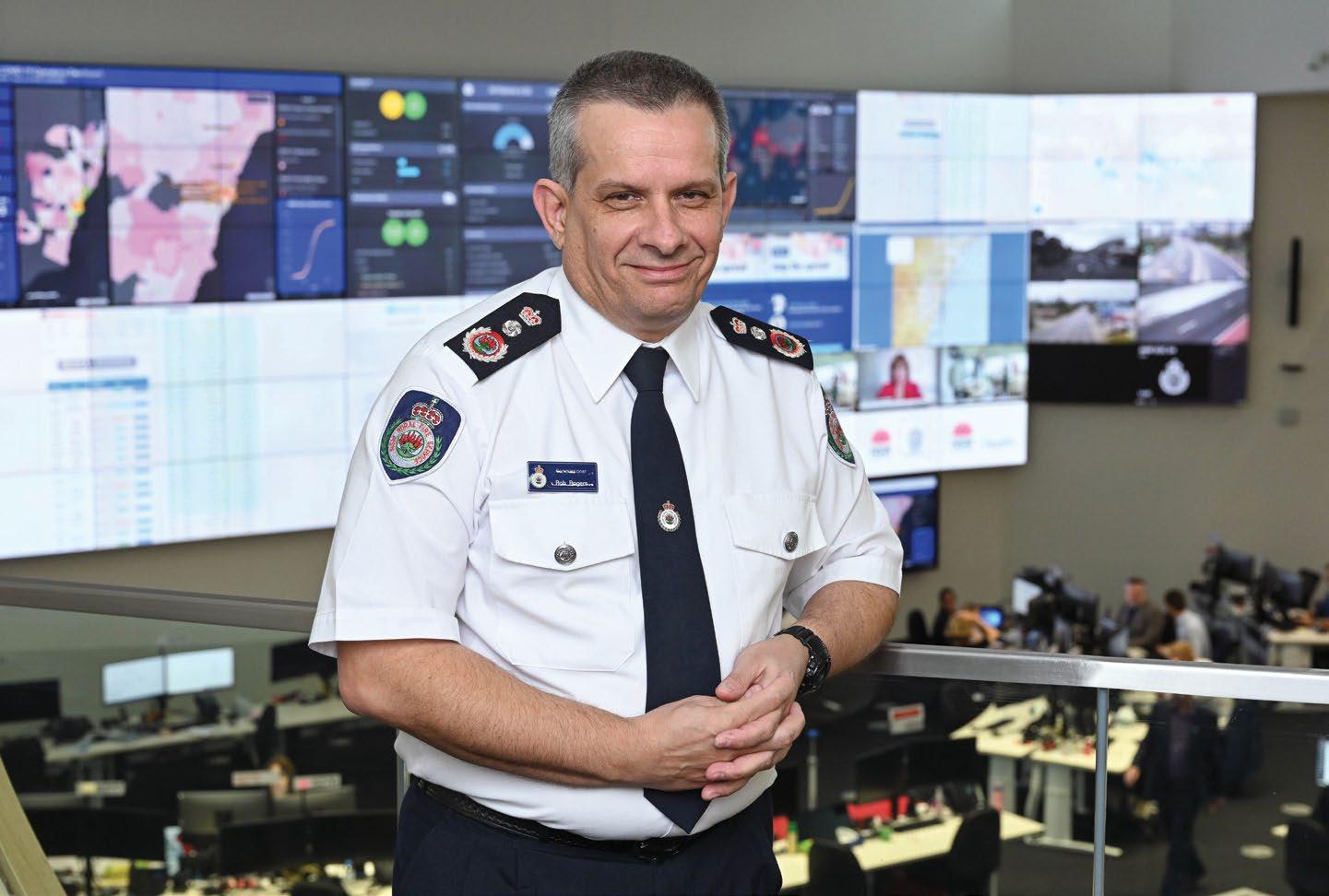
RW: You are a champion for, and early adopter of, new technology. If you were mentoring a new leader in the sector, what would your advice be to them about embracing change and innovation?
RR: After the 2019–20 fire season, I recognised the critical importance of ensuring that the RFS was better equipped and prepared for the challenges of future fire seasons. Reflecting on the lessons learned from that fire season, it became clear to me that embracing technology would be a game-changer for every aspect of our operations. From call-out systems and mobile data terminals to advanced AI tools, personal protective equipment, and even the safety of the fire trucks our firefighters use, there were opportunities for innovation to enhance our response capabilities.
For a new leader in the sector, my advice would be simple but vital: don’t be afraid to embrace change and innovation, especially when it can improve the way your organisation operates. Technology is not just about keeping pace with the times; it’s about staying ahead of the curve and ensuring your team or agency has the tools it needs to tackle ever-evolving challenges.
However, it’s important to recognise that these technological advancements
are not short-term projects. They require significant investment, planning, and persistence. One of the most important lessons I’ve learned is the necessity of clearly articulating what success looks like at the outset. Whether it’s the implementation of new systems, tools, or processes, setting clear goals and defining measurable outcomes is crucial for long-term success.
At the same time, it’s important to prepare for resistance. Change can be difficult for some, and there will always be those who are reluctant to adopt new methods or technologies.
You’ll encounter naysayers who may passively resist innovation. In these moments, it’s essential to stay focused on the bigger picture. By leading with an open mind and a forward-thinking approach, new leaders can ensure that their agencies are always prepared for the next challenge, whatever it may be.
RW: In the 2019–20 bushfire season, the entire country was tested. You were Deputy Commissioner during that season and took on the Commissioner role shortly after. How did that season shape your mindset as you stepped into your leadership position, and how did it change your views on the future?
RR: Taking up the Commissioner’s role
“By leading with an open mind and a forward-thinking approach, new leaders can ensure that their agencies are always prepared for the next challenge, whatever it may be.”
Above: NSW Rural Fire Service Commissioner Rob Rogers.
immediately after the 2019–20 fire season was a daunting prospect. The RFS had endured over six months of relentless fires, with the heartbreaking loss of firefighters and community members deeply affecting everyone. The season also led to the departure of many experienced leaders, prompting an urgent need to develop the next generation of staff through expanded training and leadership support.
One of the most pressing issues was addressing the psychological toll on staff and volunteers. With strong backing from the NSW Government, we introduced initiatives such as embedding psychologists in Area Commands. Yet, for many, the emotional impact of that season remains.
PHOTO: AFAC
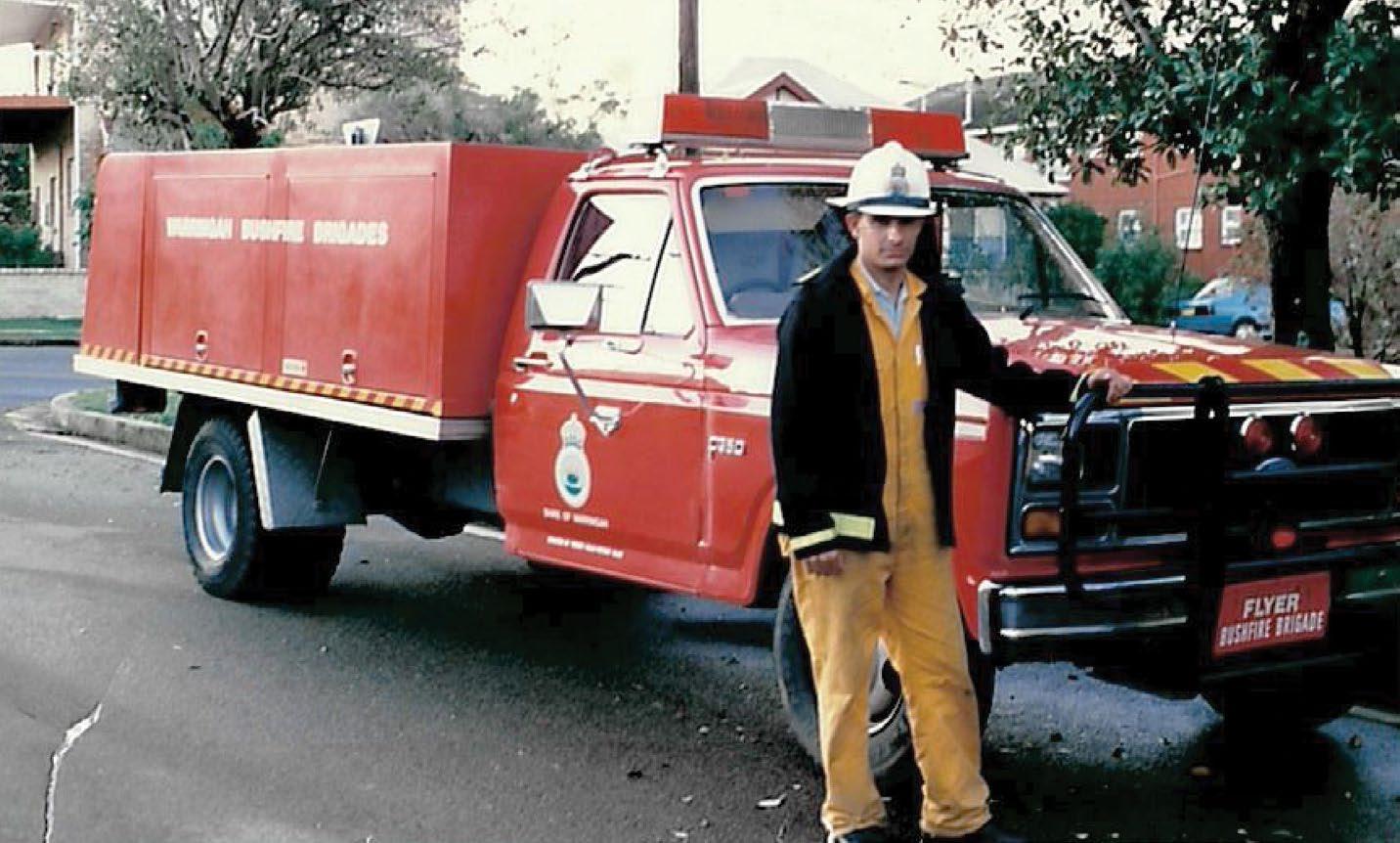
It’s fair to say though that, for many, the invisible scars from that season will be carried with some staff and volunteers for the rest of their lives. That season shaped my mindset significantly as a leader. It reinforced the importance of resilience—not just physical, but mental and emotional resilience as well. It also highlighted the need for proactive support systems, not just in times of crisis, but as an ongoing part of our culture.
As I look to the future, it is clear that we must continue to adapt, not only in terms of firefighting tactics and technology, but also in how we support our people, build leadership capacity, and prepare for the growing challenges that future fire seasons will undoubtedly bring. The events of 2019–20 served as a stark reminder of the need to continually evolve, both in our operations and in how we care for those who serve on the frontlines.
RW: Safety has been a big part of the NSW RFS identity and history. What are some of the things you are most proud to have implemented in this space, and what further safety innovation excites you about the future?
RR: The awful circumstances of the loss of life that occurred in the 2019–20 fire season necessitated us doing better. As a result, we focused on making
career.
significant changes to ensure that we were doing everything possible to protect those who serve on the frontlines, as well as the communities we are there to safeguard.
One of the key areas we have worked hard to improve is the way we communicate with the public during emergencies. Recognising the importance of clear, timely warnings, we made substantial investments in acquiring our own aircraft for fire mapping and surveillance. This has greatly enhanced our ability to monitor fire activity and provide more accurate, up-to-date warnings to the public, which is vital in reducing risk and helping people make informed decisions during emergencies.
For our firefighters, improving their safety has been a top priority. We’ve made significant strides in enhancing personal protective equipment—
especially head protection—and the development of Rollover and Falling Object Protective Structures (ROPS and FOPS) for fire trucks in partnership with Monash University.
Looking ahead, we’re working with the University of Sydney on wearable technology that monitors firefighter vital signs and location in real time, improving situational awareness and emergency response.
Beyond these advancements, we are also focusing on the next generation of fire tankers, ensuring that they are designed with the latest safety features and technology.
In the years to come, I am excited to see how these innovations continue to evolve. All this work is driven by a singular focus: to do everything we can to ensure that our firefighters return home safely at the end of each shift.
For our firefighters, improving their safety has been a top priority. We’ve made significant strides in enhancing personal protective equipment— especially head protection—and the development of Rollover and Falling Object Protective Structures (ROPS and FOPS) for fire trucks in partnership with Monash University.
PHOTO: AFAC
Above: Rob Rogers during his early
PHOTO: NSW Rural Fire Service

$350 per person per year
Covers you every year for 10 years. That’s long-term protection, sorted now.
Why it Matters
· You may carry liability even after changing roles or employers.
· Practitioners can be held personally liable for AFSS & Designs that you sign o on for 10 years.
· Run-o cover can help shield your personal assets in the event of a claim.

BURNING AMBITION
THE UNITED NATIONS GLOBAL FIRE MANAGEMENT HUB PLENARY
SANDRA WHIGHT
AFAC, Executive Director National Capability
A new Global Fire Management Hub has been formed in the Forestry Division of the Food and Agriculture Organization of the United Nations (UN FAO). The inaugural plenary of the Fire Hub was held in Rome, Italy, from 10 to 12 June 2025. The event convened more than 600 delegates from 85 countries, representing more than 250 organisations, to advance integrated landscape fire management through the UN’s Fire Hub mechanism.
What is integrated landscape fire management?
Fires don’t pay attention to the arbitrary boundaries and lines humans have drawn across our landscapes. Integrated fire management (IFM) approaches recognise the need for fire activities to be integrated into national policies and plans, are cross-sectorial, and involve diverse stakeholders for all different parts of society and diverse communities. IFM involves looking at
the whole spectrum of prevention, preparedness, response, and recovery across multiple stakeholders to have long-term sustainable solutions to address the negative impacts of fire in the landscape.
Why the FAO?
The Food and Agriculture Organization of the United Nations formed in 1945 as a specialised agency leading international efforts to defeat hunger. As part of this mandate, the FAO has a focus on forests, which cover 31% of the globe and are home to more than half the world’s terrestrial flora and fauna. Forests are also essential for food, income, shelter, and energy for heating and cooking.
The Forestry Division of the FAO leads work in promoting sustainable management of forests, including understanding the impacts of landscape fire in these environments. The FAO Forestry Division has supported the development of IFM Voluntary Guidelines, working in partnership with the Global Fire Monitoring Center and the International Liaison Committee of the International Wildland Fire Conferences.
With the threat of wildfires growing globally, there has been an urgent need for countries to collaborate and shift their focus from response to prevention, looking at the issues of
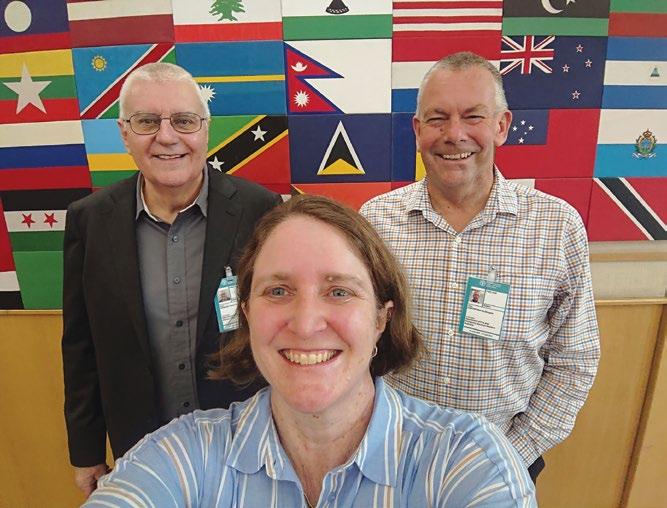
wildfire management in a holistic way. To address this need, the UN Global Fire Management Hub (the Fire Hub) was formed, and launched in May 2023 at the 8th International Wildland Fire Conference. Initially, a series of online workshops was held to refine the purpose and pillars of the hub, culminating in the first plenary held in June this year.
What is the purpose of the Fire Hub?
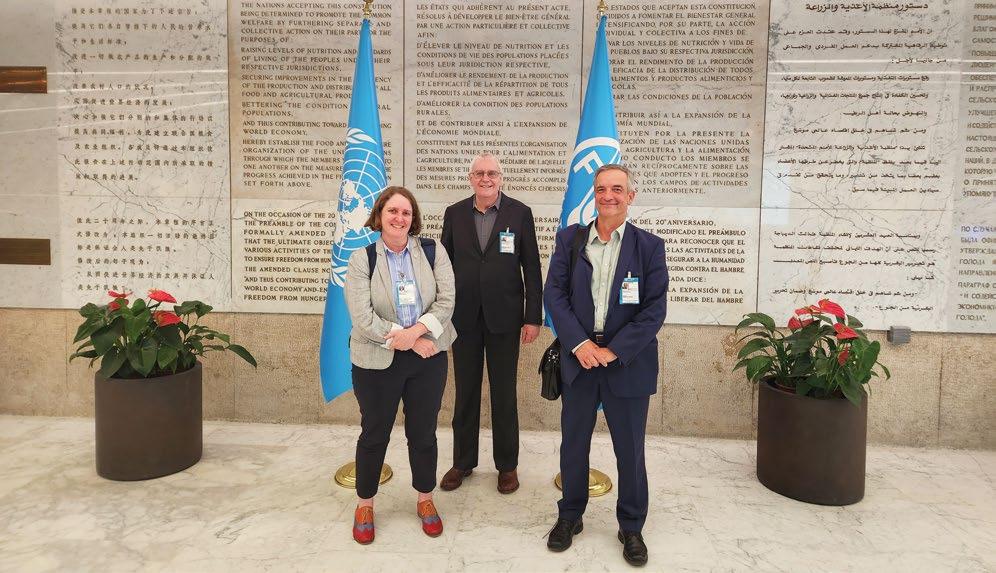
The Fire Hub brings together key partners to assist countries across the world build their capacities to implement integrated fire management to reduce the negative impacts of wildfire on landscapes, communities, and global climate stability. There are five main pillars of the work:
1. Knowledge and data sharing: Definition of major fire concepts, publications, technical advice on integrated fire management, workshops and events, and easy access to datasets and products.
2. Capacity building: Training with national agencies and leaders, mentoring program for young fire experts.
Below, L–R: Sandra Whight, Trevor Howard and Alen Slijepcevic attended the inaugural plenary of the Global Fire Management Hub in Rome, representing the Australian and New Zealand fire and emergency services.
PHOTO: SANDRA WHIGHT, AFAC
Above, L–R: Trevor Howard, Sandra Whight and Murray Carter increased interagency collaboration by incorporating international insights and taking part in discussions on fire management challenges.
PHOTO: SANDRA WHIGHT, AFAC
3. Wildfire-resilient communities: First Nations and traditional knowledge, community-based fire management, gender, equity, diversity, and inclusion.
4. Fire risk reduction and early warning: Wildfire risk assessment methods and tools, including post-fire loss and damage, early warning systems.
5. Integrated fire management policy development and implementation: Incorporating integrated fire management into national and subnational policies, support for regional fire networks.
What happened in Rome?
The first plenary of the Fire Hub accelerated action on implementing IFM through inclusive and evidencebased action. Over three days, representatives from governments, Indigenous peoples, local communities, practitioners, researchers, civil society, international organisations, and the private sector engaged in high-level discussions, technical exchanges, and knowledge-sharing across 18 plenary sessions and side events.
Sessions included discussions on community-based fire management; smoke impacts; post-fire restoration; fire data and information systems; early warning and fire danger rating systems; harnessing science, technology and innovation; IFM policy development and implementation, particularly with First Nation’s people; numerous regional spotlights; capacity building; finance; and international interoperability.
Representing the Australia and New Zealand fire and emergency services were Sandra Whight, AFAC Executive Director of National Capability, and Murray Carter, Executive Director, Rural Fires Division, Department of Fire and Emergency Services, WA, and Chair of AFAC’s Rural and Land Management Group. Also in attendance was Alen Slijepcevic, Deputy Chief Officer Bushfire with Victoria’s Country Fire Authority, and Trevor Howard from AFAC, who attended in his capacity as President of the International Association of Wildland Fire.
I was asked to present at the interoperability session, giving me the opportunity to showcase the work of
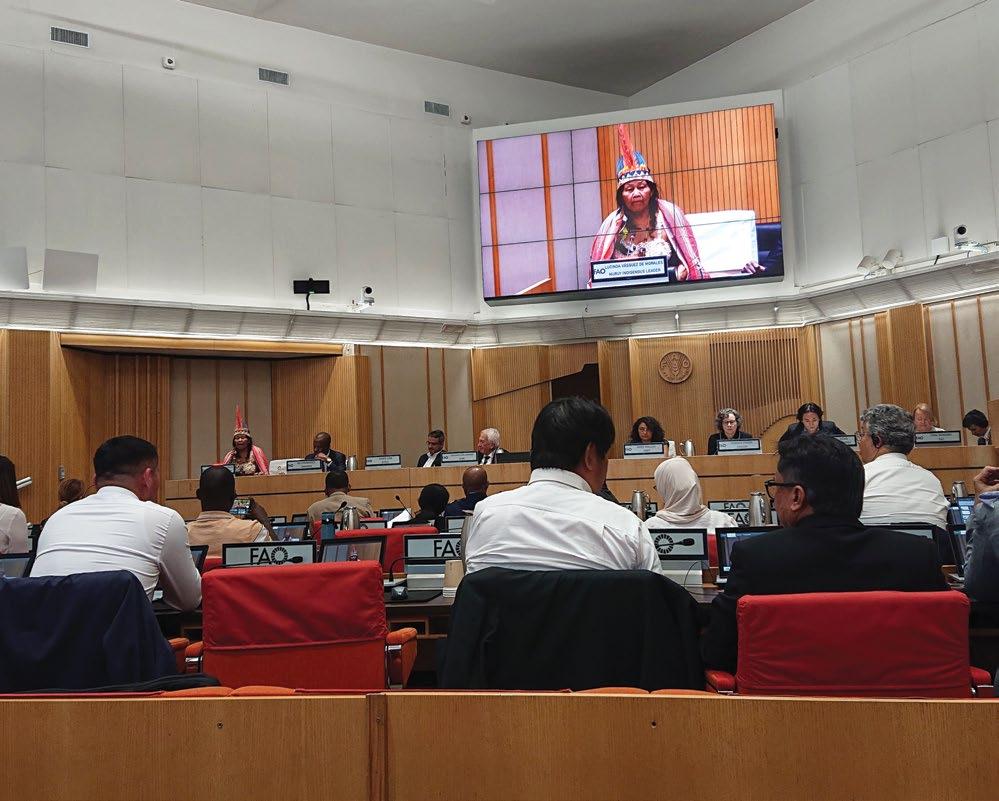
the National Resource Sharing Centre and to highlight the crosswalk work for response roles that is a pillar of AFAC’s ability to share resources internationally.
Throughout the event it was highlighted that all the issues we are familiar with are amplified on a global scale. There are resource availability challenges among countries, and it was clear that, through the long history of bushfires in Australia and wildfires in New Zealand, we have a great deal to contribute.
Inclusion of all voices is one of the key pillars of the Fire Hub. Attendees heard directly from Indigenous communities in the Amazon that have been impacted by fire and changes in fire patterns. One of the most inspiring was the Muruy Indigenous leader,
Lucinda Vasquez Modes. She spoke passionately about the need for the right fire, of the right size, with the right smoke: “With the right fire we can do good things, the fire can give us life. We need to love fire. Fire should be cared for; we should not be afraid of the fire.”
What happens next?
Discussions and meetings can be great fun, but it is now time to translate this momentum into tangible on-theground implementation. There have been three dedicated working groups formed to commence the collaborative technical work of the Fire Hub. The initial work program is focused on community-based fire management, fire data, and interoperability.
To learn more about the Fire Hub and be part of the network, visit: https://www.fao.org/forestry/ firemanagement/projects/globalfire-management-hub/en
“With the right fire we can do good things, the fire can give us life. We need to love fire. Fire should be cared for; we should not be afraid of the fire.”
Lucinda Vasquez Mode, Muruy Indigenous leader
Above: Muruy Indigenous leader Lucinda Vasquez Modes addresses the Fire Hub, discussing the experiences of Indigenous communities with fire. discussions on fire management challenges. PHOTO: SANDRA WHIGHT, AFAC
BLAST FROM THE PAST
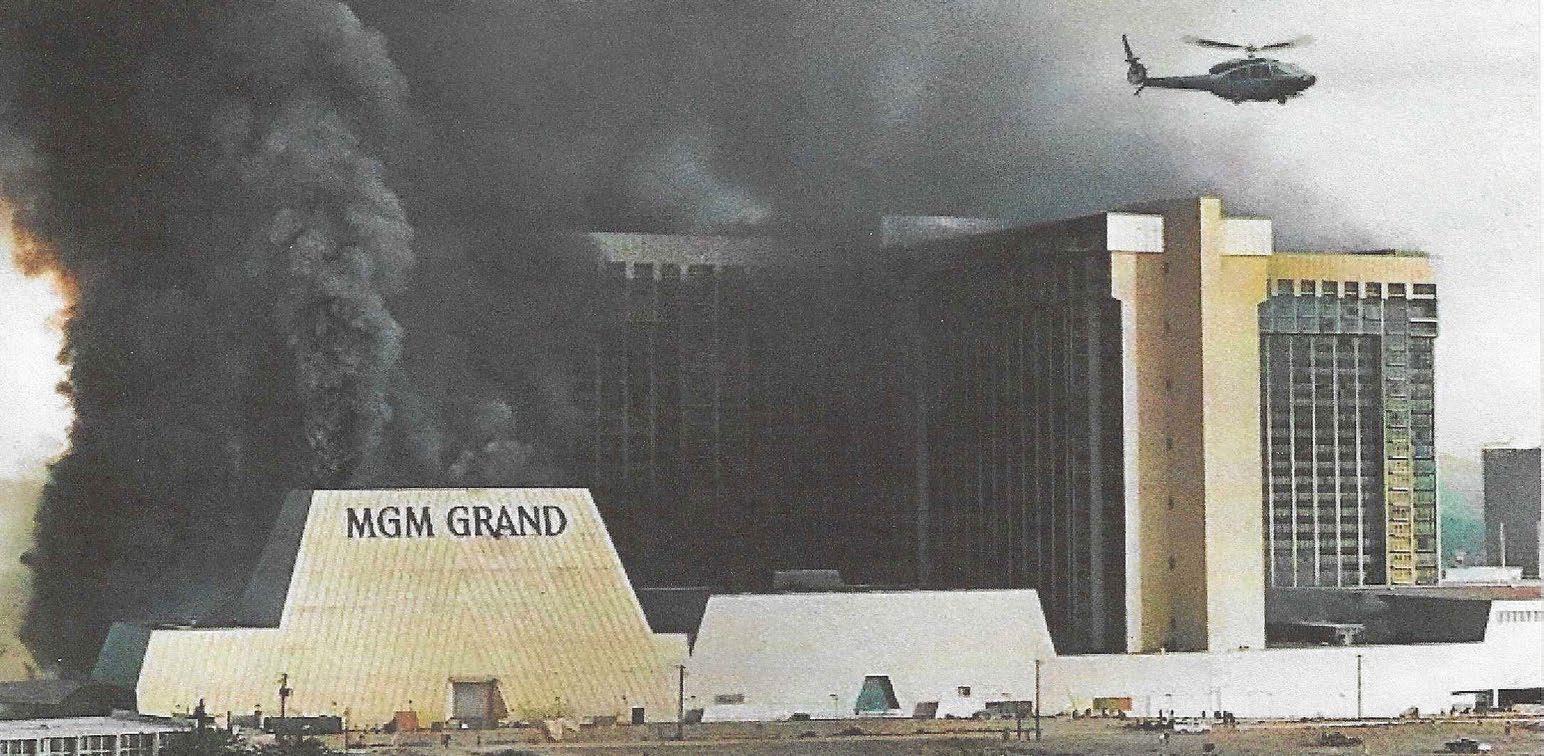
At the time of the fire (about 7.00 am), some 5,000 people were in the MGM Grand, a casino and 26-storey hotel with more than 2,000 hotel rooms.
MGM GRAND HOTEL FIRE, LAS VEGAS, 1980
Nevada’s deadliest disaster, revealing major fire safety failures.
Fire swept through the luxury MGM Grand Hotel and Casino in Las Vegas, Nevada, in the early morning of 21 November 1980. It killed 85 people and injured 650 others. It remains the deadliest disaster in Nevada history and the third-deadliest hotel fire in modern US history (after the 1946 Winecoff Hotel fire in Atlanta that killed 119 people and the 1986 Dupont Plaza Hotel fire in Puerto Rico that killed 97). Most of the deaths in the MGM Grand fire were caused by smoke inhalation on the upper floors of the hotel.
The death toll may well have been higher but for the quick response of personnel and equipment from Nellis Air Force Base, Nevada; air force helicopters not only rescued 93 people from the hotel roof but also transported firefighters to and from the roof.
At the time of the fire (about 7.00 am) some 5,000 people were in the MGM Grand, a casino and 26-storey hotel with more than 2,000 hotel rooms. The fire was caused by an electrical earth fault in wiring serving a refrigerated food display cabinet in one of the
casino restaurants known as ‘The Deli’. Vibration of the machine caused cable insulation failure, arcing, and fire, which spread through the casino and hotel lobby at up to five to six metres per second. From the time the fire was noticed, it took about six minutes for the entire unsprinklered casino floor to become fully involved. Eighteen people died in the casino space.
As noted, the casino was not protected by automatic sprinklers; this part of the complex was exempt from rules requiring sprinklers because it was occupied 24 hours a day. At the time of the fire it had stopped operating around the clock and was closed and unoccupied. The hotel tower was partially fitted with sprinklers that performed properly by keeping fire out of the hotel high-rise area. Nevertheless, 64 deaths occurred on the upper levels of the hotel tower (mostly from the 20th to the 25th floors) where the smoke concentration was the highest.
It was reported that, due to faulty smoke dampers within the ventilation ductwork, toxic fumes circulated throughout the hotel’s air conditioning system. There was no smoke outlet on the casino floor, so smoke was spread into the hotel by the ventilation system. Elevator shafts, stairwells, and seismic joints acted as chimneys and spread smoke and heat all the way through to
the 26th floor. Telephone switchboard operators were forced to evacuate and guests were therefore not notified of the emergency.
The hotel egress arrangements were inadequate. Elevators did not automatically return to the main floor during a fire emergency; thus the only guest exit paths were from rooms down stairwells to the street. Once guests entered stairwells, self-locking doors prevented them from returning to hallways. Most deaths occurred in the stairwells where the doors locked behind evacuees.
The hotel was refurbished at a cost of US $50 million and reopened in July 1981, with numerous fire safety features in place. These included automatic sprinkler and fire alarm protection throughout the complex. The air conditioning system was extensively modified to prevent smoke from entering hotel rooms. Exhaust fans, capable of clearing the hotel of fumes within 10 minutes, were installed as part of the rebuild.
Largely as a result of the MGM Grand disaster, all buildings open to the public in Nevada were subsequently required to have automatic sprinkler protection, smoke detectors in rooms and elevators, and exit maps in all hotel rooms.
Approximately 35 firefighters sought medical care, and 15 were hospitalised for periods ranging from one day to two weeks. Between 200 and 300 firefighters also experienced dizziness, headaches, and rhinitis in the days following the fire, but did not seek medical attention.
BARRY LEE OAM
PROTECTING OUR OCEANS AND COMMUNITIES: SUSTAINABLE FIRE SAFETY IN THE MARITIME SECTOR

In acknowledgement of World Maritime Day, the FPIB highlights how the marine sector can protect both ocean health and community safety through the responsible management of fire suppression systems.
ROBERT HENNINGHAM
Fire Protection Industry (ODS & SGG) Board Communications Team Leader
The ocean is vital to life on Earth. It drives our climate, sustains ecosystems, and enables global trade, with more than 80% of goods transported by sea. This interconnectedness brings both obligation and opportunity, which was a key reflection in this year’s International Maritime Organization’s (IMO) World Maritime Day theme, ‘Our Ocean, Our Obligation, Our Opportunity’.
The theme speaks to a critical truth; what happens at sea has a direct and lasting impact on life on land and the safety of our community, highlighting the need to protect both people and the natural systems they depend on. For the maritime sector, safety doesn’t end with preventing accidents at sea; it also includes ensuring the long-term health of the ocean itself.
One area where these priorities converge is fire safety in shipping. Every vessel, from tugboats and ferries to container ships and cruise liners, faces the risk of fire, whether from engine room incidents, galley accidents, or other onboard hazards. Fire suppression systems are essential for protecting crews, passengers, and cargo. However, many of these
systems have historically relied on ozone-depleting substances (ODS) and synthetic greenhouse gases (SGG) that, when released into the atmosphere, harm the ozone layer and contribute significantly to climate change.
As a result, the task of safeguarding lives and property on ships cannot be separated from the responsibility to protect the environment. By reducing reliance on these substances, the maritime industry is taking meaningful action to safeguard both vessels and the oceans they sail upon.
The challenge of balancing safety with environmental responsibility has been evolving for decades. Historically, the now-banned fire suppressant halon was widely used at sea due to its unmatched effectiveness in extinguishing fires quickly. However, halon’s environmental impact is detrimental. It has an ozone-depleting potential (ODP) 10 times greater than carbon dioxide and a global warming potential (GWP) that is 6,200 times greater.
Recognising this threat, the global community acted through the Montreal Protocol, a landmark international treaty adopted in 1987 to phase out ODS. In Australia, halon has been banned from importation or use on commercial vessels since 1993. This pivotal shift demonstrates how
international cooperation can drive tangible environmental improvements, protecting both marine ecosystems and the communities that rely on them.
In halon’s place, alternatives such as FM-200®, FE-227™, and NAF S-III are now widely used in the maritime sector. These options are safer for the environment, but they must still be handled carefully to prevent accidental discharges. Under Australian law, these substances can only be purchased through companies holding an extinguishing agent trading authorisation (EATA) issued by the Fire Protection Industry (ODS & SGG) Board (FPIB).
The FPIB operates on behalf of the Department of Climate Change, Energy, the Environment and Water (DCCEEW), and plays an important role in controlling how these substances are managed under the Ozone Protection and Synthetic Greenhouse Gas Regulations 1995. Their oversight ensures that maritime fire suppression systems remain effective while aligning with Australia’s international commitments to reduce environmental harm.
This transition away from halon and other ODS illustrates the broader opportunity facing the maritime industry: to embrace cleaner alternatives that keep people safe while also helping to heal the planet. For ship managers, operators, and
Commercial container ship at sea. Fire suppression systems are essential for protecting crews, passengers, and cargo.
PHOTO: CANVA
builders, navigating this balance begins with practical, day-to-day decisions. The FPIB provides clear guidance to help maritime professionals maintain compliance while improving safety outcomes. Following the listed recommendations not only protects lives and assets but also prevents harmful environmental releases of ODS & SGG. The Board recommends:
1. Using licensed technicians. Installation, servicing, and maintenance of gaseous fire suppression systems should only be carried out by licensed technicians. This ensures that all work complies with regulatory standards and minimises the risk of accidental leaks.
2. Conducting regular maintenance. Frequent inspections and servicing are vital for ensuring systems are ready to respond in an emergency. A well-maintained system reduces both safety risks and environmental hazards.
3. Prioritising quality in design and commissioning. A fire suppression system’s effectiveness depends on its design and commissioning. Poorly designed systems are far more likely to fail when needed most, potentially endangering both lives and vessels.
4. Considering environmentally friendly alternatives. While there is no legal requirement to replace existing systems, vessel owners are encouraged to consider switching to inert gas systems, condensed aerosols, or other environmentally responsible technologies where practical.
These steps not only ensure compliance with Australian regulations but also align with global efforts to reduce emissions of ODS and SGG. This proactive approach strengthens both immediate safety outcomes and long-term environmental resilience. The importance of this work becomes clearer when we consider the ripple effects of ozone depletion and climate change. A weakened ozone layer allows more harmful ultraviolet (UV) radiation to reach Earth, increasing the risk of skin cancers, cataracts, and other health issues in communities worldwide. It also disrupts ecosystems by harming organisms, including phytoplankton, the foundation of marine food chains. When phytoplankton populations decline, it impacts fisheries, biodiversity, and ultimately global food security. On land, there are similar implications.
Unchecked ODS emissions would also have accelerated climate change. Researchers estimate that without the Montreal Protocol, the world could have experienced an additional 2.5°C of global warming by 2100. Thanks to collective action, however, the ozone layer is now on track to fully recover by mid-century, demonstrating the power of coordinated, sciencebased regulation. For the maritime industry, this global success story is a reminder that everyday decisions, such as managing fire suppression systems responsibly, contributes to a much larger picture. Each vessel that prevents unnecessary emissions is actively helping to protect communities


and ecosystems around the world.
International Maritime Day’s theme is a timely call to action: ‘Our Ocean, Our Obligation, Our Opportunity’. For the maritime sector, this means recognising that community safety doesn’t stop at the shoreline. The same systems that protect lives at sea must also be managed in ways that safeguard the ocean and atmosphere.
By integrating environmental responsibility into fire safety practices, through the appropriate licensing, training, maintenance, and moving where possible to cleaner alternatives, the maritime industry can lead the way in demonstrating that safety and sustainability go hand in hand. Each step taken to prevent ODS and SGG emissions is more than a regulatory requirement; it’s a commitment to protecting the world’s oceans, communities, and future generations. Ultimately, protecting the ocean means protecting ourselves. By looking after both, the maritime industry can turn obligation into opportunity, and create a safer, healthier planet for all of us and our communities.

PHOTO: CANVA
JOE BUFFONE PSM
Joe Buffone has concluded his role as Deputy Coordinator-General Emergency Management Response Group at the National Emergency Management Agency. As well as being a member of AFAC National Council and Co-Chair of the Commissioners and Chief Officers Strategic Committee, Mr Buffone has been responsible for overseeing the Australian Government National Situation Room and coordination of Australian Government Disaster Assistance. Mr Buffone previously held the position of Director General of Emergency Management Australia (EMA) from March 2020 to September 2022. He held multiple roles in the organisation, having been with EMA since December 2016.
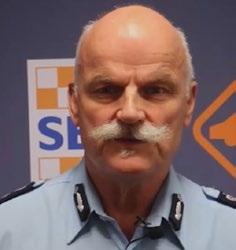
Alistair Drayton has been appointed as the new Chief Officer Operations at Victoria State Emergency Service (VSES), replacing Tim Wiebusch ESM who was appointed by the Victorian Government as Victoria’s Emergency Management Commissioner in June 2025. A longstanding member of the Country Fire Authority for more than 35 years, Mr Drayton has served in both volunteer and staff capacities. He has more than 25 years of experience in incident management and is an accredited Incident Controller, Regional Controller, and State Response Controller. Mr Drayton has led responses during some of Victoria’s most significant emergencies, in addition to international deployments.
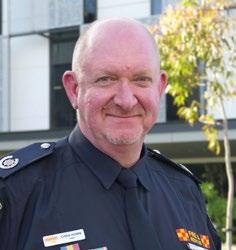
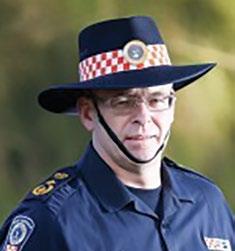
CHRIS BEATTIE
Chris Beattie has been temporarily seconded to the SA Department of the Premier and Cabinet (DPC) as the Response Coordinator for South Australia’s algal bloom. Mr Beattie was appointed as the Chief Officer and Chief Executive of the South Australian State Emergency Service in October 2010, where he had overall responsibility for the SES and ancillary responsibilities for Volunteer Marine Rescue and the state’s emergency management arrangements. Mr Beattie is a member of the Champions of Change Fire and Emergency Group, established in 2017 in partnership with AFAC.
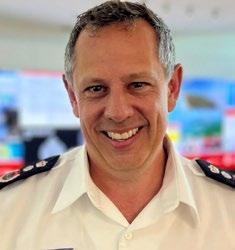
The NSW Government has appointed Trent Curtin as the new Commissioner of the Rural Fire Service, following the retirement of Rob Rogers from this vital emergency leadership role after 40 years of service to the RFS. Mr Curtin has more than three decades of experience in fire and emergency management, crisis leadership, and organisational strategy. He has held senior leadership roles in Victoria and NSW, including Assistant Chief Fire Officer at Fire Rescue Victoria, and Assistant Commissioner at Fire and Rescue NSW (FRNSW), where he was responsible for supporting Community Fire Unit volunteers.

In August 2025 Julia Waddington-Powell became Chief Operating Officer for the Women’s and Children’s Health Network. Ms Waddington-Powell has 30 years of experience in the South Australian public sector, including leading the South Australian Fire and Emergency Services Commission (SAFECOM) as Chief Executive from 2021 to 2025. SAFECOM is tasked with supporting the emergency services sector (CFS, MFS, and SES) in delivering frontline service and plays a key role in emergency management across government. Prior to this Ms WaddingtonPowell held the role of Executive Director of Country Operations, Rescue, Retrieval and Aviation Services at SA Ambulance Service.
Brenton Hastie has been appointed Executive Director Statewide Operations with the SA Country Fire Service (CFS). Mr Hastie brings significant operational and strategic experience to the role, having served as Acting Deputy Chief Officer, Executive Director Operations, Director State Operations, and Regional Commander. Mr Hastie has been a CFS volunteer since the age of 15, spending time with Hahndorf, Echunga, Compton, and Naracoorte brigades and with the CFA in Victoria. He holds a Master of Environmental Management (Fire Management) and was the first CFS officer to complete the NSW Rural Fire Service Incident Controller Major Incident program.
Chris Howie has been appointed Executive Director Frontline Operations with the SA Country Fire Service (CFS). Mr Howie joins CFS from SA Ambulance Service, where he was Operations Manager, Executive Operations Support. With more than 30 years in emergency services, his career highlights include serving as SAAS COVID-19 Incident Commander and managing the relocation of patients to the new Royal Adelaide Hospital. A life member and longstanding volunteer with the CFS, Mr Howie has completed extensive training and participated in deployments across SA and interstate.
JULIA WADDINGTONPOWELL
CHRIS HOWIE
ALISTAIR DRAYTON
TRENT CURTIN
BRENTON HASTIE
CALENDAR

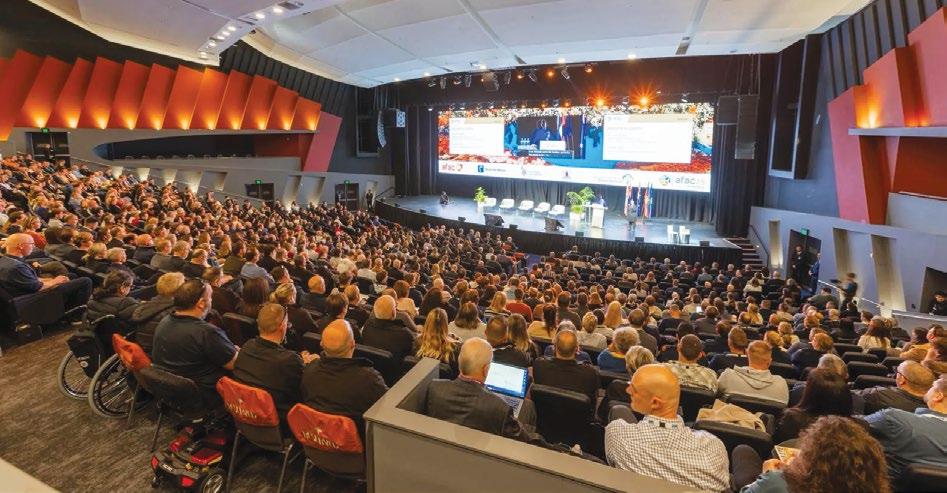
AFAC26 CONFERENCE AND EXHIBITION POWERED BY INTERSCHUTZ
18—21 August 2026
Melbourne Convention and Exhibition Centre
AFAC26 powered by INTERSCHUTZ is Australasia’s largest and most comprehensive emergency management conference and exhibition. The AFAC25 Conference and
JOINT EDITORS
HUDA SHARAIA (FPA AUSTRALIA)
Tel +61 477 268 972
huda.sharaia@fpaa.com.au
TOULA ELEFSINIOTIS (AFAC)
Tel +61 3 9418 5233
Toula.Elefsiniotis@afac.com.au

Exhibition brought together more than 4,400 emergency management professionals, industry leaders, and innovators from across Australia, New Zealand, and the world. On rotation around Australia’s states, AFAC26 returns to Melbourne hosted by Country Fire Authority, Fire Rescue Victoria, Forest Fire Management Victoria, Emergency Management Victoria, State Emergency Service and Tasmania Fire Service.
www.afacconference.com.au/afac-2026
PROTECTION ASSOCIATION AUSTRALIA (FPA AUSTRALIA)
ABN 30 005 366 576 PO Box 1049 Box Hill VIC 3128
Australia
Tel +61 3 8892 3133
Fax +61 3 8892 3132 magazine@fpaa.com.au www.fpaa.com.au

AFAC
ABN 52 060 049 327
Level 1, 340 Albert Street
East Melbourne VIC 3002
Australia
Tel +61 3 9419 2388 Fax +61 3 9419 2389 afac@afac.com.au www.afac.com.au
FPA AUSTRALIA EVENTS
FPA Australia runs technical events catering to the fire protection industry on a range of relevant and interesting topics. Covering the whole of the sector— wet systems, dry systems, passive fire, mechanical fire protection, special hazards, bushfire, and emergency planning— these seminars and webinars provide useful opportunities for practitioners to pick up continuing professional development points.
Presented by leading experts, our seminars and technical webinars provide all the information you need about relevant fire safety topics.
For a full list of upcoming events, visit: fpaa.com.au/events
Visit FPA Australia+ to catch up on all recent webinars from National Bushfire Protection Month, the recent National Bushfire Conference 2025, and FPA Australia, in your own time, without having to interrupt your workday.
Visit www.fpaaplus.com.au to browse our recorded webinars.
TO SUBMIT A CONTRIBUTION OR TO ADVERTISE IN FIRE AUSTRALIA, PLEASE CONTACT:
HUDA SHARAIA FPA AUSTRALIA
TEL +61 472 268 972
huda.sharaia@fpaa.com.au
PRODUCTION AND DESIGN: CORETEXT
Tel +61 3 9670 1168 www.coretext.com.au
PHOTO: AFAC


Specialised insurance cover for Fire Protection Professionals
As a trusted partner of Fire Protection Association Australia, Windsor Management Insurance Brokers provides tailored insurance solutions for fire protection professionals like you.
In your line of work, having the right insurance is essential to protecting yourself, your team, and your business from the unique risks of the industry. At Windsor Management Insurance Brokers, we carefully review your business needs and recommend appropriate solutions to ensure you’re fully covered.
We offer a range of insurance options, including:
• Public liability
• Professional indemnity
• Contract works
• Management liability
• Business insurance
• Motor fleet
• Tools of trade
• BPAD-specific insurance
• Other industry-specific insurance

Dedicated Insurance Team
NSW, ACT, WA & TAS.
Jana Day Account Manager (02) 8732 8501 / 0499 224 024 jday@wmib.com.au
QLD & NT.
Bev Jacobsen Account Manager (07) 3230 9306 / 0437 554 594 bjacobsen@wmib.com.au
SA.
John Mangos Account Manager (03) 9320 8544 / 0438 333 886 jmangos@wmib.com.au
VIC.
Danny Gasbarro Account Manager (03) 9320 8542 / 0439 003 363 dgasbarro@wmib.com.au

wmib.com.au/fire-protection-industry/