Treat the signs of ageing with fast and long-lasting results
 Model is not an actual patient.
Contents
04 ELLANSÉ. A safe and effective treatment for skin rejuvenation.
06 Innovation for safety and optimal results.
10 Beyond Hyaluronic Acid (HA) and Collagen Stimulators.

12 ELLANSÉ for Volume Restoration and Rejuvenation.
14 Where to use ELLANSÉ?
16 Patient Case Studies.
23 High Patient Satisfaction.
24 Bespoke Bioresorbable Treatment.
25 ELLANSÉ by Sinclair Phama. Support for business and clients.
Model is not an actual patient.
2 3
ELLANSÉ.
ELLANSÉ does so much more than correct lines and folds. It’s a dual-action dermal filler that works deep under the skin to treat the real causes of facial ageing by stimulating the production of the body’s natural collagen.
Combining smooth PCL microspheres with a CMC-based carrier gel,1 ELLANSÉ gets to work immediately, filling the areas affected by volume loss. Then, the microspheres degrade over time - leaving behind collagen structures that steadily rebuild and reshape facial contours to restore the youthful infrastructure of the skin.

RESTORE VOLUME REDEFINE CONTOURS REDUCE WRINKLES IMPROVE SKIN QUALITY
A Unique Composition: PCL and CMC1
70% Carboxymethyl Cellulose (CMC) based carrier gel
30% Polycaprolactone (PCL) microspheres
the microsphere
A safe and effective treatment for skin rejuvenation.
PCL chains within
Model is not an actual patient.
4 5
Innovation for safety and optimal results
Safety
ELLANSÉ achieved the CE Mark (CE 0344) and was launched in 2009. From its launch, ELLANSÉ’s excellent safety profile has been continuously reported, not only in clinical trials and vigilance surveys but also by clinical experts in daily practice.2
In a review of adverse events from launch to December 2020, the adverse event rate was 0.0572% - or 1 event in 1748 syringes.3
Variable Longevity for Sustained Effectiveness
ELLANSÉ is available in 3 options: S, M and L, with results lasting for 18 months, 2 years and 3 years respectively,* distinguished only by the initial polymer chain length of the PCL.
A unique and safe composition.
PCL is biodegradable and bioresorbable, naturally hydrolysed by the body into CO2 and H2O.4
CMC is a widely-used component classified as generally recognised as safe (GRAS).4
ELLANSÉ longevity options
The PCL microspheres’ unique biodegradation pattern maintains a longer effective lifetime than other dermal fillers, which start to degrade from day one.
S 18 MONTHS* ELLANSÉ M ELLANSÉ 2 YEARS* L ELLANSÉ 3 YEARS* * Expected longevity in-vivo based on extrapolation of clinical data from –S (at least 18 months) and –M (at least 2 years) and accepted PCL degradation behaviour.
ADVERSE EVENT RATE BY TYPE: 3 0.0271% Nodules/Lumps 0.0206% Swelling 0.0061% Hardness/Induration 0.0055% Inflammation 0.0009% Infection 0.0016% Bruising/Hematoma
PCL CMC 4 weeks 12 weeks 6 8 CMC Effect: 18 months 2 years 3 years S M L PCL Microsphere Effect: 6 7
Innovation for safety and optimal results
90% of patients, having undergone an ELLANSÉ S and M treatment, had improved, much improved or very much improved results at 12 months.5
100% of patients, having undergone an ELLANSÉ M treatment, had improved, much improved or very much improved results at 24 months.5
High efficacy of ELLANSÉ-S and ELLANSÉ-M
A clinical trial by Moers-Carpi and Sherwood (2013) assessed the effectiveness of ELLANSÉ-S (n=10) and ELLANSÉ-M (n=30) for the correction of moderate to severe nasolabial folds using GAIS at 3, 6, 9, 12, 18 and 24 months post treatment.
ELLANSÉ-M offers immediate and sustained performance6
Efficacy increases notably from 1 to 3 months
• Results are maintained for up to 24 months
Globa Aesthetic Imp ovement Scale (GAIS)
3 = very much imp oved
2 = much improved 1 = imp oved 0 = no change
Mean GAIS score ove a 24-month period. The scores increased notably rom 1 to 3 months, and the scores were wel maintained o up to 24 months.
A clinical trial by Bae et al. (2016) evaluated the safety and efficacy of forehead augmentation with ELLANSÉ-M in combination with botulinum toxin Type A (n=58). Efficacy was assessed using physician scores from the GAIS at 1, 3, 6, 12 and 24 months post treatment.
Proven Neocollagenesis for Regenerative Results

Type I collagen
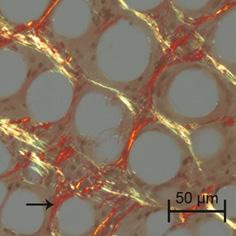
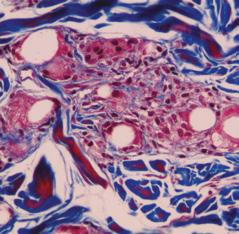
2013: 21 months post-injection (rabbit), Type I collagen confirms stable environment and long-term efficacy.7
2015: 13 months post-injection, confirmed collagen production in the human body.
PCL microspheres were surrounded with collagen deposition and a mild fibroblastic and histiocytic tissue response (Martin’s Trichrome staining, a collagen staining).8
Model is not an actual patient.
in nasolabia fo d treatment with high safety over a 2 year period 5 Investigator Evaluated G obal Aesthetic Improvement Scale (GAIS) P a t i e n ts % w ith im p r o veme n t P a t i e n ts % w ith im p r o veme n t ELLANSÉ - S months months 3 6 9 12 15 18 24 3 6 9 12 15 18 24 ELLANSÉ - M improved imp oved much improved much imp oved very much improved very much improved 100% 90% 80% 70% 60% 50% 40% 30% 20% 10% 0% 100% 90% 80% 70% 60% 50% 40% 30% 20% 10% 0% 35% 10% 40% 45% 78% 11% 11% 10% 20% 20% 60% 45% 35% 15% 45% 3,5% 51,7% 13 8% 62,8% 27 6% 25,9% 41 4% 50% 71% 58% 50% 23% 77% 6% 44% 31% 14% 7% 4% 5,2% 55% 10%
•
-1
worse Mean
scores physician evaluation 1 month 3 month 6 month 12 month 24 month 2.14 ± 0.95 2.38 ± 0 77 2.50 ± 0 76 2.45 ± 0.52 2.33 ± 0.50 3 2.5 2 1.5 1 0.5 0 Mean GAIS scores 3 Month 1 Month 6 Month 12 Month 24 Month
=
GAIS
8 9
Beyond Hyaluronic Acid (HA) and Collagen Stimulators
ELLANSÉ versus Hyaluronic Acid Fillers
ELLANSÉ offers clear advantages over the NASHA-based dermal filler in terms of performance, durability and efficacy.
A split-face clinical study by Galadari et al. (2015) evaluated the safety and efficacy of ELLANSÉ-S with the HA dermal filler, Perlane, when used to treat moderate to severe nasolabial folds (n=40). Efficacy was compared using the mean wrinkle severity rating score (WSRS).
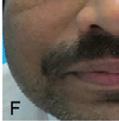
• Statistically superior to an HA dermal filler, ELLANSÉ outperforms non-animal stabilised hyaluronic acid (NASHA)-based dermal filler in both effectiveness and longevity.9
• Compared to the NASHA-based dermal filler effect, results show that ELLANSÉ achieved the optimal result with a 17% lower injection volume.9
• ELLANSÉ was shown to build greater structural support and volumisation, with significantly higher elasticity (G’ of 1,000 Pa) than the NASHA dermal filler.6
• After neocollagenesis, ELLANSÉ provides an elastic modulus almost equal to that of the dermis and is cosmetically more favourable than an HA dermal filler.6
ELLANSÉ versus Collagen Stimulators
Immediate and sustained performance
• Collagen stimulation induces long-term volumising capacity, for lasting, natural-looking results from a minimum of 18 months to 3 years.*
• Immediate results compared to Poly-L-Lactic Acid (PLLA)-based filler.
• Improved stability and duration compared to Calcium Hydroxylapatite (CaHA)-based filler.
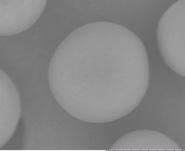
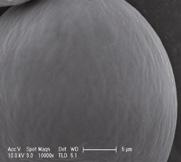
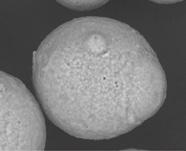
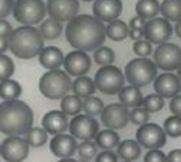
Smoother, more spherical microspheres.10-14
versus NASHA for treatment of nasolabial folds
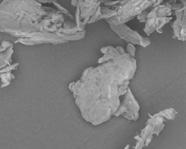
ELLANSÉ is composed of smooth, spherical PCL particles with a diameter of 25-50μm. Since rough surfaces and irregular-shaped particles can cause adverse reactions (such as nodules and decreased collagen deposition), it’s been specifically designed for optimum compatibility with the body.
Smooth surface compared to PLLA-based filler
Improved, long-term volume and control of mass loss compared to CaHA-based filler
Duration of action can be controlled and varied compared to PLLA and CaHA-based fillers
9 NASHA PCL baseline 12 months 4.00 3.53 2.57 2.54 2.21 1.88 2.00* 2.29 2.87 2.16** 2.57** 3.05 3.55 3.50 3.00 2.50 2.00 1.50 Baseline Month 1 Month 3 Month 6 Month 9 Month 12 PCL NASH A * P < 0.05 ** P < 0.005 Mean Wrinkle Severity Rating Score WSRS)
Comparative clinical study of ELLANSÉ
SUMMARY
1 2 3
Smooth Spherica microparticles
Microscope
Ligh mic oscopy picture Light mic oscopy His ology 2-weeks post-injection Radiesse ® mic ospheres Circularity (mean) † 0.994 ELLANSÉ ® microspheres Circularity (mean) 0.997 Sculpt a ® particles Circularity (mean) 0.682 COLLAGEN STIMULATOR POLYMER/ MINERAL SIZE SHAPE SURFACE DURATION ELLANSÉ ® PCL 25 - 50 μm Spherical Smooth Tunable over 18 - 36 months*15 Radiesse® CaHA 25 - 45 μm General y spherical Smooth Over 12 months16 Sculptra® PLLA 40 - 63 μm Irregular Irregular 25 months 17 ◊ High quality scaffold *Expected longevity in-vivo based on extrapolation of clinical data from –S (at least 18 months) and –M (at least 2 years) and accepted PCL degradation behaviour. † Roundness calculated by Flow Particle Image Analyser (FPIA). 10 11
Scanning Electron
picture (SEM)
ELLANSÉ for Volume Restoration and Rejuvenation

ELLANSÉ comes with the added benefit of improving the skin’s quality as evidenced clinically and via various quantitative parameters.18,19 In cases, with results being more significant and longer lasting than other available tested dermal fillers.19
So, ELLANSÉ not only immediately corrects lines and folds and gradually restores facial contours, it also enhances the skin’s density, firmness, tonicity and texture from within.19
ELLANSÉ versus Baseline19
A clinical trial was conducted to assess the effect of ELLANSÉ (n=24) on skin quality parameters at 3, 6, 9, 12, 18 and 24 months post treatment in the mid-face.
Echographic analysis revealed the improvement of skin density was statistically significant at all time points in comparison with the baseline following treatment with ELLANSÉ.
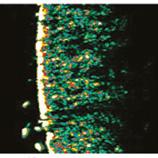
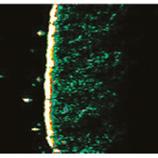
Although ELLANSÉ was injected in the subdermis, subject echographs clearly display a substantial increase in tissue density in the dermis.
Skin echograph of subject mid-face pre & post ELLANSÉ treatment
ELLANSÉ also enhances a number of other skin biomechanical parameters; skin firmness, tonicity and smoothness were statistically significantly improved, in comparison with the baseline.
Percentage increase in skin density following ELLANSÉ treatment 3m 6m 9m TIME POST-INJECTION 12m 18m 24m 10 20 30 40 50 60 70 16.0* 36.2* 45.0* 59.6* 56.1* 41.3* % INCREASE IN SKIN DENSITY 3m 6m 9m TIME POST-INJECTION 12m 18m 24m 5 10 15 20 25 30 35 14 1* 9.2* 16.2* 9.2* 15.9* 14.1* 16.8* 14.3* 6.5 2.3 32.6* % INCREASE IN SKIN FIRMNESS / TONICITY Percentage
in
and tonicity following ELLANSÉ treatment 40 35 1* Firmness Tonicity 3m 6m 9m TIME POST-INJECTION 12m 18m 24m 0.5 1.0 1.5 2.0 2.5 3.0 3.5 2.67 1 99 1.37 2.09 3.01 2.27 IMPROVEMENT IN RA (UM) Increase in skin smoothness following ELLANSÉ treatment
BASELINE 18 MONTHS POST
increase
skin firmness
12 13
Model is not an actual patient.
Where to use ELLANSÉ?
ELLANSÉ is indicated for subdermal (subcutaneous fat/hypodermis) injections.
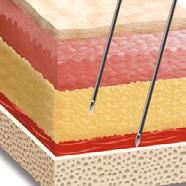
Experts’ recommendations provided details on the injection modalities per region (upper, mid and lower face) and per area.20
Which areas can ELLANSÉ treat?
Epidermis
Dermis
Subcutaneous fat/ hypodermis
Supraperiosteal layer
ELLANSÉ
Upper Face
A. Forehead
B. Temples
C. Brow area
Mid Face
D. Nose reshaping
E. Cheek augmentation
F. Nasolabial folds
Lower Face
G. Oral commissures
H. Marionette lines
I. Prejowl sulcus
Did you know?
ELLANSÉ can also be injected into the nose and chin, offering a noninvasive alternative for reshaping and contouring.


ELLANSÉ’s physico-chemical characteristics make it easy to shape and mould, allowing treated areas to be defined more precisely and naturally. Model is not an actual patient.
J. Mental crease/ Chin definition
K. Jawline
Upper Face Mid Face Lower Face A B D F G E K J C H I
14 15
Model is not an actual patient.
Patient Case Studies
Sabine - Age 61
Signs of ageing before ELLANSÉ:
• Sagging face
• Deep facial lines and wrinkles

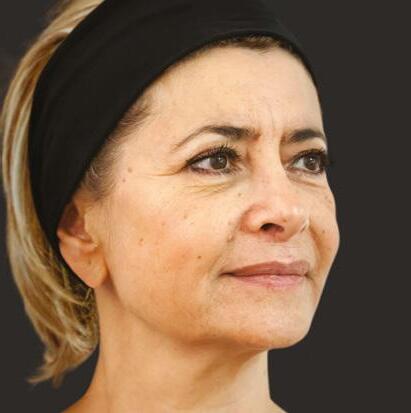
• Undefined and uncontoured jawline
After ELLANSÉ:
• Softened nasolabial folds
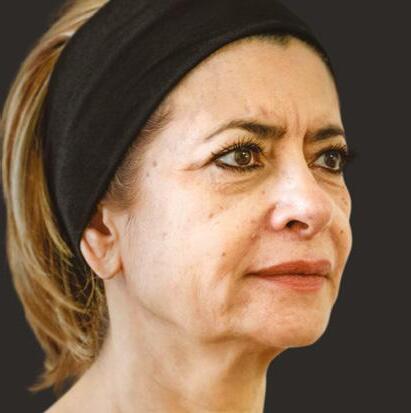
• Jawline definition recreated
• Volume replenished on cheeks and temples
Injection volumes:
Temple: 0.5/0.5 ml
Cheek: 0.7/0.7 ml
Nasolabial fold: 0.3/0.3 ml
Jowl: 1/1 ml
Wu - Age 44

Signs of ageing before ELLANSÉ:
• Loss of upper and mid face volume
• Loss of lower face contouring
• Loss of nose and chin shape
After ELLANSÉ:
• Increased facial volume
• Rejuvenated facial proportions
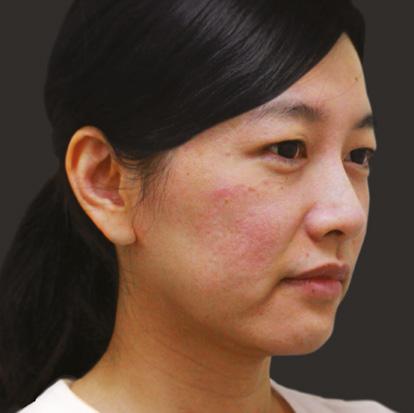

Injection volumes:
Eyebrow: 0.8/0.8 ml
Temple: 0.8/0.8 ml
Cheek: 1.7/1.7 ml
Nasolabial fold: 0.8/0.8 ml
Marionette line: 0.2/0.2 ml
Jowl: 0.2/0.2 ml
Chin: 0.7 ml
ELLANSÉ 3 months after ELLANSÉ 24 months after ELLANSÉ
Before
Before ELLANSÉ 1 month after ELLANSÉ 20 months after ELLANSÉ
PHOTO CREDIT: Dr Sophie Converset. Plastic Surgeon, Lyon, France
The treatment results on these pages have NOT been subject to any digital alteration. Individual results may vary from patient to patient, and testimonials are not claimed to represent typical results. 16 17
PHOTO CREDIT: Dr Shang-Li Lin. Dermatologist, Taipei, Taiwan
Patient Case Studies
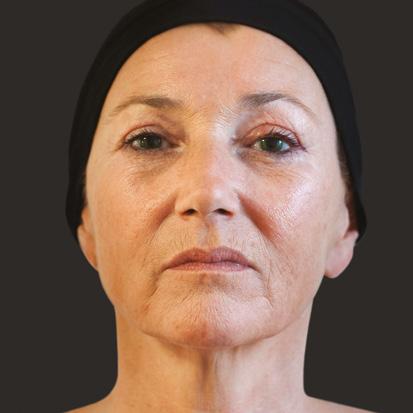
Patricia - Age 51
Signs of ageing before ELLANSÉ:
• Deep lines and folds
• Nasolabial folds
• Marionette lines
• Fine lines and wrinkles
After ELLANSÉ:
• Softened nasolabial folds
• Marionette lines diminished
• Improved skin quality
Injection volumes:
Cheek: 0.5/0.5 ml
Nasolabial fold: 0.7/0.7 ml
Marionette line: 0.6/0.6 ml
Anderson Chen - Age 40



Signs of ageing before ELLANSÉ:
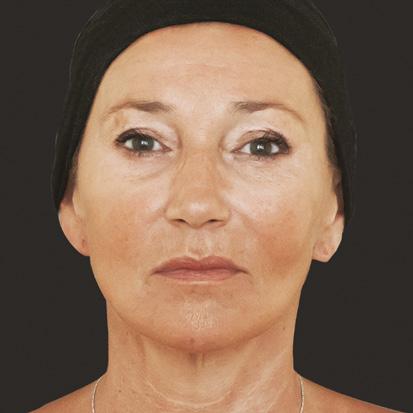
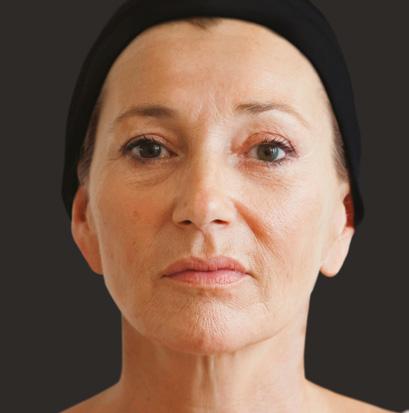
• Temporal hollowing
• Eyebrow ptosis
• Infraorbital hollowing
• Lack of zygomatic support
• Sagging cheeks
• Loss of lower face definition
After ELLANSÉ:
• Well-defined masculine facial contour
• Increased facial volume
• Softer nasolabial fold
Injection volumes:
Eyebrow 0.4/0.4 ml
Temple 0.2/0.2 ml
Cheek 1.6/1.6 ml
Nasolabial folds 0.4/0.4 ml
Jawline: 0.4/0.4 ml
Before ELLANSÉ 1 month after ELLANSÉ 24 months after ELLANSÉ
ELLANSÉ
months after ELLANSÉ
months after ELLANSÉ
Before
18
18
PHOTO CREDIT: Dr Sophie Converset. Plastic Surgeon, Lyon, France
The treatment results on these pages have NOT been subject to any digital alteration. Individual results may vary from patient to patient, and testimonials are not claimed to represent typical results. 18 19
PHOTO CREDIT: Dr Shang-Li Lin. Dermatologist, Taipei, Taiwan
Patient Case Studies
Ginette - Age 59
Signs of ageing before ELLANSÉ:
• Facial lines and wrinkles
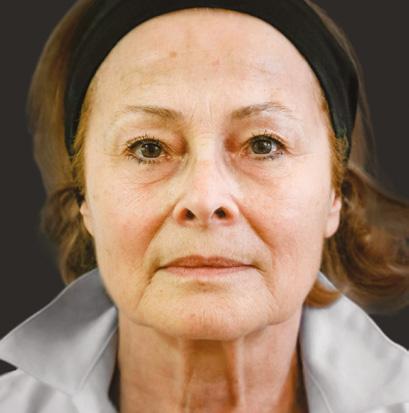
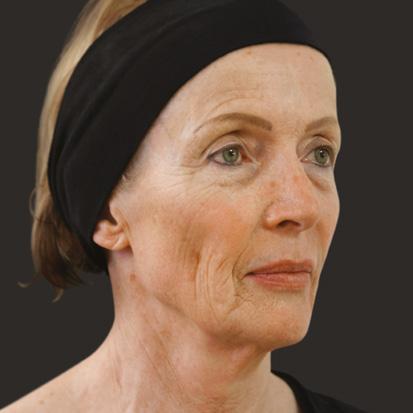
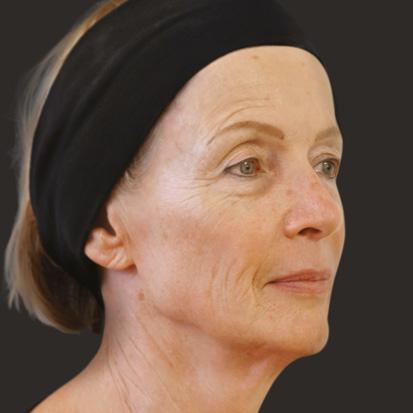
• Temporal hollowing
After ELLANSÉ:
• Skin texture improvement
• Facial rejuvenation
• Replenished volume on cheeks and temples
Injection volumes:
Temple: 0.2/0.2 ml
Cheek: 0.2/0.2 ml
Nasolabial fold: 0.5/0.5 ml
Marionette line: 0.6/0.4 ml
Dominique - Age 67
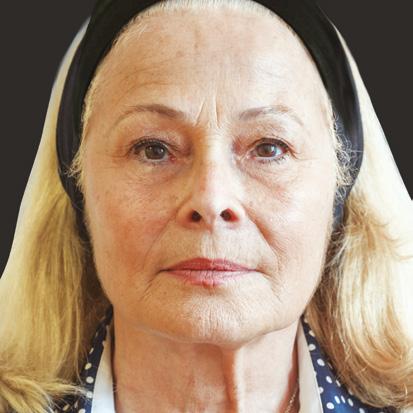
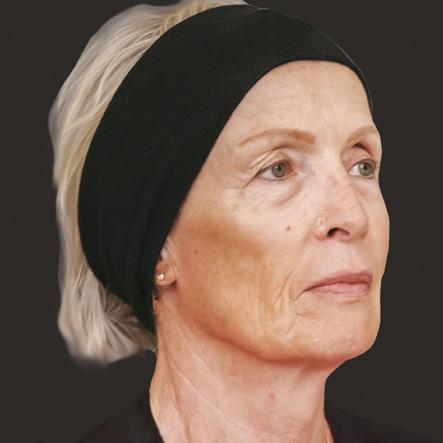
Signs of ageing before ELLANSÉ:
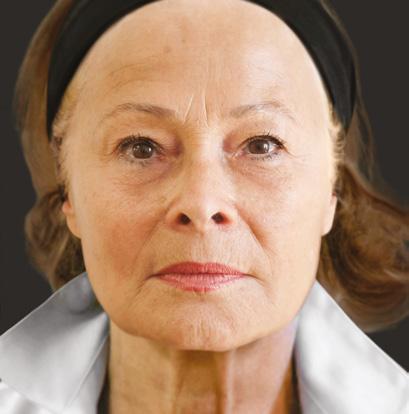
• Deep lines and folds
• Nasolabial folds
• Marionette lines
• Fine lines and wrinkles
After ELLANSÉ:
• Improved nasolabial folds
• Marionette lines diminished
• Improved skin quality
Injection volumes:
Temple: 0.1/0.1 ml
Cheek: 0.1/0.1 ml
Nasolabial fold: 0.8/0.8 ml
Jowl: 0.6/0.6 ml
Before ELLANSÉ 3 months after ELLANSÉ 24 months after ELLANSÉ
Before ELLANSÉ 3 months after ELLANSÉ 12 months after ELLANSÉ
PHOTO CREDIT: Dr Sophie Converset. Plastic Surgeon, Lyon, France
The treatment results on these pages have NOT been subject to any digital alteration. Individual results may vary from patient to patient, and testimonials are not claimed to represent typical results. 20 21
PHOTO CREDIT: Dr Sophie Converset. Plastic Surgeon, Lyon, France
High Patient Satisfaction5
Patient satisfaction rated at 24 months following treatment with ELLANSÉ S and ELLANSÉ M

Mean patient satisfaction using Visual Analogue Scale (VAS).
72% ELLANSÉ S
82% ELLANSÉ M
Patient willingness to repeat treatment at 24 months post-injection
75% ELLANSÉ S
78% ELLANSÉ M
Model is not an actual patient. 22 23
Bespoke Bioresorbable Treatment

CE Mark Indication
ELLANSÉ is an injectable implant, indicated for subdermal implantation in the face for the lasting correction of wrinkles and facial ageing signs or conditions.
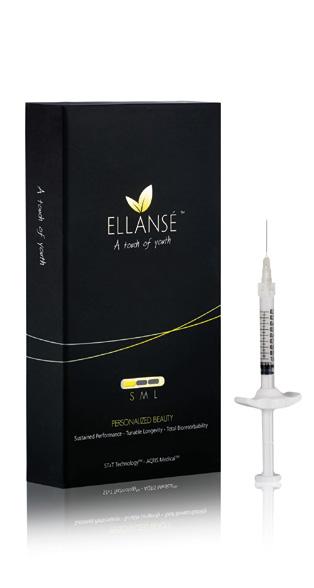
• Medical Device Class III
• CE mark (CE 0344) obtained in 2009
ELLANSÉ comes in ready-to-use syringes: 2 x 1 ml syringes of ELLANSÉ with 4 x 27G 3/4” needles depending on variant
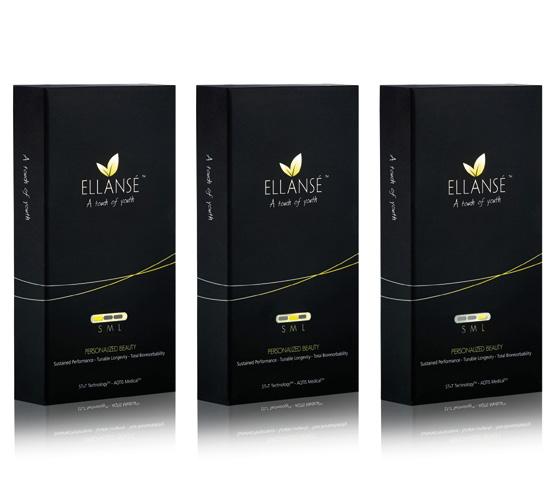
ELLANSÉ is available in 3 options
S, M, L, offering a choice of effectiveness periods.
All other product characteristics are the same across the entire product range.
ELLANSÉ by Sinclair Pharma. Support for business and clients.
A complete set of tools to help you in your daily practice
At Sinclair we aim to provide the highest standards of training and ongoing support. From unparalleled clinical results and industry-leading safety standards to marketing tools to help you in your daily practice.
With ELLANSÉ you’ll have access to:
• Sinclair College
A premier online educational resource to support hands-on aesthetic training and provide additional practice development services. For further information, please visit: www.sinclair-college.com
• Specialist ELLANSÉ training
Complete with case study examples and injection technique videos so you can create beautiful results every time.
• Help with marketing
Free marketing materials including promotional waiting room videos, brochures and aftercare leaflets.
24 25
References
1. Whitepaper W113.05.
2. Christen MO, Vercesi.F. Polycaprolactone: Or How a Well-Known and Futuristic Polymer Has Become an Innovative Collagen-Stimulator in Aesthetics. Clin Cosmet and Investig Dermatol 2020; 12:1-18.
3. ELLANSÉ post market surveillance report, 2020.
4. Christen MO ELLANSÉ safety report. 2016.
5. Moers-Carpi MM, Sherwood S. Polycaprolactone for the correction of nasolabial folds: a 24-month, prospective, randomized, controlled clinical trial. Dermatol Surg. 2013;39 (3 Pt 1):457-63.
6. Bae B, et al. Safety and long-term efficacy of forehead contouring with a polycaprolactone-based dermal filler. Dermatol Surg. 2016;42(11):1256-60.
7. Nicolau P, Marijnissen-Hofsté J. Neocollagenesis after injection of a polycaprolactone based dermal filler in a rabbit. Eur.J.Aesth Medicine and Dermatology. 2013;3: 19-26.
8. Kim JA, Van Abel D. Neocollagenesis in human tissue injected with a polycaprolactone-based dermal filler. J Cosmet Laser Ther. 2015;17(2):99-101.
9. Galadari H, et al. A randomised, prospective, blinded, splitface, single-centre study comparing polycaprolactone to hyaluronic acid for treatment of nasolabial folds. J Cosmet Dermatol. 2015;14(1):27-32.
10. Laeschke K. Biocompatibility of microparticles into soft tissue fillers. Semin Cutan Med Surg. 2004; 23(4):214-217.
ELLANSÉ Publication Listing
11. Morhenn VB et al. Phagocytosis of different particulate dermal filler substances by human macrophages and skin cells. Dermatol Surg. 2002;28(6):484-490.
12. Anderson JM. Mechanism of inflammation and infection with implanted devices. Cardiovasc Pathol. 1993;2:33S-41S.
13. Matlage BF et al. Tissue response to implanted polymers: The significance of sample shape. J Biomed Meter Res. 1976;10:391-397.
14. Nicolau PJ. Long-Lasting and permanent fillers: Biomaterials influence over host response. Plast Reconstr Surg. 2007;119:2271-2286.
15. ELLANSÉ Instruction for Use. Sinclair IS Pharma Corporate. 2016.
16. Radiesse Instruction for Use. Merz Aesthetics. 2016.
17. Sculptra Instruction for Use. Galderma. 2016.
18. Moers-Carpi MM, Christen MO, Delmar H, Brun P, Bodokh I, Kestemont P. European Multicenter prospective clinical study evaluating long-term safety and efficacy of the polycaprolactone –based dermal filler in nasolabial fold correction . Dermatol Surg 2021, Accepted.
19. Converset-Viethel S. A prospective, randomized, controlled, comparative, single-centre study on the safety and effectiveness of ELLANSÉ® dermal filler for correction of age-related volume deficit in the mid-face. Internal report 2020.
20. Francisco de Melo F, Nicolau P, Piovano L, Lin SL, BaptistaFernandes T, Martyn King M, Camporese A, Hong K, Khattar MM, Christen MO. Recommendations for volume augmentation and rejuvenation of the face and hands with the new generation polycaprolactone-based collagen stimulator (ELLANSÉ®). Clinical, Cosmetic and Investigational Dermatology 2017:10 431-440.
A novel dermal filler and promising new device with immediate aesthetic correction and sustained results due to the formation of new collagen. The PCL microspheres in the filler trigger a natural response within the human body to stimulate neocollagenesis.
Gritzalas K. Preliminary results in using a new dermal filler based on poly-caprolactone. Eur J Aesth Med Dermatol. 2011;1:22-26.
Mixing lidocaine into the PCL-based dermal filler can be safely performed without causing harmful changes to the physical properties of the original dermal filler. Adding up to 0.3% of the anaesthetic agent lidocaine will not substantially affect the filler’s characteristics, confirming the usability of this mixture in clinical practice.
De Melo F, Marijnissen-Hofsté J. Investigation of physical properties of a polycaprolactone dermal filler when mixed with lidocaine and lidocaine/epinephrine. Dermatol Ther. 2012;2:13-22.
ELLANSÉ is safe, well tolerated and effective for hand rejuvenation with high patient satisfaction and retention rates. ELLANSÉ provides an immediate effect and offers a good choice based on its longevity.
Figueiredo VM. A five-patient prospective pilot study of a polycaprolactone based dermal filler for hand rejuvenation. J Cosmet Dermatol. 2013;12:73-77.
ELLANSÉ-S and ELLANSÉ-M are safe and have sustained efficacy and high patient satisfaction results over 24 months. ELLANSÉ is a unique option for patients seeking longer lasting but non-permanent results.
Moers-Carpi MM, Sherwood S. Polycaprolactone for the correction of nasolabial folds: a 24-month, prospective, randomized, controlled clinical trial. Dermatol Surg. 2013;39 (3 Pt 1):457-63.
The PCL microspheres of ELLANSÉ-M are still present 21 months postinjection. The PCL microspheres are embedded in a collagen scaffold of primarily type-1 collagen fibres.
Nicolau P, Marijnissen-Hofsté J. Neocollagenesis after injection of a polycaprolactone based dermal filler in a rabbit. Eur.J.Aesth Medicine and Dermatology. 2013;3:19-26.
PCL-based dermal fillers offer advantages over the NASHA-based dermal fillers, in terms of both cosmetic longevity and efficiency. 17% less injection volume was required with ELLANSÉ to reach optimal cosmetic effects compared to the NASHA dermal filler.
Galadari H, et al. A randomised, prospective, blinded, split-face, single-centre study comparing polycaprolactone to hyaluronic acid for treatment of nasolabial folds. J Cosmet Dermatol. 2015;14(1):27-32.
13 months after an ELLANSÉ-M injection, PCL microspheres were surrounded by collagen deposition and a mild fibroblastic and histiocytic tissue response was seen. This confirms that PCL particles are maintained in their original state at least 13 months post-injection in human tissue.
Kim JA, Van Abel D. Neocollagenesis in human tissue injected with a polycaprolactone-based dermal filler. J Cosmet Laser Ther. 2015;17(2):99-101.
ELLANSÉ shows advantages over an HA dermal filler when applied to the forehead. ELLANSÉ has significantly higher elasticity (G’) compared to the HA dermal filler and the non-crosslinked CMC molecules make it smoother and easier to inject. These neocollagenesis benefits are long term and the natural looking results last for at least 24 months.
Bae B, et al. Safety and long-term efficacy of forehead contouring with a polycaprolactone-based dermal filler. Dermatol Surg. 2016;42(11):1256-60.
A multinational, multidisciplinary group of experts, plastic surgeons and dermatologists have developed recommendations on the injection techniques of ELLANSÉ. These recommendations provide a guideline for physicians who wish to perform safe and efficacious treatment for volume augmentation and rejuvenation of the face and hands.
De Melo F et al. Recommendations for volume augmentation and rejuvenation of the face and hands with the new generation polycaprolactone-based collagen stimulator (ELLANSÉ®). Clinical, Cosmetic and Investigational Dermatology 2017:10 431-440.
A 46-year-old Asian woman was treated with ELLANSÉ to restore facial volume loss. Facial images after ELLANSÉ treatment revealed a more reverse triangular shaped and in proportion rejuvenated face coupled with the improvement of a downward shift of soft tissue
Lin SL. Polycaprolactone facial volume restoration of a 46-year-old Asian woman: A case report. J Cosmet Dermatol. 2018; 1-5.
26 27
Ask your physician for more information.
Sinclair Pharma Plc 1st Floor Whitfield Court, 30-32 Whitfield Street London W1T 2RQ United Kingdom.
E. ellanse@sinclairpharma.com ellanse.com
W431.01
Copyright © 2021 Sinclair Pharmaceuticals Limited
All rights reserved. This book is protected by copyright. No part of this book may be reproduced, stored or transmitted in any form or by any means, including photocopying, or utilised by any information storage without the prior written permission of the copyright holder.
The editor, authors and publisher make no representation, express or implied, with regard to the accuracy of the information contained in this book and cannot accept any legal responsibility or liability for any errors or omissions that may be made. The publisher makes no warranty, express or implied, with respect to the material contained herein.