


Why does a smooth flight suddenly feel shaky? This blog explains what causes aeroplane turbulence and how skilled pilots handle it.
Have you ever sat on a flight, hands tight on the armrests, as the cabin starts to shake, and quietly wondered what is happening outside the window?
That sudden dip, the quick thump in your chest, the feeling that the aircraft is moving on its own, can be unsettling. Moments like these raise a simple but important question: What causes turbulence in aircraft?
For anyone considering a future in flying, turbulence is not just a fear for passengers. It is a core lesson in pilot training.
Through years of guiding students in US pilot training programmes, we at AeroCadet have seen how a clear understanding replaces anxiety.
When pilots understand why the air behaves as it does, they learn to fly with calm, control, and confidence.
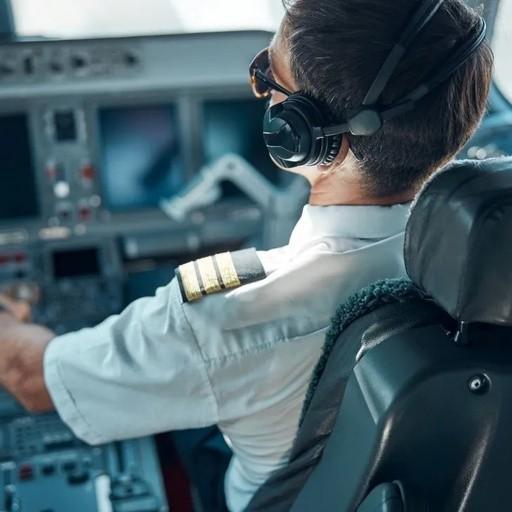
Turbulence often happens when air masses of different temperatures and speeds meet. Up high in the sky, layers of air don’t move uniformly. Warm air rises while cooler air moves more slowly or sinks. When these air streams collide, they create ripples, much like waves in the ocean, that shake the aeroplane.
This is one of the first things student pilots learn in US pilot training. Understanding this in training builds the pilot’s ability to anticipate and react, a skill you’ll use again and again in your pilot internship in the USA and beyond.
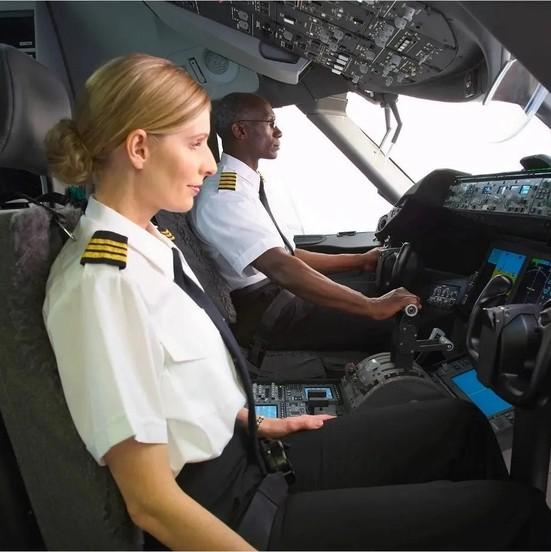
Another common cause of turbulence is wind shear, sudden changes in wind direction or speed over a short distance. You might feel this when your flight passes over a weather front or approaches a thunderstorm cell.
This isn’t just textbook knowledge; it’s a tool future pilots carry with them from the classroom into the cockpit.
Flying over mountain ranges introduces additional turbulence. As winds hit steep terrain, they’re forced upwards, creating waves in the air on the downwind side. These mountain waves can persist far beyond the peaks themselves, affecting aircraft even at altitude.
When pursuing a pilot internship in Canada, where mountainous terrain is more common, students get a close look at these techniques in practice. We teach you not just to expect them, but how to adjust your flight path smoothly when these invisible waves push against your wings.
Sometimes turbulence appears out of nowhere, with no clouds and no storms in sight; this is called clear-air turbulence. It’s usually caused by sharp changes in wind speed near a jet stream.
Although it’s hard to predict visually, pilots learn to monitor weather reports and wind patterns during flight planning and in-flight updates.
On sunny days, especially in desert areas or open fields, the ground warms the air above it unevenly. Hot air rises, cooler air drops, and that movement creates bumps you feel when flying low.
In the early stages of flight training, instructors explain that take-offs and landings are most affected by thermal currents. Understanding this prepares student pilots for realworld flying conditions rather than relying solely on simulators.
One cannot learn how to be a professional from an amateur. The most significant factor that determines the safety of pilots is the quality of the instruction. Choosing the right flight school means learning from:
• Certified Flight Instructors (CFIs) with standardized teaching methods.
• Professionals with industry exposure who share real-world scenarios.
• Mentors who prioritize decision-making over simple stick-andrudder skills.
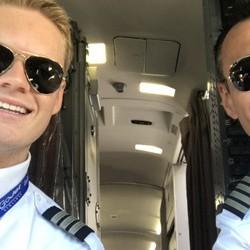
At AeroCadet, we emphasise that turbulence is a natural part of flying, not something to fear. From day one in your flight training programme, you’re guided to understand how turbulence works, how forecasts help us prepare, and how to keep passengers comfortable when the air gets bumpy.
We build this understanding gradually:
• Ground School Theory – learn about atmospheric dynamics.
• Simulator Practice – see how aircraft behave in turbulence.
• In-Flight Experience – feel and control the aircraft through real bumps.
• Internships and Practical Application – apply your learning to real flight operations.
Turbulence can feel uncomfortable, but for pilots, it is simply part of the sky doing what it does naturally. Once you understand what causes aeroplane turbulence, the fear starts to fade. That understanding builds steady confidence, sharper weather awareness, and clearer direction in a career in aviation.
At AeroCadet, we guide you step by step, from basic theory to real flight exposure and internship opportunities in the US and beyond. Contact us for pilot training today. With the right training, turbulence stops being a worry and becomes something you expect, read, and manage calmly. If you are serious about flying, explore our programs and turn turbulence from a fear into a familiar challenge you can handle with ease.
www.aerocadet.com