In a disillusioned, disheartened culture—where is hope? 3 Schools for Christ moves young hearts 7

Adventist Record | June 20, 2026
ISSN 0819-5633

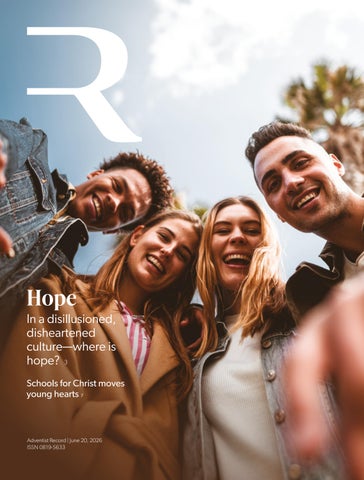
In a disillusioned, disheartened culture—where is hope? 3 Schools for Christ moves young hearts 7
Adventist Record | June 20, 2026
ISSN 0819-5633
EDITOR’S NOTE:
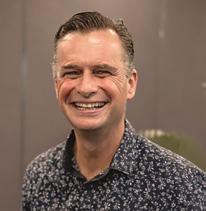
Brendan Pratt President Australian Union Conference
In a disillusioned, disheartened culture— where is hope?
In an increasingly anxious world, hope is one of the greatest gifts our Church can offer. As our world faces multiplying crises, we are realising that the hope we placed in political systems, economic outcomes and technology, while capable of good, is not delivering the promised better world. Our technology and endless information often have us arguing in social media threads rather than addressing social challenges, protecting our environment or building communities. Our consumer-driven individualism is undermining the better version of “us”. In a disillusioned, disheartened culture—where is hope?
Our vision for the Australian Union Conference is to be thriving, Christcentred communities of hope. This includes local congregations, schools, aged care and various other ministries. We believe in the profound love of Jesus and the hope, peace and joy that come from knowing Him, living with Him and living for Him. The mission of the Church is incredibly relevant. In Jesus, we have hope for the future, but also a better way of being human now.
The vision of hope resonates deeply with me because I believe it captures both the heart of God and the needs of our nation. Australia does not simply need more religious activity. People are longing for authentic hope, genuine community and a faith that transforms everyday life.
We can model a “better humanity”. We are to be lights in the darkness, the agents of hope. Paul outlines in his letter to the Ephesians that, inspired through God’s love (Ephesians 1,2), empowered with His inner strength (Ephesians 3) and equipped for mission (Ephesians 4–6), we are to be “children of light” (Ephesians 5,6). Jesus, working in and through us, then transforms families, workplaces and churches, infusing communities with hope.
I am optimistic about the next steps for our Church. In a culture suffering a loneliness epidemic, we embrace community. We celebrate community every Sabbath. The Sabbath acts as resistance to the “anti-community” challenges of advanced consumer culture as we disengage from the commodification of everything and instead celebrate what matters for eternity. Young people connecting in our schools and ministries sense a bigger purpose and see hope.
In a culture increasingly shaped by anxiety and fear, we are called to be the “non-anxious presence”. We know what the future holds and the hope we have in Jesus. We proclaim that Babylon falls (Revelation 14). The systems that use power and control to take the worship of God and place it on self do not stand in the end and, while appearing strong, actually crumble. We know our political systems do not ultimately have the answers. We call people to a better way of being human that follows Jesus. We call people into God’s kingdom, built on love, service, humility and hope.
Where people are looking for “transformation”, we go beyond outward appearance and proclaim that everything is spiritual. Our emphasis on wholistic health shapes ministries that increasingly resonate in our culture. Across our Church, we see people of hope shaping a better way of being “us” for now and eternity.
This is why I am excited for our Church as we move toward OneVoice27, where we intentionally focus on sharing Jesus. This is why lifting our outward focus together during Australia for Christ 2028 is vital. These initiatives are simply about sharing the hope we have in Jesus—personally and together. It will take all of us being Jesus’ hands, heart and voice.
We are not people driven by panic, anger or despair, but people grounded in the peace of Christ. We are people who listen well, love deeply and carry hope into homes, workplaces, schools and neighbourhoods. Our confidence rests not in ourselves, but in God’s faithfulness—because our hope has never depended on circumstances; it is found in the God who can do far more than we can hope or imagine (Ephesians 3:20).
May we be agents of hope who inspire, empower and equip people to respond to God’s love and calling. May we be communities of hope.
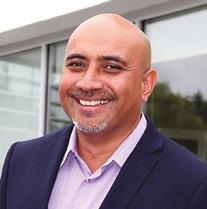
Mike Sikuri Secretary South Pacific Division
As God’s last-day movement in the South Pacific, we are living in exciting times. In 2024, PNG for Christ saw remarkable growth and brought us closer together as a church family. This momentum continues with South Pacific for Christ in TPUM this year, followed by NZPUC in 2027, AUC in 2028, a return to PNG in 2029, and the Southern Asia-Pacific Division in 2030.
Our brothers and sisters in PNG drew inspiration from Habakkuk 1:5: “Look at the nations and watch—and be utterly amazed. For I am going to do something in your days that you would not believe, even if you were told” (NLT). It was a privilege to witness PNG for Christ, which many compared to Pentecost. Reflecting on what God accomplished leads me to ask: Are we looking through a spiritual lens as we plan and serve? God often does far more than we can see when we trust Him and remain focused on His mission.
At the beginning of this quinquennium, our Division president challenged us with Psalm 2:8: “Ask of Me, and I will make the nations your heritage, and the ends of the earth your possession” (ESV). As a father, I appreciate that my children can ask me anything, yet my ability to respond is so limited. Our Heavenly Father is not limited. He is the God who spoke the world into existence and continues to work powerfully today. As we pray and fast for the people and nations, let us remember who we are speaking to and ask boldly in faith.
Ephesians 3:20 reminds us that God is “able to do far more abundantly than all that we ask or think” (ESV). This challenges us to consider whether our view of God limits what we believe He can do.
As we join our church family across the South Pacific in prayer and fasting, may God open our eyes, strengthen our faith and expand our vision. If we choose to look, ask and imagine, I believe we will once again stand amazed at what God accomplishes through His people.
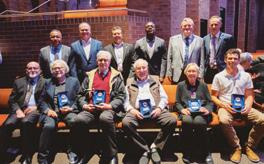
The Ellen G White/Seventh-day Adventist Research Centre at Avondale University (Cooranbong, NSW) celebrated its 50th anniversary on May 22-24, recognising five decades of preserving Adventist history and supporting research in the South Pacific.
The anniversary celebrations included the Legacy Maker Symposium, which explored the continuing relevance of Ellen White’s ministry and legacy. A special Sabbath service at Avondale University Church was also part of the celebrations, during which all former directors of the centre were recognised. Four of the centre’s five past directors attended in person. The inaugural director, Dr Arthur Patrick, who passed away in 2013, was represented by his grandson.
Plaques were presented by South Pacific Division (SPD) president Pastor Glenn Townend and Ellen G White Estate director Dr Merlin Burt.
During the Sabbath message, Australian Union Conference president Dr Brendan Pratt looked at the
beginnings of the Church in Australia. He encouraged attendees to continue the mission legacy of the Church’s pioneers and support current evangelistic initiatives, including Australia for Christ in 2028 and OneVoice27.
Officially opened in 1976, the centre was among the earliest Ellen G White research centres established globally and has since become a major research resource for the SPD.
Reflecting on its role in the life of the Church, Pastor Townend noted Ellen White’s strong connection with the South Pacific, where she lived and travelled for more than nine years.
“Having a centre where we have a lot of the material and can research it allows us to keep the momentum of the church mission going forward.”
Current centre director Pastor Mark Pearce said the anniversary was a reminder of the importance of understanding the Church’s history. “If we forget why we’re here and we forget our history, then we’re going to forget our reason for being,” he said.
Rotorua, NZ | Juliana Muniz
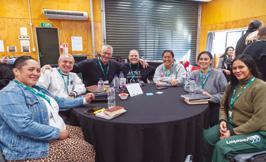
Adventists actively serving their communities across New Zealand gathered on May 15-17 to strengthen their local ministry initiatives.
Run by ADRA NZ in partnership with New Zealand Pacific Union Conference ministries—health, discipleship and Hope Channel—this year’s Community Champions Conference was themed “Equipped to Serve”. More than 80 participants attended from across the north and south islands.
The Community Champions initiative began during COVID-19 as part of the ADRA Love Thy Neighbour response when 37 Adventist churches across NZ provided practical support to families experiencing hardship.
From its start as an emergency response in 2020, the initiative has grown into an ongoing network of church members involved in local community ministries. The conference
first met at Tui Ridge Park in 2021, was held online in 2022 and returned to in-person gatherings in 2024.
According to ADRA NZ national program manager Sally Lavea, a distinctive aspect of this year’s conference was “hearing directly from those on the front line of community work”.
Traditionally run by ADRA and NZPUC ministries or guest speakers, this year’s workshops were mostly run by Community Champions.
“It was powerful how the grassroots Community Champions were leading out after being equipped over these last five years,” Ms Lavea said.
Participants represented a range of community ministries in their local churches, including community dining programs, street outreach, youth mentoring projects, community gardens, lawn care ministries, autistic playgroups and suicide prevention camps.
Qld | Jarrod Stackelroth
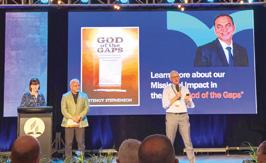
Signs Publishing’s latest book God of the Gaps invites readers into spiritual breakthroughs witnessed by a senior chaplain at the Sydney Adventist Hospital (San) during times of pain and high emotion.
Authored by Dr Stenoy (Steve) Stephenson, director of Mission Integration at Adventist HealthCare, the book shares 25 true stories from his time as a San chaplain and reflections on God and spirituality.
“In my work at the San, I have the privilege of ministering to people during times of crisis, illness, suffering and grief,” he said. “Over and over again, I have been struck by the experiences people have with God in these times.”
The book was launched during the recent South Pacific for Christ event in Brisbane. While Pastor Stephenson was unable to attend, Adventist HealthCare CEO Brett Goods and his wife Denise
were there to launch the book and provide attendees with a copy. Mrs Goods was the editor who first read the volume. “This book is important as it illustrates the power of chaplaincy, meeting people where they are and responding to their most pressing and immediate needs,” said Mr Goods. “This ministry is woven into the San countless times every week, month and year (for more than 123 years).”
After each story he shares, Dr Stephenson shares his own spiritual reflections brought up by the experience, in the hope he can “encourage [the reader’s] faith too”.
“These stories are a legacy of mission at the San: a legacy of care, expertise, compassion, resilience and discipleship,” he writes in the book’s introduction.
God of the Gaps is available from Adventist Book Centre bookshops in Australia and New Zealand or online.
Tas | Tracey Bridcutt
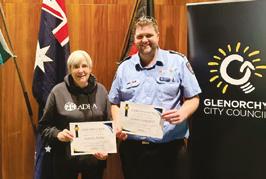
Two long-serving Adventist volunteers have been recognised at the 2026 Glenorchy Community and Volunteer Awards in Tasmania.
Collinsvale Fire Brigade second officer James Campbell was recognised for his contribution to the City of Glenorchy and the community, while Sandra Fehre was acknowledged for more than 20 years of service through the ADRA Op Shop in Glenorchy.
Members of the Collinsvale Fire Brigade praised Mr Campbell for the difference he is making in the community. “James’ dedication, leadership and commitment to helping others have made a lasting impact across our community,” they said. “Whether responding to emergencies, supporting community events or mentoring fellow volunteers, his contribution reflects the very best of community service.”
Ms Fehre has volunteered at the ADRA shop since it was opened in 2001 and has served as the manager since 2005.
The Glenorchy Community and Volunteer Awards celebrate residents who go above and beyond to support others and help create a stronger and more connected city.
Mayor Sue Hickey said the awards recognise people whose efforts often happen quietly behind the scenes but have a significant impact on the wider community. “All of our nominees are helping to make our community the best it can possibly be by building a sense of community and providing opportunities for people to connect with others,” she said.
Tasmanian Conference president Dr Jeff Parker said the Conference is very proud of both volunteers, who are members of Glenorchy church.
“This recognition is very much deserved. We also know that both Sandra and James represent countless other volunteers in our Conference who regularly volunteer and we are proud of them as well.”
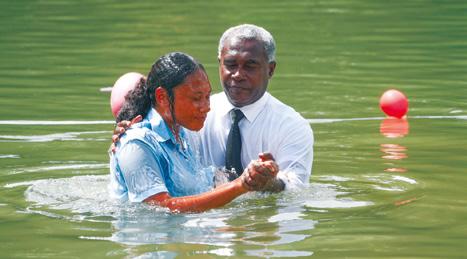
Thousands of students across the Solomon Islands committed their lives to Jesus during a “Schools for Christ” program, held May 16 to 23.
The week-long program saw all Adventist schools across the country—including remote locations—host evangelistic meetings for students and their families. The week concluded with hundreds of students being baptised and many more committing to baptism.
In a post shared on the Solomon Islands Mission Facebook page, education director Ferol Asa described the schools as becoming “centres of evangelism, discipleship and spiritual revival”.
“Hearts were touched, lives transformed and many students made the important decision to follow Christ through baptism,” he wrote.
At Kukudu Adventist High School, 96 students were baptised during a special Sabbath program marking the conclusion of the initiative. Families, church members, teachers and friends gathered to witness the baptisms and celebrate the students’ commitments to Christ.
Betikama Adventist College hosted outdoor evening meetings featuring guest speaker Dr Unia Api, a senior lecturer at Pacific Adventist University (PAU). Students, staff and families gathered for messages focused on faith, purpose and standing firm in truth.
At Burns Creek Adventist School, the week concluded with a baptismal celebration following presentations by guest speaker Dr Leeroy Elisha, a senior lecturer at PAU.
Baptisms were also held at Jones Adventist College (60 young people baptised), Uluga Adventist Community High School (11) and Hovi Adventist Secondary School (35).
The initiative was held in the lead-up to the wider Solomon Islands for Christ evangelistic campaign scheduled for July. Themed “Truth revealed”, Schools for Christ created opportunities for students, staff and parents to engage with Bible messages in a school setting.
South Pacific Division education director Dr Elisapesi Manson said Schools for Christ was a “strategic opportunity to cultivate spiritual growth, foster belonging and inspire students to live lives of faith, service and purpose”.
“It aligns with the goal of Adventist education in strengthening the spiritual identity and mission of the school while nurturing faith development in practical and meaningful ways,” she said.
More than 28,000 people were baptised in Nigeria following the twoweek Africa for Christ “Arise in Hope” evangelistic series which featured preaching, prayer, health ministry, family life programs and digital outreach. Organisers also described a miraculous moment during the campaign when a storm caused a heavy concrete-filled steel bar to fall, landing between two attendees without injuring anyone, deepening participants’ faith that God was protecting His people. Adventist Review
Dave Christensen, an Adventist church member in the United States, has developed hardy, high-protein corn varieties designed to grow in harsh conditions to help farmers and mission projects produce reliable food in difficult environments.
Viewing his decades of seed breeding as a God-led ministry, he shares seeds worldwide to support families facing food insecurity and hunger.—NW Adventists
An Adventist health fair in Chile combined free dental care with spiritual outreach, treating 20 people through the “Giving Smiles” project. Eighteen of the participants chose to begin Bible studies.—SAD
While pastors have registered improvements in their mental health and feel more equipped for ministry than they were a decade ago, a growing share are reporting less satisfaction with their jobs, according to new US-based research from Barna.—Vision Christian Media
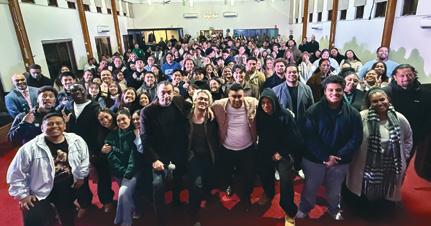
Young people from across Greater Sydney gathered at Blacktown church on May 9 for a “Uni and Youth Worship Night” organised by the Western Youth Region. The event brought together almost 200 youth and young adults for an evening of worship, music and fellowship. Worship was led by young people from Bidwill Tongan church and special musical items were presented by groups from Hoxton Park and Wetherill Park churches. Guest speaker Sam Lett, principal of Macarthur Adventist College, shared a message based on the story of the Samaritan woman, encouraging attendees to reflect on the question, “Which cup are you drinking from?” Greater Sydney Conference youth director Pastor Dejan Stojkovic said, “Sam reminded everyone that the world offers many cups that promise satisfaction, but only Jesus offers living water that truly satisfies the soul.”—Juliana Muniz/Dejan Stojkovic
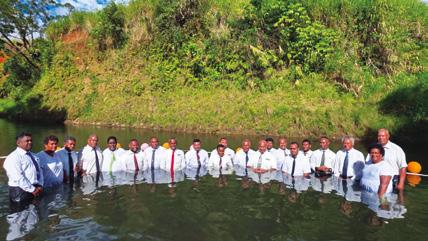
More than 60 people were baptised at the conclusion of an evangelistic campaign held by Veisaru Seventh-day Adventist Church in Fiji from May 4 to 23. The campaign was led by Pastor Timoci Caginikaibau, who presented messages throughout the three-week program. The final Sabbath included a baptismal service led by Fiji Mission president Pastor Epeli Saukuru. During the service, Pastor Saukuru encouraged the newly baptised members and church congregation to remain grounded in God’s Word and continue growing in their faith.—Record staff
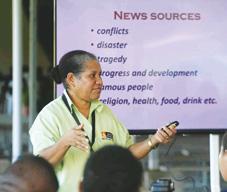
The Central Papua Conference communication department recently equipped 200 church members with media skills to support mission and evangelism through communication ministry. The week-long Hope Media Training program included news writing, media production, audio recording, livestreaming and design. Communication director Ottoa Sepuna said the initiative is part of the Conference’s preparation for OneVoice27 by equipping members for mission-focused media outreach. —Rose Sinias

A worship concert organised by Sing Series, a ministry of Wahroonga church (NSW), raised funds for renovations at Betikama Adventist College in the Solomon Islands. Titled Sing Praise: In His Presence, the May 23 program featured vocalists, orchestra and band members from across Australia. According to organisers, Sing Series aims to bring people together through music.—Ashley Jankiewicz
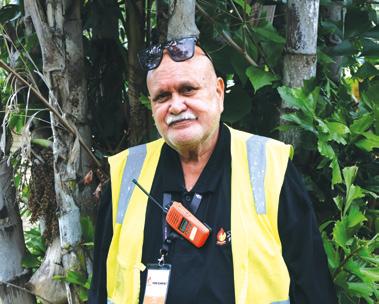
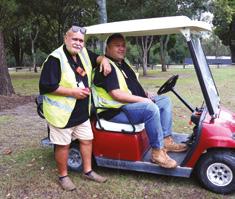
For nearly three decades, generations of young people arriving at the Greater Sydney Conference summer camps have been greeted by the man they know simply as “Uncle Danny”.
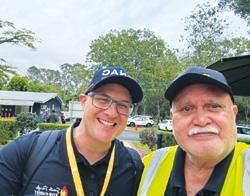
Whether driving buses, helping with activities, assisting with security or quietly stepping in wherever needed, Danny Kea has become a constant presence at summer camps and youth ministry events—serving faithfully behind the scenes for 28 years.
Originally from Rarotonga in the Cook Islands, Mr Kea first became involved with summer camps as a bus driver. Not long afterwards, he was asked if he would also help with security.
“I said, ‘I don’t really want to use the word security— security might scare the young people.’ I said, ‘I’ll just do whatever you need me to do.’”
From that point on, he never stopped coming back. Each year, he takes annual leave from his job as a truck driver so he can serve at the camps. Over the years, his involvement has expanded to helping at Pathfinder camporees and expeditions, Adventurer camps and other youth events. Recently he served on the security team at the South Pacific for Christ launch.
His servant-hearted attitude has left a lasting impression on many leaders over the years.
Pastor Simon Gigliotti, president of the Northern Australian Conference, said Mr Kea has always been willing to lend a helping hand.
“He would be there for summer camp set-up—helping load gear into trucks, preparing the site and making sure things were ready to go,” Pastor Gigliotti said.
“Throughout the camps themselves, he would drive buses, assist with security, help with activities and serve as an all-round positive contributor to the experience.
“A truly servant-hearted man, doing his best to honour God through faithful service to others.”
Pastor Cheonneth Strickland, secretary of Greater Sydney Conference, also paid tribute to Mr Kea’s longstanding contribution.
“He has a heart for young people, is humble and dependable, and is always willing to help where needed,” Pastor Strickland said.
“He has been a blessing to many, and I have appreciated his commitment to ministry.”
Mr Kea says working with young people is what keeps him returning year after year. In some cases, he first met them as campers before later welcoming them back as

volunteer staff. And he has no plans to step away from camp life any time soon.
“I love serving the young people,” he said. “Every time I go to summer camp, they always call me Uncle Danny. It’s just heartwarming when they call me that name.
“I want them to feel happy and to really feel welcome, to come close to God. That’s the whole idea.”
Tracey Bridcutt communication director, South Pacific Division.
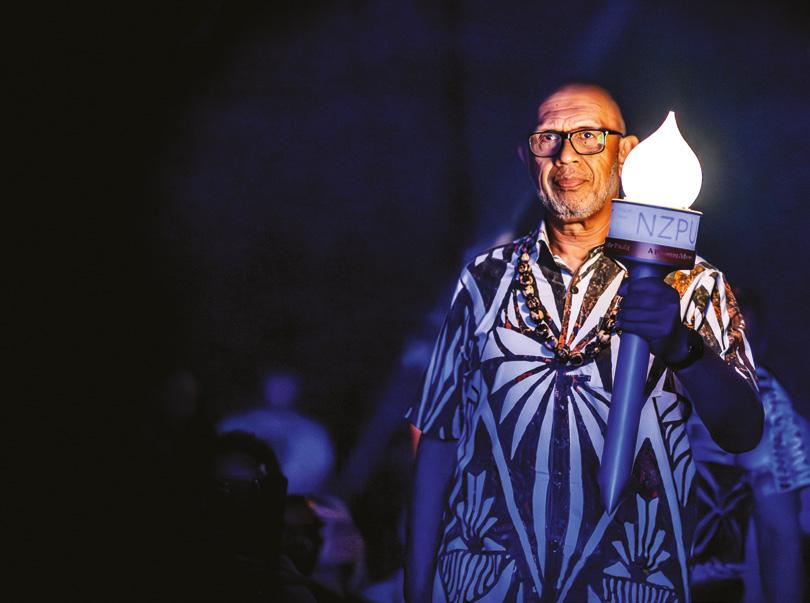
The South Pacific Division (SPD) contains four unions. Adventist Record recorded interviews with all four union presidents during the South Pacific for Christ launch program in Brisbane, Queensland. In this issue we bring you our chat with Dr Eddie Tupa’i, president of the Church for the New Zealand Pacific Union Conference (NZPUC).
Juliana Muniz (JM): We’ve had a long week here at this event. How are you finding it? What stood out to you?
Eddie Tupa’i: As I look across the room each night, or the tent I should say, and see the diversity of the church here in the South Pacific, there’s a sense of hunger, of wanting to do more for God, and that’s come through in the stories and the testimonies—it has been inspirational. I have a saying, and it goes like this: “The most important meetings are the meetings in between the meetings.” And so it’s all the catch-ups, it’s the meals with different people, it’s running into people you haven’t seen for a long time, that reminds me we’re part of this amazing family, the South Pacific Division, and what God is doing here. So yeah, it’s been a real blessing.
JM: It’s been good catching up with a bunch of people here. So New Zealand Pacific comprises six nations, maybe you can help me out here. New Zealand, Cook Islands . . .
Eddie Tupa’i: French Polynesia, there’s New Caledonia, Wallis and Futuna, and Pitcairn. You see you’ve got your missions, you’ve got conferences, you’ve got Melanesia, Polynesia, French speaking, so quite a diversity. A very unique Union.
JM: Before we talk about the upcoming mission movement of New Zealand Pacific for Christ, can you give us a bit of a background or an idea of what your mission field looks like? What are the challenges in New Zealand Pacific?
Eddie Tupa’i: I’ll start with New Caledonia, where there were the recent riots. So you’ve got that particular type of tension, the political tension in their country, in the locals, the Kanaks, wanting to have independence. So that tension impacts the Church, but also the witness of the Church in a place like that. Then you have Pitcairn, which has 35 people on the island, with 24 regularly turning up at church
on Sabbath. So that’s quite different again. French Polynesia, which is many, many islands spread over a vast area, and that is diverse in and of itself, and of course French and Tahitian. And then the Cook Islands, again, very much Polynesia, very different in its own way, 15 islands. Then New Zealand, which is organised into North and South New Zealand conferences, so they work together to reach New Zealand.
So you’ve got the secular, you’ve got the developing, you’ve got the Polynesian, Melanesian, and as I mentioned before, French speaking. That gives us quite a variety of challenges. And you’ll hear as I try and explain our approach to South Pacific for Christ needing to respond to that uniqueness.
JM: What are your goals and strategies for this quinquennium, maybe to address some of those challenges as well?
Eddie Tupa’i: The Union’s role we see is based on Ephesians 4. And the key words out of Ephesians 4 are leadership working to use ministry—as in disciple-making— to bring unity in the Church. I love the approach that Pastor Erton Köhler is using, where he’s saying integration for mission, being integrated for mission. So that idea of the Church being integrated, especially with its diversity. And then in that diversity we move towards this word that’s in verse 13, which is maturity. And we’d love to think, and pray for, that in 2030 our Church will be more grown up, more mature than we are right now in Christ, in that beautiful message from Ephesians 4.
JM: Now let’s talk about New Zealand Pacific for Christ [in 2027]. You probably have a lot of challenges trying to make that happen because of the diversity. What are your plans so far?
Eddie Tupa’i: So that’s the basis I’ve given you, Ephesians 4. And then for us with our role to all that complexity that you’re asking about, is we exist as a Union to equip these missions and conferences for mission. And mission that brings transformation. So we talk about equipping for mission and transformation. We want to be on God’s mission. We want to see that bring lasting change in people’s lives. And so we’ve said to each of our entities, “You’re unique. We can’t do a one-size-fits-all. We need to allow you to look at what is appropriate for your area.” So for some of our territory, they’ll say, “We would like to do the classic evangelistic program.” That’s all good. Other parts of our Union are saying, “Well, we want to focus on small groups. We want to focus on using digital media to connect with people. We would like to use community engagement.” Right across the span of the different ways that you can grow and build church, we’re wanting to engage all those different ways of doing church.
JM: Also next year, in addition to New Zealand Pacific for Christ, the world Church has the rollout of OneVoice27. Are you planning to make that part of your strategy for New Zealand Pacific for Christ, or are you planning to incorporate it in any way?
Eddie Tupa’i: We don’t want to confuse things, and so I really like your question because it is very much on point. We are going to go ahead with OneVoice27. That is going to be how we represent, how we speak, promote, connect the message that we have as a Seventh-day Adventist Church in our part of the world, whether you’re speaking French or Cook Island Maori, whatever language, it’s all with one voice. So we’re going to be going totally under the OneVoice banner. Also Juliana, July 10 this year, Pastor Erton Köhler is going to be in New Zealand for the GAiN conference, but on that Friday night he is going to launch OneVoice27 for New Zealand Pacific Union Conference in Auckland.
JM: Oh, that’s very good. How can members prepare for all of that?
Eddie Tupa’i: We are very clear about this, and we say “fast and pray, equip and send”. So the first part is the inner life, is fasting and praying. Those things go together, those things are important, ensuring that what is in and of us in our life of following Christ will then flow out in how we go about doing mission. So first thing is fast and pray, the second part is to equip and to send, and that’s based on Acts 13:1-3, where the church begins to send out missionaries, and the first were Paul and Barnabas.
JM: Before we close, in addition to New Zealand Pacific for Christ and OneVoice27, are there any other mission initiatives that members across NZPUC should be aware of?
Eddie Tupa’i: There is church planting and this is interesting because I mentioned right at the beginning the difficulties of New Caledonia, but we have strong church planting there. We have, as part of New Caledonia Mission, Wallis and Futuna. So we have a church presence that’s been in Wallis for the last 10 years. We just in the last two years have begun a small presence in Futuna. And so that church planting part of the church, of New Caledonia, is something that is going right across our region.
This interview was recorded and published as a recent episode of Record Live.
To watch the full version visit <youtube.com/@AdventistNews> or scan the QR code.


verb: הָמָּדְֵּרְּתַּ | tardēmāh | Hebrew
Scripture describes a kind of sleep that God gives. The Hebrew noun הָמָּדְֵּרְּתַּ (tardeˉmaˉh) describes a “deep sleep” that God brings upon someone to advance His purposes. This sleep is not about escaping or using a mystical technique. It is about God showing that His work does not depend on human effort.
The word first appears in the genesis of human life: “And the LORD God caused a deep sleep (tardeˉmaˉh) to fall on Adam, and he slept” (Genesis 2:21). The theological message is quiet but firm. The most intimate act of Creation is forming the woman while the man is deliberately stilled. Adam neither initiates nor assists. The relationship is a gift, not something he achieves on his own. The deep sleep functions like a divine “anesthesia”, marking the boundary between what humans can care for and what only God can create.
Tardeˉmaˉh also appears in Genesis 15 when God makes the Abrahamic covenant. Abram falls into a “deep sleep” and has a terrifying vision (Genesis 15:12). God then passes between the pieces with a smoking oven and burning torch, making a unilateral commitment (Genesis 15:17,18). Abram’s faith is essential (Genesis 15:6), but the foundation of the covenant is God’s promise, not Abram’s actions.
A third significant occurrence has a protective and judicial edge. In 1 Samuel 26, David and Abishai sneak into Saul’s camp and find it defenceless: “they were all asleep . . . because a deep sleep (tardeˉmaˉh) from the LORD had fallen on them” (1 Samuel 26:12). Here tardeˉmaˉh exposes the weakness of human power and challenges moral character. David rejects the idea of taking advantage of the situation through violence: “The LORD forbid that I should stretch out my hand against the LORD’s anointed” (1 Samuel 26:11). The fact that God had put the camp to sleep becomes a chance for David to show self-control. Other texts broaden the range. In Job, tardeˉmaˉh is linked to night visions and revelation (Job 4:13; 33:15). Proverbs uses it figuratively to describe moral lethargy, saying, “Laziness casts one into a deep sleep” (Proverbs 19:15). In all these contexts, the term is more than just descriptive. It represents a deliberate pause—sometimes for revelation, protection, exposure or judgement. In ordinary sleep, we rest because we must. In
tardeˉmaˉh, we are still because God wills it. The point is not to celebrate being passive, but to know who is really in control. In Genesis 2, the human community begins with God’s initiative. In Genesis 15, God’s promise is what makes the covenant sure. In 1 Samuel 26, deliverance and destiny are not seized by force. Tardeˉmaˉh is when God’s grace interrupts our self-reliance, showing us that we cannot control the essential parts of His story.
Adventists value living with purpose. However, redemption is not about our own efforts. Key events in the Bible, like Adam and Eve, Abraham’s covenant and David’s story, happened because of gifts, not achievements. This shows that God takes the first initiative, and we respond, as seen in Romans 3:24 and Ephesians 2:8–10.
Genesis 15 also offers a broader perspective. While Abram lies powerless, the LORD binds Himself to promises that culminate “in Christ” (Galatians 3:16). At Calvary, Christ truly dies (John 19:30), and John notes the flow of “blood and water” (John 19:34), testifying that salvation—and the people it shapes—comes from Christ’s self-sacrifice, not human effort (Ephesians 5:25–27). As believers await the trumpet’s sound, the Bible’s description of death as “sleep” (John 11:11–14; 1 Thessalonians 4:13–16) reinforces this confidence: God protects His people, and He will awaken them at the right time.
Each week, the Sabbath embodies the tardeˉmaˉh logic. We cease from our works because God finished His (Genesis 2:2,3; Exodus 20:8–11). Israel learned this trust with manna—double on the sixth day, none on the seventh (Exodus 16:22–30). Rest, then, is not idleness; it is covenanting confidence practised.
Pray it simply: “Lord, when You call me to stop, still me. Do in me—and around me—what only You can do. Wake me ready to obey.”
Takeaway: tardeˉmaˉh teaches holy stillness: when God moves decisively, our first obedience may be to stop, let grace act and rise ready to respond (Genesis 2:21; 15:12; 1 Samuel 26:12).
Dr Limoni Manu O’Uiha dean of the School of Theology, Fulton Adventist University, Fiji.
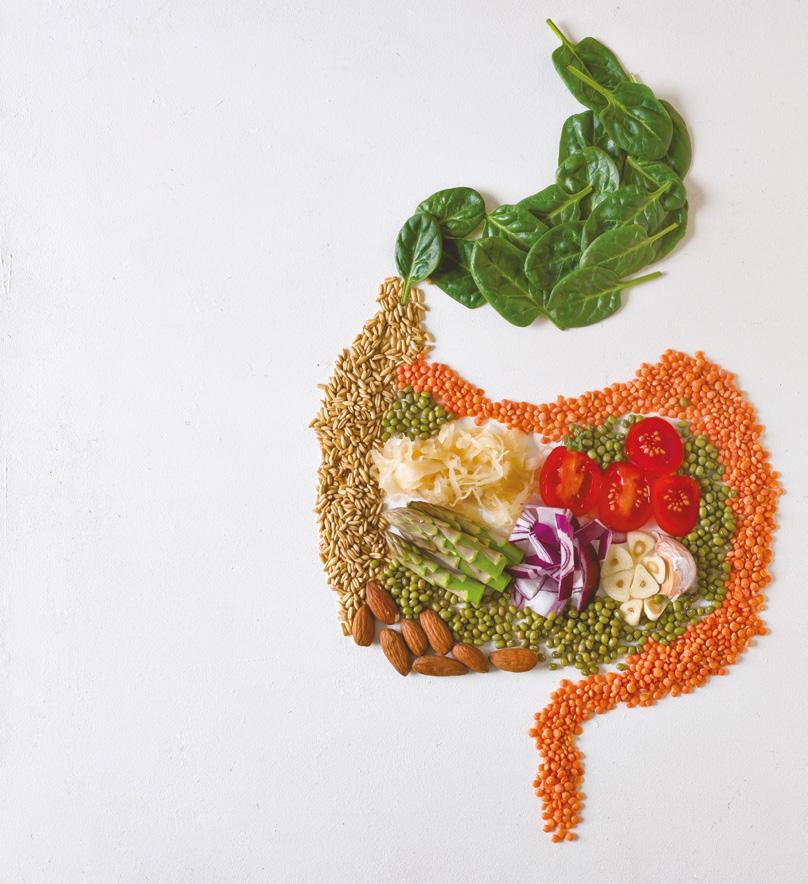
Gut health plays an important role in supporting immunity. Much of the immune system is linked to the gut, where immune cells and gut bacteria work together to help protect the body from harmful germs. These bacteria also help train the immune system to tell the difference between dangerous invaders and harmless substances, reducing the risk of overreaction such as allergies or inflammation.
A healthy gut contains a wide variety of bacteria. Greater diversity is linked to benefits such as stronger immune function, better heart health, healthier body weight and improved mental wellbeing. Diet has a major effect on gut bacteria, and eating a wide range of plant foods is one of the best ways to improve gut health. Research suggests dietary changes can positively affect the gut microbiota quite quickly, especially when fibre intake increases.
You do not need expensive supplements to support gut health. A simple, high-fibre, plant-based eating pattern is a strong foundation. Wholegrain breads and cereals help feed beneficial gut bacteria and support the production of compounds that can reduce inflammation and help protect against infection.
Fruit and vegetables also provide fibre and plant compounds that encourage the growth of beneficial bacteria. Budget-friendly options include apples, pears, onions, cabbage, asparagus, chickpeas and nuts. Probiotic foods such as yoghurt, kimchi, sauerkraut, kefir, kombucha and pickles can also help add beneficial microbes. Other helpful habits include drinking enough water, exercising regularly, getting enough sleep and managing stress.


Smoking causes cancer,” the missionary told the people. “God wants us to be healthy, so He doesn’t want us to smoke.”
The message was translated faithfully into a local language everyone could understand. But even as people heard the words, they understood a different message.
“God must be angry with smokers and is vengefully punishing them with cancer,” they interpreted. “I am afraid of God. If I am good, maybe He will go away and leave me alone.”
In the crowd there were some smokers as well. They “heard” still another message. “I smoke and I am not sick,” they interpreted. “God must have different rules for our territory than for the white man’s.”
“What had the missionary missed in his message?” asked Dr Unia Api, a professor and researcher at Pacific Adventist University in Papua New Guinea (PNG). A better understanding of the Melanesian worldview, he answered, which is based on benevolent versus malevolent players.
“Missionaries believe—and rightly so—that God is love and wants to protect us,” Dr Api explained. “But in the listener’s wall of interpretation, sickness is a form of immediate spiritual punishment. So even though the words are right, the message transmitted is received in a completely different way.”
During a May 1 presentation at the South Pacific for Christ launch event in Brisbane, Australia, Dr Api explained the major features of the Melanesian understanding of the
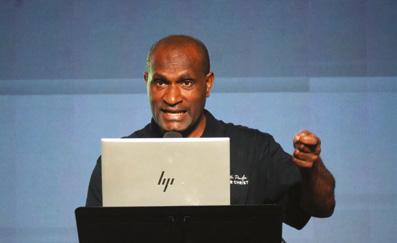
world and some of its implications for Adventist mission.
Physical and spiritual realms connected
Melanesians do not live in a compartmentalised world of secular and spiritual domains, but in a biocosmic world— they have an “integrated worldview” in which the physical and spiritual realms are connected, Dr Api shared, quoting Darrell Whiteman.
Dr Api quoted some examples of how this worldview plays out in real life.
“Raka says to Missionary Joe, ‘I am sick because I went to the jungle two weeks ago to cut sago palm.’”
Missionary Joe replies, ‘Oh! Too bad. It must have been the mosquitoes from the swamp.’”
Missionary Joe thought Raka was referring to malaria, but Raka was referring to treading on masalai ples, or “sacred sites”. So the message was sent and received, but understood very differently, Dr Api explained.
A spiritual explanation for everything
At the same time, Melanesian thought patterns are not individualistic but community-oriented. “I am because they are,” Dr Api shared, quoting a deeply held way of seeing the world in the area.
Likewise, Dr Api explained, for Melanesians every aspect of life—education, food, faith, rituals—converges in the ideal of gutpela sindaun, or “the presence of all the positives and absence of all the negatives”. In Melanesian thought, he said, “everything is connected by spiritual strings. Everything has a spiritual explanation.”
Dr Api also explained that Melanesians do not think in analytical terms to reach a particular conclusion. “The Melanesian mind combines everything—every element in and around their lives—in a synthetic way.”
Melanesians also base their interactions on relationships, Dr Api explained. “So if you want to extract some information from a Melanesian, you must establish a good relationship first before they convey good information to you. You need to be trusted before they give you the information you are seeking.”
Further, when discussing a topic, Melanesians often
do not get to the point right away, Dr Api explained. He shared a discussion at a meeting with Melanesians in which he spent a lot of time going around the topic as he tried to explain a particular concept. One of Dr Api’s colleagues, who was not Melanesian, finally told him, “OK, get to the point!” What he didn’t understand was that for us Melanesians, going around and around a topic is the point, Dr Api said. “It may seem a waste of time, but it’s not. And it’s not repetition; it’s emphasis.”
silver lining in evangelism
“Is it possible to find connections between Melanesian thought and the Seventh-day Adventist worldview?” Dr Api asked. Surprisingly enough, the answer is positive and can be connected to a key Adventist belief: that of what is known as “the great controversy” theme, which is, Dr Api said, “the great underlying theme”.
He explained, “As a result of their worldview, Melanesians believe in two sides—what can be called ‘Team Tulait’ (Team of Light) and ‘Team Tudak’ (Team of Darkness). It’s not difficult to explain that God is the captain of Team Tulait while Satan leads Team Tudak. Then again, on one side you have the holy angels, God’s messengers— true prophets, apostles—while on the other you get false prophets and magicians,” Dr Api shared. In this context these are “players” that can influence a person one way or the other.
According to Dr Api, in the Bible there are also “values that Melanesians try to embrace, and it also gives us tools, such as prayer and repentance. These we must use in order to reach our goal or ideal, which the Bible defines as shalom.”
Against that background, Dr Api called for Adventist mission leaders to be mindful of worldviews, such as the Melanesians’ patterns of thought, when embarking on outreach endeavours. He celebrated that in recent decades the Adventist Church has launched mission centres that have focused on understanding different patterns of thought and world religions. “In the same way, we should strive to pay attention to ways of thinking such as the ones we find in Melanesian culture before we embark on targeted evangelism,” Dr Api emphasised.
He quoted Adventist missionary Gottfried Oosterwal, who decades ago wrote, “Unless a church couches the eternal gospel in the language, patterns of thinking, forms of behaviour, values and instruction of the people it’s trying to reach, and unless it allows them to express their response to the gospel in their own cultural ways, there’ll be no universal mission and effective church growth.”
Marcos Paseggi
senior news correspondent, Adventist Review. The original article was published on the Adventist Review website.

On a dark winter’s night in Lincolnshire, England, a group of cloaked men gathered by the banks of the River Don. As the hour neared midnight, two of their number broke away from the group and made their way into the river. As it turned out, they were none other than the local vicar and one of his parish elders. As they entered the Don, a shiver ran through them both. Then, they did something that had not been done in England for more than a thousand years: the elder held out his arms, embraced the vicar, and lowered him into the dark water.
Ask any moderate Seventh-day Adventist to explain the theory of the Big Bang, and you’ll likely be met by confusion. Imagining cosmic origins through God’s Word is much more comforting—and understandable. To use physics pioneer Georges Lemaître’s terminology, how can an entire universe emerge from one “primeval atom”?
And yet, many Adventists are oddly comfortable with another Big Bang theory—the theory of how we as a movement came to be. The story of the early Adventists—starting with William Miller—studying the Bible and in doing so, coming to the truths we know and love today is one often thought of as that “primeval atom”. Miller, later describing his method, said, “I determined to lay aside all my prepossessions, to thoroughly compare Scripture with Scripture, and to pursue its study in a regular and methodical manner.”1 There is a real appeal to this and, indeed, a promise—that anyone who puts aside their own assumptions and studies Scripture with an open mind can and will discover “The Truth” for themselves. As Miller himself said, “I was thus satisfied that the Bible is a system of revealed truths, so clearly and simply given, that the ‘wayfaring man, though a fool, need not err therein’.” There’s hope even for me.
This instinct is not unique to Adventists; indeed, the wider Protestant project has made the same claim ever since Martin Luther, who famously once wrote, “If you
picture the Bible to be a mighty tree and every word a little branch, I have shaken every one of these branches because I wanted to know what it was and what it meant.”2 It could be argued that Luther himself set the template for theological discovery and that for Protestants (bolstered by the Enlightenment), this has now become the default. Of course, the trouble with the notion that through a sincere study of the Bible, anyone would naturally arrive at “The Truth” is not only anecdotally untrue—it has been proven false by history. There have been thousands of Protestant groups, offshoots and denominations since 1517, each with their own interpretation of the Bible, each as convinced as the others that they alone were right. As convenient as it would be to claim that we originated from the “primeval atom” of early Adventists’ sincere study of Scripture, when you examine the history of our movement, you’ll discover the reasons we believe what we believe are far more complicated.
Alexander Campbell was the son and successor of Presbyterian minister Thomas Campbell who started the Restorationist movement, the Disciples of Christ. He believed that if Christians focused only on the “facts of the Bible”, they would eventually all come to agreement.3 Like William Miller, Campbell was an adherent of the Scottish School of Common Sense, separated from his parent denomination, embraced Baconian methodology and sought kinship with other Christians through agreed-upon facts rather than tradition and creeds. In 1832, Campbell merged his movement with that of Barton Stone’s (A Kentucky Presbyterian who had started a similar movement). A splinter group who chose not to merge with Campbell and Stone would adopt a name recognisable to those familiar with Adventist history: the Christian Connection (CC).
Though parted from Campbell and Stone, the CC
nevertheless clung to many of their teachings. Joshua Himes, formerly a CC minister, said, “Their leading purposes [were] to assert, for individuals and churches, more liberty and independence in relation to matters of faith and practice, to shake off the authority of human creeds . . . [and] to make the Bible their only guide.4 Early Adventists adopted wholesale the CC’s package of anti-creedalism, Arminian free will theology and sola scriptura—as well as print culture and openness to women participating in ministry. Undoubtedly, early Adventists also adopted their methodology from the CC, who in turn got theirs from Methodist revivalism—in whose water all non-denominational Christians in this era were swimming. Personal experience of salvation, practical sanctification, theological reform, mistrust of institutions, and the promotion of discourse and debate in the search for truth all were inherited from the CC.
As some historians5 have noted, the CC laid the groundwork for what we think of today as the doctrine of “the State of the Dead” but in truth, most Restorationists, and Millerites, accepted the view of the immortal soul. It wasn’t until George Storrs, an abolitionist and former Methodist minister, became convinced that immortality was a gift given by Jesus in the resurrection, that the idea began to put down roots among Millerites. He came by this idea by chance in 1837 when he found a pamphlet by Henry Grew, in which the latter laid out his beliefs on conditional immortality. Grew emigrated from England when he was 13 and had been a Baptist minister, though he was later fired after adopting “sentiments and usages different from those of the church”.6 It is unclear what these “sentiments” were. Whatever the case, George Storrs, having chanced upon his pamphlet, couldn’t shake the feeling that there was something to Grew’s views.
In 1841, after years of study, Storrs wrote Three Letters and then the following year, Six Sermons, where he laid out his convictions. It appears that the Millerites mostly ignored Storrs but after the Great Disappointment, they eventually embraced conditionalism with JN Andrews, James White and Uriah Smith noting Storrs as instrumental in introducing the idea that would eventually become a fundamental Adventist conviction.7
Returning to the midnight baptism we opened with, the name of the vicar who was lowered under the frigid waters of the river Don was John Smyth, a former Anglican minister who was exiled for his conviction that infant baptism was wrong, and that full immersion baptism by a consenting adult was required for salvation. Though the story of the midnight baptism is probably apocryphal, we do know that Smyth baptised himself, then his followers, in 1609, eventually leading to the first London Baptist congregation
in 1612. In 1617, a tailor named Hamlet Jackson convinced a pastoral couple named John and Dorothy Traske of the truth of the seventh day Sabbath, eventually leading to the first Seventh Day Baptist congregation. In 1664, the Mumford family emigrated to North America, becoming the first Seventh Day Baptists in the New World.
Fast-forward to 1844 when Rachel Oaks, a Seventh Day Baptist, shared the Sabbath with Millerite pastor Frederick Wheeler. He then introduced the Sabbath to fellow minister TM Preble, then later to Joseph Bates. In 1845, some Millerites adopted it and soon a dozen people in the Washington church were keeping the Sabbath—and the rest is history.
Seventh-day Adventists are similar to other Christian movements on the one hand, and unique on the other. On the one hand, Adventism did not emerge via one “primeval atom”—rather, through hundreds (or perhaps thousands) of inputs all building on one another to create both the conditions and the context for the emergence of the church we know today.
On the other hand, it is remarkable that the combination of these inputs—the fervour of Alexander Campbell, the convictions of Henry Grew and the “punctiliousness” of Hamlet Jackson8—came together how and when they did. Like the Creation story, the history of the Seventh-day Adventist Church (both its prehistory and actual history) does not illustrate a set of jumbled components that just so happened to combine to create something, rather than nothing. Rather, our history illustrates the hand of God moving over the chaos, bringing not only order, but a movement which, imperfect as it is, has developed to express, more beautifully than any other in history, the character of God and His incredible plan for humanity.
1. <encyclopedia.adventist.org/article?id=19SO>.
2. Martin Luther, Theodore G Tappert, Luther’s Works, Volume 54: Table Talk. Fortress Press, 1967.
3. Leonard Allen, Richard Hughes, Discovering Our Roots: The Ancestry of Churches of Christ. ACU Press, 1988.
4. Joshua V. Himes, “Christian Connexion,” in The Encyclopedia of Religious Knowledge, ed. J. Newton Brown (Battelboro, VT: Battleboro Typographic Company, 1838), 362-364. Accessed from <webfiles. acu.edu/departments/Library/HR/restmov_nov11/www.mun.ca/rels/ restmov/texts/jvhimes/CC-ERK.HTM [8/13/23]>.
5. Donny Chrissutianto, “The State of the Dead and Its Relationship to the Sanctuary Doctrine in Seventh-day Adventist Theology (18441874): A Historical and Theological Study,” (PhD diss, Adventist International Institute of Advanced Studies, 2018).
6. Centennial Memorial of the First Baptist Church of Hartford. Press of Christian secretary, 1890.
7. <adventistreview.org/news/2106-50/>.
8. <jstor.org/stable/1450358?seq=1>.
Jesse Herford associate editor, Signs of the Times.

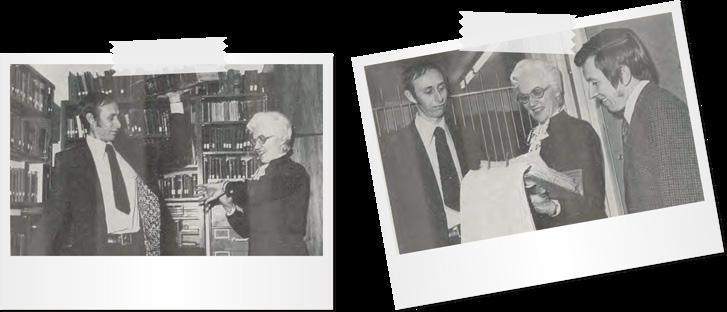
In 1976, the Ellen G White/Seventh-day Adventist Research Centre at Avondale College (now University) was officially opened. Several years prior, the General Conference partnered with the Ellen G White Estate to begin establishing research centres around the world— places where copies of Ellen White’s manuscripts and other documents could be held and studied.
In 1975, Hedy Jemison came to Australia from Andrews University, Michigan (USA) on a mission. For 15 years she managed the Ellen White Research Centre at Andrews and had come temporarily to initiate the operation of Avondale’s Research Centre. Part of the establishment of such research centres required hard copies of documents to be shipped overseas. Before her departure, Mrs Jemison personally photocopied the 2500 document files of Ellen White letters and related materials, including preparing microfiche copies of the Review and Herald (1850-1915), Youth’s Instructor (1852-1915) and Signs of the Times (1874-1915). In all, this material weighed two tonnes. It was shipped to Australia, where Mrs Jemison spent three weeks filing and organising the documents.

The benefits of such a research centre were obvious. Church members would have ready access to reference material related to Adventist history. It was anticipated that questions from the field regarding Adventist theology and ethics would be researched from a scriptural and Spirit of Prophecy base, and that the answers from the past would be offered as a guide to orient the direction for the future. The ever-changing student population of Avondale College would also have the opportunity for personal research.
The research centre has continued to serve the Church in the South Pacific to this day, and in May marked its 50th anniversary. It continues to preserve key historical resources while strengthening understanding of Ellen White’s life, ministry and prophetic role.
For more information, visit <egwresearchcentre. avondale.edu.au>.
This article was adapted from one originally published in the Australasian Record on February 16, 1976.
purpose
Re: “Deliverance from above” (May 30). Looking back on our lives, these terrible events become some of our greatest teaching moments.
My parents as teenagers were rounded up on the streets of Poland and taken as slave labour to Hitler’s labour camps.
Those experiences affected our family even though we weren’t born yet. But I greatly appreciate the learning experiences of life, even, and especially the painful ones that I have come through.
I have been privileged beyond imagination in my life from joining the Adventist Church, marrying my wonderful soulmate, and the things I have learned throughout my life.
As the apostle Paul states, we don’t
even know what we shall yet be, but I am confident that we will eventually live in that paradise earth with Jesus, and all those who are willing to fulfil God’s purposes for our lives. God is love and those who live in love live in God and God in them.
May God help us all to grow more like Jesus and thus fulfil the purpose of our current struggles and trials. God is love!
Nadia Ancuk, via Facebook
What a blessing it was to read “Does the Bible condone slavery?” (May 16).
The writer’s clear delivery of the topic brought a sense of relief as I read. The article gave me an understanding of something I have
never been able to align with God’s character of love.
Thank you, and may God continue to bless the writer’s ministry.
Lyn Scarr, NSW
Thank you for the May 16 Record
The wise and inspirational editorial “The stewardship of power” set the tone for this entire edition.
I found every page to be encouraging and uplifting. I never once felt “talked down to” or sensed a literary finger being wagged in my face, should I not entirely agree with a writer’s point of view.
Thank you, Record team. God bless you all.
Pam Driver, New Zealand






HESS, Cedric Irving, born 9.5.1939 in Mackay, Qld; died 16.5.26 in Bupa Aged Care Ashbury, NSW. He is survived by his sons, Brian and Barry. Dad, your strength, love and laughter bound the three of us forever. Two heartbroken sons now carry your memory, grateful for every moment shared.
JOHNSON, Coral Phobe Rose (nee Easton), born 15.12 1937 in Brisbane, Qld; died 1.5.26 in Brisbane. Coral is survived by her children, Barry, Stephen, Ian, and Sunila Waldie (all of Brisbane). She was at various times a member of the Sandgate, Jerusalem and Red Hill churches.

JULL, Donald Keith, born 23.5.1936 in Kingaroy, Qld; died 22.12.25 in Toowoomba. He is survived by his wife of 67 years, June; five children; 18 grandchildren; 34 great-grandchildren; and three great-great-grandchildren. Don served as a deacon and elder in the Toowoomba and then Gatton churches. He had a passion for farming and later for gardening. He now rests awaiting the Lord’s return.

KEEGAN, Margaret
Jean (nee Ackland), born 24.4.1936 in Denmark, WA; died 11.3.26 in Perth. Margaret was predeceased by her husband, George, in 2015. She is survived by her children, Malcolm (Perth), Lynette Aitken (Perth) and Katrina Dyson (Boddington), and their spouses; siblings, William Ackland (Cooranbong, NSW) and Don Ackland (Henrietta, Tas); 12 grandchildren; and 11 great-grandchildren. Margaret’s life was one of quiet faithfulness, devotion to family, service to others and sharing the love of Jesus. Her love, kindness and unwavering faith will continue to live on in the hearts of all who knew and loved her.
Andrew Olsen
The Adventist family owned and operated business, caring for you from Sydney to Newcastle and Wollongong. Contact Arne Neirinckx, who understands our Adventist philosophy. Contact us on 1300 982 803 or 0408 458 452 or <arne@ absolutecarefunerals.com.au>, even if you have already paid for your funeral.
September 13 to October 4, 2026. Follow the footsteps of the Apostle Paul, connecting faith to the ancient sites of Ephesus, Corinth, Thessaloniki and Philippi. Visit the Seven Churches of Revelation. Conducted by Dr Peter Roennfeldt. Contact Anita at <alltrav@bigpond.net.au> or 0405 260 155.
Accessible formats for vision loss (large print, audio CD, app, YouTube, podcast and braille) or hearing loss (Hope SS captioned). Contact CVHS on +61 (02) 9847 2296 or email <cvhs@adventistmedia.org.au>.
RECORD QUANTITIES
Is your church receiving the correct number of Record magazines? Adjust your numbers by notifying Kelli Geelan at subscriptions@record.net.au or on +61 (03) 5965 6300.
The Adventist Identity website provides official tools to help your church communicate professionally and consistently. Explore what’s available at <identity.adventistchurch.com. au>.
NOTE: Neither the editor, Adventist Media, nor the Seventh-day Adventist Church is responsible for the quality of goods or services advertised. Publication does not indicate endorsement of a product or service. Classified advertisements in Adventist Record are available to Seventh-day Adventist members, churches and institutions only. All advertisements, appreciation, anniversary, wedding and obituary notices may be submitted via <ads@record.net.au> or online at <record.adventistchurch. com>. Notices will not be reprinted unless there is an error of fact caused by Record staff.
abn 59 093 117 689 vol 131 no 12
Consulting editor
Glenn Townend
Interim editor
Tracey Bridcutt
News editor
Juliana Muniz
Assistant editors
Ashley Jankiewicz
Danelle Stothers
Copyeditor
Tracey Bridcutt
Graphic designer
Theodora Pau’u
Noticeboard
Julie Laws
Letters editor@record.net.au
News & photos news@record.net.au
Noticeboard ads@record.net.au
Subscriptions subscriptions@record.net.au + 61 (03) 5965 6300
Mailed within Australia and New Zealand
$A60.00; $NZ90.00
Other prices on application
Website record.adventistchurch.com
Mailing address
Adventist Media Locked Bag 1115 Wahroonga NSW 2076 Australia + 61 (02) 9847 2222
Cover credit franckreporter—Getty Images
Next issue
Adventist Record July 4

Give before 30 June and your gift could be