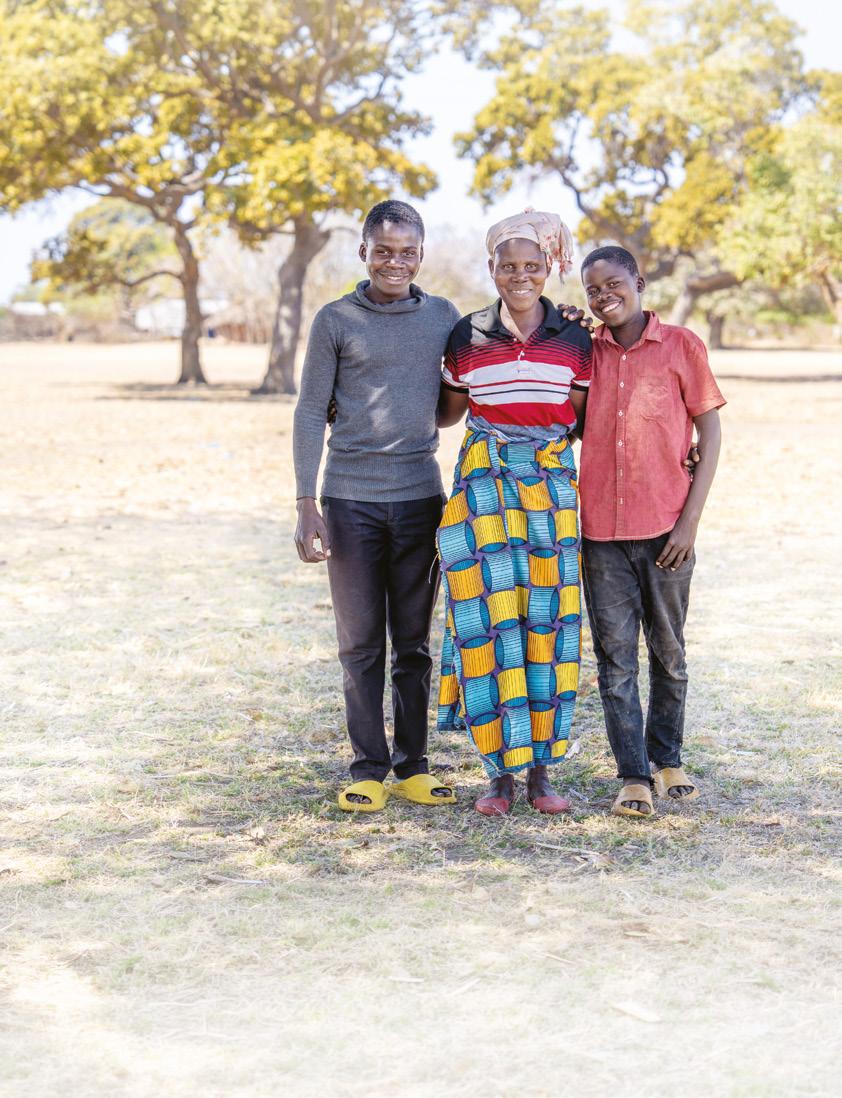
We should assume the best intentions . . . and seek to find common ground in our mission, our broken humanity and our need for Jesus.
“I don’t know how you do it.”
I get that comment (or some variation of it) a lot. “You must get a lot of letters.” I think behind these comments is a commonly-held perception that Adventists can be unkind to each other. And while I’ve had my fair share of criticism, strange, even aggressive missives over the years, on the whole, I have not received too many letters or comments that could have been considered unhelpful, or worse, toxic.
However, since COVID-19 I have seen the church and the world around us increasingly polarise. While there have always been issues in the church which cause some disagreement, the conversations seem to have intensified in recent years. Adventist church members pulled into Christian nationalist talking points, conspiracy theories and extra-biblical speculation on the occult or the signs of the times. Not necessarily more people but perhaps more boldness and more rejection of those who don’t believe as they do, emboldened by the echo chambers of the internet and its algorithms.
As followers of Jesus, we should not be drawn into the worldly ethic of competition and conquest over our enemies, but should be set apart by service and love, especially to those in our own community.
When thinking about this, my last editorial, I asked myself, what is it I can offer my church family in the South Pacific?
I can’t go past the words of Jesus. As He prepared his disciples for His death, what did He say to them?
“By this everyone will know that you are my disciples, if you love one another” (John 13:34,35).
We are called to love. More than that we are called to unity in the body (1 Corinthians 12:12-27) and even to love our enemies and pray for those who persecute us (Matthew 5:43-48). These are perhaps Christianity’s hardest teachings and set us apart from other worldviews.
Unity does not mean uniformity. There are some things you and I may never agree on but can we talk about them with love?
But how do we love well when we disagree? Can we love one another in a world where the “love of many has grown cold” (Matthew 24:12)? Here are some lessons I’ve learned that I believe can help us beyond an editorial context.
Often an angry person just needs to feel heard, and a shared human moment can often soften and calm a raging nervous system.
There is no place for bullying, coercive control or spiritual abuse in the church. Those who want to force others to their point of view are acting contrary to the nature of God as God is love (1 John 4:8) and love is not “self-seeking”, “proud”, love “always protects” (1 Corinthians 13).
We need to see each other as being on the same team, even if we disagree. At times, we can be perceived as prickly, hateful, quick to judge. Yet, the majority of Adventists I have met are kind and loving, quick to serve and passionate about their faith. We’ve all got stories of an angry elder or the potluck police. And so often we make that one bad encounter into an avatar of those who hold different interpretations to us. So we make assumptions about certain groups, or certain churches. We’re in competition with them and make them into the “other”.
We need to aspire to be loving. We should assume the best intentions in the other person (until proven otherwise) and seek to find common ground in our mission, our broken humanity and our need for Jesus.
As I farewell this role, and all of you, thank you for your grace for me over the years. I’ve made mistakes. I’ve chosen not to write on certain important topics, because they are best addressed over a meal, not from a platform. And on the whole, I’ve received grace, love and encouragement.
As I move to a new country and a new field of service, my prayer for us is simple. Let us walk humbly, be kinder to ourselves and others, and may we be Jesus’ shining example of love to the world around us. May we be known for how we love one another.
The Avondale University story
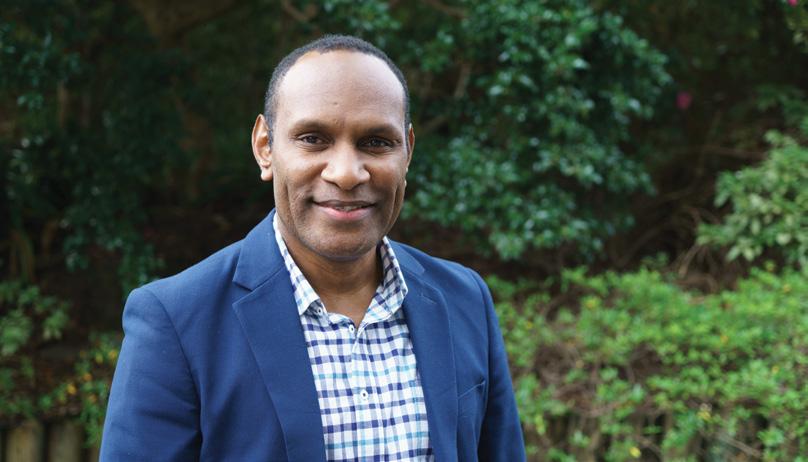
Dr Malcolm Coulson Vice-chancellor Avondale University
Avondale University has long held that the journey of each individual carries deep purpose. At its core, the university exists to provide an excellent academic and student experience. However, its mission reaches further: it is a mission to transform lives, driven by a belief in a greater vision of world needs, and that each individual’s contribution matters. The philosophy underpinning Avondale University’s approach to education is not new; it has guided the institution for more than 125 years. Yet it remains as vital and relevant as ever. True learning produces more than knowledge; it produces character, service and lasting impact.
In recent years, Avondale has undergone significant transformation, refining strategy and improving student experience. Following COVID disruptions, revitalising student connection became a priority. Initiatives such as free dormitory accommodation, a university ministry team, and 7 at Avondale as a social hub, have helped build a connected campus community. This reflects a commitment to belonging and a spiritually rich atmosphere where students feel at home.
That momentum is reflected in the results. Avondale is currently ranked number one in Australia for full-time graduate employment, and number two for overall educational experience. These outcomes flow from a model of education that develops the whole person.
Avondale doesn’t just prepare students for careers in arts, counselling, nursing, education, ministry, theology and business, but equips them to serve their corner of the world for good. It is a legacy more than 125 years old, still relevant in the twenty-first century. Our faith-informed approach provides graduates with more than industry skills. It encourages a sense of identity and purpose in their profession. These qualities produce not only skilled workers, but leaders who contribute meaningfully to their communities. They are nurtured within a community shaped by shared values—service, excellence, wellbeing, integrity and spirituality.
For Avondale, belonging is central to the experience. This renewed focus on connection is part of a bigger story: one that is faith-led, grounded in purpose and pointing toward the future. We need adaptive leaders willing to rethink how they engage with the world, and that is the kind of graduate Avondale exists to produce.
Sensational Church opens new congregations
Perth,
WA | Tracey Bridcutt
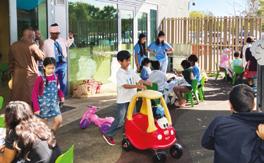
Two new Sensational churches designed to support neurodiverse children and their families have launched in Western Australia and South Africa, less than six months after the first congregation began meeting in Perth.
Sensational Church founder Pastor Vikram Panchal said the growth reflects the increasing need for neurodiverse-friendly ministry spaces to better support families navigating autism and attention-deficit hyperactivity disorder (ADHD).
“Autism and ADHD have fast become the new normal in our society,” Pastor Panchal said. “In the 1980s, 1 in 2500 children was diagnosed with autism in Australia. Today that number is around 1 in 27. Everyone is talking about it.”
The original Sensational Church launched in Ballajura, Western Australia, in September 2025 inspired by Pastor Panchal and his wife Leah’s personal journey raising a son diagnosed with autism and ADHD.
Since then, new Sensational churches have opened in Baldivis (WA) led by Pastor Abby Aviles, and in Cape Town, South Africa, led by Pastor Nigel Carolus and their volunteer teams.
Sensational Church is supported
by volunteers and specialist advisers to help create a safe and welcoming environment for families.
Pastor Panchal said one of the most significant aspects of the ministry is helping parents rediscover a sense of belonging. “After receiving news of their child’s diagnosis . . . it’s not only children but also their parents who suddenly find their sense of belonging has been stripped away,” he said.
Each Sensational Church is reportedly seeing 40 to 50 per cent attendance from families representing Christians from various denominations, people from other faith backgrounds and previously unchurched families.
“God is doing everything possible to ensure every child is given equal opportunity to receive the message of salvation in a way that makes sense to them,” Pastor Panchal said.
The vision for the ministry is “Every child, everywhere”, with resources, guidance and step-by-step mentoring available for churches and members interested in getting involved.
“Starting a new Sensational Church has never been easier,” Pastor Panchal said.
For more, follow @sensational church on social media.
Women’s retreat draws record attendance
Wellington, NZ | Lynelle Laws/Melody Tan
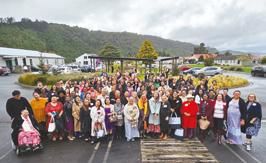
Around 140 women attended the 10th North New Zealand Women’s Ministries retreat in Wellington on May 8 and 9—a record turnout.
“I’m pleased word is getting around that women are valued and catered for at this church event and it is an inclusive event they are happy to recommend to their friends and daughters,” said Lynelle Laws, women’s ministries coordinator for the North New Zealand Conference.
Mums At The Table project manager Melody Tan spoke at the conference, encouraging attendees to transform the church’s posture from one of “purity protection” to a “scandalous welcome” by following
“Jesus’ pattern of radical inclusion and boundary-crossing”.
Drawing from the Bible and her research into psychology and parenting, Ms Tan urged the women to choose “connection before correction”. Using the “At the Table” theme, Ms Tan encouraged relationship-building through belonging before belief.
Worship during the service reflected the multicultural group as attendees sang the hymn “It is Well with My Soul” together, but in their own languages. The event also gave attendees the opportunity to exert their creative skills by decorating a journal using decals featuring Bible verses.
The 10th North New Zealand Women’s Ministries retreat gathered 140 women from around the Wellington area, and as far north as Hamilton.
Launch of the new Sensational Church in Baldivis, Western Australia.
Handwritten Bible reconnects contributors
Dakabin, Qld | Juliana Muniz
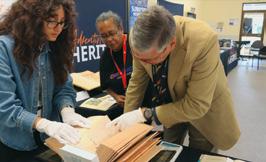
A handwritten World Changer Bible created by delegates during the 2013 World Changers Youth Congress became an unexpected point of reconnection at the recent South Pacific for Christ launch in Brisbane.
Displayed as part of the travelling Legacy of Faith exhibition during the event at Watson Park Convention Centre from April 28 to May 2, the Bible made a return visit to the site where it was collectively handwritten by 1700 delegates during the 2013 World Changers Youth Congress.
Among those revisiting the Bible during the launch of South Pacific for Christ was Lorraine Suti, from New Britain New Ireland Mission in Papua New Guinea, who contributed a handwritten page from the book of Psalms.
While viewing the Bible, Ms Suti excitedly flicked through the pages, recognising the names and handwriting of friends and fellow contributors.
“I feel satisfied and blessed as well,
knowing that some of these people are still in ministry as well. We thank God for being part of this team. He uses us, and we’re still in this ministry today,” she said.
South Pacific Division Institute of Discipleship director Dr Nick Kross, who led the project while serving as SPD youth director, said the Bible was handwritten in one hour during the 2013 congress as part of the launch of the World Changer Bible initiative.
The handwritten Bible is now part of the travelling Legacy of Faith exhibition alongside rare and historic copies of Scripture. “I’m just very happy and honoured to know that the World Changer handwritten Bible has now become part of this collection of Bibles,” said Dr Kross.
The Legacy of Faith exhibition by Adventist Heritage, continues to travel across the South Pacific Division. For more information, visit <heritage. adventistchurch.com>.
New podcast expands Living Covenant stories
Wahroonga, NSW | Juliana Muniz
The recently released Living Covenant book now has a companion podcast series, featuring conversations with contributors about the Old Testament characters explored in its pages.
Hosted by Signs of the Times assistant editor and Record Live co-host Zanita Fletcher, the Living Covenant podcast expands on the articles featured in the book and explores the personal reflections, questions and spiritual lessons behind them.
Living Covenant is the third title in the Living series, following Living 28 and Living Kingdom, and the first to be accompanied by a dedicated podcast.
According to Record editor Jarrod Stackelroth, the podcast was created as part of an effort to repurpose content to reach different audiences.
“We’ve been expanding our podcast offerings in recent years and enjoy providing that supplementary content,” said Mr Stackelroth.
Ms Fletcher said the podcast allows
contributors to explore questions and themes that could not fully fit within the written articles. “The written articles simply didn’t allow the space to ask some of the nitty-gritty questions that inevitably people will ask as they read,” she said.
Among the questions discussed throughout the series are how to recognise God’s voice, how faith functions during doubt, and what readers can learn from the successes and failures of Old Testament figures.
“There are examples of individuals being bold and confident that have inspired me—and there are, of course, countless more examples of individuals being fools, led by their own desires,” she said. “But time and time again, I’ve seen a God who is always faithful.”
Living Covenant episodes are released each Monday in video format on Adventist Record’s YouTube channel and in audio form across major podcast platforms.
New episodes are released every Monday.
From left, Record news editor Juliana Muniz, Lorraine Suti and Dr Nick Kross look through the handwritten Bible.
New book highlights God at work in the SPD
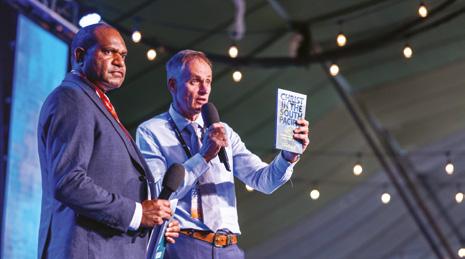
More than 40 true stories of mission, faith and transformation have been brought together in a new book, Christ in the South Pacific
Launched during the recent South Pacific for Christ event in Brisbane, the book highlights mission initiatives, answers to prayer and transformed lives from across the region. The collection features contributions from a diverse range of authors, including some of the South Pacific’s newest young missionaries serving in South-East Asia.
Many stories reflect the impact of PNG for Christ, while others share experiences from Adventist education, health, literature evangelism and ADRA, along with personal faith journeys and encounters with God.
Reflecting on the book, South Pacific Division (SPD) president Pastor Glenn Townend said, “God is at work in the South Pacific right now— His mission is alive and well. This book shares stories from the last two years from our backyard that show how God has answered our prayers and used our people to lead others to Jesus.”
The book was edited by Adventist Media head of news and editorial, Tracey Bridcutt, and printed at Signs Publishing.
“Christ in the South Pacific demonstrates the diversity of mission in our part of the world, both in the contexts in which mission takes place and the different ways in which we all can play our part in God’s mission using our voices, talents, time and resources,” said Signs book editor Nathan Brown.
North New South Wales Conference secretary Pastor Abel Iorgulescu began reading the book after receiving a copy at the South Pacific for Christ launch and quickly became absorbed in the stories. “I made the ‘mistake’ of starting it on Sabbath evening and couldn’t put it down. I wanted to let you know how inspiring these stories are.”
Mrs Bridcutt thanked those who shared their stories and acknowledged Signs Publishing assistant book editor Lauren Webb for her guidance and support in helping bring the book to publication.
“My prayer is that readers will be encouraged, inspired and reminded that mission is still alive and growing across our region,” she said.
Pastor Townend presented copies to North American Division church leaders, who told him “Your mission stories inspire us”.
Christ in the South Pacific is available from Adventist Book Centres in Australia and New Zealand or online.
making headlines
Blocks build mission
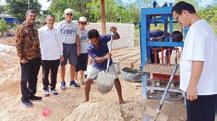
An Adventist school in Indonesia has launched a hollow block production initiative which aims to help the school become more financially sustainable and provide employment for local workers. The donated machine can produce up to 880 hollow blocks each week, generating a weekly net income of $A40, with the blocks supplied to churches, schools and nearby communities for construction use.—ANN
Skiing for service
The “Jam 4 Cans” ski and snowboard competition (USA) combined winter sport with ministry outreach, collecting more than 680 kilograms of food for local food banks. The event, now in its 17th year, opens doors for relationship-based witness as volunteers connect with athletes and families through a family-friendly atmosphere that points to the gospel in practical ways.—Northwest Adventists
Leaders praise church
The work of the Adventist Church in Jamaica was praised by the Deputy Prime Minister during the inauguration of its new union leadership. The Governor General and Opposition Leader also praised the Church’s positive impact in strengthening standards, supporting families and serving wider society. —The Jamaica Information Service
Family prayer gap
A survey from the American Bible Society found that less than a third of US parents (29 per cent) prayed with their children often or daily. It revealed a gap between openness to faith and everyday practice at home, with researchers calling on churches to help families build regular rhythms of prayer and Scripture.—Christian Post
Pastor Danny Philip and Pastor Glenn Townend launching the book. (Credit: Charmaine Patel)
Dakabin, Qld | Record staff
Grounded in the Bible
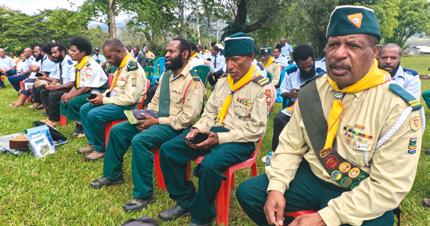
A total of 138 youth leaders attended a Master Guide and Training of Trainers program held at Rulgi Prayer Centre in Papua New Guinea’s Western Highlands from May 10 to 16. Themed “Grounded in the Bible, Focused on the Mission”, the training focused on strengthening youth leadership and introducing participants to the updated Master Guide curriculum. The program was organised by new Western Highlands Mission youth director Pastor Jimmy Aba. Facilitators travelled from the New Britain New Ireland Mission to lead sessions on youth ministry, leadership, drill and marching, recreation and workshop planning. Certificates were presented at the conclusion of the training.—Paul Bopalo
Little hands, big service
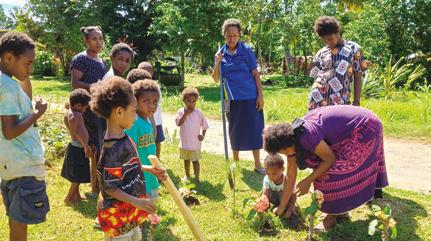
The Crystal Stream Adventurer Club from Warangoi Seventh-day Adventist Church in Papua New Guinea celebrated World Adventurer Day on May 16 with community service activities under the theme “Walking with Jesus”. As part of the program, Adventurers visited Warangoi Rural Hospital, distributing cards, fruit and small gifts to patients and health workers. Church pastor Minister Trevor Maino encouraged parents and children during the worship service, highlighting the role of Adventurer Ministries in developing future leaders and encouraging children to follow Jesus from an early age. The weekend activities also included flower planting around the church grounds, teaching children about caring for the environment and serving their community.—Trevor Maino
14 baptised
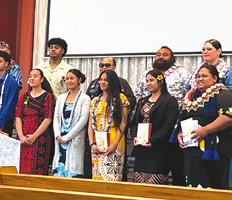
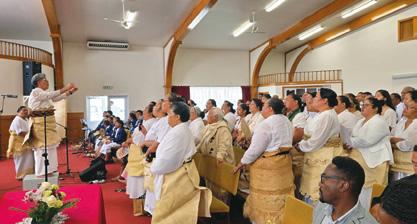
Fourteen people were baptised during a joint evangelistic program held by the Addington and Aranui Samoan Seventh-day Adventist churches in the South New Zealand Conference. The two-week series, held under the theme “Jesus—The Good News for the End Times”, concluded with a combined Sabbath celebration. The churches connected the program with the South Pacific Division’s South Pacific for Christ emphasis using the farming cycle in Mark 4 as a theme —Plugin
Marching with Jesus
Adventurers from four clubs in northwestern Sydney gathered at New Hope church to celebrate World Adventurers Day (May 16). Children from Parramatta, Kellyville, Epping/ Ryde and New Hope marched into the program, sang songs, read from Scripture and prayed during the program, after which Greater Sydney Conference secretary Pastor Cheonneth Strickland preached on the theme “Walking with Jesus” —Jarrod Stackelroth
Health before harvest
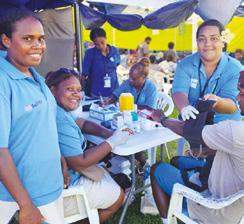
Hundreds of people attended a community health expo in May at Lawson Tama Stadium in Honiara, accessing free health services and lifestyle education ahead of the Solomon Islands for Christ evangelistic initiative in July.
Organised by the Solomon Islands Mission with support from local Adventists, health workers and 10,000 Toes Campaign ambassadors, the event responded to growing concerns around non-communicable diseases in the Solomon Islands while also strengthening community connections.
Community members received blood pressure and blood sugar testing, dental treatment, eye examinations, physiotherapy, counselling, prayer and lifestyle education during the program.
Solomon Islands Mission associate communication director Travis Ronnie said the expo created opportunities for people to connect with local health workers and learn more about early health intervention.
“One of the biggest impacts was the opportunity to raise awareness around preventative healthcare and healthy lifestyle choices,” he said.
Following the expo, outreach activities continued through a Schools for Christ campaign in Adventist schools in the Solomon Islands. Themed “Truth revealed”, the initiative provided opportunities for students, staff and parents to engage with Bible messages
—Tracey Bridcutt
have news to share?
Send info and photos to <news@record.net.au>
From group to church
The Manurewa (Berean) Tongan Seventh-day Adventist Church was officially organised on March 15 at the Auckland Tongan (Penrose) Seventh-day Adventist Church, marking 15 years since the congregation began with seven families in south Auckland. The service was officiated by New Zealand Pacific Union Conference president Pastor Eddie Tupa’i and attended by church leaders, pastors and members. Established in 2011 to serve the local Tongan community, the church now has 70 baptised members, 26 children and more people preparing for baptism. During the service, Pastor Tupa’i encouraged the congregation to be “a place of worship, healing and belonging” in their community.—Plugin
Going deeper
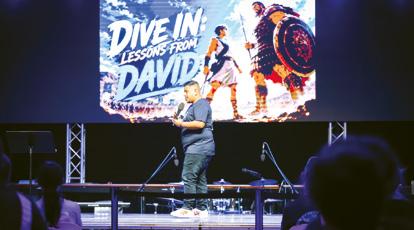
Brisbane Adventist College held its 2026 Week of Worship from May 11 to 15 under the theme “Dive In”, encouraging students to explore faith, courage and identity. Guest speaker Pastor Raul Moran, lead chaplain at Mountain View Adventist College in Sydney, shared messages based on biblical figures, encouraging students to develop a personal relationship with Jesus. The college transformed its worship venues with underwater-themed decorations and interactive displays, including a wall of paper prayers where students, staff and parents shared reflections and prayer requests. Pastor Moran said Week of Worship programs help create opportunities for ongoing spiritual conversations beyond the event itself, including small group Bible studies and one-onone discussions throughout the school year.—Debbie Cosier
How can parents effectively pass on their faith to the next generation? Some let their children choose for themselves and hope for the best. Others rigidly enforce their standards for as long as their children are at home. Is there another way? A major clue comes to us as we unpack the subtle differences between the two versions of the Ten Commandments (Exodus 20 and Deuteronomy 5), especially as found in the fourth commandment. Look at the original context of both passages.
The law was first given at Sinai (Exodus 20) in the first few months of Israel’s escape from Egypt. Forty years later, on the plains of Moab, just before crossing the river Jordan, the Ten Commandments were again proclaimed (Deuteronomy 5), but they were not exactly the same. “While Exodus 20:11 focuses on creation and God’s rest as a paradigm for humanity’s rest, Deuteronomy 5:15 highlights YHWH’s mighty deliverance of Israel from Egypt, and thus emphasises liberation . . .”1 and salvation. It is important to note that the command itself does not change, but the rationale for observing it does quite dramatically. In this we find the clue to ensure the nurture of the next generation’s Jesus-focused values.
Two different law codes were delivered to two sets of people a generation apart. Why the change between the two accounts? Is there more to this than just a change of venue (Mt Sinai to the plains of Moab) and a change of generation (from those who left Egypt to those entering the Promised Land)?
To answer this we must examine the different perspectives of the two Exodus generations. The first generation came directly from slavery, where their entire lives were ordered by pagan slave masters. Not only were they locked into the endless routine of slavery, but they had
also lived among, and been deeply impacted by, Egypt’s religious culture. The Israelites would have felt dwarfed as they walked among the imposing temples and huge monuments. They had also witnessed the regular exuberant processions of Egyptian gods being paraded through the streets. They regularly saw the trappings of the great sun-god Ra and the animals closely associated with him, especially the bull. So the fourth commandment in Exodus 20 confronts them with the Creator-God. They are told to “remember” that the God delivering them had created the universe and all that is in it. So the mighty Ra (and his golden-calf symbol) proved to be quite insignificant in comparison to the Creator of the galaxies.
The second generation had very vague childish memories (if any) of Egypt. They had grown up as wanderers through some of the most inhospitable regions on the planet. They knew their parents had escaped from slavery, but the delay of years and the unending desert put them out of touch with settling down and a “normal” life. They needed to learn how to establish and live in a society that would last—one based on the very different values of God’s primacy and the sacredness of human life. Modern examples (eg Libya and Iraq) adequately demonstrate the challenges of establishing a new nation by people without any previous nation-building experience. So, the Israelites were instructed to “keep or “guard” this regular memorial of God’s action of freeing His people. Their own slavery was to be a warning to them not to abuse others as they had been (Leviticus 25:41,42).
The fourth commandment states, “Remember the Sabbath day to keep it holy” (Exodus 20:8), “because in six days God made the heavens and the earth the sea and all that is in them and He rested on the seventh day.
Faith across generations
Therefore God blessed the seventh day and set it apart” (v11). God’s desire for humanity is for them to rest on the Sabbath. The reason given to “remember” is based on God resting after completing His work of creation. So the command concentrates on a cycle begun in God’s activity and completion. God’s work was completed. There was nothing more He could add to it, for He saw that it was all very good (Genesis 1:31).
When the command is repeated in Deuteronomy 5, we see a subtle but dramatic change. After stating the command, “Observe (literally: keep) the Sabbath day carefully to keep it holy (v12)” the rationale is given, “And remember that you were a slave in the land of Egypt and God led you out from there with a strong hand and an extended arm. Therefore the Lord your God commanded you to keep the Sabbath day (v15).” In the rewording of the law code for the new generation, the essence of the fourth commandment remains the same, but the rationale for observing it is quite different. The imperative in Deuteronomy 5 is to keep or guard, rather than to remember.2 These verbs have a stronger weight than those in Exodus 20, so the second generation is under greater obligation than their parents. But it is the change in the rationale clause that is most significant. Instead of being attributed to a memorial of creation, rest is justified on the grounds that previously the people had been slaves in Egypt and now they are free.
On a very practical level, two different explanations for the Sabbath command, tailored for two quite diverse generations, sets a precedent for us in the way we pass faith and values to the next generation. That process cannot be handing over a carbon copy of parents’ answers to their children’s concerns. Instead, new rationales must
be carefully thought through to suit the context of the new generation. They need to claim ownership for their own faith and not mindlessly copy their parents.
How, for example, do we credibly explain to our youth the need for sexual purity before marriage and for fidelity afterwards? Or how do we coach our young to deal with the peer pressure of alcohol and drugs? My parents were of little help to me in my youth, as their outdated explanations did not seem relevant to my situation. Similarly, the paltry explanations I tried to share with my own sons in their youth were totally inadequate for them. The involvement of good mentors, significant adult others, allowed me to safely explore and process issues that my parents were out of touch with.
The two generations involved in the Exodus affirm that while values must be passed on, they must be creatively contextualised for the next generation with explanations that are relevant and values they can internalise. If Moses, the founding father of the nation of Israel, saw the need to repackage God’s non-changing values in a different way for the young, then we must do the same, rather than sticking to traditional explanations that become more and more obsolete with each passing generation.
1. Gerald A. Klingbeil, “The Sabbath Law in the Decalogue(s): Creation and Liberation as a Paradigm for Community,” Revue Biblique Vol. 117, No. 4 (October 2010): 502.
2. Eugene H. Merrill suggests that the verb “to keep” is more active than the verb “to remember,” The New American Commentary: An Exegetical and Theological Exposition of Scripture, vol 4, Deuteronomy, Broadman and Holman, 1994, 150.
David Tasker
retired pastor and Old Testament professor who served at Avondale, AIIAS and PAU.
GOD WORKS IN MYSTERIOUS WAYS
Most Christians at one point or another have heard the phrase “God works in mysterious ways”. It’s unavoidable, quotable as “all things through Christ who strengthens me” and useful in almost every situation.
But is it really in the Bible? Surprisingly, no. It originates from a hymn, written by 18th century English poet William Cowper, who wrote “God moves in a mysterious way, His wonders to perform.”
But just because it’s not in the Bible, does that mean we shouldn’t say that God works in mysterious ways? It depends on our understanding of “God’s mysterious ways”. Bad things that happen in life are often attributed to God and His mysterious ways, but that couldn’t be further from the truth.
Psalm 103:8 says, “The Lord is compassionate and gracious, slow to anger, abounding in love.” We see evidence of that love in the New Testament, when Jesus came and lived among us. He ate with sinners and tax collectors (Matthew 9:10), healed people (Mark 5, John 9, etc), washed His disciples’ feet (John 13) and ultimately sacrificed Himself, all in the name of love (John 3:16).
We can be assured of that love—there’s no secret in how much He cares for us. Bad things happen because we live in a sinful world. What can be mysterious, however, are the ways in which our stories unravel. We often can’t see the whole picture until we’re looking back, and even then, we often don’t see the whole story. Situations that to us seem completely dire, or even average and forgettable, can always be used by God—He wastes nothing. As Romans 11:33 reminds us, “Oh the depths of the riches of the wisdom and knowledge of God. How unsearchable His
judgements, and His paths beyond tracing out!”
I’m reminded of a moment when my sister and I were flying back home to Sydney from Adelaide earlier this year. We noticed a family sitting not far from us speaking in Polish, and when we lined up to get on the plane, they were right in front of us. One by one, they all stood aside, and only one young woman went through the gate. She started crying before we got to the plane, and we asked her if she was okay. Her story spilled out—she had been living in Australia for a few years and had just recently returned from Poland for her grandmother’s funeral before now having to go back a second time for her father’s funeral. My sister sat near her on the plane and was able to comfort her, and they have since connected on social media.
We both felt like it was one of those God moments— what were the odds that we, who speak Polish, just happened to stand near someone who desperately needed a listening ear on a long journey?
May we all let God use us in mysterious ways, not only in our own lives, but to impact the lives of others. May we be able to trust, to work with the whole mystery of it all, and rely upon the words of Scripture and the actions of Jesus Himself that promise us that He is working for our good. As William Cowper goes on to write, “When tears are great and comforts few, we hope in mercies ever new, we trust in You.”
Never have you ever tasted a soup so deliciously creamy and smooth as this one. This potato soup with orange and almond crumb, is perfect on cold winter nights and will ensure you feel fulfilled and warmed.
Step 2: Scrub and rinse potatoes, then toss with half the orange juice, olive oil and seasoning in a roasting dish. Roast for 35 minutes until tender. Cool slightly, then mash and set aside.
Step 3: Heat remaining olive oil in a large saucepan over medium heat. Add leeks, celery, garlic and bay leaves; cook gently for 10 minutes until soft. Remove bay leaves. Stir in mashed potatoes, stock and So Good™ Unsweetened Coconut & Almond Milk. Bring to the boil, then simmer for 5 minutes.
Step 4: Blend soup until smooth, adding extra milk if needed. Return to pan and heat for a further 10 minutes.
Step 5: Mix ground almonds, orange zest, coconut and chia seeds. Spread on a lined tray and toast at 180°C for 8 minutes until golden.
Step 6: Season soup, top with the orange and almond crumb and serve immediately.
Carry the Flame:
Charlie Jimmy
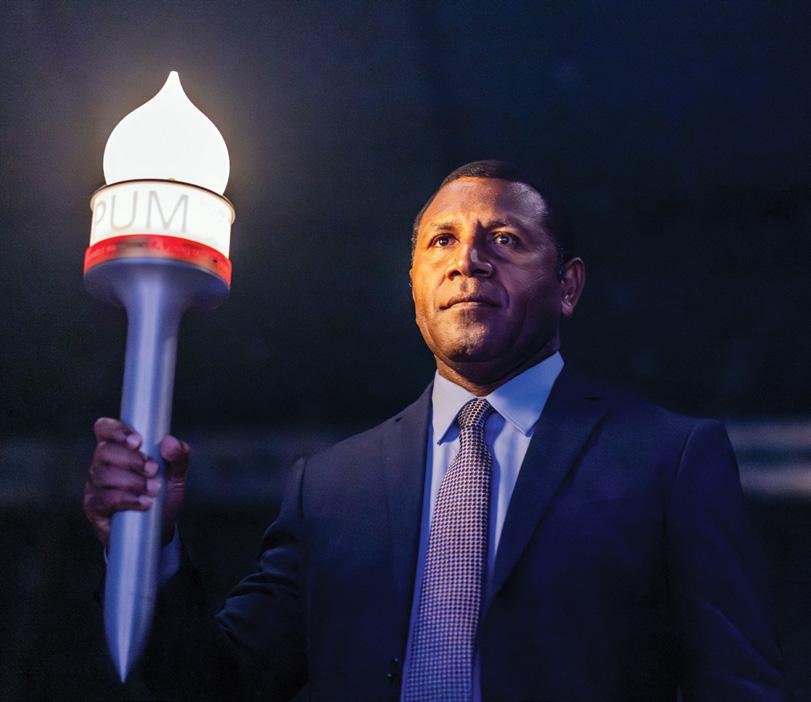
The South Pacific Division (SPD) contains four unions. Adventist Record recorded interviews with all four union presidents during the South Pacific for Christ program in Brisbane, Queensland. In this issue we bring you our chat with Pastor Charlie Jimmy, president of the church for the Trans Pacific Union Mission (TPUM).
Juliana Muniz (JM): How did you feel about the South Pacific for Christ program?
Charlie Jimmy: This is a timely program for the South Pacific Division. Especially for the TPUM territory, where we will be having TPUM for Christ this year. We’ve got delegates—church leaders from around the union who are here for this meeting because it actually helps, empowers and motivates them to continue to plan and prepare for TPUM for Christ in the middle of this year.
JM: TPUM comprises 11 Pacific nations, and is the first of the “for Christ” events during South Pacific for Christ, from July to August this year, is that correct?
Charlie Jimmy: We’ve got 11 nations—seven missions and three attached fields—and we’ve divided those countries into two dates. We’ll be running the first group of TPUM for Christ meetings during the month of July, and then the next lot will be in the month of August.
JM:. Could you give us an idea of what things look like in your region? What are some of the challenges in the Trans Pacific?
Charlie Jimmy: As we prepare for TPUM for Christ, in terms of our plans, one of the obvious challenges that we continue to face is in regard to the remoteness of our islands. The isolation poses challenges in terms of resources, especially distributing resources to all the local churches
Photo Credit: Charmaine Patel
in remote places to help them in the discipleship process of “prepare the soil, sow the seed, cultivate the plant, harvest” and so forth. So we need to be very proactive in terms of planning so resources are dispatched on time and reach the local church before the meetings come.
JM: You were elected TPUM president in late 2025. So, you have most of the quinquennium still ahead of you. Can you share your goals and strategies for this quinquennium?
Charlie Jimmy: Obviously, we want to ensure that we align with the General Conference strategic plan and the SPD strategic plan.
We have embraced it—the four strategic focuses for us in the TPUM to implement for the next five years. We have also revised our vision statement: living a Christ-like life and making disciples. We would like to continue to encourage our members to create a movement of disciple-making around the Trans Pacific.
More than that, our focus for this quinquennium is we would like to see each local church come up with a church planting project for this next five years.
JM: Now let’s talk about Trans Pacific for Christ. What is it going to look like? What can we expect? What’s the planning looking like?
Charlie Jimmy: The preparations are going well. We have worked with the Institute of Public Evangelism, with Pastor Lyle Southwell and the team here at SPD in ensuring that the international speakers are confirmed, and we’ve achieved 99 per cent in terms of confirming and allocating international preachers to different sites across TPUM.
We have also confirmed the series that we will be using from It Is Written. They have developed the resources. And also at the local missions and at the local church, preparations are already in place. The evangelism steering committees are in place to ensure that when international preachers arrive, they’ve received them, catered for them and provided accommodation for them for the time that they will be spending here.
More than that—not only investing in preparation for the harvest program, we would like to strengthen the nurturing part. So we are working with Adventist Technology—and also with Pastor Adrian Raethel, project manager of the Adventist Church Management System—so that interests and new believers who come for the meeting are recorded in the system so there is proper nurturing and follow-up for those new believers who have joined us.
JM: I know that you probably already have most of the preachers, but how can people support it?
Charlie Jimmy: So we are working closely with SPD in terms of the speakers, but we welcome any other support that anyone—individuals or churches around the SPD—
would like to give to support Trans Pacific for Christ. You can work with SPD, or you can work with the Trans Pacific Union Mission if you would like to support, not only in terms of preaching, but any other involvement. It might be that you want to come and support a prayer program or singing [ministry] or any other areas. We welcome anyone —small groups or individuals around the South Pacific—to come and help us for Trans Pacific for Christ.
JM: And do you have any specific goals that you want to achieve with Trans Pacific for Christ?
Charlie Jimmy: By God’s grace, at the end of Trans Pacific for Christ we would like to see new church plants in unentered areas and in some of the non-Adventist communities. That is one of our big goals.
Also, we would like to see total member involvement. Church members, leaders, everyone finding their space, using their gifts in the mission of the Church.
JM: I’m very excited because I am coming to Kiribati. Well, I’ll be covering the event for Record, not preaching, but I’m excited. Before we close, in addition to Trans Pacific for Christ, what should church members be aware of in terms of mission in this next quinquennium?
Charlie Jimmy: So for TPUM, it is not just this year that’s Trans Pacific for Christ.
We have laid out our missional plans also for these five years. So next year our focus will be “I will go to my church”. While we will also be on board with OneVoice27, our focus will be on church members. We will be focusing on retention and reclaiming missing members, and for next year we will be putting emphasis into a membership audit. So the focus is on the church.
That is just 2027. In 2028 our theme is “I will go to my school”. Our focus in mission will be our schools. And then in 2029 [the theme] is “I will go to my community”— focusing on all the communities around different islands or missions in TPUM. In 2030 [the plan] is to support SPD with “I will go to SSD” (Southern-Asia Pacific Division). And we would also like to encourage local missionaries to be sent to the remote parts and different places around TPUM. So, “I will go to the ends of the earth”—that’s the focus for 2030.
This interview was recorded and published as a recent episode of Record Live.
To watch the full version visit <youtube.com/@AdventistNews> or scan the QR code.
TEENAGE
Keira Agustian
Going through year 12 in 2025, gaining my high school certificate in Victoria, was one of the most stressful experiences I’ve ever had. I studied harder than I ever had to try to receive the results I wanted. At the end of the year, when I didn’t receive the score I wanted, or they seemed too low for the university courses I wanted, I felt disappointed. I understood that God always had a reason, but I couldn’t accept that He would allow that outcome when I had already tried my best.
Despite my disappointment, I was blessed to received offers to both of my top two course preferences. Looking back, I can see that what felt like a setback was actually God positioning me where I needed to be. It also reminded me that doing my best and letting God do the rest was key.
This experience taught me that God doesn’t always remove confusion or disappointment right away, but He is always faithful if you trust in Him. Even when the journey doesn’t turn out the way you want or expect, God is still leading us exactly where He intends.
Hannah Kim
Earlier this year, a friend messaged me about applying for part-time jobs and sent me a link to a job search website. While scrolling, I found what felt like the perfect job: a Korean restaurant only two minutes from my school, looking for a Korean-speaking casual worker with no experience required.
The job was perfect, it felt like it was tailored just for me! The problem was the hours. The job required me to work Friday evenings and Saturdays, which is the Sabbath.
At first, I didn’t want to let the opportunity go. The rates were almost 1.5 times higher than normal, and I was really tempted to give in. And to be honest, for a while, I was very set on working there.
I tried to justify myself and push back against my parents’ concerns. But after many conversations, prayer and my parents’ continued support, I started to realise that this wasn’t just about the job, it was about whether I truly trusted God’s commandments and His promises.
The Bible says in Psalm 37:5, “Commit your way to the Lord; trust in Him and He will act.”
Ultimately, I didn’t get the job, and until now, I don’t know whether giving up this opportunity will lead to something better or if I will come to regret it. However, I trust that following God’s commandments and promises will lead God to honour my choices in His time.
Marco Agustian
Basketball is one of my favourite things, but in Australia, many high-level teams play on the Sabbath. I prayed that God would open a way for me to still compete while staying faithful.
God answered that prayer through my school. One of my teachers, also our basketball coach, is a Seventh-day Adventist. He makes sure our team never plays on the Sabbath while still giving us chances to compete.
When I first started, I wasn’t very good. In Year 9 I played at the Adventist National Games in Sydney, but I was the youngest and smallest on the team, so I spent most of my time on the bench. After that, I started training much harder, but the next year I still didn’t play as much as I had hoped and I felt frustrated.
So I kept working hard and also started praying more before games. Later that year, we played at the Footlocker Nationals on the Gold Coast—one of the biggest tournaments in Australia. This time, I prayed before every game and I noticed a big difference. I played more calmly, got more time on the court and was really happy with how I performed.
Through this experience, I learned that while hard work matters, trusting God and praying is the key.
These testimonies were collected by Jordan Weatherall during a mission trip to the school he worked at as an English teaching missionary for the Trans Pacific Union Mission in Southeast Asia.
Keira, Hannah and Marco were born into Adventist families in Australia, where faith, service and community became central to their lives. From an early age, they were brought up in environments that encouraged spiritual growth and active involvement in the church. These foundations shaped their journeys as they learn to balance their goals and the demands of school with their commitment to faith.
Every morning at 5am, in some corner of the world, a devotional from Des Yaninen arrives in somebody’s inbox.
Des’s digital ministry began six years ago, inspired by his late father David, who spent more than 50 years in ministry across Papua New Guinea—planting churches and leading many people to Christ. Yet even after decades of service, he felt there was still more he could do.
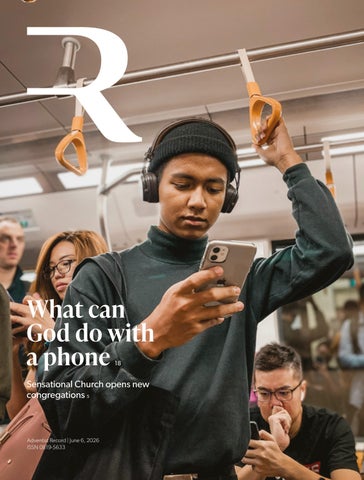
When David received his first smartphone a few years ago, his response was immediate.
“He was like, wow . . . imagine what I could do with this for God now,” Des said. “He spoke to me and said, ‘How can I use this device to reach more people? I want to do more for God.’”
So together, they began.
In 2020, they launched a simple Facebook page called “Walk Godly”, inspired by Genesis 5:24, “And Enoch walked with God . . .”
What started as a prayer ministry—sharing Bible verses and encouragement—gradually grew into a daily devotional platform reaching people far beyond what they had ever imagined.
About a year ago, David passed away, but not before challenging Des to continue the ministry. Since then, Des has refined the content, expanded the platform to include a website and committed himself to posting consistently.
By 2025, Walk Godly had:
• 57,000 website visits
• 558,000 Facebook devotional readers for the year
• 3100 active users
What God can do
with a phone
• A mailing list of more than 500 daily readers across Asia, Africa, Europe, the Americas—even Alaska.
However, for Des, the ministry is about far more than numbers.
“I made a commitment that I would share God’s Word every single day . . . and people are saying, ‘What you shared today is exactly what I needed.’ It’s really powerful how the Holy Spirit is able to use these daily devotionals to encourage someone.”
Through the ministry, Des has built connections with people around the world, personally ministering to many of them. Messages regularly come in requesting Bibles and prayer.
Des, who formerly worked as a bank CEO, sees digital ministry as a significant mission field—especially in a place like Papua New Guinea, where online spaces can often be filled with negativity.
He has also focused on encouraging young people to use social media for positive impact. One young man, Steven, was given a phone by Des and taught how to share short devotional videos. Today, his content reaches up to 300,000 people.
“I can’t wait to tell [my father] when we get to heaven about the powerful impact of the ministry he suggested to me,” Des said, “Perhaps together we will meet others who have been led to Christ by it.
“Heaven is the goal—and saving every soul!”
Tracey Bridcutt communication director, South Pacific Division.
miraculous meals
Throughout the Bible, God repeatedly provides for His people in moments of need, often in unexpected and miraculous ways.
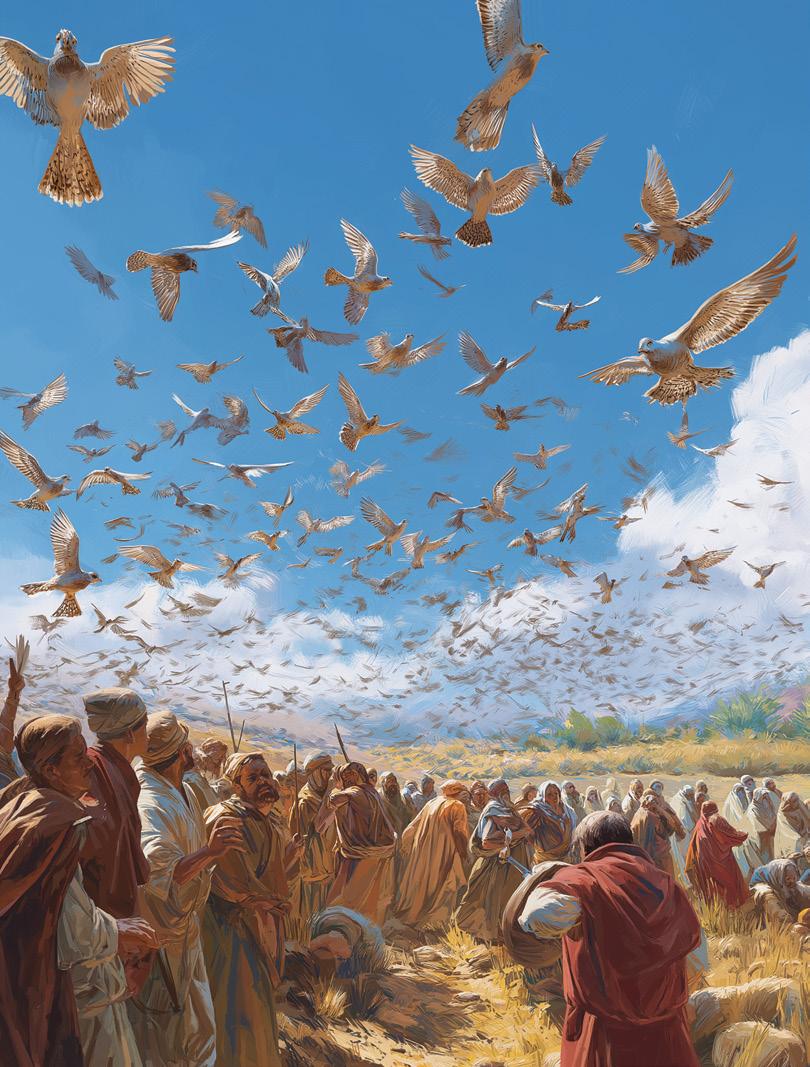
Manna and quail (Exodus 16)
God provided manna each morning and quail in the evening to feed the Israelites as they travelled through the desert after leaving Egypt.
Water from the rock (Exodus 17:1–7)
When the Israelites were thirsty, God instructed Moses to strike a rock, bringing forth water for the people to drink.
Quail in the wilderness (Numbers 11)
God sent a massive flock of quail a second time for the Israelites to eat after they complained about their lack of meat.
Ravens feeding Elijah (1 Kings 17:1–6)
During a drought, God commanded ravens to bring bread and meat to the prophet Elijah.
Flour and oil for the widow of Zarephath (1 Kings 17:7–24)
God miraculously ensured that a widow’s jar of flour and jug of oil did not run out during a famine.
Fresh bread and water for Elijah (1 Kings 19:1–9)
An angel brought Elijah freshly baked bread and water, giving him strength for a long journey.
Oil multiplied for the widow (2 Kings 4:1–7)
God miraculously multiplied a widow’s small supply of oil so she could sell it and pay her debts.
Feeding of the 5000 (Matthew 14:13–21)
Jesus multiplied five loaves and two fish to feed a large crowd, with leftovers!
Feeding of the 4000 (Matthew 15:29–39)
Jesus again multiplied a small amount of food to feed thousands who had been listening to him teach.
Water turned into wine at Cana (John 2:1–11)
Jesus performed His first recorded miracle by turning water into wine at a wedding feast when the supply ran out.
Obituaries
KNIGHT, Vicki Maree (nee Chorley), born 12.12.1955 in Scottsdale, Tas; died 16.4.26 in Scottsdale. Vicki is survived by husband, Ken (Scottsdale); daughters, Angela (Scottsdale), Libby Hergenhan (Lilydale, Vic) and Felicity (Hobart, Tas); and mother, Lucille Chorley (Scottsdale). Vicki was a devoted wife, mother and grandmother whose life was marked by her love for family, food and faith. She loved Jesus deeply and was a tireless supporter of the church and her community, always serving others with generosity and a sense of humour. She rests in hope, looking forward to the resurrection morning and the promise of eternal life in Christ. Rick Hergenhan
URQUHART, John, died 1.4.26 in Newcastle, NSW. He was predeceased by his daughter, Leigh. John is survived by his wife Lesley (Myrl); children, Ranald and Dahlene; and five grandchildren. John was proud of his Scottish heritage and later in Australia he was a faithful and involved member of the Adventist Church. John was a devoted husband and loving father. During his active life he had many different practical skills as well as being deeply involved in supporting the Church in many roles in a number of churches. He now rests, awaiting the soon return of his loving Saviour.
Neil Watts
Advertising
NEED LOGOS, TEMPLATES OR BRANDING RESOURCES?
The Adventist Identity website
provides official tools to help your church communicate professionally and consistently. Explore what’s available at <identity.adventistchurch.com. au>.
AVONDALE FAMILY FUNERALS. Offering compassionate cremation and burial services with dignity and care at your cemetery of choice in NSW led by an Adventist funeral director. Contact Mark Windus on 0411 797 854 or <director@ avondalefamilyfunerals.com.au>.
STUDY
THE ADULT SABBATH SCHOOL LESSON YOUR WAY
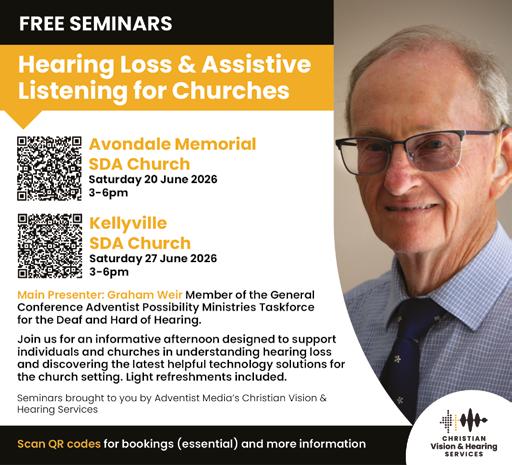
Accessible formats for vision loss (large print, audio CD, app, YouTube, podcast and braille) or hearing loss (Hope SS captioned). Contact CVHS on +61 (02) 9847 2296 or email <cvhs@adventistmedia.org.au>.
NOTE: Neither the editor, Adventist Media, nor the Seventh-day Adventist Church is responsible for the quality of goods or services advertised. Publication does not indicate endorsement of a product or service. Classified advertisements in Adventist Record are available to Seventh-day Adventist members, churches and institutions only. All advertisements, appreciation, anniversary, wedding and obituary notices may be submitted via <ads@record.net.au> or online at <record.adventistchurch. com>. Notices will not be reprinted unless there is an error of fact caused by Record staff.
abn 59 093 117 689 vol 131 no 11
Consulting editor
Glenn Townend
Editor
Jarrod Stackelroth
News editor
Juliana Muniz
Assistant editors
Ashley Jankiewicz
Danelle Stothers
Copyeditor
Tracey Bridcutt
Graphic designer
Theodora Pau’u
Noticeboard
Julie Laws
Letters editor@record.net.au
News & photos news@record.net.au
Noticeboard ads@record.net.au
Subscriptions
subscriptions@record.net.au + 61 (03) 5965 6300
Mailed within Australia and New Zealand
$A60.00; $NZ90.00
Other prices on application
Website record.adventistchurch.com
Mailing address
Adventist Media
Locked Bag 1115 Wahroonga NSW 2076 Australia + 61 (02) 9847 2222
Cover credit
Rasheed Kemy—Unsplash
Next issue
Adventist Review June 13
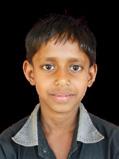
HOPE CHANGED RIPON’S STORY.
IT CAN CHANGE THOUSANDS MORE.
A once frightened little boy in Bangladesh is now an aspiring doctor because someone chose to care. Too many children still live without safety, education, healthcare or opportunity.
SUPPORT HOPE COLLECTIVE.
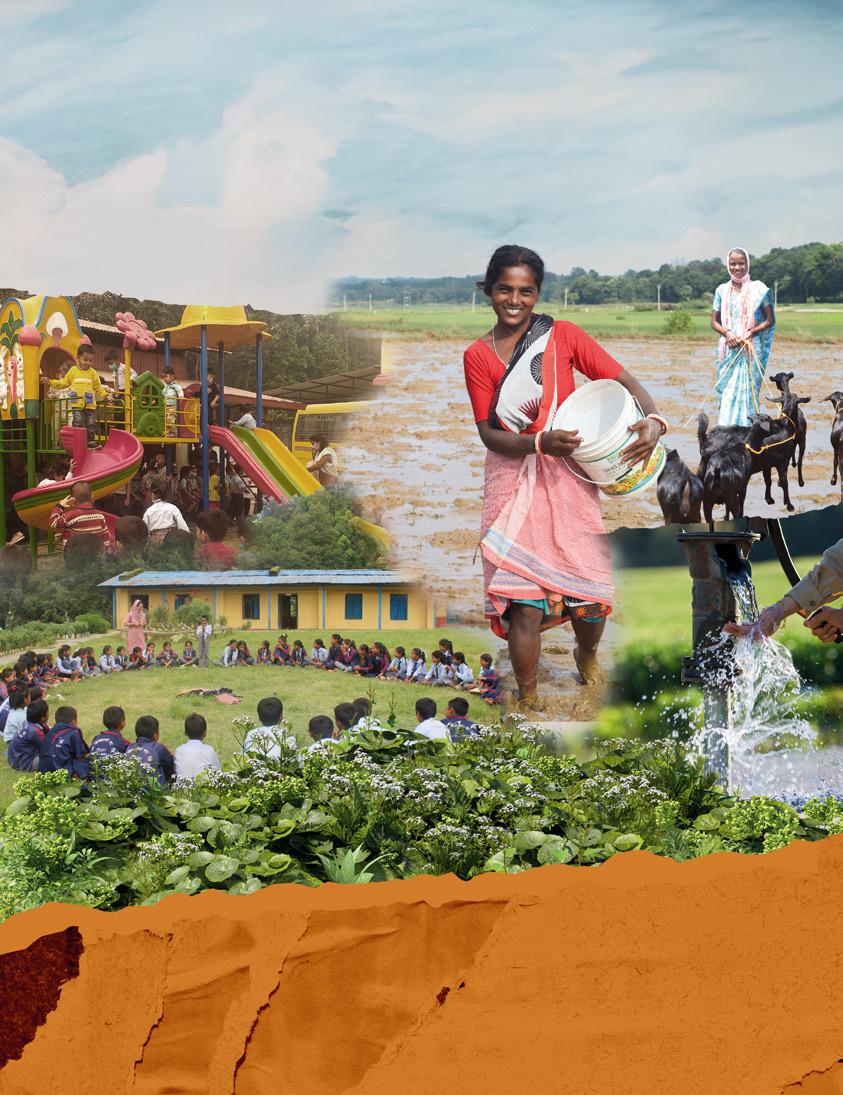
Multiply* hope this June and help more children reach their God-given potential.
Australia.
Help a mother Secure Her Children’s Future
Give before 30 June and your gift could be
Rabecca struggled to send her children to school, and they could only afford two meals a day. Your gift this End of Financial Year can help mothers feed their children and send them to school.