CASTLE ROCK


Midwives provide whole-person care to women of all ages. Page 3
Also...
Colorectal Cancer Before 50
Hands-On Relief for Chronic Pain
Warning Signs of Future Stroke

At AdventHealth Castle Rock Hospital, we believe health care is more than a visit to a hospital — it’s a lifelong relationship rooted in trust, compassion and whole-person care. That’s why we’re thrilled to introduce Feel Whole Castle Rock, a quarterly magazine created especially for you — our neighbors, our patients and our partners in health.
In each issue, you’ll learn about health conditions and treatments that might be affecting you, a loved one, friend or neighbor. You’ll also meet some of our exceptional caregivers, learn about our approach to safety and quality, and hear inspiring stories of healing and hope from your fellow community members.
Whether it’s expanding access to advanced procedures or enhancing primary care close to your neighborhood, we want you to know that we’re here for you, every step of the way.
“Our goal in creating this magazine is to help you achieve full and lasting health.”
We’re honored to serve you, and we’re excited to show up in your homes — and your lives — four times a year with stories that reflect our commitment to your whole health.

President & CEO
AdventHealth Castle Rock
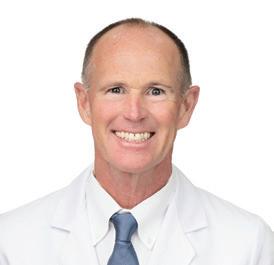
If you take a medication called a proton pump inhibitor (PPI) to control stomach acid and have been worried it causes dementia or other health problems, you can rest easy. PPIs, which go by brand names like Nexium and Prilosec, have a 40-year safety record, says Thomas Welton, MD, a gastroenterologist at AdventHealth Castle Rock.
While there are many studies looking at a link between PPIs and health problems, most show an association, not a causation, Dr. Welton says. “A lot of people on PPIs have other medical conditions, but that doesn’t mean the PPI caused those conditions.”
The benefits of taking a PPI — if you truly need it and can’t control stomach acid with lifestyle changes — far outweigh any risks, Dr. Welton says. For example, a person who takes blood thinners or baby aspirin may need a PPI to reduce the risk of internal bleeding. Or patients using a PPI to reduce acid reflux are protecting themselves against inflammation that can cause esophageal cancer.

AdventHealth Castle Rock Hospital earned the top ranking for patient safety from The Leapfrog Group, an independent national nonprofit organization committed to enhancing patient safety. The hospital was awarded the Leapfrog Hospital Safety Grade A, the highest possible rank.
Struggling with stomach pain, acid reflux, constipation or another GI issue? Learn about new treatments by scheduling a consultation with Dr. Welton: 720-455-8024

From routine checkups to hormone therapy, Castle Rock’s certified nurse-midwives support women’s health through every season of life.

For months, Kama McConaughy Sarkissian felt like she had a lump in her throat. “I was having trouble swallowing and feeling increased anxiety,” says the Littleton woman.
She had seen several doctors, including specialists, but no one seemed to have an answer. At least not until she turned to Barbara VanDersarl Slocum, a certified nurse-midwife (CNM) with AdventHealth Medical Group Midwifery and OBGYN at Castle Rock.
VanDersarl Slocum took a different approach, ordering more in-depth thyroid tests that other providers hadn’t considered. “As soon as
she got my levels back, she said that it was no wonder I had been feeling this way,” McConaughy Sarkissian says. “Barbara (VanDersarl Slocum) was able to figure out what four other providers couldn’t.”
That experience convinced McConaughy Sarkissian to keep seeing VanDersarl Slocum as her primary provider, even when she relocated her practice from Littleton to Castle Rock. “Her approach gave me relief and peace of mind,” McConaughy Sarkissian says. “She’s been able to manage everything from my hormone care to referrals for screenings like mammograms and colonoscopies.”
Many people mistakenly believe midwives only assist with childbirth, but certified nurse-midwives can provide comprehensive care at every stage of life. In addition to supporting pregnancy and delivery, CNMs offer:
• Routine gynecological exams and Pap tests
• Cancer screenings (breast, cervical, colon)
• Diabetes care and heart health monitoring
• STD testing and contraception
• Weight management therapy
• Surgical assistance (hysterectomy, tubal ligation, C-section)
• Perimenopause and menopause guidance and treatment
Many women looking for an alternative to hormone replacement therapy to help relieve menopause symptoms are turning to bioidentical hormones, says Barbara VanDersarl Slocum, CNM. “Bioidentical hormones, which are often safer than synthetic hormones, can significantly improve quality of life.” Bioidentical hormone replacement therapy (HRT) uses plantbased hormones carefully matched to support your body’s natural balance. This personalized approach may help ease symptoms like:
• Hot flashes and night sweats
• Low energy and mood swings
• Poor sleep and brain fog
• Vaginal dryness and reduced libido
AdventHealth Medical Group Midwifery and OBGYN at Castle Rock Grand Opening Celebration
Meet our providers while enjoying free food and chair massages. Get information on women’s health issues and enter to win free gifts, including a massage and gift cards.
When: Thursday, Sept. 25, 3:30-5:30 p.m. | Where: 2356 Meadows Blvd., Briscoe 310B | Cost: FREE. No RSVP required. Or to make an appointment, please call 720-455-8024.

When Ryan Smith, MD, began his career as a surgeon treating colorectal cancer, it was rare for him to see a patient under 50. That’s no longer the case.
“We are seeing it much more frequently, even in patients in their 30s,” says Dr. Smith, a board-certified colon and rectal surgeon with AdventHealth Medical Group Colorectal Surgery at Castle Rock. Recently, he treated a 34-year-old patient with colorectal cancer.
Over the past decade, the rate of colorectal cancer for people under 50 has been rising by 2.4% each year. One in five newly diagnosed patients is 50 or younger, according to the American Cancer Society.
Experts don’t know what is driving the increase. Normal risk factors — family history, certain genetic conditions and lifestyle factors (like diet and smoking) — don’t explain the rise in early onset cases, Dr. Smith says. “Without knowing what’s causing these cases, we can’t identify who is at risk and screen them,” he says.


Without screenings to catch cancer at its earliest stages, it’s crucial for people to pay attention to symptoms and see their provider for a diagnosis. Symptoms include:
• Abdominal pain
• Blood in stool
• Constipation or diarrhea
• Unexplained weight loss
“It’s really easy to write these off as IBS (irritable bowel syndrome), anxiety, nerves or hemorrhoids,” Dr. Smith says.
“But don’t gaslight yourself into thinking your symptoms are nothing. Go get checked out.”
In most cases, symptoms will be due to these more common conditions. But if symptoms persist after treatment, patients need to go back to their provider.
“Be an advocate for yourself,” he says. “Ask whether you should have a colonoscopy; make sure you’re being evaluated completely. Don’t stop until you’re given a definitive answer.”

While most patients with colorectal cancer require surgery, each person’s surgery is customized based on a number of factors, including age, genetic makeup of the tumor, lifestyle and personal goals. Dr. Smith factors in quality of life and risk of recurrence for all patients. But for younger patients, he must consider those over the decades — not just years — they may live as survivors. Sexual function and fertility also are considerations that differ by age.
“For a younger patient with a longer life expectancy, I might remove a larger portion of the colon to reduce the risk of recurrence,” Dr. Smith explains. “But if the cancer is located near critical nerves in the pelvis, I might take a more conservative approach to preserve fertility and reduce longterm side effects.
“There’s no one-sizefits-all answer. It’s a conversation,” Dr. Smith says.
If you are 45 or older, or you are experiencing symptoms associated with colorectal cancer, schedule a colonoscopy today with AdventHealth Medical Group Colorectal Surgery at Castle Rock at 720-455-8024. the age to start screenings
Colonoscopies examine the inside of the colon and rectum to find colorectal cancer at its earliest, most treatable stage. Doctors also use the test to find and remove growths, called polyps, before they develop into cancer — making colonoscopies the only cancer screening that also prevents cancer.
National screening guidelines were updated in 2021 to recommend a first colonoscopy at age 45 for average-risk adults. People without risk factors with a normal test result won’t have to repeat the test for another 10 years.
Adults with risk factors should talk to their provider about when to start screening and how often to repeat. Risk factors include:
• Family history of colorectal cancer
• Personal history of inflammatory bowel syndrome, colorectal cancer or polyps, or radiation to the abdomen or pelvic area for a prior cancer
• Confirmed or suspected genetic mutation, such as Lynch syndrome
Repairing meniscus tears rather than removing them helps protect knees in patients of every age.
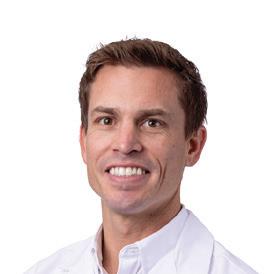
When Tyler Arbogast went to see an orthopedic surgeon about a torn meniscus in his knee, the 21-year-old wasn’t thinking about how treatment might impact his knees later in life.
“I just needed to get back to work,” says Arbogast, who injured his knee in a motorcycle accident. Although he wasn’t in pain, the torn meniscus was causing his knee to lock up and limiting his ability at work in a tire shop. He also worried about what could happen if he were out hunting with his family. “Having it lock up in a remote place could potentially be bad, and I didn’t want that to happen.”
While Arbogast just wanted fast relief, his orthopedic surgeon was making a more complex calculation between shortterm benefit and long-term risks.
“The fastest way to fix a meniscus tear can cause more problems down the road,” says Nicholas Stockwell, DO, an orthopedic surgeon with AdventHealth Castle Rock. “Although patients are focused on the immediate problem, it’s our job to consider the long-term implications of treatment.”
The meniscus is a critical structure in the knee joint, acting as a shock absorber to protect cartilage. Meniscus tears are among the most common orthopedic injuries, and meniscus surgery is one of the most frequently performed orthopedic procedures in the U.S. However, the choice between removing the damaged portion (meniscectomy) and repairing the tear can have a significant impact on a patient’s long-term joint health.
For decades, the most common approach has been a meniscectomy, which involves removing the damaged portion of the

meniscus. This procedure has a much faster recovery — often allowing patients to walk within 24 hours — but it also increases the risk of osteoarthritis and the need for knee replacement surgery later in life.
In contrast, a meniscus repair, in which the torn meniscus is stitched back together, offers better long-term knee health but requires a significantly longer recovery period. Patients often need to keep weight off the knee for at least six weeks — a challenge for many adults.
However, orthopedic surgeons like Dr. Stockwell are increasingly opting to repair rather than partially remove the torn meniscus.
“I’m of the camp to save the meniscus whenever we can,” Dr. Stockwell says. “Whether the patient is 20 or 60, I’m going in with a plan to fix the tear if possible because removing all or part of the meniscus can lead to arthritis in the knee sooner than expected.”
Fortunately, advancements in regenerative medicine, including the use of bone marrow and other biological agents, are speeding up recovery times, making meniscus repair a more viable option for patients of all ages.
“We’ve come a long way in the last 15-20 years,” Dr. Stockwell says.
Those advancements made it possible to offer Arbogast a win-win solution: meniscus repair without a long recovery that got him back to work quickly without jeopardizing his long-term knee health. Dr. Stockwell repaired Arbogast’s meniscus tear in early March. After two weeks of non-weightbearing restrictions, Arbogast began walking with the help of a brace and was cleared to work eight weeks after his surgery.
“Right now, it feels great,” Arbogast says. “I can close and open it all the way, and it doesn’t lock out. It’s been pretty great.”
If you’re looking to improve your heath, increase your athletic ability and prevent orthopedic injuries no matter your age, you might need to make a few changes to your workouts, says Nicholas Stockwell, DO, an orthopedic surgeon at AdventHealth Castle Rock. Here are three commonly overlooked types of training that are essential to injury prevention:
1. Nervous system: Warming up properly prepares both your muscles and nervous system for the demands of exercise, reducing your risk of injury. “Your nervous system needs to be ready for the uncertainty of dynamic or explosive movements,” Dr. Stockwell says.
2. Neuromuscular: Exercises that improve your mind-muscle connection (like plyometrics) can boost your agility, balance, and joint stability — all essential for staying active and injury-free.
3. Strength: Building a strong core isn’t just about abs — it can protect your knees, support your lower back and improve your overall stability. “A weak core may be the root cause of your knee or lower back pain,” Dr. Stockwell says.

One in three Colorado adults over the age of 65 fall each year, with nearly 40% needing medical care, according to the U.S. Centers for Disease Control and Prevention. And wrist fractures are at the top of the list.
“I see referrals from the ER weekly,” says Rajshri Bolson, MD, a board-certified orthopedic surgeon at AdventHealth Castle Rock who specializes in injuries to the hand, wrist, elbow and shoulder. “You trip over something or get tangled in the dog’s leash and as you fall, you put out your arms to catch yourself and end up fracturing your wrist.”
The best way to guard against wrist fractures is to prevent the fall in the first place and to strengthen your bones. Luckily, strength training does both, even in your 60s and beyond, Dr. Bolson says. “Strength training builds bone density, and it helps build a stronger core and balance, which help prevent falls.”

From physical therapy to pain management to surgery, AdventHealth Medical Group Orthopedics at Castle Rock is your one-stop shop for all your ortho-related care. We have more than a dozen providers who subspecialize in wrists, shoulders, hips, knees and more. To schedule an appointment, call 720-455-8024.
Building a relationship with a primary care provider is essential to your well-being.


When it comes to your long-term health, few relationships are as important as the one you have with your primary care provider (PCP). Whether you’re managing a chronic condition, staying on top of preventive care, or just trying to make healthier choices, a trusted PCP can make all the difference.
Think of a PCP as your personal concierge to better health. “We spend time getting to know you,” says Michael Yuan, MD, a family physician with AdventHealth Medical Group Primary Care at Founders. “Instead of seeing you for one specific problem, we have a much more wholeperson view of you.”
Here are three top benefits of having a PCP:
Personal Connection
A PCP learns not just your physical health history but also your personality, lifestyle and goals. This allows for more personalized care. For example, a provider who sees a patient just once could prescribe a medication that has side effects that the patient is trying to avoid. “Because I know that weight gain has been an issue for you in the past and that this medication has the potential of causing weight gain, I would look for an alternative,” Dr. Yuan says.
Whole-Person Care
If you’re someone who sees a doctor only when necessary, you’re probably being treated just for the condition that brought you in. But emotional and mental health are equally important to your overall well-being. “I’ve had patients dealing with anxiety who don’t know there’s a lot that can be done to help,” Dr. Yuan says.
3
Regular primary care visits can catch small issues before they become big problems, reducing the risk of more serious health concerns and improving long-term outcomes. “Primary care helps patients stay ahead of the curve by addressing health issues early and preventing common conditions from developing,” Dr. Yuan says.
The Value of Prevention
U.S. adults who regularly see a primary care provider have 33% lower health care costs, according to the Purchaser Business Group on Health.
Our Newest Primary Care Team
AdventHealth Medical Group Primary Care at Founders is Castle Rock’s newest primary care practice, bringing together a diverse team of providers, each dedicated to delivering personalized, patientcentered care, says Michael Yuan, MD, a family physician there.
“With experienced providers who have seen just about everything and newer clinicians bringing the latest in medical training, our team offers a balanced approach to patient care,” Dr. Yuan says.
AdventHealth Medical Group Primary Care at Founders, 1151 Aloha St., is accepting new patients.

33% Scan QR Code or call 720-455-8024 to schedule an appointment.

Osteopathic manipulative treatment provides long-lasting pain relief.

Imagine getting all the benefits of massage, physical therapy and chiropractic treatment in one appointment.
That’s how Michael Weston, DO, describes osteopathic manipulation.
As a primary care physician at AdventHealth Medical Group Primary Care at Founders with specialized training in osteopathic manipulative treatment (OMT), Dr. Weston offers this hands-on therapy to help patients find relief from chronic pain — especially lower back pain, neck pain and migraines — by addressing the root causes of discomfort.
Dr. Weston looks for the real source — the muscles or joints that may be out of alignment or too tight, a condition called hypertonicity.
“When your body is in pain, it naturally tries to protect itself,” Dr. Weston explains. “But sometimes that protective response ends up locking you into an uncomfortable position. With OMT, we work to reset that.”
For example, the ache you feel in your lower back might actually be caused by a misaligned sacrum, the bone at the base of your spine. OMT helps get things back in balance so you can feel better and move more easily.
Your first OMT session starts with a conversation and a full-body assessment. Dr. Weston begins with gentle massage to help loosen tight muscles and prepare your body for deeper treatment.
Next, Dr. Weston uses techniques like “muscle energy,” to guide you through small movements and gentle resistance to help realign your body and ease muscle tension. You’ll be part of the process, working together toward better balance and less pain.
“It’s not about quick fixes or snap-andgo adjustments,” Dr. Weston says. “It’s about helping your body heal, so the results last.”
Sessions last about 60 minutes for your first visit, and 40 minutes for follow-ups. As your body responds, appointments are spaced further apart — the ultimate goal is for you to need fewer visits over time, not more.
• Neck pain and stiffness
• Migraines and headaches
• Hip pain and muscle strains
As a DO — a fully licensed physician, like an MD, with additional training in the musculoskeletal system — Dr. Weston provides primary care for every stage of life. OMT is just one of the ways he helps you feel your best.
“My philosophy is to treat the whole person,” he says. “Sometimes the right solution involves medication or physical therapy — but often, with OMT, we can help you find relief without those steps. It’s all about what works best for you.”
Michael Weston, DO, offers primary care with the added benefit of osteopathic manipulative treatment. Call AdventHealth Medical Group Primary Care at Founders at 720-455-8024 to schedule an appointment and learn more about how OMT may help you feel better — and stay better.
A new therapy treats urinary incontinence after prostate cancer treatment.

For many men, beating prostate cancer comes with a significant side effect: urinary incontinence. But men now have more options than ever to deal with this common treatment side effect.
“There is an increasing array of options for treating urinary incontinence,” says Nathaniel Coddington, MD, a functional reconstructive urologist with AdventHealth Medical Group Urology at DTC. “We’re better at helping men regain their quality of life than ever before.”
Up to one in five men who undergoes prostate cancer treatment experiences bladder leakage that doesn’t improve over time, Dr. Coddington says. For many, this means a few drops during vigorous activity. But for a small percentage, the problem can be much more severe.
“They can’t go out and be social, they

can’t exercise, and they often struggle with depression and weight gain,” Dr. Coddington says. “That kind of severe case is rare, but it can be devastating.”
For decades, the only option for severe incontinence was a surgically implanted device called an artificial urinary sphincter, which includes a pump that must be squeezed to allow urination. While effective, this approach can be cumbersome for some patients.
Today, men have more choices, including the ProACT system — a minimally invasive option that has brought relief to many of Dr. Coddington’s patients.
The ProACT system consists of two small, adjustable silicone balloons that are implanted near the bladder neck, where the prostate was once located. These balloons are easily adjusted in the doctor’s office to provide the right amount of support, helping to prevent leaks.
“ProACT is going to make a lot of men a lot happier,” Dr. Coddington says.
Dealing with urinary leakage? Call AdventHealth Medical Group Urology at DTC to schedule a consultation at 720-455-8024.
99.8%
The five-year survival rate for prostate cancer when found early.
Prostate cancer is the second-leading cause of cancer death in men, but early detection can make a significant difference. The five-year survival rate for prostate cancer found early is 99.8%, according to the CDC.
Yet many men avoid screenings because they don’t know screening is a simple blood test, or they may avoid screening because they’ve heard it leads to unneeded treatment.
“We’ve come a long way,” says Nathaniel Coddington, MD. “We’re much better at treating men who need to be treated and not treating those who don’t.”
Men at average risk should talk to their provider about starting screenings at age 50. Black men and men with a family history should start earlier.
• Average risk: Begin discussing screening at age 50.
• Higher risk: Start at age 45 if you are Black or have a family history of prostate cancer diagnosed before age 65
• Highest risk: Consider screening as early as age 40 if you have multiple family members who have had prostate cancer at an early age.
Transient ischemic attacks (TIAs) are a critical red flag for your brain’s health.
PPat Andrews was in the car with her daughter, son-in-law and grandchildren when she realized she couldn’t speak. Words she wanted to say wouldn’t come out. She was new to Colorado and figured she was tired and hadn’t adjusted to the altitude yet. “And I didn’t want to bother anybody.”
By the time she got home, she thought everything was fine. Except it wasn’t. Andrews experienced what is known as a ministroke, or a transient ischemic attack (TIA). For years ministrokes were considered relatively harmless. But a new study reveals that TIAs are more serious than previously thought, potentially causing lasting cognitive decline and increasing the risk of future strokes.
“You should absolutely seek medical care immediately, if you suspect you’re having a
One of every three people who experience a TIA will have a subsequent full stroke, risking death and major disability. Half of those will occur within a year.
TIA,” says Mark Huber, MD, medical director of AdventHealth Castle Rock’s emergency department. “This is your brain we’re talking about.”
Like a full stroke, TIAs happen when a blockage prevents blood — and the oxygen it carries — from reaching the brain. The main characteristic that distinguishes ministrokes is that they resolve on their own, Dr. Huber says, while strokes often require medical intervention.
TIAs provide a vital opportunity to address the underlying causes of blockages, including high blood pressure and high cholesterol. Reducing those risks, in turn, can help prevent a full stroke, says Erin Gengaro, RN, BSN, AdventHealth Castle Rock’s stroke coordinator.
“We can get you
started on a statin if the cause is high cholesterol, or an anticoagulant (blood thinner), or blood pressure medication,” she says. Months after her first TIA in the car, Andrews experienced a subsequent stroke. This time, she called her daughter, who took her to the AdventHealth Castle Rock ER where her care team helped her get on a medication to manage her high blood pressure that was likely causing her strokes.
“This is your brain we’re talking about.”

“Every time I’ve gone to the Castle Rock emergency room, it’s been a truly positive experience,” says Andrews, adding that the hospital staff even checked her home to make sure it was safe for her to return after her stroke.
AdventHealth Castle Rock’s Emergency Room is a Level III Trauma Center, open 24/7 and equipped to treat patients of all ages. 2350 Meadows Blvd. 720-455-8024
For emergencies, always call 911.
DCSD Student Ortho Hotline
Douglas County School District student athletes get expedited treatment with our new orthopedic hotline. If you are a DCSD athlete, trainer or parent, call and we will schedule an appointment within 24 hours.
Schedule an appointment by calling 720-455-8024
Please select “option 1” for scheduling, then select “option 1” again if you are a DCSD athlete, trainer or parent. Appointments scheduled within 24 business hours unless referral is required by insurance.
The AdventHealth Network of Care is growing to serve the needs of patients of all ages and all stages of life. We are inspired by the shared promise of whole-person care for your family and the entire community.
19,781 ER Visits in 2024
25 Primary Care Providers
1,097
Born in 2024