
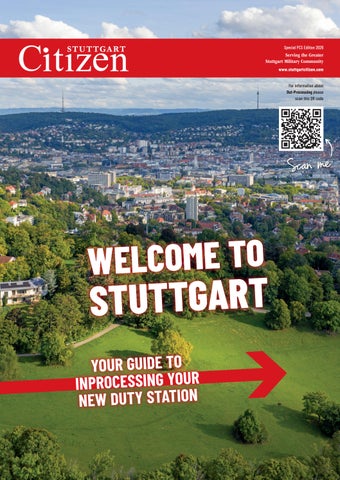

On behalf of U.S. Army Garrison Stuttgart, welcome!
Known as one of the most covetable duty stations in the military, Stuttgart is a great place to work and live. Our dynamic “purple” military community is spread across five installations — Panzer Kaserne, Patch Barracks, Kelley Barracks, Robinson Barracks and Stuttgart Army Airfield.
As the home of multiple tactical, operational and strategic-level Department of Defense organizations, including the headquarters of U.S. Africa Command and U.S. European Command, the garrison community is made up of around 28,000 U.S. military personnel, civilians and family members. Quality of military life coupled with all of the activities the greater Stuttgart area has to offer makes this both a professionally and personally rewarding assignment.
The city of Stuttgart is the capital of Baden-Württemberg, one of Germany’s 16 states. Its metropolitan area population of 5.3 million makes it the fourth largest in the country. Nestled along the Neckar River, Stuttgart is a thriving center of industry, commerce, and culture that is home to major multinational corporations (including two of the world’s largest automakers) and a high concentration of museums, theaters, and festivals. The Cannstatter Volksfest attracts nearly 4 million visitors annually and is Europe’s second-largest beer festival after Munich’s Oktoberfest. Stuttgart is also a major transportation hub and sits within a two-hour drive from
the French, Swiss, and Austrian borders.
Panzer Kaserne, in neighboring Böblingen, is home to the garrison headquarters and where most in and out-processing tasks are performed. The installation includes Stuttgart Elementary School and Stuttgart High School, the garrison’s main Exchange (including military clothing sales and a furniture store), the Panzer Hotel and a small commissary. Panzer Kaserne is also where incoming personnel pick up, inspect and register their personally owned vehicles.
A short distance away along county road K1055—nicknamed “Frog Road” by Americans after the migratory amphibians that used to sometimes overrun it— is Patch Barracks in Stuttgart-Vaihingen. Patch is home to U.S. European Command. The installation features Patch Elementary School and Patch Middle School, the garrison’s main commissary, a gas station and shoppette, movie theater, food court, car wash, thrift store and other services.
Kelley Barracks in Stuttgart-Möhringen is home to U.S. Africa Command, the Stuttgart Legal Assistance Office, the award-winning Stuttgart Theatre Center, a commissary, gas station, the Kelley Club and a child development center.
Robinson Barracks in Stuttgart-Bad Cannstatt is primarily a residential installation. It features Robinson Barracks Elementary School, a commissary, and broadcast studios for American Forces Network Stuttgart.
Robinson and Patch Barracks comprise approximately 60 percent of the family housing and 50 percent of the unaccompanied housing within the garrison.
Finally, Stuttgart Army Airfield in Filderstadt is the home of the aviation arms of each respective combatant command, as well as the primary platform for military cargo. It is etched in history as one of
Photo by Hyla Melloy
the main locations for aircraft used during the 1948-1949 Berlin Airlift.
This special edition of the Citizen is your guide to a smooth transition. It includes tools, tips and resources offered by the garrison and its partner units to service members, civilians, contractors and their families. With this guide and the assistance of a sponsor, the transition overseas into this community will be met with a lot of excitement and a little inevitable stress. With information on housing, schools, medical and dental care, and other aspects of life in the Stuttgart military community, we hope to provide you with an introduction to life on our installations and a glimpse of everything available in your new home.
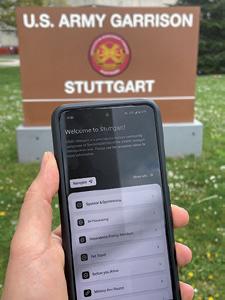
We also encourage you to make use of the official My Army Post App, available in the Apple and Android app stores, to ease the transition. It offers detailed information specific to garrison and partner services, as well as a broad range of quality-of-life information.
Here at U.S. Army Garrison Stuttgart, our motto is “Where Mission Meets Home.” We hope throughout your tour here you'll see why!
To learn more about the many other garrison and partner services not listed in this issue, visit https://home.army.mil/ stuttgart/



Photo by Sina
My Army Post App (MAPA)
My Army Post App is the new information center for Army garrisons around the world, offering centralized access to on-post services and resources. It’s free and available for both iOS and Android devices. See Page 31 to learn more about MAPA.
Official Website http://www.home.army.mil/stuttgart
Stuttgart Citizen
Visit StuttgartCitizen.com and subscribe to the weekday email news recap for the latest news and announcements.
Follow U.S. Army Garrison Stuttgart on Facebook at facebook.com/ USAGarrisonStuttgart.
To be most informed, also follow the official pages of other organizations and service providers in the community, some of which are listed within these pages (such as Stuttgart Family & MWR).
AFN Stuttgart 102.3 FM
Tune in for regular command updates and news from around the community. Listen on 102.3 FM or via the "AFN Go" mobile app.

To avoid unnecessary delays or problems, hand carry the following documents for all family members. Be sure to keep a back-up copy of all documents.
Identification cards
Passport
Social Security card
Birth certificate
Marriage certificate
Citizenship papers
Drivers license
Adoption papers
Copies of sponsor's PCS or TDY orders
Copy of family travel orders
Complete military address of Service Member
Copies of wills
Unaccompanied baggage (UB) documents
Household goods (HHG) shipping and storage documents
Privately owned vehicle (POV) shipping documents
Property and automotive titles, deed, registration
Up-to-date medical and immunization records
Insurance documents
School records
Original copies of transcripts
Papers pertaining to divorces/prior marriages
Death certificates
Emergency contact information
Power of attorney
USAG Stuttgart Directorate of Human ResourcesCentral Processing Facility
Sponsors of incoming personnel should be aware that all personnel assigned to Panzer Kaserne, Kelley Barracks, Patch Barracks, Robinson Barracks, Stuttgart Army Airfield, or the International Training Center-Pfullendorf should fly directly into Stuttgart Airport (STR). Their officially assigned unit/agency sponsor should pick up arriving personnel. Military personnel and accompanying family members arriving at Ramstein Air Base will proceed via bus directly


to Stuttgart or be picked up by their assigned sponsor upon arrival.

All DoD Civilians and Service Members in the rank of Private (E-1) through Colonel (O-6), assigned, attached, or otherwise performing duty in Stuttgart are required to come in to CPF to initiate Installation In-processing. CPF will determine if it is required to in-process the installation depending on your orders and entitlements. Civilian employees initially report to the Civilian Personnel Advisory Center (CPAC). Unit-assigned sponsors can instruct incoming military and DoD civilian personnel to contact the CPF before departure from their home station. It is extremely important that newcomers maintain constant communication with their assigned sponsor throughout the PCS process.

Upon arrival, incoming personnel need to
make appointments with select agencies. Online booking for available services can be found at https:// www.stuttgartcitizen.com/appointments and book.2meters.app/places/ZE3pH0sV3EaBu4oOxXDk.
Depending on your needs, these appointments may include:
• Driver’s Testing/Licensing
• Housing
• ID Cards
• Passports/SOFA cards
• Vehicle Inspection
• Vehicle Registration
USAG Stuttgart In-Person In-Processing Brief
Select agencies will participate in the all-day USAG Stuttgart in-person in-processing brief conducted on Tuesdays (and Thursdays during peak season). All personnel will receive the following core services in-person: CPF, Chaplain, Housing, Transportation, Medical, TRICARE, Army Finance, as well as an assortment of other briefings for our joint community.
All personnel assigned to Germany must have a USAREUR driver’s license before renting, driving, or registering a vehicle on post. Personnel must complete the online U.S. Forces Driver’s Training Program for Europe through Joint Knowledge Online at https:// jkodirect.jten.mil/ (in the course catalog, course USA 007 for practice and USA 007B for the final exam).
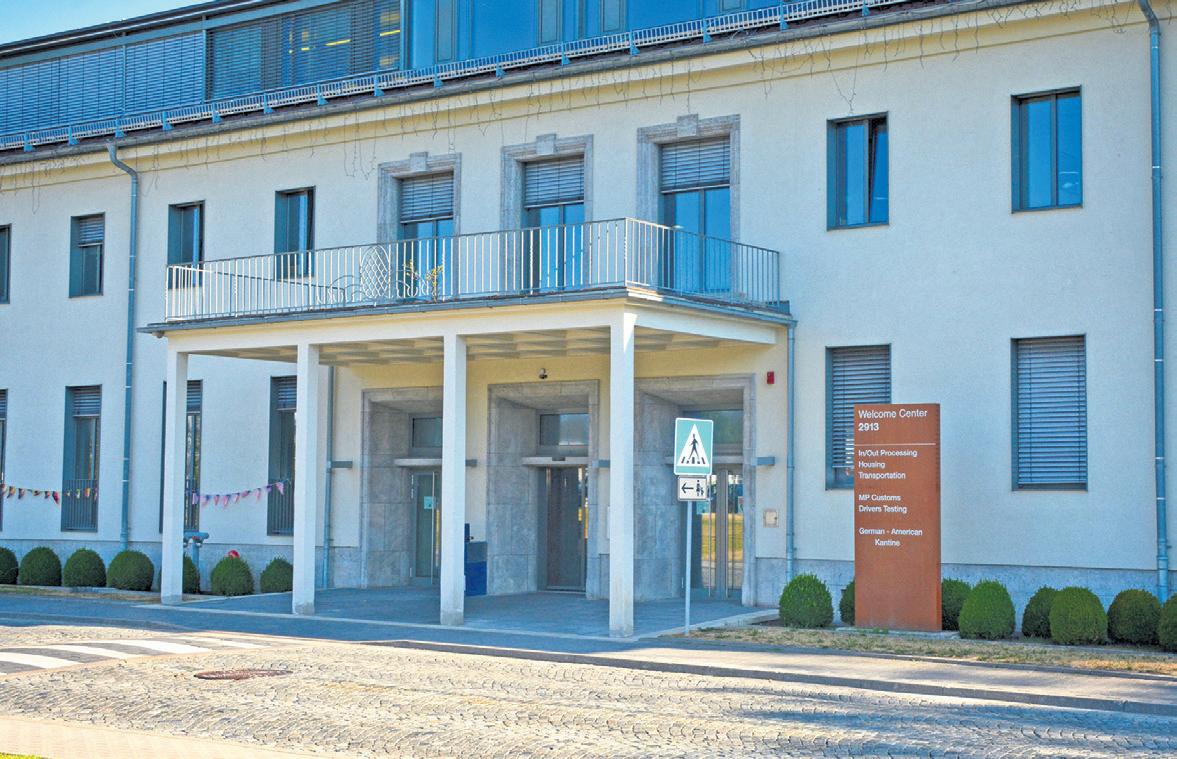
Then, make an appointment with the Driver Training office, located on Panzer Kaserne, on the third floor of Bldg. 2913. Normal business hours are 7:30 a.m. to 11:45 a.m. and 1 to 3:45 p.m., Monday to Friday. Closed on German and U.S. federal holidays, as well as Thursday mornings for training. Call CIV: +49 (0)9641-70-596-2007 or DSN: 314-596-2007, with any questions.
Note: The test can be completed no earlier than 60 days prior to arrival for both the Service Member and family members.
The CPF is located on Panzer Kaserne, on the first floor of Bldg. 2913. Normal business hours are Monday to Friday, 8 a.m. to noon and 1 to 4 p.m. Our office is closed on U.S. federal holidays.
Please contact the CPF at DSN 314-596-2599 or CIV +49 (0)9641 70-596-2599 or email us at usarmy.stuttgart.id-europe.mbx.cpf-inprocessing@army.mil.

USAG Stuttgart Directorate of Public Works - Army Housing Office
1
PRIOR TO SELECTING A LOCATION
• Verify internet strength and capability options through local internet providers
• Determine availability of adequate, nearby parking
• To reduce noise, consider whether there are the following within close proximity:
• Major industrial area
• Ongoing or pending construction
• Proximity to train station, railroad, or airport
2
SAFETY AND SECURITY QUESTIONS TO ASK
• Ask local security agencies, such as Military Police, Antiterrorism Officers, or G2 / S2 about security concerns within selected areas
• Conduct a terrain walk of the area, looking for signs of attempted break-ins or other safety concerns
• Does the neighborhood generally seem to be safe and well kept, or does it look run down and unsafe (check residence during daylight hours and hours of darkness)?
3
DWELLING LAYOUT CONSIDERATIONS
• Overall look and appearance; verify adequate general maintenance, such as broken windows or damaged doors
• If there is a yard, is it in good condition? Who is responsible for upkeep?
4
TEST LIGHTING INSIDE AND OUT
• Check exterior community area lighting, if applicable
• Check residence interior lighting
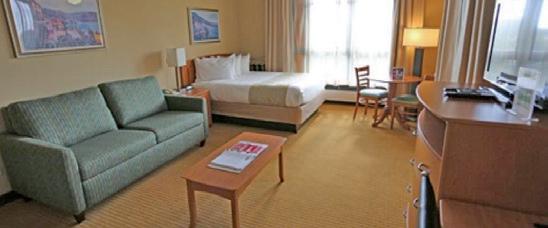
On-post lodging, like the room pictured above at the Panzer Hotel, may serve as a temporary home for families with civilian sponsors or for whom permanent on-post housing is not immediately available. A certificate of nonavailability will be offered for off-post lodging if applicable. Courtesy photo
• Check entrance ways, hallways, walkways, parking areas, and all common area lighting
5
SAFETY/SECURITY CONSIDERATIONS
• Ensure the dwelling has multiple points of entry (most properties have one way in/one way out)/ exit doors to provide emergency escape alternatives
• Ensure all exterior doors have dead-bolt type or secure locks
• Ensure all doors and frames are heavy and solidly constructed
• Ask if lock cylinders can be changed and if the landlord will retain a copy
• Ensure windows can be secured from the interior
• Ensure the dwelling has fire or smoke detectors / alarms installed, and purchase fire extinguishers if not already present in the dwelling
• Fences may deter theft and add privacy
• Consult with personnel within your local housing office, security officials, and your local antiterrorism officer prior to, during and when making a final selection
• Is the property on the garrison non-referral list? If so, selection is not recommended
6
WHAT NOT TO DO
• Don’t choose a dwelling near an industrial zone, power plant, or other hazards i.e., flood zones increase the likelihood of damage.

USAG Stuttgart Directorate of Public WorksArmy Housing Office
First and foremost, welcome!
Recognizing where you will be living during your tour at USAG Stuttgart is important, so we want to share a little about what you can expect.
Approximately 30% of the USAG Stuttgart community live in the 1,300+ on-base Family Housing units, with the remaining 70% residing on the economy.
On-Post Family Housing throughout Stuttgart, apart from designated quarters, are stairwell apartments ranging from two to five bedrooms. They are located on Panzer Kaserne, Kelley, Robinson, and Patch Barracks. Most five-bedroom units are located on Kelley Barracks.
In-home amenities for on-base Family Housing include a laundry room with U.S. appliances for each unit, individual storage space, and 110 and 220-volt outlets for both U.S. and German appliances.
Community services include fitness centers, a club for social events, elementary, middle and high schools, libraries, and child and youth services programs.
Upon receipt of permanent change of station orders, Service Members and Department of Defense (DoD) Civilians should provide orders and the housing application for assignment (DD Form 1746) to the USAG Stuttgart Housing office via email or DoD SAFE.
For those living off-base, the variety of homes are vast. Everything from modern homes and apartments with art nouveau architecture, to centuriesold half-timber converted barns. While rental prices throughout the area vary, typically, the areas closer to Stuttgart/Böblingen city center are higher in rent. Those properties located further out in the suburbs/ countryside tend to be lower in rent and larger in size. Stuttgart remains one of the most expensive cities in Germany!
On HOMES.mil, you can find listings of rental homes in and around Stuttgart that have been prevetted by the USAG Stuttgart Housing Office, whose landlords have agreed to accept the standard military contract. Most properties are within the school bus zones, and all are free from realtor fees.
Detailed information, to include landlord contact information, will only be given to customers who have in-processed and are authorized to move off-post.
There are many home types in Germany. Apartments, penthouses, maisonette apartments (which are multi-floored apartments), townhouses, duplexes and free-standing houses are available in the community. Larger, free-standing homes are not in abundance. Apartments, townhouses, and duplexes are easier to find and are generally less expensive.
The cost of rent should align with applicable allowances to avoid out-of-pocket expenses. Overseas housing allowances are listed on the DoD overseas allowance calculator webpage at www.defensetravel.dod.mil.
The Housing Referral Services Office offers homefinding services to eligible military members and DoD civilians. Contractor personnel are not eligible for Housing Referral Services, however, may attend the Central Processing Facility (CPF) Housing In-brief and request a copy of the USAG Stuttgart Housing Contract for their use as well as the “non-referral list.”
The Housing Referral Services Office manages the HOMES.mil listings website and provides up to three accompanied home tours, move in and move out inspections, individual counseling to discuss rental properties found on HOMES.mil, and also assists with landlord/tenant dispute mediation.
One particular quirk of rentals in Germany is that unless explicitly listed they may not have light fixtures or kitchens. However, all homes listed on Homes.mil are guaranteed to be furnished with both. Homes found on other rental websites may not include kitchen cabinets, appliances, or light fixtures and some require payment of a realtor fee. These are not reimbursable expenses.
Meter readings must be recorded during the assignment inspection; the day you accept the keys from your landlord. Meter readings must be turned in to the UTAP office on Panzer within one business day
of your acceptance of the property. This is required for all military and DoD civilian personnel.
On
The CPF Housing In-brief is mandatory for all military members and DoD civilians. It provides an overview of housing office services and incoming procedures. Please see your CPF in-processing checklist for schedule and location.
After this brief, all accompanied personnel, unaccompanied personnel in the ranks of E-7 and above, and officers must schedule a personal in-processing appointment with a housing counselor. For TLA eligibility purposes, housing must be informed of arrival within two business days. Unaccompanied Service Members in the ranks of E-6 and below must check in with their unit and with a barracks manager upon arrival. TLA is not authorized for barracks residents.
After attending the CPF Housing In-brief, DoD civilians will receive other resources to commence house hunting. For Service Members this will take place after the personal in-processing appointment and if authorized to live off post. The Housing Referral Services Office will return the landlord details by email or in person upon request. Authorized military members and civilians may request details for up to six properties at a time. The office will reiterate house hunting requirements provided during the CPF
in-brief and steps for receiving details for additional listed rental properties.
The USAG Stuttgart Housing Office Rental Contract is a legally binding agreement between the landlord and the tenant and is in both English and in German. Upon availability, prospective tenants should submit a completed copy of the contract signed by the landlord or property manager to the housing office and then schedule a contract review appointment. The appointment must be scheduled as soon as possible, once the landlord signs the contract. Do not sign the contract yourself prior to the review.
Service Members on accompanied tours are required to live on post when inventory is available. This policy applies to all branches. Housing is assigned based on rank and family size. Waitlist procedures are explained in detail during the CPF Housing In-brief. Assignments will be made as quickly as possible and possibly straight off the plane, known as “Plane to Pillow” Program or P2P locally. Ensure you communicate your and your family’s arrival date, and any changes, to housing.
A pilot program which permits some unaccompanied E6 personnel to reside off post in private rentals is ongoing. Check in with your unit for details.
In the overseas environment, Army-wide, UH Service Members in the ranks of E-6 and below are required to reside in barracks. All UH E-6 and below must report directly to Barracks Managers upon arrival. Temporary Housing Allowance (TLA) is not authorized.
UH Service Members that are Bona Fide Bachelors (not receiving housing entitlements elsewhere) in the ranks of E7 and above, and officers, may choose to live in on-post quarters or elect to rent privately offpost. Geographic Bachelors (receiving other housing entitlements) and most Reservist and National Guard members must live in on post quarters when they are available. All UH E-7 and above, and officers, must report or contact the UH Office before making off-post living arrangements to determine eligibility. Failure to do so may result in paying rent out of pocket.
Location:
Building 2913, Panzer Kaserne
Phone: +49(0)9641-70-596-2230; DSN 314-596-2230
Email:
• usarmy.stuttgart.id-europe.mbx.dpw-hso@ army.mil (General)
• usarmy.stuttgart.id-europe.mbx.dpw-hsguph@army.mil (Unaccompanied Housing)
• usarmy.stuttgart.id-europe.mbx.dpw-hsg-offpost@army.mil (Off-Post Housing)
Website:
https://home.army.mil/stuttgart/housing
Appointments: stuttgartcitizen.com/appointments
We join our USAG partners in welcoming you to the community. We are glad we live here and hope you will be too!

USAG Stuttgart Directorate of Public WorksEnvironmental Division
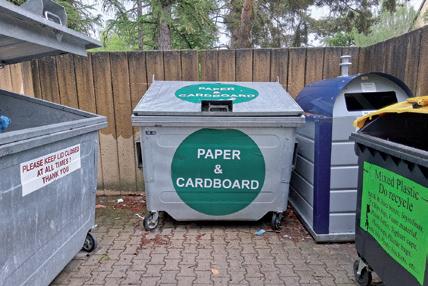
The best way to help the environment is to reduce trash. Single-use items are particularly wasteful and produce costs for disposal.
One way to reduce trash is to minimize use of plastic. You could use a cotton bag or basket for shopping, avoid buying overly wrapped products and choose unwrapped items. If you can't avoid plastic, try to reuse bags as often as possible before disposal. Recycling is the next best way to handle waste.
Figuring out how to sort trash and recycle environmentally friendly products in Germany can be quite complicated with different color bins and eco-labels.
Germany has a very thorough waste sorting system with up to five or six different categories of waste and practices that vary from county to county — and also from city to city — so things can quickly get confusing. To help residents sort out all of the mess, U.S. Army Garrison Stuttgart offers an in-depth guide to recycling that outlines specific procedures for all of the four major counties in the Stuttgart area and also on-post. These guides, along with the general overview provided here, should arm most residents to recycle properly and help do their part to contribute to our host nation’s impressive recycling efforts.
One of the most common frustrations for Americans is having a much smaller trash bin. However, this is often a frustration that does not have to be endured. Trash cans are supposed to be based on family size and are usually adequate as long as recyclables and other trash are being properly sorted.
Larger families who find themselves constantly over-filling their trash bins should consider talking to their landlords about getting larger cans, although this may affect the monthly trash fee and a landlord will likely pass that cost on to the renter depending on the specifics of the rental arrangement. Residents may


• FURNITURE
• RUGS
• JEWELRY
• LIGHTING
• PORCELAIN
• PERIOD MEMENTOS
• ARTWORKS
• WAR MEMORABILIA
• VINTAGE APPAREL




inquire for more information about a larger trash can at the local city offices, but in most cases it will ultimately have to be the homeowner or landlord who orders the larger bin. For on-post residents, things are relatively simple. Clearly-labeled containers are available in all housing areas, and the online guide details which items can and cannot go into each container.
Residents living off post should note that bringing trash on post to dump is prohibited.
For off-post residents, getting rid of extra trash is not costly. In fact, it’s sometimes free, but does take some effort and coordination. Some areas have recycling centers and city dumps where residents can take their trash, and almost all areas have procedures for residents to request pick-up of bulk trash and other non-standard waste. These pickups can be free of charge but are usually only offered a limited number of times per year. Contact the agency in your area for more information.
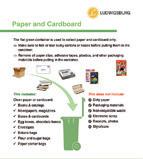
Although specific procedures vary, most programs divide trash and recyclables into six categories: residual waste/rubbish, recyclables, paper, organic waste, glass and hazardous waste.
There are differences in how trash and recyclables are handled in the four major Stuttgart-area counties — the main difference being the various bins and how items are sorted. Glass is handled much the same at various recycling points, while hazardous materials and bulk trash have their own, specific requirements.
In Böblingen County, home to Panzer Kaserne, there are four bins, all black, but with color-coded lids. A black lid is for trash, an orange lid is recyclables, a green lid is for organic and a blue lid is for paper. The city of Stuttgart uses three bins and the yellow sack. A grey bin is for trash, a green bin is for paper, a brown bin is for organic waste and yellow bags are used for recyclables. Yellow bags can be picked up at city halls and a number of shops and grocery stores in each district. Ludwigsburg County uses five bins, a black bin with yellow lid for recyclables (packaging not made of paper and glass), a black bin with blue lid for glass, a green bin for paper, a brown bin for organic and a grey bin for trash. Sperrmüll, or bulky trash, is residual waste that is too big for the regular trash bin, but does not exceed a given size. For example, in Böblingen, it cannot exceed 2 meters by 1.2 meters by .8 meters, and must weigh less than 60 kilograms per piece. Mattresses, cupboards, bed frames, furniture, carpets, mirrors, suitcases, skis and surfboards are all examples of common bulk trash items.
For a more detailed description, see the online Handbook for Waste Disposal for either off-post or on-post residents on the My Army Post App or StuttgartCitizen.com.
Ecolabels are official symbols placed on products designed to do less harm to the environment than similar products. The next time you’re shopping for food, appliances, clothing, paint, etc., look for the one with ecolabel, Bioland, Blue Angel (Blauer Engel) or Energy Star logos.


The European Ecolabel helps to identify products and services that have a reduced environmental impact through their product life cycles. It is celebrating more than 25 years of helping Europe be greener and more humane — in addition to not being harmful for the Earth, clothing and textiles must be assembled in safe and fair conditions. The German “Blue Angel” (Blauer Engel) eco-label is awarded to products and services which, from a holistic point of view, are of benefit to the environment and meet high standards of serviceability, health and occupational protection.
View the garrison's recycling handbooks using this QR code, in the Housing section of the My Army Post App, or at https://home. army.mil/stuttgart/ index.php/my-garrison/ all-services/DPW


USAG Stuttgart Directorate of Human Resources (DHR) - Postal
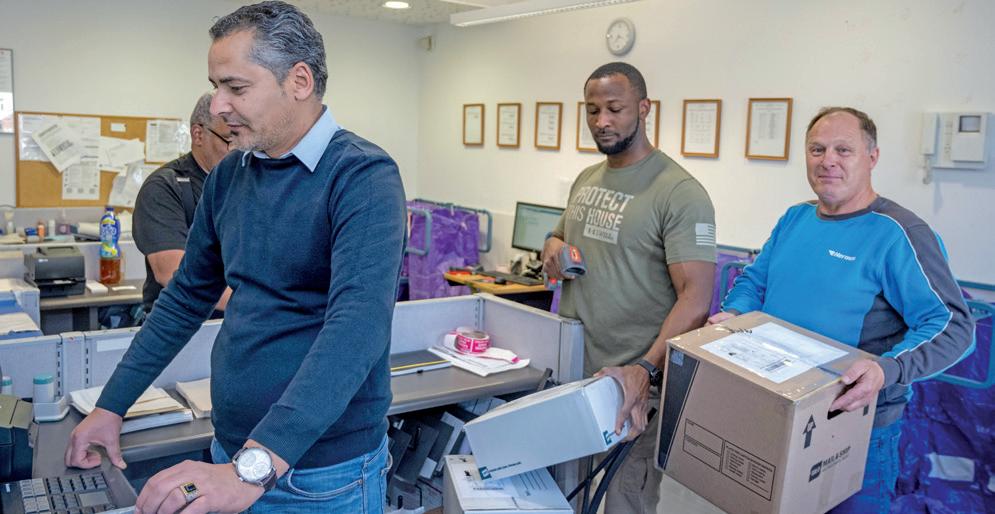
U.S. postal services at USAG Stuttgart consist of Army Post Offices (APOs, where you send mail) and Postal Service Centers (PSCs, where you pick up letters and packages). Each residential installation has an APO and a PSC. They are co-located on Kelley, Patch, and Robinson, but in separate facilities on Panzer.
To open a PSC mailbox, you need a copy of your orders and your DoD ID card. Boxes can be assigned either at the installation where you work or where you live. Be sure to in-process with your PSC team on
arrival and out-process when leaving the community for your next assignment. Your sponsor should be able to start the assignment process for your box even before you arrive.
Since postal services are a logistical entitlement, you will be required to show a valid DoD ID card anytime you mail something from an APO or pick up a package from a PSC. Mailing anything other than paper requires a customs form which can be created online prior to visiting the APO. If you encounter any issues, the APOs are also equipped with computers and helpful mail clerks. Using click-and-ship
services – where you can pre-address, prepay, and enter customs data for your package at home – is highly recommended and saves time at the post office, since these mailings take just seconds to accept at the APO. Each installation also has blue USPS mailboxes in which you can deposit regular stamped letter mail. Letters can be mailed to German addresses using these drop boxes and a U.S. postage stamp if your PSC box is listed as the return address on the envelope.
When addressing things to a PSC box (with ‘APO, AE’ as city and state), ensure “Germany” is not written as part of the address. This could cause the item to enter the German mail system and cause delivery delays. Certain items are also prohibited to send or receive, such as medicines and supplements, alcohol, or coffee and coffee products. A full list of restrictions is available online and in postal facilities.
Find more information, including locations, days, and hours of operation on the My Army Post App or https//home.army.mil/stuttgart/postal
USAG Stuttgart Family & MWR - ACS Family Support
Moving is an integral part of military life. While the opportunity to experience different places can be one of the perks of this highly mobile lifestyle, it’s also one of the greatest challenges.
Executing a permanent change of station move in a way that creates a smooth transition for the entire family is rarely as effortless as some PCS veterans make it seem. But when a family has a child or family member with special needs, it can be even more complicated.
Ensure that family members with special needs are enrolled in the Exceptional Family Member Program and that all information is current. This allows assignment managers to consider medical and special education needs of family members during the assignment process, minimizing the chance that the family Member will be sent to a location without necessary services. EFMP status must be updated every three years, unless there is a change in diagnosis. Army Service Members with families PCSing to another overseas location must be medically screened. For all other branches, reach out to your EFMP point of contact to learn PCS requirements
Special education criteria and services, academic standards, access to programs, and promotion and graduation requirements vary from place to place. For military children, it is essential that parents understand these differences. Tapping into resources like the School Liaison Officer, EFMP Coordinator and EFMP System Navigator are a good way to start gathering informa-

tion about educational services at your new duty station. Ensure your child’s Individual Education Program (IEP) plan or 504 Plan is current prior to PCSing.
If you are a contractor or reservist relocating to USAG Stuttgart and are considering enrollment in a DoWEA school, your child is eligible for school only on a space available basis. Some factors that influence the process include enrollment data, enrollment projections, and IEP related services. To better understand DoWEA eligibility and enrollment procedures, visit https://www.dodea.edu/registration-process.cfm or contact the school liaison officer at: usarmy.stuttgart.id-europe.list.slo@army.mil.
Plan to hand-carry important documents such as copies of educational records, assessments, IEP, 504, family service plans, and medical records in an envelope sealed by the prior school. Also plan to bring 2 to 3 months of medication refills for your family member.
Once you know where you are moving, visit your local EFMP Family Support Office. The staff can help connect you with services at your gaining installation’s EFMP Family Support Office. The Stuttgart EFMP Family Support Office works with all branches of service, DoW civilians, contractors and their families.
To in-process or out-process with EFMP Family Support, please make an appointment via https:// www.stuttgartcitizen.com/appointments/
For more information contact the ACS Front Desk, DSN: 314-596-3362, CIV + 49 (0) 9641-70-5963362 or email us at: usarmy.stuttgart.id-europe. mbx.efmp@army.mil
Find out more about Stuttgart EFMP online: https://stuttgart.armymwr.com/programs/armycommunity-service

USAG Stuttgart Public Affairs
The traditional German manner of eating is to have a big, hearty warm meal at midday and have some bread, cheese and sausages or cold cuts in the evening. However, as times have changed, so have habits. Restaurants offer a wide variety of options ranging from a simple bread plate to a full, multicourse meal.
Hearty German cuisine usually focuses on a main dish of meat. While the availability of vegetarian dishes and products is extensive (and growing), the “wurst” is still king, especially bratwurst. Add some curry powder and ketchup, and you’ve got the popular currywurst.
Bratwurst is certainly a common staple of German cuisine, but there’s a lot more variety in German food than this simple image conveys. It is true that certain universal elements of German food unite this nation of 16 proud states, each boasting their own unique cuisine. From roasts to schnitzel, to breads, cheeses and wine, the idea that German food is basic or simple is simply not accurate.
To add to the solid heartiness of a good meat dish, potatoes are usually served in some form with every large meal. Germans serve potatoes in every manner imaginable, from mashed potatoes to potato salad, to potato pancakes and more.
Bread is often served with meals. A wide variety of bread products make up a large portion of the traditional German diet.
German regions pride themselves on certain foods or dishes. A signature Swabian dish is maultaschen, a layered pasta dish similar to ravioli. It is larger than ravioli and without tomato sauce, and packed with minced or smoked meat, spinach, onions, herbs and spices. Zwiebelrostbraten, a beef roast with sautéed onions, is another popular Swabian dish.
Schnitzel, served throughout Germany and beyond, is usually served with french fries or potato salad. Roasted meats and fish vary from region to region, making traveling throughout Germany a culinary delight. Käsespätzle, a Swabian noodle and cheese dish, is not to be confused with macaroni and cheese. Rotisserie chicken is very popular, as are Turkish-inspired dishes like kebaps.
Vegetarian and vegan diets are gaining popularity in Germany, and options will be easily found on most restaurant menus. Tofu, meat substitutes, and condiments/cheeses free of animal products are abundant in supermarkets, often in a dedicated section. This is also true for gluten-free products. Almond, soy, and other types of nondairy milks are widely available, though they will not be labeled as milk due to legal requirements; oat milk, for example, will be referred to as “hafer [oat] drink.”
Cake is a tradition, whether apple cake, tree cake, bee sting or Christmas stollen. The variety is huge. Germany also enjoys a wide range of foods from, or influenced by, other countries. Italian, Asian and eastern European restaurants are common, and other international fare such as Turkish and Indian foods can be found as well.
Menus should be either laid out on tables or presented to the guest before the order is placed, or be clearly legible. The prices indicated must include service charge, taxes and other surcharges. Separate surcharges, e.g. for music, or for the place setting, are not permitted.
Germany has long been associated worldwide with beer, and for good reason. Swabian breweries produce several great beers. In general, German beer is typically a little stronger than American beer, ranging from around five percent to as high as 16 percent alcohol by volume.
Germany is also a country that enjoys (and produces) wine. Not only international wines are served, but also wines from the south and middle of Germany. One specialty is the Riesling, which is produced from the white grape variety of the same name and enjoys a high reputation on the international market. Wine has been developed to a high art form in Germany, and different regions produce a variety of wines, many of which can be enjoyed right at the vineyard. From red Dornfelder to white Moselle, a German wine can be found to please most any palate. Stuttgart takes pride in its wines. Some of Stuttgart’s vineyards are located near Robinson Barracks, and it is the only large city in the country to have its own municipal winery.
Schnapps is a drink with an alcohol content of more than 15 percent, produced usually from fruit, grain or roots. The most famous German export is "Jägermeister", a herbal liqueur with 35 percent alcohol content.

It is important to remember to enjoy alcohol responsibly in Germany. Drinking and driving laws are very strict here, and many of the alcoholic bev-
erages offered can be much stronger than what many Americans are used to. There are very few laws limiting public consumption of alcohol, and since it is readily available, self-control and responsible consumption is the key.
Guten Appetit!
Kelley Barracks Commissary Bldg. 3316
Salad bar and custom cakes by pre-order
Broadway Café Bldg. 3320
Coffees, teas and snacks
Hunt Brothers Pizza Inside Kelley Express Bldg. 3324
Subway
Kelley Club Canteen Bldg. 3300
Panzer Kaserne Commissary Bldg. 2957
Panzer Mall
• Baskin-Robbins
• Burger King
• Dunkin Donuts
• Pizza Hut
• Popeyes
• Panda Express (new in 2025)
• Starbucks
• Wetzel's Pretzels
German Kantine Bldg. 2913
ShaWINGz (inside Galaxy Bowling and Entertainment Center, Bldg. 2998)
Patch Barracks Commissary Bldg. 2350
Snack bar, sandwich bar, and hot food specials
Exchange Food Court Bldg. 2330
• Dunkin Donuts
• Sehne Bakery
• Spudz
• Subway
• Taco Bell
German Kantine Bldg. 2386
Hunt Brothers Pizza Inside Patch Express Bldg. 2349
Roving food vendors also set up shop at locations across Kelley, Panzer, Patch, Robinson, and Stuttgart Army Airfield on a weekly basis. Check the local Exchange Facebook page for schedules: facebook.com/ eucomexchange
Note: External food delivery services can deliver to installation gates but will not be able to deliver to on-post buildings.

USAG Stuttgart Public Affairs
Life in Germany can be very different than in the U.S., and it’s often the little things that make the big difference. These tips may help to ease some of those little daily challenges.
Germany uses a 220-volt electrical system which means many appliances from the U.S. require an electrical transformer that will convert 220-volts to 110-volts. Using transformers tends to use more energy than using 220-volt or dual voltage appliances, and some appliances won’t work properly even with them. Some 220-volt appliances are available for long term loan from the Furnishings Management Office.
It is important to check wireless devices brought
from the U.S. to ensure they are legal for use in Germany. Many brands of baby monitors, remote control toys, and some cordless telephones made for stateside use operate on frequency bands reserved only for emergency services and other providers in Germany. The German telecommunications regulator strictly enforces these rules, even within housing units on U.S. installations, and using unapproved devices can result in hefty fines for violators as well as problems for first responders. You can check your device for specific markings to determine whether it is usable: there should be an FCC label, a C.E. marking, or both. If a C.E. marking is present, the device can be used in Germany. However, if a device only has an FCC label, its use in Europe is prohibited.

Sascha Schienle KFZ Lackierermeister I Owner Max-Eyth Straße 6/1 • 71144 Steinenbronn
Phone 07157 7219888 • Fax 07157 7219889 Mobil 0172 9108989 • info@ass-lackiererei.de www.ass-lackiererei.de
Landlines and cell phones are both readily available throughout Germany and are offered by a variety of service providers, as is the internet. Contracts are (usually) initially two years and automatically renew unless canceled well in advance. Unless specifically included in the rate plan, all outgoing calls incur fees, even local calls. Most incoming calls do not incur a charge for the recipient. Cell phones in Germany are available with a variety of rate plans for outgoing calls, messages and data downloads. Flat rate plans may include local and national calls throughout the German landline network.


Internet plans can be easily purchased from the telephone or cable companies in the Panzer Kaserne Exchange as well as through other local providers. If living off post, it is a good idea to look into the available internet options when choosing a place to live as speed and availability can vary widely.
The American Forces Network (available through TKS located at
the Exchange) offers English language cable television services on base and to some off-base locations. German cable and satellite providers may offer some limited programming in English, but many off-base residents depend on online sources for streaming video programming. Be aware that U.S.-based subscription streaming services may not work, or have different content selections, when connecting from Germany due to copyright restrictions. Do your research before signing up for an online video streaming or movie download service. Also, be sure not to participate in any illegal downloading or uploading of copyrighted material.
German states have laws concerning noise pollution, and in Baden-Württemberg, quiet hours generally apply from 10 p.m. to 6 a.m.; some towns and cities may also have local ordinances. Since specifics may vary, from town to town, a good general rule is to observe quiet hours nightly from around 9

p.m. until about 7 a.m. Monday through Saturday, and all day on Sunday and German holidays. During these times, keep loud noises to a minimum and do not engage in activities that inherently create loud noises, such as lawn mowing, using power tools or playing loud music.
Germany observes a quiet day on Sundays and public holidays. Most retailers, including grocery stores and many other shops, are closed on Sundays and holidays, with the exception of some at large train stations and airports. In larger cities and along the autobahn, fuel stations will often be open, though some may have limited hours. Most restaurants and culture/leisure activities such as museums and spas/swimming pools remain open. Heavy trucks are even banned from the autobahn on Sundays, with few exceptions.
Banking services are offered to the Stuttgart military community by Community Bank and Service Credit Union. Payment of many German bills, and
occasionally retail purchases, is often made through a direct bank transfer system (Überweisung). German transfers can be processed through SCU and Community Bank, both of which are connected to the German banking system.
Command-sponsored service members and civilian employees will get an Army Post Office mail box for personal use. Because it is part of the U.S. mail system, U.S. mailing rules (and prices) apply, and some things may not be mailed through the APO. Also, you may be exempted from customs fees when importing items from the U.S., even when shipped outside the military postal system. Those considering importing items for personal use not through the APO should check with the customs office. For more information about using the APO system, see page 9.
Tipping is handled differently in Germany than in the U.S. Restaurant servers are paid higher hourly wages than their American counterparts, so tips are smaller and less significant to overall earnings. Leaving some “trinkgeld,” or ‘drinking money’ at restaurants, however, is increasingly expected. Tipping is based on the quality of the service, and excellent service can be tipped with about 5-10% (more than 10% would be considered excessive). For smaller checks, rounding up to the next even euro amount is appropriate, such as rounding up to €20 for a bill of €18. If paying in cash, it is common to tell the waiter/waitress “stimmt so” (this is fine) rather than receiving small change back and then returning it to them again. The “rounding up” method, and a tip of around €1-2, also
goes for food delivery.
Also, tips are usually given directly to the receiving person as part of the payment transaction and not left on the table. If paying with a credit card, be sure to tell the server the full amount to be paid (including tip) when handing the card over, as credit card machines in Germany do not provide a receipt that allows for a write-in gratuity.

Germany is ranked the fifth most bike-friendly nation in Europe by the European Cycling Federation (27 total nations ranked). Getting around by bike is safe and easy throughout Germany and makes a great way to stay healthy as well. Cycling paths are abundant and well-marked. While Germany does not have a bicycle helmet law, most U.S. installations do have a mandatory helmet policy for cyclists. German law requires safety items such as lights, two brakes and reflectors.
RegioRadStuttgart is the official bike sharing program in the Stuttgart region, with 250 stations in more than 50 towns and cities. Both regular and pedelec (motor-assisted) bicycles are available, and rentals are charged by the time used.
The Defense Commissary Agency offers a wide variety of American brand name foods, fresh produce, beauty and health products and other groceries. The main commissary is on Patch Barracks, with smaller commissaries on Panzer Kaserne, Kelley and Robinson Barracks.
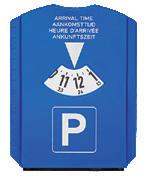
While parking on city streets in urbanized areas is often paid for at nearby meters, many store parking lots, some street parking, and even some on-post parking areas have time limitations that are controlled through the use of a parking disk (Parkscheibe) displayed visibly on the dashboard. Forgetting to set it could result in a fine or ticket.
Simply set the arrow on the disk to the next half hour after your arrival (for example, if arriving at 4:05 p.m., set your disk to 4:30 p.m.).
You can sometimes get free ones from the Central Processing Facility on Panzer, as well as some other on-post services, but they are also sold relatively inexpensively at gas stations and some retail stores.


Bardia Khajenoori, USAG Stuttgart Public Affairs
From modern art to luxury cars and dinosaurs to local wine, Stuttgart’s museums offer something for everyone. They’re great places to explore anytime, but especially to escape from rain, snow, or excessive heat — just not on Mondays, when most are closed. Numerous parks, green spaces, and scenic vantage points are also a stone’s throw away. Get to know Stuttgart by visiting some highlights!
Birkenkopf:
Located on the most direct route between Patch and Robinson Barracks, Birkenkopf (known locally as Monte Scherbelino or “rubble hill”) is the tallest point in Stuttgart. It owes part of its height to over 130 feet of debris cleared

from the bombed-out city after World War II. At the top, a considerable amount is left exposed; a stunning view meets a somber reminder of a tragic past.
City Museum Stuttgart (StadtPalais):
The free permanent exhibition at the 'Museum for Stuttgart' tells the story of Stuttgart and its people from the 1700s through the present day. English translations are abundant. The building itself, centrally located at Charlottenplatz, was formerly the home of the last king of Württemberg, and functioned as the city’s postwar library until 2011.
Fernsehturm (TV Tower):
Completed in 1956, the Stuttgarter Fernsehturm is the world’s first television tower built using reinforced concrete—a pioneering design that inspired similar structures around the globe. Rising 217 meters above the city, it offers sweeping panoramic views of
Stuttgart, the Neckar Valley, and the Swabian Alps from its observation deck and café.
Hohenheim Gardens and State Arboretum:
The University of Hohenheim, founded on a basis of agricultural and natural science research, maintains 74-acres of parks and gardens—including giant trees and more than 8,000 different species of plants—less than five minutes’ drive (or 30 minutes’ walk) from Kelley Barracks.
Höhenpark Killesberg:
This 123-acre hilltop park hosts, between its numerous grassy lawns, a free-standing observation tower, swimming pool (freibad), mini train system (the Killesbergbahn), petting zoo, playgrounds, historic fairground area with antique rides, and more.
Max-Eyth-See:
About ten minutes’ drive from Robinson Barracks, Stuttgart’s largest lake was created during the canalization of the Neckar River in 1935. The rolling hills and wide open green spaces surrounding it are one of the area’s most picturesque leisure spots. Boats can be rented to go on the water, but swimming is not permitted.
Mercedes-Benz Museum:
Covering the development of not only the brand, but the automobile itself, its nine levels provide plenty of engaging information even for people who may not normally be interested in a car museum.
Planetarium Stuttgart:
The Planetarium, located next to the main train station, offers a selection of mostly science and education-focused presentations, along with music-related special events. Its website offers schedules, program descriptions, and online ticketing.Presentations can be simulcast in English.
Porsche Museum:
A striking building directly adjacent to an S-Bahn station (Neuwirtshaus – Porscheplatz) houses dozens of Porsche vehicles from all periods of the company’s history, from early models to modern race cars, with focus placed on showcasing design and technical innovation.
Schlossgarten:
Officially divided into three parts, this 600-yearold park area stretches from Schlossplatz to Bad Cannstatt, where it meets Rosenstein Park and continues the “Green U”—a corridor of about five miles of interconnected parks in the city center. The
An open-air relaxation event takes place in one of the lawns of the Unterer (Lower) Schlossgarten.
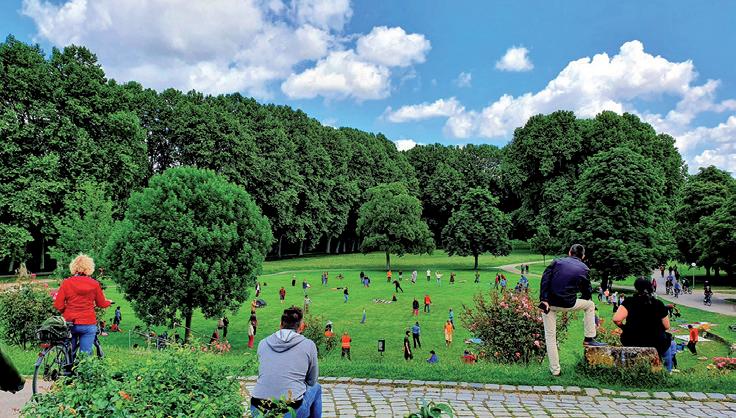
“Unterer Schlossgarten” (nearest to the U-Bahn stops of Stockach, Metzstrasse, and Mineralbader) has playgrounds, a mini “mountain biking” area for children, lakes, grilling areas, biergartens, and tree-covered pathways.
Staatsgalerie:
The collection of the State Gallery spans thousands of works from the fourteenth century to the present day, with a diverse array of styles. Everything from Renaissance art to French impressionism and American pop art can be found within its walls. Entry to the permanent collection is free on Wednesdays.
Weissenburgpark:
The Bopser U-Bahn stop provides the easiest
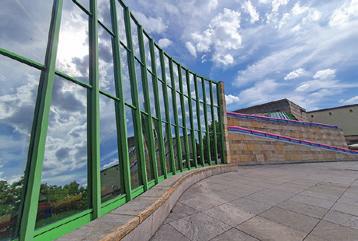
The Staatsgalerie’s home is itself a work of art. Its new building, seen here, was tied for fifth in a 2010 survey to find the most architecturally significant structures completed worldwide in the previous 40 years.
transit connection to this park, which is known for its panoramic viewing platform near an open-air cafe and historic “Teehaus.” It’s a great spot for a picnic, but come early if you hope to find space on the lawn ahead of sunset.
Wilhelma:
This zoo and botanical gardens has its origins as a 19th-century royal bathhouse but is now home to

With unique architecture and manicured gardens, animals aren't the only attraction at Wilhelma.
roughly 1,200 species of animals and 6,000 types of plants on around 74 acres. It is one of Germany’s most visited and species-diverse zoos.
This overview is provided as a courtesy to help community members explore local culture and does not imply federal endorsement. Please check days and hours of operation before visiting.
The Exchange offers a variety of shopping and services for the Stuttgart military community, with expanded options on shopmyexchange.com. In addition to shopping in the store, authorized customers can order items for delivery directly to their CMR box in Stuttgart or to the Panzer Main Store for either in-store pick-up or curbside delivery. Customers can remain connected to their local Exchange via social media and on shopmyexchange.com to keep up with the latest in operational hours and any changes in services provided.
Panzer Kaserne
The Main Exchange shopping mall, located on Panzer Kaserne, has 63,000 square feet of retail space bringing a variety of local and international products, foods and services to Stuttgart community customers. It offers a barber shop, full beauty salon, optometry clinic, car rental services and much more, as well as a rotating schedule of European vendors. The Panzer Main Store (PX/BX) itself is also home to Military Clothing Sales.
The mall's food court serves a variety of food ranging from burgers, pizza, chicken, rice bowls, ice cream, and donuts. There are also coffee shops. A rotating slate of local food trucks expand the culinary options with positions outside the Panzer Mall.
At the Panzer Car Care Center, a professional staff of sales and service technicians will keep the family mobile by offering basic oil changes and services on brakes, exhaust, suspension and tires.
Patch Barracks
On Patch Barracks, the Exchange food court offers specialty potatoes, tacos, sub sandwiches, a bakery, and a coffee shop as well as car rental services. Other concessions in the building include a barber, a hair and beauty salon, and a dry cleaner/ alteration shop. The large Express on post is co-located with a multi-lane gas station and features stationary, automotive goods, pizza and some groceries.
Food trucks can be found outside the Patch Fitness Center and the J-Mall (near Washington Square).
The Patch Reel Time Theater features weekday, evening and weekend matinee showings of the latest in cinema entertainment, including 3D films.
Kelley Barracks
The Kelley Express offers convenient hours of operation and a broad selection of basics for Service Members and their families. It is colocated with a gas station and also serves fresh
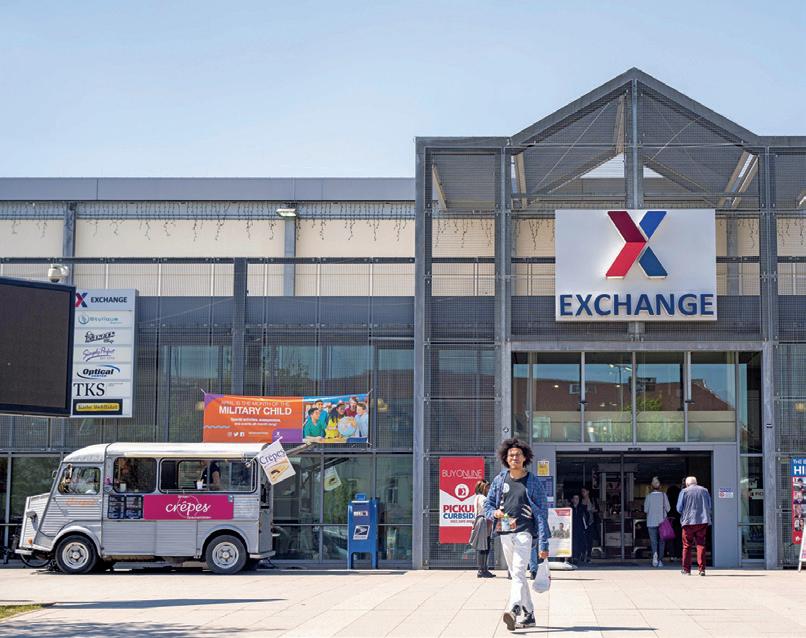
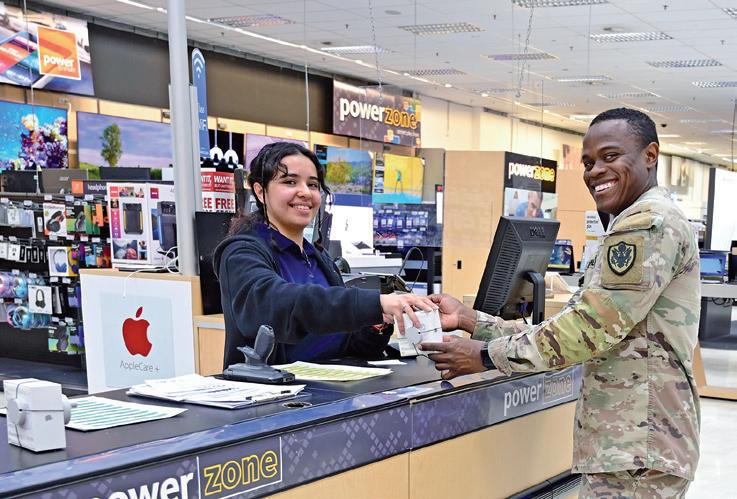

has a wide range of electronics and accessories in the "Power Zone."
pizza and wings. A Subway sandwich shop and food truck spot are located near the theater.
Robinson Barracks
Exchange-contracted food trucks set up outside Robinson Bldg. 168 (home to the RB Zentrum) on select Friday evenings. The schedule is posted by the Exchange every month.
Follow the Exchange on Facebook at https://www. facebook.com/EUCOMExchange and visit their website at https://shopmyexchange.com/
USAG Stuttgart Directorate of Family & MWRArmy Community Service (ACS) Relocation Readiness Program
Relocating to a new duty location, whether it be in the States or in a foreign country, can seem like a daunting task. However, Army Community Service (ACS) is here to make your transition from one location to the next as smooth as possible. Our Relocation Readiness Program (RRP) covers a variety of services to assist you during the relocation process and after your arrival. Visit www.militaryonesource.mil for additional information about military installations and to create a personalized checklist for the various tasks associated with your PCS process.

If you’d like to schedule an appointment, call the ACS Information and Referral Desk at DSN 314-596-3362 or commercial +49 (0)9641-70-596-3362.
A successful sponsorship experience can make all the difference for a smooth transition. Sponsors are a critical link for sharing important information before, during and after a PCS move. Properly trained sponsors are the key to a successful transition. ACS presents comprehensive training to arm sponsors and spouse sponsors with the tools, information and support they need to be successful.
Another important service provided by the RRP is the Lending Closet which provides basic household goods for people who have already shipped their household goods to their next duty location or are waiting to receive their shipment in Stuttgart. These goods include basic kitchenware for cooking and eating as well as many 220 volt electric appliances to make life easier for those still waiting for their household goods to arrive. By providing a copy of your PCS orders, items may be borrowed for up to 60 days.
Sprechen Sie Deutsch? ACS also offers two free language classes. The six-week German Immersion class is offered at various start dates throughout the year. The class teaches the fundamentals of the German language as well as cultural and historical aspects of Germany.
English as a Second Language (ESL) is for those whose native language is not English. This interactive class offers an immersion into the American culture while also learning the basics of English language and grammar. This class provides an opportunity to connect with individuals from across the globe.
ACS offers basic German translation services for unofficial translations of utility bills, phone bills, internet service bills, auto insurance, price quotes, emails and for scheduling appointments on the German economy. To avoid issues associated with translations, we recommend attending the Host Nation Orientation which also addresses local service contracts and set up and cancellation guidelines of German contracts.
The Host Nation Orientation is designed to familiarize newcomers with the daily aspects of living in Germany, to include transportation, restaurant etiquette, conversions, "Top ten ways not to make your German neighbors mad," and more.
In addition to the HNO class, ACS provides a Host Nation Tour of downtown Stuttgart. This regularly-offered tour starts from a different installation each time and offers attendees the opportunity to learn about and use the German public transit system, visit Stuttgart landmarks (such as the New/Old Castles, Königstrasse, Market Hall, and City Hall), and purchase lunch in a German restaurant.
The training and tour are open to all members of the community on a space available basis. Registration is required, so contact ACS to receive the latest schedule and reserve your seat.
The German Supermarket Tour is organized in partnership with a health educator of the Armed Forces Wellness Center on Patch Barracks. The tour covers how to navigate a German grocery store. The guide explains differences in products and procedures as well as nutritional differences.
ACS is committed to making your relocation process as smooth as possible. To learn more about ACS services and programs please visit https://stuttgart. armymwr. com or stop by building 2915, 2nd Floor, on Panzer Kaserne.



mhansenlaw@gmail.com
0152•27 037 592


Merkurstraße 29 ⚫ 67663 Kaiserslautern 0631-75 00 84 08



• Gift vouchers available

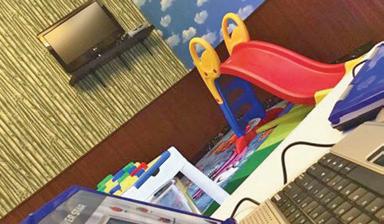
• Private party rooms in di erent sizes, a playroom for children with books, a slide, building blocks, robots, etc.
Monday-Friday (except holidays) 11:30-14:30
• Group Packages available - Call us and ask for more details!

Saturday (except holidays) 11:30-16:45 Eating until 16:45
Monday-Thursday (except holidays) 17:30-22:00
Friday-Saturday 17:00-22:00 Sunday + Holidays 11:30-22:00
Merkurstraße 29 ⚫ 67663 Kaiserslautern 0631-75 00 84 08

























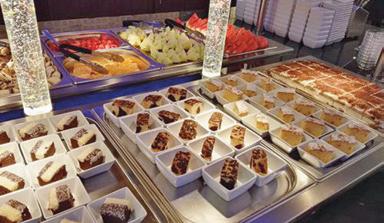











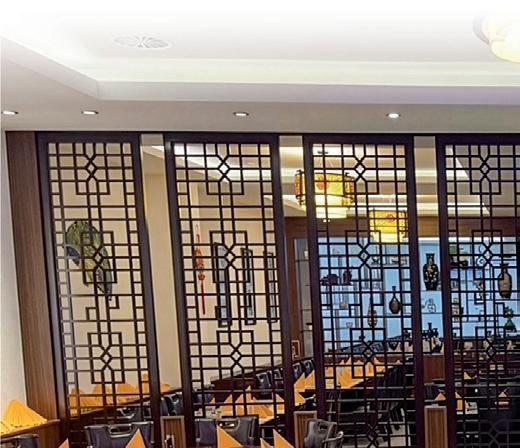
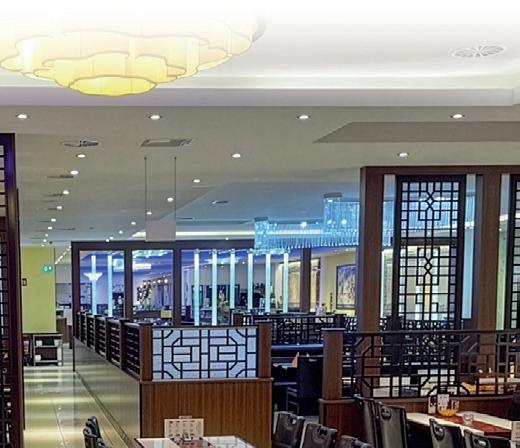
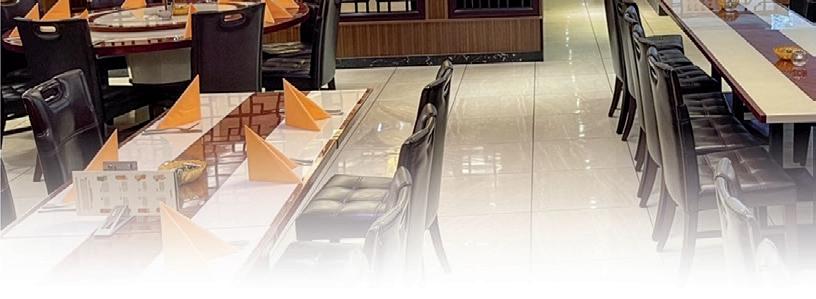
in Kaiserslautern is an expansive Asian all-you-can-eat restaurant best known for its extensive bu et, Mongolian grill, and family-friendly amenities. If you are visiting Kaiserslautern or Ramstein Air Base, be sure to check out this fantastic restaurant.







A live-cooking station where you can select raw meats (including specialty options like kangaroo, rabbit, or crocodile) and seafood, pair them with fresh vegetables, and watch chefs stir-fry them on the spot with your choice of sauce.

Vast Bu et Selection: A wide variety of Chinese, Japanese (sushi), and Mongolian dishes, accompanied by a notable dessert spread.





Features a dedicated, well-equipped children‘s playroom (with a slide, books, blocks, TVs, and PCs) to keep kids entertained.


















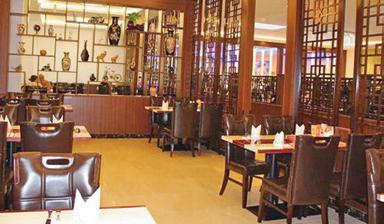
The restaurant accommodates large gatherings with separate party rooms seating over 350 people, and provides party delivery services for groups of 20 or more within a 10 km radius.





Logistics Readiness Center (LRC) Stuttgart - Driver Testing/Training Office
The U.S. Army Europe and Africa (USAREUR-AF) driver’s license allows personnel stationed in Stuttgart to drive in Germany without going through the process of obtaining a local driver’s license. It is also used as the basis for an International Driving Permit, which allows you to hit the road throughout Europe.
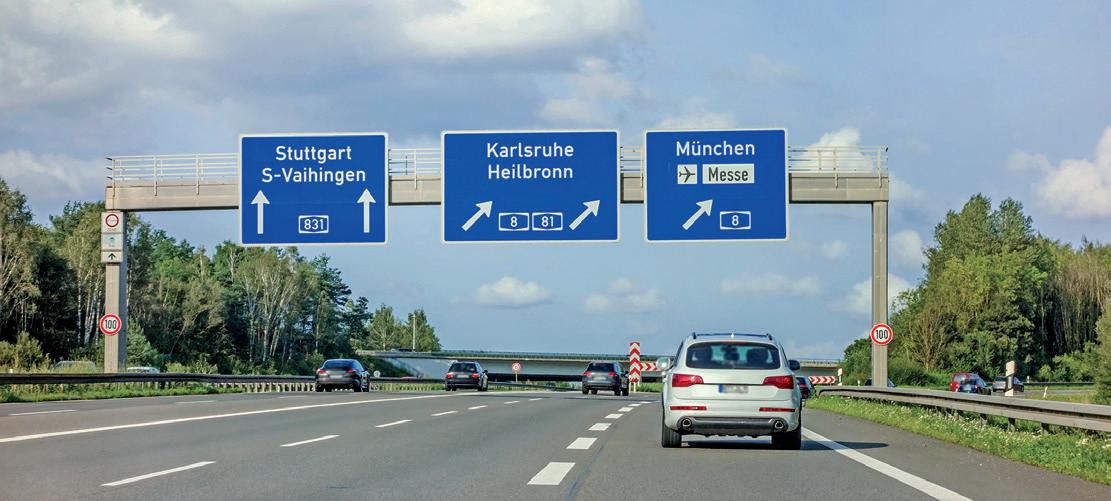
Germany is well-known for its autobahn, a network of roadways later emulated by the U.S. interstate highway system. Incoming personnel may be anxious to get behind the wheel and start zipping around, but before they do, they must know the rules. Anyone arriving on permanent change of station orders over 30 consecutive days falls under the Status of Forces Agreement and must have a USAREUR-AF driver’s license to drive in Germany, including rental vehicles.
Obtaining this license is part of the standard U.S. Army Garrison Stuttgart in-processing.
To get a USAREUR-AF driver’s license, personnel must take an online orientation class followed by a test about road-sign identification and a series of questions pertaining to German and European traffic laws on Joint Knowledge Online (JKO). The fee for the license is $30, and applicants must possess a valid stateside (or national, if non-U.S.) driver’s license to obtain a USAREURAF license. Personnel are advised to have their valid stateside or non-U.S. driver’s license, ID/CAC card, and USAREUR-AF license when driving in Germany.
Take the test online prior to PCS
Personnel and family members may complete the mandatory training and exam online, including prior to arrival, using the “Joint Knowledge Online” (JKO) platform. Sponsors can access the site with their CAC, but must create accounts for family members in order for them to be able to complete the process online. The online certification is valid for sixty days and must be valid upon arrival at the Drivers Training/Testing Office for issuance of a license (you must wait 48 hours, or two business days, after passing the exam for verification to be transmitted to DTTO).
The DTTS can provide you the required paperwork for obtaining an International Driving Permit (IDP) for driving outside of Germany, but only after you receive your permanent USAREUR-AF license. Paperwork for an IDP cannot be issued on the basis of a temporary license.
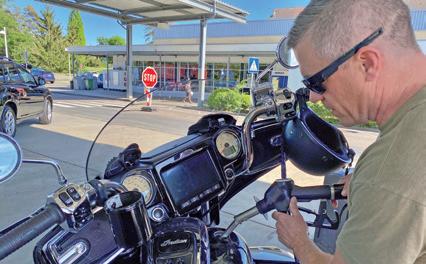
Active duty military personnel have special requirements to receive a motorcycle endorsement on their USAREUR-AF license. Please visit our webpage to learn more.
Location:
Building 2913, 3rd Floor, Panzer Kaserne
Hours of operation:
Monday-Wednesday and Friday from 7:30 a.m. to 4 p.m.
(closed for lunch: noon to 1 p.m.)
Thursday 1-4 p.m.
Closed on German Holidays
Phone: Civ +49 (0) 9641-70-596-2007, DSN 314-596-2007
Email: usarmy.stuttgart.id-europe.mbx.dtts@army.mil
Website: https://home.army.mil/stuttgart/driver-testing
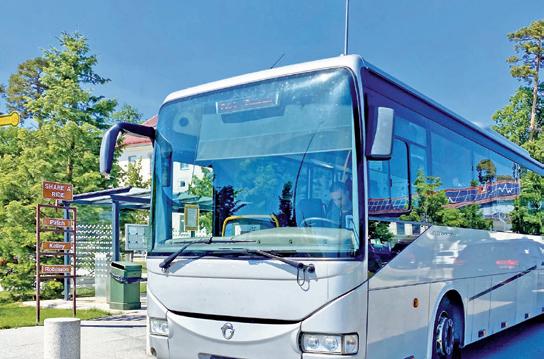
The duty bus is a free shuttle service operating on regular schedules between U.S. Army Garrison Stuttgart installations. It is intended primarily to transport military personnel and Department of War employees between offices and work areas of the installation or activity during designated hours of operation.
Family members and other ID cardholders are able to use the service on a space available basis.
The buses operate on two schedules: one for weekdays and one for weekends and U.S. federal holidays. Find the latest schedule in the My Army Post App (search for "duty bus") or StuttgartCitizen.com.
USAG Stuttgart Public Affairs
Drivers with a USAREUR license can register an operational vehicle in the USAREUR Vehicle Registry. The first step is obtaining temporary license plates and registration. This requires a $45 fee for each year registered. Vehicles can be registered for 1-2 years at a time. New vehicles previously registered in any other system for more than three months qualify for up to a three-year registration.
Customers must bring their orders, U.S. forces identification card, USAREUR driver’s license and proof of insurance (valid in Germany), as well as proof of ownership to register a vehicle. Contractors must also bring their Common Access Card (CAC), SOFA card, and passport.
Cars must be inspected for safety and mechanical condition. All vehicles must be re-inspected before
registration is renewed. Brand new vehicles may be exempt from the initial inspection.
With a successful inspection, the temporary plates are then exchanged for permanent plates. The vehicle can be taken through inspection several times to pass if necessary. Note: There is no extension beyond the initial 30-day period.
Information about appointments and step-by-step checklists with required documents and processes are available on the Vehicle Registration page of the garrison website.
The fuel ration card is another benefit derived from the SOFA.

Temporary cards can be issued for rental vehicles; contact the Customs Office.
by Rick Scavetta
This card permits personnel to purchase fuel on post and at ESSO stations off post at prices comparable to stateside prices instead of the standard European price, which is typically much higher. The card can be obtained at the Express gas stations on Patch and Kelley Barracks, as well as the main Exchange on Panzer Kaserne. The card can be preloaded with money at almost any Exchange store, online, and by phone. The card is valid for fuel purchases at Exchange and ESSO gas in Germany (not in any other country) at Exchange prices for the designated vehicle/personnel.
Whether on post or off, the card is needed any time the vehicle is fueled in order to avoid paying European prices for fuel.
Drivers should maintain awareness of the remaining balance of their fuel rations. Multiple vehicles of the same owner (and multiple vehicles registered to the same sponsor, regardless of the primary user) share from a single monetary balance on the card and each vehicle draws from its own ration balance. The gas card and the associated ration are intended for those personnel listed on the registration only, and cannot be shared with others, even other U.S. personnel who are entitled SOFA benefits.
So, with a license in hand, a registered vehicle and a fuel ration card, newcomers are ready to drive.
Website: https://home.army.mil/stuttgart/vehicle-reg

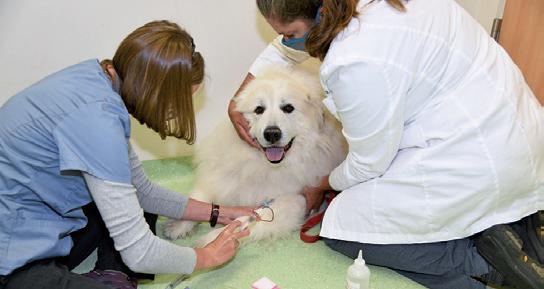
Stuttgart Veterinary Treatment Facility
What will their life in Stuttgart be like? What is veterinary care like? Are there dog parks? Can pets go downtown, into public places, or travel with the family on vacation? For those with four-legged family members to consider, the following tips may make the transition easier for all involved, even the family pet.
Finding veterinary care providers
Upon arrival to Stuttgart, finding suitable veterinary care is simple. The Stuttgart Veterinary Treatment Facility offers space-available routine annual exams and services, nonemergency sick call exams, dental and surgical procedures, and overthe-counter pet health product sales. It is NOT an emergency clinic. Service members, DOD civilians, and family members are authorized to bring their pets to the clinic. For some
families, it is more convenient to have their pet seen at a host nation veterinary clinic. Here in Stuttgart, pet owners can find several great clinics in the local area, including 24-hour emergency facilities, specialty hospitals where pets can receive advanced diagnostic and surgical care, and some excellent general practice veterinary clinics. Many German veterinarians speak English, so there is no need to worry about a language barrier disrupting a pet’s medical care, and many also accept the VAT form. In addition to veterinary clinics, Stuttgart also has a good selection of boarding facilities, pet stores, and dog groomers.
Know the rules
Living with pets in Germany can be a rewarding experience, as many local businesses allow well-behaved dogs inside their establishments.








For a free quote please contact us! Call +49 (0) 6134 - 58444-0 or 0800-2277447 (toll free within Germany)







There are some laws governing animal ownership that might be new to people coming from the U.S. Certain breeds (for example, American Staffordshire terriers and bull terriers) are completely banned from entering Germany, and those attempting to import them can be fined or imprisoned while the animal can be deported or seized. Other breeds are restricted, meaning that they are permitted to be in Germany, but special precautions could be required, such as the dog wearing a muzzle when in public, undergoing temperament evaluation, or the owner may be required to take out a special liability insurance policy on the pet. The list of breeds varies by city and state, so owners are encouraged to contact their local German town halls for additional information. It is important for American personnel to understand that traditionally, pets in Germany have a high level of obedience training. Many regular pet owners, not just hobby pet-show competitors, take their dogs to a number of extensive training sessions. Obedience training is offered by several local dog clubs and many of the members speak English. Pets are often expected to be as self-disciplined and quiet as a very well-behaved child. An out of control pet is looked down upon in Germany. Additionally, leash laws and other petrelated ordinances in Germany can be more extensive and vary from town-totown or county-to-county. Again, the local German town hall can be a good
source of information on local ordinances and pet clubs that offer training.
Traveling with a pet
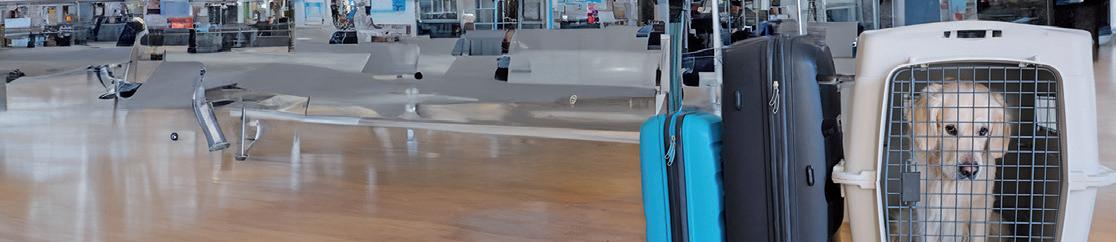
Pet owners looking to travel with their pet while in Europe may be surprised to find just how easy and fun it can be. Within the European Union, an EU pet passport has been established that contains the pet’s vaccination records. As long as the vaccines are upto-date and it contains all the necessary information, this passport allows the pet to move with the owner through most nations of the EU with ease.
EU pet passports are highly recommended as they greatly simplify the vacation travel process and help alleviate stress. A pet passport can only be obtained by an EU veterinarian at a host nation clinic. The Stuttgart Veterinary Treatment Facility does not have an EU veterinarian, and they cannot issue an EU pet passport.
The official blue EU pet passport (with EU logo) should not be confused with the various other unofficial or country-specific pet passports that many clinics may also carry.
Stuttgart Vet Clinic contact information
DSN: 314-590-1888
CIV: +49 (0)6371-9464-1888
Email: usarmy.rheinland-pfalz.phceurope.mbx.vtf-stuttgart@health.mil Garrison webpage: https://home. army.mil/stuttgart/vet-clinic

The health system for service members, retirees, civilians and their families in Germany consists of local military community health services on Patch Barracks, Panzer Kaserne and Kelley Barracks, local host nation medical facilities for inpatient and outpatient primary and specialty care, and the Landstuhl Regional Medical Center (LRMC).
Upon arrival in Stuttgart, TRICARE beneficiaries must complete local enrollment during the healthcare in-processing brief at the Central Processing Facility. If not able to attend the brief, enrollment can also be completed at the TRICARE Service Center located at the Patch Health Clinic. Civilians are also strongly encouraged to register at the clinic at the Medical Records section. Service members need to in-process through: (1) Medical Readiness to ensure all immunizations, periodic health examinations, etc., are up to date; and (2) Medical Records.
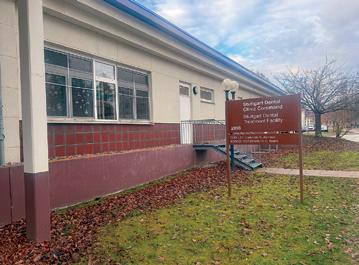
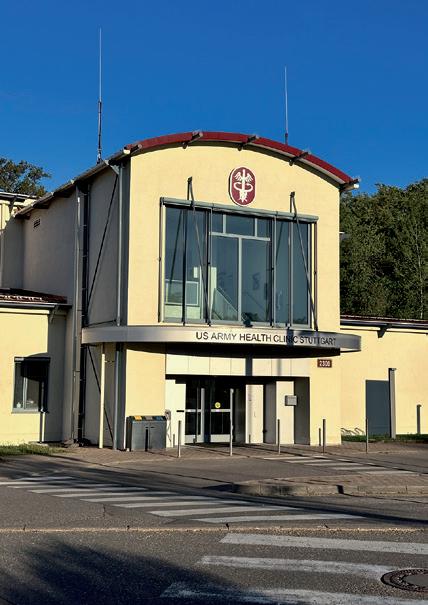
The Stuttgart military community is served by the Stuttgart Army Health Clinic on Patch Barracks, the Kelley Barracks clinic annex and the Stuttgart Dental Clinic on Panzer Kaserne.
The health clinic provides health care using the patient-centered medical home model which is a team-based health care delivery model, led by a physician, physician’s assistant, or nurse practitioner, that provides comprehensive and continuous medical care to patients. The services offered at

the health clinic include: primary care, pediatrics, mental health, optometry, physical therapy, wellness center, telehealth, and public health.
Beneficiaries can make an appointment by calling CIV 06371-9464-2900, DSN (314) 590-2900 or online through the MHS genesis portal.
The Stuttgart Army Health Clinic does not provide emergency services; it relies on local German hospitals to provide emergency care. For this reason, in case of an emergency, do not go to the Stuttgart clinic. Dial 112 from a civilian phone to reach the German emergency services. From on-base DSN phones, dial 110 for the Military Police desk. The MPs can then contact additional emergency services as needed.
Care at the Patch and Kelley Clinic is provided based on enrollment status. Service Members and their command-sponsored families have priority access to the clinic. All retirees not already enrolled with the clinic along with civilians, contractors and
· Aesthetic Dentistry
· TMJ/Facial Pain Treatment
· Certified Dental Hygienist
· Preventive Care and Periodontal Therapy
· Orthodontics/Invisalign
· Implants

Dr. Charles A. Smith DDS, LVIF is an American trained dentist providing expert dental care with the newest and most successful techniques to cover all your dental needs. Come see why patients travel from all over Europe to visit Dr. Smith for general dental care to smile makeovers. After many successful years in Heidelberg, Dr. Smith has now opened a second office in Stuttgart. Please call to schedule your appointment.
Charles-Lindbergh-Str. 11 · 71034 Böblingen Phone 07031-2056062 · www.boeblingendental.com
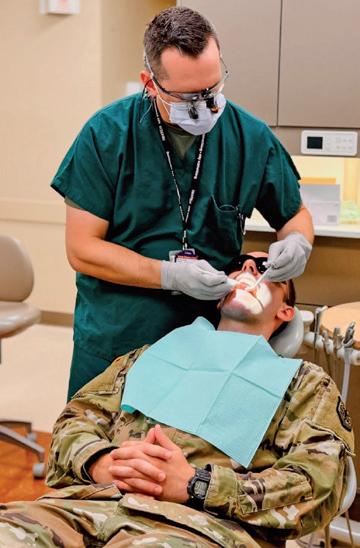
pediatric dentistry, prosthodontics and periodontics. Services in endodontics are currently limited. Services in orthodontics are available on a case-bycase basis, as well as being limited to active-duty personnel and children under 18. Some oral surgery support is available at the clinic, but complex surgery is referred to LRMC.
Dental insurance for family members is available through enrollment at https://www.uccitdp.com.
For some services, primary care providers may refer patients to host nation facilities, and the Stuttgart Army Health Clinic maintains relationships with an extensive network of English-speaking providers for specialty care on the German economy.
their families should check-in with the health clinic to determine if space is available for them to receive care.
The Kelley Clinic Annex offers adult primary care (primary care appointment only).
The dental clinic’s primary mission is to provide dental treatment to service members on active-duty orders for 30 days or more. All other personnel should establish dental care within the community by utilizing the TRICARE Dental Plan.
They provide general dentistry and hygiene appointments as well as specialty care for
TRICARE Prime beneficiaries should contact their primary care team for routine off-post referrals then contact International S.O.S. (ISOS) to obtain authori- zation. Host nation treatment facilities may refuse to see Prime beneficiaries without ISOS authorization for routine care. They should also notify ISOS for all emergency care authorization and billing issues. ISOS can be reached by telephone at CIV 0800-5891599 (toll-free from Germany) or Europe-wide at 0044-20- 8762-8384 (international rates apply).
Beneficiaries should download the MyCare Overseas Mobile App to easily access ISOS services to include 24/7 assistance, healthcare finder, translation help, and referral/authorizations. More information on the MyCare Overseas Mobile App can be found at: https://tricare-overseas.com/beneficiaries/ resources/beneficiary-app.
Those who are referred off-base should be aware that host nation medical clinics and hospitals have similar standards of care as those in the U.S., however, we may have culture differences. For example, the general approach to how pain is addressed after a surgery can be quite different than the care you are accustomed to in the U.S.
Though many host nation doctors speak English, their staff may or may not. If you do not speak German, use a translation app or bilingual dictionary,
or call Interpretation Services. The Language Line has more than 700 different languages available (DSN 590- 8255 or +1 800 523 1786; the system will then ask for your Client ID: 574003).
Translation help can also be found on the MyCare Overseas Mobile App. During rounds, junior physicians often accompany attending physicians. This can make it difficult for patients to feel comfortable asking questions. Write down your questions. During rounds is the appropriate time to ask if the doctor has time to address your questions, especially if you are requesting hospital discharge or pain management. If the doctor cannot answer at that time, ask when the doctor can return. Host nation patient liaisons should be able to assist if you are having difficulties communicating. Some German physicians may not be in the habit of explaining details to patients. They will answer all questions when asked, but sometimes do not volunteer all results or information. Be sure to ask doctors about the treatment plan.
German privacy standards may differ from what many Americans are used to, so please keep in mind that we are in their country. Host nation physicians may not always use a chaperone when examining patients of the opposite sex. Ask for a chaperone if you feel uncomfortable.
Landstuhl Regional Medical Center
LRMC is about a two-and-a-half-hour drive from the Stuttgart area. It offers a wide variety of specialty clinics and is a Level II Trauma Center verified by the American College of Surgeons. Major surgeries, specialty services and most other services not available at the Stuttgart clinics are available at LRMC. Visiting the specialty clinics at LRMC starts with a referral from Stuttgart’s primary care providers.
LRMC offers many high quality specialty care services for active duty service members and their families, as well as retirees, DoD civilians, contractors, DoDEA teachers and their family members. To see if specific specialty care services are available for your beneficiary category, reference the LRMC monthly availability report on the Specialty Care Services website at: https://landstuhl.tricare.mil/ Getting-Care/Specialty-Care.
U.S. Army Health Clinic Stuttgart offers a range of virtual health options for patients enrolled at the clinic. These tools provide greater flexibility and convenience, allowing patients to manage their health and well-being from wherever they are.
Virtual care can include real-time video visits, telehealth, secure messaging with providers, and access to self-guided wellness resources, allowing patients to connect with their care team at a time and place that works best for them. Talk to your primary care team about what options are available for you.
Like the Clinic on Facebook at https://www.facebook.com/ StuttgartHealthClinic/
Stuttgart Law Center
As a newly-arrived member to the community, it is important to understand your legal status in Germany and your protections. Service members, civilians and family members on military orders are governed by the NATO Status of Forces Agreement. Understanding how the SOFA affects you will make for a more enjoyable overseas tour.
The Status of Forces Agreement (SOFA) provides the basis for the legal status of military, U.S. civilian employees and dependents living in Germany on orders. Under an additional supplementary agreement, personnel in Germany also enjoy privileges not granted to others service members stationed elsewhere in Europe. These agreements affect status, entry and departure from the host nation, military training within host nation territory, jurisdiction, law enforcement, taxation, import and export laws, driving privileges, employment, mail, schooling, housing and more.
German law applies to everyone
Although the SOFA determines your legal status, it is important to understand that German law applies to U.S. personnel both on and off USAG Stuttgart installations. U.S. installations are not U.S. soil. Additionally, while there are many similarities between German and U.S. law, there are also many stark differences. For example, spanking or paddling children as a means of punishment for disobedience is prohibited under German criminal law. Also, administrative fines are strictly enforced in Germany and can escalate if ignored. Finally, language barriers do not suspend deadlines, as most official correspondence is in German only and has to be responded to by mail, not email.
Avoid signing contracts if you don’t understand your obligations or until someone who reads German reviews the documents. In Germany, many service contracts used to automatically renew for one-year increments after the initial two-year expiration. Now, after the expiration of an agreed minimum term, contracts may not be extended for another year without explicit consent. Terminating a service still requires at least a one month notice. Keeping a copy of termination notices and the company’s response is still recommended. Please note that some hybrid contracts such as cell phones can still charge you for the device payments even after service has ended. An alternative to signing a contract is to get a prepaid plan, cancelable monthly.
A number of issues can be avoided with a little deference to our German hosts and awareness of host nation law. For instance, in German culture, German citizens are encouraged to report inappropriate behavior, like parking in a no-parking area. If someone tells you that you are parked in the wrong spot, it would behoove you to move; small confron-
tations combined with a language barrier quickly escalate, resulting in police involvement, hefty fines and court costs.
In Germany, if you flip someone off or use aggressive language toward someone else, you can be sued and forced to pay what is known as “Schmerzensgeld,” or “pain money.”
In Germany, folding, locking-blade knives and all knives with a blade longer than 12cm (4.7 inches)
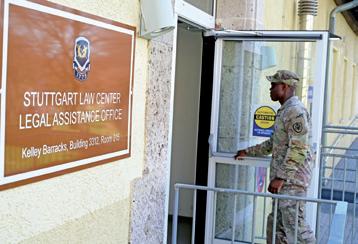
are generally banned. Furthermore, the following knives are considered weapons: spring knives; fall knives; fist knives; butterfly knives; one-hand knives with a blade longer than 12cm; and knives with a stationary blade longer than 12 cm. For more information, you can visit the German government’s English translation of their weapons laws at their website, https//www.bmj. de/EN/. Scroll down and find the link to Translations of Statutes and Ordinances. The laws affecting knives are under WaffG, or Weapons Act. If you choose to carry a pocketknife, never carry it to a large public gathering, places where alcohol is consumed or where there will be a police presence.
Speed cameras are much more common in Stuttgart and throughout Germany than they are in the U.S. Unfortunately, the Law Center lacks legal authority to assist drivers who received traffic citations. We can, however, help translate the letter and explain the situation. Prompt payment of fines is highly recommended. The U.S. Army in Europe vehicle registry records German traffic violations and assigns traffic points. Drivers who get 12 or more traffic points in a one-year period face a mandatory license suspension under the Army in Europe Regulations. Those caught driving on a suspended license face a five-year revocation of driving privileges. Please note that liability can attach to the registered vehicle owner rather than the driver. It is important to respond to German authorities as not doing so is likely to escalate the situation.
German copyright laws are strictly, actively enforced and our community has seen a surge in demand letters from law firms for illegal downloading of protected material. Such demand letters can involve heavy fees or fines imposed on those caught downloading or uploading media in violation of German copyright laws. If you receive one, contact
the Law Center prior to responding. The best practice is not to engage in any illegal downloading or uploading of copyrighted materials.
The SOFA affords some very nice tax breaks to personnel under orders to be in Germany. Sharing these tax breaks with non-SOFA protected persons is strictly prohibited. Violations can cost a person their SOFA privileges, repayment of items, or even result in federal criminal convictions.
Specifically, misuse of the fuel ration system or VAT exemption can create trouble very quickly. Also, anything acquired under the provisions of the SOFA at the Exchange, commissary or tax-exempt purchases made with a VAT form are for personal use and are not allowed to be used in private business ventures. Don’t allow landlords to use VAT forms to repair or improve their property. Those interested in getting involved in a personal business while overseas under the SOFA are highly encouraged to consult Family and MWR’s Home Based Business (HBB) office.
Marriage and divorce in Germany can be quite different than the U.S. Marriage or divorce documents are not easily transferred or mutually applied between German authorities and various states in the U.S. Any divorce, whether overseas or back in the U.S., can be complicated and could cost hundreds of thousands of dollars for alimony, child support, division of marital assets, and legal fees. Former spouses could seek a court order for money, call your commander to enforce a separation agreement, or any obligation under military regulations to support families. Since the Law Center cannot represent personnel in divorces, you will have to seek services from a German attorney.
All personnel must check in at the Housing Services Office upon arrival in Stuttgart and keep them informed of their housing search status. Those residing off post must be thorough and businesslike when establishing a contract and moving in. Landlord-tenant laws are very different in Germany and are, in many ways, pro-landlord. Keep all meetings with the landlord, at least the initial ones, strictly businesslike.
One key difference between U.S. landlord tenant law and Germany landlord-tenant law is that you can form an oral contract to rent property in Germany. This means you must watch what you say to a prospective landlord. Only written communication with a landlord is advisable.
You'll be personally responsible for repairs that aren't noted on the initial inspection sheet. You can pay for the repairs out of your own pocket or from your security deposit which can be held for a long time if there are disputes. It is critical to remember that renting property is a business transaction.
Be careful when dealing with realtors. Realtors technically work for the potential renter seeking the property, but they are very familiar with the local landlords whom often have more than one rental.
Service members, civilian employees and family members who fall under the Status of Forces Agreement are eligible for the VAT and UTAP tax savings. The Value Added Tax (VAT) is imposed by Germany on a wide variety of goods and services. Most retail goods are taxed at 19 percent, while food, lodging, and certain other goods are taxed at 7 percent.
For purchases less than €2,500 net price (after tax), a VAT form NF-1 will be used. Not all vendors accept the VAT form, since this is a voluntary program. VAT forms may be purchased for $10 for the NF-1 VAT form, and each sponsor may only have 10 open forms out at any one time.
IMPORTANT: You must have a VAT form in hand before committing to the purchase of goods or services. VAT forms cannot be used for costs related to buying or selling real estate, purchase of automobiles that will NOT be registered in the USAEUR vehicle registration system, and for any items used in a commercial activity (such as a home business). They may also not be used for long-term utility, telephone and internet contracts.
For purchases of €2500 or more, an NF-2 VAT form will be used. This form costs $100. Contact the VAT Office before making any commitment to purchase an item €2,500 or more in order to start the process. These purchases must be made out to CMWRF and the person making the purchase.
A new micro-purchase app called REMONON simplifies the process of receiving tax refunds and helps eligible customers get some of the taxes they’ve paid refunded on smaller purchases. Whether you’re grabbing groceries, picking up gifts, shopping on Amazon or dining out at a restaurant, this app is a gamechanger for saving money! The app is owned and operated by a German company, NOVAT GMBH, and no federal endorsement is implied.
Customers register through their local VAT office and obtain an Individual VAT Number (IVN) that is required upon signing onto the app. At the beginning of each month, customers upload a valid VAT form that they have purchased at their local VAT office on the micro-purchase app. Customers then pay full price for individual purchases not to exceed €250 (including tax) per vendor per day and up to €2499.99 (without tax) for individual purchases at various German vendors and upload respective receipts. At the end of the calendar month, NOVAT totals all receipts and provides directions for filling out the uploaded VAT form. The tax savings are reimbursed to customers directly by bank transfer minus a small trade margin.
• Using an unpriced purchase order (NF-1) for any amount of €2,500 or more.
• Using an unpriced (NF-1) or priced (NF-2) purchase order after the fact.
• Splitting invoice amounts between two or more un-priced (NF-1) purchase orders to avoid using a priced (NF-2) purchase order for an amount of €2,500 or more.
• Purchasing goods or services that benefit ineligible persons.
• Buying used automobiles, repair parts or services for resale.
• Buying items for resale or commercial purposes.
• Buying new or used automobiles from German vendors for registration in the German (or other non-U.S. Forces) vehicle registration system (Kfz-Zulassung).
• Using VAT forms for costs related to buying or selling real estate.
• Using VAT forms for construction, renovation or home improvements.
• Using VAT forms for utilities or Telekom services based on long-term contracts.
• Making other purchases that are prohibited by AE 215-6/USAFE Instruction 34-102.
• Returning VAT forms that are not completed properly.
• Using an expired VAT form (VAT forms have a validity of two years) from date of issue.
Personnel may be exempted from utility taxes through the Utility Tax Avoidance Program. Enrollment in this program may be mandatory for some personnel receiving housing or Living Quarters Allowance. There is a fee of $99 for enrollment. Download the application form or contact the UTAP through our webpage: https://stuttgart.armymwr.com/programs/utap
• Required steps and information needed to sign up:
• German law requires you to sign up within one business day.
• Do initial walk through with landlord, at time of move in.
• Bring a hard copy of the rental agreement – signed lease.
• Copy of orders (all military and civilian except contractors).
• Contractors must bring in a valid NATO-SOFA Card and ID Card.
• Signed copy of Übergabeprotokol or Mission Essential-Meter Readings Form.
• Obtain Marktlokations-ID# (Residence Locator Number) and Energy Efficiency Rating from your landlord.
• Provide a copy of meter pictures.
• Complete the Start up Form(s) and UTAP Application in person.
• Your local bank account information (I.E IBAN, BIC).
• Administrative fee of $99 signup fee to enroll.
Monday through Friday / 9 a.m. to 5 p.m. (open during lunch) / Closed on U.S. federal holidays
The VAT/UTAP office is located in Bldg. 2915, Rooms 324 (VAT) and 326 (UTAP). For more information on the VAT program, call DSN: 314-596-3678 or CIV: +49 (0)9641-70-596-3678. For more information on the UTAP program, call DSN: 314-596-3452/3366/3453 or CIV: +49 (0)9641-70-5963452/3366/3453.
Plieningen office
Wollgrasweg 33 70599 Stuttgart

We are tax professionals for a reason. H&R Block knows the specific tax benefits for personnel serving in the military and civilians working overseas. We can help you get all the deductions you’re entitled to.
It’s just another part of the H&R Block service.


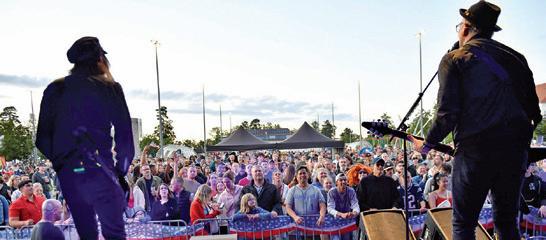


At Stuttgart Family & MWR, we’re all about enriching your life—one unforgettable experience at a time. Whether you’re looking to learn something new, need trusted childcare, or just want to have some fun, our vibrant programs and dynamic services are here to lift your spirits and fuel your well-being. From exciting events and hands-on workshops to meaningful support for every age and stage, Family & MWR is proud to be your go-to resource for staying active, connected, and resilient while living in Germany.
Family & MWR operates multiple facilities across five installations in USAG Stuttgart and the Army Golf Course in Kornwestheim. Here are some Family & MWR services and programs you should know about:
• Outdoor Recreation offers equipment rentals (skis & snowboards, bikes, camping, etc.), event rentals (bouncing castles, grills, etc.), activities, adventure trips, and workshops on Kelley Barracks.
• Galaxy Bowling & Entertainment Center on Panzer Kaserne features 24 -lanes, regular specials and events, on-site restaurant ShaWINGz serving mouthwatering chicken wings, Army Recreation Machine Program and free wifi.
• Two Arts & Crafts Centers, located on Patch Barracks and Kelley Barracks, features retail store, woodworking tools, classes, framing and more!
• MWR Tours Office organizes exciting trips across Europe every weekend that cater to all types of travelers.
• The Swabian Community Activity Center and Kelley Club are available for hosting conferences and private functions.
• Fully equipped Fitness Centers with unmanned access located on Panzer Kaserne, Patch Barracks, Kelley Barracks and Robinson Barracks. We offer a variety of fitness classes, personal trainers, saunas, massage services and so much more!
• Auto Skills Centers on Kelley Barracks (DIY) and Panzer Kaserne (Speedy Lube), as well as two car washes.
• A beautiful 18-hole Stuttgart Golf Course and state-of-the-art storage facilities for all your household goods.
• The Patch Library features free wifi, the largest collection in Europe, and a free computer lab.
• The Stuttgart Theatre Center located on Kelley Barracks stages awardwinning plays and musicals every season.
• Java Cafés on Patch Barracks and Kelley Barracks serves Starbucks Coffee, offers free wifi and lounge areas.
• Patch Community Casino & Kelley Club Army Recreation Machine Program. Test your luck and play responsibly!
• Army Lodging at the Panzer and Kelley Hotels.
• Better Opportunities for Single Servicemembers (BOSS), represents the voice of single servicemembers, geographical bachelors and single parents, and organizes volunteer opportunities, as well as regular fun, recreation activities.
• Army Community Service (ACS) provides readiness and family advocacy services, as well as offers assistance and education to support military families.
• Child & Youth Services (CYS) services include the Child Development Centers; Strong Beginnings; part-day preschool; school-age and middle school programs; Schools of Knowledge, Inspiration, Exploration (SKIES Unlimited); and youth sports. CYS provides accredited programs, education, and fun for the whole family. CYS cares for children (6 weeks to 18 years) so that parents can focus on the mission while they are at work. Special after-hour care is provided so that parents can take a break to enjoy other activities taking place on and off post.
To get more details about our programs and upcoming events, visit www. stuttgart.armymwr.com. While there, sign up for our bi-weekly newsletter!
Stay connected by following us on Facebook: @familyandmwr and Instagram: @stuttgartfamilymwr
by Bardia Khajenoori.

USAG Stuttgart Public Affairs
Shopping in Germany can be a very positive experience and shoppers will find most of the same things that they’re used to back in the States.
Upon arrival in Stuttgart, shopping is one of the first things many newcomers like to do. However, military community members should be aware of some important differences.
One thing most Americans should adjust to in Germany is the way in which Germans shop. Most shops are smaller and in general, most towns have a central, downtown shopping district where most of the specialty stores are located. At least one or two larger department stores can usually be found in sizable German cities.
Sprawling shopping malls with dozens of shops, a food court and a movie theater like the kind that dot towns across America are still somewhat rare in Germany, though they can be found in larger cities. There are several large shopping centers throughout the Stuttgart area. These include the Milaneo in downtown Stuttgart, the Mercaden in Boeblingen, Breuningerland and Stern Center in Sindelfingen, and “Leocenter” in Leonberg. Malls are generally open from 10 a.m. – 8 p.m. Monday through Saturdays, although they may have one day regularly open later and special occasions for longer shopping. Be aware, however, that there is no shopping on Sundays.
Most German cities have a Fussgänger (pedestrian) zone offering a shopping experience that more than makes up for the lack of malls. Think of them as large, open-air, cobblestoned, mile-long shopping malls. Specialty stores, restaurants and other services line these pedestrian streets, offering just about anything the average shopaholic might desire. Stuttgart’s main shopping street is Königstraße, which stretches for three-quarters of a mile.
Grocery shopping in Germany is generally a convenient experience. Franchise grocery stores that offer a full range of everyday grocery needs can be found in most towns and cities (small villages may not have these stores, but they’re usually found in a neighboring village or town).Discounters like Aldi and Lidl tend to offer lower-priced products with an emphasis on private label (store) brands, while supermarkets such as Rewe, Edeka, and Kaufland typically carry a wider range of national and international brands and often feature full-service counters for fresh meats and cheeses.
Grocery stores in Germany are laid out similarly to U.S. stores, and though the product names and some of the packaging may be different, the basics are still the same. There is fresh produce, canned goods, frozen foods, frozen pizzas and breakfast cereals. German products are measured using the metric system. German grocery stores do not provide free bags at checkout, and customers typically bring their own reusable ones.If you don't have one on hand, paper/ reusable bags are available for purchase for a nominal fee. Customers are also expected to bag their own groceries. Cashiers can scan quickly, so for larger trips, it may be wise to simply put items back into the cart and re-organize away from the register rather than try to keep up.
Just like the weights and measurements for groceries are metric, clothing sizes in Germany are different to those in the U.S. It helps to know some of the different clothing size systems. There are applications for smartphones that can help with size conversion as well as online resources, though the size conversions can vary significantly from brand to brand and even within the same brand. While some clothing now comes with tags that list both U.S. and European sizes, it’s important to be aware of the differences. Most clothing stores offer changing rooms, so the best practice is to always to try clothing on before purchasing it.
Cash is still much more widely used in Germany than in the U.S.; some smaller, independent stores and restaurants do not accept credit cards, so ask in advance if you are unsure.
Many stores and restaurants will accept a German variant of a debit card, called a Girocard or EC (EuroCheque/Electronic Cash) card, even when they do not take credit. They are also frequently accepted at ticket machines and parking meters. EC cards are connected to a customer’s bank account and are secured with a chip and randomly-assigned PIN. They can be used across Europe and are available through German banks as well as Service Credit Union on post. The credit union’s offering, called V-Pay, is available to members for a set-up fee of $25, with renewal every four years at $15.
Return policies are another area in which shopping has changed in recent years in Germany, but they are still a little different than in the U.S. Most large department stores will have return policies, but these policies may be more restrictive than those that Americans are familiar with. Make sure to keep the receipt and the tag on the item. Items usually need to be returned within 14 days to get your money back, but store policies will vary.

Stuttgart High School (SHS), located on Panzer Kaserne, serves a student population of approximately 800 students with 70 teachers and administrators. The school offers more than 20 Advanced Placement (AP) courses and reports high average AP scores compared to US and other DoWEA schools. SHS is dedicated to preparing students to be college and career ready when they graduate. SHS offers a variety of the following DoWEA curriculum courses: English (including AP and honors courses); mathematics (algebra through AP calculus); science (physics, chemistry, anatomy, biology, etc.); German and Spanish languages; computer, engineering and robotics courses; fine arts (humanities, band, theater, art, chorus); history; business, career and technical electives; and other activities. SHS has an active Junior Reserve Officer Training Corps program, as well as extracurricular programs in football, golf, tennis, cross-country running, volleyball, wrestling, basketball, swimming, cheerleading, track, soccer, baseball, softball, rifle and military drill team.
Telephone: DSN: 324-483-7080; CIV: +49(0)631-7106-7080
Website: www.dodea.edu/StuttgartHS
Facebook: https://www.facebook.com/StuttgartHS.DoDEA/
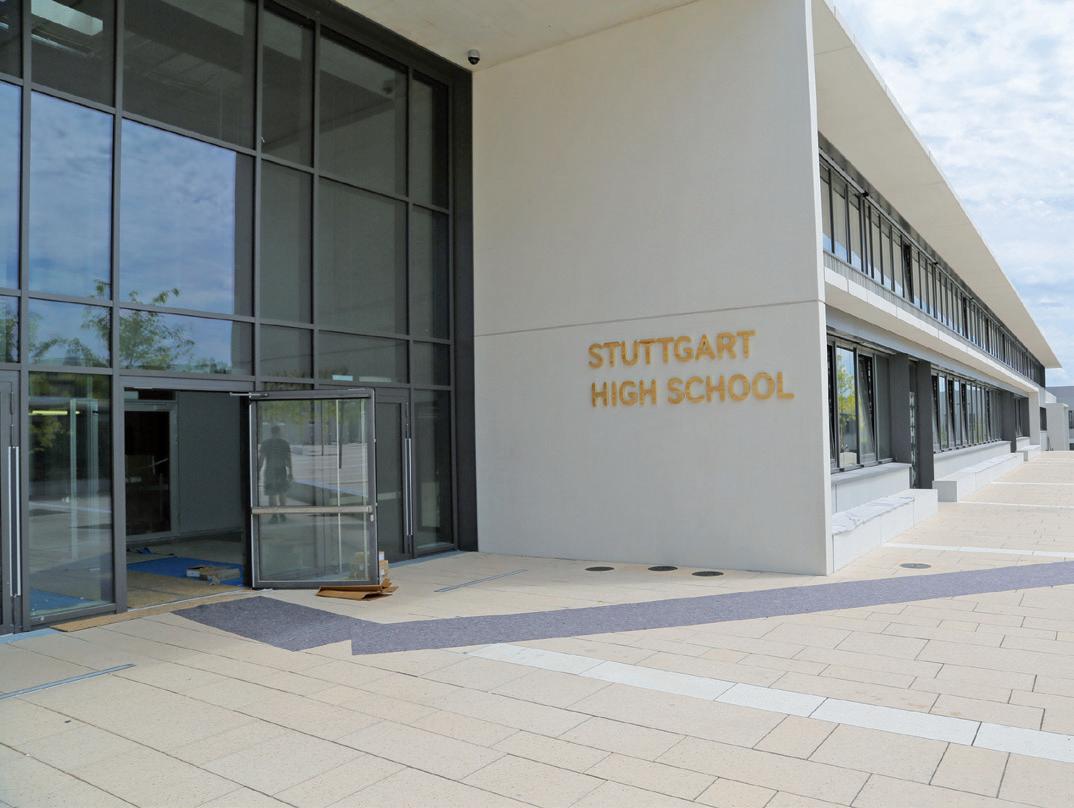

Patch Elementary School opened its doors in 1979 and continues its mission today, educating roughly 460 students from pre-kindergarten to fifth grade, as well as qualifying pre-school students. The school is located in a '21st Century' facility on Patch Barracks. Its Parent-Teacher Association collaborates with the educational team to support a variety of events such as Engineering Week, Read Across America, Field Day, Jog-A-Thon and monthly assemblies and spirit days. After-school clubs include Robotics, Art, Chess, German, and Student Council. The School Advisory Committee emphasizes the partnership between school and home, setting yearly goals to enhance communication and involvement of students and parents/guardians in the learning process and overall educational experience PES has to offer, and foster a sense of community between parents, students, and staff by creating a feeling of purpose thorough stewardship with regard to the school, student body, and the environment. Students are nicknamed ‘STAR Stallions’ to reflect how they 1) Strive to do their best, 2) Take responsibility, 3) Always work together, and 4) Respect themselves and others.
Telephone: DSN: 324-483-7000; CIV: +49 (0)631-7107-7000
Website: www.dodea.edu/PatchES/ Facebook: https://www.facebook.com/DoDEAPatchES/
Stuttgart Elementary School (SES) shares a school complex on Panzer Kaserne with Stuttgart High School. It has a student population of about 600, and a team of 80 teachers, administrators, and support staff. SES believes in students, parents and community leaders working together in partnership with teachers. The school supports programs that encourage parent involvement and building a strong parent-school partnership. Family nights, parent-teacher conferences, the school advisory committee, Parent-Teacher Association, classroom volunteers, and parent chaperone opportunities are just a few of the ways the Mighty Griffin community creates a true parent-school partnership.
Telephone: DSN: 324-483-7060; CIV: +49 (0)631-7106-7060
Website: www.dodea.edu/StuttgartES
Facebook: https://www.facebook.com/DoDEAStuttgartES/


Robinson Barracks Elementary School (RBES) opened in 1953 in a building that previously held a military hospital for U.S. forces. The school has undergone several changes to its academic structure over the years, alternating between an elementary school and an elementary/middle school. The school offers the standard DoWEA curriculum and provides extra-curricular activities. We have a student population of about 350 students in Prekindergarten through fifth grade, with a staff of approximately 38 teachers and administrators. RBES values strong community-school relationships that are essential to high academic achievement. It believes that successful schools include parents and community members that are involved and supportive. The community recognizes the value of educational and extracurricular activities, and RBES expects its students to excel bothinside and outside of the classroom.
Telephone: DSN: 324-483-7040; CIV: +49 (0)6317-106-7040
Website: www.dodea.edu/RobinsonBarracksES
Facebook: https://www.facebook.com/RobinsonBarracksES/

Patch Middle School is the only middle school serving the Stuttgart military community, with approximately 680 students and 65 staff members. Patch MS offers a diverse set of classes. In addition to the core subjects of math, science, languages and social studies, it offers many classes in art, music and technology to students in grades 6-8. Students have the opportunity to take advanced classes in foreign languages and mathematics. Its challenging and engaging curriculum ensures its students are on the path to be college and career ready. Patch MS also offers a variety of extra-curricular activities that allow students to explore unique topics and develop special skills.
Telephone: DSN: 324-483-7020; CIV: +49 (0)6317-106-7020
Website: www.dodea.edu/PatchMS
Facebook: https://www.facebook.com/DoDEA.PatchMS/
Get to know

USAG Stuttgart Family & MWR - School Liaison Officer
Welcome to USAG Stuttgart!
My goal as a School Liaison Officer is to help ease school-related transitions for incoming families. I hope the information below helps to point you in the right direction, and look forward to connecting you with our schools and community.
There are four phases to the DoWEA school registration process: online pre-registration, inperson registration after arrival, course enrollment (middle and high school) and additional services, such as Transportation and Meal Plan. If you are Active Duty with family on orders as Command sponsored, then your children are eligible to enroll as Space Required. If you are a Reservist on unaccompanied orders, your children are eligible as Space Available. This will significantly impact the enrollment process, as a Space Available application is required on an annual basis, and space is not guaranteed from year to year. Some factors that influence the approval process include current enrollment data, enrollment projections, and 504 Plan/IEP-related services. The registration link below explains eligibility categories in detail.
Phase 1: Online Pre-registration:
You can begin the pre-registration process online at www.dodea.edu/registration.
Phase 2: In Person Registration: After both the sponsor and child have arrived in country, final registration is coordinated directly with the school registrar in the correlating zone, and is typically in-person. During the preand/or final registration phases, you will need:
Copy of assignment orders with children listed
• Birth Certificate/Passport
• Updated immunization record
• Physical address
• Local emergency contact information
• School records (in sealed envelope, or requested directly by school registrars)
• School-specific registration paperwork
There are three DoWEA elementary schools, serving children from Pre-Kindergarten-5th grade: Robinson Barracks Elementary School, Stuttgart Elementary School (on Panzer Kaserne), and Patch Elementary School. Elementary schools are determined primarily by where you live and eligibility category, and attached is a school zone map for reference.
Phase 3: Course Enrollment (Middle/High School only): After registering for school, course selection is available.
Patch Middle School, grades 6-8, is our DoWEA middle school, and Stuttgart HS, grades 9-12, is our DoWEA high school.
Phase 4: Additional Services: Transportation and School Meal Plan: DoWEA does provide transportation within the designated school zones, and their team can be reached at Stuttgart.sbo@dodea.edu or Patch.sbo@dodea.edu. They can accept applications only after school enrollment is complete. Registration for the School Meal Plan is available after school registration is complete. Other education options include homeschooling, German schools, and international schools. Please contact the School Liaison Office directly if you are interested in any of these options.
If you have other questions, or if there is anything that the School Liaison Office can do to help ease your transition to USAG Stuttgart, please do not hesitate to contact me at usarmy.stuttgart. id-europe.list.slo@army.mil. I look forward to hearing from you, and connecting your family with our schools and community.

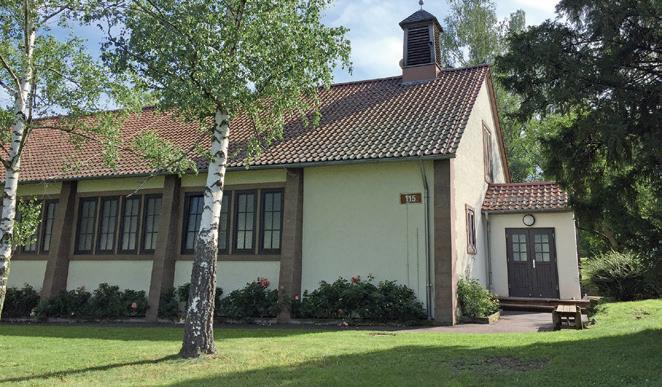
As with any new move, finding a place to worship can prove to be a challenge. We want you to know that the U.S. Army Garrison Stuttgart Religious Support Office is here to help you and your family find a place where you can flourish. We have something for everyone, including knowledge of off-post worship communities. We would be honored to help you find your spiritual home.
Protestant worship includes Traditional, Contemporary, and Gospel chapels offering services on Sundays. Holy Trinity—one of the most vibrant Catholic military communities in the world—offers a wide variety of worship opportunities throughout the week across the Stuttgart footprint.
Our Muslim community has dedicated prayer space available daily and gathers for Friday prayers at the Kelley Fellowship Center on Kelley Barracks. The Pagan group meets on Thursdays at our Spiritual Readiness Center.
Our Jewish community observes major Jewish holidays throughout the year and can connect you with opportunities for worship, celebration, and fellowship both on-post and within the broader Stuttgart area.
In addition to a wide variety of religious worship services, the RSO also provides religious education activities, including LDS and Catholic Religious Education for all ages; Protestant small groups and Bible studies; Youth Group; Children’s Church; Vacation Bible School; Club Beyond; and more.
Other religious group accommodations are available by request. Check the USAG Stuttgart MAPA app to confirm current times and locations.
Administrative Assistant
DSN: 314-596-3076
CIV: +49 (0)9641-70-596-3076
Deputy to the Garrison Chaplain
DSN: 314-596-3027
CIV: +49 (0)9641-70-596-3027
Family Life Chaplain
DSN: 314-596-3078
CIV: +49 (0)9641-70-596-3078
Catholic Parish Coordinator
DSN: 314-596-2029
CIV: +49 (0)9641-70-596-2029
If you need to speak with a Chaplain immediately, call the On Call Duty Chaplain at +49 (0) 172-577-3751.
Î U.S. Citizens: All Federal job opportunities in Stuttgart are posted at USAJOBS.gov. Free Employment Readiness classes are available for all U.S. DOD ID card holders at Army Community Service (ACS) on Panzer Kaserne to help prepare federal and private sector resumes, public speaking and presentation skills, and dressing for success. Contact ACS for the schedule, visit: https://stuttgart. armymwr.com/programs/army-community-service
Î Nonappropriated Fund (NAF) positions are open to all qualified candidates eligible for appointment under U.S. employment conditions.
Î Child & Youth Services is always in need of Child and Youth Program Assistants. For upcoming recruitment fairs, visit stuttgart.armymwr.com
Î SKIES Unlimited Youth Instructors: Seeking qualified instructors to teach piano, voice, dance (pop/hip hop), art, swimming, martial arts, speech therapy, foreign languages or other child/youth specialized programs. Must be 18 years old or older. Email stuttgartcys@googlemail.com.
Î Youth Sports Officials Paid & Volunteer Opportunities: No experience needed (training provided) for the following sports: football, soccer, baseball, softball, volleyball, wrestling and basketball. Must be at least 18 years of age to become a contract official, or 15 or older to volunteer. Contact CYS Sports at DSN: 314-431- 2616, CIV:07031-15-2616 or DSN: 314-430- 5606, CIV: 0711-6805606.
Î Adult Fitness Instructors & Personal Trainers contact DSN: 314-430-6491, CIV: 0711-680-6491 or any on-post fitness center for more information.
Î Overseas Spouse Employment: Be aware of overseas hiring preference rules and regulations that may differ from the U.S. Consult the Office of Personnel Management website, speak with Employee Readiness counselors at ACS or contact the Civilian Personnel Advisory Center for more information.
Î Non-U.S. Citizens (local nationals) can apply at the Civilian Personnel website https://portal.chra.army.mil/ mnrs
Î Contractor lists are maintained by ACS and can be emailed for job opportunities.
Î Volunteer opportunities are published at Army Community Service (ACS) and through Army OneSource. ACS can assist new volunteers of all service branches and civilians with registration in the Volunteer Management Information System (VMIS) which tracks volunteer hours for individual resume use, volunteer service medals and the annual volunteer recognition ceremony. For information on volunteer opportunities within USAG Stuttgart call DSN: 314-596-3362/civ. 09641-70-5963362 or stop by ACS, Building 2915, Panzer Kaserne.
Î Other organizations that must be contacted separately for employment opportunities:
Î The Exchange (AAFES)
Î Private Organizations such as the USO, Red Cross, Stuttgart Community Spouse Club Patch Thrift Shop and more.
Î Banks – Community Bank, Service Credit Union
Î Universities within the Panzer Education Center:
Î Embry-Riddle Worldwide
Î University of Maryland Global Campus

The ability to vote is one of U.S. citizens’ most fundamental rights, and it’s important for you to know that your vote still counts when you’re living abroad. With the resources available, it could not be easier to jump right to the process of fulfilling your civic duty.
To vote from abroad, you must register with local election officials in your state of voting residence and request an absentee ballot.
The Federal Voting Assistance Program (FVAP) recommends using the Federal Post Card Application (FPCA) to start the process, as it is standardized for use across all states and serves as both a registration and absentee ballot request form.
Complete your ballot carefully, legibly, and as early as possible. Make sure to return it to local election officials in time to meet your state’s deadline.
If you have questions about where or how you are eligible to vote, visit the FVAP website at fvap.gov for more information, or reach out to the installation voting assistance officer using the information in the My Army Post app and website below.
Contact: http://home.army.mil/stuttgart/vote

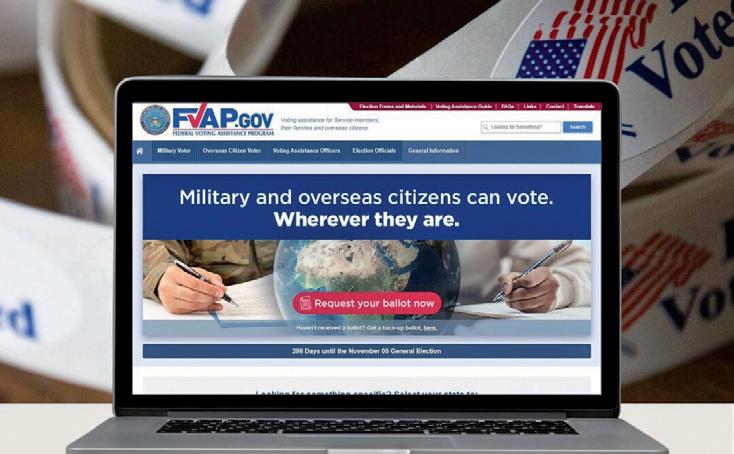

USAG Stuttgart Public Affairs
Public transportation is the ideal way to travel in Germany and throughout Europe. With many forms of transit and a vast network of stops across the country, you don’t have to travel far to find a connection.
The various levels of transit services combine to connect nearly every city, town and village in Germany. Stops and stations may be served by one or more agencies and types of transit. The Verkehrsund Tarifverbund Stuttgart, or VVS, coordinates operations between all transit companies in the greater Stuttgart area so that one ticket may be used across all available modes of transport.
German rail and much of public transit effectively operates on the honor system. Travelers purchase tickets and step onto trains without being checked upon entry. Passengers with multiple-use paper tickets must stamp their ticket on the bus or U-Bahn, or at the station platform or entrance to the train station when taking S-Bahn or regional trains. Conductors periodically check for tickets and the fines for riding without one can be hefty. It's important to have valid tickets for every trip, no matter how short. Most station ticket machines now have a touch screen interface and accept credit cards.
Buying tickets can be done at stations, from a bus driver, or through a mobile device. Mobile apps specific to the Stuttgart region are SSB Move and VVS Mobil, while DB Navigator works for both long distance and local travel nationwide; all are easy to use and fully functional in English. Setting up an account with one or more of these apps (storing your credit card information) allows you to purchase tickets on the go. After purchase, the app stores a bar code which can be shown to ticket checkers as proof of purchase. Once the ticket is downloaded, you don't need a data connection to retrieve it; just be sure it's there, and keep your phone charged while you’re traveling.
Various types of tickets are available for local transit, from single ride tickets valid in one direction for three hours to “short trip” tickets and day tickets for individuals and groups of up to five people.
Transit maps are available at station platforms, online and within mobile apps. Local travel is broken down into circular zones radiating outward from downtown Stuttgart. The number of zones you travel through during your journey, including start and end stations, determines how many zones you need on your ticket. Inputting your start and end points into one of the mobile apps or ticket machines will allow
you to see exactly how many zones you will need.
For example, travel to downtown Stuttgart departing from Böblingen (near Panzer Kaserne) requires three zones, while leaving from Vaihingen (near Patch), Möhringen (near Kelley) or near Robinson Barracks requires only one, as these locations are already in the same zone.
Travel from downtown Stuttgart to Stuttgart Airport requires a 2-zone ticket.
Deutsche Bahn (DB) is the primary rail operator in Germany. DB operates several levels of rail service ranging from local commuter trains to express trains that cross the country in a matter of hours. You can book long distance travel through a DB Travel Center (Reisezentrum) at larger train stations, or online/via mobile app. The tax on train tickets is 7%, and DB Travel Centers accept VAT forms.
S-Bahn trains connect Stuttgart with closer outlying areas, with more stops and greater frequency closer to the city center. An S-Bahn train is a no-frills commuter train without toilets or concessions. A Regiobahn (regional) train, also red, reaches further within a region and can be very cost-effective. This type of train has toilets and often two levels of seating.
The white IC (InterCity) and ICE (InterCity Express) trains are for long distances, to include neighboring countries. IC and ICE train seats may be reserved, and ICEs will have a dining car and Wi-Fi connectivity.
Agents at staffed ticket offices can help you find the best fares for travel or assist with purchasing transit subscriptions.
DB offers discount cards, called BahnCards, which offer percentage-based discounts on fares for long distance travel. They are normally valid for a year but are sometimes offered in a ‘trial’ version for a lower price and shorter validity period. BahnCards can be a great deal for travelers who travel with DB frequently, so if purchasing tickets for long distance travel at a staffed ticket office, consider asking about how getting one would affect the price. Note that they must be canceled in writing at least six weeks before the renewal date, or they will be automatically renewed with payment due. Cancellation is as easy as submitting a form letter to the DB website, and it can be done as early as desired. Providing this notice simply advises DB not to renew the card; it will still be valid through the expiration date.
With a BahnCard 25, travelers get 25 percent off all Flexpreis and Sparpreis fares. Flexpreis tickets are refundable and not bound to a specific train or itin-
erary, while Sparpreis tickets have more restrictions and offer greater savings at the cost of flexibility. Booking earlier offers lower-priced Sparpreis tickets.
With a BahnCard 50, travelers receive 50 percent off all Flexpreis fares and 25 percent off Sparpreis fares. As the BC50 doesn’t offer any additional savings on the saver fare tickets, this card is best for travelers who prefer flexible tickets or who travel more spontaneously.
The Deutschlandticket offers unlimited use of local transit throughout the country for 63€ per month.The subscription renews automatically unless canceled by the 10th of the month for cancellation effective the following month.
This ticket, despite its widespread validity, costs even less than a standalone one-zone subscription for the Stuttgart area.
Offered only in “paperless” form via smartphone or chip card, the ticket is valid for all types of local and regional public transit, including buses, S-Bahn, U-Bahn, and non-long distance trains (with prefixes RB, RE, IRE, and MEX) across the country. This also includes the ‘Zacke’ (rack railway) and Seilbahn (historic cable car) in Stuttgart, both of which are operated by the city’s transit company (SSB), and ferries operated by the local transit company in cities such as Berlin and Hamburg.
They are not valid for travel on long distance trains (with prefixes ICE, IC, EC, or the Flixtrain) or long distance buses (such as Flixbus). The official DB Navigator app has an option to route your journey through regional transit to ensure that you only use included services.
While there is no age restriction on the Deutschlandticket, children under 6 travel for free in Deutsche Bahn (DB) trains and in Stuttgart regional transit, so they do not need their own tickets.
A youth version of the ticket, called the D-Ticket JugendBW, is available at a discounted rate for people aged 21 and younger, or 27 and younger if attending a school or university in Baden-Württemberg.. It is available initially as a one-year subscription but can be canceled on a monthly basis after that period.
Two special day tickets sold by DB offer the Deutschlandticket’s flexibility without its commitment.
The "Baden-Württemberg-Ticket" applies to regional transit, not IC or ICE trains, and your usage must begin after 9 a.m. on weekdays; it is valid all day on weekends and German holidays. This ticket is perfect for day trips on regional trains and the S-Bahn/local transit for solo travel or with a group of friends within Baden-Württemberg (going outside the VVS service area). Make sure your train will arrive before the ticket expires.
The "Quer-durchs-Land" (across the country) ticket offers unlimited regional train travel for one day throughout Germany. Like the BW Ticket, it can be good for up to five people. This type of ticket does not include travel on true “long distance” trains like the ICE – traveling to Berlin on this ticket, for example, would take 10-11 hours and multiple changes.
USAG Stuttgart Public Affairs
Stuttgart is an incredible place to have new adventures, whether exploring the region or taking advantage of its favorable location and connectivity to see the rest of Europe. There are a few things to be aware of to make life here, as well as far-off journeys, as safe and trouble-free as possible:
Make sure you’re registered in the garrison’s ALERT mass-warning notification system to receive emergency warnings and other critical information such as reporting delays and base closures due to severe weather. The system notifies users in several ways, including text messages, phone calls, emails, and popups on official devices. Visit home.army.mil/stuttgart/alert to learn more, and to register or update your information (CAC-enabled).
Know the difference between a ‘tourist’ passport and an official or no-fee passport. If you have both, you must travel with both and present the official passport when entering or leaving Germany and the tourist passport at any leisure destination. Border police may consider using the wrong passport to be misrepresenting your purpose for traveling.
Germany is one of 27 European countries making up the Schengen Area, a zone whose members have abolished regular passport controls between them. This makes travel within the zone feel more like a domestic flight or drive across a U.S. state border instead of an international one, but it doesn’t change anything about the documents you need to carry – regardless of the mode of transport. Anytime you cross a national border, you must travel with your passport(s). Being caught without one outside your country of assignment can be punished by fines and detainment.
Department of War-affiliated personnel must apply for passports (initial or renewal) through the on-post passport office. If your passport is lost or stolen while traveling abroad, contact the nearest U.S. embassy or consulate.
When traveling to another country, make sure to follow your organization’s reporting procedures. Monitor local conditions to ensure your plans don’t place you or your family in high-risk situations. The State Department’s Smart Traveler Enrollment Program (https://step.state.gov/) is a free service that allows traveling U.S. citizens and nationals to enroll their trip with the nearest U.S. Embassy or Consulate. Doing so means you’ll receive updates about important issues in your destination country like strikes or natural disasters and make it easier for the U.S. Embassy or Consulate to reach you in case of emergency.
Protests & Demonstrations
As a state capital and one of Germany’s largest cities, protests and demonstrations are fairly common in Stuttgart. They are typically peaceful, orderly, and well-coordinated with local police, ranging from half-a-dozen to a few thousand participants. But it’s impossible to know the intentions of all participants, and things can change quickly. The best course of action, whether in the local area or while traveling, is to avoid them altogether, and to quickly move out of the area if you stumble onto one unintentionally. Never engage with protestors and always follow the instructions of first responders.
If planning a road trip, make sure your vehicle is in good working condition. Ensure you’re aware of any special requirements for countries you’ll be traveling through, such as the need to use headlights in daytime or seasonal ones like having winter tires or chains. Some countries require toll stickers (vignettes) to drive on highways, while others have environmental rules restricting access to certain metro areas.
Germany requires the use of winter tires when conditions are icy, but does not mandate specific dates; many drivers abide by a general rule of “October to Easter” while paying attention to year-to-year variations. Further information on local winter tire laws are available on StuttgartCitizen.com

USAG Stuttgart Public Affairs
The My Army Post App (MAPA) is the Army's official mobile application designed to provide Service Members, families, and garrison teams with convenient access to on-post resources and information.
The app makes navigating military life easier – no matter the duty station – by allowing users to set their home post and find on-demand information. Whether you’re moving into Stuttgart or out of it, MAPA is there for you. You can easily switch between your existing and future installations in the same app and find everything you need about the next place you’ll call home.
With an easy-to-use search function, users can quickly find operating hours for fitness centers, on-post dining, and, yes, even when the PX and commissary are open.
Find out how to make appointments, contact emergency services, put in a maintenance request or find employment upon arrival. MAPA also includes information on weather, road closures, and duty bus schedules. Additionally, the app allows users to navigate to on-post facilities by building number, even if other details are unknown.
One key personalization feature is the ability to easily receive push notifications about the information you need most. A bookmarking feature also allows users to save their frequently accessed resources and events directly to their home page, so that important information is always at your fingertips. This can be particularly important at USAG Stuttgart as information for one installation may not always be relevant if you work or live on another.
MAPA is just one tool to add to your USAG Stuttgart playbook. Stay in the know by following USAG Stuttgart on Facebook, signing up for email alerts from the Stuttgart Citizen, and setting up text alerts from the ALERT! Mass Notification System.
Download the free My Army Post app in the Apple App or Google Play stores..



There’s no place like Stuttgart, and you’re a big reason for that. As you pack away your favorite Polish pottery, that beer stein you purchased and filled at Volksfest or Oktoberfest, and the miniature red phone booth you got on an impromptu trip to London, we at USAG Stuttgart would like to wish you one final goodbye.
We hope that your time spent in Germany was both professionally and personally fulfilling and want the voyage to your next destination to be as smooth as your stay here. Please take a few minutes to read this special outprocessing guide. This guide provides a rundown on how to clear your on or off-post home, prevent customs violations, ship your car, and make

sure that your furry family member can safely make the trip with you. We hope that we’ve answered every major question, but if you have others, please speak to our amazing colleagues at the Central Processing Facility or the specific service concerned — they will be more than happy to help. If your next destination is an Army post, make sure to download the My Army Post App for installation-specific guidance and points of contact. Again, thanks for being part of our team in Stuttgart! It’s never truly goodbye in Germany, it’s Auf Wiedersehen. So until we see you again a few years down the road, we hope you enjoyed your time at USAG Stuttgart.
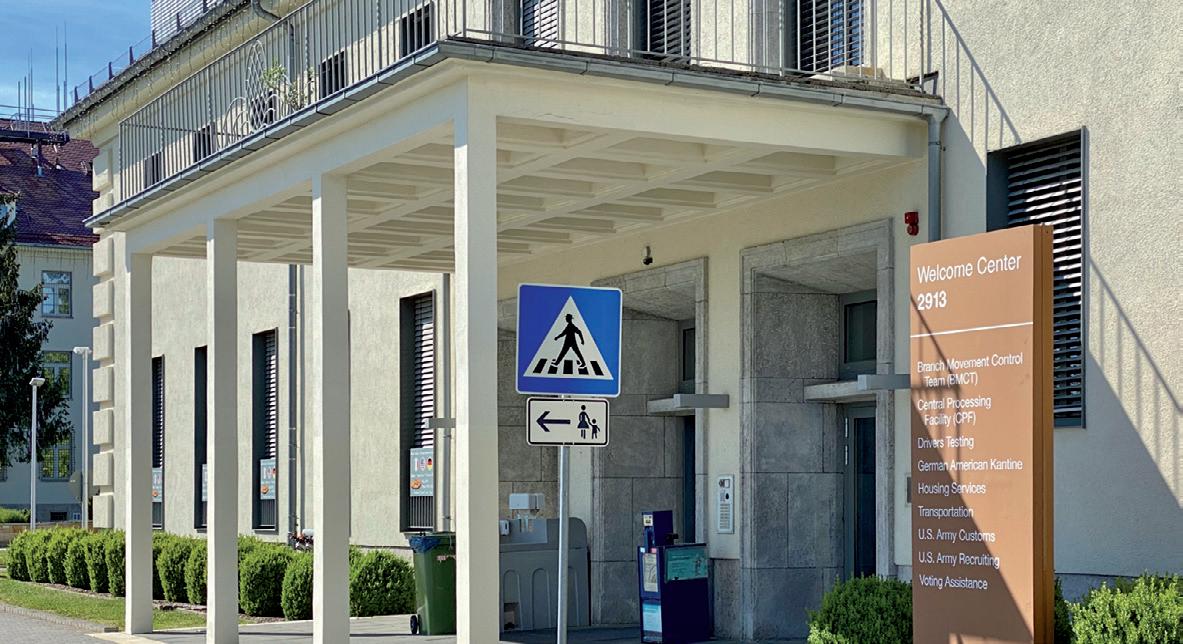
The Central Processing Facility (CPF) assists you with your transition out of Stuttgart. By beginning this process early, CPF can position you for success. The goal is to make your transition out of Stuttgart as smooth as possible.
All DoW civilians and service members in the rank of Private (E-1) through Colonel (O-6), including those in the Reserve/National Guard components on Active Duty Operational Support orders over 90 days in length assigned, attached, or otherwise performing duty in Stuttgart, must clear the Stuttgart military community prior to departing.
After Reviewing the out-processing briefing slides, personnel with questions should contact the agency directly. No registration is need to attend. We advise personnel who are 30 to 120 days from departure to begin completion of the mandatory out-processing/pre-separation briefings. The briefings provide helpful information from relevant services: Transportation, Customs, TRICARE, Vehicle Registration, Housing, VAT/UTAP, and the Exceptional Family Member Program, to name a few. Please refer to the CPF section on the official U.S. Army Garrison Stuttgart webpage, home.army.mil/stuttgart, to access the online briefing. When you have completed the online or in-person briefing, you must submit the Joint Out-Processing Questionnaire via email with a copy of your PCS orders to the CPF mailbox: usarmy.stuttgart.id-europe.mbx.cpf-out-processing@army.mil.
NOTE: AE Reg 612-1, 13-2 requires completion of an online PCS briefing as an out-processing requirement. The in-person PCS out-processing briefing is optional. Civilian personnel need to have orders before any out-processing action is taken
Retiring/ETSing or Separating
All branches of uniformed service must contact the Transition Assistance Program on Panzer Kaserne, Bldg. 2915, Room 419 at DSN (314) 596-2191/ CIV (0)9641-70-596-2191. Eligibility begins 24 months prior to retirement or 18 months prior to ETS. TAP completion is required to obtain a DD214. No orders or clearing record are required to make an appointment. You must completely out-process the installation prior to starting your transition to leave. Please note, if you stay in Germany, you will no longer be entitled to any logistical support on transitional leave.
For information on the Army Service Member’s Retirement Briefing, please contact the Stuttgart Transition Center on Panzer Kaserne, Bldg. 2915, Room 421, at DSN (314) 596-2698/CIV (0)9641-70-596-2698.
You can access the out-processing questionnaire through the CPF section on the official U.S. Army Garrison Stuttgart webpage home.army.mil/stuttgart. Fill out the questionnaire completely, digitally sign it, and send it via email to the CPF mail-box: usarmy.stuttgart.id-europe.mbx.cpf-out-processing@army.mil. If transitioning out of uniformed military services, please provide the dates of your transition leave in the remarks block on the Out-Processing Questionnaire. You do not need the Installation Clearance Record to begin making appointments with transportation, housing, or to schedule flights. Only orders are needed to begin out-processing with those agencies.
Service members: Before you leave, agencies like Outdoor Recreation, the Library, Central Issuance Facility etc., can pre-clear you if there is no reason for you to physically go to those locations. If an agency pre-clears you, that agency will appear with a digital name printed on your Installation Clearance Record showing you have been cleared of that agency. Those agencies without a printed name must be physically cleared prior to your departure date. Please note, for those service members that submit their questionnaire less than three weeks before their departure date, pre-clearance is not an option, and your Installation Clearance Record will include all necessary organizations and agencies with which you are required to clear in-person. Your supervisor has the authority to initial for the agencies you did not use. Once you have cleared every agency, you and your supervisor must sign and date the form confirming completion.
The final out appointment to turn in your completed Installation Clearance Record to the CPF is set two working days prior to your departure. Once your paperwork is complete, please submit your completed Installation Clearance Record via email or through the drop box outside the CPF office. CPF office hours are 8 a.m. to noon and 1 to 4 p.m.; closed on U.S. federal holidays and the last Thursday of each month (from 1 to 4 p.m.) for training. If you receive an amendment or cancellation of orders, please let the CPF know of your new departure date.
USAG Stuttgart Directorate of Public Works - Army Housing Office
Are you leaving us? Here are some helpful tips for a smooth departure.
Off-post procedures
• First, request the official termination packet from the housing office for procedures for notification to your landlord and tips for clearing your home. You must notify your landlord via German registered mail (“Einwurf Einschreiben”) or hand delivery prior to the required notice date; 90 days in most cases, or 30 days if the military clause applies (see stipulations in your contract).
• Have the landlord sign the termination notice and provide the original to you. Both the landlord and tenant should retain a copy for their records. Emailed or faxed termination notices are not legally binding according to German rental law.
• A pre-termination inspection with your landlord is recommended 30-45 days ahead of your departure to identify problem areas that can be corrected in order to help you avoid or minimize costs due to your landlord. If problems are suspected between you and your landlord, you can request the Housing Services Referral Contractor accompany you and/or serve as mediator.
• Once you have the termination notice signed by the landlord, submit a copy to the housing office and schedule a final termination inspection with the Housing Services Referral Contractor; ideally 30 days ahead of your desired date. Scheduling as early as possible will increase the likelihood that your desired date is available for you.
• Meter readings must be conducted during the final termination inspection; the day you turn in the keys to your landlord. Reminder, a meter reading is required if you are a UTAP customer.
• Schedule a pre-termination inspection as early as possible. Orders are not required. This is recommended 45-60 days ahead of anticipated departure. During this inspection, you will be informed of estimated charges and provided recommendations for corrections ahead of your move out. The goal here is to help you keep charges for damages down.
• Military members residing in the barracks must coordinate the termination inspection with the barracks manager; TLA is not authorized.
• Coordinate the movement of household goods (HHG) with the transportation office.
• Final termination inspections should be scheduled for no more than 3 business days before departure (see TLA section). Personnel must have orders to schedule the inspection and HHG picked up ahead of the inspection. You must conduct your final inspection before TLA may start.
Three to five full business days are required to schedule delivery and pick up of furnishings. If a desired delivery date is needed, as much advance notice as possible is helpful. Ensure your government appliances are cleaned and ready for pick-up to avoid potential charges. Customers must be on site during the pickup and should report any damages to the housing office immediately. Customers will be charged for re-delivery if not available for the scheduled delivery/pickup window, delivery was denied upon arrival of the warehouse team, or the wrong size or type of appliance was ordered by the customer. Verify items ordered and delivery date with the housing office during scheduling. User manuals for all appliances should be returned. Any loose parts, such as screw-in feet for dryers, should also be returned.
Military members residing off post are authorized up to 10 days of outgoing TLA. On post family housing residents are authorized up to three days of outgoing TLA. Hotel stays beyond permitted timelines will likely result in personal expenses and should be avoided. Report delays to housing immediately for alternative solutions. Lodging reimbursement is sought by requesting a “TLA Memo” from housing for processing by your finance office. Barracks residents are not authorized TLA and should coordinate their departure with their barracks manager.
Be sure to terminate your phone, internet, and other services/utilities prior to your final termination inspection. Most German companies have at least 90 days’ notice required for terminations. Provide good contact information for your landlord as utility reconciliation may be outstanding at your departure. All personnel not in the barracks must clear with the housing office prior to departure from USAG Stuttgart. This follows all final inspections (on or off post). Appointments can be scheduled via the My Army Post App (MAPA) and are highly encouraged. Walk-ins are also possible, but please be prepared for extended waiting periods. Contact information, location, and other helpful information can also be found on MAPA.
We wish you the best with your future endeavors!

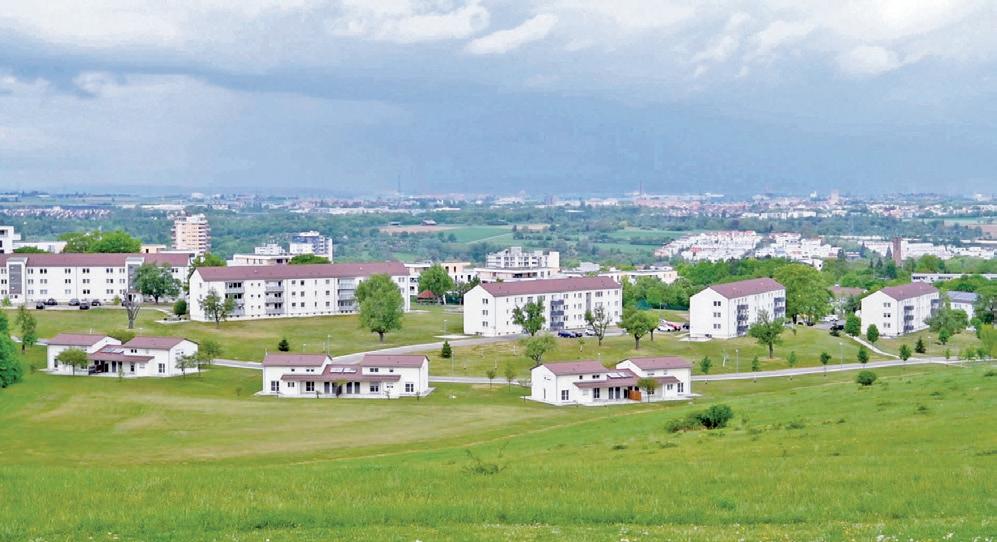
Housing Phone Numbers
• Housing Services Officer (Customer Service and Furnishings requests)
596-2230 or 0964170-596-2230
• Unaccompanied Personnel Housing
596-2236/-2337 or 09641-70-5962420 / 2287
• Off-Post Housing Referrals
596-2318/-3484/3485/-3782 or 09641-70-596-2318 email: usarmy. stuttgart.id-europe. mbx.dpw-hsg-uph@ army.mil
On-post housing email: usarmy.stuttgart. id-europe.mbx.dpwhso@army.mil
Pervin Estates (off post housing referral) email: stuttgart. id-europe.mbx.dpwhsg-off-post@army.mil

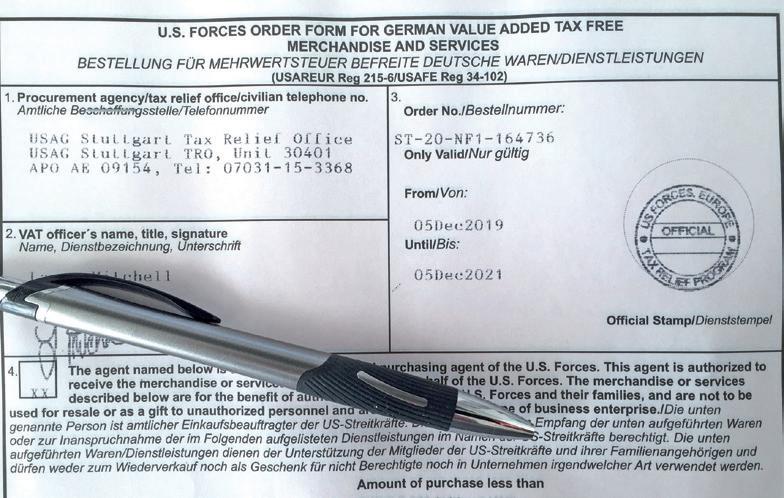
If you used the Value Added Tax Relief and Utility Tax Avoidance programs during your tour, you probably saved yourself a lot of money. Now that you are PCSing, save yourself a headache and clear these offices the proper way.
All customers signed up in the Value Added Tax Relief program are required to come in to the Tax Relief Office during their outprocessing.
To help in the closeout process, once the customer knows they are PCSing, they can stop by the Tax Relief Office and a printout of issued VAT forms can be provided.
The Tax Relief staff will review the customer’s account and verify all purchased VAT forms have been returned and cleared from the VAT program.
It is the responsibility of the customer to ensure that all white copies, to include any unused and expired VAT forms, are returned to the Tax Relief Office before departing.
There must be 100 percent accountability of all VAT forms purchased by the customer. If a customer has any missing/lost white copies, a pink customer copy can also be used to clear the program.
• All customers should have an appointment with their landlord/Housing to close out their home.
The customer must close out within 24 hours. UTAP cannot close out the customer before final meter readings are received.
Once you know you have a move out date, you need to come by UTAP Office WITHIN 14 days and provide the following information:
• MARKTLOKATIONS-ID(MaLo)/Residence Locator number and the meter numbers
• A copy of the most current annual bill for each of your utilities. Required only if you DO NOT have your MaLo.
• A copy of military or civilian orders except for contractors.
• A forwarding address.
• Once you complete the walk-through of your home, please revisit the UTAP office within 1 business day from the move out with a signed Meter Reading -Übergabeprotokol sheet, hard copy of the meter pictures, completed by either Mission Essential or your landlord.
• The UTAP customer will need the final meter reading(s) taken during the final inspection walk-through to complete the utility company closeout form.
• A utility closeout form will be completed at the UTAP office requiring customers to maintain their local bank account open for 90 days after departure allowing the utility company to debit/ credit final bills.
• The UTAP staff will review the closeout form for accuracy and verify the customer’s civilian email address. The final reconciliation invoice from the utility company will be emailed to the customer.
• Failure to provide the UTAP Office the required closeout documentation could result in continual monthly payments being withdrawn from the customer’s account.
Logistics Readiness Center (LRC) Stuttgart - Transportation
Peak season for Permanent Change of Station (PCS) begins May 15 and runs through Aug. 31, with the busiest weeks being May 15 through July 4.
The Stuttgart transportation staff is here to assist you with your move. There are important documents that are needed prior to your shipment being booked and the Stuttgart transportation office will assist each customer with the process.
When you receive your orders, the first thing you will need to do is contact the Central Processing Facility(CPF) at usarmy.stuttgart.id-europe.mbx.cpf-out-processing@ army.mil for the CPF questionnaire.
Once CPF receives the completed questionnaire back from you, a copy is returned within 24 to 48 business hours stamped with the CPF seal so that you can begin your transportation outprocessing.
When you receive the CPF questionnaire, you should contact the Transportation Office immediately at usarmy.stuttgart.405-afsb-lrc.mbx.pppo@army. mil with a copy of your PCS orders and the stamped CPF questionnaire. We will respond to you within 48 hours with confirmation that we have received your documents, and you will be assigned a counselor.
Tips to make your move a little less stressful:
• First, be flexible. Your requested move dates may not be available. Be open to shifting your dates due to carrier availability and provide alternate move dates at time of counseling.
• Second, do your best to make yourself available for a pre-move survey after your shipment is booked with a moving company. The pre-move survey allows the moving company to plan your shipment and be prepared on the first pack day.
• Next, identify any unusual items you may have at time of counseling and to your moving company
when they contact you. This helps the moving company to get the necessary approvals for any special packaging the item may need prior to the start of your move.
• Ensure you keep the Defense Personal Property System (DPS) and your carrier updated with new information, such as a delivery address, new phone numbers, etc.
• Lastly, do not book your PCS flight, terminate your rental lease or make any other appointments until you have confirmation that your household goods (HHG) shipment is booked.
Reporting Damage and Filing Claims: https://www.militaryonesource.mil/moving-pcs/planto-move/resources/#personal-property-and-claims
You are required to use a personal email address as your primary email contact. If you use your government email address, you may not have access to it during your move and could miss valuable information. If you work in a secure area where personal
Service infobox:
Stuttgart Transportation Office
Building 2913, 3rd Floor, Panzer Kaserne
Operating hours, customer service desk: Hours: Mon-Wed & Fri, 7:30 p.m. – 12 p.m. and 1 p.m. – 4 p.m. Thur, 1 p.m. – 4 p.m.
Closed from noon to 1 p.m. for lunch
DSN: 314-596-3338
CIV: (0)9641-70-596-3338
Email: usarmy.stuttgart.405-afsb-lrc.mbx. pppo@army.mil
We look forward to assisting you!
devices are not authorized, you will need to provide your commercial work telephone number as the movers will need to contact you for a pre-move survey.
Once you have completed your move, and if you have loss/damages, you must report the loss/damages in DPS within 180 days of delivery. If you do not have an account, you will need to create one in order to submit a claim for loss/damages of your HHGs. Once the carrier is notified that you are filing a claim, you have two years from delivery to submit the claim.
If you are going to ship alcoholic beverages back to CONUS, there are a few mandatory steps in order to do so. During your initial communication with the Transportation Office, you will need to inform the customer service representative that you would like to ship alcohol. We will provide you with the necessary paperwork, and you are encouraged to plan early.
You must contact the alcohol control board of your destination state (contact information at https://www. ttb.gov/wine/state-ABC.shtml) to check if taxes/duties/ permits apply; you may be required to pay broker fees. Please inform the state representative that you are shipping alcohol for personal use.
When you receive the email contact from the state, you will need to provide that information along with the completed alcohol documents to the Transportation Office.
The Stuttgart Transportation Office is located on the third floor of Panzer Building 2913. If face-to-face counseling is not available at the time of your move, your counselor will communicate with you through telephone and/or email.
For more information about shipping POVs, please see the “Shipping your car from OCONUS to CONUS” section of this magazine or https://www.pcsmypov.com.
Customs questions?
Location: Room 303 in Bldg. 2913 on Panzer Kaserne.
U.S. personnel must get a Permit to Transfer when selling or giving a U.S. forces-plated vehicle to a non-ID cardholder in Germany. Failure to get the permit could lead to serious complications with German customs authorities.
According to the U.S. Army Customs Agency –Europe, it is important to get the permit to transfer before you sell, donate or transfer a car to a German car dealer, junkyard or person who is not an ID card holder. This applies even if you received no money for the vehicle; for example, if it was wrecked in an accident.
If you do not obtain this permit, you will eventually fail to clear vehicle registration when it is time to
PCS. Customs authorities will require you to prove what happened to the vehicle.
This is obviously very difficult if the car was crushed long ago, you are in the middle of clearing out of Europe and you have no record of where the car went. If you cannot show what happened to the vehicle, you may be identified in a military police report and subject to disciplinary action. You may also have to pay a hefty tax demand based upon the value of the vehicle as well as possible fines from German customs authorities.
The Permit to Transfer, or AE Form 550- 175B, is available at the USAG Stuttgart Customs Office. The form is also required when you sell firearms or other valuable personal items to someone who is not an ID cardholder.
Hours: Weekdays 8 a.m. to 11:45 a.m. and 1 p.m. to 3:45 p.m.
Closed U.S. holidays and the morning of the 2nd Thursday each month
DSN: 314-596-2731
CIV: (0)9641-70-596-2731
Email: usarmy.wiesbaden.usareur.mbx. opm-stuttgart-customs@army.mil
Printouts of all documentation are necessary to receive the appropriate customs document, including bills of lading, bills of sale, lien release/permission to sell, rental contracts, TDY orders and more.
More information on selling personal property in Germany is available online at https://www.europeafrica.army.mil/customs/.
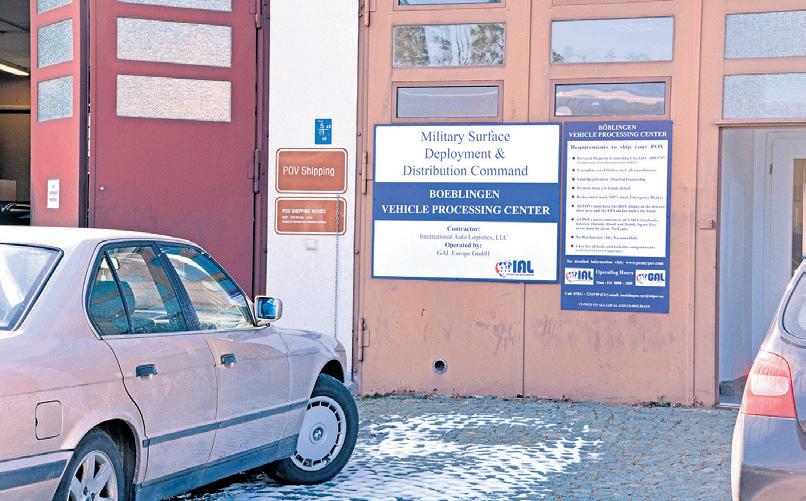
There are a number of steps that must be taken to properly clear the vehicle registration office (VRO). Whether the vehicle has German specs, or you just want to get rid of it instead of shipping it to the U.S., it must first be deregistered locally through the VRO on Panzer Kaserne.
There are two ways to ship a POV: by government or private/independent shipping.
When using government shipping, bring the Shipping Summary and Condition Report provided by the Vehicle Processing Center to the VRO along with the USAREUR-AF license plates, current vehicle registration document, and your DoD ID and USAREUR-AF driver's license. If the current registration has 90 days or more left, transit plates may be issued at no cost. However, if there are less than 90 days left on the current registration, transit plates will cost $45 (no inspection is required and the transit plates don’t have to be returned).
The regulations are similar if using an independent or private shipping company. Bring a bill of lading from the shipper with the same vehicle information, USAREUR-AF plates, and expect the same rules remaining registration time, inspection and not returning the transit plates.
If the sponsor cannot properly deregister a vehicle prior to leaving, the unit will be responsible for ensuring the disposal of the vehicle (shipping, selling or donation) and executing the deregistration process. Unit commanders should contact the VRO for information on the process.
If a seller has a joint-owner on the vehicle, both parties must be present or have a power of attorney. If the vehicle has a lien on it, a lien release signed
or notarized by the bank representative or a clear title is required. The buyer must have insurance for a vehicle no older than 120 calendar days going by the issue date. If your provider is USAA or MIRASCON, they will transmit insurance information electronically on your behalf. This can take up to 24 hours from submission to upload into the system. This can take up to 24 hours from submission to upload into the system. If your provider is a local German insur-ance provider, it must provide you with a Deckungskarte (proof of insurance).
If the registration is current and has more than 60 days on it, a Department of Defense ID
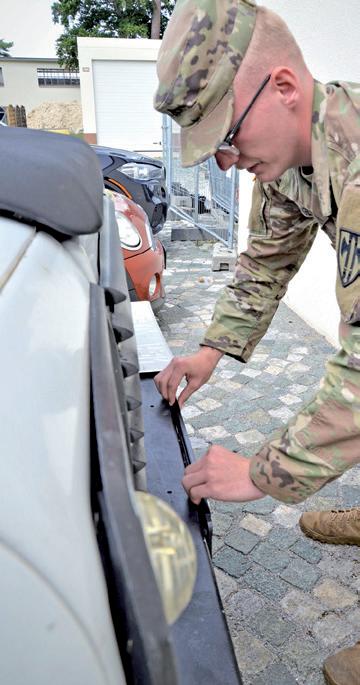
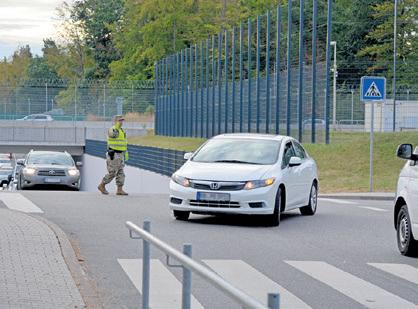
cardholder buyer can accept the current expiration date on the registration without having an inspection. The trans- fer cost is $45 if less than a year’s validity remains on the registration and $90 if more than a year.
If the vehicle is sold to a local national or someone who does not have individual logistical support, there are a few more steps involved. The seller must visit the U.S. Customs office in building 2913, room 303 on Panzer Kaserne with a completed Bill of Sale and obtain a permit to transfer (Army Europe Form 550- 175B). All owners listed on the USAREUR-AF Registration and Transfer Title must be listed and sign the Bill of Sale. The seller must go with the local national or non-ILS buyer to the local German customs office so the local national can pay taxes on the vehicle.
The permit to transfer must have the blue stamp from German customs. Once complete, the seller will return to the VRO with the Bill of Sale, completed AE Form 550-175B, USAREUR-AF Registration and Transfer Title, and USAREUR-AF license plates. If the vehicle is encumbered by a lien, a signed/notarized lien release is required for the transfer to a private party. If the vehicle is sold to a dealership, a signed/ notarized permission to sell is required.
If you have questions about turning in license plates or de-registering a vehicle for PCS, contact Vehicle Registration in building 2930 on Panzer Kaserne. Call (0)9641-70-596-2179 or DSN 314-596-2179, weekdays, 7:45 to noon and 1:00 to 3:45 p.m., or email usarmy.stuttgart. id-europe.list.pmo-vehicle-registration@ army.mil
You can also find answers on the garrison’s official website at https://home.army.mil/ stuttgart/vehicle-reg.
Answers about shipping your POV
The Vehicle Processing Center is not part of Vehicle Registration, but is located nearby Bldg. 2931 on Panzer Kaserne. Call (0)7031 733 4749, weekdays, 8 a.m. to 4 p.m.
By Vehicle Processing Center
The United States Department of Agriculture (USDA), Environmental Protection Agency (EPA), and the Department of Transportation (DOT) have set strict rules for shipping personally owned vehicles (POVs) into the United States.
details can be found at https://www.nhtsa.gov/ importing-vehicle
Wash and clean out your vehicle before shipping Your POV must meet all USDA requirements for cleanliness. Your vehicle will be thoroughly inspected to ensure its cleanliness, and that it is free of all dirt, soil, plant and animal life. This is a zerotolerance inspection. If your vehicle fails to meet these standards, you will be provided with an Agricultural Reject Sheet, identifying the areas that need additional cleaning.
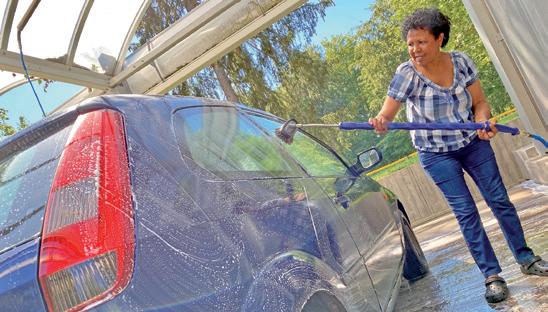
The EPA sticker will be located in the motor compartment or the hood itself. It will have the words “Vehicle Emissions Control” or “CATALYST” on it. If this sticker is missing or illegible, you must provide a stateside title, stateside registration, or CARFAX (www. carfax.com) report to the EPA in order to get a letter approving your vehicle for shipping. See your VPC for further assistance. The DOT sticker will be located in the driver’s door jamb area, or on the door edge, and will have the VIN number on it (Volvo’s may be located in the left rear door jamb area). If this sticker is missing, or illegible, proof in the form of a stateside title (must state vehicle meets DOT requirements), stateside registration, or CARFAX report must be provided to the VPC on the date of turn-in. More
Before you turn in your car, please make sure to remove all personal items from compartments, doors, trunk, and under and in between the seats. Remove all accessories not permanently installed, such as all loose audio/video/navigation equipment; any liquids or pressurized cans; any flammable, combustible, or hazardous substances; and citizen band radios.
Also, please do not forget to remove all air fresheners and any items hanging on your rear view mirror.
• Exterior - Please wash the exterior of your vehicle. Wipe or spray out your wheel wells and fuel intake area.
• Motor Compartment - Ensure all corners of the motor compartment are clean. We recommend using a good vacuum cleaner and flashlight to get out all leaves and dirt. Spray off or wipe down the hood and engine.
• Door Jambs - Wipe down all door jambs, to include the trunk seal. For vans and SUVs, do
not forget to clean out sliding door tracks and rear hatch area, especially the upper lip where the hinges are. For SUV’s where the rear window opens, open and clean the seal.
• Interior - Ensure the entire interior of the vehicle is thoroughly vacuumed, to include top and bottom of floor mats. Rubber floor mats must be wiped off. Vacuum under and between all seats, under seat rails, and between the seats and the center console. Use a flashlight to check everywhere. Vacuum the trunk completely, to include removing the spare tire and cleaning the spare tire well. Also, check the back of the rear seat. If your rear seat lifts up, make sure you lift up the bottom part and vacuum underneath.
• For Vans - The easiest way to vacuum the interior of a van is to fold the rear seat down, and take the middle seats out. Now you have a wideopen spot to vacuum. Do not forget to make sure that the seat locking channels are clean. Check under the plastic caps covering the unused channels. If the interior of the vehicle is shampooed, it must be done at least 14 days prior to allow the vehicle to dry completely. The VPC cannot accept a vehicle with wet carpets. The VPC will do preinspections daily from 3 to 4 p.m. to let you know where your vehicle stands. Vehicles cannot have more than a quarter of a tank of gas at the time of drop-off.
Ensure your vehicle does not have an unresolved recall notice for safety or fire issues. All recalls may be found at https://vinrcl.safercar.gov/vin. If there is a safety or fire issue, the POV may not be accepted for shipment, unless repairs are documented from a certified mechanic or dealership authorized to perform recall-notice repairs. Schedule an appointment online at pcsmypov.com or visit the VPC in Bldg. 2931 on Panzer Kaserne. Bring a copy of your complete set of orders, vehicle registration, DD1797 personal property counseling checklist (available at the transportation office), and lienholder release letter (if applicable) to your appointment. If there are names listed on ownership documentation other than the entitlement holder, a Letter of Authorization is required, verifying their consent to ship the POV. Finally, it is recommended to schedule an appointment to turn in your plates and deregister your car approximately one hour and 15 minutes after your shipping appointment. Visit www.stuttgartcitizen. com/appointments or use the My Army Post App to do this.

For more information about processes and required documents, visit https://www.pcsmypov.com/.
USAG Stuttgart Directorate of Human Resources (DHR)Passport/SOFA Office
Are your passports, and those of your family members, valid for your upcoming permanent change of station? Overseas, passports are renewable up to a year before expiration. Most countries require you to have six months remaining on your passport to enter. Tourist passports take four to six weeks to arrive and no-fee, official or diplomatic passports take about six to eight weeks; therefore, plan to renew about eight to nine months ahead of time.
All U.S. military-affiliated personnel in Germany must apply for passports and Consular Reports of Birth Abroad through their local military passport office. The USAG Stuttgart Passport and SOFA Office can assist with applications for new or renewed passports, name changes and lost, stolen, or mutilated passports.
They also process Reports of Birth Abroad applications which include Consular Report of Birth Abroad (equivalent to an American birth certificate), child’s first Passport and the Social Security Number processing. A Report of Birth Abroad takes 8-12 weeks to process but you can start the process as soon as you have the German Geburtenregister. This is the only form the consulate will accept for a Consular Report of Birth Abroad.
Certain items sold on post, like coffee and cigarettes, are rationed under the SOFA and require ration cards to purchase. Check with your command or agency to see who issues your ration card. To get an initial or renewed ration card, you’ll need your CAC and assignment or extension orders.
If you are in need of an emergency appointment with the Frankfurt Consulate, you MUST go through the local passport office to obtain one. Please note, anyone affiliated with the U.S. government whose passport does not contain a German residency card will not be authorized to see the Frankfurt Consulate. You will be turned away without this.
Appointments are required for tourist passports and Consular Report of Birth Abroad applications, but not for normal outprocessing To outprocess, bring in all family members' passports, both tourist and official, as well as your proof of SOFA for each family member. Customers are asked to arrive on time for appointments and to have all documents ready. If you arrive without all of the required documents, there is a chance you will need to reschedule.
For a checklist of what to bring to your appointment, instructions on how to fill out your online application and more, visit the official garrison website. Appointments can be made through the My Army Post App or at https:// stuttgartcitizen.com/appointments/.
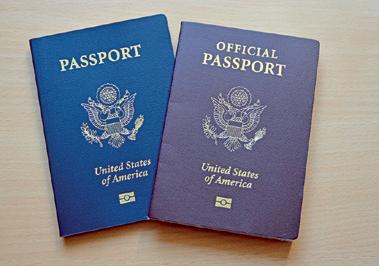

Location: Panzer Kaserne, Bldg 2915, Room 314
Hours: Mon-Fri, 8 a.m. - noon and 1 - 4 p.m. (closed U.S. federal holidays and for training the last Thursday of each month)
DSN: 314-596-8181/2767/2539/2235/2009
CIV: (0)9641-70-5968181/2767/2539/2235/2009
Email usarmy.stuttgart.id-europe.mbx.usagstuttgart-passport@army.mil with questions.
Active Duty Army and Air Force personnel and their dependents will generally not hand-carry their medical records. Records are transferred when the gaining military medical facility requests them. Active Duty Navy and Marine Corps personnel must hand-carry their records. Pick up of records requires orders. The sponsor cannot pick up records for anyone over the age of 18 without a power of attorney, including spouses.
Any Service Member or dependent that wants a copy of their medical records can submit a DD From 2870 (Authorization for Disclosure of Medical or Dental Information). Requestors must allow 30 business days for turnaround.
Parents who have school aged children under the age of 18 should consider getting a copy of the child’s shot records and last physical. Patients interested in receiving a copy of the medical records may submit a DD From 2870 (Authorization for Disclosure of Medical or Dental Information). Requestors must allow 30 business days for turnaround.
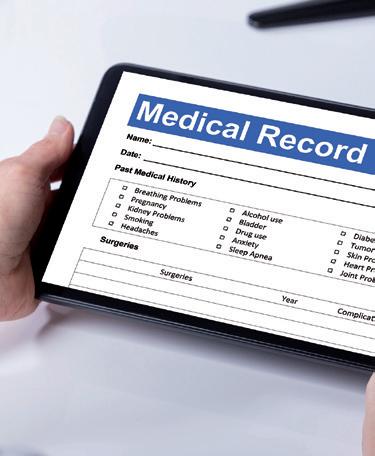
School Liaison Officer
If you are leaving Stuttgart and have children enrolled in any of the Stuttgart community’s Department of War Education Activity schools, the School Liaison Office (SLO) can connect you with the School Liaison Officer at your gaining command to provide you with information, resources, and any available youth sponsorship opportunities.
We recommend notifying the Stuttgart school(s) about your move as soon as you receive your orders, which may be requested by the school registrar. Please contact your school registrar to ensure you meet the accelerated withdrawal requirements. We suggest requesting a copy of your student’s cumulative record (in addition to the sealed record for the gaining school). Although Stuttgart schools will prepare the sealed records and allow parents to hand-carry them, having a copy is recommended. Opening the sealed package may void the official records. It is recommended that these records travel with you, and not in your household goods.
If your child receives special education services, request a copy of the Individual Education Plan or 504 Plan. These records are kept separate from your child’s cumulative record, and, similar to school records, it is recommended that these documents also travel with you, and not in your household goods.
For students in sixth grade and above, consider documenting the course description and a title page of textbooks used in each of your child’s classes. This provides the gaining school the opportunity to determine exactly what was taught. Sometimes the course

titles alone are unclear to the gaining school, or they don’t reflect actual concepts being presented in class.
For students in ninth grade and above, parents should request letters of recommendations from teachers, counselors, administrators, coaches, etc., to help students as they apply for college admissions and programs at the new school, such as the National Honor Society, special clubs and programs, or scholarship opportunities.
Contact the school meal program at AAFES customer service to ensure you leave with a zero balance.
As you begin your transition from USAG Stuttgart, I look forward to helping connect you and your family to your next school and community!
Email: usarmy.stuttgart.id-europe.list.slo@army.mil DSN: 314-596-9009; CIV: (0)9641-70-596-9009
Website: https://stuttgart.armymwr.com/programs/ school-liaison-officer-slo

Pet shipping tips
• Reserve air space for shipment as early as possible.
• Do a cost comparison of shipping your pet as excess baggage versus air freight shipment, if applicable.
• Provide a sturdy leak-proof crate (lined with absorbent material such as newspaper) that is large enough for the animal to stand, lie down, or turn around in, but not so large that the animal would be battered around in turbulence.
• Let your pet become accustomed to the crate before shipment by having practice sessions that build in time of confinement. Be sure the pet has a comfortable pad to lie on and a few familiar toys. A leash should also be included with the crate.
• Put identification tags that include an emergency phone number around your pet’s neck.
• Print your name and destination address clearly on the shipping crate. Include your pet’s name, so that attendants can talk with him/her. If the pet has special habits — or bites — also include that information.
• Carry a photo of your pet with you.
• Feed your pet just a light meal about six hours before shipping — no water within two hours unless it is very hot (or the animal is very small). A water dish that is attached so it cannot tip should be provided, but it should be conveniently located to allow an attendant to provide water at stopovers without being bitten.
• Pack dry food if the trip is long.
• Do not tranquilize the animal.
• Exercise your pet just before shipping so your animal will sleep better during the trip.
• Check with the agent who meets the flight about your pet’s progress when you are changing planes.
• Allow plenty of time between connecting flights to be sure your animal is transferred to your flight if traveling with you.
• Arrange to have your pet picked up immediately upon arrival. Airline facilities for pets may be limited or nonexistent.
The Stuttgart Veterinary Treatment Facility is located in Bldg. 2996A, adjacent to the Dental Clinic, on Panzer Kaserne. The phone numbers are DSN: 314-590-1888 or (0)6371-9464-1888.

It’s PCS season, and one of the most common phone calls the Vet Clinic receives during this time of year is from folks who are getting ready to return to the U.S. and want to know how to take their pet with them.
As with anything else during a move from one duty station to the next, there are many factors involved and paperwork and planning is everything. Factors that can influence what procedures you need to follow include: species, breed, and age of your pet, your final destination, and on which airline your pet will be traveling. Taking the time to learn the regulations and your options can make your animal’s move less stressful for everyone.
First of all, a couple words of advice based on frequently asked questions and encountered mistakes:
• DO NOT wait until you receive orders to look into the requirements of your destination country. Some countries (such as Japan) may take several months of advance planning
• DO NOT let your pet’s medical records (such as their original rabies certificates) get packed up with your HHGs
• DO NOT let your pet’s rabies vaccine expire
• Health certificates CAN also be done at host nation clinics
Rabies vaccines that are documented appropriately in your pet’s European Pet Passport (must be the blue official pet passport) DO count as an original and official proof of rabies vaccination. Receipts from hospitals, photocopies of an original rabies certificate, or other unofficial pet passports DO NOT count as an official proof of rabies vaccination.
Are you returning to the United States?
The Centers for Disease Control and Prevention governs the import of dogs and cats into the U.S. However, states and territories often have additional requirements as do certain airlines. In general, dogs and cats are required to have a current rabies vaccine that is at least 30 days old, not be ill with an infectious and/or zoonotic disease, be examined by a veterinarian, and have a health certificate signed within ten days of arrival in the U.S.
Are you thinking about taking an animal other than a dog or cat back to the U.S.?
Specific regulations depend on the species. The U.S. Department of Agriculture governs the importation of birds, horses, rabbits, and other smallmammals while the U.S. Fish and Wildlife Service sets regulations for importing reptiles and fish and the CDC oversee the importation of turtles. What about Hawaii and Guam?
For dogs and cats traveling to these rabies-free
locations, there are many additional regulations that apply so it is best to do some research online. Hawaii’s process can take more than four months to complete. Skipping steps can lead to heavy fines and your pet being quarantined for up to 30 days at your expense.
What if your next duty station is not in the United States?
Japan, South Korea, and the United Kingdom are common destinations for families associated with the military. Japan’s process involves very specific paperwork and can take up to eight months to complete. South Korea has similar requirements and mandates that a German federal veterinarian sign your pet’s paperwork. The United Kingdom also requires a German federal veterinarian signed health certificate.
When making flight arrangements, consider the following:
Each airline has its own rules when traveling with an animal, so you must research them to make sure your pet will be accepted. Some airlines don’t allow pets in the cabin on transatlantic flights. Others will not accept brachycephalic or “snubnosed” dogs and cats as checked luggage. Many airlines also restrict transporting animals when the forecasted temperature is too high or low at any location on your itinerary. Shipping your pet unaccompanied as cargo instead of luggage can help ease these restrictions.
Another option for military members is flying Space A out of Ramstein Air Base using the Air Force’s Air Mobility Command. The DoD has reserved pet shipments for passengers in PCS status. Service animals may fly with a member with proper documentation. You will need to contact the Ramstein passenger terminal for details on how to get your animal a spot on the plane. Be sure to make follow-on arrangements to get to your final destination. Learn more about this option at https://www.amc.af.mil/AMCTravel-Site/.
Whatever travel arrangements you choose, you should set aside some cash for the airline fees. They can sometimes exceed a few hundred dollars.
As of Jan. 1, 2024, military members are entitled to reimbursement for pet travel costs due to a PCS. Please reference the Joint Travel Regulations, Chapter 5, Part A, Paragraph 050107 for more information.
Your pet has been with you during this exciting time in Europe. Getting them to your next adventure requires some planning and flexibility but many people and pets have gone before and been happy when it is over. So, start early, research and discuss your options with your family, choose what works best for you and your pet, and let your veterinarian know if you need help.