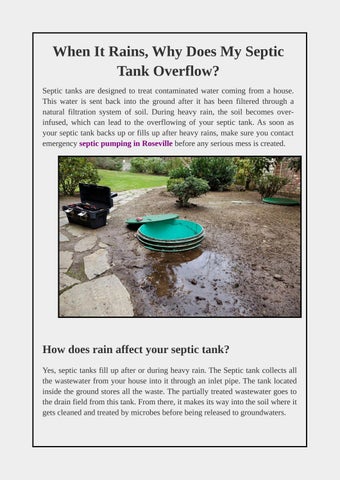
When It Rains, Why Does My Septic Tank Overflow? Septic tanks are designed to treat contaminated water coming from a house. This water is sent back into the ground after it has been filtered through a natural filtration system of soil. During heavy rain, the soil becomes overinfused, which can lead to the overflowing of your septic tank. As soon as your septic tank backs up or fills up after heavy rains, make sure you contact emergency septic pumping in Roseville before any serious mess is created.
How does rain affect your septic tank? Yes, septic tanks fill up after or during heavy rain. The Septic tank collects all the wastewater from your house into it through an inlet pipe. The tank located inside the ground stores all the waste. The partially treated wastewater goes to the drain field from this tank. From there, it makes its way into the soil where it gets cleaned and treated by microbes before being released to groundwaters.
When it rains, excessive water gets into the soil, causing a saturated drain field. This situation prevents the wastewater arrived from the tank from going into the soil because of the over-infused drain field. Consequently, the saturated soil won’t be able to absorb any more water coming into it and the water will have no place to go rather than going back into the tank. This is the reason why the septic tank gets backed up during heavy rains. When a septic system becomes overflooded with the water and this water is likely to overflow and cause backups in the house.
Signs that your septic tank is full or getting full •Slow drains •Sewer backups •Odors •Your lawn area has pools of water around the drain field How can I prevent my tank from overflowing after heavy rains? By being regular with routine care and maintenance, you can minimize the risk of overflowing your septic tank. •You need to reduce water use in your home as much as you can during heavy rain. •Try to minimize the waste going to the inlet pipe from your house. You can use biodegradable materials. Choose only septic-safe material to be flushed out of your house. •Make sure your plumbing pipes are cleaned. If you have a serious
blockage in pipes, make sure all are resolved through an effective method such as hydro-jetting in Sacramento as soon as possible since rains can make things worse. •Get your septic tank pump regularly by hiring professional septic service experts •Don’t park over your septic tank.
•Keep checking your septic tank regularly for signs of problems. Preventative care and routine maintenance can help prevent tanks from becoming overflooded during excessive rainfall.
Can rain affect plumbing pipes also? Yes, due to heavy rain, the additional water will move into the pipes. As a result, the pipes will experience more pressure and exertion. Both of these factors can cause cracks in pipes, resulting in backups. If you see the water in the house is draining slowly, or not draining at all, it may be an indication you have a septic tank that has become full. Contact professional septic tank and grease trap service in Roseville to have your pipes checked and your septic tank inspected to fix the issue.