How do you Manage Chronic Pain?
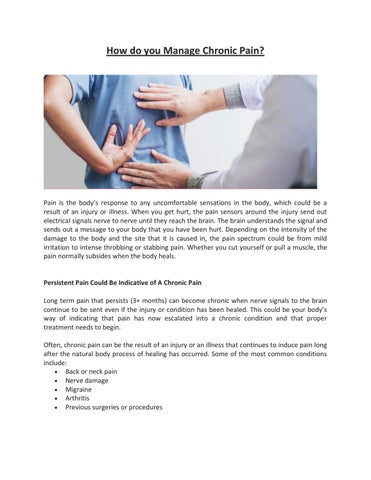
Pain is the body’s response to any uncomfortable sensations in the body, which could be a result of an injury or illness. When you get hurt, the pain sensors around the injury send out electrical signals nerve to nerve until they reach the brain. The brain understands the signal and sends out a message to your body that you have been hurt. Depending on the intensity of the damage to the body and the site that it is caused in, the pain spectrum could be from mild irritation to intense throbbing or stabbing pain. Whether you cut yourself or pull a muscle, the pain normally subsides when the body heals.
Persistent Pain Could Be Indicative of A Chronic Pain Long term pain that persists (3+ months) can become chronic when nerve signals to the brain continue to be sent even if the injury or condition has been healed. This could be your body’s way of indicating that pain has now escalated into a chronic condition and that proper treatment needs to begin. Often, chronic pain can be the result of an injury or an illness that continues to induce pain long after the natural body process of healing has occurred. Some of the most common conditions include: Back or neck pain Nerve damage Migraine Arthritis Previous surgeries or procedures
Symptoms That You May Experience The intensity of the pain that you experience may range from a dull ache to a stabbing and burning pain. It can be manifested as a stiffness or a soreness in the area or you may even experience an expansive reaction in your body such as extreme fatigue, loss of appetite, sleeplessness or weakness. This continued pain can begin to affect your mental state of mind and manifest as mood swings, a general feeling of depression, or an unexplained lack of energy. When it gets to this stage, chronic pain often can begin to create an interference in your routine life and become debilitating. Chronic pain can also have severe repercussions on your emotional and mental well-being and evolve into a condition known as a chronic pain syndrome, a condition that affects one in five Americans.
Seeking Professional Help
When painbecomes debilitating and starts to have repercussions on your emotional and mental well-being, it is time to seek professional help. In such cases, treatment from a proper medical practitioner – your primary care doctor or a pain care specialist becomes imperative. It is vital to understand that chronic pain requires different approaches to completely treat it. As many as 90% of those suffering with chronic pain are also said to experience severe depression and anxiety. Seeking professional medical help can bring in a proper regime in the form of a twopronged treatment:
1. Physiological – Medical interventions in the form of surgeries or injections were required along with pain management medication to treat the physical symptoms of the pain. 2. Psychological – Professional psychiatric support to reduce the chances of clinical depression and anxiety as well as to educate on coping techniques.
At Advanced Pain Care, we want you to know that you are not alone. We have a well-trained team of pain specialists as well as psychologists to devise a customized treatment plan for you. We also offer community outreach programs in the form of support groups such as the Walk with a Doc program where you are connected to our network of medical practitioners and can interact with people who can relate to your experiences.
Visit our website www.austinpaindoctor.com to understand more about how we can support you or book an appointment online if you would like to meet us in person.