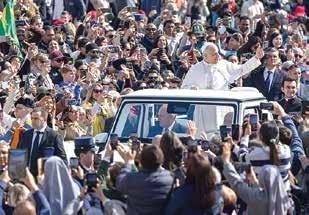
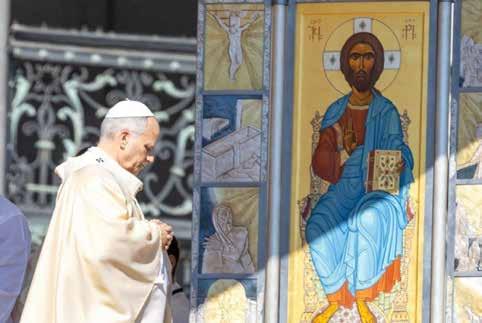
EWTN—Pope Leo XIV said priestly ministry in the Catholic Church, entrusted only to men, is understood in light of apostolic succession and called for priests who are “ardent with evangelical charity” and “courageous missionaries.”
During his March 25 catechesis dedicated to the dogmatic constitution Lumen Gentium, from the Second Vatican Council, Leo explained that the Church “is founded on the apostles, whom Christ appointed as the living pillars of his mystical body.”
Speaking in St. Peter’s Square, the pontiff emphasized that the Church possesses a “hierarchical structure that works in the service of the unity, mission, and sanctification of all her members,” and that it is not merely an organizational structure but an institution of divine origin.
The pope recalled that the apostles, as authoritative witnesses of the Resurrection, received from Christ the mission to teach, sanctify, and guide, and that this ministry “is handed on to men who, until Christ’s return, continue to sanctify, guide, and instruct the Church ‘through their successors in pastoral office.’”
This transmission, he explained, forms the basis of apostolic succession and of the sacrament of holy orders, which is structured in three degrees: the episcopate, the presbyterate, and the diaconate.
The pope quoted from chapter 3 of Lumen Gentium, which is about the hierarchical structure of the
Adoremus Bulletin
For the Renewal of the Sacred Liturgy
Recovering the Baptismal Priesthood: Foundation of Active Participation
By Will Wright
Widespread confusion about the meaning of “active participation” in the liturgy persists more than 60 years after the promulgation of Sacrosanctum Concilium (SC) at the Second Vatican Council. Three distortions routinely obscure the true meaning of active participation: activism, ritualism, and moralism. Activism reduces participation to external activity, neglecting interior transformation through the Paschal Mystery as the purpose of liturgy. Ritualism confines participation to mere rubrical adherence and attendance at Mass, neglecting the living encounter with Christ’s saving work. The erroneous tendency of moralism treats participation as an ethical performance apart from grace rather than a baptismal immersion into Christ’s own self-offering.
In contrast, authentic participation unites the interior and exterior dimensions: it is sacramentally ordered, centered on the Eucharistic sacrifice, and measured not by what one does but by who one becomes in Christ. Thus, authentic active participation begins at Baptism, where the faithful are incorporated into Christ’s Paschal Mystery and configured to share in his priestly self-offering. This is not merely a symbolic ritual in which a person is metaphorically incorporated into a fraternity but an efficacious participation in the Paschal Mystery of Jesus Christ, effecting interiorly in the soul what it signifies externally.
Rooted in the Paschal Mystery
Rooted in a love of the sacred page, the Fathers of the Church understood the Paschal Mystery as the key to the Christian life and to participation in the sacred liturgy. St. Ignatius of Antioch, in his Letter to the Smyrnaeans, urges his readers to avoid heretics who “abstain from Eucharist and
prayer because they refuse to acknowledge that the Eucharist is the flesh of our savior Jesus Christ, which suffered for our sins and which the Father by his goodness raised up.”1 For Ignatius, the Eucharist is inseparable from Christ’s Passion, Death, and Resurrection. St. Justin Martyr, in his First Apology, similarly teaches that participation in the Eucharist is reserved for the one who, “believing the things that have been taught by us are true, and who has washed in the washing which is for the forgiveness of sins and for rebirth, and who lives in just the way that Christ handed down.”2 Both Fathers show that participation in the Eucharist entails participation in the saving Paschal events of Christ’s Death and Resurrection. Later patristic tradition continued to unfold this mystery, joining it to the sacramental life of the Church. These witnesses confirm that the early Church saw sacramental participation not as mere external involvement but as a sharing in Christ’s own priestly Pasch
This patristic vision is taken up in the Church’s liturgical tradition. Participation is grounded not primarily in functional activity but in an incorporation into the Paschal Mystery of Christ. This is why the Roman Missal teaches, in words drawn from 1 Peter 2:9, that the faithful are the “chosen race, royal priesthood, and holy nation,” whom Christ “through his Paschal Mystery… has freed… from the yoke of sin and death.”3 The Paschal Mystery grounds this participation on the level of being itself, and gives rise to the vocation and mission of the faithful. The laity as a “royal priesthood” are incorporated into the unique Paschal priesthood of Christ and share in his priestly mediation. Thus, participation in the liturgy is never merely individual performance but always lived out in relation to the act of the whole Church, the Body united to its Head.
Story continued on page 2 Please see PRIESTHOOD on page 4
Our Re-birthright Will Wright limns the distinction between ministerial priesthood and baptismal priesthood to show how all Catholics through re-birth in Christ can truly participate in the Paschal Mystery 1 Psalm Practical Tips
To pray the Liturgy of the Hours more fruitfully, Benedictine Prior Peter Funk offers a handful of hands-on strategies that allow us to join our humble hosannas to the heavenly choir 6 Joy to the Word Benedictine Father Lorenzo Penalosa has some words to say about the words that say joy in the Mass—and how these words capture that same joy we should have in receiving the Eucharist 8
Found in Translation
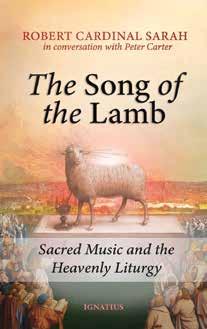
As reported by Joseph O’Brien, Adoremus is partnering with the oldest U.S. seminary—St. Mary’s in Baltimore—to teach a trio of courses on newly translated liturgical texts 10 Cardinal Directions In The Song of the Lamb: Sacred Music and the Heavenly Liturgy by Robert Cardinal Sarah and Peter Carter, Daniel Ewens finds where sacred music’s true north should be truly fixed 12
Baptism is not merely a symbolic ritual in which a person is metaphorically incorporated into a fraternity but an efficacious participation in the Paschal Mystery of Jesus Christ, effecting interiorly in the soul what it signifies externally.
Church, and states that this structure “is not a human construct, functional to the internal organization of the Church as a social body,” but a divine institution through which Christ’s mission continues throughout history.
In his address, the pontiff highlighted that Vatican II teaches that the ministerial or hierarchical priesthood “differs ‘in essence and not only in degree’ from the common priesthood of the faithful,” while making clear that the latter are “nonetheless interrelated: Each of them in its own special way is a participation in the one priesthood of Christ.”
Thus, the ordained ministry is conferred on men who receive “sacra potestas,” or sacred power, for service in the Church, in continuity with the apostolic mission originally entrusted to the Twelve Apostles.
This link with the apostles—chosen by Christ from among men—constitutes the theological foundation explaining why the Church considers the ministerial priesthood to be reserved to men, in fidelity to tradition and to the mandate received from Christ.
Pope Leo insisted that this hierarchical structure must always be understood as service. Quoting the Second Vatican Council, he recalled that the duty entrusted to pastors “is a true service, which in sacred literature is significantly called ‘diakonia’ or ministry.”
He also recalled the words of St. Paul VI, who described the hierarchy as a reality “born of the charity of Christ, to fulfill, spread, and ensure the intact and fruitful transmission of the wealth of faith, examples, precepts, and charisms bequeathed by Christ to his Church.”
In the final part of his catechesis, the pope invited Catholics to pray for priestly vocations.
“Let us pray to the Lord that he may send to his Church ministers who are ardent with evangelical charity, dedicated to the good of all the baptized, and courageous missionaries in every part of the world,” he said.
This story was first published in two parts by ACI Prensa, the Spanish-language sister service of EWTN News. It has been translated and adapted by EWTN News English.
Pope Urges Liturgical Unity, Inclusion of Traditional Latin Mass Faithful
By ACI Stampa
EWTN—Pope Leo XIV has called for renewed unity in the Church’s liturgical life, urging French bishops to seek “concrete solutions” to include Catholics attached to the Traditional Latin Mass while preserving communion.
In a message sent through Cardinal Pietro Parolin, Vatican secretary of state, to the French bishops’ spring plenary assembly in Lourdes (March 24–26), the pope expressed concern over divisions surrounding the liturgy, describing them as “a painful wound” within the Church.
“It is troubling that a painful wound continues to open in the Church concerning the celebration of the Mass, the very sacrament of unity,” the message stated.
The pope emphasized the need for a renewed spirit of charity and understanding among Catholics of differing liturgical sensibilities.
“A new outlook of each toward the other, with greater understanding of their sensitivities, is certainly necessary,” he wrote, “an outlook that would allow brothers and sisters, enriched by their diversity, to welcome one another in charity and in the unity of the faith.”
Addressing the growth of communities attached to the “Vetus Ordo,” Leo XIV encouraged bishops to discern practical ways forward.
“May the Holy Spirit inspire you with concrete solutions that allow for the generous inclusion of those sincerely attached to the ‘Vetus Ordo,’ in respect for the directions desired by the Second Vatican Council in matters of liturgy,” the message said.
Benedict XVI in 2007 broadly liberalized celebration of the preconciliar liturgy in Summorum Pontificum, allowing wider use of the Traditional Latin Mass, but Pope Francis in 2021 sharply restricted that
NEWS & VIEWS
permission in Traditionis Custodes, returning tighter control to diocesan bishops.
The debate has taken on fresh urgency in France in part because of the Society of St. Pius X, founded by French Archbishop Marcel Lefebvre and known for celebrating only the traditional liturgy. The SSPX said in February that it plans to consecrate bishops on July 1, 2026 without a pontifical mandate, a step canon law says carries automatic excommunication for both the consecrating bishop and the one ordained.
This story was first published by ACI Stampa, the Italian-language sister service of EWTN News. It has been translated and adapted by EWTN News English.
Study Finds Significant Interest in Returning to Confession
By Amira Abuzeid
EWTN—This Lent, a new study found that two-thirds of Catholics who have not attended confession in the last year say they are open to going.
According to “ The Catholic Pulse Report: The Confession Study,” which surveyed 1,500 Catholics in the U.S. who attend Mass “at least occasionally,” 67% of respondents who have not been to confession in the past year said they are open to returning, and half of those said they would like to go more often.
The study, conducted by the Vinea Research Group, a Catholic nonprofit, found that only 20% of Catholics go to confession regularly (defined as four or more times in the past year), while 12% have gone one to three times in the past year.
Of those who go to confession regularly, 83% say they go to receive God’s mercy and forgiveness. Of those who have not gone in the past year, 75% say mercy is the primary reason they would go back.
“As central as confession is to Catholic life, indepth national research on this sacrament has been surprisingly limited. This study illuminates not just how often Catholics go, but why they go, why they don’t, and what they experience when they do,” Hans Plate, founder of the Vinea Research Group, said in a press release.
The belief that confession is not necessary to receive forgiveness from God is the most common reason people reported for not going. Of all of those surveyed, 63% held this belief, while 73% of those who have not attended in the past year said the same, according to the report.
Plate, who consulted a theologian in the formulation of the survey questions, told EWTN News a lack of catechesis seems to explain this view: “They’ve lost sight of what confession gives them.”
They miss out on the “knowledge that they are forgiven. That is the No. 1 fruit of those who do go,” he said. “It’s not a feeling. It’s the knowledge first, not the feeling first.”
The Catechism of the Catholic Church teaches that “individual, integral confession and absolution remain the only ordinary way for the faithful to reconcile themselves with God and the Church, unless physical or moral impossibility excuses from this kind of confession.”
Of respondents who have not been to confession in more than a year, half reported embarrassment over talking out loud about their sins, and just over half (53%) said they find participating in the sacrament uncomfortable.
About 40% of Catholics who attend confession infrequently say they would like more of an emphasis on God’s mercy over his judgment, and about the same number say they might attend more if they knew that struggling over and over with the same sins is normal.
Of those who go to confession regularly, about twothirds report “a clear sense of forgiveness, reassurance of God’s mercy, and interior peace,” according to the report.
The study also found that “Catholics who attend Mass at least monthly score above national
benchmarks on human flourishing, with those who go to confession regularly reporting the highest levels— particularly in meaning, peace, and overall well-being.”
Venerable Fulton Sheen to Be Beatified, September 24 in St. Louis
By Tessa Gervasini
EWTN—The Vatican announced that Venerable Archbishop Fulton Sheen will be beatified on September 24 in St. Louis.
Archbishop Sheen “is an inspiration not only to all of us who continue his work of prayer and support for the Church’s missionary work across the globe, but for all those whose faith has been strengthened by his preaching, broadcasting, writing, and holy Catholic life,” Monsignor Roger Landry, national director of the Pontifical Mission Societies U.S., told EWTN News.
Bishop Louis Tylka of the Diocese of Peoria said the Mass for the beatification of Archbishop Sheen will take place at 2 p.m. CDT at The Dome at America’s Center, a stadium in St. Louis.
“With anticipation of a great number of people wanting to participate, we chose this location because of availability, being indoors, and the close proximity to the Diocese of Peoria,” he said.
The Holy See officially informed Bishop Tylka that the cause for Archbishop Sheen could proceed to beatification in February, following years of challenges and delays.
On March 25, the Vatican’s Dicastery for the Causes of Saints announced the “indescribable joy” that Archbishop Sheen, “national director of the Pontifical Mission Societies from 1950-1966, will be beatified on September 24 in St. Louis,” Msgr. Landry said.
Peter John Sheen was born in El Paso, IL, on May 8, 1895, and was called “Fulton” in honor of his mother’s maiden name. Sheen was ordained a priest of the Peoria Diocese on September 20, 1919.
On June 11, 1951, he was consecrated as an auxiliary bishop of the Archdiocese of New York and remained in the position until 1966. He was then named the bishop of Rochester, NY, until his retirement in 1969 at the age of 74.
He became known as a trailblazer for television evangelization with his Emmy-winning show “Life Is Worth Living.” The show aired on television from 1952 until 1957, discussing morality and Catholicism.
Archbishop Sheen died due to heart disease on December 9, 1979.
Archbishop Sheen’s cause for canonization was first opened in 2002 under the leadership of the Diocese of Peoria, Archbishop Sheen’s birthplace, and from then on he was referred to as a servant of God. Pope Benedict XVI declared him venerable in June 2012.
On March 6, 2014, the board of medical experts who advise the then-Congregation for the Causes of Saints unanimously approved a reported miracle of Archbishop Sheen’s, in which a stillborn baby survived due to his intercession.
Pope Francis approved of the miracle of Archbishop Sheen’s on July 5, 2019.
Vatican Affirms Future of Anglican Ordinariates
By Amira Abuzeid
EWTN—The Vatican has reaffirmed its support for the Anglican ordinariates, confirming that these communities have a permanent and valued place within the Catholic Church.
On March 24, the Dicastery for the Doctrine of the Faith issued a document titled “Characteristics of the Anglican Heritage as Lived in the Ordinariates Established Under the Apostolic Constitution Anglicanorum Coetibus.”
The document is the fruit of a meeting held March 1–3 in Rome, during which Cardinal Víctor Manuel Fernández, prefect of the dicastery, invited the
Adoremus Bulletin
PHONE:
DIRECTOR: Christopher Carstens
EDITOR: Michael Brummond
MANAGING EDITOR: Joseph O’Brien
CONTENT MANAGER: Jeremy Priest
GRAPHIC DESIGNER: Danelle Bjornson
OFFICE MANAGER: Elizabeth Gallagher
MARKETING AND FUNDRAISING: Eugene Diamond
TECHNOLOGY: Zach Tudahl
EXECUTIVE
AB/ DANIEL
IBÁÑEZ/EWTN NEWS
Beyond Narratives: A Providential Approach to the Church’s Liturgy
By Michael Brummond, Editor
We understand reality through the stories we tell. I understand myself through the remembered narrative of my life thus far, through the story of my family history, and even through the larger secular history of my community and nation. This is no less true in the liturgical life of the Church. The liturgical year itself trains us to see time narratively as salvation history: creation, fall, promise, fulfillment, redemption, and consummation. To be a Christian is to inhabit that story and to interpret everything within it accordingly.
It should not surprise us, then, that contemporary liturgical disputes are rarely simply about rubrics. They are almost always embedded within broader narratives about the Church: how she has developed, where she has flourished or faltered, and what constitutes fidelity to her identity. These narratives function interpretively, determining how developments are judged, and what counts as authentic reform or lamentable decline.
Yet here we encounter a difficulty: there is not a single narrative, but multiple, often competing, narratives. Some describe liturgical history as a story of organic development leading to increasing perfection, followed by a period of loss and corruption. Others propose a golden age—often located in late antiquity—followed by decline and decadence, and then a necessary reform or recovery.
These differing accounts are not merely academic. They can shape how one approaches the Church’s liturgical rites themselves—both those that preceded the Second Vatican Council and those promulgated after it. If one adopts a narrative of rupture, the reformed rites may appear suspect, products of discontinuity or theological compromise. If one adopts a narrative of necessary reform, earlier forms may seem bound to a past moment, expressions of rigidity, clericalism, or pastoral limitation now superseded.
In either case, the risk is the same: the implicit or explicit villainizing of some portion of the Church’s liturgical tradition. When newer liturgical books are treated as fundamentally deficient, participation in them can become strained. If one is persuaded that the rite one attends is somehow contrary to the Church’s authentic tradition, then prayer itself becomes difficult. A subtle—or sometimes overt—contempt for the Church’s prayer can take root. Conversely, if earlier liturgical forms are dismissed wholesale as theologically suspect, one risks severing oneself from a significant portion of the Church’s lived tradition forged over centuries and deepened through the prayer of generations. Thus, both the extraordinary form and the reformed rites demand reverence, not because they are beyond all critique, but because they belong to the one Church.
There is, of course, an important place for ongoing discussion about liturgical development, reform, and the nature of tradition. These questions cannot simply be naively set aside. The future of the liturgy depends, in part, on how we interpret the past and understand the present. The narrative matters. But alongside these legitimate debates, two practical problems emerge.
First, what is the non-expert to do? The Catholic in the pew is rarely a liturgical historian or theologian, and the arguments are often technical and historically layered. The average parishioner encounters these debates, if at all, through fragments and social media sound bites presented with a sense of urgency: the integrity of the Church’s worship, the continuity of tradition, even fidelity to Christ himself are said to be at stake. It can feel like entering a dense forest without a map.
Second, there is a subtle but more dangerous problem: the absolutizing of one’s preferred narrative can foster an attitude of judgment over the Church’s prayer. One begins to stand over the liturgy, rather than within it— evaluating, critiquing, measuring it against an idealized standard. Whether that judgment falls upon preconciliar rites or post-conciliar reforms, the effect is similar: a persistent dissatisfaction, and sometimes even disdain, toward part of the Church’s heritage.
This is not a merely theoretical concern. It touches directly on the spiritual life. The liturgy is the privileged place of encounter with Christ. If that encounter is mediated through suspicion or even contempt, its fruits are inevitably diminished. On a more personal level, this conviction shapes my own teaching as a seminary professor. While I recognize the theoretical merits of the so-called “reform of the reform,” I do not make it a focus in my seminary classes. My aim is that my students— future priests—be drawn into the spiritual depths of the Church’s liturgical books as they are, rather than habitually approaching them in search of points of hypothetical future reform.
How, then, might one proceed? Without denying the need for study, reflection, and even debate, it may be helpful to adopt what could be called a “providential” approach to the liturgy. Such an approach begins with a conviction articulated with characteristic clarity by St. Thomas Aquinas. While commenting on the Church’s liturgy—whether the Church observes a suitable rite in baptizing—he affirms: “The Church is ruled by the Holy Ghost, Who does nothing inordinate” (ST III, q. 66, a. 10, s.c.).
This is not a claim that every liturgical development is equally perfect in every respect. Nor does it preclude the possibility of reform or improvement. The Church herself has always engaged in reflection, correction, and renewal in her liturgical life. But it is an attitude of fundamental trust: that the Church’s authorized rites are not arbitrary, nor are they fundamentally disordered, because the Holy Spirit always remains operative in the Church, ordering her public worship according to divine wisdom.
This conviction has practical consequences. It means that one need not resolve every historical question or adjudicate every scholarly dispute in order to approach the liturgy with confidence. One can receive the Church’s prayer as it is given, trusting that it is a reliable means of sanctification.
What I am calling a providential approach also reframes one’s immediate situation. Whatever the broader narratives—whether one finds them compelling, problematic, or simply bewildering—God has providentially placed each of us here, now, within a particular liturgical context. One may find oneself at a solemn pontifical Mass according to the more ancient
usage; or at a weekday celebration of the reformed Roman Rite; or at a low Mass of the extraordinary form; or at the Novus Ordo Easter Vigil. In each case, the fundamental task remains the same: to pray that liturgy as fruitfully as possible, to perceive its hidden profundity, and to encounter Christ who is always truly present and active in the Church’s worship.
For the priest, this entails a corresponding responsibility: to celebrate the rite entrusted to him at that moment with authenticity, reverence, and fidelity— to allow the liturgical books themselves to speak, and to lay before the faithful the fullness of the riches they contain.
For all of us, it means allowing ourselves to be shaped by that prayer rather than standing at a distance as its evaluator. It means receiving what the Church offers in her rites, rather than approaching them primarily in terms of perceived deficiencies. It means cultivating a posture of receptivity, an openness to the grace that is objectively and unfailingly offered.
Such an approach does not resolve all disputes, nor does it require intellectual disengagement. One may still study, read, and form considered judgments about liturgical questions. One may recognize historical contingencies, pastoral challenges, and areas of legitimate disagreement. But the goal of the Christian life cannot be to settle every liturgical question and dispute. It is to glorify God and to be sanctified—to be drawn more deeply into communion with God through the means his Church provides.
The liturgy is not first an object to be mastered or a problem to be solved. It is an act of worship, a gift to be received, and a mystery to be entered. And that mystery made present in the liturgy—whatever its complexities— is not merely something we analyze, but something we inhabit. In the end, this approach does not yield a resolution to every debate. But in the midst of ongoing discussions—some fruitful, some less so—the ordinary lay Catholic, and indeed the priest himself, is called to something both simple and demanding: to enter more deeply, here and now, into the Church’s prayer, to participate with greater reverence and understanding, and to allow the liturgy to bear its proper fruit.
Corrigendum: In the March 2026 Adoremus Bulletin, the article “The Revised Order of Anointing: Practical Changes for Pastoral Ministry” stated that “Deacons and laity will use a separate ritual book for their ministry to the sick and dying.” We are grateful to our careful readers who noted that this is not wholly correct. The September 2025 Newsletter of the USCCB Committee on Divine Worship clarifies further: “Throughout the new editions, the subject of the rites is ‘Priest,’ not ‘celebrant’ or ‘minister.’ As provided in the editions, however, a deacon may celebrate the rites in Chapters I and III [“The Visitation and Communion of the Sick,” and “Viaticum”] and both deacons and lay persons may use Chapter VI [“The Order of the Commendation of the Dying”] and Appendices I-III [“Model Rites for the Visitation of the Sick,” “Shorter Order of Adult Initiation to be Used in Near Danger of Death or at the Point of Death,” and “Prayers after Death”]; however, for Communion and Viaticum to the sick, lay persons must use Holy Communion and Worship of the Eucharistic Mystery outside Mass (cf. Order of the Anointing of the Sick and of their Pastoral Care, no. 29).”
The goal of the Christian life cannot be to settle every liturgical question and dispute. It is to glorify God and to be sanctified—to be drawn more deeply into communion with God through the means his Church provides.
Participation Flows from Baptism
The Fathers of the Second Vatican Council teach in Sacrosanctum Concilium that the faithful, “by reason of their baptism,” have the “right and obligation” to full, conscious, and active participation in liturgical celebrations, which they describe as “the aim to be considered before all else” in the restoration and promotion of the sacred liturgy because such participation in the liturgy is the source of the “true Christian spirit” (SC, 14 ). Authentic liturgical engagement and active participation flow from Baptism itself, which imparts the identity that configures the recipient to Christ’s Paschal Mystery. In the Dogmatic Constitution on the Church, Lumen Gentium, speaking again of those participating in the liturgy, the Council Fathers write that “they offer the Divine Victim to God, and offer themselves along with It” (LG, 11). The Council teaches that, by taking part in the liturgy, the “laity exercise their priesthood, offering spiritual sacrifices through Jesus Christ, the one Mediator, in whom they are brought into unity with God and with one another, so that God may at last be all in all” (LG, 11).
“Participation is therefore not spectatorship but a co-offering along with the priest.”
priesthoods participate in the one priesthood of Christ in essentially different ways, though toward a common end. Ultimately, the distinction between the baptismal and ministerial priesthoods is one of essence, not degree, marked by the ontological change of Holy Orders which builds upon the foundation of baptismal incorporation into Christ and his Paschal Mystery. Nonetheless, the Church’s structure remains hierarchical. At the hands of the priest, Christ’s sacrifice becomes sacramentally present, and the faithful are enabled to offer themselves along with it.
The Heart of the Baptized Priest
Participation is therefore not spectatorship but a co-offering along with the priest : “by offering the Immaculate Victim, not only through the hands of the priest, but also with him, they should learn also to offer themselves” (SC, 48). Through this participation, the faithful are formed into the pattern of Christ’s obedience and drawn up into union with him.
Active participation rests upon the baptismal priesthood rather than external activity alone. The common and ministerial priesthoods are ordered to one another; the ministerial priesthood exists to serve and empower the baptismal priesthood by presiding at the Eucharist and making the sacrifice of Christ present. Both
The People of God, incorporated through Baptism into Christ’s Body, are not called to be spectators in the Christian life, but, rather, are called to self-offering and priestly service. As St. Paul says, “[P]resent your bodies as a living sacrifice, holy and acceptable to God, which is your spiritual worship” (Romans 12:1). This “spiritual worship” is not a metaphor but the rational and integrated liturgy of the baptized, fulfilled in the Eucharist. This spiritual worship, arising from the heart of the baptized priest, is enabled by the Holy Spirit who calls and prepares the faithful to offer “spiritual sacrifices acceptable to God through Jesus Christ” (LG, 35). This interior conformity of human acts to divine initiative does not become sacrificial by moral intention alone but, through baptismal grace, by union with Christ’s own self-offering made present in the liturgy. The Holy Spirit interiorly conforms the baptized to Christ’s priesthood, making their lives capable of participating in Christ’s divine offering. The spiritual sacrifices offered by the baptized are, according to the Council Fathers, “all their works, prayers, and apostolic endeavors, their ordinary married and family life, their daily occupations, their physical and mental relaxation, if carried out in the Spirit, and even the hardships of life patiently borne…” (LG, 34). In this way, the Council sees the baptized as persons whose whole existence becomes sacrificial when united to the sacrifice of the Son to the Father in the power of the Holy Spirit. At the heart of this interior reality is synergy: divine initiative evokes and enables human cooperation. Active participation, therefore, is not a human addition to grace but the grace-empowered consent through which the baptized freely offer themselves in union with Christ. As St. Thomas Aquinas taught: “God does not justify us without ourselves, because whilst we are being justified we consent to God’s justification by a movement of our free-will.”4 The laity do truly participate in the sacrifice of the Mass, not by presiding at the liturgy or confecting the Eucharist, but by interior participation and self-offering in union with the priest.
Symbolic Actions of the Baptized Priest
Active participation cannot remain entirely interior. Exterior participation takes place through gestures, silence, chant, and posture as expressions of interior offering. In Christian sacramental worship, due acknowledgment is given to the God-given nature of human beings as composed of body and soul. Exterior actions are not replacements for interior participation. Instead, they serve as signs that arise from the interior participation rooted in Baptism and express the believer’s incorporation into Christ. In the exterior signs of the liturgy, active participation depends on recovering a sense of the sacred, the reverent awareness that the liturgy is primarily the action of God, not mere human performance.
Reverence is not passive distance but an acknowledgment of the unique mediation of Christ, the supernatural order, the otherness of God, all of which awakens awe and wonder. Such awe enables authentic active participation by freeing the faithful from self-reference and drawing them into the obedience and selfoffering of Christ.
“Active participation, therefore, is not a human addition to grace but the grace-empowered consent through which the baptized freely offer themselves in union with Christ.”
In the silence and beauty of the liturgy, the Church enables the faithful to recollect, meditate, and interiorly receive what is proclaimed.5 Silence is not a negation of participation but an expression of active receptivity. In every exterior act, such as word, gesture, or symbol, stillness and beauty give rise to the contemplative rhythm of the liturgy. Beauty is not an aesthetic addition but an attribute of God himself, whose revelation transforms Christian life into radiance. In the liturgy, beauty engages the whole person—body, soul, and emotions—so that participation becomes contemplative wonder rather than mere performance or activity. Pope Benedict XVI speaks of beauty as the splendor of truth which allows the liturgy to be “a radiant expression of the paschal mystery,” and he says that beauty “is a sublime expression of God’s glory and, in a certain sense, a
a
of
on
However, even in
and
Continued from PRIESTHOOD, page 1
glimpse
heaven
earth.”6
the most beautiful liturgy, there must be
harmony of form
function, configured to
The Paschal Mystery grounds liturgical participation on the level of being itself, and gives rise to the vocation and mission of the faithful. The laity as a ‘royal priesthood’ are incorporated into the unique Paschal priesthood of Christ and share in his priestly mediation.
In the Eucharist participation becomes a culture in which the Church and her members become what they celebrate, extending communion into every sphere of life. The Eucharist is the sacramental fulfillment of the Paschal Mystery and thus the baptismal priesthood is ordered toward this great Sacrament of sacraments.
the sacrifice of Christ. Exterior expression is not optional, yet sacred art, gesture, and music must always be joined to interior dispositions of wonder and silence. Without this interior correspondence, even beauty risks becoming spectacle rather than worship.
Summit of the Baptismal Priesthood
All these dimensions converge in the Eucharist, where participation becomes a culture in which the Church and her members become what they celebrate, extending communion into every sphere of life. The Eucharist is the sacramental fulfillment of the Paschal Mystery and thus the baptismal priesthood is ordered toward this great Sacrament of sacraments. In the anamnesis, the Mystery itself becomes present through the unique mediation of Christ and the power of the Holy Spirit. In Holy Communion, the faithful receive the Bread of Life and become what they receive. Through this sacred encounter, the believer participates ever more deeply in the very life of God. This process of deification is, thus, the goal of participation.
In the Eucharist, the entire Church is drawn into the eternal heavenly worship where the Paschal Mystery reaches its perfect completion. The Passion, Death, Resurrection, and Ascension of Jesus Christ restored humanity and all of creation, but God willed that its manifestation be progressive. As St. Paul wrote, “in my flesh I complete what is lacking in Christ’s afflictions for the sake of his body, that is, the church” (Colossians 1:24). Through Baptism and subsequent liturgical participation, the faithful “complete what is lacking” in Christ’s offering by offering themselves along with him. In the Holy Mass, the orientation of the world toward the coming of Christ in the last times is shown to be nothing less than deification itself: the baptized, transformed by grace, are admitted to share fully in the divine life that their participation on earth has already begun. Until that vision is granted, the Eucharist remains both the source of grace and the pledge of future glory, sustaining the Church in her pilgrimage through history as nourishment given to the Mystical Body of Christ.
Restoring the Baptismal Priesthood
understanding; it is an education in perceiving the Paschal Mystery at work within the believer’s own life. Pope Benedict XVI, in Sacramentum Caritatis, teaches that the process of mystagogy always includes three elements: 1) interpreting the rites in the light of salvation history, 2) presenting the meaning of the signs contained in the rites, and 3) integrating the significance of the rites with all the dimensions of the Christian life.9 For Benedict, this does not mean being overly explicit in instruction. He insists that “the best catechesis on the Eucharist is the Eucharist itself, celebrated well.”10
“Mystagogy is not mere explanation, but participation deepened through understanding; it is an education in perceiving the Paschal Mystery at work within the believer’s own life.”
The baptized faithful must also be led to practice their priesthood in the home. The parish will then become an assembly not only of individuals but of many domestic churches. The corporate worship of the Body of Christ shows that baptismal priesthood cannot be practiced in an isolated way. The faithful sanctify and offer their daily lives as a living sacrifice to God, and when they come together in the worship of the Church, unite these daily self-offerings to the perfect offering of Christ. As St. Augustine said of the Church: “she herself is offered in the offering she makes to God.”11 Strengthened by this Eucharistic encounter, the faithful are sent forth for mission, evangelization, and service. The font of rebirth and communion at the altar empower their priestly mission that draws all humanity to the Lord in charity.
Recovering our Priestly Identity
Active participation in the sacred liturgy begins at the font of Baptism by which the believer is incorporated into the dying and rising Christ. Renewal depends on recovering this baptismal identity. By living the grace of Baptism, fulfilled in an ongoing way in the Holy Eucharist, the faithful enter into the horizon of priestly participation which looks toward the second coming of Christ and eternity. Rooted in this sacred reality, the Holy Spirit leads the baptismal priest to unite himself or herself to the self-offering of Christ. The Church becomes what she celebrates and those who comprise the Church are oriented toward the gracefilled transformation of becoming more like God, until at last he is all in all.
Authentic Christian formation proceeds from the unity of Baptism, Confirmation, and the Eucharist, which initiate believers into the Trinitarian mystery of communion. Ongoing catechesis arises organically from the grace of initiation, leading believers to live from the communion into which they have been incorporated. What all share is the ontological change wrought by Baptism: being plunged into Trinitarian communion through the sacraments. The Directory for Catechesis proposes the “catechumenal model” as the paradigm for all catechesis,7 uniting conversion to Jesus—whether the first turning to him or the return to following him—to the life of the Christian community through catechesis, sacraments, witness of charity, and fraternal life.8 This must be the orientation of the parish’s entire catechetical life.
The period of mystagogy follows sacramental incorporation, which is usually accomplished at the Easter Vigil. However, mystagogy lasts for the rest of the life of each Catholic. This lifelong task leads the newly baptized (and all Catholics) from the visible signs of the sacraments into the interior reality of the Paschal Mystery. Mystagogy is not mere explanation, but participation deepened through
Continued from NEWS AND REVIEWS, page 2
ordinariate bishops—including Bishop Steven J. Lopes of the Personal Ordinariate of the Chair of Saint Peter ; Bishop David Waller of the Personal Ordinariate of Our Lady of Walsingham in England; and Bishop Anthony Randazzo of the Personal Ordinariate of Our Lady of the Southern Cross—to reflect on how they have lived and integrated their Anglican spiritual and liturgical heritage within the Catholic Church.
The document highlights key characteristics of the Anglican patrimony as lived in the ordinariates, including a distinctive “ecclesial ethos” in which both the laity and the clergy participate actively in church governance, and a focus on evangelization through beauty in worship, music, and art.
The Cathedral of Our Lady of Walsingham in Houston serves as the mother church and cathedral of the Personal Ordinariate of the Chair of Saint Peter, which spans the U.S. and Canada. Established by Pope Benedict XVI in 2012, the ordinariate was given its own cathedral when Bishop Lopes was ordained and installed on February 2, 2016.
The Anglican ordinariates trace their origins to 1980, when St. John Paul II approved the Pastoral Provision, which allowed married former Episcopal clergy to be ordained as Catholic priests and permitted the formation of Anglican-use communities within existing Roman Catholic dioceses.
This was the first major step in preserving elements of Anglican liturgical and spiritual heritage for those entering full communion with Rome.
In 2009, Pope Benedict XVI took this further by issuing the apostolic constitution Anglicanorum Coetibus, which created the personal ordinariates as permanent structures within the Catholic Church.
Each of the three Anglican ordinariates is a personal (non-territorial) jurisdiction, similar to a diocese but defined by people (those with an Anglican background who have entered full communion with the Catholic Church) rather than by strict geographical boundaries.
“Any Catholic may attend ordinariate liturgies and functions, just as members of the ordinariate can attend liturgies and functions at any Catholic parish,” according to the website for the Personal Ordinariate of the Chair of Saint Peter.
The Personal Ordinariate of Our Lady of the Southern Cross encompasses Australia, New Zealand, Japan, Guam, the Philippines, and surrounding areas.
The Ordinariate of Our Lady of Walsingham is located in London and encompasses England, Scotland, and Wales.
Will Wright, ThD, is a theologian and educator in Phoenix, AZ. He teaches history and religion at St. John Paul II Catholic High School and serves as adjunct faculty for the Institute of Catholic Theology. His research focuses on liturgical theology, sacramental participation, and the Paschal Mystery. He is also the founder of Good Distinctions, a Substack publication and podcast dedicated to theological clarity.
1. Ignatius of Antioch, Letter to the Smyrnaeans 6, in The Apostolic Fathers: Greek Texts and English Translations, ed. and trans. Michael W. Holmes, 3rd ed. (Grand Rapids, MI: Baker Academic, 2007), 253-255.
2. Justin Martyr, First Apology 66, in The First Apology; The Second Apology; Dialogue with Trypho; Exhortation to the Greeks; Discourse to the Greeks; The Monarchy, or The Rule of God, trans. Thomas B. Falls (New York: Christian Heritage, 1948).
3 Roman Missal (Totowa, NJ: Catholic Book Publishing Corp., 2011), Preface I of the Sundays in Ordinary Time, no. 52, 424.
4. ST I-II, q. 111, a. 2, ad 2.
5. Cf. General Instruction of the Roman Missal, 45.
6. Sacramentum Caritatis, 35.
7. Pontifical Council for the Promotion of the New Evangelization, Directory for Catechesis (Washington, DC: United States Conference of Catholic Bishops, 2020), 2.
8. Directory for Catechesis, 31.
9. Cf. Sacramentum Caritatis, 64.
10. Sacramentum Caritatis, 64.
11. Augustine, The City of God, trans.
Leo XIV Offers First Easter Morning Homily as Pope
By Andrea Gagliarducci
EWTN—Pope Leo XIV on Easter Sunday called for peace throughout the world, urging Christians to carry the hope of the Resurrection into a world wounded by war, violence, and injustice.
“May Christ, our Passover, bless us and give his peace to the whole world!” the pope said at the end of his homily during Easter morning Mass in St. Peter’s Square on April 5.
Celebrating his first Easter as pontiff before a packed St. Peter’s Square decorated with traditional Dutch flowers, Leo centered his homily on the Resurrection as God’s answer to sin, death, and despair.
“Today all of creation is resplendent with new light, a song of praise rises from the earth, and our hearts rejoice: Christ is risen from the dead, and with him, we too rise to new life!” he said.
The pope said the Easter proclamation “embraces the mystery of our lives and the destiny of history,” reaching humanity even “in the depths of death, where we feel threatened and sometimes overwhelmed.”
“It opens us up to a hope that never fails, to a light that never fades, to a fullness of joy that nothing can take away: Death has been conquered forever; death no longer has power over us!” he said.
This story was first published by ACI Stampa, the Italian-language sister service of EWTN News. It has been translated and adapted by EWTN News English.
Marcus Dods (Moscow, ID: Roman Roads Media, 2015), Book X, 145.
AB/ DANIEL IBÁÑEZ/EWTN NEWS
AB/OUR LADY OF WALSINGHAM VIA EWTN NEWS
Lord, Teach Us to Pray!
By Prior Peter Funk, OSB
Nothing is to be preferred to the work of God.”
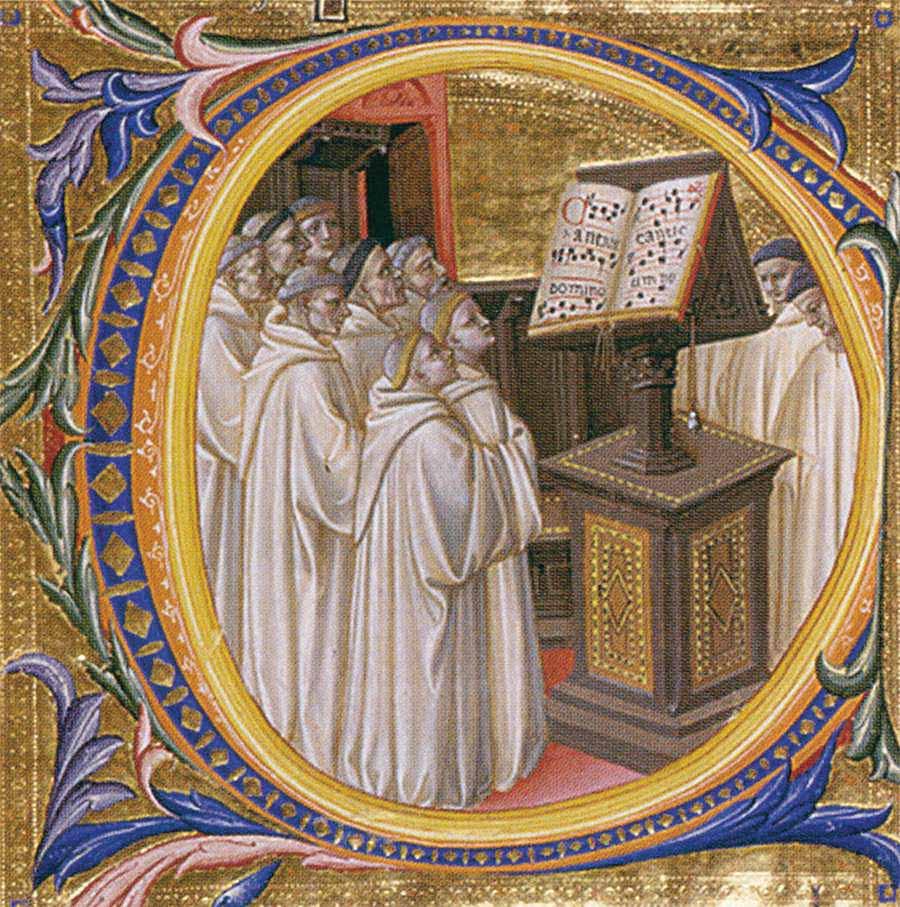
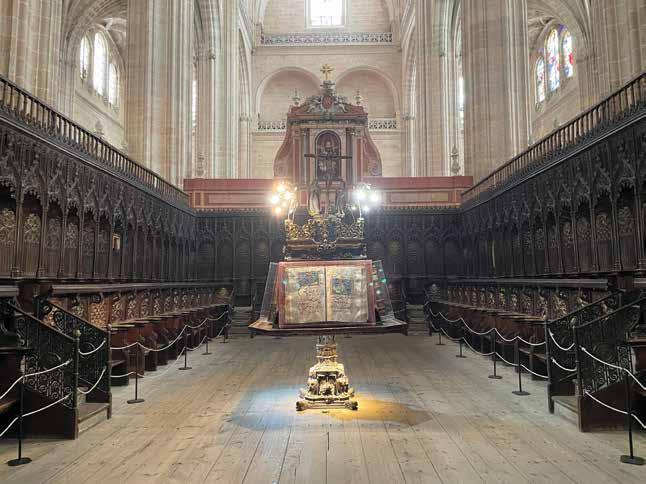
This summarizes well the teaching that St. Benedict (ca. 480-547) left his monks regarding the liturgy, especially what we now call the Liturgy of the Hours or the Divine Office. Today, everyone in religious orders and all ordained ministers of the Church are required to pray the Office every day, and the laity are urged to join in this liturgical prayer when possible. In my experience as a monk and spiritual director of priests and seminarians, the central challenge in praying the Divine Office is how to move beyond experiencing it primarily as an obligation, so that it becomes truly life-giving prayer. What follows is mostly meant to assist priests and deacons, but should be of use also to laypersons who wish to pray the Divine Office well.
One entryway is through the words of St. Benedict that began this essay. The phrase “work of God” (opus Dei in Latin) yields more than one meaning. It can be understood as the work that we do for God. And yet, it can also mean the work that God is doing. Thanks to the Incarnation, both meanings are correct. This is the understanding taught by Vatican II: “in the liturgy the whole public worship is performed by the Mystical Body of Jesus Christ, that is, by the Head and His members” (Sacrosanctum Concilium, 7). In fact, the saints and angels are praising God at every moment, and when we begin the Divine Office, we enter into this chorus of praise, the Church’s primary activity. This is true whether we pray with others or behind the closed doors of our rooms. We are cooperators with the Son of God in praising the Father.
The obligation to pray the Office is, then, more like a standing invitation from the Holy Spirit to reencounter the truest meaning of ourselves as adopted sons and daughters of God. It is helpful to remind ourselves of this theological backdrop whenever we take time from other activities to “plug in” to the praise that we offer as members of Christ. The Son of
“The central challenge in praying the Divine Office is how to move beyond experiencing it primarily as an obligation, so that it becomes
truly life-giving prayer.”
God is eternally rejoicing in the Holy Spirit in giving thanks to the Father (cf. Luke 10:21), and in the liturgy, we make his voice audible.
Practically Humble
Now, this realization does not magically overcome all obstacles to praying the Divine Office well. What, then, might be some practical tips for entering more devoutly into the Liturgy of the Hours? While I will enumerate several of them, the key in each case is humility. Like the Apostles, we need to ask the Lord constantly to “Teach us to pray!” (Luke 11:1). There is no shame in admitting our inadequacy—and then getting to work.
How do we prepare for the Office? Do we run into the chapel and hurriedly make the Sign of the Cross while leafing through the Breviary to find the right page? Can we instead take a few quiet moments to let go of whatever work we had been doing? Most days, we experience some tense conversations, disagreements, or disappointments. Strong emotions can contaminate mind and soul, and it is important to separate ourselves from these by forgiving and simply sitting still and quietly for a moment. The monastic fathers insist on this point: the quality of our prayer depends on what we were doing immediately before we began. A quiet mind
“When we begin the Divine Office, we enter into this chorus of praise, the Church’s primary activity. This is true whether we pray with others or behind the closed doors of our rooms. We are co-operators with the Son of God in praising the Father.”
will more readily enter into prayer. We can’t prevent all distractions (and we will tackle this obstacle at the end of this essay), but we can reduce many of them by a short period of preparation before beginning. The next important point is to make the effort to pray every word of the Office with intention. St. Bernard insisted on this for his Cistercian monks. The fact that monks need reminding of an obvious point is proof that this kind of attention is not easy. It can be easier when we slow the pace of the prayer. It can also be helpful to pray at times with others, which gives us the chance to listen rather than speak. Admittedly, part of the difficulty lies in the content of the prayers themselves, to which we now turn.
Psalm Times
The texts of the Office are taken primarily from Scripture, especially the Psalms. Sometimes the Psalms speak directly to us. At other times, the cultural gap between ourselves and 3,000-year-old Hebrew poetry makes it difficult to pray them in our own voices. Even if we don’t understand them, God does, as do the demons. Still, the more we comprehend the texts that we pray, the more we will get out of them. It is a good practice to pray over a Psalm, or even study it, outside of the Office, to get a better sense of its meanings and how the Church has traditionally understood it. Perhaps one morning a week, we could read a Psalm (or a portion of a longer Psalm) slowly and pay close attention to its words and images, so that when it arises in the Office, its new familiarity will allow us to pray it from the heart. Some of the interpretations that will arise from this prayer and study will be highly personal. There is no immediate problem with this, as long as our understanding harmonizes with the Church’s own understanding. Sometimes, we will bring concerns from our work, from politics, and from our relationships into the prayer of the Office, especially in the Intercessions at Morning and Evening Prayer. This demonstrates that our prayer can take up all of the travails of the world, which is so much in need of a Savior.
There is a further warrant for the “personalizing” of the Psalms. It is found in a practice that goes back to the desert monks of the fourth century and was taken for granted by St. Benedict in the sixth. In the current Roman Breviary, we find what are known as the “Psalm-prayers.” These appear at the end of the Psalm before the Antiphon. Strictly speaking, they are optional. The Psalm-prayer is merely a suggestion
to help us to learn how to summarize the Psalm in our own prayerful words. The monks of old spent a bit of time in silence after every Psalm, so that each individual monk could add the voice of his own heart to that of the Psalm. St. Benedict cautions that this time of prayer should be brief, so as not to become self-indulgent. It is a time to discover the ways in which the words of revelation help us to understand our own situation, that we may live our lives outside of the Office with a deeper spiritual perspective. We can work the opposite direction with the texts of the Office as well. When a line from a Psalm, Canticle, or Reading strikes you as especially important, write it down on an index card and carry it in your pocket for a few days. When I do this, I will take it out and read it every so often, and it becomes my prayer at the moment. This allows Scripture to interpret what is presently happening in my life, strengthening the connection between life and prayer. It makes God’s Word my constant companion, a bulwark against temptation and isolation.
“ The liturgy is not our own; it belongs to us only inasmuch as God, in his infinite love and compassion, has chosen us to participate in his great mission of redemption.”
As an example, I have often used the line “Guide my heart to fear Your name” (Psalm 86:11) in this way. When I am faced with a temptation or a difficult decision, I can recite this verse to myself as a moral anchor. It places me before God in a position of humility with a reticence to follow my own intuitions. I am reminded that I will have to answer to God for my decisions and so to seek the counsel of the Holy Spirit.
Demon Distraction
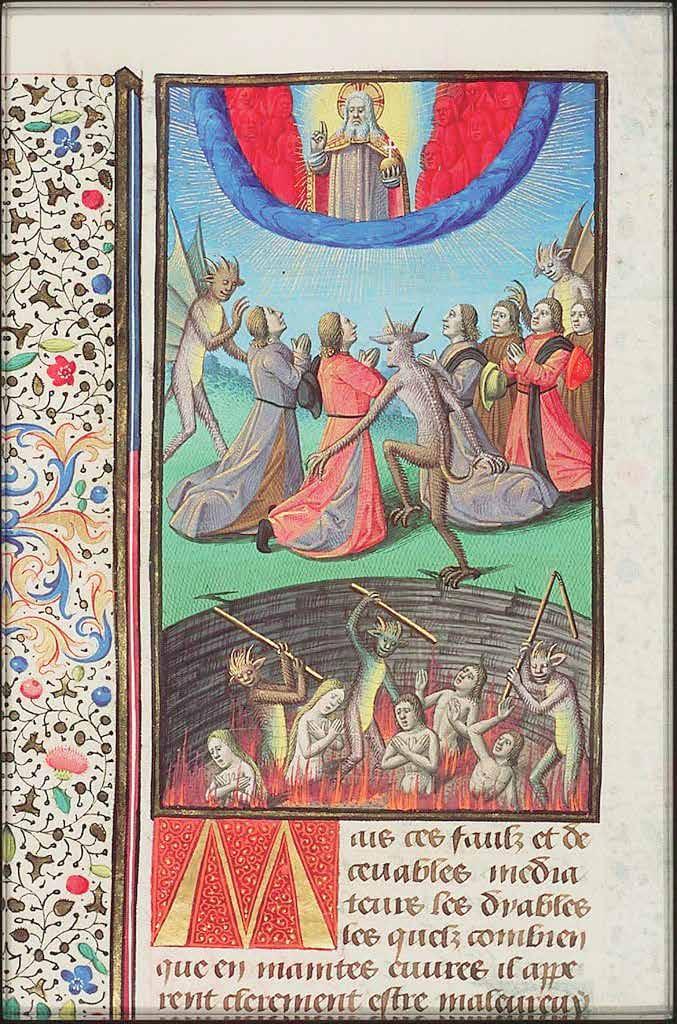
Now let us, at last, turn to a difficulty that attacks anyone who wishes to pray. Perhaps the most consistent concern that crops up among the early monks is that of distractions. When it is time to pray, we are very often hit with a host of distractions, what St. Athanasius called the “dust cloud of considerations.” People and conversations I haven’t thought of in years suddenly seem like urgent concerns. Out of the blue, curiosity about some halfremembered bit of popular culture makes me anxious to run a Google search on the monastery phone.
The obligation to pray the Office is like a standing invitation from the Holy Spirit to re-encounter the truest meaning of ourselves as adopted sons and daughters of God. It is helpful to remind ourselves of this theological backdrop whenever we take time from other activities to “plug in” to the praise that we offer as members of Christ.
The first and most important lesson here is that this is the common experience of all who wish to take prayer seriously. This is the heart of spiritual warfare, so we may as well get used to it and prepare ourselves properly. We do not stand out in any way because we experience distractions; it is part of being human.
One of the first principles of dealing with distractions is not to allow them to dishearten us. Normally, the best approach to distractions is simply to set the distracting thought aside, gently, and then go back to focusing on the words of the Office. Yes, we will miss some of the meaning of the Psalms, and yes, we should experience a certain contrition for this, but in no way should we allow it to cause us anxiety. We will pray these Psalms again, and perhaps we will eventually learn how better not to be led astray—sometime in the future. Becoming upset about distractions is the best way to allow them to triumph over us.
“Becoming upset about distractions is the best way to allow them to triumph over us.”
When I first entered monastic life, my cell door didn’t shut properly. One of the cats liked to push on the door, enter, and jump on my lap while I was trying to pray. At first, this annoyed me. Then I realized that her actions were very much like distractions. When she jumped in my lap, I gently set her down on the ground, no matter how many times she returned. Eventually, she would give up. Distractions are often like that. The demons are throwing thoughts at us to see what will stick. If a thought doesn’t stick, they usually stop that line of attack after a while, and we get a few moments of peace.
Occasionally, distractions can be useful. If a thought keeps dogging me during prayer, it may be a sign of an unresolved conflict in my own heart. I may need to make a mental note of it, so that I can bring it to prayer later in private. Perhaps the very words of the liturgy have dislodged this previously hidden conflict so that it now can come to my attention. Even if this turns out to be the case, the moment to examine this specific distraction is not during the Office, and so the thought should be gently set aside like all other distractions. The main difference is that we might profitably return to that thought later. After all, the thoughts that we are seeking to cultivate while praying the Office are precisely those given by the Church. They are not all going to reflect how we happen to feel at the moment. When we are doing well, the laments in the Office can be prayed for those who are struggling and can’t find their own words. When we are struggling, the words of praise can be prayed for those whom God has blessed but have, like the nine lepers, forgotten to give thanks.
Power of Submission
This self-denial involved in the struggle to bring our thoughts into line with God’s thoughts brings us back, finally, to humility. The liturgy is not our own; it belongs to us only inasmuch as God, in his infinite love and compassion, has chosen us to participate in his great mission of redemption. It is a mission that we can’t ever fully comprehend. We do not determine its contours, scope, or timeline. We can, however, gradually gain insight into God’s plan through the pedagogy offered by the liturgy. Our insight will develop to the extent that we give ourselves over patiently to the method found there. Christ’s voice will gradually be incarnate in our words and actions, so that we can say, “It is no longer I who live, but Christ who lives in me” (Galatians 2:20). This marvelous realization may well help us to overcome many obstacles in our resistance to prayer so that we might manifest God’s holiness, in spite of whatever limitations we have.
To him be glory forever!
Prior Peter Funk, OSB, is the Prior of the Monastery of the Holy Cross, a contemplative Benedictine monastery in the Archdiocese of Chicago. Prior Peter entered monastic life after earning a degree in music from the University of Chicago and later completed a Master’s in Scripture from Saint John’s School of Theology, Collegeville, MN. He has composed several settings of the Mass and numerous choral works for celebration of the Divine Office.
The demons are throwing thoughts at us to see what will stick. If a thought doesn’t stick, they usually stop that line of attack after a while, and we get a few moments of peace.
Even if we don’t understand a Psalm, God does, as do the demons. Still, the more we comprehend the texts that we pray, the more we will get out of them. It is a good practice to pray over a Psalm, or even study it, outside of the Office, to get a better sense of its meanings and how the Church has traditionally understood it.
Joy as a Fruit of the Eucharist
By Father Lorenzo Penalosa, OSB
For many Catholics, one of the most recognizable liturgical orations is the Collect for Corpus Christi, also used at the conclusion of Benediction:
O God, who in this wonderful Sacrament have left us a memorial of your Passion, grant us, we pray, so to revere the sacred mysteries of your Body and Blood that we may always experience in ourselves the fruits of your redemption. Who live and reign...1
This prayer asks the Lord Jesus to allow us, members of the Church, to revere the Eucharist so that we may “always experience in ourselves the fruits of [his] redemption.” The Catholic faith is experiential and sacramental. Indeed, the Church uses material objects (such as bread, wine, and water) to point to and make present God’s unimaginable power and grace. This oration requests a direct experience of the fruits of Christ’s redemption.
As Sacrosanctum Concilium (SC) states, “In the liturgy, the sanctification of man is signified by signs perceptible to the senses...” (7). While worship is aimed toward the glorification of God and our sanctification, our liturgical actions, especially the sacraments, can have fruits or effects that we can experience even in this world. These effects are intimately connected to our redemption, since both our salvation and the efficacy of the Church’s liturgies flow from the Paschal Mystery of Christ. These experiences, then, are an important part of the way God divinizes us through our participation in the liturgy—as “perceptible signs” of theosis
In Scholastic sacramental theology, each sacrament has three aspects: the sacramentum tantum (the sacramental signs), the res et sacramentum (what the sacrament immediately signifies and effects), and the res tantum (the ultimate reality or grace that the sacrament points to). In the case of the Eucharist, St. Thomas Aquinas explains that the sacramentum tantum is the bread and the wine, the res et sacramentum is the true Body of Christ, and the res tantum is the unity of the Mystical Body.2 St. Thomas elaborates further on the “effects” of the Eucharist, such as attainment of glory, forgiveness of venial sins, and the preservation from future sins.3
Closer to our time, the Catechism of the Catholic Church discusses the “fruits of Holy Communion” (1391-1401). These fruits include an increase of union with Christ, separation from sin, wiping away of venial sins, preservation from future mortal sins, unity of the Mystical Body, commitment to the poor, and the unity of Christians.
While these teachings are certainly true and valid, they are by no means exhaustive. Another important— and often neglected—source of theology regarding the “fruits” of the Eucharist is the liturgy itself. As a discipline, liturgical theology takes the liturgical celebration as its starting point, considering aspects that are both written (e.g., prayers, rubrics, readings, calendars, musical notations) and unwritten (e.g., art, architecture, symbols, time) as sources and objects of theological inquiry. One of the most direct expressions of the fruits of the Eucharist in the liturgy comes from the Prayers after Communion.
The Prayer after Communion
Compared to Eastern liturgical rites, the Roman Rite has a distinct feature of having a variable PostCommunion Prayer recited or chanted before the final blessing and dismissal. Indeed, the Missal provides a different prayer every week or even every day, depending on the liturgical season or particular celebration. The amended third typical edition of the Missale Romanum, published in 2008, is the latest edition of the post-Vatican II Missal. It contains 491 Prayers after Communion spread among various sections, including the Proper of Time, Proper of Saints, Commons, Ritual Masses, Masses for Various Needs, Votive Masses, and Masses for the Dead. According to the General Instruction of the Roman Missal, the Post-Communion Prayer is one of the three “orations” that the presiding priest offers to God in the name of the entire assembly (30). These orations include the Collect (which serves as the opening prayer), the Prayer over the Offerings (which connects the Preparation of the Gifts to the Eucharistic Prayer), and the Prayer after Communion (which serves as the bridge between the reception of Holy Communion and the Concluding Rites).
While worship is aimed toward the glorification of God and our sanctification, our liturgical actions, especially the sacraments, can have fruits or effects that we can experience even in this world.
Among these orations, the Prayer after Communion is generally very succinct. It is easy to miss the message of these prayers, especially in parish settings, as they are usually followed (or preceded) by long announcements. It is also unfortunate that some of the faithful immediately leave after receiving Communion, which prevents them from hearing this prayer.
While liturgical prayers are primarily directed and addressed to God, liturgical theology seeks to unpack the theological richness of the content of these prayers, which can serve as catechetical tools. Orations have much to tell us about who God is, what he has done (and continues to do), who we are as a Church, what
“We are participating in nothing less than the divine banquet, a truly joyous event in which Christ is especially present and feeds us with his own Body and Blood.”
we need, and the graces that we ultimately hope for. In particular, the Post-Communion Prayer acknowledges the sacred action that we have just completed in the liturgy (offering and receiving the Body and Blood of Christ) and in light of this, the prayer offers a petition that looks forward to the eschatological fulfillment of Christ’s promises. The Post-Communion Prayers, then, can be a good “source” to help us better appreciate the Church’s understanding of the fruits of the Eucharist in her worship.
Gaudium and Laetitia
Among the 491 Post-Communion Prayers in the 2008 Missale Romanum, there are 33 with forms of gaudium and 31 with variations of laetitia. The variations on these two words for “joy” come in the form of nouns, adjectives, verbs, and adverbs associated with these terms.
In Latin, the terms gaudium and laetitia have proved important as evidenced by the designations “Gaudete Sunday” for the Third Sunday of Advent and “Laetare Sunday” for the Fourth Sunday of Lent. These labels, based on the incipits of the celebrations’ respective introits, underscore how even in restrained and penitential seasons, the Church cannot suppress the joy of anticipating the most central mysteries of our faith—the Incarnation and the Paschal Mystery. While there are other Latin words for joy and happiness, such as exsultatio, iubilatio, hilaritas, and felicitas, the terms gaudium and laetitia can serve as a good starting point in considering joy as a fruit of the Eucharist.
In her doctoral dissertation, the Latinist ClaireMarie Duval conducted a semantic study of these two terms.4 She enumerates at least eight senses of gaudium and at least 14 meanings of laetitia in classical Latin.
She explains that the Roman orator Cicero (106-43 BC) imposed a Stoic distinction between these two terms, characterizing gaudium as a rational and virtuous kind of joy, and laetitia as an extravagant and excessive kind of gladness.5 While Cicero’s influence can be seen in Latin lexicons that still report an opposition between gaudium and laetitia, 6 the Roman Rite from the earliest surviving liturgical books has never shied away from using both of these terms in a positive light, especially in the Prayers after Communion.
Oftentimes, orations use these terms interchangeably to express joy (with their use depending on which word or form fits better in the rhythmic cadence of the prayer), though at times they convey specific aspects of joy. On the one hand, gaudium can express the joy of encounter as well as the joy of hearing good news; on the other hand, laetitia can entail a fertile kind of gladness, often used when commemorating the fruitful motherhood of the Virgin Mary or the fertility of martyrdom (as Tertullian famously stated, “The blood of Christians is seed [of the Church]”7).
While the presence of these terms in orations is important in itself, their use in Prayers after Communion takes on even greater significance because these formulae articulate more explicitly the way in which joy is connected to the liturgical celebration and the reception of Holy Communion. Below is one example of a Post-Communion that features forms of both gaudium and laetitia, from the Feast of St. Matthew on September 21. It is my literal translation of the Latin text:
As sharers of the saving joy (gaudii), O Lord, with which the glad (laetus) blessed Matthew welcomed the Savior as a table companion in his home, grant that we may always be nourished by the food of him who did not come to call the just but sinners to salvation.
Who lives and reigns for ever and ever.8
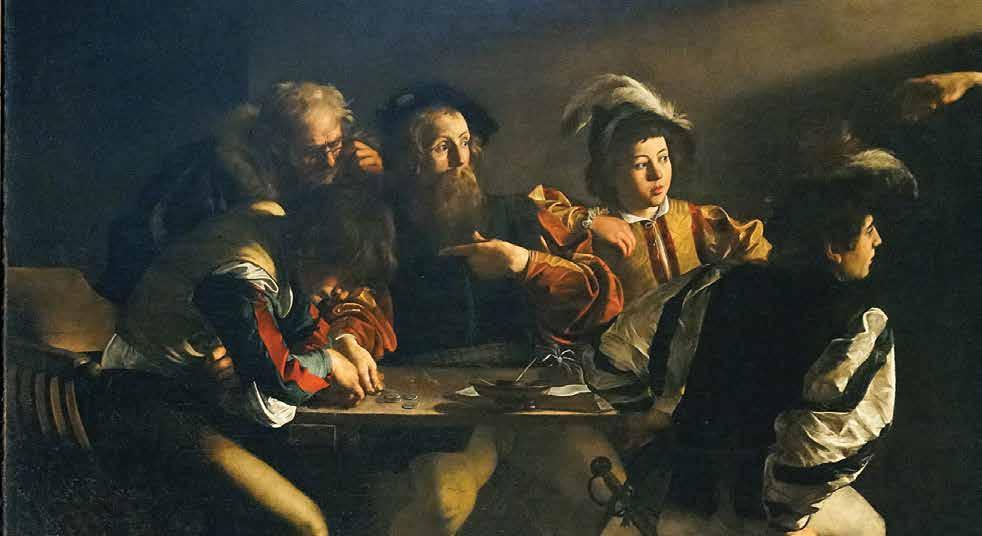
In this example, the presence of both “gaudii” (gaudium in the genitive case) and “laetus” (an adjectival form of laetitia) highlights the intense joy related to encountering Jesus and dining with him. The first part of the prayer recalls St. Matthew welcoming the Savior in his home as a guest at his table after Jesus called the tax collector to follow him, a reference to Matthew 9:9-13 and Luke 5:27-32. This visit involved a “great banquet” as described in Luke 5:29—indeed, a very joyful occasion. The prayer equates the “saving joy” experienced by the faithful in the liturgical celebration with St. Matthew’s own gladness at Jesus’ bodily presence in his house. It then points to the Eucharist as being the food of Christ that brings nourishment.
It is very easy to take our celebrations of the Eucharist for granted—to attend Mass and receive Communion in a mechanical or distracted way. Yet the prayer above reminds us that we are participating in nothing less than the divine banquet, a truly joyous event in which Christ is especially present and feeds us with his own Body and Blood. Therefore, Christ is the ultimate host. While the banquet in the Evangelist’s house occurred in time and was likely finished in a few hours, the feast that we look forward to is eternal. The Mass, then, is a foretaste of that eschatological celebration that we long to experience with neverending gladness—the joy of satiation and fulfillment in the presence of God.
“Overcome with Paschal Joy”
The Church’s celebration of the Eucharist is a bold expression of our faithful union with Christ during this “in-between” period of “there but not yet.” On the one hand, we still wait for the definitive fulfillment of our redemption; on the other hand, our liturgical life already gives us a glimpse of the heavenly realities awaiting us.
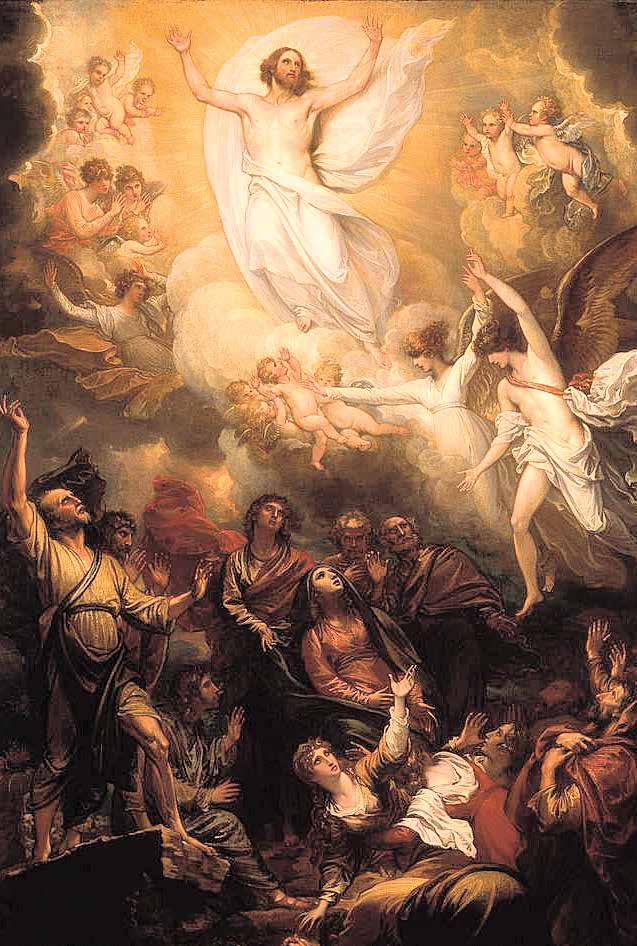
As we advance on this earthly pilgrimage, God continues to feed and accompany us through the liturgy and the sacraments. This journey is a “paschal” one, as the Lord guides his people to “pass over” from death to life, from sin to forgiveness, from darkness to light. Jesus’ own Paschal Mystery involved his Passion, Death, and Resurrection, leading to his glorious Ascension (SC, 5).
While believers know about the importance of Christ’s Ascension, this mystery is often eclipsed by other saving events, such as the Resurrection and the descent of the Holy Spirit during Pentecost. The liturgical theologian Joris Geldhof highlights the significance of the Church’s commemoration of the Ascension, describing it as “the feast of divinization or theosis” because this mystery celebrates the passage “from humanity... into the divine, or from temporality
AB/WIKIMEDIA
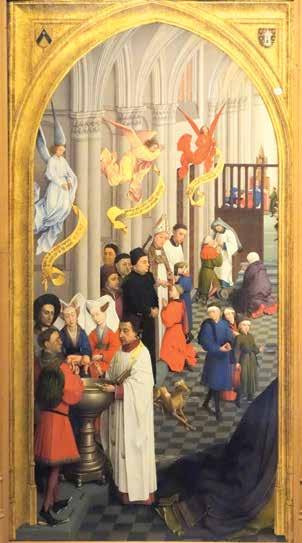
COMMONS. ROGIER VAN DER WEYDEN, SEVEN SACRAMENTS ALTARPIECE.
“As sharers of the saving joy, O Lord, with which the glad blessed Matthew welcomed the Savior as a table companion in his home, grant that we may always be nourished by the food of
who did not come to call the just but sinners to salvation” (Post-Communion, Feast of St. Matthew).
into eternity, per visibilia ad invisibilia [from the visible to the invisible].”9
He points to joy as a central theme in Pope St. Leo the Great’s Ascension sermons, characterizing it as a “major effect” of sharing in the mystery of salvation. Geldhof explains, “Phenomenologically speaking, joy is very appropriate to conceptualize the effect of sacramental-liturgical-mysterial celebrations, for it avoids both the concrete material level and the physical level of mere emotion. The liturgy is not something which makes one feel happy but is rather a fitting and privileged, and maybe in one way or another, the one and only, source of continued paschal joy.”10
Joy, indeed, has a strong paschal connection. One proof of this can be found in the Prefaces of Easter, Ascension, and Pentecost in the Missal, all of which conclude with the statement “Therefore, overcome with paschal joy...” (“Quapropter, profusis paschalibus gaudiis...”).11 God, therefore, gladdens us as he feeds us with the Paschal Lamb and thus enables us to “pass over” from the sufferings of this world toward the glory of his Son’s Resurrection. This foretaste of heavenly joy does not come from the world but is a fruit of our actual participation in the liturgy, worthy reception of Communion, and mindful observance of our Eucharistic mission, by which God makes us divine.
Father Lorenzo Penalosa, OSB, SLL, is a Benedictine monk and priest of Saint Meinrad Archabbey in Indiana and is a doctoral candidate (STD in Liturgical Studies) at The Catholic University of America in Washington, D.C. He is currently working on his dissertation titled “Eucharistiae gaudium et laetitia: A Liturgical Theology of Joy in Post-Communion Prayers of the 2008 Missale Romanum.”
1 The Roman Missal, third typical edition (Collegeville, MN: Liturgical Press, 2011), 499.
2. For a treatment of this in the Summa Theologiae, see III, q. 73, a. 3 and III, q. 73, a. 6.
3. See Summa Theologiae III, q. 79.
4. Claire-Marie Duval, “Gaudium et laetitia: Étude sémantique” (PhD diss, Université François Rabelais-Tours, 2002).
5. Duval, “Gaudium et laetitia,” 237-294. See also Marcus Tullius Cicero, Tusculan Disputations, 4.6, trans. John Edward King, Loeb Classical Library 141 (1927, repr., Cambridge: Harvard University Press, 2013), 340-341.
6. For instance, see Charlton T. Lewis and Charles Short, A Latin Dictionary Founded on Andrews’ Edition of Freund’s Latin Dictionary Revised, Enlarged, and in Great Part Rewritten (1879; Chapel-en-le-Frith: Nigel Gourlay, 2020), s.v. “gaudium”; Egidio Forcellini, Giuseppe Furlanetto, Francesco Corradini and Joseph Perin, eds., Lexicon totius latinitatis (Padua: Typis seminarii, 1940), s.v. “gaudium”; Thesaurus linguae latinae (Leipzig: B.G. Teubneri, 1900-), s.v. “gaudium.”
7. Tertullian, Apology, 50.13, in Ante-Nicene Fathers, vol. 3, eds. Alexander Roberts, James Donaldson, and A. Cleveland Coxe, trans. S. Thelwall (Buffalo, NY: Christian Literature Publishing Co., 1885), rev. and ed. by Kevin Knight for New Advent http://www.newadvent.org/fathers/0301.htm
8. Emphases mine. The original Latin text states: “Salutaris gaudii participes, Domine, quo laetus Salvatorem in domo sua convivam beatus Matthaeus excepit, da, ut cibo semper reficiamur illius, qui non iustos sed peccatores vocare venit ad salutem. Qui vivit et regnat in saecula saeculorum.” Missale Romanum, editio typica tertia reimpressio emendata (Vatican City: Typis Vaticanis, 2008), 834. For the official English translation, see The Roman Missal, 953.
9. Joris Geldhof, “Paschal Joy Continued: Exploring Leo the Great’s Theology of Christ’s Ascension into Heaven,” in Preaching after Easter: Mid-Pentecost, Ascension, and Pentecost in Late Antiquity, eds. Richard W. Bishop, Johan Leemans, and Hajnalka Tamas (Boston: Brill, 2016), 398. 10. Geldhof, “Paschal Joy Continued,” 403. 11. The Roman Missal, 454-456 and 558-571; for the Latin original, see Missale Romanum, 445-447 and 530-536.
him
AB/STEVEN ZUCKER ON FLICKR.COM. CARAVAGGIO, CALLING OF ST. MATTHEW.
This earthly pilgrimage is a “paschal” one, as the Lord guides his people to “pass over” from death to life, from sin to forgiveness, from darkness to light. Jesus’ own Paschal Mystery involved his Passion, Death, and Resurrection, leading to his glorious Ascension.
A New Look at Familiar Texts: Adoremus Announces New Educational Venture in Partnership with St. Mary’s Seminary & University in Baltimore
By Joseph O’Brien
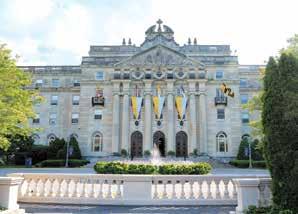
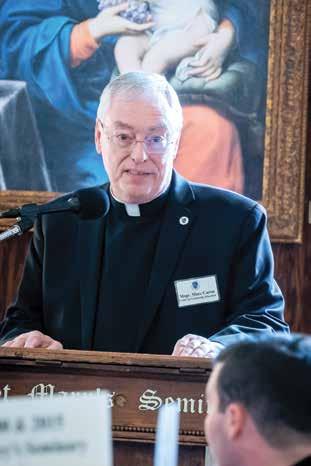
Adoremus will offer a series of courses dedicated to the newest translations of the Church’s liturgical texts, taking place in the oldest Catholic seminary in the United States. In partnership with St. Mary’s Seminary & University in Baltimore, MD—the cradle of Catholicism in the U.S.—Adoremus will be offering a series of non-degree, non-credit courses for the ongoing liturgical formation of priests, religious, and laity at the seminary’s Center for Continuing Formation.
Three courses will be offered between August 2026 and February 2027 in this new partnership, each focusing on a newly translated liturgical book: August 4-5, Dr. Owen Vyner will be presenting a course on the newly retranslated Order of Anointing of the Sick and of their Pastoral Care (OAS). Vyner holds a doctorate in theology and teaches as associate professor in the department of theology at Christendom College, Front Royal, VA.
A month later, September 15-18, Father Dennis Gill will be teaching a course on the revised English translation of the Order of Christian Initiation of Adults (OCIA). Father Gill currently serves as rector and pastor of the Cathedral Basilica of Sts. Peter and Paul in Philadelphia, and director of the Office for Divine Worship for the Archdiocese of Philadelphia.
Both Vyner and Father Gill are Adoremus contributors.
Rounding out the three-course offerings early next year, February 22-27, 2027, Adoremus Director Christopher Carstens will be exploring the new revisions and translation of the Second Edition of the Liturgy of the Hours (LOTH).
The revised OCIA became the mandatory text in March 2025 while the OAS became mandatory at Easter of 2026. It is anticipated that the Second Edition of the LOTH will be available for purchase beginning in January 2027.
Liturgical Partners
According to Carstens, the partnership between St. Mary’s and Adoremus fell into place with relatively little effort—especially since another Adoremus contributor, Msgr. Marc Caron, has been serving as the director of the Center for Continuing Formation since July 2025.
“One of Adoremus’s principal tasks is to provide ongoing liturgical formation for priests,” Carstens explained. “In fact, Msgr. Caron has been a significant part of our work for years. When he became director of the Center for Continuing Formation, it seemed natural to continue our collaboration.”
As the new director, Msgr. Caron brings his own experiences as a priest of the Diocese of Portland, ME. “I was interested in serving as director of the Center because I believe in ongoing formation for priests,” he said, noting that prior to his current position he served 11 years as chancellor and five years as Vicar General and Moderator of the Curia in the Diocese of Portland, ME. “In those roles over those 16 years, directly or indirectly, I was involved with ongoing priestly formation—in what we call the four pillars of formation: spiritual, intellectual, pastoral, and human formation.”
The Center for Continuing Formation was built by St. Mary’s in 1996, according to the Center’s website, “in response to the teaching on the priesthood and priestly formation of St. John Paul II. The pastoral emphasis and spirit of St. Mary’s Seminary today is perfectly expressed in The Center for Continuing Formation.”
According to Msgr. Caron, he was hired as the director to help St. Mary’s resurrect the Center after the covid pandemic.
“The Center’s program had essentially stopped because of covid,” he said. “The Center had a hard time rebooting—and so I was hired to reboot the programs at the Center. My strategy has been to try to engage existing groups who offer ongoing formation for priests and others in the Church as partners with us, rather than try to reinvent everything ourselves.”
Msgr. Caron told Adoremus that he immediately recognized that St. Mary’s and Adoremus shared essential mission goals—and it was only a matter of bringing the two together for this new venture.
“From its beginning in 1995, Adoremus has focused on promoting the liturgical life of priests and the use of liturgical books in parishes,” Msgr. Caron said. “In a similar way, St. Mary’s mission is to prepare seminarians to be priests working in parishes, and at the Center for Continuing Formation we feel we have a commitment to support the ongoing formation of priests who are working in parishes. Adoremus addresses that approach.”
In partnership with St. Mary’s Seminary & University in Baltimore, MD, Adoremus will be offering a series of nondegree, non-credit courses for the ongoing liturgical formation of priests, religious, and laity at the seminary’s Center for Continuing Formation.
Great Liturgical Books
The common theme among the three courses—a focus on new translations of liturgical texts—was intentional, Msgr. Caron said.
“In some cases, a new translation is not necessarily a major change,” he said. “However, it’s an opportunity to look at each of those rites again and to help people think about best practices, how to make full use of the various choices, options, and adaptations found in those books, and to think about how their communities could pray better with those books, to think how they can better implement the goals for the worshiping community in each of those books. That’s our hope—that it’s an opportunity for those who enroll in these courses.”
The courses being offered in this new venture, Carstens told Adoremus, will serve as an opportunity for the faithful to become reacquainted with otherwise familiar texts.
“The courses will offer a kind of ‘Great Books program,’ where the liturgical texts are the books under study,” he said. “These ritual books embody the doctrine and determine the practice of sacraments, sacramentals, and liturgical prayer of the Church.”
According to Carstens, the courses will provide
“ The courses being offered in this new venture will serve as an opportunity for the faithful to become reacquainted with otherwise familiar texts.”
spiritual, theoretical, and practical value for priests and others who enroll.
“Each course will include some historical treatment, canonical and rubrical review, and spiritual reflection,” he said. “Ultimately, though, we want to equip priests to administer and celebrate the rites intelligently, practically, and completely so that God’s people can receive the most benefit from them.”
The course on the new OAS translation, Vyner told Adoremus, “has been structured specifically for priestly ministry. The purpose of these sessions will be to provide a comprehensive and in-depth presentation of the ritual’s prayers and rubrics to enrich a priest’s ministry to the sick and dying. We will explore what is new—both significant and minor differences—and what has remained unchanged.”
Vyner said that he will draw on the Scriptures, Church teachings, development of doctrine, and the postconciliar reform of the sacrament.
“Nevertheless, the fundamental focus will be on deepening a priest’s engagement in continuing Christ’s healing ministry,” he said. “These sessions, while incorporating lectures, will also provide opportunities for discussion and pastoral applications in the care of the sick and the dying.”
According to Father Gill, the revised English translation of the OCIA presents an opportunity for priests in the U.S. “to receive the Order more fully.”
“By this, I mean with a greater awareness of the role of the priest throughout the rites,” he told Adoremus, and “that the Order is principally liturgical and as such the work of the local parish community (priest and people), and reestablishing the distinction between accompanying the unbaptized (catechumens) and the baptized (candidates).”
Through discussion, lectures, and practicums offered during the course, Father Gill said he intends to examine the “history of the rites of Christian Initiation,
the proposed reforms by the Second Vatican Council, the development of the contemporary OCIA, and its expected use in parishes in the United States, especially with regard to the revised National Statutes.”
Carstens hopes his course on the new LOTH translation will provide a meaningful encounter with this ever-ancient yet ever-new prayer of the whole Church.
“Certainly, a priest could merely buy a new ritual book and carry on as usual,” he said, “or he could take the occasion of the new Liturgy of the Hours to become reacquainted with the Psalms—what they mean, how to pray them, why to sing them—or the hymns, or to recall how the canonical hours of the Office sanctify the different hours of the day. Grace is available to us in many forms and at many times, but the Church’s liturgical prayers are privileged means and moments of grace. Entering into these revised texts taps into a treasure.”
Open Enrollment
While all the courses are designed primarily for priests, Msgr. Caron noted that the program also welcomes others involved in liturgical ministry, especially at the parish level. It is open to “priests, religious, deacons, or lay people who are full-time, part-time employees, or volunteers in the various areas.” These areas include those addressed by the program’s texts— such as “pastoral care of the sick, Catholic formation and catechesis of catechumens and candidates, and Catholics who participate in or lead parish celebrations or other celebrations of the Liturgy of the Hours.”
Carstens hopes to see a positive response among Catholics around the country to this range of courses offered at St. Mary’s.
“Certainly, the response of priest participants will be the most obvious gauge of success,” he said. “Do priests today want to understand the Church’s rites more deeply and to celebrate them more fully? Do they have the time and resources to attend our courses at St. Mary’s?”
“But a longer-range marker of success—and one less measurable by standard means,” Carstens added, “will be a fuller, more authentic reception and celebration of the Church’s revised rites. The Second Vatican Council’s Constitution on the Sacred Liturgy, Sacrosanctum Concilium, directed that pastors themselves must ‘become thoroughly imbued with the spirit and power of the liturgy’ before they can teach it to others and celebrate it as the Church intends. The Center for Continuing Formation at St. Mary’s Seminary and Adoremus are working toward this goal.”
Additional information and enrollment details regarding the courses offered by Adoremus and St. Mary’s Center for Continuing Formation will be available on the Center’s website.
Joseph O’Brien is Managing Editor of Adoremus Bulletin.
Msgr. Marc Caron has been serving as the director of the Center for Continuing Formation since July 2025.
AB/COURTESY
Editor’s note: The responses below frequently quote the General Instruction of the Liturgy of the Hours verbatim without encumbering the text with repeated quotation marks. Readers are encouraged to consult the General Instruction for further details.
Q: When is the Office of Readings to be celebrated?
A: According to the General Instruction of the Liturgy of the Hours (GILH), the Office of Readings may be recited at any hour of the day (59). It can also be said as a night office of praise, either very early in the morning and before Morning Prayer or even during the night hours of the previous day, after Evening Prayer has been said (GILH, 58-59). The GILH also notes that all who maintain the character of the Office of Readings as a night office are to be commended.
Q: Can I choose a different First Reading for the Office of Readings?
A
: During Ordinary Time, on a particular day or for a few days in succession, it is permissible, for a good reason, to choose readings from those provided on other days or even other biblical readings, for example, on the occasion of retreats, pastoral gatherings, prayers for Christian unity, or other such events. Additionally, when the continuous reading is interrupted because of a solemnity or feast or special celebration, it is allowed, during the same week, taking into account the readings for the whole week, either to combine the parts omitted with others or to decide which of the texts are to be preferred (GILH, 248).
Q: Can I choose a different Second Reading for the Office of Readings?
A: There is an option to choose, with a good reason, another reading from the same season, in preference to the Second Reading appointed for the day. On weekdays in Ordinary Time and, if it seems opportune, even in the seasons of Advent, Christmas, Lent, and Easter, the choice is open for a semicontinuous reading of the work of a Father of the Church, in harmony with the biblical and liturgical context (GILH, 250).
Q: When can the Office of Readings be extended with a Vigil?
A
: Those who desire, in accordance with tradition, to extend the celebration of the Office of Readings with a Vigil can do so on Sundays, solemnities, and feasts. The GILH notes that among these solemnities, Christmas and Pentecost are preeminent and that the celebration of Vigils is also useful on the occasion of pilgrimages (71, 73).
Q: How is the Office of Readings extended as a Vigil?
A: First, the Office of Readings is to be celebrated as usual up to the end of the readings. After the two readings but before the Te Deum, canticles should be added from the special appendix. Then the Gospel should be read; a homily on the Gospel may be added. After this, the Te Deum is sung and the prayer said. On solemnities and feasts, the Gospel is to be taken from the Lectionary for Mass; on Sundays, from the series on the paschal mystery in the appendix.
Q: Can a longer Scripture reading for Morning and Evening Prayer be used in place of the short reading? Can there be a homily?
A: The GILH permits freedom to choose a longer Scripture reading, either from the Office of Readings or from the Lectionary for Mass, especially in a celebration with a congregation (46). Additionally, on the occasion of retreats, pastoral gatherings, prayers for Christian unity, or other such events, more suitable or longer readings may be chosen (GILH, 248). The GILH also permits a “short homily” or a period of silence after the reading (45).
Q: How are the intercessions at Morning and Evening Prayer prayed?
A: The intercessions are so arranged that they can be adapted for celebration with a congregation or in a small community or for private recitation. The intercessions in a celebration with a congregation or in common are thus introduced by a brief invitation given by the priest or minister and designating the
single response that the congregation is to repeat after each petition. Different methods can therefore be used for the intercessions. The priest or minister may say both parts of the intention and the congregation respond with a uniform response or a silent pause, or the priest or minister may say only the first part of the intention and the congregation respond with the second part. It is permissible to include particular intentions at both Morning Prayer and Evening Prayer (GILH, 188-193). There is also an appendix of shorter forms of the intercessions for use at Evening Prayer. These very brief intercessory prayers can replace the longer ones.
Q: Which psalms are used for the daytime hours?
A: Two psalmodies are provided: the current psalmody and the complementary psalmody. Those who pray one hour should use the current psalmody. Those who pray more than one hour should use the current psalmody at one hour and the complementary psalmody at the others. The current psalmody consists of three psalms (or parts in the case of longer psalms). The complementary psalmody consists of three sets of three psalms, chosen as a rule from the Gradual Psalms; these are also used on solemnities, the Easter Triduum, and days within the octave of Easter (GILH, 81-83).
Q: When is Night Prayer celebrated? Is there an Examination of Conscience at Night Prayer?
A: Night Prayer is the last prayer of the day, said before retiring, even if that is after midnight (GILH, 84). It is a laudable practice to have an examination of conscience before the hymn. In a celebration in common, this takes place in silence or as part of a penitential rite based on the formularies in the Roman Missal (GILH, 86).
Q: Which psalms are used for Night Prayer?
A: After Evening Prayer I of Sunday, the psalmody consists of Psalm 4 and Psalm 134; after Evening Prayer II of Sunday, it consists of Psalm 91. On the other days psalms are chosen that are full of confidence in the Lord; it is permissible to use the Sunday psalms instead, especially for the convenience of those who may wish to pray Night Prayer from memory (GILH, 88).
Q: Can any of the Hours be combined with Mass or other Hours?
A: Yes, the GILH (93-99) explains how to combine hours with Mass or other hours. Morning Prayer, Daytime Prayer, and Evening Prayer can be combined with Mass. Daytime Prayer and Evening Prayer can be prayed directly after Mass, after the Prayer after Communion. The Office of Readings can also be prayed immediately before another hour of the Office, especially Morning Prayer (GILH, 60). When this occurs, the prayer and acclamation at the end of the Office of Readings are omitted, as is the introduction to the other hour.
Q: How are the psalms said or sung?
A: At the beginning of each psalm, its own antiphon is always to be said or sung. Then the psalms are said or sung in one of three ways: directly, that is, all sing the entire psalm, or antiphonally, that is, two choirs or sections of the congregation sing alternate verses or strophes, or responsorially (particularly appropriate for the Benedicite canticle from Daniel). At the end of the psalm, the “Glory to the Father” is said or sung. The antiphon may be repeated at the end of the psalm. Alternatively, the antiphon may be repeated after each strophe of the psalm as well. This repetition is the norm for the Invitatory Psalm, except in private recitation, where it need only be prayed at the beginning and end of the psalm.
Q: What is the purpose of the captions printed in italics under the Psalm number?
A
: These captions, usually a quotation from the New Testament or from the Fathers of the Church, are added to foster prayer in the light of Christ’s new revelation and are an invitation to pray the psalms in their Christological meaning. They are intended as an aid to prayer to explain the psalms’ meaning and their import for the personal life of the believer. When
the Office of Ordinary Time is recited, not sung, the captions may be used in place of the proper antiphons (GILH, 111, 114).
Q: Why is a psalm divided up in several sections at some hours?
A: When a psalm may be divided because of its length into several sections within one and the same hour, an antiphon is given for each section. This is to provide variety, especially when the hour is sung, and also to help toward a better understanding of the riches of the psalm. Still, it is permissible to say or sing the complete psalm without interruption, using only the first antiphon (GILH, 115, 124).
Q: Is there a place for silence in the Liturgy of the Hours?
A: Yes, it is permissible, as occasion offers and prudence suggests, to have an interval of silence. It may come either after the repetition of the antiphon at the end of the psalm or after the reading (or homily), either before or after the responsory. Care must be taken to avoid the kind of silence that would disturb the structure of the office or annoy and weary those taking part—for instance, overly long moments of silence, such that it becomes awkward, or moments of silence placed in awkward places. In individual recitation there is even greater freedom to pause in meditation on some text that moves the spirit; the office does not on this account lose its public character (GILH, 201-203).
Q: If I am bound to pray the Liturgy of the Hours and visit a religious community with a different calendar or arrangement of the psalms, is my obligation fulfilled in praying with them?
A
: Yes, when clerics or religious who are obliged under any title to pray the Divine Office join in an office celebrated in common according to a calendar or rite different from their own, they fulfill their obligation in respect to the part of the office at which they are present (GILH, 242).
Q: How and when does one use the Office for the Dead in the Liturgy of the Hours?
A: The Office for the Dead is the proper Office on the Commemoration of All the Faithful Departed (All Souls’ Day). Outside of this commemoration, similar to Masses for the Dead, the Office for the Dead may be celebrated when the news of a death is first received, on the day of a funeral, on the day of final burial, or on the first or subsequent anniversaries. It could also be prayed as a votive office, similar to a Daily Mass for the Dead. While the rubrics do not list when the Office for the Dead may be used, it would be logical for it to follow the same rubrics for the various Masses for the Dead.
Q: When can I change certain elements in the Liturgy of the Hours?
A: The readings, prayers, songs, and intercessions appointed for the weekdays of a particular season may be used on other weekdays of the same season. For spiritual or pastoral advantage, the psalms appointed for a particular day may be replaced with others from the same hour of a different day. There are also circumstances occasionally arising when it is permissible to choose suitable psalms and other texts in the way done for a votive office (GILH, 251-252).
Q: What can be omitted from the Hours?
A: The Invitatory Psalm with its antiphon may be omitted when the invitatory is the prelude to Morning Prayer (GILH, 35). When the Invitatory Psalm with its antiphon is recited before Morning Prayer, the introductory verse “God, come to my assistance” and the “Glory to the Father” are omitted (GILH, 41). The responsory at Morning and Evening Prayer may be omitted (GILH, 49). Additionally, the customary reprise of the whole responsory may be omitted when the hour is not being sung, unless the sense requires this repetition (GILH, 171). The last part of the Te Deum, that is, from the verse, “Save your people, Lord” to the end, may be omitted (GILH, 68). The closing acclamation of the Office of Readings and Daytime Prayer, “Let us praise the Lord. And give him thanks,” may be omitted in private recitation (GILH, 69, 79).
—Answered by Father Alan Guanella Diocese of La Crosse, WI
A Universal Song: New Book Offers Reflections on Sacred Music and Divine Worship
By Daniel Ewens
The Song of the Lamb: Sacred Music and the Heavenly Liturgy by Robert Cardinal Sarah in conversation with Peter Carter. San Francisco: Ignatius Press, 2025. 262 pp. ISBN: 978-1-62164-828-4. $24.99 Paperback.
Beautiful churches such as Notre-Dame in Paris, the Sagrada Família in Barcelona, or St. Peter’s Basilica in Vatican City capture our attention in ways that few things can. The sheer size of these structures inspires us, lifting our gazes heavenward. The artwork, altarpieces, furnishings, murals, and other appointments stun with their complexity, radiant beauty, and artistic majesty. The cultural significance of these structures is clear, as seen in the case of Notre-Dame, which suffered a fire in 2019 followed by a process of reconstruction that fascinated a global audience. These buildings stand as monuments of culture and religion, testaments to the ingenuity and hard work of our forebears in the faith. But for the universal Church, which possesses arguably the vastest array of artistic works in the world, you might be surprised to know that these aren’t its crowning jewel of art.
That great privilege belongs to the Church’s treasury of sacred music, as affirmed by the Fathers of the Second Vatican Council in the Constitution on the Sacred Liturgy: “The musical tradition of the universal Church is a treasure of inestimable value, greater even than that of any other art. The main reason for this pre-eminence is that, as sacred song united to the words, it forms a necessary or integral part of the solemn liturgy” (Sacrosanctum Concilium (SC), 112). The constitution further notes: “The treasury of sacred music is to be preserved and fostered with great care” (SC, 114) and “The Church acknowledges Gregorian chant as specially suited to the Roman liturgy: therefore… it should be given pride of place in liturgical services” (SC, 116).
Those are bold words, and they are challenging for most of us to hear. Perhaps your local parish treats music in the liturgy with this great reverence, but we all know even anecdotally that, since the close of the council, this is largely not the case. There are many explanations put forward, and Robert Cardinal Sarah and Peter Carter, in their new book The Song of the Lamb: Sacred Music and the Heavenly Liturgy, explore several themes related to this question—the true nature and purpose of the liturgy, authentic qualities of sacred music, how to correctly understand participation, universality, silence, and Latin—to name just a few. Cardinal Sarah and Carter are both convinced of the claims of the Second Vatican Council regarding Gregorian chant and the Church’s precious treasury of sacred music. Throughout the book, they return time and again to these claims and how Gregorian chant embodies the qualities we must rediscover in order to renew the liturgy, and in turn, the whole Church.
“Without Sunday, We Cannot Live” Early in the book, many of the questions center around the purpose and nature of the liturgy, of sacred music, and why these various topics are so important. Cardinal Sarah defines the liturgy as “the work of the Most Holy Trinity enacted for the People of God, the Church” (27). This shows us that, in the liturgy, we aren’t simply dealing with human affairs but rather with heavenly ones. To further the point, Cardinal Sarah quotes the 49 martyrs of Abitene, who were killed for gathering illegally for worship in the early fourth century. Why would the early Christians have risked death simply to gather for the Sunday Eucharist? “Sine dominico non possumus—Without Sunday, we cannot live” (32). Questions about form, language, and the appropriateness of certain kinds of music over others take on far richer significance when the conversation is elevated from opinion on merely human activity to that which manifests, reveals, and brings us into contact with the divine realities of our faith.
Later, Carter asks which principles guide how we ought to think about music in the liturgy. Cardinal Sarah references Pope St. Pius X’s landmark motu proprio, Tra le Sollecitudini from 1903, the period of the nascent liturgical movement (39). The first two qualities of sacred music are sanctity and goodness of form, and together these produce the third: universality (39). Pius X holds these qualities as proper to the liturgy itself, which shows that everything about the liturgy must in some way take God as its starting point, instead of our human experience.
The discussion then moves to a very practical and familiar level. Those who feel as if they are the only ones in their parish who love Gregorian chant will greatly appreciate Cardinal Sarah’s wisdom here. What are we to do with all the popular music that people
desire—much of the folk and praise and worship music of the last 60-plus years? “First, it is important to recognize that not everything that makes us feel good is suitable for worship” (47). Cardinal Sarah rightly points out that certain things can dispose us toward prayer while other things simply don’t. Gregorian chant developed within the heart of the Church for no other purpose than worship of God, and if the liturgy is God’s work for us, then we must seek that music which can bear the weight of divinity. This is where humility—a constant theme throughout the book— comes into play. We must be willing to examine our hearts and honestly assess our own motivations and preferences. Humility is the key to accomplishing this.
Make Disciples of All Nations
When Jesus gave his disciples the Great Commission, he told them to baptize all people “in the name of the Father and of the Son and of the Holy Spirit” (Matthew 28:19). This call has been handed down in the context of the liturgy, and despite differences in baptismal formulas between the Eastern and Western Church, the imperative to proclaim and then baptize is universal and codified, as the liturgy itself is. While it might seem intuitive to consider sacramental formulas in this way, since music is integral to the liturgy, it too must be universal in character. Other aspects of the liturgy also ought to follow suit—such as architecture, vestments, and language. These received and universal traits remind us of the divine primacy. All that we have is ultimately a gift from God. We do not create ourselves but receive life itself as gift. Even Christ himself, in his incarnation, took flesh from his mother. This model of receptivity preceding our response is precisely our model for life, discipleship, and worship.
When we view the liturgy in the same way, we begin to understand how Gregorian chant, the Latin language, and the role of the church choir as a fulfillment of the choir of the Levites allow us to enter more deeply into the Church’s liturgical worship (207). We cannot approach God if our heart’s disposition is to do it “my way.” Receiving a universal heritage of liturgical worship, embodied in the treasure of Gregorian chant, is like a tree that stays connected to its roots. Cutting ourselves off from our roots can only cause us to die (60).
Sing from the Heart
One of the final central topics the authors cover is correctly understanding participation. “Active participation” has been something of a buzzword since Vatican II, but unfortunately, a shallow and incomplete way of understanding it has often prevailed. Cardinal Sarah eloquently states: “Actual participation means entering deeply, with faith and loving presence, into the sacred mystery being celebrated” (77). Activity, or “doing something,” has been the prevailing understanding for several decades now. But here, Cardinal Sarah insists that, through faith, a “silent, loving presence” like that of the Blessed Virgin Mary or St. John, is just as valid a form of participation as singing vocally or doing the gestures (77). It is good for our actions to express our inner dispositions, but it’s not good enough to simply do the right things without attending to our hearts. Here we begin to understand the primacy of internal participation as a fruit of real faith which must precede and inform all external participation.
This emphasis on engagement of the heart through internal participation allows us to see how many different aspects of the Church’s liturgical tradition remain valid today. Latin holds its place as a sacred, universal language and can be used even when the intellect doesn’t immediately comprehend what is being said. One can assent in faith to the Church’s universal prayer. And when intellectual comprehension
is present, we can listen attentively to the priest as he prays the Eucharistic Prayer or meditate as the choir offers chants to God on our behalf. We are reminded again that the wider tradition of the Church goes much deeper than our own limited experiences.
One of the longest chapters in the book deals with the topic of liturgical inculturation, which has been particularly emphasized since the Second Vatican Council. It seems to be an unspoken assumption that inculturation is necessary to unlock the full power of the liturgy by clothing it, so to speak, in expressions recognizable to modern people. But inculturation done wrong hinders our true participation instead of helping it. The universal character of the liturgy means that true inculturation “is God descending and entering into the life, the moral conduct, the cultures and customs of men so as to free them from sin and introduce them into the Trinitarian life” (127). It’s not simply clothing the liturgy with a layer of whichever local culture or cultures happen to be present; rather, “The cultural adaptations that the Church allows should serve to illuminate the universal truths of the faith, not obscure them” (117). We must ultimately discern well which local elements can be suitably taken up into the universal and unifying power of a common faith, lest we risk putting ourselves and our personal preferences at the center of the liturgy. The content of liturgical worship is Christ’s sacrifice at Calvary (131). Anything which obscures that reality must be rejected even if it is claimed to help a particular group of Christians. We profess one common faith in the liturgy, and more distinct cultural elements belong properly in the devotional life to help a more robust and integrated living of the faith.
The Primacy of Prayer
The Song of the Lamb is not a research-level contribution to the discussion but is a much-needed pastoral conversation. Both authors have a deep love for the Church and her liturgical traditions; both men long to see the perennial teachings on sacred music—solemnly affirmed continuously before, during, and after Vatican II—fulfilled in every parish, big or small; and both men remain committed to charitably explaining what the Church says on the matter while encouraging us to keep pursuing renewal at every level of the Church. This book is like a sacred music retreat in writing. Readers will come away more on fire with love for the liturgy, for Gregorian chant, for the longstanding tradition of the Church on things like Latin or the proper hierarchical roles in the liturgy, and for the heavenly realities made known to us through liturgical worship.
Cardinal Sarah says: “Bishops and priests should recognize that sacred music is not an optional luxury or expense, but a necessity for the Church to fulfill her mission of worship and evangelization…” (233). Additionally, our duty to form musicians for the liturgy is “essential to the liturgical life and pastoral care of a parish. We have a solemn duty to provide for the worthy worship of almighty God and to nurture the gifts He has bestowed upon those called to serve Him through music” (234).
Therefore, bishops, priests, deacons, liturgy directors, choirmasters, music ministers, and even parishioners with no liturgical responsibilities would benefit from the pastoral wisdom and reflections contained in this book. Carter raises many commonplace questions and assumptions while Cardinal Sarah always goes deeper to the heart of the matter. While not a practical manual for renewal, if read with an open heart, it is like a mountaintop experience that inspires one to search for the necessary tools for reform.
Peter Carter and Cardinal Sarah have delivered engaging and edifying conversations on a wide range of perennially relevant topics. These conversations— which feed the soul, fan the flames of inspiration, and draw readers into deeper liturgical participation—are the fruit of this book. The overall focus remains, at times, disjointed, but with a topic so vast, one either focuses on one thing or casts a wide net. If you love the liturgy or spend your time working or volunteering in the liturgical apostolate, this book deserves a place on your shelf. It may lead you to ask more questions, or it may simply delight your soul. Either way, The Song of the Lamb: Sacred Music and the Heavenly Liturgy will remind you that “If we believe in the primacy of prayer, then we must let this show forth in our actions” (185).
Daniel Ewens lives with his wife and three children in East Grand Forks, MN. He graduated from the Liturgical Institute at the University of St. Mary of the Lake, Mundelein Seminary, IL, with a Master of Arts in Liturgy and has served as Parish Liturgy & Music Coordinator for Sacred Heart Catholic Church in East Grand Forks since 2016. He serves on the Diocesan Liturgical Commission for the Diocese of Crookston, MN.