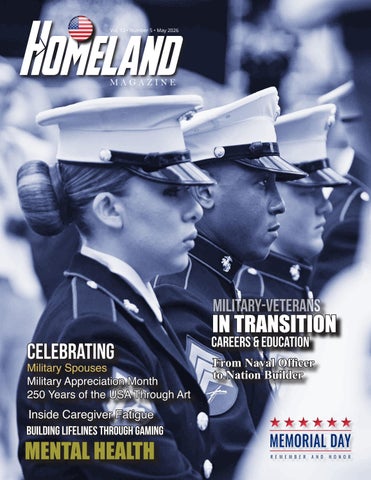
Military-Veterans IN TRANSITION Careers & Education
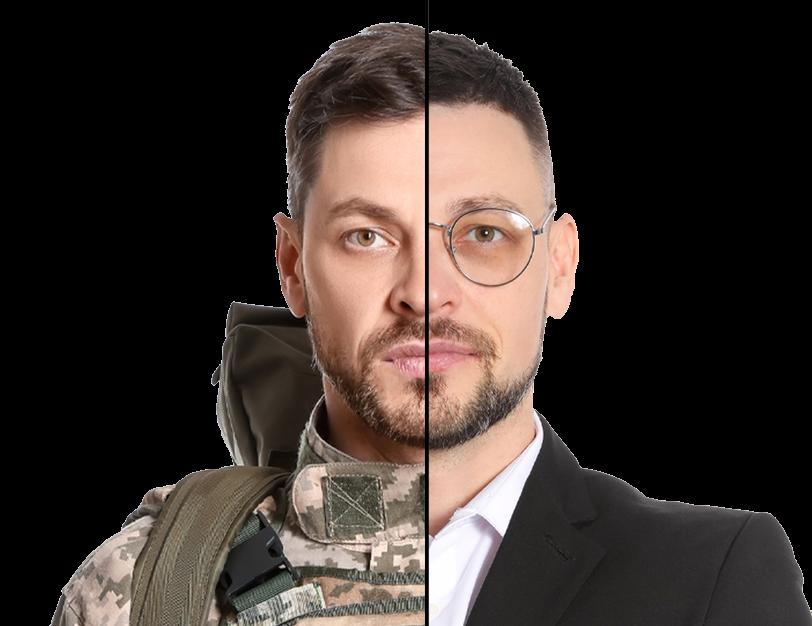
From Naval Officer to Nation Builder
www.HomelandMagazine.com
Welcome to Homeland Magazine!
Homeland is a veteran-focused magazine throughout the country. It serves to assist all veterans, active military as well as their spouses and families.
It’s the leading veterans magazine emphasizing resources, support and focusing on topics and issues facing today’s veteran community. Homeland focuses on resources, support, community, transition, mental health and inspiration for our veterans, & military personnel.
The content is the driving force behind our magazine and the connection it makes with our veterans, service members, military families, and civilians.
The magazine is supported by a distinguishing list of veteran organizations & members, resource centers, coalitions, veteran advocates, and more.
We are honored to share the work of so many committed and thoughtful people.
Despite all the challenges, our team has upheld their focus and let not one opportunity go to provide resources and support to our veterans & military personnel.
On behalf of our team, we wanted to take this moment to say THANK YOU to the readers and the military and veteran community for supporting our magazine. With that support we aim to make a difference and continuing to make a profound impact on the quality of life for our veterans, military personnel and their families.
If you want to catch up on the current and all past issues please visit: www.homelandmagazine.com/archives
Homeland Magazine 9528 Miramar Road, #41 San Diego, CA 92126 (858) 275-4281
mikemiller@homelandmagazine.com
monthly. Submissions of photographs, Illustrations, drawings, and manuscripts are considered unsolicited materials and the publisher assumes no responsibility for the said items. All rights reserved
AGING & END OF LIFE CARE
By: Shelly Dew, CFRE, CDE Director of Philanthropy Hospice of the North Coast www.hospicenorthcoast.org
Memorial Day, Grief, and Honoring Those Who
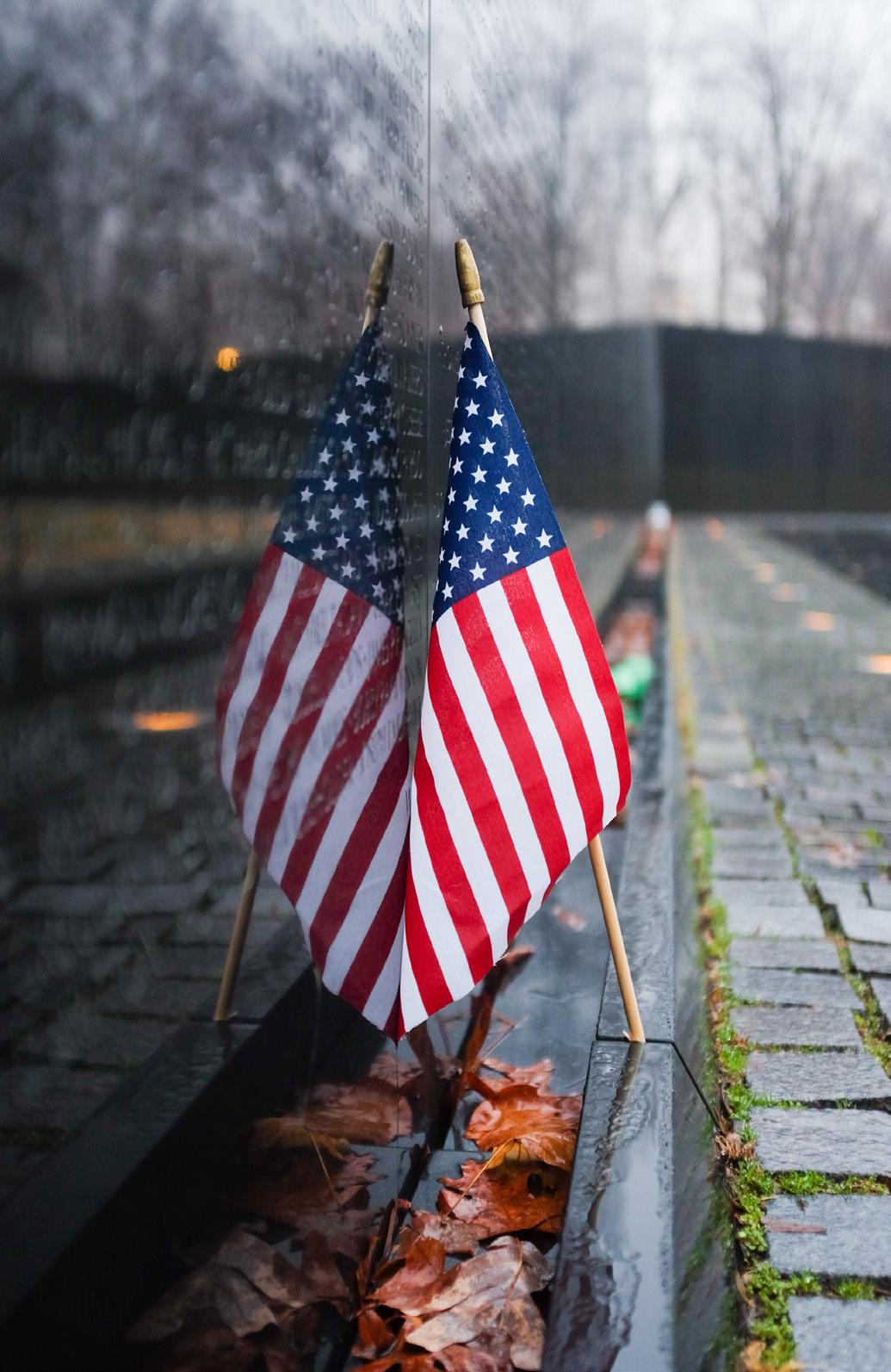
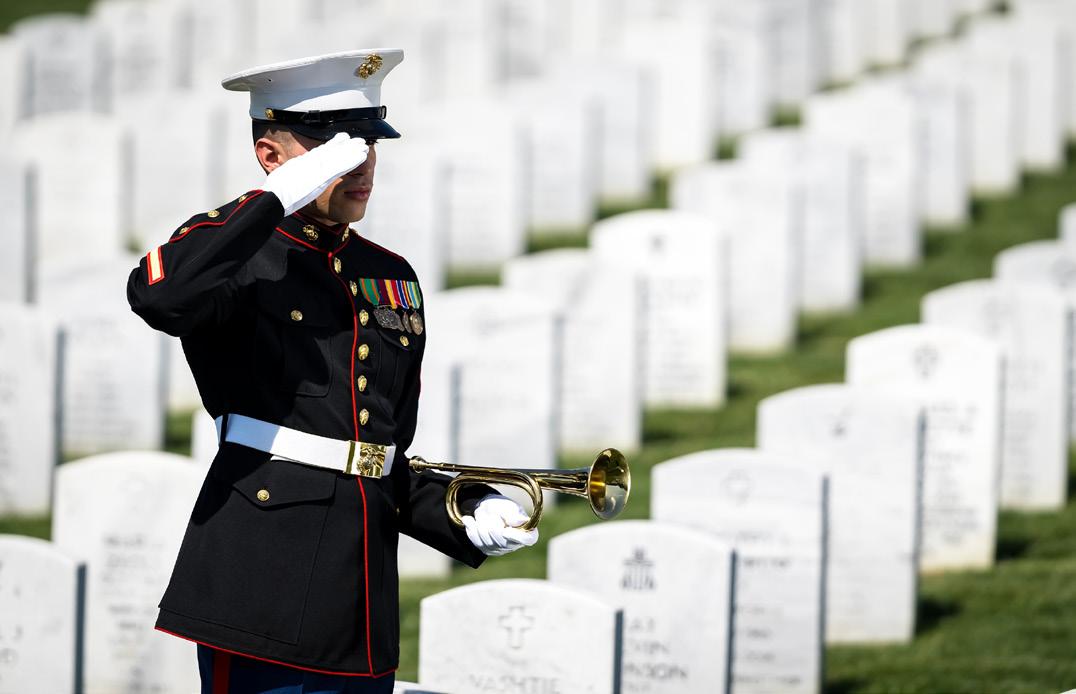
May is a time of remembrance. As Memorial Day approaches, we pause to honor the men and women who served our country and those who made the ultimate sacrifice. For many veterans and military families, this season brings pride and gratitude—but it can also bring a deep sense of grief and loss.
Grief is a natural response to loss, yet for veterans it is often layered and complex. Military service can involve the loss of fellow service members, personal identity, physical health, or a sense of safety and purpose. These losses may be carried quietly for years. When the death of a loved one occurs later—whether a spouse, parent, friend, or fellow veteran—it can reopen earlier wounds and intensify emotions tied to service and sacrifice.
Memorial Day ceremonies, flags, and shared moments of silence can be powerful and meaningful. They can also stir memories of comrades who did not come home, battles survived, or goodbyes never fully processed. Veterans and family members may notice grief showing up in unexpected ways during this time of year.
Grief affects everyone differently. Some experience sadness, longing, or loneliness. Others may feel anger, guilt, anxiety, numbness, or a desire to withdraw. Veterans may notice increased irritability, sleep difficulties, heightened alertness, trouble concentrating, or physical symptoms such as fatigue and headaches. Grief can also deepen existing challenges such as depression, anxiety, or posttraumatic stress. There is no “right” way to grieve, and no set timeline.
Families grieve as well. Spouses, partners, children, and caregivers often carry their own losses while supporting a veteran who may struggle to share what they are feeling. Having understanding, compassionate support can make a meaningful difference for individuals and families alike.
Hospice of the North Coast offers free grief and loss support for veterans and their families, whether or not hospice services were involved.
Served
Their hospice bereavement counselors provide confidential, compassionate support through individual counseling, family support, and grief groups. Services are offered at no cost, because no one should have to walk through grief alone.
Hospice of the North Coast is also a proud participant in the We Honor Veterans program, a national initiative dedicated to recognizing veterans’ service and addressing the unique experiences and needs that may affect end-of-life care and bereavement. This commitment ensures that veterans are honored not only for how they served, but for who they are.
This Memorial Day, as we remember those who gave their lives in service, it is also okay to acknowledge our own losses. Grief is a reflection of love, connection, and sacrifice. If you or your family need support, you are invited to contact Hospice of the North Coast to learn more about free grief support services. Reaching out is a way to honor the past, care for the present, and continue forward with support.
Shelly Dew serves as Director of Philanthropy and Community Outreach at Hospice of the North Coast, a community-based nonprofit dedicated to compassionate end of-life care, comfort, and support for patients and their loved ones.
Memorial Day is often seen as the unofficial start of summer, but its meaning runs far deeper.
Observed on the last Monday in May, Memorial Day honors the men and women who gave their lives while serving in the U.S. military. The day is marked by ceremonies and tributes across the country, with many people visiting cemeteries to place American flags on graves. A National Moment of Remembrance is also observed at 3 p.m. local time, inviting Americans to pause and reflect on those who made the ultimate sacrifice.
Memorial Day is sometimes confused with Veterans Day. However, the two serve different purposes. Veterans Day, observed on November 11, recognizes all who have served in the U.S. military, in both war and peace. Armed Forces Day, celebrated in May, honors those who are currently serving.
History of Memorial Day
Memorial Day originated from the tradition of Decoration Day, when people honored fallen soldiers by placing flowers on their graves.
The observance now known as Memorial Day began as Decoration Day, first formally proclaimed on May 30, 1868, by Major General John A. Logan as a day to honor those who died in the Civil War. Over time, several communities have claimed ties to its origins, including Macon and Columbus, Georgia; Richmond, Virginia; Boalsburg, Pennsylvania; Waterloo, New York; and Carbondale, Illinois.
That same year, the first large-scale commemoration took place at Arlington National Cemetery. The ceremony featured memorial drapings on the Arlington home of former Confederate General Robert E. Lee. Presided over by General Ulysses S. Grant, the event included speeches and the participation of children from the Soldiers’ and Sailors’ Orphan Home, as well as members of the Granddaughters of the American Revolution, who placed flowers on both Union and Confederate graves.
This tradition built on earlier acts of remembrance, particularly in the South. One notable example occurred on April 15, 1866, in Columbus, Mississippi, when a group of women decorated the graves of Confederate soldiers who had died at the Battle of Shiloh. Moved by the sight of neglected Union graves nearby, they placed flowers on those as well.
Following World War I, the observance expanded to honor all Americans who died in military service, not just those lost in the Civil War. In 1971, Congress officially designated Memorial Day as a national holiday—still often referred to as Decoration Day— and set its observance on the last Monday in May, aligning it with other federal holidays.
In 2000, Congress passed the National Moment of Remembrance Act, encouraging Americans to pause at 3 p.m. local time on Memorial Day for a minute of silence to honor and remember those who gave their lives in service to the nation.
Threads of Service: A Female Veteran's Reflection on Military Appreciation Month
By Lori Noonan, Navy Veteran, Army Spouse, and In-house Contributor
Every May, I find myself pausing a little longer over the framed photographs lining our hallway. There's my father in his Army uniform, taken not long before he shipped to Korea. My brother-in-law in Navy dungarees, somewhere off the coast of Vietnam. A picture of me in dress blues during my Europe tour in the early 1990s, a young Navy sailor a long way from home. A photo of my daughter as a newborn, taken at the base hospital overseas where she came into the world while I was still serving. And the most recent addition—my husband in Army service uniform, smiling beside our family at his commissioning. Two services, four wars and eras, one family. During Military Appreciation Month, those photographs feel less like memorabilia and more like a conversation across time.
Military Appreciation Month was officially designated by Congress in 1999, but its roots run far deeper than the calendar suggests. May was chosen deliberately. It already held Loyalty Day, Public Service Recognition Week, Military Spouse Appreciation Day, Armed Forces Day, and Memorial Day. Lawmakers simply tied the threads together and gave the month a name. What they recognized—and what those of us who have lived inside the military community already knew—is that service is rarely a single act. It is a continuous fabric, woven from the contributions of those in uniform, those who wait at home, and those who came before.
The history of women in that fabric is older than most Americans realize. Women served as nurses, cooks, laundresses, and even disguised soldiers during the Revolutionary War. More than 33,000 served as nurses in World War I, and over 350,000 women wore the uniform in World War II through the WAC, WAVES, SPARS, and the Women Airforce Service Pilots. The 1948 Women's Armed Services Integration Act finally gave women permanent status in the regular and reserve forces. By Korea, where my father served in the Army, women were a small but permanent presence. By Vietnam, where my brother-inlaw served in the Navy, roughly 11,000 American military women were stationed in-country, most as nurses, with thousands more serving afloat and ashore across the Pacific. By the time I raised my right hand and joined the Navy, women were filling roles across nearly every career field. During the Gulf War era, more than 40,000 women deployed to Southwest Asia—the largest deployment of American military women in history up to that point—while many thousands more, like me, served at posts and
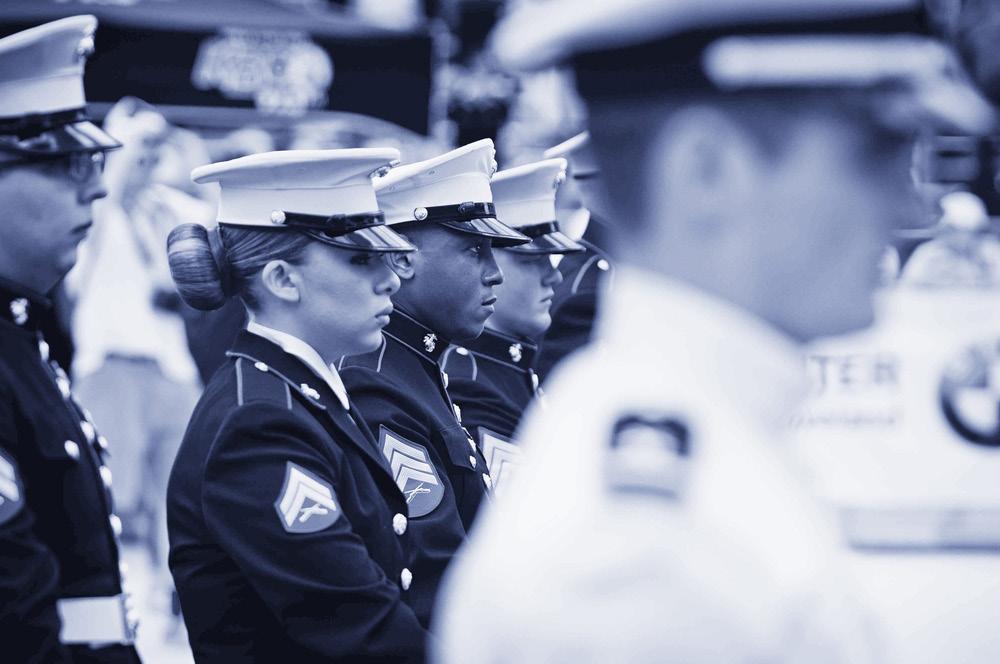
on installations across Europe and around the world, holding the line in places that didn't make the nightly news but were no less essential to the mission. We were yeomen and corpsmen, mechanics and intelligence specialists, military police and communicators—enlisted sailors, soldiers, airmen, and Marines doing the daily, unglamorous work that keeps a military running. In 2016, the last ground combat roles opened to women, closing a chapter that had been slowly turning for more than two centuries.
But uniforms tell only half the story. Military Spouse Appreciation Day, established by President Reagan in 1984 and observed on the Friday before Mother's Day, recognizes the quieter service that holds families together. I have lived on both sides of that day. As a sailor, I knew what it meant to wear the uniform far from home. As an Army spouse, I have learned what it costs to stay. Spouses move, on average, every two to three years. They navigate solo parenting through deployments, build new communities again and again, and often pause their own careers so that the mission can continue. The Department of Defense estimates that more than 1.6 million Americans currently hold the title of military spouse, and their endurance is its own form of patriotism.
What I hope readers take from this month is not a single gesture, but a habit of attention. Thank a veteran, certainly. But also notice the spouse managing a household alone, the child born overseas who has lived in four countries before kindergarten, the Gold Star family carrying a loss that does not fade with the news cycle. Support the nonprofits doing the steady, unglamorous work— organizations in your community and those that serve nationally. Hire a veteran. Mentor a transitioning service member. Show up for the funeral, the homecoming, the deployment send-off.
When I look at those hallway photographs—Army green in Korea, Navy blue off Vietnam, a young sailor in Europe, and the soldier my husband still is today—I do not see separate stories. I see one long line of ordinary people who said yes when their country asked. May is our month to say thank you back.
Author Bio
Lori Noonan is a nonprofit executive and consultant with more than 30 years of experience helping organizations grow their impact. A Navy veteran, she is passionate about strengthening communities and elevating the voices and experiences of those who have served.
National Military Appreciation Month
National Military Appreciation Month takes place throughout May, from the 1st through the 31st. It is a time set aside to recognize and express gratitude to the men and women who have served in the U.S. military. The month also includes key observances such as Armed Forces Day and Memorial Day, offering meaningful opportunities to reflect on the service and sacrifices of the military community.
May 9th, 2026
Military Spouse Appreciation Month takes place in May and recognizes the sacrifices and vital contributions of military spouses. Military Spouse Appreciation Day is observed on the Friday before Mother’s Day, which this year falls on May 9.
Real Talk: Mental Health
By: Giselle Vallejo, LPCC Clinician at The Steven A. Cohen Military Family Clinic at VVSD www.vvsd.net/cohenclinics
Celebrating Military Spouses: The Strength Behind the Uniform
Each year in May, Military Spouse Appreciation Day and Military Appreciation Month offers an important opportunity to recognize a group whose service is often unseen, yet deeply felt, military spouses. While much of the attention rightfully honors service members, it is equally important to acknowledge the resilience, adaptability, and dedication of the people who support them behind the scenes.
Military spouses navigate a unique lifestyle filled with constant change and uncertainty. One of the most significant challenges they face is frequent transitions. Moves to new duty stations can happen every few years, often requiring spouses to relocate, sometimes ahead of their partner, to set up a new home, enroll children in school, and establish a sense of normalcy in an unfamiliar place. These transitions demand not only logistical coordination but also emotional resilience, as spouses repeatedly leave behind communities, friendships, and routines they’ve worked hard to build.
For those who are parents, the responsibility can feel even greater during deployment, training, or temporary duty assignments, as military spouses often take on the role of solo parent. They manage daily routines, provide emotional support to their children, and maintain stability within the household all while coping with the absence of their partner This dual role requires patience, strength, and an incredible capacity for balance.
In addition to managing the home, many military spouses are responsible for navigating family finances. This includes budgeting, planning for future events, and adapting to changes that can come with military life.
At the same time, they are often working to build or sustain their own careers and educational goals. However, frequent relocations can make it challenging to maintain consistent employment or pursue long-term professional development. Despite these barriers, many spouses demonstrate remarkable perseverance, seeking new opportunities, reinventing their career paths, and continuing their education in creative and flexible ways.
Another often overlooked aspect of military spouse life is the ongoing effort to build and rebuild support networks. With each move comes the need to establish new friendships, connect with local resources, and find a sense of belonging in a new community. This can be both exciting and exhausting. Yet, time and time again, military spouses rise to the challenge, creating connections not only for themselves, but also for their families.
Amid all these responsibilities, military spouses continue to nurture their relationships and prioritize their wellbeing. They find ways to stay connected with their partners across distance and time zones, maintain family traditions, and cultivate moments of joy and stability during uncertainty. Their strength lies not only in what they manage, but in how they continue to show up with dedication, flexibility, and unwavering support.
In recognition of this strength and dedication, our clinic is honored to host a special Military Spouse Appreciation Night, “Strength in Bloom,” on Tuesday, May 12 from 5:30–7:00 PM at The Steven A. Cohen Clinic at VVSDin San Diego.
This event is designed to celebrate and uplift our military spouse community in a meaningful and creative way. Attendees will be invited to step into a “bloom bar,” where they can design their own custom bouquet as a symbolic opportunity to reflect on growth, resilience, and beauty during life’s challenges.
Events like these are more than just gatherings, they are intentional moments of recognition, connection, and care. They remind military spouses that their experiences are seen, valued, and worthy of celebration. If you are interested in this event, please email the clinic for registration details: info@cohenvvsd.org
This month, let us take a moment to recognize and celebrate the invaluable contributions of military spouses. Their sacrifices and resilience are an essential part of the military community. By honoring their experiences, we not only show appreciation, but we also bring visibility to the strength it takes to stand beside those who serve.
Giselle Vallejo, LPCC
Learn more by visiting vvsd.net/cohenclinics
for Veterans, Service Members, and their Families
Cohen Clinics provide therapy to post-9/11 veterans, service members, and their families, including National Guard / Reserves.
CVN Telehealth, face-to-face video therapy available statewide.
Midway Honors Vietnam War POWs with New Exhibit
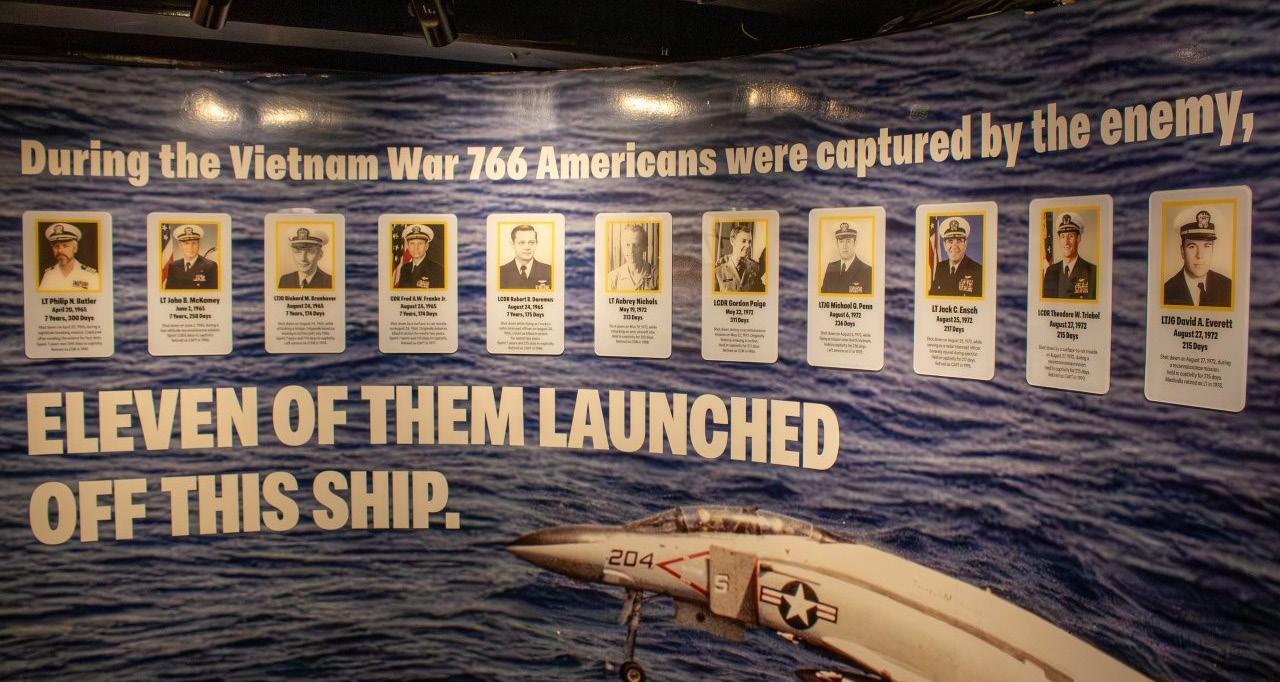
With the signing of the Paris Peace Accords in January 1973, the U.S. military’s involvement in the Vietnam War officially ended. As part of that agreement, 591 American prisoners of war were released from captivity as part of Operation Homecoming.
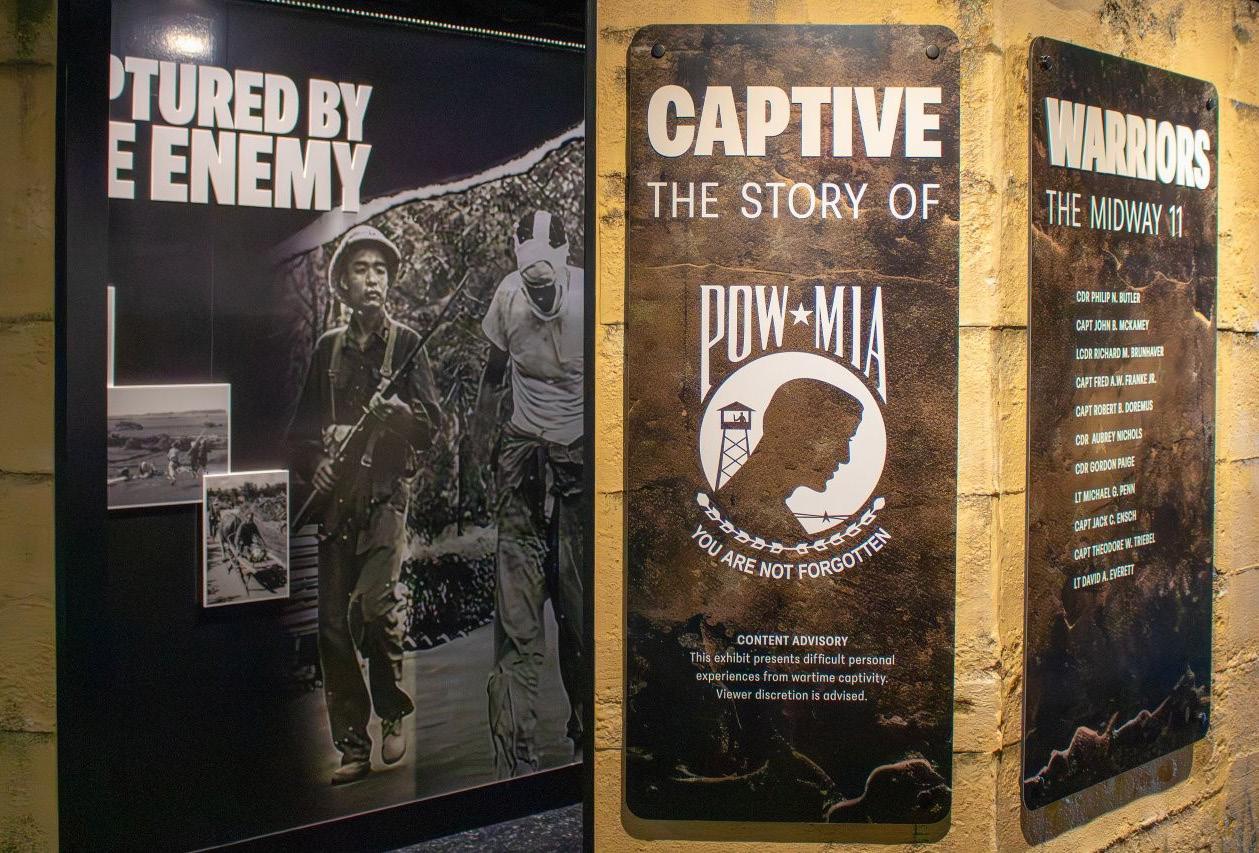
Included in the repatriation were 11 aviators who were assigned to squadrons based on the USS Midway (CV41). The length of their captivities ranged from several months to several years.
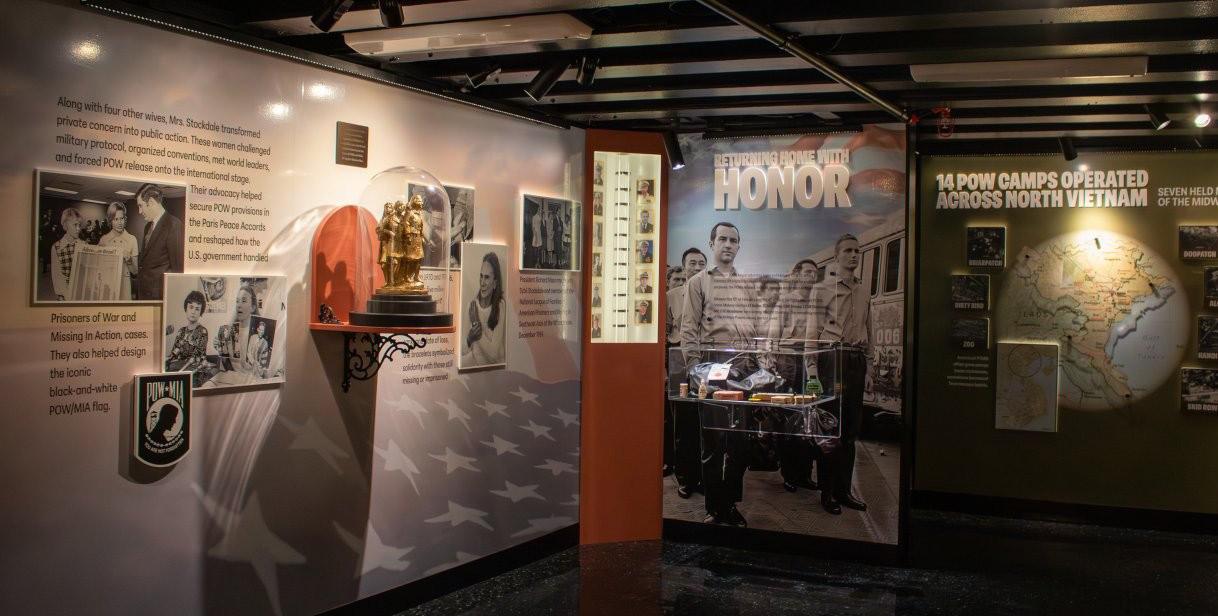
As a tribute to all American POWs, and specifically the former prisoners of war assigned to Midway squadrons, the USS Midway Museum has opened a gripping new exhibit called “Captive Warriors: The Midway 11.” This powerful new exhibition tells the stories of courage and honor during the Vietnam War through the eyes of those Midway aviators who endured harsh conditions, isolation, starvation and brutal treatment at the hands of their North Vietnamese captors.
“I think the exhibit is wonderful, especially considering the space the museum’s exhibits team had to work with,” said retired Navy Capt. Jack Ensch, a former USS Mdiway naval flight officer who was a prisoner of war in North Vietnam for seven months. “I also liked that it is specifically about the USS Midway POWs.”
The decision to center the exhibit around the Midway’s POWs was a deliberate one.
“We made the choice to move from the broader story of POWs in Vietnam to a story that was deeply personal to this ship,” said Bill Coleman, Midway’s exhibits manager. ”The Midway 11 gave us a way to anchor the experience in real people connected directly to Midway. It shifts the exhibit from history you read to history you feel. Visitors are not just learning about captivity, they are seeing it.”
Midway’s exhibits team spend months engaged in comprehensive research to ensure its accuracy.
“Our thorough research combined digging into official records, pilot reports and archival material with firsthand accounts wherever possible,” said Coleman. “Rudy Shappee, our content developer, spent time crosschecking timelines, capture circumstances and lengths of captivity. Just as important, we focused on lived experience. That drove decisions about space, lighting and sound. The goal was not just to present facts but to build an environment grounded in truth.”
“My role was as the developer of the story line we wanted to pursue,” said Shappee, who has been with the museum volunteer since 2001. “I had to balance the graphic descriptions of the torture experienced by the prisoners with the heroics of both the prisoners and their wives in the small amount of space to tell their stories.”
To help realize the day-to-day experiences of what life was like in the prison camps, the exhibits team turned to several former POWs.
“Former POWs and those connected to them were critical to us getting it right,” said Coleman. “They helped validate details, correct assumptions and bring clarity to moments that are easy to misrepresent. In some cases, they shape that felt staged or exaggerated. Their input kept the exhibit honest and grounded.”
The most challenging part of creating this exhibit was trying to strike an appropriate balance on how the exhibit would be presented to Midway’s visitors.
“In this exhibit, you are dealing with real suffering, and it is easy to either soften it too much or push it too far,” said Coleman. “We had to find a line where the experience is honest without being overwhelming. Translating something like isolation, uncertainty and endurance into a physical space is not straightforward. Every decision, from how confined the space feels to how much information is presented, had to be carefully considered.”
The exhibit immediately received positive response, especially from former POWs and other Vietnam Warera veterans.
"The POW exhibit is very well done,” said Paul Granger, a former U.S. Air Force B-52 pilot who became a POW in December 1972. “The memorabilia on display and cell structures brought back many memories. The dark lighting was perfect for effect, and the single prison door with the small, barred widow was just like the one I was in during solitary confinement.”
“This is a must see for Vietnam veterans,” said Roger Hayes, who served the U.S. Navy in the late 1960s.
The POW story is a very difficult one to tell, however, through exhaustive research and thoughtful planning, Midway’s exhibits team put together a tremendously impactful experience for the museum’s guests.
“I truly believe that this exhibit is grounded in truth and built by people invested in the story,” said Coleman. “Our visitors are not just reading panels, they are stepping into a story. That was the goal from the beginning and I think we achieved it.”
www.midway.org/contact/volunteer-opportunities
www.midway.org
Stories That Connect Us: Why the GI Film Festival San Diego Matters Now More Than Ever
This year’s festival runs May 6-8, 2026, screening 15 films for, by, and about service members and veterans.
It’s a challenging time to be a service member and veteran. Uncertainty about the future, inflation, division in our country, global conflicts, and fatigue with a chaotic news cycle can weigh on our psyches and make it hard to feel hopeful. However, it’s in moments like these that authentic storytelling becomes more essential than ever. Storytelling connects us to our common humanity, breaks down stereotypes, and inspires conversations that bring us closer to others.
That is what our country needs right now, and this is what the GI Film Festival San Diego (GIFFSD) aims to bring to audiences during its 11th festival run from May 6-8, 2026 at the Museum of Photographic Arts at the San Diego Museum of Art (MOPA @ SDMA) in Balboa Park. (https://gifilmfestivalsd.org/2026/)
Since 2015, KPBS has provided attendees with vital connection and food for thought through this unique multi-day event that fosters reflection, resilience, and a deeper sense of belonging. This year’s festival features 15 films that explore themes like transitioning to civilian life, mental health and family dynamics, healing, reconciliation, identity, and art as a path to healing. Each screening includes post-film discussions, creating meaningful dialogue between filmmakers, audiences, and subject-matter experts.
This year, more than ever, the festival organizers encourage audiences to attend with curiosity, not assumptions, to create space to connect with and reflect on the authentic stories shared by military members and veterans from around the world. Attending GIFFSD and watching the films being showcased isn’t just going to the movies: it’s a way of supporting real human stories in a time of division and mistrust.
Importantly, GIFFSD is a festival that encourages civilian attendees to come with an open mind. Screenings and panel discussions create opportunities for intergenerational exchange, bringing together veterans and civilians across generations to ask questions, share perspectives, and learn from one another. The films span branches of service, global conflicts, life stages, and cultures from around the world. Ultimately, the festival aims to broaden worldviews, humanize global experiences, and foster connection at a time when the world can often feel disconnected.
“For over a decade, we’ve seen what happens when attendees simply show up and listen,” says Nico Marcolongo, longtime GI Film Festival San Diego advisory committee member and U.S. Marine Corps veteran. “Barriers come down. Conversations open up. And suddenly, experiences that may have once felt distant become deeply personal. That’s the lasting impact of the GI Film Festival San Diego. It creates space for understanding, connection, and a shared sense of humanity that stays with you long after the credits roll.”
Making “Military Stories” Human Stories
Hollywood blockbusters often glamorize war or misrepresent service members, leading to skewed views of active duty military members or veterans. The shorts and feature-length films in this year’s festival aim to go deeper, dispelling stereotypes and painting service members as real, multi-faceted human beings. Identity and purpose, transition and change, belonging and isolation, resilience and healing; whether or not a person has served in the military, these are all universal human experiences, and major themes of the films shown at GIFFSD.
There is abundant scientific evidence that storytelling can build resilience and reduce feelings of isolation, particularly for military service members, veterans and their families, and help others understand their experiences. Film creates a shared emotional language that connects audiences across backgrounds. When veterans see their true experiences reflected on screen, they feel validated and able to better communicate and connect with the community around them. When civilians see these stories, they gain insight and feel more empathy for a population whose struggles they may not understand.
GIFFSD is one of the only film festivals in the world that gives veterans and service members control over their narratives, and the ability to tell stories that go beyond stereotypes and headlines. Many of the filmmakers behind this year’s festival lineup are service members or veterans themselves, and are committed to protecting their community’s story, preserving truth, dignity, and nuance about the military experience.
Stories remind us that we are more alike than different. In uncertain times, choosing to listen and engage is powerful. Attending GIFFSD, supporting the festival, or even simply remaining open to hearing stories like the ones that will be told at the festival is an act of connection and understanding.
How to Get Involved
The GI Film Festival San Diego is open to all. Tickets start at $15 per screening and $10 for military, veterans, students, and KPBS members. Opening Night tickets start at $25 each or $20 for military, veterans, and KPBS members. Multi-ticket packages are also available. To learn more, visit GIFilmFestivalSD.org
“HOME FROM THE VIETNAM WAR,” an 80-minute documentary feature directed by Mat Hames. The film serves as the Opening Night selection for the 2026 GI Film Festival San Diego on May 6 starting at 6 p.m.
“The Craftsman,” making its San Diego Premiere at the 2026 GI Film Festival San Diego on May 8 during the Narrative Shorts Block beginning at 7:30 p.m. The film is directed by Devin Scott.
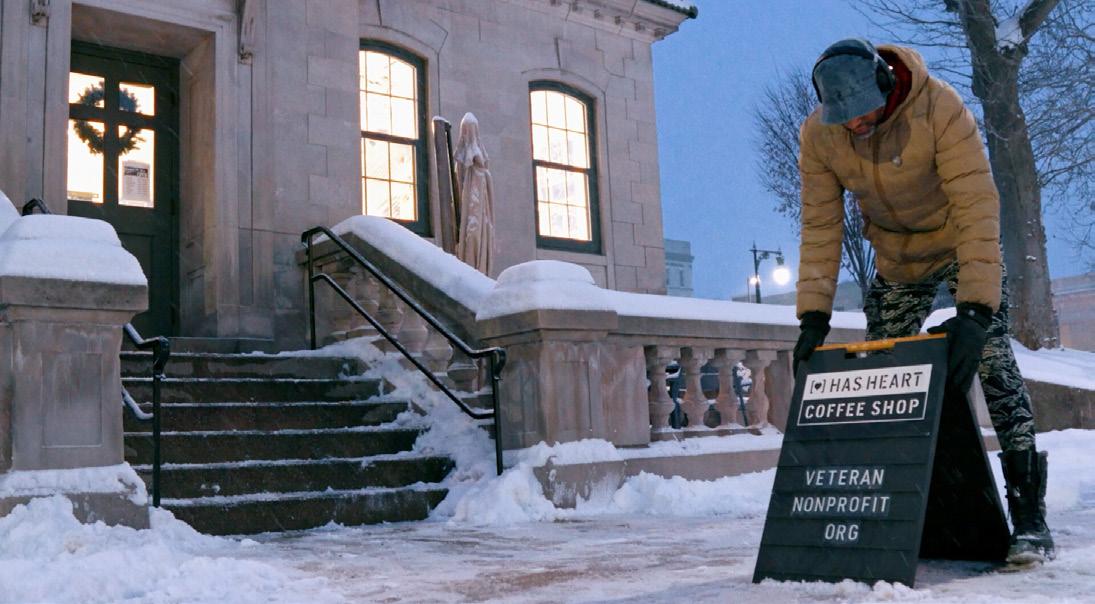
“[HAS HEART],” a 13-minute documentary short that will make its West Coast Premiere at the 2026 GI Film Festival San Diego on May 7 starting at 7:30 p.m. The film is directed by Tran Hoang Calvin.
“Ugo: An Artist at War,” directed by Steve “Nemi” Nemsick. The film will screen at the 2026 GI Film Festival San Diego on May 7 at 7:30 p.m.
“Hope... In the Aftermath of War,” directed by Daniel Bernardi. The film will make its World Premiere at the 2026 GI Film Festival San Diego on May 7 at 5 p.m.
“Veterano,” directed by Patrick Epino. The film will make its San Diego Premiere at the 2026 GI Film Festival San Diego on May 8 during the Narrative Shorts Block beginning at 7:30 p.m.
AMERICAN SOLITAIRE,” a 95-minute narrative feature directed by Aaron Davidman, screening at the 2026 GI Film Festival San Diego on May 8 at 5 p.m.
Celebrating 250 Years of The USA Through ART with Army Veteran John Melillo
Homeland Magazine interviewed oil painter and Army veteran John Melillo, who continues to share his artistic journey of overcoming PTSD. Through his work, he also aims to honor and celebrate the 250th anniversary of the United States.
Homeland: How does ART continue to play a major role that Saved your life?
John Melillo: My PTSD Vietnam Experience surfaced dramatically when I retired. Never involved with Art before, I believe, God gave me this gift as a 3Rd ACT in life finding Healing through ART. Every day I’m working on a Painting to create something that’s meaningful for me and hopefully for the viewer.
Homeland: How Does Your Art reflect & celebrate the USA’s 250th Anniversary in July?
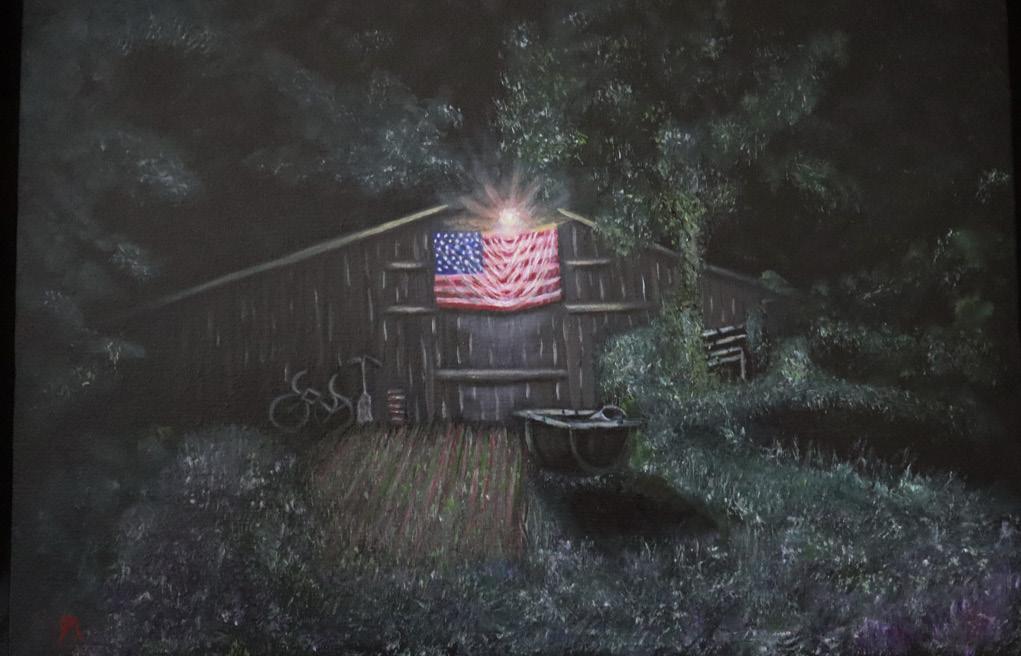
John Melillo: This year for the 250th USA Anniversary, I did a flag Oil painting at night titled “THE Old Barn, Oak Street, Westhampton, Circa 1955”. I use to pass this setting many times when my father took me fishing as a boy at the Shinnecock Inlet in the Hamptons, NY. I remembered it clearly and now that fond memory with
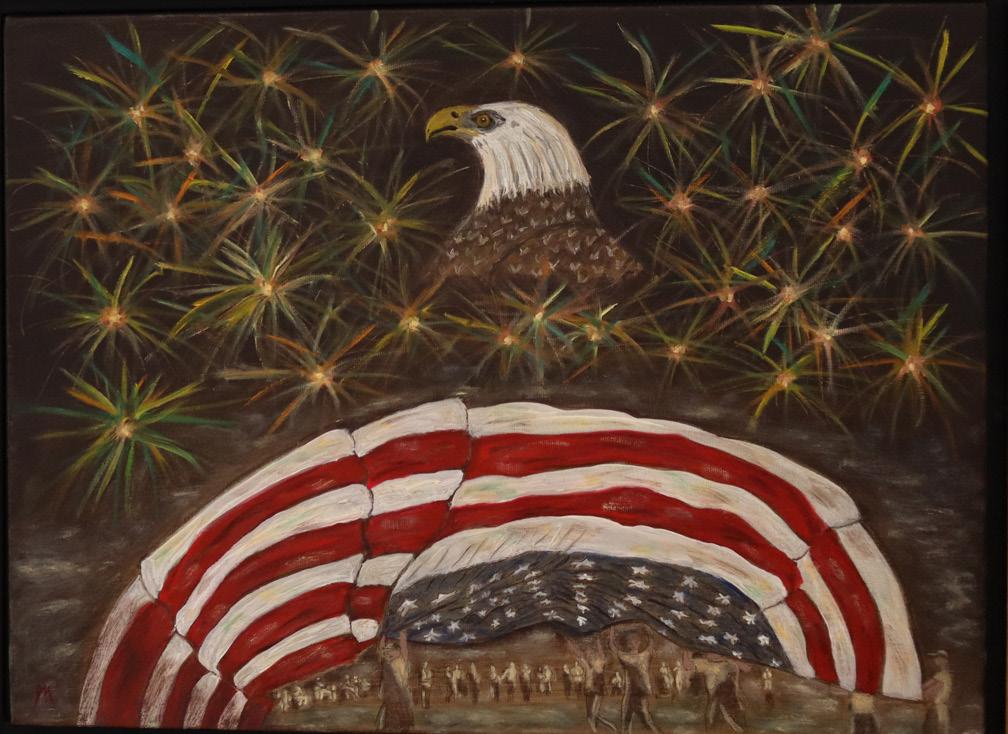
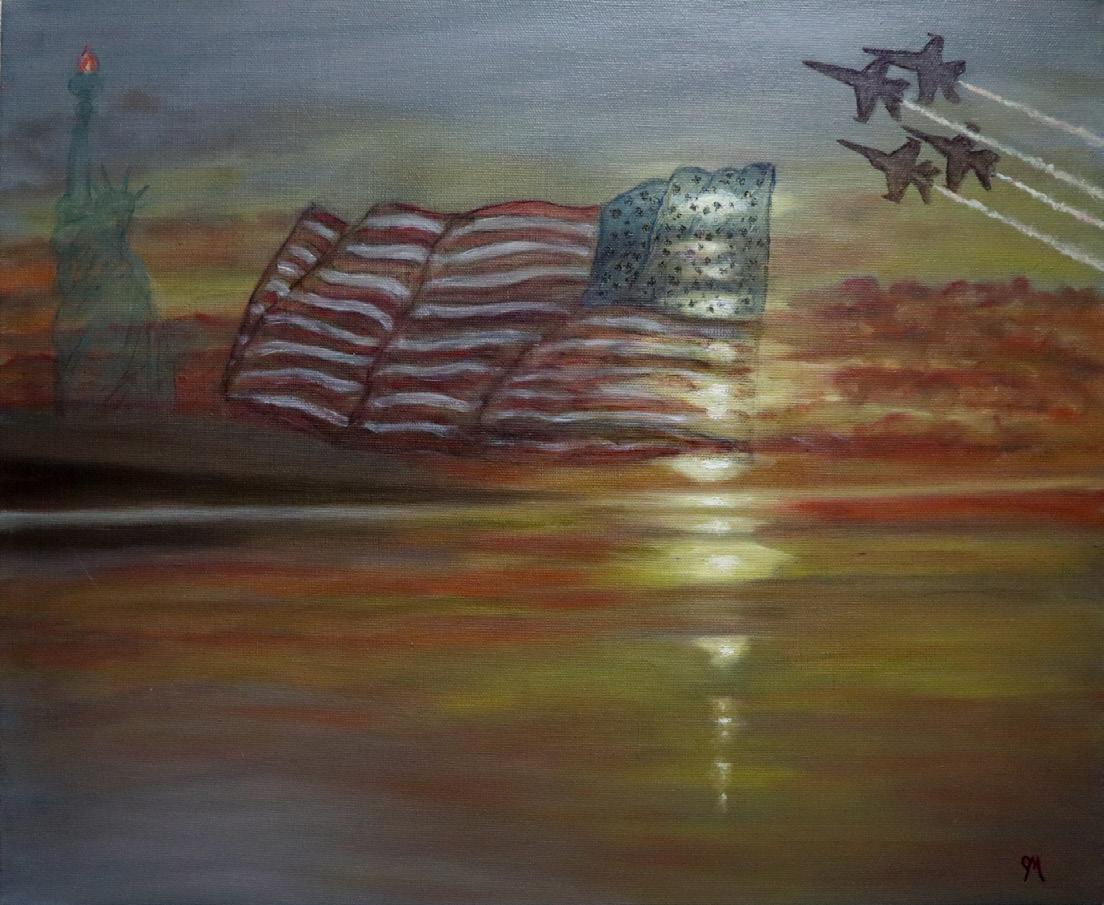
my father that will last as long as the painting exists. I have painted a new Flag each year for my Life Goes on Series that will also honor this monumental time. One was called the One was called the “Strength, Hope, Honor & Courage” and “Proudly We Hold our Flag High.” It’s all about our community coming together to celebrate this GREAT NATION and all the sacrifices it took to make it so.
Homeland: What has played a role today with your Art and being a Veteran?
John Melillo: Like many Vietnam Vets, I came home to a hostile environment because of all the Anti-War sentiments. Like most Vets, I tucked it away until I decided to try and help my fellow Vets with their PTSD as well as myself. But more than that, In the last few years, I’ve heard the overwhelming “Thank You For Your Service” comments. Very few guys I served with heard the outpouring of those 5 words (particularly the Vietnam Guys). So whether I’m at a Medal Ceremony, the Vet of the day at sporting events, TV Interviews, etc , I always want to DEDICATE and PASS ON any honors to all those I served with that came home or didn’t make it to hear that sort of appreciation.
Old Barn, Oak Street, Westhampton Beach, NY Circa 1960 by John Melillo
Homeland: Tell me about what’s ahead with your ongoing efforts to INSPIRE other veterans to heal from PTSD and share your ART journey?
John Melillo: I am presenting my ART at a few Veteran Resource Fairs that are happening in Suffolk County NY in the East End this April and May. This provides me the opportunity to meet and talk with other Veterans (+ first responders) about how Art Saved me. I will include them in future events I do with Art exhibits, talks and even a few art classes that I’ll teach to Veterans. I always encourage them to find something they enjoy to do.
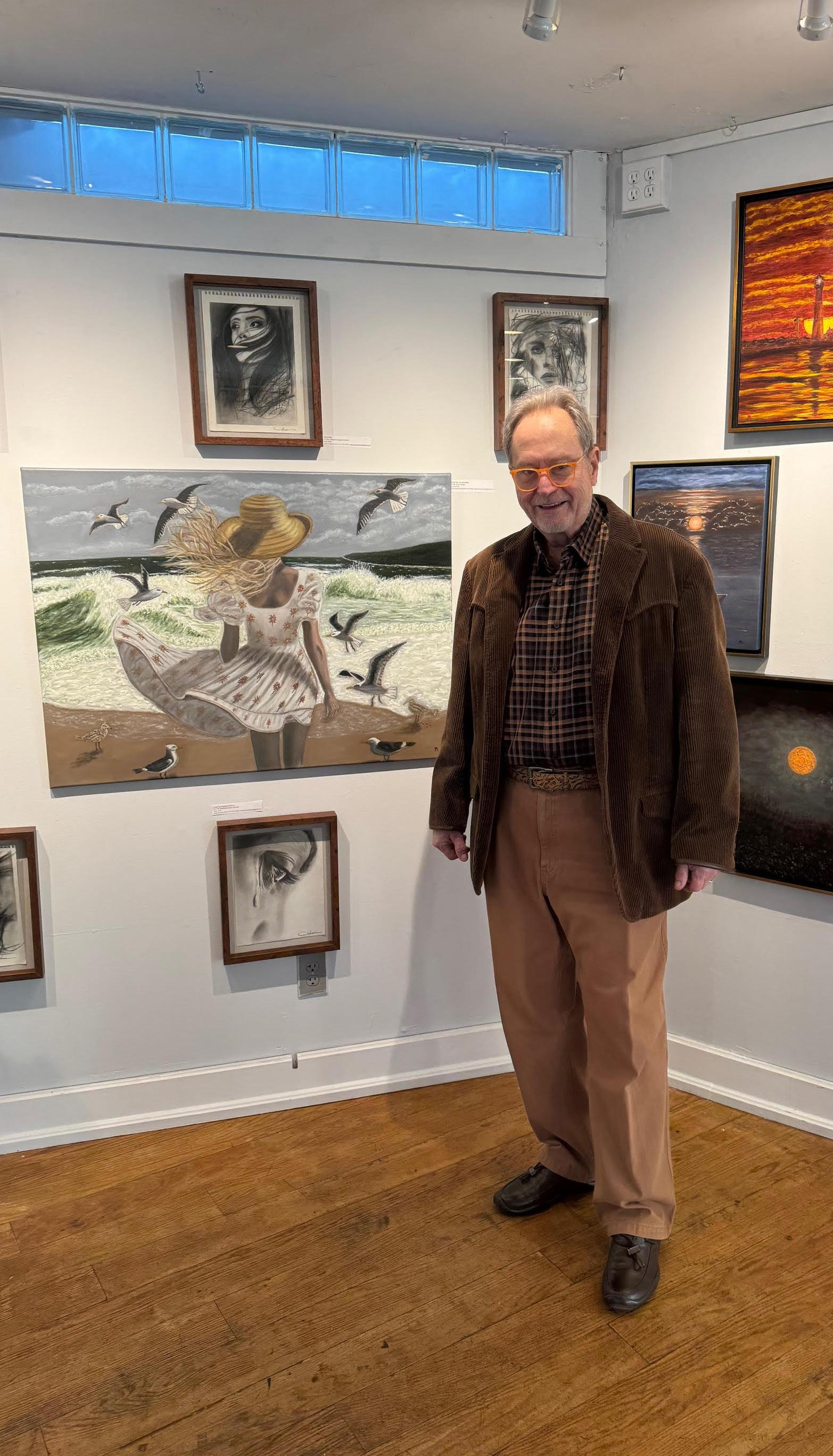
I have permanent Art collections for viewing at the Westhampton Starbucks and my Art is also up in Riverhead, NY Starbucks. What’s unique about these pieces is I did them with a Realistic Style and the paintings represent that specific area of Long Island where the stores are located. I also have pieces with the J. Mackey Gallery from Easthampton, NY. I am also currently featured in “THE DISCOVER L.I. TV commercial as a Disabled Veteran who paints the East End. I also support my Veteran organization friends by donating pieces of my ART to help their initiatives and raise awareness.
Thank you, Homeland Magazine for this honorable platform to share my story and Flag paintings as you make a huge difference to educate and inspire others.
Please visit www.artfeelingsjm.com and Instagram: @artfeelingsjm. FOR ART SALE!
Proudly Hold Our Flag High! by John Melillo
Strength, Honor, Hope, and Courage by John Melillo
Theater Vet Art Show
Inside Caregiver Fatigue: Practical Advice from Two Veteran Caregivers
By Cynthia Weiss, Wounded Warrior Project
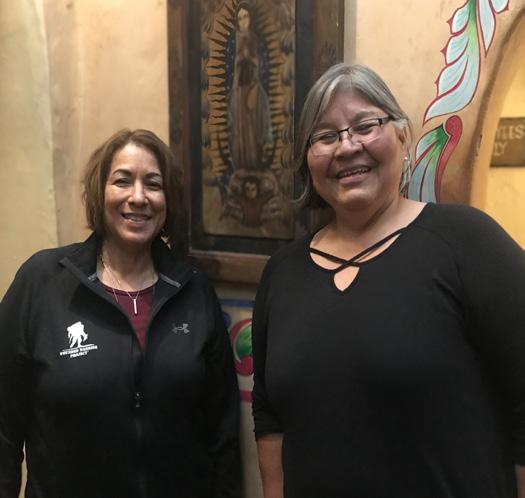
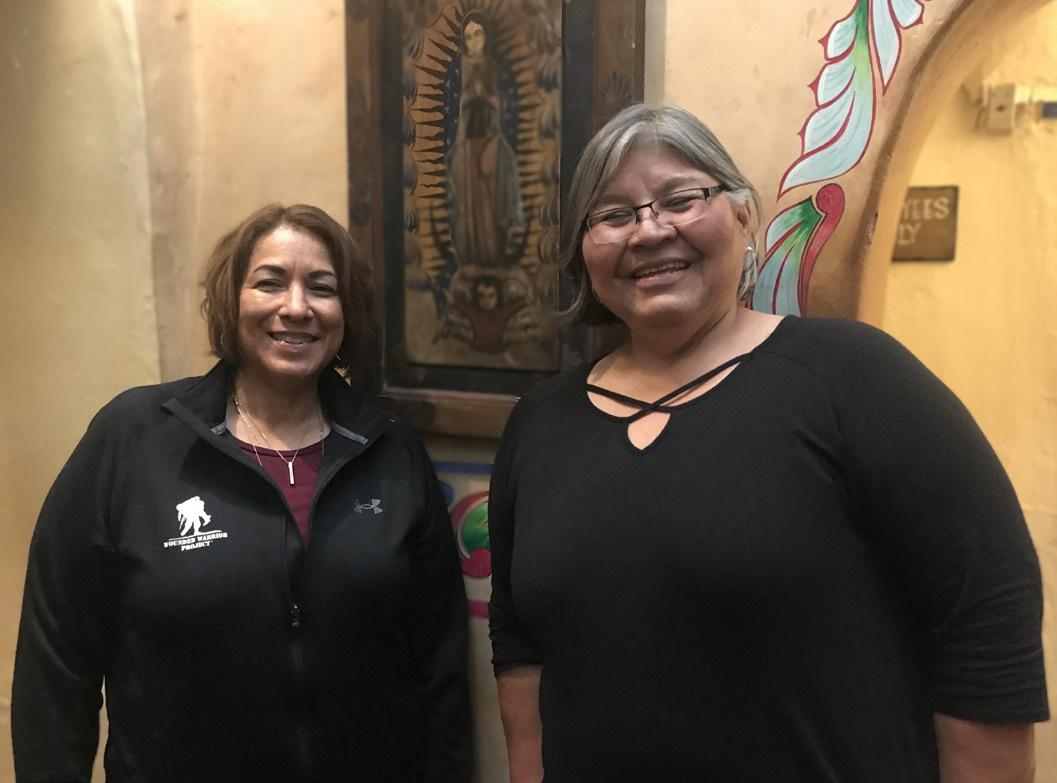
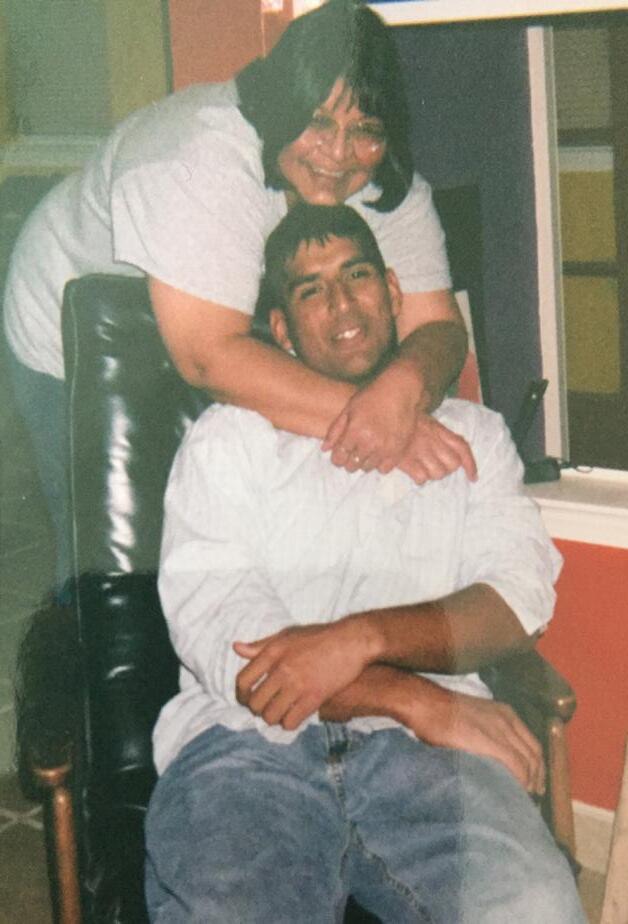
Cindy Parsons and Mary Tallouzi live more than 1,500 miles apart, but share a powerful bond. Both are single mothers of Mexican heritage whose sons were injured in Iraq after joining the Army post-9/11. Their experiences as caregivers shaped not only their lives but also their purpose.
The women connected in 2011 at a Wounded Warrior Project® (WWP) event. Both were motivated by their experiences as caregivers to become advocates for the evolving needs of military veterans and their loved ones. Today, they are best friends who advocate, motivate, and support military caregivers.
Who is a Caregiver?
A caregiver supports another person by helping with daily living. They may take tasks such as personal care and hygiene, medication administration, coordinating with other healthcare providers, and transportation.
According to the 2024 RAND report, America’s Military & Veteran Caregivers: Hidden Heroes Emerging from the Shadows, 14.3 million Americans serve as military or veteran caregivers. Many face significant emotional strain, with nearly 6 in 10 reporting they feel excessively burdened.
The ongoing demands often lead to caregiver fatigue, a condition marked by exhaustion, irritability, anxiety, and depression.
But renewed hope and joy are possible with the right resources and support from others.
Life Takes a Backseat
Cindy and Mary admit that their lives took a back seat to their children’s needs.
“Life stops for the caregiver when they take on that role. When Daniel was injured, I experienced not just the loss of the child I knew but a profound change in my life,” said Mary.
“You lose your identity when you become a caregiver. You are no longer a member of your community. You may not even be earning your own wages. You don’t have a normal weekend or a day off,” Mary explained.
During the almost three years she spent caring for Daniel, Mary went without medical care for herself.
“I didn’t see my primary care physician the whole time I cared for my son,” she said. It wasn’t until seven months after his death in 2009 that she finally sought support for her health.
Tips to Manage Caregiver Fatigue
Below, Mary and Cindy share their top tips on navigating and overcoming caregiver fatigue.
1. Accept Offers for Help – And Ask for Help
Mary was first introduced to WWP™ when Daniel was in the hospital. A member of the Benefits Services team would call periodically. “He was trying to help, but he was just a voice on the phone. I didn’t have time for him. I was only focused on getting my son the care he needed,” she said.
Eventually, Mary realized accepting help was crucial. “At one point, I felt so lost with everything. I didn’t know who to turn to and Wounded Warrior Project became a lifeline. If I had a question, wanted to talk through something, or needed help to execute something, I called them,” she said.
Her advice: “If someone offers assistance, take it.”
Cindy adds that speaking up and being specific when you need something is important. “You may not realize what you need, but when you do, explain what and why you need it.”
Mary with son Daniel
Caregivers, Cindy Parsons (left) and Mary Tallouzi
2. Build a Support Network
Trusting someone else to step in and help care for your loved one is hard. Overcoming that hurdle, though, is significant to avoiding caregiver fatigue.
“It takes time to build relationships with people, whether family, friends, or other care providers, to have the confidence they will care in the same way you do, but it’s necessary to build a solid support system,” said Cindy.
WWP was instrumental in helping Cindy connect with others. “Talking with others who understand your experiences can be incredibly soothing. They become your shoulder, your partner,” she said.
She encourages caregivers to learn more about what WWP offers, including support for children. “Children especially, even if they do not have daily responsibilities for their ill or injured loved one, may need support. It’s important for children of wounded warriors to connect with others who can relate to their experiences,” she said.
3. Schedule Self-Care Time
Self-care is essential for caregivers to maintain their mental health and overall wellness. Neglecting personal care can also have consequences for both the veteran and the caregiver.
“You feel guilty taking time for yourself,” said Cindy, who attributes a breast cancer diagnosis to a lack of self-care. “I was so focused on caring for Shane that I let all my preventative care go. I also didn’t realize until later how depressed I was.”
Cindy with her son Shane
After attending a WWP caregiver retreat, Cindy realized the importance of self-care.
“If I don’t care for myself, what does that look like for Shane? The result would not be good for him — he would go to a nursing home,” she said.
“Once I realized that, I started to pay more attention to myself.
I still struggle with it, but I’ll take a walk, get a massage, or work in my garden.”
Cindy suggests finding activities that bring joy and scheduling time on your calendar.
4. Reduce Stress, Build Resilience
When things get stressful, both women say they turn to prayer, exercise, and alternative therapies, which also helps them build resilience.
“You have to find something you can focus on and go to on the spur of the moment. For me, it was meditation,” explained Mary. “Meditation taught me how to bring my blood pressure down and improve my health overall.”
5. Seek out Long Term Care Resources – For
You and Your Warrior
As warriors and caregivers age, new obstacles inevitably arise.
“Our needs and the needs of our loved ones will manifest in different ways in the future. Being aligned with an organization like Wounded Warrior Project can ensure you, as a caregiver, don’t get overwhelmed but also that your loved one has the long-term support they need,” said Cindy.
WWP’s Independence Program provides customized support, helping families navigate complex financial, legal, residential, and care needs now and in the future. Additionally, WWP offers caregiver-specific resources to reduce stress and enhance support, including peer support groups, mental health care, and respite care services.
The Last Word: Be Proactive
Caregiver fatigue is real. Being proactive is key.
“Everyone deals with stress and depression differently based on their past, their culture, and the level of care their loved one requires,” said Cindy. “What’s important is being proactive to avoid burning out.”
Mary concurs: “You need to be your best to give your loved one your best. If you don’t get care for yourself, you can’t give care.”
As members of the Warriors Speak team, Mary and Cindy speak at events, sharing about WWP programs and services or caregivers.
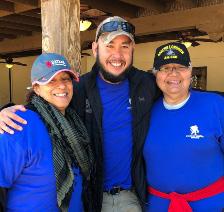
WWP enabled Cindy and Mary to connect with other caregivers and build a support network.
To learn more, visit woundedwarriorproject.org or call 888 ALUM (997.2586) to connect with the WWP Resource Center.
and therapy as treatments for PTS.
To Qualify, You Must...
• Be a veteran of the U.S. armed forces or first responder
• Have symptoms of Posttraumatic Stress for at least 3 months
• Be available for both in-person and additional online sessions
Interventions
• You may receive intervention for your PTS symptoms in the form of either Transcendental Meditation (TM) or Present Centered Therapy (PCT).
• Neither intervention involves medication or discussing traumatic experiences.
Compensation
• Qualifying participants will be financially compensated over $800. Find
Month of the Military Caregiver
Observed every May, the Month of the Military Caregiver pays tribute to millions of caregivers nationwide. Honoring those who care for veterans strengthens support for service members and their families, while also shining a light on individuals whose daily efforts make them caregivers—even if they don’t use that label themselves.
Caregivers include spouses, parents, children, and other relatives of wounded veterans, though coworkers, neighbors, and friends often assume caregiving roles as well.
They deliver essential care and support that helps their loved ones recover more quickly—while also reducing millions in national healthcare costs. This observance serves to raise awareness not only of veterans, but also of the dedicated individuals who care for them.
If you’re interested in supporting the care of a veteran—regardless of your level of training, availability, or familiarity with local needs—it’s a great idea to connect with the Department of Veterans Affairs. Reaching out to a nearby field office or medical center can help you explore volunteer opportunities that align with your time, skills, and interests.
CAREGIVER SELF CHECK-IN
So often as caregivers, we are running so hard, putting ourselves last, and not realizing we are burnt out until we fall ill. Or we know we’re over-whelmed, but we accept it without question. What happens when the caregiver is down for the count – the wheels have a tendency to come off, don’t they?
Make a commitment to check in with yourself at least once a week. Even better, partner with a trusted caregiver or friend as an accountability partner—someone who can help ensure you’re not overlooking your own well-being.
Lantern Crest Welcomes The Legacy: A New Chapter in Elevated Senior Living
As San Diego honors Memorial Day, it is an especially meaningful time to recognize those who have served our country and the families who have served alongside them. It is also a fitting moment to highlight communities that are dedicated to providing comfort, dignity, connection, and exceptional quality of life in the years that follow service.
Lantern Crest Senior Living is proud to announce the opening of The Legacy, the newest residential building within its luxury senior living campus in East County San Diego. The Legacy represents more than an expansion. It reflects a continued commitment to creating an environment where older adults can thrive in a setting defined by hospitality, wellness, and vibrant community life.
For veterans and military families, that mission often carries special meaning. Many residents seek more than a place to live. They want a community built on respect, independence, structure, and shared values. Lantern Crest has long been a destination for those looking for exactly that balance, offering elevated living with genuine warmth and personalized support. The opening of The Legacy builds on that foundation.
A Community Designed for the Next Chapter
The Legacy introduces beautifully appointed new residences designed for independent living, with modern layouts, refined finishes, and thoughtful details that support both comfort and convenience. Spacious floor plans, quality craftsmanship, and elegant common areas create an atmosphere that feels welcoming from the moment you arrive.
Yet what truly defines life at Lantern Crest goes beyond architecture. Residents enjoy a lifestyle centered on engagement, wellness, and meaningful connection. From fitness opportunities and educational programming to social gatherings, cultural events, and chef-prepared dining, each day offers opportunities to remain active, inspired, and connected.
Lantern Crest’s brand philosophy emphasizes that senior living should be warm, clear, confident, and rooted in dignity. That spirit can be seen across the campus experience, where service is delivered with professionalism and care, and where every resident is treated as an individual with their own story, preferences, and goals.
Honoring Veterans and Supporting Families
For many veterans, camaraderie matters. Shared experience matters. Feeling understood matters. Communities like Lantern Crest create natural opportunities for those connections to continue through friendships, events, and daily life among peers.
Families also benefit from knowing their loved ones are part of a secure, engaging environment with services and amenities designed to enhance independence while reducing everyday burdens. Adult children and caregivers often carry tremendous responsibility. Peace of mind comes from knowing a parent or loved one is not only safe, but truly living well.
That peace of mind is especially important for military caregivers, whose dedication is recognized nationally each May. Their service often extends quietly over many years. At Lantern Crest, families become part of a broader community that values support, communication, and trust.
Luxury with Purpose
Luxury at Lantern Crest is not about excess. It is about quality of life. It means beautiful surroundings, attentive service, enriching experiences, and the freedom to spend time on what matters most.
Residents can enjoy resort-style amenities, inviting gathering spaces, landscaped grounds, wellness offerings, and a dynamic calendar of activities. They can host family visits in an impressive setting, build new friendships, and continue living with autonomy and confidence.
The Legacy expands access to that lifestyle at a time when demand for high-quality senior living continues to grow throughout San Diego County. For those planning ahead, exploring options for themselves, or helping a family member evaluate the next step, this opening creates a new opportunity to join one of the region’s most established senior living communities.
A Lasting Name, A Meaningful Future
The name The Legacy is intentional. Legacy is built through service, family, hard work, and the lives we touch along the way. It is a word that resonates deeply with veterans, caregivers, and families across our region.
At Lantern Crest, this new building stands as an invitation to begin the next chapter in a place designed to celebrate everything that came before while embracing all that is still ahead.
Now welcoming interest and tours, The Legacy offers San Diego seniors and their families the opportunity to discover a community where elevated living meets heartfelt care.
To learn more about The Legacy at Lantern Crest, schedule a visit, or explore available residences, contact Lantern Crest Senior Living and experience a new standard for senior living in San Diego.
lanterncrest.com
BUILDING LIFELINES THROUGH GAMING
After the military, this veteran’s sense of purpose hit ‘rock bottom.’ Now, she finds meaning by helping others online.
By Liz Stetler
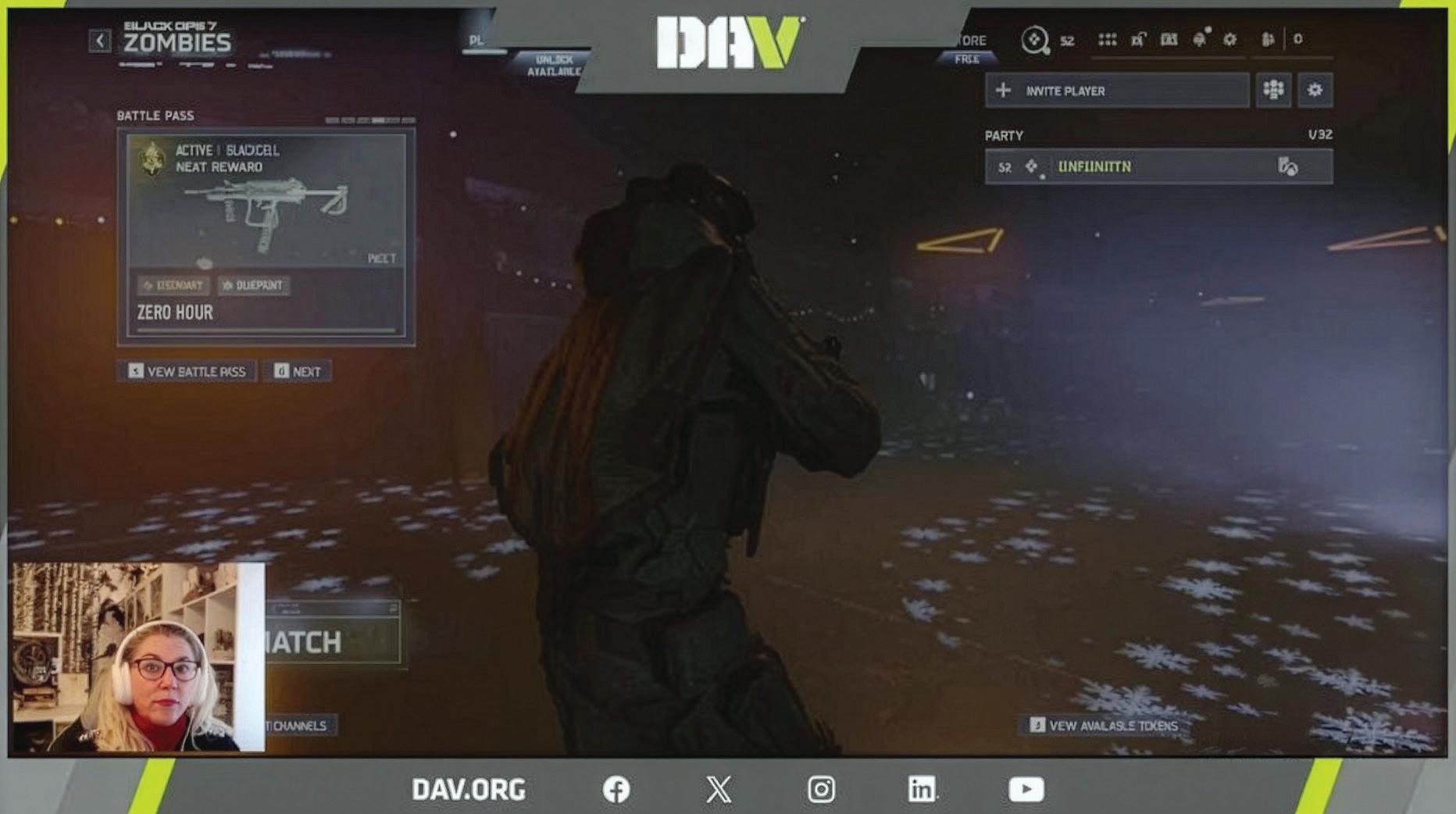
While deployed in Afghanistan, DAV life member
Melissa Allen used her free time to set up a shared network for her unit’s temporary living quarters so the soldiers could play on their Xboxes together.
In her small unit, connection was mission-critical. Allen handled everything electronic—radios, satellites and any other systems that kept soldiers linked and safe.
“Military service was definitely a highlight of my life,” she said.
Little did she know that her skills and love for gaming would become a lifeline for her and others after military service.
Allen enlisted in 2007. After raising her three kids, running a daycare and owning a costume business, she could finally pursue her lifelong dream of joining the Army.
“I left for basic training at 32 years old,” Allen said. “The wait was definitely worth it.”
To Allen, serving in the military felt like destiny.
“Every generation in my family has served,” she said.
“After all of those generations, it becomes part of you. It was in my blood.”
She became a signal systems repair specialist in the Nebraska Army National Guard and, exactly one year after graduating from Advanced Individual Training, deployed to Afghanistan with a unit assembled from across the state. The deployment gave her a deep sense of purpose, teamwork and belonging—she knew her mission and her role—and she continued to serve until 2015, when she was medically discharged.
“Most people cheer when they get that final certificate,” she said. “I didn’t. I sat down and cried.”
In the months following her separation from service, Allen felt herself spiraling toward rock bottom, feeling disconnected from her purpose.
Things began to turn around with a friendly interaction at her local Department of Veterans Affairs clinic. Two volunteers in red vests, who happened to be members of DAV Chapter 7 in Lincoln, Nebraska, were greeting people as they came through the front door.
“They invited me to a chapter meeting,” Allen said. “They told me there was food on Friday nights, and that was all it took.”
Those Friday night chapter meetings became more than meals to Allen—they became a lifeline. She credits DAV with helping her navigate benefits and restoring a sense of belonging when she needed it most.
“I am one of those people who say that DAV saved my life,” Allen said. “I’ve heard it from people, but it’s
Melissa Allen chooses games that allow her to talk to viewers while she streams.
“I am one of those people who say that DAV saved my life. I’ve heard it from people, but it’s true for me too. So many veterans feel alone and don’t even know what resources are available. DAV gave me purpose again.”
—Melissa Allen
true for me too. So many veterans feel alone and don’t even know what resources are available. DAV gave me purpose again.”
Allen became a life member in 2022 and has been moving “100 miles per hour” since, building bridges between veterans and the resources they deserve. She splits her time volunteering at the VA as a benefits advocate, leading the Benefits Protection Team for the DAV Department of Nebraska and serving as adjutant of her chapter.
One thing she has learned from her work is that connection looks different for younger service members. Like Allen, many post-9/11 veterans served in remote, technology-driven environments and socialize accordingly.
“Gaming is social hour for this new generation of veterans. This is how we connect,” she said.
A gamer herself, Allen has played video games since childhood. Her first game, Dungeon Master, was on her dad’s computer. These days, she uses gaming differently.
Allen has found that getting the word out about DAV can be a challenge, but platforms like DAV’s Discord and Twitch channels allow her to meet a new group of veterans where they already are.
“DAV’s gaming program is one way to ensure no veteran is left behind in the digital age,” said DAV National Membership Director Lamarr Couser. “It’s truly impressive to see it in action. Melissa is a great example of how creative and driven our members can
be when it comes to helping others. She is out there creating real-life success stories.”
While streaming games like Guild Wars, Allen talks with viewers about veterans legislation and issues and even recruits new DAV members.
“It’s a welcoming environment for people to just share and be themselves without leaving home,” Allen said.
For Allen, DAV gaming platforms are simply new tools for an age-old purpose—keeping the camaraderie alive.
“It’s a great way to get involved,” she said. “It’s not hard. If you can use Facebook on your phone, you can use Discord.”
She welcomes all veterans and service members to join the community, even those who aren’t gamers.
“If nothing else, just join and watch,” she said. n
Learn More Online
Want to join DAV’s gaming mission? Learn what it takes at dav.org/gaming.
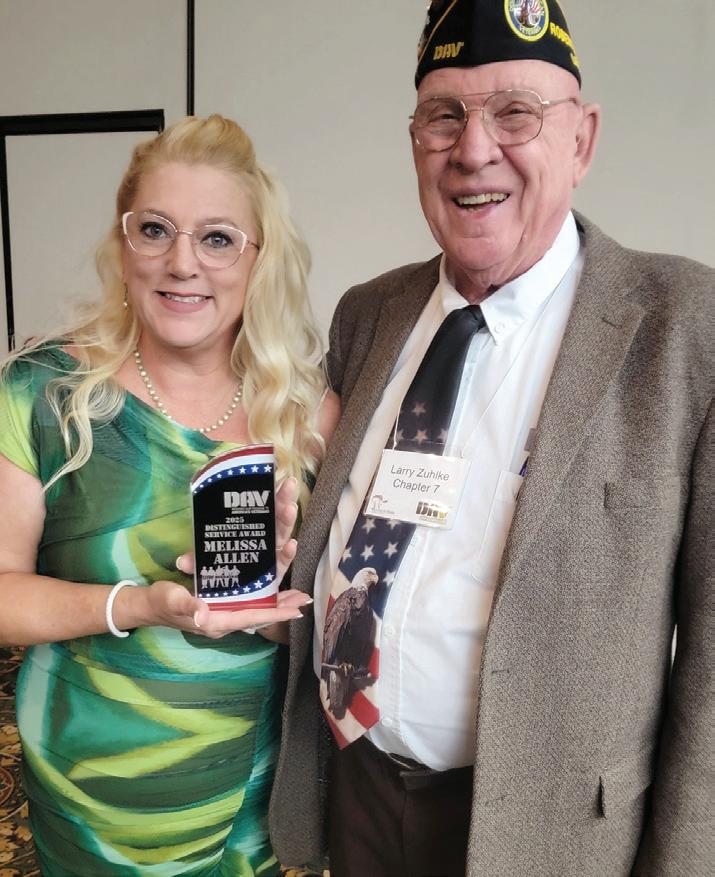
Top right: Melissa Allen (left) accepts the 2025 DAV Department of Nebraska Distinguished Service Award with Larry Zuhlke (right), commander of DAV Chapter 7 in Lincoln, Nebraska. Bottom right: Allen was already a lifelong gamer when she read an article in DAV Magazine about the organization’s gaming initiative.
PTSD: Reclaiming Control
By: Robert ‘Bob’ Cuyler, PhD Psychologist and Trauma Expert
Iran Conflict Continued
Last month we addressed the some of the consequences of the current campaign, so this month we’ll expand. At this writing, we do not have boots on the ground and our casualties, while tragic, are thankfully limited given the scope of the engagement. First, the concept of delayed onset PTSD. I first became aware of this early in my career working with elderly veterans. The coverage of a number of 50-year anniversaries (D-Day, Hiroshima, Battle of the Bulge, and others) had surprising impact on these men, many of whom had functioned very well throughout their adulthood. As the concept of PTSD was not in place at conclusion of their service, it was unclear how many of these gentlemen would have qualified for a diagnosis at the time. What was clear that media coverage of these events was triggering, particularly in the form of nightmares.
What we know now about delayed onset PTSD is that prior exposure to traumatic events can set the stage for the onset of full PTSD. One way of thinking about this is that neurobiological changes in response to trauma can set the stage for delayed reactions. Risk factors like social isolation, family or work stress, economic uncertainty can bring individuals ‘to the brink’ of key PTSD symptoms such as nightmares and hypervigilance, only to be pushed over the edge by current event triggers like the Iran conflict.
Next, the impact on civilians. It’s too easy to think of military trauma exposure as confined to combat between formal adversaries, our soldiers against theirs. The changing nature of war since WWII has increasingly involved asymmetric warfare, with unclear battle lines, military targets intermingled with civilians (think Gaza), and deliberate targeting of civilians and civilian infrastructure (think Ukraine). Prior exposure to such conditions (think Iraq and Afghanistan) can push veterans to the brink, both for those whose PTSD symptoms are either improved or intermittent and for those who made transition to post-service life without overt symptoms.
The past five years has brought the world conflicts with massive civilian impact in Gaza/ Israel, Ukraine, and Iran, not to mention other counties like Sudan, Ethiopia, and Nigeria which receive less notice. A quick scan of Youtube uncovers coverage of raw video of civilian casualties, sometimes factual and sometimes political in nature.
Veterans who encountered significant civilian casualties during their service often have components of moral injury, which has been defined as experiences that violate or disrupt one’s concept of right and wrong. Moral injury often overlaps and complicates the symptoms of PTSD. In our era of social media overload, seeking information about the Iran conflict can trigger the algorithms pushing constant triggering content.
What to do? Take a break from the news cycle. Find positive involvement with family, friends and community, which can serve as reminder of the good that remains in our troubled world. Seek help, no matter now long ago a trauma exposure occurred, if your nightmares, irritability, or hypervigilance start to take over. We can all pray for an end to this conflict that will leave the earth a more peaceful and secure place.
Dr. Cuyler is chief clinical officer of Freespira, an FDA-cleared non-medication treatment that helps people with panic and PTSD manage their symptoms by learning how to regulate their breathing. www.freespira.com
“I am shocked and surprised that this treatment worked. When I think about PTSD, I think about the brain and this being a brain problem… There is no denying the calming effect this treatment had on me. This has made a significant difference in my personal life. This treatment is remarkably effective.”
— Kevin, US veteran whose symptoms included social anxiety and monthly panic attacks before he found Freespira
https://tinyurl.com/apply-mosiac
themosaicfoundation.org themosaicfoundation.org
Military-Veterans
tinyurl.com/hlm-vets-in-transition
Careers & Education
From Naval Officer to Nation Builder
AI Aides Veteran Transition in San Diego
The “Whole Family” Transition
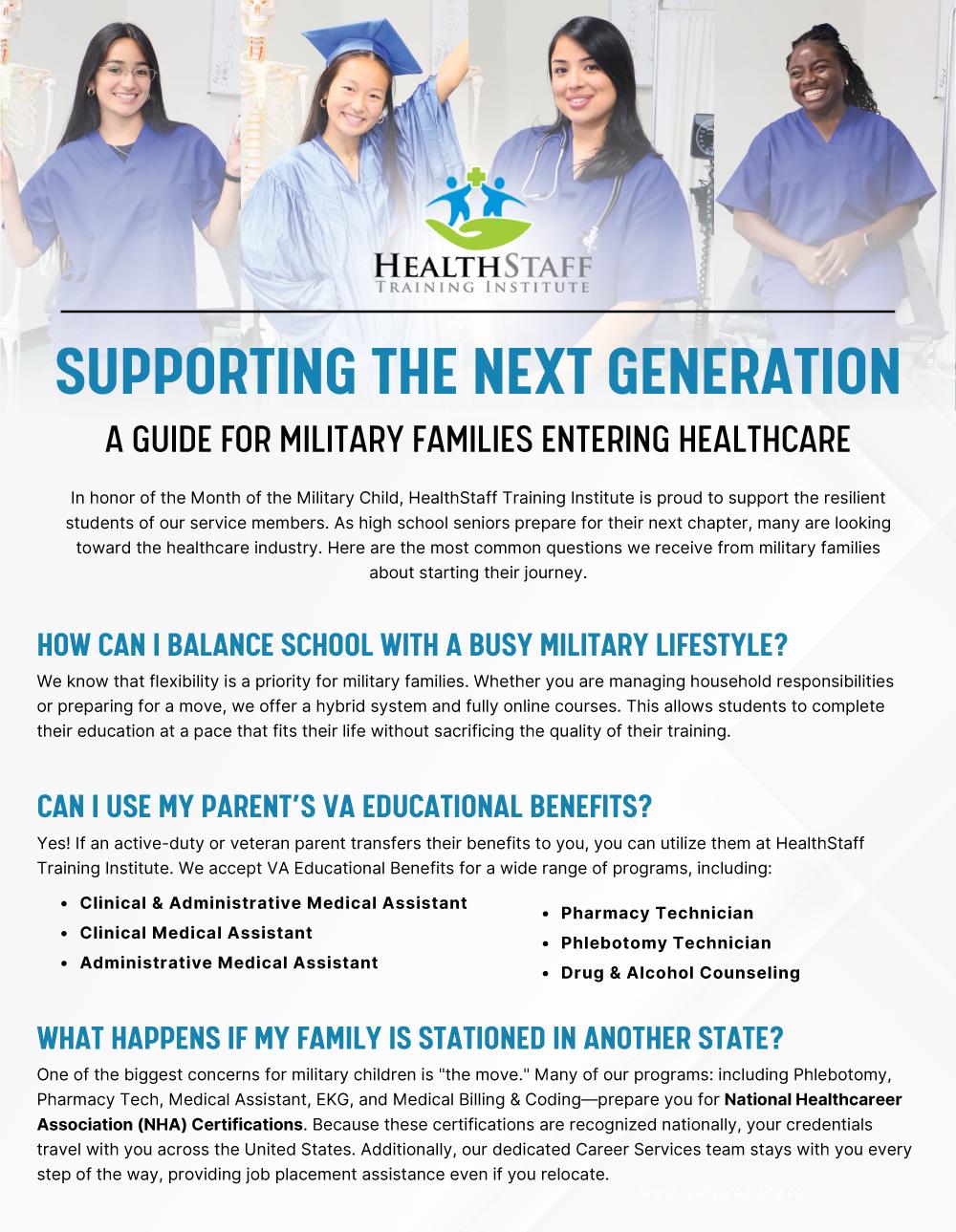
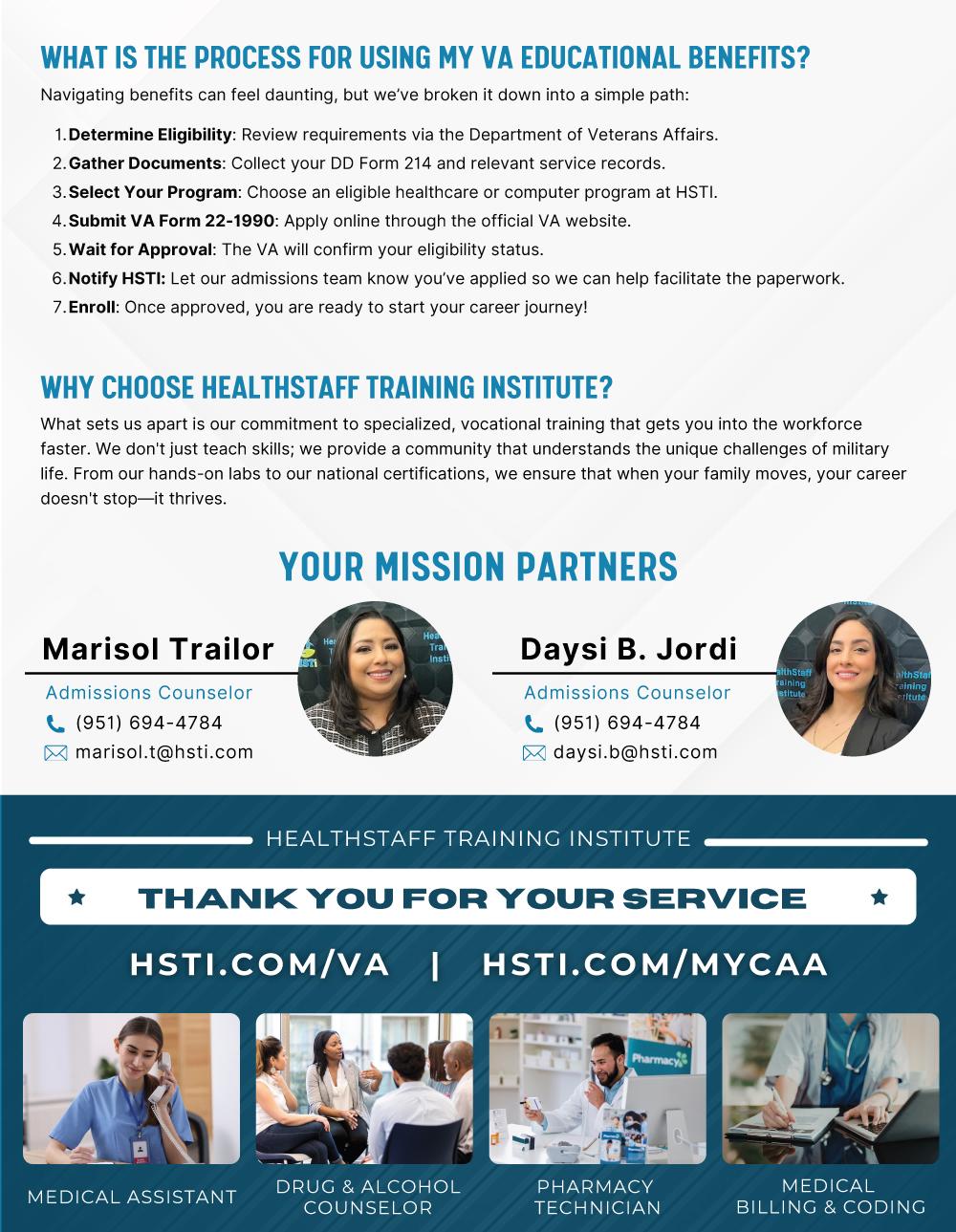
A Guide for Military Families Entering Health Care
Honor the Fallen--Continue the Mission
Build a Marketing Strategy That Actually Works
Translating Military Skills into a Civilian Career
Asset Protection for Real Estate Investors
Misconceptions About Franchising
Healthcare Careers: A Perfect Fit for Military
VETERANS IN TRANSITION
For dependable support in transition, career growth, education, entrepreneurship, workshops, and legal resources designed for veterans and military business owners, visit Veterans In Transition at HomelandMagazine.com
Military Life Is Unpredictable. Your Education Shouldn’t Be.
Earn Your Degree Anytime, Anywhere. Flexible, Affordable, and 100% Online!*
Military life comes with constant changes—deployments, PCS moves, and unpredictable schedules. But your education doesn’t have to wait. At Los Angeles Pacific University, we understand the unique challenges military members, spouses, veterans, and dependents face. That’s why our fully online programs offer the flexibility you need to study at your own pace, no matter where life takes you. Whether you’re on base, deployed overseas, or at home, your degree moves with you!
• 100% Online & Flexible: Learn from anywhere, on a schedule that fits your life.
• Maximize Your Benefits: Use GI Bill®, tuition assistance, and spousal benefits.
• Earn Credit for Your Experience: Take advantage of CLEP, DSST (DANTES), and AARTS/JST to turn your military training and knowledge into college credit.
• Fully Accredited: LAPU offers fully accredited associate, bachelor’s, and master’s degrees through the WASC Senior College and University Commission (WSCUC).
• Faith-Based & Supportive: Dedicated military-friendly success coaches who care about your journey.
Your Future Starts Today! Take the Next Step
*At this time, LAPU is unable to offer distance programs or courses to students residing in the following states and districts: Alabama, Arkansas, Connecticut, the District of Columbia, Indiana, Kansas, Maryland, Minnesota, New Mexico, New York, North Carolina, Oregon, Wisconsin, and Wyoming.
Military Friendly School & Spouse School
WHAT’S NEXT Transition to
Civilian Life
By Eve Nasby eve@infused.work
From Naval Officer to Nation Builder
Derek Barksdale spent over two decades protecting others. Now he's built a system to make sure no veteran is left navigating civilian life alone.
There is a moment, familiar to nearly every man and woman who has worn a uniform, when the structure that defined their identity — the rank, the mission, the chain of command — simply disappears. What fills that void determines everything.
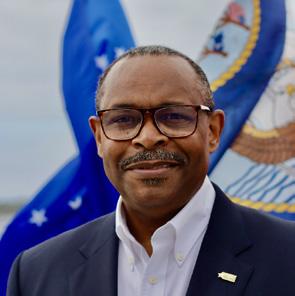
For Derek Barksdale, retired Naval Officer, senior government service employee, entrepreneur, and founder of Military Mutual, that void became a calling. And that calling became an ecosystem — one designed to ensure that tens of thousands of nonprofit organizations serving veterans are no longer invisible to the people who need them most.
His story does not begin with the military. It begins in Oakland, California, at age 17, with a paintbrush and an entrepreneurial instinct that outpaced his years. He built a painting business from nothing, found success in peak season, and discovered the hard truth of what happens when there is no financial structure to carry a young business through the slow months. Too driven to accept a nine-to-five, too restless to plateau — in 1989, he enlisted as an E-1.
What he found in the Navy exceeded every expectation.
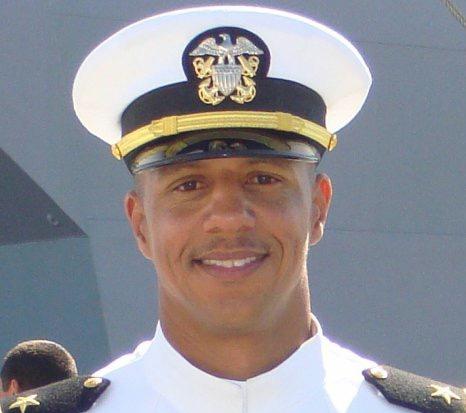
"I had people who believed in me," Barksdale says. Over more than two decades and seven deployments rooted largely in San Diego, he rose from enlisted sailor to Naval Officer, through nine ranks, ultimately serving as Deputy Chief of Police for Navy Region Southwest after retirement. Along the way, he discovered something that would shape every venture that followed: he is, at his core, a lifter of people.
The pivot to real estate was, as the best pivots often are, completely accidental. In 2007, his wife obtained her real estate license and landed her first client — a sailor he had referred to her. Barksdale found himself drawn in to help navigate uncharted waters. And then something happened that changed the trajectory of his life: that
client stood on the doorstep of his new home and wept as he received the keys. He was the first person in his entire family to ever own a house.
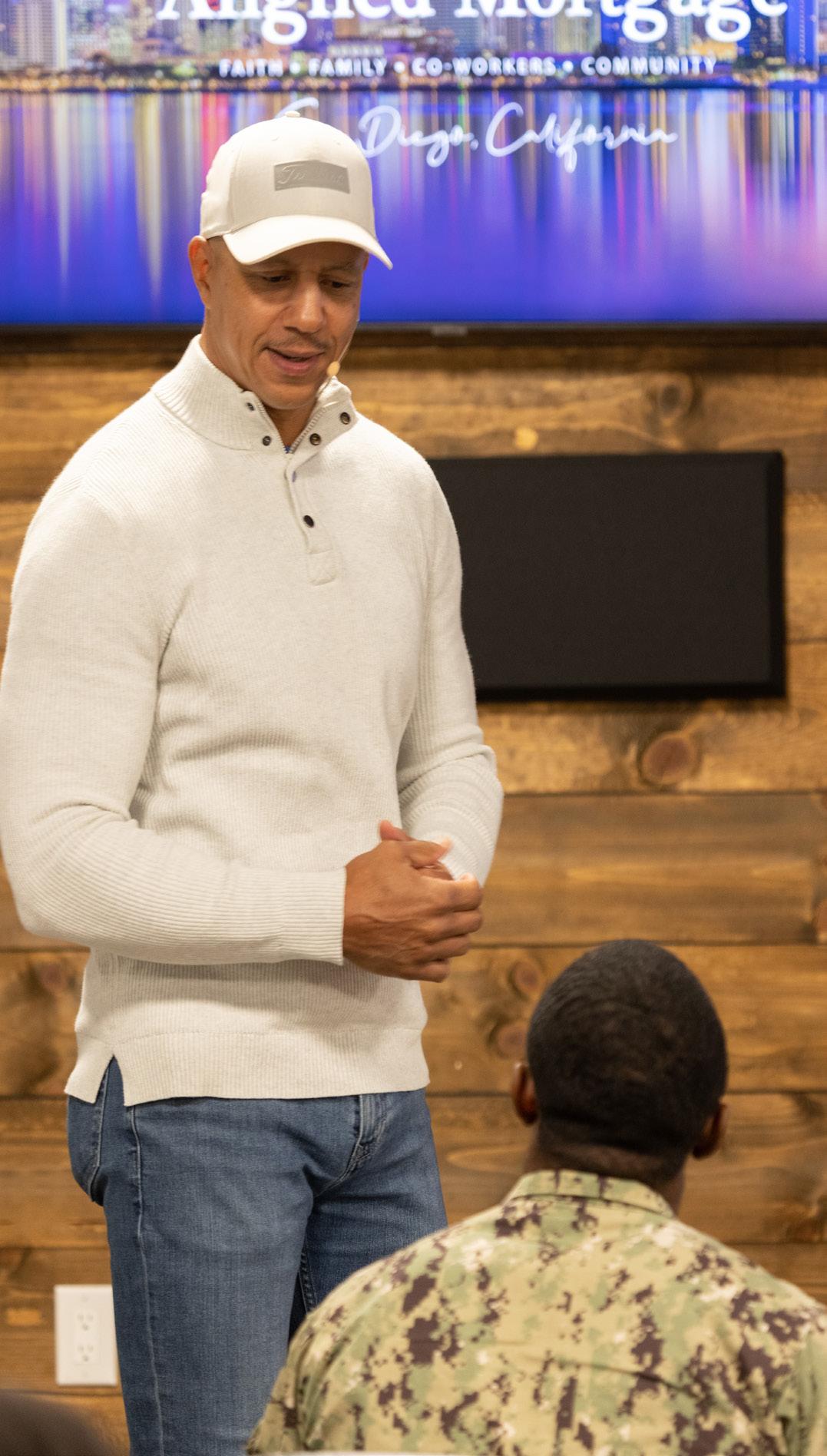
Derek at VA Benefits Class
"That was it for me," Barksdale says quietly.
He retired in 2011 and launched a company focused on helping military families and veterans navigate homeownership. But the problem was larger than real estate. Veterans weren't just uninformed about buying homes — they were uninformed about their own worth, their benefits, and the vast infrastructure of support that existed for them, if only they knew where to look. As a certified National Association of Realtors Instructor and Regional Director of VAREP, Barksdale was uniquely positioned to see the gap between what was available and what was actually reaching people.
That realization planted a seed. Six years ago, he began building toward something larger than any single company. When COVID-19 hit, rather than derailing his vision, it gave him time to think methodically. He leaned into his lending company, his investment portfolio, and the quiet discipline of a man who spent two decades overseeing the security of dignitaries, VIPs, and highvalue national assets.
The result is Military Mutual — a platform that functions as a community, providing AI-driven connective tissue between veterans and the services created to support them. The database, assembled over 18 months, catalogs nonprofit organizations worldwide with contact information, program details, and eligibility criteria. A veteran searching for financial assistance receives one to three tailored recommendations based on their specific circumstances. The intelligence is immediate. The friction is gone.
"There are 40,000 nonprofits out there aimed towards serving veterans," Barksdale says. "Veterans don't know they exist. The nonprofits don't have the exposure they deserve. We're solving both problems at once."
The platform operates on a tiered model. A free version provides access to events, on-demand courses, podcasts, and tactical takeaways spanning 10 core areas of personal and professional development. A basic membership adds a daily mindfulness routine and AI voice database access. Premium membership unlocks the full AI-driven GPT experience — with memory, group coaching, and the complete on-demand suite.
A pro membership, limited to established executives and entrepreneurs, adds one-on-one coaching, forum cohorts, and a co-marketing layer that brings veteran-owned businesses into the ecosystem as mission-level partners.
For Barksdale — a man who enlisted at 19, rose through nine ranks, helped a weeping stranger become the first homeowner in his family, and has since served on the
Navy League of San Diego, four Naval Commissioning Committees, the San Diego Military Advisory Council, and the founding board of the Eagle's Organization — this platform is the fullest expression of a life spent lifting others.
Military Mutual is built for everything that comes after the uniform comes off. And for Derek Barksdale, that work is only beginning.
To learn more, visit militarymutual.org
For me, Memorial Day is deeply personal. It’s a time to remember the men and women I served with who never made it home, and the families who continue to carry that loss. It’s not about celebration…it’s about honoring their sacrifice and ensuring they are never forgotten.
I was taught a powerful lesson during my time in the Navy: “It’s not about you.” Memorial Day reinforces that in the most profound way. It reminds us that the freedoms we enjoy came at a cost, and our responsibility is to live in a way that honors those who gave everything.
Need help with your transition? Have questions? Link up with Eve on LinkedIn today. www.linkedin.com/in/eve-nasby-given-hiring-expert
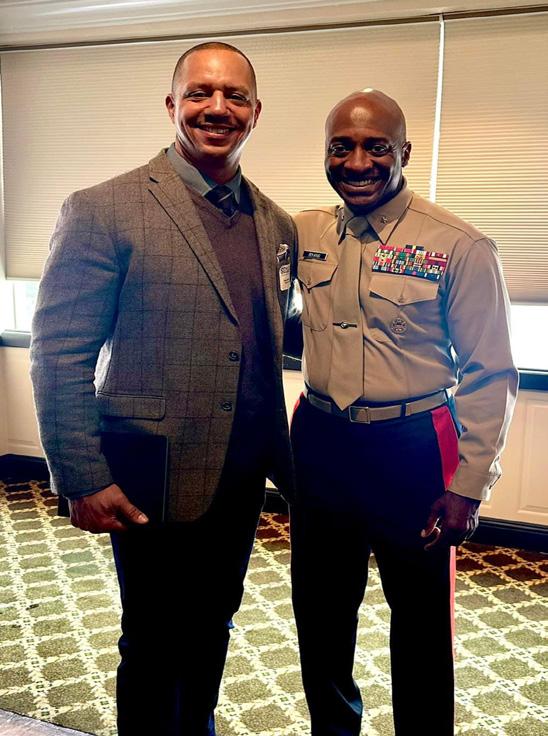
Derek & Brigadier General, James A. Ryans
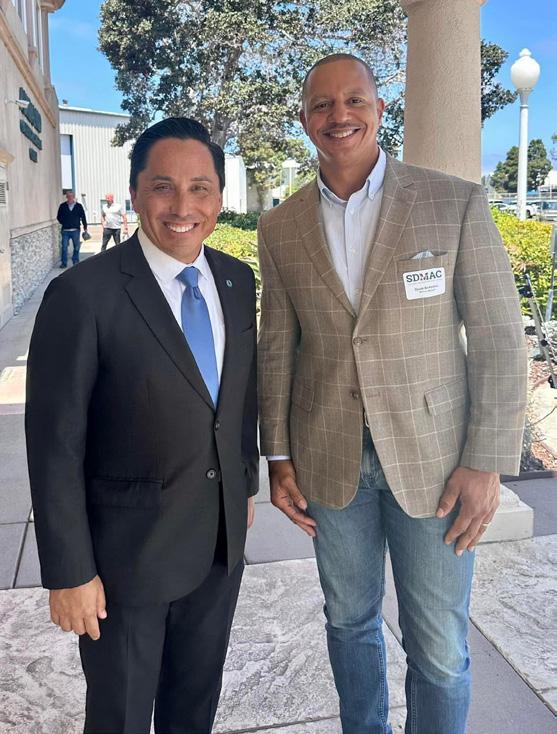
SD Mayor Todd Gloria & Derek
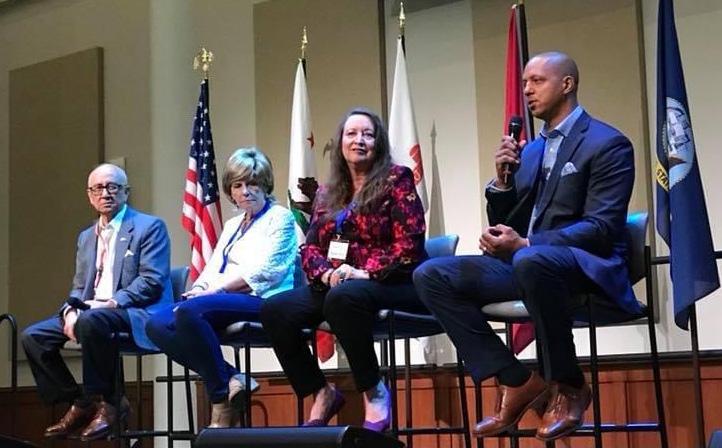
Derek at Military, Veterans & Spouse Entrepreneurs Summit
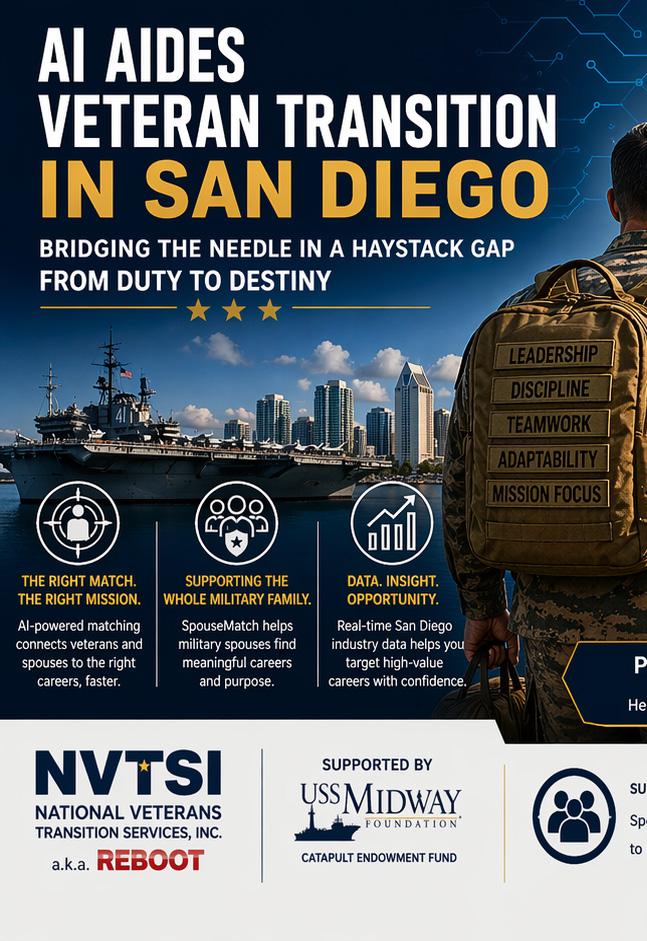
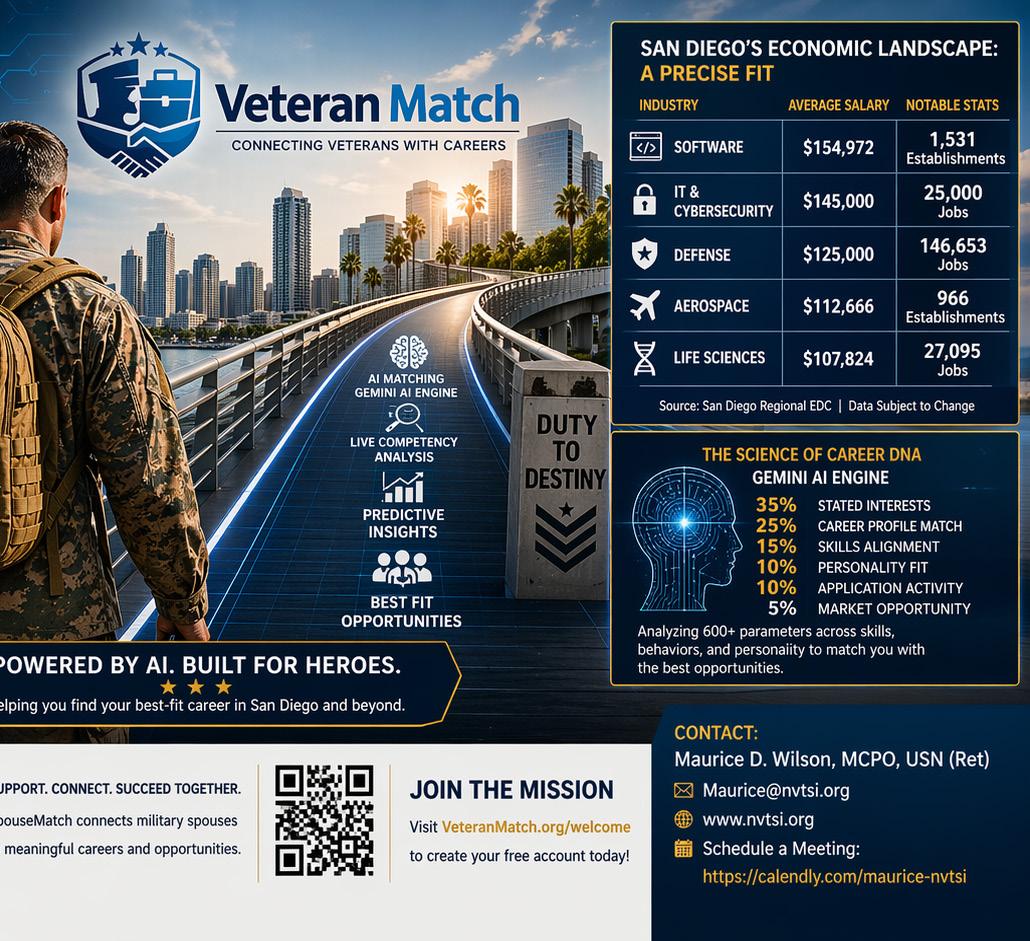
AI Aides Veteran Transition in San Diego Bridging the Needle in a Haystack Gap from Duty to Destiny
By Maurice D. Wilson, MCPO USN (Ret), President/Executive Director, National Veterans Transition Services, Inc.
(NVTSI.org / VeteranMatch)
aka REBOOT
For many transitioning service members, the walk across the brow for the last time is met with a mix of pride and profound uncertainty. While the military provides a clear rank and rate structure, the civilian workforce can feel like unmapped territory. In San Diego, a city defined by its deep naval roots and a thriving innovation economy, a new technological bridge called VeteranMatch is being built to close this gap.
The Needle in the Haystack San Diego’s economy is one of the nation’s most dynamic, but its sheer scale creates a unique challenge. The region boasts over 80,000 employers and 24 major industry sectors charting roughly 1.6 million jobs. For a veteran, trying to identify the single right job in this vast landscape is like searching for a needle in a haystack.
This difficulty works both ways; the complexity of the market also makes it incredibly difficult for employers to find the right fit veteran for their specific needs. National Veterans Transition Services, Inc. (NVTSI), also known as REBOOT, is addressing this by adding Veteran IndustryMatch to the VeteranMatch platform.
Solving the Direction Crisis
The struggle to transition is backed by sobering data. Approximately 8 out of 10 veterans cite career direction as their single biggest challenge during reintegration. This lack of clarity often leads to underemployment, where veterans find work that does not utilize their full potential. Currently, 61% of post-9/11 veterans report being underemployed three years after service.
Even more concerning is the churn—the 43% of veterans who leave their first civilian job within the first year, often due to a poor cultural or skill fit. IndustryMatch, supported by the USS Midway Foundation’s Catapult Endowment Fund, seeks to solve these issues by providing a datadriven roadmap.
The Science of Career DNA
At the heart of the platform is the Gemini AI Engine, which has been upgraded to provide predictive career matching. Rather than simply matching job titles, the system performs a Live Competency Analysis. This processes millions of job descriptions to focus on what a veteran can do rather than just their prior job titles.
The system builds a comprehensive Career DNA profile by analyzing over 600 parameters—including hard and soft skills, behaviors, and RIASEC personality types— against more than 20,000 tasks and tools. The AI calculates matches using a sophisticated weighting model:
• Stated Interests: 35%
• Career Profile Match: 25%
• Skills Alignment: 15%
• Personality Fit: 10%
• Application Activity: 10%
• Market Opportunity: 5%
San
Diego’s Economic
Landscape: A Precise Fit
IndustryMatch provides a Transparent Fit Analysis that breaks down exactly why an industry is a match based on personal alignment and the industry’s veteran-friendly status. For those staying in the region, the tool provides real-time San Diego statistics, allowing veterans to target high-value sectors where average salaries often exceed $110,000:
Software
Defense
Aerospace
Life Sciences
$145,000 25,000 Jobs
$154,972 1,531 Establishments
$125,000 146,653 Jobs
$112,666 966 Establishments
$107,824 27,095 Jobs
Support for the Whole Military Family
The mission of VeteranMatch extends beyond the individual service member. A core feature of the platform
is SpouseMatch, which is dedicated to connecting military spouses with meaningful careers. VeteranMatch's chief aim is to help all transitioning service members (TSMs), veterans, and spouses find their best-fit job using AI. By infusing regional employer data into the platform, users can use predictive analytics to make the best possible career decisions in the shortest possible time.
How to Join the Mission
This enhancement is a critical win for our regional reintegration ecosystem. These tools will be presented to all transitioning military enrolled in the upcoming REBOOT Lite Workshops beginning in May, providing them with immediate, actionable career intelligence.
Military, veterans, and spouses are invited to join the platform by visiting: https://veteranmatch.org/welcome
By combining the organizational backbone of community partners with the right-fit technology of IndustryMatch and SpouseMatch, we are building a system that moves our heroes confidently from duty to destiny.
www.nvtsi.org maurice@nvtsi.org
https://calendly.com/maurice-nvtsi
About NVTSI
National Veterans Transition Services, Inc. (NVTSI) is a San Diegobased nonprofit dedicated to helping service members, veterans, and spouses successfully transition from military to civilian life.
At NVTSI, we believe every veteran deserves more than a job at the end of service—they deserve a career worth building. NVTSI.org
HUMAN RESOURCES Transition to Business
By Paul Falcone PaulFalconeHR.com
The "Whole Family" Transition: Honoring the Family’s Chief Transition Officer
I was born on Memorial Day, so it’s always been a special day for me. Yet, May can be a heavy month for the military community. We observe National Military Appreciation Month, honor the fallen on Memorial Day, and celebrate the resilience of caregivers. But there’s a specific day on the May calendar that holds the key to a successful transition into the private sector: Military Spouse Appreciation Day, celebrated the Friday before Mother’s Day.
When a service member hangs up their uniform, the focus is naturally on their résumé, their benefits, and their next "mission." However, anyone who has navigated a Permanent Change of Status (PCS) move knows the truth: the real engine of a successful transition is the spouse. In the complex landscape of moving from a life of service to a life in the private sector, spouses aren’t just supporters— they’re the Chief Transition Officer (CTO).
The Heavy Lift of the CTO
The military spouse is the person who manages the "liminal space" between two worlds. They’re the ones researching school districts in a new city while the service member finishes out-processing. They’re the ones navigating the emotional toll of a shifting identity, while simultaneously managing the logistics of a household in flux.
In many ways, military spouses are the ultimate project managers. They’re experts in rapid integration, crisis management, and influence without authority. Yet, when they look toward their own professional future in the civilian world, they often face a daunting hurdle known as the "Military Spouse Penalty."
Understanding the "Penalty"
Despite their incredible resilience and adaptability, military spouses may face significant employment challenges that are directly tied to the service of their partners. Frequent PCS moves create "patchwork" résumés that traditional corporate recruiters often misunderstand.
Recent data paints a stark picture:
• Unemployment Rates: Military spouse unemployment has consistently hovered around 21%, which is significantly higher than the national average.
• The Underemployment Gap: Even when employed, roughly 31% of spouses are underemployed, meaning they’re working in roles that don’t match their education, experience, or skill levels.
• The Mobility Tax: Every PCS move forces a spouse to quit a job, lose seniority, and often wait months to transfer state-specific professional licenses (for example, for teachers, nurses, or social workers).
For the "Chief Transition Officer," these statistics aren't just numbers; they represent lost income, stalled dreams, and the frustration of having to "start over" every two to three years.
Redefining the Transition Narrative
If you’re currently serving or a veteran, it’s vital to recognize that your transition is a "team sport." Supporting your spouse’s professional goals isn't just about equity— it’s a strategic move for your family’s financial future and emotional stability.
For the spouses reading this: Your résumé isn't "broken" or “spotty.” It’s a testament to your versatility, agility, and change readiness, which are among the top-five priorities that employers seek. The gaps in your work history aren't signs of inconsistency; they’re markers of your ability to prioritize the mission while maintaining your own career aspirations.
Strategies for the Corporate Pivot
As you look toward the private sector, there are multiple ways to combat the "spouse penalty" during a transition, including:
1. Leveraging the "Remote-First" Revolution. The shift toward remote and hybrid work is the single greatest tool for military spouses. When negotiating your next role—or when your spouse is looking for theirs—prioritize "locationneutral" positions. This allows you to maintain a career trajectory that is independent of where the military or a new corporate job might send the family.
2. Focusing on "Skill-Based" Branding. Transitioning families should move away from chronological résumés and toward skill-based ones. Instead of focusing on where you worked, focus on what you achieved. A military spouse who managed five moves in ten years is a specialist in logistics, operations, and cultural adaptability. These are battle-tested soft skills, which indicate a high level of emotional intelligence (i.e., a high “EQ” or “emotional quotient”).
3. Utilizing “Upskilling” and Certification Credits. Close technical gaps and certify in areas that employers are looking for in project management, data analytics, or IT support, for example, to stand out among your peers. Coursera, FutureLearn, and edX offer free online programs and low-cost certifications to build your resume and LinkedIn profile.
If the transitioning member is within 180 days of separation, spouses may be able to participate in the DoD SkillBridge program, allowing them to work as a civilian intern at a partner company, providing a risk-free "test drive" of a new career field. Likewise, focus your job search on identifying military-friendly employers and companies that have joined this DOD’s Military Spouse Employment Partnership (MSEP) program. Find them with a simple Google search.
A Living Tribute
To the Chief Transition Officers out there: We in HR see the work you do behind the scenes. We see the résumés you’ve rewritten and the sacrifices you’ve made to keep the "unit" running. This month, we don't just appreciate your service—we celebrate your professional potential. The transition to civilian life is a massive undertaking, but with the family’s CTO at the helm, the mission isn't just possible—it’s the start of your best chapter yet.
You can connect with Paul on LinkedIn at www.linkedin.com/in/paulfalcone1
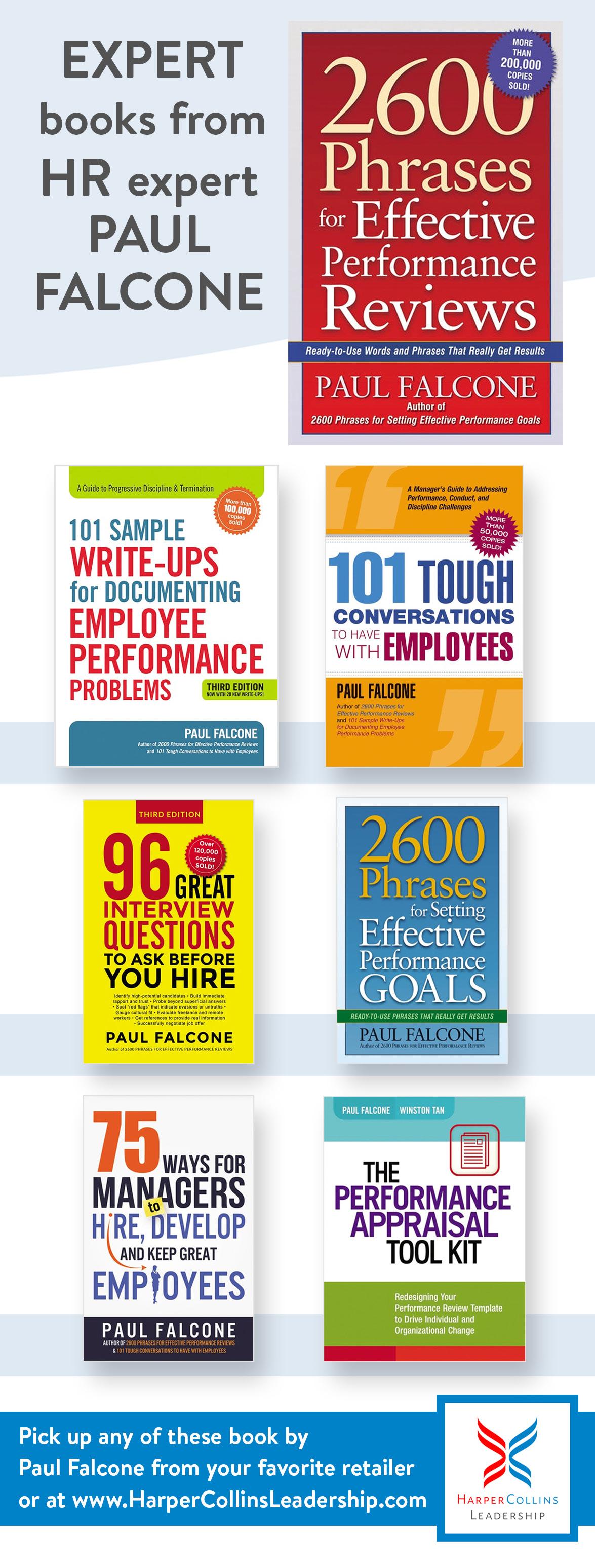
Paul Falcone (www.PaulFalconeHR.com) is a management trainer, executive coach, and bestselling author on hiring, performance management, and leadership development.
www.HarperCollinsLeadership.com
HONOR THE FALLEN--CONTINUE THE MISSION
By Dr. George Ann Rice Patriots to Education www.patriotstoeducation.org
Memorial Day is a solemn occasion to honor the men and women who gave their lives in military service to the United States. It is a day that underscores sacrifice in defense of our nation and invites reflection on the enduring meaning of service.
Patriots to Education (PTE) builds on this legacy by reinforcing a critical message: service does not end when the uniform comes off. For Veterans, National Guard members, Reservists, transitioning service members,and military spouses, the opportunity to serve continues—most meaningfully within America’s public education system.
Across K–12 schools, there are numerous roles essential to student success and school operations. These include teachers, Career and Technical Education (CTE) instructors, paraprofessionals, substitutes, transportation staff, school nurses, safety personnel, IT specialists, and skilled trades professionals. Each position contributes directly to the strength and effectiveness of the education system.
At the same time, school systems across the country face persistent workforce shortages especially in areas such as special education, STEM fields, CTE, transportation, technical services, and health-related roles. To address these gaps, many states and districts offer accelerated pathways, alternative certification programs, and financial incentives to support entry into the profession.
For military-connected individuals, Memorial Day offers a moment to reflect on purpose and mission. Careers in public education represent a natural extension of military values—duty, leadership, discipline, and commitment to community. By transitioning into public education, these individuals help ensure that the cost of freedom is understood, respected, and carried forward by future generations.
Memorial Day also highlights a fundamental truth:
• Military service protects the nation externally
• Public education strengthens the nation internally
A strong education system is essential to national resilience. It requires educators who are committed to preparing students to:
• Understand the historical significance of military sacrifice
• Appreciate the principles upon which the nation was founded
• Develop civic responsibility, accountability, and informed citizenship
• Build critical thinking skills and civic awareness
Public education remains one of the few civilian professions where the concept of service is central. For military-connected individuals, transitioning into education is not a departure from service—it is a continuation of it in a different domain.
The alignment between military experience and education careers is clear:
• Leadership and Accountability – classroom management, administration, mentoring
• Discipline and Structure – effectiveness in diverse and high-needs environments
• Team Orientation – collaboration with educators, staff, and families
• Mission Focus – commitment to student outcomes and school improvement
A career in public education leverages existing skills, fulfills a critical national need, and provides a stable, mission-driven pathway with long-term growth potential.
Patriots to Education emphasizes honoring the fallen through action. By stepping into essential roles within public education, military-connected individuals continue a life of service that reflects the very values Memorial Day represents. From classrooms to operations, counseling to transportation, health-related services to technology, there is a place to serve—and a mission to continue.
MAY 1ST —
SEPT 30TH, 2026
We are raising funds and awareness to support Patriots to Education, a program dedicated to helping veterans and their spouses transition into meaningful careers within our school districts.
Through this initiative, veterans serve in critical roles such as K–12 teachers, Career and Technical Education instructors, counselors, IT technicians, school safety officers, bus drivers, and administrative and operations staff.
Without programs like Patriots to Education, many essential positions would remain unfilled. PTE is ambitiously working to partner with all 50 states by 2030 to place veterans and their spouses into open school district positions.
This program helps bridge that gap—bringing skilled professionals into our schools while giving our nation’s warriors continued purpose and meaningful work in their communities.
Your corporate sponsorship or donation does more than fill a position—it helps veterans begin a new mission while strengthening our education system.
By Barbara Eldridge President/ Founder of Mind Masters www.mindmasters.com
Stop Chasing Everyone: Build a Marketing Strategy That Actually Works BUSINESS FOR VETERANS
Recently, in a networking group, a member was the featured speaker. Like many small business owners, he was trying to be everything to everyone. That scattered approach may have helped him get started, but in today’s evolving market, it caused him to lose sight of where his real opportunities—and customers—actually are.
So let me ask you: What is your marketing strategy?
Do you have a clear, focused foundation guiding your sales and marketing efforts? I’m talking about a defined direction that shapes every message, campaign, and piece of content you create—so you stand out to the people who matter most: your ideal customers.
In Traction: Get a Grip on Your Business, Gino Wickman emphasizes the importance of identifying your core focus—what you do best and why it matters. That clarity fuels consistency, confidence, and long-term growth.
And that brings us back to the real issue: without a complete marketing strategy, focus is nearly impossible.
For many entrepreneurs, the day-to-day demands of running a business take over. You stay busy. You deliver. You survive. But building a business that is sustainable and future-ready requires more than reacting—it requires vision. A strong marketing strategy gives you that vision. It creates a clear picture of how your business should look, feel, and perform in the marketplace.
At its core, an effective marketing strategy includes four essential elements:
1. Your Target Market (“The List”) – A clearly defined group of people who need what you offer.
2. Your Unique Selling Proposition – The three distinct qualities that set you apart from competitors.
3. Your Proven Process – The specific steps you use to guide prospects into becoming customers.
4. Your Guarantee – A promise that reduces risk and builds trust with your audience.
When these elements are aligned, they act as a filter for every decision you make. They keep you grounded in your vision and values, and they make it easier to identify what truly matters—and what doesn’t.
The result? You stop trying to be everything to everyone.
Instead, you become highly relevant to the right people.
That clarity gives you permission to say no to distractions, protect your time, and stay focused on building a business that works—not just one that keeps you busy. It keeps you moving forward with purpose, direction, and confidence.
Because in the end, success doesn’t come from doing more—it comes from doing the right things, for the right people, in the right way.
Barbara Eldridge has built a solid reputation as a Results strategies specialist, within industry and business over the past 40 years. Her unique message, since starting Mind Masters 30 years ago for entrepreneurs and small business owners, continually stresses vision, purpose and values as the key elements of business philosophy. Her undying compassion for the entrepreneur’s journey, her tireless capacity to listen, and her sincere enthusiasm for other’s success have insured her growing influence and her own mastery with MIND MASTERS. www.mindmasters.com
Veterans Chamber of Commerce
By Joseph Molina veteransccsd@gmail.com www.vccsd.org
Translating Military Skills into a Civilian Career
To Secure The Dream Job
Translating military experience into civilian language can feel like starting over, especially when job posts don’t match what we did in uniform.
Take a look at some powerful tips:
Step 1. Rewire your mindset. Start welcoming the “Different”
Step 2. Tell your story. Use the story cycle approach and tell it in plain terms so others can see it too!
Step 3. Lean on veterans in the community for support… Start networking
Step 4. Know that your military service already built the skills you need, the next step is naming them clearly so others can see them too.
Step 5. Choose 3 local networking organizations. Get involved.
Having a strong network of veterans and professionals will make a world of difference.
Job-Search Questions, Answered
Q: How do I translate MOS duties into civilian language so civilians can understand it?
A: Focus on outcomes, not the job title; start with what changed because you led, fixed or built something. Replace rank and unit terms with plain equivalents like “team lead,” “operations,” “logistics,” or “training.”
Q: Avoid the biggest resume mistake when applying to civilian roles?
A: Copying an “all-in” military resume into every application. Keep a master version, then tailor one page to match the posting’s top requirements using the employer’s wording. If it is not relevant to the role, it is noise.
Q: How many jobs should I apply each week?
A: Keep your Focus. Know exactly the type of job you want! Decide on the number of applications you want to send each week, but don’t focus on the number of applications, keep your focus on Networking and relationship building with those who can help you land the job you are after.
Q: How do I handle the question “Tell me about yourself” effectively?
A: Use the 3-step structure: 1) Select something about yourself that “matches“ the type of job. 2) Identify something you are great at and “Match it” with one of the characteristics of the potential job. 3) Your Why, The most important step. Tell them why you are so passionate about working there. Keep military details minimal unless they directly ask you about it.
National Veterans Chamber (NVCC)
The NVCC acts as a project incubation platform that empowers veteran-leaders to lead transformative projects in their communities that support and empower transitioning military. It focuses on training, and entrepreneurship. www.vccsd.org
Thank you, Lucy, for collaborating on the content for this article. Lucy Reed is a contributor to the NVCC blog, where she provides resources and content for the Chamber’s blog.
Straight-forward legal tips for Military and Veteran Business Owners
By Kelly Bagla, Esq. www.BaglaLaw.com
ASSET PROTECTION FOR REAL ESTATE INVESTORS
As a real estate investor, having an asset protection strategy is a critical component of a secure, resilient business structure. Most investors have their investment property held in a legal entity, but this is only one component of asset protection and unfortunately, one that can easily be sidestepped during legal proceedings. Without a solid, multi—layered approach, you could lose passive income or entire properties from a settlement or judgment.
What is Real Estate Asset Protection?
Real estate asset protection is a strategic approach to protecting your properties from creditors who may try to take control of your investments due to lawsuits or settlements. When a lawsuit occurs, regardless of whether it’s a settlement or judgment against you, you have the obligation to pay for damages, injuries, attorney fees, and much more. If structured properly, asset protection planning can essentially separate your personal or entity legal obligations from other business assets you own.
Asset Protection Approaches
There are several options to help investors protect their assets. It’s important to look at the costs and benefits of each strategy and speak with a professional for advice on which structure best suits your needs. Investors with few properties may be able to get away with utilizing one or more strategies, while others may want to employ more because of the size of their investment portfolio. Here are a few of the most commonly used asset protection approaches:
• Homestead Protection – Homestead Protection is one of the most foolproof approaches to protecting your asset from seizure but obviously can only apply to one property in which you’ll need to legally reside. In most jurisdictions, a significant portion, if not the entire value of the residence, is protected from bankruptcy, court judgments, or settlements. Currently, the California homestead exemption is automatic, meaning that
the homestead declaration does not need to be filed with the county clerk. Under the 2021 law $300,000 to $600,000 of a home’s equity cannot be touched by judgment creditors.
Having
“ ”
the best multi—layered asset protection strategy in place for your unique real estate investment portfolio is the key to mitigating your risks.
- Kelly Bagla, Esq.
• Limited Liability Companies (LLC) — LLCs are considered separate entities under the law and protect the owners of the LLC from the LLC’s liabilities and business debts. Holding each investment property in its own LLC limits creditors from attaching all your other real estate holding for settling a judgement. For example, if one investment property gets sued, usually the other assets can’t be touched due to the separate nature of the other assets shielded by strategic asset protection.
• Insurance – One of the most popular asset protection strategies in the real estate industry is insurance. The coverage you choose for your property depends on the real estate type. You can protect your home with a homeowner’s policy and your commercial property with a business policy. You’ll need to increase your insurance coverage as your real estate portfolio grows.
• Use a Management Company – A management company can provide some protection if the company is a third—party provider that will manage the real property for you. However, usually these management companies will pass 100 percent risk to the owner, which leaves your rental investment exposed to potential lawsuits. If real estate investment is your actual business, then forming your own management company would be a great advantage and places distance between your real estate and tenants who could sue for nothing.
Having the best multi—layered asset protection strategy in place for your unique real estate investment portfolio is the key to mitigating your risks. Consult a trusted asset protection attorney to help you keep what is yours and safeguard your future.
Bagla Law Firm, APC is a business formation and asset protection firm with more than twenty years of legal excellence coupled with real-life entrepreneurial experience, to help you keep what’s yours.
For more information visit my website at www.BaglaLaw.com
Disclaimer: This information is made available by Bagla Law Firm, APC for educational purposes only as well as to give you general information and a general understanding of the law, and not to provide specific legal advice. This information should not be used as a substitute for competent legal advice from a licensed professional attorney in your state.
Formation and
firm, have over twenty years of experience protecting real estate for rental owners. They customize your asset protection plan to ensure that your rentals are protected in case of a lawsuit.
Veterans Make Great Entrepreneurs FRANCHISE DREAMs
By Doug Dwyer doug.dwyer@dreammakerbk.com
Misconceptions About Franchising: Insights for Veterans
Franchising presents a unique opportunity for veterans transitioning from military service to civilian life. The structure, support, and established systems can make it an appealing option for those accustomed to discipline and teamwork. However, several misconceptions about franchising can deter veterans. I’d like to take a moment to debunk some of the most common myths, specifically from a veteran's perspective.
Myth 1: Franchising Guarantees Success
A prevalent myth is that franchising guarantees business success. While franchises often have higher success rates than independent startups due to established brand standards and support systems, they are not a guaranteed ticket to prosperity. Veterans, familiar with rigorous training and strategic planning, understand that success depends on several factors such as location, market conditions, and their management skills. The military's emphasis on preparedness and adaptability can be crucial in navigating these variables.
Myth 2: Franchises Are Easy to Run
Some believe that franchises are simple to operate because they come with a set operational model. This misconception can be misleading. Managing a franchise requires effort in areas like staffing, marketing, and customer service. Veterans, who excel in leadership and operational excellence, are well-suited to handle these challenges. The franchisor provides a framework, but veterans must apply their discipline and leadership to execute the business plan effectively.
Myth 3: Franchises Are Mainly for Fast Food
When people think of franchises, they often picture fast food chains like McDonald's. However, franchising spans numerous industries, including healthcare, education, home services, and even kitchen and bath remodeling. Veterans, with their diverse skill sets and experiences, can explore a wide array of franchise opportunities that align with their interests and strengths. This opens possibilities that allow veterans to find a niche that suits their passions and career goals.
Myth 4: Franchisees Lack Independence
Another common misconception is that franchisees are merely extensions of the franchisor with little independence. Franchisees are independently owned and operated, providing you with significant control over your business operations, from staff management to local community involvement. Veterans, who are used to making decisions in high-stakes environments, can thrive in this model. The structure provided by the franchisor ensures consistency, but the day-to-day operations and local adaptations are in the hands of the franchisee.
Myth 5: Franchising Is Only for Large Investors
Many veterans might believe that franchising requires a substantial financial investment. While some franchises do have high entry costs, many are affordable and offer financing options. There are also specific programs and incentives designed to assist veterans in franchise ownership. Organizations like VetFran (go to VetFran.org to learn more) provide resources and discounts to help veterans transition into franchising, making it accessible to those with varying budget levels. At DreamMaker, we’re proud to offer veterans a 20% discount on their franchise fee.
For veterans considering franchising, understanding these misconceptions is crucial. Franchising offers a structured yet flexible path to entrepreneurship, blending the benefits of proven processes and systems with the autonomy of running a business. With realistic expectations and the right approach, veterans can find a rewarding and prosperous career in franchising.
Doug Dwyer is the President & CSO of DreamMaker Bath & Kitchen, a company dedicated to helping its remodeling franchisees achieve Strong Margins and a Quality of Life.
doug.dwyer@dreammakerbk.com
www.dreammakerfranchise.com
Healthcare Careers: A Perfect Fit for Military and Civilian Life
By Stephanie Lee, Air Force Veteran & Enrollment Manager, CareerStep
Sometimes, the sense of division between life in the military and life as a civilian feels like a vast chasm. In fact, for military families, this sense of division joins a long list of challenges that specifically impact the men and women who sacrifice so much for the country. These challenges couldn’t be more apparent than when it comes to finding a post-military career or one that is flexible enough to align with military spouses’ unique needs—a career that checks all the right boxes: satisfaction, security, and stability.
Finding industries and employers that understand the skills of veterans and their families can seem like an uphill climb at times, and it shows. For example, the unemployment rate for veterans rose to 6.5% in 2020, according to the Bureau of Labor Statistics (BLS). Reasons for this vary, but one contributing factor could be that lessons learned under the harsh conditions of combat don’t always translate to private-sector jobs. And for military spouses—60% of which say they’re looking for full- or part-time work—finding a profession that’s both portable and in-demand is increasingly difficult.
However, there is hope and there are opportunities. First, it’s important to consider key reasons why a career in healthcare—the fastest-growing sector in the U.S. economy according to BLS data—might just be what bridges that expansive gap between military and civilian life.
1. Meaningful Work
Most who enter the military are looking for fulfilling work—an opportunity to make a difference. A real difference. But few civilian careers allow veterans to make as much of a difference as those found in healthcare. That’s because working in this particular field, regardless of the role, provides the opportunity to impact peoples’ lives in profound ways. From mending wounds and healing minds to saving lives, the difference healthcare workers make is undeniable.
2. Transferable Skills
There’s a reason healthcare is an overwhelmingly popular career choice for veterans and their spouses: it’s an industry in which military-specific skills are undeniably relevant. Creative problem solving, adaptability, and effective communication—they’re all valuable skills that healthcare organizations can’t ignore if they want to provide the best possible service and care to their patients. And they’re all skills that veterans and their spouses already possess.
3. In-Demand Careers
People need healthcare. In turn, the industry needs people willing to step up to the proverbial plate.
Economic and labor experts believe we need to hire 2.3 million new healthcare workers by 2025 if we’re going to keep pace with the needs of our aging population. But a persistent shortage of skilled workers with exceptional knowledge and training means hundreds of thousands of positions will remain unfilled. Home health aides, medical assistants, lab technicians, and more are all in high demand.
4. Portable Jobs
For a working military spouse, it can be difficult to cultivate a strong professional network, and when the time comes to pack up and move to a new city, the wrong vocation can leave even the most talented pro scrambling to start over. That’s why job portability is so important. Healthcare training provides the skills and certifications that employers are looking for in highgrowth, high-demand fields in virtually every city in the entire world.
Supportive Training for Success
These days, there are multiple training options for learners to pave their road to success. These organizations often have hiring network relationships, so it’s important to keep in contact and inform them when certification is achieved. It’s especially important for members of the healthcare sector to be fully qualified and properly trained. An early step is to start by choosing a specific discipline and then find a provider that can help learners develop the concrete job skills employers are looking for.
The good news is that there’s a significant amount of trusted providers who specialize in transforming entrylevel learners into high-performing, certified healthcare professionals. And they all do this with expansive catalogs of fully online career training programs that are fast, portable, and eligible for military education grants— often covering up to 100% of the cost.
Finding the right fit takes a little time and it is important to explore the possibilities. Doing the research is crucial as it can improve the learning experience—and potentially lead to faster employment. Deciding to pursue a career in healthcare is a fulfilling and viable option for veterans and their spouses.
Healthcare Training For Your Next Phase of Life
Our online training programs are approved for military education funding—all designed to help military members and their spouses build skills and thrive in careers that are portable, in-demand, and rewarding. Start training today so
About the Author:
Stephanie Lee served in the Air Force for 11 years as a Munitions Systems Craftsman. She now serves as an Enrollment Manager for CareerStep, (www.careerstep.com/military), the Allied Health training division of Carrus. (www.carruslearn.com)
RISKY BUSINESS
Insurance Info & Risk Management Tips
By Hadley Wood www.hlinwood-insurance.com
Product Liability Coverage
If you are a business owner that supplies a product to your clients, you may have faced supply chain issues, theft or vandalism of your product while being shipped or are concerned about your product liability at some point in your business.
These are big concerns and need to be addressed. Any disruption of your logistics can pose a significant risk to your business in the form of loss of product, delay of product to your clients and your business reputation.
There are a few things you can do to mitigate this risk right off the bat:
• If you are designing the product and it is being manufactured overseas with your label, you will need to have a liability policy that includes manufacturing. The reality is that if there is a product defect, the end-user (your buyers) are not going to file a claim against a company in China (or wherever). They will file a claim against your company, and you will have no recourse if there is a manufacturing defect.
• If your product is being manufactured in the US, you need to ask the manufacturer for a certificate of Liability naming you additional insured for product liability including waiver of subrogation, primary wording and completed operations.
• Your General Liability policy or Business Owners Policy likely does not include items damaged, lost or stollen in transit. This is insurance you will need to purchase from the shipping company, transit company, importer, or
cargo company. It is difficult to insure goods that you do not have care, custody, and control over during the shipment process. So, pay the extra to have them insure your shipments.
• As a risk management advisor, I always tell my clients to have a plan B for their product manufacturing. If something happens to your supplier (they close down for any reason) or if trade sanctions change where it becomes difficult for you to import, you need to have a second and even third back-up supplier ready to go.
• Plan in advance – keep an eye on the current affair of trade from your manufacturer. If you expect high volume sales during a certain period, get the product in early.
• Make sure that your storage facility is covered by your insurance – you can add it easily as a location of your BPP. If you are using a drop-ship method, make sure you ask them about the insurance for your products while they are in their custody.
The bottom line is that you need to double check all your logistics plans and business practices to ensure that you are avoiding the big hazards of product manufacturing and distribution.
Talk with your Agent or Broker about your concerns to make sure they have you covered properly.
Thinking of all those we have lost on this Memorial Day. Hug your loved ones, spread kindness, and remember you are loved, appreciated and valued!
If you have any questions about business insurance, please reach out to me. www.hlinwood-insurance.com
Boot camp prepared you for the military. We prepare you for college.
Just like boot camp molded you into the service member you would become, our free on-site and virtual programs mold you into the college student you strive to be.
Scan the code to learn how our programs help enlisted veterans succeed in college
Memorial Day
carries a profound sense of meaning. It’s a moment to reflect on the men and women who gave everything and never returned home, and to recognize the families who live with that loss every day. This day isn’t about celebration—it’s about honoring their sacrifice and keeping their memory alive.