
Coaching Credentials
Careers & Education
Military-Veterans
Support-Resources





Coaching Credentials
Careers & Education
Military-Veterans
Support-Resources

Homeland is a veteran-focused magazine throughout the country. It serves to assist all veterans, active military as well as their spouses and families.
It’s the leading veterans magazine emphasizing resources, support and focusing on topics and issues facing today’s veteran community. Homeland focuses on resources, support, community, transition, mental health and inspiration for our veterans, & military personnel.
The content is the driving force behind our magazine and the connection it makes with our veterans, service members, military families, and civilians.
The magazine is supported by a distinguishing list of veteran organizations & members, resource centers, coalitions, veteran advocates, and more.
We are honored to share the work of so many committed and thoughtful people.
Despite all the challenges, our team has upheld their focus and let not one opportunity go to provide resources and support to our veterans & military personnel.
On behalf of our team, we wanted to take this moment to say THANK YOU to the readers and the military and veteran community for supporting our magazine. With that support we aim to make a difference and continuing to make a profound impact on the quality of life for our veterans, military personnel and their families.
If you want to catch up on the current and all past issues please visit: www.homelandmagazine.com/archives
Mike Miller
Editor-In-Chief
mikemiller@homelandmagazine.com www.homelandmagazine.com
Publisher
Editor-In-Chief
Mike Miller
mikemiller@homelandmagazine.com
Monthly Columns
What’s Next In Transition
Eve Nasby
Human Resources
Paul Falcone
Veterans in Business
Barbara Eldridge
Risky Business
Hadley Wood
Real Talk: Mental Health
Hope Phifer
PTSD: Reclaiming Control
Robert ‘Bob’ Cuyler, PhD
Aging & End of Life Care
Shelly Dew
Legal Eagle
Kelly Bagla, Esq.
Midway Magic
David Koontz
Cartoons For Veterans
Jerry King
Contributing Writers
Wounded Warrior Project
Disabled American Veterans
(In-House) Correspondents
Holly Shaffner
CJ Machado
Lori Noonan
Homeland Magazine 9528 Miramar Road, #41 San Diego, CA 92126 (858) 275-4281
mikemiller@homelandmagazine.com
Submissions of photographs, Illustrations, drawings, and manuscripts are
unsolicited
and the publisher assumes no responsibility for the said items. All rights reserved


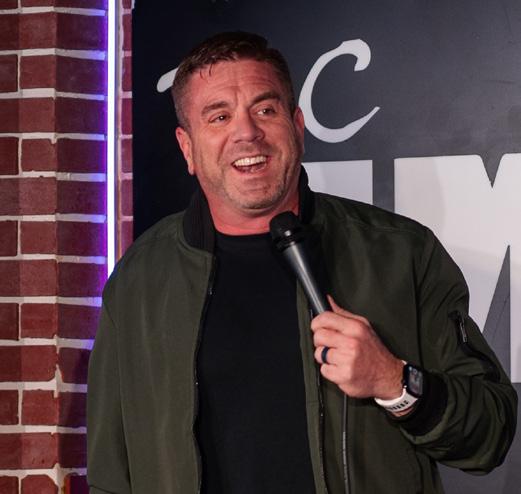
By Cynthia Weiss, Wounded Warrior Project
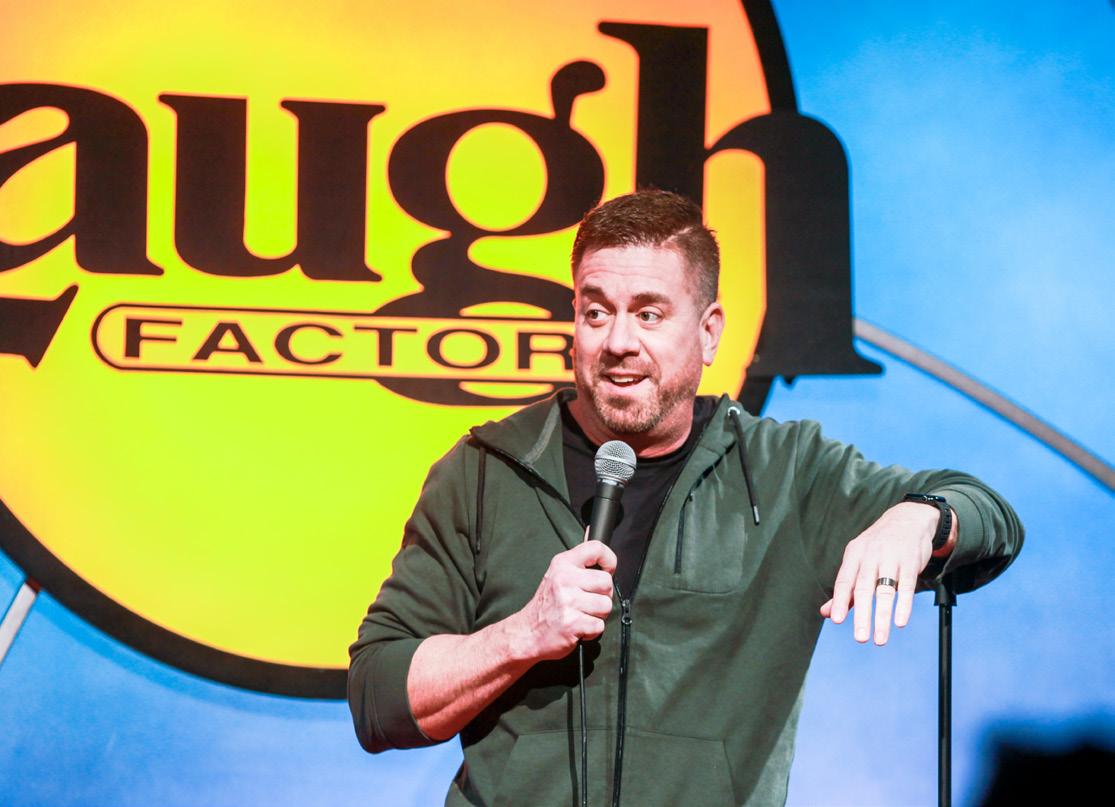
At age 8, Dewayne White told everyone he wanted to be a stand-up comedian. But at 17, he enlisted in the Army. His love for comedy followed him, though. Laughter became a way to get through challenging days, including multiple deployments to Bosnia and Iraq.
Fellow veteran Danny Bahena also dreamt of a life on stage. He loved performing and making people laugh. But when he joined the Air Force, his creativity took a back seat.
Years later, both men turned to Wounded Warrior Project® (WWP) to navigate life after service. Through WWP® and its community partner, Armed Services Arts Partnership (ASAP), Dewayne and Danny found a robust support network and a new path forward. They used humor to connect with veterans and, over time, found it helped them heal and build resilience.
An Escape from Reality
Born in the United States to Mexican immigrant parents, Danny grew up watching them juggle long hours and heavy responsibility. Stress and tension were common at home. “They were in survival mode,” he says.
Danny found refuge in the arts. He wrote poetry, made short films, and performed on stage. “But I didn’t see many people like me doing it, so I assumed it wasn’t meant for me.”
That belief — along with a deep sense of responsibility to support his parents — led Danny to the Air Force.
As a military police officer, no two days were ever the same. Danny says he lived in a constant state of hypervigilance. “I was always on alert.”
He also struggled to process on-the-job trauma.
The stigma around mental health kept him quiet. “In that environment, I had to project control at all times.”
His creative spirit suffered. “I spent years feeling like a shell of myself.”
Danny began having thoughts of suicide. Looking back, he says, he came closer than he ever thought he could.
Laughter is the Best Medicine
It’s a cliché for a reason. Laughter helps.
Among the many healing benefits of laughter:
• Lowering cortisol (the body’s primary stress hormone)
• Releasing dopamine and endorphins (the “feel good” hormones that help improve mood)
• Helping the nervous system shift out of fight-or-flight mode, even briefly.
For military personnel and veterans whose bodies and minds remain on high alert, those moments of relief can be powerful, says Dewayne.
He remembers joking with fellow soldiers during challenging assignments and deployments, finding levity even in the most serious situations.
“Military humor is dark. It’s cynical,” he says. “But it helps you process stuff that isn’t normal or easy. In the moment,humor gives you a way through.”
Recognizing the benefits of laughter, WWP’s partner, ASAP, launched a Comedy Bootcamp® specifically for veterans, service members, and military family members. The stand-up comedy program uses humor to improve mood, build emotional resilience, and boost coping skills.
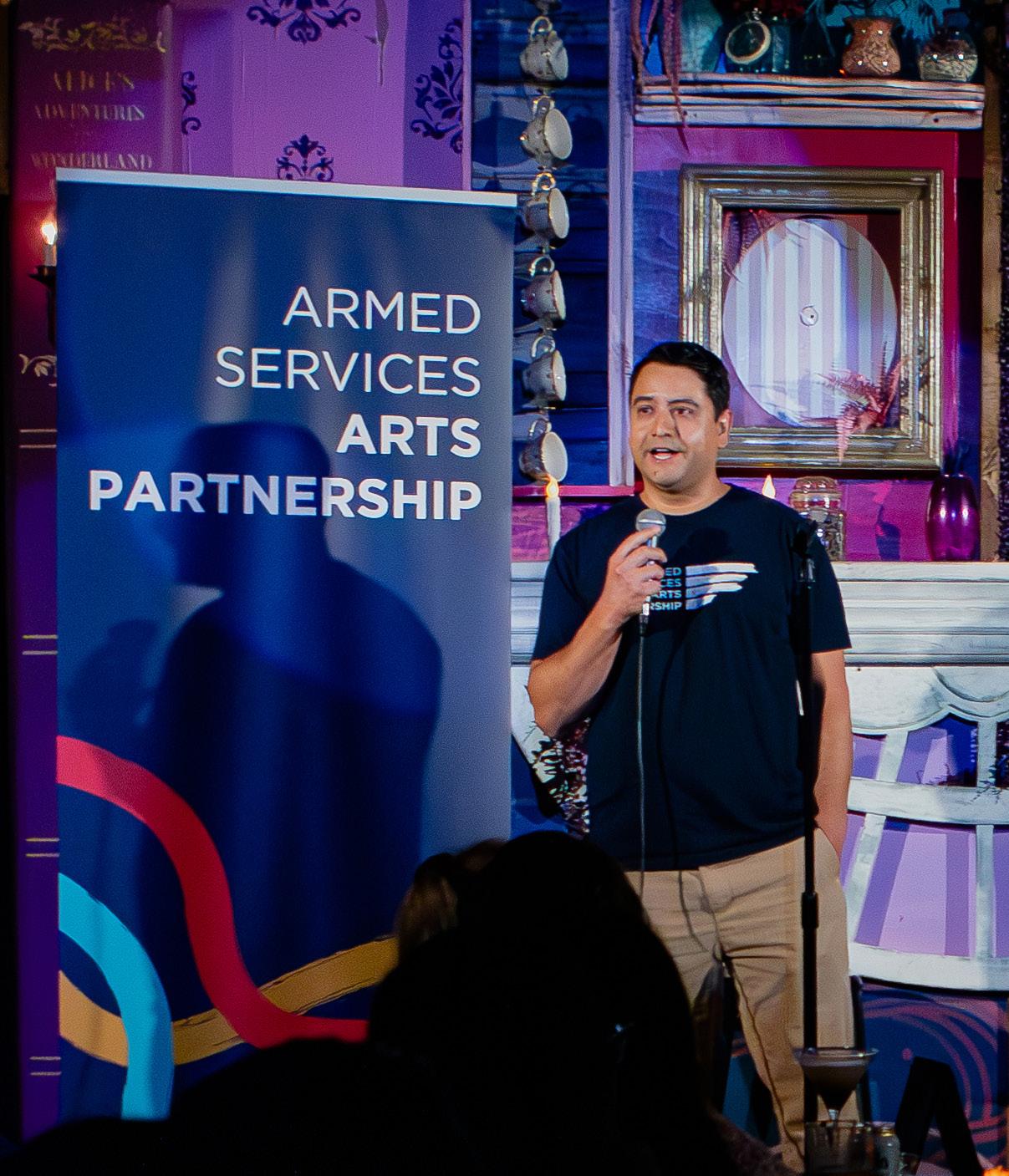
Danny left the Air Force in 2018 after six years of service. He moved into public safety work that mirrored his military experience. As a dispatcher, he responded to emergencies, often listening to trauma unfold over radios and phones.
“My nervous system never really turned off,” he says.
Danny found support through the VA. Through therapy and other treatments, he began to stabilize, but reconnecting with his creative side still felt impossible.
“I was going down a dark path. I was desperately seeking ways to get back to my authentic self, but when I was with civilians, I would feel out of place,” he explains.
“A lot of things I wanted to talk about, I knew most people wouldn’t understand.”
Then one day, he saw an online post about a veteran comedy workshop.
At first, he hesitated.
“Fear of judgment is one of the most powerful things that keeps us from seeking help,” he says.
But then he realized what made this different: “This [program] was made for veterans. Both parts of me could exist there.”
During the six-week ASAP course, Danny found a new perspective. “I learned how to view life through a comedic lens,” he says.
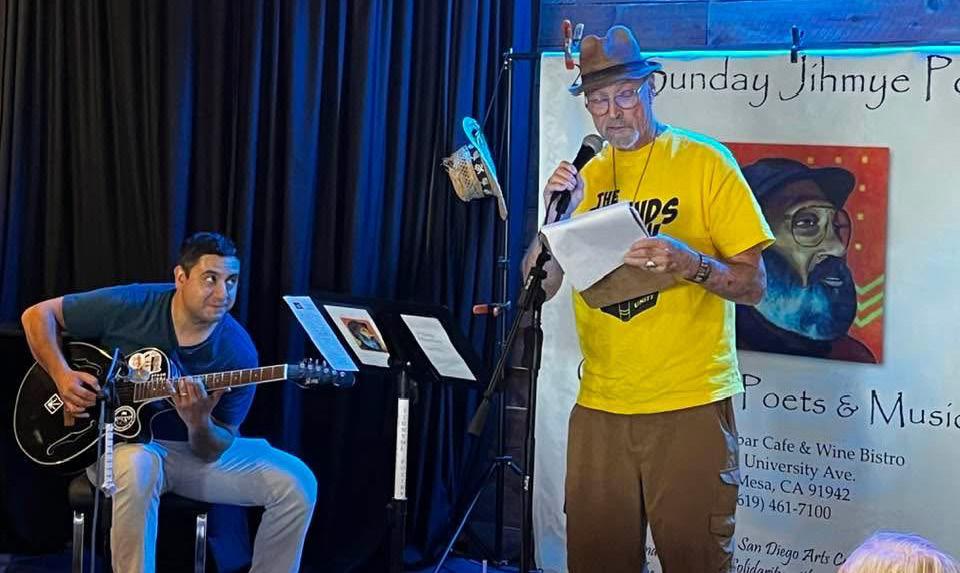
He also found connection.
“Before, I felt completely alone in my experiences. I was isolating and didn’t know how to connect with others,” he says. “Humor allowed me to reconnect.”
His first performance was life changing.
“When I was on stage — hearing and feeling the audience react — that was the first time I felt connected to society again.”
For Dewayne, his military career included various roles and deployments. When he left the Army in 2015, after 23 years, the transition to civilian life was relatively uneventful.
He moved into a government job similar to the one he had in the military. Life felt stable but incomplete.
“When you leave the military, you miss the people, the shared experiences,” he says.
WWP helped restore that sense of belonging. Participating in various peer activities and alumni events, “gave me a way to meet people,” he says.
“The coolest part was reconnecting with other veterans who understood where I had been … it really helped my family and me.”
Dewayne couldn’t have predicted how WWP would help him reach a childhood dream.
The turning point came in early 2019, after talking with his son. “I was encouraging him to take risks and chase his dreams. I realized I wasn’t doing that myself,” he says.
When he saw a flyer for an ASAP comedy workshop, he signed up.
“I thought I’d be good at [comedy], but I didn’t know. My goal was to see if I could do it.”
The ASAP program did more than revive Dewayne’s early aspirations. It opened a door to healing that he did not expect. Humor gave him a way to process his past. It also helped him reconnect with parts of himself he had put away.
“Being around people where it was OK to be creative and expressive. That changed everything,” he says.
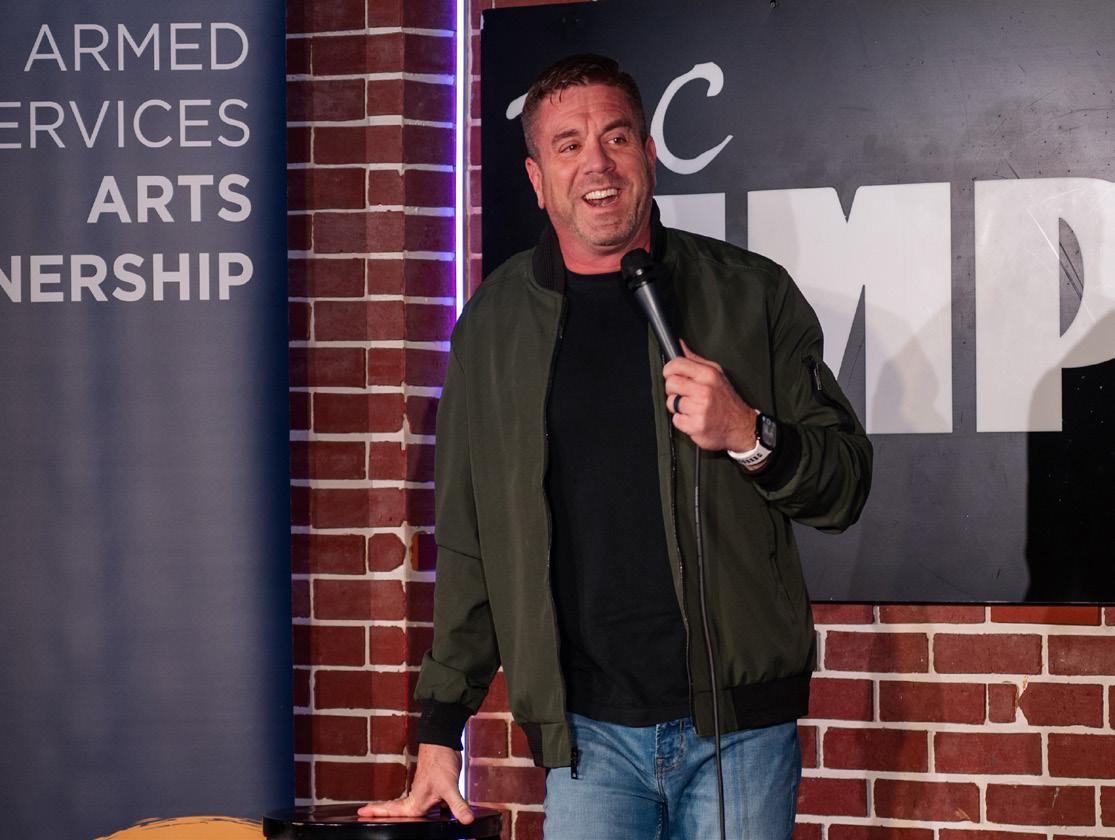
The defining moment came when he performed outside the classroom for the first time.
“Real people laughed — not just students,” he remembers. “That’s when it clicked.”
Now, Dewayne uses humor to bring often taboo topics to the center of the room, including veteran mental health, so others can understand what they can’t always see.
“People say I don’t look disabled. I tell them, ‘That’s because you can’t see the movie that’s playing in my head.’”
When he performs, he feels relief. “When I’m on stage, it’s the only time I can just be in the moment. Everything else goes away.”
In 2020, Dewayne became an ASAP instructor and hosted Zoom comedy shows during the COVID pandemic. By 2021, he left his government job to pursue comedy fulltime, helping other veterans discover humor as a tool for connection and healing.
Laughter is More than a Punchline
Neither man describes comedy as a cure. Instead, they say it’s a step forward.
“It isn’t always about becoming a stand-up comedian,” says Dewayne. “I had no idea the amount of deep friendships I would gain and experiences I would have.”
For some — like Danny — comedy helped him rediscover his love for the arts.
“I could see all these possibilities now,” he says, adding that after the stand-up course, he tried improvisational comedy and began writing again. The San Diego Poetry Annual selected one of his poems for publication. He is also planning a return to acting.
“That possibility wasn’t there before,” he says. “Now it is.”
Empowered by his experiences, Danny joined ASAP in 2025 as a program manager. He also got more engaged with WWP. Currently, he’s improving his physical health through fitness and sleep coaching, and he’s preparing to attend Warrior Care Network, a two-week accelerated brain health program that helps veterans address complex trauma through specific clinical and complementary therapies. For Danny, it is a unique opportunity for continued growth, especially now as a father to a two-year-old little girl.
“If I want my daughter to learn how to regulate her emotions in a healthy way, I’ve got to learn that, too. Warrior Care Network will help me with that,” he says.
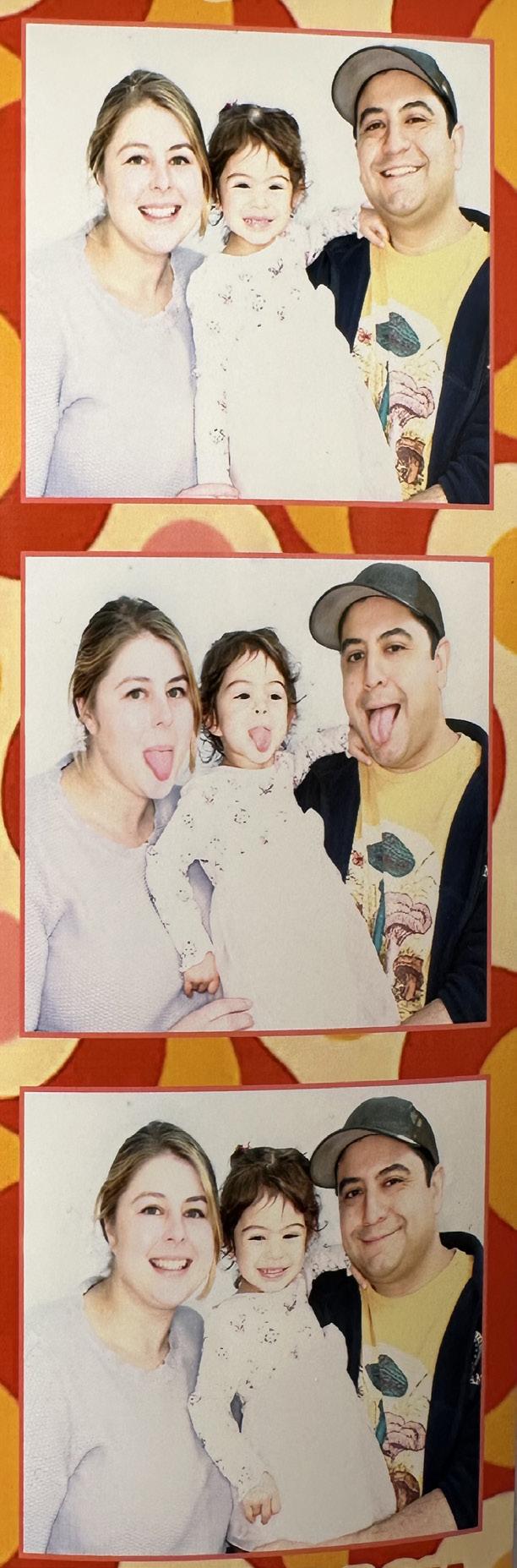
More importantly, “I am not alone anymore. I have a community now.”
As for Dewayne, when he’s not teaching comedy workshops, he is usually on the road, sharing military humor on stages around the globe. The long hours away from family can be difficult, he admits. But the impact keeps him going.
“Watching a veteran who was once isolated, walk back into a community – through comedy, through conversation, sometimes through simply showing up – it’s worth it all,” he says.
To learn more, visit woundedwarriorproject.org or call 888.ALUM (997.2586) to connect with the WWP Resource Center.
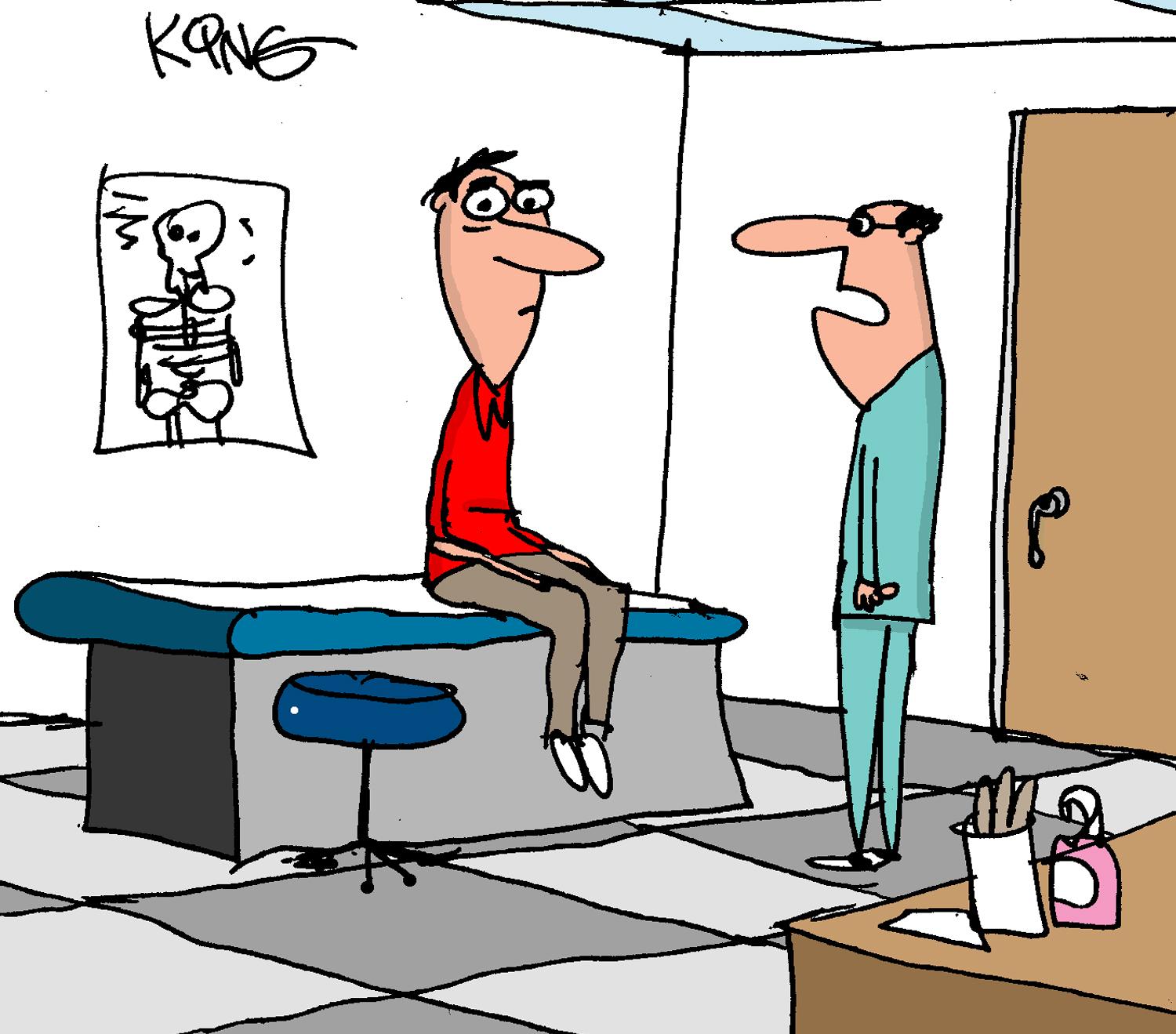
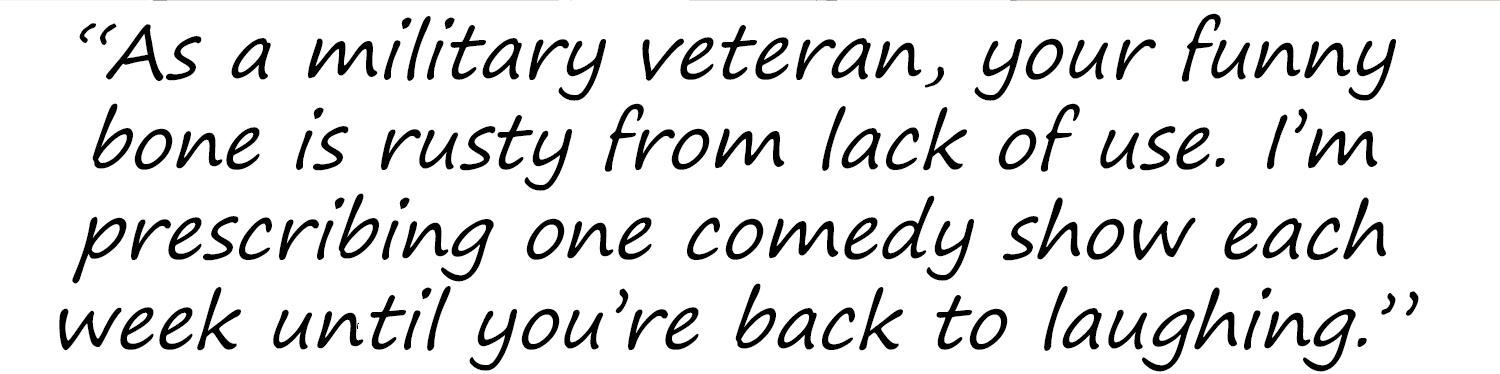
For all your cartoon entertainment from one of the world’s most published cartoonists and army veteran, go to: www.patreon.com/cw/jerrykingcartoons
By Lori Noonan, US Navy Veteran & In-House Contributor, Homeland Magazine and San Diego Veterans Magazine
April is a time set aside to recognize Vietnam veterans—a generation whose service is often acknowledged, but not always fully understood.
We attend ceremonies. We offer our thanks. We wear the pins.
But too often, we miss something more meaningful.
We don’t take the time to truly listen.
That realization hit me recently in a way I didn’t expect.
I spent some rare, uninterrupted time with a close family member—Mike, a retired Navy veteran who served more than 20 years, primarily in WestPac commands. Growing up, he was larger than life to me. His service shaped how I saw the military, and ultimately influenced my own decision to join the Navy. In fact, he stood beside me when I walked into the recruiter’s office.
I thought I knew his story.
I didn’t.
Like many Vietnam-era veterans, Mike never led with his experiences. He didn’t sit around telling stories, and I never pushed to ask. Life moved forward, and I assumed I already understood enough.
I was wrong.
During our time together, the conversation shifted— naturally, without pressure—and he began to share parts of his experience I had never heard before.
Mike served during the Vietnam War not only aboard ship, but also on the ground as part of an expeditionary team. That alone reshaped my understanding of what his service looked like.
Then he shared something I never expected.
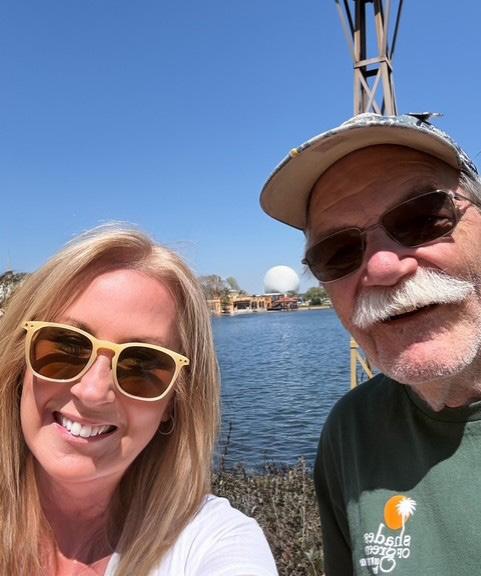
Lori & Mike
His fleet was part of a U.S. Navy port visit to China in the 1980s—the first in nearly four decades. A rare and significant moment, reflecting a shift in global relationships after years of separation.
And there he was—part of it.
Not in a history book. Not in a documentary.
Sitting right across from me.
It was one of those moments that makes you pause. How could I have known him my entire life and never asked about something so significant?
The answer is simpler than I’d like to admit: I never created the space.
That’s the gap for so many of us. We have veterans in our lives—people we respect, admire, and care about— but we confuse proximity with understanding.
We assume we know their story.
We don’t.
Vietnam veterans, in particular, carry experiences shaped by complexity—service, sacrifice, resilience, and in many cases, a long-delayed recognition from the country they served. Many didn’t come home to parades or public appreciation. Many learned, over time, to keep their stories to themselves.
But that doesn’t mean those stories aren’t there.
It means they’re waiting to be invited.
There’s an important distinction: listening is not the same as asking. It’s not about pressing for details or reopening difficult memories. It’s about being present enough that, if and when they choose to share, you’re ready to hear them.
That’s the real tribute.
Not the ceremony.
Not the script.
But the conversation.
As someone who has spent a career working alongside veterans and strengthening communities, I’ve seen how connection changes outcomes. But this experience was a reminder that connection doesn’t start in programs or initiatives—it starts much closer to home.
This April, as we recognize Vietnam veterans, I offer a simple challenge:
Look around your own life.
There’s likely someone—a family member, a neighbor, a colleague—whose story you think you know.
Take the time. Create the space. Let the conversation unfold.
And then listen.
Because the stories we almost miss aren’t just history.
They’re sitting right in front of us
Author Bio
Lori Noonan is a nonprofit executive and consultant with more than 30 years of experience helping organizations grow their impact. A Navy veteran, she is passionate about strengthening communities and elevating the voices and experiences of those who have served. www.nonprofitexcellenceprofessionals.org
Navigating the wide range of resources available to veterans can feel overwhelming, but you don’t have to do it alone.
Homeland Magazine is here to help guide the way, connecting you with trusted veteran organizations and nonprofit partners. Whether you’re accessing the benefits you’ve earned, managing the long-term effects of servicerelated injuries, or exploring programs tailored to your unique needs, we’re committed to helping you find the support that’s right for you.

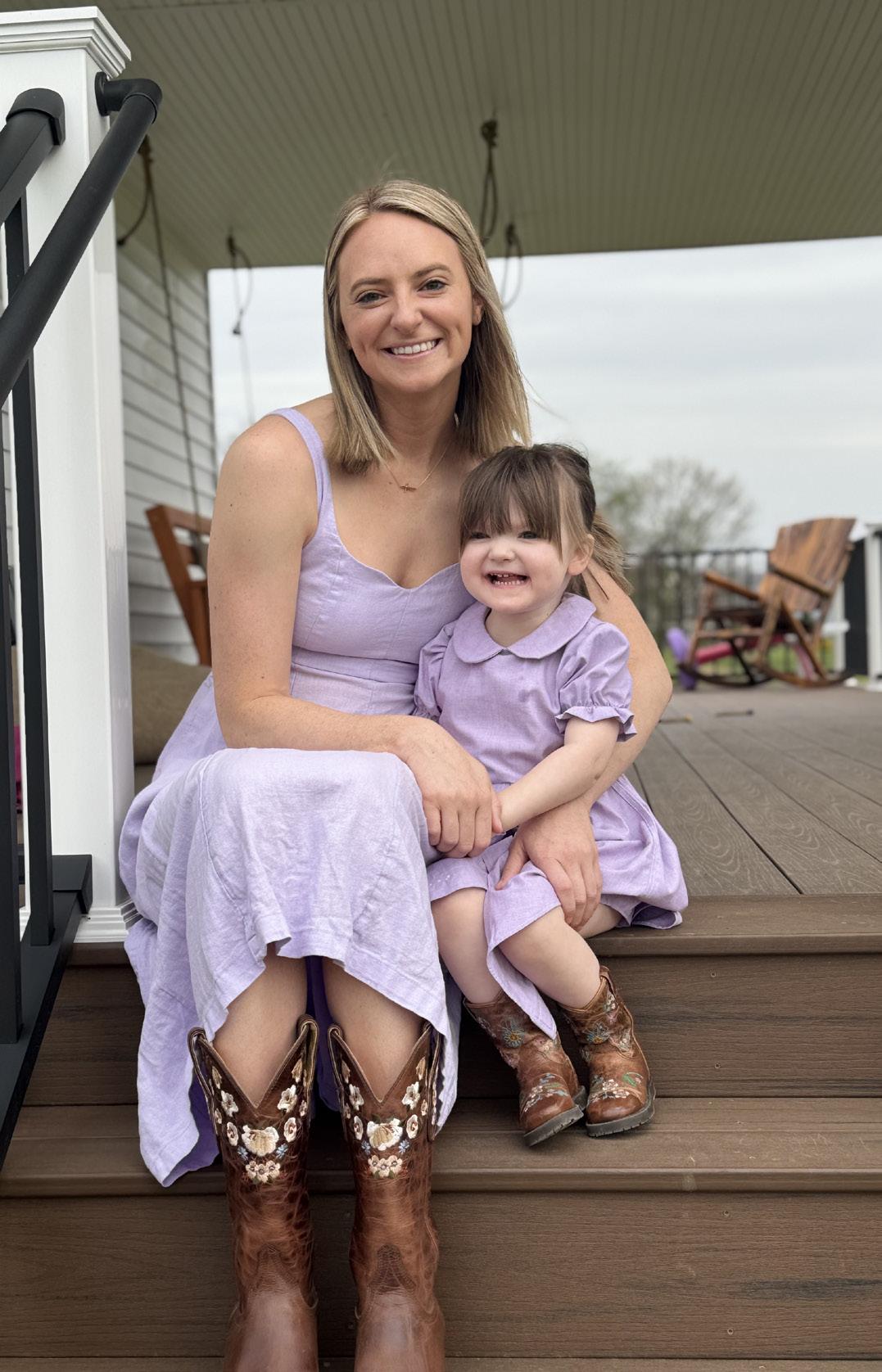
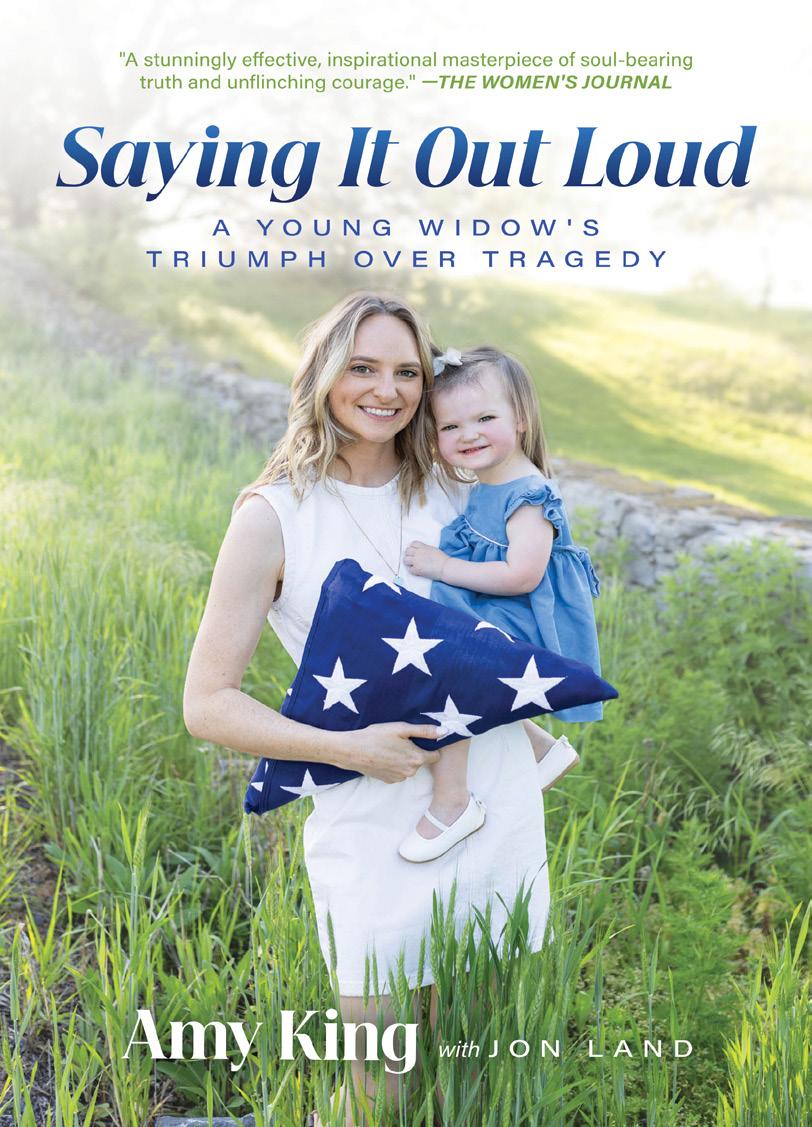
Homeland Magazine spoke with Amy King—military spouse, author, and advocate—whose life was forever changed in November 2023 when her husband, Andy, died in an accident. She was 27. Their daughter was just one. In the months that followed, Amy began writing, documenting the grief, the community that carried her, and the small moments she didn’t want to forget. Those writings became Saying It Out Loud: A Young Widow’s Triumph Over Tragedy (Post Hill Press, April 28), a memoir that traces the arc from survival to healing in real time. Here, she reflects on grief, faith, motherhood, and the daily work of carrying someone’s legacy forward.
Homeland: You chose to write this book not long after your loss. What made you feel it was important to share your story in real time?
Amy: I lost my dad when I was 22, and in the years that followed I realized how much of that time I’d forgotten. Having experienced grief before, I knew how easily memories fade. This time it wasn’t just my loss but my daughter’s too. I felt an urgent need to preserve those memories for her.
For months I wrote down stories about Andy, the love from our community, and the sweet, heartbreaking things my daughter would say about her father. By July 2024, about nine months after Andy passed, I decided to turn those writings into a book. What surprised me most was what I discovered reading it back.
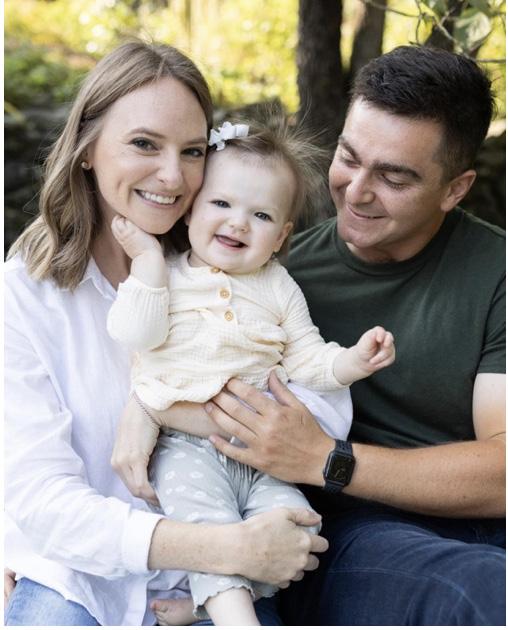
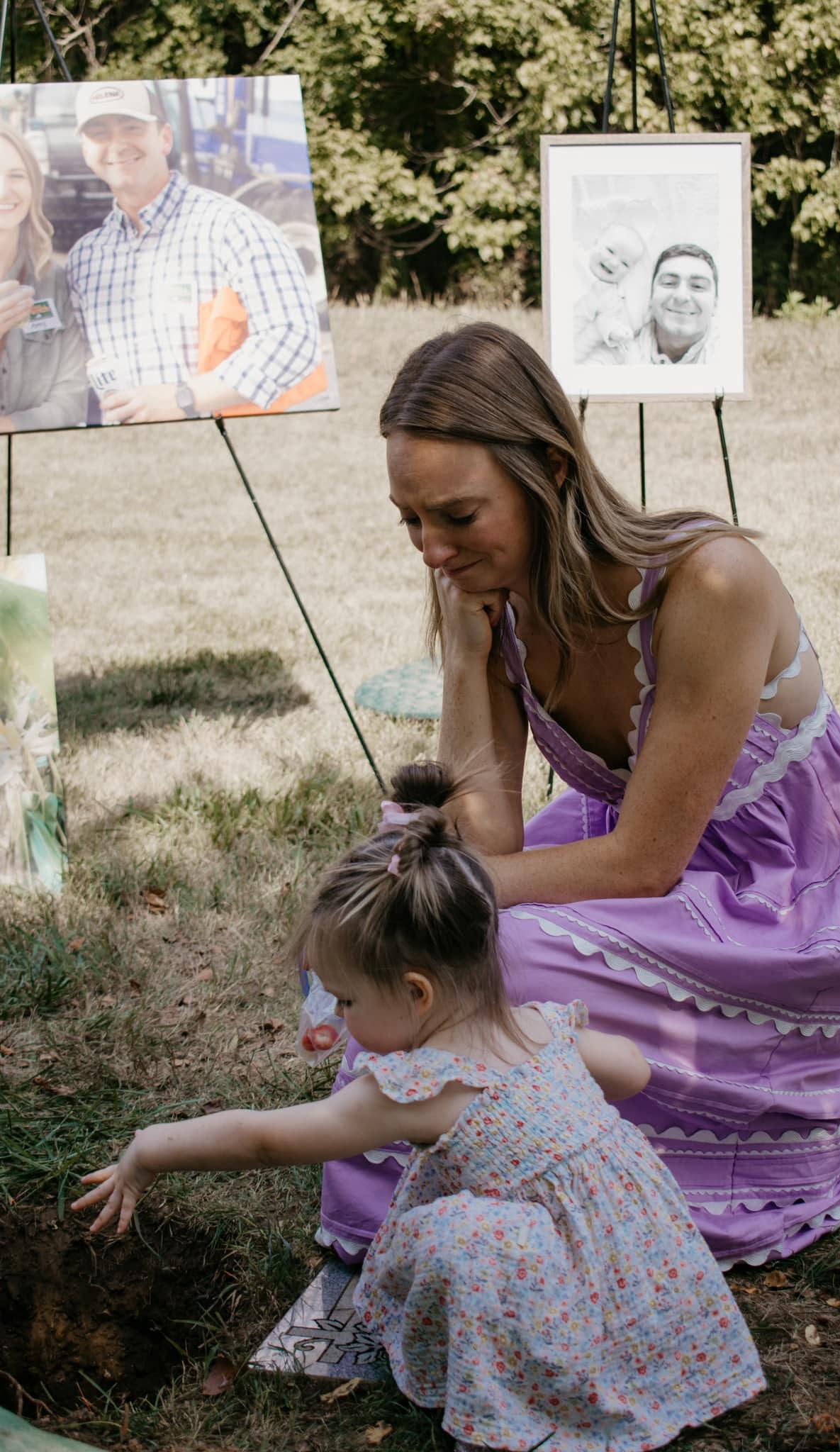
In the early pages I could feel myself just trying to survive, but as the story unfolds there’s a clear shift; I was choosing to live again. By the end, I could see the person I had become, and that realization was incredibly powerful.
Homeland: You became a widow at 27. How did your age shape the way others responded to your grief—and how you made sense of it yourself?
Amy: Losing a spouse at 27, while raising a one-year-old, brought an overwhelming amount of care into our lives. Family moved in almost overnight. My church was at my doorstep within minutes. Friends found countless ways to honor Andy and support us. That love carried me through the unimaginable.
At the same time, this loss shattered a belief I didn’t even realize I held; that life would follow a certain order. Being young in grief comes with its own challenges. I’m more aware of life’s fragility than many people my age, and that can feel isolating.
In a strange way, though, I came to terms with Andy’s absence sooner than many people around me. While others could step in and out of that grief, I was living in it every minute of every day. That closeness, as painful as it was, pushed me to face it head-on.
Homeland: How did your relationship with faith evolve after your loss?
Amy: My faith deepened quickly. I never stopped believing, though I was often confused. But it would have been hard to look at my situation and not see God in it. The ways people showed up and the love that surrounded us. I realized I couldn’t spend my time searching for answers I might never get.
Instead my questions shifted: How do I pray more intentionally? How do I teach my daughter about faith? How do I raise her in a way that keeps us connected to Andy and grounded in the hope of Heaven? As I worked through my grief with my pastor, he shared something that has stayed with me: “God promises faith, not fairness.” I remind myself of that every day.
Homeland: How have you found ways to carry your husband’s legacy while building a new chapter?
Amy: One of the common themes throughout the book is that two things can be true at once. I can miss and love Andy and continue my life at the same time. I’m not healed, but I’m healing. What I could do was hold on to the parts of him I loved most and pass those on to our daughter: his work ethic, his integrity, his love for agriculture, his resilience. It started with opening an agriculture scholarship in his honor, then hosting a 5K on his heavenly anniversary, and now an agriculture day for elementary students. These have become meaningful ways to keep Andy present in our lives, focused on who he was rather than the loss.
Homeland: How did motherhood shape your healing process?
Amy: Navigating loss while raising a child forced me to begin healing whether I felt ready or not. I wanted to be an example for the little eyes watching my every move and the little heart that needed her mom even more.
Motherhood became both my motivation and my anchor. In many ways, she saved me and gave me a reason to keep going when everything in me wanted to shut down. Grief took so much, including parts of my motherhood in that first year. But I made a conscious decision not to let it take anything more. I committed to doing the hard work so I could be the mother she deserved: present, strong, and whole.
Navigating the wide range of resources available to veterans can feel overwhelming, but you don’t have to do it alone.
Homeland Magazine is here to help guide the way, connecting you with trusted veteran organizations and nonprofit partners. Whether you’re accessing the benefits you’ve earned, managing the long-term effects of service-related injuries, or exploring programs tailored to your unique needs, we’re committed to helping you find the support that’s right for you.
By Kie Copenhaver CSA, RHIA, SHSS, RCFE
My neighbors down the street are a military family. Dad is active-duty Navy and holds a very high rank within the aviation division. His wife, a retired Navy veteran, stays home with their three children ranging from 8 years old to 18 months old. Every day I see him drive down the street, off to work at what sounds to be a very demanding job. And every day I see his wife, kids and dog in tow, walking around the neighborhood. Mom is likely trying to tucker them out so she has a somewhat compliant “troop” when bedtime rolls around.
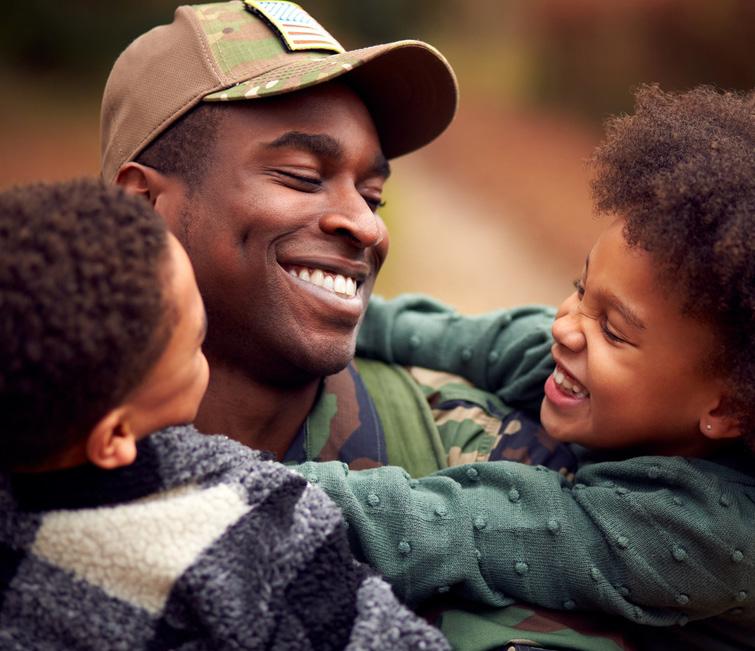
The military child, often referred to as a military “brat”, experiences a childhood that is much different than their non-military counterpart. And before anyone gets too flustered with the word “brat”, allow me to explain that the word originated with the British almost 100 years ago. According to Military.com, British Regiment Attached Travelers or BRATs as members of a family traveling abroad with a soldier. And the name stuck for military children everywhere.
A few statistics about the military child. Military children, since the early 1970s, have outnumbered active-duty military by 1.4 to 1. This group of children and young adults have a higher rate of mental health issues, namely depression and anxiety, than non-military children likely due to multiple moves and the myriad of emotions felt when a parent is gone for long periods of time.
On the upside, these children have been found to be more resilient and resourceful as they move into young adulthood, adapting to change with greater ease. Finally, this special group of children and young adults are twice as likely to become members of the military once they are of age.
I would not be considered a military child by any stretch of the imagination, even though my father served in the Army. His time in the military was over by the time I came along and now that he is in his mid-80s, it is my turn to care for him in much the same way he cared for me growing up.
The military child will, in turn, become an adult and may end up caring for the very parent or parents that gave them the distinction “military child”.
If you find yourself caring for an aging veteran – or anyone really – in addition to caring for their daily needs, ensure their documentation is in order. Make sure they have Power of Attorney documents, an Advance Directive, and perhaps a trust or will in place. Preparation today makes for a smoother tomorrow. Blessings to military children everywhere.

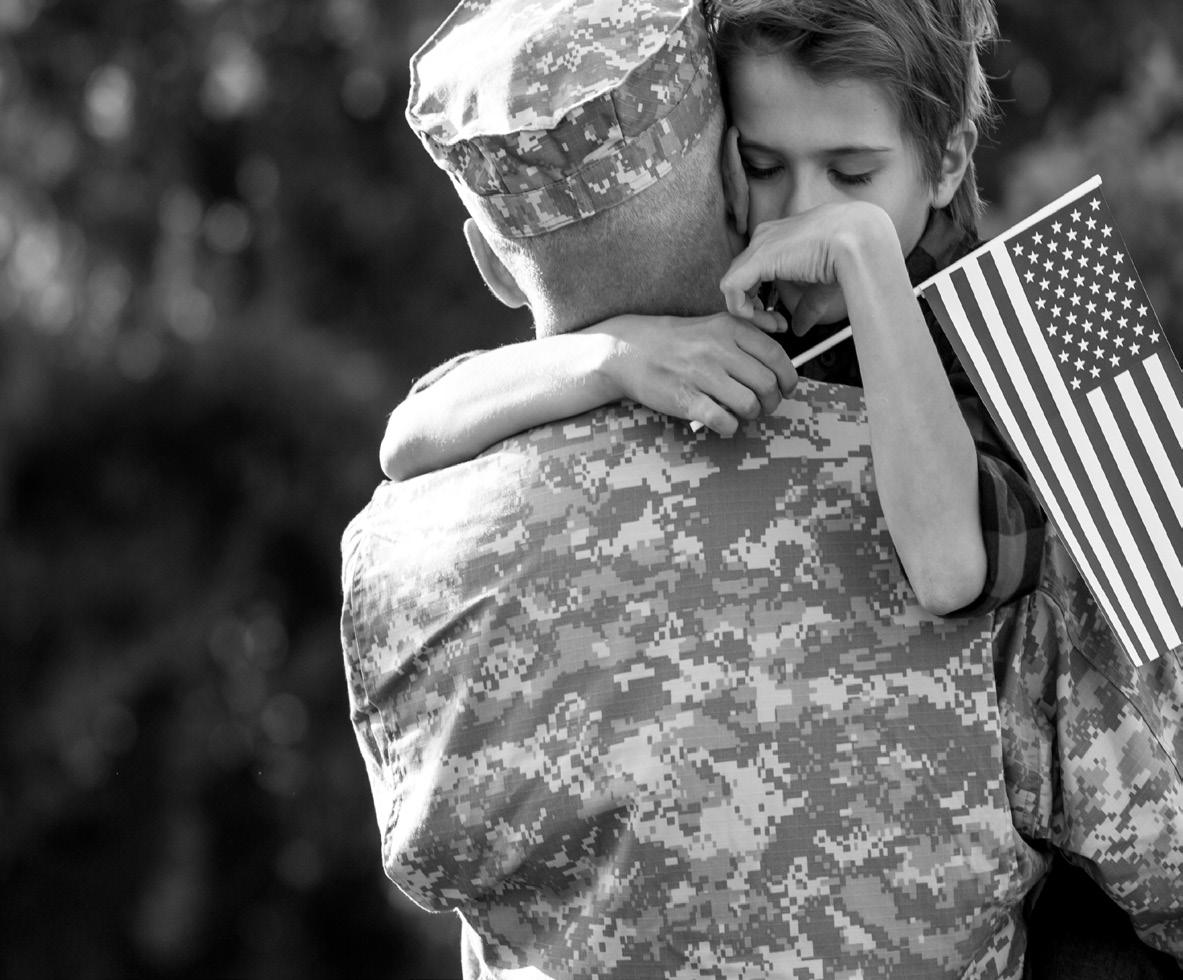
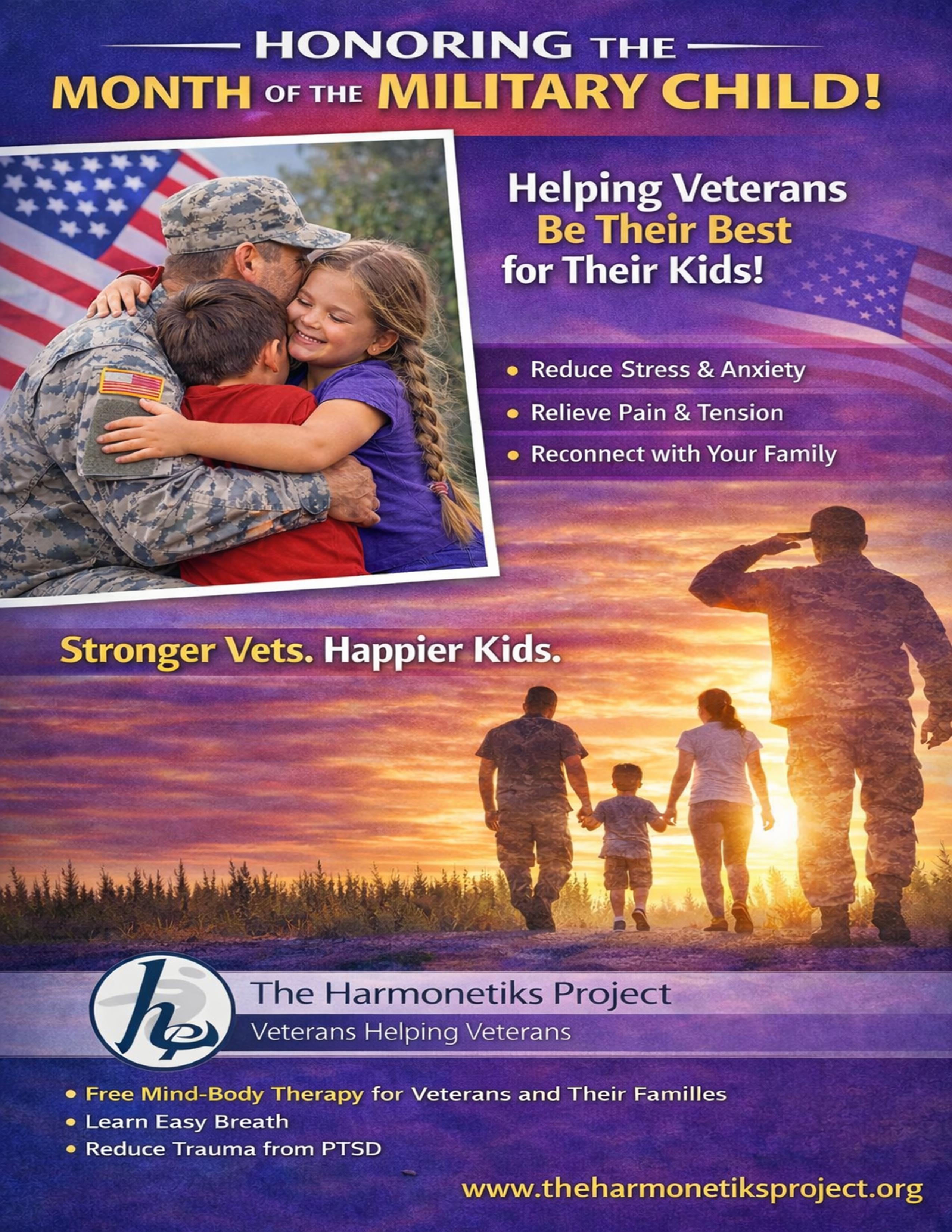
April is designated as the Month of the Military Child, underscoring the important role military children play in the armed forces community.
Sponsored by the Department of Defense Military Community and Family Policy, the Month of the Military Child is a time to applaud military families and their children for the daily sacrifices they make and the challenges they overcome.
The Month of the Military Child is part of the legacy left by former Defense Secretary Caspar Weinberger. He established the Defense Department commemoration in 1986.
Homeland Magazine joins the Department of Defense and the military community in celebrating April as the Month of the Military Child.
In DoDEA communities around the world, our most essential strategic imperatives are: establishing an educational system that progressively builds the college and career readiness of all DoDEA students; and establishing the organizational capacity to operate more effectivelyand efficiently as a model, unifiedschool system.
We aim to challenge each student to maximize his or her potential and to excel academically, socially, emotionally and physically for life, college and career readiness.
www.dodea.edu/dodeaCelebrates/Military-Child-Month

By Maggie Meza, Executive Director, Blue Star Families of San Diego
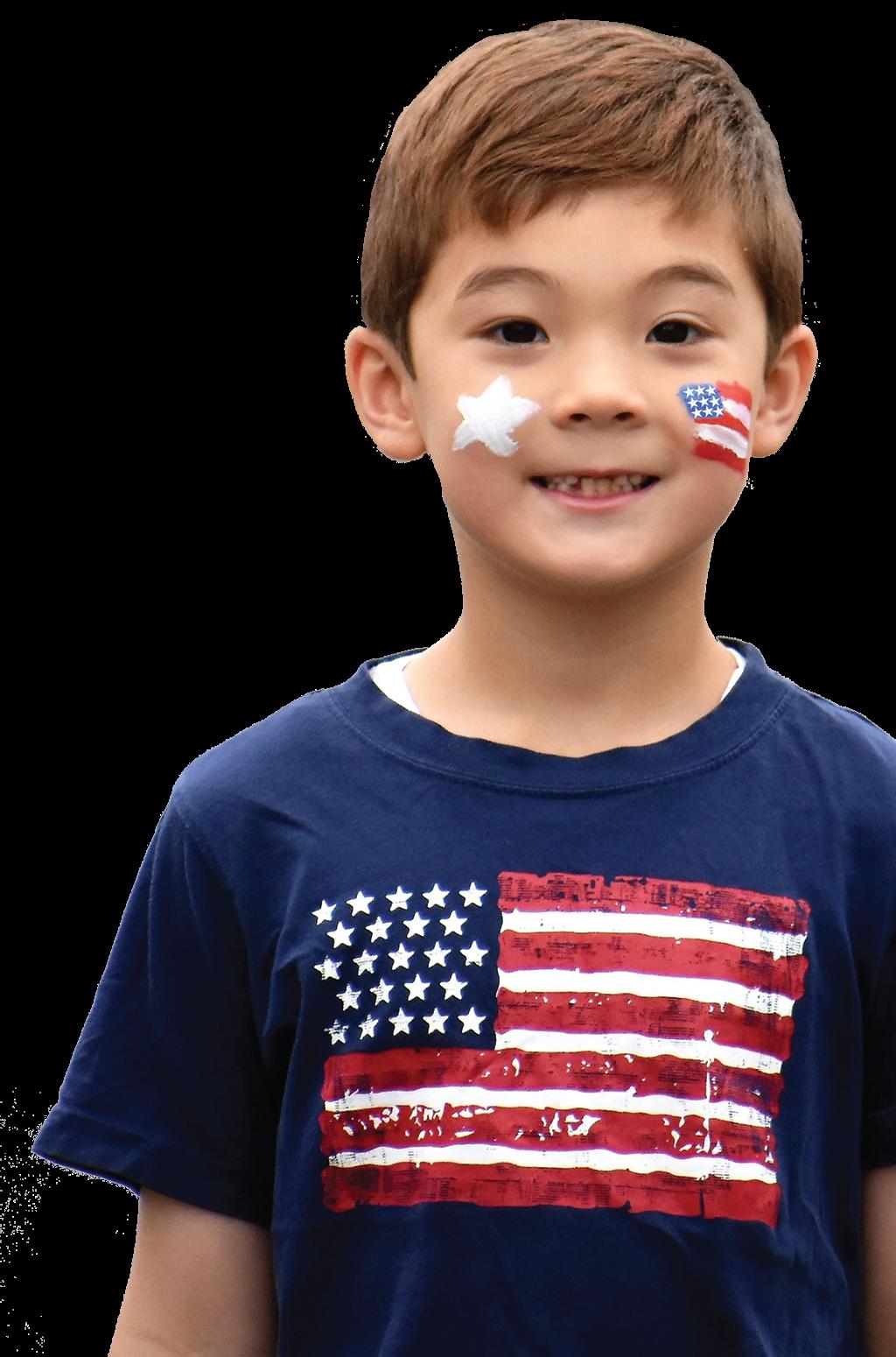
Blue Star Families San Diego: Strengthening Military Families, Strengthening Our Community
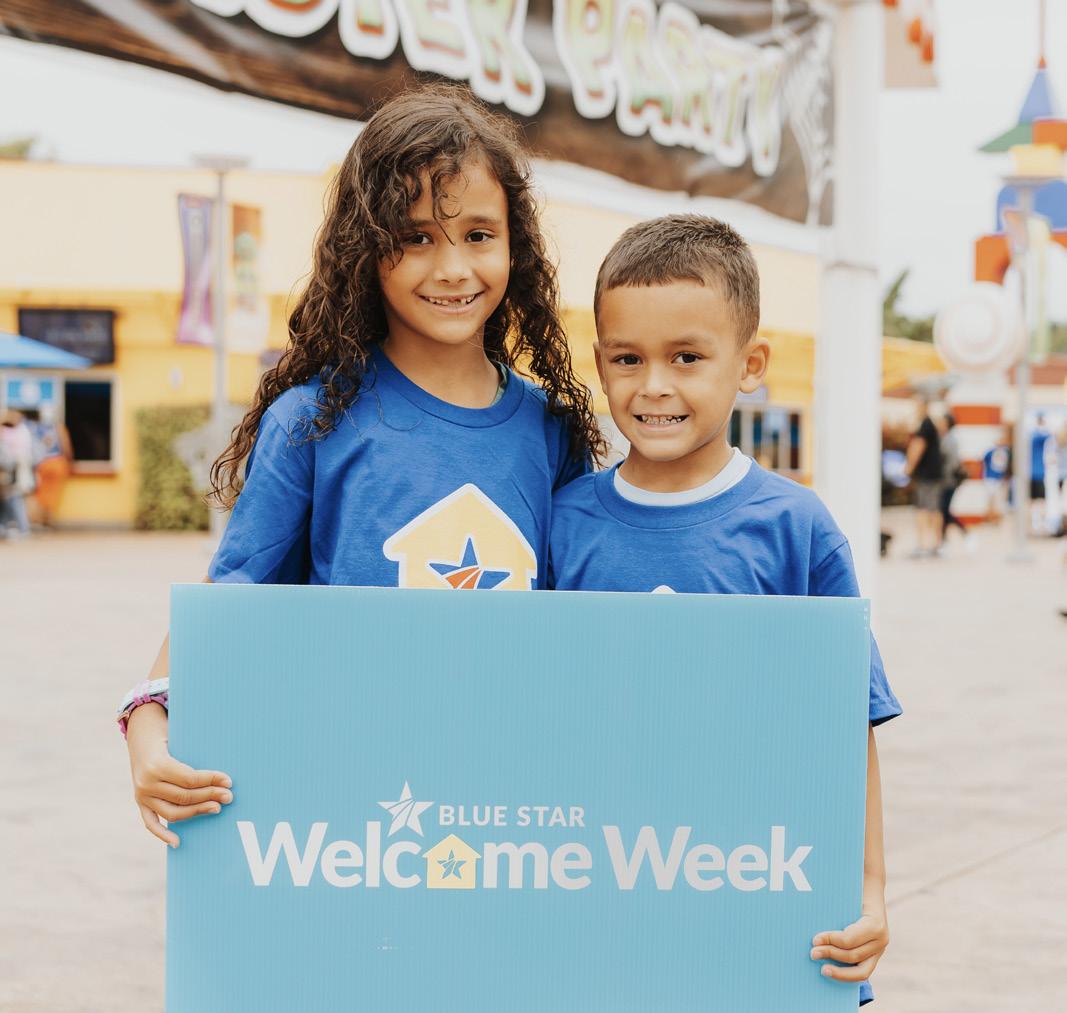
Military life is filled with unique challenges— frequent moves, deployments, and the ever-present strain of separation. In San Diego, home to one of the largest concentrations of military personnel in the nation, these challenges impact tens of thousands of service members and their families. Blue Star Families of San Diego stands at the forefront, ensuring that no military family feels isolated or unsupported.
Blue Star Families of San Diego is dedicated to empowering military families by providing resources, community connections, and vital support systems that help them thrive. Our programs address critical areas such as education, financial literacy, outdoor recreation, cultural enrichment, and military spouse employment, ensuring that families not only survive but flourish.
One of our primary goals is to address the inequities faced by military families, especially within San Diego’s diverse military community. According to Blue Star Families’ annual Military Family Lifestyle Survey, more than 48% of military families report financial stress as a major concern. Through strategic partnerships and targeted programming, Blue Star Families of San Diego is working to mitigate these hardships and improve overall family well-being.
Relocation is a constant reality for military families, and Blue Star Welcome Week ensures that newly stationed families find a sense of belonging. Through regular Coffee Connects, networking events, and cultural outings, we provide military families with opportunities to integrate into the community and build lasting relationships.
San Diego’s beautiful landscapes provide the perfect backdrop for Outdoor Explorers for All, a program that encourages military families to engage in outdoor activities, from hiking to water sports, fostering mental
and physical wellness. This program is especially vital for military children, offering them opportunities for recreation and resilience-building.
Military spouses face significant challenges in securing stable employment due to frequent relocations. Blue Star Families of San Diego hosts Military Spouse Employment Workshops, providing career development, networking opportunities, and resume-building support. These workshops help spouses gain meaningful employment and financial independence.
Each year, Blue Star Families of San Diego honors military children and spouses, recognizing their resilience and sacrifices. Our annual Dandelion Festival during the Month of the Military Child provides familyfriendly events, resources, and entertainment, while Military Spouse Appreciation initiatives focus on employment support, self-care, and networking.
If there’s one thing we’ve realized in the last 16 years, it’s that we cannot do this work alone. To see real change for military and Veteran families, we are developing solutions and clear pathways for everyone to Do Your Part to ensure the future and sustainability of the AllVolunteer Force.
As we move forward, Blue Star Families of San Diego remains committed to bringing data-driven programs, expanding resources, and strengthening partnerships that benefit military families.
We invite the community to join us in our mission. Whether through volunteering, corporate sponsorships, or donations, your support makes a tangible difference in the lives of military families who sacrifice so much for our country. Together, we can build a stronger, more connected San Diego where military families not only serve— but thrive.
Join the San Diego Community, neighborhood. bluestarfam.org/topics/29308/feed
Interested in local partnerships?
Email sandiego@bluestarfam.org
Interested in donating?
connect.bluestarfam.org/give/476702/#!/donation/checkout
Meet Our Executive Director: Maggie Meza
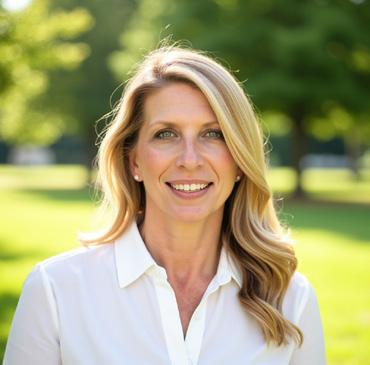
Maggie Meza, Executive Director of Blue Star Families of San Diego, is a dedicated advocate, nonprofit leader, and military spouse with more than 30 years of firsthand experience navigating the military lifestyle. Having relocated multiple times and
raised her children in a military environment, she brings a deep understanding of the challenges and triumphs military families face.
Under her leadership, Blue Star Families of San Diego has expanded its reach, strengthened community partnerships, and secured critical funding to support innovative programming.
Across Southern California, Maggie facilitates engagement opportunities that foster crosssectoral dialogue between military and civilian communities.
She is also a recognized voice in military advocacy, serving on multiple advisory boards and military affairs committees within the community.
bluestarfam.org

By: Rita Bederman, LMFT Clinician at The Steven A. Cohen Military Family Clinic at VVSD www.vvsd.net/cohenclinics

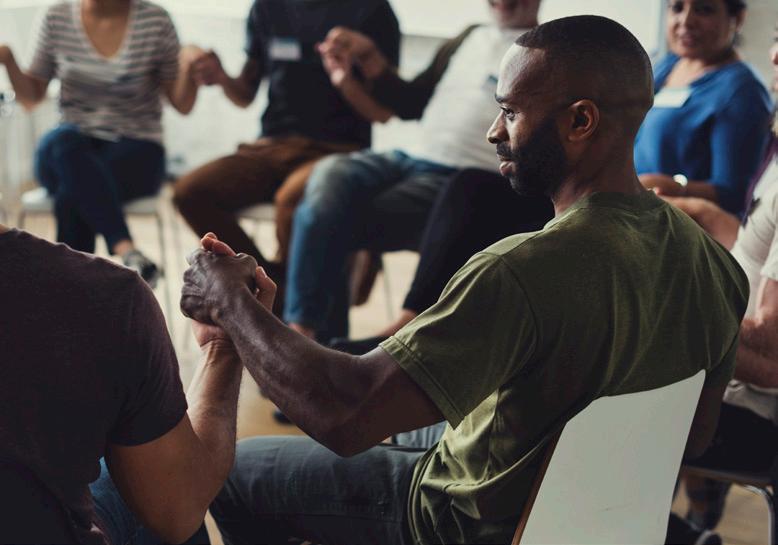
Challenges often serve as opportunities for growth and skill development. For military-connected children, their unique experiences become stepping stones in building resilience, adaptability, and personal strengths as they navigate the changes brought by life and duty. April, celebrated as the Month of the Military Child, honors their courage and contributions. Frequent relocations and related transitions including school, home, and environment changes require crucial adjustments to new situations. Parental deployment, a major event that significantly changes family dynamics, encompasses a wide range of stressors alongside new avenues to expand skills. Separations and reunifications are experiences that can build adaptability and resilience for children and families.
Military-connected children are often successful in overcoming these unique challenges: they are able to adjust to a new school, make new friends, and fully participate in family life.While military-connected children’s experiences can shape them to become more resourceful and able to face uncertainty, there are times in which some children may experience overwhelming feelings, changes in behavior, or an increase in anxiety and acting out, to mention a few potential reactions. Every child is unique in the ways in which they can express their emotions and concerns.
Fortunately, there are a variety of strategies and ways for families to support military children during these difficult times. Here are some of them:
• A stable, calm, and nurturing environment with clear and well-defined expectations can provide the child with structure, support, and predictability.
• Following routines and scheduling activities are especially helpful.
• Making room for family fun at home through a game or movie night can create or strengthen meaningful connections.
• Open and supportive communication at home and a safe non-judgmental space for children to express their emotions can make a significant difference. When big feelings arise, it is important to remain calm and support children as they regulate their emotions. Moving to a safe and quiet space and staying with them can help them to overcome these challenging situations.
• Praising positive behaviors and acknowledging even small actions can also promote collaboration and teamwork at home.
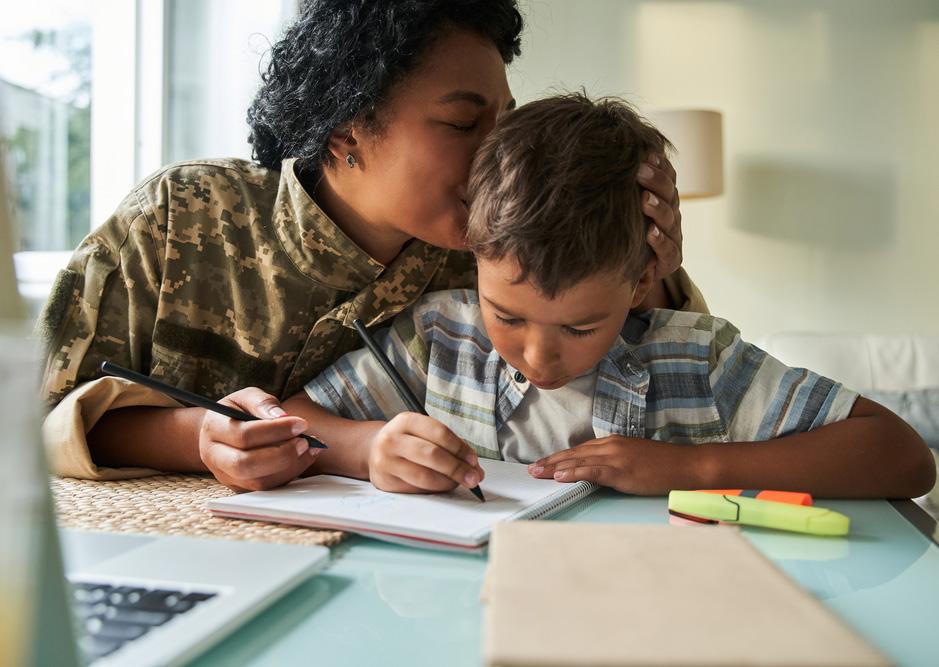
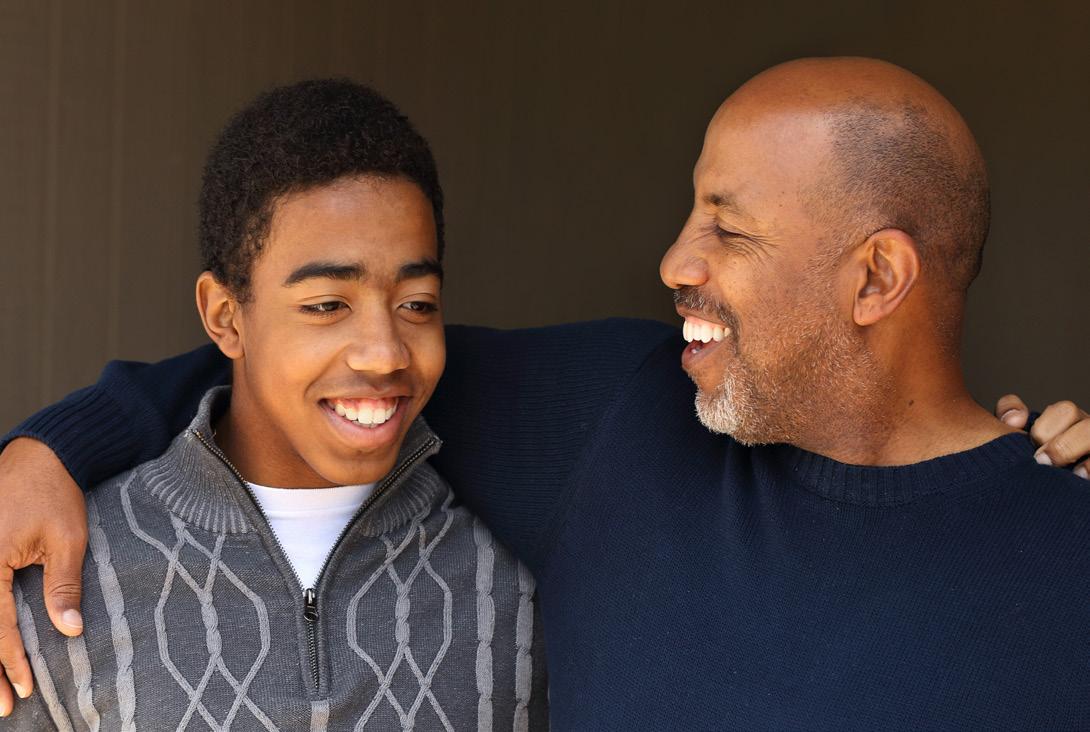
The development of strong channels of communication between home and school can allow parents and educators to closely monitor the child’s response to a variety of situations. Additionally, as teachers and school authorities are aware of the students’ challenges, they can support them with their own appropriate strategies and increased understanding.
Many schools and community organizations celebrate military-connected children every April. Let’s join them in supporting these children by honoring their unique strengths and resilience. Let’s wear purple on April 15th! Purple Up for Military kids and throughout the month!
If, as parents, you feel concerned about your child’s emotional or behavioral aspects, help is easily accessible at Cohen Veterans Network including the Steven A. Cohen Military Family Clinics at VVSD in California. Therapists with knowledge and experience in supporting the military community are available to assist your unique needs. We look forward to partnering with you whenever you need it.


Air Force veteran who once struggled with money now runs a successful youth financial education company
By Elizabeth DePompei
Inspired by a family of service members and entrepreneurs, Jasmine Paul has long had the desire to create something in the spirit of solving other people’s problems.
Yet when she needed that same spirit for her own problems, she hesitated to reach out for help. It was her senior year of college and, with her personal finances in disarray, Paul was living out of her car and sleeping on friends’ couches.
Despite being raised by parents who retired from the military, Paul admits she had no intention or inclination to go into the service herself. But she needed to pay for school. Little did she know that receiving a commission would do so much more than ease her financial burden.
“Once I commissioned into the Air Force, I was like, ‘OK, we got to figure out this money thing, because I don’t want to go back to that situation,’” Paul said.
She read books, asked questions and got curious about personal finance. Meanwhile, she relished being a nuclear missile combat crew officer. Then something unexpected happened—she discovered she wasn’t the only adult who struggled with financial literacy.
“I had airmen maxing out credit cards and, unfortunately, had some go through some really hard personal finance experiences,” Paul said.
Empowered with more information and experience, Paul—who eventually became a finance officer in the Air Force—started helping her fellow service members pay off debt, helping around 110 people pay off more than $350,000.
“Everyone just kept saying, ‘I wish I learned about money as a kid,’” Paul said. “That’s where The Wealth Playground was birthed.”
Following in her aunt’s and grandmother’s footsteps, and inspired by her personal experiences, Paul founded her business—driven to get to the root of the financial literacy gap and provide solutions. The
Wealth Playground, a youth financial education company, offers children’s books and curricula Paul authored, along with virtual and in-person learning products. Paul works with nonprofits, school districts and other organizations to reach thousands of kids.
She had the experience, the knowledge and a clear mission, but the further Paul walked in her entrepreneurial journey, the more isolated she felt. Like so many founders, especially those who spend their formative years in military service, Paul struggled to find a community of like-minded founders who understood the challenges she faced.
list for libraries, graduated from a Goldman Sachs accelerator program, and secured over $45,000 in pitch winnings and grants. She also continues building key partnerships with organizations like the Taco Bell Foundation.
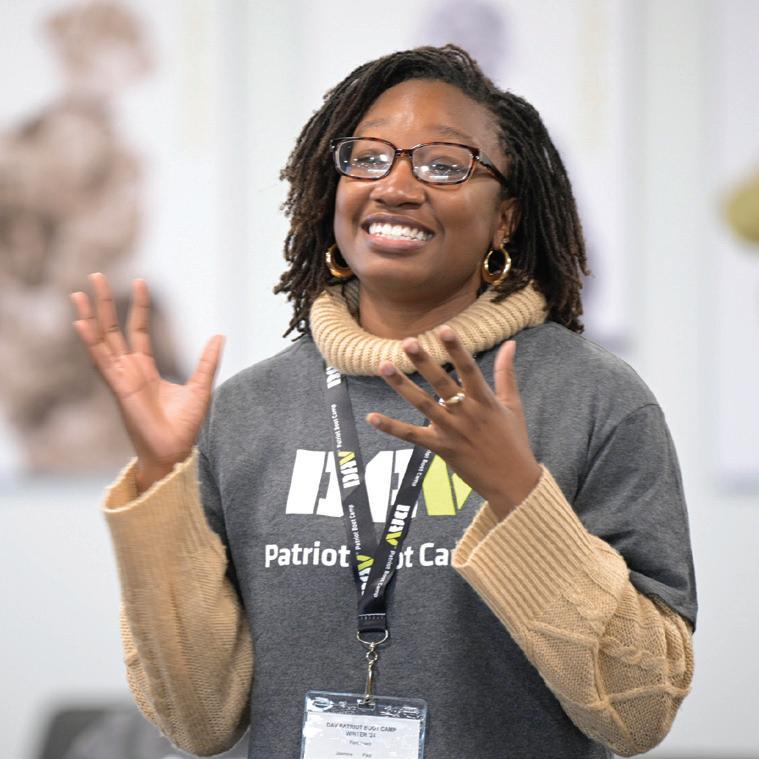
Then in 2024, Paul attended DAV Patriot Boot Camp, a three-day, in-person program that connects militaryand veteran-connected founders with no-cost education, mentoring and community. Paul said it felt like she was back in the military with her brothers and sisters. She also credits the one-on-one mentoring she received with giving her a well-earned push.
“I feel like Patriot Boot Camp gave me that hype that I needed,” Paul said. “Like, ‘Oh, you’re dope! Why are you playing around?’”
The program also gave her one of her first opportunities to compete for funding in a pitch contest. It went well— she won first place.
“That’s something I’ve been practicing for a while now, and so it was really awesome to be able to share [my pitch] and [for] people get it,” she said. “So winning was like icing on the cake.”
She later went on to compete in DAV Patriot Boot Camp’s annual pitch contest, held on the big stage and with more money up for grabs during the DAV national convention. Now Paul leads a virtual master class on pitching, designed for founders and other creators.
Since her Patriot Boot Camp cohort, she’s added more products to her shop, had one of her children’s books included on an American Library Association’s
“Jasmine and The Wealth Playground show what’s possible when veterans find missions in entrepreneurship—they make lasting, positive impacts on communities and help solve universal problems,” said DAV Patriot Boot Camp Director Matt Feldhaus. “We’re honored that we could be part of her journey and beyond proud to support her launch into this next phase of growth.”
Years ago, as she dealt with financial challenges, and later when she left the Air Force after more than a decade of service, Paul faced immense uncertainty. Now she wants others to know that there’s always hope.
“I would just share for all the veterans out there, especially those who are transitioning … there’s life after the military, and there are people who are going to support you and welcome you, and that you’re going to be OK,” she said. “There’s programs like DAV. There’s a plethora of information out there. And so, for anybody transitioning, you’re going to be OK.” n
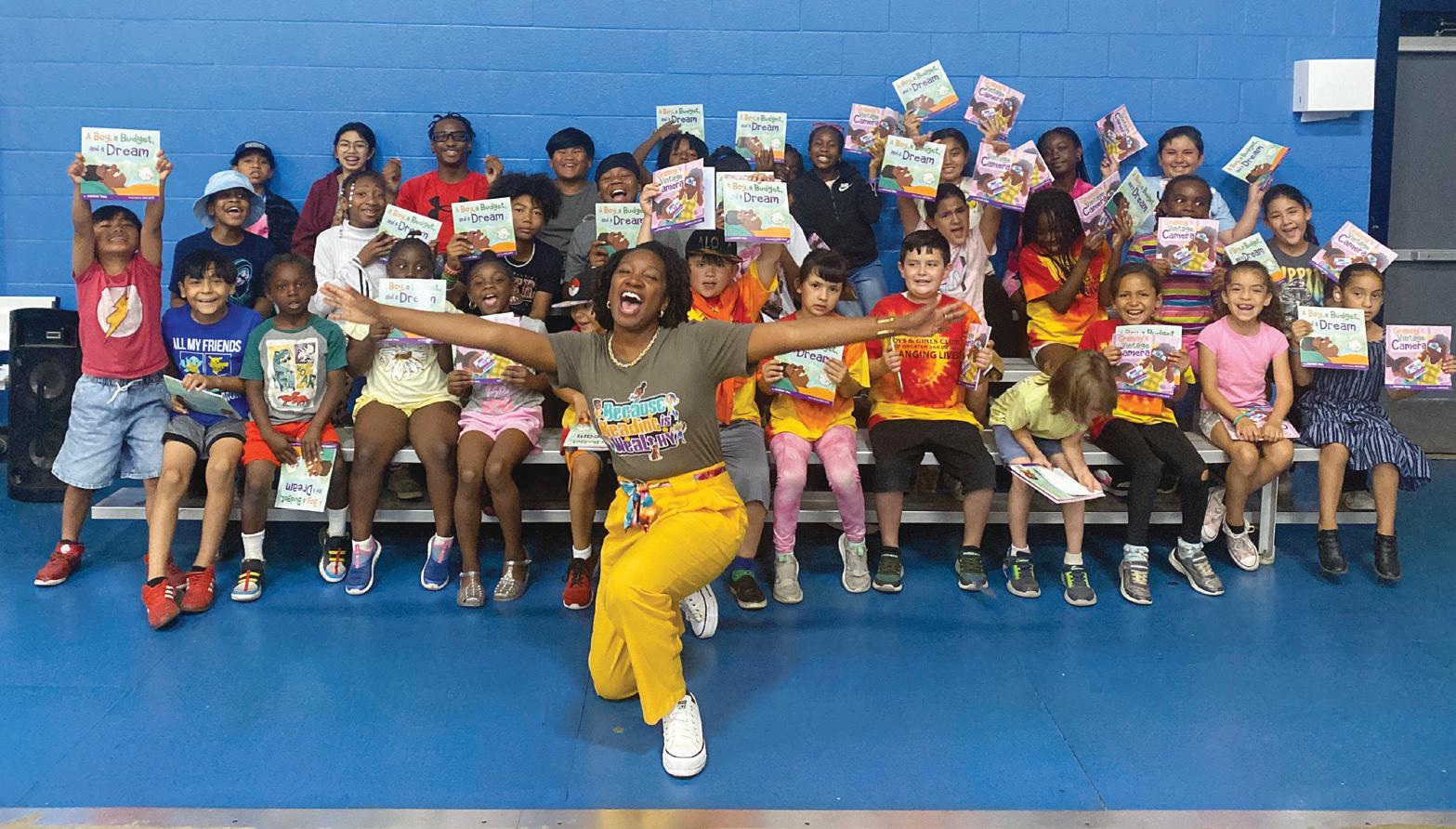
Paul’s company has worked with school districts and nonprofits to empower thousands of kids with financial education, including through original children’s books.
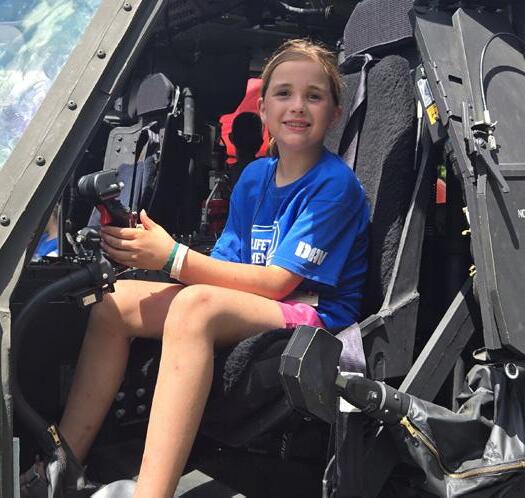
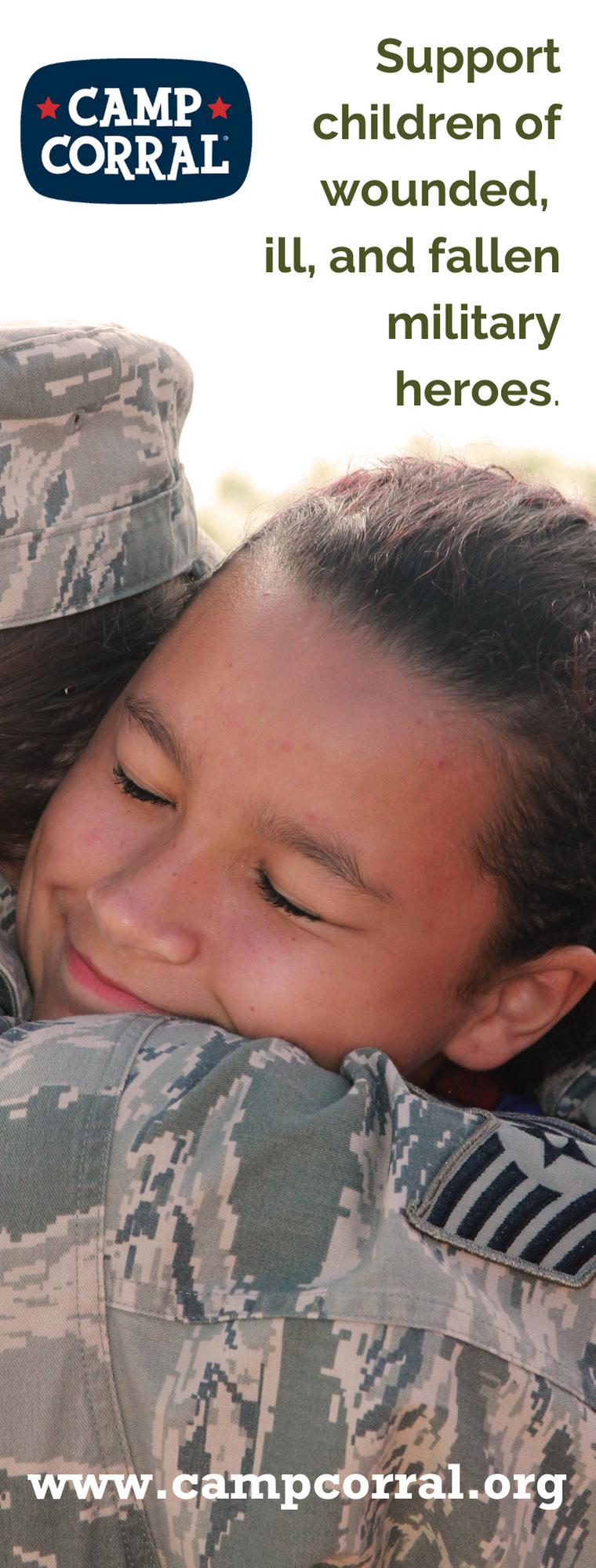
Summer camp season is just around the corner and Camp Corral wants to make sure the children of wounded, ill and fallen U.S. military service members and veterans have an opportunity to take part in this cherished childhood tradition, at no cost to their families. Military-connected kids especially, can benefit from the transformative summer camp experience, and the organization is gearing-up to treat these young heroes to the adventure of a lifetime through its summer camp program.

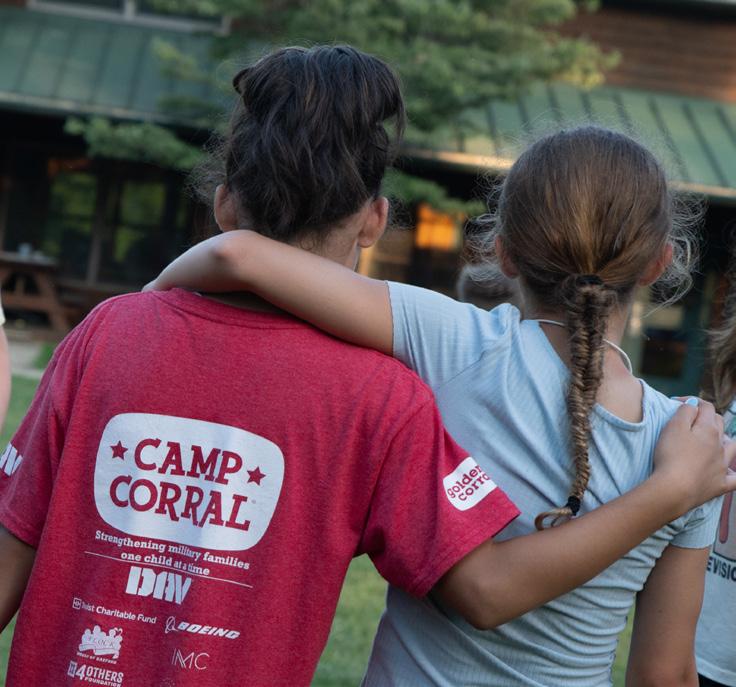

Camp Corral, a national nonprofit whose mission is to transform the lives of children of wounded, ill or fallen U.S. veterans, was created in 2011 for the purpose of giving back to the military community in a meaningful way. The organization recognizes the unique challenges these kids may face and strives to help empower them to live their best lives, through specialized programming including summer camp.
“We consider it an honor to support military-connected kids who we believe serve our country too, as part of a military family, and are proud to provide an opportunity for them to experience the transformative power of summer camp,” said Camp Corral CEO Phil Kowalczyk. “Camp gives these children a chance to have fun while trying new adventures, learning some independence, and making friends with other kids who have similar life experiences.”
The week-long sleep-away camps are designed to support children who have experienced a parent become wounded, ill or fallen as a result of military service. While testing their limits and celebrating their accomplishments in the great outdoors, campers make peer connections and develop a support group, build coping skills and increase self-confidence.

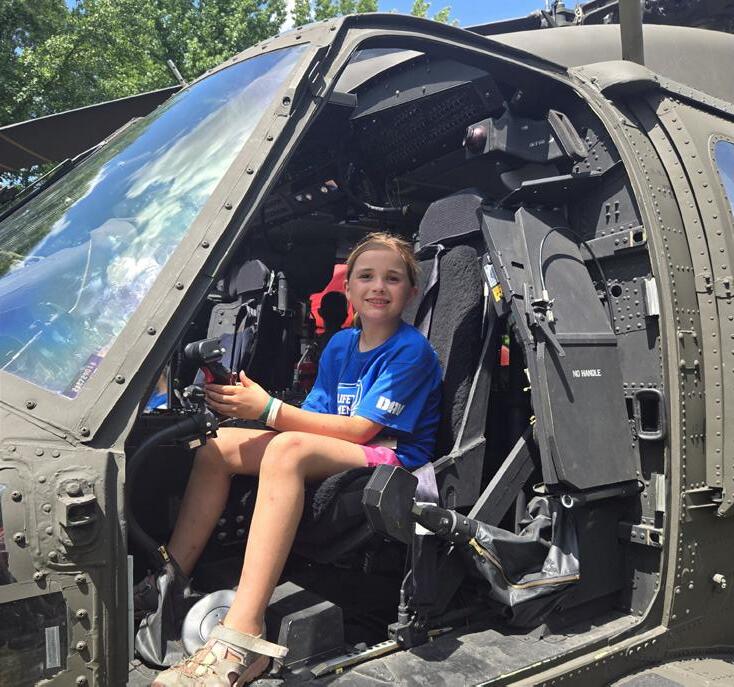
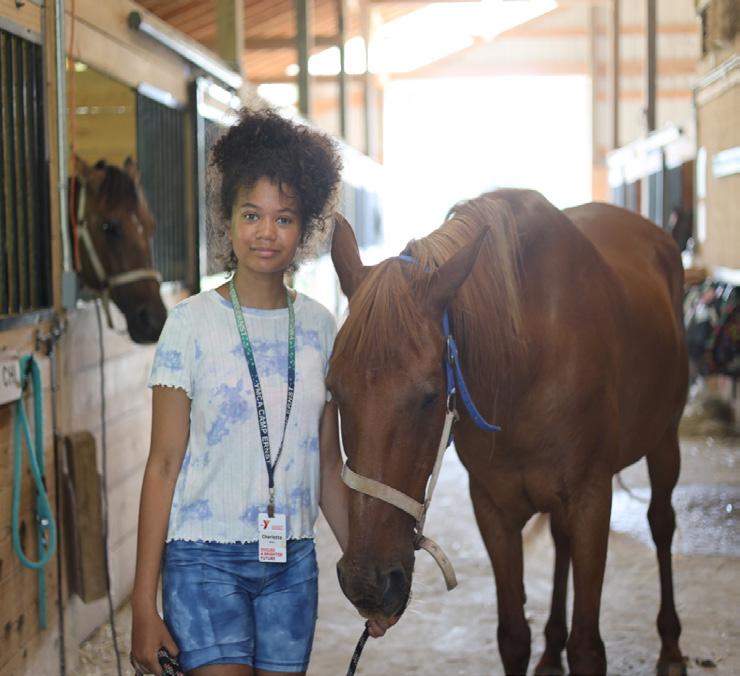
“I am grateful for this wonderful opportunity for my children to learn resilience and courage, and to make friends,” shared one parent, post-camp. “This is an amazing program that my family would otherwise not be able to experience.”
Since its inception 15 years ago, nearly 38,000 children from every state in the nation have taken part in the program. There is no cost to the families for participation, thanks to the generous funding and resources provided by Camp Corral partners and donors who want to support veterans and their families.
This summer, Camp Corral will hold 23 camp sessions across 19 states, from June 14 through August 8. Participation is open to children (ages 8-15) of wounded, ill and fallen military heroes, and registration is currently open on the organization’s website, www.campcorral.org/camps.
Camp Corral also holds a series of Family Camp Weekends each spring and fall, at six sites across five states. These all-inclusive retreats are intended to support the needs of wounded warrior families and provide opportunity for respite, connection, growth and healing as a family unit. Registration for 2026 fall Family Camp Weekends is currently open at www.campcorral.org/family-camps.
All Camp Corral services and programs provide what the organization refers to as the 3Cs of Resilience: Connection, Coping, and Confidence. According to research, connection in particular, is vitally important for children of wounded, ill or fallen warriors, as these children may experience feelings of isolation due to circumstances related to their parent’s service. Camp Corral provides meaningful opportunities to make life-affirming friendships that remind military children that they are not alone, that there are others who understand their unique attributes and challenges.
In addition to camp programming, Camp Corral offers the SALUTE Leadership Program for teens ages 1617 years old, and is a national leader and provider of educational resources, research and advocacy related to the challenges faced by children of wounded, ill or fallen military heroes.
Camp Corral’s work to help transform the lives of children of wounded, ill or fallen U.S. military veterans would not be possible without the generous support of numerous donors and dedicated partners, including Golden Corral and DAV (Disabled American Veterans). See a complete list of the organization’s partners at www.campcorral.org/funders-partners.
By Sinaiyah Emami
There is nothing like the moment your parent walks through the front door after a long day at work. As a child, you spend the day in your own world, but when the familiar sound of the door opening echoes through the house, something shifts. Suddenly, the family feels whole again, safe under the same roof, and the evening can finally begin.
As the daughter of an Air Force veteran, that moment carried a different weight for me. Sometimes my dad would walk out the door, and my mom, sister, and I wouldn’t see him again for weeks, even months. My father is retired now, and those long separations are only memories. With tensions rising around the world today, I can’t help but think about the many children who are once again watching their parents leave home with the anxiety of not knowing when - or ifthey will walk back through that door again.
Today, more than ever, America’s focus is on its military community. For a time, our military men and women had a reprieve from combat, but now, conflict requires personnel from all branches to leave their homes to protect our country and allies. Dedicated to their mission, they leave their loved ones, including partners, spouses, and children, who are forced to go about life as normally as possible, all the while wondering...
It is in times like these that support for military families is crucial, because the demands of military life can be isolating, especially for children. That is why it’s so important to recognize the Month of the Military Child.
As you think of ways to honor or celebrate military members and their children, consider reaching out to military children and spouses in your area to say, “We see you. We’re here to support you.” Find ways to lend a helping hand, be a listening ear, or simply connect with these heroic families.
Additionally, it is important to recognize families who are no longer officially classified as military families but who have also sacrificed so much. Gold Star families and families living with wounded, ill, and injured veterans have all experienced the sacrifices of military life, and they continue to carry the weight of that sacrifice every day.

Support doesn’t have to be a grand gesture. Sometimes the greatest support is found in the small things, like exchanging numbers and promising to check in via text or a call, an impromptu coffee date, or even just stopping by someone’s house to say hello.
Military families are the backbone of America; let our actions be a reminder that they never have to carry that weight alone.
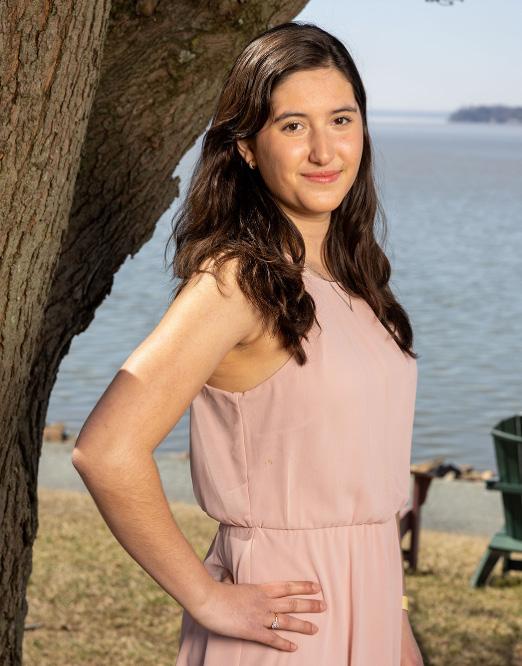
Sinaiyah Emami is the co-founder of We SIgned Up Too, a blog dedicated to bringing community and awareness to children of wounded, ill and injured Veterans. You can access the blog at wesigneduptoo.com or find them on Instagram @wesigneduptoo.
Take the AI challenge

In this Military Child poetry challenge, your task is simple: can you identify which version of the poem was written by artificial intelligence and which was created by a human?
It’s often said that AI tends to produce highly structured, neatly rhymed, and sometimes predictable or bland writing. Yet recent studies show that many people struggle to tell the difference—frequently mistaking polished AI-generated poems for human creations.
How to Analyze a Poem
*Clues it might be AI-generated:
Overly perfect structure: Consistent rhyme schemes and uniform patterns.
Predictable ideas: Familiar imagery or overused clichés.
Limited emotional depth: Lacks a sense of lived experience or a unique perspective.
Generic language: Flowery but vague vocabulary that feels impersonal.
*Clues it might be human-written:
Irregularity: Unexpected line breaks, shifting rhythm, or changes in tone.
Original imagery: Creative metaphors rooted in real human experience or empathy.
Emotional nuance: Complex, raw, and deeply personal expression.
See the next page (27) and read the “Military Child Poem”
AI or Human? One version of the poem was written by a human, the other by ChatGPT. Take the challenge: can you tell whether A or B is the human-written one?”




My hometown is nowhere, yet my friends are everywhere.
I was raised to believe that home lives in the heart—wherever my family stands beside me.
Movement is the rhythm of my life.
Some wonder about my roots, but they run deep and strong, like the mighty oak.
I plant them quickly, taking in all a place can offer and giving what I can in return.
Travel has taught me openness—to shake hands with the world and find kinship in every soul.
Goodbyes are never easy, yet even in sorrow, there is strength—and the courage to welcome tomorrow.
When I leave, it feels like half my world stays behind, but I know the other half is waiting to be discovered.
Friendships form in moments and last for decades.
I may not grow up with one person, but I grow through many.
Though paths may part, there is always hope they will cross again.
Love of country fills me with pride and respect.
When the flag passes before me, I stand not only for it—but for every soldier, and especially for the family who gave me life.
Through it all, I carry the legacy—the rich, enduring spirit of military life.
~ Anonymous
My hometown is nowhere. My friends are everywhere.
I grew up with knowledge that home is where the heart is, and the family is.
Mobility is my way of life.
Some wonder about roots, yet they are as deep and strong as the mighty oak.
I sink them quickly, absorbing all an area offers and hopefully giving enrichment in return.
Travel has taught me to be open.
Shaking hands with the universe, I find brotherhood in all men.
Farewells are never easy.
Yes, even in sorrow comes strength and ability to face tomorrow with anticipation.
If when we leave one place, I feel that half my world is left behind, I also know that the other half is waiting to be met.
Friendships are formed in hours and kept for decades.
I will never grow up with someone, but I will mature with many.
Be it inevitable that paths part, there is a constant hope that they will meet again.
Love of country, respect and pride fill my being when Old Glory passes in review.
When I stand to honor the flag, so also do I stand in honor of all soldiers, and most especially, to the parents whose life created mine.
Because of this, I have shared in the rich heritage of military life.
~ Anonymous
The Answer is on page 4 (Bottom right corner) What do you think about ChatGPT? mikemiller@homelandmagazine.com
By: Shelly Dew, CFRE, CDE Director of Philanthropy Hospice of the North Coast


As America’s Veteran population grows older, staying healthy, independent, and safe at home is a top priority. Nearly half of all U.S. Veterans are age 65 or older, and Veterans are more likely than non Veterans to live with physical disabilities, chronic conditions, or medication side effects that increase the risk of falls and dehydration. Together, these two issues are major—but often preventable—threats to healthy aging.
A fall is defined as an event that causes a person to come to rest unintentionally on the ground or a lower level. Globally, falls are the second leading cause of accidental injury deaths, claiming an estimated 646,000 lives each year. In the United States, falls are the leading cause of fatal and non fatal injuries among adults age 65 and older. About one in four older adults falls each year, and Veterans experience falls at comparable or slightly higher rates due to higher rates of disability and chronic illness.
Research shows that older Veterans have a higher risk of recurrent falls than non Veterans, particularly those over age 75 or with vision, neurological, or mental health conditions. Falls are also a major cause of emergency visits and hospitalizations within the VA health system.
While not all falls are preventable, many can be reduced with practical steps:
• Remove tripping hazards such as cords, throw rugs, clutter, and tubing
• Ensure grab bars and handrails are secure and in good repair
• Review medications with a healthcare provider to reduce dizziness or low blood pressure
• Be mindful of pets underfoot, especially at night
Staying physically active—through walking, strength training, balance exercises, or VA supported programs like tai chi—helps Veterans maintain stability and confidence.
Dehydration is a hidden contributor to falls. In older adults, dehydration can cause dizziness, weakness, confusion, fatigue, and low blood pressure—all of which increase fall risk. Studies in VA nursing facilities show that dehydration is common among older Veterans and that improving
hydration can significantly reduce falls, infections, and hospitalizations.
Hydration needs vary based on factors such as allergies, gut health, genetics, fitness level, lifestyle, and stage of life. The Eatwell Guide recommends 6–8 cups of fluid per day. Water is ideal, but low fat milk, tea, coffee, and sugar free beverages all count.
Foods also contribute to hydration. Fruits and vegetables like watermelon, strawberries, cucumbers, celery, tomatoes, and soups are excellent options. Frozen fruits and vegetables are affordable, don’t spoil, and work well in smoothies. Adding citrus, mint, or berries to water can improve taste and encourage regular drinking.
Hydration is more than water alone. Electrolytes—sodium, potassium, magnesium, and calcium—are essential for healthy nerve signaling and muscle function, helping prevent cramps, weakness, and balance problems.
Common symptoms include headache, dry mouth or cough, dizziness, confusion, fatigue, rapid heart rate, low blood pressure, flushed skin, swollen feet, and loss of appetite with sugar cravings.
Drink fluids regularly, not just when thirsty. Aim to drink with every meal and snack, carry a refillable water bottle, alternate caffeinated and non caffeinated beverages, and “eat your water” through fruits, vegetables, and soups.
By combining smart fall prevention strategies with consistent hydration, Veterans can reduce injuries, protect their independence, and continue to age with strength, resilience, and confidence.
For a list of topics or to schedule an educational session for your group, contact Shelly Dew 760-431-4100.
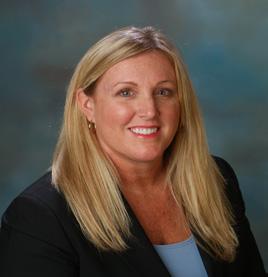
Shelly Dew serves as Director of Philanthropy and Community Outreach at Hospice of the North Coast, a community-based nonprofit dedicated to compassionate end of-life care, comfort, and support for patients and their loved ones.
sdew@hospicenorthcoast.org | hospicenorthcoast.org
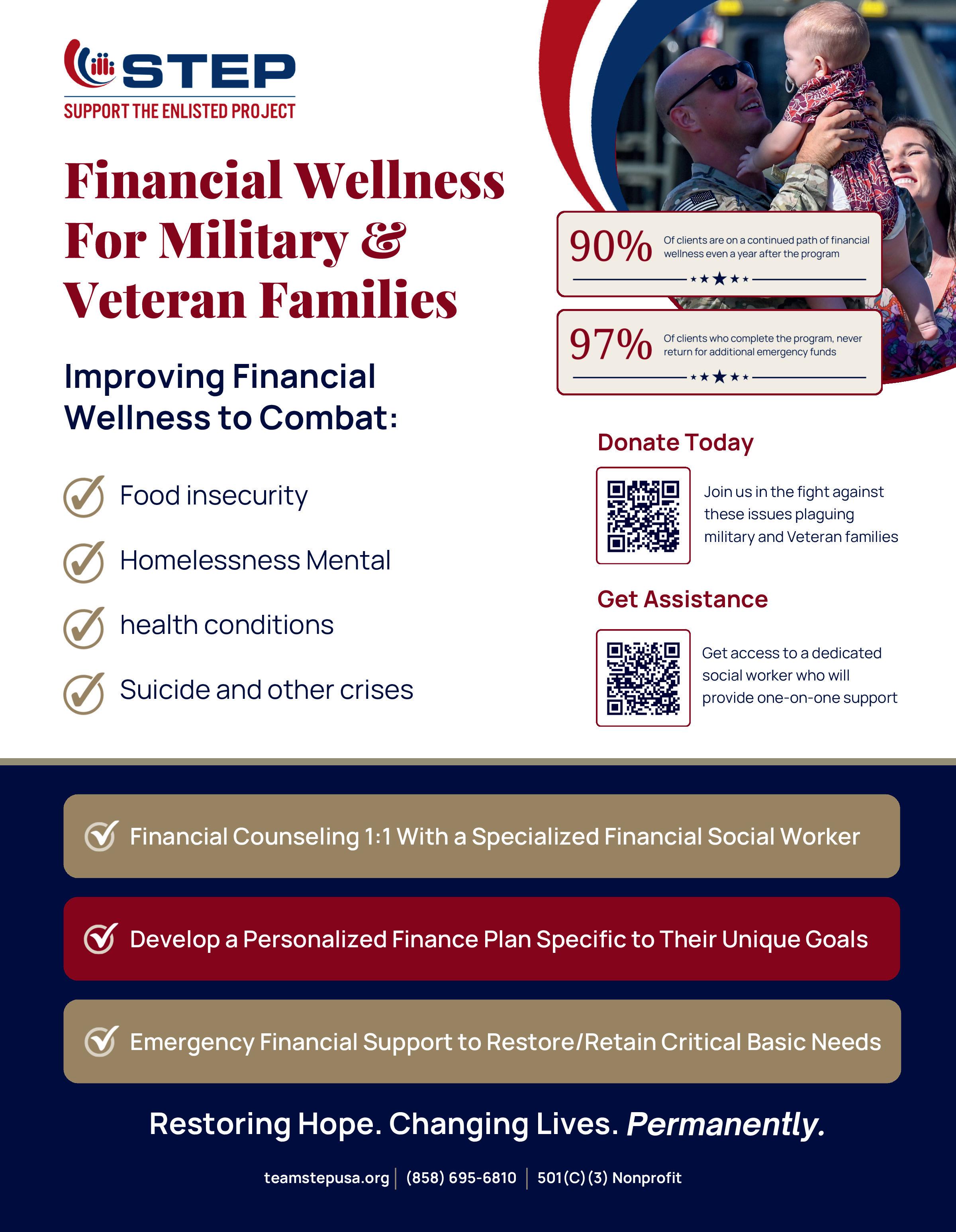
teamstepusa.org
By: Robert ‘Bob’ Cuyler, PhD Psychologist and Trauma Expert

For this month’s column, I’m continuing the dialogue with my colleague Lori-Ann Landry, focusing on the implications of the Iran campaign:

Q: At this writing, we are in another shooting war, with 24/7 coverage of bomb, rocket and drone attacks. In your experience, what are some of the impacts on veterans and their families? How might that impact differ for veterans with already recognized post-traumatic stress compared to other veterans?
A: This event is on the minds of veterans and their families, from worry over those still serving to the heightened anxiety and fear of being at war again. For veterans of Iraq and Afghanistan, this may be Déjà vu. For those with post-traumatic stress, this current conflict can reactivate or intensify flashbacks, heighten hypervigilance, and worsen anxiety and depression.
Q: What are some of the signs of impact on veterans with PTSD?
A: Some of the signs can include nightmares or night terrors, hypervigilance, insomnia and emotional dysregulation. Some may be so absorbed with media coverage that they are on overload, others may shut down, affecting family and personal relations. Increased irritability, anger or moodiness are also common.
Q: For veterans who are currently in talk therapy, how do these triggering events show up in sessions?
A: Some really focus on the politics with a range of emotions, for-or-against the current campaign. Some may focus on wishes to conduct this war differently from prior wars. Others may channel those emotions by

reaching out to fellow veterans for mutual support. These are veterans focused on building a sense of safety and empowerment within their communities. Some spouses are fearful their families will experience disruption if their veteran is reactivated. But mostly the veterans I am seeing respond to these pressures, affecting mind and body.
Q: Do you find that veterans you’ve treated in the past recontact returning to treatment?
A: Some are clearly triggered by this crisis, with resurgence of nightmares and hypervigilance. The need to share and process is common. Recent news reports on the turnover in mental health care within the VA system nationally can be frustrating for Veterans, especially now when services will be at increased need.
Q: Are there approaches you offer when triggering events are so fresh compared to times when the primary traumas are in the past?
A: If primary traumas are very recent (1-3 weeks), I try to support the person’s resiliency with mindfulness and cognitive therapies before starting trauma-focused treatments. If the symptoms continue, we move into active trauma-focused treatment such as Eye Movement Desensitization and Reprocessing (EMDR) therapy, aimed at processing stuck memories and emotions. My treatment really focuses on my patients learning to have their own backs emotionally and with self-care.
For example, I will increase mindfulness-based activities such as body scans, checking in with self, practicing boundary setting for space, rest and overall self-nurturing. Kindness and curiosity towards self during times of conflict can create a sense of safety internally which helps with emotional regulation, nightmares and hypervigilance.
For providers serving veterans in their communities right now, it is important to be talking with patients about risk of relapse and reactivation and to be focusing on tools and treatments improve the sense of internal safety.
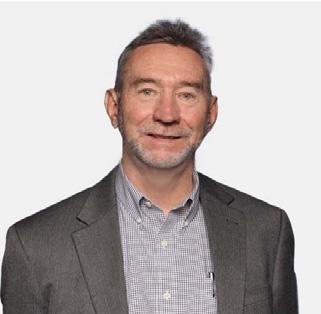
Dr. Cuyler is chief clinical officer of Freespira, an FDA-cleared non-medication treatment that helps people with panic and PTSD manage their symptoms by learning how to regulate their breathing. www.freespira.com
“I am shocked and surprised that this treatment worked. When I think about PTSD, I think about the brain and this being a brain problem… There is no denying the calming effect this treatment had on me. This has made a significant difference in my personal life. This treatment is remarkably effective.”
— Kevin, US veteran whose symptoms included social anxiety and monthly panic attacks before he found Freespira





April 2026 Issue
Translating the “Military Child” Experience
Business for Veterans: Ready to Grow
GI Bill Adds Coaching Credentials
Patriots to Education
Supporting the Next Generation (Healthcare)
Healthcare Careers: A Perfect Fit
Decoding the Veteran Transition
One Woman’s Mission to Unify a Movement
Military Transition Can Be Bumpy
Misconceptions About Franchising A Cautionary Tale for Startup’s
For trusted guidance on transition, careers, education, entrepreneurship, workshops, and legal resources for veterans and military business owners, explore Veterans In Transition.

www.homelandmagazine.com/category/veterans-in-transition




Earn Your Degree Anytime, Anywhere. Flexible, Affordable, and 100% Online!*
Military life comes with constant changes—deployments, PCS moves, and unpredictable schedules. But your education doesn’t have to wait. At Los Angeles Pacific University, we understand the unique challenges military members, spouses, veterans, and dependents face. That’s why our fully online programs offer the flexibility you need to study at your own pace, no matter where life takes you. Whether you’re on base, deployed overseas, or at home, your degree moves with you!
• 100% Online & Flexible: Learn from anywhere, on a schedule that fits your life.
• Maximize Your Benefits: Use GI Bill®, tuition assistance, and spousal benefits.
• Earn Credit for Your Experience: Take advantage of CLEP, DSST (DANTES), and AARTS/JST to turn your military training and knowledge into college credit.
• Fully Accredited: LAPU offers fully accredited associate, bachelor’s, and master’s degrees through the WASC Senior College and University Commission (WSCUC).
• Faith-Based & Supportive: Dedicated military-friendly success coaches who care about your journey.
Your Future Starts Today! Take the Next Step
*At this time, LAPU is unable to offer distance programs or courses to students residing in the following states and districts: Alabama, Arkansas, Connecticut, the District of Columbia, Indiana, Kansas, Maryland, Minnesota, New Mexico, New York, North Carolina, Oregon, Wisconsin, and Wyoming.

LAPU Voted #1
Military Friendly School & Spouse School

By Paul Falcone PaulFalconeHR.com


In the world of Human Resources, we spend a massive amount of time discussing “onboarding.” We recognize that a new hire’s success isn't just about their technical skills; it’s about how quickly they integrate into the culture, understand the unwritten rules, and build new relationships. As we celebrate the Month of the Military Child this April, it’s important to recognize that children who have followed their parents from base to base are not just bystanders; they’re developing a high-level suite of "soft skills" that the corporate world is currently desperate to find.
From Base Life to Boardrooms: Turning “Instability” into “Adaptability”
Some of the most sought-after traits in the modern workforce are change readiness, agility, and adaptability. Companies today operate in a state of "permanent beta," constantly restructuring, pivoting, and adopting new technologies. Since the Covid pandemic, we’ve added new terms to our vocabulary like “perma-crisis” and the “poly crisis world.” To an HR Director, candidates who can thrive amidst ambiguity are worth their weight in gold. Likewise, executives who can manage compound volatility will likely master the crises and disruption that have become so common in today’s workplace. And when it comes to military children, it all comes built in from previous childhood experiences.
Military children are essentially "Junior Change Managers." By the time they reach high school, many have moved five or six times. They’ve mastered the art of "rapid integration" by entering a new environment, identifying the social and power hierarchies, and finding their place within a week. They typically know how to build relationships and size up people and situations quickly. They possess a heightened level of self-awareness and street smarts that will serve them well throughout their adult careers.
In HR terms, this is what we call “agility” and “change readiness.” When a veteran moves into a private-sector

role, the family’s ability to "onboard" into a new neighborhood and school system mirrors the parent’s need to onboard into a new company culture. Parents should view these childhood experiences not as disruptions but as a masterclass in adaptability. These children represent the next generation of global nomads who understand that "the way we’ve always done it" is never the only way to do it. Their growth mindset is an advantage for life.
The private sector has seen a massive shift toward prioritizing emotional intelligence, i.e., the ability to recognize, understand, and manage your own emotions while effectively navigating and influencing the emotions of others. Organizations are looking for leaders who possess high Cultural Intelligence (CQ)—the ability to work effectively across different cultural contexts.
Military children often grow up in a "melting pot" or matrix that is far more diverse than the average civilian suburb. Whether they were stationed in Okinawa, Nuremberg, or a highly integrated domestic base, they’ve likely been exposed to different languages, cultures, customs, and socioeconomic backgrounds from infancy. This creates a natural "cultural add" mindset because the children are developing a worldview that is naturally inclusive and open minded.
These kids don't need a seminar on how to work with people who don't look, speak, or dress like them; they’ve been doing it since the playground. As an HR professional, I see this as a massive competitive advantage. These children grow up to be employees who can navigate global teams with ease, demonstrating an innate empathy and sense of otherness that is rare in the general talent pool.
While the "Military Child" lifestyle comes with its share of missed birthdays and "new kid in town" anxieties, it yields a unique resilience dividend. The challenges these children face—the deployments, the goodbyes, and the constant recalibration—beget a strength of character that is difficult to replicate in a more static environment.
These children grow up to be adults who are not afraid of change; they’re energized by it. They’re not intimidated by new faces; they see them as new connections. They possess a "grit" that allows them to bounce back from professional setbacks with a perspective that many of their civilian counterparts lack. They understand service, they understand sacrifice, and they understand how to bloom where they’re planted.
As we celebrate the Month of the Military Child, let’s reframe the narrative. We aren't just raising children who "endure" the military life; we’re raising the most adaptable, culturally fluent, and resilient leaders of tomorrow’s workforce. Their upbringing isn't a hurdle to be cleared—it is the very foundation of their future success.
You can connect with Paul on LinkedIn at www.linkedin.com/in/paulfalcone1
Paul Falcone (www.PaulFalconeHR.com) is a management trainer, executive coach, and bestselling author on hiring, performance management, and leadership development.

www.HarperCollinsLeadership.com
By Barbara Eldridge President/ Founder of Mind Masters www.mindmasters.com


Over the past month I have walked several clients in to see the Loan Officer of their local bank to discuss how to plan the growth of their businesses. As business owners it is important to look ahead for not only the needs of the busy time of the year, but also to your plans and projections as you move through each quarter. Most small business owners are under the misconception that bank loans require a full business plan, with projections and a lot of other paperwork and documents. Don’t get me wrong, those things are needed for large loans and investments.
Banks have come to recognize the needs of the small business owner and are making every effort to provide financing solutions. Depending on the amount of credit you need, the application process is shorter and requires very limited paperwork.
For larger short term working capital needs, including the financing of accounts receivable, inventory, or new business acquisitions, the Business Line of Credit can offer you flexibility for business purchases with a revolving credit line and even check access to funds. Your credit availability is continually replenished as balances are repaid, which makes it ideal for working capital needs. It can also offer interest-only monthly payments.
Compared with conventional business financing, SBA loans can offer easier qualification, lower down payments, more affordable monthly payments, and full amortization. An SBA loan may be a good choice if you:
• Are starting or buying a new business.
• Have been in business a short time.
• Need additional working capital to finance rapid growth, such as for new equipment, facilities construction or purchasing inventory.
• Need high loan-to-value financing.
• Are unable to obtain conventional financing.
Being prepared and keeping up-to-date, positions you to act quickly on financial needs and/or opportunities. Here are some of the things to have in place:
• Have your accounting records up to date. This is the entrepreneurs’ most important step. How else do you know if you are achieving your goals?
• Are you within budget? Do you stay on top of what is coming in and what is going out? When you are on top of the flow, you are more likely to avoid the pitfalls that consume time and energy, (scrambling to find cash, trying to collect overdue receivables, handling creditors).
• Build a Basic Financial Package for your business; include (1) a Balance Sheet that shows the status of
company assets, liabilities and owners’ equity, (2) a Profit and Loss Statement that summarizes the revenues, costs and expenses during one accounting period, (3) a Cash Flow Projection which estimates which money will actually flow into and out of the business. These are some basics; other financial activities may require greater information.
• Get to know the loan officer of your bank. The better they know you, the more they work to help your business grow.
Staying on top of your business needs is “good business smarts”. Don’t wait until it is too late or you are down to the wire, know what is available for you and be able to act quickly.
Barbara Eldridge has built a solid reputation as a Results strategies specialist, within industry and business over the past 40 years. Her unique message, since starting Mind Masters 30 years ago for entrepreneurs and small business owners, continually stresses vision, purpose and values as the key elements of business philosophy. Her undying compassion for the entrepreneur’s journey, her tireless capacity to listen, and her sincere enthusiasm for other’s success have insured her growing influence and her own mastery with MIND MASTERS. www.mindmasters.com


Homeland Magazine sat down with Dr. Mayme Doumbia, ICF Professional Certified Coach and former service member to discuss the newly added ICF coaching credentials now available under the GI Bill.
Homeland: Why is coaching a particularly strong career path for veterans compared to other post-service options?
Dr. Doumbia: Coaching is a strong career path for veterans because for many of us, the desire to serve does not end when we take off the uniform. We may leave active duty, but we do not leave behind discipline, commitment, presence, or the instinct to help others move forward. A career as a coach offers veterans a way to keep making an impact in a different capacity. It is a path that still feels purposeful, but it also gives room for growth, flexibility, and a new kind of leadership.
Homeland: Which military skills translate most effectively into coaching, and where do veterans typically need to adapt?
Dr. Doumbia: Multiple military skills can be adapted well into coaching: discipline, resilience, building trust, accountability, listening under pressure, and the ability to stay steady under difficult circumstances. Veterans are particularly good at reading situations and people, as well as staying grounded in the midst of a challenge.
Where many of us must adapt is in moving from directing to drawing out. Coaching is not about telling people what to do; it is about asking strong questions, listening well, and helping people come to their own clarity and ownership.
Homeland: What does the realistic pathway look like from military service to becoming a credentialed coach?
Dr. Doumbia: The pathway to becoming a credentialed coach is available to anyone. It is not something you jump into overnight, but it is well worth the effort, as companies and individuals seeking a coach recognize a credential as a sign a coach has professional training and is committed to best practices and an ethics code.
Usually, becoming a coach starts with a formal coach training that is accredited by a professional coaching organization such as International Coaching Federation (ICF), then mentor coaching, coaching practice, and completing the hours requirements for a credential.
My own journey into coaching was well layered. My military service shaped how I lead and how I see people. Over time, this shifted into a deeper investment in leadership, teams, and organizational culture. I strengthened that foundation through my work in industrial-organizational psychology, and then I formalized the coaching side through training and credentialing. For me, coaching felt like a natural extension of my service, expressed in a different way.
Homeland: What misconceptions do veterans have about coaching as a career? What should they understand before pursuing it?
Dr. Doumbia: One misconception is that coaching is mentoring, advising, or motivating people. It is not. Another important one is that if you have led people before, you can automatically coach. Leadership experience absolutely helps, but coaching is its own discipline, and it takes training, self-awareness, and practice.
What veterans should understand is that coaching is meaningful work, but it is also real work. It requires patience, ethics, active listening, and the humility to let clients do their own thinking. It is not about being the smartest person in the room. It is about creating the kind of space where someone else can hear themselves more clearly and take ownership of what comes next.
Homeland: How is the GI Bill add-on going to shape the industry?
Dr. Doumbia: In March 2026, ICF announced that the U.S. Department of Veterans Affairs approved GI Bill support for the Associate Certified Coach (ACC) and Professional Certified Coach (PCC) credentials. This gives veterans a more accessible pathway into a respected profession with practical, immediate application by covering their credentialing expenses and will open the door for more veterans who have interest in this growing career path and simply need an accessible path.
It will also strengthen the coaching profession overall. Veterans bring lived experience with transition, trust, leadership, accountability, and resilience; extremely strong skills that shape how people coach, how they hold space, and how they understand growth under pressure.
Homeland: Can you tell us more about the benefits of becoming a coach, and how someone can apply or get involved with ICF?
Dr. Doumbia: What I appreciate about ICF is that it gives structure to the coaching profession. The organization has been the best-in-class accredited education pathway to coaching with a code of ethics, clear credential standards, and a professional community for decades. ICF also offers a free Education Search Service so people can look for accredited programs that fit their goals.
The benefits of becoming a coach are both personal and professional. You get the opportunity to help people grow, lead, and navigate change in a meaningful way. Through ICF, coaches also gain access to webinars, networking, local chapters, and member communities. That includes the International Military Veterans Member Resource Group, which is especially relevant for veterans looking to build community within the profession. A strong first step is to explore an ICF-accredited program, join ICF if it makes sense for where you are in the journey, and begin connecting with the larger coaching community. https://coachingfederation.org

Veterans go back to school to ease their transition to civilian life, gain better career opportunities with higher earning potential, develop new skills, find a supportive community, and translate their valuable military experience into a meaningful civilian path.

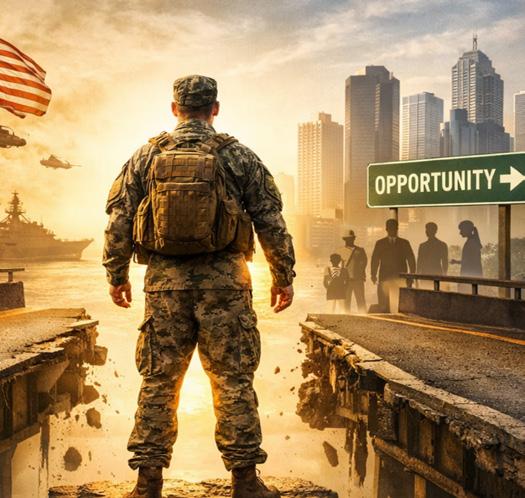
Moving into the civilian workforce or returning to school might look easy at first. After all, you’ve developed real-world skills, strong leadership, and the initiative to thrive anywhere.
Yet the transition can be tougher than expected. Many veterans face challenges that feel overwhelming or isolating. That’s where we come in—to support you every step of the way.
Our Veterans-in-Transition archives provide trusted guidance and insights on life after service—education options & resources, career advice, business and entrepreneurship resources, workshops, legal tips, veteran franchises, and much more to help you move forward with confidence.

Boot camp prepared you for the military. We prepare you for college.
Just like boot camp molded you into the service member you would become, our free on-site and virtual programs mold you into the college student you strive to be.


Scan the code to learn how our programs help enlisted veterans succeed in college

By Dr. George Ann Rice Patriots to Education

The mission of Patriots to Education (PTE) is both clear and consequential: to honor the service of our nation’s military community while strengthening the public schools that shape America’s future. Success is not measured solely by job placements, but by improved student outcomes, stronger communities, and the lasting impact of those who once defended our nation now serving in its classrooms and school systems. PTE supports all military-connected individuals— including veterans, National Guard members, Reservists, transitioning active-duty personnel, and their spouses— seeking careers across the full spectrum of public education roles. All those working in PTE are volunteers who care about Our Country and its children.
Achieving this mission requires a collective effort. Leaders and organizations that serve military-connected populations play a critical role in connecting individuals to meaningful opportunities in education. As PTE continues to expand, collaboration remains central to reaching those preparing to transition from military service into civilian careers.
Currently, PTE is actively working in six states—California, Nevada, Texas, Kentucky, Nebraska, and Florida—while receiving inquiries from individuals across all fifty states. This national interest has created a dilemma: how can PTE develop a scalable support network to assist militaryconnected individuals regardless of location.
A key partner in this expansion is the National Association of State Directors of Teacher Education and Certification (NASDTEC). Through an “all call” to its membership, professionals from 22 State Departments of Education and affiliated organizations volunteered to assist individuals pursuing certified roles such as teaching, counseling, and administration.
These experts will help candidates understand certification requirements and identify approved educator preparation programs within their respective states.
For those pursuing non-certified or classified positions— such as transportation, skilled trades, or operational roles, PTE works closely with workforce development systems. The Kentucky Workforce Development Board
introduced PTE to the extensive resources available through the U.S. Department of Labor, State Workforce Boards, and American Job Centers nationwide. These organizations help individuals identify training pathways, cover training costs when eligible, and in some cases provide support services such as uniforms or childcare during training.
At the state and district level, collaboration continues to expand. The Nevada Association of School Superintendents has helped connect PTE with similar leadership organizations across the country. These partnerships enable local alignment, ensuring that interested candidates are connected to school districts with workforce needs within the states of interest.
Additionally, the Association of Defense Communities (ADC) serves as a critical national connector.Representing nearly 300 communities and affiliated organizations, ADC facilitates introductions to their Chapter leadership in each new state, Chambers of Commerce and their Military Affairs Committees, Employer Support of the Guard and Reserve (ESGR), State Departments of Veterans Affairs, military installations, National Guard units and those who had served as CASAs. Their consistent support has been instrumental as PTE enters new states.
The urgency of this work cannot be overstated. School districts nationwide are facing significant staffing shortages across teaching, leadership, and support roles— challenges that directly impact student success and school operations. This workforce gap represents a national concern requiring innovative solutions.
Patriots to Education is proud to be part of that solution. By leveraging the skills, leadership, and commitment of the military community, PTE is helping address critical education workforce needs while providing meaningful career pathways for those who have served. The organization remains deeply grateful for the growing network of partners whose support makes this mission possible.
To learn more, visit our website www.patriotstoeducation.org Follow us on Instagram@patriotstoeducation
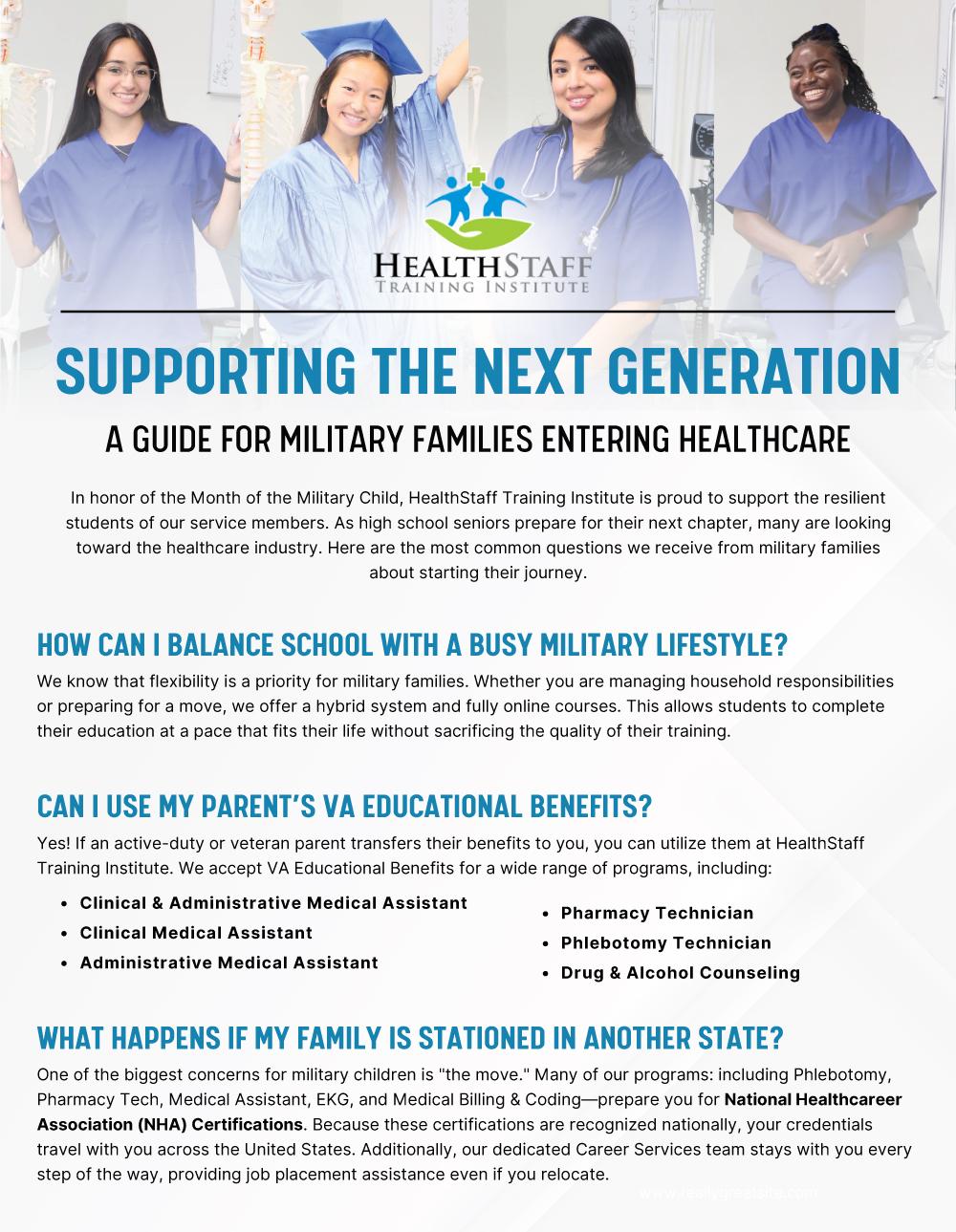
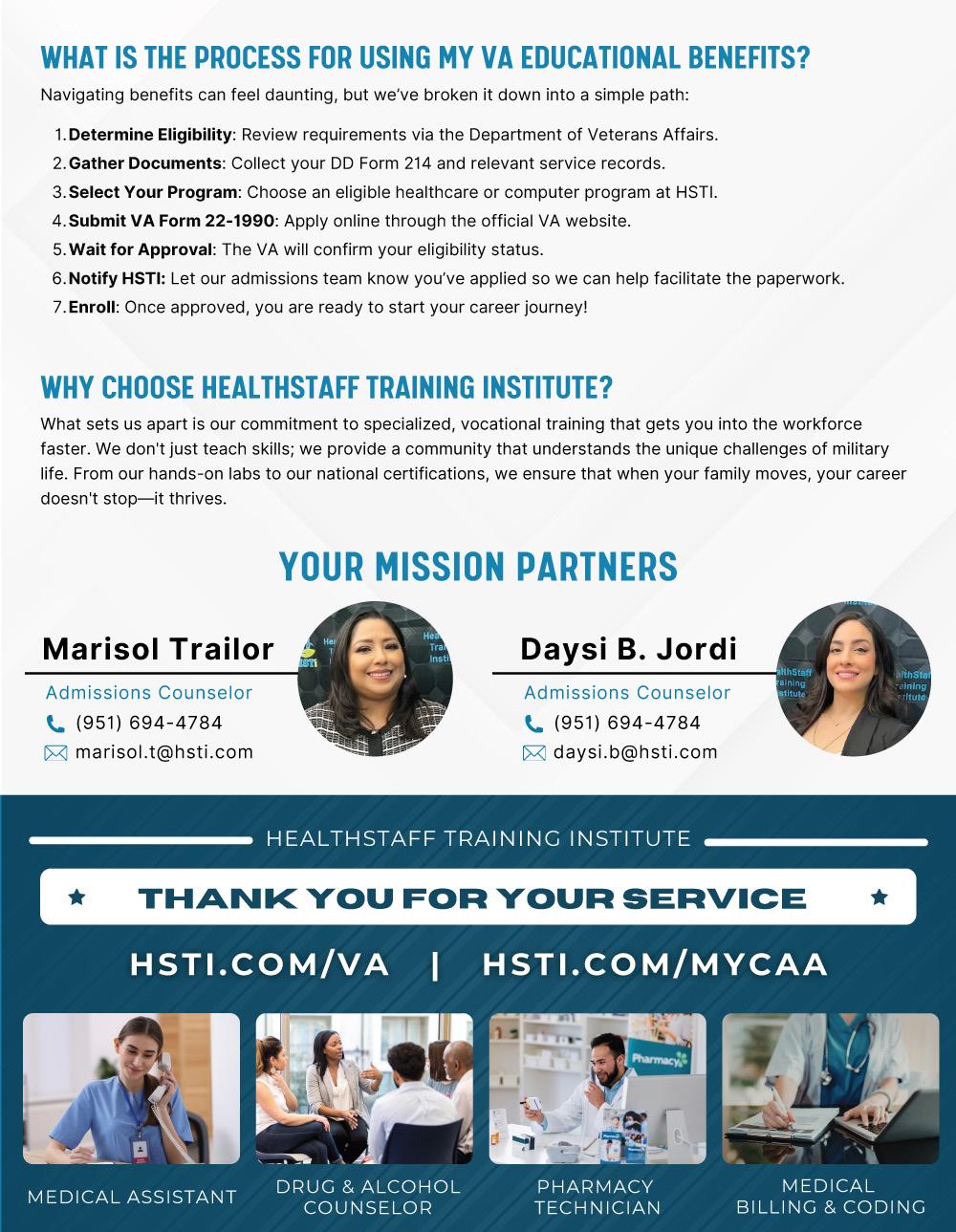
By Stephanie Lee, Air Force Veteran & Enrollment Manager, CareerStep
Sometimes, the sense of division between life in the military and life as a civilian feels like a vast chasm. In fact, for military families, this sense of division joins a long list of challenges that specifically impact the men and women who sacrifice so much for the country. These challenges couldn’t be more apparent than when it comes to finding a post-military career or one that is flexible enough to align with military spouses’ unique needs—a career that checks all the right boxes: satisfaction, security, and stability.
Finding industries and employers that understand the skills of veterans and their families can seem like an uphill climb at times, and it shows. For example, the unemployment rate for veterans rose to 6.5% in 2020, according to the Bureau of Labor Statistics (BLS). Reasons for this vary, but one contributing factor could be that lessons learned under the harsh conditions of combat don’t always translate to private-sector jobs. And for military spouses—60% of which say they’re looking for full- or part-time work—finding a profession that’s both portable and in-demand is increasingly difficult.
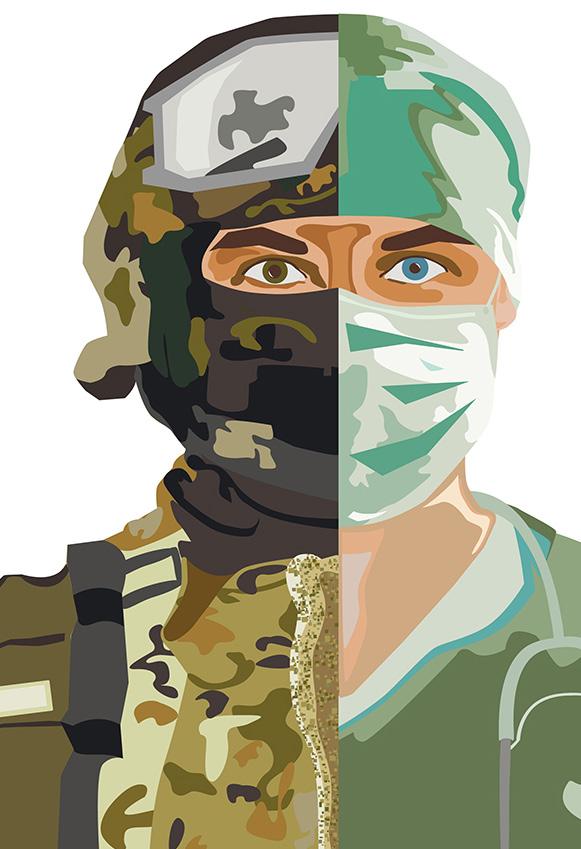
However, there is hope and there are opportunities. First, it’s important to consider key reasons why a career in healthcare—the fastest-growing sector in the U.S. economy according to BLS data—might just be what bridges that expansive gap between military and civilian life.
Most who enter the military are looking for fulfilling work—an opportunity to make a difference. A real difference. But few civilian careers allow veterans to make as much of a difference as those found in healthcare. That’s because working in this particular field, regardless of the role, provides the opportunity to impact peoples’ lives in profound ways. From mending wounds and healing minds to saving lives, the difference healthcare workers make is undeniable.
There’s a reason healthcare is an overwhelmingly popular career choice for veterans and their spouses: it’s an industry in which military-specific skills are undeniably relevant. Creative problem solving, adaptability, and effective communication—they’re all valuable skills that healthcare organizations can’t ignore if they want to provide the best possible service and care to their patients. And they’re all skills that veterans and their spouses already possess.
People need healthcare. In turn, the industry needs people willing to step up to the proverbial plate.
Economic and labor experts believe we need to hire 2.3 million new healthcare workers by 2025 if we’re going to keep pace with the needs of our aging population. But a persistent shortage of skilled workers with exceptional knowledge and training means hundreds of thousands of positions will remain unfilled. Home health aides, medical assistants, lab technicians, and more are all in high demand.
For a working military spouse, it can be difficult to cultivate a strong professional network, and when the time comes to pack up and move to a new city, the wrong vocation can leave even the most talented pro scrambling to start over. That’s why job portability is so important. Healthcare training provides the skills and certifications that employers are looking for in highgrowth, high-demand fields in virtually every city in the entire world.
These days, there are multiple training options for learners to pave their road to success. These organizations often have hiring network relationships, so it’s important to keep in contact and inform them when certification is achieved. It’s especially important for members of the healthcare sector to be fully qualified and properly trained. An early step is to start by choosing a specific discipline and then find a provider that can help learners develop the concrete job skills employers are looking for.
The good news is that there’s a significant amount of trusted providers who specialize in transforming entrylevel learners into high-performing, certified healthcare professionals. And they all do this with expansive catalogs of fully online career training programs that are fast, portable, and eligible for military education grants— often covering up to 100% of the cost.
Finding the right fit takes a little time and it is important to explore the possibilities. Doing the research is crucial as it can improve the learning experience—and potentially lead to faster employment. Deciding to pursue a career in healthcare is a fulfilling and viable option for veterans and their spouses.
Our online training programs are approved for military education funding—all designed to help military members and their spouses build skills and thrive in careers that are portable, in-demand, and rewarding. Start training today so
About the Author:
Stephanie Lee served in the Air Force for 11 years as a Munitions Systems Craftsman. She now serves as an Enrollment Manager for CareerStep, (www.careerstep.com/military), the Allied Health training division of Carrus. (www.carruslearn.com)
By Maurice D. Wilson, MCPO USN (Ret), President/Executive Director, National Veterans Transition Services, Inc. (NVTSI.org / VeteranMatch) aka REBOOT
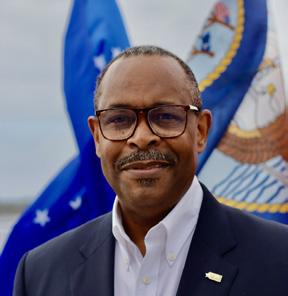
San Diego is widely recognized as one of America’s strongest communities for veterans. In WalletHub’s 2026 ranking of the best places for veterans to live, San Diego placed No. 17 overall among the 100 largest U.S. cities, reflecting its military footprint, veteran population, and support ecosystem.
But being a great city for veterans does not automatically mean being a great city at transitioning veterans into meaningful civilian careers
Each year, about 19,200 service members transition out of the military into the San Diego region. That makes this community one of the nation’s largest military-to-civilian landing zones. Yet beneath the surface of a veteran-friendly city lies what NVTSI.org sees as a hidden crisis: not simply unemployment, but skill mismatch, underemployment, and loss of professional identity.
This crisis is hidden because employment numbers alone rarely tell the full story. A veteran may technically be employed while working far below their capabilities, outside their field, or in a role with no long-term pathway. By that definition, employment alone is not reintegration. Purpose and fit matter.
The local pattern is troubling. San Diego can rank among the nation’s best cities for veterans and still struggle to connect them to purposeful employment. That tension is the real issue. Veterans bring advanced leadership, discipline, technical expertise, and mission-driven problemsolving into the civilian economy, yet too many end up underemployed or disconnected from roles that reflect their value. The result is a form of regional “brain waste,” where highly trained talent is present but not fully utilized.
To understand why, we have to move beyond the myth that all veterans are looking for the same thing. They are not. At NVTSI.org, we see five common archetypes among transitioning service members.
The Transitioning Specialist wants to remain in the same occupational lane, such as an air traffic controller moving into an FAA role. The Transitioning Generalist wants to apply broad leadership, training, or operational experience to the private sector. The Career Switcher wants to
pursue something entirely different from their military occupation. The Undecided veteran knows where they want to live, often San Diego, but does not yet know what career path to pursue. And the Multi-Tracker is pursuing several goals at once—education, work, entrepreneurship, certification, or family reintegration.
These archetypes reveal a central truth: for many veterans, the issue is not simply finding a job. It is figuring out who they are professionally after the military.
That is why the biggest root cause of transition failure is not a lack of hard skills. It is mindset and identity
Traditional transition systems often focus too heavily on translating military occupations into civilian job titles. That may help specialists, but it misses the deeper reality. Many veterans are not trying to replicate their military job in civilian life. They are trying to build a new future, a new purpose, and a new professional identity. A resume workshop alone cannot solve that.
This identity gap helps explain why so many veterans experience first-year friction in civilian employment. Many take the first available paycheck rather than the right-fit opportunity. Others land in jobs that look stable on paper but feel disconnected from their values or growth potential. At the same time, many employers still lack onboarding systems that help veterans translate military habits, expectations, and communication styles into a civilian workplace culture.
The Department of Defense does provide a formal transition timeline through PRESEP, TAP, and CAPSTONE. These are important administrative milestones, but they do not fully resolve the deeper barriers beneath the surface—preparation, identity, community connection, upskilling, job matching, and wraparound support.
That is precisely why NVTSI.org is launching REBOOT Lite, a new 3-day version of the acclaimed 3-week REBOOT Workshop, to help veterans and transitioning service members address the identity, network, and career exploration gaps that traditional transition systems often leave behind. According to NVTSI’s event listings, REBOOT Lite – San Diego, CA will be held April 1–3, 2026 at National University’s Spectrum Center Campus, and the program focuses on three core transition areas: building a new post-service identity, creating new networks, and exploring new career opportunities.
For veterans who feel stuck between military service and civilian purpose, this is more than a workshop. It is a bridge. It reflects NVTSI.org’s belief that successful reintegration requires more than compliance with a timeline—it requires intentional work around identity, direction, and belonging.
That is also why space is limited. REBOOT Lite is designed to be focused, immersive, and practical. Veterans interested in attending the April 1–3 session at National University can find it on NVTSI’s seminar calendar.
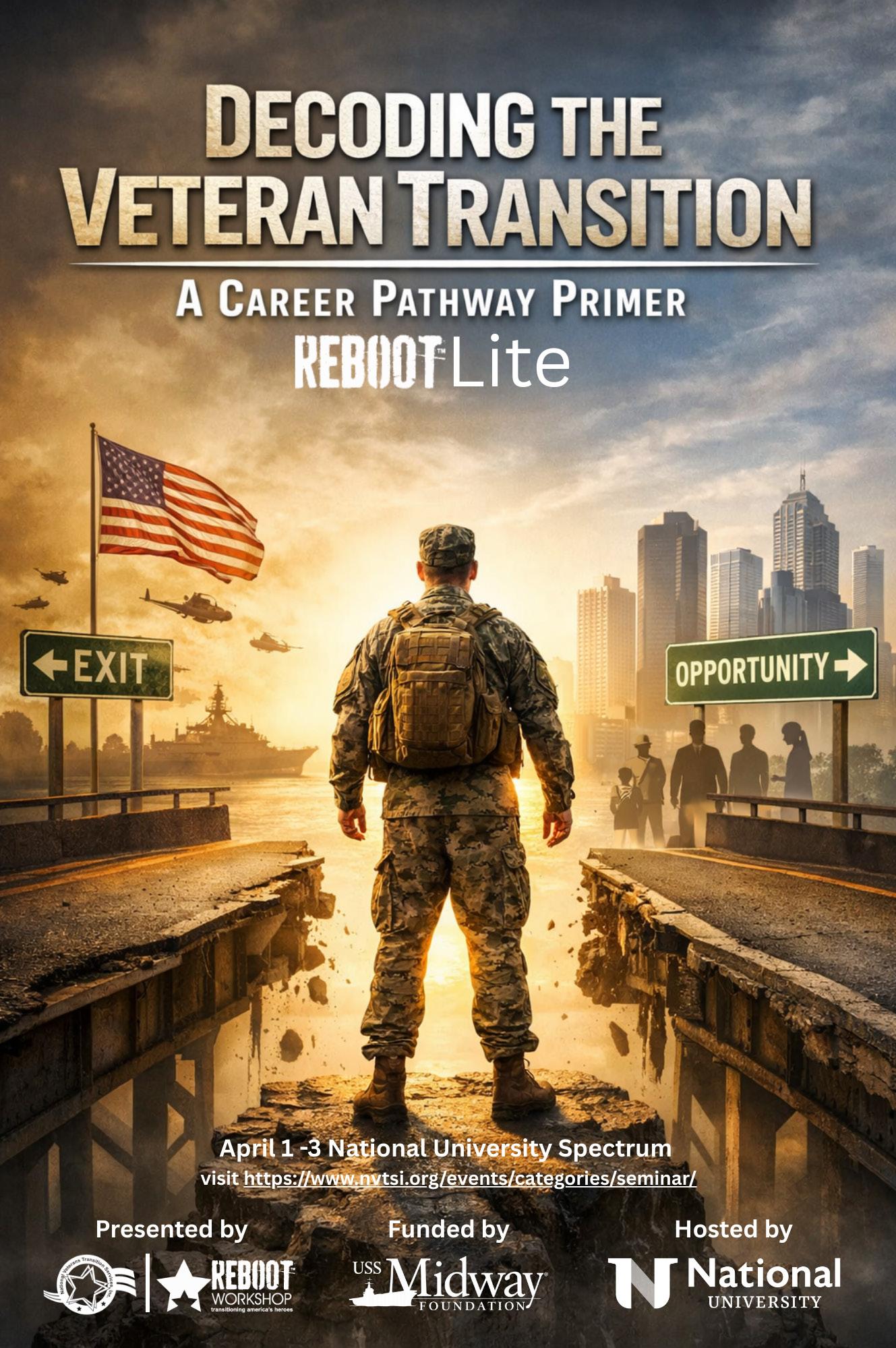
San Diego already has the ingredients to lead the nation. It's No. 17 ranking proves the region has a strong foundation for veterans.
The next step is making sure that recognition extends beyond livability and into career outcomes. When we close the gaps in identity, matching, and support, we do more than reduce underemployment—we turn military experience into civilian impact.
That is how San Diego becomes not only one of the best places for veterans to live, but one of the best places for them to thrive.
https://www.nvtsi.org/events/categories/seminar/
About NVTSI
National Veterans Transition Services, Inc. (NVTSI) is a San Diego-based nonprofit dedicated to helping service members, veterans, and spouses successfully transition from military to civilian life.
At NVTSI, we believe every veteran deserves more than a job at the end of service—they deserve a career worth building. NVTSI.org
By Eve Nasby eve@infused.work

Stephanie Brown is not a talker. She is a builder. And after more than a decade of building—organization by organization, policy by policy, cohort by cohort—she is now working on her most ambitious project yet. She calls it MilStreet USA. If it works the way she intends, it could fundamentally change how veterans, military spouses, and transitioning service members access the resources they need to build a life on their own terms.
Brown founded The Rosie Network in 2012 after trying to find a veteran-owned contractor while her husband, Rear Admiral Tom Brown (SEAL), was deployed—and discovering there was no easy way to do it. That gap became a mission. Today, The Rosie Network’s flagship program, Service2CEO, is a nationally accredited entrepreneurship course running in tight cohorts of ten to fifteen students. It carries some of the highest satisfaction scores in its field, because Brown refuses to scale beyond what allows for genuine, individualized attention.
She is also co-founder and CEO of the U.S. Military Spouse Chamber of Commerce, now ranked in the top two percent nationally by membership. Together, these organizations placed Brown at the forefront of a conversation Washington was slow to have: military spouses are not just workers looking for jobs. Nearly half are already entrepreneurs or actively pursuing it—yet 98 percent who apply for small business loans are turned away. Billions have been spent on traditional employment programs. The needle has barely moved, costing taxpayers roughly 1.7B a year. Entrepreneurship is the underutilized answer.
Jim Gruny

Her practical answer in the meantime: the Military Spouse-Owned Enterprise Certification—the first and only industry-standard credential of its kind. USAA, Disney, AT&T, and CVS Health already accept it. Both the Army and Air Force are tracking spending with certified military spouse-owned companies. Formal recognition, Brown insists, is not symbolic. It opens pipelines to federal contracting, corporate supply chains, and capital that no small nonprofit could unlock alone.
And then she told me about the waitlist.
Brown has taken that argument to Capitol Hill, testifying before the joint Congressional Small Business and Veterans Affairs Committees. She is pushing to designate military spouse business owners as an economically disadvantaged category—the same recognition that opened federal contracting doors for veteran-owned enterprises. An amendment to the last NDAA narrowly missed being adopted. She is driving it through the next one, with a fly-in to Washington this May timed to Military Spouse Appreciation Day.
Last year, The Rosie Network turned away nearly three hundred veterans and military spouses. Three hundred people who raised their hand. Who said, “I’m ready to build something.” Who had already sacrificed so much—moves, missed milestones, deployments, careers interrupted or abandoned—and who found the courage to try again, only to be told: not yet. There’s no room. January alone brought a hundred more applications. Brown won’t lower her standards. Every instructor must be a program graduate. Every student deserves real attention, not an assembly line.
She told me about a veteran she met at a speaking event who had found The Rosie Network, applied, and been placed on the waitlist. He pulled her aside afterward, quietly, and said he’d been waiting six months. He wasn’t angry. He just looked tired in the way that people who have been patient for too long look tired. “I just need someone to believe I can do this,” he said. Brown looked me in the eye when she told me that. She didn’t cry. But I almost did.
One hundred thousand dollars. That is what it takes to hire six new Service2CEO instructors and open the door for the people on that list. Not a building. Not a campaign. Six people with the right training and the right heart, sitting across from veterans and military spouses who are ready—right now—to begin. When you think about what this country has asked of these families—the deployments, the distance, the unspoken grief of watching someone you love walk into uncertainty—and then you think about what we’re asking of them now:
The path is clear. The only question—the only question that remains—is whether the rest of us will show up for the people who have always shown up for us.
It would be an honor to answer that call.
THEY SERVED. NOW IT’S OUR TURN.
Your gift goes directly to placing a trained instructor in front of a veteran or military spouse who is ready to build their future. $100,000 opens the door for hundreds of military families.
Scan the QR code below or visit the link. This is one of the most meaningful things you will do today.

Need help with your transition? Have questions? Link up with Eve on Linked In today. www.linkedin.com/in/eve-nasby-given-hiring-expert
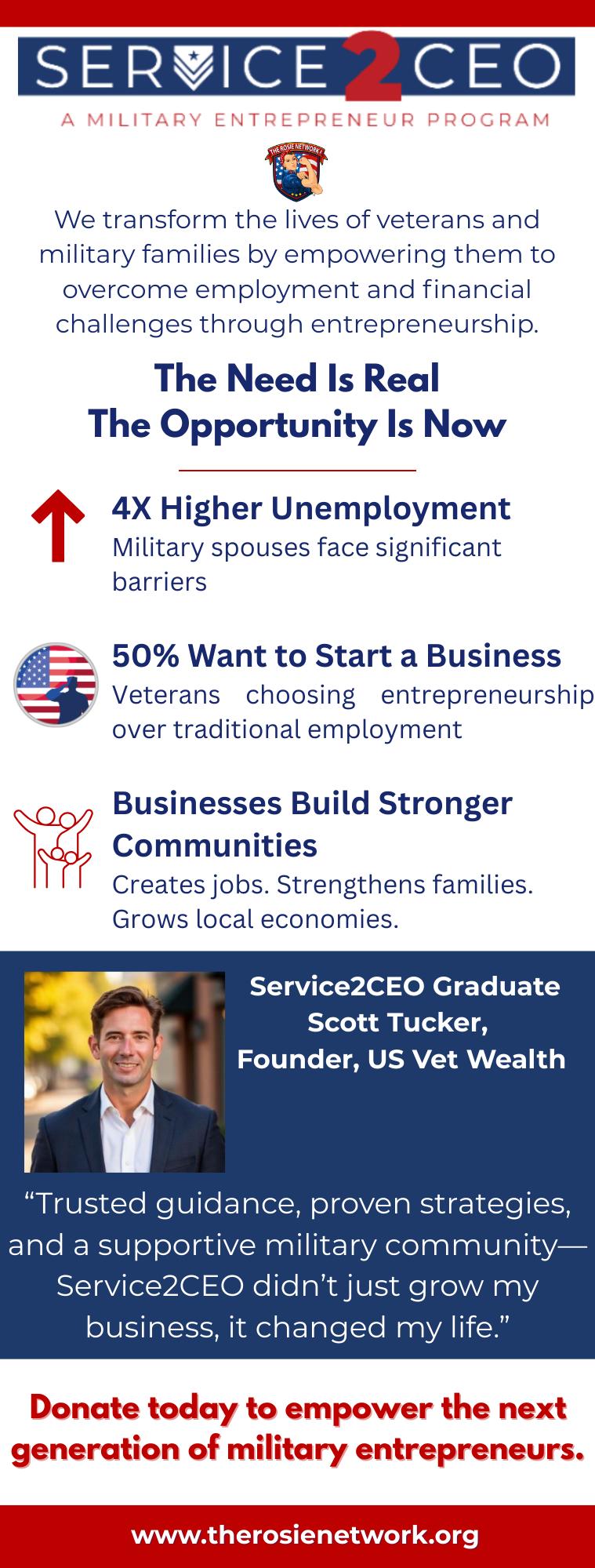
By Joseph Molina veteransccsd@gmail.com www.vccsd.org

Leaving the military is more than just a career change; it’s a total identity shift. For years, life has been defined by a clear mission, a clear hierarchy, and a community that functions like a second family. Stepping into the civilian world can feel like the rules of engagement have completely changed.
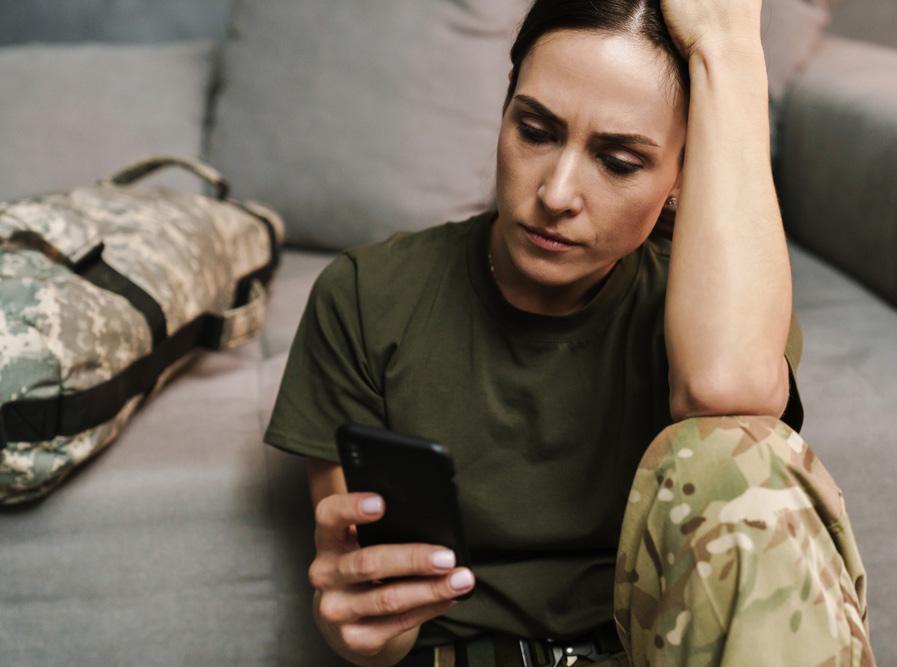
Core Challenges
The most immediate hurdle is culture shock. In the military, communication is direct, and the chain of command is absolute. In a corporate setting, "collaboration" and "consensus" are the norm, and the lack of a clear structure can feel chaotic.
The Translation Gap. Many veterans struggle to explain how leading a platoon or managing complex logistics may be applicable in a civilian job.
The Loss or Unclear Purpose. The military provides a clear "why" for everything you do. Civilian life often lacks that inherent sense of mission, which can lead to feelings of isolation or a lack of direction.
for Success
To navigate this transition successfully, one should approach it like any other military operation: with a plan and a support team.
1. Start Early and Network
- Build a LinkedIn profile months in advance.
- Talk to veterans who have already made the transition; they are your best resource.
2. Translate Your Skills
Switch from acronyms to Titles. Instead of saying you were an NCOIC, describe yourself as a "Senior Manager." Use civilian terms like "efficiency" or "budget oversight" Focus on the results you achieved rather than just the duties you performed.
3. Find Your New “Tribe”
Seek out veteran-focused organizations. Surrounding yourself with people who understand your background provides a strong emotional bridge.
4. Give Yourself Time
Transitioning is a process, not an event. It’s okay if your first civilian job isn't your "forever". Use it as a steppingstone to learn the civilian landscape.
Military Transition is undeniably challenging, but the discipline, resilience, and leadership you forged in uniform are exactly what it is needed to have a successful transition. With the right strategy, your post-service life can be just as impactful as your time in the Military.
National Veterans Chamber (NVCC)
The NVCC acts as a project incubation platform that empowers veteran-leaders to lead transformative projects in their communities that support and empower transitioning military. It focuses on career training, workforce development, and entrepreneurship.
www.vccsd.org
• V.E.T. Connect Program: A licensed training initiative designed specifically to help you bridge the gap between military life and civilian careers by connecting you with local employers and resources.
• Entrepreneurship: Provides certifications and workshops for new business owners, including business coach certificates.

By Doug Dwyer doug.dwyer@dreammakerbk.com


Franchising presents a unique opportunity for veterans transitioning from military service to civilian life. The structure, support, and established systems can make it an appealing option for those accustomed to discipline and teamwork. However, several misconceptions about franchising can deter veterans. I’d like to take a moment to debunk some of the most common myths, specifically from a veteran's perspective.
A prevalent myth is that franchising guarantees business success. While franchises often have higher success rates than independent startups due to established brand standards and support systems, they are not a guaranteed ticket to prosperity. Veterans, familiar with rigorous training and strategic planning, understand that success depends on several factors such as location, market conditions, and their management skills. The military's emphasis on preparedness and adaptability can be crucial in navigating these variables.
Some believe that franchises are simple to operate because they come with a set operational model. This misconception can be misleading. Managing a franchise requires effort in areas like staffing, marketing, and customer service. Veterans, who excel in leadership and operational excellence, are well-suited to handle these challenges. The franchisor provides a framework, but veterans must apply their discipline and leadership to execute the business plan effectively.
When people think of franchises, they often picture fast food chains like McDonald's. However, franchising spans numerous industries, including healthcare, education, home services, and even kitchen and bath remodeling. Veterans, with their diverse skill sets and experiences, can explore a wide array of franchise opportunities that align with their interests and strengths. This opens possibilities that allow veterans to find a niche that suits their passions and career goals.
Another common misconception is that franchisees are merely extensions of the franchisor with little independence. Franchisees are independently owned and operated, providing you with significant control over your business operations, from staff management to local community involvement. Veterans, who are used to making decisions in high-stakes environments, can thrive in this model. The structure provided by the franchisor ensures consistency, but the day-to-day operations and local adaptations are in the hands of the franchisee.
Many veterans might believe that franchising requires a substantial financial investment. While some franchises do have high entry costs, many are affordable and offer financing options. There are also specific programs and incentives designed to assist veterans in franchise ownership. Organizations like VetFran (go to VetFran.org to learn more) provide resources and discounts to help veterans transition into franchising, making it accessible to those with varying budget levels. At DreamMaker, we’re proud to offer veterans a 20% discount on their franchise fee.
For veterans considering franchising, understanding these misconceptions is crucial. Franchising offers a structured yet flexible path to entrepreneurship, blending the benefits of proven processes and systems with the autonomy of running a business. With realistic expectations and the right approach, veterans can find a rewarding and prosperous career in franchising.
Doug Dwyer is the President & CSO of DreamMaker Bath & Kitchen, a company dedicated to helping its remodeling franchisees achieve Strong Margins and a Quality of Life. doug.dwyer@dreammakerbk.com
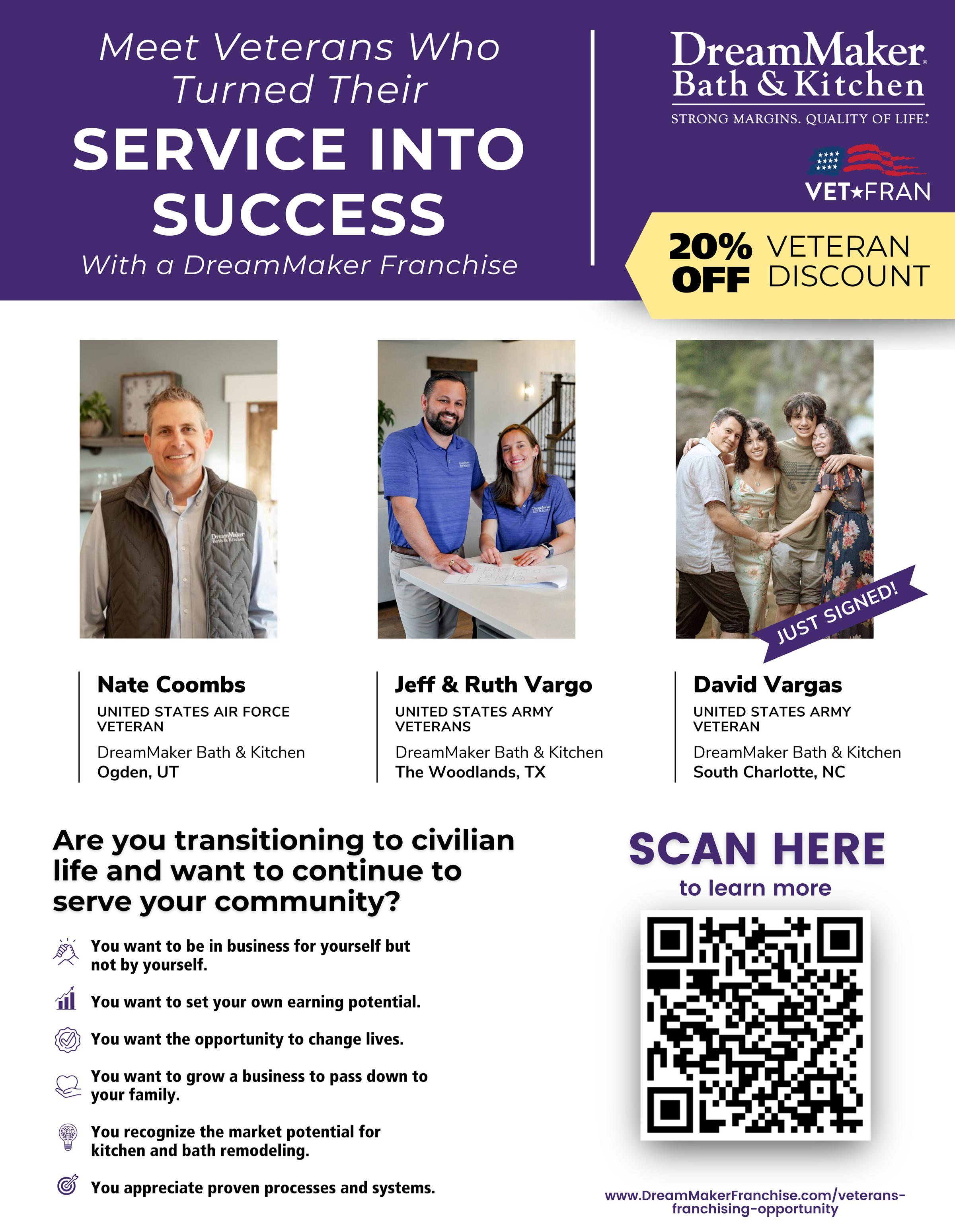
www.dreammakerfranchise.com
Straight-forward legal tips for Military and Veteran Business Owners
By Kelly Bagla, Esq. www.BaglaLaw.com


What happens when you don’t have your legal ducks in a row?

You lose $500,000. As business owners, we are so focused on running the business that we forget to get our legal ducks in a row. Why does it matter? Think about how much you have always wanted to run your own business and how hard you have worked to become your own boss. Now think about how you need money to run your business and keep the doors open. You ask family and friends, and they can’t help you. You ask your bank for a loan or a line of credit, and the bank turns you down. Through a lot of heartache, you finally find a private investor who is willing to listen to your story and invest in your business. Here’s what can happen if you don’t have your legal documents in order.
I received a call one day from a client who was very excited about a business investment. This startup was going to be the first in its space to create software that every business eventually would need and buy. The startup needed $500,000 to finish the software, and my client was going to make the investment. Before any money changed hands, we needed to make sure my client’s investment would be secure. I sent my due diligence list to the startup asking for corporate documents and ownership percentages for my client. The startup responded by saying it had no corporate
documents and no ownership structure was legalized, however, shares were promised to everyone who worked at the startup.
Due to the unpreparedness of the startup, it looked too risky to invest in a business that had no corporate documents or legal contracts with any of the employees. This investment opportunity looked less desirable to my client. As a prudent investor would, my client decided not to invest, as the new business was not ready. The startup lost its hard work, hopes, and dreams—not to mention $500,000. This happens more often than you think because business owners don’t know what they don’t know and fail to prepare for these types of situations.
There are a host of legal requirements that must be followed not only at the corporate level but also at state the state level. Your company must be in good standing with the state where it is incorporated. To remain in good standing, states require annual filings and payments of fees, in addition to your company being represented by a registered agent for service of process. However, entities that do not stay on top of their compliance obligations can lose their good standing, and your business will then be considered delinquent, void, suspended, or dissolved. The primary reason a company loses its good standing status is due to not filing its annual reports or paying its franchise tax obligations.
Losing your good standing status can lead to serious consequences, such as:
This may be the most serious consequence, and one that many businesses are not aware of. In many states, a company that is not in good standing may not bring a lawsuit in that state until good standing is restored.
This is the second most serious consequence of losing your good standing with the state. The ability to protect your personal liability is no longer available to you and
you can be sued personally by creditors of your company. If your company is not in good standing, the state can hold individual owners of the company personally liable for conducting business on behalf of the company while it was in a delinquent status. These penalties can be severe and levied on each officer, director, or employee who know¬ingly acted on behalf of the noncompliant company.
Most investors and lenders view a loss of good standing as an increased risk and may not invest or approve any financing for the company. Without access to money, your company becomes dangerously close to filing for bankruptcy.
If a company does not pay its franchise tax and loses its good standing status, the taxing authorities can place a tax lien on the company and possi¬bly the owners of the company. Again, lenders will not generally loan money to companies that have tax liens attached to them, as tax liens take priority.
Some states impose fines and penalties on companies that do not comply with the requirements to maintain a good standing. These can add up quickly and become a burden on the company.
When you are considering incorporating, make sure you do your homework and consider taking the following steps:
1. Get advice from a good certified public accountant.
2. Get help from a good business attorney.
3. File the paperwork and pay franchise taxes as required.
4. Obtain the necessary licenses and permits.
5. Have sufficient capital to run your business.
Bagla Law Firm, APC is a business formation and asset protection firm with more than twenty years of years of legal excellence coupled with real-life entrepreneurial experience, to help you keep what’s yours.
For more information visit my website at www.BaglaLaw.com
Disclaimer: This information is made available by Bagla Law Firm, APC for educational purposes only as well as to give you general information and a general understanding of the law, and not to provide specific legal advice. This information should not be used as a substitute for competent legal advice from a licensed professional attorney in your state.

Formation and Asset Protection firm, have over twenty years of experience protecting real estate for rental owners. They customize your asset protection plan to ensure that your rentals are protected in case of a lawsuit.





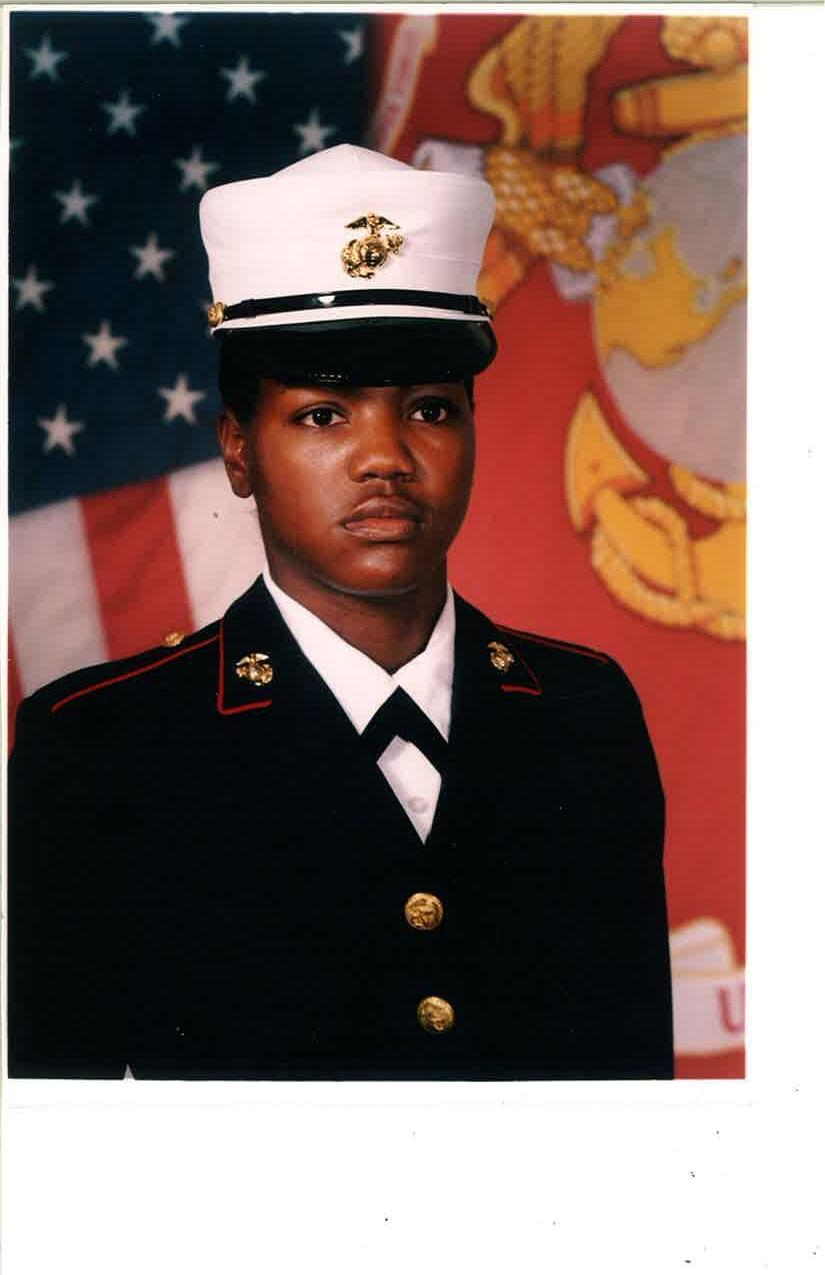
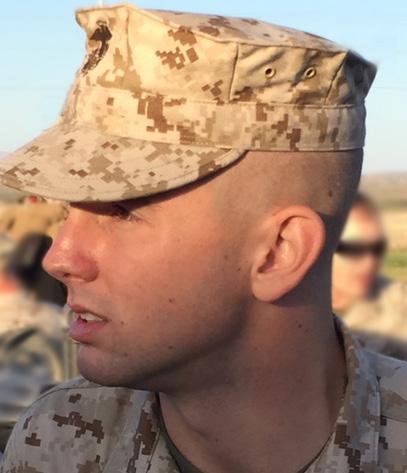
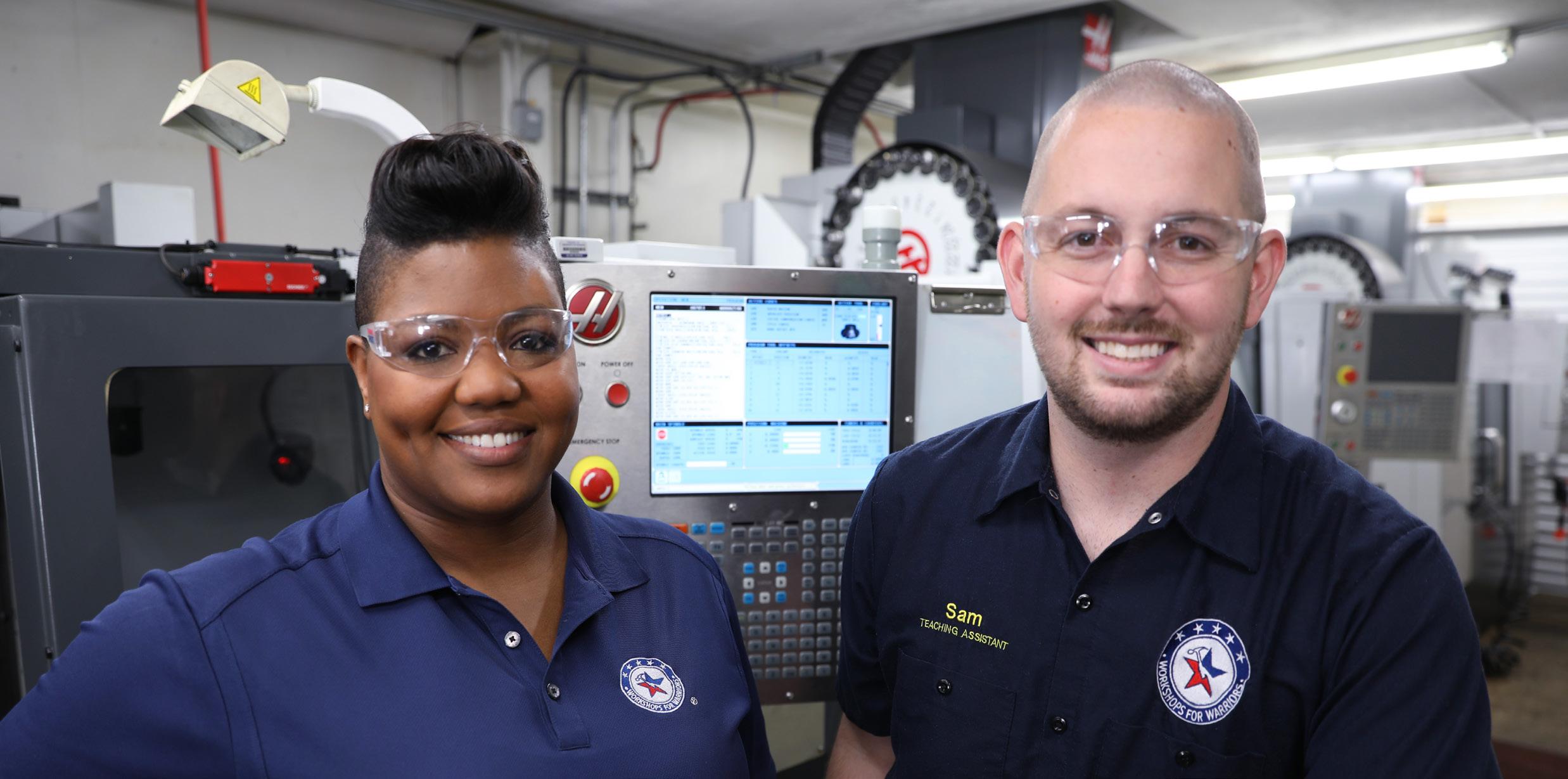


By Hadley Wood www.hlinwood-insurance.com


If your business works with children in any capacity, don’t play around with your risk management. Whether it’s sports teams, day care, tutoring, photo sessions, hair stylists, and more – if you or your business involves interacting with children on a regular basis, you will want to take extra precautions to ensure the children from bodily injury and/or abuse and molestation, and yourself from costly legal harm.
A standard General Liability insurance policy for a business would not include coverage for abuse and molestation. This would be something you would want to add coverage for and there may be additional premium for this. Many business owners may think they do not need this, BUT in the event there is a claim against you or your employees (or even a third party onsite in your location space), legal defense and coverage would be denied due to this not being a “covered cause of loss” on your policy. So even if it was an accusation that was false, you could be left defending yourself out of pocket –which is costly!
The dynamics of working with children are different than working with adults and precautions should always be made from the business owner to create a safe space for them.
Some considerations include:
• Encourage the parent/guardian to be there onsite while the child is at your business
• Keep a daily sign in/sign out log and make sure the parent/guardian signs it
• Set up cameras around the public locations to have a visual record of activities
• If a child has to be accompanied to the restroom or any private space, make sure there are 2 adults present with the child (of the same sex as the child)
• Have a comprehensive emergency kit onsite
• Make sure at least one employee/team member is trained in CPR
• Run through a mock emergency drill to make sure everyone knows what to do in the event of an emergency
And as a parent or guardian, you will want to make sure that the activities your child is involved in are doing their due diligence to ensure child safety.
Michael Kidd
• Visit the location and take note of the site security systems including working smoke alarms, fire extinguishers, door lock system, trip/fall hazards, etc.
• Ask to see a copy of their current General Liability certificate
• Ask for references of current clients AND former clients and call them for feedback
• Ask about the ratio of adult to child supervision

• Ask them about sign-in and sign out procedures
• Ask them about their emergency preparation and crisis procedures
• Ask them about their disciplinary techniques
• If appropriate make sure the outside doors have an emergency bar to prevent children from leaving the premises unnoticed
• Look the company up online for any unsavory comments or business infractions
• Have conversations with your child about safety and protocol
• If something feels off – always trust your instincts!
Please