Impact
REPORT
Nigeria among world’s most dangerous places for Christians
PAGE 10
INTERVIEW
Father Karl Wallner on suffering and hope worldwide
PAGE 17
REPORT
Nigeria among world’s most dangerous places for Christians
PAGE 10
INTERVIEW
Father Karl Wallner on suffering and hope worldwide
PAGE 17
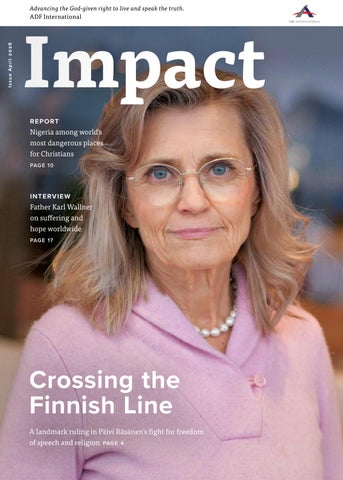
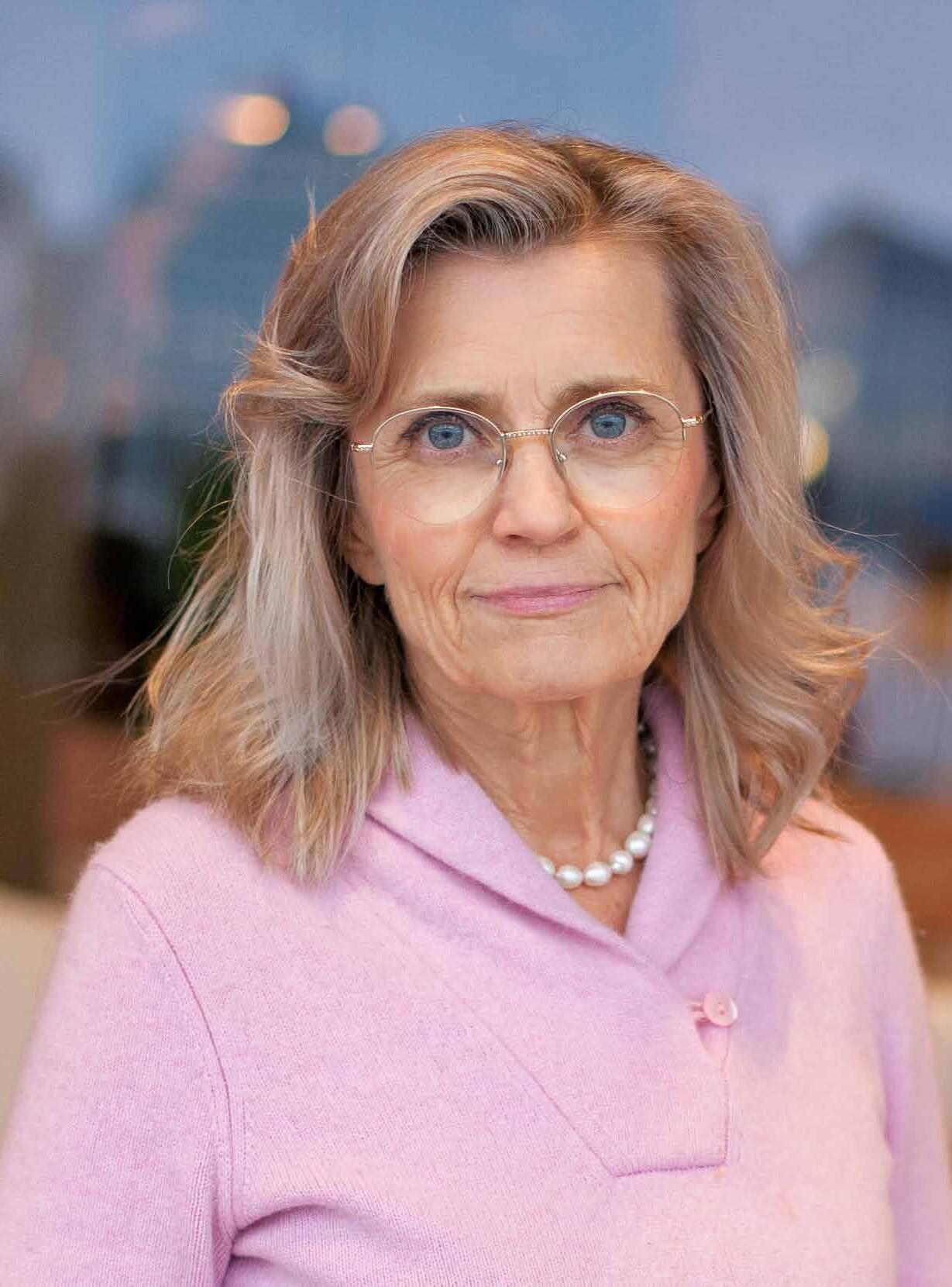
A landmark ruling in Päivi Räsänen’s fight for freedom of speech and religion PAGE 4








Will you become a friend—an Amicus—to those standing up for their fundamental freedoms? Join ADF International’s Amicus Team to support the right of every person to live and speak the truth.
How your commitment will make a difference:
EMBOLDEN and encourage people being punished and persecuted simply for living out their Christian faith.
SUPPORT our clients facing extreme pressure for their faith in courtrooms and the public square.
ENABLE impactful legal advocacy at the major international institutions and national law-making bodies, impacting law and policy worldwide.
MOBILISE the leaders of today and tomorrow to work as an effective global alliance, creating lasting change for future generations.
AMPLIFY the Christian message of hope in the world of mounting censorship.
The Advantages of joining the Amicus Team
• When you sign up to join the Amicus Team, you will receive a welcome pack, complete with a membership card, personal letter, and introductory gift.
• You will get exclusive insight into our work through Amicus newsletters, videos from our legal advocates, and access to webinars with the ADF international Leadership team.
• You will be the first to know about our established and new resources across our five focus areas, including parental rights, religious freedom, freedom of speech, marriage and the family, and the sanctity of life.




Join the Amicus Team now

Dear Reader,
On 30 October 2025, I stood alongside Päivi Räsänen and Bishop Juhana Pohjola at their hearing before the Supreme Court of Finland. This was the third court hearing I have attended in this case, and each time the experience has been surreal: hearing the words of the Bible on trial and seeing a bishop seated in the dock.
In March of this year, the Court issued its verdict, a decision that carries implications for freedom of speech in Finland and beyond. I will leave the details of that ruling to the cover story, but it follows nearly seven years of unwavering work, perseverance, and prayer. Rest assured, our commitment to this work continues.
As a lawyer called to defend freedom of religion and speech, supporting Päivi has been one of the greatest privileges of my career. I am not exaggerating when I say that she is, in many ways, the reason ADF International exists. The fact that her and the Bishop’s case dragged on for this long, and even reached the country’s Supreme Court, is nothing short of outrageous.
Around the world, we support many believers who face legal battles simply for living out their faith. In Sweden, parents have been separated from their two eldest daughters for nearly three years due to their church attendance and way of raising their children; they are still fighting to reunite (see page 9). In the United Kingdom, Christians like Isabel Vaughan-Spruce have faced police action, including arrest, for silently praying near abortion facilities (see page 8). Beyond Europe, persecution is even harsher: in northern Nigeria, Christians and other minorities face blasphemy laws, death threats, due process violations, and mob violence (see page 10).
Despite these dangers, these Christians stand firm in their faith. Their courage reminds us that freedom is not guaranteed—it must be actively defended. The struggles of believers everywhere call us to stand alongside them, and to ensure that faith and conscience are never criminalised.

Paul Coleman Executive Director


Alliance Defending Freedom (ADF) International is a faithbased human rights organisation that protects fundamental freedoms and promotes the inherent dignity of all people.
19,000
Roughly 19,000 churches in Nigeria have been attacked or destroyed since 2009 due to Islamic extremism.
Page 10
“When I began my political career over thirty years ago, I never imagined that I would one day stand before you as a defendant in a criminal case for expressing beliefs inspired by the teachings of the time and my faith. Yet here we are.”
Päivi Räsänen
Page 4
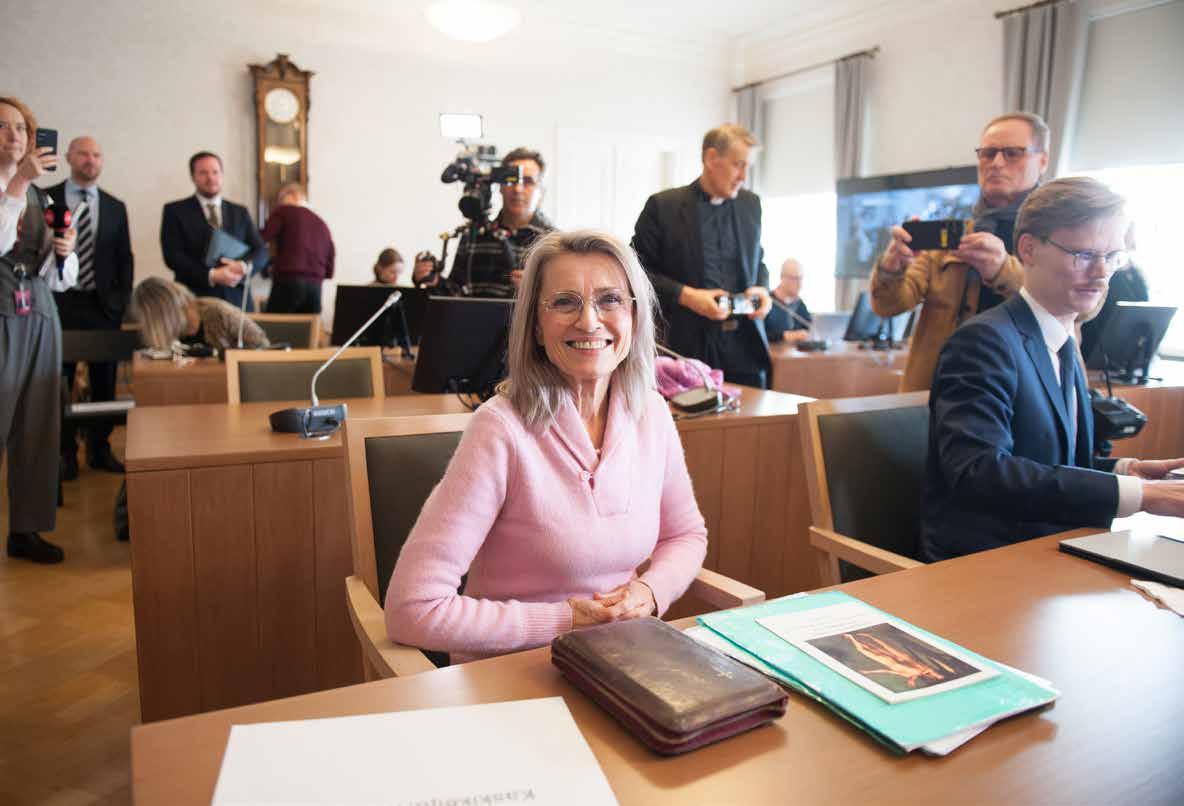
PÄIVI RÄSÄNEN
The long-running “Bible Tweet” case against Finnish Member of Parliament, former Minister of the Interior, and grandmother of twelve, Dr. Päivi Räsänen, and her co-defendant, Lutheran Bishop Juhana Pohjola, has reached its final chapter in Finland. From the beginning, their case has captured international attention as an example of how “hate speech” laws violate the fundamental freedoms of religion and expression. ADF International coordinated their legal defence.
Päivi initially faced three charges that traced back years, even decades. These related to a 2019 tweet in which she questioned her church leadership’s official support for Helsinki Pride and shared an image of Bible verses from Romans 1:24-27; a pamphlet on marriage and sexuality that she published for her church in 2004 with Bishop Pohjola; and statements made on a radio program discussing theology and human sexuality.
On 26 March 2026, after nearly seven years of courtrooms, investigations, and appeals, the Supreme Court of Finland delivered its ruling. In
a troubling mixed decision, the Court convicted Päivi for “hate speech” on the basis of the pamphlet. Bishop Pohjola was convicted alongside Päivi for publishing the pamphlet for his church. The final decision came down by the narrowest possible margin—three votes to two.
At the same time, in a welcome turn, the Court unanimously acquitted Päivi for the 2019 tweet that ignited the entire case, concluding that she had “justified her opinion by citing a biblical text” and that her tweet did not incite violence or hatred. She was also acquitted of the charge concerning her statements on the radio program.
The case had already seen two unanimous acquittals—first by the Helsinki District Court in March 2022, and later by the Court of Appeal in November 2023. Both lower courts affirmed that Päivi’s statements were fully protected under Finnish and international law as expressions of freedom of religion and speech. Despite this, the prosecution pressed on and appealed to the Supreme Court, insisting that Päivi’s expression constitutes a punishable offence.
While it is right and just that the acquittal for the tweet and radio program stands, the conviction for publishing a decades-old pamphlet marks a dark time for freedom of expression. The Court found Päivi and the Bishop guilty for having “made available to the public and kept available to the public opinions that insult homosexuals as a group on the basis of their sexual orientation.” Strikingly, it acknowledged that the pamphlet’s content did not incite violence or hatred, yet still found Päivi and the Bishop guilty.
Their conviction falls under the “War Crimes and Crimes against Humanity” section of Finland’s criminal code. These provisions
were originally designed to address the most serious atrocities known to humanity—crimes associated with persecution, violence, and systematic oppression. And yet, here, they have been applied to a theological pamphlet.
The pamphlet was written long before the law in question was passed. It was only after Päivi posted her tweet that authorities started combing through her past to find grounds for prosecution. The Court convicted her on the basis that: “after a preliminary investigation into the matter was launched in 2019, [Päivi] continued to share the [pamphlet] on her own internet and social media pages in 2019 and 2020.”
The Court imposed criminal fines of several thousand Euros and even ruled that the impugned statements from the pamphlet be “removed from public access and destroyed.” The message is chilling: peacefully expressing your deeply held convictions could now land you in criminal court and get you censored.
After the verdict, Päivi said with quiet resolve: “While I am happy that the Court unanimously confirmed my acquittal regarding the Bible-Tweet, I am deeply concerned that it has nonetheless found me guilty in relation to the church booklet I authored twenty years ago.
“On the one hand, the Court has affirmed that expressing one’s beliefs—even on matters that may be considered controversial—is not a crime. No democratic society can function without the robust protection of free speech, including the freedom to express religious convictions in the public square. The final acquittal on this charge is a key victory in protecting free speech.
“On the other hand, by convicting me for expressing beliefs in a different context, the Court has drawn an unclear and, I believe,
“This case strikes at the heart of democracy. Criminalising speech simply because it reflects a traditional belief is incompatible with a free and open society.”
PAUL COLEMAN, EXECUTIVE DIRECTOR OF ADF INTERNATIONAL
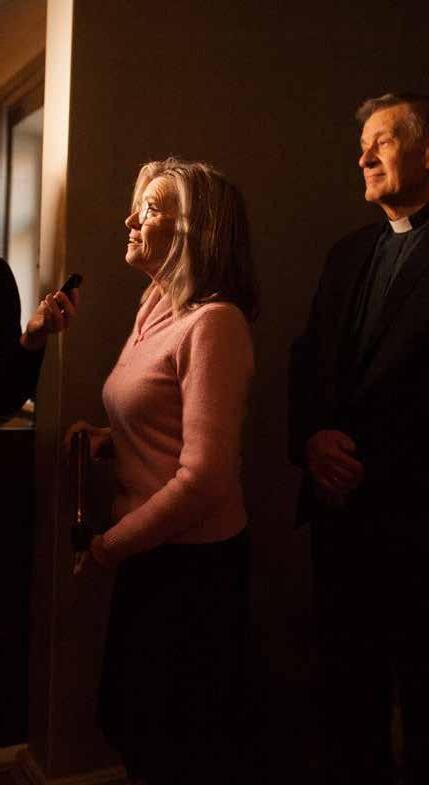
Päivi alongside her husband, Niilo.
dangerous line. I find it deeply troubling that [...] the majority of the Court chose to overturn two previous unanimous acquittals to penalise peaceful expression. The resources devoted to this process— and the message it sends—should concern anyone who values a free society [...] You do not have to agree with my views to understand what is at stake here.
“When I began my political career over thirty years ago, I never imagined that I would one day stand before you as a defendant in a criminal case for expressing beliefs inspired by the teachings of the time and my faith. Yet here we are. Despite the challenges of this
long process, I remain steadfast in my conviction that speaking openly about one’s faith is both right and necessary.
“I am grateful for the support I have received throughout this journey—from my family, my legal team, and countless individuals around the world who have stood with me, prayed for me, and encouraged me.”
The Supreme Court hearing, held on 30 October 2025—five months before the final verdict— marked Päivi’s third criminal trial. From the outset, the case
“Despite the challenges of this long process, I remain steadfast in my conviction that speaking openly about one’s faith is both right and necessary.”
PÄIVI RÄSÄNEN
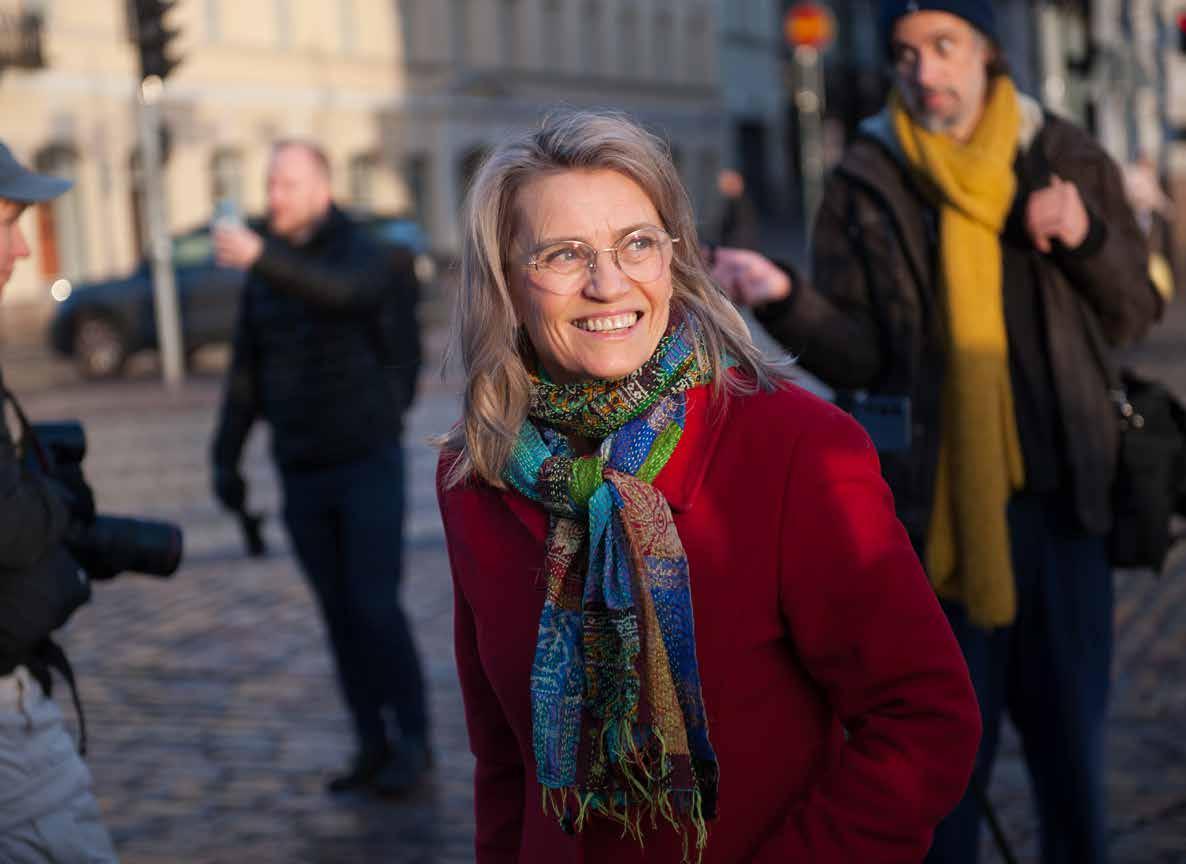
On the morning of the hearing, Päivi Räsänen is greeted by numerous supporters and media representatives.
has underscored how the legal process itself can serve as a form of punishment. Yet, through it all, Päivi remained undeterred.
On the morning of the hearing, she was met outside the courthouse by a visible show of support. A crowd had gathered to stand in solidarity and affirm the fundamental freedoms of religion and expression. Their presence, along with the media attention surrounding the case, highlighted the significance of the moment. Speaking to those assembled, Päivi said: “I am here today not only to defend my own right to freedom of expression, but also the right of every person to express deeply held beliefs without fear of punishment. No one should be censored for sharing the timeless truths of Holy Scripture.”
Prosecutors argued that Päivi’s statements were “insulting” and that “intent is irrelevant.” According to their reasoning, the decisive factor was not what Päivi meant, but how readers might interpret the texts. Faith, they contended, offers no protection if people feel offended by it. Even the mere act of making such statements available online, prosecutors argued, was sufficient to constitute a punishable offence.
Päivi offered a very different account. She explained that the pamphlet was intended to emphasise that “the message of grace applies to all people, including members of minorities.” The defence, coordinated by ADF International and led by our allied lawyer, stressed that the pamphlet was educational in nature, outlining theological teachings while encouraging respect. Addressed to adult Christians, it formed part of a broader public debate on family policy and church doctrine and contained no incitement to hatred or violence.
As for the Bible-verse tweet, Päivi said: “If church leadership promotes values that contradict the Bible, it undermines the credibility of Holy Scripture,” she explained. As a member of the church council at the time, she felt it was her duty to participate openly in the discussion. She added that her tweet had resonated widely, with many Christians expressing the same concerns.
The fact that Päivi had to defend not just her own words, but also the very truths of the Bible in Finland’s highest court speaks to the extraordinary pressures placed on faith and free expression today.
Päivi has consistently warned of the broader consequences of her case. As evidenced by this prosecution, overly broad “hate speech” laws leave citizens vulnerable to years of investigation and trial for peacefully expressing their beliefs. Laws intended to prevent incitement to hatred or violence should never extend to peaceful expression protected by the human right to free speech.
Under EU law, more specifically the Digital Services Act (DSA), decisions in one member state can directly influence what online speech is allowed throughout the entire Union. Meanwhile, the European Commission is also pushing to make “hate speech” an EU-level crime, placing it alongside heinous acts like terrorism and human trafficking. If successful, this would force all member states to align their laws—drastically narrowing the space for free expression across Europe.
This is why Päivi’s case has become so important. It presented a clear opportunity for the highest court in the land to protect freedom of speech at a moment
when censorship is dramatically escalating across the continent. The Court failed, and now, the ripple effects are sure to be felt across Europe.
We are immensely proud of Päivi and Bishop Pohjola for their courage, integrity, and perseverance. They have stood strong not just for themselves, but for the freedom of all people to speak openly without fear. However, this is not the end. We remain committed to defending that freedom and stand beside Päivi as she considers further legal steps.
“I am taking legal advice on a possible appeal to the European Court of Human Rights. This is not about my free speech alone, but that of every person in Finland. A positive ruling would help to prevent other innocent people from experiencing the same ordeal for simply sharing their beliefs,” Päivi stated after the verdict. Until then, she presses on with the same courage and conviction that have carried her throughout this entire process.
“This has been a long process [...] I am very convinced that this process has not been in vain. I have received thousands and thousands of messages from people who have been encouraged by this case… to read their Bible. To pray. Who have found Christ and His mercy while following this case. I believe that this process has been in God’s hands, and even though I’m disappointed and even shocked about this conviction…I trust in God. There is some purpose also for this situation where we are now.”
Beyond the courts and the trials of this world, Päivi’s faith stands as a true and lasting victory—a triumph already secured in Heaven.