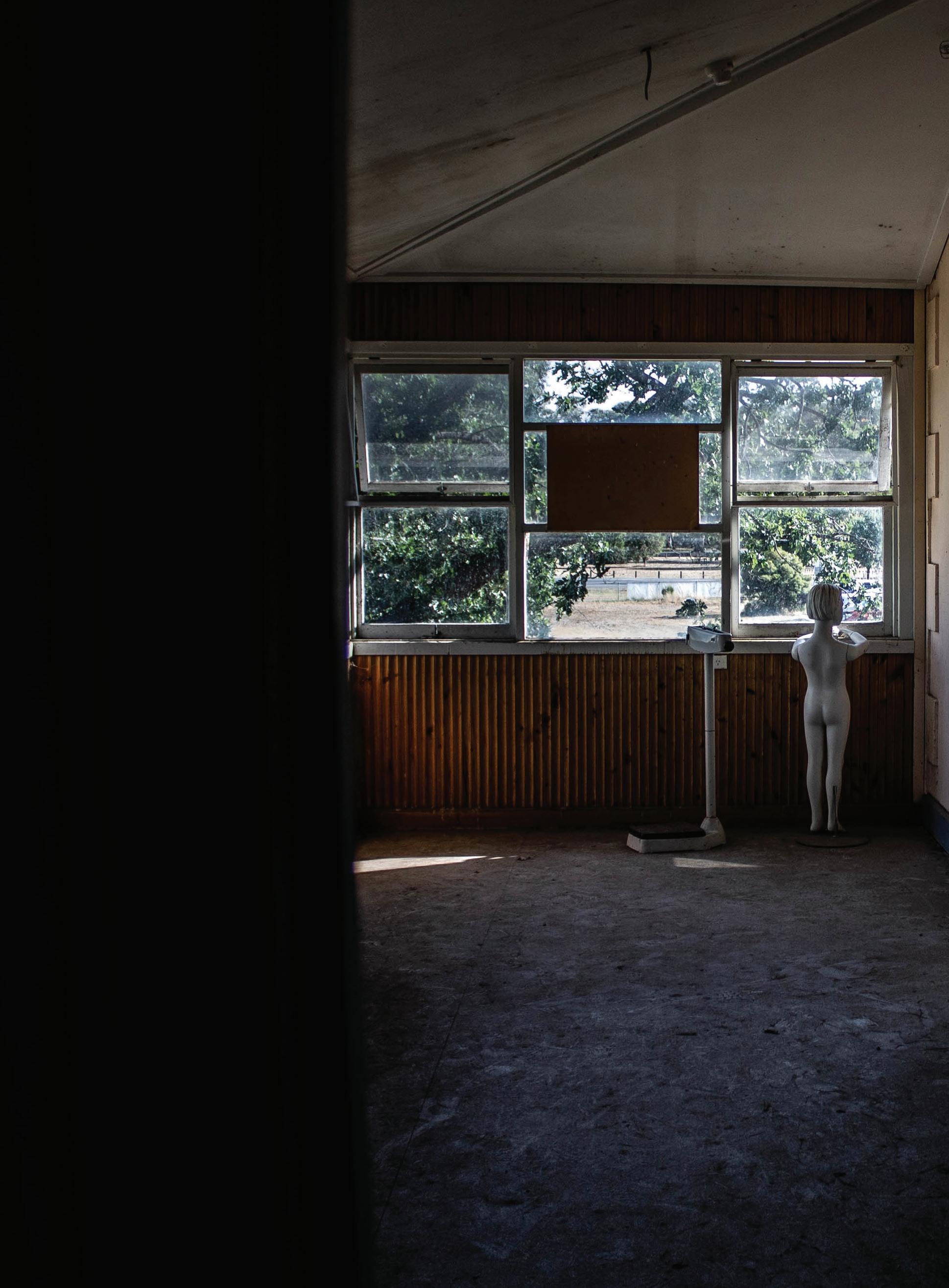
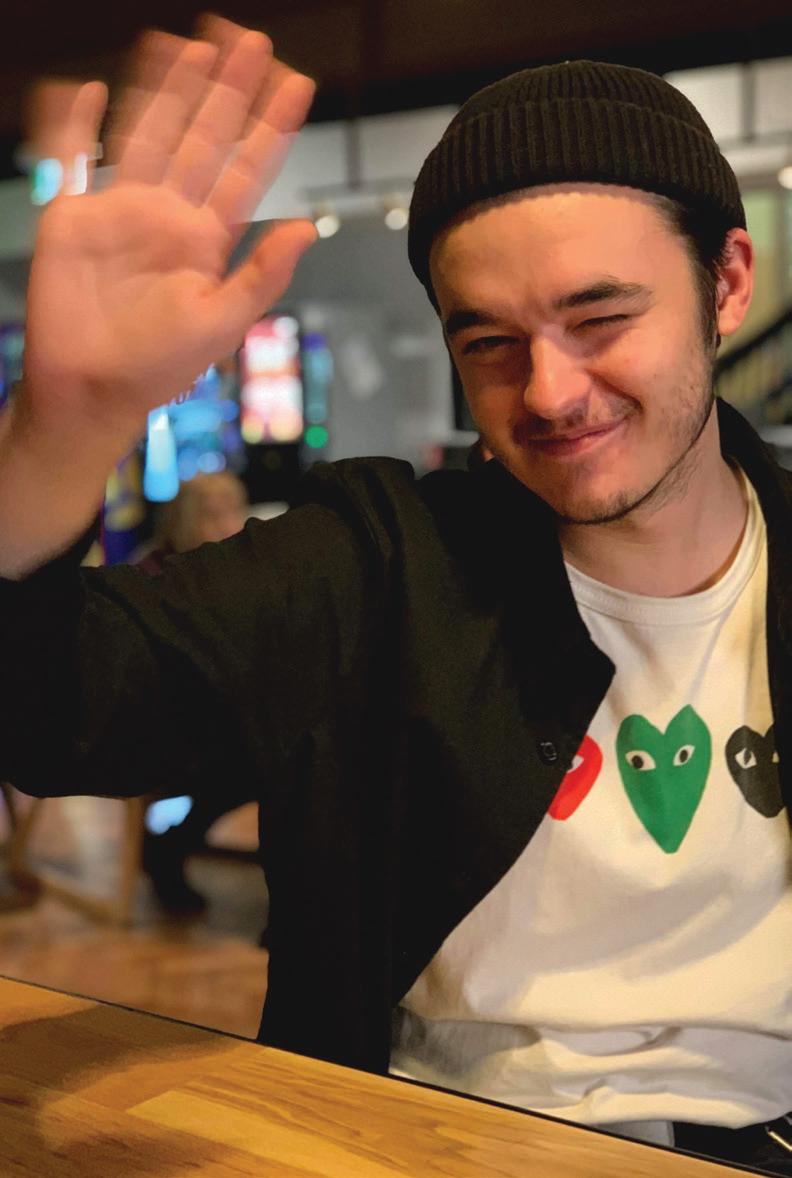
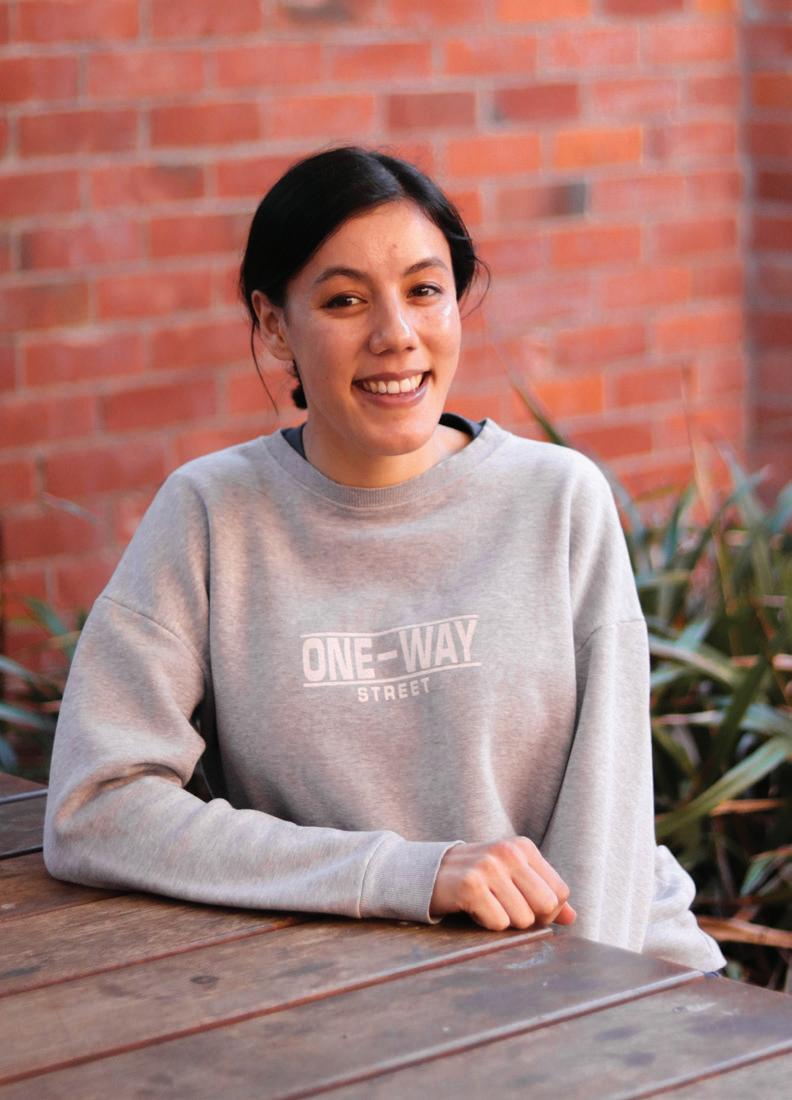
SUITE FOR 106 IN C MINOR • LA PETITE MORT • BILE AND WINE • JAMIE HORNSBY • THIS ISN’T WHAT I MEANT • FAR FROM BEYOND • KATHRYN ELLISON FEATURING §
Editor’s Letter
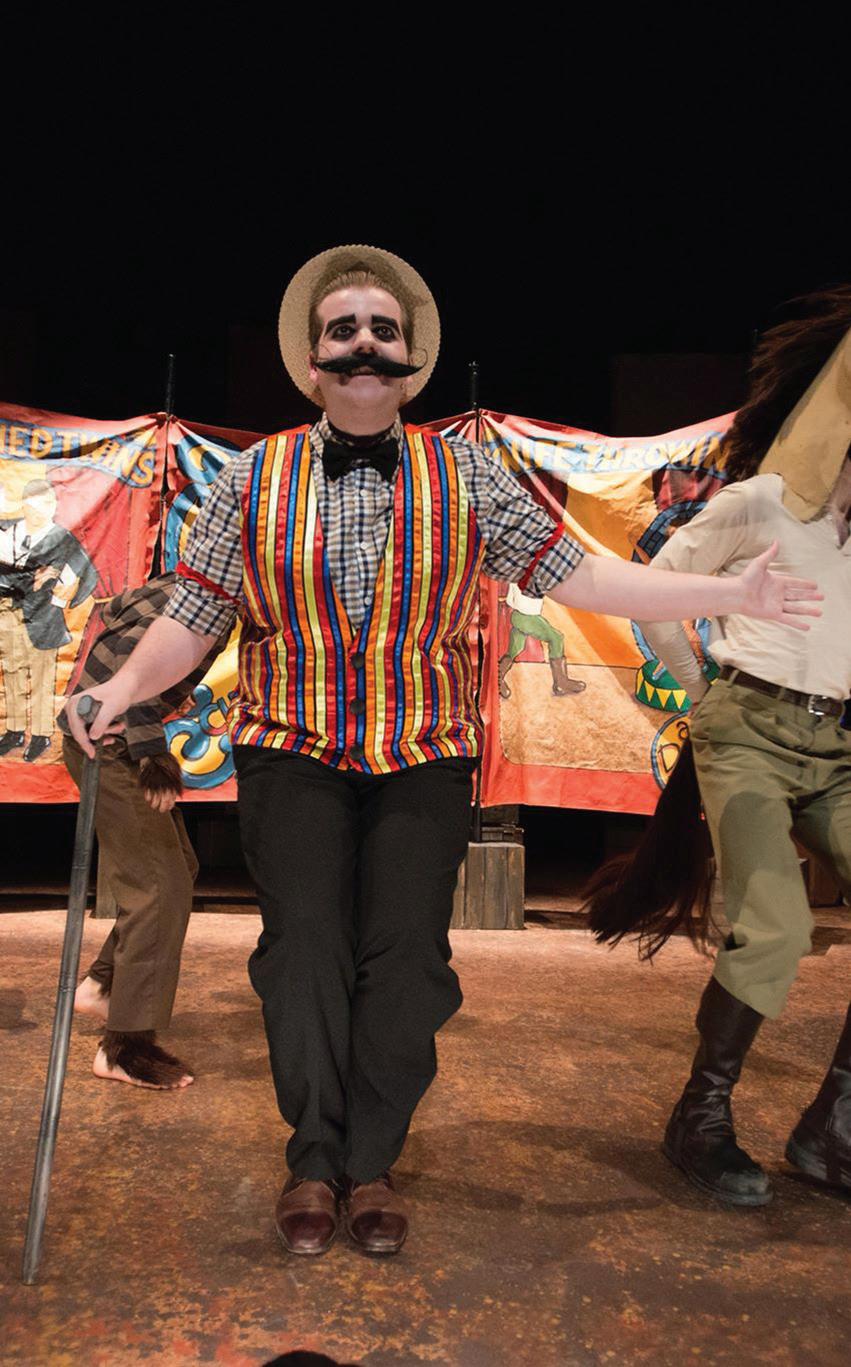
Suite for 106 in C minor
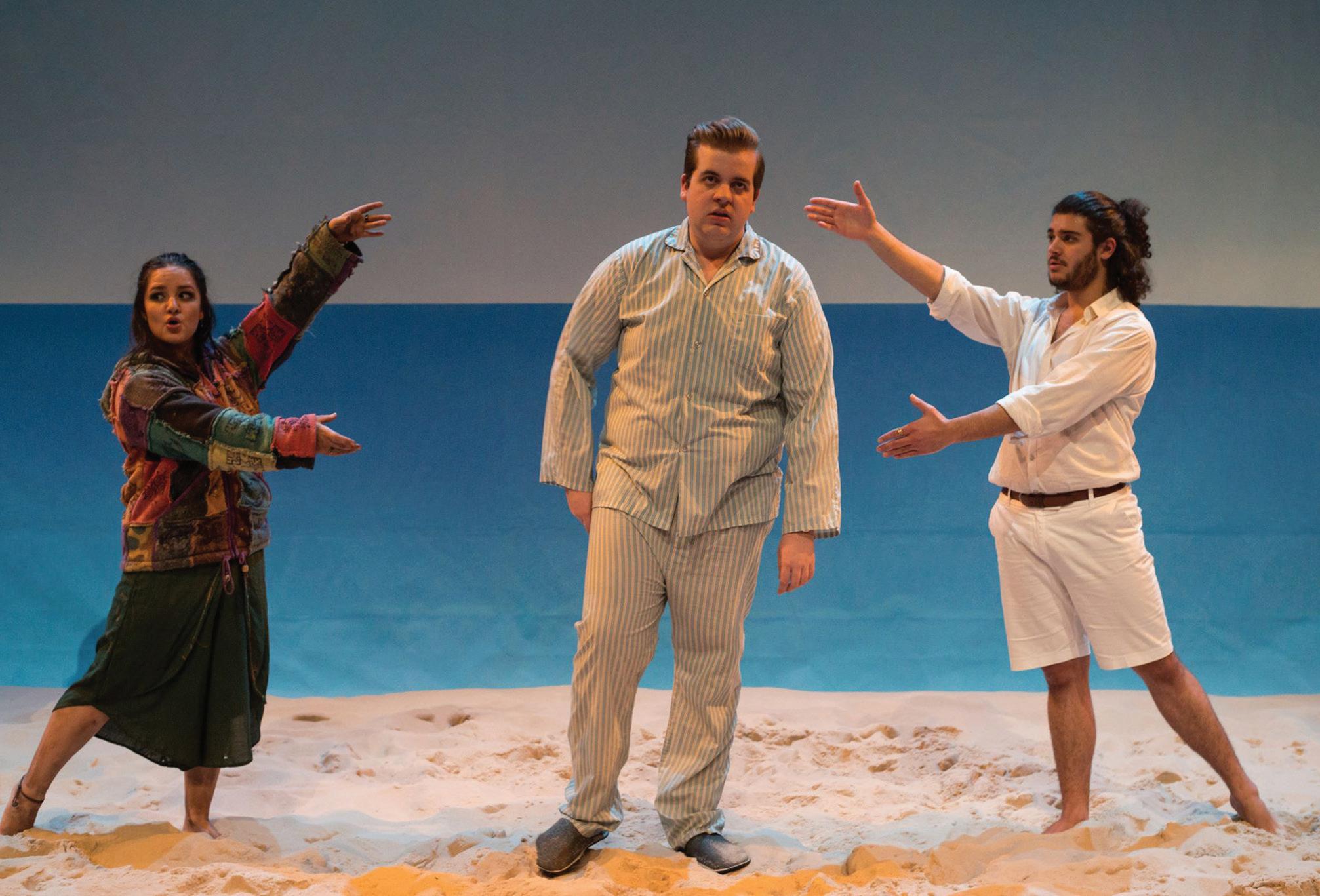
La petite mort
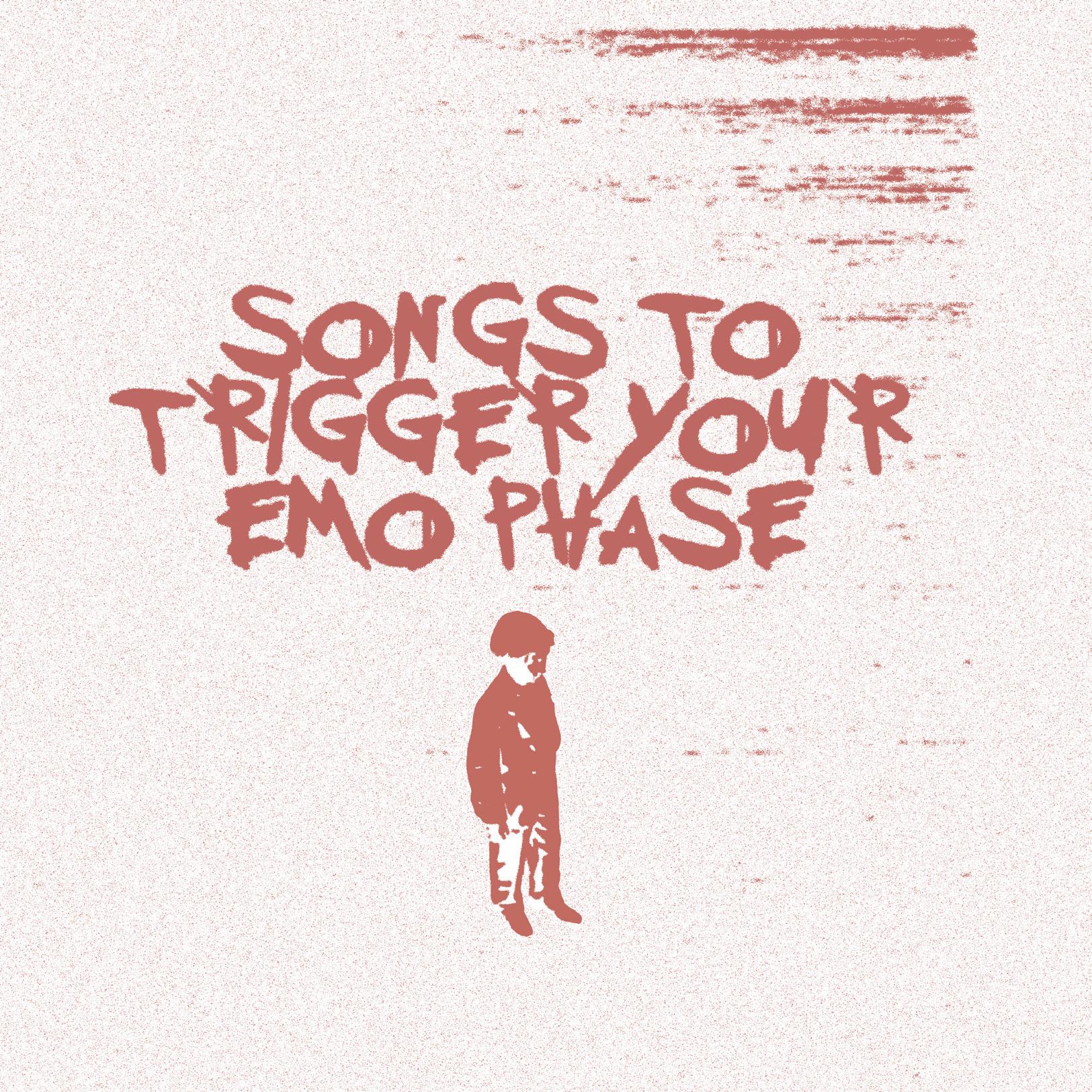
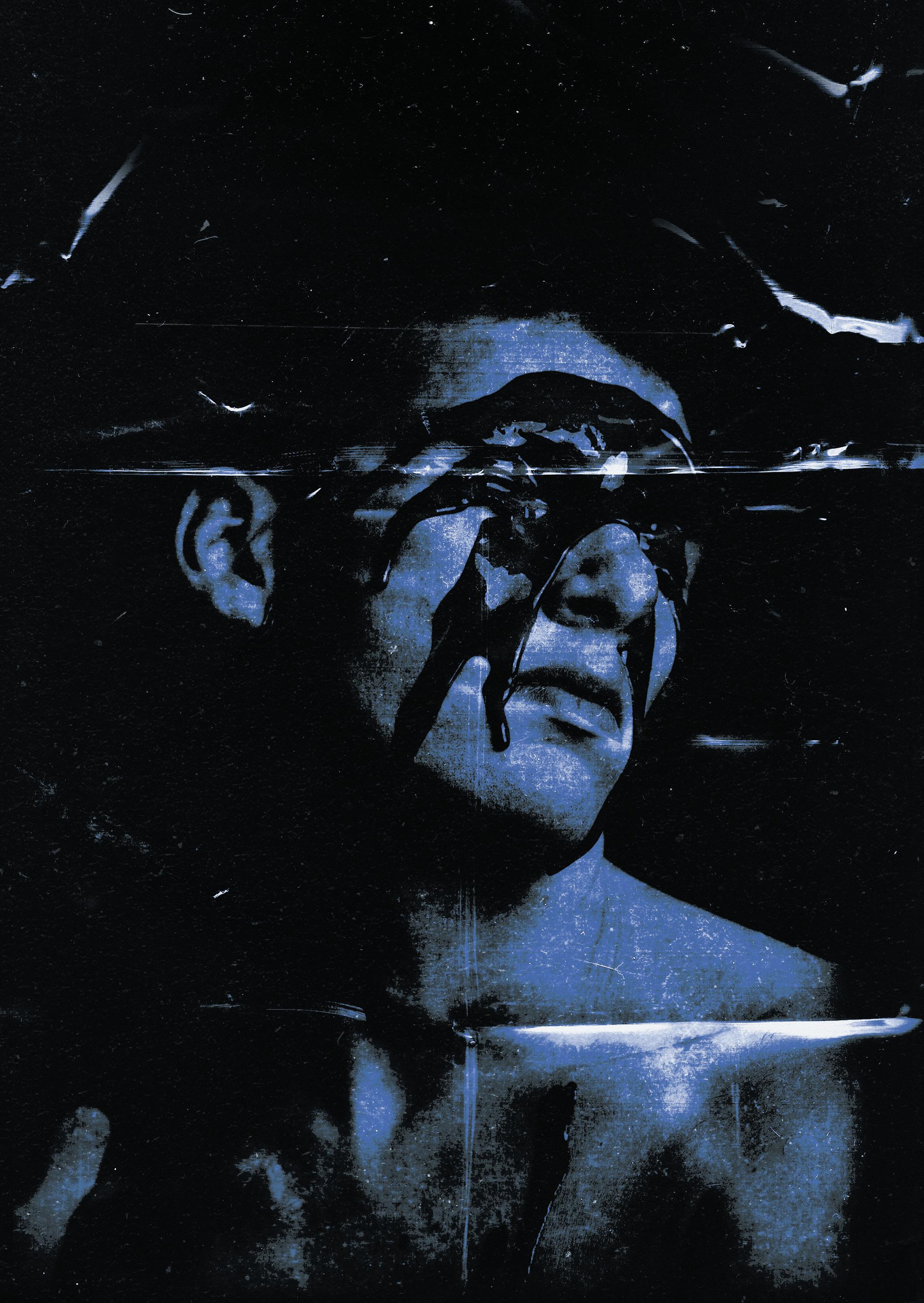
Bile and wine 10 Playlist: Songs to trigger your emo phase 12 Interview: Jamie Hornsby 18 This isn’t what I meant 20 The truth behind your generosity 22 Photo Series: Far from beyond 26 Imagine: Kathryn Ellison 32 Isla in wonderland: Part 2
33 Of temporary relocation 34 Twenty Gen Z fears 35 Aortic arthroscopy 38 Photo series: Abandonment 42 Spooky music review 44 Humans of UniSA
48 Match Studio: Understanding the unknown 54 Review: Superhuman abilities
We respectfully acknowledge the Kaurna, Boandik and Barngarla First Nations Peoples and their Elders past, present, and emerging, who are the First Nations’ traditional owners of the land that are now home to the University of South Australia’s campuses in Adelaide, Mount Gambier and Whyalla.
EDITOR'S LETTER
Edition 29 Head Editor | Tanner Muller
Let’s face it, things are a bit grim at the moment. When we consider all of the unjust political systems, mass shootings, and natural disasters, you can’t escape it. Everywhere you turn, there always seems to be something around the corner to wipe the smile from your face.
Although it might be difficult during these times to see the light at the end of the tunnel, you shouldn’t let anything deter you from finding it. We, as a society, have the authority to shape the changes we desire—so if you’re an artist, use your creative skills to take a stance and spread the word. If you’re not, then contribute to the conversation in your own unique way. If we all come together to proudly raise our voices, people will have a difficult time ignoring us.
While this edition of Verse reflects all that is twisted in our sick sad world, it also aims to bring a sense of hope. Immerse yourself in what the Grim Edition has to offer. As you continue to read through these pages, you’ll be taken on a trip to the moon, discover the truth behind your generous donations, and uncover some abandoned locations. Along the way, you’ll also encounter more sensitive material relating to domestic violence, surgical procedures, and identity.
A huge thanks to all the writers and artists who submitted to this edition. I’ve poured every bit of my heart into this and I can’t wait to see what the (now) infamous Sex Edition has in store for us all. Until next time, onwards and upwards.
Head Editor Tanner Muller | Co-Head Editor Annabel Bowles | Co-Head Editor Ryan Colsey
Communications & Digital Editor Geena Ho | Graphic Designer Oliver White | Printer Newstyle Print
Design & Production Consultant Jackson Polley | Design & Production Consultant Rachael Sharman
The views expressed in this magazine are not necessarily representative of the views of USASA or the editors.
City East Tue 6 August
City West Wed 7 August Mawson Lakes Tue 13 August Magill Wed 14 August
11 am - 2 pm
Suite for 106 in C minor
Words by Ezra Théodore Tillet
Photography by Tiana Belperio
Monday, Con amore
The sun breaks through the clouds and the bus is suddenly washed in gold. There are five perfect fingerprints on the glass to his right with gilded loops and whorls, like the man who left them dipped his fist in gold ink. A man gets off at the fifth stop and thanks the driver around the sleepy gravel still lodged in his throat. Behind him, there is a grandfatherly crinkle of a turning page; the woman in the front seat on the left chuckles at something, the peaches-and-cream of her lipstick smoothing out thin and shiny as her mouth stretches.
He thinks about the man he left at home with wet lips and mussed hair. He wonders if the man has gotten out of bed yet to shower or if he’s drinking tea still, dressed in the wrong shirt. The sun fades behind cloud cover but his face is still warm. He wants to know if his happiness if obvious, and how much he looks like an eager child with the corners of his mouth twitching up into a grin while everyone else is yawning.
He loves this, he thinks it to himself: I love this. The blustery morning energy of the city. Stories unfurling like buds at first light. The air of coffee and newspaper print, the rustle of scarves and bleary eyes–the orange juice and toast of it.
Saturday, Affrettando
She smells like stale cigarettes and relief. That is the first thing he thinks as this new woman steps onto the bus. The fumes catch in his throat like soot, but are preferable to the yeasty stench that wafts forward from the men in the back seats.
They are rowdy these men. They want trouble but haven’t found the right outlet yet—
they are a storm as of yet undecided on its path. This bus is a breath before a thunderclap. He sits in the middle of the bus and makes himself inconsequential. His gum has gone cold in his mouth and he holds it dead on his tongue like a cherry pit. There is sweat in the small of his back and he is freezing. They are saying things, these men behind him. Not good things.
He thinks about the waiter he’d locked eyes with not three hours ago, the look they’d shared, the smirk, the tick of the clock. He wonders if he might be just as obvious to these men, too. He wants to shuffle his shoulders, wants to unclasp his top button (all the buttons done up is such a tell he shouldn’t have done it) but his hands are shaking, and he is entirely too scared to move.
Tuesday, Scherzando
There are too many children and they are too loud. A new boy has boarded the bus to complete their fivesome earning himself an “AY! FRANK-AY!” All three boys’ top buttons are popped, and their hair is crispy with excess hair-gel. The girls have their skirts rolled up and their heads close, their hair tied with garish ribbons.
“What’d Ms. Davidson say about the homework?” The girls make hesitant responses, the first boy booms out “Ms. Dick-son!” There is a round of gasps and a small voice loudly complaining that’s mean
“Don’t care if it’s mean Rebecca, I don’t give a–ass!” He swears like it’s a new discovery, a certain nervous keenness bolstering the word.
“Yeah, Rebecca, calm ya shit.”
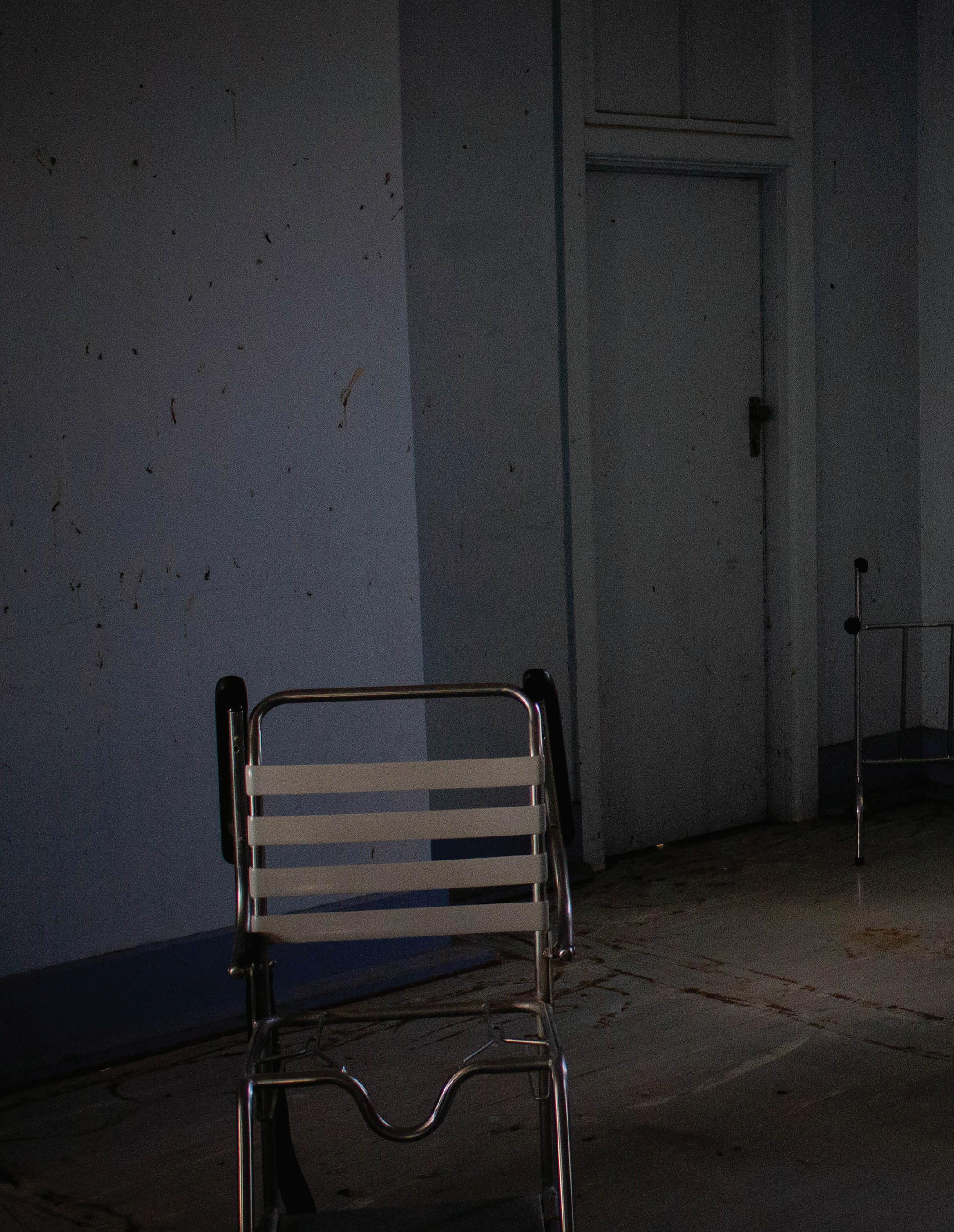
“It’s calm ya tits.”
“Calm ya shit AND ya tits!” This gets nods and smirks of approval from the rest.
The group moves on and the quieter girl in the corner watches Rebecca with a mix of admiration and fear that is familiar. He knows
that look, wonders if this girl knows what it means quite yet; wonders if she’ll be as afraid or disgusted of it as the rest of the world will be.
Saturday: Reprise, Con più vibrato
He gets off eleven stops too soon. That is the problem. The problem is he gets off eleven stops too soon. The door clips shut behind him with the click of a padlock and the air stills and smells of stale urine and panic. He remembers a scrap of self-defence advice that if all else fails to soil yourself, and then they won’t want to touch you.
These men spit slurs like clumps of chewing tobacco: aggressively, with ease and stinking tongues. The rest of their sentences become afterthoughts, splatters peppering around the gritty key points. Faggot, sissy, poove, cuntboy, ladyboy, tranny– if he lists them off like this maybe he can make them nothing, just strange sounds sloughing from their lips like chunks of liver.
So, there are the men and here are their words and here: the hare in headlights.
Thursday, Grave
He feels the end of the day in his bones, in the ache of his left ankle, the bristle of stubble on his jaw. The wet smears of rain water on the window dance red and green with passing traffic lights. It smells like rain and damp. The person pressed against him has a coat slick with droplets that seep into the wool of his sleeve. They all sway together with the motion of the bus on the potholed street, eyelids drooping and shoulders clashing awkwardly. Dress shoes clack hollowly against the mess of wet tracks on the floor as more people board with dripping umbrellas.
There is a mother with a small child perched in her lap like a baby owl. She coos at little girl, who gurgles and tries to twist her rubber-armed glasses until they break. The mother taps her on the chubby fist complacently, offering a heatless admonishment and a smile.
He thinks of his own mother. Is she grey yet? When she frowns is it still the same lines that crease around either eye, or are there more now? Her friends must ask. Does she pretend he died? He hopes she is happy, and he hopes she is not. He hopes they never speak again. He hopes she calls him and says she loves him.
Friday, Tutto a un tratto agitato
“It’s a bit queer,” she said. A bit queer, a bit queer, “all these men that want to be women I think it’s disgusting.”
The jazz in his earphones is tinny, the trumpets shrill like an alarm bleating. It is 8.16 in the morning and he is unsure where this woman has gotten all the sudden fervour from. Her monologue to the commuters continues. They do not involve themselves, staring out windows and fidgeting with phones. No one looks at this woman. He shifts in his seat, pretending to stretch enough to tug his scarf to cover the pride pin on his lapel, makes eyecontact with a person in the seat across shifting their school coat closer like it’s a safety blanket and averts his eyes to his boots.
There is a leaf stuck to my shoe, he thinks.
“Perverts they are, the whole lot of them, fucking diseased,” she says.
The doors open and she grabs her belongings with her dirty nails and rounds on him. She viciously kicks him in the shin like an eight-year-old vying for attention. When he
looks up, he feels her spittle hitting his cheek, something between stagnant milk-tea and the saliva of a dog.
“The whole lot of you freaks should be put down.”
Saturday: Coda, Furioso ma semplice
“It’s infectious y’know? One faggot to ‘nother faggot and then it rubs off on whoever’nd-and–now tha’ one’s a,” something unintelligible mumbled into his grimy beard, “or a tranny, or... a whatever.”
The other men agree. The silent one in a football jersey who looks like someone’s dad merely nods and tightens his fists over his gut. The one with upper arms like legs of ham is quite clear that the trannies are of course the worst, and the one with the limp hair agrees the loudest. But they all agree.
“Should - you know keep ‘em–ah–different y’know away from the rest of us, normal people, so they can’t pass it on.”
The men do not agree that this is enough of a measure.
It is his stop, this is his stop, my stop, he thinks. Maybe they’ll get their wish; maybe he will separate from them now and that’ll be the end of this entire thing and nothing will happen— maybe if I’m quiet and I don’t breathe too deep
The bus pulls in and hanging leaves make slithering sounds across the roof.
When he stands, his ankle shifts painfully and makes a sound like a loaded gun. He hopes they haven’t heard that. He presses his fingers to the glass to steady himself and thinks about the next person who might sit there and if they will see these fingerprints—if these fingerprints might be evidence in some investigation into whatever he hopes doesn’t happen tonight.
The men stand behind him. It is their stop, too. He glances at the driver as he walks to the door, but the driver does not look at him, maybe he’s worried about catching it. He breathes the sticky cologne of the one closest behind him. It smells like boot leather and broken things, and it turns his stomach. The door opens like eggs cracking and he steps out. ◼
Editor’s note: If this poem raises distress, or causes any issues for you, there’s counselling available for all UniSA students. You can book an appointment through i.unisa.edu.au/ students/student-support-services/counselling/
La petite mort
Words and Photography by Zoe Kassiotis
They smoke to forget but I smoke to remember the taste of his tongue he only touched it once— the instep of my soul but the problem is that now it feels half his rather than my whole the jet-black waves of hurricane him imitate the devils ivy hanging above the bed and where we lie tangled in our melancholic sin the post-apocalyptic aftermath of him and I is bond(beyond)age trapped by a sea of shattered glass our lasting ecstasy still paralyses the wolf, sage immortalised in a pewter ashtray she smokes on the bed between our naked legs heavy bass slithers through her haze but the ominous aural glow of flickering neon bedside lights isn’t enough to slow the deafening darkness of my insatiable mind so for answers it fights why won’t he let me run my tainted psalms through the ivy? what is hiding behind the locked hallway door? the feathers on the floor— did they billow from pillows in the passion of women before me? these are the questions I want to remain unanswered so that one day it’ll be nice to have almost known him now peel back my scalp and you will find plastered a tattoo of his tobacco-stained lips that bastard— want to break more glass and be my poetry?
Bile and wine
Words by Raven Seniw
The wine cast is empty, the vodka is toppled
Lying in your sick, the scent is thick
Bile and wine
Mother of mine, you’re not fine
These lies and long nights
Violence and ambulance lights
This is not alright
You’re struggling with life’s fight
Bottle to your lips
Drugs to your assist
A demon in your mind
A panging in your soul
Substances are your only console
Hatred dances in your eyes
A fire only fuelled by my cries
Your grip is tight, and your fists are fast
Kicks are strong, everything is wrong
Blood in this broken home
Bleeding and alone
Bruised by your fist
I did not ask for this
Only pain is what you inflict
Caught in this abusive conflict
I need my mother to love and care
For your soul to repair
A life without fear
I wish for this every passing year
Editor’s note: If this poem raises distress, or causes any issues for you, there’s counselling available for all UniSA students. You can book an appointment through i.unisa.edu.au/ students/student-support-services/counselling/
If you are experiencing domestic abuse of any kind, contact Lifeline on their 24/7 phone service hotline 13 11 14
Listen to the playlist through our Spotify!
Words by Annabel Bowles
Artwork by Oliver White
Interview: Jamie Hornsby
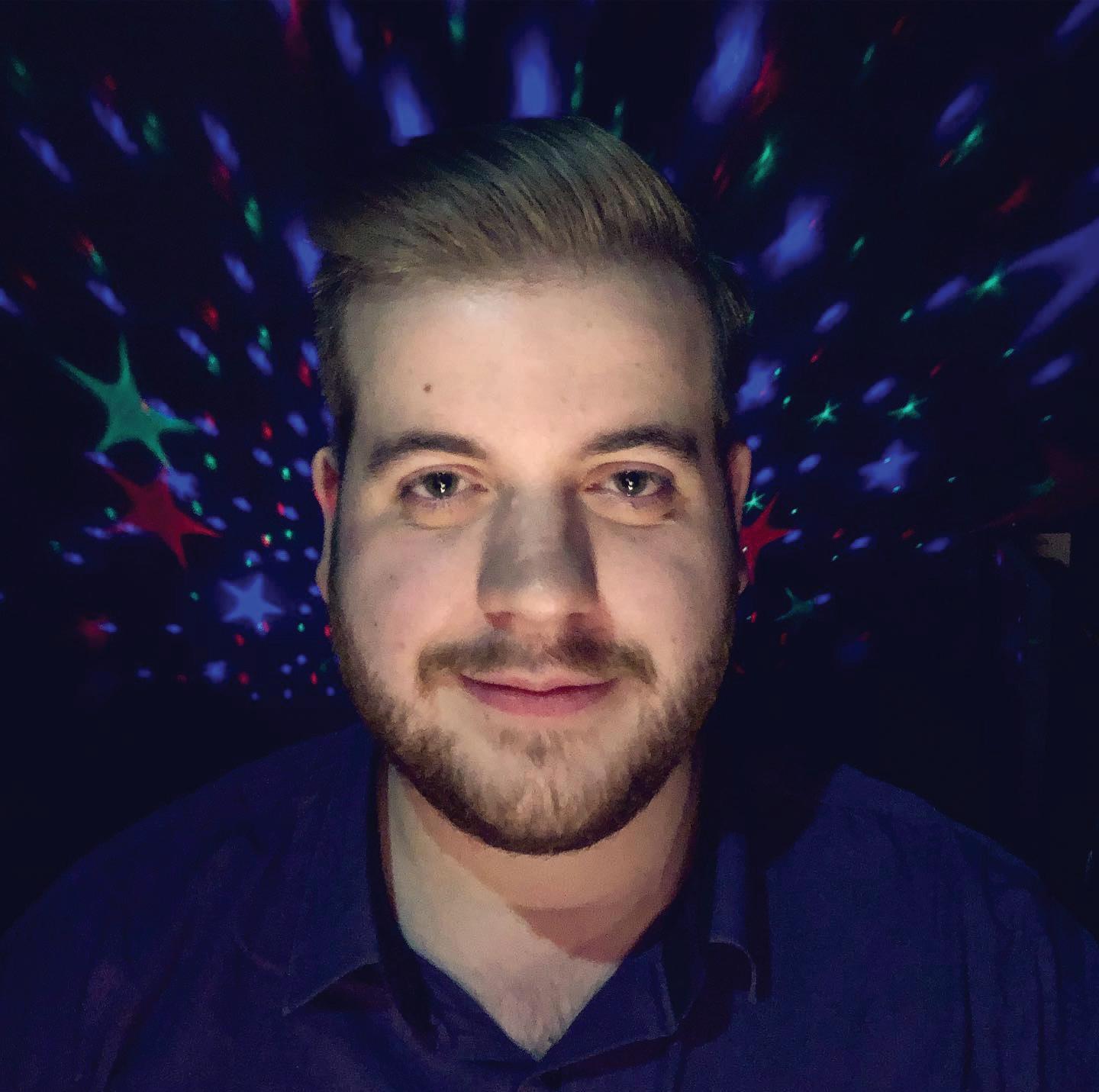
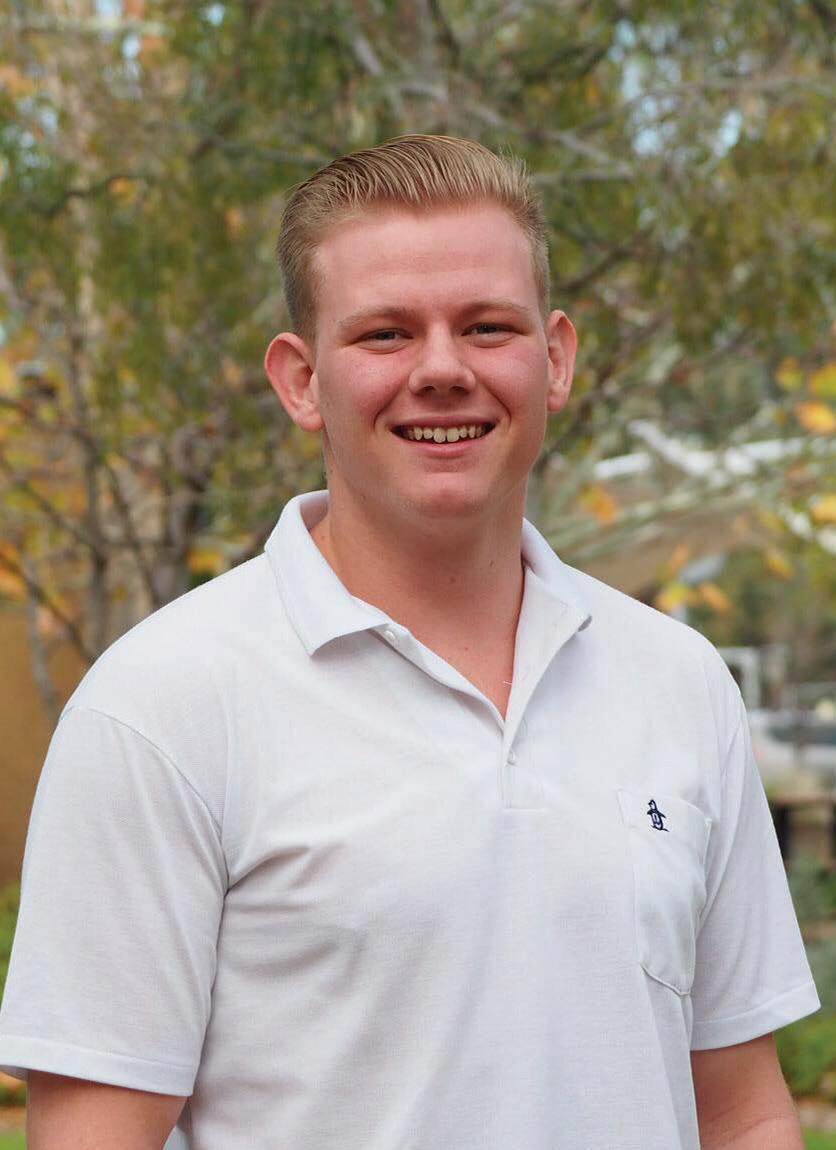
Interview conducted by Tanner Muller Images provided by Jamie Hornsby
The name that seems to be on everyone’s lips is award-winning playwright and actor Jamie Hornsby. Stepping into the early stages of his professional career, the Honours student has already managed to carve his way into the country’s theatre scene. Between his national tour of because there was fire, to his late residency at Slingsby, he will certainly be someone to keep your eyes on. In the midst of an eventful theatre-making schedule, we sat down with Hornsby to discuss his upcoming projects, the secret to an award-winning play, and his plans for the future.
Let’s jump straight into it. You’ve recently completed a six-month residency with ‘Slingsby.’ What was the experience like for you?
It’s just been the best! During the residency, Ellen Graham and I have been able to produce a play we’ve always wanted to work on together. Before that, neither of us ever really had the time, or the space, to really turn our idea into something, and Slingsby gave us that platform. I remember she originally approached me about the play while we were completing our programs with AC Arts and to now to see it come to fruition all these years later has honestly been one of the most rewarding experiences of my life. For those who are wanting to apply for a residency at Slingsby, I highly recommend you do. Their main priority is to help emerging artists find a space and to give them an outlet to grow—so you’ll be in great hands.
During the residency, you created a play with Ellen Graham entitled ‘Claire Della and the Moon.’ What’s it all about?
It’s a children’s theatre show concerning mental health, depression and anxiety. You might think those sorts of themes are quite dark for a show targeted at such a young audience, but Ellen and I thought it was important to be introducing kids to these sorts of emotions. The story revolves around a little girl who can’t quite relate to her life on the Earth and is feeling very overwhelmed by her surroundings—so she slowly retreats to the moon. But, when she reaches the end of her journey, she gets stuck up there and doesn’t know how to find her way back.
Essentially, the play is a metaphor about isolation and destructive coping mechanisms. We wanted to give children that sort of metaphoric vocabulary so they’re able to express how they might be feeling—even if they don’t know how to put it into words.
Child psychologists are actually using fictional characters, such as Eeyore from Winne the Pooh, as part of therapy. It gives kids the ability to address these issues, even if they can’t articulate what they are. So, we’re really hoping this show does some good.
When can we expect to see it performed? Has there been any discussion surrounding that yet?
Absolutely! We’ve been very lucky to find a director, and we’re planning for an Adelaide season during April 2020. From there, we’ll be taking it to the Edinburgh Fringe to test its touring capabilities. Then, we’ll be ideally looking at doing a national tour of Australia if we can get enough funding.
You’ve already gained so much recognition for your work. Just last year you were the receipt of the Flinders Young Playwright Award. Give us some insight into your creative process. What are some of your secrets?
You know, whenever I’m asked that, I feel a bit fraudulent because I feel as though I’ve lucked into this a little bit, which I’m sure is just the classic imposter syndrome talking. But, there’s a line in one of my favourite plays where a character says, ‘I can’t afford to work for free anymore,’ and the other character they’re speaking to responds with, ‘then you’re not hungry enough.’ I don’t necessarily agree with that philosophy, but it has been really important for me as I’ve been starting out—you just need to keep working, even if you feel as though people aren’t taking notice. I just wrote as much as I possibly could and through that, I slowly started to get recognition from those who were interested in creating something out of my scripts. But honestly, for me it’s just been a matter of putting in the time: to immerse myself in theatre by seeing shows, to read all the time, to just write all that I can. As you can probably already tell, I don’t sleep very much!
What sort of elements do you believe are essential to any award-winning play?
I feel as though the most essential thing is that something should happen—which sounds quite realistic and self-evident, but it’s an easy trap to fall into. I find that it’s also important to allow yourself to be creating a real journey for your
character. You might be identifying with them as you write, but they have to be changed in some way, and in order to do that, you have to be a bit of a sadist and put them through hell before they can come out the other side.
You also shouldn’t worry yourself too much about how people are going to be reacting to what you’ve done. I used to be so caught up with how others may receive my work. In hindsight, I needed to trust that audiences are much smarter than that and wouldn’t, say, misconstrue my words, or be under the impression that I think a certain way because there’s a character who’s displays some traits that would be considered ‘wrong’ or ‘bigoted.’ I needed to just let that go.
On top of everything else you’ve been doing lately, you’re also in the middle of completing your Honours degree. What does your research focus on?
My research primarily focuses on Australian gothic theatre, which is something that has been on the rise recently. The genre has two primary focuses, the first being more about cultural shaming and trauma, which has been known to raise issues about our dark history of Indigenous genocide. As a white writer, I didn’t feel as though it was my place to be exploring that. But, the other side of Australian gothic theatre, which is what my play will use as its model, has more of a domestic concern and emphases claustrophobia, aggression and violence.
My artefact tells the story of Elizabeth Woolcock, who was the only woman to ever be hung in South Australia. She was executed for, supposedly, poisoning her husband with mercury. Although, by today’s standards, we’re able to determine that she probably didn’t actually do it. But, something I really wanted to capture was how someone might have been driven to commit this sort of act on their significant other. It also parallels with the modern world to examine how certain things have and haven’t changed.
Moving along now, how are you able to balance all of your commitments?
Well, I drink a lot of coffee! But in all seriousness, I find that I’ve started to be a lot stricter with myself—to manage my time more effectively and set myself a timeline in when things will actually get done. For me, it’s better to be busy than bored, and I’m really grateful to be in that position.
With that said, how are you able to manage all of these different projects at the same time? I feel with a lot of writers, we focus on completing one project at a time and don’t feel as though anything else is relevant enough.
I seem to hear that a lot, but I’ve never really felt that all-consuming mindset a lot of writers tend to have. I think it could be something relating to my attention span, but when I’m working on something, I have a lot of thoughts bubbling at the back of my head that it becomes hard to simply ignore them. It’s important for me to have a notebook by my side to write these things down, otherwise its lost forever.
Has theatre always been your passion?
Well, no. I originally thought it was acting. But, I fell into writing along the way. You know, just the other week, I was looking through this old hard drive and found all of these stories I wrote when I was about nine, or ten. They were basically regurgitations of silly little fantasy novels I had been reading at the time, but the interesting thing was how I just wrote character dialogue and created stories through that. If I added a few more details and formatted it properly, some of them could definitely be turned into a play. So, looking back on those moments, there must have been something there from an early age.
Ideally, where do you see yourself in five years from now?
I aspire to become someone like Kate Mulvany, who’s a brilliant writer and actor. What I admire about her is that she’s able to jump between all of these different projects, which is really inspiring to me. I’d love to have that freedom in focusing on all these goals at once and to leap towards whatever takes my fancy next. ◼
This isn’t what I meant
Words by Ayla Liebenberg
Artwork by Francesco Patrinostro
During my adolescence, my mother would tell me stories. There were some about injustice, anger and passion. While others were of courage, friendship and change. Sometimes, I would tell her that I wanted to live through something— to experience what she had experienced all those years ago. But, what I hadn’t realised is that I already was.
I hadn’t realised that I was living through the modern rise of white supremacy, where hatred is nurtured and diversity is feared. A society where we turn a blind eye to the ones who dare to create a positive change.
I hadn’t realised that I was living through the rapid unravelling of abortion laws that were forged through blood, pain, riot and rebellion; through coat hangers and underground operations. Never did I think I would ever be so afraid of my own body.
I hadn’t realised that I would be witnessing the death of more than thirty Australian women in a single year. Women who were beaten and abused, stalked and preyed, mistreated and left for dead. This place isn’t safe for us anymore, but then again, it never really was.
I hadn’t realised there would be a loss of hope in our government system. Where our leaders believed more in miracles, rather than facts. Where science is considered to be more of a consideration, than a direction. Where we cared more about the money in our pockets, than the plant we inhabit. Where we elected our doom, and did so knowingly without batting an eye to the consequences.
I hadn’t realised that when my mother told me all these stories, that patterns were repeating. Except, in my story, there doesn’t seem to be anyone taking a courageous step forward. When I told her that I wanted to live through something, this isn’t what I meant. ◼
The truth behind your generosity
Words by Taylah Pomery
Photography by Tanner Muller
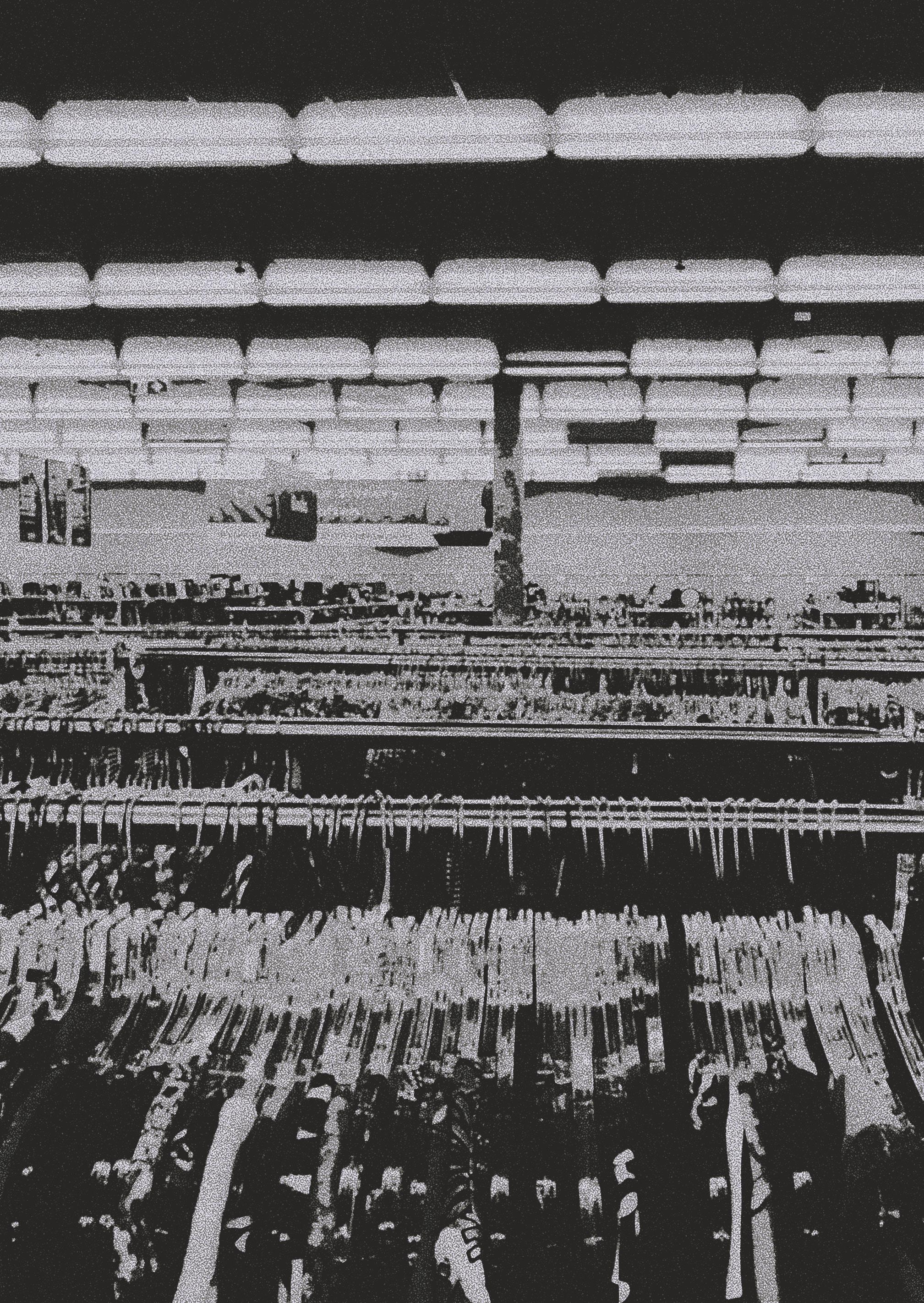
As I drove to the local Salvos with a boot full of clothes scrapped from the back of my wardrobe, I used to feel a sense of accomplishment for my good dead. As I shifted gears and turned each corner, I fantasised about all the people my clothes would benefit. I imagined how thrilled the disadvantaged teenager would be to purchase my old formal dress, or how special the single mother of four would feel to be wearing my expensive opentoed shoes. There was an overwhelming sense of satisfaction that washed over me as I heaved the bulging garbage bags over the metal lip of the donation bin.
However, as I grew older and became more aware of the op-shop process, my entire thought process changed. Unfortunately, I don’t experience the same pleasure of donating my unwanted goods anymore. I hate to break it to you, but your generous donation is unlikely to be reaching the hands of those who are doing it tough. As a matter of fact, from the thousands of clothes donated per day, approximately ten percent are placed onto the racks we see inside the stores. I would also like to point out that only a small amount (if any) are actually given to homeless shelters, or charitable services. In light of this, you might be wondering to yourself, ‘where do my clothes end up?’
Stores or landfill
While there are some donations of clothing that come through to our second hand stores and beg for a second life, staff members (who are usually volunteers) simply cannot handle the outrageous quantity that is donated each and every day. Among the items they receive, most of them are produced using cheap materials, and therefore, low in quality. The issue with this is how there isn’t much appeal for shoppers to buy clothing in such poor condition, especially when you can purchase the exact item for a bit of extra money at the department store it was originally found at.
On top of this, a lot of consumers have a ‘wear once and donate’ mindset, as giving away your clothes this often has been misconstrued to be an act of generosity. These same people are also using it as an excuse to over consume
and, as a result, causing a huge environmental issue. Australian Bureau of Statistics reports 501,000 tons of leather and textiles were sent to landfill in 2009-10. As you’re reading this, you might be thinking to yourself that this number wouldn’t apply to you. But, unless your donated items make the ten percent, it’s likely you’re contributing to this statistic.
Insulation
More often than not, these donation stores sell their unwanted stock to textile recycling businesses, who will use what they can to repurpose the material into industrial rags and ceiling insulation. These textile recycling companies are perhaps one of the only causes that are genuinely using the material of cheap unwanted clothing and putting it to good use. But unfortunately, with the amount they receive, it would be impossible to repurpose every bit of it. So, where do the rest end up?
Overseas
Well, they are bundled up and sent in excess to less economically stable countries. Initially, this may feel as though it were a positive action to take. But, in many cases, these textiles still manage to end up in landfill, except in another part of the world. It seems as though these countries have become less of a donation centre, and more of a dumping ground for the over-consumption problem in the West. An additional side effect to this is the impact it has for their economy. Locals are less enthused to buy from home-grown businesses if they’re able to purchase these donated clothes at an unbeatable price. This drives the local businesses out and can result in the loss of jobs.
With all of this in mind, we must ask ourselves, ‘what more can be done?’ If we don’t act, the cycle will only continue to repeat itself. One of the ways we can reduce the problem is to give our preloved goods to friends or family, who you know will truly give the item a second life. You should also consider selling your items through local classifieds, such as Facebook Marketplace or Gumtree. Lastly, be mindful of your original purchases and ask yourself if it would be something you would keep for a long period of time. ◼
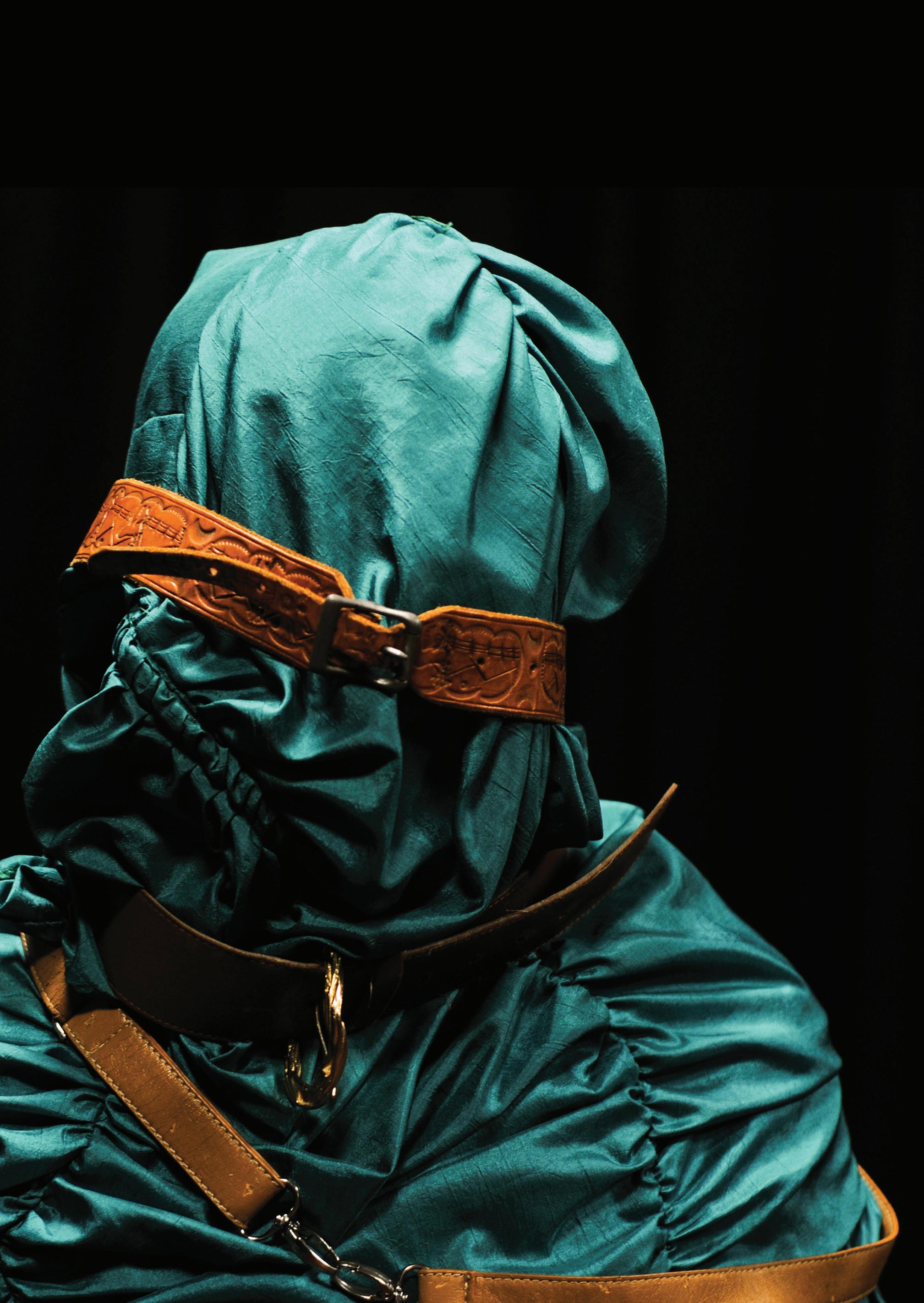
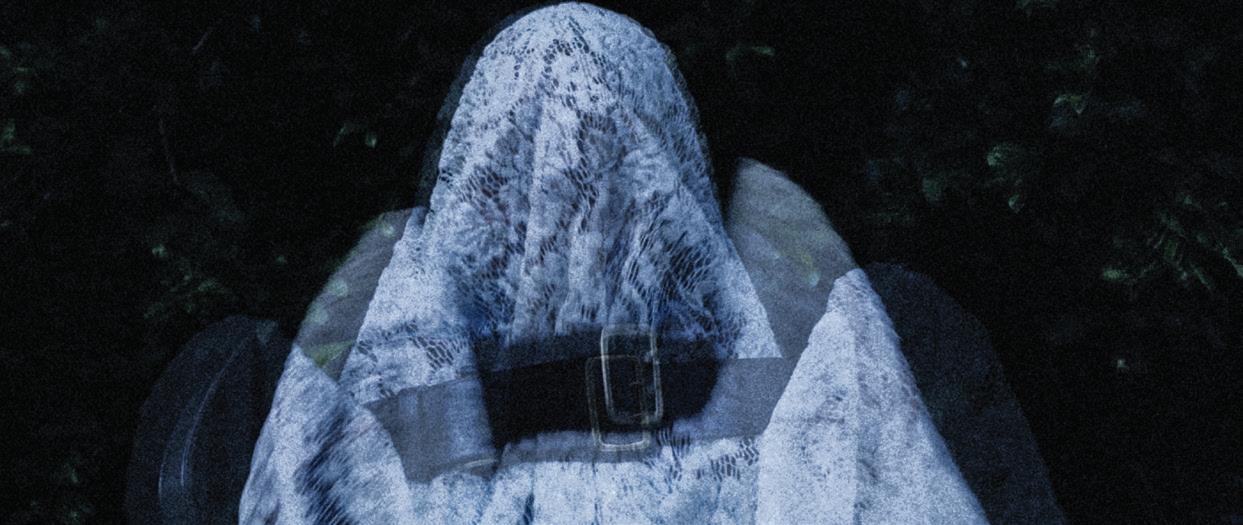
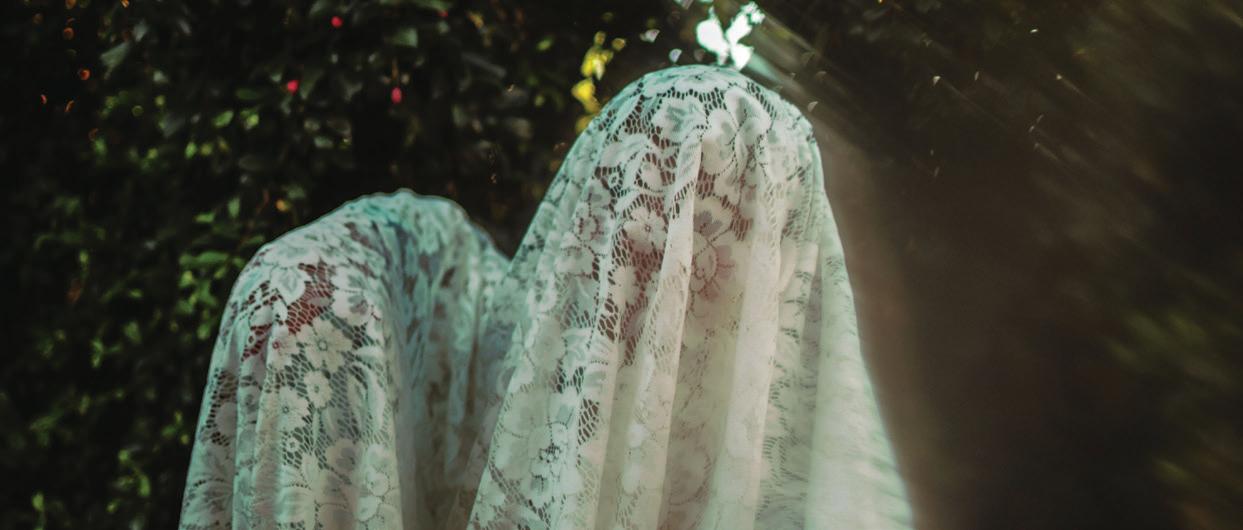
Jordan White
Imagine: Kathryn Ellison
Interview conducted by Oliver White
Artwork by Kathryn Ellison
Photography by Austin Carr
For Verse Magazine’s regular Imagine segment, Oliver White met UniSA Contemporary Arts thirdyear Kathryn Ellison.
Could you tell us a little bit about yourself and what you’re studying?
My name is Kathryn Ellison and I’m in my third-year of studying a Bachelor of Contemporary Art. I went into this course thinking I wouldn’t be pursuing a career in the industry. Originally, I wanted to do social work, but my brain doesn’t really cope with that. I’m too much of a creative person. I did art throughout high school, but hated it. However, once I left, there was this huge shift in me and I became really attached to the idea of becoming an artist. One of my biggest turning points came after a trip to New Zealand, where I visited some of their art galleries. I was particularly moved by this installation by Lee Mingwei. It actually brought me to tears. The audience had to write a letter telling something you regret saying to a person. This piece allowed me to realise that art isn’t just about a pretty picture—it can actually have this impact on you. I try to live by this sort of model whenever I’m creating something.
What are some of the themes you explore in your work?
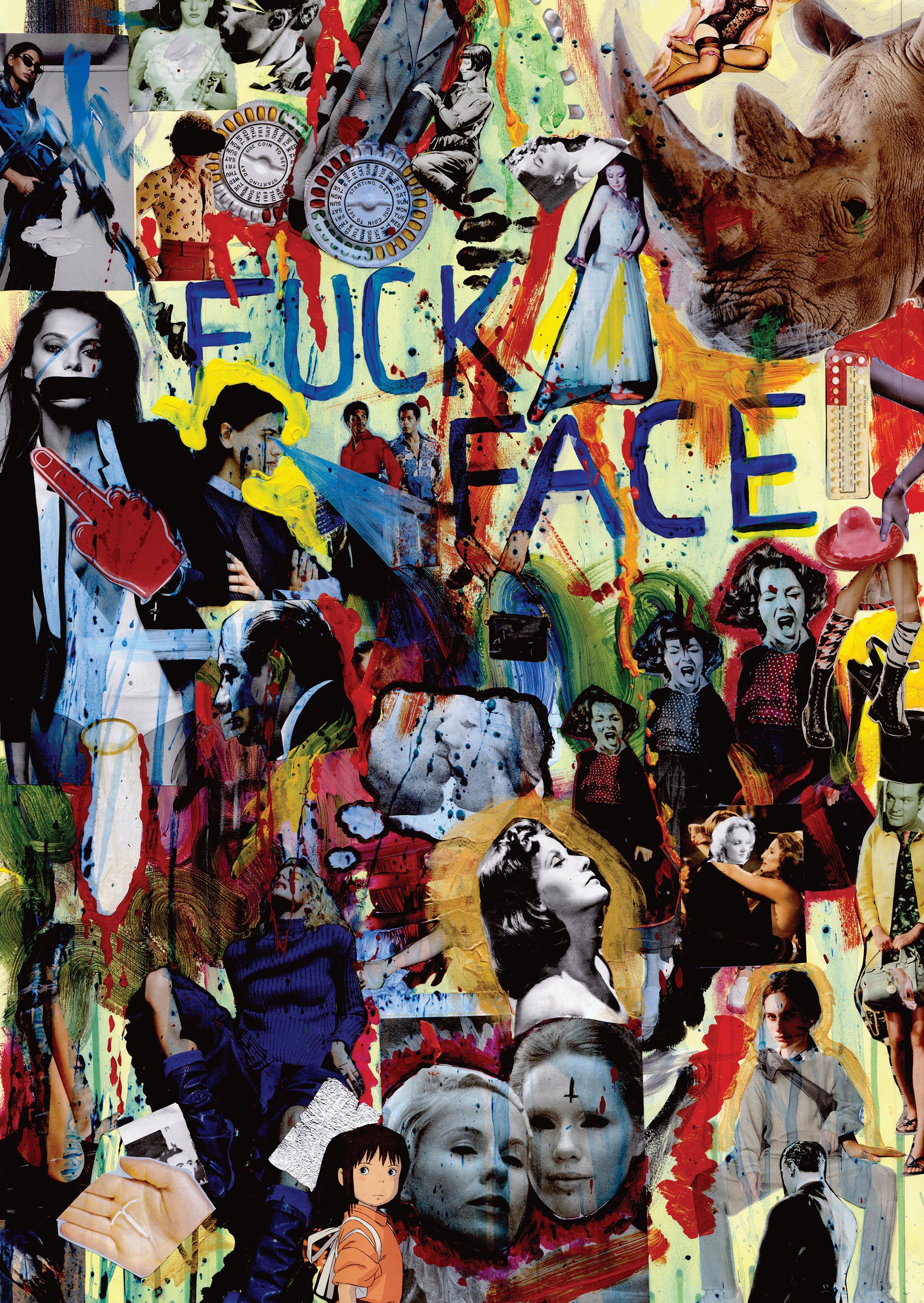
One of the main themes I explore is feminism, especially when it comes to my collage work. I tend to create pieces about being a woman and how society makes you feel a certain way about your reproductive system. More specifically, with how women are made to feel as though they have to be on contraceptives—it’s really frustrating to me. A lot of my other artworks deal with the everyday mundane, and exploring the connections between people.
Who are some of your major influences in both art and life?
I’m really compelled by old horror—there’s just something about how timeless it is. I also really love Del Kathryn Barton, as she’s worked with so many mediums, like collage and textile. She’s also done some really good short films revolving around femininity. And of course, there’s Lee Mingwei too!
What’s your latest obsession?
Scrubs. I’ve been watching a lot of Scrubs recently (laughs). No, I’ve been weaving a lot, and my studio project focuses on this technique too. It’s really fascinating to me. I’ve also been weirdly interested by nail art. There’s so much precision that goes into it and I find it interesting how people put so much dedication into the appearance of their nails.
Your work always has incredible detail with multiple mediums. How do you know when to step back and say you’re finished?
I never really know, because a lot of the time I need someone to tell me when to stop. It’s difficult, especially when it comes to my collages. Sometimes, I feel as though I have to take it further and further. Interestingly enough, I had a lecturer last year who told me to go crazy with a piece I had been working on. I don’t know if this was some kind of reverse psychology, but I was like ‘hold up, let’s cut this to make it more polished,’ and it ended up looking a lot better than I intended.
Could you tell us a little bit about Art Pod? Have you ever worked on something at such a large scale before?
Art Pod is part of the city council and showcases some of Adelaide’s emerging and established practitioners. I’m part of an exhibition with them at the moment called Beyond All Disposition, which is curated by Jack McBride, Christina Massolino and ChiChi Grasby. Jack was actually the one to reach out to me about it initially. My part of the exhibition is all about the subconscious and how someone might create art using it. I’ve found that Art Pod is a really odd place to work in, as you’re so exposed to the public. It makes you feel a bit vulnerable, because you worry about how others might be judging your work. Especially since my art is probably considered to be a bit out there for some people. In saying that, this is the first time I’ve ever worked on such a large scale. I’ve found the experience to be really rewarding and I’m so thankful for the opportunity they’ve given me.
What advice would you give to first-year Kathryn?
Keep at it. Don’t be too worried about what other people think and don’t ever feel as though you’re obligated to please everybody. Just be your most authentic self and be true to who you are.
What are your plans after graduation?
Well, I’m hoping (fingers crossed) to get a job with Fringe Festival, and save enough money so I can travel to Dark Mofo in Tasmania. But then again, I’m just wanting a job in the art sector. Whether that means I’m doing bar work for exhibition openings, or doing workshops, I’m honestly not too fussed. I also want to move out eventually to get my own space. I think Adelaide has such a wonderful arts community and I want to be contributing to that in whichever way I can. I’d also like to do some type of internship, or residency, in Tasmania. In saying this though, I feel like Adelaide will always be my home—it’s just really beautiful here. ◼
Isla in wonderland: Part 2
Words by Isla
Photography by Mary Harsha
On the impending two-year anniversary of my move to Adelaide, I have endorsed the time to pause and reflect. As I write these words, my life is not surrounded by a white picket fence, however, the season has changed and it is sweeter. Isla in Wonderland: Part 1* will forever remain a poignant reminder of the past – of a time where duty was not always honoured, and where the pangs of longing were maddening. In the face of hopelessness, I fought on; and against harsh odds, I survived. The times tried my soul, but I overcame. I rose from the ashes, and became a creature of change. I expanded my perception, and surged forward. In the rising of the sun, I became a game changer – a force not to be reckoned with. In this season, I am the orchestrator. I live in a realm where armour is not rewarded, and fate is not measured in ‘deserves’. I live in a realm where closure does not mean re-opening the door to toxicity; where love abandons the shores, and meets me in the depths. I live in a realm engulfed by the sound of wind chimes, where mistletoes hang from every corner of my home. I live in a realm where stars fall from heaven, and the treasures I seek elsewhere are found on my doorstep. In this season, I stand in defiance. I am my own muse, and my scars are my medals. I am intimate, fierce, and serene. The battle between good and evil never ends. You can still find me in the dark corners of life, in the in-between space of slumber and awakening. I still sleep with ghosts in my bed, but I am no relic of the past. I am still very much alive.
*Isla in Wonderland: Part 1 is featured in Verse Magazine, Edition 28.
Of temporary relocation
Words by Patricia Mang’ira
Artwork by Grace Plunkett
Your life has been divided into two locations
Each with their own cultures and people
You cannot help but feel as though you are two entities
Forced to run after
Who you thought you used to be
And catching up with who you think you are
Forced to adjust parts of yourself
To suit who you were
The little changes in your voice
Shedding off of your confidence
Stepping into old habits and abandoning new joys
Yet when night falls and you gaze up at the same starry sky
You become angry with yourself
And heartbroken as you start to lose grip on your new self
You vow to be better tomorrow
But the cycle returns and continues endlessly
The only way it escapes is when you’re alone in a room of familiar faces
And realise your time with them has come to an end
Words by Chloe Cannell
On the cusp of Millennials and Gen Z, 23-year-old Chloe delves into the fears and anxieties of the youngest generation in university today.
twenty genzfears t wentyge n zfears
Each generation faces many unique fears from robots taking over jobs, to avocado anxiety. For Gen Z, growing up in a completely digital age comes with its own benefits and disadvantages. Gen Z came after the Millennials and, depending on which expert you cite, were born from 1997. The oldest of this generation are now in university, or joining the workforce. So, we must ask ourselves…what do Gen Z secretly fear?
1 Forgetting your keep cup
2 Being alone
3 Paying full price for a Spotify subscription because your student ID expired
4 Someone calling without texting first
5 Bad lighting for your brunch photos
6 Too many people on your shared Netflix account to watch
7 The HECS repayment threshold regularly dropping
8 Renting forever
9 Losing an hour on social media when checking one notification
10 Answering the door when you’re not expecting someone
11 Manoeuvring into tight car parking spots
12 Killing your indoor plants
13 Moving in with a person you find on the Internet
14 Repressive sexual labels
15 Mental health support services not improving
16 Trusting politicians to act for our interests
17 Missing out, especially on what happens online
18 An increasingly casualised workforce
19 Your Snapchat images existing past their expiration
20 The end of human civilization by 2050
Aortic arthroscopy
Words by Kelly Cusack
Artwork
by Grace Plunkett
I’ve always felt the need to drive a knife through my ankle
I don’t know if this is how to explain the pain or stop it
But now there are things going through my skin
A knife cutting my tissue
A camera poking my bones
A needle putting foreign material into my body
An expert hand guiding it all
I sometimes feel the need to drive a knife through my heart
I don’t know if this is how to explain the pain or stop it
But now a piece of me just wants to know what it feels like
A knife sits in front of me
A knife backs away from my chest
A knife drops onto the floor
My hand guiding it all
Spooky song review
Words by Jordan White Artwork by Kylie Howlett
'Where did you sleep last night' American Classics, Leadbelly
Ah, hauntingly beautiful. This song sounds like something you’d watch during a montage of someone slowly eating flesh at the start of a classic horror movie like Jeepers Creepers. Lyrics creepy themselves, you can hear this song’s age in the quality and texture of the recording which adds to its eeriness. Best played on a cassette player and listened to alone, late at night.
'Lazarus' Blackstar, David Bowie
The album Blackstar was released two days before he died, on January 10, 2016. This song is about the late David Bowie’s inedible death - Look Up Here, I’m In Heaven / I’ve got scars that can’t be seen. A song about your own death? Oh Bowie, you morbid bastard! The bass line alone is enough to keep you up, worrying at night. It pulls you in, slowly, and then leaves you trying to figure out exactly what you just felt (and why you want more).
'Revolution 9' The Beatles (White Album), The Beatles
The audio moves left to right in your headphones, and you can’t help but double-check behind you to make sure there’s no one breathing down your neck. This weird mixture of evil laughter, conversations, and noises from the human experience is unsettling and hard to listen to. Too distracting to be study music, not vocal enough to enjoy as a ‘normal’ song. Best enjoyed on LSD* – that’s how it was written, after all.
'4th Dimension' KIDS SEE GHOSTS, Kids See Ghosts & Louis Prima
I feel like I’m listening to psychedelic pop. This intertextual masterwork’s mixture of samples, distorted laughter, and a beat that commands you to bop is sure to delight. Kanye West worked on this collaborative project, and the ghosts of 'Stronger' are hiding in the song’s beats somewhere.
'Spooky, Scary Skeletons' Halloween Howls: Fun, Andrew Gold
Seriously? This isn’t Play School, and this song died alongside the meme back when you were seventeen and one too many Smirnoff Double Blacks deep. It’s okay to play ironically at a party – when everyone is drunk, and the night is blurry – but someone is sure to skip it half-way through. ◼
* The author, or Verse Magazine, does not endorse or recommend using LSD.
Humans of UniSA: Edition 29
Everyone has a story. A defining moment of their existence that makes them the person they are today. For Humans of UniSA, we delve into the depths of human nature and speak with some students to discover a slice of their personal history.
Connor Cowie
Interview conducted by Tanner Muller
Photography by Jack Hassam Bachelor of Arts (Performing Arts/Creative Writing)
I remember there were a lot of years I spent feeling trapped and held down by my insecurities—to the point where I became dismissive of others and their emotions. It was really insensitive of me. In hindsight, I needed to learn how to be more comfortable in my own skin and appreciate the person I was becoming. I also had to understand that I wasn’t the centre of the universe, as there are more significant issues out there besides my own. You know, the people I admire the most are the ones who are able to truly love themselves, because they’re able to reflect that sort of mentality onto others and show the same level of respect. In my experience, if you’re able to overcome your insecurities, it becomes more natural to present the best version of yourself to the world. Speaking of which, one of my biggest regrets is not being more confident enough in myself, especially as a teenager. Back in high school, I went on a trip to America with my classmates. But, all of my nerves got in the way. I was so closed off from everything. We went to places likes Disney World, and Times Square, but I couldn’t even take a moment to appreciate where I was, because I didn’t think I deserved to be there. During my first year at university, this sort of thing was difficult for me to overcome as well, as I didn’t know how to handle this new chapter in my life. I really put my own happiness on the back-burner.
But, life is too short to be caught up in all of that. Don’t get me wrong, it took a lot of effort for me to come out of my shell, but you can’t be afraid to express yourself and tackle these new experiences. That’s how we grow. It doesn’t work if you’re restricting all of these wonderful aspects about yourself. It might be hard though. I’m not going to sit here and say that it isn’t. But, love wouldn’t be love if it were plain and simple, would it?
Krystle Crouch
Bachelor of Medical Radiation Science (Radiation Therapy)
Interview and photography by Geena Ho
I’m half-Vietnamese on my mum’s side. My parents split when I was younger, so I feel as though I was more influenced by my Asian culture growing up. My mum’s life has been really fascinating. She was adopted, and came to this country from Vietnam as a refugee when she was just eight-years-old. When she became an adult, she managed to track down some of her siblings through The Salvation Army. We actually used to visit them every year and it became a bit of a tradition we had—every Christmas, we would go to Vietnam. Initially, my mum was hesitant about the idea of my sister and I going with her the first time. But in the end, she thought it would be a good experience for us. She said, ‘you’re both halfVietnamese, this is your culture and it’s my culture. I want to teach you.’
We met my mum’s family for the first time at this market and they figured out who we were straight away. When they came up to us, all of them were so warm and friendly. I think my mum found the experience to be a bit strange though, especially because it had been such a long time since she last saw all of them. For my sister and I, it was like meeting strangers at first. But, over the next two weeks, we got to really know them—we played games, they introduced us to the food, things like that. All the aunties thought my sister and I were really interesting because we had such different features, and they were practically all over us. It was all very different.
Aaron Drayton
Bachelor of Aviation
Interview conducted by Ryan Colsey
Photography by Courtney Flynn
I’m Aaron, but some of my friends call me A-A-Ron because of that Key and Peele sketch. I’m from a little town called Howlong, located in New South Wales, and moved here when I was thirteen to ‘enhance my education.’ But, to be completely honest with you, it didn’t help that much. After settling in Adelaide, I went to school at Charles Campbell and became involved in Scouts. But besides that, I just slacked off, met some friends and went to some parties until I finished Year 12.
Some of my nights after school were spent looking through courses at UniSA. Something that really stood out to me was Aviation. I had always wanted to be a pilot, but hadn’t realised it was necessarily possible. After finishing my degree, I hope to fly commercial planes. You need perfect eyesight to become one. But, when I had my eyes tested last, I had 19/20 vision. I’m fairly certain the optometrist said it was actually 19.5/20 vision, but you know, I round it up to 20 anyway. That’s the way maths works, right?
Getting up early in the morning is totally my style. I tend to rise anywhere between 6am and 7am, even on the weekends. I do these group runs every Saturday, which I’ve found has been really good for my health. I also manage my own little side-business for anyone who needs help with general handyman work, or gardening. Essentially, it’s anything I can use as an excuse to get my hands on some tools.
Probably the oddest experience that’s ever happened to me was the time I came back from a trip to Fiji and found a tiny hole in my knee. I tried to ignore it because I was a stubborn teenager, but a couple of months had passed and the tiny hole had multiplied. It suddenly dawned on me that they were drainage holes from some kind of spider. I didn’t go to the hospital, but I definitely should have! Oh well, I’m still here now to tell the tale.
Match Studio: Understanding the unknown
Words and Illustrations by Match Studio
With their ethos of work integrated learning, Match Studio offers a safe environment for students to experience the exciting, and sometimes frightening, realities of a world outside of university.
The stress of impending deadlines, personal troubles, and the realisation of an everincreasing student debt may distract you from the fact that (most of) you will eventually be leaving the classroom and transition into the workplace—becoming a fully functional member of society. For those who went from high school, to a full-time study, this also signifies a transition from student, to grown adult with responsibility. While you’ve been studying, perhaps you’ve created a plan for yourself and planted the seeds through temp work, placement, or simply utilising UniSA’s career resources. But, whether you get a job straight out of uni, or bum around for the next twenty years, there is still one commonality, and that is the real world is a terrifying place. This does not refer to the very real horrors of war, famine, genocide, discrimination, failing democracy, nuclear weapons, gun violence, extremism, racial divide, murder, sexual assault, and environmental destruction—but rather, the existential Lovecraftian horror of being an ex-student.
Let’s say you’re like the many students who are too busy to even think about life after your degree. Once you graduate, you’ll likely divide your time paying the rent by working a part-time job at Coles, honing your craft (if you’re a creative), and applying for jobs related to your field. But, let’s be real here, the local job market isn’t the greatest right now, and unless you’re a complete savant in your field, your chances are pretty slim—especially when you have to contend with those with the same degree as you. In short, the number of people per opportunity is significantly skewed against your favour. All of a sudden, it doesn’t become about what you’ve learnt through your degree, but instead how you’ve applied those skills in a way that is better than the thousands of other candidates. However, this is probably something you’ve heard a million times before by younger graduates, or boomer family members who’ve never had to live through it, but seem to have the wisdom and foresight to know.
'To add insult to injury, it also brings up more existential questions like ‘who am I now?’ as you realise that you no longer have much of a productive excuse to be poor anymore; and that somewhere between student, and fully functioning adult, doesn’t generate any form of sympathy.'
The student experience allows you to maintain a sense of comfort in terms of your social and economic welfare. This is especially the case when it comes to those useful discounts on things like food and public transport. Losing all of this obviously comes with its own form of grief—even more so if you’re in an art or design discipline and, all of a sudden, you have to pay full price for Creative Cloud. To add insult to injury, it also brings up more existential questions like ‘who am I now?’ as you realise that you no longer have much of a productive excuse to be poor anymore; and that somewhere between student, and fully functioning adult, doesn’t generate any form of sympathy. This identity crisis is alleviated if you cave and end up on Newstart, where you’re systematically classed as unemployed above all else. If this didn’t already feel like a shot to the foot, you’re mandated to spend every waking hour looking for any work that qualifies as full-time, no matter how disparate it is from your degree.
When, and if, you end up convincing someone to hire you for work related to your discipline, the real world can still bite you in the ass. Although you might feel as though you’ve found your place, it’s important to establish the disparity between the work you do at university and the work you’ll do for a real world job. If you’re the type of student who spends a lot of time worrying about your impending assignment, rather than actually doing it, then you might have some difficulty with navigating the demands of the workforce. Sometimes, what finally motivates you to start typing away at your computer and opening the textbook is fear. You might think your tutors will think less of you if the work you submitted is not up to a particular standard, or that a P2 will bring down your GPA beyond repair. However, in your chosen career, you’ll probably find yourself to be taking on a lot more responsibility than that. Say if you’re a designer, architect, or engineer—your work moves away from the hypothetical into situations where there are actually real consequences. Bad wayfinding, or signage design has the potential to kill, as can a poorly engineered bridge. Particular symbols
can have significant cultural meanings and a poorly thought-out logo design can offend or cause a great deal of controversy. There are plenty of stories you can find online about embarrassing typos that have cost companies thousands, if not millions, in print costs. This kind of pressure and responsibility would make anyone reminisce about the days where success was determined by a grade.
It’s also worth noting that it’s rare to be engaging with people outside of your own discipline in the workplace. University seems to operate in this way too, as most of the time you’re working on an assignment by yourself, or in a group of those who are undergoing the same degree as you. The university’s dynamic research and learning space, Match Studio, has given students from Art, Architecture and Design the opportunity to work together on projects from real world clients from a range of different industries. It’s these similar kinds of opportunities that need to be taken while you’re still at university in order to fully prepare yourself. While the horrors of the real world are inescapable, experiencing it firsthand with the caveat of being a student makes it a lot easier. ◼
Review: Superhuman Abilities
Words by Annabel Bowles
Annabel has rigorously (and hypothetically) tried and tested these superhuman abilities so you don’t have to.
Artwork by Oliver White
Time travel
If time travel allowed me to go back to the early noughties and freeze time forever, I’d be so down. Take me back to the days spent bingewatching Saturday Disney in my PJs, eating Nutri-Grain with choccie milk. I mean, I can do those things now, but somehow it’s better when there’s no one telling you to get a job. As for travelling to the future, mmm, nah. Nope. No. Let’s all carry on pretending it doesn’t exist.
Mind reading
While you could become the world’s best detective, judge, quiz show contestant, etc ... I think we’re all far too sensitive and egotistical to handle knowing what everyone thinks about us. Can you also imagine this onslaught of information piled on top of the trash cans our brains already are? Just thinking about knowing what everyone is thinking gives me a migraine. Although, it would be cool to know whether my dog actually likes me, or what those eleven ‘secret’ herbs and spices really are.
Immortality
Does anyone really love life enough to wanna be here forever? I don’t know, but I reckon it’d get super boring. Could you live through the deaths of everyone you’ve ever known? Would your financial status ever let you retire? Would you stop aging? Unless I went all Benjamin Button and started growing younger and hotter … actually, can that be my superhuman ability?
Teleportation Invisibility
Undoubtedly, this would be the best superhuman ability. Craving some relaxation in the form of a seaside villa? Teleport yourself to the Maldives for an afternoon. Wanna see what the view is like from the top of Mt Everest? Forget the months of preparation, the multi-day hike and the long-ass queue; just magically appear at the summit with a finger’s click! Teleportation banishes the hours, money, and strange interactions that come with transit – but that’s also half the fun in travelling.
I don’t need some fancy shmanzy cloak to be invisible, Harry. In fact, it’s surprisingly easy to achieve invisibility in three simple steps. One, lock yourself in an apartment (located within the reach of UberEats). Two, delete all forms of social media. Three, remain in huddled ball-like position, as to not create shadow. Wait, isn’t that something we’ve all done at some point? Surely I’m not the only one?
USASA Club Feature: Women in STEM
Words by Ryan Colsey
provided by Women in STEM
Although the fields of Science, Technology, Engineering and Mathematics (STEM) have, in the past, largely been dominated by men, there has been a push in recent years to encourage women with active interests in these subjects to pursue them as a career. As technology advances to meet the needs of modern societies, more workers will be required in these areas, and opportunities will open for critical and creative young thinkers—regardless of gender.
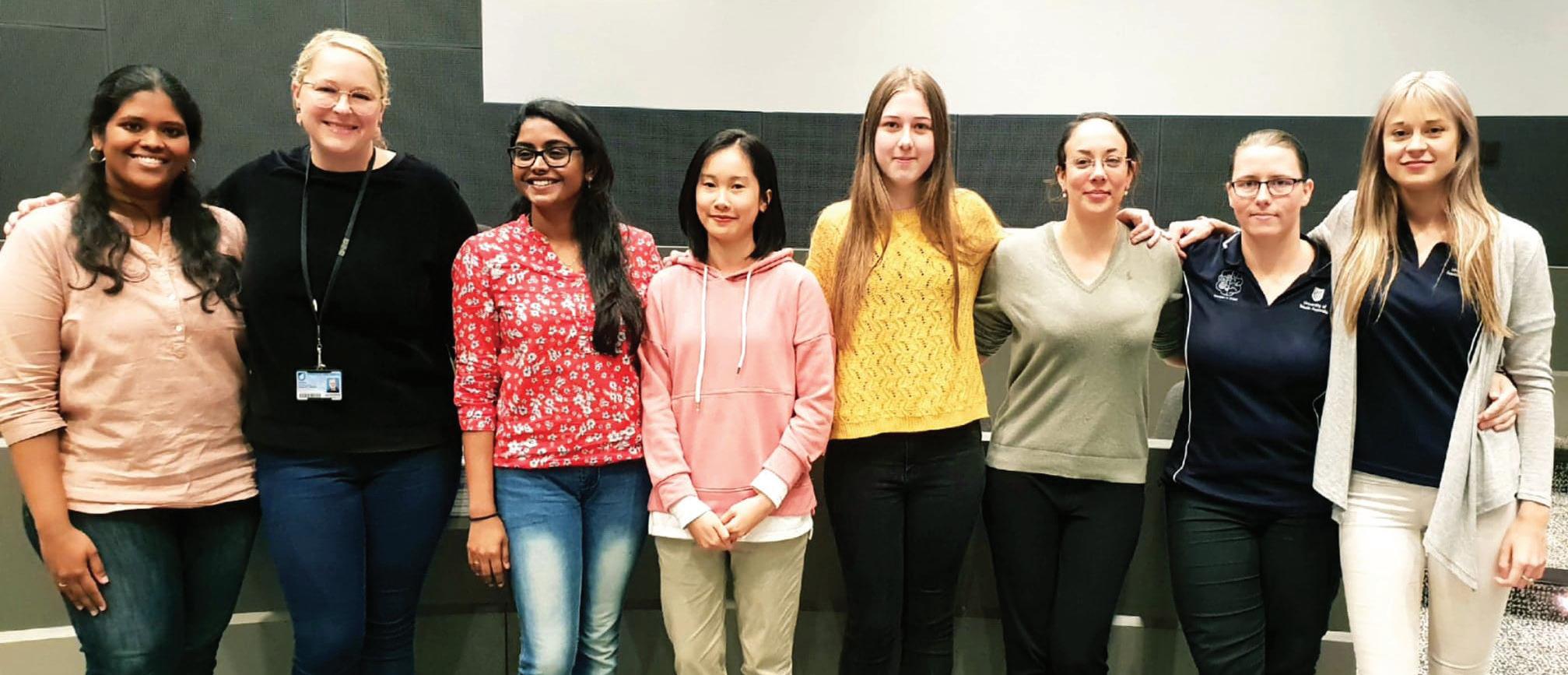
In 2018, a group of graduates and undergraduates came together and founded the Women in STEM club at UniSA. Also known as WinSTEM, the club was formed with the intention of connecting women, by promoting an inclusive culture through community involvement. WinSTEM currently boasts more than 90 registered members, making them one of the larger clubs at the university.
A study last year revealed that STEM industries attract the highest wages in Australia, but also feature the largest pay gap between the hourly earnings of men and women. Despite the efforts by noted public figures, women still appear hesitant to apply for jobs that have been seen to be largely dominated by men—an issue which WinSTEM hopes to resolve through empowerment.
‘I was recruited to the sales and marketing department of my IT firm and shared the conference hall with nine other senior
managers, all of which were men. Sometimes, I felt as though I was trapped in a cage with a few crocodiles,’ tells 2019 Women in STEM President, Lekshmi Shylaja.
Clubs like WinSTEM are vital to encourage women who are passionate about the industry, as they promote the growing opportunities in this domain and equip members with all the necessary aids to become successful in their chosen career path.
UniSA offers numerous degrees in STEM fields including: Engineering, Aviation, Information Technology, Mathematics, and a variety of other sciences. As well as this, students studying Medicine and Business subjects are also represented in the club, demonstrating the extensive reach of the STEM domain. The university also reflects the gender equity promoted by the club, with 47 percent of STEM teaching staff at UniSA identifying as female.
Despite the name, WinSTEM is inclusive of all different backgrounds, experience, and genders. One of their main priorities is to seek those with a passion for the industry and support the advancement of women in the field. The club has noted that over the past year, there has been an increase in men who are expressing an interest to be involved in the club. As well as this, the ratio of domestic to international student membership is nearly equal.
Images
There is little wonder as to why WinSTEM is creating such a stir on campus. The club provides excellent opportunities for members by building an internal network and connecting them with professionals in the STEM workforce. In addition to this, it promotes networking and mentoring programs conducted by accredited institutions. There is also considerable collaboration with other universities to inflate the exposure delivered to the club members.
'Despite all of the excellent opportunities the club promotes, there has still been a minority of people who feel threatened by the push of inclusivity.'
Events and activities have included a mentoring and guidance session by Dr Ceri Bonner, from the Central Laser Facility at Rutherford Appleton Laboratory, who was awarded the ‘Australian Institute of Physics, 2018 Women in Physics Lecturer’ prize. In addition to this, one of the club’s most notable
incentives was ‘An Afternoon with Coopers Brewery’ held late last year. The event aimed to bridge the gap between students and academics by connecting them with those who have a combined 65 years of experience in STEM roles at the Coopers Brewery. The event provided a unique opportunity for the participants to meet new people and build networks.
Despite all of the excellent opportunities the club promotes, there has still been a minority of people who feel threatened by the push of inclusivity. However, with the 300-plus followers on Facebook, the collective efforts of WinSTEM haven’t gone unrecognised.
‘Whether it be positive or not, it shows that WinSTEM, and its activities, are getting noticed. It definitely helps us to identify our weaknesses and the areas for improvement,’ tells Lekshmi.
If you’re interested in becoming apart of the Women in STEM club, visit the USASA website. While you’re there, follow them on their Facebook page to keep yourself up to date. ◼
the signs as spooky spirits
Words by Geena Ho
Artwork by Oliver White
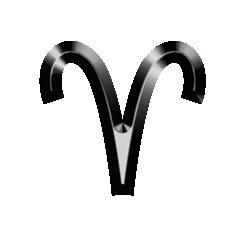
21 Mar – 19 Apr
Werewolf
20 Apr – 20 May
Grim Reaper
• Spots a doggo from a mile away
• Spends hours deciding on a new hair/nail colour
• Can’t navigate anywhere to save their lives
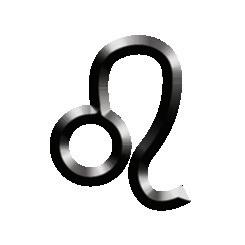
21 Jun – 22 Jul
Cyclops
• Will turn down a night out for a Netflix binge
• Hasn’t eaten a vegetable in years
• 'How do you spell _____?'
• Too good for you
• Never has a hangover
• Could have been a YouTuber
21 May – 20 Jun
Zombie
• Always hungry
• Hasn’t run since Year 9 PE
• Lives in a hoodie
23 Sep – 22 Oct
Ghost
• Just wants to be friends
• Will only half finish a task before starting the next one
• Messy af room
CAPRICORN
22 Dec – 19 Jan
Vampire
• Stops saying 'bless you' after the first sneeze
• Winged eyeliner always
• Needs to be booked in weeks in advance
Jul – 22 Aug
Dragon
• Ready to whip out Google to prove a point
• Always chooses the songs at karaoke
• Larger than life
SCORPIO
23 Oct – 21 Nov
Witch
• Will shame you for bad grammar
• Online shops when they’re sad
• 'Are we dressing cute?'
20 Jan – 18 Feb
Mermaid
• Was a child prodigy
• Takes 47 selfies for one good pic
• Luscious af hair
23 Aug – 22 Sep
Skeleton
• Procrastinates assignments to the last day
• Would donate their body to science
• Only has sad Spotify playlists
SAGITTARIUS
22 Nov – 21 Dec
Mummy
• Always on the dancefloor
• Goes missing on nights out
• Plans holidays a week out
PISCES
19 Feb – 20 Mar
Fairy
• Is more excited for your birthday than you are
• Posts 63 Snapstories on a night out
• Unironically drinks Cruisers
Geena Ho
USASA Advocacy Column: Preclusions
Words by Khaliah Marro
Illustration by Dessy Georgescu
‘I just received a preclusion email’ *cue internal screams of horror*
Before the panic sets in and the screaming starts externally, let’s all relax… breathe in and out. Better? Good, because I am about to tell you about how USASA Advocacy assists students facing these types of issues. But first, let me tell you a little bit about what preclusion is.
When an undergraduate, or postgraduate, student receives a preclusion e-mail or letter, it means they have been identified as making unsatisfactory progress in their program in three or more academic review periods. Academic review periods are implemented as part of good teaching practice and provide staff with information on students who are at academic risk.
Once a student is precluded their enrolment will be discontinued. Precluded students will need to wait two years if they want to apply for the same program and at the same level. It sounds like pretty grim stuff, but there are many underlying reasons as to why a student may be struggling with their studies. Perhaps there are troubles at home, financial difficulties, maybe they are afraid to seek help with assignments, or perhaps they have experienced mental health concerns, or consequently, the student is studying a degree
that does not truly fit or fulfil their desires. This is why students who are precluded are given 20 working days to appeal the decision. It’s really important that if a student wishes to continue studying, they write a letter and provide evidence of what happened in the past, but more importantly, they also demonstrate they have created a successful present and future plan.
Although this sounds pretty scary, it’s not all grey and murky skies! UniSA students do not have to go through this alone! USASA Advocacy is a free, confidential and independent service who supports students with academic troubles— including appealing preclusion. The advocacy officers will point you in the right direction, will attend meetings with you, discuss your concerns and help you build the best possible case. They can also help review your appeal letter before you submit it.
To ensure the best opportunity to develop a strong appeal letter, students should contact the team as soon as they receive their academic review letter. The office is located at the City West Campus and is open from 9am-5pm Monday to Friday. All you need to do is visit their website and book your appointment. ◼
POP
Trivia
USASA
E&A
Recurring
Recurring Events
When we start our journey at University, we’re given certain guidelines to fulfil the ideal student archetype. These are mostly sold to us with such lines as ‘these are the keys to success,’ or ‘10 steps to be a better student.’ But, how much of this is just social conditioning and outside of the perimeters of being a university student in 2019? In assuming these mental and social confines are unrealistic, we must question how one might reach out and find help within the institution reinforcing them. For some students, this can have far reaching implications, and have the potential to enhance the disdain and anxiety towards university life. If you have a bit of selfawareness, you might be asking yourself questions like... ‘is feeling like this normal?’ ‘Have I committed 3-plus years of my life to something that has all been for nothing?’ ‘Am I a bad student because I can’t maintain the pressures of studying fulltime, while also being an employee, a best friend, a partner, a parent, a family member?’
Whether we’re taking our first steps of riding our dreams of academic transcendence, or in the final moments of completing ‘the degree,’ there is always the question of motivation. This would, undoubtedly, be a common problem for many students during their academic journeys, and while I would love for this piece to outline some of the ways to
USASA PRESIDENT'S LETTER: Lost motivation
combat these feelings, I’m here to say that it’s just not that simple.
Life is complicated, full of grey areas met with hard decisions. It’s easy to assume after reading this that I’m advocating for a pessimistic outlook of ‘what university life is really like.’ However, I would encourage you to think of this piece as a way of identifying and accepting the process of university. Sometimes, all that stands in the way of our success is ourselves. If things aren’t going according to plan, or we discover something unexpected, we can completely shut down and feel a bit hopeless. But, something we must remember is that motivation isn’t something that magically appears out of thin air. It has to be built and comes to us when we’re accepting of the journey we’re on. By releasing ourselves of unrealistic goals and expectations, we might just discover a greater sense of clarity.