VERSE
Remains The Game Of Illusions Skin Crawls The Self-Help Book Signs as Aussie Snacks


Remains The Game Of Illusions Skin Crawls The Self-Help Book Signs as Aussie Snacks
Interpretation is an art and one we must practice rigorously. To establish ourselves in a state of greater comprehension, we look to the face of criticality; but how customary is this garment of query? Do we accept too easily? Are we misguided when reaching for the understatedly, accessible rose-coloured glasses when confronted with the choice of them or a magnifying glass, which offers us a deeper look into both introspection and extrospection? Are we simply too comfortable to move from a view that is so unproblematic? Maybe so. Though, the truth is a mountain: once you do the hard work to reach its entirety, the rest of the activity unfolds, in contrast, naturally.
On the other hand, when there is a message to be apprehended, there is always a sender who dispatched it, and we are reliant on that character to emit the message, honest and true. In one account or another, we witness that truth is not guaranteed from others,
head editor Shania Parker
comms & digital editor Matisse Chambers
graphic designers Isabelle Raven & Kyle Feirclough
design & production consultant Jackson Polley
design & production consultant Rachael Sharman
printer Newstyle Print
but something we must ascertain ourselves. The scientists examine it, politicians twist it and philosophers theorise it; we… we must query it and look for the nuances—the shades of grey. We should opt to remain open, imaginative and searching in seeking truths—to reach and see the hidden honesties that lay obstructed before us.
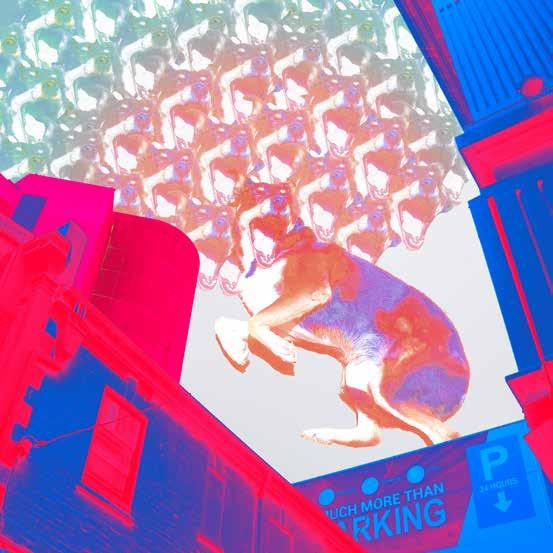
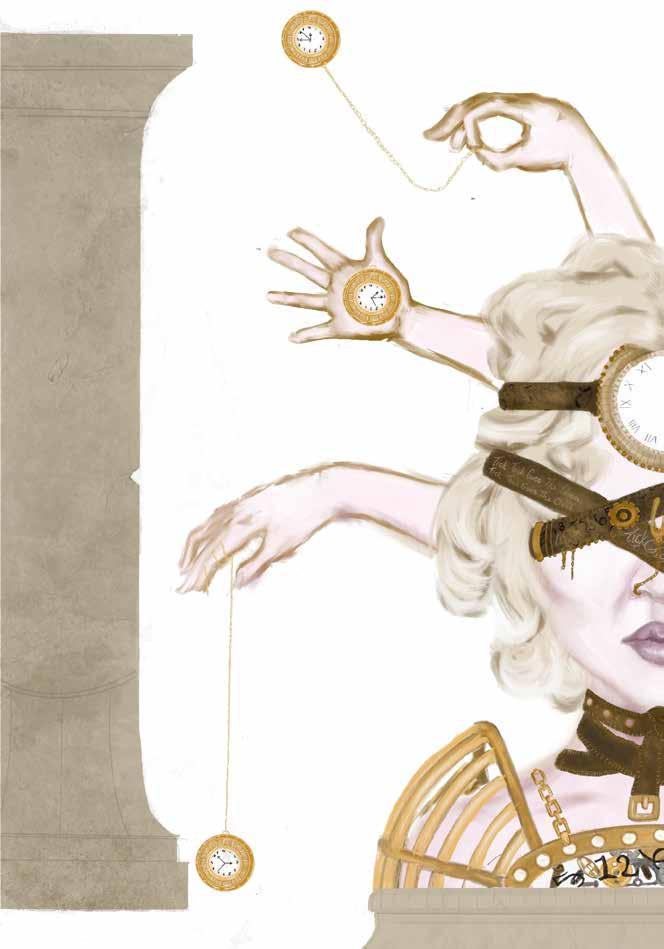
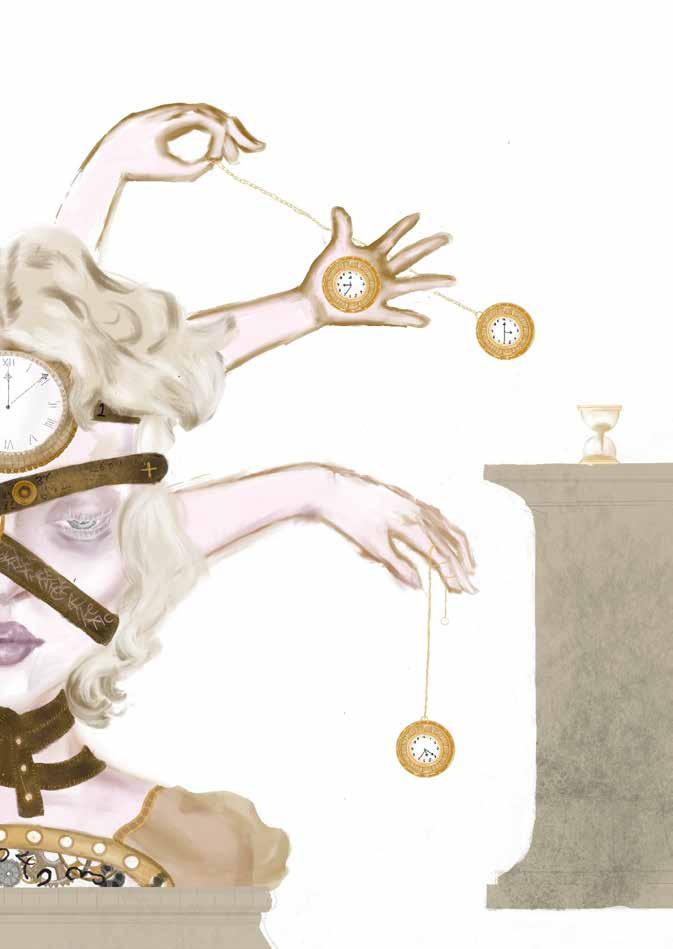
In edition 46, many truths are divulged, whether personal or universal, you will discover a raw vulnerability. This issue features Georgina Karatassas’, Time, a surrealist image that dissects the dark themes of—you guessed it—time and the relentless human bustle. A contemporary artist, Stephanie Doddridge shares Skin Crawls, an enrapturing exhibit on abjection of the human body. On page 6, you’ll find a pungent text, written by Colin Herring on the dynamics of government and its evolution. In the solidification of painful truths, we must also note the heartwrenching text Newsletter, written by Oksana Steele on the disaster that has spurred in Ukraine.
I hope every item in this magazine touches your heart.
Yours truly, Shania
Express your creativity and have your artwork exhibited as a year-long outdoor mural on City West Campus.
Submit your artwork by Monday 1 August for your chance to win one of two $500 Gift Pay vouchers.
words Colin Herring
Beyond unpacking democracy, I wish to enter the world of post-modernist discourse about governance and its evolution. I view parcelling concepts into binaries (or semiotics) of opposing forces (e.g. left and right wing politics) or ideologies, as unproductive, argumentative, stereotyping, distracting, divisive and polarising. Michel Foucault, toward the end of his highly influential oeuvre, informs how governance methodology incorporates biopolitics and biopower as a natural follow on of describing the vast histories of cultural populations in discussing the foundations of modern governance and subjection of people. This oeuvre of developmental post-modernist theory follows the mesh of coercions developed by Nation States, beyond sovereignty notions. Foremost, Foucault identifies the technologies of power.
In 2020, this can be viewed as the installation of mobile phone 5G towers for (amongst a lot of good reasons) efficiency of surveillance. Concepts like megacities, super-trains, diversion of natural water systems, to mega-farms. Foucault asserts that the notion of sovereign power is simply to take life or let live, whereas biopower fosters life but in meeting any
resistance it can disallow life to the point of death. This biopolitics, invites new kinds of resistance, which occurs at different points in the process and assertion of biopower. As the world has evolved into corporative governance, with no allegiance to any particular nation state, a globalized corporatised governance system appears, which uses sovereignty to legislate favourable conditions for capitalism to continue unimpeded.
Protest over each stage becomes the focus. Resource exploitation and neo-liberalism are viewed as progressive, and protest or disagreement is repressed. It is important to note that this evolution from kings, queens and emperors, Magna Carta, sovereign nation state rights to global corporative concerns, has had plenty of time in planning (at least since the 17th century). Clearly, protest is subject to all kinds of interventions through regulatory controls. Foucault makes the clear association of biopower as an indispensable element in the development of capitalism. Colonialism and resource exploitation is modernised, propped up by an industrial/military complex and a domestic paramilitary force (police).
Foucault also cites the prison system as a means of manufacturing docile bodies for capitalist labour. [In Australia we must get a police clearance before engaging in any form of meaningful work]. The broader populations witness the imprisonment of dissenters and periodic massacres as a means of control; this includes the demolition of the way people gather via ecosystem isolation and protection, habitat control, disease spread, need for space to construct technologies and infrastructure, bushfires, weather enhancement, open warfare zones and covert activities.
Ultimately, now it doesn’t matter what genealogy of origin one belongs to, as long as their behaviour is that of the one true race. Foucault views racism as a tool of societal control, linked to the maintenance of statehood. The one that promotes capitalism, resource exploitation and technologies, provides the infrastructure and therefore physical manifestations of control. Then we have a society that can direct itself against itself, until it achieves the one range of social norms and the maintenance of the modern universal (perhaps global) state. If you don’t fit the description, you are labelled or channelled toward the status of a ‘non-person’ by the various means of coercion.
These notions have expanded beyond Foucauldian deconstruction. Achille Mbembe adds to Foucault’s biopolitical expressions of power in describing how biopower is utilized in the machinery and technologies as systems of violence and domination in determining who may live or die (Adams 2017) through his notion of Necropolitics. Pele (2020) reports, Mbembe claims the economic and political management of human populations can be controlled by exposure to death as a global phenomenon. This fits perfectly to the
recent pandemic that has swept the world and become the ‘new normal’. In this sense Mbembe radicalises Foucault’s biopolitics. Foucault noted the positive power over life can become a deadly form of power where control is established by exposing society or whole populations to imminent death. Mbembe takes Foucault into the decolonising approach of Frantz Fanon, conceiving necropolitics as politically placing societies hovering between life and death, while serving the requirements of a labor force. The subjugation of the right to life, by the power of death itself, places us squarely into the pandemic status of the Covid-19 experience in 2020/21/22.
Modern capitalism has produced an excess of populations that can’t be exploited. Through various coercions, they become ‘nonpersons’: unemployable, bludgers, substance abusers, labelled criminals, parasites on the system, placed in detention centres and refugee camps as surplus to sovereignty status requirements. Remote Indigenous centres are shut down, surrounded by armies, police and ‘protected’ from an invisible cognitive foe. So, in the name of protection, corporatised Indigenous Nations are eliminated or granted a diminishing Native Title as ‘King Billies’, with a bizarre quasi-sovereign status that is always gazumped by the more radical title, belonging to exploiters and their profit margins; a continuing colonisation and genocide, justified by shape shifting definitions of what social justice commissions do and any consequent legislations actually mean (Pele 2020).
From the time of slave plantations, we continue as apparent stable societies who constantly witness the whippings, as what happens if we don’t comply with our master’s plans by the political
making of spaces and subjectivities in between status of life and death. Mbembe investigates this subjugation of contemporaneity, giving it the names of climate change, global warming, sea level rise [and now disease through pandemics]. Whether it is real or not, does not matter. It all demands to be managed through exposure to deadly dangers and risks. We enter the new normal of death worlds, where if you don’t comply you will end up in the refugee camps, detention centres, prisons, ghettoes, ‘sluburbs’, missions and remote settlements, fined or forcibly detained—it has become the way of managing and governing unwanted populations (Pele 2020).
However, if we all behave like the one true race, there is redemption for all, including the Native Title holder, who can be compensated in return for the extinguishment of their rights and then relegated to cultural welcomes of a country via exotic dance, makeup, costume and song.
Mbembe describes the illusion of largescale death as a method of control, as a system of exiting democracy through stately sponsored terror, use of shared violence (police, army, security personnel) and status through material possessions, war, exploitation of natural resources, multiple methods of killing (drones, missiles, disease, technologies) counterpoised by mass media, strategic commentators who provide multiple justifications. This entrenchment of triple bottom line methodologies, toward small, regrettable “mistakes” of death within the everyday lives of all individuals, has been taken toward its extremity through “Necropolitics” (Pele 2020).
The recent murder of George Floyd, barely before the lifting of social isolation measures, is a perfect example of the public massacres or murders that often take place. In Australia, it is termed ‘Deaths in Custody’. The mass gatherings of people protesting has an equal but opposite reaction via the many who view such gatherings as violations of pandemic cautionary behaviour. So, we all hover, as death and life in death play dice for our souls, as we are shipwrecked on the iceberg of inevitability.
To survive, we have to at least put on the face mask of compliance to ward off the symbolic violence of an invisible foe; we sit poised on the edge of life, waiting for that ‘second wave’ of infection because our lives are fragile, and death is lurking around that unwashed corner of extreme exposure to dangers of precarious existence. We start to hate those Chinese, the (racist) otherness for all our woes. It is everywhere, on social media, mainstream media; our Prime Minister demands answers from those bat eating, dog munching, Chinamen.
Our society has released upon them a series of micro-aggressions and nano-hates of people visiting their parents in old folks’ homes, and magicians use sleight of hand to redirect our aggressions with a bias towards otherness within classic racisms, albeit contemporized (Pele 2020). The big question becomes; are you a useful, compliant human? If not, then this status, as a non-person, could easily become you.
However, this is all a distraction. The purity of the one true race must be maintained, says the technological organism-comemachine-Daleks. ‘Resistance is futile’; we must all be re-programmed to become
If you don’t fit the description, you are labelled or channelled toward the status of a ‘non-person’ by the various means of coercion.
the Borg and be managed by the collective (don’t mention communism). Somewhere, in all this, we wonder where our rights have gone to become individuals or even an alternate collective and practice our cultures that (may) have developed over millennia.
Rather than entertain notions of the brave new world, of 1984 come 2020 nightmare scenario of 5G surveillance apps, I wish to evade the trap of being minimized and stereotyped as one of them there red necked, conspiracy theorist, Trump voting, deluded paranoiacs.
Maybe I should change my name to ‘Who’, in applying for candidature to a doctorate and in adopting Earth as my mother, protect it. Alternatively, I can join Elon Musk to escape the wastelands of earth and pioneer an escape to Mars. Either way, I have to wear my ‘trekies’ aspiration and assume the post holocaust realisation of the global federated corporation.
Another alternative is to embrace Frantz Fanon’s belief in the violent dismantling of colonisation and all its historic evolutions by revolution. The anger that swells in realising our holocausts, and the desire to dismantle it all becomes the trap of modernity. Most Indigenous Nations know, this can only lead to their extermination and takes us further away from our simple objective—that is to practice our cultures unimpeded.
Our warrior spirits are then systematically destroyed by the one true culture, which knows exactly how to obliterate, incarcerate, maim and through their propaganda machinations, confirm how the consequences were for the collective good. They’ll even pay for the funerals to display the deep respect they have for the horror of their own actions.
www.criticallegalthinking.com/2017/05/10/ michel-foucault-biopolitics-biopower/
www.criticallegalthinking.com/2020/03/02/ achille-mbembe-necropolitics/
words Kerry Lacey
Sienna listened to the soothing sound of waves lapping the shore and felt the warmth of the afternoon sun seep into her skin. She looked over at her daughter Kara: a small blonde girl with a big attitude. Kara was sitting a few metres away, busily building sandcastles and looking content in her flamenco floaty. She had pestered Sienna all day to buy that floaty. Sienna sighed, grateful for a moment’s peace and the smell of the ocean. She reached into her bag for her book.
As she rummaged around, her hands landed on something unfamiliar. She pulled it out; it was some kind of notebook… but, it didn’t look like any ordinary notebook. On the cover, there was an image of a mythical creature—half-giant and half-elf, perhaps? It was male, judging by its naked torso, which was decorated in tribal looking tattoos. He was the colour of fire. Behind him was a shadowy forest and in front of him was a small wide-eyed child. Printed across the image in white letters it read: Lost in time: Chatotkacha and the Game of Illusions.
Where did this come from? She was certain she had never seen it before.
‘Kara, honey, is this yours?’
Kara looked up from her sandcastle, stared at the cover, then shook her head emphatically and returned to business.
‘You, sure?’
‘Yup,’ she said, followed by further, equally emphatic nodding.
Feeling slightly unnerved, Sienna decided to look inside—maybe she would find the owner’s name or contact details.
She opened the book and gasped as a name caught her eye: her own.
‘That’s a strange coincidence,’ she uttered with a nervous laugh, before reading on. It was a diary entry:
Feburary 5th
8:00am – Sienna leaves home, wearing her favourite grey suit.
9:05am – Sienna arrives at work, late and looking flustered.
12:00pm – Sienna goes for lunch with annoying chatty woman from the fourth floor.
3:30pm – Sienna leaves work—it’s her day to pick up Kara.
4:00pm – Sienna and Kara arrive home.
6:00pm – Dinner time.
8:00pm – Lights out.
Sienna’s chest tightened and a wave of sick rose up in her belly.
Someone’s been watching me.
Engrossed, she flicked through the pages, reading as quickly as she could.
February 18th
10:00am – Sienna goes to the dentist.
March 27th
2:00pm – Sienna fights with ex-husband for forgetting to call Kara on her birthday.
On and on it went. Someone had been watching her every move for almost a year. Her body stiffened, as she flicked through the pages to get to today’s date.
Sure enough, there it was:
December 22nd
1:00pm – Sienna takes Kara to the beach.
But, how could this happen?
She scanned her eyes down to the bottom of the page, gripping the notebook tightly in her hands.
2:30pm – Kara goes missing….
Sienna threw the book and stood up in a flash.
Kara! dear God. Where is she?
She was gone.
‘No, No, No, No, No! This can’t be happening!’ Sienna exclaimed, as she ran over to the spot where her daughter had been only moments ago. Her heart beating fast in her chest. Stunned, she looked around for something, anything, that would tell her where Kara had gone. But there was nothing; only her solitary sandcastle, which was now crumbled and stepped on, in her place.
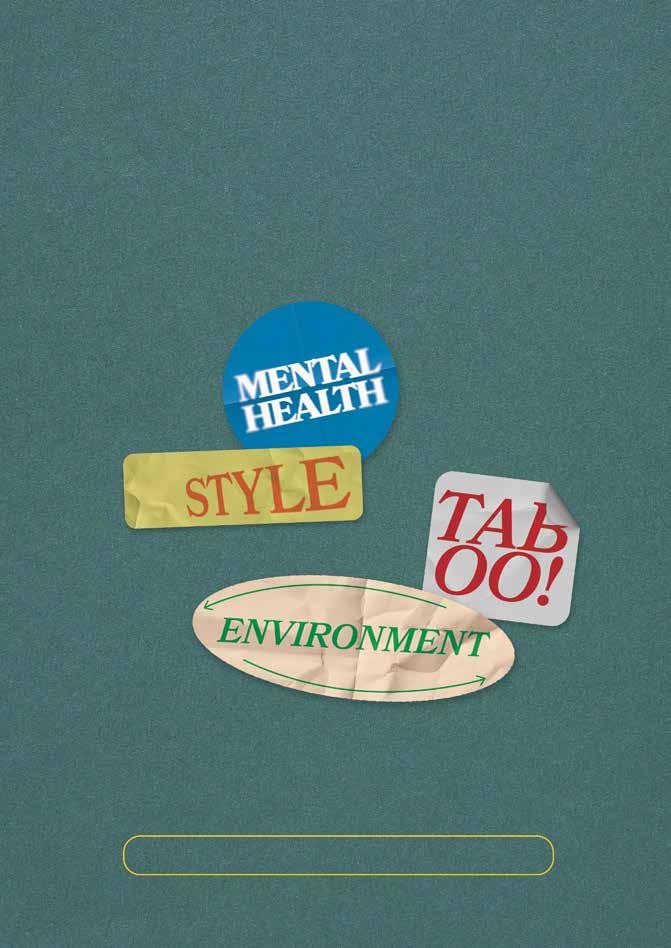
THE HEART OF EACH EDITION HOLDS PLACE FOR DEDICATED CONTENT SURROUNDING MENTAL HEALTH, STYLE, TABOO AND THE ENVIRONMENT.
TRIGGER The following section contains content WARNING some may find disturbing or upsetting.
She was beautiful.
The same way strange and poisonous flowers are to those who crave the sweetest of nectars. They grow at the water’s edge, flourishing in their own lethality, never blessed by the feeling of touch. To pluck a petal would render sweet and painful euphoria.
A lonely existence.
Her skin had been touched by the tears of the gods, a perfect marbled creation of the pain and anguish it took to send her here. To this place.
Her scars were stories pressed with silver and iron, a tangent masterpiece that reminded the world her beauty was a warning. A reminder that beauty is not without its pain and suffering. Her body was a tale told by all yet touched by none. Someday, this pain would be useful.
She remained in this sorrowful place. A light beckoned her in the far-off distance, amongst the roots of the great tree. She could feel its warmth. A memory of a beautiful place she used to lay when she was a kid. A memory, where she remained trapped in a time she had left behind; forced to outlive them all.
For the power of life is something that cannot be touched with delicate hands.
A gift from the gods: her immortality.
To remain imperviously beautiful, In hope someday she would come back.
words
Erica Menzies
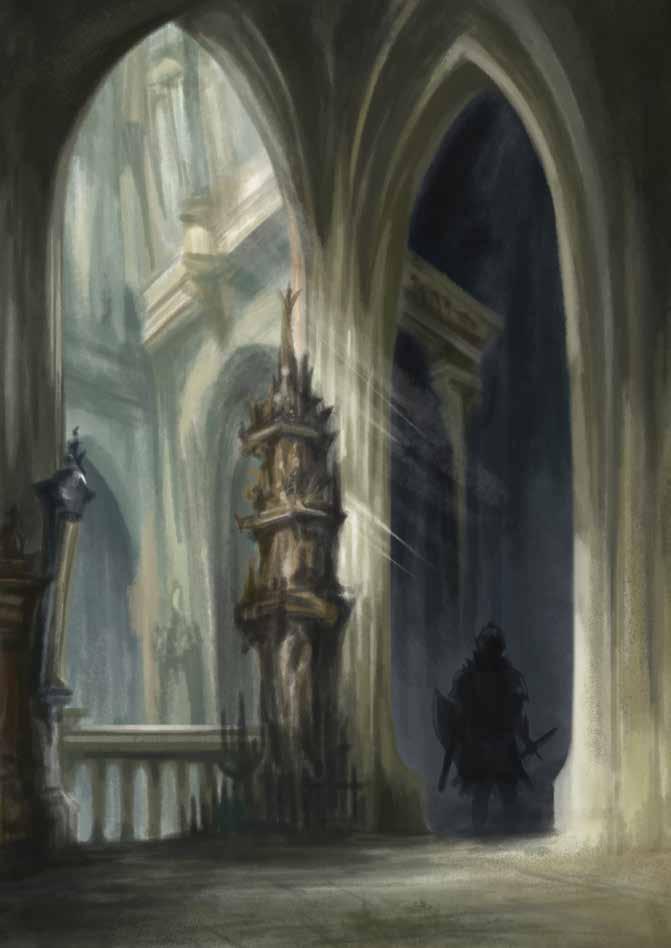
words Oliver Hallet
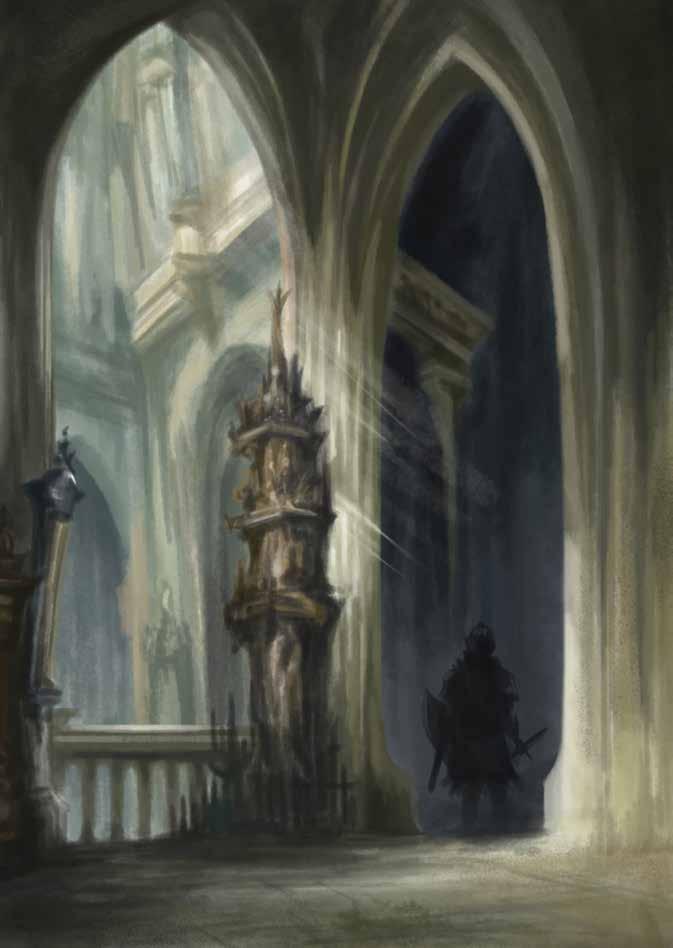
Do you think Icarus loved the sea when he fell?
Tumbling towards the depths
Breathing in his last breaths
Do you think he realised
This was the price of freedom?
That the world had stopped for him
For just a moment—
The Boy Who Fled the Nest
Young and free and soaring
Blessed beneath the rays of the sun
Taking in the sight of the cerulean plains beneath him.
Do you think he was taken by its beauty from above?
So lost in awe and wonder and love
He mistook the warmth from sun’s ever reaching grasp
As the burning feeling of freedom?
Or do you simply think he reached too far forward
Aiming
Reaching
Grasping for the impossible?
Longing to hold onto his destiny with his own two hands
Scarred and calloused by hard work and aspiration?
I think Icarus was one of us
Simply unaware of the world he was thrown into
And sure,
He was told not to fly too close to the sun,
But did he know?
Did he know what that distance was?
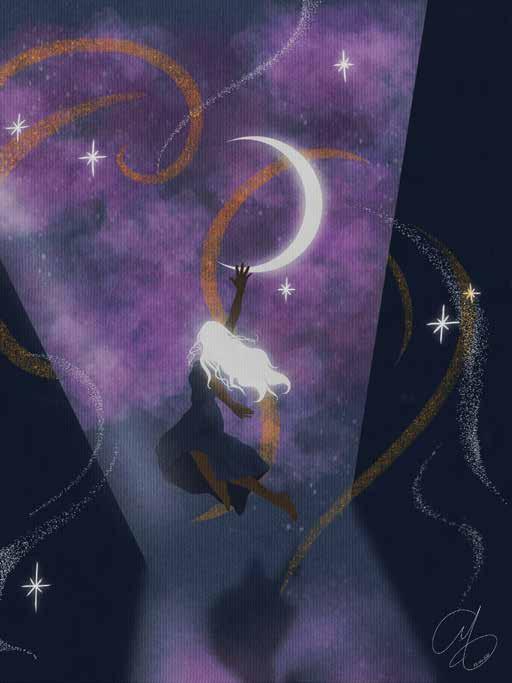
They’re an artist Who paints with stardust.
Despite being surrounded by the darkest, She, an artist, Is able to capture the heart’s brightest.
Ella sat on her couch staring at the television. She had just recently gone down the rabbit hole of watching every Marvel movie on Netflix, which originally, Ella told people she had absolutely no interest in because she preferred ‘character-driven, art house films’. But, when Ella split up with her ex-husband, Sam Daniels, her pretentiousness finally gave way. It turns out that superhero movies are a good 2-hour distraction from life problems.
At this point, Ella had watched three consecutive movies and she felt guilty for not doing something more productive or ‘intellectual’ with her time. So, Ella stood up and made her way to the bookshelf on the other side of the room, stepping over half-eaten bags of Doritos and shuffling her way around random pieces of clothing to get there. The bookshelf was unusually large and only half full—Sam had taken the other half. But, still, there was easily over 400 books in there; too many to choose from.
As Ella sifted through the classics section, she noticed a book with a bright green spine sitting in between 1984 and Dracula. She pulled out the book: Rejuvenate your Life, Rejuvenate YOU, by Sam Daniels.
Ella knew Sam had left his book there on purpose, and for that she had an overwhelming urge to rip apart the spine and throw the pages into the hearth of a fireplace she didn’t have. Instead, she flung the book across the room, slamming it against a wall and leaving it to drop in a heap of creased pages on the ground.
Ella once loved Sam. They met in a writing class at university and quickly became each other’s favourite person; they were both aspiring authors with similar dreams. Ella wanted to write contemporary fiction stories, and Sam, who studied psychology, wanted to write self-help books. After university, they rented an apartment together and did the whole ‘independent, young adults’ thing. Ella started working on her untitled novella, and Sam began writing Rejuvenate your Life, Rejuvenate YOU. Sometimes, they would stay up all night together discussing certain passages they were writing.
‘Do you think Jessica should go to Japan or not?’ Ella would ask.
‘Well, if you want Derek to think Jessica is a coward, then yeah,’ Sam would say.
Eventually, Sam completed his book and set out to find a literary agent; he secured one after four months. And in those same four months, Ella had restarted her novella twice. Over the next year of waiting for publication, Sam created a Self-help YouTube channel, which quickly gained a following; so when his book was finally released, it became an unexpected New York Time’s best seller.
At first, Ella was elated for Sam. They actually had money now to put towards buying a house–Sam did. He chose a modern, two-story home, close to his agent and over 7 hours away from Ella’s family and friends. But, it was fine. Later, Ella stopped attempting to write her novella and instead helped full-time with Sam’s YouTube channel.
After 5 years of playing Sam’s supporting act, Ella broke. She cried and yelled and screamed at Sam about how he never supported her career and how he rejected her desires. Sam was the one holding her back from reaching her own success and fulfilling her own dreams.
Until today.
Sam may have overlooked Ella’s feelings, but she was the one who gave up on her novella, and she was the one sitting on the couch binge-watching movies.
Ella picked up Rejuvenate your Life, Rejuvenate YOU, and started reading.
The mark starts small— no one would see it. As time goes by, it grows bigger— it can never disappear, for it is a part of me; it is forever on my skin. Please don’t leave, for then it will be a mark that makes me sad.
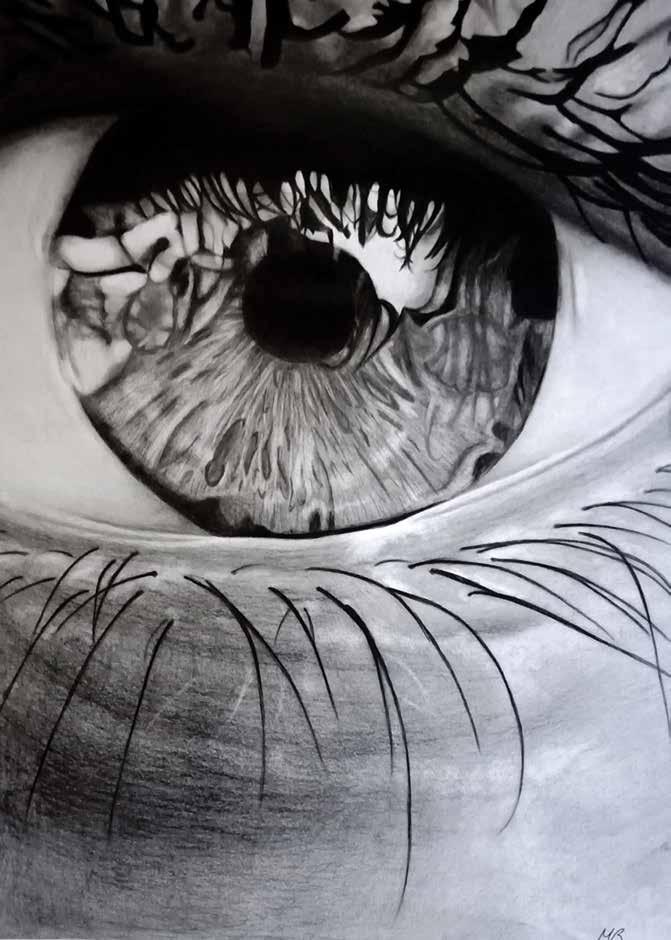


I have an arsenal of ways to float away; it was a power I became accustomed to early on. The capacity to surrender the mind to the abyss, to retreat into the folds of the inner workings and lose myself in the shadows and lightning of my internal world… but it’s Narnia, and every time you step into the closet and step back from the world, it passes you by.
You emerge at the hint of spring and find that there have been movements without you – all the while, you were tucked into the dangerous and alluring magic of that closet, hoping that slipping into the mind’s creation could be that soothing hold for all your heart’s hurt.
The challenge is holding the deck and not playing the cards, for though the desire to play the trump is innate, the power to choose differently is what can be learnt.
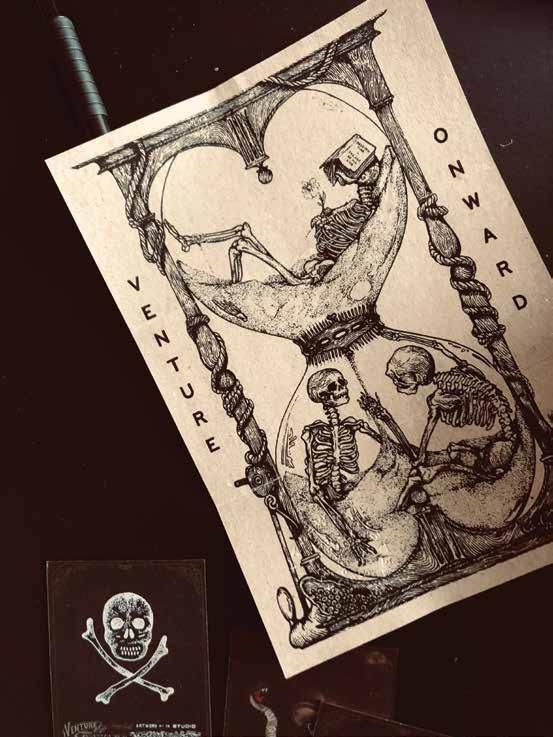
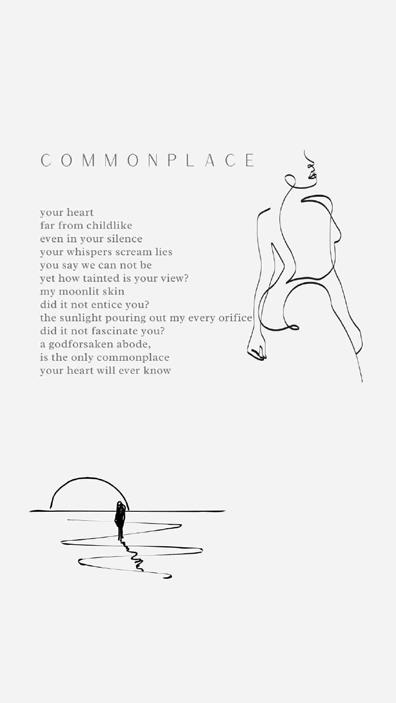
artwork & words Georgia Thomson
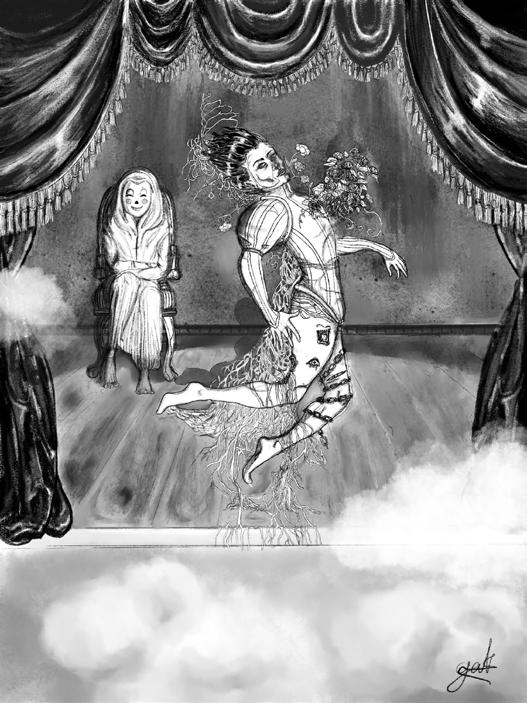
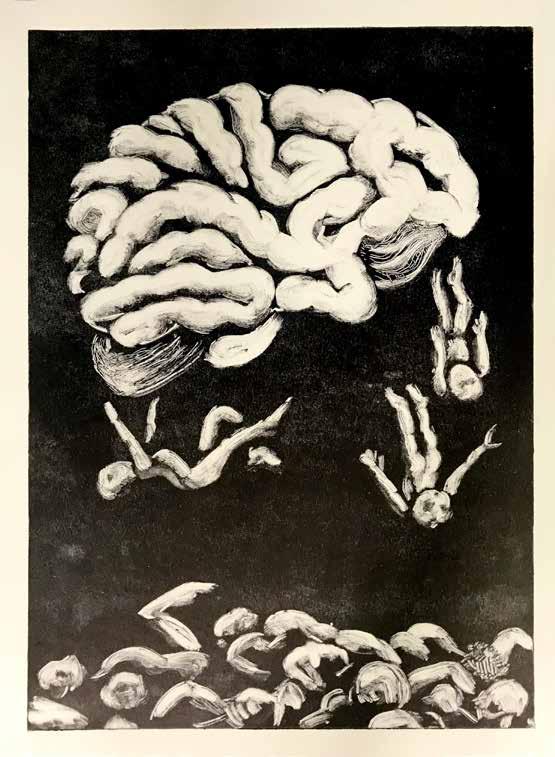
She held her head up high over millennia
Basking in the glory brought by her children.
She never knew how it felt to be so humiliated
As she weeps for the faults of the recent past. Her children are scattered World over
Looking for refuge in foreign soil.
She wonders: did they ever truly love her?
The sins of the recent past are washing over the unborn
Where did it all go wrong?
All eyes are on her—bare before the world
She feels the vultures hovering over her head
Trying to grab her, strip her, tear her into pieces So defenseless without her protectors.
She calls for her children
To rise from their dead slumber
To fight for her honour.
With blood and tears dripping down her body
She weeps for the faults of the recent past.
Waking up in the middle of the night
Covered in sweat, with a gripping fear
I hear a voice calling me
Broken yet strong
‘Don’t worry my dear, I am still hanging on.’
words Nipuni Saimon
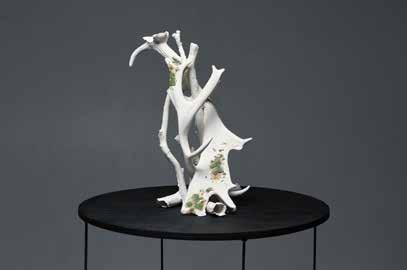
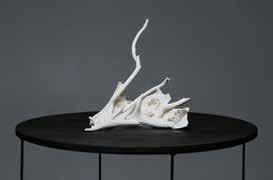
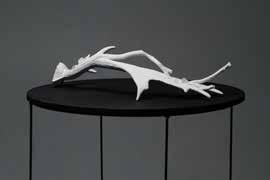
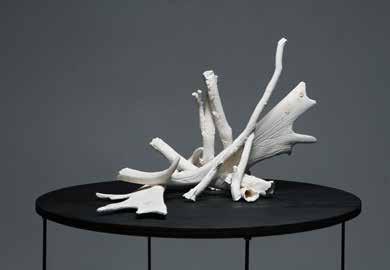
Ruins and Wonders (2021) Relic Growth (2021) Transcendent (2021) Emergent (2021)
Artist Statement
Artwork Description
Lauren Downton is a ceramic artist; her practice investigates ephemerality, decay and regeneration through nature-based metaphors. Downton draws on environmental sociology to consider humanity’s relationship with the natural world and how these ideas relate to historical and contemporary notions of the ‘ruin’. She uses slip casting methods to create hybrid porcelain assemblages. The act of replicating organic objects via slip casting suggests human intervention; sprues and seam lines speak of the objects formation and reveal human presence.
Downton’s hybrid forms are an entry point to engage audiences in considering alternate future worlds and possibilities. She explores unconventional materials and methods, such as the use of crystals and experimental glazes and stains. Crystal growths encrust the porcelain and push the material to its limits; paradoxically, the more the crystals grow and develop, the more the porcelain disintegrates. Ruins, historically, corresponded to a consciousness of past and future times; relics that brought about an awareness of temporality and symbols of modernity’s uncertainty. Downton’s work points to an awareness of the current times immense global change, where re-evaluating our relationship with nature becomes critical in achieving sustainability for future generations.
Remains is a series of porcelain sculptures, presented as an installation. Downton investigates notions of the ruin as deteriorating relics of the past that symbolise ephemerality. Human-made yet enveloped by overgrown vegetation and nature; ruins continuously deteriorate whilst regenerating new life. They exist in liminal states of ‘in-between’, relating to Julia Kristeva’s theory of abjection through these ambiguous states. In this sense, ruins can be seen as hybrids, representing a fusion of dualities such as decay and regeneration, society and nature, permanence and ephemerality. Downton explores these concepts through sculptural forms by blending organic objects with human interventions.
The ghostly nature of porcelain, akin to pale skeletons of bleached coral, suggests an indeterminate state; something neither fully alive nor dead, but in-between. Crystal growths erode the fired porcelain, rendering the permanent impermanent, speaking to environmental collapse and irrevocable changes caused by humanity. Working in a cyclical process, Downton repurposes previously moulded branches through kiln firings, where they are burnt out and the ash is combined into experimental glazes. Her mode of installation—round platforms of charred wood surfaces—allude to cyclicality, death and regeneration. Reminiscent of petri dishes, they suspend the work between specimens and relics, inviting audiences into new perspectives.
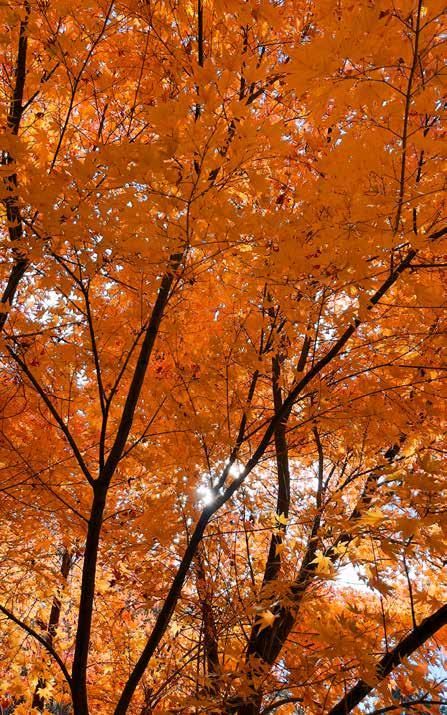
Autumn Leaves, Mount Lofty Botanic Garden Summer has come to an end and the gardens now burn bright with the colours of a fire. As the colder seasons approach these colours extinguish.
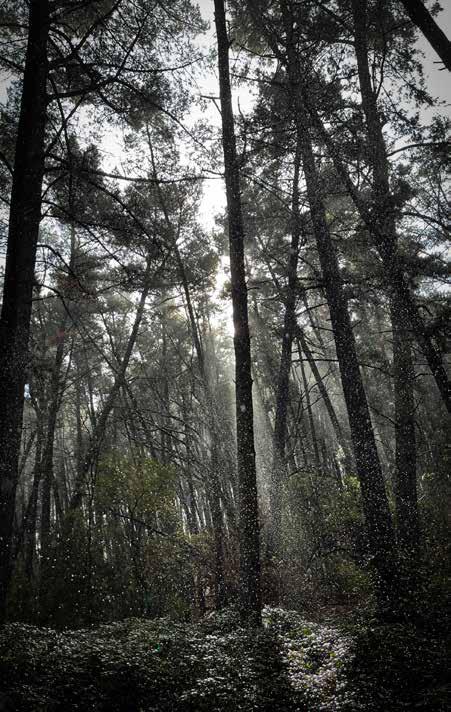
Afternoon Downpour, Blackwood Forest Recreation Park
The air is crisp & the raindrops float down from the canopy landing gently on your face. The atmosphere is refreshing, you feel your body relax, you feel peace for a moment in time.
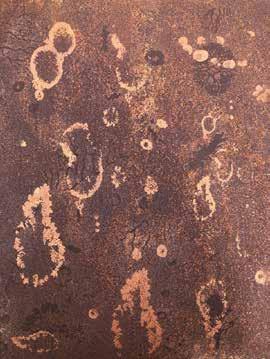
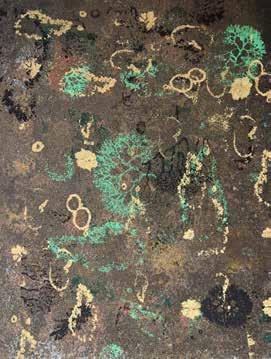
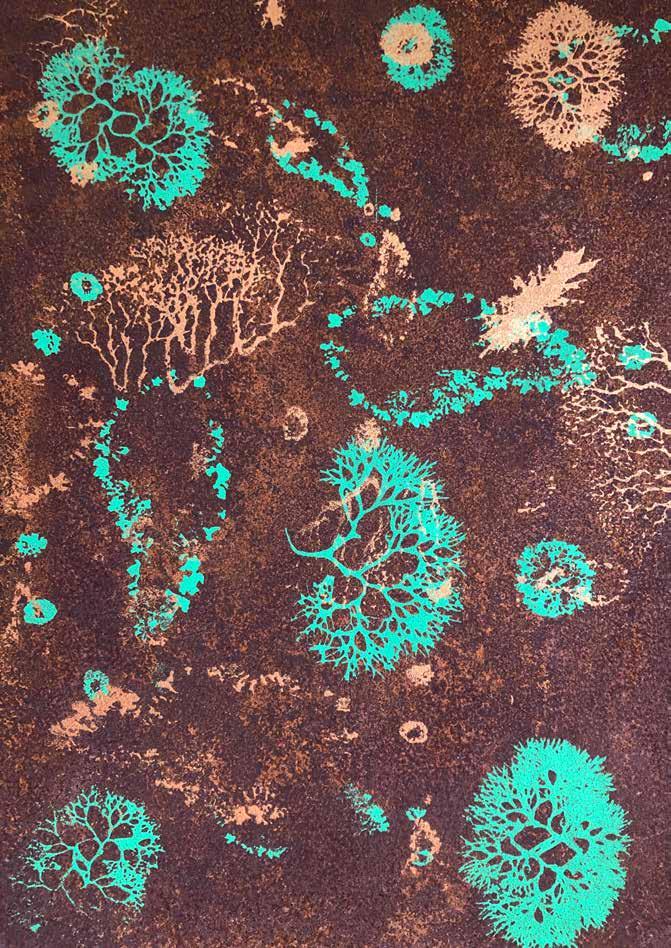
The works evolved slowly and intuitively, building upon ideas and cultivating new ways of working. Made by the sea, in the home studio of printmaker Hanah Williams. This series of work evolved over two years and contributes to a larger collection of prints made in collaboration with Connecticut artist Sallie Ketcham.
Process-driven, these works incorporate elements of chance and surrender to nature and working with new mediums. Primarily an intaglio printmaker, this work embraces Hanah’s love of rust, metal and texture, and combines new skills in screen printing.
The steel plates were rusted by hand over a period of 4-6 weeks and layers of imagery were screen-printed onto the surface with eco-friendly inks. The imagery featured on the works were originally drawings and photographs taken during nature walks in the Adelaide hills and along the South Australian coastline.
Hanah is an Adelaide-based artist and a printmaking educator. Her practice focuses on creating unique state prints, installations and collections. She is interested in the characteristics of etching, variation, imperfection and repetition. Hanah’s work delves into the realms of dreams, the human connection to the natural world and investigates the possibilities of what home is and can be. She has undertaken printmaking residencies in Mexico and the USA, and currently teaches eco-aware, printmaking workshops across Adelaide and regional South Australia.
The works were exhibited as part of Sister City II Change and can be viewed online at www.praxisartspace.com/4648-2/
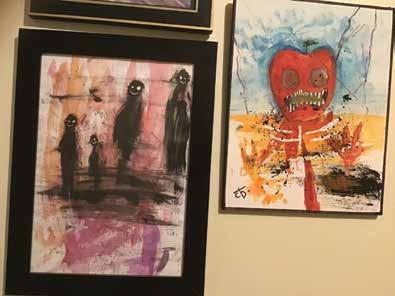
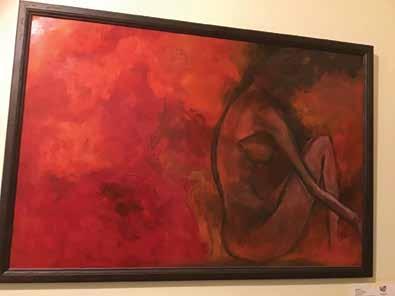
Stephanie Doddridge is an emerging contemporary artist working on Kaurna Country. Her work spans across ceramics, textiles, sculpture and installation. Stephanie takes an autobiographical approach to art making, reflecting on personal experiences and feelings and representing them through sculptural practice. She engages with metaphors of the self, and investigates notions around skin, embodiment and psychoanalysis. Upon completion of a Bachelor of Contemporary Art at the University of South Australia, Stephanie was selected to exhibit in the 2021 Hatched: National Graduate Exhibition, at Perth Institute of Contemporary Art. Stephanie is currently studying a Bachelor of Creative Arts (Honours).
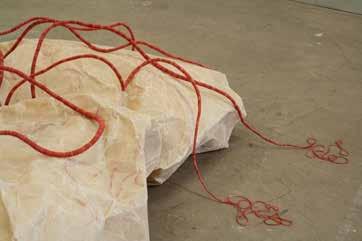
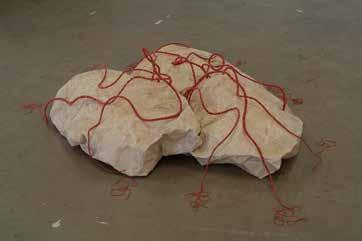
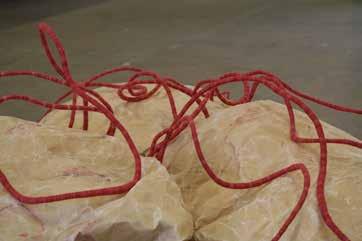
Using psychoanalytic theories as a lens, this work investigates the relationship between psyche, skin and cloth. In considering my own body as a site of abjection, I explore past events which shape my experience of embodiment through physical and psychical impacts. The connection between internal and external challenges my own sense of self identity in the face of constant abjection. I am guided by Surrealist traditions of drawing from the psyche to create sculptural forms.
The relationship between psyche and skin is constant interchange of cause and effect. Psychological stress, fears and anxieties manifest on the skins surface as disease and depigmentation. External lesions cause psychological distress. Unconscious fears are visualised through the skins surface.
Skin itself becomes a site of both beauty and abjection, and elicits responses of both attraction and disgust. It is a site of decay, of ageing, trauma, disease and degeneration. It is a border
between self and the world, a vessel which contains abject fluids, and which those fluids breach, yet proportion and harmony is found in skin. Contemporary focus on skin and beauty has brought about the notion that skin is changeable. It can be customised, cut and stitched to adjust, treated like cloth. Skin and cloth hold intimate knowledge of one another. We are wrapped in cloth from birth to death, we sleep in it, we bathe with it, it protects us, hides us and forms to our shape. Cloth becomes a supplementary skin—hiding the abject skin. Cloth forms part of our external identity. We project our internal sense of self onto the surface of the skin to form our identity.
Historical fascinations with anatomy as a spectacle have informed my use of wax as a medium. Wax substitutes skin to become intermeshed with cloth. Like skin, wax flakes, cracks, wrinkles, protects and forms a skin as it solidifies. Cloth is the other predominant medium, which brings connotations of comfort and safety, and clothing as a second skin.
I cannot help these thoughts tormenting me.
PARANOIA, the sideward stare. SUICIDAL, your reflected glare.
Take the blade and wander there.
The grass is greener atop the hill...
ABOVE THE WORLD you’re the first to reach the light. Burn bright.
SCARLET WHISPERS breathing white. Draw a line end in sight.
Is this how you’re gonna end your life?
BURN BURN BURN.
Is this how you’re gonna live your life?
BURN BURN BURN.
Breathe light let the dragon rise.
FUCK THE ASH WE’RE COMPRISED OF PAIN.
Cooked pheasant for tea again.
BURN BURN BURN.
With clipped wings we reach the sky. Walls of violet violent red haze. Of all the laws that the devil obeyed I won’t be stopped ‘til I can be swayed.
Burn bright candlelight. The naked flame ignited again so swallow the smoke and smother the strain.
Scarlet whispers breathing white How’re you gonna live your life?
Life after uni can be a daunting process for most, after being adjusted to the set routine of an academic year. We caught up with some of UniSA’s most recent graduates to get an insight into their careers, what they are loving most about being a grad after all their hard work and their tips for final year students.
interviewer Matisse Chambers
What is your current position and is it in your field of study?
Was finding a job easier or harder than you expected? Why/why not?
I currently work as an Associate for Communications and Marketing, where I manage the internal communications for a national company such as preparing briefs, proposals, presentations and other tools required for clients.
I started working in the field at the end of my first year of uni and continued that job until the end of my degree. I found that particular job online and it was one of the first I applied to, so in my head (for some reason), I thought that finding another job after uni would be just as easy. I decided to quit in December of 2021 to take a month off to relax after studying and working intently for several years, and I managed to squeeze some travel in. My intention was to find a job during January, to start at the beginning/middle of February, but I did find this a lot harder than I expected, as I was constantly applying and interviewing for roles but not receiving a position. I then managed to secure my current role and commenced at the start of March.
Any advice for students who are in their last year of uni?
Is there anything you did to prepare for your career? How do you find working in comparison to uni?
A word from Grace: Something you love about working and something you miss about uni?
I am really enjoying working life. I’m currently in corporate so the long days of 8:30-5:30, Monday to Friday, can be exhausting at times, compared to the hours I used to have to do for uni but I think being able to feel like a proper ‘adult’, and I find more independence is something to enjoy.
I love working, as I feel like I have a strong purpose and can put forward what I have learnt in uni, into practice. There are days where I do miss the flexibility of uni; for example, only having to go in for a couple days a week and having the other days to study or socialise etc.
I think being in the final year, it can feel so close yet so far, but it’s such an achievement to have made it that far. If you keep putting your best foot forward for just a few more months and continue working hard, it will eventually all pay off. I feel that it is such an important time to make friends with your teachers and peers, network, put yourself out there with volunteering or internship opportunities, and who knows, one thing may lead to another, and you can have your future career set up!
I definitely think completing an internship as part of my course opened up my eyes to possible future positions, and what life in ‘the real world’ is like. I also believed getting a job in my field within the first year of my degree was extremely beneficial, as it gave me the core knowledge and experience to then move further with my career after uni.
I highly recommend making the most out of your uni life and the whole experience. One regret of mine: transferring to completing uni entirely online for the final two years of my degree, and while it was great to work full time and make some money, I do wish I made the most of the time I had in terms of making friends, attending events, joining clubs and being present in all I could.
What is your current position?
Was finding a job easier or harder than you expected? Why/why not?
I am currently working as a registered midwife in South Australia.
For me, finding a job was easier than previous years, as I finished my degree at a time where midwifery and nursing graduate jobs were at a high due to the COVID- 19 pandemic. In saying this, I found the application period super nerve-racking, knowing that I was one of many applicants and needed my application to stand out and meet all the criteria perfectly.
Is there anything you did to prepare for your career, if so, what?
What is something you love about working?
My student placements prepared me well for shift work and the lifestyle that it enables. The work itself has been a big jump but a really nice challenge. I didn’t do anything above and beyond to prepare myself for my career, but I did always try to apply myself during my placements and take every opportunity to practice a skill or try something new.
Something I love about working is being able to partner with women and their families and help them make educated decisions about their care throughout both pregnancy, labour and the postnatal period—it’s really rewarding.
A word from Harriet:
My advice for final year students, especially midwifery students, is to just keep pushing. Final year is tough.
What is your current job? Is it in your field of study?
Was finding a job easier or harder than you expected?
How do you find working in comparison to uni?
I currently work as Junior Project Officer for a Government sector. It isn’t directly related to psychology but it is in the field of advocacy and it’s something I’m equally as passionate about.
As an international student, looking for a job was definitely heaps harder, but extracurricular activities such as leadership and volunteering, helped me get a foot into the field.
Personally, I think work life is less stressful in the sense that I leave work at work, and I don’t think about it after 5pm, but there’s also the pressure of performing well and continuously progressing in my career. On the other hand, studying gave me the freedom / flexibility of time (to move things around to my convenience). Overall, at this point in my life, I’d say I prefer working—loving what you do makes it heaps easier!
Something you love about working and something you miss about uni?
Is there anything you did to prepare for your career, if so, what? Any advice for students who are in their last year of uni?
One thing I love about working is that I have a good work-life balance, and something I miss about uni is being able to hang out with friends whenever I plan to and to also do extracurricular activities such as being involved in leadership!
Over my years at uni, I built networks with people from multiple disciplines/fields—talking to them from a genuine standpoint, and keeping an eye out for jobs that I wanted, gave me an idea of what’s out there. I’d say UniSA Career services was heaps helpful as well!
Enjoy the freedom you have. As cliche as it sounds, it may be one of the best times of your life! On a side note, start planning out your career and maybe even start applying for jobs ahead of time, so you don’t have to stress about it after!
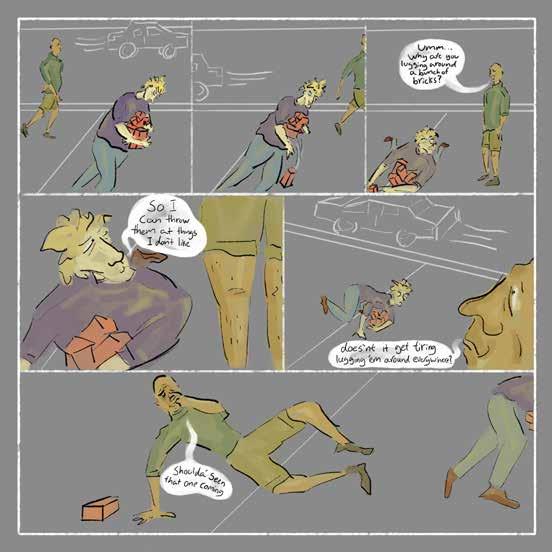
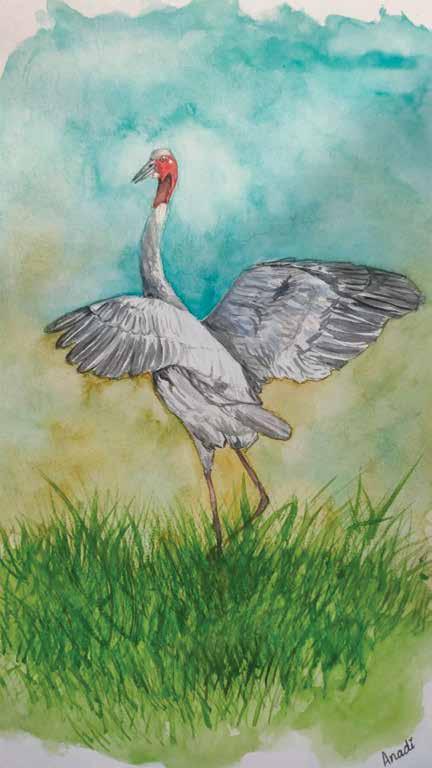
words Philip Evans artwork Anadi Sharma
His steps were methodical and smooth Much like his life, he mused. The gravel crunched underfoot, Pleasingly.
The warning gave him reason to pause Much like arthritis, he thought. The sign grated his morality, Annoyingly.
Green grass triggered fond memories Much like dogs, he considered. Spinning upsets his inner ear, Disappointingly.
Rebellion just made him nervous Much like first dates, he recalled. A plan coalesced in his mind, Devilishly.
Rolling in the sun excited him Much like birthdays, he reflected. So, he defied the ban on fun, Daringly.
He reassessed the challenge taken, Much like a book review, he supposed. With care he staggered to the top, Satisfyingly.
interviewer Matisse Chambers
interviewee Dinuk Hasantha Nanayakkara
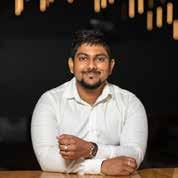
The University of South Australia Student Volunteer of the Year Award is an important title awarded to a student that has made a significant contribution to the wider community and campus life through their volunteering commitments. We sat down with the 2021 recipient Dinuk Hasantha Nanayakkara about his journey leading up to receiving the award and his overall university experience.
Introduce yourself!
The club was founded by Lex Raj and Eloise Atterton, in December 2020, with the aim of creating a dedicated space for every female identifying student of UniSA to strongly advocate for women’s rights, feminism, foster equality and equity across all women’s issues. We create a safe environment for our members to share their experiences and innovative ideas and grow together as a collective at UniSA.
What extracurricular activities did you participate in during your degree?
What volunteering experience did you do throughout your degree both in and outside of uni?
I participated in TEDx UniSA as a committee member in 2020/2021 and as an event manager of the Oxfam on Campus club. Then I got elected as the Post Graduate Student Representative of USASA for the year 2021 and represented USASA on the UniSA Council as a student member.
I started by volunteering with USASA and eagerly wanted to complete the UniSA + award as soon as possible. I participated in many volunteering programs at UniSA including Study Help PALS, G’day Mates, BUPA UniSA Student Ambassador, Responsible Party Ambassador (currently discontinued), UniMentor, and TEDx UniSA.
I was further eager to explore different cultures and meet new people, and volunteered with Adelaide Festival, Adelaide Film Festival, and at an Adelaide Fringe Venue as a Front of House volunteer. I also volunteered as a Digital Literacy Tutor at the Catalyst Foundation where we helped veterans to develop their digital literacy skills.
I also took part in the Adelaide Sri Lanka Student Society as a Committee member where I made many fellow Sri Lankan friends.
Why are you passionate about volunteering?
What advice would you give students wanting to participate in more volunteering opportunities?
Volunteering makes me feel enlightened and happy as I like helping and meeting new people; networking is my forte. I am proud of the person who I have become today, and volunteering significantly contributed to it.
Don’t wait until the opportunity knocks on your door as there are many sources and mediums to find volunteering opportunities in South Australia. UniSA itself has a dedicated portal to find volunteering opportunities across South Australia.
Also, be mindful to balance your studies and extra-curricular activities as it could take a toll on your mental health. Your mental health always comes First!
Are you still volunteering in your post grad life?
What skills have you gained from your volunteering experience and why would you encourage others to do it?
I recently graduated and have been volunteering outside the university as volunteering has quite become a habit now. I continued to volunteer with the Adelaide Festival and volunteered for the Kodomo No Hi Japanese Festival for the first time this year. I am also a member of the South Australian branch executive committee of the Australian Computer Society, which is also a voluntary position.
I have gained many skills and developed existing skills over the period of two years of volunteering whilst at UniSA. People skills or interpersonal skills were drastically developed, increasing my confidence to face unexpected situations in life. Also, I was able to further develop my leadership skills and emotional intelligence.
The best part is that you get to exercise such skills in practical situations which will eventually enhance your problem-solving skills as well. And overall, you will improve your level of confidence while building a solid network.
If you have one, what has been the best volunteering experience you have been a part of?
How did it feel receiving the award?!
Volunteering at the UniSA and Vinnies Community Sleepout was one of the best experiences. It was on a day I was feeling the lowest and almost dropped a course as I couldn’t cope up with the imbalance of emotions. But, experiencing the life of the homeless in the month of August, sleeping in a sleeping bag on a cold and windy night was surely an unforgettable experience.
It came out as a surprise as I didn’t know that I had won it until I saw the UniSA Leadership Awards brochure when I attended the ceremony. I indeed felt great on my accomplishments and was honoured to have received the award. I would like to thank all the people who have helped me during this journey.
Some content may be disturbing.
Female, 20
My heart hurts. Saying goodbye hurts the most.
Male, 20
I just want to say, I’m sorry. It was a couple of years ago and it might seem like a lifetime ago, but it I still think of you and I’m still sorry. I wish I could’ve done things differently.
Male, 23
Hey, I have absolutely no idea what I’m doing with my life. I’m just chilling. swinging and moving with the waves. Do whatever makes you happy and don’t forget to smile.
Female, 46
If you’re with someone else, I’m glad it’s her and not me; and now you’re fucking up someone else. I’m sure you’re love bombing her. And then there after comes the devaluing stage. And, oh my god, I’m glad I’m not her because that’s where he sits for the rest of it: the devaluing stage. He’s a monster. Not a human being.
Female, 19
You, **** ******, are a psychopath. I cannot believe I stayed with you for as long as I did. You literally ruined me. Like bathroom floor for days, alcohol comfort, drug-abuse kind of damaging. Never let someone crush your spirit. Ever. Because that takes some serious inner work to remedy.
Male, 22
My parents want me to be a doctor. So, I’m studying medical sciences, but all i want to do is study creative arts. I’m going to tell them tonight after kimchi. I’m going to enjoy that meal. It might be our last shared eating experience. lol.
Female, 21
And the thing is, in this game of us, there’s only losers, no white flags, only fire and burning. But you know that when the truth is uncloaked, it’s you. Even if we are a losing game.
Female, 26
I wish you stayed that night.
21 Mar – 19 Apr
Sunnyboy
You’re a fire sign, so you can be a little hotheaded at times. The perfect way to cool down is with an ice-cold Sunnyboy; you’ll be back to your tepid self in no time.
20 Apr – 20 May
Shapes Originals
You’re blanketed in flavour, and your taste is impeccable. You’re the most diverse of any sign.
Gemini
21 May – 20 June
Tim-Tams
You come across as a tad dry on the inside, but your exterior is glossy. However, when paired with a hot beverage, you are just immaculate.

21 June – 22 Jul
Bubble O’ Bill
You’re the fun snack. You’re always chosen first because you look the most enjoyable. And just like the iconic Bubble O’ Bill gum nose, you stick around for the people that care for you.
Leo
23 Jul – 22 Aug
Jumpy’s
What’s more iconic than being the Australian icon as a snack. You have a reputation to uphold, and you know how to sell it.
23 Aug – 22 Sep
Milo
You’re everything any other chocolate powder aspires to be. You know you’re the best – keep slaying queen. You don’t need to be paired with milk; you’re fine as you are, if not even better.
23 Sep – 22 Oct
Fairy Bread
You’re the prettiest and most colourful snack out here. An Australian staple, no one can say they have experienced true snack happiness without you.
23 Oct – 21 Nov
Mamee Noodles
You’re a monster… a friendly one, of course. You like to present yourself as intimidating, but really you’re a softy at heart.
22 Nov – 21 Dec
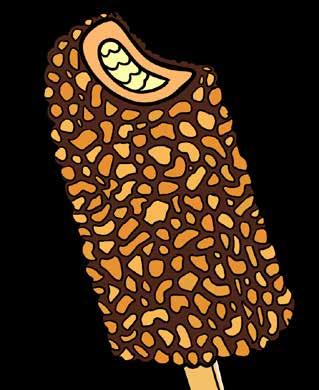
Golden Gaytime
Happiness incarnate is you. You’re here for a good and a long time. You just present yourself with so much positive energy it’s intoxicating. You’re always a pleasure to have around.
22 Dec – 19 Jan
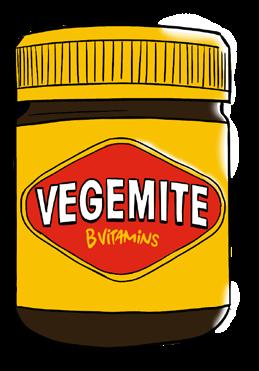
Vegemite
On the outside, you’re put together. However, inside, you’re dark and very salty. Not everyone will like you, but that’s okay. You only need the people that like you.
20 Jan – 18 Feb
Lamington
You’re in the opposite situation to Capricorn. You’re dark on the outside and present yourself as edgy. Once you let someone take a bite of you, you turn into a big softy.
19 Feb – 20 Mar
Caramello Koala
You’re quite delicate, soft, gooey, and easily broken, even if you appear not to be. The caramel at your centre is all your emotion, and you have a lot of it to share.
Who and what inspired the start-up of women’s collective?
The club was founded by Lex Raj and Eloise Atterton, in December 2020, with the aim of creating a dedicated space for every female identifying student of UniSA to strongly advocate for women’s rights, feminism, foster equality and equity across all women’s issues. We create a safe environment for our members to share their experiences and innovative ideas and grow together as a collective at UniSA.
What can you tell us about your club and how is it distinctive amongst the realm of UniSA opportunities?
Our club is unique, as it brings together strong, independent women—from different walks of life—who inspire others in claiming their power back from society. By breaking societal stigmas and sharing personal experiences, our club creates opportunities to learn about women’s issues and find the appropriate support.
What do you believe you offer as a club?
The club intends to tackle critical issues, such as gender discrimination and inequality with the objective to create a safe space for women on campus. We also aim to be the voice of survivors and create a support system for the ones in need. In addition, the club offers good networking opportunities for its club members and a chance to get involved and participate in many fun activities and events; thereby, forming deep and meaningful friendships within and outside the community. As a club, we also challenge the most common misconceptions around feminism and being misunderstood as a gender biased association. In fact, our club welcomes members from all genders, races and communities who believe and support our ideology and are ready to help us create a better community at University of South Australia.
What does your calendar involve for the year ahead ( events, workshops etc) and how can students get involved?
We organised a games night with UniSA Rainbow Club and Chatbox on April 23rd. Some of the other events in our pipeline are: Yoga workshop, networking event, podcasts on sexual and mental health with guest speakers, self-defence workshops, cocktail night/ball at the end of the year. We are also planning to do some workshop forums with corporate equity departments, university safety and wellbeing committees and government officials to get involved on the topic of equity and women safety and wellbeing in universities.
What does the usual week look like when being part of the club?
We strongly believe in teamwork and stay in touch regularly on our WhatsApp group called ‘My WoCo Squad’. Whenever someone comes up with an exciting idea, we share it in the chat and brainstorm to develop it further. We also do our monthly meeting via zoom to plan our upcoming events. As final year students, we’re all extremely occupied with studies and part-time work but our passion for this club keeps us going. It is noteworthy that the current team members were recently elected and are from different campuses; so, we do find it difficult sometimes to meet in person. However, knowing each other from past university networking events, makes our communication and collaboration easier. The campus fair in mid-March was a huge success for us, as we successfully sold out our freebies and signed up over 50 people. As a club in an infancy stage, there’s plenty to learn and we’re looking forward to this year.
What do you hope to achieve as a club, what heights do you desire to take Women’s Collective to?
As a president, I would say: there is no I in team, so the team definitely wants to have more member engagement. We want people supporting equity and female rights in the workplace, university or anywhere. It is a club for people, not just for women. We want to reinvite the culture of social events back into the university. We want to make people woke on the topic of feminism, we want to have casual coffee catchups and forums/ talks on campus to provide a safe space for people to talk about their experiences. We definitely want to collaborate with other clubs to spread our purpose for engagement in professional and social events. We want to develop new, professional and academic programs that university students need. Keep an eye on our social media for fun, interactive and enlightened posts.
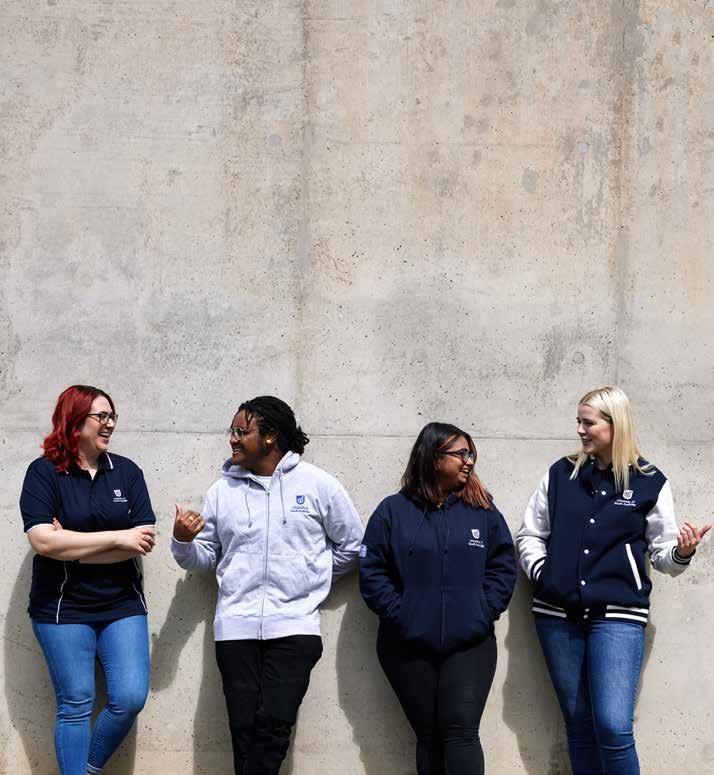
USASA is here to help you through the good times & the bad. We are a non-profit, student-owned organisation focused on providing services & a voice for all UniSA students.
USASA empowers you through:
· Verse Magazine
· Student Representation
· Academic Advocacy
· Student Clubs
· Social Events
· Student Voice
· USASA Grants
· Financial Counselling
· USASA Student Spaces
· UniSA Merchandise
Are you studying externally or online?
Hey folks,
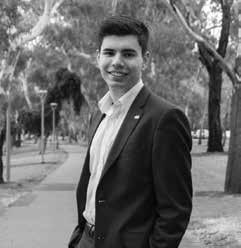
I wanted to talk a little bit today about democracy.
If we can say anything about this year, it’s that we’ve seen democracy in practice. We’ve been to the polls twice already, with local government elections set to take place between October and November. Still, those students who live in the state electorate of Bragg will also be voting up to four times this year, with the recent resignation of their local member.
A sizeable number of UniSA students will vote 3 or 4 times this year, having only voted for the first time in March, but not too long ago this wouldn’t have been the case. I wanted to take this opportunity to talk about democracy in South Australia.
In 1970, South Australia elected a new Premier by the name of Don Dunstan. Amongst many other reforms we sometimes take for granted today, Dunstan took to the election a pledge to lower the age of majority from 21 to 18. This meant that for the first time 18–20-year-olds could drink, gamble, serve on juries, enter into bringing contracts and most importantly, VOTE. Had these laws not changed in 1971, almost half of UniSA’s students wouldn’t have the right to vote today. Our voices would not be heard and our interests rarely, if ever, taken into account.
Our student lounge, at City West Campus, sits in the Catherine Helen Spence building. Catherine Spence, a South Australian woman born in Scotland was one of the major leaders of the women’s suffrage movement in SA and around the world. On 18 December 1894, South Australia became the second place in the world where women could vote and the only place in the world where women could stand for election. It took another 65 years before the first female Member of Parliament was elected.
Sometimes, we can take our right to vote for granted but throughout the years, students have been at the forefront of political change in this country. While in countries like Ukraine, we see people fighting and dying for the right to a democracy; it’s a reminder of just how important our vote is.
Determining the course of history by numbering a few boxes… voting is the biggest change you will ever make with so little effort.
Until next time, Isaac Solomon


Abby Smyth
Alena Sopotsko
Alexandra Alava
Anadi Sharma
Archibald Barone
Callum Muzyka
Colin Herring
Dinuk Hasantha Nanayakkara
Eliza Dunn
Erica Menzies
Georgia Lawrie
Georgia Thomson
Georgina Karatassas
Hanah Williams
Henry Hough-Hobbs
Isaac Solomon
Isabelle Raven
Jeiko Blackstreak
Kerry Lacey
Kyle Feirclough
Lauren Downton
Madeline Blake
Matisse Chambers
Maya Smale
Nipuni Saimon
Oksana Steele
Oliver Hallet
Philip Evans
Sammy Tsoulos
Shania Parker
Stephanie Doddridge
UniSA Women’s Collective
@a.smyth.art @alena_sopotsko @alxz.lv @lets.revive.humanity @fartist_lounge @muzinkarts @elizadunnn @erica_kate303
@georgia.thom_ @crypticfoxcreations @hanahwprintmaker @henry_hough_hobbs @isaacdsolomon @nevari.indd @_kyle.ai @laurendowntonartist @madeline_art02 @matissechambers @mayasmale @inkpoools
@shania.parker @stephaniedoddridgeartist @unisawoco
Verse Magazine is proudly brought to you by