Members of Dyslexia Scotland can log into our website to access magazine articles online at dyslexiascotland.org.uk/dyslexia-voice-magazine, and download a free PDF version in our online shop.
Send a comment
Do you have a comment about this magazine? Scan this QR code to share your feedback, or go to: https://forms.office.com/e/3EU1KarnYA
All rights reserved. Dyslexia Voice is published by Dyslexia Scotland. Articles within this magazine provide a view from the author only. Opinions may differ from professional to professional. Dyslexia Scotland may or may not share these views and opinions. Reproduction or transmission in part or whole of any item within this magazine is not permitted. While every effort has been made to ensure the accuracy of the information in this publication, the publisher accepts no responsibility for errors or omissions. Images have been reprinted with the permission of the publishers or copyright holder. We acknowledge the support and funding of the Scottish Government for this work.
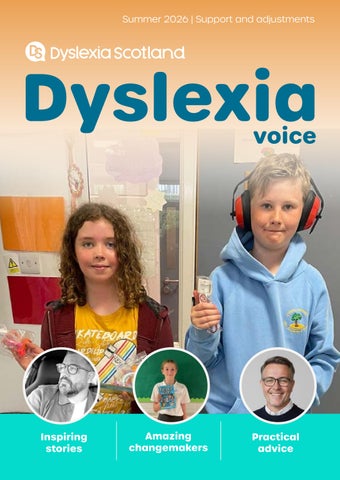
In this summer edition of Dyslexia Voice, members can learn about support and adjustments. Our contributors this quarter have offered shared experiences and many practical suggestions for strategies that help in the workplace, at school and in day-to-day life. There are also some encouraging messages about other types of support that can make all the difference to dyslexic people of all ages.
For example, in Daniel Robinson’s home a key message to their dyslexic daughter is “to never respond to Ruby’s dyslexia as a bad or shameful thing. We’ve always let her know that it’s part of what makes her unique.” Read more on page 30, including about a song Daniel wrote to Ruby.
Daniel will be performing the song and sharing his story at our education conference. Read about the other conference keynote speaker, Louise Selby, on page 42 and what to expect from the event on 31 October.
The insightful and practical articles by Seona Stevenson and Kirsty Innes about support in schools on pages 36 and 40 highlight the crucial importance of listening to individual learners, using information and assessments to discover the strengths, challenges and strategies to support each learner.
If you’re interested in learning more about, or sharing examples of reasonable adjustments in the workplace, please have a look at the following: this year’s Dyslexia Awareness Week plans on page 22, Jonathan Rae’s article on page 24 and Michael Bailey’s insights into using AI to help with his Tree Surgeon business.
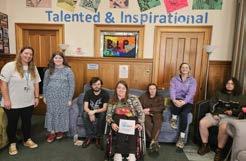
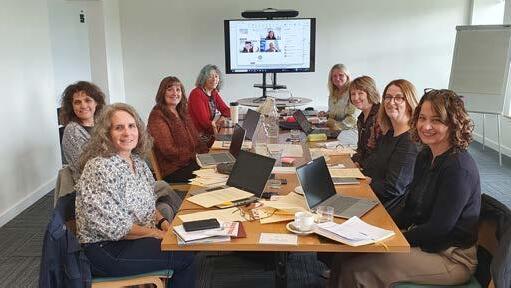
Our Behind the scenes section showcases members of the Addressing Dyslexia Toolkit Kirsteen Steven and Michelle Luciano, as well as the whole group hard at work at the recent Development Day in May. This section also features volunteer Emma who has been doing pro bono work with us on our tutor information on our Salesforce database.
The Dyslexia Scotland team have been busy as ever. We’re particularly excited about the following (all featured in this magazine):
• Our new five-year strategy which was launched in April.
• Our expanded Dyslexia and inclusive practice programme for educators.
• The forthcoming Dyslexia Scotland tartan project!
I hope you enjoy the inspiring stories about dyslexia changemakers around Scotland…and the young people who helped at and took part in our Youth Day. Thank you, as always, for being part of our community and for
MSPs pledge support for Manifesto asks
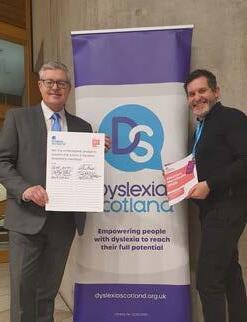
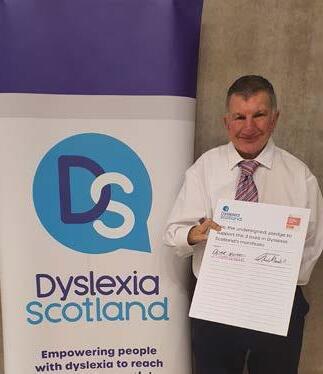
Several MSPs signed a pledge to support Dyslexia Scotland’s Manifesto’s aims in February
We had a steady stream of visitors to our drop-in session at the Scottish Parliament, with MSPs stopping to hear about its key policy asks, ask questions and share their own observations from constituencies.
MSPs who visited included Oliver Mundell, Miles Briggs, Jeremy Balfour, Siobhian Brown, Stuart McMillan and Stephen Kerr.
The discussions helped highlight the importance of improving support for people with dyslexia and encouraged cross-party engagement with our proposals.
Clockwise from top: Stuart McMillan MSP with Paul McNeill; Former MSP Jeremy Balfour and Miles Briggs MSP.
New funding to train more teachers
Places on a pioneering teacher training programme in dyslexia and inclusive practice are set to double following new funding from the Scottish Government
The groundbreaking programme, co-delivered by Dyslexia Scotland and Education Scotland, leads to the General Teaching Council for Scotland (GTCS) Professional Recognition Award in Dyslexia and Inclusive Practice. The course equips teachers and lecturers with the knowledge and practical tools needed to create dyslexia-friendly learning environments in Scottish schools and colleges.
The additional funding has been provided by the Scottish Government who pledged a further investment of £29 million in the 2025/26 budget for local and national programmes to support the recruitment, retention and training of the ASN workforce. Former Cabinet Secretary for Education and Skills Jenny Gilruth MSP had previously praised the programme’s success in 2024.
The programme’s expansion will allow for an additional 50 educators per year – 100 in total – to undertake the Professional Recognition award. ►
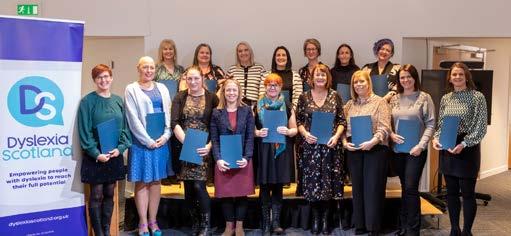
The 2026 cohort with their certificates
Since the programme’s inception, 265 educators have taken part, including the current cohort, and 133 have gained their certification, far exceeding the initial expectations of the course’s potential.
The aim of the programme is to develop accomplished expert teachers and lecturers in dyslexia and inclusive practice so that they are well equipped to support learners and colleagues through the holistic identification and support process for dyslexia – which is the fourth-most prevalent identified support need in Scottish schools.
The expansion of this programme would contribute to the continuing implementation of the 2014 Making Sense report recommendation to build on and develop the suite of resources that are already available to teachers to support them to meet the needs of children and young people with dyslexia.
The difference the programme makes
The practitioners who have completed the course and the 47 in the current cohort are adding to an ever-growing community of professionals equipped to identify and support learners with dyslexia in schools and colleges, and cascade knowledge throughout their learning communities.
Former Education Secretary Jenny Gilruth said: “Ensuring children receive an education that recognises their individuality, meets their needs, and supports their aspirations is at the heart of all we do.
“Last year’s additional support for learning (ASL) data summit identified dyslexia as the fourth most prevalent identified support need in schools.
Our support for the expansion of the Professional Recognition Programme in Dyslexia and Inclusive Practice will enable more teachers across Scotland to strengthen the support they provide to children and young people with dyslexia and better serve every learner.”
Dyslexia Scotland Chief Executive Officer Cathy Magee said: “The expansion of the programme comes at the right time for Scotland’s learners. There is an urgent need for a modernised education system that is responsive to the ►
social, emotional and communication needs of children and young people today.
“At Dyslexia Scotland, we believe that every child and young person deserves an inclusive education that meets them where they are on their learning pathway, supported by skilled educators with the training they need to help learners grow and thrive.
“This programme equips teachers with the tools and knowledge to effectively identify learners with dyslexia and provide appropriate, evidencebased interventions that help them learn and attain in step with their peers. This is key to closing the dyslexia attainment gap and building a fairer society, from the classroom outwards.”
Education Scotland Strategic Director of Inclusion, Wellbeing and Equalities David Gregory said: “We are delighted the programme has been expanded to enable more teachers to participate and help them further support children, young people, families and their colleagues across Scotland. We are looking forward to our continued partnership working with Dyslexia Scotland as we collectively support the growing community of practice for literacy difficulties, dyslexia and inclusive practice.”
The next Professional Recognition in Dyslexia and Inclusive Practice programme is due to begin in September 2026. ■
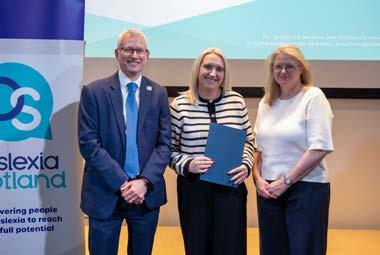
Representatives of Education Scotland with a programme graduate
Bold new strategy launched
strategy
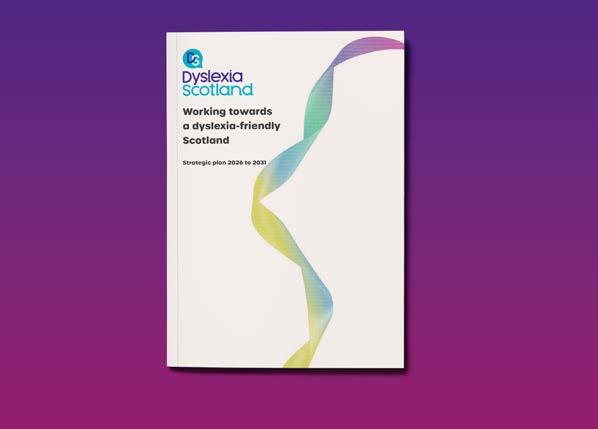
Dyslexia Scotland has launched a new five-year strategy setting out how it aims to create a more dyslexia-friendly Scotland.
Following an extensive community profiling exercise, we have identified six key priorities that must be addressed to achieve our vision.
The strategy focuses on tackling long-standing injustices, including delays and costs associated with identifying dyslexia, inequalities in educational attainment, inconsistent or ineffective support and persistent public misconceptions.
These priorities are informed by an in-depth survey of dyslexic adults, conducted in partnership with the University of Glasgow – the largest study of its kind in Scotland – alongside analysis of data from the Scottish Pupil Census.
Chair of Dyslexia Scotland Peter Lederer CBE said: “This strategy carries enormous public significance, as well as a personal one. Like many adults with dyslexia, I am still reckoning with difficult experiences from my past,
CEO Cathy Magee and Chair Peter Lederer with copies of the
even as I continue to embrace my strengths.
“As Chair of Dyslexia Scotland, I am also looking outward, scanning the strategic landscape and the horizon ahead to anticipate the challenges and opportunities we will face over the next five years.”
CEO of Dyslexia Scotland Cathy Magee said: “Our vision is for a dyslexiafriendly Scotland where every child and young person with dyslexia grows up having their rights met and is enabled to achieve their full, amazing potential. And where workers with dyslexia are accepted, respected, supported and enabled to do their jobs in the way they work best.
“But we aren’t there yet. Children are not all being identified early enough; too many adults are being denied fair support at work and too many people are still lost in the margins. We must do better as a nation.”
The strategy document is supported by a scene-setting ethos video narrated by one of our Vice Presidents, Dougray Scott, which sets out a vision for a dyslexia-friendly Scotland while emphasising the responsibility of everyone in Scotland to help achieve it. ►
Overview of the strategy
Dyslexia Scotland has 3 overarching strategic outcomes:
• People with dyslexia are empowered and make informed choices.
• Dyslexic adults and children have their rights met and are able to reach their full potential.
• There is greater public understanding and awareness of dyslexia.
Within this context, the Dyslexia Scotland 5-year strategy for 2026 to 2031 centres around addressing the challenges the dyslexia community in Scotland currently faces. To identify what these challenges are, we drew on the most recent in-depth research: a national survey of dyslexic adults; a survey of the general population; and reviews of other national sources of data and equality monitoring reports. The results of this research highlighted five key issues that have an impact on the lives of many of the 555,000 dyslexic people in Scotland:
1. Late identification (which is even later for girls and women).
2. Costly adult assessments.
3. Inequalities in educational attainment and wellbeing.
We’re committed to addressing these five inequities as our priorities. At the same time, we have also looked inwards. As we need to sustain our organisation to be able to address these, we have a sixth key priority:
6. Maintain the financial sustainability of Dyslexia Scotland. ■
Read the strategy
The Addressing Dyslexia Toolkit working group
Go behind the scenes and discover the work of the Addressing Dyslexia Toolkit Working Group, through the perspectives of two of its members
The Addressing Dyslexia Toolkit Working Group is a national professional collaboration responsible for developing, maintaining, and guiding the Addressing Dyslexia Toolkit. Chaired by Education Scotland’s Fran Foreman, it brings together experts from the fields of research, education, and
The Toolkit is a free online resource designed to support educators across Scotland to identify and support learners aged 3 to 18 with dyslexia. It provides practical templates, resources, and evidence-based guidance to promote effective support for dyslexic
Kirsteen Steven, Assistive Technology and Additional Support Needs Teacher based at CALL says, “We are committed individually in our daily roles to improving outcomes for learners with dyslexia and this groups brings that together nationally to be drivers of change.
In terms of my personal contribution to the group, this so far has centred on guidance on the use of assistive technology, particularly ensuring that the links within the toolkit reflect current, practical and evidence
Left: Kirsteen Steven; Right: Professor Michelle Luciano
informed approaches to supporting learners. This includes reviewing content, ensuring links are there to relevant resources, and highlighting how built-in accessibility features and digital tools can support independence, engagement and inclusion in everyday classroom practice.”
Professor Michelle Luciano, Personal Chair of Behavioural Genetics at the University of Edinburgh, says, “I am an academic with a strong interest in understanding why some people have difficulties in learning how to read. My research focuses primarily on the biological and cognitive underpinnings of the differences we see between people in their reading and spelling skills.
Being part of the group enables me to think about how research findings are best translated into practice and to think about what further research is needed in this space.
My participation in the working group adds to the diversity of expertise in the group: I bring a strong research perspective to our discussions so that the decisions we make around dyslexia guidance and support are informed by both practice and science.
For example, we recently updated the Scottish working definition of dyslexia to be in line with a recent Delphi study which surveyed the views of experts and practitioners working in the area.
I feel very privileged to be part of the Addressing Dysleixa Toolkit working group which has the very important role of raising awareness of dyslexia, advising on inclusive practice in teaching and supporting literacy, and guiding practitioners on ways to identify and support literacy needs.” ►
How the Toolkit helps teachers
The group is also made up of expert professionals from across the country.
Hilary Aitken, Chartered Teacher (Lead) within the Literacy/Dyslexia Support Team at City of Edinburgh Council, said: “Being a member of the Toolkit Working Group is a real privilege. In meetings, I always learn a lot from my Toolkit colleagues and am able to check in about my own thinking and practice. As well as being in the fortunate position of being able to influence and support Scottish practice, I also learn a lot and always leave with lots to think about and further develop in my own Council.” ■
Small changes, bigger impact
by Emma from Cairies
Cairies have been helping Dyslexia Scotland improve their information management systems
Towards the end of 2024 my daughter was identified as dyslexic. Looking back, the signs had been there for a while. She found certain things really hard, like times tables and spelling and the learning didn’t ‘stick’.
Around that time, the school shared details of an online session Dyslexia Scotland was running for parents. The meeting was packed with inspiring speakers and practical guidance, and I found it genuinely reassuring.
I became a member, and decided it would be nice to give something back. So, I got in touch and offered some pro bono support to help Dyslexia Scotland get more out of Salesforce, the database they use to manage contact details.
Working with the team, we’ve made it easier for staff to capture, search for, find and maintain information on tutors..
The outcome is a more streamlined way of managing information, with less time spent updating spreadsheets and chasing updates, and more time focused on supporting people. It’s a small change behind the scenes, but it supports the bigger goal: helping more people access the right tutor support at the right time.
Andrew and Emma, Salesforce consultants
Help promote school guidance
Last year, the then Cabinet Secretary for Education and Skills Jenny Gilruth MSP wrote to all Executive Directors of Education and Children’s Services in Scotland, urging them to provide appropriate support for children and young people with dyslexia in schools
The move came about thanks to the influence of one of our Ambassadors, Paul McNeill, who is Secretary to the Cross Party Group on Dyslexia in the Scottish Parliament.
In her letter, the Cabinet Secretary stated “I want all children and young people to receive the support they need to reach their full potential, including those with dyslexia. In Scotland, a formal identification of dyslexia is not required before appropriate support is provided, however, our national approach does recognise that children and young people with dyslexia benefit from early identification.”
The letter was accompanied by an in-depth factsheet which set out guidance on dyslexia policy and professional learning resources on dyslexia. It asks that Education Authorities follow the guidelines and utilise the resources to support children and young people with dyslexia in schools.
Since then, the Scottish Government has followed up with schools to find out how well the guidance has been used.
Paul McNeill said: “It’s really positive to see that the Scottish Government has now followed up and written to every Head of Education across Scotland, asking for feedback on the guidance document.
This is an important step forward and a real opportunity to listen, learn and improve how we support young people, particularly those with additional support needs.”
Paul is urging all Dyslexia Scotland members and supporters to play a part in ensuring the guidance is used.
“Please help raise awareness. Ask your own school or local authority if they have completed the feedback.
Follow up with your local MSP to ensure this is being taken seriously. This is a moment we should not miss.
If we get this right, we have a genuine opportunity to strengthen our education system and ensure that every young person is properly supported to reach their potential.
Let’s work together to take this forward and turn good intentions into real, lasting change.”
Paul McNeill, Secretary to the Cross-Party Group on Dyslexia in the Scottish Parliament
We need
your
help for Dyslexia Awareness Week Scotland
Dyslexia Awareness Week Scotland 2026 will run from 28 September to 4 October - here’s what you need to know and do now
Dyslexia Scotland believes that work and learning should be neuroinclusive. That means having environments where systems adapt to the people, rather than people to the systems.
But until that happens, people with dyslexia need to be able to ask forand receive - reasonable adjustments that help them work and learn in our current systems.
This year, Dyslexia Awareness Week Scotland will campaign for access to useful reasonable adjustments. Throughout the week, we’ll:
• encourage employers and educators to provide suitable, useful reasonable adjustments and support
• empower children, young people and adults with dyslexia to ask for the things they need to help them.
We need your help ahead of the campaign. We want to hear what reasonable adjustments you find helpful for what difficulties in your job or education.
We’re collecting a database of these so we can help others learn what might be useful for them.
Fill in the survey or get in touch for alternative ways to share yours.
Contact: katie@dyslexiascotland.org.uk
Take part in our reasonable adjustments survey
Employers - are you managing to do the right things for your dyslexic employees?
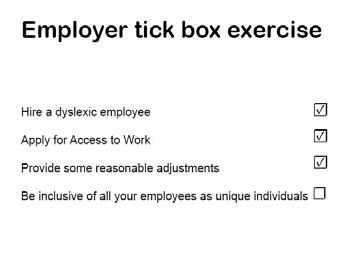
Our research* shows that just 41% of dyslexic employees in Scotland receive reasonable adjustments, and a quarter of them don’t find them helpful at all.
Being neuroinclusive isn’t a tick-box exercise, it’s a whole culture. We’re here to help you provide the right support and environment for your staff.
Our training will help you to ensure your working culture is focused on being inclusive, accessible, and empowering for individuals with dyslexia.
Get in touch to book your training with us: dyslexiascotland.org.uk/dyslexia-training
*Dyslexia Scotland and the University of Glasgow (2024), Towards a dyslexia-friendly Scotland. Available at: dyslexiascotland.org.uk/report
Dyslexia at work: small changes that make a big difference
by Jonathan Rae, Senior Manager Performance
Jonathan shares key insights to making the corporate workspace dyslexia friendly
I was at work today and opened an email thread with 14 replies, three attachments, and a ‘quick question’ buried somewhere in the middle. I sighed as it took me 15 minutes to work out the context and unearth the elusive question relevant to my role.
Now imagine that kind of communication is your everyday obstacle course. For many colleagues with dyslexia, it can be; especially when work is increasingly fast, wordy, and full of last-minute changes.
For many people with dyslexia, that kind of communication isn’t an occasional frustration of modern work; it can be a daily barrier that adds time, fatigue, and stress.
We know that dyslexia doesn’t reflect intelligence or capability. It’s a difference in how written language is processed, and in a work setting, it can show up in practical ways: reading dense text can be tiring, reviewing documents may take longer, similar words can be mixed up, and capturing notes while listening in meetings can be difficult. Under pressure, spelling and word-finding may become harder too. At the same time, many dyslexic colleagues bring skills that teams benefit from: big-picture thinking, creativity, pattern spotting and strong problem-solving. High-performing teams make space for different working styles so these skills can shine, rather than letting admin and unclear communication get in the way.
A dyslexia-friendly workplace is often just a well-communicated workplace
and Delivery, Group Financial Crime, HSBC plc.
and universally accessible by all. Many helpful adjustments are free, simple, and improve clarity for everyone - regardless of role or seniority. These steps aren’t ‘special treatment’; they’re good communication that supports structured delivery and reduces rework. Small everyday habits can make a big difference. ►
Jonathan says: “A dyslexiafriendly workplace is often just a well-communicated workplace and universally accessible by all.”
Jonathan’s top tips
• Use bullet points instead of dense blocks of text; if a paragraph runs long, it probably wants to be a list.
• Keep to one topic per message where possible, and if you have multiple requests, label them clearly (1–3) and highlight key points in bold so they’re easy to track.
• Send meeting agendas early - even 30 minutes helps - and include what decisions are needed so colleagues can prepare.
• Close meetings with a clear recap: decisions made, actions agreed, owners and deadlines, then send that recap in writing.
Mentoring is another effective low-cost support because it’s personalised and practical. A mentor doesn’t ‘fix’ dyslexia; they help remove barriers, build confidence, and develop strategies that work in real day-to-day situations.
Good mentoring might include:
• planning and prioritising (breaking large tasks into steps, agreeing what ‘good’ looks like, and setting realistic timelines)
• communication shortcuts (drafting key messages, structuring documents, and creating reusable templates)
• confidence and advocacy (practising how to ask for adjustments, push back on unclear requests, and prepare for high-stakes meetings).
Signposting available tools and reasonable adjustments is often the first step in helping someone feel more in control.
Employee Resource Groups (ERGs), such as Neurodiversity networks, can be a game changer because they focus on what genuinely helps in practice. ERGs can run awareness sessions, publish practical toolkits (for example, accessible email and communication guides), and feed real barriers back to the business so processes improve. Regular support drop-ins can be especially valuable, giving colleagues a place to share strategies, reduce isolation, and build community.
Non-dyslexic colleagues can contribute too: attend sessions, share toolkits, volunteer as a mentor or buddy, and amplify what colleagues say works. Some ERGs also run experiential exercises to help teams understand what dyslexia can feel like in everyday work.
The most sustainable inclusion comes from a culture where people don’t have to ‘confess’ a need. It should be normal to ask for clarity, request notes, take a moment to read, and use tools like dictation or read-aloud. Teams can set simple standards - clear writing, time to prepare, and written recaps - while also assuming good intent and asking rather than guessing. A question like, “What’s the easiest way for you to take this in?” can prevent unnecessary stress.
A practical next step is to pick one change this week: shorten one email, send one agenda early, or end one meeting with a crisp action recap. Small, consistent actions - paired with empathy - create a workplace where more people can thrive and contribute at their best.
Jonathan Rae is a father and brother to dyslexic individuals. He is a volunteer with Dyslexia Scotland South East branch, works in a Global Bank supporting neurodivergent colleagues and parents globally, is exChair of a Global Neurodiversity Employee Resource Group and an active Neurodiversity and Literacy Advocate. ■
How we plan to change a million lives
by ivvi, Organisational Members of Dyslexia Scotland
ivvi wants to help people with dyslexia manage note-taking successfully
The ivvi journey began with a 15-year-old student crying on her bedroom floor. She was a smart student, however, she had failed an important exam despite trying to study and revise.
That student was our daughter and we realised she had dyslexia. She was trapped behind a wall of words and couldn’t make sense of her notes. Her dad taught her to mind map and this gave her a way to understand her studies and succeed.
We didn’t want to just help our daughter and so our mission was set: We want to teach 1 million students with dyslexia to mind map by 2030.
For students with dyslexia and ADHD who are visual thinkers, traditional note-taking methods can be a significant barrier to learning. Lectures can be overwhelming, and deciphering a long wall of transcribed text often proves difficult.
Recognising this challenge, ivvi Notes was created as an AI-powered assistive technology with the mission to solve note taking for dyslexia.
ivvi Notes is the first real-time voice-to-mind map solution purpose-built for visual learners and those with working memory challenges.
The core functionality of ivvi is the instant visual notes. When a student starts a session, ivvi captures the spoken words in real time, transcribes them, and automatically organises the information into a visual mind map. This process ensures students can focus on listening and understanding during the taught session without the need for frantically scribbling notes.
The visual map itself is highly structured and interactive. Each branch and sub-branch highlights keywords and key ideas, mirroring how visual thinkers naturally connect concepts. Users can highlight important points and key quotes, add their own notes and import slides and images while the lesson is happening.
The complete text transcript and full audio recording are kept synchronised, allowing learners to click on any point of the map to return to that exact moment in the lecture. This gives students full confidence that everything has been stored and that they can leave every lesson with useful visual notes enabling them to remember what matters.
ivvi is built for accessibility and features a clean interface with minimal distractions and full keyboard navigation. For those concerned about privacy, all user data is encrypted and stored securely, and users retain full ownership of their data.
ivvi is available through the UK Government’s Disabled Students Allowance (DSA) scheme, through Access to Work and by direct subscription. There is a 30-day free trial available on the ivvi website so that you can try the software to ensure that it will be helpful.
The next stage of ivvi’s growth is to be widely available in schools throughout the UK.
If you would be interested in learning more about ivvi and how it could support teachers and pupils in the classroom please get in touch with us at support@ivvi.app.
For further information and to access a free trial please visit ivvi.app
The ivvi app
Ready to bloom
Interview with Daniel Robinson, singer-songwriter
When Glasgow dad
Daniel wrote a personal song called ‘Bloom’ about his daughter’s dyslexic struggles, he didn’t realise he’d be capturing so many other people’s experiences.
Daniel spoke to Dyslexia Voice about following passions, tackling difficult subjects and being present as a dad.
Above: Daniel Robinson; Right: Daniel in his studio
How does dyslexia feature in your world?
I grew up struggling academically but not knowing why. Once Ruby was identified, and we saw some of her struggles early on, I realised, “Oh, I’m dyslexic too.”
It was hard at times seeing her struggle to grasp concepts in school that the other kids picked up quickly. We never ever wanted to be those parents that were overbearing, putting lots of pressure on the school and I think after a while we realised we could have been a bit more assertive. After all, who else is going to advocate for her? It's hard to watch.
When Ruby found out she was dyslexic, she was a bit tearful. The way we cope as a family is to never respond to Ruby’s dyslexia as a bad or shameful thing. We’ve always let her know that it’s part of what makes her unique.
In our family, academic results come secondary. We encourage our kids to always give their best, so we hold them to that standard.
I’ve grown into a career in music unexpectedly – my degree is actually in Sports Coaching and Development, so I’m proof that you can follow your interests.
Does Ruby share your sense of joy from different interests?
Ruby is a mini me. She’s really creative – more than I am – and she's into music and dancing, and fascinated with nature and documentaries. She's a dyslexia ambassador at school and wears her badge with pride. ►
“We never ever wanted to be those parents that were overbearing, putting lots of pressure on the school.”
Now that she’s approaching secondary school, we do really hope there will be sufficient support in place. At different times my wife and I have had some concerns about Ruby’s academic future but then we look at my story and how things have worked out – I achieved a university degree and now have my own business - so we take hope from that and the stories of others that you can make something of yourself with hard work and perseverance.
What words of wisdom can you give other dads of dyslexic children?
Don’t put pressure on yourself to be the fixer of all the family problems. Just be present.
You wrote the song Bloom about Ruby’s dyslexia. How did that come about?
I like to tackle subjects that are a bit difficult, and initially I was writing the song about my own struggles with dyslexia, but then I knew it was really about Ruby.
I wanted to highlight the day-to-day little nuances of her life and her struggles, but also reshape the narrative, because she’s a really incredible wee girl. And so I wrote the line that “one day we'll see her bloom” - because I really believe that she’s going to do amazing things.
It was a song I wrote for her - for her ears and for her heart. She’s probably still quite young to fully appreciate it, but I think it's something she’ll cherish in a handful of years.
What were the initial reactions to the song when you shared it?
I first sang it to my wife in the kitchen and she just burst into tears. It was at that point I thought, gosh, maybe this song has got more substance than I realised. Then I sang it for my mother-in-law and she burst into tears too. I’ve had such an encouraging response online and lots of messages about it. ►
What are your hopes for the song now?
It was really just intended for Ruby but now I really feel like I need to record it and get it released. It would be incredible if it was something that encouraged other children, or even adults. ■
Watch Daniel sing Bloom on his Instagram account
@daniel_ robinson_music
Daniel will also perform at our Education Conferenceanother reason not to miss the event.
“It was a song I wrote for her - for her ears and for her heart.”
Young, dyslexic and thriving
by Lena Gillies, National Development Officer at Dyslexia Scotland
We were delighted to welcome nearly 30 young people with dyslexia to our recent Youth Day in Stirling. The participants, aged 10 to 13, attended two fun workshops run by The Wee Coaching Company and PACE Theatre. The workshops were designed to help the young people think about stepping outside their comfort zone, building resilience and being creative.
Our Young Ambassadors did an excellent job welcoming everyone to the event and chatting to anyone who was feeling a bit nervous. We were so proud of everyone who took part in the day.
What the young people thought
“I now know I am not the only kid with dyslexia. The activities were really fun and I felt happy and comfortable. I made a friend.”
“I enjoyed the drama element and making a new friend.”
“It made me feel better about my dyslexia.”
“It was nice to meet lots of other people with dyslexia.”
What parents and carers thought
“I have not once heard [our daughter] talk about her dyslexia being a positive thing until yesterday. She told me in lots of detail what she did during the day and she was very happy to do so. She liked being in a space with other kids with similar challenges and I really think this has made a positive difference to her self-esteem.”
“She really enjoyed her day and was very excited to tell us all about it. This was her first event and we only have positive things to say!”
“Our daughter came out feeling very enthusiastic about it and asking to do it again next year. We’re really grateful to you for organising it”.
Left and above: participants at the event
Pupil power
by Kirsty Innes, a Member of Dyslexia Scotland
When young people are empowered to drive change in their schools, amazing things happen, writes parent Kirsty
At Stobhill Primary School in Midlothian, Support for Learning teacher
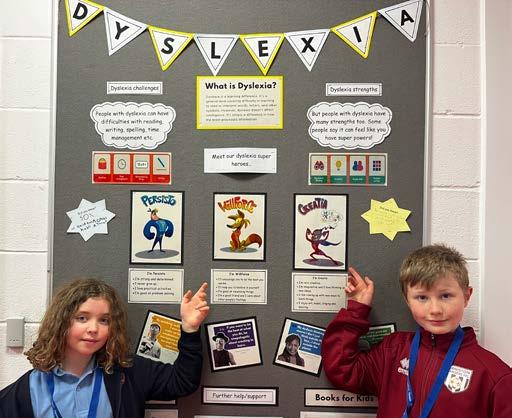
Fearn Wood has worked alongside two senior pupil ambassadors, Innes Henderson and Rory Innes, to create an Understanding Dyslexia Group and a dyslexia toolkit for every class. Their work has built understanding, confidence and shared language around dyslexia.
Fearn explained: “I wanted to recruit pupil ambassadors to ensure that the voices of learners with dyslexia were represented in the resources we developed. Innes and Rory are amazing communicators, who already had a good understanding of their dyslexic thinking, so I knew they were perfect for the job. Together, we created a range of resources to help parents, staff and children understand dyslexia.
Resources that help
“We used the Mission Dyslexia heroes, which I discovered at DyslexiFest, as inspiration for a programme of work aimed at developing a positive mindset, strengthening self-image and equipping children with dyslexia with a personalised toolkit of learning strategies.”
In the first of their sessions, Fearn supported the ambassadors in:
• creating a dyslexia information board
• presenting their own Dyslexia Awareness Week assembly
• delivering Read & Write toolbar training to staff and pupils.
They also came up with their own ideas, which included:
• developing a competition which resulted in the creation of a new school superhero – Lexi
• leading a fundraising drive, which ensured every class had their own box of learning resources.
The pupil voice
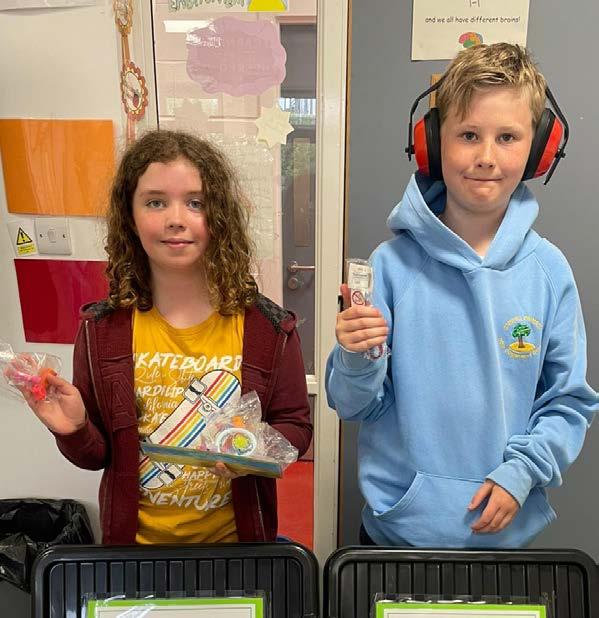
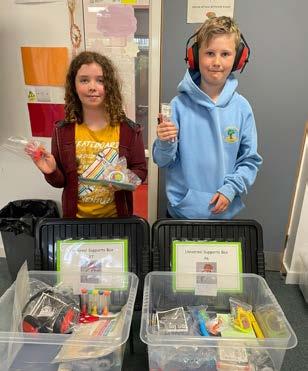
Speaking about her involvement, Innes, now P7 said: “I suggested we should raise enough money to create a toolkit that ensured every pupil could access learning without being seen as any different to anyone else. We held a Dress Down Day and raised over £400 to create boxes for every class. Rory and I had great fun picking out the things we knew would help others, like fidget toys, sand timers, coloured overlays, pencil grips and chunky pencils.”
The fundraising drive was such a success that the school was also able to buy Nessy licenses and a variety of dyslexia-friendly books.
Together, Fearn, Innes and Rory then taught pupils and teachers how to use the resources within the box. Almost a year on, the boxes are well used and notably making a difference to other learners. ►
Innes and Rory demonstrate the toolkit
Now in S1, Rory said: “It was brilliant to be part of the Dyslexia Group. I was nervous at first to talk about my dyslexia in front of the whole school at assembly, but it helped me realise it was OK to be dyslexic and I was not alone. It is such a buzz to know that what we did has helped others who feel just like I did too.”
Mum Kirsty added: “I’d love to say a huge thank you to Mrs Wood and headteacher Mr Wilson. The Dyslexia Group really was transformational for Rory, who is thriving in high school and now confidently advocating for himself thanks to their support.”
Stobhill’s Dyslexia Group model features as an example of best practice in Midlothian Council’s new dyslexia practice guidelines, which have recently been rolled out to all schools in the area.
Innes and Rory
Sharing support tips
by Liz Rodger, Dyslexia Scotland volunteer
At the April meeting of the Glasgow Adult Network, member Alison discussed how she coped with a constantly changing workload. The majority of the coping mechanisms used were simple, such as saving notes on her mobile phone, using sticky notes for reminders and using mind maps as memory aids to help workload planning.
Another of Alison’s coping mechanisms is taking time to get to know her staff personally. She listens to their work issues, helping her understand their jobs and allowing her to communicate in a way that nurtures them. This enables her to delegate tasks in a way that empowers her staff by using their individual strengths.
If you would like to discuss adult dyslexia issues with other dyslexic adults who understand, come along to one of our meetings. Workplace support and empathy from others with dyslexia is available at Dyslexia Scotland’s Adult Networks. Meetings cover a variety of dyslexia subjects. Visit Dyslexia Scotland’s Events webpage to find out more. I hope to welcome you at a meeting in future.
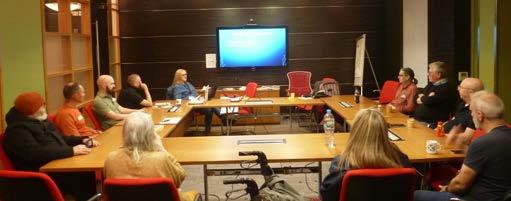
Below: A Dyslexic Adult Network meeting
See the Events page
Finding the right support
Seona Stevenson, Teacher at Dunblane primary school
Useful adjustments can be as unique as the learner themselves - Seona Stevenson outlines how support is given at Dunblane
Adjustments for learners with dyslexia at Dunblane Primary are agreed, recorded on an ASN profile and put in place when the dyslexia identification process has been completed.
As all learners with dyslexia are different and have their own profile, it is necessary to use information and assessments to discover the strengths, challenges and strategies to support each learner. Taking ‘a one size fits all’ strategy is inappropriate for this diverse group of learners and it will not work. A thorough ‘body of evidence’ pointing to dyslexia must be gathered, collated, analysed and agreed with the learner, their parents and those who work with them.
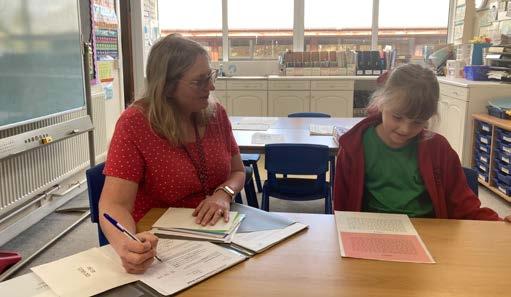
Above: Seona and learner at Dunblane primary school; Right: a learner
So how do we make sure that everyone working with the dyslexic child knows what strategies are in place?
• a feedback meeting is held
• parents can take home a draft Literacy Assessment Report discussed with the child and shared with staff
• parents have the opportunity to make changes/add additional information to the Literacy Assessment Report
• the child’s profile is stored electronically and all staff working with the child can access this. Strategies for use with the child are stored in this
• these electronic folders are shared with secondary school staff for a smooth transition.
What types of supports or adjustments can be made?
• Chromebooks with built-in accessibility features can be used
• learners may require extra processing time
• regular check-ins to check understanding can be provided
• visuals and prompts can be made
• extra reading practice may be facilitated
• phonological awareness programmes
• spelling interventions may be put in place
• sentence starters may be provided to help with writing
• numeracy support
• learners with visual stress can use coloured overlays
• strategies to reduce the load on the working memory can be used
• brain breaks.
Or anything else which works for the individual learner.
Morphology: the bridge over troubled waters?
Louise Selby, Dyslexia and Literacy specialist
Our conference keynote will be Louise Selby - here’s a taster of what to expect from the literacy and dyslexia specialist’s input
Even when reading progresses, spelling and writing often remain challenging for learners with dyslexia. Despite appropriate phonics teaching, words can be difficult to spell and hard to use with confidence. Writing can become a laborious act of transcription, with meaning and creativity taking a back seat.
Reading a word aloud is not the same as knowing it, and it certainly does not guarantee it can be spelled. Yet many learners with literacy difficulties, including those with dyslexia, are found in this predicament, despite high-quality phonics teaching. Writing then becomes effortful and frustrating, often lacking in purpose and enjoyment.
English is a morphophonemic language, built from units of sound (phonology) and units of meaning (morphology).
This keynote explores why morphology (prefixes, roots and suffixes) may be the missing link in our literacy teaching.
Morphology by its very definition makes sense of words
and is a vital part of understanding, reading and spelling them. It does not replace phonics, but complements it, helping learners see that words are not strings of letters to be memorised, but meaningful structures that can be understood, analysed, and used. For learners who can decode but struggle to spell and write, morphology offers a practical bridge: from word reading to word meaning, and from effortful transcription to purposeful communication.
Grounded in research and illustrated through practical classroom examples, this session will show how morphology can be taught in ways which are immediately applicable in the classroom. The focus is not on perfect spelling in isolation, but on enabling learners to use words with increasing control to communicate ideas, explore language and make meaning.
Delegates will also gain actionable insights from these experts’ in-depth workshops and seminars on dyslexia-focused teaching interventions for primary and secondary settings. Workshops will include:
• AI for inclusion: empowering dyslexic learners through classroom practice
• Bridge into practice - morphological strategies in real classrooms
• Celebrating dyslexic strengths and supporting challenges
• Including all in identification
• Literacy for learning in secondary
• Moving forward with dyscalculia
For full details and to book a place go to: dyslexiascotland.org.uk/closingthe-gap
Tidy thinking
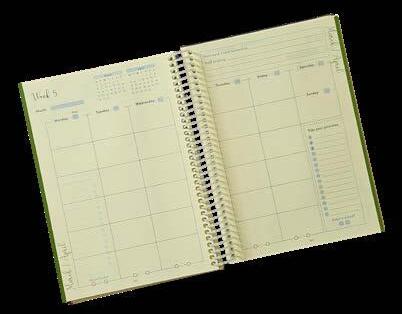
As a full-time teacher, Jessica understands how demanding and detailheavy the profession can be - so she created a resource to help
In 2023, after years of relying on planners that never quite met my needs, I decided to create something better. That decision led to the launch of Tidy Think Educator Planners, a resource designed by a teacher, for teachers.
Like many good ideas, it began with frustration. Existing planners felt cluttered, inflexible, and often overwhelming to use during an already busy school day. I wanted something practical, clear, and supportive, something that would genuinely make planning easier rather than adding to the workload. When I couldn’t find it, I built it myself.
My motivation did not stop at organisation. I also have a strong personal connection to dyslexia. With several family members who are dyslexic, I have long been aware of the challenges that can come with reading and processing written information. This awareness naturally shaped my thinking as my planner business began to grow.
Shortly after launching, a handful of teachers reached out with an important question: could the planners be adapted to include different coloured paper options? That question sparked a new phase of development.
I began researching how visual stress and contrast can affect readability. I explored how different colour backgrounds might ease strain and improve clarity for users with dyslexia. Through trial, feedback, and careful adjustment, I experimented with contrast levels and page design, always with usability at the forefront.
Right: Jessica alongside her planner
The result is a feature I am especially proud of. Tidy Think Educator Planners now offer five different colour options for their pages which I hope are helpful for users with visual stress. I also offer both physical and digital planner options, giving teachers the flexibility to choose what works best for their individual needs. This means teachers can create a planning system that feels accessible, practical, and supportive in their day-to-day work.
Since launching these options last month, the response has been overwhelmingly positive. Teachers have shared how these small but thoughtful changes are making a noticeable difference in their daily routines. For many, it’s not just about convenience, it’s about feeling supported in a profession that often overlooks the needs of its educators.
I believe this is a conversation worth having more widely. We spend so much time and energy making our classrooms inclusive for our children, why are we not putting the same level of thought into supporting our teachers?
Inclusivity in education should not stop at the classroom door. Teachers, like their students, have diverse needs, and when those needs are met, everyone benefits.
To order, visit www.tidythink.co.uk and email jessica@tidythink.co.uk including your order number and the colour that you would like your pages to be. You can choose from yellow, orange, green, blue or pink.
Branching out
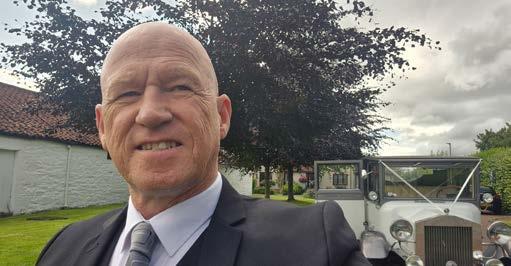
by Michael Bailey, a guest contributor
Tree surgeon Michael’s business might be rooted in the natural world, but it’s growing with help from artificial intelligence
So when I say this is one of the hardest parts of dyslexia in the workplace, I mean it.
Because it's not just about getting the words wrong. It's about feeling like you're failing to show people what you actually know.
Eventually, I left that company and started my own business. It was terrifying.
Not because I didn't know the work - I knew I was good at tree surgery. I knew I could run jobs safely and efficiently. I knew I could build a client base.
But I also knew that running a business meant more communication. More emails. More quotes. More admin. And I didn't know if I could handle it.
Then I discovered AI.
Not as a replacement for my skills. Not as a way to cheat or take shortcuts. But as a tool. An accommodation.
Here's how it works for me: Client emails me about a job.
I read it. I know what they need. I know what I want to say.
But instead of spending an hour trying to write it properly, I just tell the AI:
"Job's Tuesday. Ask about the wood. Quote by the end of the day."
AI writes it. I check it. Send it.
Five minutes instead of an hour.
And it's not because the AI is smarter than me.
It's because the AI removes the translation barrier.
I know what I want to say. The AI just helps me say it in a way that sounds professional and clear.
It's the same as the coloured lenses.
The lenses didn't make me a better reader. They just removed a barrier that was making reading harder than it needed to be.
AI doesn't make me smarter. It just removes a barrier that was making communication harder than it needed to be.
But not everyone sees it that way. ►
“And it's not because the AI is smarter than me.
It's because the AI removes the translation barrier.”
Michael Bailey, tree surgeon and author
I've had conversations with my dad about AI. He's always been unsure about it - not because he's against technology, but because he worries about where AI is heading. When I first started using it, he wasn't a fan.
He shares a concern a lot of people have: what happens as AI develops further? How will it change the world?
I tried to explain it to him.
I showed him what it can do. How it helps me. How it's allowed me to start my own business when I wouldn't have been able to otherwise.
But here's the thing about my dad: he's always been supportive. Throughout my life, he backed my mum's decisions about getting me tested, getting me the coloured lenses, making sure I had what I needed. He never once made me feel like I wasn't capable. He just didn't understand AI at first - didn't see how it was the same kind of accommodation.
Over time, though, he came around.
He saw that I was running my own business. That I was managing clients, doing the work, handling everything. And he realised the AI wasn't doing the work for me - it was just helping me communicate what I already knew.
Now, he gets it. He supports it. He sees it for what it is: a tool that levels the playing field, not a shortcut that undermines effort.
And I understand why people are uncomfortable with AI. It's new. It's changing things. It feels like it's replacing human effort.
But for me, it's not about replacement.
It's about access. ►
“AI gives me access to something that should have always been accessible: the ability to communicate clearly without it taking all my mental energy.”
Above and right: Michael
Without AI, I wouldn't be able to run my business. Not because I'm not good at the work - I'm the best at the work. But the administrative side would drown me.
I'd spend so much time agonising over emails that I wouldn't have time to actually do the job.
AI gives me access to something that should have always been accessible: the ability to communicate clearly without it taking all my mental energy.
It's not cheating.
It's an accommodation.
Just like extra time on exams. Just like coloured lenses. Just like audiobooks or speech-to-text software.
These are tools that level the playing field.
They don't make dyslexic people less capable. They allow us to show the capability we already have.
And I'm not going to feel bad about using them.
Because without them, I wouldn't be where I am today. ■
This article is an extract from Michael’s book, A Man Who Thrives in Trees but Freezes at a Keyboard. Available on Amazon.
My dyslexia journey
by Jim Mooney, a member of Dyslexia Scotland
Jim didn’t receive much support in school for his career journey, but he’s finding his own way now
I was eight years old when I noticed that I was different from my classmates. Back then dyslexia wasn’t recognised, so I thought I was just thick.
I remember being up until 10pm some nights trying to prepare for reading out in front of the teacher and class. My anxiety would be sky high and my self-esteem low.
I felt ashamed. Everyone thought I hadn’t studied hard enough. If only they knew what I went through.
I left school when I was 15 with no qualifications.
Troubles at work
I started a college course at 16 and got a placement in a cable factory. This involved packing and shipping and it was at this point I realised I had trouble multi-tasking – my dyslexic brain couldn’t keep up. I started making mistakes, like wrong shipping addresses or wrong amount sent out.
At 17 I started learning to drive but because of dyslexia I found it difficult to co-ordinate from left and right and gear changes. I was told by this driving instructor that I should give up and that I would never learn to drive.
But they were wrong: I can now drive a car, a lorry, and a bus!
The scenic route
I was a Coach Driver for 23 years and I got lost many times because if I went on a route I hadn’t planned and was picking up a map when I was
under that pressure it only led to my brain seeing a blur. I couldn’t even depend on satellite navigation systems when they were invented – it’s no good in 40-foot coaches when it sends you the scenic route and you end up stuck on a farm road with bushes either side.
I built on my success though, eventually qualifying with an HNC in Travel and Tourism.
The real lesson learned
I’ve struggled on for 59 years with my dyslexia being overlooked. If I have to read or write unplanned and under pressure, I still find it difficult but at least I know I’m not stupid.
I’ve learned that I might not get something when someone teaches it first time but given the time to assess it and break it down in my own way, I will. And I think that’s true for others too.
I also think there’s still a lack of awareness and understanding about dyslexia, and how we have to try twice as hard just to keep up. But I want to help change that.
It’s taken me 59 years to stand up and say “Hi, my name is Jim, and I am dyslexic.“
Let’s create an awareness together.
Jim Mooney
Changemaker channel
People all across Scotland are taking small steps toward the big vision of a dyslexia-friendly Scotland
Better
lives
Dumfries and Galloway’s Better Lives Partnership provides tailored support to all participants, with some great approaches to supporting those with dyslexia. Support Worker Shelley Gibson said: “At our service, we are going to ensure we offer a variety of different learning experiences for the young people who attend. We will ensure that they can choose between writing, using computers or having a staff member scribe for them. If a young person needs a specific colour of paper or any overlays for visual stress, we ensure we have them available. We already break our activities down into manageable instructions, but if a young person required additional breakdown, we will ensure they receive this support. There are quieter areas available so that distractions are minimised.
We focus on each individual’s strengths and support them to build confidence in the tasks they struggle with.
This will hopefully encourage young people with dyslexia to ask for help when required and enable them to reach their goals.”
Staff and participants at Better Lives Partnership
Workplace awareness
Union Representative Chris Wallace says,
“Recently, I proposed introducing a neurodiversity policy within our workplace to help employees feel more confident about discussing their needs and requesting support without fear of stigma or misunderstanding.
The proposal was positively received, and it quickly became clear that there was a real appetite to better understand what reasonable adjustments can look like in practice. Having been involved in developing the policy, I was invited to help deliver training to our management team. During these sessions, I explained how reasonable adjustments can vary a lot depending on the individual and highlighted that there is never a one-size-fits-all approach.
I think this reflects the experience of many workplaces, where managers may not yet have had much exposure to neurodiversity awareness or training. Misconceptions can still exist, such as the idea that ‘everyone is a bit dyslexic’ or ‘a bit ADHD,’ which can unintentionally minimise the very real challenges neurodivergent people may face. Often, these conditions are not immediately visible to others, and without awareness it can be difficult to appreciate the impact they can have in the workplace.
From my perspective as a union representative, this is an important workplace issue and one that benefits from open conversations, better awareness and continued learning at all levels. Neurodivergent employees are often highly capable people who may have spent years navigating barriers in education and employment. The right reasonable adjustments can be the green light we need to move forward and unlock our potential.”
Tell us how you are being a changemaker for dyslexia through the Changemaker Channel
ChrisWallace
Awesome assemblies
Kingsland Dyslexia Club in the Scottish Borders builds confidence, raises awareness, and celebrates the unique strengths of dyslexic learners
At Kingsland primary school, our Dyslexia Club has been running successfully for a number of years, led by our Support for Learning Teacher, Mrs FranklinRay. The club provides a welcoming and supportive space where pupils meet throughout the year to discuss all things dyslexia, share strategies, and support newly identified learners in understanding how to thrive in school. We place a strong emphasis on celebrating strengths.
Each year, we mark Dyslexia Awareness Week Scotland by hosting a wholeschool assembly on dyslexia which has received fantastic feedback and is often described as the highlight of the school assembly calendar. This assembly helps raise awareness and deepen understanding of dyslexia across the school community.
Above: Learners take part in Dyslexia Awareness Week; Right: Anna
We also take part in our wider Neurodiversity Celebration Week in March, continuing to promote inclusion and celebrate differences. Our assemblies have featured inspiring guest speakers, including mountain biker Katy Winton and former rugby star Kenny Logan, who have shared their personal experiences of dyslexia. The club has also benefited from visits by specialist teachers from across the Scottish Borders, helping pupils develop skills such as using iPad accessibility tools to support their learning.
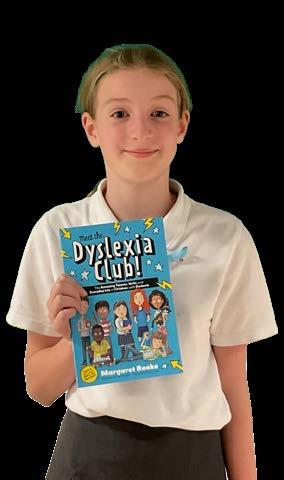
We are particularly proud of our pupil achievements. One of our members, Anna, was interviewed for the Dyslexia Club book by Margaret Rooke and had the opportunity to support Margaret at DyslexiFest last year.
We also have a dedicated area within our school library featuring dyslexia-friendly books. While this space supports our club members, all pupils are encouraged to borrow and enjoy these resources. In addition, we work closely with a local Peebles dyslexia charity, which has supported us by providing valuable resources to enhance learning across the school.
“Anna was interviewed for the Dyslexia Club book by Margaret Rooke and had the opportunity to support the author at DyslexiFest last year.”
Support our tartan crowdfunder
We’re aiming to raise £5000 to have the world’s first dyslexia tartan woven.
Pledge your support at crowdfunder.co.uk to get your hands on printed goods with the official tartan design.