SPECIAL EDITION
#SE12 DEC 2024
Collaborative publication on the sustainable development goals - WWW.SDGZINE.ORG
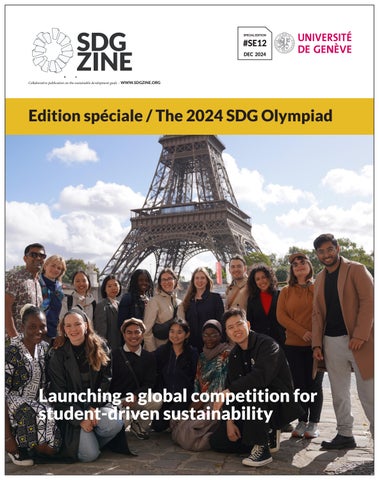
Edition spéciale / The 2024 SDG Olympiad
Launching a global competition for student-driven sustainability 1
©cover image Students on Palais de Nations, Geneva, Switzerland.
Table of Content Partners and Sponsors
How the SDG Olympiad was born................3 Plasticonn............................................................6 QMorjan..............................................................8 Planetary Predictor.........................................10 BIO-Fish Robot................................................12 The NSUPA Project........................................14 Speech Symphony..........................................16 Adjustable cup holder....................................18 Mindful Milk....................................................20 Stick to it!.........................................................22 Navy Buddy......................................................24 Mission Malaria Free.....................................26 Walk with me..................................................28 ViCare................................................................30 Sport4STEM.....................................................32 Anti-Malaria Coalition...................................34 Towards the 2025 SDG Olympiad..............36
This SDGZINE issue is a special school edition with content generated by the winning teams of the SDG Summer Schools.
university contact info@sdgsolutionspace.org
editorial team Ivonne Arica -François Grey Jan Van Mol
SDGZINE.ORG is an initiative from the ADDICTLAB ACADEMY and partners contributing to the sustainable development goals of the United Nations.
How the SDG Olympiad was born Introduction The SDG Olympiad is a global competition designed to inspire students to tackle the UN Sustainable Development Goals. This year the SDG Solution Space and the Learning Planet Institute hosted the first Olympiad centered on sustainable development right after the Paris Olympic and Paralympic Games 2024. The SDG Olympiad leverages on the actual infrastructure of 12 universities hosting SDG Summer Schools programs and provides a platform for the students participating in them to further advance their innovative solutions. The SDG Summer School is a team-based innovation program and hands-on prototype development. The goal is that teams of university students, in close collaboration with International Organizations, go from a conception phase to producing practical demos that generate relevant data to tackle the SDGs. All participants receive intensive mentoring and coaching to help transform their ideas into impactful projects and become part of a global community of innovators. The SDG Summer School puts emphasis on open data, crowdsourcing technologies, and low-cost open-source solutions to achieve concrete steps towards achieving the SDGs, at a local, regional or global level. Since 2020, the SDG Summer School has expanded from Geneva, where it was launched in 2016, to several other partner sites, which host their own versions of the Summer School. And since 2021, the SDG Summer School has focused on one theme: Open-Source Health Solutions, in collaboration with the Institute of Global Health at the University of Geneva. In 2024 the topic of the SDG Summer School was Planetary Health. 12 Universities around the world hosted an SDG Summer School or a similar event. University of Geneva, Asian Institute of Technology, Kwame Nkrumah University of Science and Technology, Politecnico de Milano, United States International University (Nairobi), Université Paris Cité, University of Lagos and Rice University hosted an SDG Summer School. Imperial College London hosted the Global Challenge Lab, Tsinghua University, Shenzhen Graduate Campus hosted a
Summer Camp, University of Copenhagen hosted The Global Health Solutions Design Sprint and NYU Abu Dhabi, the Hackathon for Social Good. Through a co-creation process, two award categories were established for the SDG Olympiad: the SDG Olympiad Global Award and the SDG Olympiad Special Award. The Global Award celebrates the top three projects from each of the 12 universities, honoring them with gold, silver, and bronze medals. To participate, each host university’s SDG Summer School manager nominated their best team, who then presented their projects live to a jury during the SDG Olympiad Award Ceremony in Paris. The Special Award acknowledges exceptional projects not presented in Paris, with six unique categories: Best contributions to nature-based solutions for climate resilience, Best Contribution to Integrating Local Knowledge & Community Needs into Climate-risk Information and Solutions, Best Digital Public Good, Best use of Open-Source generative AI, Best Contribution to Furthering the Rights of the Child Award and Best Contribution to Mitigating the Effects of Climate Change on Global Health Award. From September 25 to 27, 24 students embarked on a transformative journey, including workshops led by expert coaches, roundtables, and the much-anticipated pitch and award ceremony. The international jury evaluated the projects and provided valuable insights to the teams. The jury included Dunola Oladapo, Digital Inclusion Programme Officer at International Telecommunication Union, Katherine Temple, fellow student of the SDG Solution Space, Denise Soesilo, UNICEF Digital Public Goods Incubator / ADDA Consultant, Açig Berfin, Education, Research and Innovation Officer at the Embassy of Switzerland in France, Liza Sekaggya, President and Co-Founder of Phenomenal Women Global, Michael Adalla, Programme Officer & Team Leader at United Nations Institute for Training and Research (UNITAR) and Alexandra Poissonnier, Deputy Secretary General at Paris International Model United Nations (MUN). This edition of SDG Zine showcases the winning projects from the SDG Olympiad Global and Special Awards. Dive in to discover these innovative solutions driving us toward a more sustainable world!
contact info@sdgzine.org publisher Jan Van Mol ©LAB.002 sarl, 2025All rights reserved
LAB.002 sàrl SDG Solution Space Campus Biotech Innovation Park Avenue de Secheron 15 1202 Geneva Switzerland
SDG Summer school locations
LONDON 2023 2024
Imperial College London
PARIS 20212024
Learning Planet Institute
HOUSTON 2023 2024
Rice University
KUMASI 2024
4
KNUST University
COPENHAGEN 2023 2024
University of Copenhagen
GENEVA 20162024
SDG Solution Space
BEIJING 2024 Tshingua University
MILANO 2024
Politecnico di Milano
ABU DHABI 20122024
NYU Abu Dhabi
BANGKOK 2023 Asian Institute 2024 of Technology
LAGOS of 2023 University Lagos 2024
NAIROBI Africa 2023 CitSci Association 2024
5
Winner project of the Global Prize Award Gold medal
AWA RD
PLASTICONN Plasticonn aims to bridge the gap between plastic collection initiatives and accessibility to plastic collection centers. Imisioluwa Onafeso, University of Lagos Oluwatoyin Odulana, University of Lagos Fatimilehin Tobi Elijah, University of Lagos Moyosoreoluwa Azeez, University of Lagos Sodiq Shobogun, University of Lagos Oluwademilade Onasanya, University of Lagos Peter Elias, University of Lagos Project Description The Plasticonn project aims to tackle the issue of ineffective plastic waste collection and management. By leveraging technology such as AI, geolocation tools, and web/mobile apps, Plasticonn seeks to streamline the collection of plastic waste, enhance the visibility of plastic collection centers, and promote community-driven recycling efforts. Plasticonn’s relevance to the SDGs is evident in its efforts to generate employment opportunities, enhance sustainability in cities and communities, reduce the impact of climate change by minimizing plastic waste, and safeguard the environment, both terrestrial and marine ecosystems. Problem Statement and Objectives The United Nations Environment Programme has highlighted a staggering statistic, with one million plastic bottles purchased every minute and half designed for single-use. Production has surged since the 1970s, projected to reach 1,100 million tonnes by 2050. Many individuals and collectors struggle with proper disposal, resorting to burning, trashing, or dumping plastics, which often end up in unintended locations. For instance, University hostels often accumulate plastic waste due to students’ lack of proper disposal options. Mismanagement of plastic waste poses severe environmental, health, and economic risks, contributing to pollution, toxic emissions, and climate change. Immediate action is needed to protect the environment, create jobs, and safeguard public health. The key objectives of the project are to tackle the issue of ineffective plastic waste collection and management, facilitate Easy Connection of Plastic Collection initiatives and Accessibility of Plastic Collection Centers, utilize Geolocation tools to enhance the Visibility and Accessibility of Plastic Collection Centers, and promote CommunityDriven Engagement. Solution Our Short-term Solution involves enhancing the visibility of plastic collection centers using geolocation tools like Epicollect5 and QGIS to map their spatial distribution through data collection and citizen science efforts. Midterm Solution is to develop a web app for optimizing plastic collection and user engagement, providing real-
6
time data and tracking user contributions to waste reduction, in addition, to set up clubs in various institutions that will be actively involved in the project initiative. Long-term Solution is to create a mobile application that integrates geolocation and citizen science, connecting collectors to nearby centers and offering scheduling tools to streamline plastic recycling. The innovative aspects of the Plasticonn project lie in the ability to bridge the gap between plastic waste collection initiatives and the accessibility of collection centers. By leveraging geolocation tools such as Epicollect5 and QGIS, Plasticonn maps collection centers, making them more visible and accessible to users. The project further integrates citizen science initiatives and community engagement to enhance participation. Process of development the prototype The development process of the Plasticonn prototype began with design and wireframing using Figma, focusing on creating an engaging and user-friendly interface with intuitive navigation. Once the design was finalized, the frontend was built using JavaScript, with Vite + React.js for efficient development and styled with Tailwind CSS and Material UI to ensure a modern, responsive design.. The backend was developed using Node.js with Express.js as the framework, and MongoDB as the database for scalable data management. After development, the prototype underwent thorough usability and performance testing to ensure functionality and user satisfaction. After development, the prototype underwent thorough usability and performance testing to ensure functionality and user satisfaction .The Plasticonn application is a platform that allows users to register as either plastic collectors (volunteers) or collection centers. Key features include data logging by collectors, with collection centers able to accept, decline, or validate the logged data. Users can manage their profiles and delete their accounts if needed. For security, the app employs JSON Web Tokens (JWT) for authentication and authorization, with data encryption using CryptoJS to encrypt and decrypt the generated token for further security. The app is designed to be fully responsive, and functioning seamlessly
on mobile devices, tablets, laptops, and desktops. Additional functionalities include user registration, login, data verification, and profile management. Conclusion and future work Plasticonn offers an innovative solution to plastic waste management by connecting users, institutions, and recycling centers through a data-driven, incentivized platform. With advanced GIS integration and real-time collection data, it optimizes waste collection efforts and fosters community engagement. Our positive ROI offers strong environmental, economic, and social value.The Team Acknowledges the support of the individuals who filled our surveys, promoted the plasticonn initiative, the UNICEF Nigeria Team , Donate Water Team, Greenhub University of Lagos, and Key Stakeholders involved in the process. Our Next steps include scaling up, branding & raising public awareness, crowdsourcing plastic data, engaging youth, expanding stakeholder networks, and developing an app to connect collectors with recycling centers.
Figure 1. Plasticonn prototype description
Figure 2. Plasticonn web prototype
Figure 3. Plasticonn winning team of the University of Lagos SDG Summer School
7
Winner project of the Global Prize Award Silver medal
AWA RD
QMorjan: Coral Restoration AI and Quantum powered platform that helps identify optimal spots to achieve the highest coral restoration with limited resources Aknur Kassym, New York University Abu Dhabi Corey Ferrier, Massachusetts Institute of Technology Agustín Panizza, Universidad de Montevideo Basil Qureshi, New York University Abu Dhabi Reem Abu Hasna, Ajman University Obada Abdallat, Applied Science Private University Sojood Jamoos, An-Najah National University Problem Coral reefs, which cover less than 1% of the ocean floor, support over 25% of the entire marine life, including 4,000 species of fish. On top of that, they protect coastal communities from hurricanes, foster tourism and fisheries, and play a crucial role in regulating the climate. Yet, despite their importance, we have already lost over 50% of the world’s coral reefs due to climate change and pollution, and by 2050, they could disappear entirely. This would lead to a catastrophic collapse of marine ecosystems and a global economic loss estimated at $9.9 trillion, severely impacting 1 billion people over 100 countries, including the UAE. Several restoration techniques, such as coral gardening and coral larvae propagation, are currently used to combat coral decline. While these methods involve growing and transplanting corals, they are slow, often taking over 12 months to show results. Unfortunately, the scale of coral loss far outpaces the effectiveness of these efforts. With thousands of corals bleaching due to rising ocean temperatures and pollution, faster and more precise restoration methods are urgently needed Solution QMorjan is an AI and Quantum powered platform that identifies optimal coral repopulation sites, maximizing restoration impact while minimizing resource use. By leveraging satellite images and advanced machine learning, we map coral reefs and determine the most effective points for restoration. Our goal is to speed up and improve the accuracy of coral restoration, directly contributing to SDG 14: Life Below Water. By focusing on key areas, we aim to preserve biodiversity, protect coastal communities, and restore threatened ecosystems. QMorjan’s scalability using publicly available satellite data makes it highly effective in regions most vulnerable to coral bleaching. Description of Prototype QMorjan operates as a web-based platform that integrates real-time satellite imagery with advanced AI and quantum algorithms. The workflow is as follows (Fig.1):
8
1. Satellite Image Acquisition: Gather images from coral-rich regions (example: Abu Dhabi). 2. Coral Detection: Process the images using a Gaussian Mixture Model (GMM) for unsupervised coral detection. 3. Graph Representation: Represent corals as nodes in a graph, where each node corresponds to a potential repopulation site. 4. Quantum Annealing: Solve the graph problem using Quantum Annealing to identify the optimal restoration sites, accounting for coral budding travel distances, estimated at around 600 meters. 5. Output: The quantum algorithm outputs the best restoration points.
Market and value proposition QMorjan helps marine biologists, environmental agencies, and conservation organizations by boosting restoration efficiency, protecting coastal economies from ecological collapse. Supporting over 1 billion people and valued at $9.9 trillion annually, coral reefs are at a critical juncture, and with governments and NGOs investing
in sustainable solutions, QMorjan is perfectly positioned to drive meaningful change. Our platform’s key advantage lies in using scalable, low-cost satellite images to dramatically improve restoration with minimal resources. Unlike competitors relying on crowd-sourced data, QMorjan directly addresses the root of inefficient restoration through precision technology. Its global scalability empowers stakeholders to make strategic, data-driven interventions that ensure the long-term survival of marine ecosystems. Traction and future plans QMorjan is currently partnered with NYUAD’s iGEM team and in discussions with Capital Coral (NY) to expand collaboration. Over the next six months, we aim to validate our product with UAE’s Ministry of Climate Change and Environment (MOCCAE) and Dubai’s “Dubai Reef” project. We are also seeking partnerships with NOAA for a realtime bleaching alert system and with organizations like Archireef, Emirates Diving, and CoralVita. In 3+ years, we aim to scale QMorjan to over 15 countries and integrate bleaching prediction models based on satellite imagery and machine learning. The urgency of coral reef restoration cannot be overstated. By partnering with key stakeholders, we will accelerate restoration efforts and protect marine ecosystem.
Figure 1 and 2. Identification of corals from satellite images of Abu Dhabi, conversion of a selected coral island into a coral graph, and identification of optimal restoration spots (blue dots - existing coral clusters; violet dots - optimal repopulation points).
Figure 3: The team
9
Winner project of the Global Prize Award Bronze medal Awarded Best Contribution to Digital Public Goods Special Award
AWA RD
Planetary Predictor Bringing Climate Change Modelling to Schools
Danjelle Midgley, University of Cape Town Bioh Yu, University of Seoul Tanvir Ayub Rafi, University of Copenhagen
climateprediction.net (CPDN) is a research project based at the University of Oxford that uses volunteer computers to do climate science research. It has been running for over 20 years and is the world’s largest climate modelling experiment. Climate change prediction modelling uses very complex calculations and, up to now, has been reserved for experts in their fields. As a result, CPDN is not aimed at youth involvement and the project is not accessible for high school students. To solve this challenge, we have designed an interface connecting CPDN and schools which is aimed specifically at learners between 15 and 18 years old. The interface incorporates a quiz based challenge which students can answer based on the results of their own climate simulation.
schools and students around the globe, and additional questions are aimed at getting students not only to realise how global warming will have serious impacts for education now and in the future, but also to encourage students to start thinking about what practical steps need to be taken to mitigate climate harms already being experienced in climate vulnerable regions. Description of Prototype Using Figma, we have produced a mock-up website of our interface. The prototype includes a landing page which contains links to important background information required to provide context to the Planetary Predictor challenge.
To encourage students to participate we have designed a certificate bearing the Oxford e-Research Centre and CPDN logos in recognition of students’ involvement and contribution to volunteer science. CPDN has also agreed to feature schools which demonstrate involvement and interest in the project on their website. It is increasingly important that youth are engaged and educated on the current and future impacts of climate change. Not only will young people be the decision-makers of the future, with the power to decide on how we mitigate and adapt to climate impacts, but young people around the world are currently vulnerable to climate change impacts. These impacts have serious implications for education and the wellbeing of children around the globe. This project seeks to introduce concepts of climate change, computer modelling and planetary health in a fun, interesting and accessible platform. Solution We have designed a prototype platform called Planetary Predictor which integrates CPDN into a school curriculum in an interactive, visually appealing and accessible manner aimed at high school learners. The platform allows high school students to conduct a simple climate change simulation and based on the results, students are introduced not only to concepts of climate change and global warming scenarios, but also volunteer computing and climate simulation modelling. The questions posed in the challenge relate to climate impacts on
10
The challenge pages are where students are posed questions which they will answer based on the results of a simple model they are able to conduct. For example, here are some of the questions in the challenge: “In the UK, schools need air conditioners when temperatures reach 26ºC. If the global temperatures rise by 2 degrees, how often will schools in London need cooling in the year 2035?” Or “If schools close when temperatures reach 40 degrees in South Africa, how many days will schools be shut if global temperatures rise by 1.5 degrees?” Once students have been introduced to, and understood the question, they will be able to run a simple climate attribution experiment using parameters relevant to their question. The model may take several days to run. Once students have the results, they will be able to provide their
answers to the challenge and are then encouraged to think more broadly about what the results mean to schools in different regions. For instance, learners may suggest practical steps that schools should take to reduce the potential for heat related impacts – ensuring proper monitoring of temperatures in schools, shade through planting of trees near classrooms, provision of ventilation or cooling and adequate hydration for teachers and learners. In order to better understand the types of questions posed in the challenge, and to frame the types of simple climate models that could be run in school environments, we experimented with a dataset generated using the CPDN climate simulation environment and the BOINC volunteer computing platform, to run the Met Office HadAM4 Atmosphere-only General Circulation Model from the UK Met Office Hadley Centre. For instance, we gave ChatGPT code to analyse this dataset and we could perform several types of analyses and visualisations using this dataset. This means that for instance we can plot temperatures over time for a specific location, generate heat maps at specific time points, conduct statistical analyses or aggregate data to daily, weekly or monthly means. Value proposition While other platforms aimed at climate change education for children do exist, Planetary Predictor is the first to allow high school learners to conduct actual climate models and predict the future! No other climate education website incorporates this feature, with questions tailored to get students thinking about climate impacts happening now and in the future on schools and education around the world. Conclusion Young people have an increasingly important voice and role in how society responds to the challenges climate change poses to humanity. The Planetary Predictor platform brings cutting edge climate simulations to high school learners in an interactive, visually appealing and accessible educational manner. It allows high school students to conduct a simple climate change simulations and based on the results, engages learners in concepts of climate change, global warming scenarios, volunteer computing, climate modelling and planetary health.t is important that the next generation is equipped with information and knowledge necessary to make a difference – whether it be in thinking about mitigating impacts of climate change on schools, improving climate simulation modelling processes or reducing greenhouse gas emissions. This platform provides a novel introduction to high school learners to engage with these concepts and spark their curiosity and imagination.
Figure 1: Danjelle, Bio and Tanvir created Planetary Predictor to bring Climate Computing Modeling to the school
Figure 2 and 3: A friendly interface created by the team to learn about climate modeling trough a game.
11
BIO FISH ROBOT Eliminating Microplastics Using Biomaterials and Enzymes Binlin Feng, Shenzhen University, China Chunjiao Zhao, Northwest Agriculture & Forestry University, China Ni Feng, Nanjing Agricultural University, China George Michael Nicolas, De La Salle University Manila, Philippines Shiting Ruan, Nanjing Agricultural University, China Microplastics are tiny degraded pieces of plastic that cause significant threats to living organisms when ingested or respirated. The “BIO-Fish” robot is a microplastic elimination device controlled using a gaming application to spread awareness regarding the detrimental effects of microplastics and promote bioremediation of the marine ecosystem. This robot can detect the amount of microplastic in a certain field of view, which the application user can filter and biodegrade. The product will be promoted using social media and environmental pages. The target market includes children, young adults, students, beach lovers, environmental enthusiasts, and environmental organizations. Problem Microplastics are tiny degraded pieces of plastic composed of a polymer and additive mixture measuring less than 5 mm, including polyethylene and polypropylene [1]. Found around our environment, these fragments are heavily ingested and respirated by living organisms, causing the risk of health conditions, including cancer, stroke, and gastrointestinal diseases [2]. Due to their synthetic materials, high polymer content, and hydrophobicity, these plastics are impossible to break down, taking approximately 100 - 1000 years [1]. Microplastics also directly or indirectly affect marine organisms, causing detrimental effects by reducing the ability of these organisms to survive, copulate, and thrive [1]. The abundance of microplastics led to bioremediation studies using Bacillus subtilis and Aspergillus spp. [3]. These microorganisms produce numerous bioactive compounds, including plastic-degrading enzymes and biosurfactants [3]. In a study by Kim et al. [4], heattreated B. subtilis ATCC 6633 endospore fillers in thermoplastic polyurethanes showed 90% biodegradation activity after five months of composting via enzymatic reactions [4], while surfactin-treated polyethylene films resulted in 1.85% weight loss after 30 days due to oxidation and radical formations [3]. At the same time, A. tubingensis VRKPT1 and A. flavus VRKPT2 treated high-density polyethylene exhibited 6% and 9% weight loss after incubation at 30°C for 30 days [5]. Polyester polyurethane films biodegraded with A. tubingensis for four months also resulted in observable biofilm formation, structural changes, and formation of C-H bonds due to enzyme laccases, peroxidases, lipases, and cutinases [6,7]. Mechanism of the BIO-Fish Robot BIO-fish comprises two filters、two detection devices, and one degradation device. The seawater flows through filter one at the mouth of the fish and enters a low-cost Raman spectrometer detection
12
device. Microneedles will serve as a peptide-mediated sensor for detecting microplastics and quantifying the fluorescence. Afterward, seawater flows into the dissociation tank, and the fungi (Aspergillus spp.) is released by the upper tank into the dissociation tank and homogenized for 1 minute to release plastic-degrading enzymes. The solution will be transferred to a separate compartment to incubate for 5 minutes, detected for its fluorescence, and filtered using a replaceable silica column to remove the fungal cells and biodegraded plastics. Data obtained from the difference between the initial and final reading will determine the amount of degraded microplastic, serving as scores. The results will be delivered to local government offices, environmental organizations, bureaus, and news outlets and published publicly. BIO-Fish Robot Prototype The BIO-Fish Robot Design is shown in Figure 2.1., and the LEGO prototype is shown in Figure 2.2. The outer layer of the fish comprised a biodegradable polyurethane skin with B. subtilis ATCC 6633 heattreated endospore fillers made using the methodologies of Kim et al. [4]. All parts of the fish are fully customizable, and the players can buy the upgrades using the score they obtain in the game. The fungi canister (Figure 2.3) and silica gel column are also fully replaceable.
Figure 1. BIO-fish robot graphic design
Figure 2. Lego prototype of BIO-fish
Figure 3. First-Person Point-of-View Screen of the Cleverfish Game
Game Design and Development The robot fish is connected using WIFI or Bluetooth and can be controlled using Cleverfish. Cleverfish is a multiplayer puzzle game based on real marine environments, and players can operate using computers and VR devices to broadcast real-time marine ecological environments and obtain relevant data. The game interface and design were created using Unity Hub 2022.3.17 (Figure 3.1). The fluorescence degradation amount detected determines the score, which can be converted into “blue energy”. This can be used to purchase experience time, unlock exploration areas and newer types of fungi, and upgrade hardware equipment at WeChat Mini Programs (Figure 3.2). The location, speed, amount of fungi, and battery level are also shown on the game screen. Lastly, users can click on fish, coral, and other marine organisms to determine the type of species, common names, and other related information using artificial intelligence (AI).
Figure 4. BIO-Fish team
References: [1] Ziani, K., Ioniță-Mîndrican, C., Mititelu, M., Neacșu, S. M., Negrei, C., Moroșan, E., Drăgănescu, D., & Preda, O. (2023). Microplastics: a real global threat for environment and food Safety: A State of the art review. Nutrients, 15(3), 617. https://doi. org/10.3390/nu15030617 [2] Lee, Y., Cho, J., Sohn, J., & Kim, C. (2023). Health effects of microplastic exposures: current issues and perspectives in South Korea. Yonsei Medical Journal, 64(5), 301. https://doi.org/10.3349/ymj.2023.0048 [3] Vimala, P., & Mathew, L. (2016). Biodegradation of polyethylene using Bacillus subtilis. Procedia Technology, 24, 232–239. https://doi.org/10.1016/j.protcy.2016.05.031 [4] Kim, H. S., Noh, M. H., White, E. M., Kandefer, M. V., Wright, A. F., Datta, D., Lim, H. G., Smiggs, E., Locklin, J. J., Rahman, M. A., Feist, A. M., & Pokorski, J. K. (2024). Biocomposite thermoplastic polyurethanes containing evolved bacterial spores as living fillers to facilitate polymer disintegration. Nature Communications, 15(1). https://doi.org/10.1038/s41467-024-47132-8 [5] Devi, R. S., Kannan, V. R., Nivas, D., Kannan, K., Chandru, S., & Antony, A. R. (2015). Biodegradation of HDPE by Aspergillus spp. from marine ecosystem of Gulf of Mannar, India. Marine Pollution Bulletin, 96(1–2), 32–40. https://doi.org/10.1016/j. marpolbul.2015.05.050 [6] Karimi-Avargani, M., Bazooyar, F., Biria, D., Zamani, A., & Skrifvars, M. (2020). The special effect of the Aspergillus flavus and its enzymes on biological degradation of the intact polylactic acid (PLA) and PLA-jute composite. Polymer Degradation and Stability, 179, 109295. https://doi.org/10.1016/j.polymdegradstab.2020.109295 [7] Khan, S., Nadir, S., Shah, Z. U., Shah, A. A., Karunarathna, S. C., Xu, J., Khan, A., Munir, S., & Hasan, F. (2017). Biodegradation of polyester polyurethane by Aspergillus tubingensis. Environmental Pollution, 225, 469–480. https://doi.org/10.1016/j. envpol.2017.03.012
13
THE NSUPA PROJECT A project to preserve our water bodies from heavy metal pollution. Oscar Simon Olympio Mensah Gideon Kwesi Nakotey Elliot Pappoe Mandeiya Mahama Dieudonne Koyiba Vivian Ayamah Water is an essential resource for all forms of life on earth. Its importance to all life forms cannot be overemphasized. As W. H Auden would put it,“Water is the soul of the Earth”. Water however in recent times has been subject to a sudden rise in various forms of pollution due to industrialization, urbanization, climate change and other human activities. Physical pollution by suspended dirt and debris as well as microbial pollution are the forms most individuals are aware of, and they take measures against them. Heavy metal pollution although very detrimental, can slip under the radar as many individuals are unaware of it due to.it not presenting physically. There is therefore the need to address these issues and it is our mission to protect our water bodies from heavy metal pollution. Our project is in line with SDG Goal 3 (good health and well-being) and Goal 6 ( clean water and sanitation). Problem Heavy metal pollution poses a significant threat to public health worldwide. A study by Zhou et al. (2020), estimates about 40% of the world’s lakes and rivers being contaminated with heavy metals. With industrial waste disposal as a primary driver, the rate global heavy metal pollution keeps increasing rapidly by the years alongside the rate of industrialization. Other activities like illegal mining and agricultural practices also contribute to the rate of pollution. These heavy metals include elements presenting an atomic density greater than 4 g/cm3; therefore, they include copper (Cu), cadmium (Cd), zinc (Zn), lead (Pb), mercury (Hg), arsenic (As), silver (Ag), chromium (Cr), iron (Fe) and platinum (Pt) group elements. Consumption of heavy-metal-polluted water may lead to numerous health complications including organ damage yet the majority of people are unaware of this potential health risk. This is mainly due to a scarcity of data as testing capabilities are limited by cost and high technical expertise. Some individuals also due lack of access to clean water, are forced to depend on these polluted sources. Although purification steps taking by such individuals, they are inefficient in removing heavy metals thus the threat to health still remains. Addressing this issue requires increased awareness, effective regulations, and improved testing and purification capabilities.
14
Solution The team is proposing three solutions to tackle this water heavy metal pollution problem. 1. Improving Heavy metal testing capacity: A frugal paper-based test kit will be developed for individuals, to improve household testing. In addition, a less expensive spectrophotometric-based testing assay will also be developed for researchers to improve the testing capacity by reducing the cost per test. The database will be created to collect data from the tests to map out regions with high heavy metal contaminations for more targeted interventions. 2. Awareness Programs & Advocacy for large Sale Purification: The team will also embark on awareness tours to educate individuals about heavy metal pollution and its detrimental effects. Advocacy for large-scale purification will be made to appropriate authorities and other capable bodies to ensure there is access to clean water in vulnerable communities. 3. Water purification machine: A water purification machine will be developed to a temporary solution to purification problems that vulnerable households face and ensure they get access to clean and safe water. Description of the prototype Testing Kit: Specific reactants that are lyophilized and localised in small tubes and on patches on a paper strip. The reactants detect and change colour upon reaction with heavy metals in water and the intensity of the colour change can be detected spectrophotometrically or by comparing to a standard colour chart. Purification Machine: A modified dispenser module that operates on the distillation principle. Has a water reservoir that stores the water to the purified. The water is then passed through an adsorption filter into a heating chamber where it is brought to a boil, The steam is then passed through a cooling tube and condensed back to clean water into a cooling chamber. There, the water is remineralised and made safe for drinking. The purification machine takes care of all of the various forms of pollution including microbial, suspended debris or dirt, heavy metals. The heavy metals removed will be harvested for more sustainable uses
Figures 1: Purification machine prototype
Value proposition The project offers an impactful, comprehensive and sustainable solutions to the problem of water heavy metal pollution for the target communities and the environment as whole. Our solutions will not only bring clean water to various households but entire communities with heavy-metal polluted water. It will improve heavy metal testing capacity in resource-limited settings and overall preserve our water bodies as well as all affected lifeforms. The project can be implemented in phases spanning an estimated period of a year or two. Preliminary prototyping and testing of principles has been done, making our proposed solution viable and achievable. However, implementation will require funding, technical expertise, human resources. The project potentially improves public health, educates communities and protect ecosystems significantly. Conclusion Heavy metal pollution is a problem that needs immediate measures against it. Our project is a step in the right direction to militate this problem. The NSU PA project aims to raise awareness about the serious health risks of heavy metal pollution in water bodies.Additionally, it seeks to develop strategies to enhance testing and purification methods for vulnerable communities. Team Nsupa! We are saving our water to save lives.
Figures 2: Purification machine prototype.
15
Speech Symphony A Gamified Speech Therapy for Parkinson’s Patients is an innovative solution to the poor accessibility and engagement of existing speech therapies for Parkinson’s patients with speech impairments.
Dushyanthi Upamali Wijethilake, University Paris Cite Xuhui Chang, The University of Tokio Xinyue Liu, University of Pennsylvania Xiao Fang, University of Reading By using open-source development platforms, AI tools and voice recognition technologies, we created a speech-controlled action game to make therapies fun and interactive, encouraging parkinson patients to practice articulation more regularly, thus improving their speech abilities over time. At the Summer School, we were introduced to the NPO Parkinson’s Society of France in Paris, where we were exposed to the speech and swallowing problems with the Parkinson’s patients and realized the gap of inadequate treatment for this issue.
by correctly pronouncing words that appear on the screen, allowing for practice and repetition without tedium. A “never-die” mechanism and extended reaction times are included to accommodate the unique needs of PD patients and ensure an enjoyable gaming experience. Visually, the game uses pixel art, invoking a nostalgic appeal, while the game’s musical theme is designed to cater to different tastes, creating a fun, engaging, and motivating therapy tool. The name “Speech Symphony” was chosen for its alliterative rhythm and memorability. Prototype Description
Problem Individuals with Parkinson’s Disease (PD) frequently encounter difficulties with speech and swallowing. Regular speech therapies, vocal exercises, and other guided practices can help them tackle the difficulties and enhance language abilities. However, speech therapies are not accessible for every patient. Dashtipour and colleagues (2018) found out that among the 89% of 7 million PD patients who had language dysfunctions, only 4%-6% of them were receiving treatment. Additionally, the loss of dopamine-producing neurons leads to reduced motivation, making it difficult for patients to engage consistently in traditional therapies. These barriers prevent many PD patients from receiving adequate speech rehabilitation, highlighting the need for an innovative, accessible, and motivational solution. Solution Speech Symphony offers a gamified approach to speech therapy, providing free, open-source, and multilingual speech rehabilitation through a video game platform. Designed to accommodate a wide range of age groups and recreational interests, this project integrates proven speech therapy techniques, such as those from the Lee Silverman Voice Treatment (LSVT), within a game format. The game progressively enhances speech loudness, clarity, and articulation skills through different difficulty levels while promoting patient motivation and confidence. The gamified platform draws on the brain’s reward mechanisms by incorporating dopamine-releasing activities, which help combat the motivational challenges often faced by PD patients. The game is built on the open-source, code-free platform GDevelop, utilizing voice control as the primary input. Players control in-game avatars
16
Speech Symphony is a voice-controlled game designed to make pronunciation training enjoyable for individuals with Parkinson’s disease. The game replaces traditional control mechanisms found in parkour-style games with voice controls, encouraging users to speak at specific rhythms and volumes. Positive feedback is provided through ingame rewards, character animations, and sound effects, transforming speech therapy from a monotonous task into an engaging experience. The prototype includes: Four difficulty levels: Each level features words or sentences centered around practical topics, with changing environments and music that align with each theme. Three game characters: Players can choose from characters such as a violinist, guitarist, or baby dinosaur, each with unique sound effects. Voice-controlled gameplay: Players assume the role of a musician collecting musical notes by correctly pronouncing words or sentences. Successfully pronounced words allow players to collect notes, advancing their progress in the game. Instant score feedback: The game tracks the number of words attempted, successes, and failures, providing immediate feedback on the player’s progress. Value Proposition and Feasibility Speech Symphony offers an accessible, engaging, and effective alternative to traditional speech therapy for individuals with Parkinson’s disease. The gamification of therapy aims to enhance patient motivation and consistency, creating an open-source platform that is free, inclusive, and adaptable to different cultures and languages. From a practical standpoint, the game is built using evidence-
based speech therapy techniques, ensuring it meets professional therapeutic standards while remaining enjoyable and motivating. The potential for integration with telehealth services adds value by enabling therapists and caregivers to monitor patient progress remotely and adjust treatment plans accordingly. Additionally, the data collected from gameplay can support large-scale research into gamified therapy’s effectiveness for speech impairments, driving further innovation in healthcare. On a technical level, Speech Symphony is designed for scalability and ease of expansion. The use of GDevelop, a non-coding development platform, ensures that the game can be continuously improved by other developers, keeping it aligned with the latest therapeutic practices and user needs. Conclusion In conclusion, Speech Symphony presents a highly feasible, socially impactful, and technologically sound solution to the challenges faced by PD patients in accessing consistent speech therapy. The game’s use of evidence-based techniques and gamified elements addresses the lack of motivation common in PD patients, while also providing a free and accessible platform for therapy.
Figure 1. Voice controlled game operation. The player plays as a musician, collecting notes along the way to compose songs. Each time a note is encountered, the player is asked to pronounce a specific word or sentence, and the note can be collected if the reading is successful.
Through advanced data collection and analysis, the project will contribute to continuous improvements in the personalized treatments and civil research for speech impairments in PD patients. Over time, the platform has the potential to expand beyond the PD community to assist individuals with a wide range of speech disorders, positioning it as a valuable tool in the field of digital health and rehabilitation.
Figure 3. User test
Figure 2. Instant score feedback. The game records the number of words the player tries to read, the number of successes and failures, to show the results of the training.
Figure 4. Original paper prototype for modeling game mechanism.
17
Adjustable Cup Holder Rice University’s theme focused on accessibility, and our team narrowed in on designing a customizable cup holder for power wheelchair users Jaden Bayrooti, Rice University Mark Roberts, Rice University Sienna Tu, Rice University
Problem According to the US Census data, about 10% of the global population has disabilities. Of this population, wheelchair users can vary widely in the level of independence and dexterity they may have. Our client presented the need of having a cup holder that can attach to her wheelchair. She provided many goals and guidelines our team had to consider when designing a solution for her. Firstly, the cup holder must be adjustable to accommodate the various types of cups she uses. Secondly, the cup holder must be accessible so that the user can move it out of the way from the front to the side of the wheelchair, and the solution must accommodate the users’ capabilities. Finally, many wheelchair accessories appear very medical and are not aesthetically pleasing so this design should encourage the user to use this solution proudly, rather than just for functionality. Our goal is to improve the well-being of our client, and further support the wheelchair user community. Solution We are reimagining existing solutions in a new space. We started by brainstorming various design solutions and adapted them to fulfill the needs presented by our client. First, we took inspiration from existing designs in various spaces. For instance, the beaded knife holder method, the iris mechanism, and the plunger mechanism. We reimagined them in this solution space and after testing multiple prototypes, ultimately pursued the plunger mechanism as this design catered to our user’s needs. Description of the prototype Our prototype consists of 3D printed parts that attach as a puzzle piece. Therefore, this design can easily be shared and reprinted around the world. The only additional equipment besides the 3D-printed parts are a wooden piece to attach to the power wheelchair and a nut and bolt for the pivot point. The design highlights a chamfered base, 5 arms, a customizable sleeve to reduce pinch points and ensure aesthetics, and a lid to mitigate spillage. Our design does not require additional force to use, which enables the design to be used by a wide audience of wheelchair users.
18
Figure 1. Prototype
Value proposition The value of our product would benefit all stakeholders and users. Since our goal was to ensure our solution was adaptable and modular, our 3D design can be published online for anyone to print and use. The design itself can be manipulated to better fit the users’ needs and wheelchair specifications, and we believe many wheelchair users can profit from our design. While there are many medical wheelchair accessories on the market, they tend to center solely on functionality and disregard aesthetics and can be expensive. Our client emphasized the importance and value of having medical wheelchair accessories look like “real accessories”—that are aesthetically pleasing and something to showoff, as other non-medical products tend to be. We delivered this through a functional, adjustable cup holder with a customizable cup holder sleeve.
Conclusion Our solution has the opportunity to help power wheelchair users customize their wheelchairs to cater to their needs and feel more confident utilizing these tools. Having an adjustable cup holder is an important and functional accessory, and can greatly improve the user’s quality of life and mental wellbeing. Since the solution is 3D printed using biodegradable materials, it can be customized to the user’s needs based off of the original design, allowing it to work for many different people’s preferences and constraints. The aesthetics of it, the sleeve, can also be altered to favor the user’s wants. While our solution focuses on design for a specific user, this project has an even greater value in understanding the need for appealing wheelchair accessories rather than models that solely focus on functionality. Next steps for this project would be to publish the design for other power wheelchair users to utilize, and experiment with different materials to 3D print with, like hempcrete. We would also want to work with youth as we believe appealing medical accessories can greatly improve their mental health and self-confidence. This project emphasizes the value and need for user-centric design for accessibility.
Figure 2: The team
Figure 3. Prototype elements
19
Mindful Milk An innovative, plant-based probiotic milk designed to promote gut and brain health. Ranjit Singh, Asian Institute of Technology, Thailand Johnmel Valerozo, Asian Institute of Technology, Thailand Anil Kumar Anal, Asian Institute of Technology, Thailand
MINDFUL MILK is an innovative, plant-based probiotic milk designed to promote gut and brain health. It aligns with the UN’s Sustainable Development Goal 3 (Good Health and Well-Being), offering a natural, functional beverage packed with nutrients that support overall mental and physical wellbeing. Problem The project aims to address several pressing issues: 1. High stress levels among youth and mood changes: Research shows that 9.4% of children aged 3-7 years have been diagnosed with anxiety, while 31.5% of adolescentsaged 13-18 years have experienced depression (WHO, 2022). 2. Limited and expensive healthcare access for neurological disorders (related to SDG 3.4). 3. Escalating gut health problems, which play a crucial role in overall well-being. 4. Environmental challenges caused by the excessive use of plastics. 5. Few commercially available food products target mental health directly. A 2024 report from FMCG Guru indicated that 63% of consumers in Asia Pacific strongly recommend products aimed at reducing stress. With rising anxiety and depression rates, especially in children and adolescents, it’s clear that more needs to be done to provide accessible mental health support, including dietary solutions that promote both psychological and physical well-being. The Mindful Milk project aligns with these needs by addressing the gut-brain connection and offering a sustainable, plant-based solution. Solution MINDFUL MILK offers a plant-based probiotic milk to improve gut and brain health by promoting serotonin and dopamine production. Scientific findings highlight that 90% of neurotransmitters are produced in the gut, and plants naturally provide the full range of essential amino acids that humans cannot produce, making them vital for neurotransmitter production. Additionally, the increase in peptides after fermentation makes plant-based nutrition a powerful tool in mental health support. Our product stands out due to its distinctive formulation, rich in probiotics, omega-3 fatty acids, vitamins D and B, magnesium, zinc,
20
and iron. These nutrients support brain function, improve sleep quality, alleviate mood disorders, and balance gut microbiota. Key Features: • Probiotic-rich, plant-based milk • Boosts serotonin and dopamine production • Enhanced with essential nutrients like Omega-3s, • Vitamin D, B Vitamins, Magnesium, Zinc, and Iron Product Benefits: • Supports brain health and gut balance • Helps improve sleep quality and mood • Enriched with B vitamins and minerals to support mental wellbeing Product description A plant-based probiotic drink developed to support a healthy gut by optimizing the benefits of prebiotics and probiotics, and boost a positive mood by promoting dopamine and serotonin production. It is enriched with Omega-3, B Vitamins, Magnesium, Zinc and Iron which are known for supporting brain health. It comes in a 200mL tetra pack for convenient consumption. Its mockup packaging is made from eco-friendly materials, complies with regulatory requirements for packaging and labeling, and incorporates user friendly features. Value proposition and Feasibility Experience holistic well-being with our plant-based probiotic drink, specially crafted to nurture both your gut and mind. Our innovative formulation not only supports digestive health but also boosts serotonin and dopamine production, promoting a balanced mood and mental clarity. Fortified with Omega-3 and B vitamins for added nutritional benefits, this drink offers a convenient and natural way to enhance your overall wellness. Packaged in a 200mL tetra pack for on-the-go consumption, it’s the perfect solution for those seeking a healthier, happier lifestyle. The development and up-scaling of this plant based probiotic drink is highly feasible due to several key factors. Growing Market Demand: The functional beverage market,
particularly plant-based and probiotic drinks, is increasing rapidly. The Total Addressable Market includes a projected to reach USD $123.20 billion by 2029 (15.5% growth). Additionally, the Serviceable Available Market is expected to account for 49.7% of the global market for 2024. Furthermore, the plant-based milk market is expected to account for USD $24,519.43 million by 2030 within the Asia-Pacific region alone. while contributing valuable data to advance medical research. Packaging and Distribution: The 200mL tetra pack is a widely used, cost-efficient packaging solution with established manufacturing processes around the world which ensures the durability, extended shelf-life and ease of distribution. Moreover, the eco-friendly feature aligns with the growing consumer demand for sustainable packaging. Regulatory Considerations: All the raw materials used, including the probiotics, fortification with Omega-3, B vitamins and other minerals are well-documented and approved for use. The labeling follows the regulatory requirements in consideration of food safety regulations. Cost and Scalability: Given the current improvements on food production for plant-based beverages, scaling up production is feasible. The availability of low cost raw materials, the product can be competitively priced in the market. Based on a lab scale cost analysis, it is valued at THB 10.00 (~0.30 USD) per 200mL.
Figure 2. Sample design
Figure 3. Laboratory experiment
Conclusion Developing and producing of functional foods is crucial to addressing growing concerns about health and wellness. Various factors influence increasing mental health-related conditions but one effective approach to minimizing and addressing these issues is by enhancing the diet and optimizing the food-gut-brain connection.
Figure 1. Mildful Milk team
21
STICK TO IT! - Play more, waste less An innovative modular stick for broken sports equipment
Hanna Garphem, Chalmers University Danish Nabi, ETH Zurich Juan Lizarraga, Delft University of Technology Chiara Marinoni, Politecnico di Milano Guiying Liu, RWTH Aachen The “Stick to It” project presents a creative solution to two major challenges: unequal access to sport and the environmental impact of producing sports equipment. The central idea is a modular, telescopic stick that can be adapted for various sports such as tennis, lacrosse, and more, by attaching repurposed heads from broken or discarded equipment. This approach not only reduces waste but also helps provide sports equipment to underfunded schools and institutions. The project was developed during the Idea League Summer School in Milan, which focused on how sports promote a healthy lifestyle. The program emphasized how physical activity can reduce risks of mental health issues such as depression and anxiety. Problem Access to sports is not universal. In Italy, as of 2023, 60% of schools do not have a functioning gym, and many cannot provide proper sports equipment. This lack of access to physical activity has serious consequences: according to the Istituto Superiore di Sanità, 19% of children in Italy are overweight, and almost 10% are obese. These alarming statistics raise concerns about the situation in other parts of the world, such as Zimbabwe, where research published by the International Journal of Sport highlights the dire need to improve sports infrastructure in universities. The environmental impact of sports equipment production is also alarming. Thousands of tons of CO2 are emitted annually to produce millions of new sports rackets, which are often discarded once broken, contributing to pollution and environmental degradation. Solution “Stick to It” aims to address these problems by making sports more accessible while reducing the need for new resources. The modular stick design can replace various sports tools, helping institutions that cannot afford proper sports gear. This reduces inequality in the education system and ensures that all children have equal access to physical education, aligning with Sustainable Development Goal 10, Target 10.2. The project also contributes to SDG 3, Target 3.4, by promoting physical activity that reduces the risk of disease and improves mental health. It aligns with the World Health Organization’s goal of achieving a 15% reduction in global physical inactivity by 2030. Furthermore, it supports SDG 4, Target 4.1, by promoting physical
22
activity, which improves cognitive function, concentration, and academic performance. “Stick to It” also tackles environmental sustainability (SDG 12, Target 12.5). Repurposing damaged or broken sports equipment reduces waste and pollution. For example, many sports like badminton produce significant waste—there are over 200 million badminton players worldwide, and the lifespan of a racket ranges from a few months to 3-4 years. The lack of recycling infrastructure means many broken rackets are discarded rather than repaired or repurposed. Description of Prototype and Feasibility The “Stick to It” project introduces an innovative, modular aluminum telescopic stick designed to adapt to a wide range of sports equipment. With a minimum length of 12 cm, suitable for short-handled tools like ping pong paddles, and a maximum length of 150 cm, ideal for sports like lacrosse, this stick can easily be adjusted for different sports. What makes it unique is that the heads of the various rackets—such as tennis, badminton, and others—are repurposed from broken or discarded equipment, donated by the community, and collected at schools or sports centers. This collection process not only provides a sustainable solution for disposing of damaged sports gear but also engages the community in recycling. The repurposed heads are then made compatible with the Stick through workshops held at schools, where students learn to modify and assemble the equipment. Institutions like high schools and universities can invest in this single, adaptable Stick to significantly reduce the need for multiple types of sports gear. By offering one tool for various sports, the Stick helps schools maximize resources while promoting sustainability. The mechanics behind the “Stick to It” concept are based on existing products like selfie sticks and trekking poles, making the development process faster and more efficient. Since the production methods are already well-established, the primary adjustment needed is to modify the dimensions to fit the Stick. The plan is to collaborate with industries that specialize in producing these types of telescopic tools, leveraging their expertise to assist with manufacturing. By partnering with these companies, the project can contribute to achieving multiple SDGs, as businesses are increasingly encouraged to
Figure 1: Prototype Stick to it!
align with the UN’s global sustainability goals. The resources required for producing the Stick can be provided through government funding, particularly by allocating a portion of education budgets. This would ensure that schools are equipped with affordable, functional sports tools, improving physical education opportunities for students. The “Stick to It” project plans to pilot its modular sports equipment in an Italian high school, ideally located near a partner university in Milan for ongoing support. The pilot will involve producing 20 sticks, and a selected class will learn how to repurpose broken sports equipment through a workshop. If successful, the school could secure additional funding to expand the program, with the potential for regional scaleup.
Figure 2. Prototype modular telescopic stick
The project aims to be fully operational in two years, during which time government funding will be sought, partnerships with manufacturing companies established, and tools produced. Since the technology is based on existing mechanics, production will be efficient. Also, given the pressing need for sports equipment in Italian schools, finding institutions eager to participate in the pilot should be straightforward. Conclusion In conclusion, “Stick to It” provides an innovative solution to the global challenges of delivering quality physical education, promoting healthier lifestyles, and reducing waste. By involving students in sustainability practices and repurposing broken equipment, the project addresses both educational and environmental needs, contributing to the broader goal of creating a more equitable, sustainable, and healthier world. Don’t throw it away, Stick to It!
Figure 3. Participants of the Politecnico de Milano SDG Summer School
References: [1] Save the Children Italia (2024), Scuole disuguali: Il PNRR e gli investment Sulla scuola, available at: https://www.savethechildren.it/blog-notizie/scuole-disuguali-il-pnrr-e-gli-investimenti-sulla-scuola (Accessed: 11 September 2024). [2] Instituto Supriore di Sanita (2024), COMUNICATO Stampa n°27/2024 - Obesità infantile: Okkio alla salute, nel 2023 i Dati Migliorano Ma Ancora il 19% in Sovrappeso e 10% con obesità, available at: https://www.iss.it/-/comunicato-stampa-n-27/2024-obesita-infantile-okkio-alla-salute-nel-2023-i-dati-migliorano-ma-ancora-il-19-in-sovrappeso-e-10-conobesita#:~:text=In%20Italia%2C%20i%20bambini%20e,rappresentano%20il%202%2C6%25 (Accessed: 11 September 2024). [3] United Nations Global Compact (n.d.), The SDGs Explained for Business, available at: https://unglobalcompact.org/sdgs/about (Accessed: 11 September 2024). [4] Zvapano, K., (2017), An assessment of the state of sport infrastructural facilities in Universities in Zimbabwe, International Journal of Sport, Exercise and Health Research, 1(2), 70–75. [5] Lindsey, I. and Chapman, T., (2017), Enhancing the contribution of sport to the sustainable development goals, Commonwealth Secretariat.
23
NaviBuddy Assist the visually impaired in navigating urban environments Corea Chua, University of Toronto - National University of Singapore Li Yebbet, Tsinghua University Caterina Zhou, Tsinghua University - Politecnico di Milano Mingkang Zhang, Tsinghua University Huy Dang, University of Toronto
Figure 1: Logo
NaviBuddy is an all-in-one interactive AI-powered mobile app that assists the visually impaired in navigating urban environments. Our vision focuses on SDG 10 and 11, driven by the urgent need to improve the urban navigation system for visually impaired individuals. Given the limitations of existing technologies, NaviBuddy aims to empower these individuals by equipping them with better tools to navigate the urban streets. Our idea emerged from the Global Challenge Lab ‘24 by Imperial College London, where teams engaged with field experts in a 14-day period to devise a solution that promotes UN SDG 7, 11, or 13. Problem Over 200 million people in South and Southeast Asia (SEA), including more than 13,000 blind and nearly 160,000 visually impaired individuals in Singapore, face significant challenges navigating urban environments. They rely on a fragmented set of tools, such as screen readers, voice assistants, and GPS apps, which are often expensive and require managing multiple applications at once. In 2021, research conducted by the Singapore Management University reveals that 90% of Singaporeans believe the public transport system should be more inclusive and efficient, while 50% of visually impaired people believe that transport amenities have been inadequate for them. The lack of sufficient transportation results in not only a decline of mobility and independence for such individuals, but also in huge economic losses: In fact, such issues incur a drop in annual productivity of $720 million in SEA, and $411 billion globally. Solution NaviBuddy is an all-in-one interactive AI-powered mobile app that assists the visually impaired in navigating urban environments. It combines real-time obstacle detection, GPS navigation (relying on Google Map API), and personalized assistance via generative AI to provide an intuitive and seamless navigation experience. Key technologies in NaviBuddy include: • Speech Recognition and Natural Language Processing (NLP): The app listens in real-time, offering interactive voice-guided navigation. • YOLO (You Only Look Once) Machine Vision: Using the phone’s camera, it detects obstacles, such as people or construction zones, and provide real-time alerts. • GPS and Indoor Positioning Systems (IPS): The app delivers precise route guidance, both outdoors and indoors space
24
Prototype description NaviBuddy leverages smartphone cameras to detect obstacles and offer real-time voice feedback, helping visually impaired users navigate the streets, public transport, and indoor spaces. Our design is human-centered, featuring speech recognition for easy user interaction, and machine vision system for hazard detection. Target audience and testing plan Our product targets visually impaired people in urban settings. In Q3 2024, NaviBuddy will launch our MVP in Singapore, where the transportation system is developed and demand for our product is high, to gather more user and expert feedback, and refine the app. Following this, we plan to expand to other SEA regions and eventually target global markets. Value preposition and timeline Social Impact: NaviBuddy enhances independence for visually impaired individuals by offering an affordable, digital solution that reduces the need for multiple costly and inconvenient apps and devices. Unlike many hardware alternatives, our solution minimizes material use, benefiting the environment. Our solution address SDG 10 and
Figure 2 and 3: The prototype
11 by fostering inclusivity and better access to city infrastructure. Potential:Market: By empowering users to integrate into society and the workforce, NaviBuddy aims to mitigate global economic losses from visual impairment. With a subscription plan of $5/month, the potential market is $1.5 million annually in Singapore, and $720 million in SEA. Key Milestones: MVP launch in Singapore (Q3 2024), partnerships with government agencies and NGOs (Q4 2024), expansion with improved AI and (2025+). The app’s development will focus on refining AI accuracy and improving personalized experiences.
Figure 4: NaviBuddy team members participated online on the Imperial College London Global Challenge Lab.
Conclusion NaviBuddy offers a revolutionary solution for the visually impaired, allowing them to navigate cities independently and confidently. By integrating multiple technologies into a single app, NaviBuddy addresses critical gaps in current solutions, improving accessibility, inclusion, and economic participation. As we expand, our focus will remain on enhancing the lives of visually impaired individuals globally, making navigation easier and more inclusive for all. Figure 5: Caterina Zhou representative of NaviBuddy team pitching their project at the SDG Olympiad in the Learning Planet Institute.
25
Awarded the Best Contributions to Nature-Based Solutions for Climate Resilience Special Award
AWA RD
Mission Malaria Free Mission Malaria-Free is a Community-Based Organization (CBO) initiative focused on eradicating mosquito breeding sites. Joyce Shabene, United States International University Ouko Reagan Jow, Egerton University Lillian Letingiso, United States International University
Malaria remains a leading public health challenge in Sori, Migori County, Kenya, where the prevalence is exacerbated by climate change, creating optimal conditions for mosquito breeding. Mission Malaria-Free addresses this by focusing on the identification and eradication of mosquito breeding sites through extensive community awareness and nature-based solutions. By involving the community in identifying these breeding sites and employing eco-friendly measures such as the use of local plants, the project seeks to lower the incidence of malaria and ultimately work toward eradicating it in the region. However, in Cambodia, according to the STOP TB partnership, most TB patients in treatment are badly affected due to lack of staff, coordination, and weak referral system (Stop TB Partnership, 2021). By 2021, there were 26, 411 TB people who were lost on track and no information whether they had been cured or not.
The key components of the solution are: 1. Community Education and Engagement: Mobilizing local communities to identify and eliminate mosquito breeding sites, such as stagnant water, and teaching them to recognize Anopheles Stephensi larvae. This includes hands-on training using cost-effective tools like Universal Clip-type LED cell phone microscopes to enhance community participation and ownership.
Problem statement Sori Bay, situated on the shores of Lake Victoria, is highly prone to malaria outbreaks due to the favorable mosquito breeding conditions created by climate change. Key challenges include: • • • •
Limited community awareness of mosquito breeding sites. Inadequate elimination efforts for mosquito larvae. Poor monitoring and reporting systems for malaria. Underutilization of natural, locally available repellents and control methods.
The widespread presence of stagnant water and the underuse of preventive strategies has led to a high incidence of malaria, particularly affecting infants and pregnant women. Addressing these gaps in knowledge, community involvement, and resource utilization is critical to combating malaria in this region. Project solution With the problem above, RSK team proposes a solution through a mobile Mission Malaria-Free is focused on significantly reducing malaria incidence by eliminating mosquito breeding grounds and promoting the use of nature-based mosquito repellents and lavicides.
26
Figure 1. Awareness and education activities in Sori. 2. Nature-Based Solutions: Promoting the use of natural repellents, including lemongrass, rosemary, and rose petals, which are effective in repelling mosquitoes. These plants can also be used to create mosquito repellent products, providing a sustainable and eco-friendly alternative to chemical repellents. 3. Use of Technology for Real-Time Monitoring: Utilizing the Kenyan Ministry of Health’s Malaria Scorecard to track and report on mosquito breeding site elimination efforts and monitor malaria case trends in real time, ensuring effective and timely interventions. 4. Social Media Campaigns: Raising awareness through popular platforms like X (formerly Twitter), Facebook, TikTok, and Instagram to reach a wider audience and encourage community involvement in malaria prevention efforts.
This project directly supports Sustainable Development Goal 3 (Good Health and Well-Being) by reducing malaria cases and improving public health, particularly for vulnerable populations such as infants and pregnant women. Additionally, it contributes to Sustainable Development Goal 13 (Climate Action) by implementing nature-based, eco-friendly solutions that mitigate the environmental impact of traditional mosquito control methods. Goals and objectives Reduce Malaria Incidence: Our primary goal is to significantly reduce malaria cases and mortality, particularly among children under five and pregnant women, in the Sori area. Empower the Community: Educate the local population on identifying and eliminating breeding sites and encourage the use of natural repellents. Sustainability: Develop a replicable and scalable model that can be applied in other malaria-endemic regions across Africa. taking pill by entry code or QR code which is on each pill package. If patients forget to take pill, the system will automatically call to alert patient to do it.
Figure 2. Nature based solutions proposed by the team.
Conclusion Mission Malaria-Free is a Community-Based Organization (CBO) initiative focused on eradicating mosquito breeding sites, particularly the Anopheles Stephensi species, which spreads the plasmodium parasite responsible for malaria. The project centers on three key components: first, raising community education and awareness about identifying and eliminating mosquito breeding sites; second, promoting the use of eco-friendly, nature-based solutions such as plant-based repellents and larvicides derived from local plants like lemongrass and rosemary; and third, monitoring progress through the use of “Scorecard Software” to track breeding site elimination and assess the impact on malaria incidence. This integrated approach ensures sustainable mosquito control, community engagement, and real-time tracking, creating a scalable model for long-term malaria eradication. Figure 3. Use of social media and SMS to create a real-time monitoring system
27
Awarded the Best Contribution to Integrating Local Knowledge & Community Needs into Climate-risk Information and Solutions Special Award
AWA RD
Walk with me Addressing climate distress among young people Maria Alves da Silva, University of Copenhagen Evelyne Vande Lanoitte, University of Copenhagen Sofie Odde Ibsen, University of Copenhagen
Introduction Walk with me? is a social walking group project that tackles climate distress by promoting youth climate action, which is relevant to achieve the Sustainable Development Goals (SDG) 3, 11, 13 and 15. This project was developed by Cecilie Lund Jørgensen, Evelyne Vande Lanoitte, Maria Alves da Silva, and Sofie Odde Ibsen - University of Copenhagen. Problem statement Climate change has led to an increase in anxiety, guilt, and hopelessness among young people aged 16 to 24. Climate distress is caused by external factors such as news, government inaction, and the situation that the person is experiencing. This can result in a sense of powerlessness, and thus a lack of climate action (Farrell, & Medcalf, 2023). How can we transform climate distress into strength for climate action? Project solution We are proposing an inclusive social walking group. We will develop, create and maintain an easy-to-use infrastructure for the Walk With Me? walking community based on existing free and widely used platforms and technologies such as Whatsapp and Google Maps. We will then partner with select activist groups and NGOs to market and facilitate the Walk With Me? climate action walks. The blueprint for such partnerships will be tested and co-developed with the first partner; The International Green Youth Movement (IGYM). Information about the “Walk of the Month” could be found on the IGYM website, providing a project overview and a link to a local WhatsApp community. Within this community, there would be several group chats for each region/ cities of Denmark. For example, someone interested in joining the walks in Copenhagen would enter in the group for that city. The steps of the walk would be as followed:
28
1. 2. 3. 4. 5. 6. 7.
Meeting point: Participants start and end the walk at Christianshavns Volde. Emotional check-in: Participants do a wellness check before the walk, and any concerns are acknowledged. Start of the walk: Participants collect garbage throughout the walk. Halfway through: Social circle discussion on a pre-selected topic or on a topic that a participant wishes to address. Planting of a tree: Participants plant a native tree to the area. End of the walk: The garbage collected is counted and can contribute to citizen science research. Emotional check-out: Participants discuss how they feel after the walk.
While we cannot change the external factors contributing to young people’s climate distress, we aim to provide them with alternatives and tools that empower, comfort, and support their continued involvement in collective climate action. By creating this social walking group, we are aiming towards the SDG 3, 11, 13, and 15. Goal 3 ‘Good Health and Well-being’, is addressed as we aim to improve mental health and alleviate climate distress among young people. We address Goal 11 ‘Sustainable Cities and Communities’ as we will plant trees native to the area , thus enhancing urban resilience, supporting local biodiversity, and improving air quality. We also focus on goal 13 ‘Climate Action’ by empowering youth to be sustainable through small actions such as picking garbage from streets or paths in nature, as well as by empowering climate distressed people to become climate active. The last goal we act on is goal 15 ‘Life on Land’, by protecting and restoring the ecosystems around cities such as Copenhagen, giving space for nature in cities (United Nations, 2015). Participants will have the opportunity to buy an optional t-shirt (in collaboration with second-hand stores) with a QR-code accessing the local organization website, where the profit goes to the organization helping them with their work. The duration of the walk would be 1-2 hours.
Value proposition and feasibility This social walking group offers an affordable, sustainable, and scalable solution requiring only a garbage bag, seeds, and a monitor. It promises significant community and environmental impact, easily shared with climate youth organizations. By measuring collected garbage, the group generates valuable data for citizen science. The prototype is designed for easy replication by any youth climate organization worldwide, with the only modification needed being the organization’s website to include activity information. This ensures broad adaptability and potential for widespread adoption Conclusion Walk With Me?, is a tangible, affordable, and scalable solution to shift climate distress into climate action. It also empowers citizens to contribute to climate-related science projects, while promoting wellbeing among the target group. In collaboration with local youth climate organizations, second-hand stores, citizen scientists, and small sustainable print shops, we aim to walk together for this cause.
Figure2. SDG Olympiad participants walking in Paris
Figure 1. Walk with me is the winning team of the University of Copenhagen Global Health Solutions Design Sprint
Figure3. How it works? Using a WhatsApp group to share information on the Walk with me route
References Farrell, C., & Medcalf, E. (2023, August 24). Study shows climate distress related to anxietyand action in young people | Imperial News | Imperial College London. Imperial News. https://www.imperial.ac.uk/news/247155/study-shows-climate-distress-related-anxiety/ United Nations. (2015). The 17 Sustainable Development Goals. United Nations. https://sdgs.un.org/goals
29
Awarded the Best use of Open-Source generative AI Special Award
AWA RD
ViCare ViCare is a platform that provides relevant, accurate and precise information about HIV/AIDs to “at- risk population” and also monitor’s medication adherence pattern of people living with HIV/AIDS (PLWH) Joshua Tetteh Ayayi, Youth Alliance for Sustainability Daniel Boadzi, Hubtel Ebenezer Senu, KNUST Kumasi, Ghana Roger Kofi Gyening, Love Aid Foundation Fransisca Egyaim, KNUST Kumasi, Ghana Alfred Effah, KNUST Kumasi, Ghana Paul, Uwakmfon Usen, KNUST Kumasi, Ghana
Introduction Ghana boasts a youthful population according to the 2021 Population and Housing Census (2021 PHC) with more than 55% of its total population, under 25 years old. Total registered HIV cases stands at 354,927 with 330,215 of these aged 15 years and older according to the Ghana Aids Commission. The 2022 Demographic and Health Survey (2022 DHS) conducted by Ghana Statistical revealed that only 36% of young women and 37% of young men aged 15–24 are knowledgeable about HIV prevention. The huge gap in HIV prevention knowledge amongst Ghana’s youthful population poses serious health risks which can result in increased infections Whilst the AntiRetroviral Therapy (ART) has contributed to significant declines in HIV/AIDS in the Ghana, new studies have shown that, medication nonadherence is one of the major factors negatively affecting viral load suppression and influencing rebound in patients. Problem statement There is a huge gap in HIV prevention knowledge amongst young people in Ghana leading to increased infection rates. There is also the issue of high rates of viral load rebound in HIV/AIDS patients because they do not take their medications consistently and on time. These two trends if not tackled will create a public health crisis and impede Ghana’s goal of reaching 95% awareness on prevention, 95% on testing and treatment, and 95% on suppression by 2030. Solution ViCare is a platform that provides, relevant, accurate and precise information about HIV/AIDs to “at-risk population” and patients in two ways: • Preventive: targeted AI enabled education, Access to stakeholders and resources, Risk Calculation. • Management: ViCare tracks the medication adherence of patients as well as their treatment responses using viral load count via an app.
30
Description of the propotype ViCare has two products. • A Web Application which hosts the Generative AI enabled chatbot which gives fast, accurate and easy to understand information on HIV/ AIDS to anyone who asks it. Social media bots will be responsible for directing traffic from social media platforms to the site. Through a risk calculator, people can calculate the level of infection risk they are prone to and be able to take preventive measures. The site also links users to other stakeholders within the ecosystem from Government agencies and health facilities to private for profit and non-profit institutions. This is the public education aspect of our service. It can be accessed everyone, but by most especially, young people in Ghana who stand a higher risk of getting infected. • The Medication Adherence and Viral Load Counting App. This is a mobile App for patients to help them adhere strictly to taking their medications and to display a dashboard which track their vial load count. Value preposition This is an important section where you briefly explain the value of the outcome. What is the ROI of the solution you’ve proposed? How will it improve on the current on-the-ground situation? • Fast, accurate, and easy to understand information for everyone, leading reduced stigma and ultimately, more awareness. • Data-driven decision making leading to increased treatment for patients. • More efficient service delivery leading to improved public health outcomes ViCare is the push that Ghana needs to achieve its 95% goals on Awareness, Treatment and Viral Suppression by 2030.
Conclusion The preventive aspect of ViCare, with its AI-enabled education and risk calculation features, has the potential to bridge the gap in HIV prevention knowledge among Ghana’s youthful population. Providing accurate information in a timely manner can help increase awareness and promote healthier behaviors, ultimately reducing the risk of new infections. Moreover, ViCare’s focus on management, particularly through tracking medication adherence and treatment responses, addresses a critical issue in HIV/AIDS care. Medication non-adherence can lead to negative outcomes such as viral load rebound, undermining the effectiveness of antiretroviral therapy. By facilitating real-time monitoring and intervention, ViCare aims to improve treatment outcomes. The impact of ViCare extends beyond individual health outcomes to broader societal benefits. By reducing stigma and discrimination through accessible education, ViCare creates a more supportive environment for vulnerable populations. Additionally, the platform’s emphasis on efficient service delivery and data-driven decision-making can enhance healthcare systems’ effectiveness and contribute to national well-being. We have so far created the WebApp and also embedded 1,744 pages of HIV/AIDS related text into a vector data base. We also have added a text to speech feature. We also have designed a UI for the Medication adherence App. Our next step is to get funding to deploy and WebApp with the chatbot and begin user testing whilst we work on the Medication Adherence App.
Figure 1. ViCare Value Preposition
Figure2. The team
31
Awarded the Best Contribution to Furthering the Rights of the Child Award Special Award
AWA RD
Sport4STEM We connect university students with disadvantaged children from surrounding schools using sport to promote higher education in STEM. Selinay Kunter, Politecnico di Milano Adam Mallalieu, Chalmers University of Technology Aaron Pütting, RWTH Aachen Kevin Riehl, ETH Zürich Elise Tadema, TU Delft
Introduction This project was initiated at the SDG summer school of the IDEA League at Politecnico di Milano in July 2024. Our task was to develop an idea that supports the IDEA League universities addressing one or more of the SDGs using sports. Our challenge was inspired by the existing inequalities in pursuing higher education in STEM. Experiences from all members, both professionally and personally, make us deeply care about enabling everyone to have the same opportunities. Additionally, there are several external issues related to the topic of STEM education, such as a declining number of student applicants to STEM programs1 , and the lack of qualified engineers in the European industry2 . Problem statement In Europe, one in four children is at risk of poverty and social exclusion3 , circumstances limiting their chances and ability to pursue higher education4. Higher education can support children from disadvantaged backgrounds to achieve better health5 , and economic stability while also integrating themselves into society6,7 . A bachelor’s degree can reduce the risk of unemployment by 50% and increase income by 50%7. This initiative therefore aims to: • Ensure more children from disadvantaged backgrounds pursue higher education in STEM. • Improve the quality of disadvantaged children’s lives through better social inclusion and economic growth. Certain underlying issues cause disadvantaged children to be underrepresented in higher education, including prejudices and low self-esteem attitudes towards higher education, and a lack of role models and support from family8 . One in three children is advised to avoid higher STEM education typically associated with “Minecraft guys”8, and children with non-academic parents are half as likely to pursue higher education4 . In parallel, Europe faces an engineering competency crisis2, the number of applicants for STEM programs declines1, and different policies to promote STEM are in development8.
32
Solution Sport4Stem is a scalable program that uses sports to connect with disadvantaged children while promoting higher STEM education, consisting of three phases: Inspire, Capture, Navigate. The novelty of our approach lies in promoting STEM with sports. Competing efforts use SciFi, computer games, and science competitions to reach children, but fail to challenge existing prejudices and biases STEM. Sports enable us to do so while also reaching children of other target groups, as more than 50% of children do sports9 . We show that it is possible to work with STEM and sports, which might be more attractive to some children than rockets and programming. Sport4STEM addresses SDG 110, 4, and 11. There are also possible side effects such as increasing the representation of disadvantaged groups in international organizations, social mobility, and mitigating the engineering competence crisis. Three types of KPIs can be tracked to quantify the impact of Sport4STEM: (i) The number of participating disadvantaged children (short term) (ii) The number of disadvantaged children that enrolled for higher education programs in STEM (mid-term) (iii) The number of disadvantaged children who complete the program and work in a STEM-related position (long-term). Description of the prototype Inspire: University students visit schools to inspire disadvantaged children using sports to communicate STEM in a fun way. This includes doing sports followed by interactive lessons explaining sports with science. Capture: Disadvantaged children are invited to the University to capture their interest in STEM. This includes interactive tours to show what opportunities and facilities higher STEM education can offer, with sports in focus. Navigate: Disadvantaged children are offered tutoring support and help to navigate different opportunities in higher STEM education. Key aspects of the program require further development and testing
to ensure that; (i) university students are recruited efficiently; (ii) sport is integrated with STEM effectively; and (iii) we interact with disadvantaged children appropriately. We plan to start the program with the IDEA League Universities, and later scale with STEM universities all across Europe. We plan to initiate bachelor theses during the spring to investigate the program and these aspects in more detail, and this would make it possible to begin initial testing of the program before the end of 2025. Value preposition and feasility Several interviews were conducted, which highlighted the feasibility and support for Sport4STEM from different stakeholders.
Figure 1.Illustrations of how STEM-related subjects can be taught by relating them to football
The potential social impact of the proposed solution is significant. In Gothenburg alone, it is possible to reach approximately 5,500 disadvantaged children doing sports between the ages of 9-13. Assuming we can reach 90% of these via Inspire, get 50% into Capture, and 10% into Navigate, we provide approximately 50 children (per year) a good chance of entering higher education in STEM. We actively target disadvantaged children aged 9-13 with two main arguments11,12. (i) Children start to dream and idolize individuals around this age, and providing role models and inspiration is crucial. The University students in STEM are key stakeholders since they represent attainable role models for these children to aspire for. (ii) Children start to think about what it means to be a grown-up around this age, making the timing of the program appropriate. We highlight what type of careers they can pursue in STEM, which can increase their self-esteem by making them believe they can pursue a career in STEM.
Figure 2. Interactive session using advanced technology to explain football.
The program can be started with minimal effort, as most infrastructure is already in place to begin Inspire. Access to specific equipment such as sensors and motion capture technologies to make interactive tours in Capture varies between universities. The impact of our program later scales with the number of volunteering university students, if appropriate infrastructure is in place. There are similar initiatives where student volunteers are recruited as volunteers. 13,14 Conclusion Education is not equally accessible to all children, and especially disadvantaged children lack the encouragement and support to pursue higher education, which is vital to enable them to have a sustainable future. STEM student numbers are also declining, and Europe lacks qualified labor. Sport4STEM is an innovative program that employs sports to motivate STEM education. The potential impact is huge since we have an approximate target group of 6.8 million disadvantaged children15 for the whole of Europe. The conceptual idea of the Sport4STEM is already in place and the next steps will be further developed using resources available within the existing University infrastructure.
Figure 3. Potential Impact For IDEA League Universities & Europe
33
Awarded the Best Contribution to Mitigating the Effects of Climate Change on Global Health.
AWA RD
Anti-Malaria Coalition A crowdsourcing platform engaging youth in understanding and monitoring the effects of climate change on malaria and other climate-sensitive diseases in Zimbabwe. Turner Hayes, Boston University Precious Chidanyika, University of Cape Town Hu Yang Bale, RCF Experimental School, China
Introduction Malaria remains a public health problem in Zimbabwe even though significant progress towards malaria elimination has been made in the previous decades through intensified and improved malaria control measures such as indoor residual spraying (IRS), distribution of longlasting insecticidal nets, artemisinin-based combination therapy and administration of intermittent preventive treatment in pregnancy. However, these measures face emerging impediments leading to malaria resurgence particularly due to climate change which has significantly made the malaria season longer. In recent years, the intersection of climate change and public health has become increasingly evident. The Planetary Health for Youth project aims to address this critical issue by leveraging the power of technology and youth engagement. This project report outlines the problem, solution, prototype, value proposition, and conclusion of our initiative.. Problem statement In Europe, one in four children is at risk of poverty and social exclusion3 Climate Change has led to the increase in malaria incidences with areas that were almost malariafree recording a resurgence of this disease. The Global Fund and other organizations have tremendously contributed to the malaria-elimination strategy and much progress has been seen over the last two decades. High HIV/malaria/TB burden countries and areas are particularly vulnerable to the impacts of climate change, which can exacerbate disease transmission and spread. The urgency of this issue is underscored by the growing body of evidence linking climate variability to disease outbreaks and the need for immediate action especially in understanding this relationship and being able to collect surveillance data to help communities. The youth being the most affected and a catalyst for change are a crucial part of the community that should be engaged.
34
Solution Our solution involves creating a crowdsourcing platform that enables youth to actively participate in data collection and analysis related to climate-sensitive diseases (malaria). The platform will utilize mobile technology and social media to engage young people in understanding and monitoring malaria and environmental conditions. The goals and objectives of the project include: 1. Enhancing youth awareness and understanding of the relationship between climate change and health in this case malaria. . 2. Facilitating real-time data collection on disease prevalence and environmental factors. 3. Providing actionable insights to policymakers and health organizations to inform disease prevention and control strategies. Description of the prototype The prototype of our crowdsourcing platform is an open-source mobile application and web-based interface designed for ease of use by young users. The app allows users to learn how malaria is affected by climate change, upload images of mosquito breeding grounds, and provide feedback on environmental conditions. It also includes educational resources and interactive tools to enhance user engagement. Prototype images will be included to illustrate the user interface and functionality. Value preposition The value of our project lies in its ability to empower youth to contribute to global health initiatives. By involving young people in understanding climate change and malaria together with data collection and analysis, we can enhance the accuracy and timeliness of disease surveillance. The return on investment (ROI) of our solution is twofold: 1. Improved public health outcomes through more effective disease prevention and control measures. 2. Increased youth engagement and education on critical global issues, fostering a sense of responsibility and agency among the next generation.
The Youth will also in the future get: 1. Reward points on completing missions or tasks on malaria education and surveillance 2. A certificate of participation for combating Malaria together through crowdsourcing. 3. Data collection experience on malaria surveillance - being part of a bigger cause. Conclusion The Planetary Health for Youth project is crucial in addressing the complex challenges posed by climate change and its impact on public health. By engaging youth in understanding, monitoring and data collection, we can not only improve malaria surveillance but also cultivate a more informed and active global citizenry. The next steps for our project include the pending collaboration with The Centre for Youth Zimbabwe and Community Working Group on Health and finally disseminating the prototype, conducting pilot testing in selected regions, and scaling up the platform for broader implementation.
Figure1. Photo of the prototype
Figure 2. Photo of the team
35
Towards the 2025 SDG Olympiad!
As the SDG Olympiad continues to grow, several strategic steps will help amplify its impact and extend its reach: Standardization of the SDG Summer School To create a more cohesive experience across all participating sites, the SDG Summer School will standardize elements such as duration of the program and the integration of open science methodologies. This uniformity will provide the same opportunities for the participants in the SDG Summer Schools to bring more consolidated projects to the SDG Olympiad phase. Additionally, the use of open science methodologies, open software and hardware will permit a more standardized process of evaluation. Regional Expansion Building on its success, the SDG Olympiad aims to expand its reach, including more than 50 universities in the next five years. For 2025, we want to include partner universities in Latin America, the Caribbean, and Oceania, regions rich in biodiversity and unique sustainability challenges. By establishing SDG Summer Schools in these areas, we can support locally relevant projects by connecting them to a global opportunities’ platform. Ensuring the SDG Olympiad viability In order to grow the event and bring opportunities to accelerate the projects participating in the next SDG Olympiad, we need to make sure the project is viable itself. The 2024 Olympiad was possible with limited resources and fractionated funding from our engaged partners, imagine how much we can achieve if we can ensure base-line funding?
36
Building partnerships to accelerate the best innovations To nurture innovation, we will actively seek partnerships with funding organizations and private-sector sponsors for acceleration and incubation of the winning projects. Through financial support and mentoring from key stakeholders, young innovators can gain the resources needed to grow their ideas into robust solutions. Youth-Driven Focus The SDG Olympiad is committed to remaining a youth-driven initiative, with young people at the core of decision-making, project development, and leadership roles. By fostering a collaborative and empowering environment, the Olympiad will continue to inspire and equip the next generation of leaders to drive sustainable development. Looking Beyond the 2030 Agenda The SDG Olympiad’s journey doesn’t end in 2024. With each passing year, the aim is to expand this competition, leading up to the Los Angeles Olympics in 2028! By then, the Olympiad will stand as a beacon of grassroots, youth-driven innovation, championing not only the UN Agenda 2030 but also the ambitious goals that will follow. Each project featured in this edition of SDG Zine represents a step toward that vision, driven by the creativity, resilience, and dedication of young innovators around the world. With these next steps, the SDG Olympiad will deepen its global impact, paving the way for new generations to shape a sustainable future.
AWA RD
Figure 1. Team Plasticon, Gold medal Global SDG Olympiad Award.
Figure 2. Team QMorjan Silver medal Global SDG Olympiad Award.
Figure 3. Team Planetary Predictor Bronce medal Global SDG Olympiad Award. 37
Collaborative publication on the sustainable development goals WWW.SDGZINE.ORG
#01 JANUARY 2021 15€ - 20CHF
The Education Issue
SDGZINE #01
SDGZINE #02
OUT / PRINT & ONLINE
SDGZINE #03
OUT / PRINT & ONLINE
#04 JANUARY 2023 35 CHF
OUT / PRINT & ONLINE
next issue SDGzine research & outreach project #05 JULY 2024 35 CHF
1
SDGZINE #04
OUT / PRINT & ONLINE
SDGZINE #05 CALLING FOR PROJECTS & PARTNERS / UPLOAD ON ADDICTLAB.COM
3
All questions and support via www.sdgzine.org
normal issues
collaborative publications & research
38
SPECIAL SCHOOL EDITION
SE4
JUNE 2021
INTERNATIONAL SCHOOL OF GENEVA SWITZERLAND
Collaborative publication on the sustainable development goals - WWW.SDGZINE.ORG
SDG challenges: thinking out of the box
International School of Geneva / Years 7-8-9 / 2021
1
SE01/International School of Geneva / Ecolint
SE02/ Geneva Tsinghua Initiative Printed and online
Printed and online
SE05/University of Geneva
SE06/University of Geneva
Printed and online
Printed and online
SE03/Geneva Tsinghua Initiative
SE04/International School of Geneva / Ecolint
In production
Printed and online
SE07/Open Geneva
SE08/Sint Georges intl school
Printed and online
Printed and online
SPECIAL EDITION
SPECIAL EDITION
#SE11
#SE12 DEC 2024
OCT 2024
Collaborative publication on the sustainable development goals - WWW.SDGZINE.ORG
Collaborative publication on the sustainable development goals - WWW.SDGZINE.ORG
Edition spéciale / Pays de Gex
Edition spéciale / The 2024 SDG Olympiad
Launching a global competition for student-driven sustainability 1 1
SE09/University of Geneva
SE10/Sint Georges intl school
Printed and online
online
SE11/Fête de la Science online
special issue JANUARY 2024 / 10 CHF
WHO// Arts & Health
special editions one partner projects and documentation
The Jameel Arts & Health Lab: Advancing Research on the Health Benefits of the Arts p.4
Sounding ‘Justice’: Aviel Cahn’s Vision of the Grand Theatre de Geneve (GTG) as a Place for Social Reflection p.10
Neurography as a vital tool for improving mental health p.18
Unveiling the Power of Art Therapy p.22
WHO Arts & Health Printed and online
SE12/University of Geneva online
40