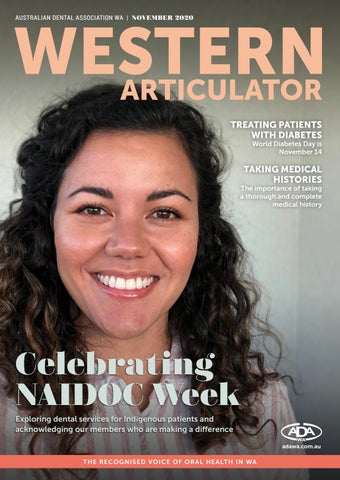
AUSTRALIAN DENTAL ASSOCIATION WA | NOVEMBER 2020
TREATING PATIENTS WITH DIABETES World Diabetes Day is November 14
TAKING MEDICAL HISTORIES
The importance of taking a thorough and complete medical history
Celebrating NAIDOC Week Exploring dental services for Indigenous patients and acknowledging our members who are making a difference adawa.com.au
THE RECOGN ISE D VO I C E O F O R AL HE ALT H I N WA
Panetta McGrath Lawyers’ benefits program for ADAWA members We are excited to offer a member benefits program exclusive to ADAWA members. As a member of ADAWA, the member benefits program entitles you to an initial 30-minute consultation in-person, by phone or via video conference. ADAWA members are also eligible for a 15% discount on our standard hourly rates.
Take advantage of this benefit with advice and support from highly qualified lawyers on: • Buying and selling of dental practices. • Drafting, reviewing and negotiation of contracts and commercial agreements. • Drafting, reviewing and negotiation of leases (including commercial, dental and retail). • Private practice arrangements, including partnership agreements. • All aspects of corporate governance. • Privacy and risk management. • Litigation and alternative dispute resolution. • Personal safety issues (including restraining orders). • Workplace relations, employment and safety. • Dealing with regulators and responding to investigations. To obtain a referral, contact David Hallett, ADAWA CEO on 9211 5600 or email ceo@adawa.com.au
For more information about our services, visit pmlawyers.com.au
Panetta McGrath Lawyers Panetta McGrath Lawyers is a boutique law firm established in 2009, specialising in Health and Aged Care, Insurance Law and Employment and Workplace Relations Law. Our lawyers are leaders in their field and have an in-depth understanding of the concerns and challenges facing dentists and other health professionals. We provide clear, relevant advice to help you manage compliance and legal issues and protect your interests, enabling you to focus on what you do best as a dentist and business owner.
6
12
27
3
contents 4
16
26
ADAWA Council Notes
Education and Training Professional Notices
Clinical Challenges in Oral Medicine Localised Juvenile Spongiotic Gingival Hyperplasia
5 President’s Report
18
6
WA Dental CPD Calendar
Celebrating NAIDOC Week Exploring dental services for Indigenous patients and acknowledging our members who are making a difference
12 The Junk-Food your Patients are Being Exposed to Telethon Kids Institute’s junk food advertising audit
14 Behind the Scenes of a WA Dental CPD Course The work behind every WA Dental CPD course
27 Treating Patients with Diabetes World Diabetes Day is November 14
21
30
WADA Golf
Taking Medical Histories The importance of taking a thorough and complete medical history for best patient care
22 In Memoriam Vale Jens Ove Andreasen
24
32
ADA HR Feature Probation – who, how long and what happens when it doesn’t work out?
DPL Feature The sum of all fears
34 Volunteering Dental Rescue Day success
November 2020 Western Articulator | adawa.com.au
3
ADAWA Council Notes Australian Dental Association Western Australian Branch Inc All correspondence to: PO Box 34, West Perth WA 6872 Tel: (08) 9211 5600 Fax: (08) 9321 1757 Email: media@adawa.com.au President Dr Sean Archibald Chief Executive Officer Dr David Hallett Editorial Team Lisa Shearon Brooke Evans-Butler Designer Advance Press
Closing Date for Bookings: Ads: The 7th day of the prior month or the nearest business day before. All advertising must be submitted by the due date by email. Advertisements received after the due date cannot be guaranteed to appear in that issue.
Council Elections There was an ADAWA Council election this year. The online ballot was conducted by an independent company that provided a secure and confidential service. The results were announced at the ADAWA AGM on October 21, 2020. HBF Discussions ADAWA continues to discuss the unwelcomed decision by HBF to establish their own branded practices in WA. Most recent meetings have been held with AMA WA and the office of Senator Mathias Cormann to highlight ADAWA’s concerns. New CEO for HIF ADAWA have met with the new CEO of HIF, Mr Justin James, and discussed issues of mutual interest. ADAWA wish past-CEO Mr Graeme Gibson all the very best in his retirement. Branch Auditors After a recent search and select process, ADAWA formally appointed Bentleys Accounting as the Branch auditors for the 2019-2020 audit. The Bentleys team were in the ADA office working tirelessly to have the audit prepared in time for the Branch AGM.
Please supply display advertisements as a high-resolution PDF file (embed all fonts) or a JPEG file to media@adawa. com.au. Please ensure any graphics are of a high quality. Articles should be submitted as a WORD document with any graphics attached as separate files. ISSN 2207-9351 (Online) Disclaimer: The views and opinions expressed in this publication and its attachments by advertisers and contributors are not necessarily endorsed by The Australian Dental Association (WA Branch) Inc. The Branch, its members, employees and agents do not assume any loss or damage which may result from any inaccuracy or omission in this publication, or from the use of the information contained, and make no warranties, express or implied, with respect to any of the material contained herein.
Get Social Australian Dental Association WA @adawaoralhealth @adawa_perth Australian Dental Association WA
4
November 2020 Western Articulator | adawa.com.au
Graduate Guide The annual ADAWA Dental Graduate Guide has just been completed and is available for viewing on the ADAWA website. ADAWA is also assisting in the publication of the UWA DMD 4 Yearbook and looking forward to celebrating their end of year at the Dedication Ceremony and Transition to Practice Dinner in December.
President’s Report Dear Members, The end of the year is fast approaching and with that comes the crazy times where we attempt to complete treatment for our many patients and finalise those projects we have had on our lists throughout the year. Before we all run out of time, I wanted to take the chance to remind everyone of a few things that are happening in dentistry and at your ADAWA. If you have not already seen it, the Dental Graduate Guide 2020 has recently been sent to you via email and is also available on our website. I would highly recommend that you take the time to browse through the listings if you’re looking to engage a dentist in your practice. Alternatively, try the ADAWA classified section of our website. As of October 1, the Dental Board of Australia retired the Guidelines on dental records. The Code of Conduct is regarded as the crucial document for setting standards and regulatory guidance for dentists. The Board has developed a fact sheet and self-reflective tool to help dentists comply with their obligations under the Code of Conduct. I suggest that all dentists take the time to read over the newly introduced documents, which are easily accessible on the Board’s website. We continue to progress our advocacy around the vertical integration of private health insurance into the dental industry. Since my last message, we have canvased a far greater portion of the health industry and continued to look at ways we can protect the high standards we all expect in the dental industry. There is much thought going into this space and I hope to be able to elaborate on this further in the near future.
For the first time in many years I was happy to host the return of the Affiliated Societies Meeting in the second week of October. In our ongoing efforts to continue to engage with all aspects of dentistry in WA, this meeting focused on how we can assist our affiliated groups in WA through marketing, use of our facilities and alignment on key advocacy issues.
Dr Amanda Phoon Nguyen, Andrea Paterson, Drs Sean Archibald and Gaurav Vasudeva at a recent Dental Rescue Day.
Hopefully, everyone is aware that we have a new Head of the UWA Dental School, Professor Hien Ngo. He has been welcomed on to ADAWA Council and has immediately made a positive impact through his willingness to collaborate. We have always maintained a strong relationship with the UWA Dental School, and this appears set to continue. Until next time,
November 2020 Western Articulator | adawa.com.au
5
FEATURE
Celebrating NAIDOC Week To celebrate NAIDOC Week, we explore the dental services available for our Indigenous patients, the support for dental students, and acknowledge our members who are making a difference
Derbarl Yerrigan Health Service Derbarl Yerrigan Health Service (DYHS) is a not-forprofit community-controlled organisation that has operated on Noongar land for more than 40 years. DYHS offers a range of primary healthcare services to Indigenous Australians in an environment that facilitates culturally safe and secure practice. This encompasses the provision of free dental care to patients aged 13 years and above, inclusive of exams, scale and cleans, extractions, root canal therapy, crown and bridgework and dentures (with the exception of orthodontics and implant therapy). The clinic has three chairs offering both emergency and booked appointments. Dr Reena Kataria has worked at DYHS for more than 10 years, having started as an associate and eventually stepping up to the role of principal dentist. “What I enjoy most about being part of the DYHS team is that it is a community-based service where the day-to-day operations are run by leaders and elders of the Noongar community,” she says. Dr Daniel Hunt, a Jaru and Indjibandji man, has worked at DYHS as a general dentist for just over two years and has recently returned as a medical general practitioner. “The provision of a culturally safe healthcare service involves creating an environment where there is no assault, challenge or denial of our patient’s identity and experience,” he says. “This includes a strong focus on yarning (a conversational process, which includes sharing stories and development of knowledge) and building rapport with patients, and is facilitated by a mix of Indigenous and Non-Indigenous staff, all of whom undergo cultural-sensitivity training during the commencement of their employment. 6
November 2020 Western Articulator | adawa.com.au
“ Unconscious biases exist within all people (despite how ‘woke’ we may feel),” Daniel adds. “This is a reality for many Indigenous patients, thus the popularity of Aboriginal communitycontrolled healthcare organisations, such as Derbarl Yerrigan Health Services.” Contemporary healthcare dictates equity as good practice, but equitable treatment and care is not enough to overcome the weighty healthcare disadvantage that exists in the oral health disease burden in Indigenous Australians. This is where good foundations of clinical care, education and time can have everlasting and positive impacts. Dr Borut Klopcic, who has been at DYHS for over 12 months, is one of the lead educational facilitators for the dental assistant, oral health and dental students, offering mentorship and guidance in ensuring a culturally appropriate approach to dental treatment. The newest addition to the team is Dr Ashlee Bence, a Wurundjeri woman who graduated from UWA in 2019. “We’re quite a diverse and multicultural group,” she says. “I think what is truly inspiring is that regardless of race or background, our ability to work as a unified team with both our colleagues and patients never waivers. The passion we all have for improving oral health outcomes for our Indigenous community is a major factor in the success of our treatment.”
FEATURE
The Kimberley Dental Team
Jilen says that the knowledge around the pathogenesis of dental disease continues to develop, and over the last two decades the multifactorial nature of diseases, such as dental caries, has been underlined.
Founded by John and Jan Owen, The Kimberley Dental Team aims to enhance resources and levels of dental care for Indigenous children and their families in the Kimberley region.
“As dental professionals, it is all too easy to treat a carious lesion under the false pretence that operative treatment renders the disease as being managed,” he says. “This is particularly complicated when working with disadvantaged communities where it is critical to provide both emergency services to meet acute demand, while providing preventive services and oral health promotion to ensure sustainability and disease control.
Dr Jilen Patel, Specialist Paediatric Dentist and Senior Dental Officer for the Kimberley Dental Team, says it is a privilege to be invited by the Kimberley communities to provide dental services and engage in oral health promotion activities. “Working with communities is rewarding on a number of levels,” he says. “From the outset, it brings much-needed relief of dental pain that both children and adults have normalised for months and even years, on top of the ability to give back a patient their smile and restore both aesthetics and function, significantly improving overall quality of life for those living in remote communities. “However, as you continue to work with communities, it becomes more than this. It is the trust and relationships you forge, as well as the positive health behaviour change that comes with many years of work, that is the most rewarding.”
“An understanding of the various factors attributing to the progression and development of dental caries is also required to holistically manage dental disease; in many instances informed knowledge around the upstream determinants of health such as housing, living conditions and food policy may positively impact on clinical care and comprehensively managing the needs of Aboriginal patients,” he adds. “A simple story learned while working in remote communities is as follows: a child presented to the dental clinic and was provided with toothbrushing advice using a handheld mirror. Later that day the same child was seen brushing their teeth using the reflection of a parked car’s passenger side mirror. It was only then that I realised my
Derbarl Yerrigan Health Service. From left to right: Ashlee Bence (Dentist), Johneen Sariago (Nurse), Miranda Goodwin (Nurse), Reena Kataria (Dentist), Daniel Hunt (Dentist), Borut Klopic (Dentist), Zuhal Hameedullah (Nurse). November 2020 Western Articulator | adawa.com.au
7
FEATURE
*
Jilen Patel says Aboriginal Australians experience significant disparities in oral health, with even poorer outcomes reported in rural and remote areas. “The high rates of preventable dental disease in Aboriginal communities continue to be persistent and are a serious concern from both a social justice standpoint as well as in terms of service provision and broader health care expenditure,” he says.
KDT’s Ruth Warden and Dr Moses Lee. assumption and on asking found out that the child did not have a mirror in the house ... being cognisant of underlying assumptions is important in providing tailored care.” Jilen says active listening is critical in providing adequate care and building trust with Aboriginal families, rather than subscribing to prescriptive concepts such as “brush twice a day and reduce your sugar intake”. “The use of techniques, such as motivational interviewing and individualised oral health plans, have shown significant potential in improving oral health outcomes,” he explains. “Comprehensively managing the oral health needs of Aboriginal patients also requires dental professionals to actively be involved with multidisciplinary services. More importantly, any service, whether dental or medical, should strive towards achieving cultural security. Cultural awareness, cultural safety and cultural security are principles that build on each other with cultural security being the hardest to achieve.” The work of Juli Coffin simply differentiates between these commonly misunderstood terms: Awareness: I know that most Aboriginal people have very extended families. Safety: I am going to make sure that I tell Johnny’s mum, aunty and nanna about his appointment because sometimes he is not with his mum. Security: I am going to write a note to Johnny’s family and ask the Aboriginal and Torres Strait Islander Health Worker to deliver and explain it. I will check with the Aboriginal and Torres Strait Islander Health Worker to see if any issues were raised when explaining the procedure to the family and if transport is sorted out. I will ask to see if Sylvia (the Aboriginal and Torres Strait Islander Health Worker) can be in attendance at the appointment as well. (Coffin, 2019) 8
November 2020 Western Articulator | adawa.com.au
“Smith and colleagues examined data from 999 people in rural and remote Western Australian Aboriginal communities and found advanced periodontal disease in 60.8% of patients, an average of 8.5 decayed, missing or filled teeth (DMFT), four times higher than the national average with 88% of patients having experienced a toothache within the previous six months. “This study concluded that there is an ‘urgent need for the development of strategies targeting Aboriginal oral health, both as stand alone, and as part of a multifactorial risk factor approach where oral health is integral to general health activities’ (Smith et al. 2007). “Western Australia is a vast state with changing landscapes and vibrant communities; the Kimberley region, for example presents unique challenges in providing care as it covers over 400,000 square kilometres with only an estimated 40,000 residents. Although there is limited oral epidemiological data from this region, Kruger and co-workers previously reported particularly high level of dental disease in Aboriginal patients in the Kimberley underlined by the average DMFT of 9.8, high prevalence of periodontal disease and low access to dental services (Kruger et al. 2008).”
FEATURE
The Kimberley Dental Team in action at Billiluna Community. From left to right: Dr Ann McAtamney, Dr Ian McAtamney (Deniliquin), Ruth Warden, Dr Brian Hurwitz, Dr Tim Clair, Sandra Elliot. Department of Health A Department of Health spokesperson says the health and wellbeing of Aboriginal people is a priority for all. “The Australian Health Practitioners Regulation Authorities (AHPRAs) Strategy has guidelines for embedding cultural safety in the health system,” they say. “This regulatory position is of high relevance to the dental fraternity. The Strategy focuses on achieving patient safety for Aboriginal and Torres Strait Islander Peoples as the norm and the inextricably linked elements of clinical and cultural safety.” (https://www.ahpra.gov.au/News/2020-02-26-strategyfor-embedding-cultural-safety.aspx) “The objectives for this Strategy should shape how dental practitioners work with Aboriginal people. These include:
* *
Cultural safety A culturally safe health workforce through nationally consistent standards, codes and guidelines across all registered health practitioners in Australia. Increased participation Increased Aboriginal and Torres Strait Islander participation in the registered health workforce and across all levels of the scheme regulating registered practitioners nationally.
* *
Greater access Greater access for Aboriginal and Torres Strait Islander Peoples to culturally safe services from registered health practitioners. Influence Using the Strategy Group’s leadership and influence to achieve reciprocal goals. This includes developing a nationally consistent baseline definition to be used across the scheme regulating registered practitioners nationally, which has already been achieved in partnership with the National Health Leadership Forum.
“From a WA Health system perspective, having a culturally respectful and non-discriminatory health system is a key strategic direction of the Department. All health care, whether government or community provided is to be free of racism and discrimination.”
For more information on Aboriginal Health, go to https://ww2.health.wa.gov.au/ImprovingWA-Health/About-Aboriginal-Health
November 2020 Western Articulator | adawa.com.au
9
FEATURE
School of Indigenous Studies at UWA Support for Indigenous dental students comes from UWA’s School of Indigenous Studies, established in 1989. According to Marilyn Strother, director of Student Services Indigenous at UWA, more than 400 Indigenous students have graduated from UWA in the last 31 years. “We currently have our largest number of students enrolled in Bachelor of Science, and that is a pathway for the Doctor of Medicine (MD) or Doctor of Dental Medicine (DMD),” she says. Marilyn says the School of Indigenous Studies’ Student Services Team provides advice and support to students throughout their studies. “The School also offers a variety of services such as Indigenous tutorial assistance, computer lab, common room and library services, and social, cultural and educational activities are ongoing throughout the year. “We also assist students to apply for residential college and assist them to apply for ABSTUDY and other financial assistance and scholarships.”
Unsurprisingly, the feedback from students involved with the School of Indigenous Studies has been very positive. “The School has contact with some of the Indigenous Alumni and in some cases, they have referred their children, siblings and other family members to study at UWA,” Marilyn adds. “Another point is that a large number of our students come from remote and rural and they know the School will support and assist them.”
Making a difference
*
The School of Indigenous Studies has been a great support for final-year dentistry student, Jade Drummond Jade once worked at a bank, with the long, repetitive days leaving her feeling unmotivated and uninterested. Wanting to be challenged and find meaning, Jade chose to pursue a career in health. “I believed that becoming a health professional and making a difference in someone’s life would be both challenging and rewarding,” she recalls. “So far, that’s exactly what it has been. “I also understood at the time that manual dexterity was important in dentistry, and since I’ve always loved arts and crafts the idea of getting a job that involved working with my hands seemed ideal,” she adds. “I also knew that if I had a family one day, I wanted to be able to support them well, and dentistry provides flexibility with work hours and is financially rewarding.” Jade says the study load of dentistry is one of the most challenging things she has faced in her life.
10
November 2020 Western Articulator | adawa.com.au
FEATURE
“This is because education was never a top priority in my family, so it just wasn’t in my nature to go to university,” she says. “But since I always threw myself in the deep end, I chose one of the hardest degrees I could find and never looked back. At the time I had no idea how challenging dentistry was going to be because no one in my family had ever studied a degree in science before, let alone dentistry.” Two years into her degree, Jade says she could not balance her studies with her personal life, and it impacted heavily on her mental health. “I kept all of this to myself until finally I told a very close friend in my class about how I wasn’t coping, and she urged me to talk to the School and ask for help,” she says. “This friend even came with me and spoke on my behalf when I didn’t have the courage to ask for help myself. “The School listened to every word and came up with a plan that I could manage. Even though I still struggle with some of the workload today, I know I have so much support, no matter what happens, and it has given me a sense of relief. “There is a lot of pressure on dental students because not only is the theoretical content difficult to learn, but there is also a practical aspect of dentistry that cannot be taught from a textbook. Some things you learn for the first time with a patient in front of you. “The most challenging part of dentistry for me was definitely the theoretical content and the time management,” she adds. “This all seemed worth it once I started seeing patients and doing more practical work. “The most rewarding part of my degree so far would be the trust I’ve built with my patients and their satisfaction with their treatment, which assures me that I must be doing something right. This is important to me because I know that it’s very difficult or sometimes impossible to make progress with a patient that just doesn’t trust you.” Jade says she found out about the School of Indigenous Studies (SIS) in high school and attended the science camp as part of an outreach program at UWA. “Because I’m from the Kimberley, initially travelling to Perth for university seemed so far away and scary, but I soon realised that the SIS weren’t just hosting the science camp I attended, they were also supporting Indigenous university students throughout their degree,” Jade says. “Knowing that I would be supported and that I would have a safe place to go and people to talk to, eliminated any worries I had about moving to Perth to study, so that’s what I did. The fact that there were other Indigenous students at SIS coming from small towns and communities also
reassured me that I wouldn’t be alone. I also completed the Aboriginal Orientation Course through SIS to gain entry into university. Even throughout my undergraduate degree, and now in my final year of dentistry, the SIS still check in with me to see how I’m going.” The School of Indigenous Studies reminded Jade that she can do anything she sets her mind to. “If it weren’t for them, I wouldn’t be where I am today,” she says. “The SIS offer guidance and inform students about study opportunities and pathways that some of us otherwise wouldn’t have known about if it weren’t for them. They also offer tutoring, advice on financial support and accommodation, and also a study space where Indigenous students can feel at home.” It is clear Jade wants to make a difference, saying that when she finishes her studies, she hopes to work with other health professionals in the Kimberley to explore new and existing ways of eliminating the existing “gap” in health between Indigenous and non-Indigenous Australians. “I understand that focusing on oral health behaviours in isolation is not sustainable, and so I hope to also work with other members of the community in a holistic approach towards health,” she says. “My goal is to provide a sustainable dental service to all members of the community, encouraging autonomy amongst patients to take control of their own health, with a focus on education and prevention.
“ Knowing that I will have the potential to help in closing the gap in health between Indigenous and nonIndigenous Australians makes all the hard work worth it.”
*
Earlier this year, Jade was awarded the ADA and the ADAWA Indigenous Study Grants, which took away the stress of finance so she could focus on her final year of study. “This could not have come at a better time, as 2020 has probably been one of the most challenging years so far in my dental degree,” Jade says. “I cannot thank the ADA enough for their generosity in financially aiding Indigenous students, as I hope there will be more Indigenous dental students in the near future and the ADA scholarship goes a long way when you’re an Indigenous dental student already facing many socioeconomic challenges.”
November 2020 Western Articulator | adawa.com.au
11
FEATURE
The junk-food ads your patients are being exposed to In the last edition of the Western Articulator, CEO Dr David Hallett wrote that ADAWA, along with WA’s leading non-Government health agencies and associations, had sent a statement to all WA MPs, calling for a ban on the advertising of unhealthy foods and drinks on State-owned assets. The recommendations come on the heels of an audit of outdoor food advertising within 500 metres of 64 schools within the Perth metro area. Led by Telethon Kids Institute’s Dr Gina Trapp, NHMRC Early Career Research Fellow, the audit revealed some shocking results. As such, it is worthwhile, especially if you treat young families, to know what sort of junk-food advertising your patients are being exposed to.
as it is highly visible and continuously “on”. In fact, it’s the only medium that you cannot “turn off”, so the regulation of its content is particularly important. We were interested in finding out the volume and nature of outdoor advertising Perth children are being exposed to near schools to inform future policy direction to create healthier food environments near Perth schools.
We asked Dr Gina Trapp, NHMRC Early Career Research Fellow, about the study.
What are some of the most concerning statistics that have come from this study?
Why was this study conducted and why is outdoor advertising around schools such a concern?
• Of all the 1,708 food ads that we identified, 74% were for unhealthy food and beverages (1 in 3 were for alcohol)
Many studies have shown that children’s exposure to unhealthy food and beverage advertising influences their food preferences, food purchasing, purchase requests and dietary intake, contributing to poor health outcomes such as overweight and obesity. This illustrates just how powerful advertising is, and so restricting unhealthy food and beverage advertising would be enormously effective to protect WA kids.
Dr Gina Trapp.
12
Many studies have shown just how frequent advertisements for unhealthy food products are on TV. However, the food industry is increasingly utilising non-broadcast channels such as outdoor advertising (eg, billboards, bus shelters, train stations, buses, etc) for product marketing. Outdoor advertising reaches a large, unrestricted audience
November 2020 Western Articulator | adawa.com.au
• Only 8% of the outdoor food ads identified featured a healthy food product – in fact, there were nine times as many ads for unhealthy foods than there were for healthy foods • The most frequently advertised food products were alcohol, fast food and sugary drinks • Schools had on average 27 outdoor food ads within 500m ranging up to 190 • Schools that were located in LOW SES areas had more unhealthy food ads and more alcohol food ads and these ads were positioned closer to the schools Also concerning was that 87% of food ads on bus shelters were for unhealthy foods including alcohol and 70% of food ads on digital signs and billboards were for alcohol. These are Government-owned assets and at a time when State and Local Government are engaged in strategies attempting to reduce obesity and reduce alcohol consumption, it really isn’t appropriate for Governmentowned assets such as (bus shelters and billboards) to carry alcohol and junk food advertisements.
FEATURE
What would be the impact of restricting junk-food advertising? Restricting unhealthy food and beverage advertising would be enormously effective to protect WA kids, however, only placing controls on unhealthy food ads within close proximity to schools could be ineffective given the exposure children experience on the whole school journey as well as exposure at other community and sporting events that attract children. Thus, we need a comprehensive mix of strategies to significantly reduce the amount of unhealthy food advertising children are exposed to. Something the Government could implement immediately is to ban all unhealthy food and beverage advertising (including alcohol) from all its property including billboards, public transport and public transport waiting areas such as bus shelters and train stations as well as all other facilities and settings that fall under State and Local Government jurisdiction (hospitals, museums, schools, sport facilities, and healthcare services). It will only be through significant improvements led by Government that children’s exposure to this type of marketing will be reduced and their diets and health improved.
What you are hoping will result from the study and what are the next steps? Our study has shown that outdoor advertising constitutes a frequent source of children’s exposure to unhealthy food and beverage (including alcohol) advertising around schools and our evidence justifies government intervention to restrict unhealthy food and beverage advertising to children. No jurisdiction around the world
has implemented a comprehensive ban on advertising for unhealthy food and beverages in public spaces or on all publicly owned assets – thus WA has the chance to be a world leader.
Parents don’t want their children pestering them for junk food. Parents need help and want government intervention to help them make healthy choices. As a community, I think we need to do more to support families and to ensure kids are growing up in healthy environments where they are not bombarded with junk food and alcohol advertising. We (the Telethon Kids Institute), along with several other leading non-Government public health agencies, have now called for an immediate ban on the advertising of unhealthy food and drinks on all State-owned assets in a Joint Statement to all State parliamentarians. We hope the Government will take immediate action and prioritise children’s health over the profitability of fast food and alcohol companies.
A recent webinar – ‘Protecting kids from exposure to junk food ads’ from the Cancer Council of Western Australia – included comment about the study. If you didn’t get a chance to watch the webinar, you can see it at the following link: https://youtu.be/ BNVbj7_LKBI November 2020 Western Articulator | adawa.com.au
13
FEATURE
Behind the scenes of a WA Dental CPD course
Janice Matthews, Dr Jenny Ball and Christine Ludgwick.
Ever wondered what goes on behind the scenes of a CPD course? We find out from the Dental Clinic Assistants at Optech WA Dental CPD courses are known for being highly organised, and much of that success comes down to the meticulous organisation of the Supervisor Dental Clinic Assistants at Optech, Christine Ludgwick and Janice Matthews. The arrangement of a CPD course begins with the presenter being arranged with CPD director, Dr Jenny Ball, usually a year or more prior to the set course date. Jenny says there are several ways she chooses CPD presenters. “I look through the other State branches and dental schools and see who is presenting and on what,” she says. “In many cases, especially with hands-on courses, I literally replicate the course here in Perth, flying the presenter in. I also attend Congress and get to hear some speakers.”
Once the presenter has been confirmed, Jenny asks for a comprehensive equipment list of everything the presenter will need to conduct the course, and this equipment list gets sent to Optech for Christine and Janice to go through and check what they have and what needs sourcing. “We often have to order in Frasaco teeth, mixing materials, burs and anything specialised,” Christine explains. “We also make the endo models with natural teeth and that is a long process because we have to choose the tooth, x-ray the tooth, and ask Jenny or an endodontist whether the tooth is suitable. We also have to bleach the tooth for two hours and then soak it in Formalin for two weeks prior. The teeth are donated, so we are always trying to get more teeth.”
In addition, Jenny says she asks ADAWA members to let her know if they have attended some good courses, and she keeps an eye on dental events in South East Asia to see if the same names pop up.
Simply sourcing teeth can be a lengthy process, according to Jenny. “There is one course that for 20 or 25 people we need 50 of one particular tooth (26),” she explains. “We run that course every year, so we are always looking for teeth for that course.”
“Locally, we also have some very good speakers, and sometimes I approach them with an idea and ask them to come up with something,” she adds.
When it comes to setting up Optech, Christine and Janice need to know how many participants will be attending so they can set up to the maximum of the 57 simulators
14
November 2020 Western Articulator | adawa.com.au
FEATURE
(or phantom heads), as well as the instruments required. However, most hands-on courses have a limit of 20 participants, so that they can benefit from the hands-on interaction of the presenter.
“We also don’t organise a course when the City to Surf is on because that plays havoc, as a lot of participants were not able to get through the city because of the blocked roads,” Janice adds.
Optech is often occupied until at least a 4pm on a Friday with student sessions, so Christine or Janice need to be very organised to set up the area quickly for an 8.30am start on a Saturday morning.
After the course has finished, decontaminating Optec is a long process, with everything needing to be packed away and wiped down. Since COVID restrictions, Optec has also been double cleaned with Viraclean after each course.
For most courses, the process is a well-oiled machine. “Some of the courses we have been doing for three or four years, so we usually know exactly what we need,” Janice says. “When we do a new course, we cannot anticipate things as much as we would like, but if there is anything the presenter needs that they have not asked for, we usually have a similar substitute in Optech.” In addition to ensuring the attendees have everything required for the course, the DCAs have numerous duties and responsibilities to assist with the smooth-running of the CPD courses, including: obtaining access to all doors a week prior, organising linen/gowns, phoning security to turn off alarms, setting up tea and coffee provided by ADAWA in Room 202 (as no food or drinks are allowed in Optech), helping the presenter to set up AV, setting up all instruments and models in the simulators, checking the high-speed hand pieces to ensure that water is running through, assisting with the simulators and troubleshooting if these are not working, assisting with catering, and taking note of any materials used from Optech stock (including burs, impression materials and extra Frasaco teeth). And they clearly think on their feet even when things do not go as planned. “Once we were sent the wrong stainless-steel crowns; we were sent the left side instead of the right side,” Jenny recalls. “One time the caterer failed to attend because they got the date mixed up, so I had to run down the road and buy morning tea for everyone. There was also a time that the building’s security card access failed so we had to find another way to open the glass doors near the lift. Luckily, Poh Hun is tall.”
“I think attendees understand it takes a lot of time to set up because it is very similar to the instrument set-up at their own clinics,” Christine says. Janice adds the attendees are usually impressed with the facilities. “They will often come and comment about the large screens so everyone can see easily and the monitors,” she says. “I think they are usually quite impressed, especially those attendees that have not been here or trained here.” Likewise, the presenters are also wowed. “Some presenters say they want to come back to Perth because they really like the layout of Optech,” Jenny says. “They also really like working with Christine and Janice because they know if they come here for a course, it is going to run smoothly. Dr Clarence Tam said she does not want to do her course To Prep or Not to Prep anywhere but here.” When asked what makes a successful course, Christine says communication is key, as well as careful preparation. “Being flexible and being helpful is also important,” Janice adds. “If an attendee or presenter has not been here before and has not been a student here, they might not know how things work, so we will tell them that at any time during the day they can ask us.” “It is a challenge that I enjoy,” Christine says. “We also get to see past students and catch up with them, which is nice.” “You might not have seen one of the students for 10 years and then they come back and they have got married and had children and it is nice to see them grow as a person,” Janice adds. “It is very rewarding.”
Do you have any extracted teeth you could donate for CPD courses? If you would like to donate teeth to the Dental School, please call 6457 7679.
November 2020 Western Articulator | adawa.com.au
15
EDUCATION & TRAINING
Study Club for Young Clinicians Study club for recent graduates and clinicians with up to 5 years’ clinical experience
November 5, 2020
Save the date The RACDS WA event ‘Top Hacks for Outstanding Dentistry’ with Dr Michael Mandikos has been rescheduled for 30 July, 2021.
Venue: ADA House, 54 Havelock Street West Perth @ 6pm
More details to come.
To register, please email prosstudyclub@gmail.com
PROFESSIONAL NOTICES
Dr Lisa Bowdin
Dr Naomi Kohan
Michael O’Halloran
FIRST SMILES PAEDIATRIC DENTISTRY & ORTHODONTICS
SMILE TIME ORTHODONTICS
SPECIALIST ORAL SURGERY PERTH
Specialist Paediatric Dentist BDSc, DClinDent (Paed), MRACDS (Paed)
Smile Time Orthodontics is pleased to announce Dr Naomi Kohan will be joining our practice. Dr Kohan welcomes referrals for all aspects of orthodontic care.
Dr John Winters and Dr Siva Vasudavan are delighted to welcome Dr Lisa Bowdin to the First Smiles team in South Perth. Dr Bowdin is accepting referrals for all aspects of specialist paediatric dental care.
Fremantle Cottesloe Mt Hawthorn Mindarie Dunsborough
FIRST SMILES Suite 7, 38 Meadowvale Ave South Perth WA 6151
Email: info@smiletime.com.au Web: www.smiletime.com.au
Tel: (08) 9367 9277 Email: hello@firstsmiles.com.au Web: www.firstsmiles.com.au
16
November 2020 Western Articulator | adawa.com.au
Additional practice locations in Kalamunda and Joondalup
Michael O’Halloran will now be offering services at the Perth Hills Specialist Centre, 182 Canning Road, Kalamunda, and at Joondalup Health Campus, Suite 1 Medical Centre East, Ramsay Private Hospital, 60 Shenton Ave, Joondalup. All bookings for specialist oral surgery and implant dentistry services are through Mediref or main rooms at Cambridge Periodontics. 174 Cambridge Street West Leederville WA 6007 Tel: (08) 9388 3453 Fax: (08) 9388 3442 Email: specialistoralsurgeryperth@gmail.com
$187 inc GST
Diabetes and Dental Health – Dinner Course Wednesday 11 November | CPD Hours: 3 Presented by Dr Jane McCarthy & Dr Janina Christoforou Registration from 6.15pm, Course 6.30pm to 9.30pm University Club, Hackett Drive, Crawley Bookings & Enquiries adawa.com.au/cpd Course Outline November is Diabetes Awareness Month. Diabetic patients can prove to be a challenge for the general dental practitioner. This presentation by a specialist periodontist and oral medicine specialist will cover a number of issues the practitioner may face when treating diabetic patients. Course Topics: • The evaluation of a diabetic patient • Oral manifestations in a diabetic patient • Periodontal considerations • Potential complications which may arise from dental management Cost includes three-course dinner.
About the Presenters Dr Jane McCarthy has maintained a private specialist practice in Applecross for over 20 years. She has presented many times for UWA and ADA, Diabetes Educators Association, Singapore and Sri Lankan Orthodontic Societies and for Unconventional Conventions. Jane is passionate about everything to do with periodontics and her special interests include all aspects of the relationship between oral health and systemic diseases, periodontal disease treatment and in particular in diabetes, gingival recession, periodontal plastic surgery and pre-orthodontic surgery. She places implants and treats peri implantitis as well. Jane is a Member of the Royal College of Dental Surgeons in Periodontics, a Member of the Pierre Fauchard Academy and the American Academy of Periodontology and is a Fellow of the International College of Dentists. Dr Janina Christoforou is an Oral Medicine Specialist who practices all facets of oral medicine. She has undertaken her specialty training in WA with an externship at Brigham and Womens Hospital in Boston. She is in specialist private practice in West Perth and Kalamunda. She devotes time to clinical teaching, research and lecturing at The University of Western Australia. She is a member of the Sir Charles Gairdner Hospital multidisciplinary Head and Neck cancer clinic and has a public placement in radiation oncology. Janina also volunteers her time working with organisations to provide oral medicine services to those disadvantaged in the community. Her special interests include prevention and management of oral cancer and its sequelae, mucosal diseases and orofacial pain. Janina is a Fellow of the Royal Australasian College of Dental Surgeons and a Fellow of the Oral Medicine Academy of Australasia.
November 2020 Western Articulator | adawa.com.au
17
Dental CPD Calendar NOVEMBER Porcelain Veneers and Ceramic Onlays – A Practical Approach to Multiple Restorations
DECEMBER 6/7
Friday & Saturday: 9.00am–5.00pm UWA Dental School, Nedlands
11
University Club, Crawley
14
Socket and Ridge Preservation Hands-on Workshop
05
Saturday: 9.00am–2.00pm
Dr Clarence Tam
21
25 /26
JULY 2021 Hands-on Extraction
16
Friday: 1.00pm–5.00pm CTEC, Crawley
RACDS WA EVENT Top Hacks for Outstanding Dentistry
30
Dr Michael Mandikos
DECEMBER
The Primary Dentition: Pulp Therapy and Stainless-Steel Crown Restorations
ADA House, West Perth
TPO S O P
21
UWA Dental School, Nedlands
MARCH 2021
Dr Steven Parker
Dr Asheen Behari & Dr Paul Gorgolis
Associate Professor Dieter Gebauer & Mr Leon Smith
Dr Clarence Tam
Saturday: 9.00am–2.00pm
NED
20
Sunday: 9.00am–5.00pm
Drs Leticia Algarves Miranda & Mahnaz Syed
Anxiety Relief in the Dental Surgery
18
UWA Dental School, Nedlands
Saturday: 9.00am–5.00pm Posterior Composites
Ceramic Restorations Saturday: 9.00am–5.00pm Sunday: 9.00am–5.00pm
CTEC, Crawley
To Prep or Not to Prep
Professor Paul Abbott
UWA Dental School, Nedlands
UWA Dental School, Nedlands
Saturday: Time 10.00am NEW COURSE
Practical Oral Surgery
Simplified Clinical Endodontics Friday: 8.30am–5.00pm
FEBRUARY 2021
Wednesday: 6.30pm–9.30pm
FREE full day event for those who have graduated within the last five years
05
D
Dr David Booth & Dr Carolyn Stulner
Dr Jane McCarthy & Dr Janina Christoforou
NPP Day
E Dr Steven Parker PON T S Saturday: 9.00am–5.00pm PO
Pain Relief for Your Patients
UWA Dental School, Nedlands
Dr Asheen Behari & Dr Paul Gorgolis
Diabetes and Dental Health – Dinner Course
JUNE 2021
More details to come
20
Dr Vanessa William
04
Saturday: 9.00am–2.00pm
UWA Dental School, Nedlands
Friday: 9.00am–5.00pm
UWA Dental School, Nedlands
Event Types: WA Dental CPD Events ADAWA General Meetings Other CPD Events
Please note that parking is very limited for any daytime courses at ADA House, West Perth. Attendees should make themselves aware of public parking facilities in the area, or use public transport. The Red CAT bus route is conveniently located for ADA House. Online Bookings are available on the ADAWA website adawa.com.au in the CPD area. A receipt will be issued listing the course name, date and applicable CPD hours, when registrations are processed. A Certificate of Participation will be provided after attending the course. Replacement certificates cannot be provided. 18
November 2020 Western Articulator | adawa.com.au
WA CPD Event Bookings & Enquiries: Additional event information and online bookings available at adawa.com.au Bookings, Course and Payment enquiries: Tel: (08) 9211 5600 Other Enquiries to Dr Jenny Ball: Mob: 0419 044 549
SEPTEMBER 2021 Dealing with Implant Failures Dr Keith Doonan
9
Porcelain Veneers & Ceramic Onlays
5/6
Dr Asheen Behari & Dr Paul Gorgolis
Thursday: 9.00am–3.30pm ADA House, West Perth
Single Crown Preps: A Hands-on Course
NOVEMBER 2021
11
Email: cpd@adawa.com.au Email: jenny@adawa.com.au
SELLING OR BUYING A DENTAL PRACTICE? HPB Health Practice Brokers offer a dynamic fresh approach to Dental Business Broking in WA
Saturday: 9.00am–5.00pm Sunday: 9.00am–5.00pm
UWA Dental School, Nedlands
26
Extensive marketing of your practice to ensure the best possible price achieved
Dr Poh Hun Loh & Dr Victor Matsubara
Predictable & Easy Root Canal Instrumentation & Filling Techniques
UWA Dental School, Nedlands
Professor Paul Abbott
Clear communication throughout the sales process
UWA Dental School, Nedlands
Confidentiality assured
Saturday: 9.00am–3.00pm
Friday: 8.30am–5.00pm
Exceptional Customer Service
Call Andrew Maurice 0410 642 660 or Garry Bishop 0414 825 855 for a confidential discussion or visit www.hpbaus.com.au
HIF Corporate Program ADAWA members are entitled to a 12% discount on health cover each year when premiums are paid by direct debit. Existing HIF members need only call or email to have the discount applied to their membership.
Visit hif.com.au/adawa and use the access code ADAWA Alternatively, call HIF on 1300 13 40 60 or email sales@hif.com.au
November 2020 Western Articulator | adawa.com.au
19
$693 inc GST
Socket & Ridge Preservation Hands-On Workshop Saturday 21 November | CPD Hours: 4.5 Presented by Dr Leticia Algarves Miranda & Dr Mahnaz Syed Registration from 8.45am, Course 9am to 2pm ADA House, 54-58 Havelock Street, West Perth Bookings & Enquiries adawa.com.au/cpd Course outline:
About the Presenters:
Extracting teeth is part of everyday clinical practice. We know that once a tooth has been removed, the inevitable consequence is dimensional bone and soft tissue alterations.
Dr Leticia Algarves Miranda is the Discipline Lead in Periodontics at the UWA Dental School. She obtained her dental degrees in Brazil, and her PhDs in Brazil and Karolinska Institute in Sweden. Leticia has held appointments at a number of universities in Brazil. Leticia moved to Perth two years ago.
One treatment option which has been scientifically shown to maintain ridge volumes once teeth have been removed is socket and ridge preservation. Socket and ridge preservation are some of the easiest methods of hard-tissue preservation and augmentation in future implant sites. If the science behind extraction socket healing is applied to our daily work, patients and dentists will benefit. This hands-on course will cover different techniques for hard tissue augmentation to preserve ridges, and instruct attendees on some suturing-specific techniques. Pig heads will be used for the hands-on component.
20
November 2020 Western Articulator | adawa.com.au
Dr Mahnaz Syed obtained her qualifications in the United Kingdom. She worked as a specialist periodontist in private practice and as clinical lead in mucogingival surgery and implant soft tissue augmentation at the Royal London Hospital before moving to Perth in 2007. Mahnaz practises as a specialist periodontist in Subiaco and is part time clinical implant tutor at The University of Western Australia. Sponsored by:
WADA GOLF
WADA GOLF
Spring Cup 2020 The 2020 WADA Spring Cup, sponsored by Dentsply/Sirona and represented by Russell Redpath and Craig Botes, was played at Hartfield Country Club on 4 September. A fine spring day awaited the large turnout of WADA golfers on this challenging and well-presented golf course. Leading the day on a fine score of 38 points was Charles Angliss, followed by Russell Gordon in second on a countback from Michael Welten both on 35 points. Well played, gentlemen.
The season-ending WADA Golf event will be the Swan Valley Dental Laboratory – sponsored Lester Charlesworth Trophy – a pairs event to be contested on Friday 6 November at Lake Karrinyup Country Club. Thank you, David Owen, for your continued support. John Scully WADA Golf Captain dentistgolf@gmail.com
NOVELTIES: Nearest the Pins: 4th Hole (WADA Golf) ........................................ Ian McCarrey 6th Hole (WADA Golf)......................................... Alex McDonald 12th Hole (Dentsply/Sirona) ............................. Russell Gordon 15th Hole (Swan Valley Dental Laboratory).... Terry Pitsikas Longest Drive: 9th Hole (Healthlinc)........................................... J. Scully
Nobody beats West Coast Dental Depot on W&H West Coast Dental Depot is the largest supplier of W&H sterilising equipment to dentists in Western Australia. For a great deal backed by the most reliable and experienced service and support team in the state, call West Coast.
WCDD_18216
View our full range of dental equipment and consumables at www.westcoastdental.com.au
Wayne Young Sales & Project Manager 0417 948 121
17A Wheeler Street, Belmont WA 6104 • Phone (08) 9479 3244 • Fax (08) 9479 3255 • Email sales@westcoastdental.com.au
IN MEMORIAM
Jens Ove Andreasen. COURTESY: THE DENTAL TRAUMA GUIDE
Vale Jens Ove Andreasen We were saddened to hear of the passing of Dr Jens Ove Andreasen in late September.
Known as the father of Dental Traumatology, one of Dr Andreasen’s crowning achievements was the development of the Dental Trauma Guide in 2008, an interactive database in which clinicians can access assistance with diagnosis and treatment of trauma cases. It is considered the world’s leading evidence-based tool for dental trauma. In addition to this, he authored 12 textbooks and 400 publications. His Textbook and Color Atlas of Dental Traumatology, now in its fifth edition, is also noted by many as the ‘trauma bible’. “Jens began collecting data about his dental trauma cases in the late 1960s and he amassed over 40,000 records,” endodontist and Winthrop Professor Paul Abbott says. “Analysis of this data has continued over many years and it forms the basis of our current recommendations for managing dental trauma. The foresight Jens showed in establishing this database so long ago is remarkable.”
22
November 2020 Western Articulator | adawa.com.au
Jens at OHCWA: (L-R) Drs Eugene Chen, Ray Heffer, Jens Andreasen, WP Paul Abbott AM, Drs Siang Hsu and Jacky Castro.
IN MEMORIAM
Jens Andreasen with Drs Geoffrey Heithersay AO and Fatima Al-Dhufairi at the World Congress on Dental Trauma in Brisbane in 2016.
COVER PSD CREATED BY VECTORIUM WWW.FREEPIK.COM
Jens was the founding member of the International Association of Dental Traumatology and he served as the President for 12 years. His clear passion for improving management of dental trauma led him to lecture around the world, including Western Australia, with Jens visiting Perth at least three times. “Jens last visited Perth in 2007 as a Herman Fellow at the UWA Dental School,” Paul recalls. “He spent two great weeks with us, and it was fantastic for the postgraduate students in particular, but also the undergraduates, to be able to spend time with him.
“A truly remarkable and amazing man – and definitely unique,” Paul adds. “I doubt that we will ever see anyone contribute as much as he did to the dental profession and for the benefit of patients.” For more information about the Dental Trauma Guide, go to: https://dentaltraumaguide.org/
November 2020 Western Articulator | adawa.com.au
23
ADA HUMAN RESOURCES
Probation
Who, how long and what happens when it doesn’t work out? The concept of probation is included in most employment contracts, not because of any legal requirement but because we are simply used to it. It is a useful tool that allows employers to assess the employee’s suitability against the requirements of a role and the employer’s business. From the employee’s perspective, a probation period is important in giving the employee a chance to assess their potential for a role within the practice and an opportunity for the employee to demonstrate their ability to do the job to a high standard.
A formal probationary period gives the discipline to properly manage the initial crucial months of employment. It allows both parties to recognise an employee’s true strengths and weaknesses, and the extent of their ability to add value to the practice. Who should have a probation period? For the reasons outlined in this article, every new employee to the practice can (and should) have a probation period in their contract of employment.
be closely scrutinised and evaluated by the practice. This creates a strong incentive for an employee to be focused on their performance and dedicated to showcasing their capabilities and a positive attitude at the new workplace. On the other hand, employers can use this time to establish the inherent requirements of the role. In addition to setting expectations, probation periods allow an employer to develop new employees and provide input to improve their performance and tap their true potential. Categorising the probation period through periodic review meetings will stand as a reminder to the employee s that their capability, suitability, and reliability are being assessed. It is therefore strongly encouraged that employers undertake a formal review process within the probation period and make an informed decision regarding the future employment of the employee before the end of the period.
Understanding the difference between probation and minimum employment period Typically, probationary periods are set as a three- or six-month period. It is, however, important to note that probation and minimum employment period are two entirely different, but related, aspects of employment. While probation is a practical construct included in a contract of employment, the minimum employment period has its legal basis within the Fair Work Act 2009 (Act).
Expectation setting and performance evaluation Probation draws a new employee’s attention to the fact that during this time their conduct and performance will 24
November 2020 Western Articulator | adawa.com.au
Under the Act, an employee is protected from an unfair dismissal if they have completed at least the ‘minimum
ADA HUMAN RESOURCES
employment period’ with the employer. This is a period of 12 months for a practice with less than 15 employees (a small business employer) and is six months a practice with 15 or more employees. An employee who is terminated after having completed the relevant minimum employment will generally be entitled to access unfair dismissal. An employee who is still within their minimum employment period is not able to bring an unfair dismissal application and any application may be objected to by the employer on jurisdictional grounds.
Extending the probation period It is often considered standard practice to impose a three to six-month probation period on new employees to assess their suitability for the role. However, practices may find it practically useful to align the probation of an employee with the relevant minimum employment period. This provides the employer with an opportunity to consider the employee’s suitability throughout the length of the minimum employment period and terminate without the risk of an unfair dismissal claim if it does not work out. A probation period can also be used to mitigate the risk or defend an unfair dismissal claim against an employer. Notwithstanding the length of the minimum employment period, it may be beneficial to extend the probation period. Under the Act, the Fair Work Commission in considering the harshness of a dismissal must take into account if the dismissal related to unsatisfactory performance by the person and whether the person had been warned about that unsatisfactory performance before the dismissal. The mere extension of a probationary period by an employer clearly provides evidence for the fact that the employee’s performance is unsatisfactory. The notice of extension provides an unequivocal warning to the employee regarding the fact of their unsatisfactory performance. This extended probation gives the employee the opportunity to understand their employment is at risk and to try and improve their performance. While there is no legislative requirement specifying that an employee must be given a certain number of written warnings before being dismissed for poor performance, a warning should however identify the relevant aspects of underperformance. This means that an employer should highlight the specific areas of concern to the employee while extending their probation period beyond the minimum employment period.
designated probationary period. The constructive feedback provided to an employee can make a significant difference. In the absence of strong prospects of the employee being successful in the practice, most employers would prefer to end employment within probation. Generally, termination in probation occurs where: • the employer assesses the employee’s performance or conduct to be unsatisfactory; or • the employee realises that the employee is not the right cultural fit for the practice; or • the employee thinks that he/she does not possess the skills to perform a role; or • the employee does not associate with the culture or the working environment of the practice.
It is important to be mindful the existence of a minimum employment period does not give a practice an unfettered right to terminate an employee during their probation. There are a range of claims, other than unfair dismissal, which a former employee may be able to make irrespective of their length of service. For example, an employee is not required to have completed any minimum period of employment in order to lodge a claim under the general protection provisions under the Act if their employment is terminated because of a protected characteristic or because of a workplace right. It should also be kept in mind full-time and part-time employee’s accrue paid sick leave and annual leave entitlements during probation. The employer must, in addition to providing notice of termination to the employee, pay annual leave entitlements including annual leave loading for employees covered by the Health Professionals and Support Services Award, in the final pay. While it is best practice to meet with an employee towards the end of their probation period, there is not a legislative requirement to do so. It is particularly important to meet with the employee if you are considering terminating his or her employment and more so in cases where termination may create any general protections risk, or risk of discrimination. Meeting face to face provides an opportunity to provide feedback to the employee about their performance or conduct, explain why the probation period was unsuccessful, and give the employee an opportunity to respond to your comments.
Ending employment within probation In order to enhance the usefulness of a probationary period, an employer and employee should establish effective communication. Employees should take this opportunity to seek clarification and guidance to adjust to the requirements of the role. In order to maximise the retention of new staff, employers should implement detailed performance improvement plans within the
For further information or assistance in relation to enhancing the effectiveness of a probationary period or the termination process within probation, please do not hesitate to contact the ADA HR Advisory Service on 1300 232 462.
November 2020 Western Articulator | adawa.com.au
25
CLINICAL
Clinical challenges in oral medicine By Dr Camile S. Farah, Registered Specialist in Oral Medicine and Oral Pathology Localised Juvenile Spongiotic Gingival Hyperplasia (LJSGH) is a painless, erythematous, localised sessile or pedunculated swelling of the attached gingivae. It is commonly seen in children and adolescents with a female predominance, and typically affects the maxillary anterior labial gingivae. Histologically, the lesion is covered by squamous epithelium with elongated rete ridges with pronounced oedema of the stratum spinosum and neutrophil exocytosis, in addition to prominent small dilated blood vessels and a mixed inflammatory infiltrate. The lesion is thought to be reactive in nature, although poor oral hygiene and poor plaque control are not defined contributing factors. Additionally, lesions do not respond to local debridement or oral hygiene measures. Despite the papillary or granular surface appearance, a viral etiology is not supported. Hormonal changes have been hypothesized but are also not currently supported. Clinically the lesion is not limited to the marginal gingiva. Studies examining keratin expression in LJSGH support the notion that these lesions may represent exteriorized junctional epithelium from the gingival sulcus and do not arise from mature gingival epithelium.
26
Depending on appearance, differential diagnosis can include capillary haemangioma, angiogranuloma, linear gingival erythema, foreign body reaction, localised contact allergy, plasma cell gingivostomatitis, squamous papilloma, coeliac disease, Crohn’s disease and Wegner’s granulomatosis. Management includes localised surgical excision, although recurrence has been reported. Some cases are not well localised and involve multiple teeth, or indeed can occur bilaterally. Furthermore, patients may have post-surgical aesthetic concerns or may not wish to undergo surgery as definitive treatment. For a long time, it has been unclear if lesions spontaneously resolve. This case clearly shows resolution of LJSGH involving the labial gingival tissues associated with teeth 11, 12 and 13 in a 12-year-old female over a four-year period from 2016 to 2020. Close inspection shows involvement of labial gingivae of 21/22. Once the provisional clinical diagnosis was confirmed with histopathology, regular reviews show gradual resolution of the lesions without any active intervention. This patient benefited from expert clinical diagnosis in addition to conservative supportive surveillance. Orthodontic treatment is not contraindicated with appropriate maintenance, but is equally not a management strategy!
More detailed information can be found in Contemporary Oral Medicine at https://www.springer.com/gp/book/9783319723013
10/08/2016
24/08/2016
01/03/2017
(a)
(b)
(c)
09/08/2017
09/02/2018
01/08/2018
(d)
(e)
(f)
30/01/2019
28/08/2019
26/08/2020
(g)
(h)
(i)
November 2020 Western Articulator | adawa.com.au
CLINICAL
Treating patients with diabetes
With World Diabetes Day taking place on 14 November, periodontist Dr Jane McCarthy of Applecross Periodontics answers questions about treating patients with this condition Q
What types of dental/oral problems are most prevalent in people who have diabetes?
A
Patients with poorly controlled diabetes, undiagnosed diabetes or impaired glucose metabolism often present with symptoms related to the systemic disease. These include a dry mouth, burning tongue, caries, periodontal disease, poor healing following surgery and candidiasis. Sometimes many of these signs are present, which makes diagnosis of diabetes obvious, but sometimes they may present with periodontal disease alone. The management and control of the diabetes is critical in the successful treatment of the oral manifestations of the disease.
(a)
(b)
Above: (a) A painful, burning tongue in a 48-year-old male patient with undiagnosed diabetes (fasting sugar 17.8 mmol/L; normal <5.5 mmol/L), and (b) at the one-month follow up after diabetes management.
(c)
(a)
(b)
Above: (a) A patient referred with poor healing after flap surgery completed by her general dentist, and (b) a periodontal abscess on the 12, both undiagnosed diabetic patients.
Above: Typical periodontal disease in diabetic patients with a hyperinflammatory response to plaque. The periodontal disease itself often presents with abscess formations and a hyperinflammatory response with obvious hyperplastic granulation tissue.
(d)
Above: (c) Angular cheilitis and Candidiasis under a partial chrome denture in diabetic patient. (d) Candidiasis may be present under dentures and angular cheilitis is common.
Above: Caries is a feature in both above diabetic patients related to xerostomia associated with poorly controlled diabetes. Diabetes is associated with general dehydration; thirst is a common diagnostic symptom with xerostomia increasing the risk of caries. These patients require intense preventive care as well as restorative care and periodontal treatment for the long term. Helping patients maintain their dentitions improves the dietary options and has positive psychosocial benefits.
November 2020 Western Articulator | adawa.com.au
27
CLINICAL
Q
From your experience, what difference can good oral health make to the overall health of a patient who has diabetes?
A
There is a bidirectional relationship between diabetes and oral health. If patients maintain good oral health it will help the diabetic control. If the diabetes is poorly controlled, it is harder to treat periodontitis, maintain periodontal health, prevent caries and control other manifestations such as candidiasis. Systematic reviews have shown that treating periodontal disease has a positive effect on reduction of a patient’s HBA1c level, which is a measure of control of diabetes.
(a)
Q
When should a dentist refer a diabetic patient to a periodontist?
A
If a patient presents with advanced periodontitis, has abscesses or a history of tooth loss from periodontal disease, then they are a high-risk patient for further attachment loss and should be referred to a periodontist for management. An oral medicine referral may also be beneficial especially if there are persistent candidal infections. It is important to remember that it has been shown that diabetic patients with periodontal disease can be predictably treated and maintained which in turn reduces other systemic complications associated with diabetes. If a patient does not respond favourably to treatment at a general dental practice, they should always be referred to a specialist periodontist for management. A healthy mouth has a positive systemic effect on the patient’s health.
(b)
Above: Patient A (a) A 35-year-old male patient presented with periodontal disease and an HBA1c of 12.7%, indicating very poor control. (b) Three months following periodontal treatment of root planning with LA and oral hygiene education his HBA1c was 6.7%, which is in the controlled range.
Q
Which resources would you recommend?
A
Below are two free articles readily available that are a good resource to start with, however there are a lot of other valuable articles readily available on Medline on this subject. ‘Special Review in Periodontal Medicine. Periodontal disease: associations with diabetes, glycemic control and complications’. Taylor and Borgnakke, Oral Diseases, 2008 (https://deepblue. lib.umich.edu/bitstream/handle/2027.42/73645/j.1 6010825.2008.01442.x.pdf?sequence=1&isAllowe d=y) ‘Effect of periodontal treatment on glycemic control of diabetic patients. A systematic review and meta-analysis’. Teeuw et al, Diabetes Care, 2010 (https://www.ncbi.nlm.nih.gov/pmc/articles/ PMC2809296/pdf/zdc421.pdf)
28
November 2020 Western Articulator | adawa.com.au
Above: Patient B Patient B is a 23-year-old Indigenous woman. Note severe attachment loss for age. Urgent referral required.
Q
How can you best improve a diabetic patient’s treatment outcomes?
A
Periodontal disease is predictable to treat if you follow the rules: 1. Proper diagnosis based on adequate records, MH, charting, radiographs, emphasise diabetic control (check HBA1c blood test results) 2. Apply the appropriate treatment, root planing with LA, OHI and motivation, recommend quit smoking 3. Maintenance and re-evaluation. If the patient has not responded favourably with healing of pockets and significant reduction in bleeding, then always refer.
CLINICAL
Engage your patient in taking control of their health. Diabetes is a chronic condition affecting many systems in the body and is unrelenting. Keeping diabetes under control takes effort, just as maintaining oral health does. Explaining the links between oral and systemic disease and working with your patients to optimise their health is the goal. Maintenance is the key to success.
Diabetes WA Diabetes WA clinical services manager Carly Luff says as of August 2020, there are more than 130,000 people currently living with diabetes in WA. “Type 1 diabetes typically accounts for 10 per cent of all people with diabetes, while type 2 diabetes accounts for 87 per cent and gestational diabetes is 3 per cent,” she says.
(a)
(c)
(b)
(d)
(a) and (b) On presentation. Severe periodontal abcesses from attachment loss. (c) and (d) Following the completion of root planing and extractions. (e) Initial OPG.
(e)
Above: Patient C A 60-year-old male patient presented with periodontal abscesses and some teeth that were beyond treatment. Attachment loss occurs rapidly once the disease gets going in these patients, so the attachment loss is often not uniform. This relates to the hyperinflammatory response, which is common in diabetes in response to plaque. We completed root planing and extractions for this patient, we checked his HBA1c three months after the periodontal treatment and removal of teeth beyond treatment. His HBA1c went from 8.5% to 6.4% ten months later. Well controlled is less than 7%.
Carly says that people living with diabetes may be at an increased risk of developing issues such as tooth decay or gum infections or disease. “The risk is increased if blood glucose levels are not managed and are above the target ranges,” she explains. “Excess glucose in the blood can damage blood vessels, which effects circulation and can also lead to a build-up of plaque.”
She adds that it is very important that health professionals have a good understanding of diabetes, but perhaps what is most important is that they are using a personcentred approach. “Diabetes requires ongoing self-management and can be tough at times,” she explains. “If someone feels judged or that they are going to get ‘told off’ then this can affect their confidence and efforts to self-manage. I am sure a lot of people can relate to that when going for a dental check-up and knowing they haven’t flossed daily for a while. The person living with diabetes also brings along their own knowledge and priorities, so it is important that the health professional respects this and works with them to create shared goals that are realistic and achievable.” For dentists and other health professionals wishing to learn more about diabetes, Carly says health professionals can access training faceto-face and online, which can be found on the Diabetes WA website, https://www.diabeteswa. com.au
Images: All photographs are the property of Applecross Periodontics and are not to be reproduced in any form without the express permission of author Dr Jane McCarthy.
Health professionals can also call the Diabetes WA helpline on 1300 001 880 if they have any questions about diabetes.
November 2020 Western Articulator | adawa.com.au
29
CLINICAL
Taking medical histories By Dr Amanda Phoon Nguyen Oral Medicine Specialist References available via email: amanda@pomds.com.au Consistently taking a thorough and complete medical history is imperative for best patient care, and a cornerstone of safe patient management. The patient’s medical history is an essential component of risk assessment for the likelihood of a patient experiencing a medical emergency, in identifying conditions that may affect dental treatment, the oral cavity and their overall health, and for record keeping and medicolegal reasons. Most practices will have a written questionnaire for patients to complete prior to their appointment. Following a recognised schematic scheme of enquiry helps to minimise the risk of missing important information, and any written forms should always be reviewed verbally with the patient prior to every appointment, with notation of any significant past medical history in the patient’s notes. Broadly, the medical history should include generic questioning about the major bodily systems, family history of any conditions, previous and current medications, supplements and complementary therapies, allergies and intolerances, hospitalisations, the social history, practitioners involved in the patient’s care and breastfeeding/pregnancy status.
Positive responses should always be expanded upon, with assessment of the severity of the disorder, treatments used, and their efficacy. For example, in patients with Type 2 diabetes mellitus or hypertension, the treating clinician should have an idea of the patient’s diabetic/hypertensive control, by asking when the condition was last evaluated and what these results were. The frequency in which reliever medications are used and last used, for example salbutamol in an asthmatic or glyceryl trinitrate spray in a patient with angina, also provides valuable clues as to their disease control.
Further Resources • Therapeutic Guidelines, Oral and Dental Version 3 • There are also a range of independent prescription advisory services available online to ADA members, including: › AusDI › National Prescribing Service and the Australian Prescriber › PharmaAdvice by Dr Geraldine Moses, who can be contacted on 0419 752 528 (Monday to Friday, 9am-5pm AEST) or via email pharma-advice@ada.org.au
Case study 1 Mrs X is a new patient. She does not speak English well, and denies any significant medical history. She is unable to fill out the history form as she cannot read English. Treatment should not have proceeded.
Did you know? ADAWA produces packs of Patient Personal & Medical Questionnaire forms for members to purchase. These medical questionnaires are comprehensive, and specifically tailored to cover aspects of a general medical history. The packs contain your choice of five or 10 pads and each pad contains 100 questionnaires. Privacy Policy templates and associated documents are available for you to customise to your own practice requirements. These documents must be made available to your patients. However, any customisation of the Patient Personal & Medical Questionnaire must be approved by ADAWA. Order the Patient Personal & Medical Questionnaire forms through the WA Branch office on (08) 9211 5600 or email adawa@adawa.com.au 5 Pads $52.00 (inc GST & postage) 10 Pads $98.00 (inc GST & postage)
30
November 2020 Western Articulator | adawa.com.au
However, she is seen for an examination and scale and clean. Midway through the appointment, her face starts to swell. She is experiencing an allergy to latex. Mrs X has an allergy to latex, but this was not communicated properly due to the language barrier. It is doubtful that informed consent could be obtained in this scenario. If clinicians are in doubt about the patient’s reported medical history, for instance, if they cannot remember the names of certain medications, it can be useful to speak to their GP or pharmacist, and/or request a copy of their medical history from their doctor. The use of a translating/interpreting service is also invaluable. Caution should be exercised when using a patient’s friend or family member to interpret.
CLINICAL
Case study 2
Case study 3
Patient presents with a toothache. She cannot recall her medications or medical history well, however she shows the dentist her Webster pack of tablets and capsules. Seeing no significant medications of note, the dentist extracts the offending tooth. Twelve weeks later, she returns with an exposed area of bone where the tooth was extracted and is subsequently diagnosed with medication related osteonecrosis of the jaw.
A dentist sees her regular patient, Annie, for her dental examination and takes bitewing radiographs, noting several areas of dental caries. She schedules Annie to return for dental restorations under nitrous oxide. On the day, the dentist is about to commence the treatment when Annie suddenly asks if the nitrous oxide will affect her pregnancy; she is in her first trimester.
The patient was receiving six-monthly injections of Denosumab, however this was not identified as the clinician reviewed only the medications which were taken by an oral route. The clinician should have contacted the patient’s GP for a comprehensive medical history. Patients often forget about inhaled, injected or topical medications, and do not consider these “drugs”, and should be asked specifically about these.
The medical history should be reviewed at every recall and review appointment. In this case, Annie was not asked about changes to her medical history and she did not realise the significance of telling her dentist. This highlights the importance of ongoing medical history review. Pregnant patients require specific considerations in their management. Nitrous oxide can interfere with vitamin B12 and folate metabolism and should be avoided in the first trimester.
Case study 4
Case study 5
Johnny is a 24-year old male. He denies any significant medical history.
Craig is a 50-year-old male who requires a tooth extraction. The dentist reviews his medication history and notes that he is on warfarin. After reviewing the Therapeutic Guidelines, the dentist ascertains that his INR on the day of the procedure is within range, and the extraction proceeds uneventfully. That night, his wife rings you as he is experiencing continual bleeding from the socket.
At his examination, rampant caries and an abscessed tooth is noted. The dentist attempts to extract the tooth, however Johnny is in significant pain. He is prescribed oral diazepam and the extraction is recommenced an hour later. He is still very agitated, so further oral diazepam is prescribed. Midway through the extraction, Johnny is very drowsy and eventually he becomes unresponsive. Although Johnny’s medical history was not significant, he is a heroin user. When evaluating his medical history, there was no discussion on the use of recreational/illicit drugs. Although this may not be disclosed, it is important that the patient is asked. The use of recreational drugs has numerous implications. Methadone has a high sugar content. Heroin, amphetamines, cocaine and ecstasy can cause thrombocytopenia. Heroin users may have a low threshold to pain, and the absorption for some drugs, such as diazepam, can be delayed and reduced due to delayed gastric emptying. The use of LSD drugs increase bruxism and panic attacks, and abuse of anabolic steroids may interfere with blood clotting and increase the risk of hepatotoxicity.
Although Craig’s medical history was not significant, he takes multiple complementary medications. When evaluating his medical history, there was no discussion on the use of these. He had been taking feverfew, St John’s wort, garlic and ginseng. There are many herbs and complementary medications which can interact with conventional medications, and it is important that this is included as part of the medical history. For example, feverfew, garlic, ginseng and ginger may interact with warfarin, altering prothrombin time. Feverfew may interact with NSAIDS, inhibiting its effect, and evening primrose oil may interact with anticonvulsants, lowering seizure threshold. Karela and ginseng may interact with insulin, sulphonylureas or bisguanides, altering glucose concentrations. Kava may interact with benzodiazepines, leading to additive sedative effects and, potentially, coma.
November 2020 Western Articulator | adawa.com.au
31
DPL FEATURE
The sum of all fears It is a fact that much of human behaviour is related to maximising rewards and minimising losses. Raj Rattan, Dental Director at Dental Protection, and Annalene Weston, Dentolegal Consultant at Dental Protection, look at how we can reduce fear and manage risk and uncertainty, so we can stay confident and competent throughout our careers The view that success breeds success is explained by neuroscience as the result of a surge in the neurotransmitter dopamine. This reward chemical encourages the brain to carry on doing what it has been doing – it is an example of ‘reward-based learning’. We also learn from failure – so-called ‘avoidance learning’ – where the absence of a stimulus creates a behavioural change. It correlates with the expression of fear.
Feeling the fear It is a widely expressed view that dentists are now more fearful than ever. We hear it from members, from professional bodies, from those involved in postgraduate education including training programme directors who are in regular contact with recently graduated dentists. The fears relate to the consequences of failure, reprimand, and loss of reputation. It impacts self-esteem and may lead to loss of confidence in carrying out clinical procedures, especially when there are pre-existing concerns and self-doubt about clinical competence. These fears are expressed by dentists and the voices have never been louder. Important details are frequently omitted in commentary about dentolegal cases; information and misinformation blended to occupy the same space. Details are a distraction, enforced brevity an asset. This brevity curse has claimed many victims. Incomplete or inaccurate information in bite-sized pieces is easy to exchange and share with the world. It is out there – available to everyone at all times of the day and night. 32
November 2020 Western Articulator | adawa.com.au
It leads to availability bias – a type of cognitive bias that distorts the way we see the world. Information that comes to mind quickly and is covered by the media makes us believe that it is very common. Its swift passage through modern communication channels leads inevitably to the bandwagon effect. Experiments have shown that if a large proportion of people adopt a particular view or stance, then there is a greater probability that others will adopt the same position (regardless of their beliefs).
These psychological biases can skew reality, making us feel more vulnerable than we should. In other words, we judge probability by how easily the information comes to mind rather than the mathematical construct it is. Competence and confidence Fears related to competence may also be influenced by self-perception, but many are well supported. Our experience of dentolegal cases tells us much about the factors that contribute to suboptimal outcomes that form the basis of complaints and litigation.
DPL FEATURE
There are situational and systemic predisposing factors. These include time shortage, target-driven payments systems and other related commercial factors. Studies suggest that unfamiliarity with a task significantly increases the likelihood of error. This is a competency issue and we observe this in a significant number of cases. Competence is a precursor to doing things right. It is a blend of three ingredients that are required in abundance – procedural knowledge, exposure to varying levels of complexity, and experience. Whilst we often stress the importance of comprehensive and contemporaneous record keeping, the outcome of a case built on competence-related issues is unlikely to be successfully defended on the standard of record keeping alone. Measurement of competence is the key – both at undergraduate and postgraduate level. There have been many developments in educational theory in the last 100 years, but Flexner’s assertion (1910) that “there is only one sort of licensing test that is significant: a test that ascertains the practical ability of the students confronting a concrete case to collect all the relevant data and to suggest the positive procedures applicable to the conditions disclosed” holds true today.¹ Emotional intelligence, empathy and effective communication may mitigate the consequences of competency-related failures but are not a substitute. In his thesis, Roudsari (2017) discusses aspects of foundation. He writes that “from the trainers’ point of view and based on a recent qualitative study, however, it has been shown that the majority of the newly qualified dentists are far from being competent, in particular due to lack of experience in a number of key dental procedures; for example, endodontics and extraction of teeth with difficulty levels of moderate to hard”.² Many recently graduated dentists who visit our offices in England each year during their ‘foundation training’ express similar concerns. It compounds the fear. We can provide educational programmes to help them overcome these fears and other professional challenges at a critical part of their professional development. We can however do little to increase their clinical competence other than stress its importance as a key risk management principle and suggest solutions to the dilemma. Literature relating to pre-foundation training competence is scarce because, according to Roudsari, “most of the publications focus on ‘confidence’ of the graduates and not their ‘competence’”.
weaknesses. As a result, these individuals are particularly at risk because they don’t know what they don’t know. It is equally true at the beginning of a person’s career as it is at any stage where a person undertakes postgraduate study to learn new skills. So, how does a dentist ensure they have the appropriate level of training to undertake clinical procedures? Not all postgraduate courses offer the same training opportunities and there may be different levels of clinical supervision available.
Summary Patients expect us to be competent. Competence-related issues are as important as all other contributory factors to effective risk management.
We have an ethical obligation to evaluate outcomes and assess personal competence to avoid straying – intentionally and unintentionally – beyond our areas of expertise and training, propelled by misplaced confidence and perverse incentives. Recognising the influence of availability and bandwagon bias is the first step to deal with risk and uncertainty and estimate probabilities accurately. It’s about being able to gauge the limits of our own knowledge, knowing when we don’t know much, and being confident when we do. This contributes to our risk intelligence. If we are to reduce the sum of all fears, then individual practitioners, educators, regulators and government agencies have an important role to play to understand and address the root causes. The future depends on it.
References 1. Flexner A. Medical Education in the United States and Canada: A Report to the Carnegie Foundation For the Advancement of Teaching. New York, NY, USA: The Carnegie Foundation for the Advancement of Teaching; 1910. 2. Roudsari, RV. (2017) Assessment of Competence in Dentistry. PQDTGlobal.
This presents another challenge because an over-reliance on confidence is not without its drawbacks. Confidence is a double-edged sword from a dentolegal perspective. David Dunning and Justin Kruger – Nobel Prize winners for their work – demonstrated the overestimation of performance by individuals of low competency levels. It is observed at low levels of experience, because at this stage an individual has little or no insight into their November 2020 Western Articulator | adawa.com.au
33
VOLUNTEERING
Many helped at latest Dental Rescue Day September saw another Dental Rescue Day held at Curtin’s OHCWA clinic, with Curtin Oral Health Therapy (OHT) students, TAFE dental assistant students and volunteer ADAWA member dentists all donating their time. Oral Health Therapy lecturer at Curtin University, Tracey Gold, acknowledged ADHF’s Andrea Paterson for her hard work arranging the day. Thanks to the volunteers, 24 patients were treated.
students – Drs Amanda Phoon-Nguyen, Lida Sayadelmi, Agnes Tan, Parnian Zareie, Sean Archibald, Hyun Mun and endodontists Dr Gaurav Vasudeva and Michael Khoury,” Tracey says. “Also thanks to Deborah Stephens, who organised TAFE student volunteers, and the OHT staff members who worked so hard on the day – Natasha W, Rachel, Jo and Makalya.” Tracey says it is planned to continue running two rescue days per year, and she is hoping the next one will be held around April 2021.
“Special thanks to all the dentists from the community who volunteered their time to work alongside our
Volunteering Opportunities
34
Tzu Chi Foundation, Perth Contact Lydia See timaperth@gmail.com
Bridge2Aid Australia Contact Jeremy Keating info@bridge2aid.com.au
Kimberley Dental Team Contact Jan and John Owen AM 0407 998 215
Australian Dental Health Foundation Contact Andrea Paterson (WA State Co-ordinator) adminwa@adhf.org.au
Equal Health Inc Contact Simon Shanahan info@equalhealth.org.au
Children’s Health Aid Team (CHAT) Contact CHATsecretary@gmail.com
November 2020 Western Articulator | adawa.com.au
ADVERTORIAL
What does Comprehensive Credit Reporting and Open Banking mean? It comes as no surprise that applying for a home loan is a lot harder nowadays than it was a few years ago. You have to provide a lot more information and credit assessment has become far more conservative. Some of you may have heard the terms ‘Comprehensive Credit Reporting’ and ‘Open Banking’ being thrown around over the past few months and might be wondering what this all means. At Credabl, we’ve spent some time learning about this new style of banking and have put together a few useful facts and tips for you. What is Open Banking?
Open Banking originated in the UK around 18 months ago and was launched in Australia in July 2020. Open Banking gives you the ability to share your banking data across all third parties that are registered and accredited by the Australian Competition and Consumer Commission (ACCC). For example, if you are wanting to apply for a new loan, previously you would have had to supply the lender with all of your bank statements and ID which as we know can be time consuming and tedious, whereas now you will be able to request all of this information be transferred directly from one lender to another. What are some of the benefits of Open Banking?
1. Help you sign up more easily for financial products 2. Save time switching from one bank to another 3. Find products more tailored to you and your personal situation 4. Help you to better monitor your finances Gone are the days of needing to log into every bank account you have, download statements and share them with your lender. Credabl for example uses bankstatements.com.au which with your permission grants access to your bank statement data, with a few simple clicks.
What is Comprehensive Credit Reporting?
Comprehensive Credit Reporting provides a holistic view of someone’s borrowing potential by taking into account both positive and negative financial events, whereas previous Credit Reporting only took negative events into consideration. The information that will be shown on this report includes but is not limited to; the dates any accounts were opened and closed, Credit Limits and 24 months of repayment history. Our specialist lending team has deep experie
People with That’s the Cr
understand what you need. We’re here to su
professional Credit and personal journey. From buil What are the benefits of Comprehensive your investments, discover the difference tha Reporting?
• •
•
credabl.com.au Gives you more control over your credit report and 08 6280 1255 gives you the opportunity to improve your Credit 1300 CREDABL (1300 27 33 22) Score before applying for a loan Once off negative financial events, such as one late credit card repayment, won’t have as much of a detrimental impact on your credit score as it did before Positive behaviour, such as loan repayments being made on time, will dramatically improve your credit score whereas before would have had little impact.
Did you know it’s free to access your credit report on www.equifax.com.au and it only takes a few hours to receive? Simple things such as setting up direct debits for any loan repayments, or making sure that your postal address is up to date with all of your lenders can be so important when it comes to maintaining a good credit score. References https://www.canstar.com.au/credit-cards/open-banking-live-australia/ https://www.savings.com.au/home-loans/what-is-comprehensive-credit-reporting
If you’re interested in finding out more about your Credit Report, or would like some tips on how to improve your credit score please feel free to reach out to Deb, Ali or Ali in the WA team anytime via live chat online or call 08 6280 1255, as we would be happy to help!
Practice Purchase • Commercial Property • Goodwill Loa
November 2020 Western Articulator | adawa.com.au
35
The issuer and credit provider of these products and services is Cr
People with a passion. That’s the Credabl way. Our specialist lending team has deep experience in the dental sector so we understand what you need. We’re here to support you at every step of your professional and personal journey. From building your practice to growing your investments, discover the difference that Credabl can deliver for you.
1. Open your phone camera 2. Scan the QR Code 3. Learn more
credabl.com.au 08 6280 1255
1300 CREDABL (1300 27 33 22)
Deb Kiely I am passionate about building clients for life, not for a single transaction. I will always go above and beyond.
Practice Purchase • Commercial Property • Goodwill Loans • Overdraft Facilities • Home Loans • Car Loans • Equipment & Fitout Finance • SMSF Lending The issuer and credit provider of these products and services is Credabl Pty Ltd (ACN 615 968 100) Australian Credit Licence No. (ACL) 499547.