









































 By Patti Jo Brooks, Contributing Writer
Photos by Henry Schifter
AAffordable Floors Abbey Carpet knows floors from one end of the room to the other because that’s all they do! Offering the best possible prices, on-site design professionals, complimentary in-home consultation and free estimates, as well as professional installation, they have it all covered. Featured products include Infinity and PetDefense carpet with the best stain resistance and softest construction on the market today and all exclusive carpet brands are manufactured in the U.S.A. Add a 60 Day Guarantee and Lifetime Warranty along with an exclusive distributorship for Bona floor products and you have no reason to shop elsewhere.

ffordable Floors Abbey Carpet won the Best Floor Covering Shop in the Columbia River Gorge for 2023. And this special honor is voted by the community and Affordable Floors takes great pride in this recognition by its patrons. The Best of the Gorge contest, presented by Bicoastal Media Radio, highlights the best local businesses and services within the Columbia River Gorge region as valued by the community.
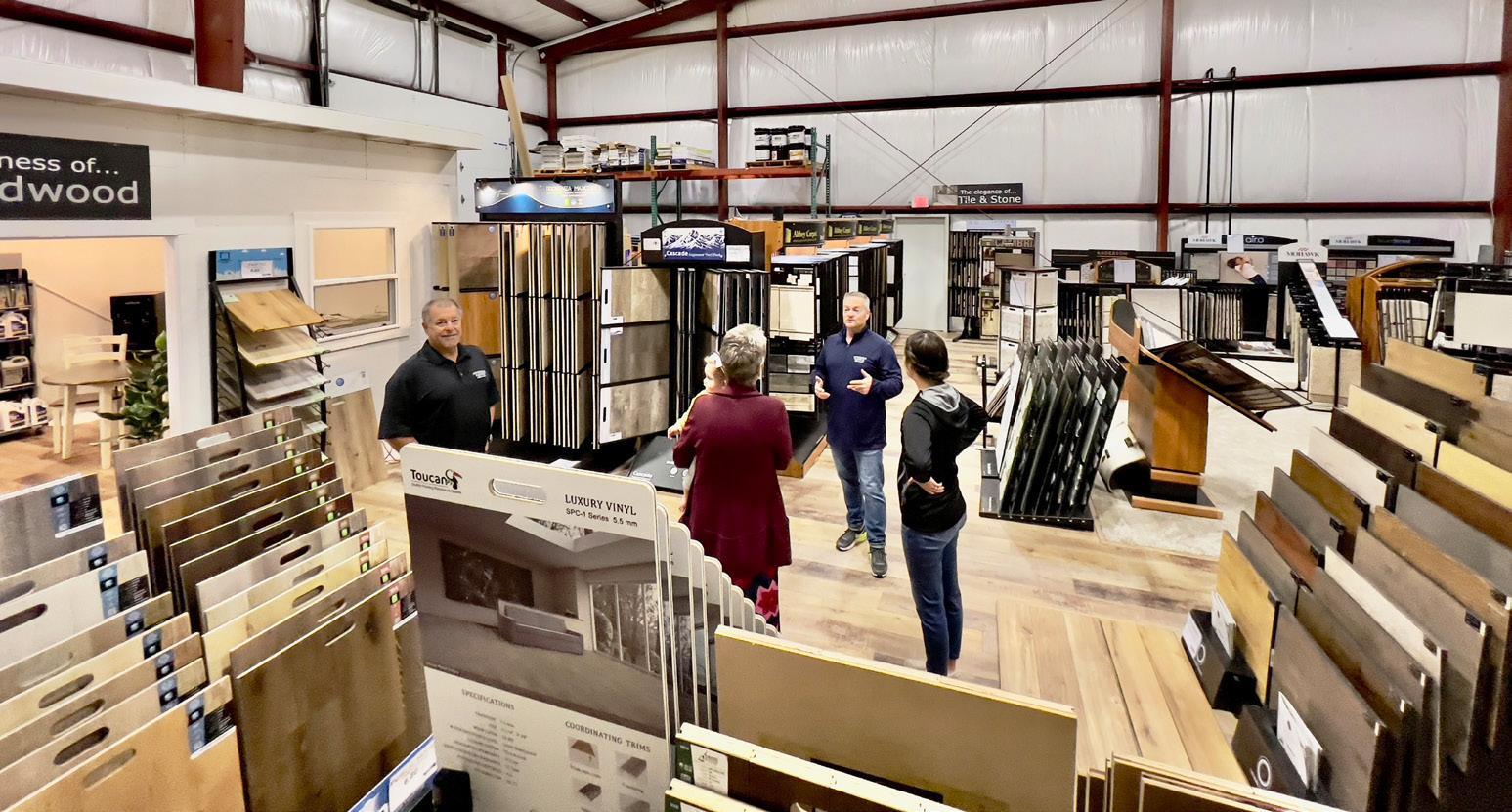
A local Hood River business since 1992, Affordable Floors teamed up in 2002 with Abbey Carpet & Floors to expand their purchasing power nationwide. After 25 years of operation on 13th Street, the business moved to its current location on Osprey Drive which provided ample space to build a new luxury showroom. “Everybody who walks in is just in awe of the showroom,” says owner Larry Williams. “It’s eye-popping.” Supplying both residential and commercial flooring, Affordable Floors Abbey Carpet offers customers the best and largest selection of carpet, hardwood, laminate, vinyl and tile in a friendly, comfortable and helpful atmosphere. “Come see the latest and newest in floor covering designs,” says Larry, noting that there’s always something new coming in.

“We’ve had a super awesome year!” Larry expresses. A hands-on owner, he still mans the showroom, takes orders, does measuring and completes installations. Jim Hart, who’s been with Larry for over 30 years, and the very skilled Frankie Alvarez, are currently fulltime installers for the company. Larry’s niece, Shelby, is the office manager and helps Larry handle the sales front!
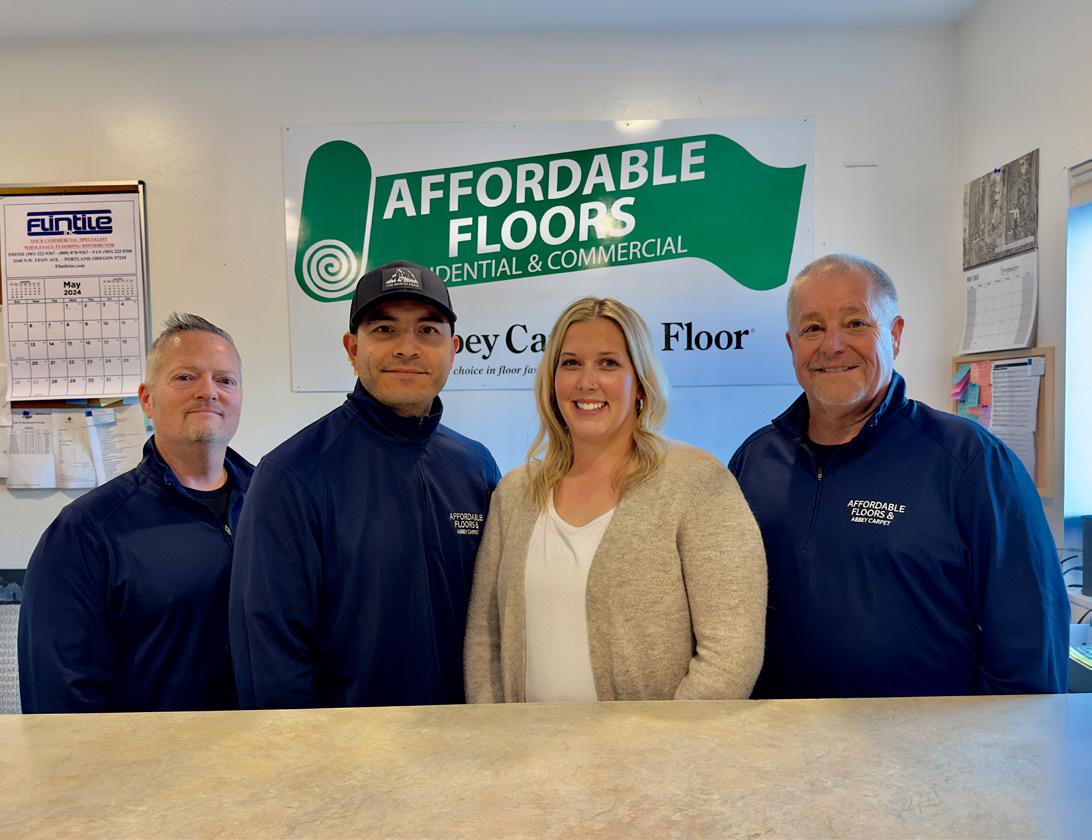
Growing up in Hood River, Larry returned home from college to raise three sons with his wife of 38 years and is blessed with three granddaughters as well. When it comes time for Larry to retire, his hope is to pass along the business to a family member or close friend who will honor the personal owner/seller relationship that customers have come to trust and appreciate from Affordable Floors and Abbey Carpet & Floors. Stop by Affordable Floors Abbey Carpet Showroom at 1512 Osprey Dr., Unit B in Hood River. Give them a call at (541) 386-7799 or email floors@gorge.net. For additional information or to use the room visualizer, visit their website at hoodriver.buyabbey.com.











































CMust

ustomers sometimes walk into our store and apologetically say they have an embarrassing question. As likely as not, it will be a question about bowel movements — too many, not enough, diarrhea, constipation. We aren’t at all embarrassed to talk about these kind of issues. That’s why we are here. Many things can cause bowel irregularities. For now, we’re going to talk about constipation. There’s occasional constipation that can be caused by dehydration, poor dietary choices or stress. With summer coming, make sure you’re drinking plenty of fluids. Add some liquid electrolytes to make sure your electrolytes stay balanced. Taking magnesium oxide or magnesium citrate is a great way to replenish magnesium, keep muscles from cramping,and keep your stools soft. I like to take extra potassium in the summer as well. Potassium helps activate the kidneys and keeps your body from retaining excess water.

Bacterial imbalance in the small intestines can cause constipation as well. Adding a daily fiber supplement to your diet feeds the good bacteria that keep your stool soft. Prunes and prune juice can be really helpful for this, but if you don’t like prunes try psyllium, a great allround fiber. Take it with a lot of water as it swells in your intestines to create bulk. Or you can go for a broader spectrum fiber blend like FiberMend® by Thorne. It has Sunfiber®, rice bran, pectin,
and larch arabinogalalctan. Arabinogalactan has the added benefit of boosting immunity. The fiber product that works best for both constipation and diarrhea is MegaPre® by Microbiome Labs. It feeds more of the niche bacteria, like Akkermansia, that are starting to get the attention they deserve. Akkermansia is a really important bacteria that keeps the gut lining and mucus barrier healthy, but it hates oxygen and is really hard to keep alive outside of the human gut. After years of research and product testing, there is finally a good Akkermansia product by Pendulum Labs on the market. Taking it along with MegaPre helps restore an important bacteria that many of us have lost. If you’re one of those people who has SIBO-based constipation from having high levels of methane producing bacteria, try Atrantil.® This herbal blend developed by a gastroenterologist helps move these bacteria out of the small intestines and back to the colon where they belong. It can effectively reduce bloating and constipation. Add on a good probiotic like GI Clinical Probiotic® by NOW Foods or Mega SporeBiotic™ by Microbiome Labs, and constipation may well become a thing of the past.
Ruth Maletz RN, CNC & Jonathan Maletz, LMHC Daniel’s Health & Nutrition 918 12th Street, Hood River 541-386-7328





Cured coonstripe shrimp have not been popularly used as a fishing bait until somewhat recently, but they have changed the game for salmon and steelhead anglers. For the bait world, there are pros and cons to the options out there. Eggs are one of the best, but dialing in a cure can sometimes be an unending task, not to mention the mess and their tendency to fall off the hook. Sand shrimp

and Willamette River salmon and steelhead!
A specific kind of shrimp, coonstripe shrimp, is a popular and extremely effective bait for a handful of reasons: higher durability than sand shrimp; consistent color retention; can be refrigerated and re-fished; and effective on catching salmon and steelhead.
Coonstripe shrimp are a pandalid shrimp with a long, spiny rostrum that protrudes forward from their eyes and carapace. They are the second largest shrimp in Alaskan waters, typically ranging between 3 and 6 inches in length. They can be distinguished from other similar shrimp (like spot shrimp) through the darker striped markings on their abdomens. They have a heavier, more robust appearance that is arched more than other Alaskan shrimp.
Some anglers cure their own shrimp. Addicted Fishing has a cure that I


brand of choice is Washington Coon Shrimp by RiverCity Fishing Products. These shrimp are selected from the boat to the jar using gloves, never having touched human hands. Special care is taken to keep the tails and antennae intact. Subpar shrimp are thrown out so that every shrimp in the jar is fishable. Millennial Bait Co. Coon Shrimp are also an effective cure that I especially like for sockeye, but it works well for all species. Be careful not to shake your shrimp jar or turn it upside down. Keeping them intact is key.
Commercial cures don’t require scent and often are effective as is, but if other anglers are using the same or similar bait downriver from you, it’s a good idea to add scent.
If you’re unsure of the coon shrimp you have available, try to bring two different cures and a few scents to play with. Some days, the fish will respond to a certain scent and others they won’t. Ultimately, the fish need to be there, but coonstripe shrimp are a great way to target them.










Once you’re retired, you will likely need to draw upon several types of income for your living expenses. You’ll need to know where these funds are coming from and how much you can count on, but you should also be aware of how this money is taxed — because this knowledge can help you plan and budget for your retirement years.
Here’s the basic tax information on some key sources of retirement income:
Many people don’t realize they may have to pay taxes on their Social Security benefits. Whether your benefits will be taxed depends on how much other taxable income you receive from various sources, such as self-employment, stock dividends and interest payments. You’ll want to check with your tax advisor to determine whether your income reaches the threshold where your Social Security benefits will be taxed. The lower your total taxable income, the lower the taxes will be on your benefits. The Social Security Administration will not automatically take out taxes from your monthly checks — to have taxes withheld, you will need to fill out Form W-4V (Voluntary Withholding Request). Again, your tax advisor can help you determine the percentage of your benefits you should withhold.
During your working years, you may have contributed to two basic retirement accounts: an IRA and a 401(k) or similar plan (such as a 457(b) plan for state and local government employees or a 403(b) plan for educators and employees of some nonprofits). If you invested in a “traditional” IRA or 401(k)
or similar plan, your contributions may have been partially or completely deductible and your earnings grew on a taxdeferred basis. But when you start taking withdrawals from your traditional IRA or 401(k), the money is considered taxable at your normal income tax rate. However, if you chose the “Roth” option (when available), your contributions were not deductible, but your earnings and withdrawals are tax-free, provided you meet certain conditions.
Many investors use annuities to supplement their retirement income. An annuity is essentially a contract between you and an insurance company in which the insurer pays you an income stream for a given number of years, or for life, in exchange for the premiums you paid. You typically purchase a “qualified” annuity with pre-tax dollars, possibly within a traditional IRA or 401(k), so your premiums may be deductible and your earnings can grow tax deferred. Once you start taking payouts, the entire amount — your contributions and earnings — are taxable at your individual tax rate. On the other hand, you purchase “non-qualified” annuities with after-tax dollars, so your premiums aren’t deductible, but just like qualified annuities, your earnings grow on a tax-deferred basis.
When you take payments, you won’t pay taxes on the principal amounts you invested but the earnings will be taxed as ordinary income.
We’ve looked at some general rules governing different sources of income, but you should consult your tax professional about your specific situation. Ultimately, factors such as your goals, lifestyle and time horizon should drive the decisions you make for your retirement income. Nonetheless, you may want to look for ways to control the taxes that result from your various income pools. And the more you know about how your income is taxed, the fewer unpleasant surprises you may experience.
or legal advice. Edward Jones, Member SIPC.
This article was written by Edward Jones for use by your local Edward Jones Financial Advisor. Edward Jones, its financial advisors and associates do not provide tax

 By Donovan Darling, Staff Writer
Father’s Day will be celebrated on June 16 this year. Father’s Day, a holiday celebrated around the world, is a day dedicated to honoring fathers and father figures.
The origins of Father’s Day can be traced back to the early 20th century in the United States. The holiday’s establishment is often credited to Sonora Smart Dodd, who was inspired by the newly recognized Mother’s Day. Sonora, the daughter of a Civil War veteran and single father, William Jackson Smart, wanted to honor her father’s selfless service in the war. So in 1909 she proposed the idea of Father’s Day to local ministers in Spokane, Washington, to be celebrated on June 5, her father’s birthday. However, there wasn’t enough time to prepare for the holiday that year, so the first Father’s Day was celebrated on June 19, 1910.
popular as the holiday became more mainstream and commercial.
In the mid-20th century, the roles of fatherhood began to shift, with an increasing emphasis on fathers being more involved in raising the children and doing more things around the house. This social shift could be seen in how people viewed Father’s Day as a celebration, not only of paternal authority but also of paternal love, care and nurturing.

Father’s Day gradually gained popularity, with several attempts made to establish it as a national holiday. It wasn’t until 1972 that President Richard Nixon officially recognized Father’s Day as a national holiday in the United States, to be celebrated on the third Sunday of June each year.

Throughout its history, Father’s Day underwent several transformations due to cultural, social and economic factors. Initially, it was celebrated with the simple gestures of wearing a red rose to honor a living father and a white rose to honor a deceased father. Greeting cards, often accompanied by gifts and family gatherings, became increasingly
Around the world, Father’s Day has different origins and traditions. In many countries, it’s celebrated on different dates and with varying traditions. For example, in Catholic countries like Spain and Portugal, Father’s Day is celebrated on March 19, coinciding with the Feast of St. Joseph, the earthly father of Jesus Christ. In Germany, Father’s Day, known as “Vatertag,” is celebrated on Ascension Day, with traditions that include men going on hiking trips and pulling wagons filled with beer.
Today, Father’s Day is celebrated worldwide with a variety of traditions, ranging from simple acts of appreciation to elaborate family gatherings, gift-giving and beer-filled wagons (yes, please!). While its commercialization is often criticized, Father’s Day remains an important holiday for expressing gratitude and love for fathers and father figures, honoring their contributions to family and society as a whole.
As a father myself, I wish you and your families a “Happy Father’s Day!” this June.







The first Black resident of Linn County, Oregon was a woman then known only as Cora Ann. She was born into slavery in Virginia between 1822 and 1833, and by 1837 was living in New Orleans, where she was purchased by 32-year-old Emeline Carey Sellick. In 1850, Emeline and Cora moved to Missouri, where Emeline married Samuel Johnson. That same year, the couple moved to Oregon, and Cora traveled with them on the Oregon Trail as an enslaved overland pioneer.
When the Johnson party reached Oregon in the fall of 1850, Cora became one of just 55 Black people in the Oregon Territory. African Americans – free or enslaved – had been legally barred from coming to Oregon since 1849. However, legislation targeting Black people often went unenforced within Oregon’s disparate farming communities. This allowed a handful of Black Americans to remain in Oregon despite their legal exclusion, but it also allowed slavery to continue long after the practice was prohibited. Oregon’s Supreme Court outlawed slavery in 1853; Cora, however, would continue to be held as Emeline’s slave until the 1860s.
Samuel Johnson claimed a 640 acre homestead near Brownsville in Linn County, and built a home which he and his wife shared with Cora. The Johnsons had no children. Samuel Johnson drowned in the Calapooia River in January 1858, leaving Emeline and Cora alone.
In December 1858, Cora married John Cox, a Black farm laborer. Theirs is the earliest recorded marriage of two Black people in Oregon. John Cox worked for Jefferson Huff, a white widowed father of two from Tennessee who was likely John’s former owner. Two months later, Emeline and Jefferson Huff were married, and all began sharing the same home.
Cora and John had a daughter named Adeline in 1860. In that year’s census, Cora and Adeline were listed as slaves, while John was listed as free. A second daughter, Angeline, was born in 1864. Cora was emancipated in or before 1864 as well. That year, Emeline sold her “former servant” Cora 36.3 acres of land from her homestead with Samuel Johnson for just $10.00, in recognition of “faithful services rendered.” This purchase made Cora one of the earliest Black landowners

in Oregon history. John Cox built a home for his family on this land that same year.
Cora remained close to Emeline even after receiving her freedom. In 1866, Cora testified in Emeline’s divorce trial against Jefferson Huff. The testimony of a Black woman was extremely rare in 19th century Oregon.
Cora was well known throughout the Willamette Valley; she and her husband were affectionately called “Aunt Cora” and “Uncle John” by their friends and neighbors. She was wellconnected within the region’s small Black community. Cora attended Oregon’s earliest-known Emancipation Day celebration in Salem in 1867, alongside fellow Black pioneers like Ben Johnson and Amanda Gardner.
John Cox died in 1875, but Cora remained in her home until 1886. She sold the house and land that year for $600 and moved to Brownsville. Cora lived comfortably from the sale of her property for the rest of her life. Sources say Cora even made a monetary gift to Willamette University Women’s College in her will. Cora Cox passed away in 1892. The house she lived in from 1864-1886 still stands today, making it one of Oregon’s oldest homes.

Oregon Black Pioneers is Oregon’s only historical society dedicated to preserving and presenting the experiences of African Americans statewide. To learn more, and to support this nonprofit, visit oregonblackpioneers.org.
Oregon Black Pioneers, 2024




































































































 ByRobertMatsumura,ContributingWriter



most realistic, imaginative video games for both consoles and streaming platforms, many enthusiasts are increasingly looking to the past for a familiar, relaxing and affordable gaming experience.

With the dizzying array of tantalizingly new games out there, complete with ultra-high definition graphics and immersive music and storylines, the rising popularity of old low-tech games with pixelated graphics and simplistic controls is a bit of a head-scratcher. In order to wrap one’s mind around this curious phenomenon, it’s important to understand what the term “retro game” refers to. In gaming parlance the term “retro gaming” instantaneously evokes primitive but charming 8-bit graphics, intuitive straightforward gameplay that is addictive and challenging, yet is, at its core, innately simple.
The heyday of these retro games was back in the 70s and 80s when the internet was still a dream, and words like “cell phone” and “streaming” had not yet entered the common lexicon.

experience was to play these games standing up on arcade machines located in pizza parlors, convenience stores and malls across America.
For those of us who grew up during this era the nostalgia factor is immense. As the world continually grows faster and more complex, there is a certain comfort in the return to something familiar. Engaging again with the graphics, sounds and challenges of these simple games has the ability to evoke the past, like a time capsule transporting one back to the days of their youth. Whether rescuing the princess in the various castles of Super Mario Brothers, zapping fast flowing insects in Centipede or defending humanity from invaders from outer space in Galaxian or Space Invaders, engaging once again with these simple yet thrilling games is like reacquainting oneself with an old friend.
Another lure of retro games is their simplicity. Unlike contemporary video games whose complexity often mirrors real life, retro games offer a binary experience that requires minimal decision making and strategizing. In a world where everevolving technology demands increasing levels of expertise and knowledge,


the straightforward gameplay of retro games can be a refreshing change of pace. Basic hand/eye coordination and reaction time are typically the skills required in retro games, versus the detailed storylines and game mechanics common to today’s popular titles.
Aside from nostalgia and relaxing game play, the affordability of retro gaming is also appealing. The expense of today’s popular titles creates a strain on the pocketbook for budget-minded individuals. The inexpensive price of retro games — frequently bundled together at minimal cost — creates a democratizing effect, wherein the vast majority of gamers can afford to participate, rather than only the hardcore few willing to shell out significant dollars to stay up to date on the latest and greatest new releases.
Finally, one cannot discount the aesthetic appeal of retro games with their pixelated graphics and jaunty chiptune soundtracks that impart a certain charm to these old titles. While highly orchestrated

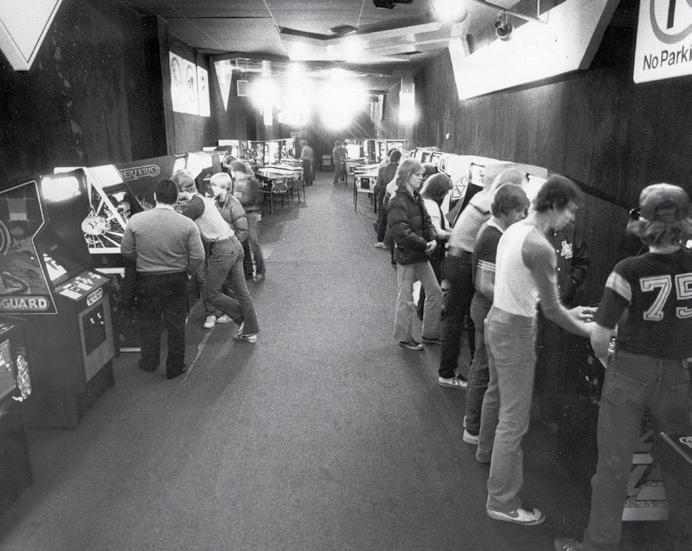
musical scores and jawdropping HD visuals are indeed impressive from a technical standpoint, there are times when simple equates to good. In a sense, retro games are the comfort food of the video game industry. While gourmet cuisine can be an amazing culinary experience, there are times when you simply desire a good old burger and fries. Leaning over a classic arcade machine, joystick in hand, is a completely different experience to gaming online via the latest PlayStation or Xbox console wearing a headset and communicating in realtime with players around the globe. So how has the recent resurgence in retro game popularity affected the gaming industry?

arcade establishments also double as restaurants serving food and beverages to hungry gamers as they strive to save the world from galactic invaders or guide Pacman through a labyrinth of hungry ghosts.
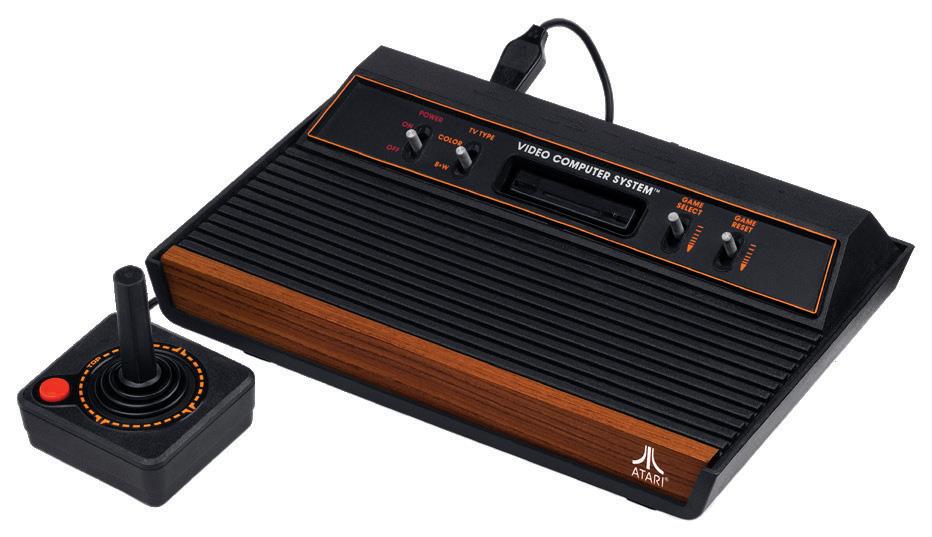
As one might expect, the surging popularity of retro video games has spurred demand for old gaming consoles. The resale market on sites such as eBay for vintage Atari, Nintendo, and Sega Genesis consoles has exploded as the younger generation of gamers discovers these old classics, and Boomers reengage nostalgically with the favorite games of their youth. The demand for retro game
The surging demand for retro games has manifested itself in a myriad of ways, from the creation of small hand-held arcade machines for gamers on the go to the digital remastering of classic retro titles. Game designers are also incorporating visuals, sound effects, and game mechanics from the old retro titles and developing new games that capture the essence of these timeless originals. In cities across the globe the burgeoning demand for retro video games has spawned arcade establishments catering to gamers wishing to play the old classics standing up, on machines like those of their youth. Often these new
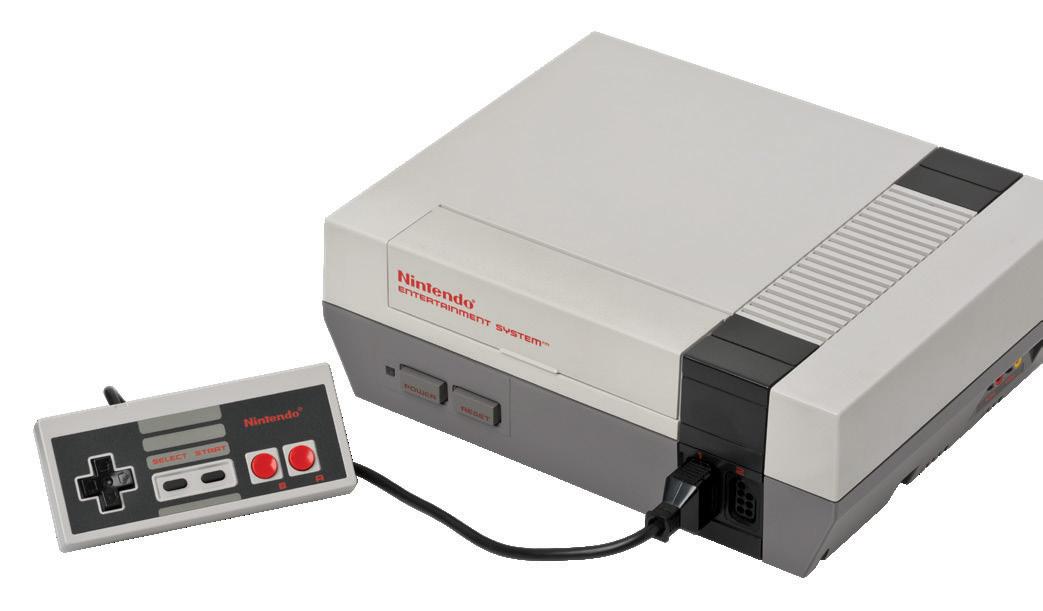
in lockstep with the demand for the old consoles and games cartridges, driving a craze for all things retro gaming. No matter what your age or level of gaming experience — Baby Boomer to Gen Z, avid gamer to newbie – retro video games have something to offer everyone. Whether you grew up in the 70s or 80s and seek a nostalgic blast to the past, or hail from a more recent generation, the realm of retro gaming is a wonderful respite from the complexities of our modern life—digital comfort food for the soul!