Edited by Areti Markopoulou

bits Learning Cities
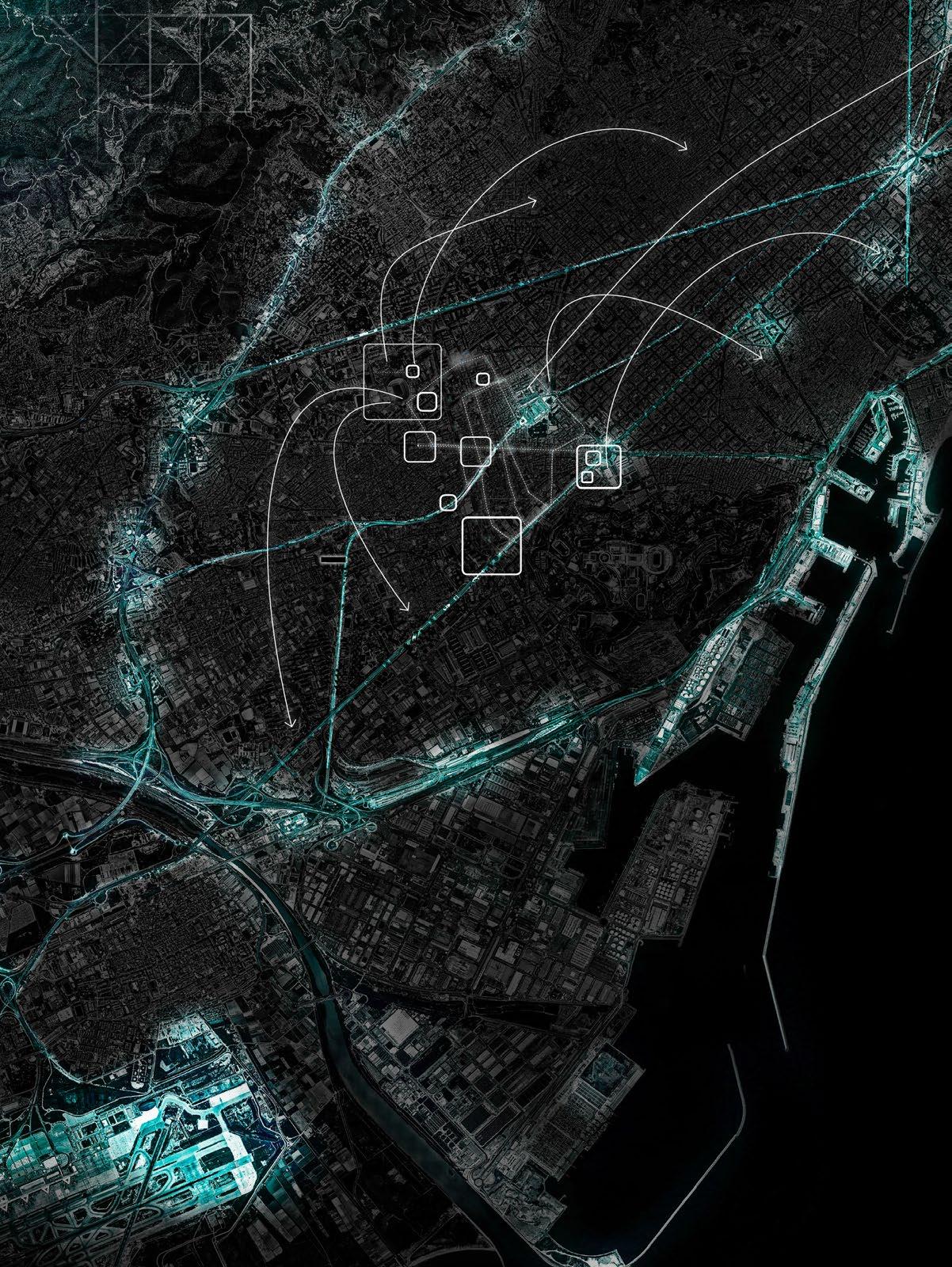
Moving beyond an understanding of intelligence and optimization as selections from a variety of computed and quantified data-based possibilities – a reading which carries the heavy burden of the last two decade’s mainstream idea of “smart city” – we need to explore optimization as patterns of co-creation and as a continuous changing state regarding both human and non-human perspectives.
bits
Learning Cities

2
bits
Learning Cities
Edited by Areti Markopoulou
3
IaaC BITS during 2020 has started a new editorial phase that is intended to be more effective, ambitious and intentional both in terms of content and in the layout and configuration of the publication.
These monographic issues – presented with an experimental and proactive foundation and associated to technological and creative innovation – aim at to combining inter-disciplinary and multi-scalar exchanges with a new environmental and socio-cultural sensitivity.
This commitment to advanced culture and knowledge is well-suited to a time of challenges and changes: it conforms the conceptual framework that supports dissemination projects tied to IaaC’s own production, but also to a whole network of exchanges and complicities that frame it and feed into it.
Each issue is meant to be conceived as an articulated system of voices and cross-cutting experiences focused on a central theme, which is understood as a subject for debate and proactive discussion.
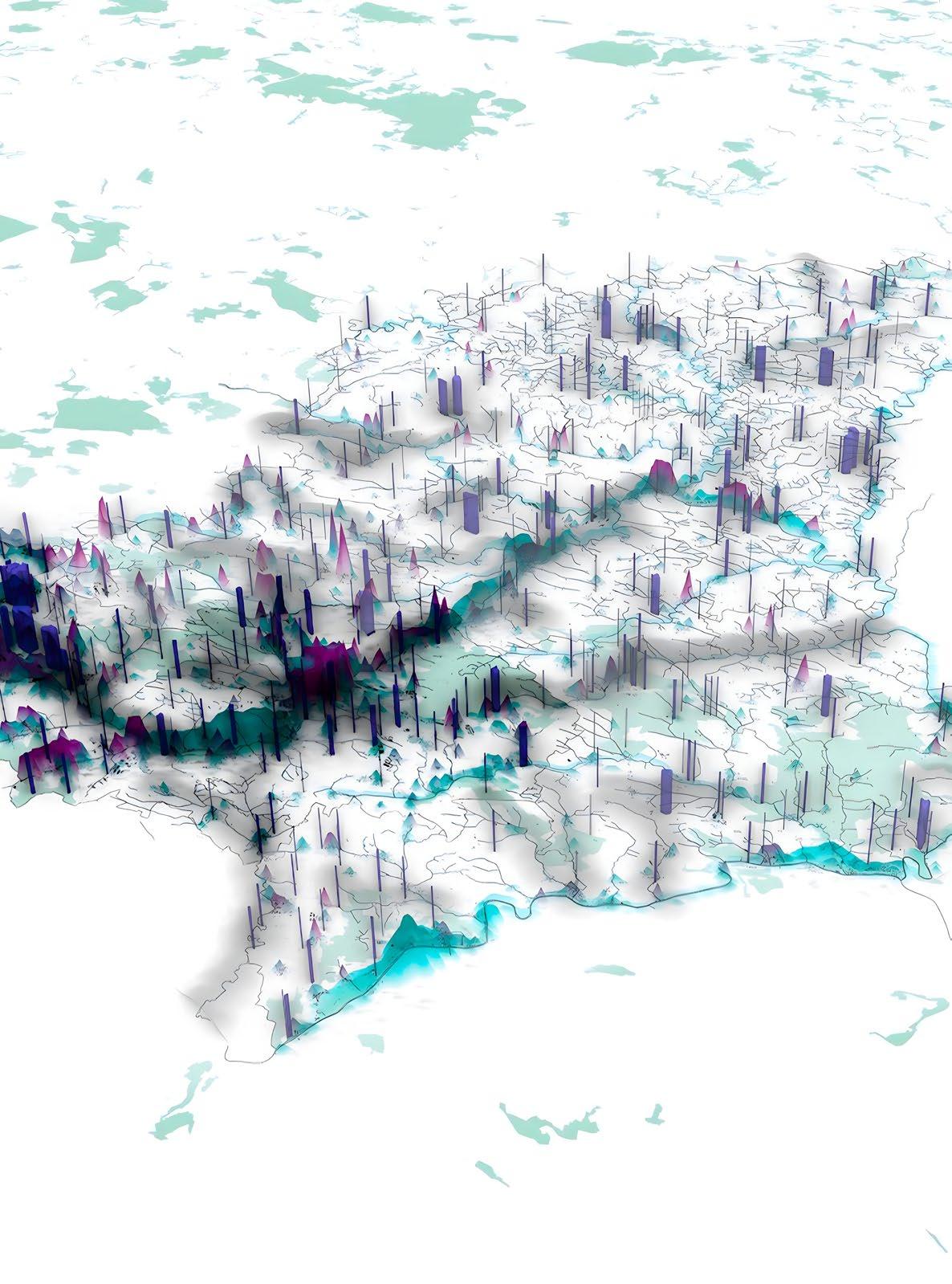
Front page figure: IAAC MaCT, OWNit, F.Ciccone, L.Marcovich, 2017.
4
15
09 31
Learning Cities: Artificial vs. Collective Intelligence in Urban Design Areti Markopoulou
On Syntethic Intelligence and Design: A conversation Benjamin Bratton with Areti Markopoulou and Jordi Vivaldi
Brain City Neil Leach
Machine Estrangement: On Leo Tolstoy, Algorithmic Otherness and Urban Design Jordi Vivaldi
Learning Machines: A Story of Control, Softness and Agency in Architectural Computing Theodora Vardouli
Semantics in Architecture From Words to Forms and Back Again Stanislas Chaillou
Architecture and Intelligence: A conversation Molly Steenson with Areti Markopoulou and Jordi Vivaldi
87
InFraRed: An Intelligent Framework for Resilient Design Angelos Chronis
Urban Fictions, SPAN Matias del Campo and Sandra Manninger
109
97 139
37 49 73 121 157
61 173 187 199
Sensing Public Spaces Aldo Sollazzo
On Evolutionary Digital Design Processes and Citizen Involvement: A Conversation John Frazer with Areti Markopoulou and Jordi Vivaldi
Social Realism in the Age of Simulation Jose Sanchez
149
Superbarrio
Gamification Tools for Data-driven Participatory Urban Design Marco Ingrassia, Areti Markopoulou and Chiara Farinea
Data Action Sarah Williams
A City Like You and Me. Embracing Uncertainty in the Age of Precise Data Rodrigo Delso and Javier Argota
Relating Human to Machine Aleksandra Sojka, Snoweria Zhang, Deborah Churchill, Cobus Bothma
Learning Cities, Shared Co-Cities, Empathic Cities Manuel Gausa
5 Index
6
Critical Views
What will the city of the future look like?
Can machines design and what?
Which new models of architectural conceptualization arise from algorithmic control?
Which is the novelty and relevance of using artificial intelligence in the design process?
Will the ethical, social, cultural and aesthetic implications of AI affect the quality and form of urban and architectural space?
7
Learning Cities Collective Intelligence in Urban Design
Areti Markopoulou
Warren Brodey, 1967
The application of artificial intelligence, machine learning or statistical models and algorithms for the creation of predictive models in architectural design and urban planning is based on relational and evolutionary logics that promise a more (multiobjective) “optimized” design or a “smarter” city, where “smart” is usually defined based on notions of improvement at infrastructural scales.
Most of the discussions around the idea of urban “intelligence” focus on the use of sensory technology in billions of interconnected objects (Internet of Things) or on the processing of billions of images that can be mined from web services to collect vast amounts of data produced by human behaviour and other sources, such as the environment or the material world of our built space. Data from user occupation patterns in housing, for instance, can generate economically viable interior distributions in building development. Similarly, data on how people move in cities can be inserted into computers and generative algorithms with the goal of helping predict traffic and optimizing mobility planning.
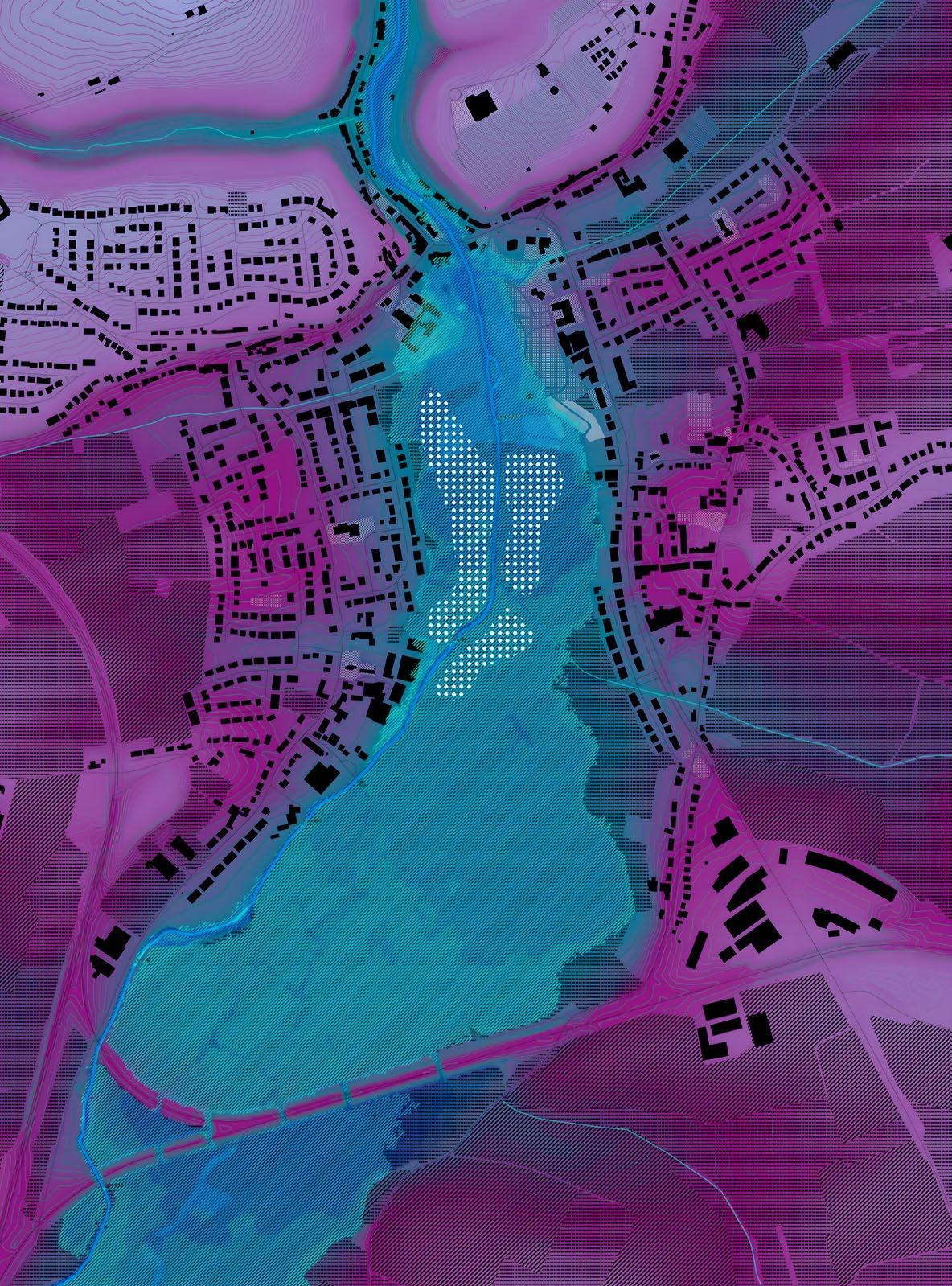
Previous page:
IAAC MaCT, Alzette 2.0.
S.Subramani, L.Saadi, M.Galdys, I.Reyes, 2020.
In a highly human-centric technocratic world, such notions of optimization might be the gold standard for urban policies and national strategies.
9 INTRO
“…we teach our environments first complex, then self-organizing, intelligence that could eventually become evolutionary”

On Synthetic Intelligence and Design
Areti Markopoulou and Jordi Vivaldi
Operating at the intersection of sociology, architecture, computation, and design theory, Benjamin Bratton’s work reveals new perspectives on the implications of digital technologies regarding what counts as urbanism. Interested in new kinds of systems and ways of life that are emerging from synthetic intelligence in cities, Bratton discusses the unique possibilities of producing novelty in urban evolution through different forms of intelligence that operate in a variety of global human (or nonhuman) inhabited landscapes.
Areti Markopoulou: The current “Learning Cities” issue of IaaC Bits intends to explore “intelligence” in urban space and to present a variety of perspectives on how multiple intelligences might affect the way cities are designed, inhabited and eventually operate. The idea of intelligent machines that simulate the cognitive functions of learning or problem solving is not new, but its extensive use in recent years in urban and architectural design processes calls for a more clear identification of what “intelligence” is, what kind of intelligences already exist in cities, and why or how we might create novel ones. If we look at the example of smart cities, it seems like there is a strong belief that the Internet of Things – the vast amounts of data amassed by millions of interconnected objects – is the most important base upon which we can understand our current cities and plan the future ones. But is this really enough? In this issue of IaaC Bits, we look at existing intelligences in our urban fabric that operate using qualitative rather than quantitative data (such as crowd wisdom) and question the current data analytics approaches as very limited practices of human and machine intelligence.
Previous page: The Terraforming 2020, Strelka Institute for Media Architecture and Design.
15 DIALOGUE
Benjamin Bratton in conversation with

Brain city
Neil Leach
What will the city of the future look like? Will it look strikingly different to cities of today? Will it look like something out of the Jetsons, complete with flying cars and space age buildings? Or will it look much like our contemporary cities, with a few new buildings, but with much of the existing building stock retained and simply retrofitted with the latest AI technologies? In other words, will the primary driver of change be a language of novel architectural forms? Or will it be the introduction of ever more sophisticated AI-based technologies to the existing infrastructure?
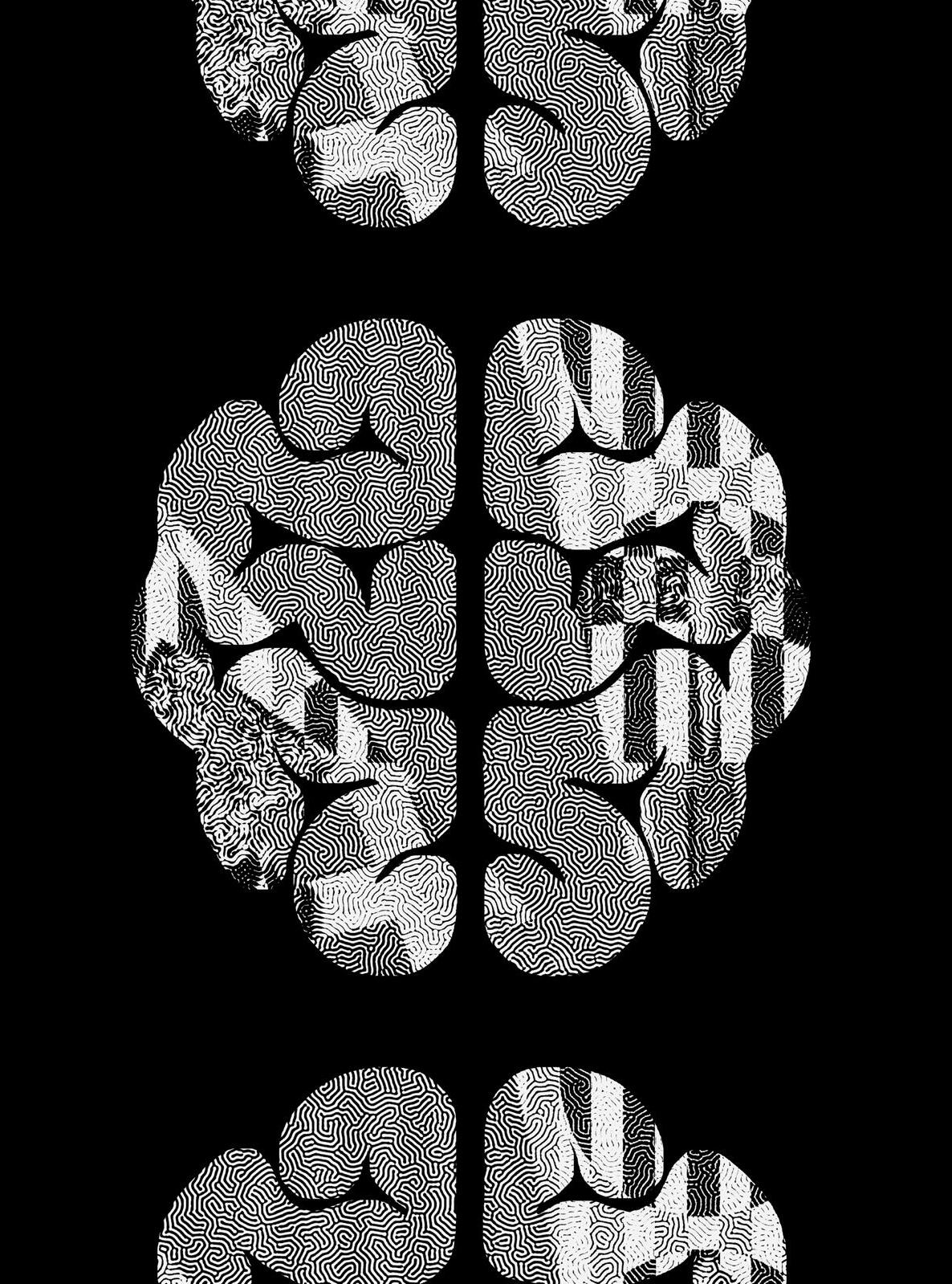
This short article explores the possibility of understanding the city as a form of brain, whose operations could potentially be supplemented by AI. Brains and cities, it would seem, have much in common.1 Both are multi-agent systems.2 The opportunity therefore presents itself for using AI to model – and potentially improve –the operations of a city. While simple multi-agent computational systems, such as Processing, can be used to generate emergent forms, neural networks are able to ‘learn’ and improve over time. And yet the introduction of AI to improve the operational efficiency of a city is a relatively recent phenomenon.3
31 ARTICLE
Previous page: Endless Skyscraper, Eduard Haiman
Semantics in Architecture
From Words to Forms and Back Again
Stanislas Chaillou
This article reopens the parallel established between architecture and linguistics and posits semantics as a natural and necessary step forward for the architectural discipline. This analogy comes at a crucial point in time, as the intersection between artificial intelligence (AI) and architecture is, from a theoretical standpoint, still illdefined. Overly documented and vaguely understood, the encounter between AI and our discipline has yet to find a name, or at least a framework. In this context, we believe that semantics offers the ideal analogy to address this junction. While borrowing once again from linguistics, semantics provides a powerful framework to apprehend what appears to us as a new era in Architecture.
Figure 1: GAN-Generated Masterplan. Source: Stanislas Chaillou.
In linguistics, semantics is devoted to the study of meaning. It is concerned with the relationship between the language and what it actually represents. It investigates reality through the documentation and modeling of significations. From the early work of Ferdinand de Saussure1 to Tim Berners-Lee’s Semantic Web2, semantics has grown beyond the boundaries of linguistics to irrigate many other fields, providing them with an entirely new paradigm. And today, semantics allows us to go beyond the status quo, which dedicates grammar as the exclusive lens for considering architecture. Since Christopher Alexander3 and A Pattern Language4, this analogy between design and grammar has been a fruitful path. However, it is now showing the signs of its limitations, as discussed later in this piece. In light of this situation, we posit that the notion of “meaning” can unite discussions and research around a richer analogy.
61 ARTICLE
70 ARTICLE
AI & Urban Environments
How can AI be used to enhance creativity in urban design?
What do we optimise for in design, when using codes and algorithms?
Will codes contribute to deeper learning of cultural phenomena?
Which technologies can help us monitor urban dynamic flows?
Can AI serve as a cartographic device that records aesthetic conditions in architecture?
71 ARTICLE
Relating human to machine
Symbiotic augmentation in architectural design
Aleksandra
Sojka, Snoweria Zhang, Deborah Churchill, Cobus Bothma, Kohn Pedersen Fox
Cities house the communities we thrive in. Understanding the requirements and performance of future urban spaces is becoming more challenging for the modern architect or urbanist. How do we, as designers of urban environments, approach densification, development, and growth whilst creating places that meet their inhabitants’ needs and desires, let alone the requirements for sustainability and wellbeing?
The influences in thriving cities are numerous and extend far beyond the drawing board, with many of the final functions and the use of spaces not in the control of the designer, operator, or local authorities. This is why our approach at Kohn Pedersen Fox (KPF) for designing thriving neighborhoods goes beyond the design of buildings and spaces to include frameworks allowing future growth, use, and adaptability. We need to ensure we can simulate and analyze our various computational design models as an integral part of the design experience for these frameworks.
Previous page: Copyright Kohn Pedersen Fox.
This leads to the designer seeking to augment the design process through multiple layers of design, technology, processes, and data. We develop and use these functions to simulate possible future scenarios and develop a scalable design approach to ensure the resilience and longevity of the completed neighborhood. The full design experience requires analytical and spatial design, various data layers, and simulation for immersive experiences of the future spaces.
187 ARTICLE

Learning Cities, Shared Co-Cities, Empathic Cities
Manuel Gausa
Learning Cities: Towards a New Vocabulary
The digital revolution has not only brought about fundamental transformations in our technological tools and our operating systems, but ongoing changes that affect key aspects of our intellectual, cultural, and ethical relationships with our living environments, our habitats and our own relational spaces. These dynamics no doubt require a new kind of innovative and hybrid vocabulary.
As we will see in this text, these transformations range from new interactions with augmented matter – (Hyper)matters – and increasingly overlapping, complex, diverse and diversified processes – (Multi)processes – to a new social demand for involvement between networked citizens and citizenships responding to responsible and responsive interactions in and with our environments (Citi-zens & City-sens).
Also, a new perception of the aesthetic factor opens up – no longer as more or less predetermined, fixed and canonical category/ies but as a polyhedral condition, increasingly related to intelligent (artificial or natural) phenomena of option/decision and self-generation (ASTethics) that summon up new visions of fluid scenarios fluctuating between being strategically oriented and contingently and co-decided, adapted and adaptable (“Scena-rios”, in Spanish).
Previous page: "Umbrellas Manifestation" in Honk Kong, 2017. Self-organized mobilization with networked cells. http:// mimamamememe.com/ manifestaciones-movilesrevolucion-paraguas/.
We are talking about a new individual and collective, shared intelligence augmented by the new digital/informational potentials between agents and media (Inter-diligence) but also of a new actant drive to act, which is both operational and operative, more holistically qualitative – defined through actions (and operations) that are strategic
199 ARTICLE
Following page:
IAAC MaCT, Alzette 2.0. S.Subramani, L.Saadi, M.Galdys, I.Reyes, 2020.
216
WWW.IAAC.NET
IAAC BITS n. 10
LEARNING CITIES Advanced Architecture Magazine
Edited by Areti Markopoulou
With contributions by
A.Markopoulou, M.Gausa, J. Vivaldi, B.Bratton, N.Leach, T.Vardouli, S.Chaillou, M.Steenson, A.Chronis, M.del Campo, S.Manninger, A.Sollazzo, A.Sojka, S.Zhang, D.Churchill, C.Bothma, J.Frazer, J.Sanchez, C.Farinea, S.Williams, R.Delso, J.Argota, M.Marengo, S.Lujang
IAAC BITS JOURNAL Direction Committee
Manuel Gausa, Director
Areti Markopoulou, Editorial Curator
Jordi Vivaldi, Chief Editor
Editorial Board
Vicente Guallart
Willy Müller
Tomás Díez
Ramon Prat
Ricardo Devesa
Silvia Brandi
Mathilde Marengo
Graphic Curation
Ramon Prat
Daniela Figueroa
Copy editing and proofreading
Angela Kay Bunning
Published by Institute for Advanced Architecture of Catalonia , Barcelona www.iaac.net
Indexing
ISSN: 2339-8647 ISBN: 978-1-63840-008-0 Printed in Arlequin, Barcelona
Publication date November 2022
© IAAC Edition
The criteria set out in the various articles of this issue are the exclusive responsibility of their authors and do not necessarily reflect those that may have the direction of the magazine. IaaC Bits is a scientific magazine and it authorizes the total or partial reproduction of its texts and graphic originals, provided that the source is acknowledged. The direction of the journal reserves the right to publish any requested original.
The published articles are submitted to a scientific review system.
This work is subject to copyright. All rights are reserved, on all or part of the material, specifically translation rights, reprinting, re-use of illustrations, recitation, broadcasting, reproduction on microfilm or other media, and storage in databases. For use of any kind, permission of the copyright owner must be obtained.
Distribution Actar D, Inc. New York, Barcelona. New York
440 Park Avenue South, 17th Floor New York, NY 10016, USA T +1 2129662207 salesnewyork@actar-d.com
Barcelona
Roca i Batlle 2-4 08023 Barcelona, Spain T +34 933 282 183 eurosales@actar-d.com
Contact communications & publications office: info@iaac.net

The digital intelligence that is inevitably starting to penetrate every aspect of our previously analogue systems of living, working or social interacting calls for new models of designing our city and opens new territories of experimentation in the processes related to urban design. While the idea of intelligent machines that simulate “cognitive functions” such as “learning” or “problem solving” is not new, its extensive use, in recent years, in the urban design discipline opens up a series of new possibilities – as well as plenty of cultural, ethical or even aesthetic hesitations and risks.
How do our cities learn? Can machines design and what?
From a variety of applications of artificial intelligence in urban planning to co-creation processes that merge crowd intelligence with digital technologies, Learning Cities highlights that “intelligence” in the built environment should be understood beyond human, object or machinic intelligence alone. The Issue explores novel collective intelligence design processes in which designers, users, the built environment, and digital codes all play a fundamental role in a unique resonance that takes place among them.
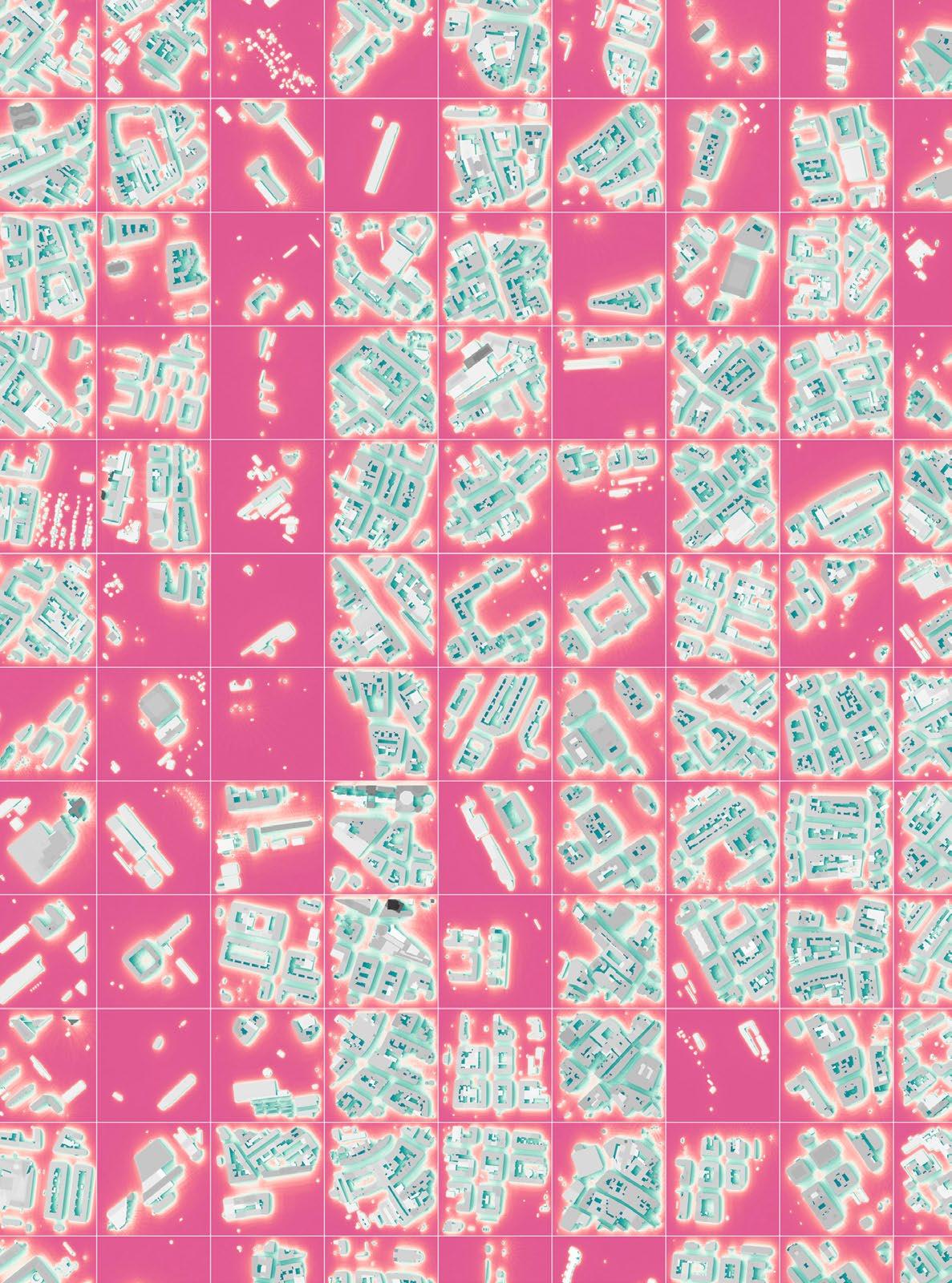
Edited by Areti Markopoulou. Including dialogues with John Frazer, Benjamin Bratton and Molly Wright Steenson.
Advanced Architecture Group Journal

10 — 2022
