No part of this publication may be reproduced, distributed, modified, stored in a retrieval system, or transmitted in any form or by any means without prior written permission from ACT4life.
Disclaimer
Although great care has been taken in the development of this publication, neither the author nor ACT4life accepts responsibility for any errors, omissions, or consequences arising from the use of the information contained herein.
THE CROSSROADS struggle struggle
THE STOP
FACE TO FACE WITH STRUGGLE
theroad behind
THE WAY OF THE HEART
THE ROUNDABOUT
WHAT IS ACT4LIFE & WHAT DOES IT OFFER?
Human behavior does not arise from one isolated processå At every momentà thoughtsà bodily reactionsà learning experiencesà attentionà valuesà and environmental influences continuously interact and shape the direction behavior takeså
ACT4life was developed by Monique Samsen over the course of 25 years, to help untangle the complexity of human behavior and make the principles of ACT more visible, understandable, and applicable in everyday life.
By organizing dynamically interacting cognitiveà neurophysiologicalà environmentalà and valuesõbased influences into six interconnected symbolic figuresà the model provides a shared visual language for exploring behavior and changeå
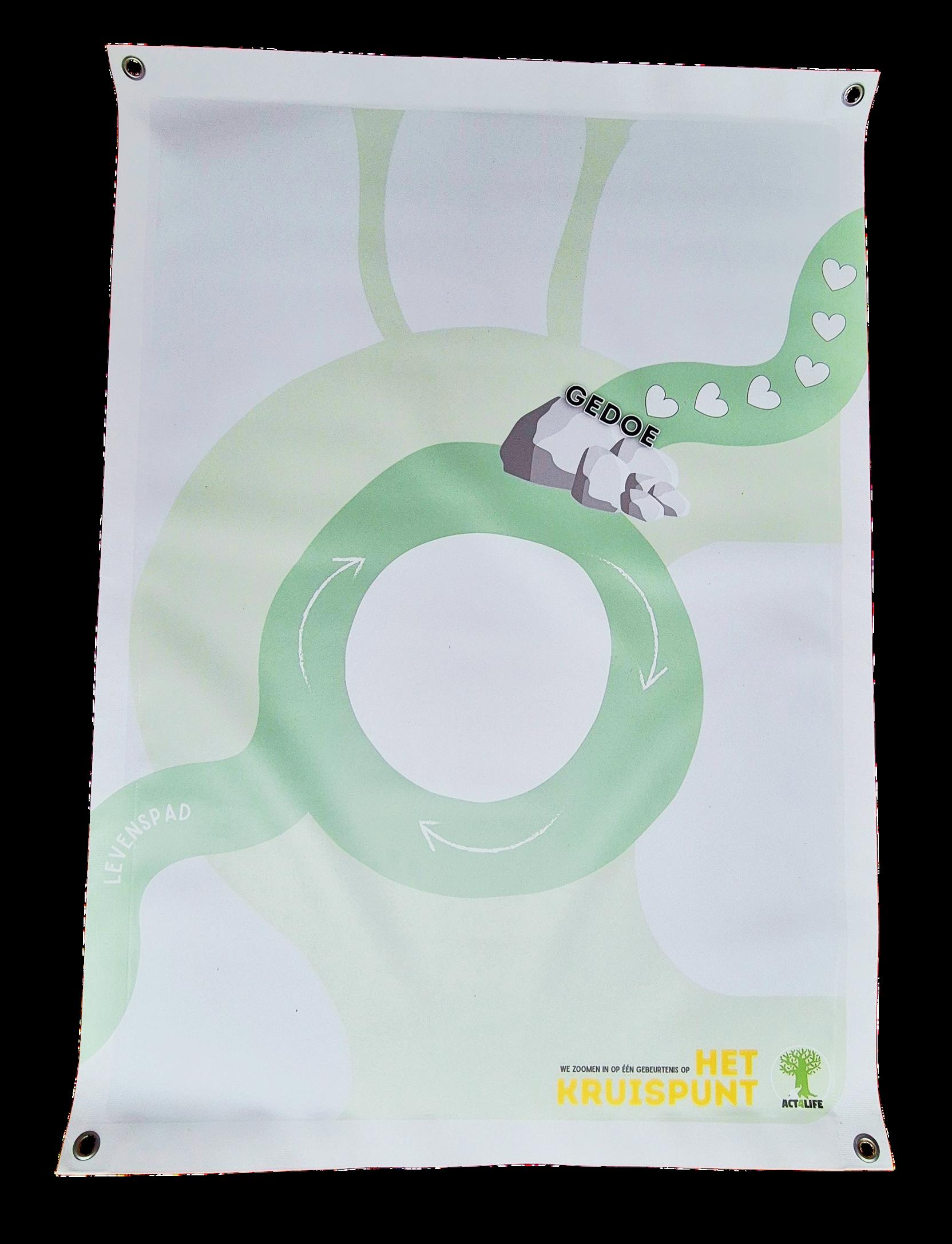
These figures move and interact within a visual landscape called the Crossroadsß a behavioral map that reveals how behavior developsà where it becomes stuckà and in which direction it is movingå
By translating abstract ACT concepts into a symbolic and visual language of observable behavioral dynamicsà ACTlife helps close the gap between the verbal language of ACT and the directà often wordlessà experiential reality of human behaviorå
In doing soà the model more closely reflects the neurophysiological and behavioral dynamics involved in how human beings process informationà regulate themselvesà and respond to the world around themå This allows behavioral processesóincluding the ACT processes underlying psychological flexibilityóto become more visibleà concreteà and easier to recognize in everyday lifeå
For professionalsà the model provides a practical framework for understanding how cognitiveà neurophysiologicalà environmentalà and valuesõbased influences interact to shape behaviorà where flexibility becomes restrictedà and what may support changeå In addition to understanding behavioral dynamicsà
ACTlife also provides a framework for understanding the dynamics of change itselfå The model distinguishes four phases within the process of changeà each involving different therapeutic tasks and professional attitudeså In this wayà ACTlife helps make the ACT process of creative hopelessness more visibleà structuredà and easier to translate into individualized guidanceå
Although the ACTlife model is designed to be understood intuitively through its visual language and symbolic figuresà it is deeply rooted in the philosophyà
theoryà and core processes of Acceptance and Commitment Therapy ñACTòå
The following pages briefly introduce the philosophical foundationsà theoretical backgroundà and core processes of ACT that together form the foundation of the ACTlife modelå
ACTlife does not replace these foundationsà but builds upon them by translating them into a concreteà visualà embodiedà and processõbased framework for understanding behaviorå
ACTlife therefore helps clients better understand how thoughtsà attentionà bodily reactionsà and environmental influences continuously interact while practicing psychological flexibilityå
In doing soà the model helps both professionals and clients recognize which interventions may be most helpful for this particular personà in this particular contextà at this particular moment ó supporting movement along the way of the heartå
AIMS
ACT4life aims to:
bridge the gap between processõbased case conceptualization and interventionê make behavioral dynamics visually understandable and easier to explore in real timeê translate abstract ACT processes into concreteà observableà and embodied experiencesê support a deeper understanding of how cognitiveà physiologicalà environmentalà and behavioral processes continuously interactê strengthen not only psychological flexibilityà but also neurophysiological flexibilityê provide professionals with concrete guidance for tailoring interventions and therapeutic stance to the clientÿs current phase of changeê support contextõsensitive and individualized interventions instead of rigid protocolõbased treatmentê and create a shared symbolic language that helps clientsà professionalsà and systems communicate more easily about complex psychological processeså
cracks are part of your history, not the end of a story
THE FOUNDATIONS OF ACT4LIFE
ACT is deeply rooted in the philosophy of Functional Contextualism and builds on the learning theory of Relational Frame Theory (RFT). The change processes used within ACT are brought together in the Hexaflex.
The ACT4life model integrates these three elements and approaches them from a different perspective, making them more practical and concrete for both professionals and the people they work with.
FUNCTIONAL CONTEXTUALISM
The aim of this philosophy is to predict and influence behavior in ways that are effective within an individual’s specific context.
Functional Contextualism is based on the idea that experiences and behaviors only gain meaning — or function — within the context in which they occur. Nothing has meaning in and of itself. Whether behavior is considered “good” or “bad” can only be understood when the context and purpose of that behavior are taken into account.
Behavior that may be harmful in one situation can be very helpful in another, depending on what someone is trying to achieve. The same applies to thoughts, emotions, objects, and even people. For this reason, ACT avoids the use of broad labels such as positive, negative, irrational, abnormal, or normal.
This perspective differs fundamentally from the way behavior is often viewed within traditional diagnostic systems.
The behavior of one individual is frequently compared to the average behavior of thousands of others. Interventions then aim to reduce symptoms below a statistical threshold.
In other cases, an individual’s behavior is evaluated primarily in relation to the interests or expectations of the surrounding group. Guidance then focuses on
changing that person’s behavior so that it aligns more closely with the group again.
Within ACT, however, this idea of “normal” does not truly exist. What applies to the majority does not automatically apply to one specific person or one specific situation.
Functional Contextualism therefore states that interventions are effective only when they fit this particular person, in this particular situation, at this particular moment.
Continuous curiosity and ongoing re-evaluation are therefore essential: behavior must always be viewed from the perspective of the individual’s context.
9
6
What works for one person may not work for another. What worked yesterday may work differently today.
THE GOAL OF ACT
Whether an intervention is appropriate depends on what someone hopes to achieve through their behavior. Within ACT, it is assumed that people would prefer to behave in ways that make their lives meaningful. The goal of ACT is therefore to support values-based action.
What makes life meaningful above all is the fact that there is life at all. Being alive is therefore our most fundamental value. However, in societies where most people experience a relatively high degree of safety, this basic value can fade into the background.
Even so, the human system often continues to respond as if there is a real threat to life. Avoiding tension, pain, or other forms of discomfort becomes the priority, while choosing what is truly meaningful gradually moves into the background — or disappears altogether.
RELATIONAL FRAME THEORY
From the perspective of Relational Frame Theory (RFT), this process is explained by our capacity for symbolic thinking.
senses and the meanings we assign to those experiences.
As a result, what we see, hear, smell, taste, or feel acquires not only direct meaning based on previous experiences, but also derived meaning.
Human beings can create relationships between what is present and what is absent, as well as between things they have never directly experienced.
Over time, relational frames develop that strongly influence behavior, even when they do not fully correspond to the actual situation.
The way people perceive themselves and the world around them, is therefore shaped by their learning history. Behavior toward oneself and toward the environment is partly guided by that learning history and by the relational frameworks that emerge from it.
THE ACT HEXAFLEX
The path toward a meaningful life does not lie in feeling better or in the pursuit of constant happiness. Attempts to control difficult thoughts, feelings, and life circumstances can sometimes intensify the struggle instead. When avoiding struggle becomes the primary focus, what truly matters gradually fades into the background.
RFT describes how, through language, we create relationships between what we perceive through our
ACT therefore does not focus on eliminating struggle, but on increasing resilience: learning to make room for
ACCEPTANCE
PRESENT MOMENT
DEFUSION
PSYCHOLOGICAL FLEXIBILITY
VALUES
SELF-AS-CONTEXT
HEXAFLEX
COMMITTED ACTION
everything that shows upà while continuing to move in the direction of what truly matterså
ACT WORKS
Since its developmentà ACT has been extensively studied in both smallõscale and largeõscale international researchå
Based on extensive scientific research and the theories developed by ACTÿs foundersà six core processes have been identified that together contribute to psychological flexibilityß
Present-Moment Awareness: making conscious contact with the present momentå
Acceptance: opening up to experiencesà both pleasant and unpleasantå
Defusion: creating distance from the literal content of thoughts and feelingså
Self-as-Context: being able to take perspective and act from selfõawarenesså
Values: recognizing what makes life meaningful to youå
Committed Action: consciously choosing valuesõ based behavior and continuing to act on it despite obstacleså
These six processes are closely interconnected and continuously influence one anotherå Togetherà they form the foundation of psychological flexibilityß the ability to respond effectively to lifeÿs challenges in ways that are aligned with oneÿs valueså
In ACT literatureà these processes are commonly represented in the form of a hexagonß the Hexaflexå
To dateà more than à randomized controlled trials ñRCTsò and over metaõanalyses and systematic reviews have been conductedå Overallà the findings are strongly positiveß ACT workså
Although ACT is not primarily aimed at symptom reductionà research shows that it is effective across a wide range of psychological and physical difficultiesà including depressionà anxietyà traumaà addictionà chronic painà and stressõrelated problemså
ACT increases psychological resilienceà improves quality of lifeà and reduces the impact of illnesså It has been successfully applied with adultsà childrenà and adolescentsà and is used in many different settingsà including healthcareà educationà coachingà selfõhelpà and sports psychologyå
BRIDGING THEORY AND PRACTICE
Over the past decadesà the Hexaflex has become increasingly central within ACT practiceå While this has enabled powerful interventionsà it can also unintentionally create the impression that ACT works through relatively isolated or mechanistic processeså
In realityà human behavior is never driven by a single factor in isolationå
Behavior emerges through the continuous interaction between thoughtsà bodily reactionsà learning experiencesà relationshipsà attentionà and environmental influences that constantly shape and reshape one anotherå
Because ACT interventions are often highly experiential and meaningfulà both professionals and clients can sometimes begin to relate to specific exercises or techniques as üworkingý in themselvesà rather than viewing them as tools that may support psychological flexibility within a specific context and momentå
Without behavioral analysisà important information about the clientÿs unique context may be overlookedå As a resultà interventions can unintentionally become disconnected from the dynamics that maintain behaviorå
This was never the intention of ACTÿs founderså ACT interventions are meant to arise from the perspective of contextà guided by one central questionß “Is this intervention truly working for this client, in this context, and in the direction of their values?” ACTlife was developed to help answer this questionå
The model is not simply a visual translation of the Hexaflexå Insteadà it approaches ACT from the perspective of observable behavioral dynamics emerging through the continuous interaction between
relational learningà neurophysiological regulationà environmental contextà and motivational directionå
ACTlife explores what actually happens in the body and brain when human beings come into contact with the outside world ó and how this interaction shapes perceptionà physiological activationà attentionà behaviorà and the direction behavior takeså
The model integrates behavioral analysis and intervention into one coherent visual frameworkå Using the same symbolic languageà professionals first explore the factors influencing behavior and then apply ACTõbased interventions from within that understandingå
ACTlife therefore provides a concreteà embodiedà and processõbased framework that connects behavioral analysisà case conceptualizationà and intervention into one coherent approachå
THE ACT4LIFEMODEL EXPLAINED
PROCESS-BASED ASSESSMENT
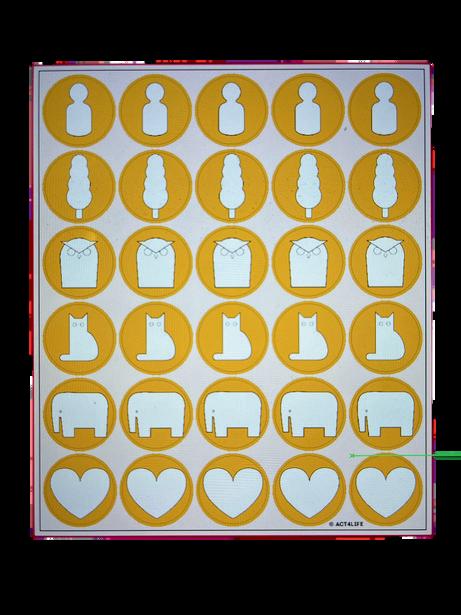
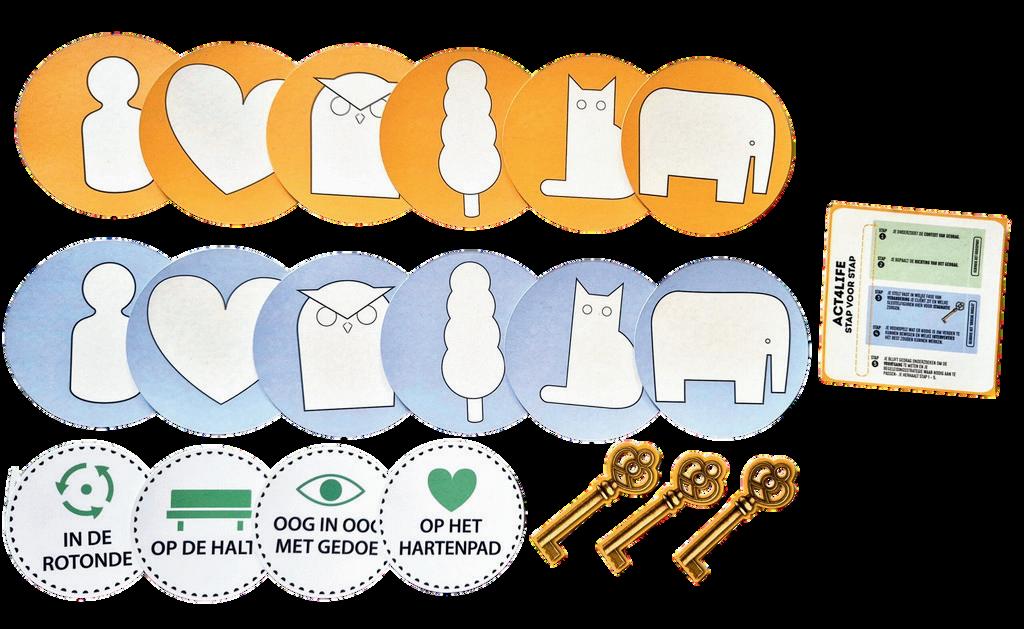
Within the ACTlife modelà human behavior is explored through six symbolic figures that together represent the continuously interacting elements involved in behaviorå
These elements can be compared to ingredients in a soupß the same ingredients are always presentà but depending on the situationà their interactionà intensityà and balance continuously changeå
Reading a bookà comforting a childà speaking in front of a groupà or having a relaxed conversation with a friend all involve the same underlying elements ó but organized in very different wayså
At some momentsà thoughts and predictions may strongly dominate behaviorå At other timesà bodily activationà environmental influencesà or valuesõbased motivation may play a larger roleå The übehavioral soupý is therefore constantly changing depending on the contextà the situationà and the challenges a person encounterså
Just as the ingredients in a soup continuously influence one anotherà the body and brain constantly work together to help a person respond to changing situations and demandså
This ongoing process of adaptation õ known as allostasis õ influences attentionà bodily activationà perceptionà behaviorà and the direction behavior takeså Within ACTlifeà these neurophysiological adjustments are not viewed separately from psychological processesà but as part of the same continuously interacting behavioral dynamicså
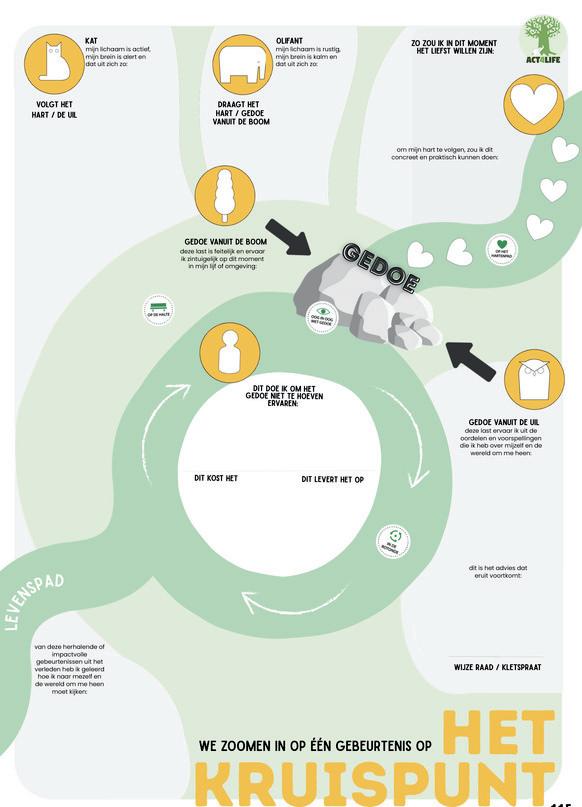
These continuously shifting dynamics become visible through the six symbolic figures moving within the visual landscape of the Crossroads.
The model also divides behavioral change into four distinct phasesà each involving different therapeutic tasks and professional attitudeså In this wayà ACTlife helps make the ACT process of creative hopelessness more visibleà structuredà and easier to translate into individualized guidanceå
CONTEXT OF BEHAVIOR
Within the Crossroadsà the Road Behind represents a personÿs learning historyß everything that has been learned through earlier life experienceså
The Tree represents direct sensory contact with the present momentà including bodily sensations and the surrounding environmentà while the Owl represents the
relational learning, interpretations, predictions, and symbolic associations that arise through language and experience.
Behavior emerges through the continuous interaction between information coming from the Tree, the Owl and the Road Behind. Together, these elements form the contextual foundation from which behavior develops. Within this context stands the I - representing you, or for instance your client - as the one who exists: has experiences, observes, and chooses how to act.
TREE sensory input
OWL thoughts & feelings
you exist, experience, observe, and choose
THE DIRECTION OF BEHAVIOR
Behavior is not static; it adapts to the context in which it occurs. To make such adaptation possible, the body adjusts its level of bodily tension and readiness for action. The autonomic nervous system plays a central role in these ongoing adjustments.
Within ACT4life, these adjustments are represented by two symbolic figures: The Cat represents increasing bodily tension and readiness for action. This may be experienced as alertness, curiosity, focused attention, rapid shifts in attention, increased muscle tension, a faster heartbeat, or a stronger urge to act.
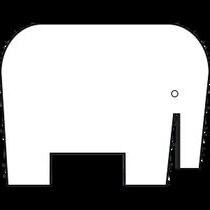
The Elephant represents slowing down, decreasing bodily tension, recovery, and regulation. This may be experienced as settling, relaxation, physical comfort, reflection, recovery, or a growing sense of stability and balance.
Throughout the day, the body moves between these states as it responds to changing circumstances and demands. Neither state is inherently good or bad. Both are essential for flexible and adaptive behavior.
In this way, ACT4life integrates embodied and neurophysiological dynamics into ACT practice, supporting not only psychological flexibility, but also greater flexibility in how the body responds to changing circumstances.
Ideally, behavior follows the Heart: moving in ways that make life meaningful and engaging in actions that
support this directionß the Way of the Heartå
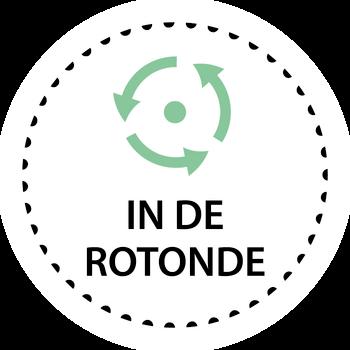
At timesà howeverà behavior becomes organized around avoiding struggleå The client then becomes trapped in the Roundaboutß a repetitive cycle that continually leads back to the same struggle ó or even greater struggleå
moving in ways that make life meaningful way of the heart
active behaviour
resting behaviour
CHANGING DIRECTION
Change is rarely straightforwardå It requires letting go of familiar certainties without knowing exactly where the journey will leadà and without already possessing all the skills needed to take the next stepå
Anyone who has ever played with a Chinese finger trap knows how tempting it is to pull once your fingers are stuckå Yet pulling is exactly what makes the grip tighterå
It is only when you become aware that pulling is strengthening the trap that a different response becomes possibleå When you stop pulling and gently move your fingers toward each otherà the trap begins to loosenà creating room for movementå
Within ACTà the finger trap is one of the most commonly used metaphors to illustrate creative hopelessnesså ACTlife takes a closer look at the process hidden within this metaphorå When we examine what is actually required to loosen the grip of avoidanceà four distinct phases become visibleå
Interestinglyà these phases closely resemble stages described in a variety of other theories of change and human developmentå Although the terminology may differà many models describe a similar movementß recognizing that old strategies no longer workà turning toward what has been avoidedà developing new ways of respondingà and gradually building a more flexible and meaningful way of livingå
Within ACTlifeà these phases are represented by four locations within the Crossroadså
THE FOUR PHASES OF CHANGE
The Roundabout ô Behavior remains organized around avoiding struggleå The task is to become aware that avoidance is no longer helping and may even be maintaining the problemå
The Stop ô Learning to stand still with struggleå This often involves making space for sadnessà disappointmentà fearà griefà and the realization that struggle is an inevitable part of lifeå
Face-to-Face with Struggle ô Building willingness and exploringå Rather than organizing behavior around avoidanceà new ways of responding are practiced and developedå
The Way of the Heart ô Living meaningfully while responding flexibly to lifeés challengeså Struggle may still be presentà but no longer determines the direction of lifeå
Understanding the client's current phase helps guide both further assessment and intervention.
KEY FIGURES
As described earlierà behavior can be compared to a soupß always made with the same ingredientsà yet never tasting exactly the same twiceå The flavor depends on the proportions of the ingredients and the way they work togetherå A little more of one ingredientà a little less of anotherà and the soup can taste completely differentå
Psychological flexibility does not arise from different ingredientsà but from the way the symbolic figures work togetherå Depending on the situationà different figures may temporarily play a larger or smaller roleà allowing behavior to adapt to what is needed in that momentå
Each phase requires different skills from the client and a different stance from the professionalå As clients move through the phasesà the therapeutic focus shifts from increasing awarenessà to creating space for difficult experiencesà to supporting exploration and practiceà and finally to strengthening psychological flexibility in everyday lifeå
Psychological rigidity emerges when this flexibility is lostå The same symbolic figures are still presentà but their cooperation becomes restrictedå One or two behavioral elements begin to dominate the dynamicsà while others become less availableå As a resultà choices become limited and the same behavioral patterns tend to repeat themselveså
Within ACTlifeà these dominant figures are called Key figures. Key figures are important because they both maintain the problem and point toward the solutionå They hold the pattern in placeà yet they also indicate where change can beginå
INTERVENTIONS & TECHNIQUES
Each symbolic figure is associated with a set of skills that support flexibility within that part of the behavioral dynamicå Once a key figure has been identifiedà these skills provide concrete points of entry for interventionå
By strengthening the skills associated with the Key Figureà the larger behavioral dynamic can begin to shiftå As the influence of the Key Figure decreasesà the other symbolic figures regain room to participateà allowing behavior to become more flexible and responsive once againå
This enables the client to take the next step within the Crossroadsß moving away from the Roundabout of avoidanceà through the phases of changeà and ultimately toward the Way of the Heartå
One of the distinctive features of ACTlife is that assessmentà case formulationà interventionà and communication all take place within the same visual languageå The symbolic figures used to understand behavior are the same figures used to guide changeå
The techniques used within ACTlife are largely based on exercisesà metaphorsà and experiential practices that are already familiar within ACT and related behavioral approacheså What differs is not so much the techniques themselvesà but the framework in which they are appliedå
Rather than working with abstract concepts aloneà professionals and clients can work directly with Owl skillsà Tree skillsà Cat skillsà Elephant skillsà Heart skillsà and I skillså Many ACTõtechniques have therefore been translated into the visual language of the symbolic figures and the Crossroadsà making them easier to understandà rememberà communicateà and apply in everyday lifeå
Because interventions are directly linked to the behavioral dynamics identified during assessmentà it becomes easier to understand why a particular exercise is being usedà what it aims to influenceà and how it relates to the clientés current phase of changeå
TRACKING PROGRESS
The same visual framework can also be used to monitor progress over timeå Professionals and clients can repeatedly explore how behavior is currently organizedà where flexibility remains restrictedà whether change is occurring in the expected directionà and whether adjustments in intervention or therapeutic stance may be neededå
In this wayà assessmentà case formulationà interventionà and skill development become part of one coherent process rather than separate steps within treatment or guidanceå
I can't be late, that's annoying for others - what if i get on the wrong train, how will i ever get at work? - this is too difficult for me, i can't hardly breath - is my train on track a or f, why can't i remember these things, am i stupid or what?! - oh no i only have 15 minutes left, is that enough time? these tiles are kinda wet, what if i slip? What if i fall on the tracks and get hit by a train? w
BRINGING ACT4LIFE INTO PRACTICE
ACTlife is more than a conceptual modelå Over the yearsà a range of practical toolsà materialsà and training programs has been developed to support the entire journey from processõbased assessment to intervention and skill developmentå
Togetherà these materials help translate complex behavioral dynamics into a shared visual language that can be used by professionalsà clientsà familiesà schoolsà and organizationså
THE ACTBOX
The ACTBOX contains worksheetsà exercisesà explanatory materialsà and other intervention tools linked to the key figuresà and symbolic figure skillså
Each worksheet combines practical exercises with reflection questionsà helping professionals and clients translate assessment directly into meaningful actionå
FLOOR AND TABLE MATS
Large floor mats and table versions of the Crossroads allow individualsà familiesà groupsà and professionals to physically step into the modelå
THE ASSESSMENT SET
The ACTlife Crossroads Assessment Set helps professionalsà clientsà familiesà and groups visually explore behavioral dynamics within the modelå
Using the Crossroads floor matsà table matsà and assessment materialsà complex behavioral patterns can be literally mappedà discussedà and better understoodå
CROSSROADS CARDS
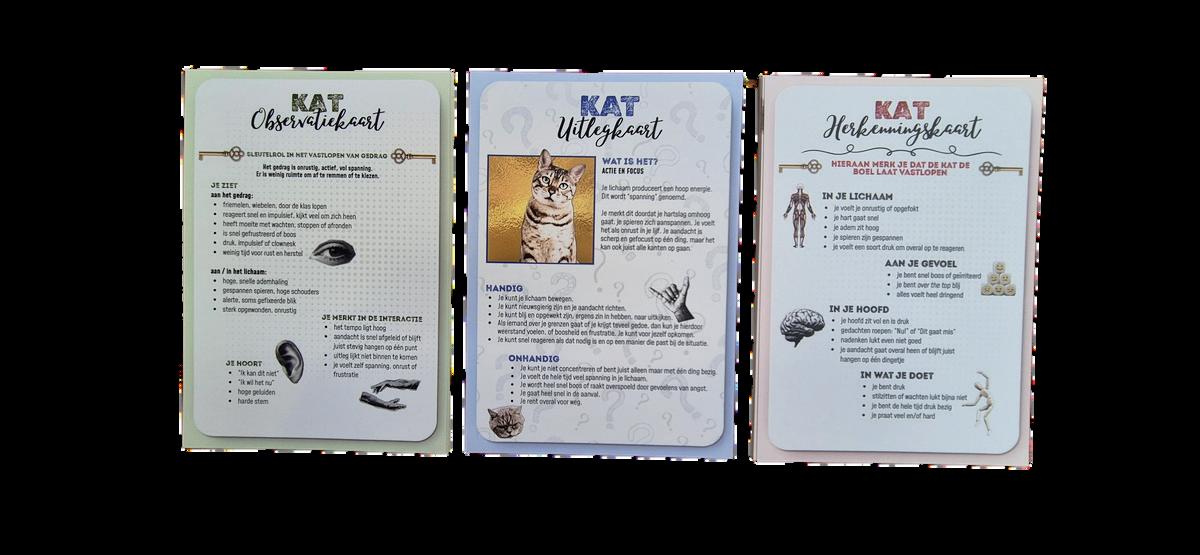
The Crossroads Cards make the ACTlife model accessible for childrenà adolescentsà adultsà parentsà teachersà and other professionalså
Using clear language and practical examplesà the cards help people recognize symbolic figures in themselves and othersà understand how these figures interactà and discover what may help when a particular figure becomes dominant within the behavioral dynamicå
THE ACT4LIFE PRACTICE GUIDE
The ACTlife Practice Guide supports professionals in translating processõbased assessment into concrete intervention choiceså
Using a structured decisionõmaking frameworkà the guide helps identify key figuresà determine the clientés current phase within the Crossroadsà select relevant symbolic figure skillsà and adapt the professional stance to what is needed in that particular momentå
By bringing assessmentà conceptualizationà and intervention together within one frameworkà the Practice Guide helps professionals navigate the entire ACTlife process from understanding behavior to supporting meaningful changeå
ACT4SCHOOL
ACTlife has also been translated into educational settings through ACTschoolå
The ACTschool teaching modules help students develop psychological and neurophysiological flexibility through ageõappropriate exercisesà visual materialsà and classroom activitieså The modules provide teachers and support staff with practical tools for discussing emotionsà behaviorà resilienceà attentionà valuesà and wellbeing in everyday school lifeå
TRAINING AND PROFESSIONAL DEVELOPMENT
ACTlife offers a range of training programsà workshopsà and professional development opportunities for psychologistsà social workersà
educatorsà coachesà and professionals working in allied health disciplines such as physiotherapyà speech and language therapyà occupational therapyà and dieteticså
Participants learn how to use the ACTlife model for processõbased assessmentà case conceptualizationà intervention planningà and the practical application of psychological flexibility in everyday practiceå
Togetherà these toolsà materialsà and training programs create a bridge between understanding behavior and supporting meaningful and lasting changeå
WHERE MIGHT ACT4LIFE TAKE YOU?
ACTlife continues to evolve through practiceà trainingà researchà and collaborationå
While most ACTlife resources are currently available in Dutchà growing international interest in the model has inspired the development of new Englishõlanguage resourceså This summerà a free introductory ACTlife Masterclass will become availableà offering a deeper exploration of the modelà its foundationsà and its practical applicationså
What role ACTlife may play in your own workà organizationà or community is still an open questionå Perhaps it will offer a new way of understanding behaviorå Perhaps it will help make complex processes more visible and easier to discusså Or perhaps it will inspire new ways of supporting changeà growthà and psychological flexibility in the people you work withå The journey of ACTlife is still unfoldingå
The more interesting question may beß How might ACT4life become part of yours?
For updatesà resourcesà and upcoming developmentsà visit ACT4life.com
wordless, just for a moment nowhere to get to only to be here in the ripple of the water the wind and my breath the waves everything goes up and down everything moves and I am still here