
Journal of Virology and Viral Diseases
(ISSN: 2770-8292) Open Access
What learned from Omicron Sub-Variants BQ.1 and BQ.1.1
Mujahed I Mustafa*, and Abdelrafie M Makhawi
Department of Biotechnology, College of Applied and Industrial Sciences, University of Bahri, Khartoum, Sudan
*Corresponding author: Mujahed I Mustafa, Department of Biotechnology, College of Applied and Industrial Sciences, University of Bahri, Khartoum, Sudan
Received date: 28 Oct, 2022 |
Accepted date: 10 Nov, 2022 |

Published date: 23 Nov, 2022
Citation:Mustafa MI, and Makhawi AM. (2022) What learned from Omicron Sub Variants BQ.1 and BQ.1.1. J Virol Viral Dis 2(3): doi https://doi.org/10.54289/JVVD2200112
Copyright: © 2022 Mustafa MI, et al. This is an open access article distributed under the terms of the Creative Commons Attribution License, which permits unrestricted use, distribution, and reproduction in any medium,providedthe original authorand source are credited.
Abstract
Currently SARS CoV 2 is spreading around the world as an Omicron strain. Recently, the Omicron variants (BQ.1 and BQ.1.1) were identified as novel Variants of Concern. UpToDate, there is little information about the Omicron Variants BQ.1 and BQ.1.1. The widely altered Omicron variants are spread globally, providing a high risk of infection surges with devastating consequences in some areas. The Omicron type of SARS CoV 2 has a harm risk of reinfection, according to early reported findings. COVID 19 Variants particularly, BQ.1 and BQ.1.1 have gained global attention and caused a worldwide sensation since their discovery. Therefore, this communication discusses the present status of COVID 19 Variants BQ.1 and BQ.1.1, and their consequences.
Keywords: SARS CoV 2; COVID 19; Omicron variants; BQ.1; BQ.1.1
Abbreviations: SARS Cov: Syndrome Coronavirus, HHS: Health and Human Services, SIG: SARS Cov2 Interagency Group, VOC: Variants of Concern, VBM: Variants Being Monitored, S: Spike
Introduction
The severe acute respiratory syndrome coronavirus 2 (SARS CoV 2) developed in Wuhan, China, in December 2019 and then created a worldwide epidemic, infecting and killing millions of people worldwide [1]
Currently SARS CoV2 is spreading over the world as an Omicron variant. The World Health Organization has categorized this variety as a variant of concern because it is a substantially modified virus [2] The WHO warned that the Omicron type of SARS CoV 2 posed a very high risk of infection, reigniting concerns about the economy's recovery from the last two year pandemic [3]. Many mutations have been discovered in the SARS CoV 2 genome since its first discovery in humans in December 2019
[4,5] The mutation rate per site is expected to be 1.1103 nucleotide substitutions per year [6]. Many new versions of the virus have been discovered as it progresses [7] Virus variant analysis facilitates epidemiological research [8]. The new COVID 19 variant called BQ.1 makes up 1 in 10 cases in the US and its growing fast in the Northern Hemisphere [9] COVID 19 variant Omicron BQ.1 strain, dominant in US and Europe [10], now also it’s discovered in India [11]. BQ.1's detection in the Pune sample comes just after another Omicron sub variant first reported in China's Mongolia region [11]
The widely altered Omicron variant is likely to spread globally [12], providing a high risk of infection surges with devastating consequences in some areas [13] The Omicron
type of SARSCoV 2 has a greater risk of reinfection, according to early findings [14]. The current COVID 19 vaccinations, on the other hand, are still being tested to see if they can effectively fight the mutated strains. However, there is limited data given on the current status of the Omicron variant, such as genomes, transmissibility, vaccine efficacy, and treatment [3,15] As a result, it is critical to give heed and take the necessary actions to increase monitoring and implement public health measures. The purpose of the action is to raise public awareness yet avoiding overreaction. The United States Department of Health and Human Services (HHS) formed a SARS CoV2 Interagency Group (SIG) to improve collaboration among the CDC and other agencies. This interagency group is focused on the rapid classification of novel variants and to monitoring the potential influence on crucial SARS CoV 2 countermeasures such as vaccines, treatments, and diagnostics. The SIG meets on a regularbasis to assess the threat posed by SARS CoV 2 variants spreading in the U. S. and to make suggestions on variant classification. This assessment is carried out by a group of experts in the field who analyze existing evidence, such as variant proportions at the local and national levels, as well as the potential or known impact of the mutation constellation on the efficiency of medical preventive actions, clinical manifestations, and capacity to transmit from person to person. Given the ongoing evolution of SARS CoV 2 andour awareness of the impact of variations on public health. CDC (USA) classified variants based on their characteristics and prevalence:variants of concern(VOC) andvariants being
monitored (VBM) [16] VOC is a variant with greater infection rates, more acute infection, a significant reduction in neutralization by antibodies generated during previous infection or vaccination, decreased treatment efficacy or vaccines, or screening detection failures. On the other hand, VBMs are those in which evidence suggests a possible or clear impact on approved or permitted medical countermeasures, or that have been linked to more severe disease or greater transmission but have not been longer identified [17].
COVID 19 Variants BQ.1 and BQ.1.1 have gained global attention and caused a worldwide sensation since their discovery. Therefore, this communication discusses the present state of COVID 19 Variants BQ.1 and BQ.1.1, and their consequences.

Omicron Sub Variants BQ.1 and BQ.1.1:
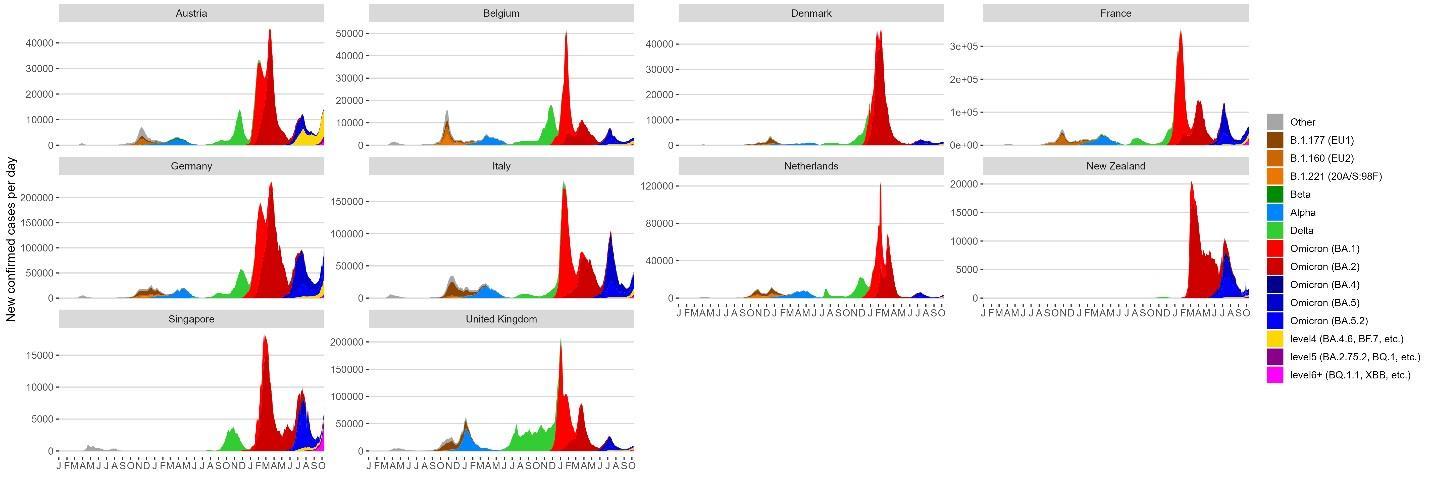
The new COVID 19 variant called BQ.1 makes up 1 in 10 cases in the US and its growing fast in the Northern Hemisphere. BQ.1 was first named by scientists in the early September 2022, based on the sequences spotted across the US and several other countries (Figure 1) [18]
Currently, BQ.1 and a descendant called BQ.1.1 each make up5.7%ofinfectionsaroundtheUSA,BQ.1andBQ.1.1have already grown to make more than 10% of new infections. The reminder of BA.5 had dominated a wave of cases over the summer, but since then, it shrunk to 67.9% of circulating variants (Figure 2).
Figure 2: Shows variant proportions in the US [17]
BQ.1 and BQ.1.1 subset is small but it also growing fast; it appears on track to overtake the only other strain that still outnumbers it (BA.4.6), which currently makes up around 12.2% of infections [17] While the pair has a number of mutations that suggest they can avoid immunity from earlier infections, immunizations, or both, scientists are still investigating how they may affect disease severity [3]
BQ.1 triggers disturbance because the variant seems to outsmart monoclonal antibodies; on fact, this variant’s mutations might evade a medication used to help immunocompromised patients from the virus.
CDC (USA) have been expecting a resurgence of COVID 19.
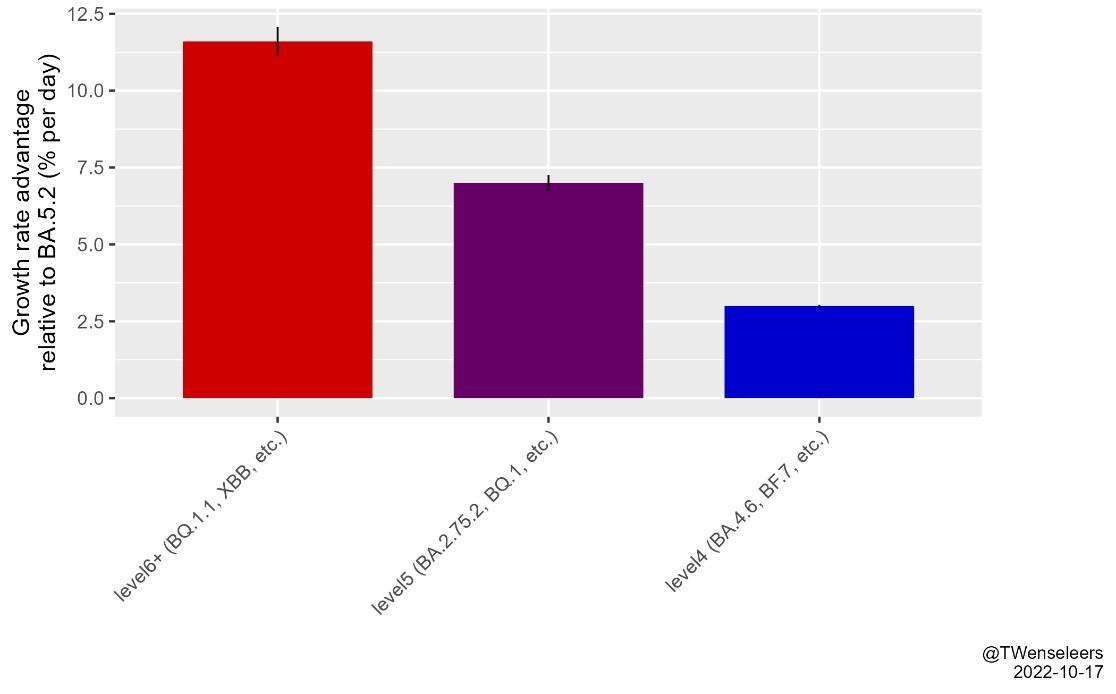
In the fall and winter of 2022 BQ.1 variant have already outpaced many rival strains in Europe (Figure 3), which has already seen the beginning of new COVID 19 waves [18,19]
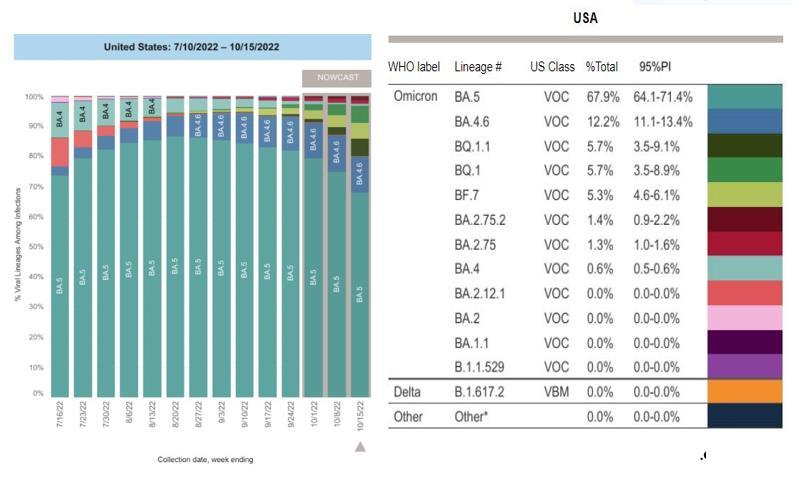
Figure 3: Growth rate of SARS CoV2 in Europe [19].
New variants and waning immunity are pushing infection rates higher in the Northern Hemisphere [18]. Many countries could soon see large numbers of COVID 19 infection and potentially higher rates of hospitalizations among those infected.
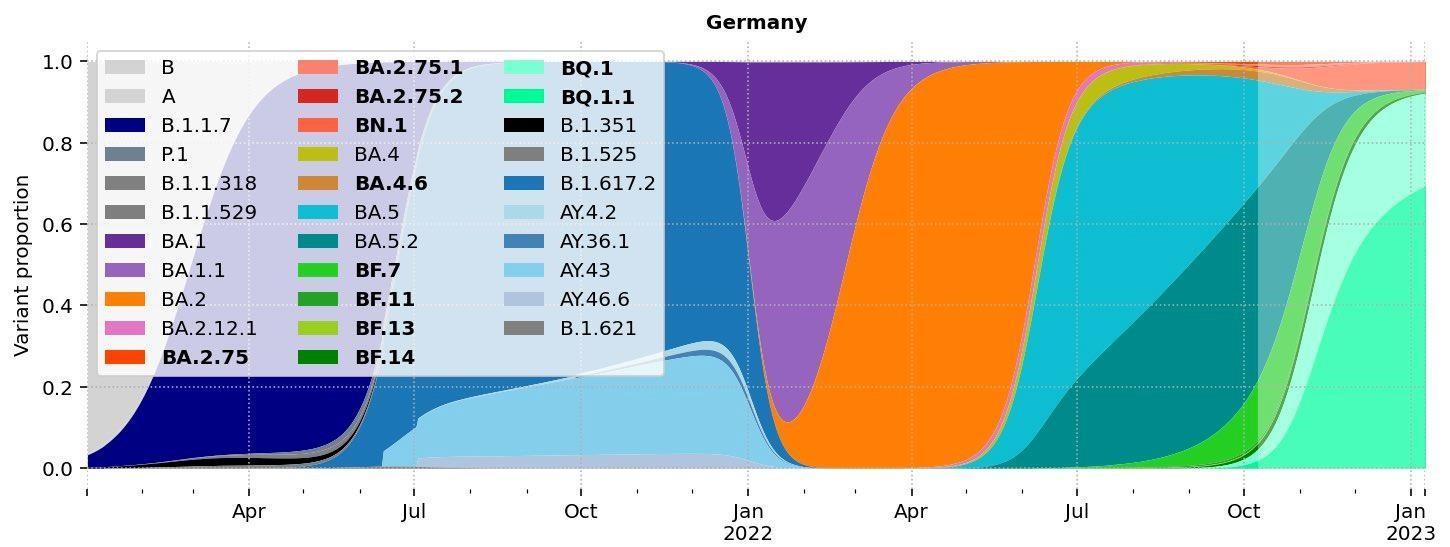
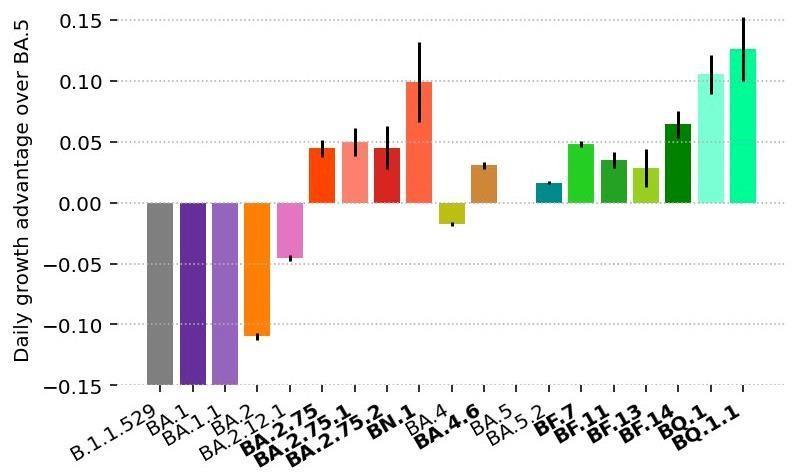
According to the recent assessments, BQ.1.1 is still the fastest spreading variation (Figure 4). BN.1 and BQ.1 (probably because BQ.1.1 has an additional immune escape mutation). They also predicted that, Because of the rapid spread of BQ.1 and BQ.1.1, they are expected to reach 50% of cases by November (range Oct 30 to Nov 25) (Figure 5) [20].
Figure 4: BQ.1.1 is still the fastest spreading variation in Oct 2022 [21]
Figure 5: Prediction of the spreading variation in Germany [20].
All the variants contain multiple overlapping patterns to a portion of the spike protein called receptor binding domain; this protein is targeted by potent infection blocking antibodies [22]. Interestingly, these numerous viruses are independently developing the same spike mutations, which means that these changes provide a big advantage to the virus ability to spread [16,23]
The investigation into the Omicron Sub Variants BQ.1 and BQ.1.1 is still ongoing in order to recommend effective ways to prevent the upcoming surge. Meanwhile, previous recommendations to combat the COVID19 pandemic must be followed globally, alongside newly improved directions such as genome sequencing of all samples, maintaining social distance, continuing vaccination for everyone, and isolating Omicron variant positive patients in a different location.
Vaccination
Vaccination boosts the immune system, resulting in the production of SARS CoV 2 neutralizing antibodies. Therefore, it’s the most important step in containing this global pandemic to avoid SARS CoV 2 infection worldwide. According to the WHO Coronavirus (COVID 19) Platform, over 12 billion doses of vaccine have been distributed so far [24].
The FDA approved different COVID 19 vaccines that are being rolled out. The majority of the COVID 19 vaccines, such as the messenger RNA (Pfizer), protein based (Novavax) and viral vector based (AstraZeneca) vaccines, primarily target the spike (S) protein, while traditional inactivated vaccines (Covaxin) target the entire virus [25]. The emergence of SARS CoV 2 variations reduces the efficacy of vaccines and natural immunity even further because they have genomic changes, specifically in the S protein coding regions, that boost their survival over previously spreading variants [25,26] Nevertheless, we are hopeful that the bivalent omicron boosters [27 29]. will provide immunity against BQ.1 and BQ.1.1 since they're descendants of BA.5. (Updated boosters are designed to target the original SARS CoV2 strain, BA.4 and BA.5.). Omicron Sub Variants BQ.1 and BQ.1.1, a novel and potentially more transmissible strain of SARSCoV2, is thought to have emerged in an area with low vaccination rates. Scientists discovered that when vaccination rates are low and transmission rates are high, the virus is more likely to mutate [30]
Future direction
With the emergence of Omicron/ BQ.1 and BQ.1.1, the battle versusSARS CoV 2hasbecomemoredifficult.Asubstantial number of mutations in the Spike protein indicate that it may have been altered in its response to immune defense evoked by the current COVID 19 infection and vaccinations. The probability of a potential SARS CoV 3 or other novel viruses emerging from animals or laboratories, and thus the necessity for worldwide preparedness, should not be overlooked. Fortunately, the huge leap in recent years in biotechnology and immunology combined with bioinformatic, help in diagnosis, treatment, and control of SARS CoV2.
Conclusion
The virus's evolving scenario with newly emerging variants requires the production of targeted and efficient vaccines, including variant specific, mutation proof, universal vaccines, to keep up the pace against emerging variants and to develop newer monoclonal antibodies for curing COVID 19 patients and reducing the ongoing pandemic.
Funding
This research did not receive any specific grant from funding agencies in the public, commercial, or not for profit sectors.
Conflicts of interest
The authors declare that they have no known competing financial interests or personal relationships that could have appeared to influence the work reported in this paper.
Acknowledgements
TheauthorsacknowledgetheDeanshipofScientificResearch at University of Bahri for the supportive cooperation.
References
1. Holmes EC, Goldstein SA, Rasmussen AL, Robertson DL, Crits Christoph A, et al. (2021) "The origins of SARS CoV 2: A critical review." Cell. 184: 4848 4856.
2. Cascella M, Rajnik M, Aleem A, Dulebohn SC, and Napoli RD. (2022) "Features, Evaluation, and Treatment of Coronavirus (COVID 19).” in StatPearls, ed Treasure Island (FL): StatPearls Publishing.
3. Mungmunpuntipantip R and Wiwanitkit V. (2022) "Estimated change of COVID 19 vaccine efficacy due to omicron variant SARS CoV2." Int J Physiol Pathophysiol Pharmacol. 14: 134 137.
4. Day T, Gandon S, Lion S, and Otto SP. (2020) "On the evolutionary epidemiology of SARS CoV 2.” Curr Biol, 30: r849 r857.
5. Hussein BK, Ibrahium OM, Alamin MF, Ahmed LAM, AbuswarSAE,etal.(2022)"TheSpikeProteinofSARS coV2 19B (S) Clade Mirrors Critical Features of Viral Adaptation and Coevolution.” Microorganisms. 10(10): 2017.
6. Duchene S, Featherstone L, Haritopoulou Sinanidou M, Rambaut A, Lemey P, et al. (2020) "Temporal signal and the phylodynamic threshold of SARS CoV 2.” Virus Evol. 6(2): 061.
Journal of Virology and Viral Diseases
7. Boehm E, Kronig I, Neher RA, Vetter IE, and L. Kaiser. (2021) "Novel SARS CoV 2 variants: the pandemics within the pandemic.” Clin Microbiol Infect. 27: 1109 1117.
8. To KK, Chan WM, Ip JD, Chu AW, Tam AR, et al. (2021) "Unique Clusters of Severe Acute Respiratory Syndrome Coronavirus 2 Causing a Large Coronavirus Disease 2019 Outbreak in Hong Kong.” Clin Infect Dis. 73: 137 142.
9. Jamie Ducharme.(2022) "What to KnowAbout COVID 19 Variants BQ.1 and BQ.1.1.”
10. Schnirring L. (2022) "European countries see early signs of autumn COVID 19 rise.”
11. Indians in Gulf. (2022) "Covid variant Omicron BQ.1 strain, dominant in US, now found in India.”
12. Callaway E. (2021) "Heavily mutated Omicron variant puts scientists on alert.” Nature. 600.
13. Thakur V and Ratho RK. (2022) "OMICRON (B.1.1.529): A new SARS CoV 2 variant of concern mounting worldwide fear.” J Med Virol. 94: 1821 1824.
14. Kupferschmidt K. (2021) "Where did 'weird' Omicron come from?" Science. 374:1179.
15. Aleem A, Samad ABA, and Slenker AK. (2022) "Emerging Variants of SARS CoV 2 And Novel Therapeutics Against Coronavirus (COVID 19).” in StatPearls, ed Treasure Island (FL): StatPearls Publishing.
16. Chakraborty C, Sharma AR, Bhattacharya M, Agoramoorthy G, Lee SS. (2021) "Evolution, Mode of Transmission, and Mutational Landscape of Newly Emerging SARS CoV 2 Variants.” mBio. 12(4): e0114021.
17. CDC. (2022) "variants classification.”
18. Wenseleers T. (2022) "New confirmed SARS CoV2 cases by variant.”
19. Wenseleers T. (2022) "Growth rate of SARS CoV2 in Europe.”
20. Gertung M. (2022) "Prediction of the spreading variation in Germany "
21. Gertung M. (2022) "BQ.1.1 is still the fastest spreading variation in Oct 2022.”
22. Mandala VS, McKay MJ, Shcherbakov AA, Dregni AJ, Kolocouris A, et al. (2020) "Structure and drug binding of the SARS CoV 2 envelope protein transmembrane domain in lipid bilayers.” Nat Struct Mol Biol. 27: 1202 1208.
23. Jia Z and Gong W. (2021) "Will Mutations in the Spike Protein of SARS CoV 2 Lead to the Failure of COVID 19 Vaccines?” J Korean Med Sci. 36: e124.
24. Zhou H, Møhlenberg M, Thakor JC, Tuli Wang HS, Assaraf YG, et al. (2022) "Sensitivity to Vaccines, Therapeutic Antibodies, and Viral Entry Inhibitors and Advances to Counter the SARSCoV 2 Omicron Variant.” Clin Microbiol Rev. 35: e0001422.
25. Mellet J and Pepper MS. (2021) "A COVID 19 Vaccine: Big Strides Come with Big Challenges.” Vaccines (Basel). 9.
26. Mistry P, Barmania F, Mellet J, Peta K, Strydom A, et al. (2021) "SARS CoV 2 Variants, Vaccines, and Host Immunity.” Front Immunol. 12: 809244.
27. Fang Z, Monteiro VS, Hahn AM, Grubaugh ND, Lucas C, e al. (2022) "Bivalent mRNA vaccine booster induces robust antibody immunity against Omicron lineages BA.2, BA.2.12.1, BA.2.75 and BA.5.” Cell Discov. 8: 108.
28. Chalkias S, Eder F, Essink B, Khetan S, Nestorova B, et al. (2022) "Safety, immunogenicity and antibody persistence of a bivalent Beta containing booster vaccine against COVID 19: a phase 2/3 trial.” Nat Med.
29. Chu L, Vrbicky K, Montefiori D, Huang W, Nestorova B, et al. (2022) "Immune response to SARS CoV 2 after a booster of mRNA 1273: an open label phase 2 trial.” Nat Med. 28: 1042 1049.
30. Araf Y, Akter F, Tang YD, Fatemi R, Parvez MSA, et al. (2022) "Omicron variant of SARSCoV 2: Genomics, transmissibility, and responses to current COVID 19 vaccines.” J Med Virol. 94: 1825 1832.