
(ISSN: 2831-7416) Open Access
Luis Sagaz Zubelzu (1905-1983) and The Neveral Hospital: Model of Anti-Tuberculosis Sanatorium
Antonio Reguera Teba*
Department of Surgery. University Hospital of Jaen. School of Medicine. University of Jaen. Spain
*Corresponding author: Antonio Reguera Teba, Department of Surgery. University Hospital of Jaen. School of Medicine. University of Jaen. Spain
Received date: 04 Dec, 2022 |
Accepted date: 16 Dec, 2022 |
Published date: 11 Jan, 2023 Citation: Reguera-Teba A. (2023) Luis Sagaz Zubelzu (1905-1983) and The Neveral Hospital: Model of Anti-Tuberculosis Sanatorium J Case Rep Med Hist 3(1): doi https://doi.org/10.54289/JCRMH2300104
Copyright: © 2023 Reguera-Teba A. This is an open-access article distributed under the terms of the Creative Commons Attribution License, which permits unrestricted use, distribution, and reproduction in any medium,providedthe original authorand source are credited.

Abstract
The massive growth of tuberculosis cases during the 19th century, together with the development of various experimental therapies applied to cure this disease, motivated the construction of different types of tuberculosis sanatoriums.
The figure of Dr. Luis Sagaz Zubelzu, a pioneer in thoracic surgery in Spain, and director of the "El Neveral" Hospital in Jaén, a national reference tuberculosis sanatorium, is presented. The evolution of the different medical and surgical treatments with which tuberculosis patients were treated during the first half of the 20th century until the disappearance of sanatoriums as tuberculosis centers is described.
Keywords: Doctor Sagaz; Tuberculosis Sanatorium
Introduction
Tuberculosis is the prototype of chronic infectious disease. It has been known since ancient times and has evolved endemically over the centuries. It is from the 19th century when it breaks out in the form of a violent epidemic, as a consequence of the social impact caused by the industrial revolution, which takes place mainly in Europe. The manifestations of the epidemic type with which tuberculosis arises give rise to this disease reaching the political-social consideration of a "plague" and obliges governments to have to attend preferentially to this serious problem, which arises, as a consequence of not having previously planned the socio-economic and hygienic conditions of the aforementioned industrial revolution demanded [1]
Humanity, in the 19th century, is becoming aware of the importance of tuberculosis. Romantic disease par excellence, it was nicknamed "white plague" and "thief of youth" for the number of young lives it claimed [2] This disease appears preferably in humble homes, being favored by its lower hygiene and low socio-economic conditions. Mortality figures of 20 to 30 per 10,000 inhabitants / year were reached in various European countries at the beginning of the 20th century, and in England it became the fifth leading cause of death. It is the increase in morbidity and mortality figures that causes tuberculosis to go from being a simple pathological problem of medical and individual interest, to having social and political repercussions, forcing governments to act and therefore acquiring the character quoted from social epidemic disease [3,4].
In the fight against infectious diseases, medicine has acted under two fundamental guidelines: one is prophylaxis, that is, the orientation towards disease prevention. The other is the one that deals with the healthcare and therapeutic aspect of patients, as well as their isolation, with which it also participates in the prophylactic guideline [5]. The prophylactic guideline begins in Edinburgh, when in 1887 Sir Robert Philips organizes the first dispensary, whose orientation is aimed at the early detection of patients, for their treatment, isolation and hygiene education, as well as the surveillance of the people around them [4]
In Germany and Switzerland the first mountain sanatoriums were founded in 1850, for the isolation of the sick and their treatment by the so-called hygienic-dietary cure. These centers become popular, although they have a limited action, since due to their cost they are only affordable to the wealthy classes [4] In Copenhagen in 1904, the "International Union for the Fight Against Tuberculosis" was officially established. In France, Leon Bernard, president of the International Union, mainly promotes prophylactic guidance, cheaperandinthe longrun more effectivethan care.Itcreates a network of dispensaries, programming that a dispensary must be installed for every 100,000 inhabitants, to control 90% of the population [4].
Patients with tuberculosis, in the first third of the 20th century, were cared for either at home or in the Internal Medicine rooms of hospitals. This disease was treated intermingled with other respiratory and cardiac conditions, without assessing its contagiousness, nor using special treatment methods with it. The speciality of Pneumology begins to form among medical personnel due to the high prevalence of this disease [6]
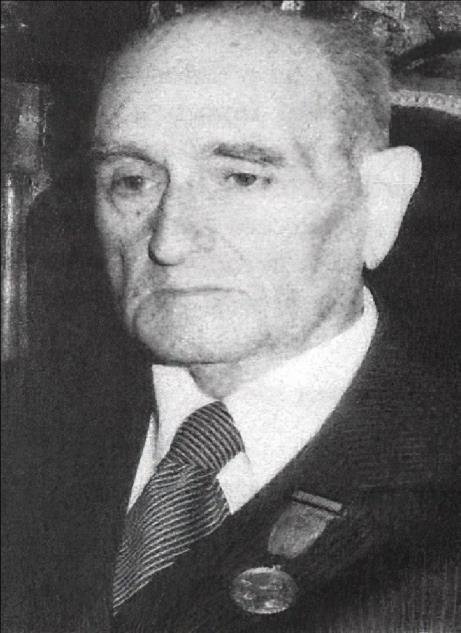
Luis Sagaz ZubelzuLuis Sagaz Zublezu (Madrid 1905- Jaén 1983). At the age of 14 he was a bachelor and the following yearhe began medical studies at the University of Madrid. He was the youngest in his class and a favorite disciple of Nobel Prize winner SantiagoRamónyCajal.In1926hespecialized inpsychiatry. We know that around the scientific figure of Ramón y Cajal a generation of psychiatrists emerged who would renew Spanish psychiatry but whose consolidation was not possible duetothedisasteroftheSpanishCivilWar [7] Subsequently,
he worked in the field of infectious diseases with doctors Gregorio Marañón and Codina Castelvi at the General Hospital of Madrid belonging to Charity, whose works in the scientific field had international relevance. In this initial stage, he learns and develops intrapleural collapse therapy or therapeutic pneumothorax, consisting of injecting gases into the interpleural space to achieve lung collapse [8]
In 1929 he moved to Villargordo (Jaén) by opposition and two years later he became the director of the tuberculosis clinic in the province of Jaén [8,9].

In Linares (Jaén), a predominantly mining city, there was a high number of seriously ill contagious patients, collecting mortality figures from tuberculosis of 29/10,000 inhabitants in1932,duetothelack ofenvironmentalhygieneinthemines and the favorable action of silicosis, on whose action no preventive measure was used either [4]. The medical treatment of tuberculosis was reduced to symptomatic treatment, with antipyretic, antitussive, balsamic and lime salts,duetoitspossibleanti-inflammatory effectandfavoring the calcification of lesions. The only specific medication applied was treatment with gold salts and tuberculin [2]
El Neveral Hospital
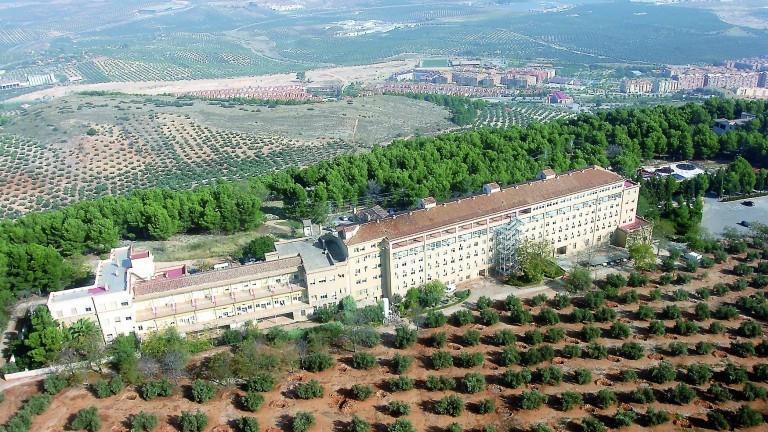
The hygienic-dietary cure of rest in the open air was one of the most fundamental parts of the treatments. That is why in 1930 the construction of the "El Neveral Sanatorium" began, located on the mountain near Jaén. The dry, sunny and slightly rainy climate of this city would contribute to the healing of the sick. Initially, the project had a capacity of 110 beds, but given the high number of patients on a waiting list to be admitted, which ranged from 6 months to a year, it was expanded to 400 beds [10] It had radiology equipment, a laboratory, covered resting galleries and two operating rooms a day in which thoracic surgery was performed, making the hospital a leading surgical center at a national level. If the original tuberculosis patients remained bedridden for an average of 6 months, thanks to advances in medical-surgical treatment, tuberculosis patients in the 1950s remained for weeks. Figure 1 represents the El Neveral hospital in its current state.
In 1935 a portable X-ray machine was acquired, and massive investigations were carried out in rural areas with radioscopies, tuberculin tests and BCG vaccination in children. All this gave rise to a volume of work that reached some 6,000 attendances per year. The findings of patients were isolated and treated [8]
The Jaén dispensary carried out its mission in accordance with international standards, carrying out the work of diagnosis, treatment, systematic investigation of relatives and contacts, and also began to carry out the investigation and tuberculosis register of schoolchildren and different professional groups. Likewise, together with Dr. Palma García, head of surgery at the Provincial Hospital of Jaén, the techniques of collapse therapy for pneumothorax, extraction
of exudates, pleurotomies for empyema, phrenectomy, intrapleural section of pleural adhesions, etc. were performed [4,11,12]
In 1954 he had an important intervention in the 13th Conference of the International Union Against Tuberculosis, as a member of the Spanish National Antituberculosis Board. He presented three communications related to the surgical treatment carried out in El Neveral with hardly any resources. These communications equaled those presented by Drs Crafoord of Stockholm and Belo of Porto. In those years he travelled to Holland. The Dutch newspaper “Nieuw Utrechs Dagblad” would speak highly of Sagaz Zubelzu [8]. During his stay in the Netherlands he worked at the St Antonius hospital and at
Dr. Klinkemberg's clinic. He also attended several clinical sessions under the direction of Dr. Bronkhorst. These stays allowed Dr. Sagaz to bring new techniques and place El Neveral Sanatorium as a national reference in the surgical treatment of tuberculosis complications [9]
Luis Sagaz is the author of dozens of works on respiratory diseases. The prestigious doctor Gregorio Marañón described him as "Internist by tradition and surgeon by vocation", becomingone of the pioneers of thoracic surgery in Spain [9]
In the sixties, as a consequence of the decrease in tuberculosis morbidity and mortality, mainly due to the effective action of the specific action medications that had emerged, as well as the elevation of the economic and hygienic level, the sanatorium was expanded to "Diseases of the Thorax”. Dr. Sagaz moved to Stockholm where he learned lung resection techniques from Professor Crafoord, performing the first intrathoracic surgery interventions in Jaén, when they were only performed in hospitals in Madrid and Barcelona [8].
Subsequently, he worked for periods in Rome with Professor Abruzzini, for the intramediastinal sternal treatment of the infected post-pneumectomy bronchial fistula, a delicate intervention that allowed him to operate on the second case operated on in Spain on his return [9]
In the 1970s, a Bronchoscopy and Bronchography room was created, as well as functional respiratory examinations. Dr. Sagaz, with private negotiations at the level of the Spanish Embassies in Bonn, manages to acquire bronchoscopy instruments for infants and early childhood and optical tweezers for the extraction of foreign bodies [13]
In forty years of surgical activity in "El Neveral", more than 25,000 patients were treated, and more than 5,000 thoracic interventions were performed, with death figures of less than 10%, a figure lower than that of European and American centers [8]. Table 1 represents the chronological order of the appointments and achievements of Dr. Sagaz
Table 1 represents the chronological order of the appointments and achievements of Dr. Sagaz
1905 Born in Madrid
1926 Licensed in medicine. University of Madrid. Meet Santiago Ramon y Cajal
1926 Specialist in Psychiatry. Madrid
1926-29 Madrid General Hospital. Dr. Gregorio Marañón
1930 Specialist in Pneumology. San Juan de Dios Provincial Hospital. Jaén
1931 Director of the Provincial Antitubercular Dispensary of Jaén 1934-75 Director of El Neveral Sanatorium
1936-39 Civil Spanish War
1951-52 Forlanini Hospital. Roma. Dr. Di Paola
1952 Director of Institute of Giennesse Studies
1953 Sabbastsberg Hospital. Stockholm. Dr Crafoord
1954-56 St. Antonius Hospital. Utrecht.
1965 Transsternal approach for post-pneumectomy fistula (second case operated in Spain)
1970 Inauguration of the bronchoscopy room and functional tests in El Neveral
1981 Adoptive son of Villargordo (Jaén)
1981 Gold medal of the city of Jaén
1981 Honorary member of the Association of Pneumologists of the South
1983 Died in Jaen
In addition to his dedication to medicine, Dr. Sagaz was director of the Institute of Giennenses Studies [14], whose mainfunctionisthepromotion,studyandculture,scienceand local and provincial art. He had several offers to occupy representative positions both in political life and in cultural spheres,butherejectedthembecausehismaindedicationwas to direct "El Neveral" and take care of his patients. Over time, due to his exemplary professional career, his scientific and human stature, he had to be recognized by the society of Jaén, beneficiary of his efforts. In 1981 the city council of Jaén awarded him the gold medal of the city, the Association of Pulmonologists of the South made him an honorary member and the Neveral Sanatorium began to be called the “Hospital Center for Chest Diseases Doctor Sagaz”. As Vicente Oya wrote “he was a good, generous man who gave his life for the sick, the person loved and admired by his patients who venerated him. Also a model to propose to the new generations” [9].
In the following years, the search for new drugs obtained the best results. All these improvements led to such a great decreaseinthediseasethatitwaseven thoughtofinthe1970s in its eventual eradication. The appearance of AIDS in the early 1980s dashed these hopes and the association of both diseases became commonplace. Today, tuberculosis constitutes, in the words of the WHO, a global emergency, mainly insub-Saharan Africaand Asia, where morethan 80% of tuberculosis patients are found [15]
References
1. Cervellera MJB. (2011) La tuberculosis en la historia. Ann Acad Med Valencia. 12: 7-8.
2. Lanza O. (1990) Tuberculosis infantil: el drama de nuestra infancia. J&G rev. Epidemiol comunitaria. 2630.
3. Shimao T. (1990) Mortality rate of pulmonary TB in the late 19 th century. Kekkaku X. 78 (10): 633-636.
4. Zubelzu LS. (1978) Breve historia de la lucha contra las enfermedades respiratorias enla provincial de Jaén y sus instituciones. Seminario medico. 38: 127-166.
5. Marini M, Gazzaniaga V, Behzadifar M, Bragazzi NL, Barberis I. (2018) The history of tuberculosis: the social role of sanatoria for the treatment of tuberculosis in Italy between the end of the 19 th centuary and the middle of the 20 th. Journal of preventive medicine and hygiene. 59(4): 323.
6. Mesa JM. (2001) La lucha antituberculosa en la España del primer tercio del siglo XX. En: El centro secundario de higiene rural de Talavera de la Reina y la sanidad española de su tiempo. 131-148.
7. Muñoz FL, Rubio G, Molina JD, García PG, Alamo C, et al. (2009) Cajal y la psiquiatría biológica: El legado psiquiátrico de Ramón y Cajal. Archivos de Psiaquiatría. 1(71): 50-79.
8. Rodríguez VO. (2000) Luis Sagaz Zubelzu: La grandeza de un médico, de un científico, deun hombre en Jaén. Seminario medico. 52(2): 89-92.
9. Rodríguez FP. (2002) Cirugía giennense durante el siglo XX. Seminario medico. 54(1): 103-113.
10. Fernández ABG. (2021) Nuevas formas de participación laboral femenina. Lastrabajadorea cualificadas en Jaén. Investigaciones Históricas. Época Moderna y Contemporánea 1967. 41: 1011-1050.
11. Zubelzu LS. Etiología y terapéutica de seis casos de hemo-neumotóraxespontáneo. Seminario medico. 28: 263-282.
12. Zubelzu LS. (1978) Breve historia de la lucha contra las Enfermedades respiratorias enla Provincia de Jaén y de sus instituciones. Seminario medico. (38): 127-166.
13. Lanagrán BA. (1984) Oxigenoterapia controlada en insuficiencia respiratoria en el Hospital “Dr Sagaz”. Seminario medico. 40: 51-56.
14. Pérez ML. (1979) El Instituto de Estudios Giennenses. HistorialresumidodeunainstituciónalserviciodelSanto Reino. Boletín del Instituto deEstudios Giennenses. 100: 13-44.
15. Sotgiu G, Sulis G, Matterrlli A. (2017) Tuberculosis. A world health organization perspective. Microbiology spectrum. 5(1): 25.