5 things to know about quality K–12 science education in February 2026
1
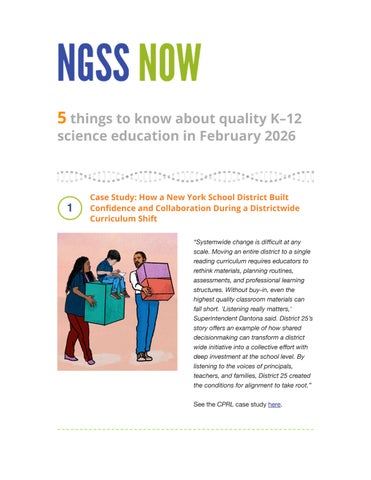
Case Study: How a New York School District Built Confidence and Collaboration During a Districtwide Curriculum Shift “Systemwide change is difficult at any scale. Moving an entire district to a single reading curriculum requires educators to rethink materials, planning routines, assessments, and professional learning structures. Without buy-in, even the highest quality classroom materials can fall short. 'Listening really matters,' Superintendent Dantona said. District 25’s story offers an example of how shared decisionmaking can transform a district wide initiative into a collective effort with deep investment at the school level. By listening to the voices of principals, teachers, and families, District 25 created the conditions for alignment to take root.” See the CPRL case study here.
2
Six Tennessee School Districts Work Together to Advance Science Education
Science leadership teams from six Tennessee districts are working together in the Eastern Tennessee Science Curriculum Initiative (ETSCI), a two-year program to strengthen science education through selecting and implementing highquality instructional materials. This model of regional collaboration provides an opportunity for districts to share best practices and maximize their resources. See the TimesNews article here.
3
Three Ways Principals Are Reinventing Professional Development A big challenge in the field is having enough time for and access to effective professional learning for science teachers. Approaches to teacher professional learning become more effective when teachers collaborate and have ownership over their learning, and when the learning is closely tied to teachers' instructional materials. This EdWeek article and guidance highlights three practical strategies principals are using to increase teacher agency in professional learning. See the professional learning approaches here.
4
Curriculum Implementation Is Change Management
Implementing new science curriculum requires intentional planning and support for educators at all levels. Rivet Education recently developed an HQIM Change Management Framework, guiding leaders to consider how they are best supporting teachers through change. A recent blog post describes the change management components alongside examples. Read the post here.
5
ICYMI: A Practical Guide for Measurement and Progress Monitoring
The Research Partnership for Professional Learning (rppl) has released an updated toolkit with surveys and classroom observation protocols for monitoring HQIM implementation and assessing professional learning quality. While designed for English language arts and mathematics, these resources can also help leaders of science curriculum implementation monitor progress and identify important areas of support. See the toolkit here.
Visit OfficialNGSS on Bluesky