Explore the findings of a three year archaeological dig
Explore the findings of a three year archaeological dig

NO PART OF THIS BOOK AS FORMATTED, OR OTHERWISE, MAY BE REPRODUCED, STORED IN ANY RETRIEVAL SYSTEM, OR TRANSMITTED IN ANY FORM OR BY ANY MEANS, ELECTRONIC, MECHANICAL OR OTHERWISE, WITHOUT THE PRIOR PERMISSION OF THE PUBLISHER (CRAIGAVON HISTORICAL SOCIETY).
Author: Katy McMonagle of the Northern Archaeological Consultancy Ltd., unless otherwise stated.
Illustrations: Stephanie Beattie (Arcustration) Design: Doghouse Creative and Arcustration. Print: GPS Colour Graphics Ltd.
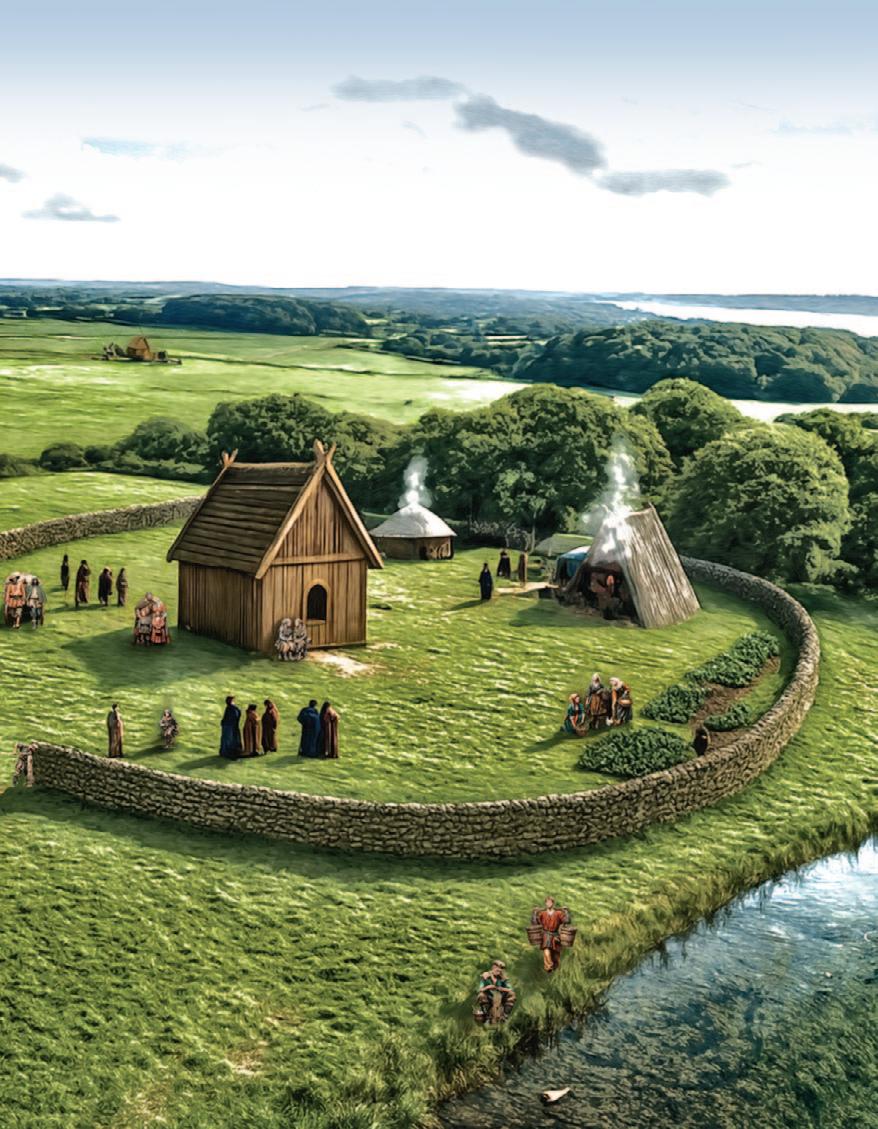
Cover illustration credit: Reconstruction of the Early Medieval church site at Kilmocholmóg. Copyright and reproduced by kind permission of Arcustration.
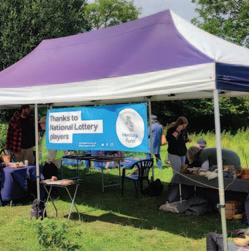
Published by the Craigavon Historical Society, as part of their 'Pagans, Saints and Birdmen: revealing the hidden stories of our landscape together' project, funded by The National Lottery Heritage Fund. For further information on the Society visit: www.craigavonhistoricalsociety.org.uk
This booklet has been published to bring together and celebrate the achievements of ‘Digging Deeper into Kilmocholmóg’; a project comprising three community excavations held at Kilmocholmóg field, Lurgan, between 22 to 26 August 2022; 19 June to 7 July 2023; and 16 June 2025 to 4 July 2025.
“I really have to see that field sometime”
My first encounter with Kilmocholmóg came during an afternoon in 2010, when I was leafing through a box of newspaper cuttings within the Craigavon Museum Services archive. The cuttings from The Lurgan Mail featured various historical snippets relating to Lurgan and the surrounding locality, written by the late Kieran Clendinning, a greatly missed journalist and historian.
Among his potted histories was a story headlined ‘Graveyard closed by railway’. The graveyard in question was located in a field just outside Lurgan, accessed via a lane branching off from the Kilmore Road. Although there were no surface remains, a strong local memory maintained that this field was called Kilmocholmóg, which acted as a local burying ground attached to an ancient church. The graveyard fell out of use in the 1840s, following the construction of the Belfast to Armagh railway line which cut across the burial ground, making access and internments more difficult.
Two things caught my attention. Firstly, the unusual name ‘Kilmocholmóg’, which means ‘church of (my dear friend) Colman’. This seemed to be a rather exotic name to be conjured up for a field, so surely there must be something behind it? Secondly, the rather specific detail that the graveyard fell out of use in the 1840s following the construction of the railway embankment, which again seemed to have a ring of truth about it.
A bit more research brought me to the work of another of our great historians, Dr Francis Xavier McCorry, who has researched and published much on the ecclesiastical history of the locality. Dr McCorry has a long-held interest in Kilmocholmóg stretching back to 1964. A piece he had published on the subject in his book, Journeys in County Armagh and Adjoining Districts (published 2000), provided further credence to the idea that Kilmocholmóg was indeed potentially a place of some past importance.
From this time Kilmocholmóg was firmly lodged in my mind, with a thought: I really have to see that field sometime.
by David Weir
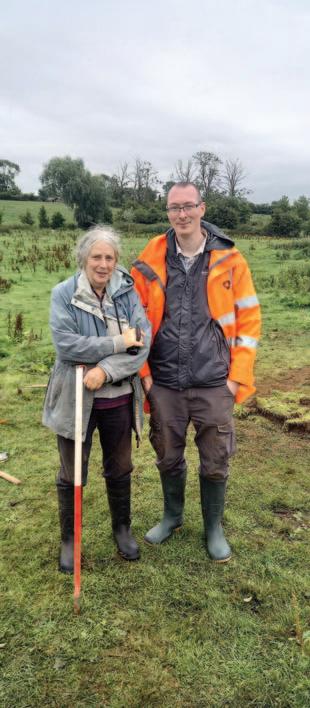
That ‘sometime’ happened 11 years later, following a chance meeting in the Dougher graveyard on a balmy September evening. Following the end of a characteristically entertaining tour of the graveyard by our chairman Jim Conway, I ran into an acquaintance, Finola Mulholland. Under the shadow of the headstone of her Gallery ancestors, Finola mentioned the magic word, ‘Kilmocholmóg’, and that she was in fact the custodian of the field, and was well aware of the tradition associated. An invitation soon followed for us to view the field.
The timing of our encounter could not have been better, for I had just engaged Dr Alistair Ruffell and his geophysics team from Queen’s University Belfast to carry out a Ground Penetrating Radar (GPR) survey in Shankill Graveyard (Lurgan) to try to locate a mass famine burial pit in the graveyard. Since Dr Ruffell was coming to Lurgan, I suggested to Finola that it might be worth inviting him to survey Kilmocholmóg as well to see if any burials could be identified to confirm the accuracy of the field name. Happily, both Finola and Dr Ruffell were amenable, in fact more than amenable, to the suggestion.
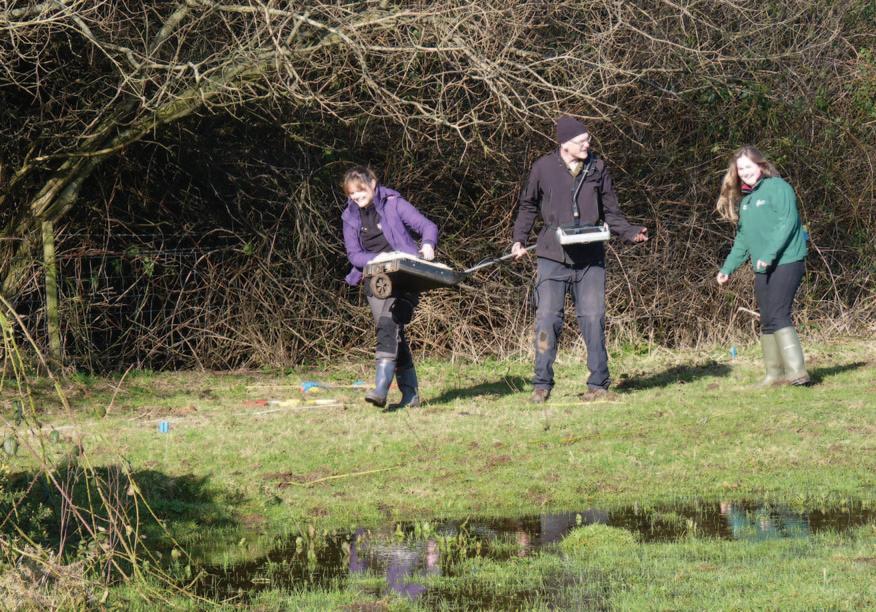
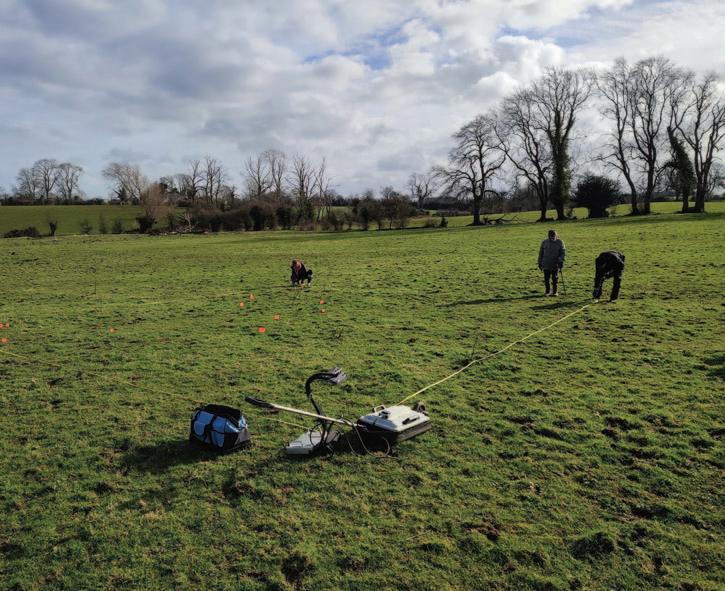
Dr Alistair Ruffell, with Lisa White and Lauren Carberry-O'Neill carrying out a GPR survey of Kilmocholmóg
Dr Ruffell, assisted by Lauren Carberry-O’Neill and Lisa White, carried out the GPR survey at Kilmocholmóg on a fresh February morning in 2022; the tranquility of the scene only interrupted by the magical site of trains floating above us along the railway embankment. As they pulled the GPR contraption across the field, we were told that an orange flag would be inserted into the ground to mark anything of interest. Looking back, as the day passed, I can remember a sinking feeling of disappointment as the flags remained firmly in hand as the team trudged up and down; until finally something was found which merited a cluster of flags to be pushed into the ground.
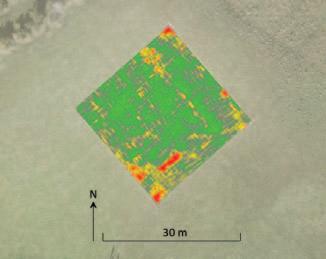

Analysis of the GPR readings revealed that the fluttering orange marked out some sort of ‘L’ shaped stone feature hidden beneath the ground. It wasn’t a burial, in fact it was unclear what it was, but crucially it was at an ‘archaeological depth’. We had our start.
The feature discovered by the GPR, combined with the local memory of the site, provided a strong enough case to justify an exploratory archaeological excavation to ascertain the nature of our mystery feature.
Thanks to the funding support provided by The National Lottery Heritage Fund and the Armagh City, Banbridge & Craigavon Borough Council through the Lurgan Townscape Heritage Scheme, we were able to appoint the Northern Archaeological Consultancy Ltd. (NAC) to carry out a 5-day exploratory excavation between 22 to 26 August 2022.
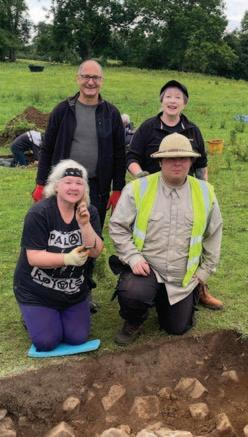
From the start the NAC site directors Katy McMonagle and Stuart Alexander pushed for the dig to be run as community excavation to enable local people to experience archaeology and practically uncover their own history. It was a great suggestion. A call out for volunteers was enthusiastically answered with 60 volunteers of all ages, backgrounds and interests signing on to desod, dig, trowel and sketch. The dedication and joy of the Kilmocholmóg team was infectious, made all the better by the confirmation that our mystery feature was indeed archaeological and medieval in date.
Initially interpreted as a souterrain, the feature was later revealed through drone surveys by Ryan Montgomery and The Ulster Archaeological Society and excavations to be part of a large circular enclosure ditch filled in with stone; with the stone possibly coming from a collapsed boundary wall.
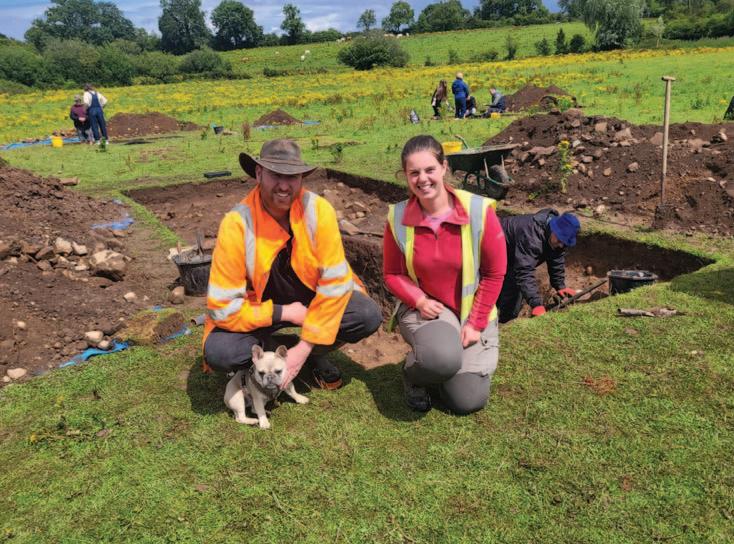
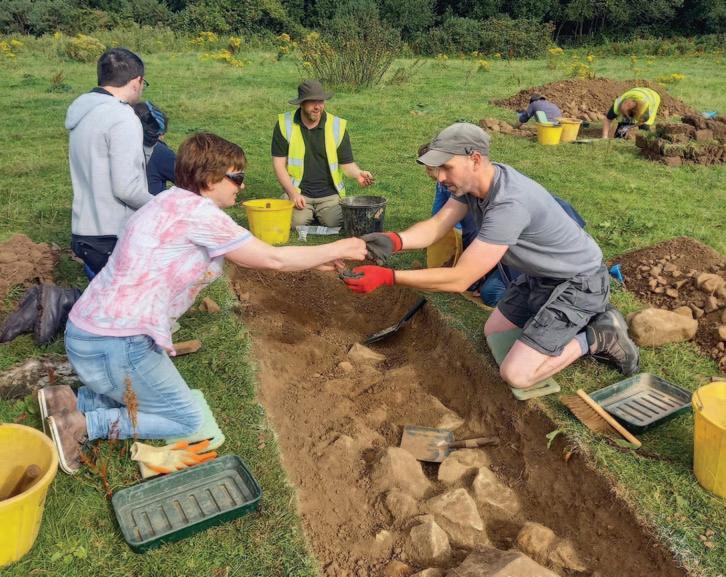
From here we, the Craigavon Historical Society, successfully applied to The National Lottery Heritage Fund for funding to carry out community digs in 2023 and 2025; only this time each season of excavation taking placing over three weeks in June and July. As outlined by Katy McMonagle in this booklet, these excavations confirmed the legitimacy of the field name memory that Kilmocholmóg was indeed the site of an Early Medieval church; with additional evidence uncovered revealing the site occupation stretched all the way back to the Stone Age, some 6000 years ago.
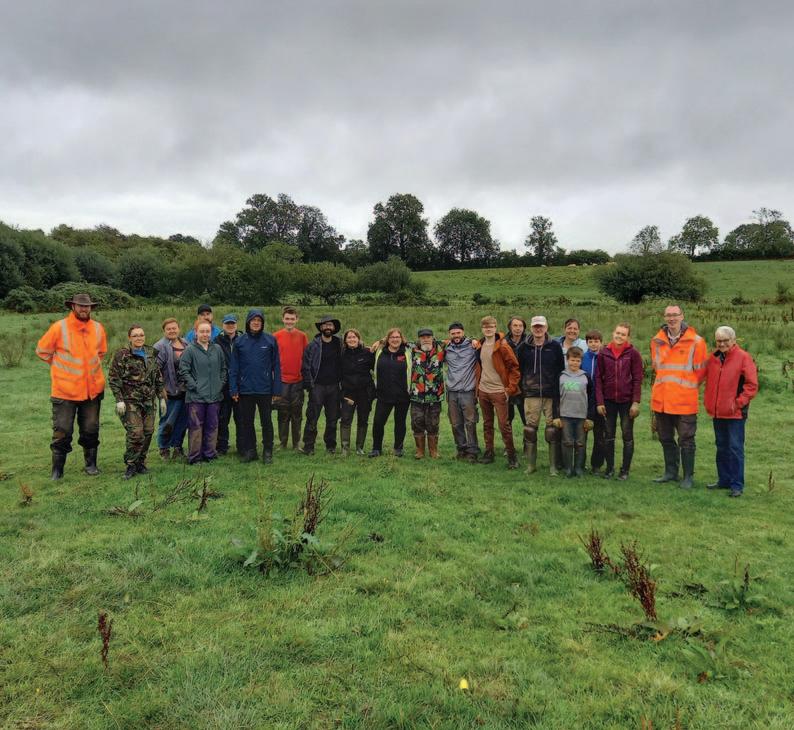
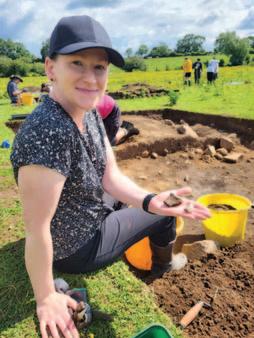
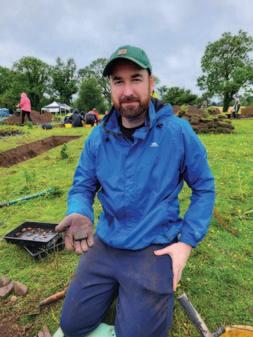
The success of the dig owes much to the contribution made by all of the volunteers, students and school children who worked together, under the watchful eye of a medley of archaeologists from NAC led by site director Katy McMonagle, to uncover the secrets of Kilmocholmóg. In total over 1,200 volunteering opportunities were availed of over the lifespan of the project. A real camaraderie developed among the Kilmocholmóg crew, with friendships formed, knowledge gained, dreams realised and bucket lists fulfilled as outlined in some of the volunteer experiences contributed to this booklet.
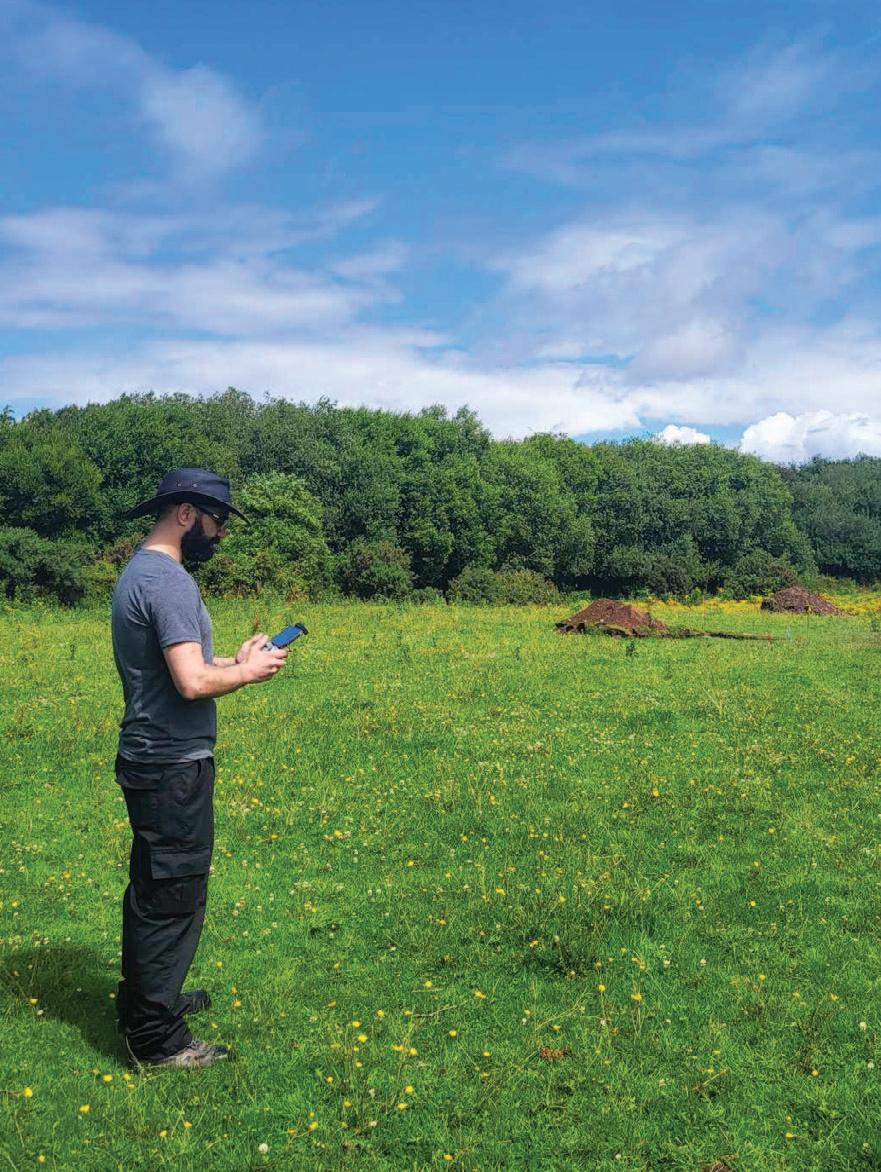
Although the excavations to date have proven that Kilmocholmóg was an Early Medieval church site, much more remains to be discovered. Where exactly was the church? Where was the furnace for iron smelting? When was the church site abandoned or was it destroyed? Was there an earlier Neolithic settlement here and what did it look like?
Moreover, initial analysis of an ongoing drone survey being undertaken by Ryan Montgomery of Queen’s University Belfast has provided indications of other potential archaeological features at Kilmocholmóg and the immediate vicinity. Could we be looking at an archaeological landscape, which merits much further investigation? The story of Kilmocholmóg is only just beginning…

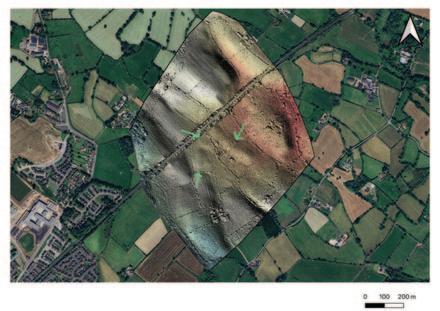
How it all began by Finola Mulholland
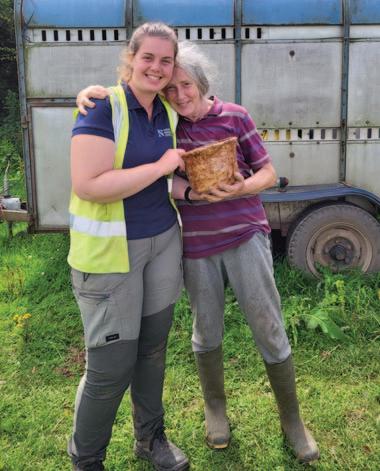
One of the questions most often asked with regard to the rewarding archaeological project in this apparently unremarkable field along by the railway line, a little north of Lurgan is 'How did you know where to dig?’ Like most good stories, it has taken place over time, sixty years and more, and requires some patience on the part of the listener. Our long-standing farming neighbours had it from their forebears that once there had been a graveyard in the field, which has an unusual name - that of ‘Kilmocholmóg’. While other fields on the farm have names such as 'the White Hill', the 'Back Field', and 'Mickey's Meadow', ‘Kilmocholmóg' stands out by virtue of its Irish name, and what it means. The first element, 'cill' or 'coille' indicates a church. 'Mo Cholm Óg', literally translated, means 'my young Colm', or Colman, but is in fact more of a term of affection. Dr Francis X. McCorry explains that the name 'Cillmocholmóg' can be understood as 'the church of my dear friend, Colman'. Whether or not this refers to the saint who founded the cathedral in Dromore, Co. Down, is a subject for speculation. Ireland has had many saints of that name.
It was back in 1964 that Dr McCorry first heard of this field from my late father, Joe McConville. His mother, Eleanor, was reared on the farm, which had been occupied by the Gallery family since 1799, when our ancestor, Thomas Gallery, took on the tenancy from the Brownlow estate. Interestingly, Kilmocholmóg at that time was still occupied by the Uprichard family, and only in 1874 did it become part of the Gallery holding. Tradition has it that the old cemetery was originally accessed from the Cornakinnegar road, which runs from Lurgan towards Antrim town, but the construction of the Ulster Railway in the 1830s and early '40s blocked that routeway; though a study of field maps shows the old track coming past Cherrymount House and towards Kilmocholmóg. So, in 1964, while drainage work was being carried out by a railway maintenance crew, my father had gone down to the field thinking perhaps that some evidence of the cemetery might be revealed. I remember how he described having seen the outlines of old decayed timber in the cut railway bank, with the soil inside the outline being different to the soil outside. He took this to potentially be a cross section through old graves. Frank clearly recalls my father telling him what he had observed, and in the intervening years searched for written or map references to a cemetery in church documents and in the Brownlow Papers, but to no avail.
Fast forward to the autumn of 2021, when I attended a conducted tour of the Dougher graveyard, off Victoria Street in Lurgan. I had gone early, in order to search for the Gallery grave, but had not yet come upon it. The tour was given by Jim Conway, another local history enthusiast with a prodigious memory, and just beside where his talk ended, only a few yards away, was the grave I sought!
Looking back, I think my plan had been to ask this gentleman, so obviously familiar with the graveyard, if he knew where I would find the Gallery grave, so the fact that it was so close by seemed like divine intervention. I approached, and announced that here was the very grave for which I had been searching – “Was it any connection of Gallery the solicitor?”, Jim asked me. “Yes”, said I, “here lie his parents and grandparents!” (If you are from this neck of the woods, ask your older relatives if they have ever heard the idiom “Say nothing 'til you see Gallery!”) As our conversation began, we were joined by another person, whom I had met some years before in a historical context. It was David Weir, the self-effacing secretary of the Craigavon Historical Society. I spoke of my family connection, and the purported existence of a graveyard on the family farm. Both gentlemen were most interested, so a visit and walkabout was proposed.
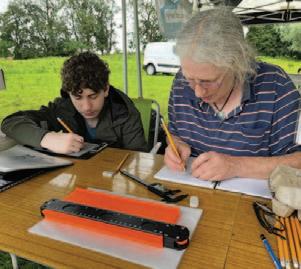
That took place a few weeks later, in October, and the potentiality of further investigations on the site became realised when on a chilly February day in 2022, thanks to David's archaeological connections (he has his degree in the subject ), a team from the School of Archaeology and Paleoecology at Queen’s University Belfast, headed by Dr Alastair Ruffell, made their way across the fields, by much the same route as the last funeral is said to have done in the mid-1850s, only this time with Ground Penetrating Radar (GPR) equipment instead of a coffin.
Thanks to Tony Robinson and the expert crew of Channel 4's 'Time Team', we are all familiar these days with LIDAR (Light Detection and Ranging) and GPR, and both methods were used to survey parts of the field at this time, leading to the discovery of subterranean 'features', which, it was decided, could be worth investigating by the more traditional method of excavation. That possibility depended on the procurement of funding - cue Mr Weir!
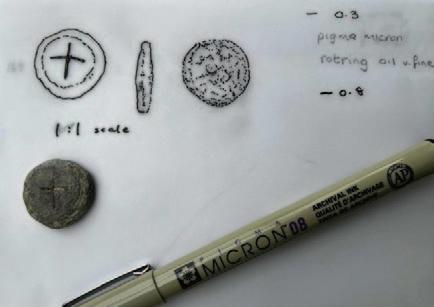
Not wishing to spoil your enjoyment of the remainder of the story, I shall leave the telling of our tale of 'what happened next' to more experienced authors. However, I feel that a mention must be made of the significance of the small townland (just short of 164 acres, or around 66 hectares) in which Kilmocholmóg is situated. The modern spelling of this unique townland name is 'Donagreagh', or 'Donegreagh', though many variations have been recorded in the Brownlow Papers since the initial grant of 1500 acres to John Brownlow in 1610, during the Plantation of Ulster. The name is clearly Gaelic in origin, and although one interpretation is that the first element may be ‘Dún', a fort, there are no obvious remains of such in the townland, not even at its highest point on Carrigan Hill. The other possibility is that the name comes from the root word 'Domnach' that some believe could have a Latin origin, and which the late Dr Ann Hamlin concluded in her PhD Thesis (‘Archaeology of Early Christianity in the North of Ireland,' QUB, 1976) could indicate sites associated with St. Patrick himself, or one of his followers. Would the archaeological investigation help enlighten us?
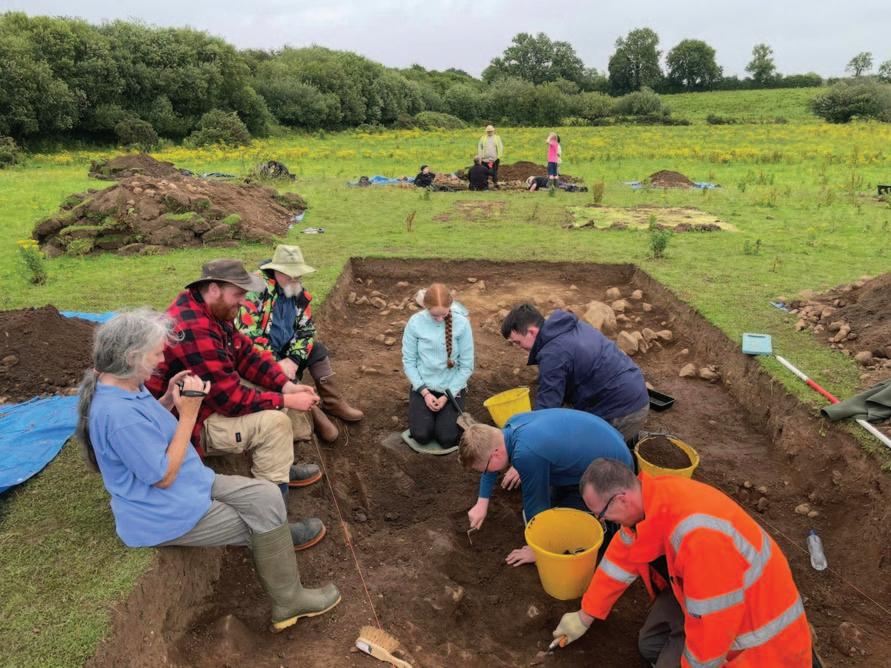
Inevitably, it seems, when you go around digging up a field, the wits appear and ask, “Have you found the gold yet?” So here is my answer. The treasure we unearthed has been not only in what can be learned from the features and artefacts, but in every single one of the people who got down on their hands and knees in the grass, who pushed, pulled or flew a surveying instrument, or mapped and measured, sketched and shovelled. A community dig became so much more - it made us into a community - a bunch of disparate people, from 3-year-olds up, with a common passion, and many will be friends for life. The team from the Northern Archaeological Consultancy who led the dig are remarkable folkenthusiastic, impassioned and generous with their knowledge, who entertained us with their tales of life 'in the trenches', and educated us along the way. It has truly been one of the greatest experiences of my life to have been involved with the project.
I thank you all!
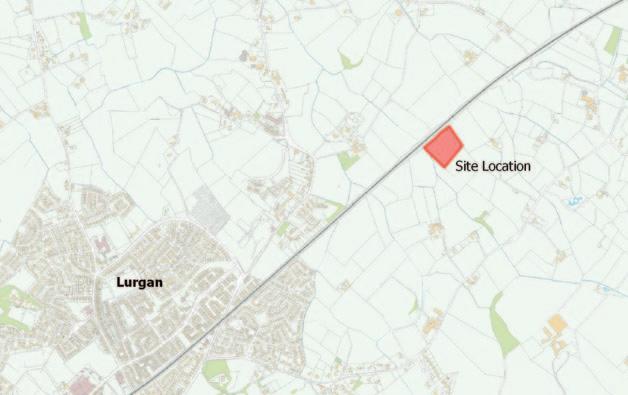
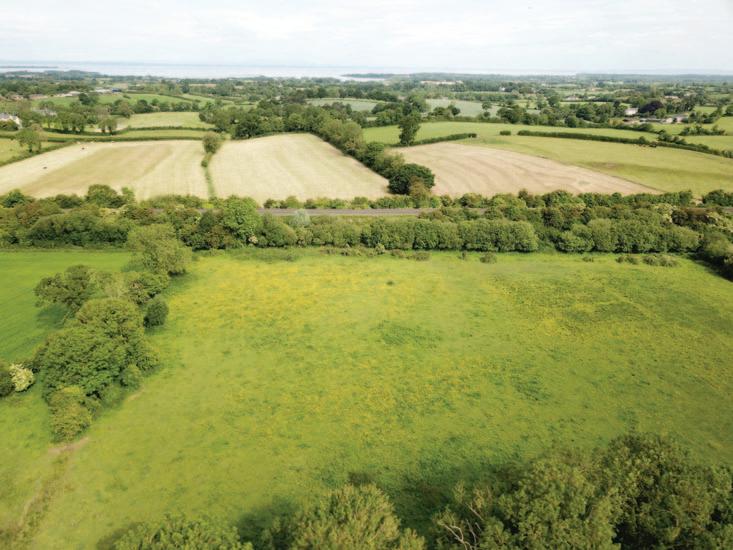
The site is located approximately 1.5km to the northeast of Lurgan, 500m to the northwest of the Kilmore Road, on the south-eastern side of the main rail line to Portadown.
The site lies within the townland of Donagreagh, sometimes translated as ‘fort of the stud’, in the parish of Magheralin, the barony of O’Neilland East and the county of Armagh.

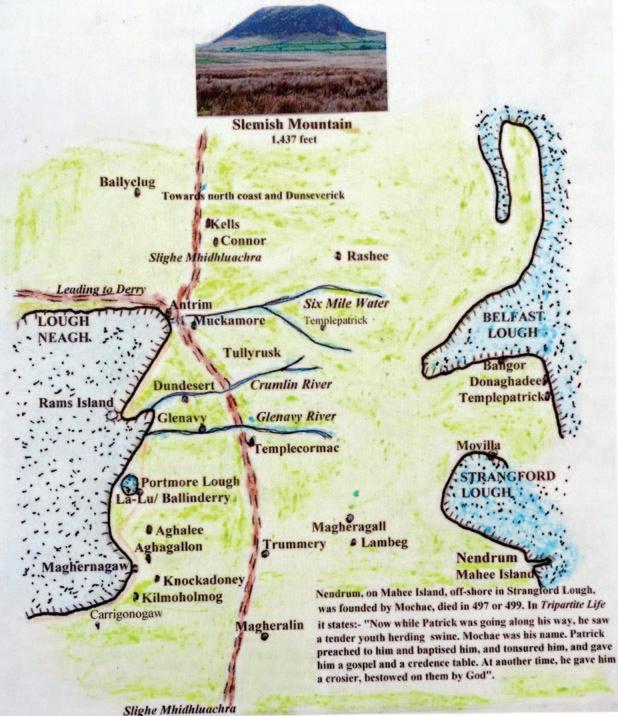
The below map has been reprinted from ‘To Value History: A Three-Part Documentation of Places and Events Past & Present’, published by Dr Francis Xavier McCorry in 2021.
The Slige Mhidhluachra was one of five major roadways in ancient Ireland that fanned out from Tara across the country. In modern terms, a section of the north running Slighe would have more or less corresponded to the present A1 leading from Newry to Antrim. The ancient churches of Donaghcloney, Magheralin, Trummery, Templecormac, Glenavy, Dundesert, Antrim, Connor and Kells lay close to the roadway.

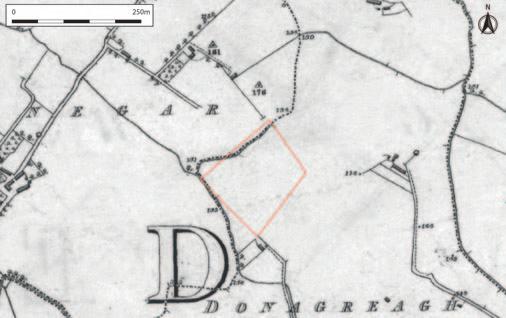
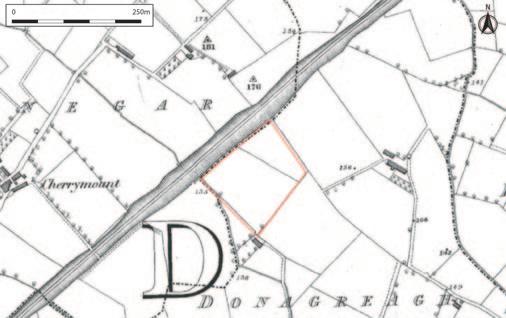
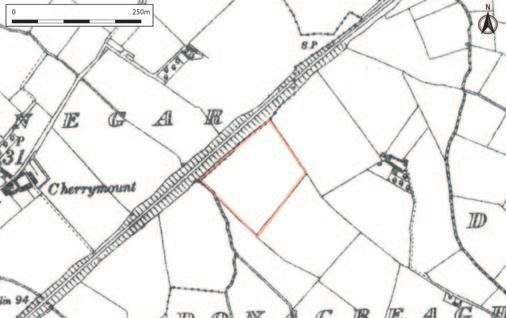

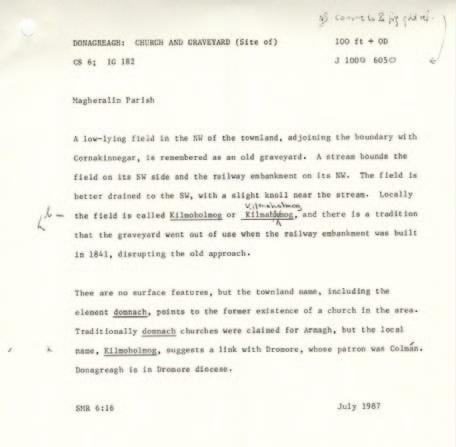
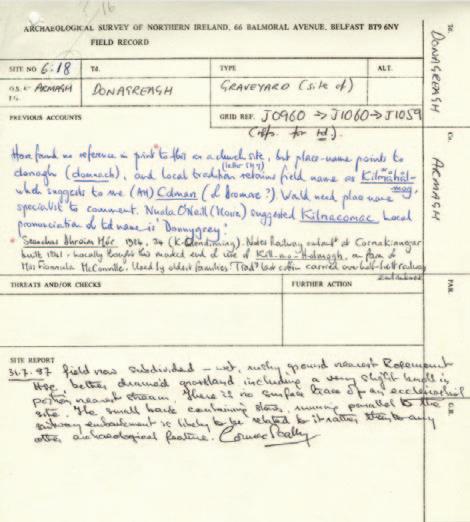
The only record of the site was within the NI Sites and Monuments Record (NI SMR), which refers to the site as a low-lying field within the northwest of the townland of Donegreagh that is remembered as an old graveyard.
Locally, there was also a tradition that the graveyard went out of use when the railway embankment was built in 1841. No sub-surface remains are present within the field at Kilmocholmóg, but the townland name ‘domnach’ would suggest the existence of a church. The name also suggests links to Dromore and St. Colman, with the townland of Donagreagh falling within this diocese.
As many aspects of the knowledge of this site relied on translation of place names and potential links rather than physical evidence, the 'Digging Deeper into Kilmocholmóg' project was an opportunity that could not be missed to excavate, identify and clarify the nature of this site.

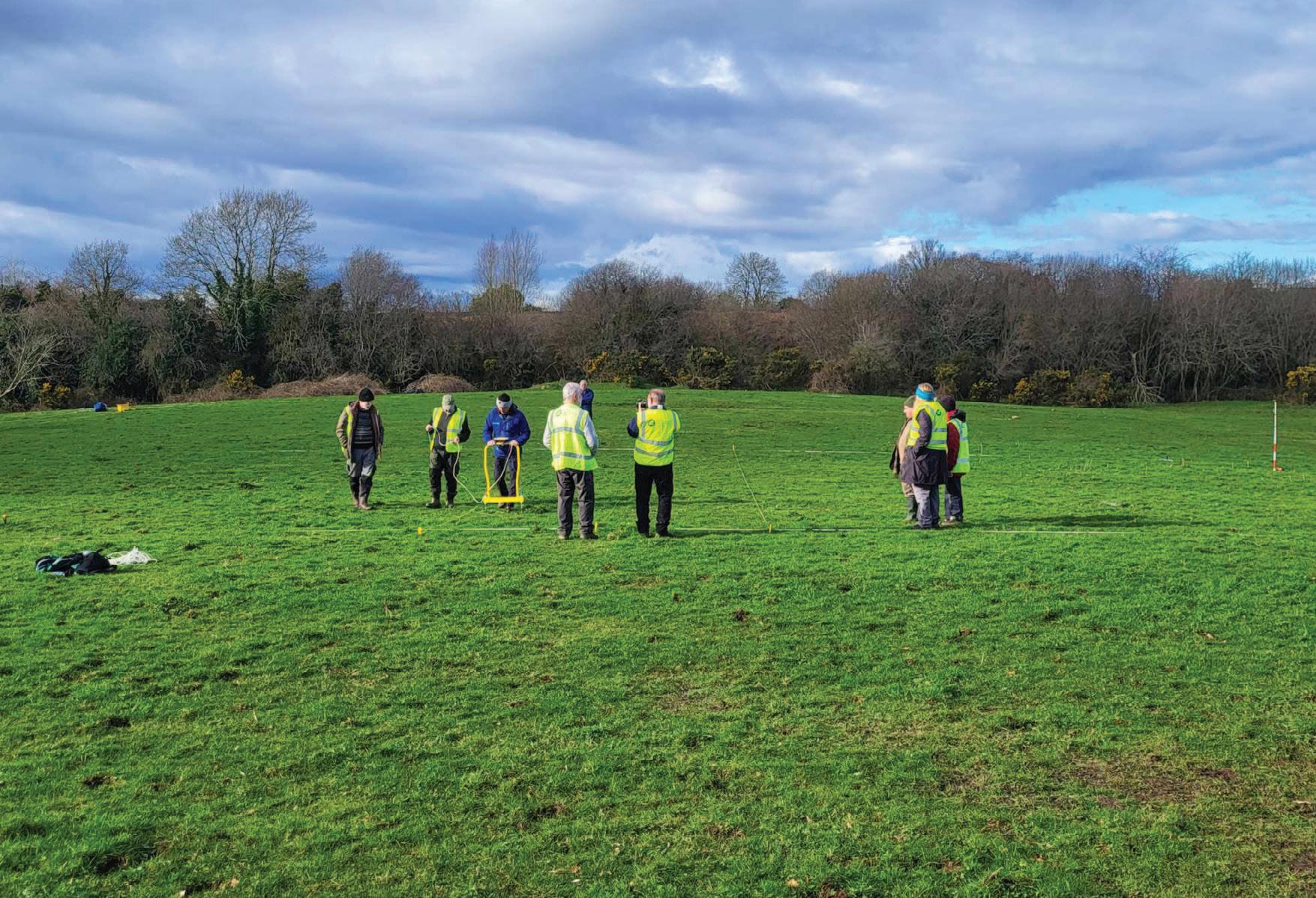
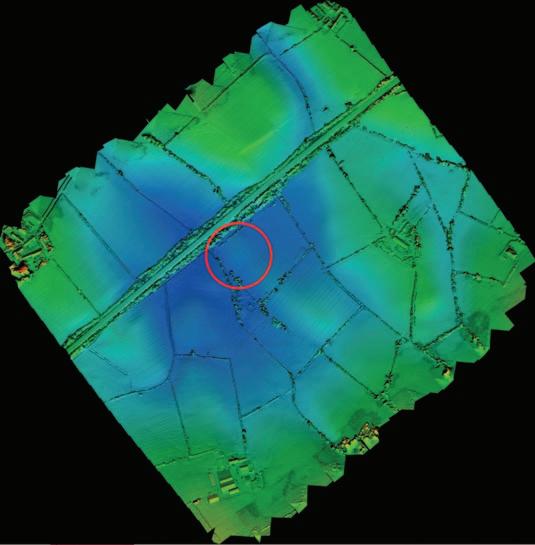
The first geophysical analysis was undertaken at the site in 2021 by Dr Alastair Ruffell from Queen’s University Belfast. This work focused on and around the area of the NI SMR point, ARM006:016. This work highlighted several anomalies through the use of Ground Penetrating Radar (GPR). These anomalies including a right-angled linear feature, which was variously interpreted as a souterrain, field boundary or a ditch. This find indicated that there was something going on underneath the topsoil at Kilmocholmóg, which required ground truthing through excavation.
Further geophysical survey work over a wider area was undertaken in 2024 by The Ulster Archaeological Society’s Survey Group which showed further anomalies within the landscape.
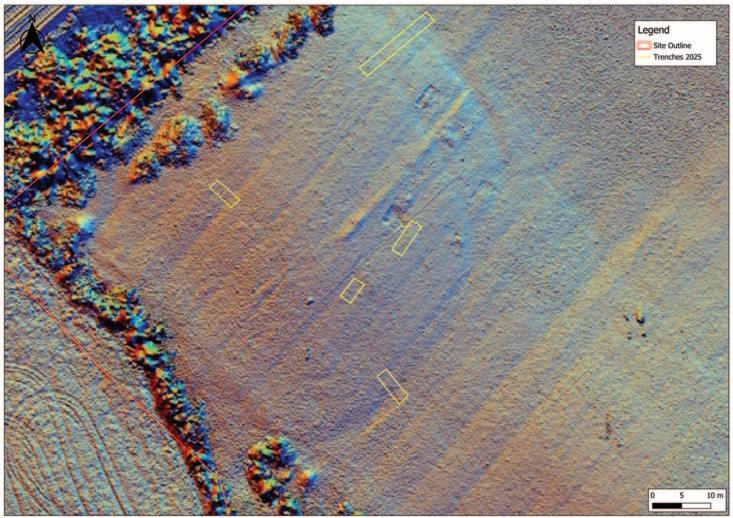
Multiple drone flights have been undertaken across the site pre-excavation, during the excavations and post-excavation. Initial drone surveys in 2021 and 2022 show the presence of ‘lazy beds’ which run northwest-southeast across the site, giving us a first look at the Post-medieval activity at the site. Seasonal drone flights undertaken by Ryan Montgomery from Queen’s University Belfast between 2022 and 2023 highlighted further anomalous features within the landscape of potential archaeological significance.
A drone flight undertaken in February 2024 by The Ulster Archaeological Society’s Survey Group confirmed that one of these anomalies was a large sub-circular enclosing ditch. This really started to build the story of Kilmocholmóg.
The combination of geophysical survey, drone survey and subsequent excavations at the site, show the importance of how they can all work together to construct the narrative for a site.
by Katy McMonagle
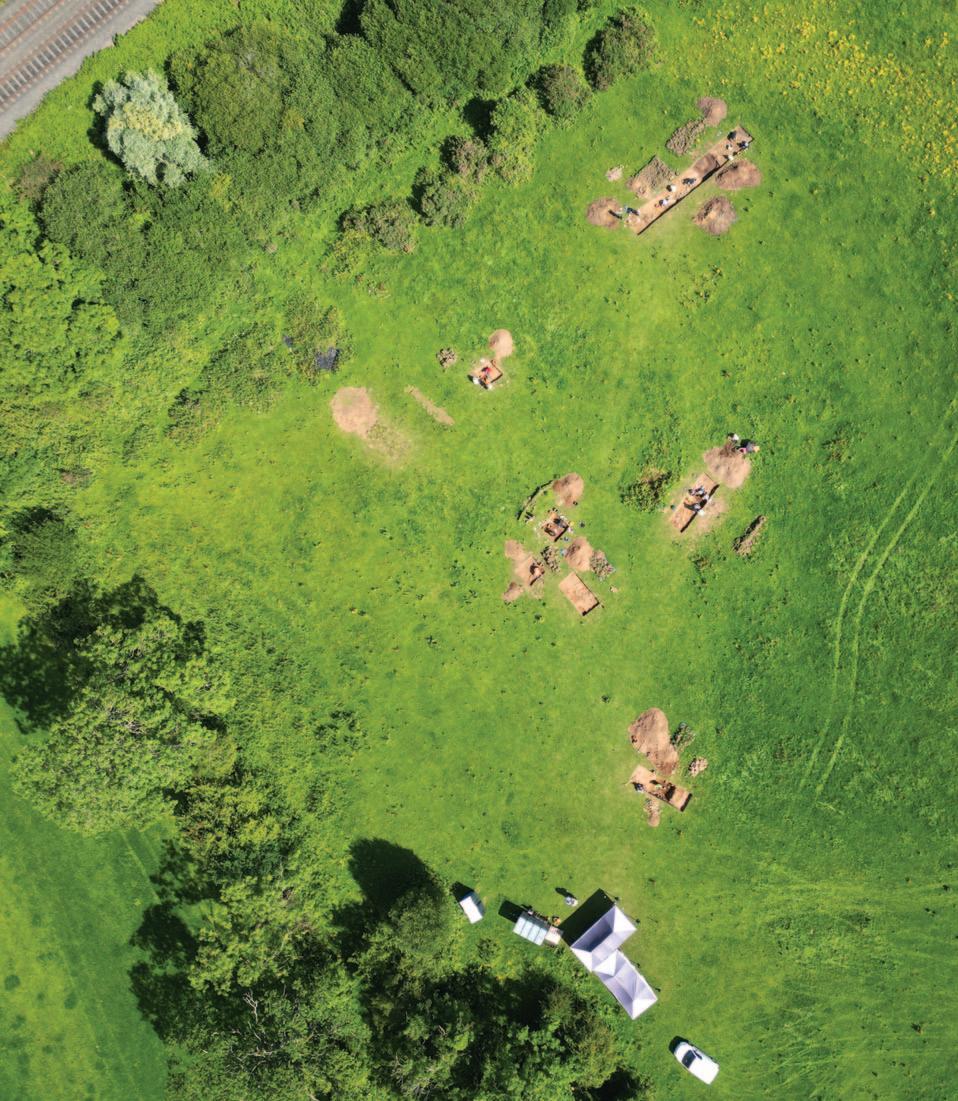
Season 1 of excavation, held between 22 August to 26 August 2022, was to help assess the archaeological potential of Kilmocholmóg field, the nature of any archaeological remains indicated by the geophysical survey and the historical implications of the placename evidence and local tradition.
Season 2 of excavations, held between 19 June to 7 July 2023, aimed to clarify the extent and nature of the archaeological remains uncovered in Season 1; while excavating and recording a select amount of sub-soil cut features to obtain dating evidence.
Season 3 of excavations held between 16 June to 4 July 2025, was to enable further clarification of the archaeology excavated and recorded in season 2. A section was also to be excavated through the ditch of an enclosure revealed by drone survey work undertaken between 2022-2024, which would be essential to gaining an understanding of the site. The identification of this ditch also meant that internal trenches could be placed more accurately to understand interior activity within the enclosure.
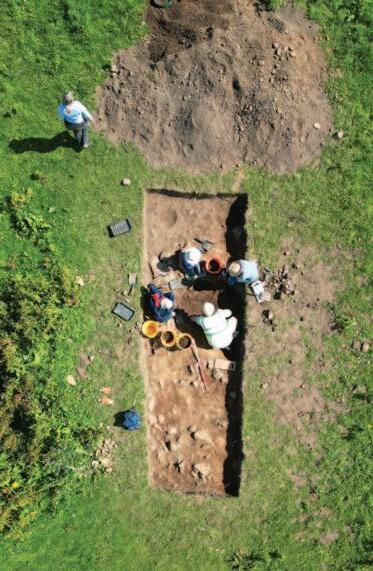
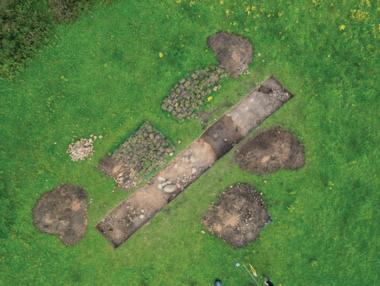
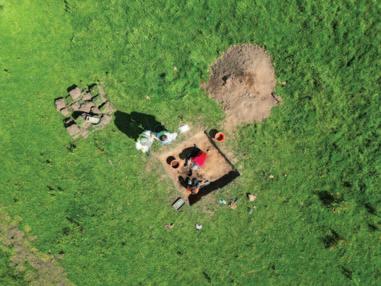
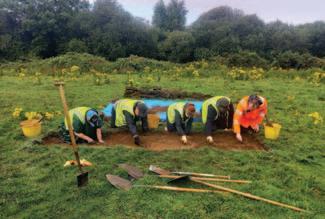
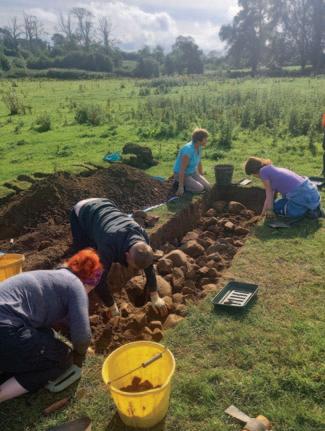

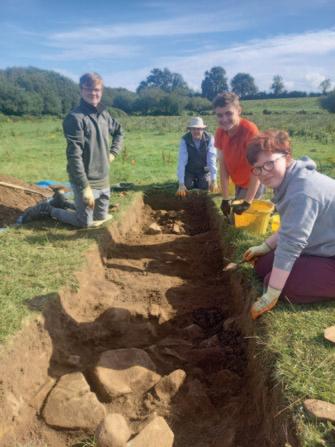
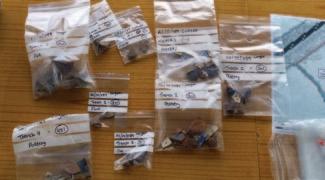
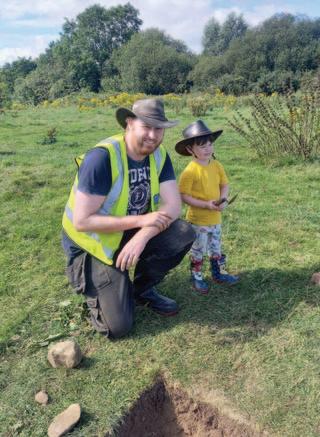
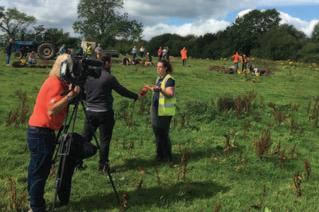
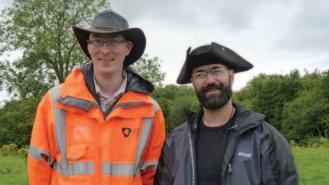
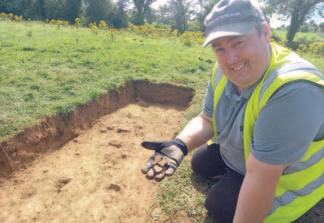

Although the excavations undertaken in season 1 were small in nature, they were the most integral towards ascertaining if archaeology was present at Kilmocholmóg. Six test trenches were hand excavated to help clarify the archaeological potential. These trenches were targeted on geophysical anomalies as identified by Dr Alastair Ruffell and topographically promising locations.
During just five days of excavations and six test trenches, 156 artefacts were recovered from the site, which included Early Medieval Souterrain ware pottery, prehistoric struck flint, and Post-medieval clay pipe stems, slate and pottery fragments.
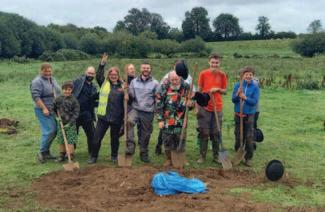
This season was also important in showing that the community were 100% behind the project and ready to find out more about Kilmocholmóg and enable it to grow into a larger and more expansive excavation. During season 1, over 60 volunteers took part to de-sod, excavate and record.
This season built on the brilliant work undertaken in season 1. A further nine test trenches were hand excavated during this season. This enabled the nature of some of the archaeological remains uncovered during season 1 to be further examined, and to allow further determination of the nature of some of the remaining geophysical anomalies as identified by Dr Alastair Ruffell and Ryan Montgomery.
Excavations during this season uncovered the presence of a midden (i.e. a large waste pit), which contained iron slag and an ingot mould showing clear evidence of metalworking at the site. Radiocarbon dates obtained from this season of excavations showed that the activity at the site occurred during the Late Iron Age and Early Medieval periods. Prehistoric artefacts in the form of struck flint and pottery were also recovered, like the material from season 1.
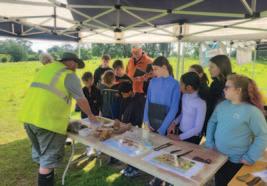
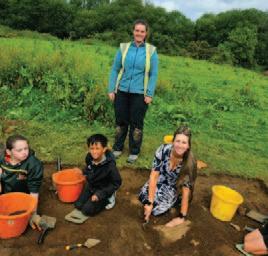
Season 2 saw engagement with local school groups and over 450 volunteers.
In the winter between seasons 2 and 3, further geophysical survey and drone photography was undertaken by members of The Ulster Archaeological Society’s Survey group. This survey identified further features and confirmed the presence of a large enclosure ditch.
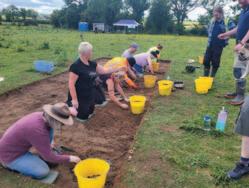
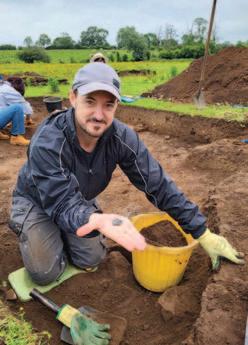
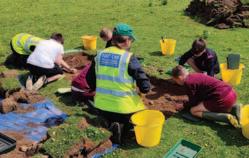
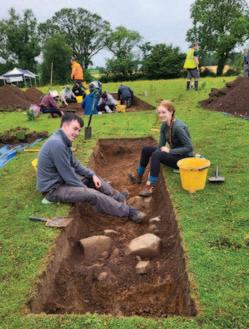
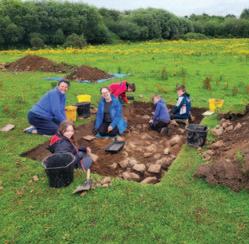
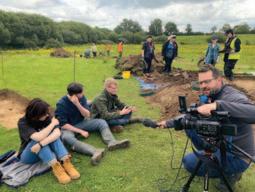
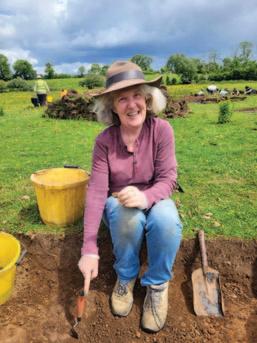
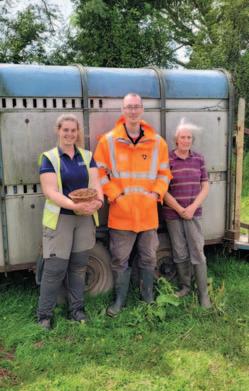
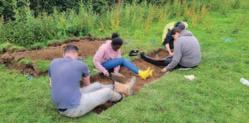
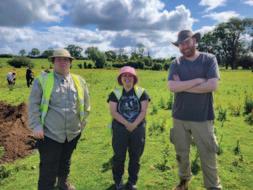
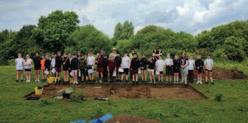
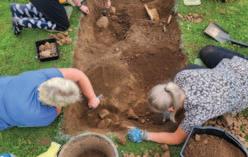
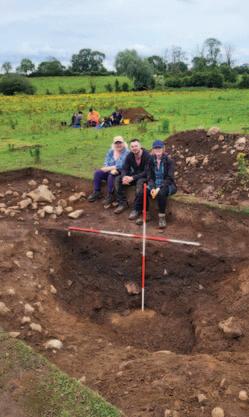
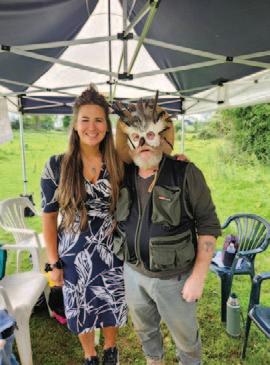
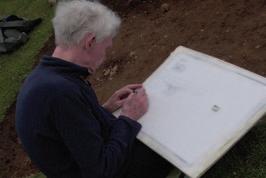
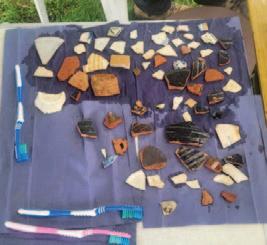
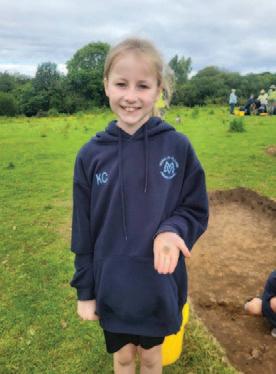
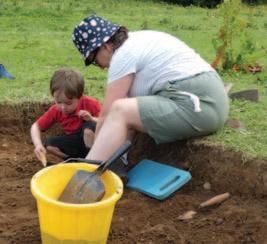
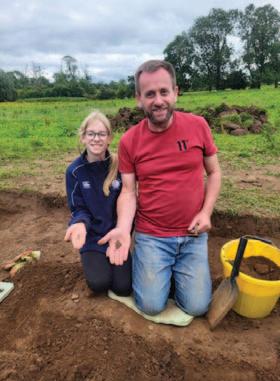
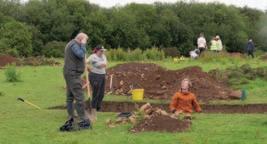
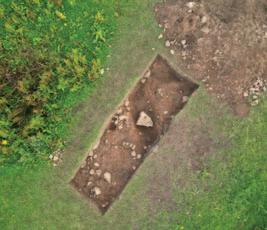
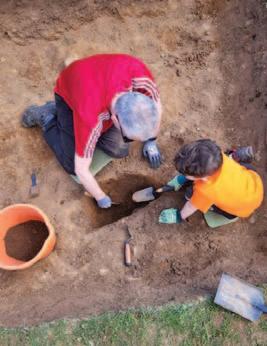
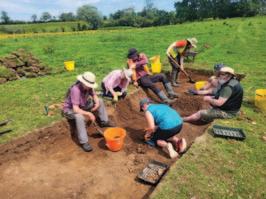
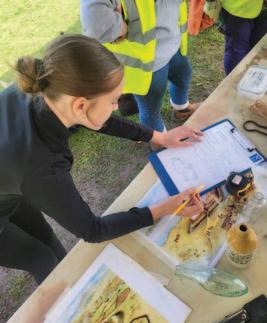
Finally, season 3 saw the excavation of the largest trenches throughout all the seasons so far. Eight further trenches were excavated, two of which were positioned within the areas showing the large enclosure ditch present on the drone surveys.
The main aims of this season were to further determine the exact nature of the remains uncovered in the previous seasons through expansion of excavation in these areas.
The trenches uncovered the large ditch from the drone photography, as well as postholes associated with buildings. Trenches were also dug to examine a low-level upstanding bank that crossed the interior of the enclosure.
These excavations recovered a further wealth of archaeological artefacts including glass beads, Souterrain ware pottery, prehistoric pottery, struck flint and iron slag. Two further radiocarbon dates were acquired, which continued to show not only activity in the Early Medieval period, but that people were active on the site during the Neolithic period as well.
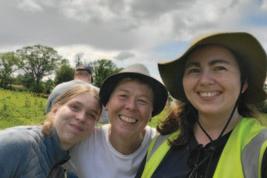
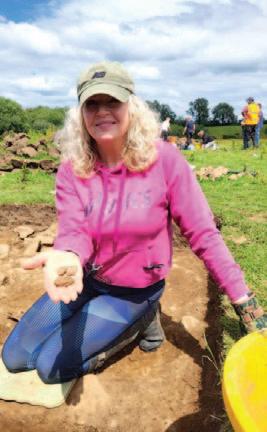
As ever the community turned up in droves to lend a hand with over 614 volunteering opportunities availed of by the public, schools and community groups, who became a part of the Kilmocholmóg crew.
The Irish Neolithic is marked by the arrival and development of farming, which supported and later replaced the hunter-gatherer way of life. The ability to cultivate cereals and keep livestock meant that people were not solely dependent on what they could catch or gather. This led to a much more stable way of life. Individuals and grounds no longer needed to move around the landscape with the changing seasons, people could now stay in the one place, surplus harvest could be stored for winter months and animals could breed.
The Neolithic period in Ireland can subdivided into Early, Middle and Late Neolithic. The Early Neolithic covers the period from around 4000 BC to 3600 BC and is characterised by rectangular houses and very fine round-based undecorated pottery. The Middle Neolithic dates from 3600 BC to 3000 BC and is characterised by hollow scrapers and round-based decorated pottery. The Late Neolithic is from 3000 BC to 2500 BC and is characterised by a flat-bottomed grooved ware.
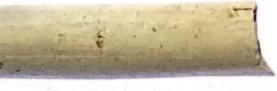
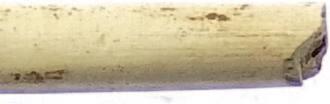
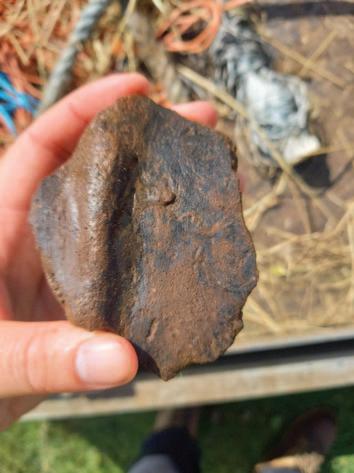
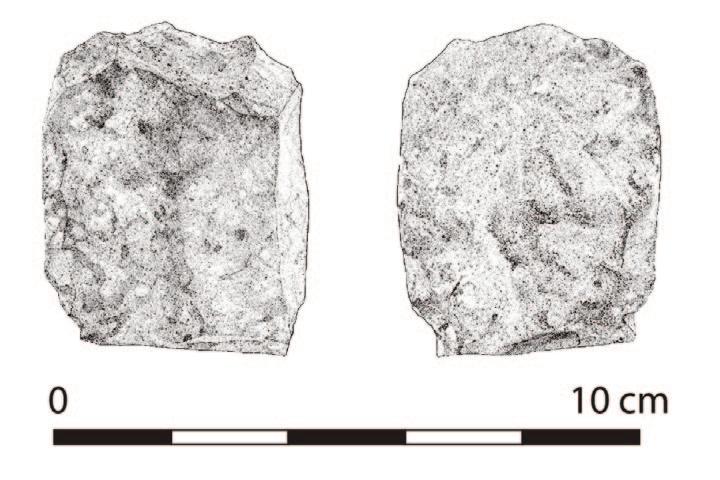
A broken polished stone axe fragment recovered from Kilmocholmóg which had a cutting edge on one side. Polished stone axes were versatile in nature and they were used for the clearing of forest for agriculture, shaping timber and chopping firewood.
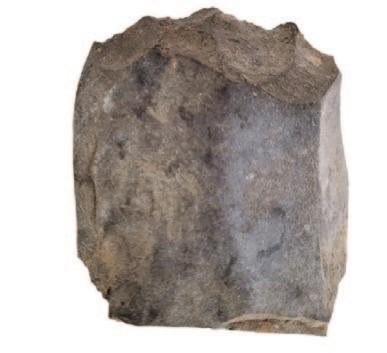
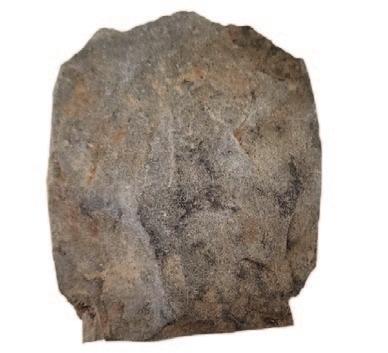
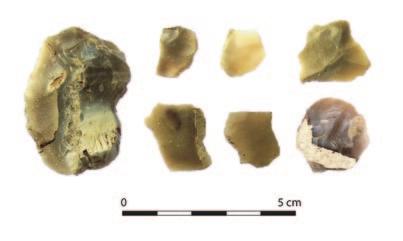
It is interesting to note that although the excavations were mainly aimed at uncovering the Early Medieval origins of Kilmocholmóg, a combination of artefactual evidence and radiocarbon dating shows that the Kilmocholmóg story actually starts in the Neolithic. Artefacts recovered include a polished stone axe fragment, sherds of pottery and worked flint.
Our ceramic specialist was able to identify these sherds of pottery as Neolithic, rather than Early Medieval in date due to their shape and form. During the Neolithic roundbottomed bowls were prevalent, with larger bucket shaped vessels being dominant in the Early Medieval period. Decoration is also a key identifier with Neolithic pottery having incised decoration and Early Medieval having applied decoration.
It is believed that the sherds recovered from Kilmocholmóg would have been part of pots which were utilised for cooking purposes.
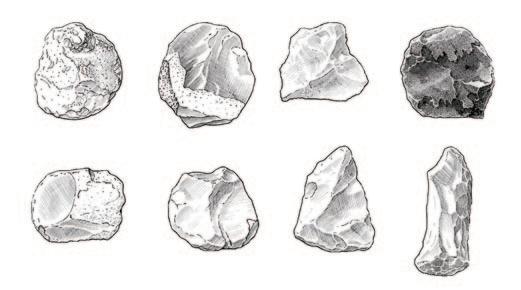
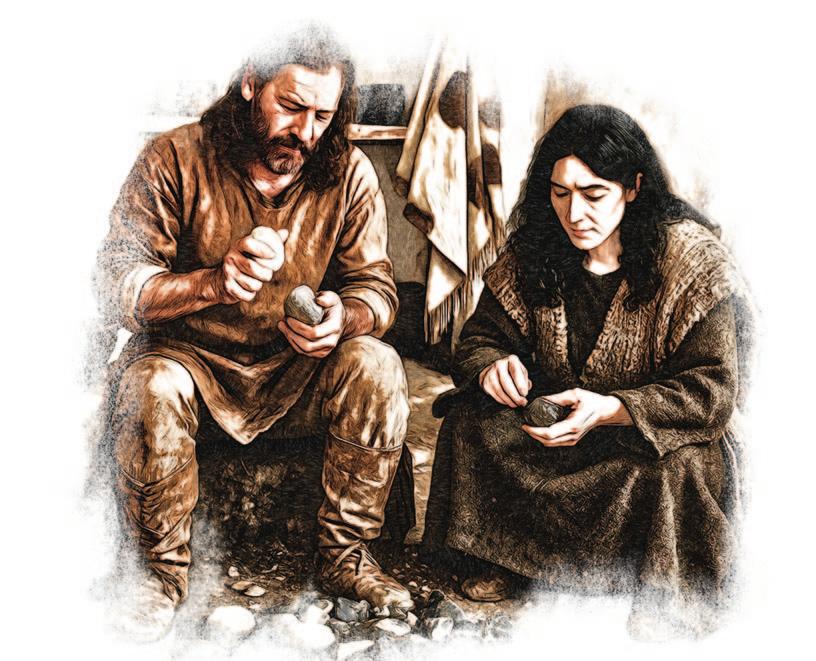
Examples of worked flint were recovered during the excavations. Our lithic specialist was able to identify that several pieces were of Neolithic origin, due to their fine and wellexecuted nature, which contrasted with other examples that dated from the Bronze Age. The use of metal tools within the Bronze Age reduced the importance and quality of worked flint tools. Flint would have been used to create cutting tools, scrapers and weapons.
The Bronze Age in Ireland began in c.2500 BC and is defined by the introduction of metalworking and a change in cultural aspects and artefact types. A continuing evolution in flint tools saw the introduction of different forms, such as barbed and tanged arrowheads. Domestic sites changed, with larger circular houses dominating and the proliferation of cooking places known as fulacht fiadh or burnt mounds. Funerary practices changed, with cremation generally replacing inhumation burials with the creation of different types of burial monument.
Bronze Age activity at Kilmocholmóg
The Bronze Age artefacts recovered were limited in nature, with the Bronze Age presence at Kilmocholmóg even less understood compared to the Neolithic. During the Bronze Age, work by palaeoecologists shows that Ireland’s climate was wetter and people tended to move to higher ground. It is possible that during the Bronze Age the site at Kilmocholmóg was inundated with water. The small amount of pottery and flint that was recovered may be representative of post-depositional material, items that have been displaced from their original location.
Our lithic specialist was able to identify multiple convex end scrapers which are a typical Bronze Age artefact. These types of scrapers were predominately used for hide processing.
Pottery in the Bronze Age tended to be quite coarse and crudely made, setting it apart from the finer Neolithic pottery and the better fired vessels of the Early Medieval period. Pottery styles changed, with larger, flat-bottomed urns marking a change from the smaller bowl forms of the Neolithic. Pottery was still used for cooking during this period, but pottery in the form of urns is now being used for burial as well, with the cremated remains being buried in the urns and placed into the ground.
During the excavations two small pieces of coarseware pottery were recovered that could be dated to the Bronze Age. Although minimal in nature, it shows people during the Bronze Age using the landscape at Kilmocholmóg.

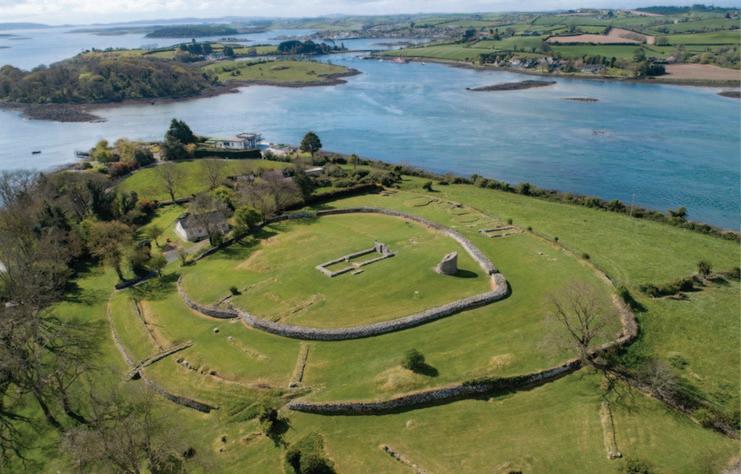
The Early Medieval period in Ireland began with the arrival of Christianity in approximately AD 400 and ended with the arrival of the Anglo Normas in the mid-12th century. Settlement across the island was still not nucleated in townships like in Britain. The lifestyle of the time was very much a rural agricultural one.
The arrival of Christianity in Ireland saw the establishment of the first monasteries on the island. In the north, notable ecclesiastical centres were founded at places such as Armagh, Bangor, Derry and Nendrum. Numerous less well-known monastic sites were also established throughout the island. In many instances the founders of these monastic communities became regarded as saints. The monks that lived in these places demarcated their holdings and constructed places of worship, works and lodging. Gradually over time these religious settlements became the focus of human activity with the areas surrounding them became more urbanised.
Through the combination of drone survey and excavation, it became apparent that the Early Medieval period is where Kilmocholmóg really shines within the archaeological record.
The excavations revealed the presence of multiple sub-soil cut features indicating the presence of structures, within the large sub-circular enclosure present on the drone surveys, all of which gives us an impression of the Early Medieval ecclesiastical site at Kilmocholmóg.
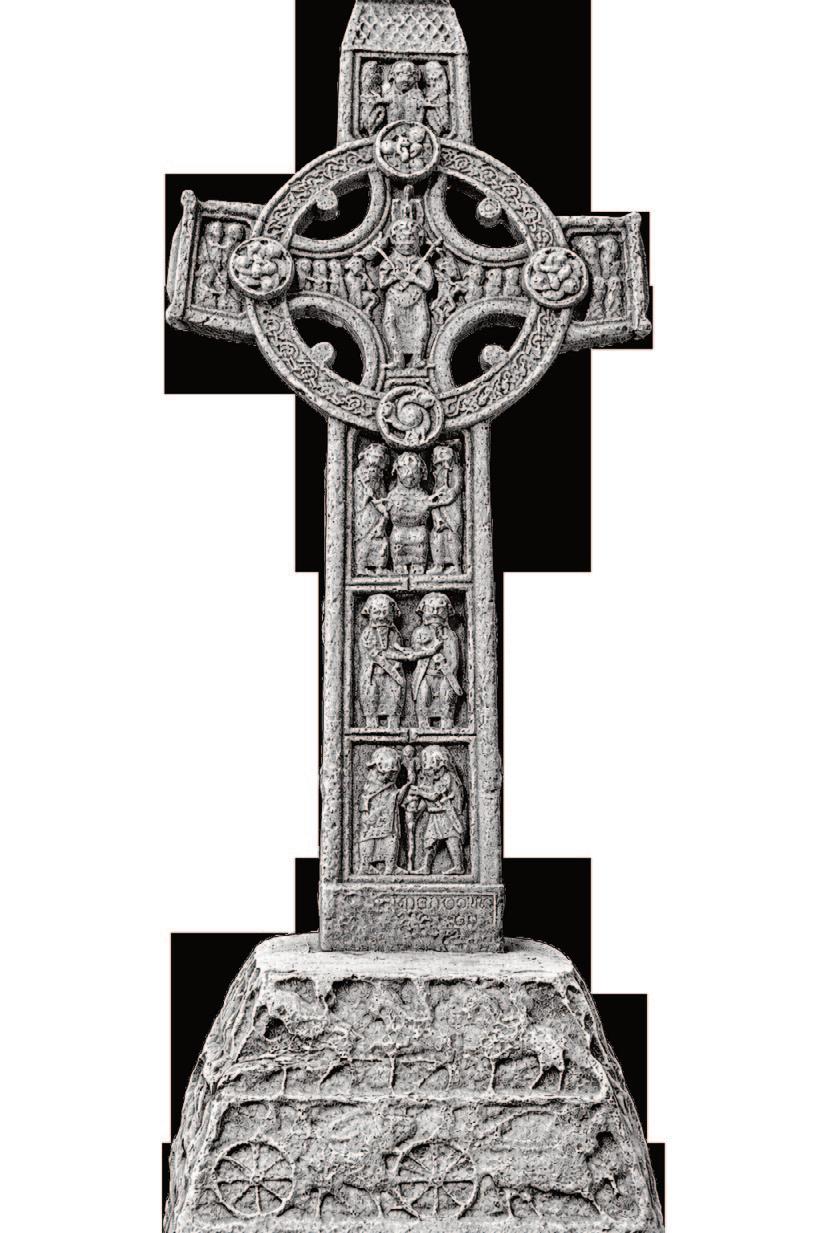
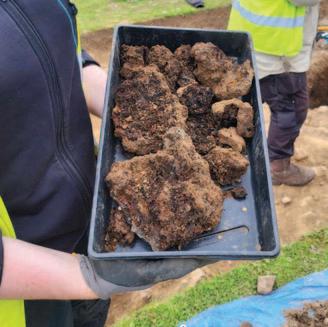
One of the most artefactually rich features excavated within the interior is believed to have been a midden, a place where rubbish would have been dumped. The excavation of this feature uncovered pottery, slag and an ingot mould.
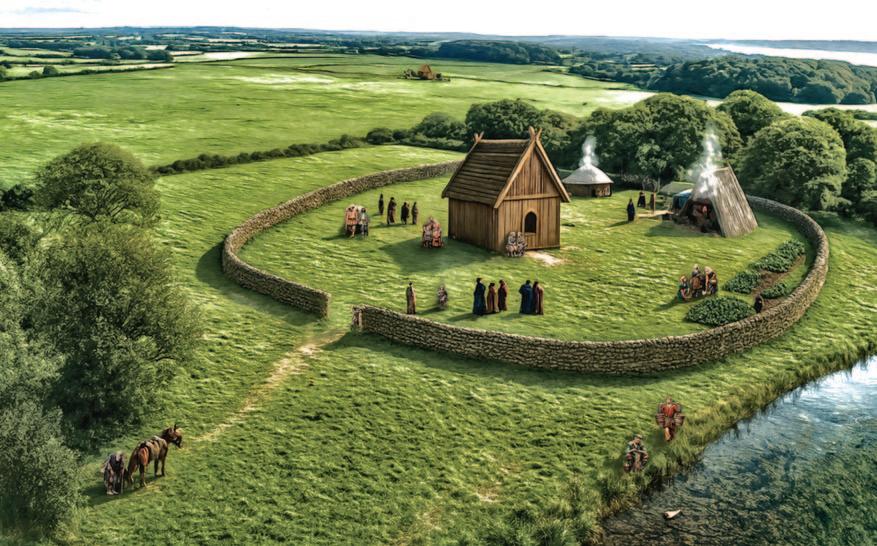
Churches in the Early Medieval period were not the buildings and places of worship that we know today. These were sites that served both the religious and secular societies, and while a physical church building would have been present, the sites would also have incorporated workshops and farms.
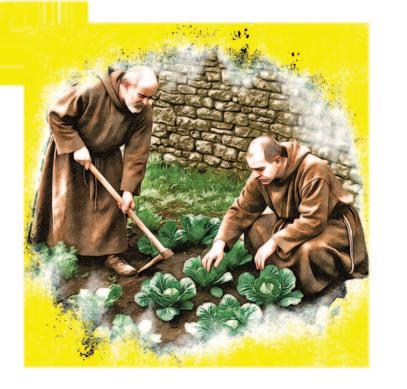

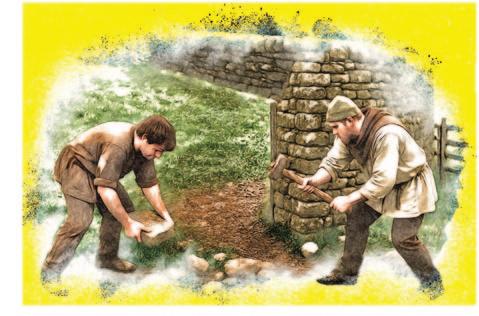
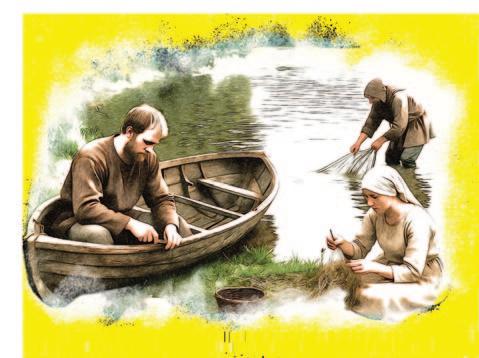
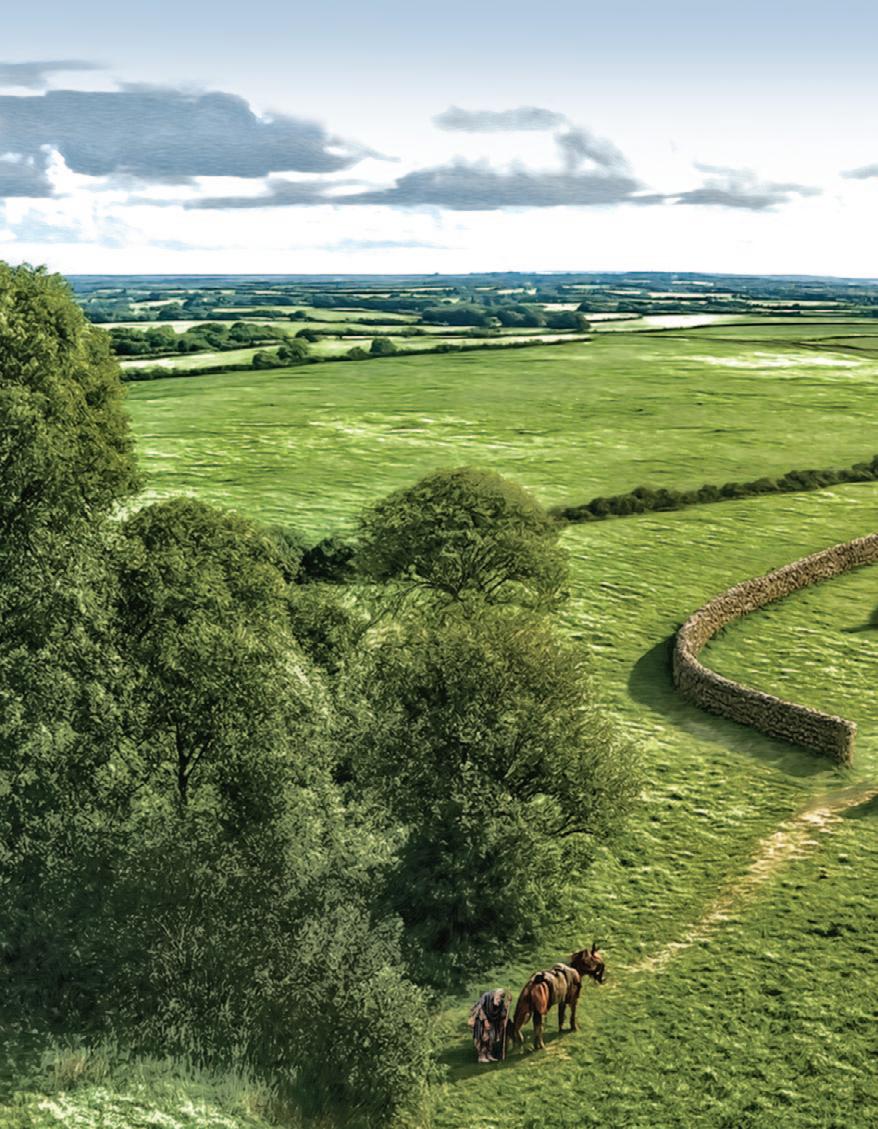
Based on the archaeological and artefactual evidence, the site at Kilmocholmóg would have consisted of a large enclosure ditch, with a dry-stone type wall on the inside of the enclosure. This would have been a prominent structure within the landscape. In the lower part of the landscape, around the enclosure, a possible lake was present, giving only one entrance into the church site. The interior of the enclosure was likely a busy place during the Early Medieval period, with structures relating to metal working and the church buildings themselves.
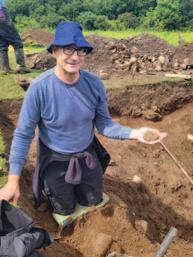
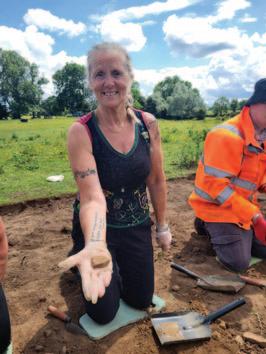
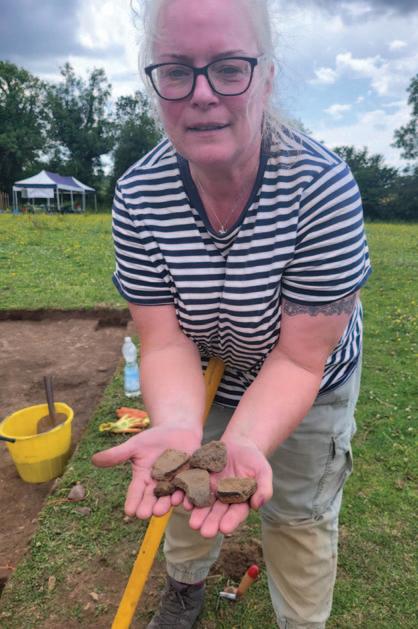
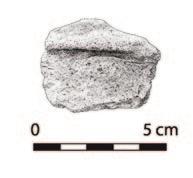
Over 300 sherds of Souterrain ware pottery have been recovered during the excavations. Souterrain ware is a type of coarse ware pottery that first appears in Ulster in the 7th –8th centuries AD and continues to be used until the 12th century AD. Typically this type of pottery would have been locally made within the vicinity of the church or even at the site itself.
Souterrain ware pottery was typically bucket shaped and ranged in sizes, which made it very versatile. Soot marks present on the exterior of some of the vessel sherds indicate that they would have been placed on the fire, while residues on the interior of vessels suggest burnt food inside. These types of vessels were used for cooking and give a snapshot of day-to-day life during the Early Medieval life of Kilmocholmóg.


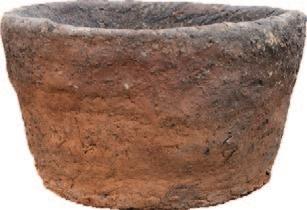

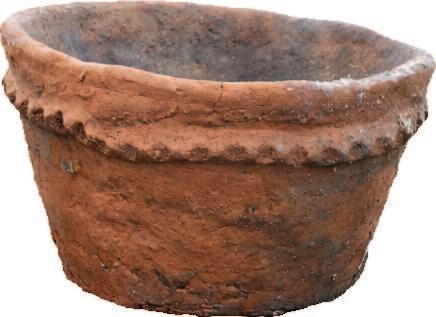
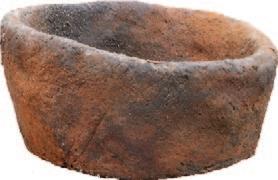

It must be remembered that churches at this time were not just places of worship but places of work. One of the most abundant finds recovered throughout the excavations at Kilmocholmóg was metal slag.
Iron working, both smelting and smithing, is a frequently encountered craft from the Early Medieval period. All aspects of the process, from the slag recovered from smelting through to the finished artefacts, are present.
Interestingly, at Kilmocholmóg there was evidence for both smelting of ores and working and refining of metals.
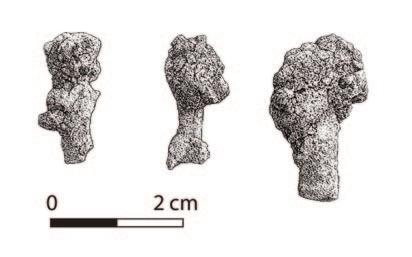
Although a rather mundane artefact, iron nails were recovered during the excavations, which would have been a typical object during this period. At this time churches could have been made of either wood or stone, and the presence of iron nails may be more indicative of the presence of wooden structures.
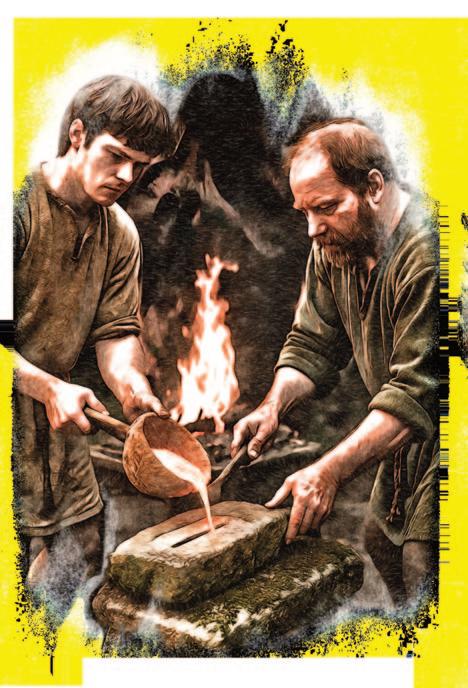
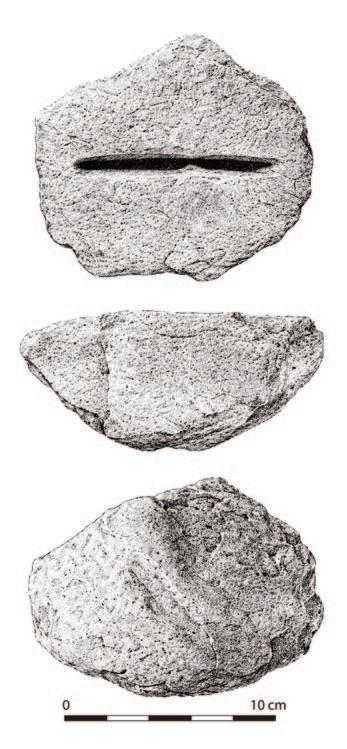
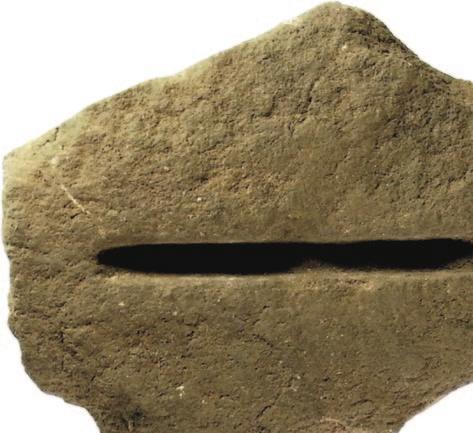
This is one of the rarest and most interesting artefacts recovered, a stone mould for the casting of ingots. The presence of iron nails at Early Medieval period is not uncommon but the presence of an ingot mould is significant.
Not all metals could have been cast as ingots, but it is possible that the mould was used to produce ingots of bronze or silver.
While we cannot ascertain what was being cast, it is known that silver ingots were used for trade during this period. It is also known that copper ore may have been smelted and then the ingots traded or sold elsewhere. Both aspects are a good indicator of Kilmocholmóg being a manufacturing and trading place, which is characteristic of ecclesiastical sites of this period.
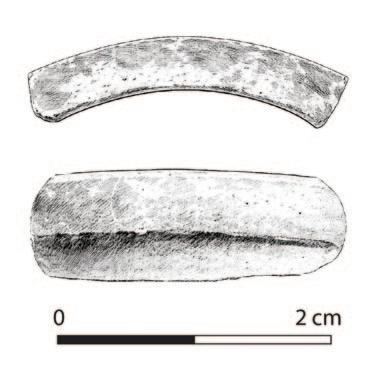
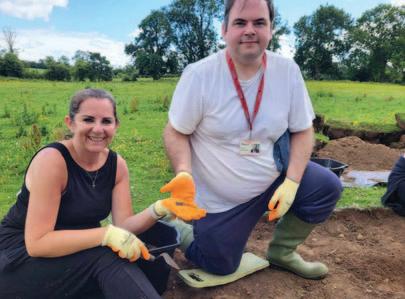
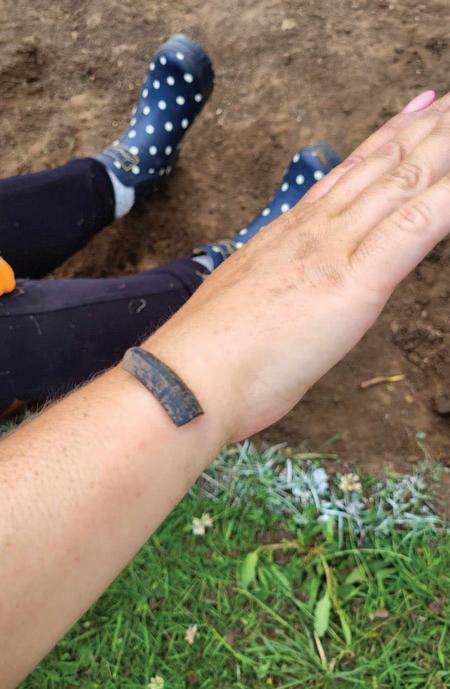
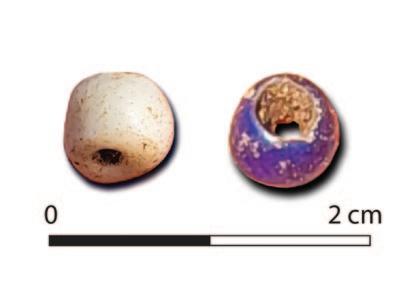
The presence of pottery and evidence of metal working is important to show the day-today lives of people within the Early Medieval period, but it is even more special to find someone’s personal belongings. Many bracelets, rings, armlets have been recovered from Early Medieval sites in the past, and at Kilmocholmóg the excavations uncovered a fragment of Lignite bracelet and multiple glass beads.
Lignite bracelets are associated with Early Medieval period in Ireland and have become a classic Early Medieval artefact. There was no evidence of production at Kilmocholmóg, so it can be assumed that this is part of a bracelet that someone was wearing, and at some point during the Early Medieval period it was broken and was discarded.
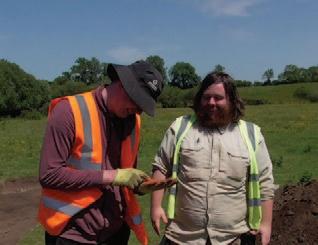
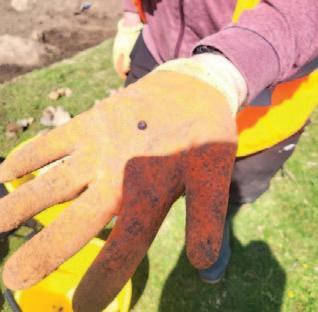
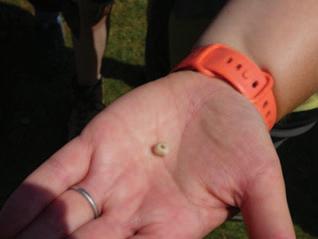
Glass beads during this period are dominated by the colour blue, however different colours of beads can also be found. During the excavations both white and blue beads were recovered, which were likely part of a necklace or bracelet.
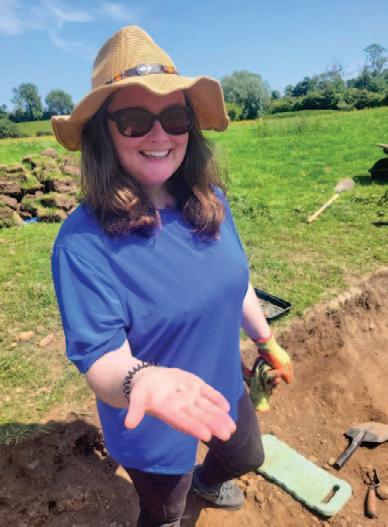
A series of radiocarbon dates have been obtained from Kilmocholmóg and show that the site was occupied for several centuries during the Early Medieval period and likely had its origins within the Late Iron Age.
As the midden feature within the interior was artefactually rich, the decision was taken to obtain a radiocarbon date from here. Both charcoal and burnt animal bone were present within this feature, with the burnt animal bone dated to AD 378-481. This date is much earlier than what would be expected from a church site. The date shows continuity of activity at the site from the Neolithic through the Bronze Age and the Late Iron Age before the establishment of the Early Medieval site.
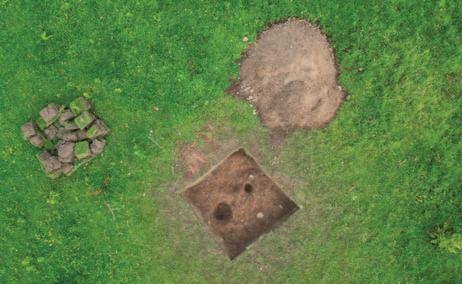
As archaeologists it is important to look objectively at both radiocarbon date results and the artefacts recovered. In this instance there is significant artefactual material from the midden to date this feature to the Early Medieval period, and as such it is assumed that the radiocarbon date was obtained from intrusive material. While this may not provide a date for the feature itself, it is still a clear indication of Late Iron Age activity at the site.
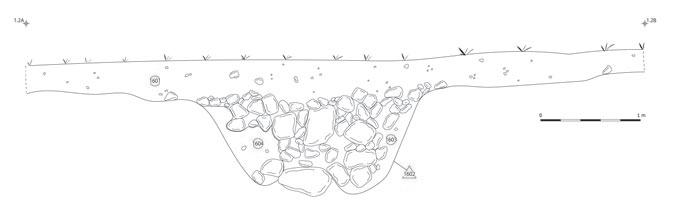
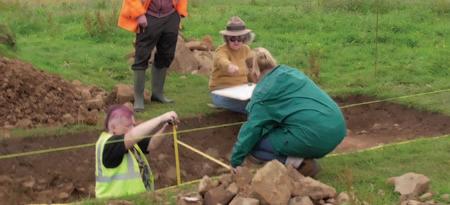
The presence of the large enclosure ditch, interior structures, radiocarbon dating and artefactual material combined are enough to identify Kilmocholmóg as a church site.
Although it cannot be stated that a church building itself was excavated, all the evidence clearly shows that Kilmocholmóg is the site of an early church.
Another feature identified as a posthole within the interior of the site was also radiocarbon dated. It was dated to AD 595-656, and again this coupled with the artefacts found across the site shows that during this time Kilmocholmóg would have been at its peak.
During the 2025 excavation, two further postholes were excavated within the interior of the enclosure, one of which was radiocarbon dated. It was dated to AD 604 – 658, which indicates that there is the potential for multiple structures within the enclosure during the Early Medieval occupation of the site.
The artefactual evidence recovered from the site indicates a range of dates in which the site would have been occupied during the Early Medieval period. The presence of Souterrain ware pottery shows us as archaeologists that occupation was between the 7th and 8th centuries. The main production and use of lignite bracelets has a dating range between the late 7th to the 11th century (Gormley 2017, 120).
Finally, the types of beads that have been recovered from the site show a date range from the late 5th to late 9th, possibly into the early 10th centuries (Mannion 2015). Using both the radiocarbon dates and artefactual evidence we can say that the site at Kilmocholmóg was at its peak within the 7th century.
If the archaeological, historical and place name evidence is drawn together we can start to get a better understanding of the site. From the archaeological evidence we know that the site is probably present in the 6th century AD, and reached its peak in the 7th century AD. The name Kilmocholmóg translates to 'church of my dear Colman', which shows a link with St. Colman. Within the vicinity it is recorded that St. Colman established the ecclesiastical site at Dromore in the 6th century AD. Kilmocholmóg lies within the townland of Donagreagh, which is within the diocese of Dromore, and Colman was a bishop and patron of Dromore. This may suggest that Kilmocholmóg was a desert church serving the larger ecclesiastical site at Dromore.
Medieval archaeology at Kilmocholmóg
A pronounced raised linear feature was identified during the drone surveys across the site between 2022 and 2024.
Upon further examination it appeared to respect the enclosure ditch. A small test trench was excavated across it to ascertain the nature of this raised feature.
While the purpose of this raised feature is not entirely clear, it had been constructed to sub-divide the interior of the enclosure. Whether the church site was still in use by the Medieval period is unclear. However, the presence of Medieval pottery indicated that there was continued occupation into the Medieval period (AD 1169 – 1549), although whether this is related to the continued occupation of the church or occupation once the church went out of use, is unknown.
Post-Medieval Archaeology at Kilmocholmóg
We don’t know when the church at Kilmocholmóg went out of use. Post-medieval activity is seen through ‘lazy beds’. This type of arable spade cultivation was common across Ireland during the Post-medieval periods and was widespread until the late 19th century.
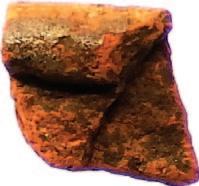
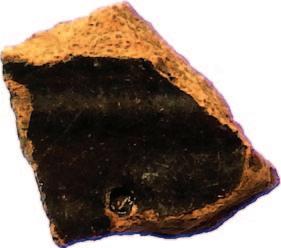
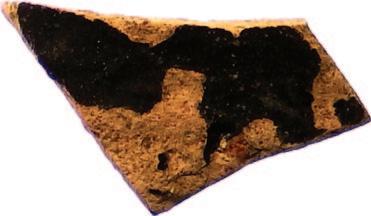
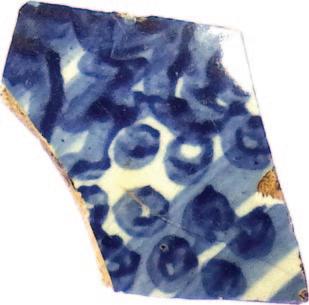
Post-medieval ceramics, clay pipe and glass fragments show the day-to-day working of the field at Kilmocholmóg. It is clear that the land was used for a long time and continues to be used today.






The memory and oral tradition of Kilmocholmóg, the church of Colman, has been passed down through many generations. The three seasons of excavations have not only proven that an Early Medieval church site existed here, but that the story of Kilmocholmóg actually starts around 4000 BC, and continues today with Finola. Like many custodians of this landscape, she has left her mark; but by enabling us to dig deeper into Kilmocholmóg, Finola has allowed us to prove the accuracy of local oral tradition and memory; and in doing so, we have revealed not just a church site at Kilmocholmóg, but an archaeological landscape stretching from the Neolithic to the Post-medieval period.
This has been a unique opportunity for oral tradition and archaeological investigation to work together to bring new insights into both local and regional history.
References
Gormley, S. 2017. 'Lignite bracelet production in the north of Ireland: a reassessment', The Journal of Irish Archaeology (Volume XXVI).
Mannion, M. 2015. Glass beads from Early Medieval Ireland. Classification, dating, social performance. Archaeopress Archaeology.
Dictionary of Irish Biography - Colmán (Mo-Cholm-Óc)

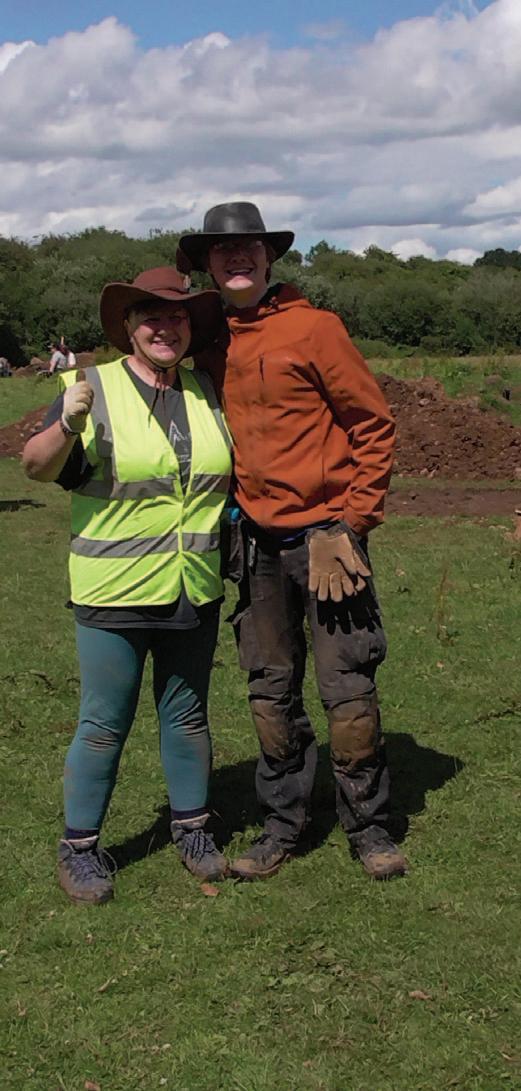

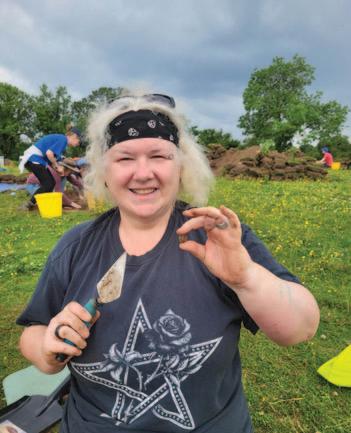

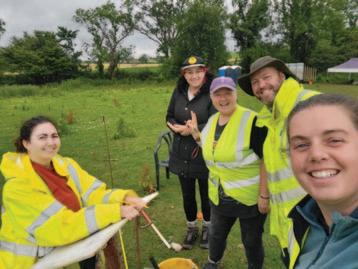

It has been an honour, a dream, and a privilege - these are the words I use to describe my time working with the Northern Archaeological Consultancy during my three seasons digging at Kilmocholmóg, Lurgan. This opportunity has not only allowed me to engage with archaeology in a hands-on way but also deepened my appreciation for the discipline’s profound connection to the past.
My interest in archaeology began many years ago, fuelled by countless books and documentaries that sparked my curiosity. When I came across a post on Facebook asking, ‘Can you dig?’, I knew it was the perfect chance to turn my passion into reality. I didn't hesitate to take the leap and live my dream.
For me, the best way to learn has always been through doing. As a visual learner, the practical nature of fieldwork suited me perfectly. Learning the art of trench craft and digging etiquette came naturally, and I quickly became comfortable with the process. I never hesitated to ask questions, especially when I didn't fully understand the technical terms or methods. The more I learned, the more I felt deeply connected to the historical significance of each dig.
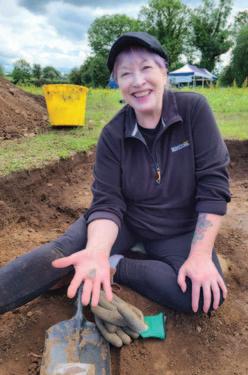
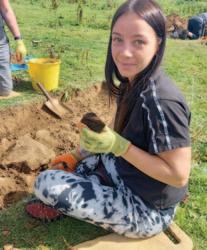
Throughout my time on the project, I had the privilege of making lifelong friendships, both with my NAC colleagues and with a wonderfully diverse group of people from all walks of life. From those of different ages to those with varied backgrounds and experiences, the site became a melting pot of knowledge and camaraderie. The shared sense of community was palpable, whether we were swapping stories of family folklore, exchanging experiences from past digs, or simply sharing flasks of tea. Regardless of why we camesome for mental health reasons, others for social connection, and many like myself, to learn - we were all united by our mutual love for uncovering and preserving our heritage. One of the most rewarding experiences was assisting with the visits of primary school children and young adults from local training centres. Watching their faces light up as they discovered artifacts and hearing them say, ‘That’s going in the tray!’ was a truly special moment. It was amazing to see how they connected with their local history in such a tangible way.
The open day at the site was another highlight. With displays like blacksmithing, pottery making, and culinary exhibits, it was a celebration of living archaeology. I even had the chance to forge a Viking-style knife, which proved much more difficult than I had anticipated! It gave me a newfound respect for early metalworkers, who crafted tools and weapons with none of the modern technology we take for granted today.
Never at the age of 59 did I think I would be applying for short courses at Queen’s University Belfast with hope of gaining enough academic experience to go forward for a degree in archaeology, something I wish I had done years ago, but this just goes to show you are never too old to realise your life’s dreams. With the support of the folks at Northern Archaeological Consultancy I know I can do this.
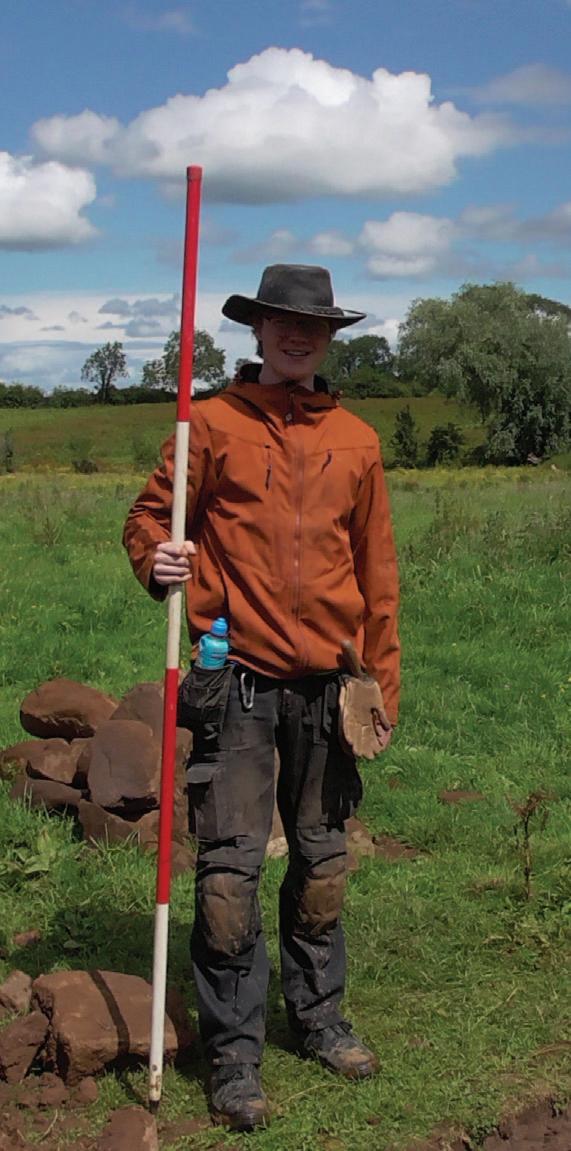
Michael Higgins
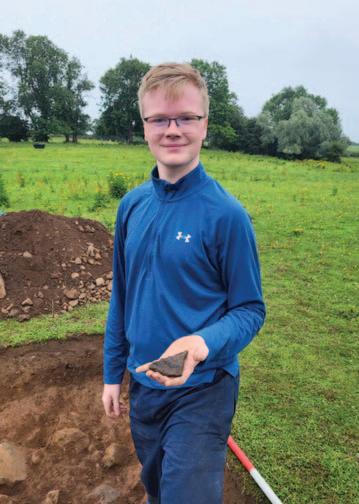


My experience at Kilmocholmóg has been nothing short of fantastic for the three years that I have had the privilege to volunteer and work there.
I first volunteered during the week-long excavation held in 2022, which acted as a reintroduction into the world of archaeology after Covid. This excavation, although short, would be what would reinvigorate my love and passion for archaeology. It was fantastic to be able to get hands-on experience with local history and to be a part of a team that was helping to build up a much more in-depth image of the past.
Being a part of a team that was helping to reshape the history of the local area would be what would draw me back in 2023. Bar from missing the first week, I attended every day of this excavation from start to end. During this time, I would not only spend more time uncovering local history but would also gain experience in the different aspects of what goes into an excavation. This would be thanks to the amazing crew from the Northern Archaeological Consultancy who showed me how to undertake things such as section drawings, taking line levels etc. The time they took to talk me through these key aspects and show me how to do them has undoubtedly been a massive help as I have ventured into working in commercial archaeology during my summer break during university in 2025.
During this time, I would not only spend more time uncovering local history but would also gain experience in the different aspects of what goes into an excavation.
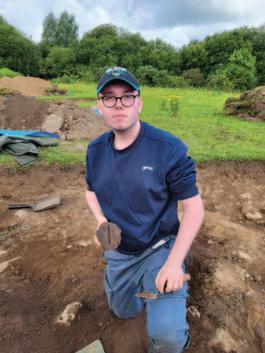
By far the best experience about Kilmocholmóg is the sense of community that has formed around this excavation. From the Facebook group created to keep all of us in contact, to the privilege that I now have to call some of those who worked on Kilmocholmóg as coworkers, the people I have come to know and love from this site, will be something that I will forever cherish. It was Kilmocholmóg that introduced me to NAC, the people that would give me my first job in archaeology and would trust me to run a trench for a day during the 2025 excavation. Experience that will prove invaluable as my career develops. It was Kilmocholmóg that allowed me to bring my friends out to an archaeology dig for the first time and allow them to experience a discipline that means so much to me, with one of them even finding on their first day an ingot mould, a find they still like to bring up to this day no less. My experience at Kilmocholmóg, and what it has given to me will be something that I will never forget. It reignited my love for archaeology, allowed me to make what I hope are lifelong friends and afforded me opportunities I still can’t quite believe.
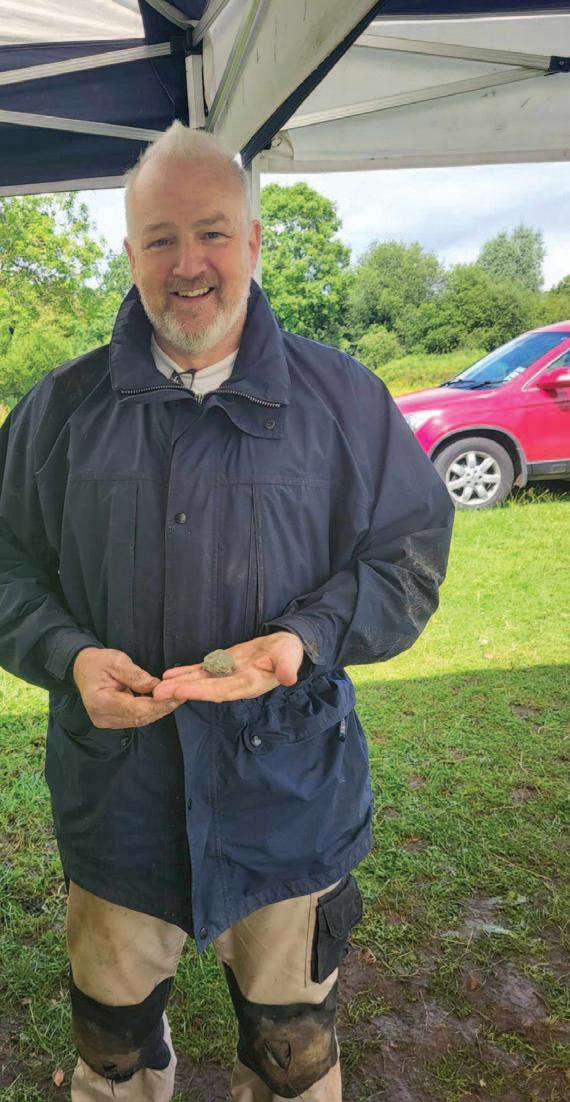
Gerald Colan-O’Leary
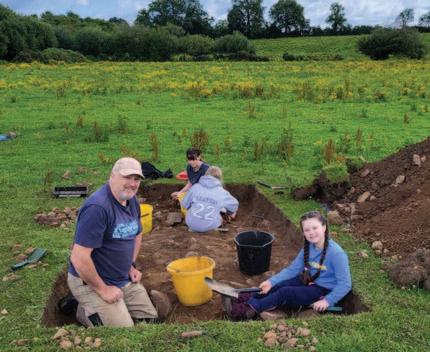

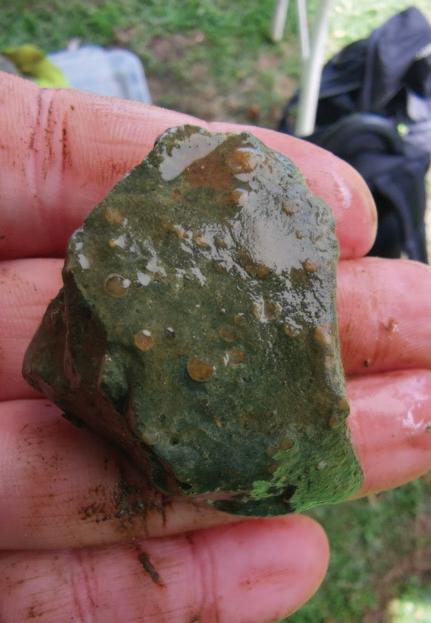
I participated in both the 2023 and 2025 community excavations at Kilmocholmóg, each offering its own perspective on the landscape and the longstanding traditions surrounding the site. While the archaeological aims of the project continued to develop between the two seasons, my most memorable moments came from the hands-on work undertaken during the 2023 dig and from seeing how the 2025 season built upon those early findings.
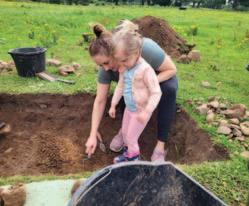
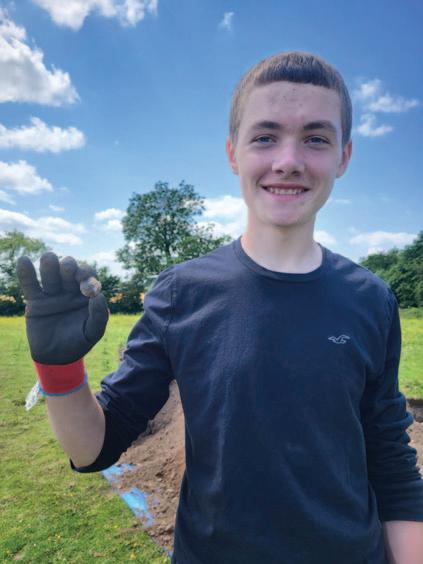
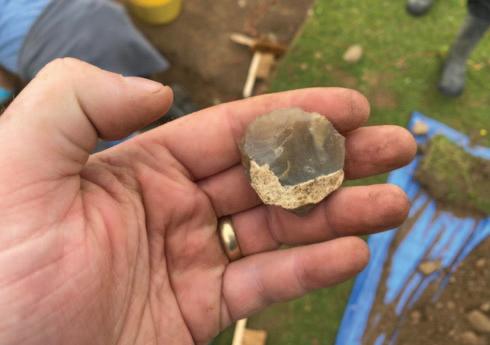
The 2023 dig provided the most direct experience of uncovering artefacts. My youngest daughter, then eight years old, joined me on site for a day and took a genuine interest in the excavation process. Her patience and enthusiasm were rewarded when she uncovered two pieces of flint, one showing a clear bulb of percussion, indicating deliberate working. The trenches that year also produced further evidence of activity. Early in the dig, a fellow volunteer uncovered a metalworking mould, suggesting the presence of industrial processes in the area. Later in the season, I found a fragment of copper ore, which complemented the mould discovery and added another piece to the emerging picture of metalworking at Kilmocholmóg.

When the project continued in 2025, I returned as a volunteer. While I did not make finds of my own during this second season, it was valuable to see how the work progressed and how the wider team built upon what had been uncovered in earlier years.
Being present across both years offered a useful sense of continuity. The 2025 dig helped contextualise the discoveries from 2023, showing how individual finds - such as the flint, the mould, and the copper orefitted into a broader archaeological framework.
My youngest daughter, then eight years old, joined me on site for a day and took a genuine interest in the excavation process.
My involvement in the Kilmocholmóg digs across two seasons allowed me to experience both the excitement of direct discovery and the longerterm process of archaeological investigation. The flint my daughter uncovered and the copper ore I found in 2023 were modest contributions but created a meaningful personal connection to the site's deep past. Returning in 2025 provided a broader perspective on how community archaeology develops from one season to the next. Together, both digs offered an engaging and rewarding insight into the heritage of the area.
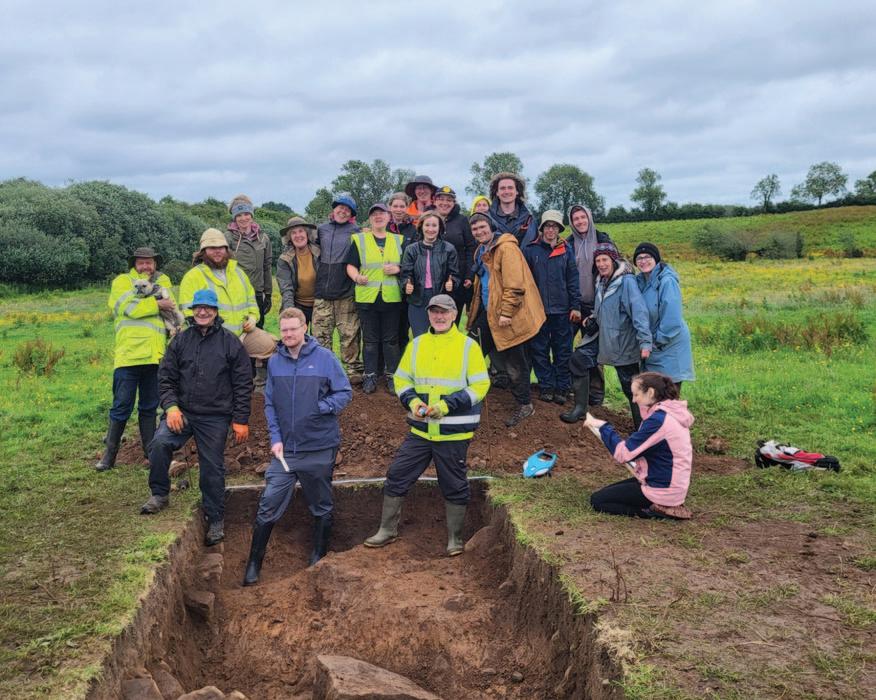
The success of the ‘Digging Deeper into Kilmocholmóg’ project would not have been possible without the contribution and efforts of so many people, who we, the Craigavon Historical Society, wish to acknowledge.
First and foremost, we have to say a huge thank you to Finola Mulholland for opening up Kilmocholmóg and welcoming us all to this magical place. Her enthusiasm and passion were contagious throughout the course of the project and did much to help mould the camaraderie that developed among the Kilmocholmóg crew. A word of thanks to Charles Mulholland as well for all the preparatory work which into making the site accessible, whether cutting back hedges, trimming weeds or filling in potholes; all unseen work which makes such a difference to the overall experience.
We also wish to acknowledge the work of our long-time member Dr Francis Xavier McCorry for all of the research he has undertaken over the years, which raised awareness of the potential significance of Kilmocholmóg.
The project could not have taken place if it were not for the generous support of The National Lottery Heritage Fund. More than just funders, the Heritage Fund have been great advocates of the project, investing much time and energy in promoting and supporting it. In particular, we extend a thank you to our project officers Sharon Archer, Jacqueline Rose and Kathryn Pollock for all of their assistance over the years. We wish also to acknowledge the additional funding provided by the Armagh City, Banbridge and Craigavon Borough Council, through the Lurgan Townscape Heritage Scheme, and the DfC: Historic Environment Division, which was greatly appreciated.
The project would not have come to fruition without the dedication and organisation of David Weir. His passion for this project for many years, is shown in his hard work day-today to make sure everyone could be involved with this amazing project.
The achievement of proving the archaeological significance of Kilmocholmóg through a community centred project owes much to the excellent direction and facilitation provided by the team at the Northern Archaeological Consultancy Ltd (NAC). Throughout each season of excavation we were lucky to meet many of the archaeologists that make up NAC, each of whom brought their own expertise and knowledge to the site which they shared generously, with a healthy dose of fun and humour. An immense amount of credit is due to our site director Katy McMonagle, along with the rest of the team: Stuart Alexander, Mario Fusco, Victoria Kal, Jonathan Barkley, Stephanie Beattie, Louise Moffett, Stephen Gilmore, Michael Fearon, Ross Bailey, Marese Curtin, Courtney Mundt, Michael Higgins, Sydnie Spurling, Katie Fusco and of course the archaeology dog Poppy. A special thanks to Stephanie Beattie (Arcustration) who designed and produced the illustrations for this booklet.
Throughout the project we were also fortunate to have been joined by a range of other experts who brought technology to bear to help reveal the secrets of Kilmocholmóg. In particular we wish to express our gratitude to Ryan Montgomery from Queen’s University Belfast for carrying out temporal drone surveys of Kilmocholmóg and the surrounding area; Dr Alistair Ruffell and Ben Rocke from Queen’s University Belfast for providing Ground Penetrating Radar and drone surveys; and Malachy Conway, David Craig and all the other volunteers from The Ulster Archaeological Society for carrying out drone, resistivity and magnetometry surveys.
Lastly, but most importantly, this community project could not have taken place without all of those people who answered the call to volunteer. Whether you came for one session or several, one season or three seasons, we want to give a heartfelt thank you for coming and working, rain and shine, to desod, dig, trowel, sketch or clean. We could not have done this without you and this booklet is a tribute to your work which helped reveal some of the secrets of Kilmocholmóg.