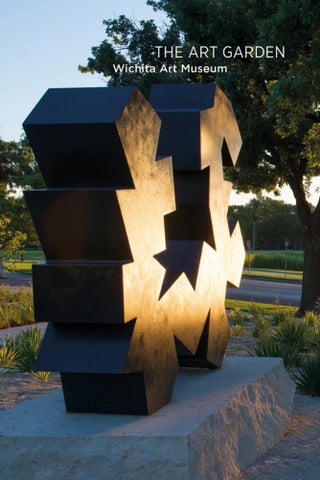
Wichita is the largest city in Kansas, and the metropolitan area represents a population of roughly 700,000. Wichitans are proud Midwesterners with a strong sense of place and community-mindedness. This ethic situated in the heartland and within the vast American prairie fosters a city that prospers economically as well as in the arts. The Air Capital of the World, a moniker adopted in the 1920s to reflect the city’s might in aviation design and manufacturing, Wichita is now a national leader in aviation as well as agriculture, oil, engineering, entrepreneurship, and burgeoning media and tech industries. The Wichita Art Museum, founded in 1935, is one of the leading cultural lights for the city and region.
The Story of the Art Garden at Wichita Art Museum
The Wichita Art Museum focuses on American art. This emphasis started with the generosity of one of Wichita’s first families and creators of a local publishing dynasty, the Murdocks. In 1915, Louise Caldwell Murdock bequeathed substantial funds to acquire a distinguished American art collection. One hundred sixty-nine works comprise the Roland P. Murdock Collection, named for Louise’s husband who was publisher and editor of the Wichita Eagle at the turn of the century. To house and care for that collection, the City of Wichita built the first museum facility on park land. Expanded several times since opening in 1935, the museum thrives north of downtown along the Arkansas River, its comprehensive collection now 9,000 works strong.
In 2015, the Wichita Art Museum opened the Art Garden, a reinvention of the eight acres surrounding the museum building. The grounds were transformed from standard to stunning. The landscape design and urban planning firm Confluence—a Midwestern leader with offices in Des Moines, Kansas City, and Minneapolis—created the garden’s dynamic plan. Many tons of earth shaped new slopes and outdoor rooms. More than one hundred trees and 20,000 plants added natural beauty. Consistent with the city’s pride of
j
|
2
The Art Garden at Wichita Art Museum
2 | 1
Wichita is the largest city in Kansas, and the metropolitan area represents a population of roughly 700,000. Wichitans are proud Midwesterners with a strong sense of place and community-mindedness. This ethic situated in the heartland and within the vast American prairie fosters a city that prospers economically as well as in the arts. The Air Capital of the World, a moniker adopted in the 1920s to reflect the city’s might in aviation design and manufacturing, Wichita is now a national leader in aviation as well as agriculture, oil, engineering, entrepreneurship, and burgeoning media and tech industries. The Wichita Art Museum, founded in 1935, is one of the leading cultural lights for the city and region.
The Story of the Art Garden at Wichita Art Museum
The Wichita Art Museum focuses on American art. This emphasis started with the generosity of one of Wichita’s first families and creators of a local publishing dynasty, the Murdocks. In 1915, Louise Caldwell Murdock bequeathed substantial funds to acquire a distinguished American art collection. One hundred sixty-nine works comprise the Roland P. Murdock Collection, named for Louise’s husband who was publisher and editor of the Wichita Eagle at the turn of the century. To house and care for that collection, the City of Wichita built the first museum facility on park land. Expanded several times since opening in 1935, the museum thrives north of downtown along the Arkansas River, its comprehensive collection now 9,000 works strong.
In 2015, the Wichita Art Museum opened the Art Garden, a reinvention of the eight acres surrounding the museum building. The grounds were transformed from standard to stunning. The landscape design and urban planning firm Confluence—a Midwestern leader with offices in Des Moines, Kansas City, and Minneapolis—created the garden’s dynamic plan. Many tons of earth shaped new slopes and outdoor rooms. More than one hundred trees and 20,000 plants added natural beauty. Consistent with the city’s pride of
j
|
2
The Art Garden at Wichita Art Museum
2 | 1
Ernest C. Shaw
Isaac Witkin
Cluster IV, 1979
Yantra, 1977
Welded and painted Cor-Ten steel 8 x 30 x 30 feet Gift of Mr. and Mrs. Joseph Albenda
20
|
Steel 5 x 19 1/2 x 12 feet Gift of Francoise and Harvey Rambach
2
The Art Garden at Wichita Art Museum
2 | 21
Ernest C. Shaw
Isaac Witkin
Cluster IV, 1979
Yantra, 1977
Welded and painted Cor-Ten steel 8 x 30 x 30 feet Gift of Mr. and Mrs. Joseph Albenda
20
|
Steel 5 x 19 1/2 x 12 feet Gift of Francoise and Harvey Rambach
2
The Art Garden at Wichita Art Museum
2 | 21
Derek Porter Pulse Field, 2015 Anodized aluminum, galvanized steel, stainless steel, photovoltaic panels, electronics, LEDs 16 x 180 x 45 feet Museum Purchase, Friends of the Wichita Art Museum
16
|
2
The Art Garden at Wichita Art Museum
2 | 17
Derek Porter Pulse Field, 2015 Anodized aluminum, galvanized steel, stainless steel, photovoltaic panels, electronics, LEDs 16 x 180 x 45 feet Museum Purchase, Friends of the Wichita Art Museum
16
|
2
The Art Garden at Wichita Art Museum
2 | 17
Mary Cassatt
Thomas Eakins
Mother and Child, about 1890
Mrs. Mary Hallock Greenewalt,
Oil on canvas 35 1/2 x 25 3/8 inches Roland P. Murdock Collection
1903 Oil on canvas 36 1/8 x 24 1/8 inches Roland P. Murdock Collection
28
|
2
The Art Garden at Wichita Art Museum
2 | 29
Mary Cassatt
Thomas Eakins
Mother and Child, about 1890
Mrs. Mary Hallock Greenewalt,
Oil on canvas 35 1/2 x 25 3/8 inches Roland P. Murdock Collection
1903 Oil on canvas 36 1/8 x 24 1/8 inches Roland P. Murdock Collection
28
|
2
The Art Garden at Wichita Art Museum
2 | 29