We Thought We Were Alone

Page 1


INTRODUCTION

A HOUSE OF LAYERS

Palazzo Rota Ivancich - Peter Dupont

CHAPTER I

The origin I NEVER LOST PARADISE

SHATTERING EXPECTATIONS

Adriano Berengo

I NEVER LOST PARADISE

Koen Vanmechelen

A PERSONAL AND INSPIRING NARRATIVE

Mieke Delanoeye & Toon Vanmechelen

CHAPTER II

The exhibition WE THOUGHT WE WERE ALONE

ART AS A CATALYST FOR CHANGE

James Putnam

A PIECE OF MARBLE

Menno Schilthuizen

WHY CHICKENS, AND WHY NOW?

Laura Bardier

WE THOUGHT WE WERE ALONE: EXHIBITION OVERVIEW

Koen Vanmechelen

CHAPTER III

Beyond the exhibition WILD GENE

Manfred Nowak

Chido Govera

Interview with Kirsty Wark

EPILOGUE

Thomas Hertog

Introduction A HOUSE OF LAYERS

Palazzo Rota Ivancich

Peter Dupont, journalist

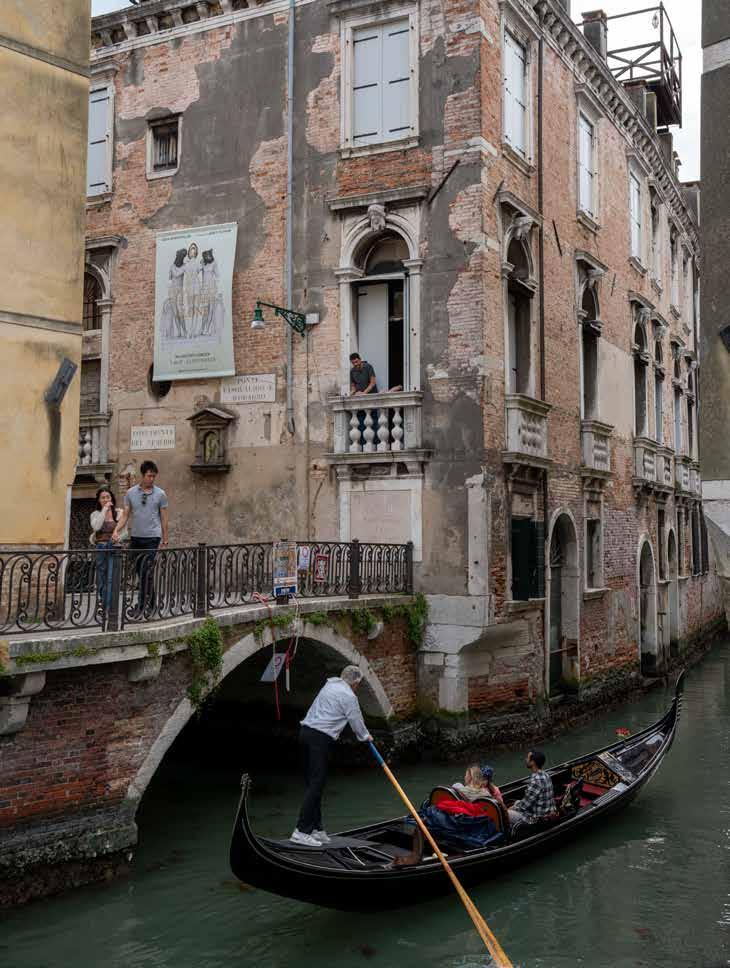
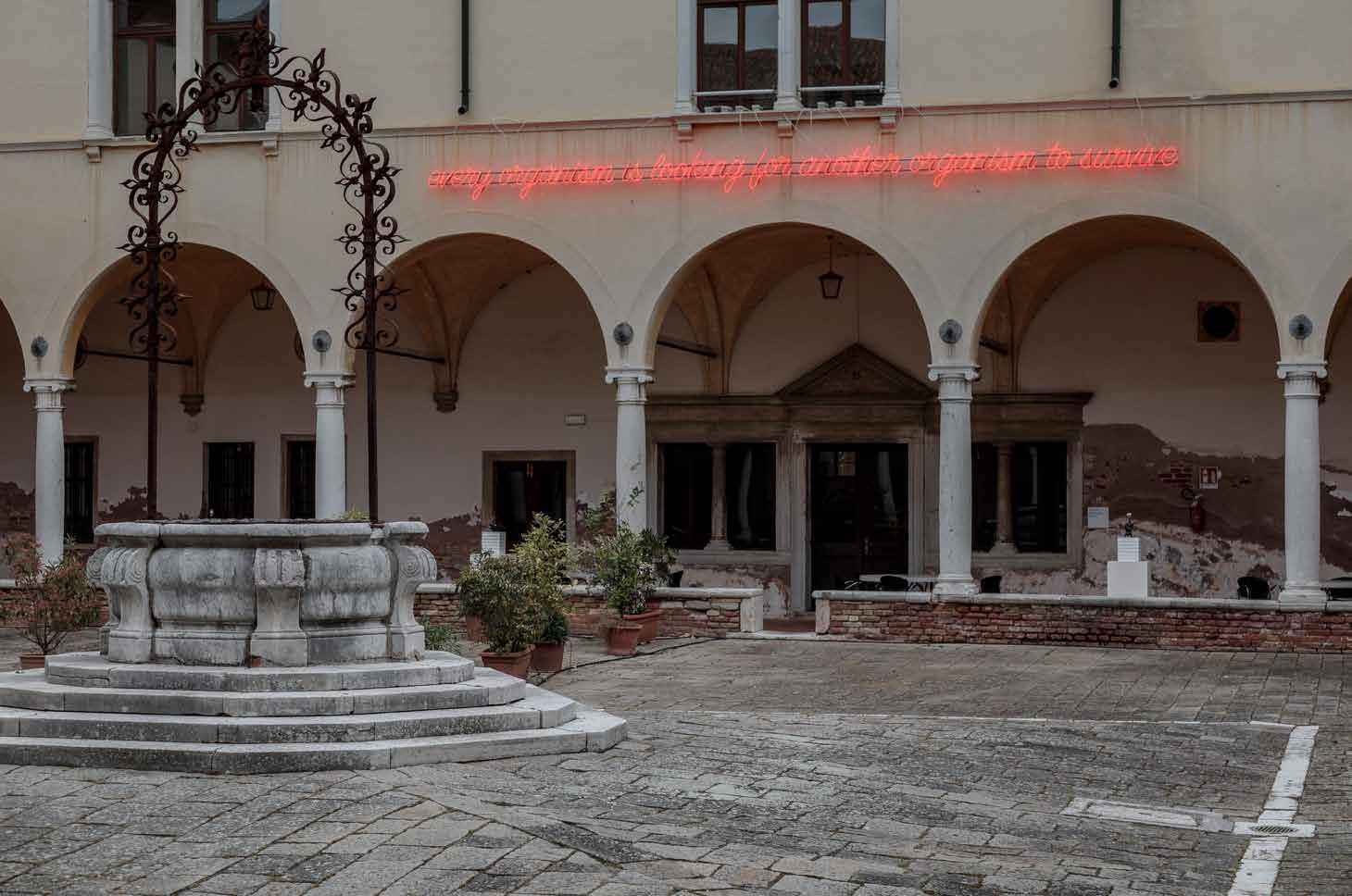
Some palaces in Venice insist on being seen. Their façades rise along the Grand Canal like theatrical declarations – stone designed for spectacle, for the gaze of anyone passing on the water. Palazzo Rota Ivancich does not belong to that category. It hides in the interior of the city, folded into a dense fabric of narrow streets where architecture rarely announces itself. Yet the house persists in cultural memory for a reason that has little to do with architecture.

Search online for the palazzo and another name will appear almost immediately: Ernest Hemingway. In the late 1940s, the writer spent time in Venice and encountered the young Venetian aristocrat Adriana Ivancich, a teenager whose family lived in the palazzo near Calle del Remedio. Their meeting would later become part of the mythology surrounding Hemingway’s final years. He was an ageing and world-famous literary giant, fascinated by a young woman who had barely entered adulthood. She was 18; he was 50.

The story has been repeated so often that it now precedes the house itself. Photographs show Adriana beside the writer: walking along canals, sitting at tables, listening while he speaks. Rarely alone. Rarely speaking in her own voice. The word most frequently attached to her name is ‘muse’ – a term that gives the relationship a classical elegance while quietly reducing her presence to a role in someone else’s narrative.

The house has suffered a similar fate. Palazzo Rota Ivancich is mentioned because of Hemingway, yet the building itself remains obscure. Unlike the palaces that face the lagoon, it does not present itself as spectacle. It sits quietly within the city, its façade barely distinguishable from the surrounding buildings.

The forgotten palace and the half-forgotten woman share a peculiar parallel. Both exist clearly enough in history, yet both survive largely through the mythology attached to another name.

HUMANS AS A PART OF NATURE

What Koen’s work ultimately does is disconnect us from the narrative that humans are at the centre of it all. As an artist, but also as a person, he understands and recognises humans for what we are: a part of nature. This ability to understand that we are part of a much wider, larger ecosystem of interdependence with the natural world reawakens us to nature’s unrivalled power. As humans, we tend to forget our mortality, but also our vulnerability to the elements and the natural world; we tend to minimise the miraculous mysteries of the universe. Koen instead draws our attention to them in new and ingenious ways.

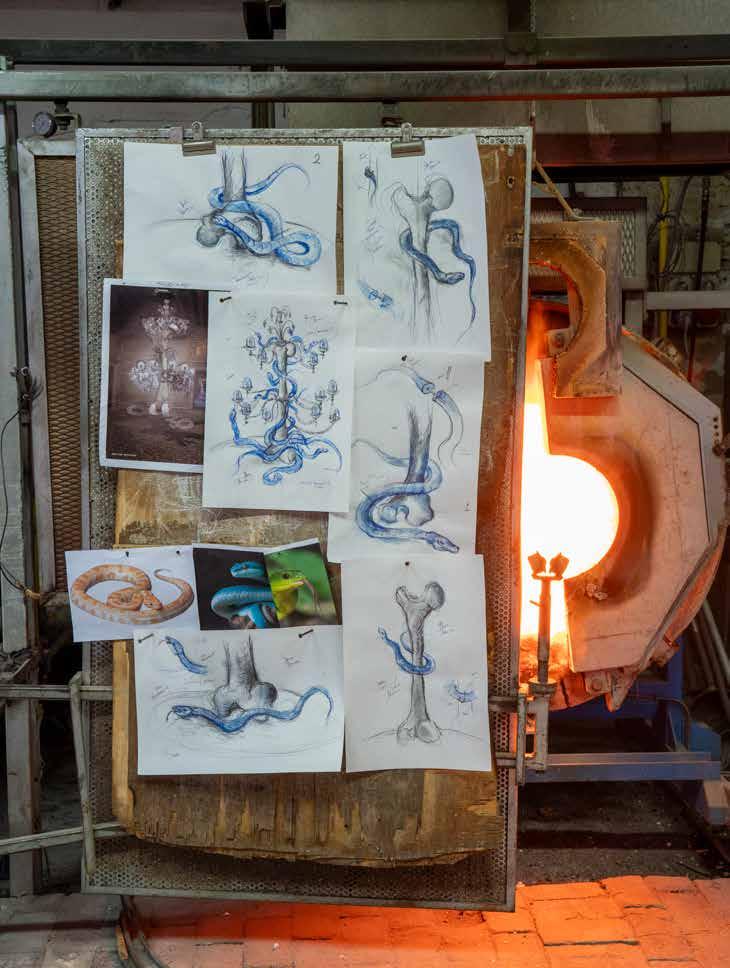
I have grown accustomed to understanding that Koen always wishes to push us to achieve the impossible, to break the boundaries of our expectations. We are talking about the artist who once asked me to ship a camel down the Grand Canal: there’s little he can ask that shocks me anymore. As I write this, a vast bronze femur is sitting in the furnace waiting to be adorned by handblown serpents that will wind their way around its eerie white trunk (following pages). Like a remnant from another time, a reminder once again of the dynasties of creatures that have come before us and now lie extinct. Yet just as the glass serpents will coil around this great reminder of mortality, there’s a sense that despite death, despite destruction, life always finds a way of persisting; nature will always prevail in the end. The serpent, of course, recalls the biblical tale of original sin, the temptation of the tree of knowledge reworked into a surreal unsettling scene where the cost of this learning is made all too clear. When Adam and Eve trust the serpent, it is paradise lost, their time of immortality comes to an end and they are cast out of the garden of Eden and into the wilderness of the real world: death is first introduced as a possibility. Here we find a vivid visual representation of reckoning with this new understanding. It has been a mammoth task, both physically and emotionally, to undertake such a vast hanging sculpture. An artwork that is steeped in symbolism and storytelling but also in science and spectacle. Who other than Koen would push us quite literally to such new heights?

ART AS A CATALYST FOR CHANGE

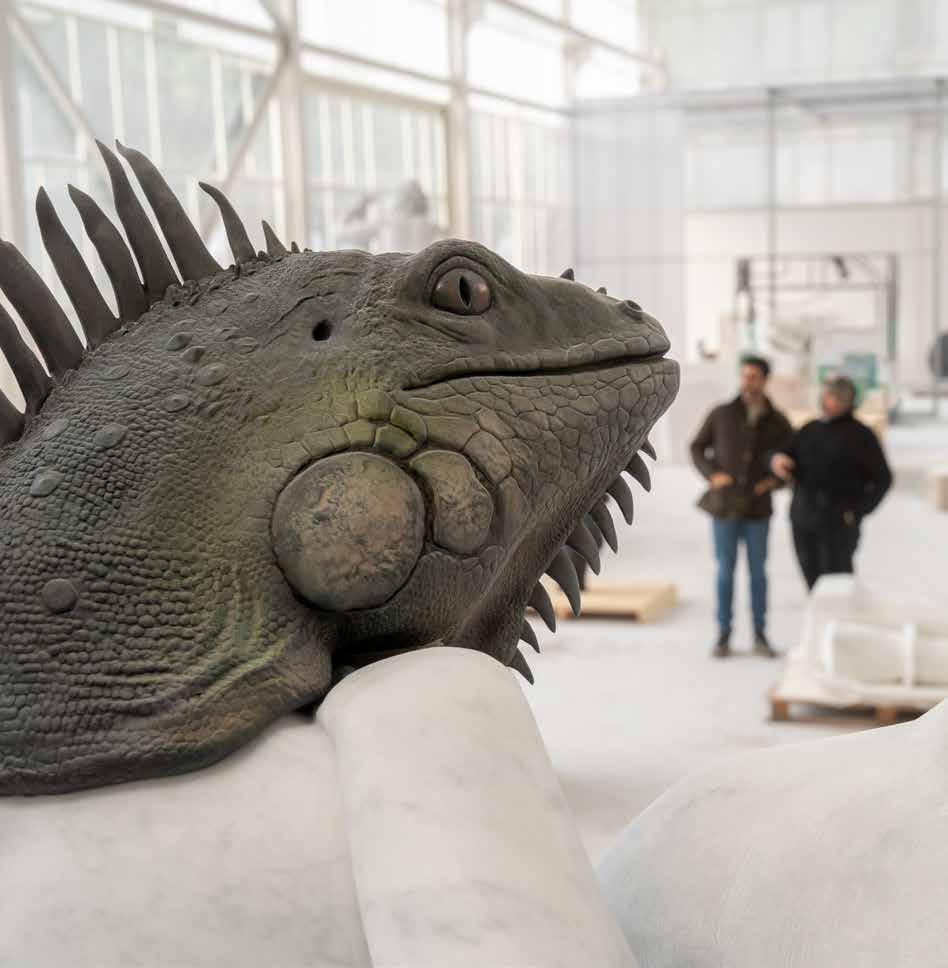
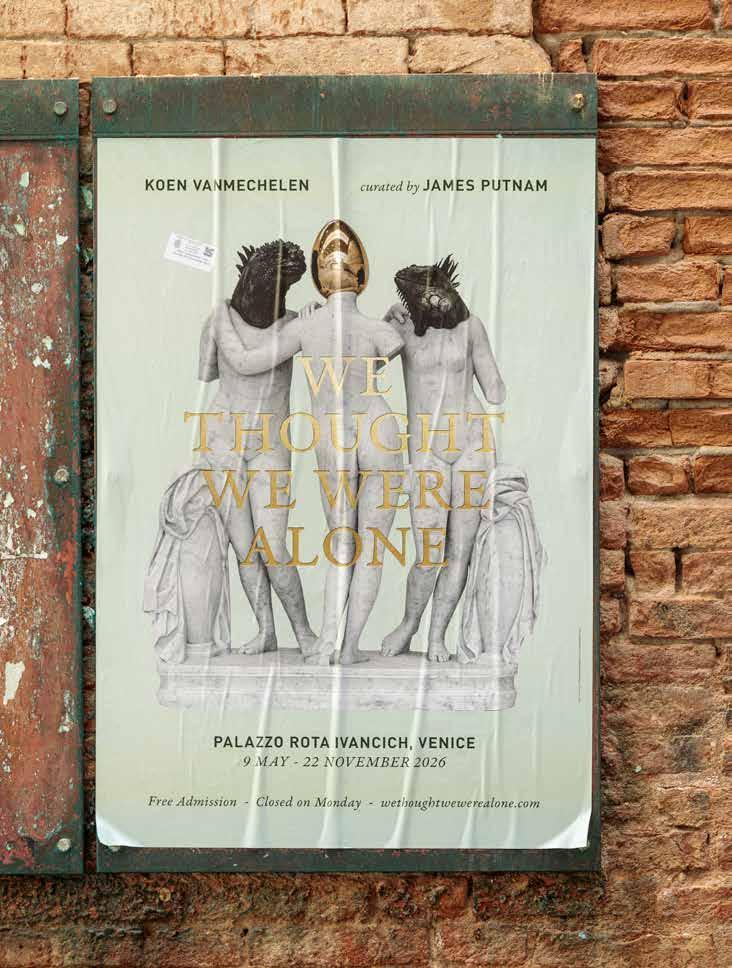
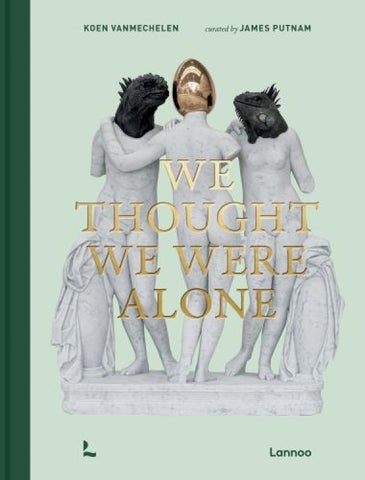
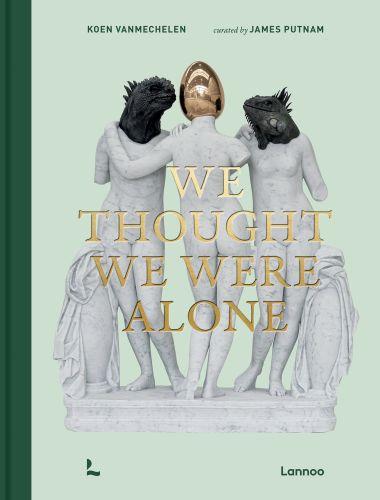
An intriguing version of the classical sculpture The Three Graces serves as the ‘emblem’ for this extensive solo exhibition by Koen Vanmechelen that coincides with the 61st Venice Biennale. It is inspired by a sculpture in the Metropolitan Museum, New York, which is in turn a Roman copy of a lost Greek original that dates from the 2nd century BC. The ancient sculpture is headless but Vanmechelen has added a bronze golden egg and the heads of two iguana lizards to his Carrara marble version. Their significance relates to Charles Darwin’s visit to the Galápagos Islands in 1835, where he observed the two iguana types (marine and land) that provided key evidence for his famous theory of natural selection and adaptation. Vanmechelen is fascinated by evolution, which he views as not just a biological process but also a powerful metaphor for human society, cultural diversity and global interconnectedness. His conceptual art practice embraces the notion that genes are the basis of life’s adaptability since they carry the information that allows organisms to adapt to their environment as demonstrated by evolution theory. Through his research and collaboration with leading scientists, Vanmechelen’s work also explores the relationship between genes and planetary ecology.

HYBRIDITY, DIVERSITY AND IDENTITY

The exhibition title We Thought We Were Alone alludes to the fact that we are not separate but part of nature. Rather than being alone, we interact with other living beings and the environment to form a complex, self-regulating system that maintains the conditions necessary for life. This challenges the mindset rooted in historical, religious and Enlightenment philosophies that place human beings and their needs at the top of the pyramid, separate from the non-human realm. However it is human activity that often changes or destroys the habitats that other animals need to survive, and many species are becoming increasingly endangered primarily due to human-caused climate change. Vanmechelen features some of these animals in his sculptures as they are facing a high risk of extinction in the wild. For example, his work Cold is a sculpture of a polar bear

UNDER MY SKIN

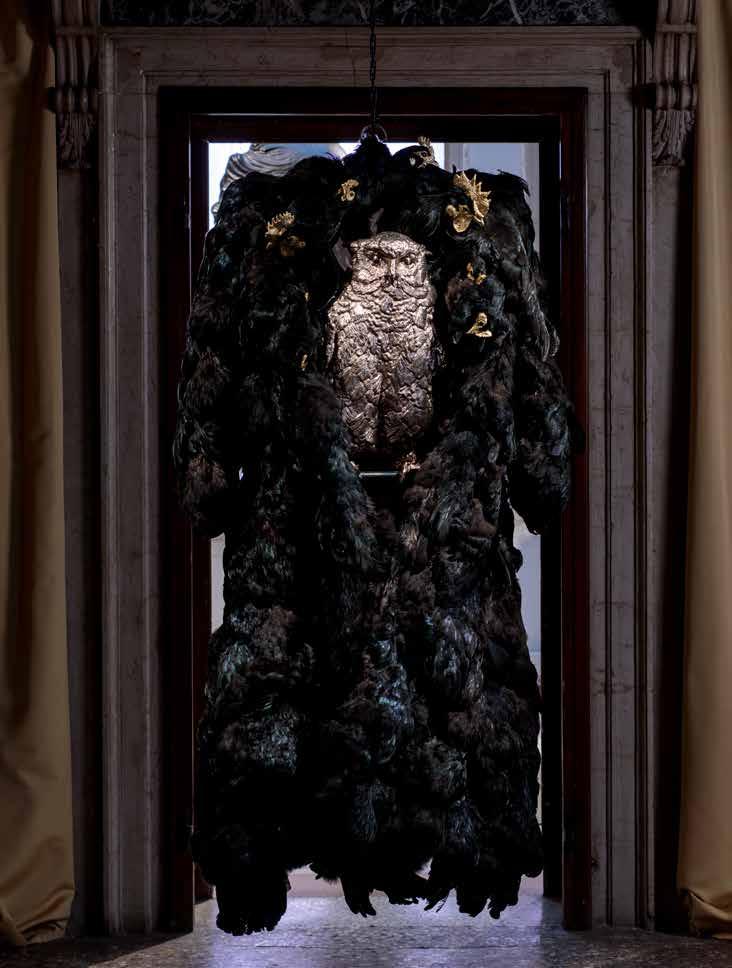
Identity moves beneath the surface. Skin, feathers and memory become something worn – and absorbed. The hanging mantle evokes the goddess Minerva: wisdom watches through the owl. But the work also stages an older hierarchy of prey and predator – owl, chicken, human. Who is the prey and who is the predator? No single figure is king. Life depends on their interplay. Identity is never only a mask. It settles under the skin. What we collect eventually collects us.

The sceptres seal this pact, a reminder of the co-evolutionary bond that chicken and human forged millennia ago deep in the belly of Asia. Majestic portraits of human and bird adorn the wall, echoing our mutual gaze, with feathered mantles that serve as protection, shield and identity intertwined. Here identity is a living collaboration, a weave of species, history and survival.

TEXTS

Adriano Berengo, Chido Govera, Hilde Vanmechelen, James Putnam, Kirsty Wark, Koen Vanmechelen, Laura Bardier, Manfred Nowak, Menno Schilthuizen, Peter Dupont, Thomas Hertog

PHOTOGRAPHY

Álex Abril: pp. 70-71

Alex Iturralde: p. 103

Dave Morgan: pp. 74-75

Francesco Allegretto: pp. 24, 28-29, 31, 52, 57, 76, 78, 80-81, 84-85, 86, 95, 104, 106-107, 111, 116-117, 121, 124-135, 137, 164-165, 166, 168, 171, 172-173, 177

Goele Schoofs: p. 174

Jeroen Verrecht: p. 43

Joe Habben: pp. 144-145

Jonathan Wood: p. 197

Koen Bauters: pp. 156-157, 188

Koen Vanmechelen: pp. 179, 186-187

Kris Vervaeke: pp. 5, 6-7, 8, 10-11, 14-15, 17, 18-20, 27, 32, 34-35, 44-45, 50-51, 58-59, 60, 64-65, 90, 91, 92-93, 98-99, 102, 108, 112-113, 120, 122-123, 136, 140, 146-147, 150-151, 158-159, 160, 162-163, 180-181, 192-193

Laura Veschi: cover image, pp. 36, 38-39, 82-83, 87, 88-89, 94, 100-101, 200

Philippe van Gelooven: pp. 66, 96-97, 105, 114-115, 118-119, 148-149, 152, 167, 169, 170

Stoffel Hias: pp. 41, 194

Studio Leyssen: pp. 142, 154-155, 182

Yu Chen: p. 40

COPY EDITING

Heather Sills

BOOK DESIGN

Bart Luijten

Sign up for our newsletter with news about new and forthcoming publications on art, interior design, travel, photography and fashion as well as exclusive offers and events. If you have any questions or comments about the material in this book, please do not hesitate to contact our editorial team: art@lannoo.com

All artworks © Koen Vanmechelen © Lannoo Publishers, Belgium, 2026 THEMA: AGB, AGC D/2026/45/219 ISBN: 978-90-599-6689-5 www.lannoopublishers.com

All rights reserved. No part of this book may be reproduced or transmitted in any form or by any means, electronic, mechanical or otherwise, without the prior written permission of the copyright owners and publishers. All rights are reserved, including those for text and data mining, AI training and similar technologies.

Every effort has been made to trace copyright holders. If, however, you feel that you have inadvertently been overlooked, please contact the publishers.
Turn static files into dynamic content formats.

Create a flipbook
We Thought We Were Alone by ACC Art Books - Issuu