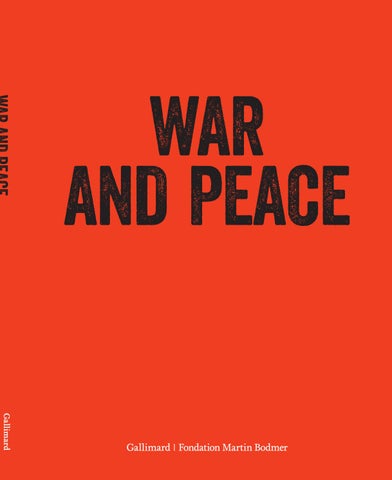
OK_P02115_COUV_G&P_ANGLAIS_RECTO_F39.indd 1
Gallimard Fondation Martin Bodmer
CADMOS PEACE INVESTMENT FUND
WAR AND PEACE
H
ow should we think about war? How can we limit its occurrence and build lasting peace? In this book, which accompanies the “War and Peace” exhibition organized in partnership with the United Nations (UN) and the International Committee of the Red Cross (ICRC), the Martin Bodmer Foundation, one of the world’s largest and most prestigious private book collections, seeks to retrace the immemorial dialogue between our bellicose nature and our deep yearning for peace. Since ancient times, human beings have constantly pondered, justified, waged and celebrated war, while also seeking to limit its worst abuses, denouncing its ravages and imagining – and striving to realize – a more just and peaceful world. The myriad ways that this dialectic has unfolded over time are illuminated here through works of literature and fine arts, anthropology, philosophy and psychoanalysis, law and political science. Novels, memoirs, propaganda posters, illuminations and engravings converse with archival documents and essays by leading experts in three sections entitled “the origins of war”, “the time of destruction” and “betting on peace”.
WAR AND PEACE Gallimard | Fondation Martin Bodmer
23/08/2019 15:24
> THE TIME OF DESTRUCTION
> BETTING ON PEACE
DAVID SANDER
The Role of Emotions in the Destruction of Cultural Heritage
PIERRE HAZAN
88
PIERRE-FRANCOIS SOUYRI
The Samurai Warrior and the Ideology of Bushidô
105 114
122 128
DANIEL PALMIERI
Books and Barbed Wire: Cultural Aid for Prisoners of War
134
SOLANGE GHERNAOUTI
From Information Energy to Cyber Warfare
141
148
241
The Relevance of the “Appeal for a Civilian Truce in Algeria”
246
BLANDINE BLUCKACZ-LOUISFERT AND PIERRE-ÉTIENNE BOURNEUF
A Hundred Years of Multilateralism in Geneva
253
MARK FREEMAN AND RON SLYE
The Truth Commission: An Innovation for Peace
260
LEILA KILANI
The Oresteia in the Twenty-First Century: The Snake in the Belly
268
When religions preach peace and people commit to building a more peaceful world. cat. 96 – 116
276
SMOKING THE PEACE PIPE
DESTROY
Peace is a matter of treaties as well as symbols. cat. 117 – 134 168
186
296
PUNISHMENT AND FORGIVENESS
Which is most likely to pacify hearts: criminal punishment or amnesty? cat. 135 – 141
VIOLENCE RETOLD
While some writers glorify war, others portray the suffering and misery it causes, or campaign for peace. cat. 68 – 95
China, Korea, Japan and the Scars of the Second World War
REFLECTING ON PEACE
REGULATING WAR
Accounts of victims, international accusations for abuses committed against civilians, courage and blindness within the ICRC during World War II. cat. 46 – 67
234
catalogue
catalogue The art of war and the birth and development of international human rights. cat. 26 – 45
The Nansen Passport and the Birth of Refugee Assistance
ANTOINE GARAPON
GEORGES NIVAT
War in Russian Literature, from Tolstoy to Solzhenitsyn
226
CONSTANCE SERENI
LINDSEY CAMERON
The Geneva Conventions: 150 Years of Codification of the Laws of War
Rousseau, Kant and the Enlightenment Project for Perpetual Peace PIERRE-ÉTIENNE BOURNEUF, STEFAN VUKOTIC AND COLIN WELLS
JEAN KAEMPFER
The First World War Novel in France
220
JACQUES BERCHTOLD
96
NICOLAS DUCIMETIÈRE
Political Poetry during the Wars of Religion (1562–98)
Reconciliation: From Forgetting to Remembrance
314
appendices Editors Acknowledgements Lending Institutions
320 324 325
Is War the Future of Humanity?
I
s war the future of humanity? Down through the ages, human beings have never ceased to think about, justify, prepare for, wage and glorify war. Nor have they ever ceased to attempt to curb its worst excesses, condemn its ravages, and imagine – and work to build – a more just and peaceful world. In every twist and turn of history, as rebuilding follows tragedy, and in the many ways humans have addressed the issue of war and peace, a centuries-long dialectic has emerged, in which human beings are torn between their most destructive passions and their noblest desire: to live and share with each other. That constant dialectic is what Sophocles, in Antigone, calls δεινός (deinós, terrible), a word that designates at once the evil genius and the goodness in humankind, what Jacques Derrida terms the “human enigma”. The exhibition War and Peace is the outcome of a partnership between the Martin Bodmer Foundation, the United Nations and the International Committee of the Red Cross (ICRC). Its purpose is to connect past and present, to take a step back from the anxiety aroused by the challenges of today and examine it with the benefit of hindsight. The international system inherited from the post-Second World War period is crumbling. And in several areas of the world, in a context of growing inequality and populism, we are witnessing the rise of illiberal, authoritarian regimes, not to mention the spread of fake news, a migration crisis that is sowing division in an ageing Europe and tempting it to fashion itself into a fortress, and, lastly, climate change, which is sparking fresh conflict in Africa over the control of resources. Human history has been one long date with destiny. Since Antiquity, authors have written beautifully and powerfully about the inherent tension between the need for peace and the inevitability of war. Their production spans religion, philosophy, military strategy, literature, memoirs of soldiers and civilians caught up in the misery of war, hate-filled pamphlets and pleas for reconciliation. The War and Peace exhibition is an invitation to take a breathtaking view through the centuries and across different cultures. It features the Sumerian creation myth, in which Marduk kills the goddess Tiamat by cutting her in half with his sword, thus creating the sky and the sea; the exhortations of Roman senator Cato the Elder to destroy Carthage; the despair of Immanuel Kant, who, after lamenting that “Out of the crooked timber of humanity, no straight thing was ever made”, went on to write his Perpetual Peace, the expression of his firm conviction that the forces of reason and universal moral law would triumph in the end; and Victor Hugo’s solemn appeal for amnesty for the Communards after the “Bloody Week” of May 1871, because “the wound must be closed. All hate must be extinguished”. Looking back over such a long period of time provides ample food for
The fall of the Berlin Wall on Potsdamer Platz, 10 November 1989, photograph. 24
25
✦
✦
✦
✦
✦
✦ ✦ ✦
✦
✦
✦
✦
✦ ✦
✦
How should we read
✦
✦
✦
✦
✦
✦ ✦
✦
✦
✦
✦
calls to VIOLENCE IN SACRED TEXTS?
✦
✦
✦
✦
✦
✦
✦
✦ ✦ ✦ ✦ ✦ ✦ ✦ ✦ ✦
✦ ✦ ✦ ✦ ✦
✦
✦
✦ ✦
✦
✦ ✦ ✦ ✦
✦
✦
✦
✦
✦
✦
✦
✦
✦
✦
✦
✦
✦
✦
✦
✦
✦
✦
✦
✦
✦
✦
✦
✦
✦
✦
✦
✦
✦
✦
✦
✦
✦
✦
✦
✦
✦
✦
✦
✦
✦
✦
✦
✦
✦
✦
✦
THE ORIGINS OF WAR
✦
✦
✦
✦
✦
✦
✦
✦
✦
✦
✦
? y r o t s i h s e t i r w o h W
✦
✦
✦
✦
✦
✦
✦
✦
✦
✦
✦
✦
✦
✦
✦
✦
✦
✦
✦
✦
✦
✦
✦
✦
✦
✦
✦
✦
✦
✦
✦
✦
✦
✦
✦
✦
✦
✦
✦
✦
✦
✦
✦
✦
✦
✦
✦
Can we avoid w ar by prep aring f or it? ✦
✦
✦
✦
✦
✦
✦
✦
✦
✦
✦
✦
✦
✦
✦
✦
✦
✦
✦
✦
✦
✦
✦
✦
✦
✦
✦
✦
✦
Is war part of human nature?
✦
✦
✦
✦
✦
✦ ✦ ✦
✦
✦
✦
✦
✦ ✦
✦
How should we read
✦
✦
✦
✦
✦
✦ ✦
✦
✦
✦
✦
calls to VIOLENCE IN SACRED TEXTS?
✦
✦
✦
✦
✦
✦
✦
✦ ✦ ✦ ✦ ✦ ✦ ✦ ✦ ✦
✦ ✦ ✦ ✦ ✦
✦
✦
✦ ✦
✦
✦ ✦ ✦ ✦
✦
✦
✦
✦
✦
✦
✦
✦
✦
✦
✦
✦
✦
✦
✦
✦
✦
✦
✦
✦
✦
✦
✦
✦
✦
✦
✦
✦
✦
✦
✦
✦
✦
✦
✦
✦
✦
✦
✦
✦
✦
✦
✦
✦
✦
✦
✦
THE ORIGINS OF WAR
✦
✦
✦
✦
✦
✦
✦
✦
✦
✦
✦
? y r o t s i h s e t i r w o h W
✦
✦
✦
✦
✦
✦
✦
✦
✦
✦
✦
✦
✦
✦
✦
✦
✦
✦
✦
✦
✦
✦
✦
✦
✦
✦
✦
✦
✦
✦
✦
✦
✦
✦
✦
✦
✦
✦
✦
✦
✦
✦
✦
✦
✦
✦
✦
Can we avoid w ar by prep aring f or it? ✦
✦
✦
✦
✦
✦
✦
✦
✦
✦
✦
✦
✦
✦
✦
✦
✦
✦
✦
✦
✦
✦
✦
✦
✦
✦
✦
✦
✦
Is war part of human nature?
---------------------
FAKE NEWS: A WEAPON OF MYTH DESTRUCTION JEAN-PAUL MARTHOZ UC Louvain
F
ake news, alternative facts, post-truth, conspiracy theories: the terms sound freshly minted, linked as they are to very recent events comprising, in quick succession, Brexit, Donald Trump’s election, the yellow vest movement in France and, more generally, mounting populism and extremism, from the Philippines to Brazil. They are brandished by governments voicing their determination to fight the hostile actions of foreign autocrats they accuse of weaponizing the Internet, manipulating social networks and interfering in the internal affairs of their countries. We’ve come a long way from the “end of history”, the triumph of reason and moderation heralded by the American political scientist Francis Fukuyama after the fall of the Berlin Wall. New fault lines have opened up new fronts. In this battle-scarred landscape, misinformation reaches farther than ever, strikes closer to home and has a breathtakingly immediate impact, thanks to the profound changes in the public sphere wrought by new technologies, digital platforms and social networks, although that isn’t the only reason. False information conceived for the strategic purpose of harming ideological and geopolitical adversaries has emerged against the more general backdrop – at times political (the West’s hegemony called into question by new powers), at others economic (globalization), social (rising inequality) or cultural (migration and social diversity) – of growing insecurity and uncertainty, a breeding ground for identity-related tension. It provokes anxiety, because it foreshadows rifts that expose underlying threats to democracy and freedom. To come to grips with the feeling of things moving far too fast, however, we have to reconsider the phenomenon of fake news from a historical perspective. Misinformation has been a political tool and a weapon of war since time immemorial. Every historical upheaval has been accompanied by monstrous lies, a cynical truth echoed by the authors of the UNESCO Constitution, in 1945, when they wrote in the preamble, a few short months after a conflict stirred in the hate-filled cauldrons of totalitarian ideologies: “since wars begin in the minds of men, it is in the minds of men that the defences of peace must be constructed”. Lies are the common thread running through Barbara Tuchman’s masterful work, The March of Folly: From Troy to Vietnam. Lies that come in myriad forms, depending on the strategy of misinformation or concealment, but also on the need to find a moral justification and popular backing for policies that are likely to be disputed. In the Middle Ages, Philippe Le Bel, for example, did not hesitate to lie to consolidate
--------------------- ---------------------
47
the League was dissolved, in 1946, the responsibilities of the Office of the High Commissioner were transferred to the IGCR. In December 1946, the United Nations General Assembly approved the creation of the International Refugee Organization (IRO), a temporary United Nations agency tasked with assisting European refugees. In 1951, the IRO was replaced by the Office of the United Nations High Commissioner for Refugees (UNHCR), still active today. The League thus left an important, if sometimes underrated, legacy. For, despite the administrative, financial and political constraints it had to contend with, the League of Nations was unquestionably an international pioneer when it came to assisting refugees.
Notes 1
See https://libraryresources.unog.ch/c. php?g=462663&p=3162760. This article highlights the importance of the Total Digital Access to the League of Nations Project (LONTAD) to digitize the League’s entire archives. Thanks to a donation by a private Swiss foundation, in the coming years the project will enable both researchers and the general public to access over fifteen million pages on the organization’s activities. In developing new research methods, it will give us a better understanding of what Lord Robert Cecil described as the “great experiment” of the League. See also https://
240
www.unog.ch/80256EE60057D930/ (httpPages)/EFBEE574FFB575BEC1257DF6003B333A?OpenDocument. 2
--------------------CHINA, KOREA, JAPAN AND THE SCARS OF THE SECOND WORLD WAR
See Claudena Skran, Refugees in Inter-War Europe: The Emergence of a Regime, Oxford, Clarendon Press, 1995, p. 103. 3
League of Nations, A.12.1934.
4
Official Journal of the League of Nations, December 1933, p. 1617. 5
League Archives, C1614.
6
Official Journal … ibid.
7
League of Nations, C.23.M.23.1944.XII.
CONSTANCE SERENI University of Geneva
--------------------- ---------------------
--------------------opposite concept, the state of nature. Innocence is not an initial state, but rather the fruit of just, even military institutions, and a constant struggle to preserve civility. Therein lies the timeless meaning of the Appeal. Life is a truce, a fragile window between the violence from which our states emerge, and which threatens to overwhelm them at any moment. The “Appeal for a Civilian Truce” is an appeal to keep that window open for as long as possible. It outlines a political programme that is still alive today, and justly so; it reminds us what the purpose of any self-respecting policy should be, namely, to construct innocence so that humans can enjoy it in peace and find happiness, at the risk of forgetting the price they have to pay.
Notes 1
At the time of writing, there appears to be a revival of hope in Algeria, thanks to the massive, peaceful and responsible reaction of the Algerian people. May they remember the words of Friedrich Hölderlin, quoted by Camus in the epigraph of his Summer: “Yet you, you have been born to brilliant daylight”. 2
“Appeal for a civilian truce in Algeria”, Lecture given in Algiers in February 1956, in Resistance, Rebellion and Death, trans. Justin O´Brien, New York, Knopf, 1969. 3
Agnès Spiquel-Courdille, “Six récits pour un ‘appel’”, in Charles Poncet, Camus et l’impossible trêve civile – suivi d’une
252
100 YEARS OF MULTILATERALISM IN GENEVA
correspondance avec Amar Ouzegane, texts written, annotated and commented by Yvette Langrand, Christian Phéline and Agnès Spiquel-Courdille, Paris, Gallimard, 2015, p. 252. 4
The Indo-European root deru initially designated wood and more generally a tree (The American Heritage Dictionary of the English Language, fifth edition, Indo-European Roots, Appendix 1, Houghton Mifflin Harcourt, 2019: https://www. ahdictionary.com/word/indoeurop.html. 5
“Appeal”, op. cit.
6
Ibid.
7
Ibid.
8
Virgil, Georgics, II, v. 460.
BLANDINE BLUKACZ-LOUISFERT United Nations Library
PIERRE-ÉTIENNE BOURNEUF United Nations Library
--------------------- ---------------------