Introduction: The Collector’s Vision
Lisbon on the Horizon
Practice Makes Perfect
Home at Last
Conclusion
Notes
Sources and Bibliography
Photographic Credits
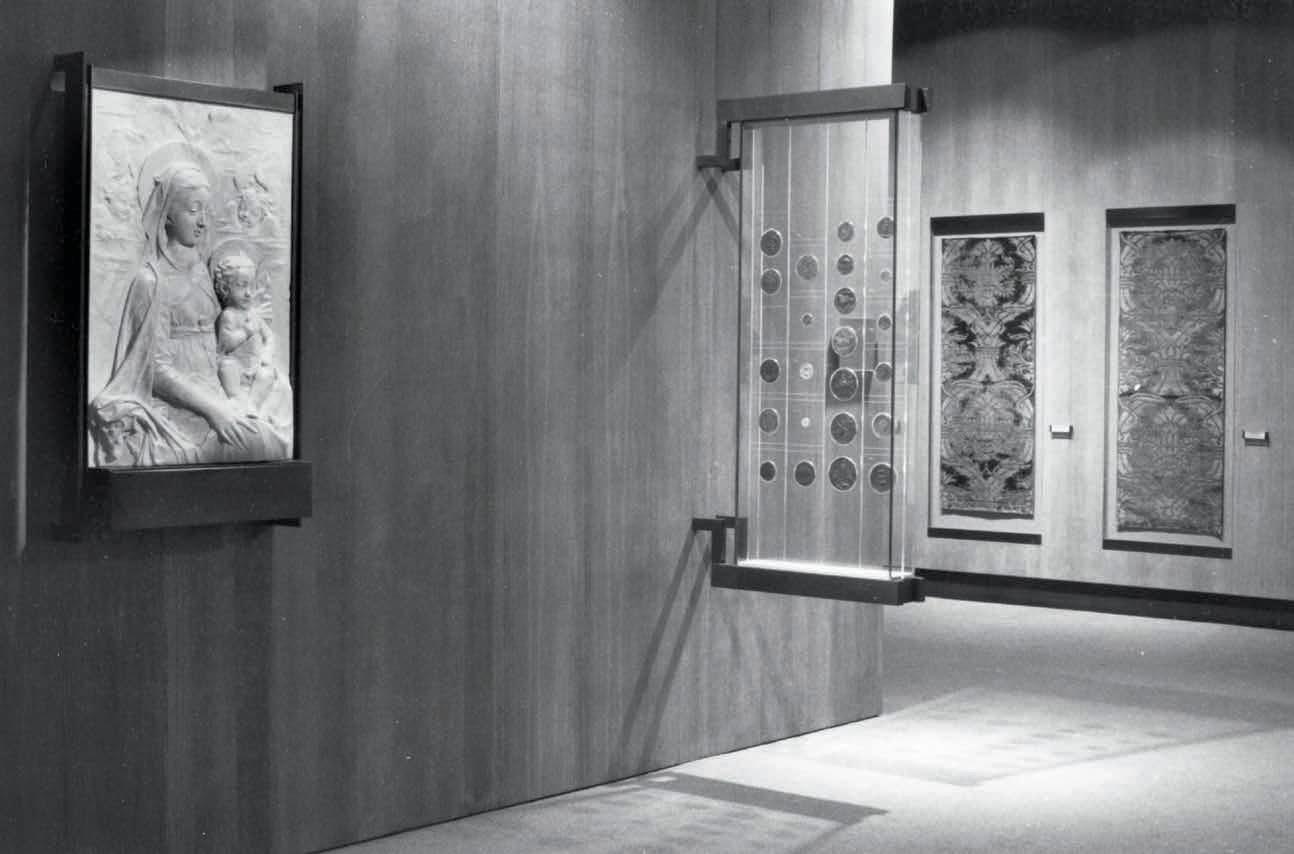
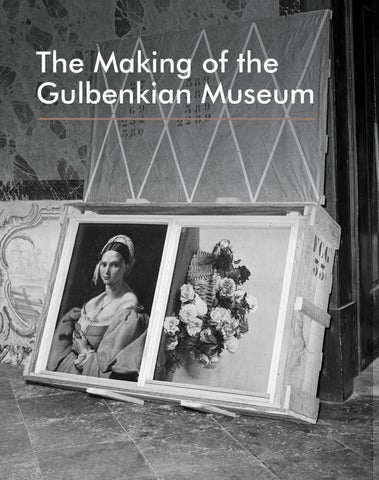
From early on, the National Gallery of Art had been open to transferring the works in Washington, so discussions on the logistics of their transatlantic journey got underway in May 1959. During these preparations, Maria José de Mendonça travelled to the United States of America to emphasise the need for rigorous technical oversight of the process. She advised that Martin de Wild – Gulbenkian’s trusted conservator and restorer – should be present during the packing, a proposal readily accepted by John Walker, chief curator of the National Gallery of Art. 68
These preliminary arrangements were firmed up and the definitive transportation details decided during Azeredo Perdigão’s trip to Washington in October 1959. 69 On that same trip, the Foundation lived up to its purpose while also wielding cultural diplomacy by agreeing a three-year grant for concerts at the National Gallery of Art, in response to an earlier request. 70
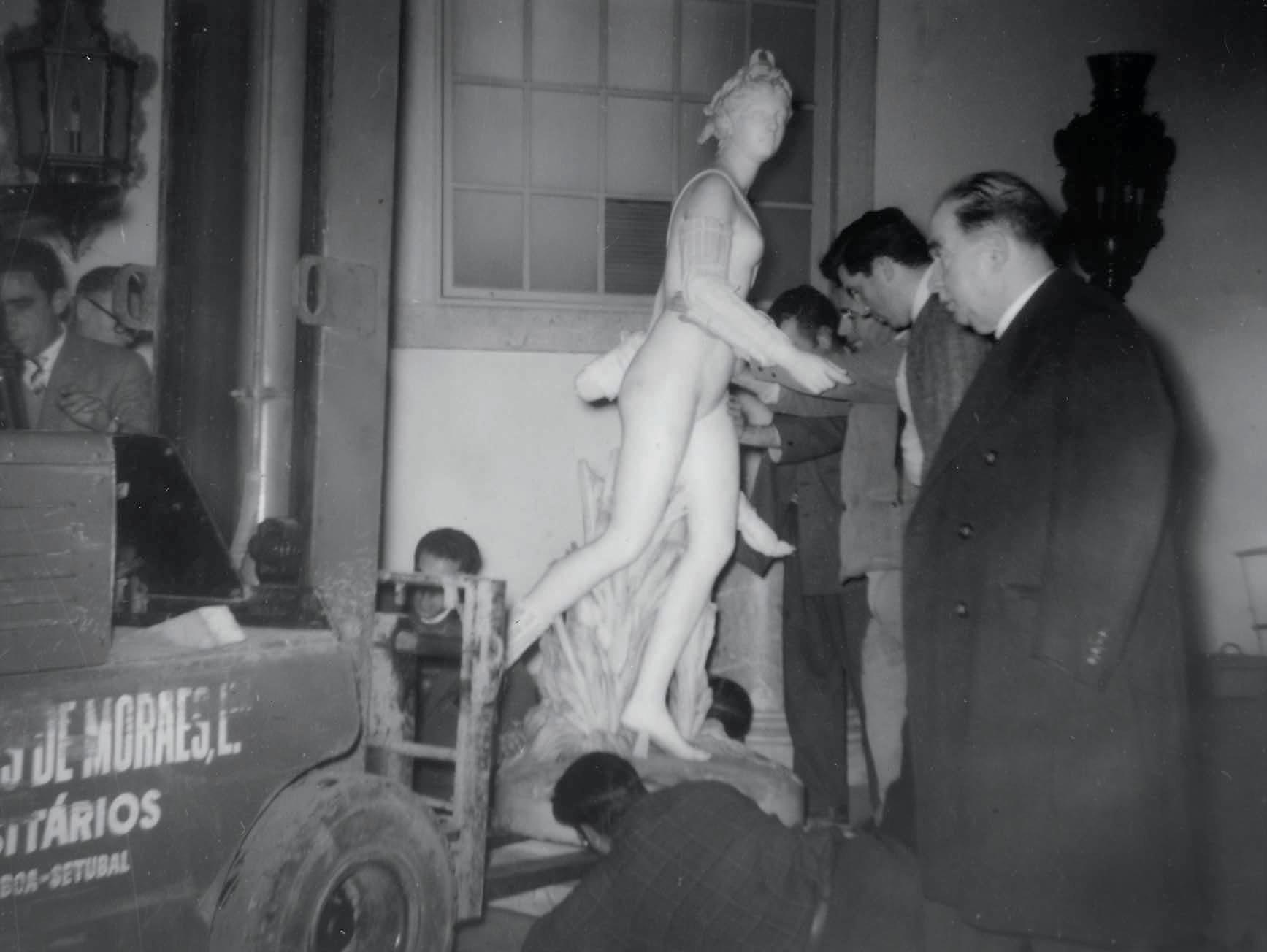
Once again, the task of escorting the precious cargo was entrusted to Vaz Raposo, this time assisted by de Wild, who, as Walker recalled, had accompanied the works on their journey from Paris to Washington in 1950. 71 To avoid the harsh winter conditions, the sea crossing from New York to Lisbon was postponed until the spring of 1960. In July, Kevork Essayan finally sent the message Walker had been anxiously waiting for: ‘our treasures have safely arrived’. 72
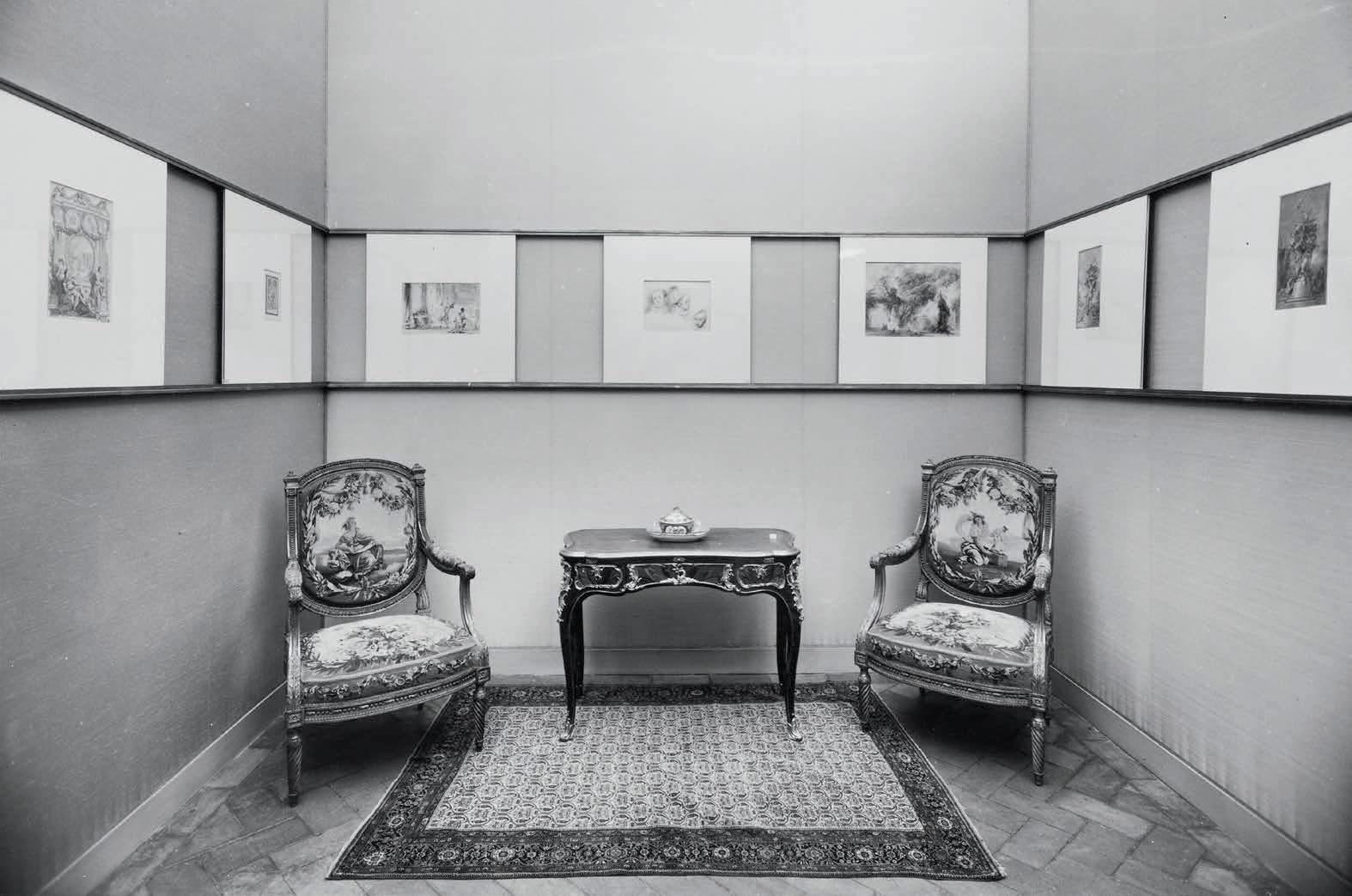
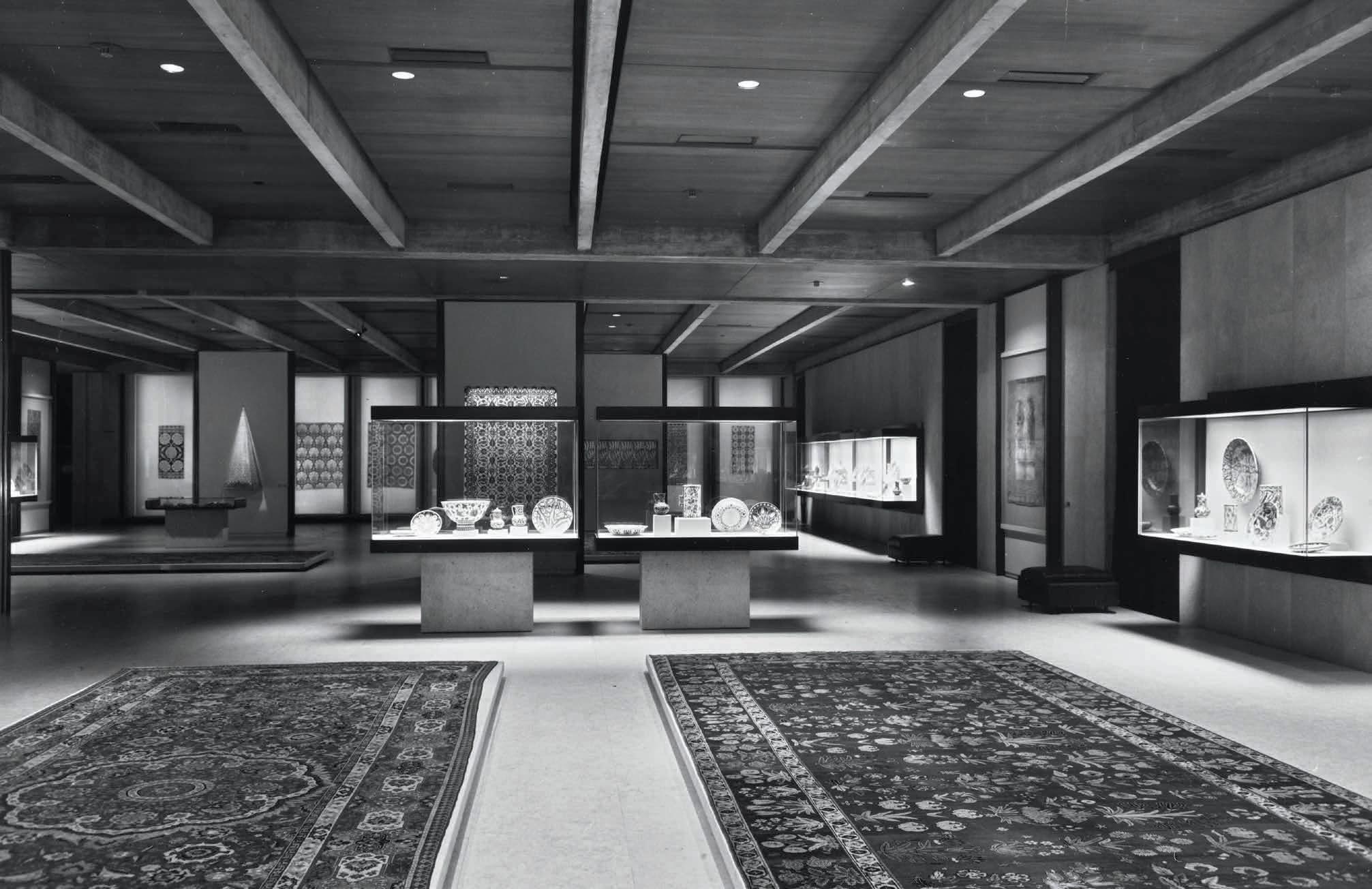
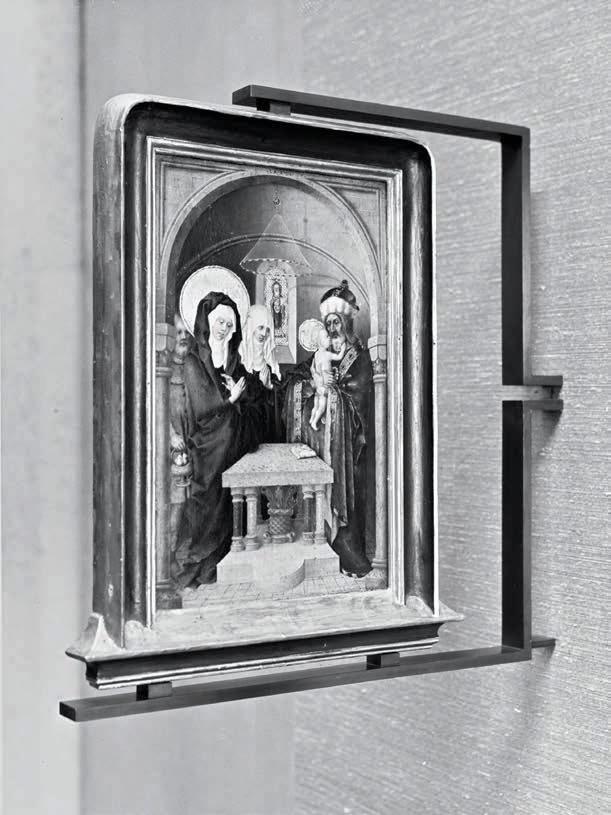
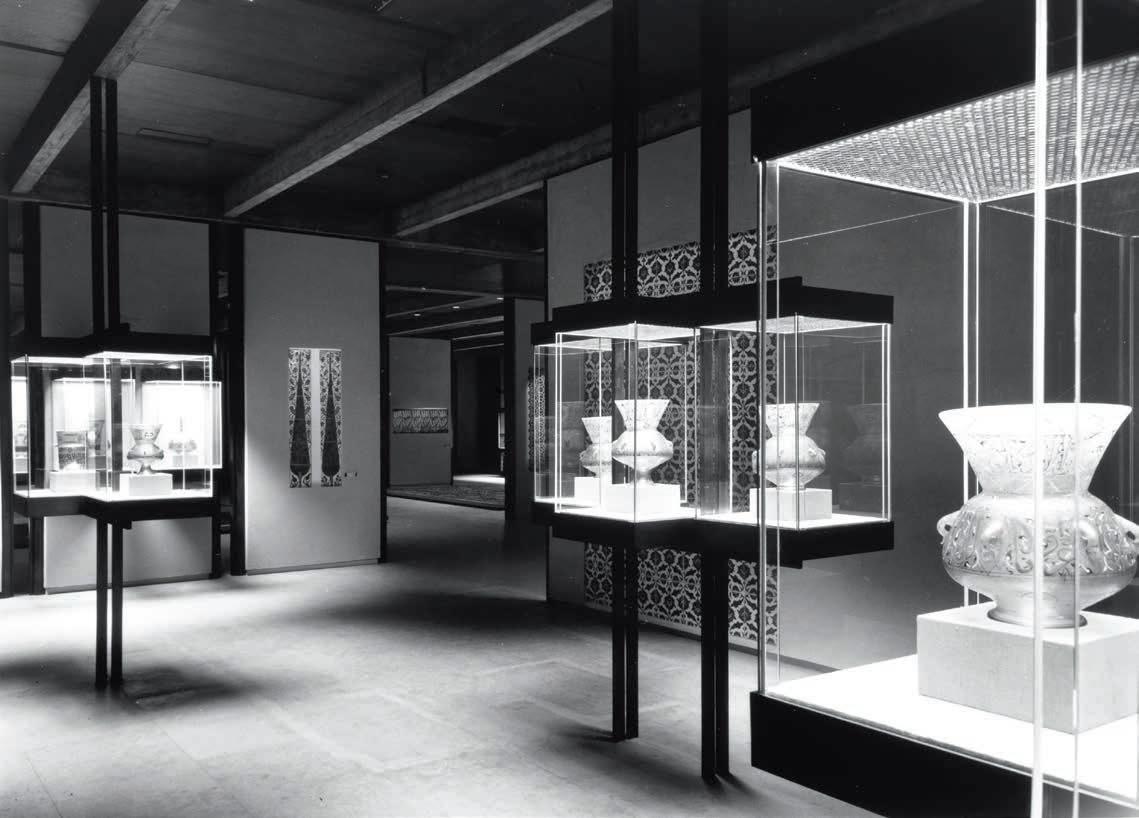
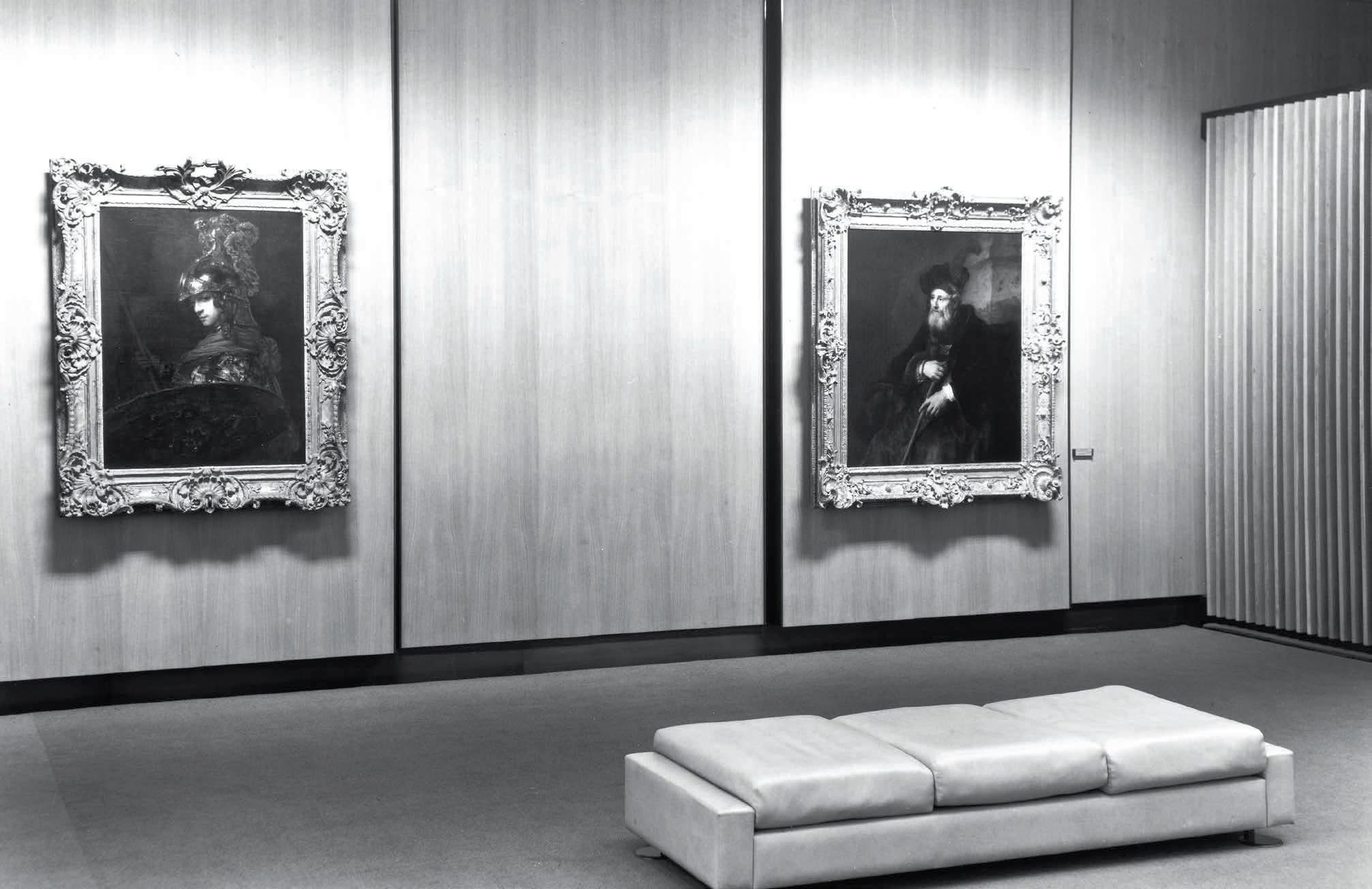
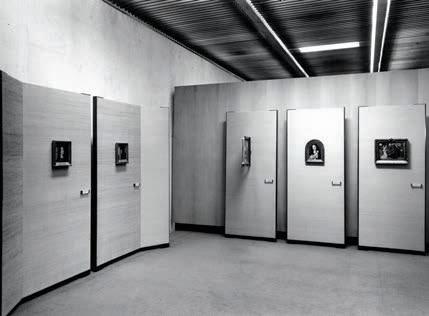
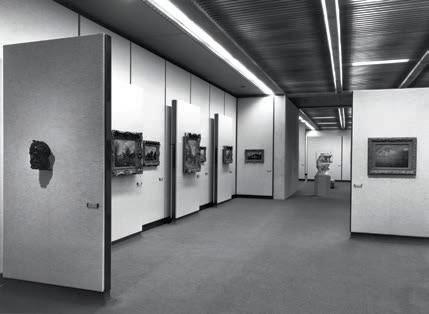
In her desire to gather as much information as possible based on a critical comparison of historical models, she visited Versailles, Fontainebleau, Compiègne, the Musée du Louvre and the Musée Nissim de Camondo to see samples there in person. 74 Given that the manufacture of parquet flooring was ‘severely lacking in Portugal’, 75 especially compared to the strong French tradition, the work was entrusted to Roger Chucherie, known for its restoration work at Versailles. This meant that the flooring would be crafted not only from superior French oak, but also using eighteenth-century techniques, to give the collection ‘the setting and sophistication it deserves’. 76
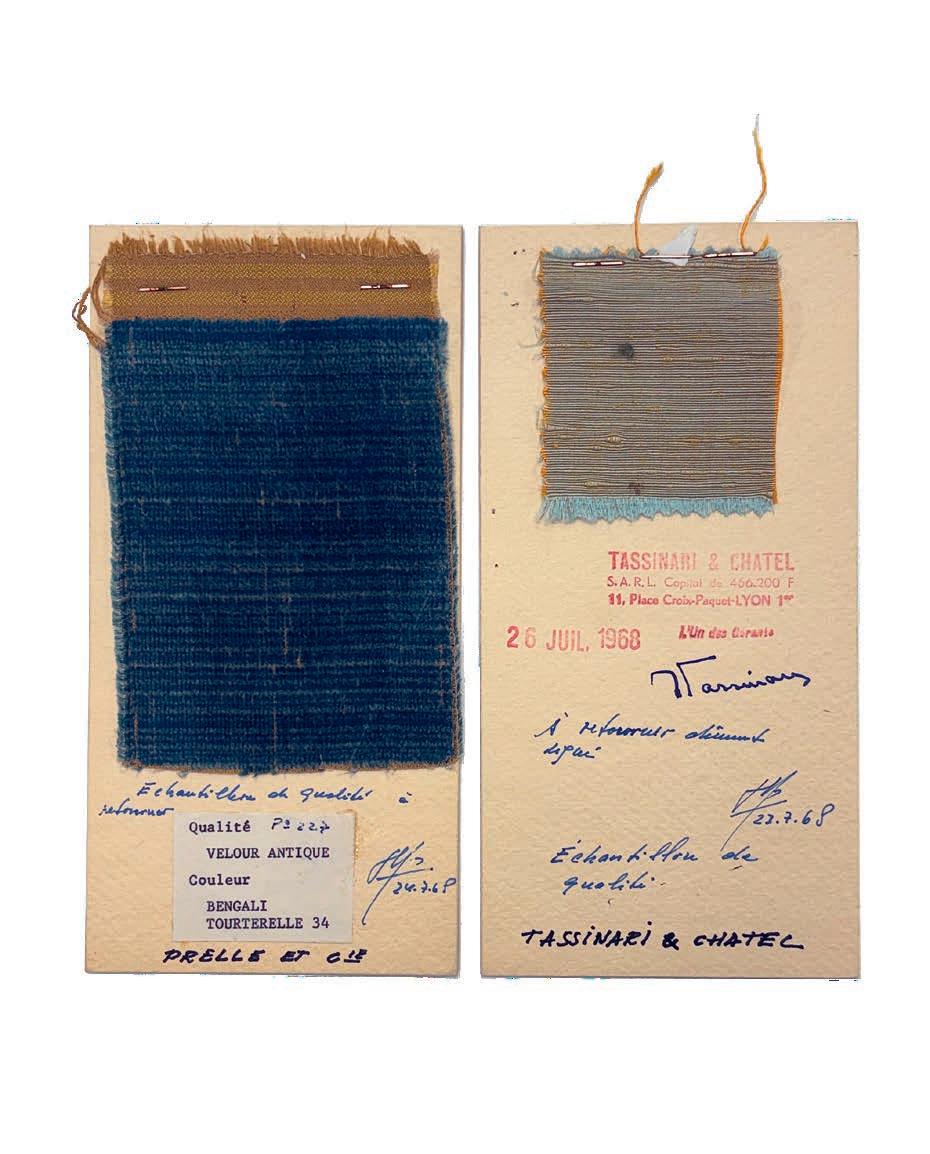
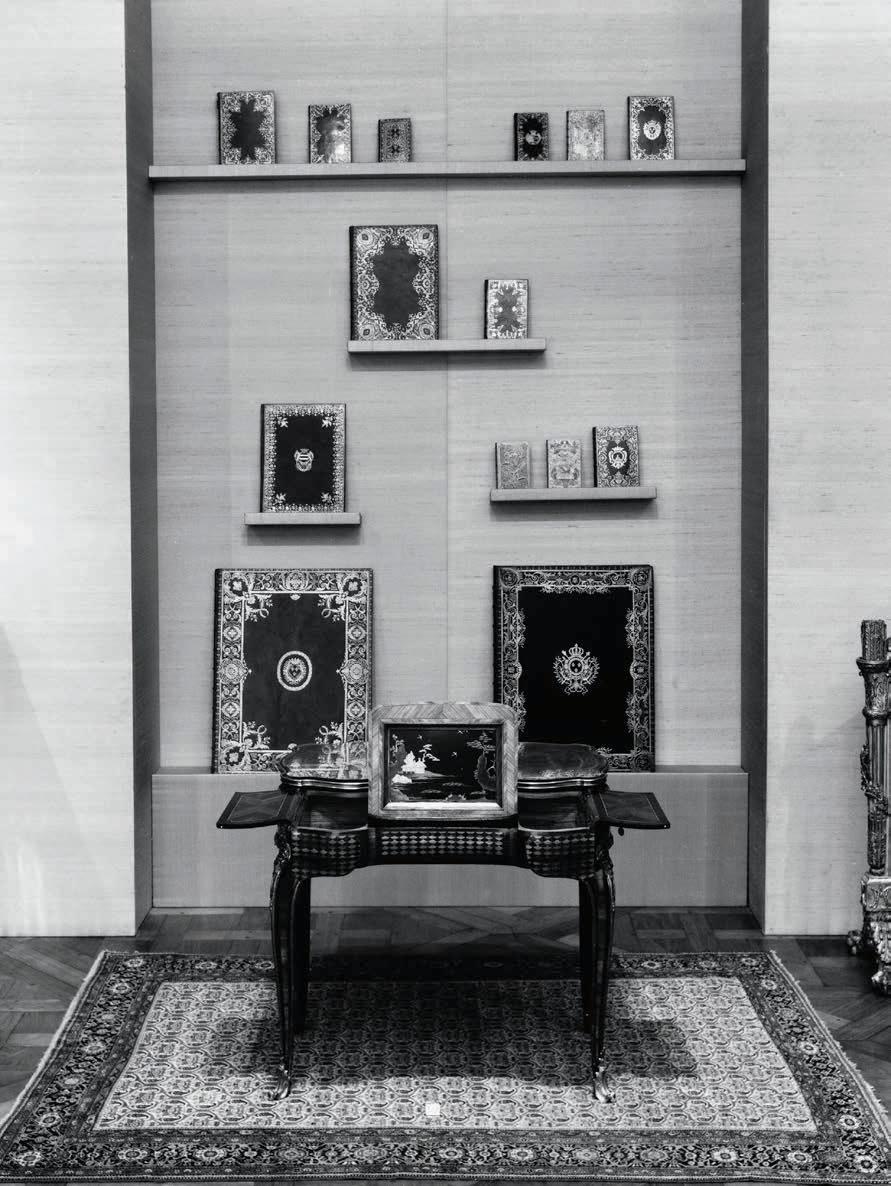
In the same spirit, the chief curator also visited the renowned textile factories of Lyon, where she selected silks and velvets for panels, display cases and curtains. 77 In Lisbon, the team went through the samples and ordered fabrics from Prelle & Cie and Tassinari & Chatel – which once supplied Calouste Gulbenkian’s Paris residence – ensuring that the finishes would reflect the artistic distinction of the Museum.
When procuring a niche product meant placing orders abroad –highlighting the lack of similar products in Portugal and the unique status of the Museum, which was expected to ‘prove a great asset to the country’ 78 –exemptions from import duties were requested from the Ministry of Finance.
This edition © Kulturalis Ltd, 2026
Texts © Vera Mariz, 2026
The author has asserted their rights under the Copyright, Designs and Patents Act, 1988, to be identified as the author of this work.
First published in 2026 by Kulturalis Ltd 14 Old Queen Street London SW1H 9HP United Kingdom www.kulturalis.com
In association with Calouste Gulbenkian Foundation Av. de Berna, 45A 1067-001 Lisboa Portugal gulbenkian.pt
ISBN (Kulturalis): 978-1-83636-055-1
ISBN (Gulbenkian): 978-989-9119-26-0
Project manager and copy-editor: Linda Schofield, with the collaboration of Carla Paulino, Maria Carolina da Cruz and Vasco Steel Hart
Designer: Matt Wilson
Translation from English: Maisie Fitzpatrick in association with First Edition Translations Ltd, Cambridge, UK
Printed and bound by PB Tisk, Czech Republic Reproduction by Opero, Verona
10 9 8 7 6 5 4 3 2 1
All rights reserved. No part of this book may be reproduced, stored in a retrieval system or transmitted in any form or by any means electronic, mechanical, photocopying, recording or otherwise, without the written permission of the Authors and Publisher.
Every effort has been made to acknowledge correct copyright of images where applicable. Any errors or omissions are unintentional and should be notified to the publisher, who will arrange for corrections to appear in any future editions.
British Library Cataloguing in Publication Data. A catalogue record for this book is available from the British Library.
EU GPSR Authorised Representative: EASY ACCESS SYSTEM EUROPE OÜ, Mustamäe tee 50,10621, TALLINN, Estonia email: info@easproject.org