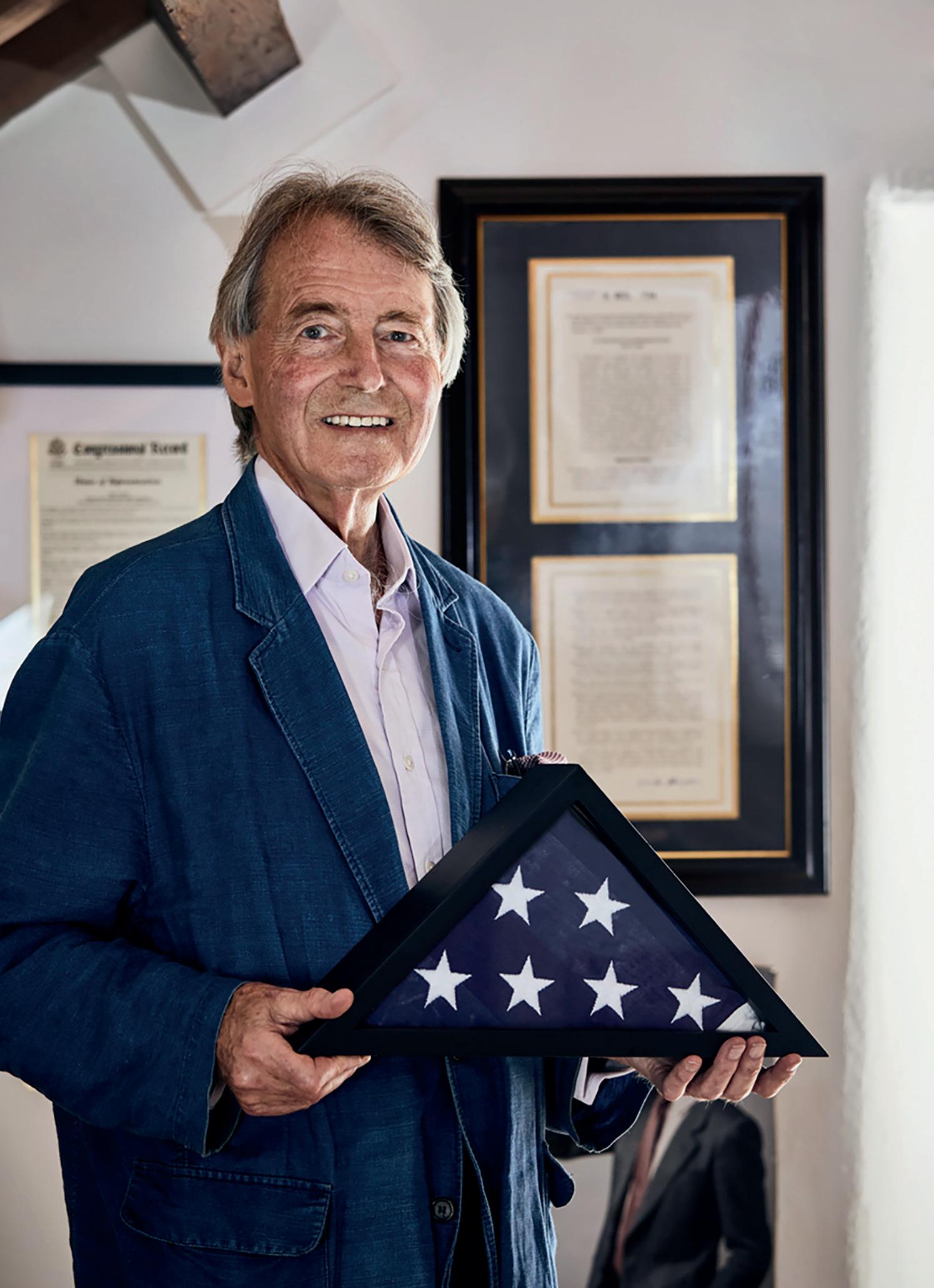
Dedicated to our Founder, Steven Spurrier
How to explain Steven Spurrier? Wine merchant, world traveller, explorer of cellar and vineyard. His Paris career saw him turn teacher, taster, wine educator and enthusiast. A third incarnation as author, columnist and communicator firmly established him on the world stage. Then, at the end of his career (septuagenarian status notwithstanding) he became a grower, winemaker and pioneer of Bride Valley Dorset sparkling wine.
Steven is best known for his role in masterminding the Judgement of Paris in 1976. This event, celebrated on these pages, not only put California wines on the map but also propelled Steven into wine’s global spotlight. He became Decanter Man of the Year in 2017, IWSC (International Wine & Spirits Competition) Honorary Chair in 2019, and Honorary President of the WSET (Wine & Spirit Education Trust) 2017–2020. In 2019 he launched the Académie du Vin Library with his good friend Simon McMurtrie, the aim of which was (and stilll is) to publish the finest wine writing.
Steven’s memoir, A Life in Wine, was the eighth title published by the Académie du Vin Library; we have now published over 70. Steven died in 2021. We were proud to call him our advisor, our inspiration and our friend, and we hope that he would have enjoyed this book – a tribute to a fine idea he shared with his colleague Patricia Gallagher in the spring of 1976.
Steven Spurrier's Paris: City on the Brink of Change 11 Images of the City of Light and the dawning of the Académie du Vin
Judgement Day: The Paris Tasting Revisited 23 The story, the personalities, the wines involved, and the aftermath…
Twenty Wines That Changed the World
Top critics put the 1976 challengers through their paces…
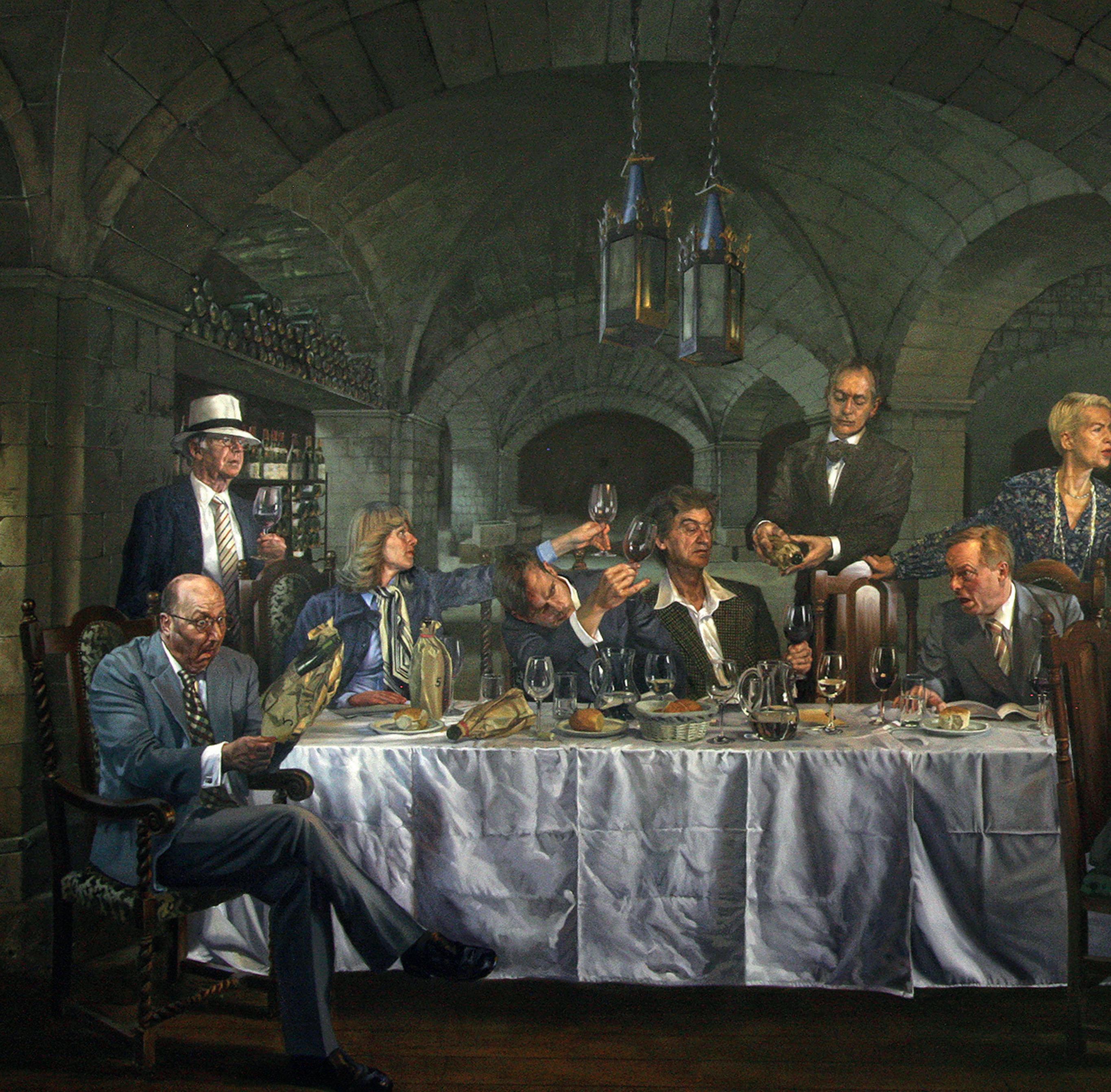
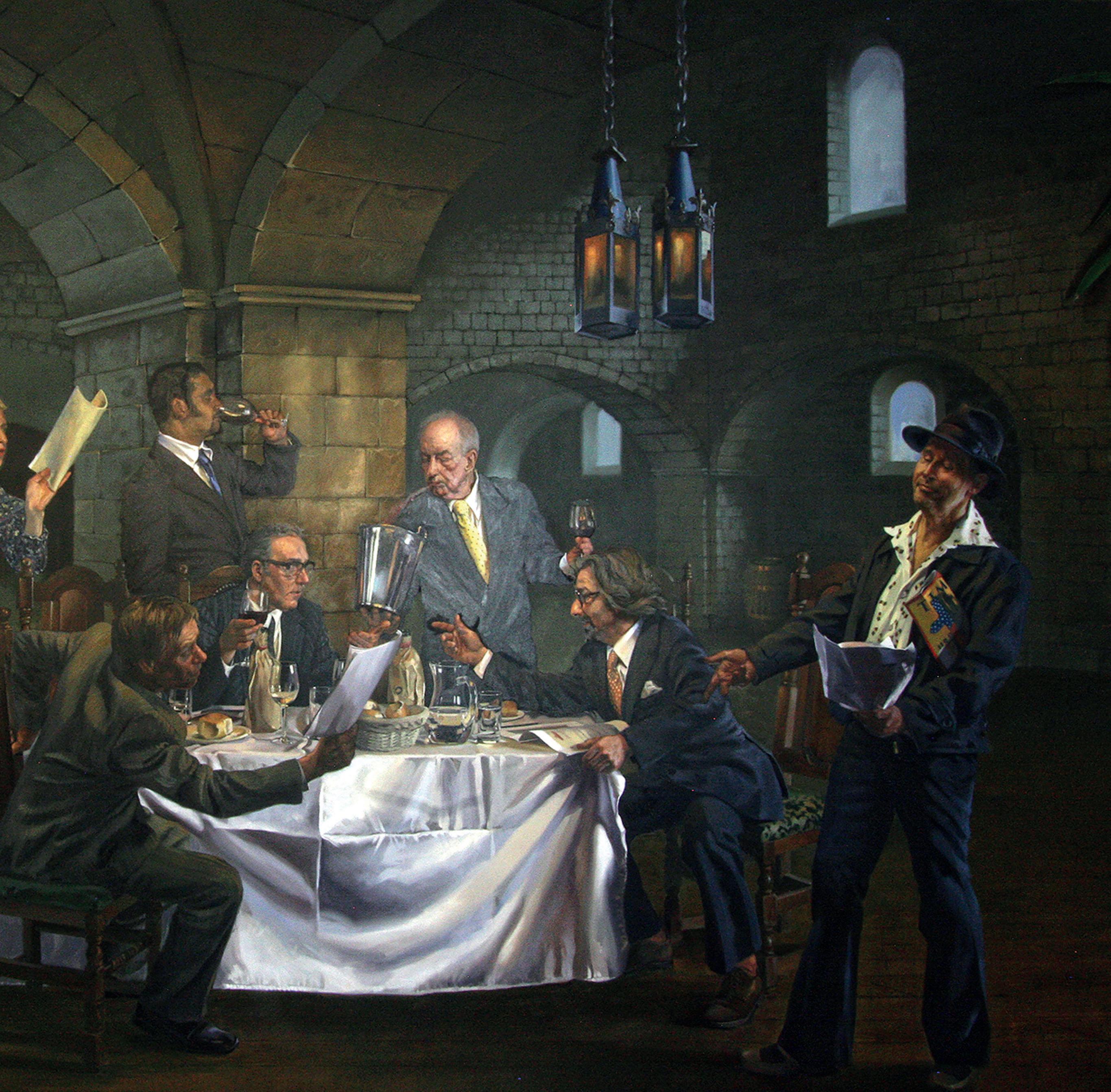
Captured on Canvas: ‘After the Upset’
Gary Myatt’s unforgettable painting captures the mood at the Paris tasting
Steven Spurrier and Patricia Gastaud-Gallagher look back at what they achieved
In Praise of Stag’s Leap Cabernet Sauvignon 1973
The story behind the Paris tasting’s winning wine
Why the Judgement Matters in the United States 91 Leading US wine voices celebrate the tasting’s results
The View From Bordeaux: A Wake-up Call
Marc Bouffard asks: Was it all bad news for the wines of Bordeaux?
50 Years on: A new generation of critics look at the impact of the event
Introduction
What started as a simple wine tasting in Paris to celebrate 200 years of American independence now has a legacy that is truly astounding. The shock waves sent out by its results began as ripples, disturbing only a cluster of wine tasters in the city’s 9th arrondissement. They then irritated their way to the smarter domaines of Burgundy and Bordeaux, and transferred as a kind of happy tension across the Atlantic. There, gathering enough momentum to reach California, the ripples became waves of astonishment and joy – increasing in size to become a tsunami of confidence and hope among its growers and winemakers.
This book is a celebration to mark 50 years since that famous day – May 24th 1976 – when California wines challenged the French classics in what came to be known as the Judgement of Paris. It tells its story in words and images, setting the scene in Paris, and introducing the protagonists, the winners and the losers. It explains what the results of this tasting mean to wine people around the world.
Steven Spurrier and Patricia Gallagher began it all. Their idea to show California wines at their best, to arouse interest among their French clients and neighbours, was a timely one. While Steven was always a devotee of classic wines, he had a passion for spreading the word about newer names, especially where he felt they were worthy of greater attention. And just as he gathered good wines, he gathered great people. Joanne Dickenson was the Californian wine tour host who made it possible for the American wines to fly to Paris (any slower and they wouldn’t have made the tasting in time). Bella Spurrier took the photographs that showed the consternation on the faces of the judging panel as they began to understand what was going on. George Taber was the journalist for Time magazine (and also a student at Steven and Patricia’s Académie du Vin wine school) who, following the tasting, reported that ‘the unthinkable had happened, California had defeated all Gall’. Brian St Pierre was the wine publicist who called Steven to find out what was going on, then alerted Frank Prial of the New York Times who spread the story further. Sarah Kemp, Jasper Morris MW and Ben Howkins each had a hand in arranging the anniversary tastings that embedded the Judgement of Paris and its result in people’s minds. Many of these friends have added their tributes to Steven and Patricia on these pages.
Had the California wines not been at the top of their game, it couldn’t have happened. Looking back, it was almost certainly the wine scientist André Tchelistcheff, mentor and advisor to Napa’s top winemakers through the 1970s, who got the ball rolling. He introduced state-of-the-art techniques and procedures that defined a new style for Cabernet Sauvignon in the valley. Warren Winiarski was one of his best students and went on to make the Judgement’s top-scoring red. Mike Grgich, who made the highest-ranking Chardonnay, also picked up the baton from
Home Sweet Home
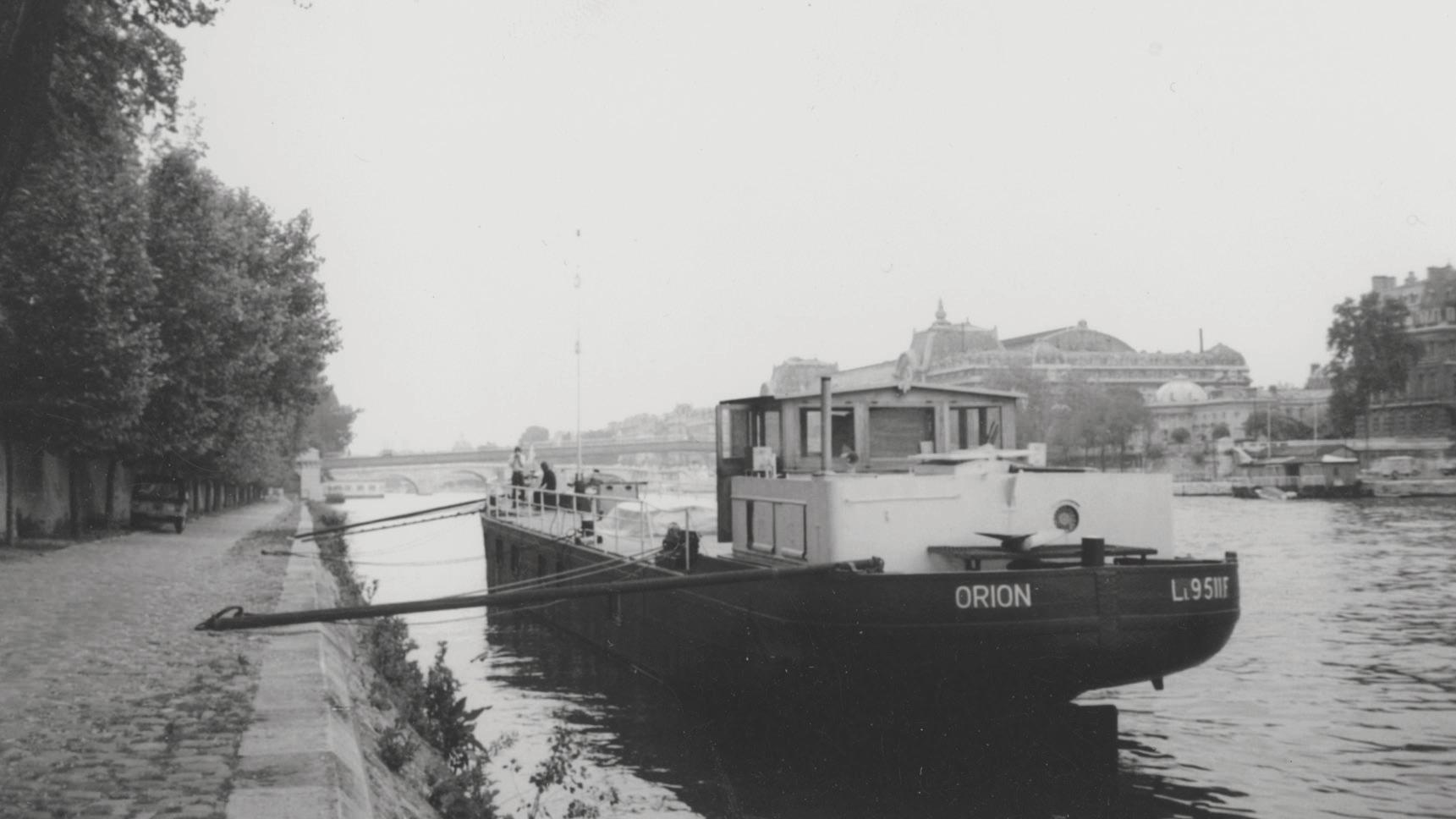
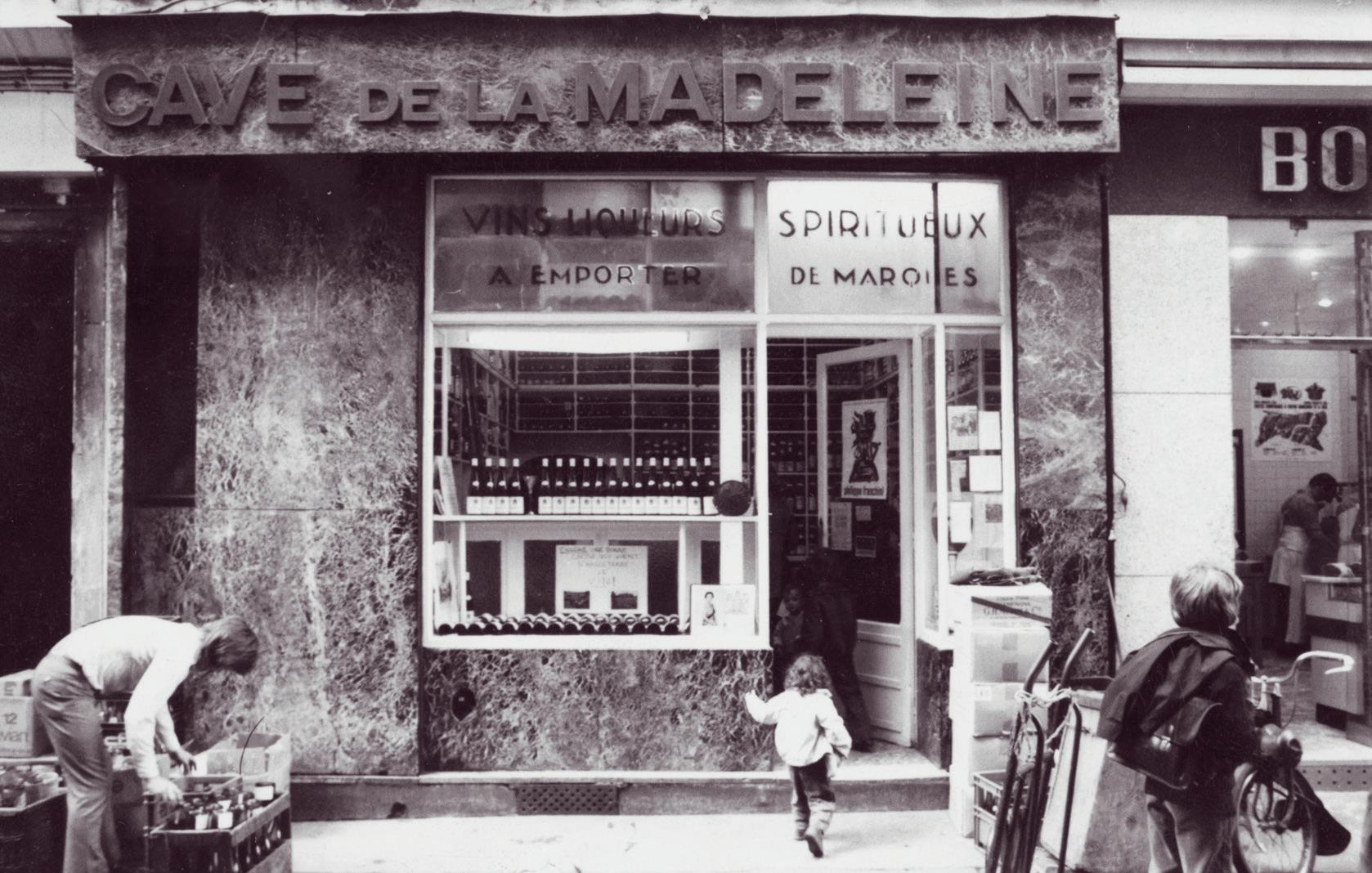
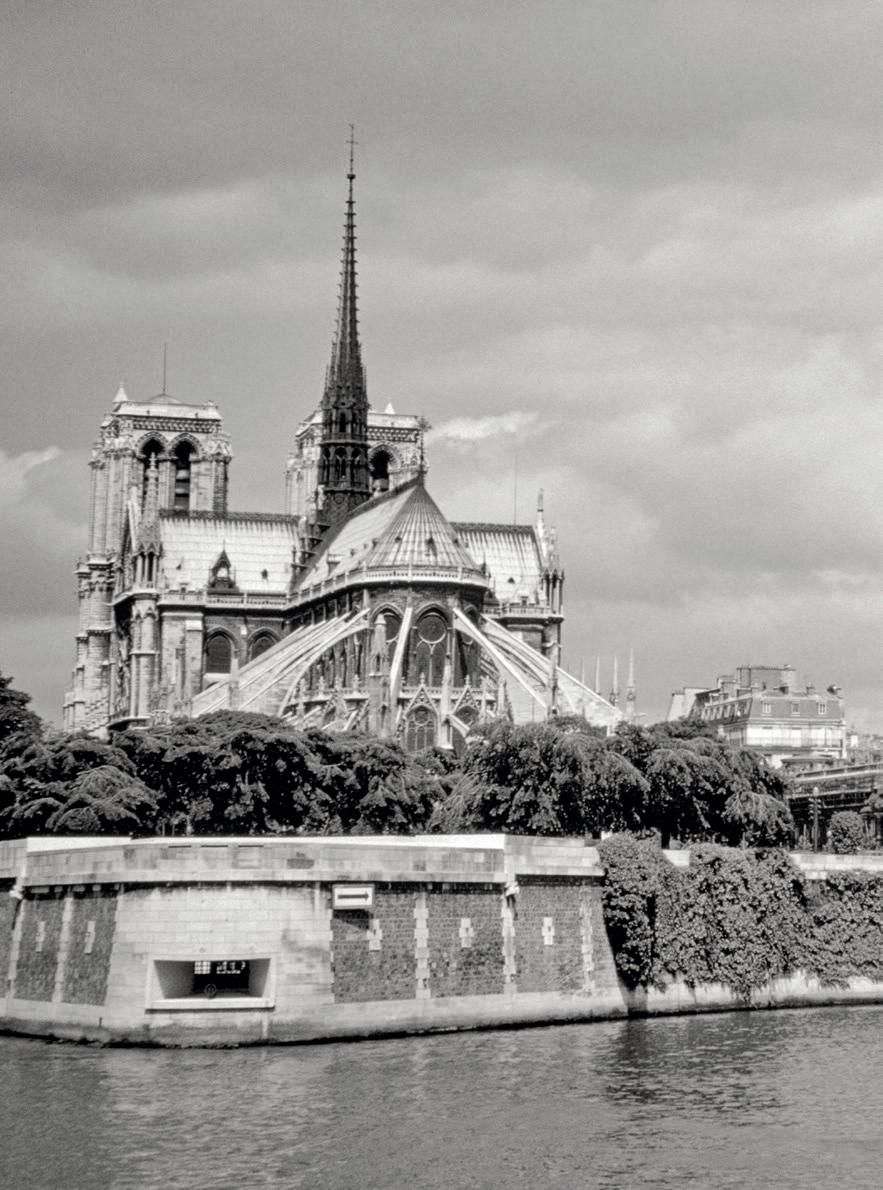
Above left Steven and Bella Spurrier's first permanent home in Paris was a Dutch barge moored opposite what at the time was a railway station but has since become the world-famous Musée d'Orsay. The young couple were only a short walk away from another iconic landmark, La Cathédrale Notre-Dame de Paris (above), and it was during one such stroll through the city streets that Steven discovered the Cave de la Madeleine (left) – the run-down wine shop in the 8th arrondissement that was destined to become his centre of operations.
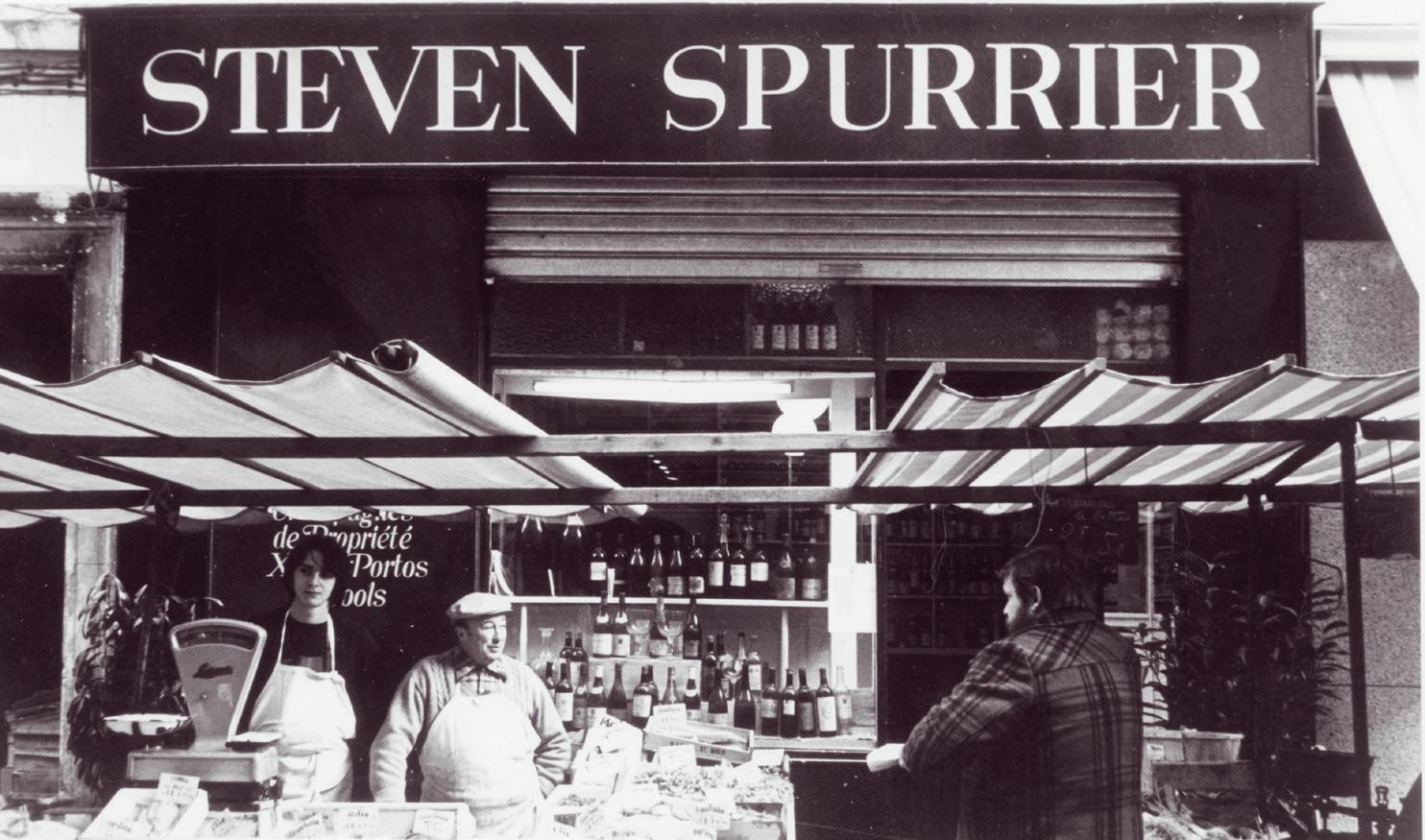
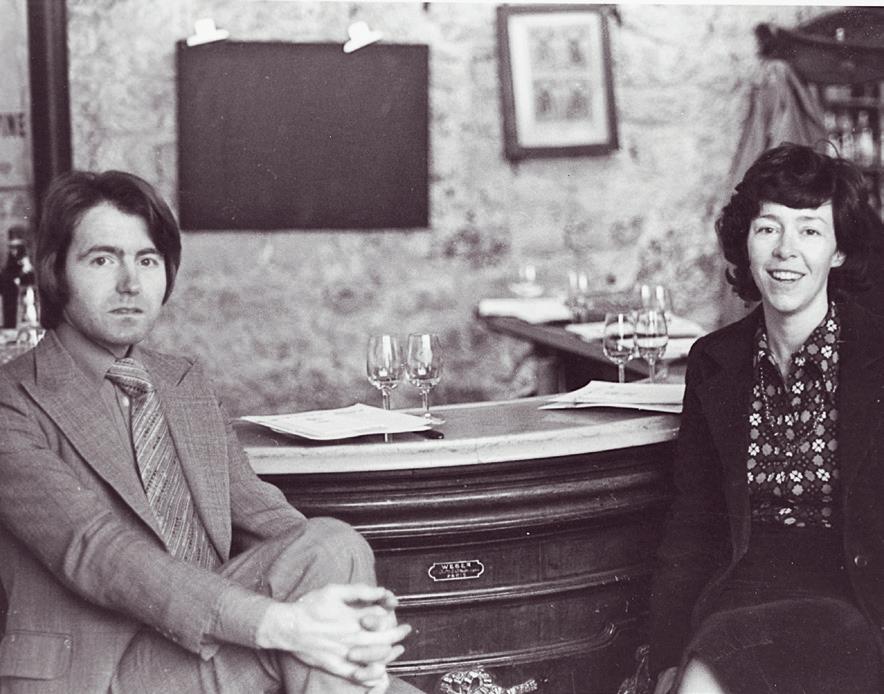
Below left With a fresh lick of paint and a bold new sign, Steven Spurrier Wine opens for business. Steven and his American business partner, journalist Patricia Gallagher (now Gastaud-Gallagher) pictured below at the shop’s much-used tasting bar, imagined that they could attract wealthy expats whose tastes in wine would translate into healthy orders – but in the early days, and in spite of Patrica’s US connections, business was worryingly slow.
Shock of the New
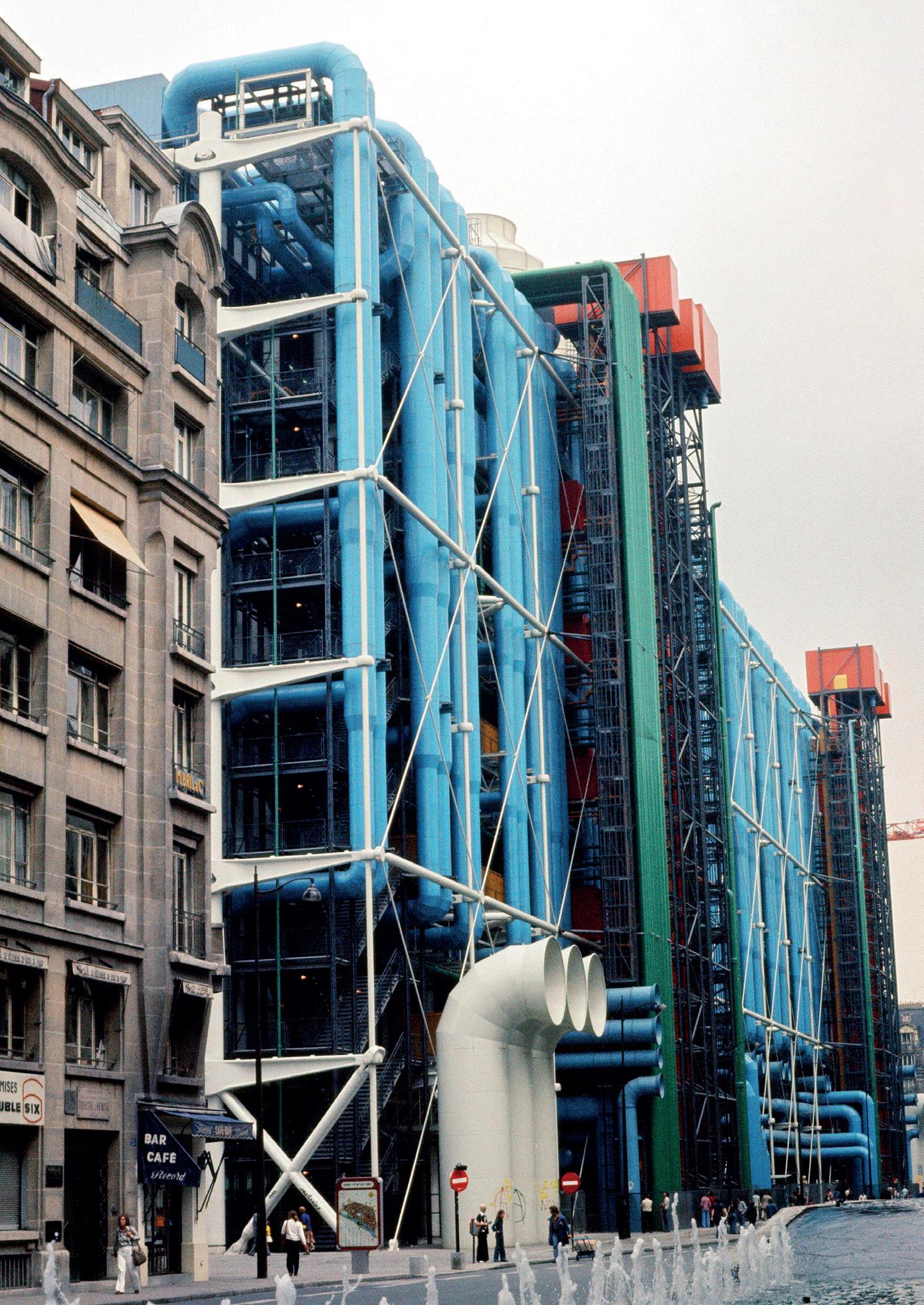
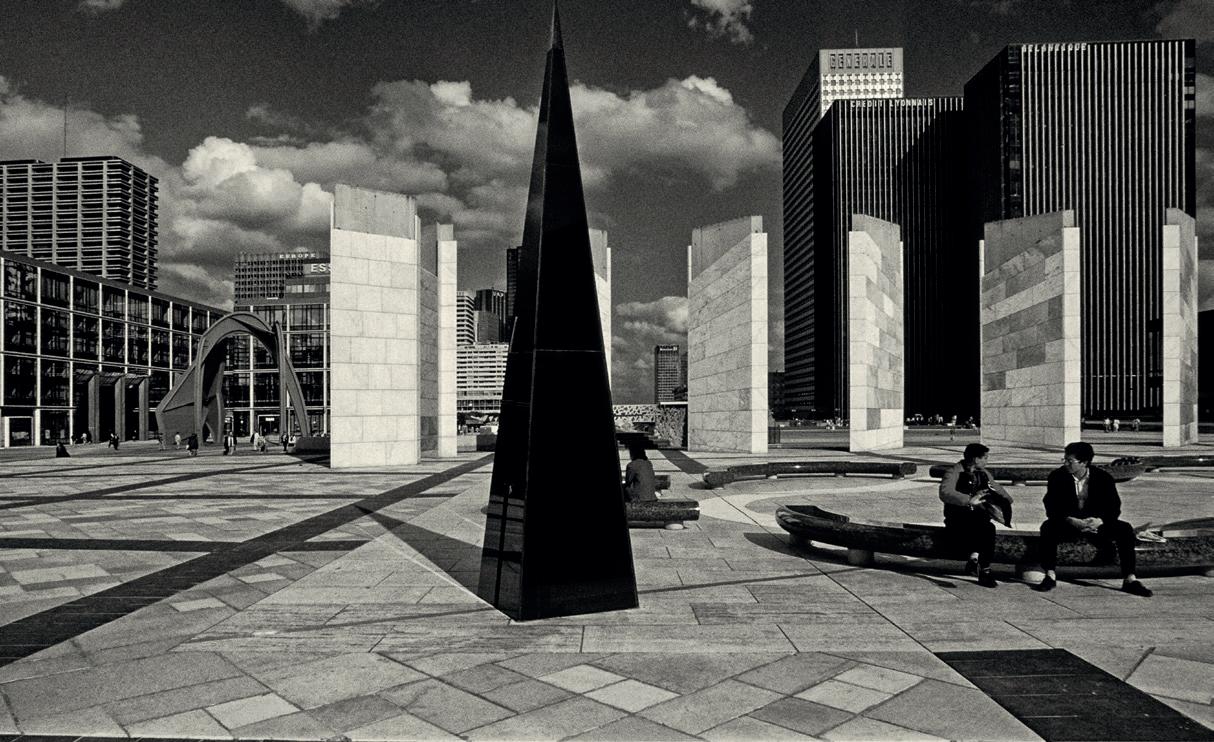
Left The Centre Pompidou, designed in high-tech style by the London firm of Piano & Rogers, was initially greeted with dismay when it materialized on a vacant lot adjacent to the historic Marais district. Equally disarming to the traditionalists was the futuristic skyline of La Défense (below) – an ultra-modern financial district 10km (6 miles) west of the city centre whose prospective occupants were assured was the shape of things to come.
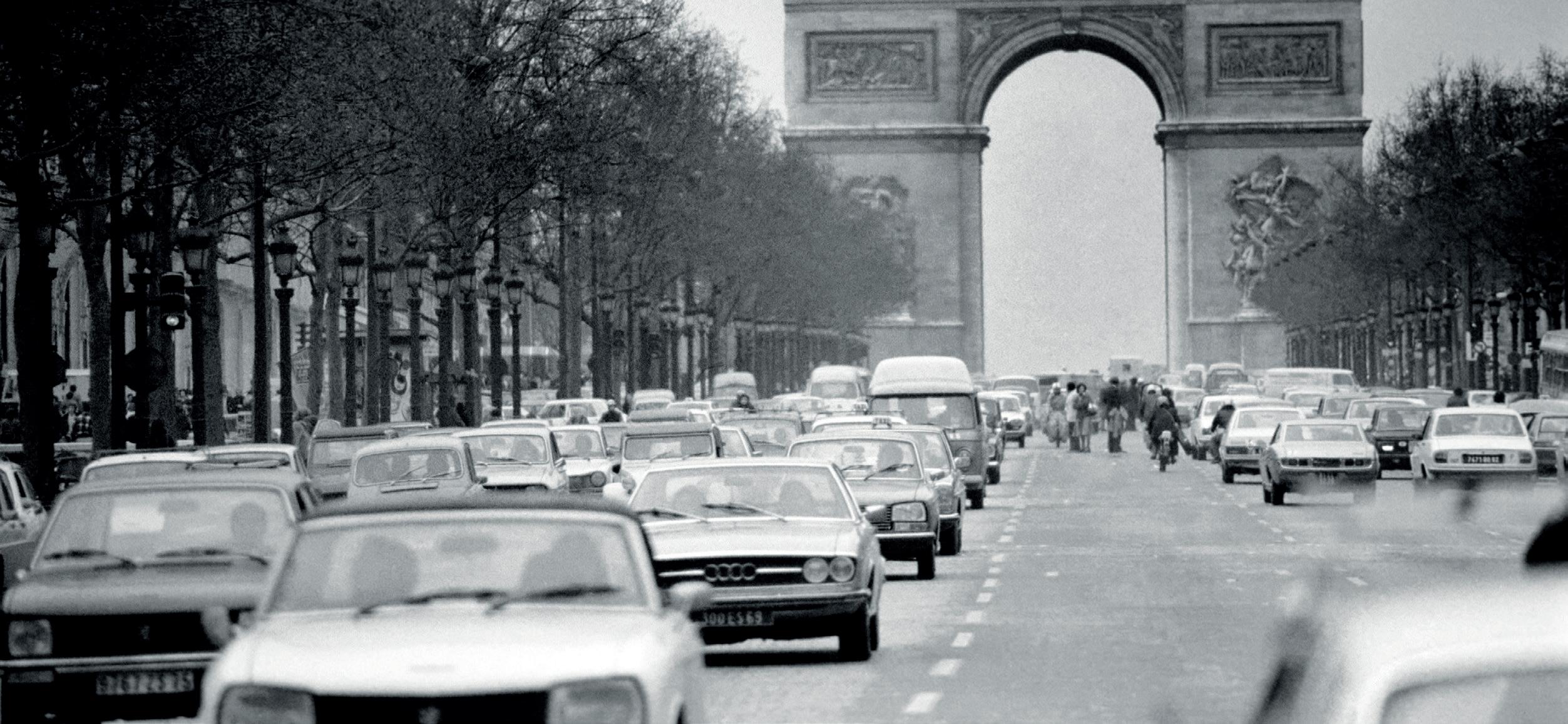
Below By the early 1970s, even the Haussmann-designed grandeur of the Boulevard des Champs Elysées was struggling to cope with that scourge of late-20th-century urban life – traffic. The government’s response was to encircle the city in a multi-lane ring road – Le Boulevard Périphérique. The concept was later enthusiastically taken up by other European capitals.
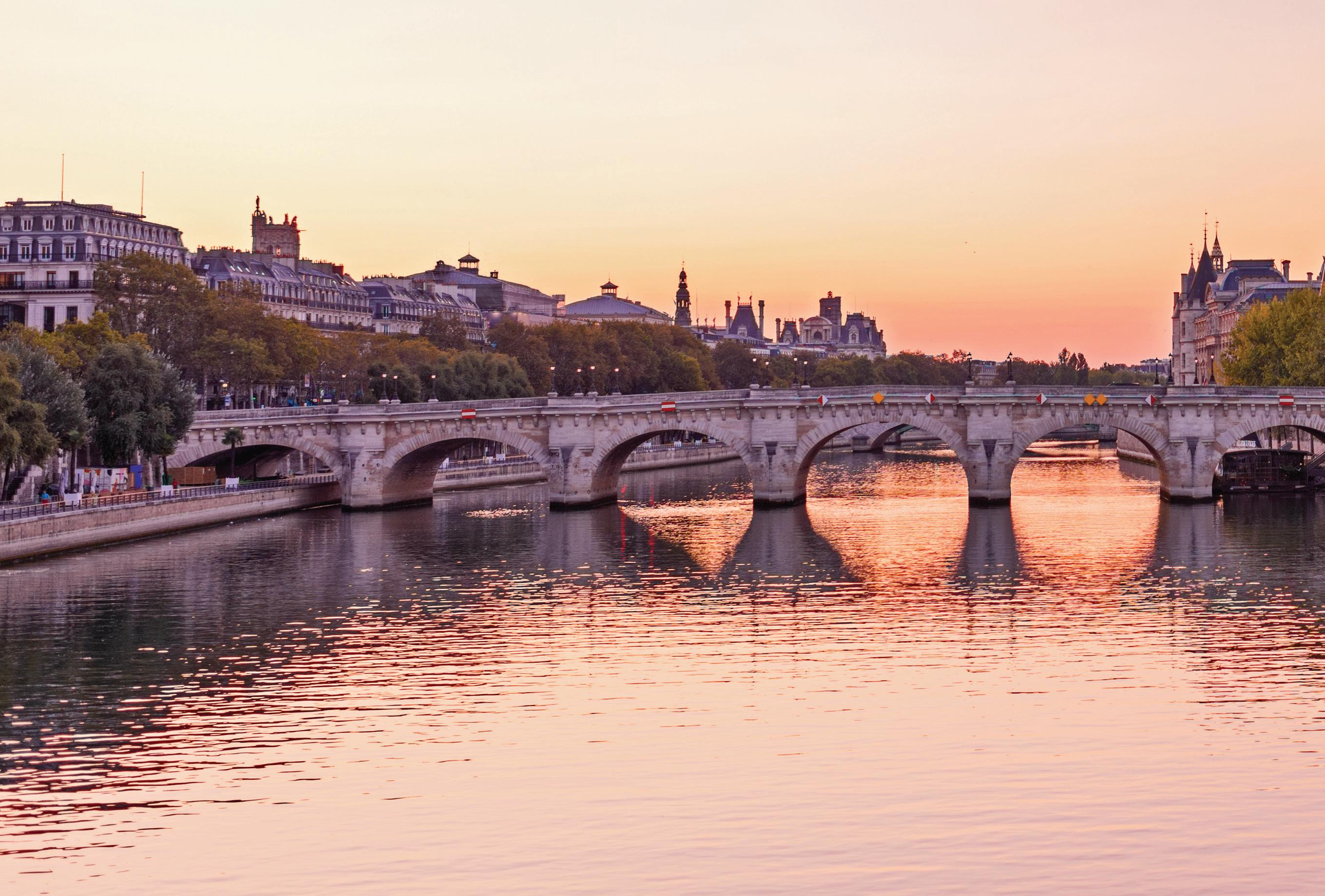
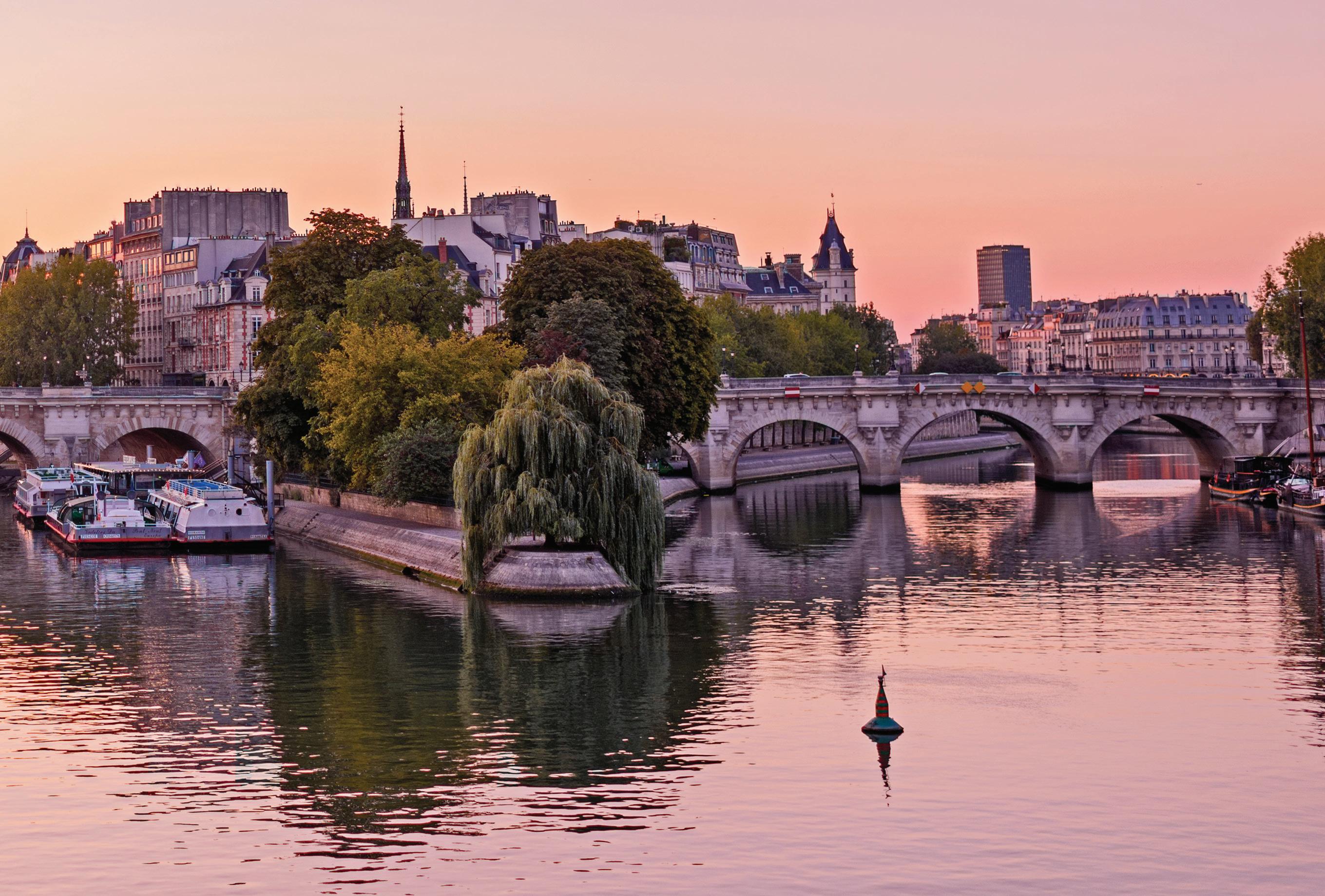
Above Pont Neuf, the oldest standing bridge in Paris, which connects the Île de la Cité to both banks of the Seine.
Photograph taken from the Pont des Arts in a rosy dawn light by Georgianna Lane and David C Phillips.
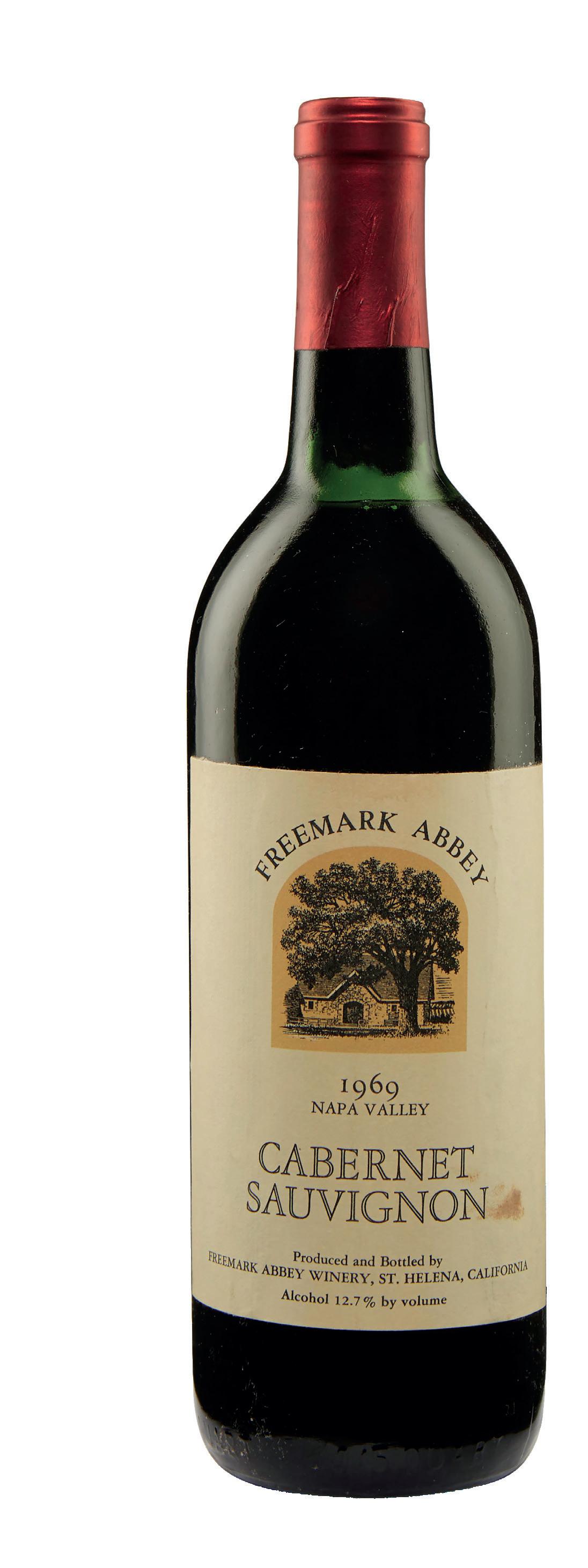
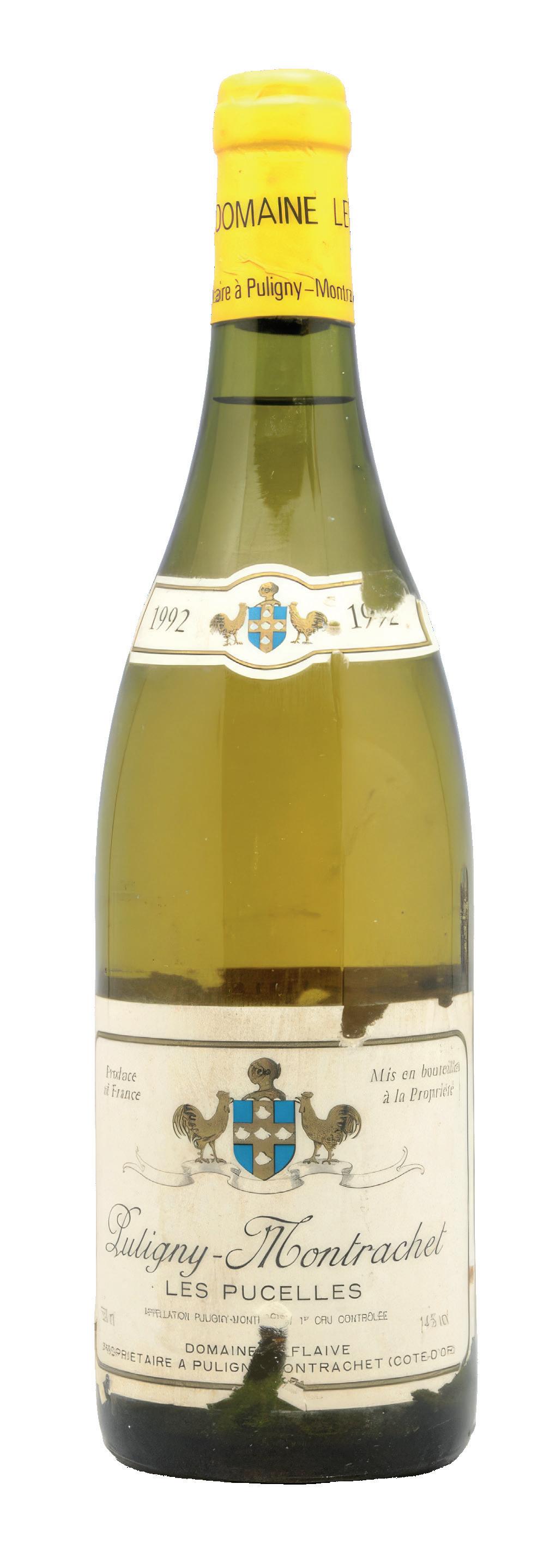
Puligny-Montrachet Premier Cru Classé Les Pucelles Domaine Leflaive
(Vintage tasted at the Judgement: 1972)
1979 The colour is remarkably light for a 40-plus-year-old. By contrast, the still-vibrant nose of poached apple, spiced pear and honeysuckle reflects the venerable age as sousbois lurks in the background. There is equally good vibrancy to the appealingly textured, middle-weight flavours that offer very fine if not exceptional depth and persistence on the agreeably balanced and dry finale. An exercise in grace and class. (Tasted in 2023 by Allen Meadows)
1985 The hallmark honeysuckle nuances of a classic Pucelles are still present on the fully mature nose where touches of sous-bois, spice, dried flower and plenty of citrus nuances haunt. The sleek and still admirably intense middleweight flavours retain a lovely sense of detail on the complex and highly energetic finish that is dry to the point of being lightly austere. But the defining element is the impressive depth, which when paired with the excellent length, make this a first-rate effort. (Tasted in 2025 by Allen Meadows)
2002 Quite deep gold. Sweet and pear juice on the nose. Hint of botrytis? Very luscious, powerful. Lovely intensity. Gorgeous wine – opulent and I might just have been tempted to place it in California if I didn’t know otherwise. Wins on depth and extract. (Tasted by Jancis Robinson MW)
2022 Plenty of ripe citrus, lemon, orange and grapefruit on the nose, but seems a little backward. Grand cru quality on the palate, growing into what I would expect: superb grace and length, with further volumes of fruit reappearing. Really quite complex, with a zesty finale. Keeps on going. Drink 2029–2038. (Tasted in 2024 by Jasper Morris MW)
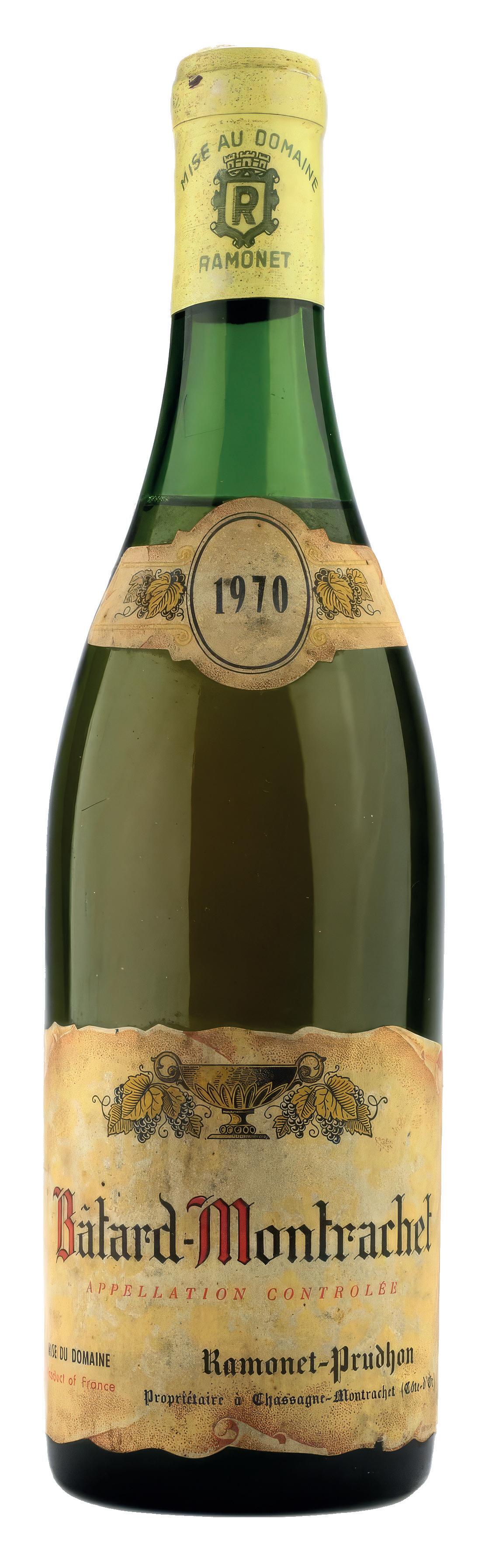
Bâtard-Montrachet Grand Cru Domaine Ramonet-Prudhon
(Vintage tasted at the Judgement: 1973)
1985 A wonderfully fresh, complex and attractive nose freely offers up notes of white flower and soft white orchard fruit aromas that display the expected secondary influences. There is very fine density to the pure, detailed and beguilingly delicious, medium-bodied flavours that still possess excellent intensity on the mouth-coating and strikingly persistent finish of supreme complexity. A knockout by any standard, that should continue to drink well for years.
(Tasted in 2015 by Allen Meadows)
1983 Deep golden colour but no browning. Beautifully complex and densely fruited botrytis and exotic-suffused aromas are followed by naturally sweet, rich and almost viscous flavours that display excellent length on the palate, with a coating and strikingly long finish. The 1983 did not produce typical white burgundies but despite the opulence and overt power, this remains quite well-balanced and shows absolutely no signs of slowing down anytime soon.
(Tasted in 2011 by Allen Meadows)
2004 A lot of depth on the nose, quite earthy, even animal. Smoky. Has the long, lime-leaf finish of 2004, which balances the bastardy, almost tannic elements. A certain creamy aspect as it warms up. Not super complex, but structured, long, harmonious. Drink 2011–2022.
(Tasted in 2012 by Alex Hunt, JancisRobinson.com)
Above After the Upset by Gary Myatt, oil on canvas, (6 metres x 3 metres).
vineyard in 1982 with the first vintage of Dominus released the following year.
The interest lies not only in observing different expressions of the same grapes in differing terroirs and in making great wine, but also in learning different approaches to evolving challenges. Vincent Decup recalls: ‘I worked for Christian Moueix at Dominus in 2007. I went to California every year and exchanged questions with the team. It was useful to learn lessons about the influence of heat in a vineyard that is also dry-farmed and planted at high density. We applied those lessons in Bordeaux in vintages like 2018 and 2025.’
That interest hasn’t been universal – or at least not universally expressed. I talked to St Helena winemaker Ric Forman, who has been making wine in Napa Valley since 1969. Ric has been instrumental in advancing viticultural science in California, visiting Bordeaux once or twice a year for much of his career, and sometimes bringing ideas back home from France to try in the Napa Valley. ‘Did anyone in Bordeaux ever ask you what you were doing?’ I asked Ric. ‘Not once,’ replied Ric, with a laugh.
A Parallel Evolution
The two regions have evolved in parallel. The early 1970s were a viticultural low point for much of Bordeaux. The SO4 rootstock was fashionable at the time and facilitated volume over quality. It was the era of herbicides and pesticides, colourfully described by Cyril Ray in 1968 as ‘DDT and the various proprietary insecticides that advertise themselves on the gable-ends of French wine-growing villages as apéritifs do elsewhere.’ The drawbacks of such approaches were unclear at the time, though the influences of these factors on a well-modulated vineyard ecosystem are recognized today and practices are essentially opposite. Conversely, it was a good time for viticulture in Napa Valley, with head-trained vines on St George rootstock, farmed in a gentler manner.
Bordeaux and Napa have gone through numerous iterations over the past half-century, the 1980s differed from the 1970s dramatically in each region, with just as marked an evolution from the late 1990s onwards. In Bordeaux, the past decade has seen colossal change. While their results can only mark a single point in time as the world changes, tastings like the Judgement of Paris do, nonetheless, provide useful snapshots of stylistic differences between regions and can confer just credit upon those who are under-appreciated. The influence of the Judgement of Paris on the Napa Valley and on the consumer has always been obvious, but its influence on Bordeaux has been important, too – both as it looks inwards and outwards.

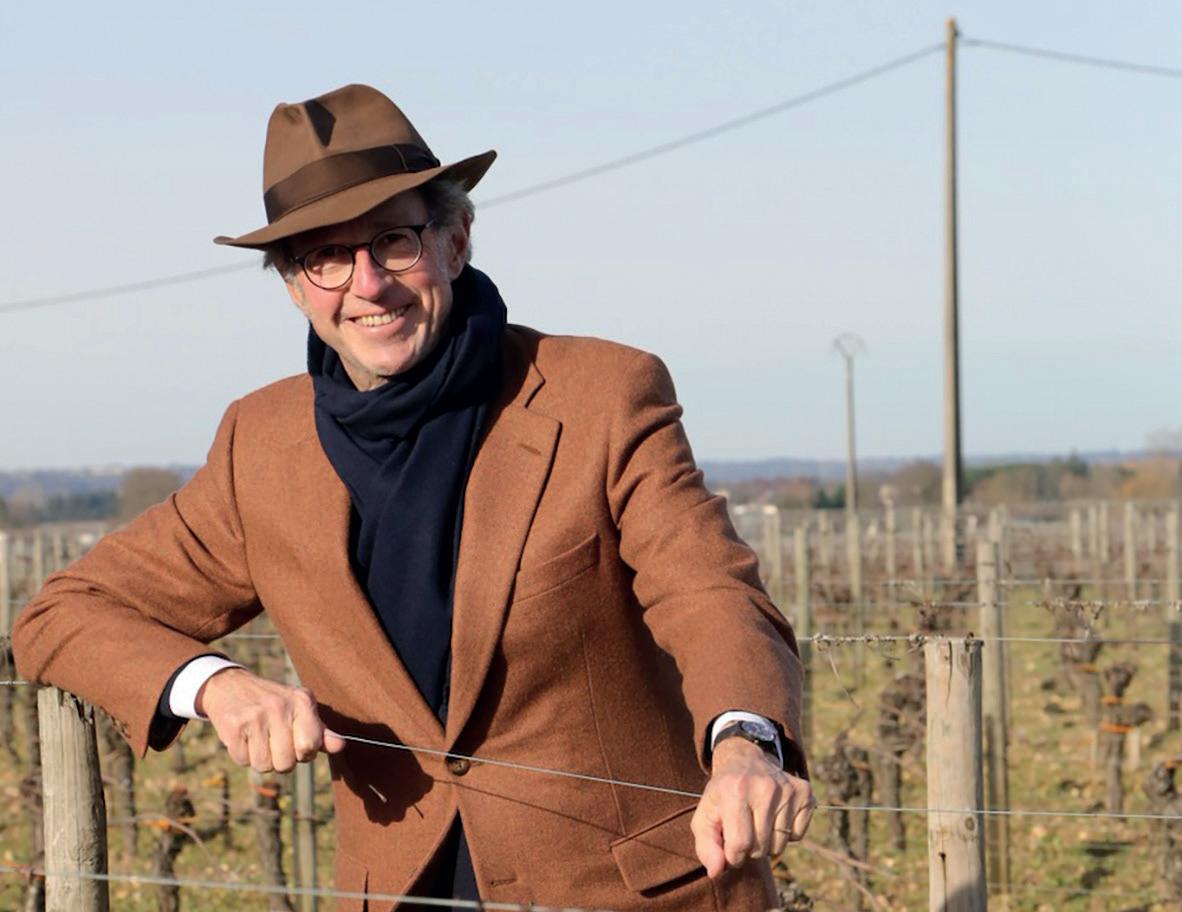
Above Bordeaux négociant and winemaker Christian Moueix. On the advice of Robert Mondavi in 1982 he partnered Robin Lail and Marcia Smith to take over the historic Napanook vineyard in California’s Napa Valley; he became the sole owner in 1995. It is now part of the famous Dominus Estate. Here, Christian is photographed at Château Trotanoy in Pomerol.
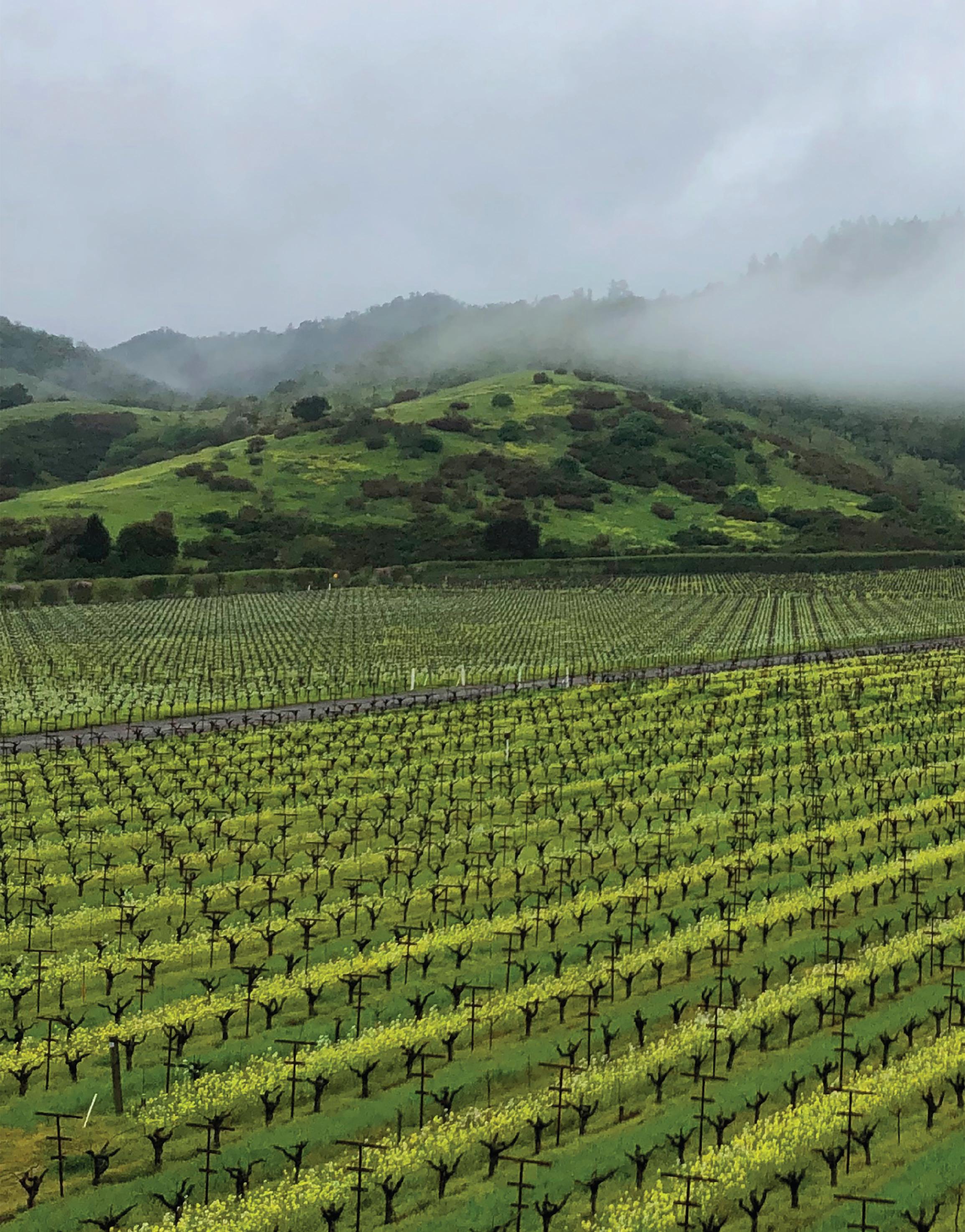
Opposite page The Napanook vineyard, nestled in a natural amphitheatre within the foothills of the Mayacamas Mountains on the western side of Napa Valley.
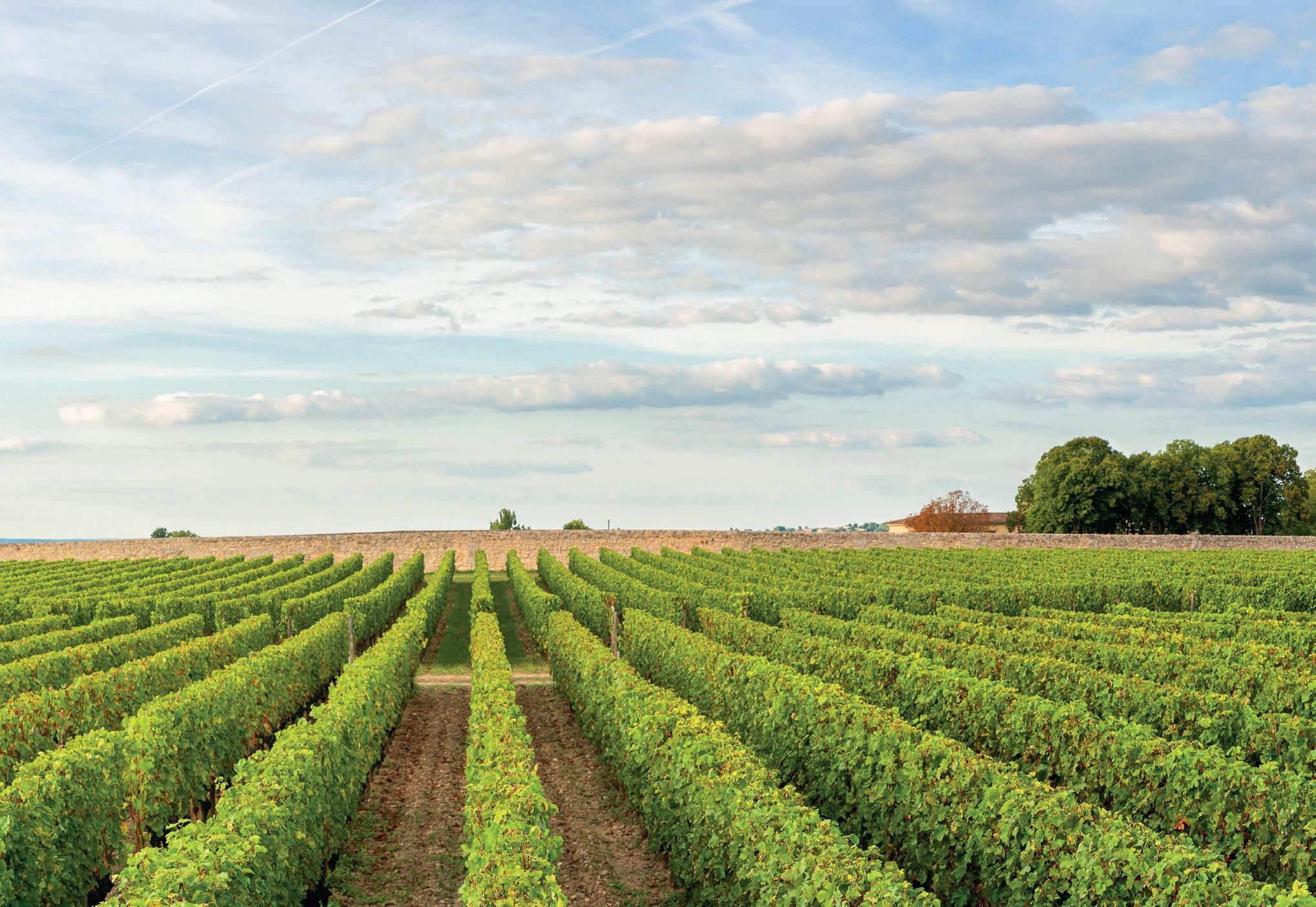
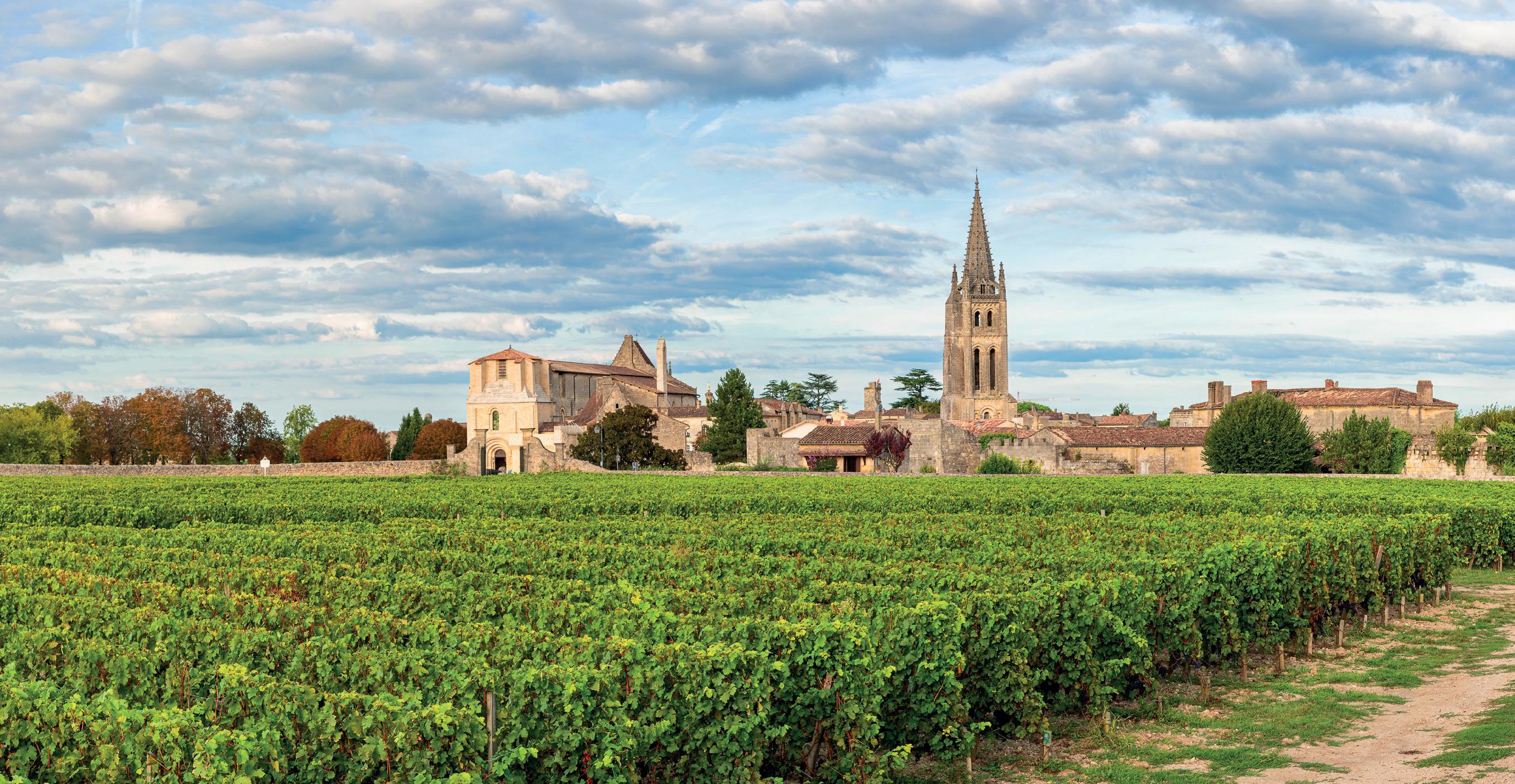
Right Saint-Emilion: little changed since the 1970s in terms of grapes planted – Merlot and Cabernet Franc dominated here then, and they still do today. But quality and ripeness control is now tighter than ever.
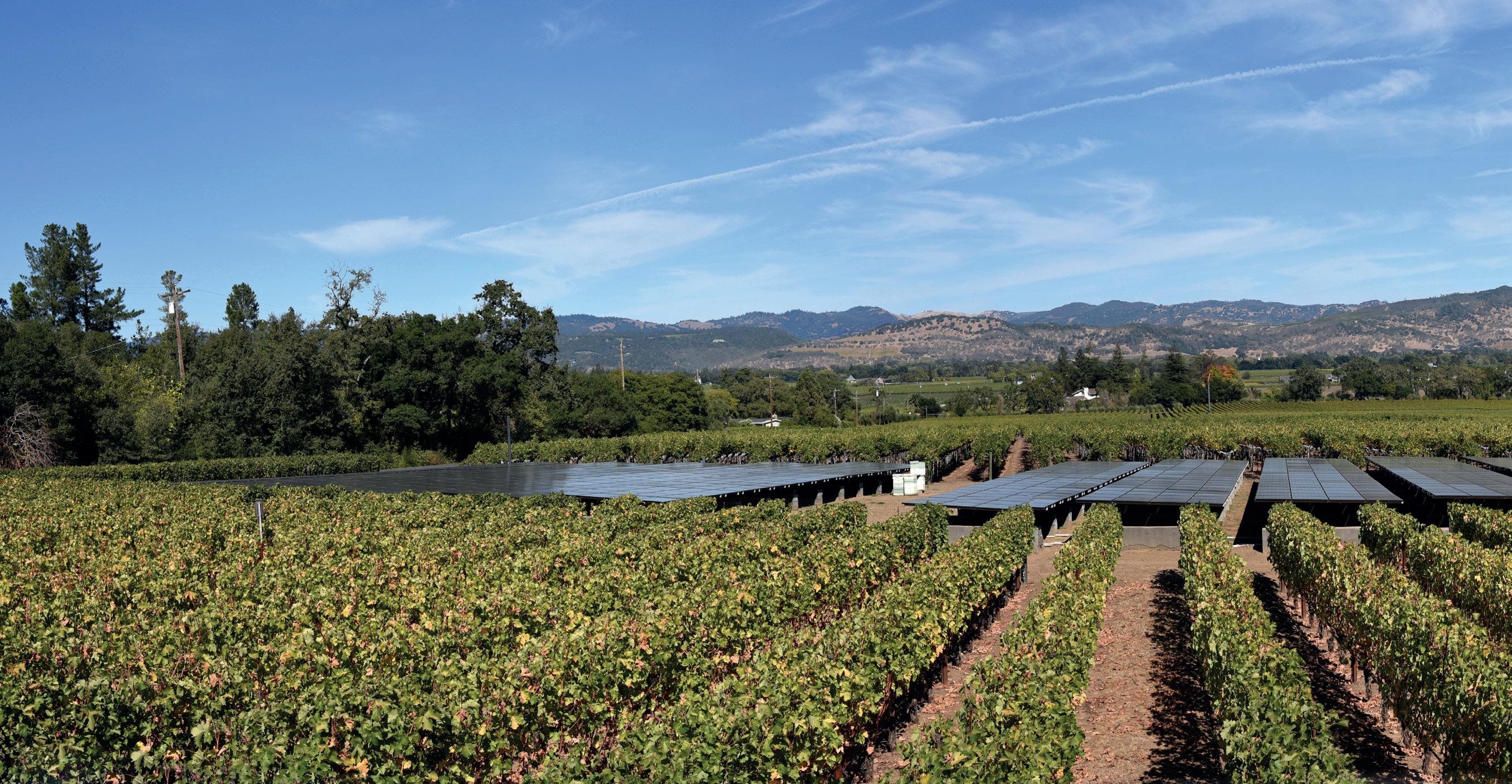
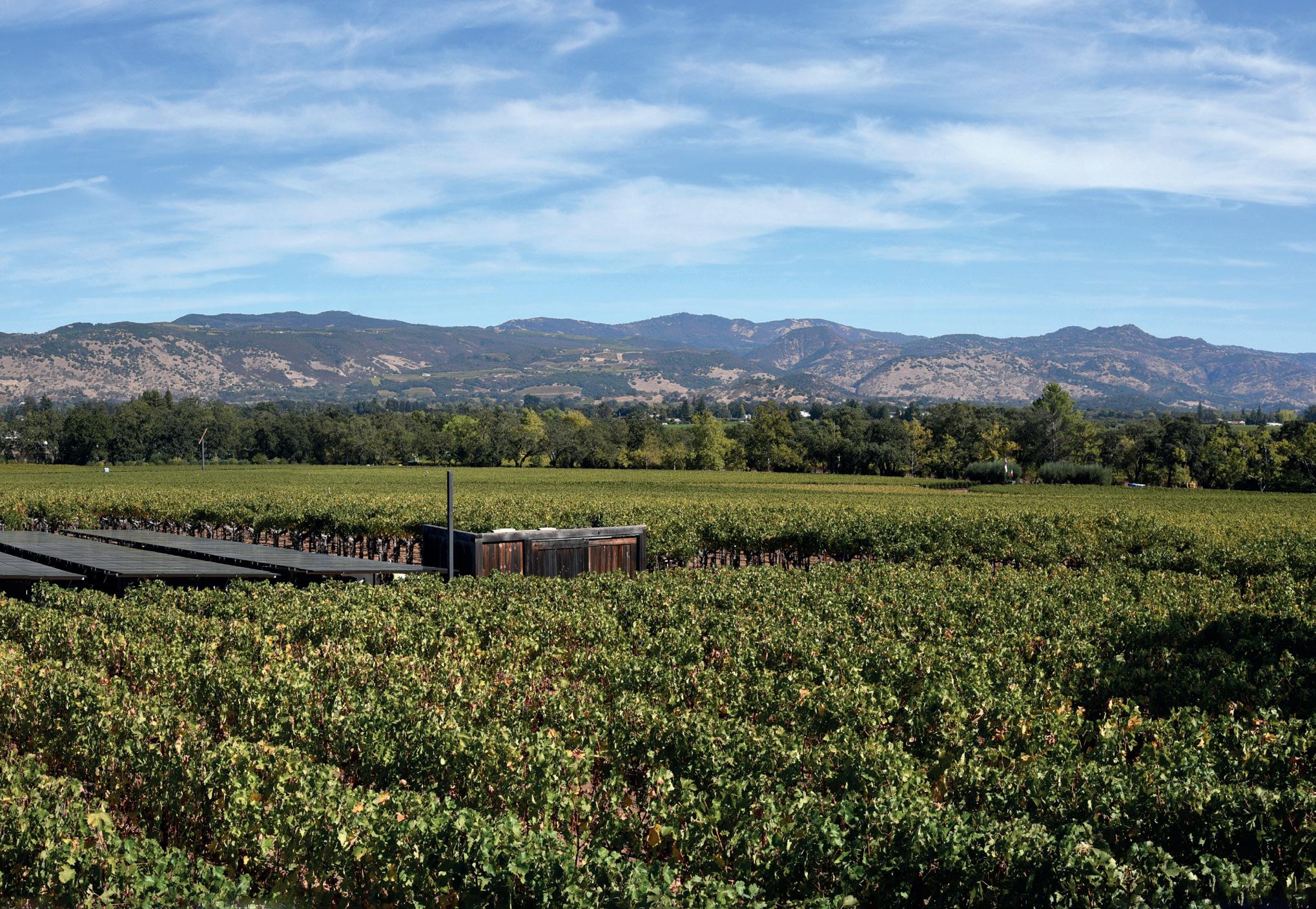
Left Napa in the 1970s was a hive of experimentation; growers were still learning which grapes grow best where. Today, the view has changed little, but the presence of solar panels in this vineyard gives a hint of the technology now employed to deliver a consistently highquality product in a sustainable way.
The names read like a roll call of the wine world’s ‘eye teeth’ wines: Pétrus, Sassicaia, La Tâche, Mouton, Seña, Opus One, Grange, Solaia… Only trouble was the roll call came at the end of the tasting, when all the notes had been made and scores assigned – and reputations made or ruined by the frantic attempts to identify the wines and, amid all the tension, assess them properly.
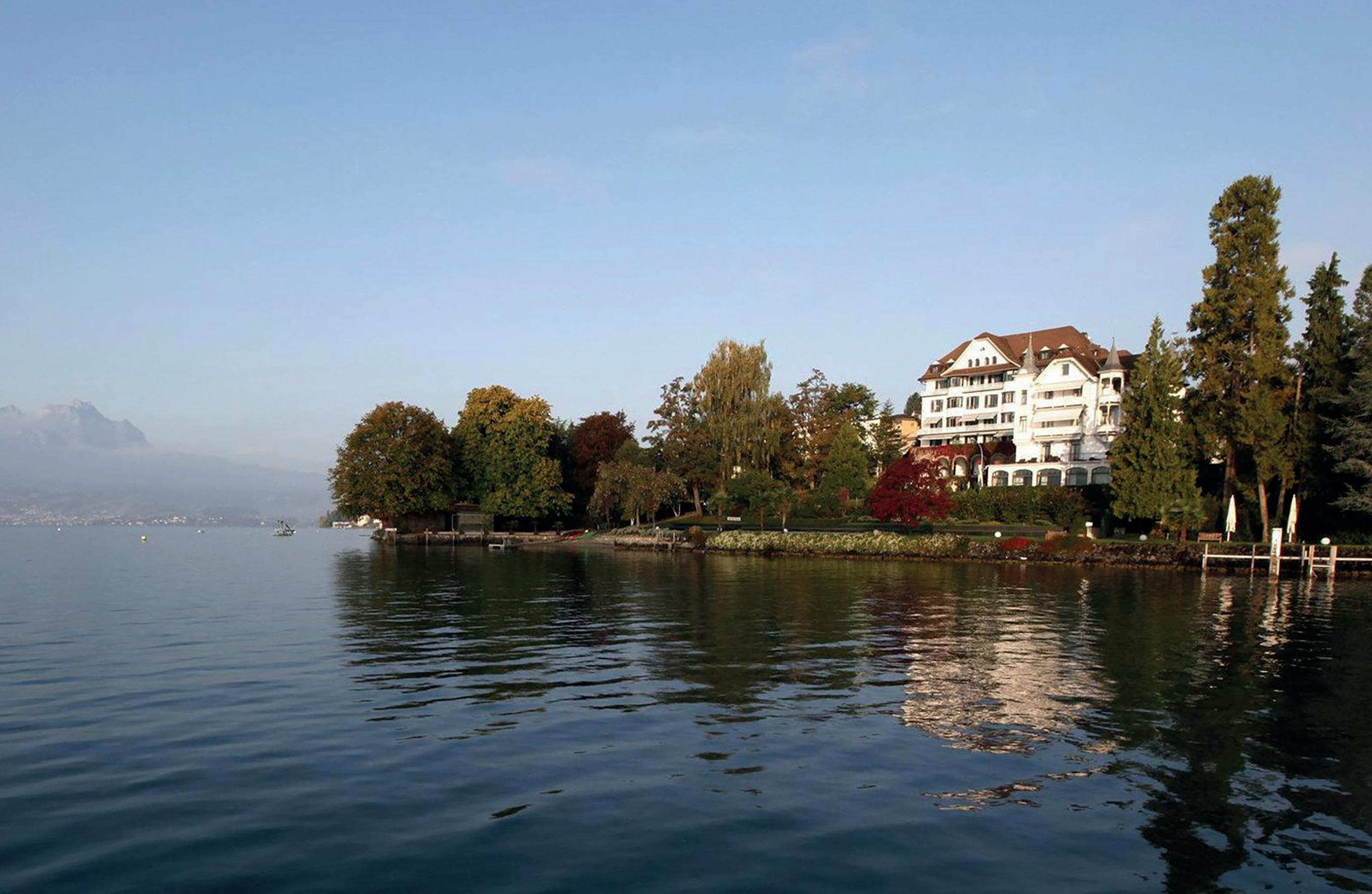
The location was the Park Hotel, Weggis, overlooking Lake Lucerne in Switzerland. The occasion was the ‘La Cumbre del Vino’ tasting organized by Eduardo Chadwick of Errázuriz (La Cumbre being ‘the summit’ in Spanish). And the time was 10am on Saturday March 5th 2005. Lined up in front of me were 16 glasses, each filled with a tasting measure of one of the most desirable wines in the world. I was not alone: three dozen other tasters, comprising wine buyers and writers from all over Europe, sat surveying the same prospect. All we knew about the wines was that they were young (the most recent release in most cases), that they came from all over the world, and that serious oenophiles regarded many of them as the apogee of the winemaker’s art. The reputations of 37 palates were about to be laid on the line…
Mercifully, the first wine was easily identifiable as a ‘good burgundy’ I noted at first, changing this to ‘very good burgundy’ upon re-tasting, before finally settling on ‘top rank burgundy’. It was Domaine de la Romanée-Conti, La Tâche 2001. Whew! The fruit/acid balance was delicious, the intensity just right, the length impressive. Fully five or six minutes were taken up by my appraisal of this wine and already the allotted hour for the tasting was beginning to look very short indeed. The next one did not detain me as long, for I found it much less likeable: ‘Earthy fruit on the nose, lean palate, firm and forceful, full tannins, hard edged.’ I correctly placed it in Italy but after that was lost. It turned out to be Sassicaia 2001. For a wine that has enjoyed its own specific Bolgheri Sassicaia DOC since 1994 I would have expected more.
The first Chilean wine, the Don Maximiano 2002, boasted a deep garnet colour and a nose of creamy oak and concentrated ripe fruit. The palate was big and rich, with fleshy fruit and vibrant tannin in equal measure. After much dithering I placed it in the New World, Chile perhaps, and was gratified to learn subsequently that I was right.
And that is when my luck ran out. Spectacularly. For the sake of my reputation I know I shouldn’t write the next sentence but here goes. After much swirling and sniffing, slurping and spitting, I decided that Grange 1999 was an Italian wine! Was it the full garnet colour? The tingly, enticing nose? The dense, chewy palate? I know not, but in the discussion later I
❝ I know I shouldn’t write the next sentence but here goes. After much swirling and sniffing, slurping and spitting, I decided that Grange 1999 was an Italian wine! ❞
took heart from the fact that most of the tasters did not regard it as a typical Aussie Grange, an opinion confirmed by a perusal of the fact sheets handed out after the tasting. This was the first Grange made from 100 percent Shiraz since 1963.
Château Pétrus 2001, when subsequently revealed as such, helped to restore some of my confidence. While my mark for it on the day (17) did not place it in the outstanding category, I felt it possessed all the qualities necessary for long life and good development. A gorgeous, cedary, fruit nose presaged a palate that was quite lean and crisp. ‘A bit raw-boned but good potential’ was how my tasting note concluded.
Below The spectacular setting for the La Cumbre del Vino 2005 tasting: the Park Hotel, Weggis, on the tranquil shores of Lake Lucerne in Switzerland.
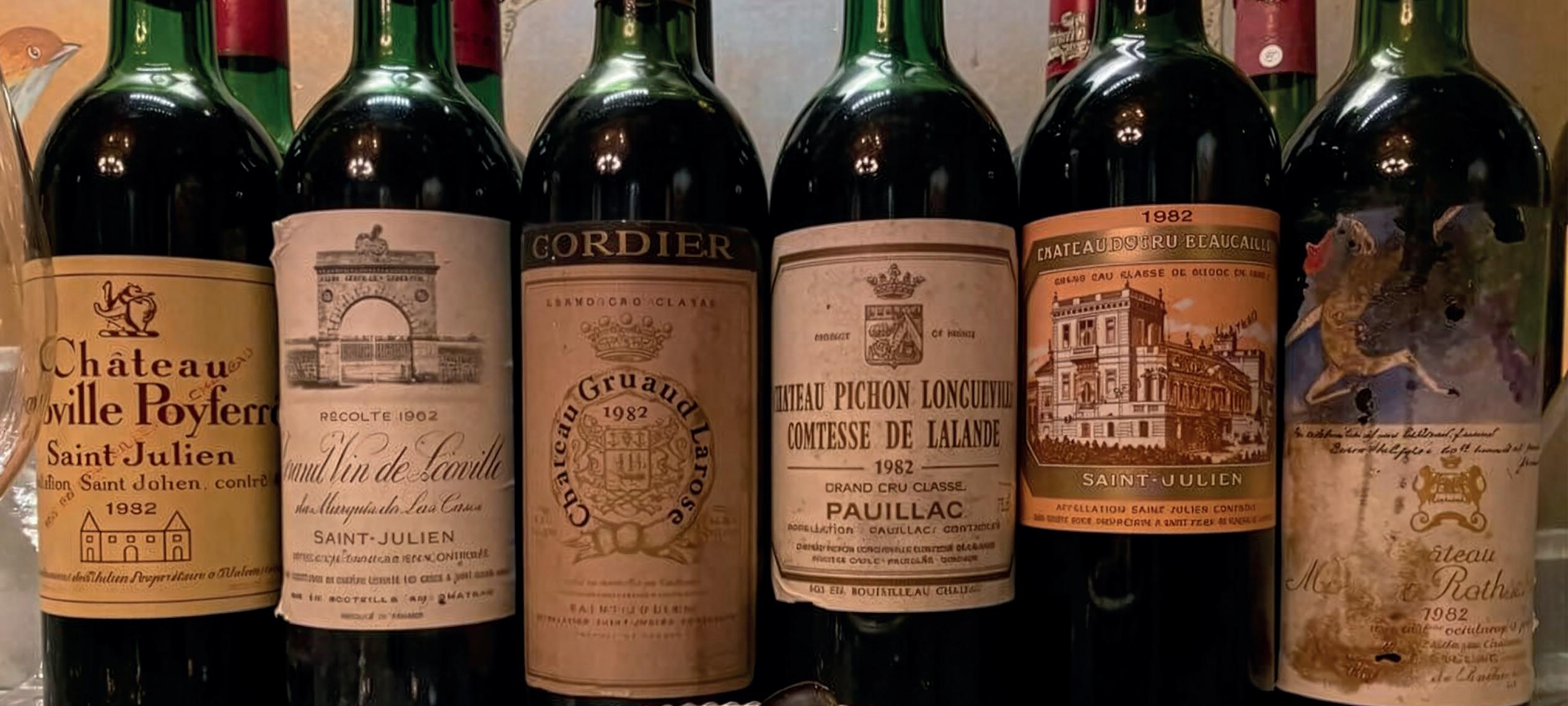
Below A much-prized vintage: 1982 was the year when it all came together, not just in the Médoc but across the winemaking countries of Europe.
6 1982
The year 1982 was the greatest vintage of modern times, marking a turning point in the story of fine wine. It saw a collision of perfect vintage weather in Bordeaux and wellequipped new wineries in which cellarmasters were able to take full advantage of the optimally ripe fruit. As such, it was the perfect prism through which to view the work of the wine scientist Professor Emile Peynaud. From the 1930s, Peynaud had worked to modernize and revamp ancient winemaking techniques in the region and across the world. He explained the need for temperature control, accurate harvesting (at full ripeness), and the stability and balance enabled by malolactic fermentation. By 1982, his teaching had reached across Bordeaux into Spain, over to Italy, Greece and North and South America, and this year saw the culmination of his influence. Winemakers now understood how to take advantage of the fine harvests when they came…
And why was 1982 so good? Bordeaux’s (usually) wet and wild maritime climate saw ideal warm, sunny condition; a hot, dry ‘armchair summer’ with no diseases or insects in the vineyards; and enough gentle rain to swell the grapes without encouraging rot or dilution. The resulting wines were concentrated and powerful, yet retained elegance and balance; as one commentator put it, they were ‘like big men dancing lightly’. The 1982s became some of the finest wines of the 20th century and can still command high prices at auction today. It was also a fine, rich vintage in Champagne and produced robust, fruity Barolo and Barbaresco in Italy; quality was strong in the Rhône Valley (particularly Châteauneuf-du-Pape) and in Burgundy. In Portugal, it was recognized as an exceptional and long-lived vintage by the port houses.