The rules associated with foraging are intended to serve two principles: on the one hand, respect for nature, and on the other, the local laws that everyone must always observe. Here I’m going to take a closer look at these fundamental rules.
LOCAL LAWS AND KNOWLEDGE
Follow the local rules and know what you're foraging. Make sure that you’re not picking any legally protected or locally threatened species. This means informing yourself! Protected plants are found on the local “red list” of protected plants (see the links at the end of this section). Only collect what you know, and only eat it when you are 100% sure you know! That’s also because some toxic plants look very similar to edible ones.
RESPECT FOR NATURE
When you forage, only take what you need. Beginning foragers in particular tend, out of enthusiasm for their newfound pursuit, to take more than that. Always leave enough behind. That’s in the interests of both the plant species and the other animals and insects in the environment. Try to assess how much you’re really going to be able to use yourself. At Forest To Plate, we consider nature our second home, so in nature we always behave like we’re a guest in a friend’s home. Don’t disturb the environment, don’t break any stems or branches, don't stray from the path if you don’t have to, never walk through any unusual vegetation, and don’t disturb any animals. Whatever plant species you’re collecting, never take all of them: Always leave enough behind so that it stays in the environment in an amount that will allow it to grow back. Don’t dig plants up; only take a few leaves or flowers per plant. That’s how to ensure that the plant will always be there. After all, you want to be able to come back next year and find it again, don’t you?
SAFE ENVIRONMENT AND USE
Always collect your wild ingredients from clean places. Anything you collect from bushes and shrubs, you’re best advised to pluck from knee height or higher. That’s because there are dogs and foxes out there that like shrubs too—but for different reasons. Ever heard of the fox tapeworm? It’s a parasite
that can be found in fox droppings. The chance of you getting infected by it is small, but better safe than sorry: just pluck from higher than these animals can reach. You also need to be aware of environmental contamination and human-generated pollution. Stay away from industrial sites and railway lines. Even then, always clean the plants you collect. If it works for your culinary plan, the best thing to do is to heat, cook, or blanch everything well, which will kill the undesired bacteria and parasites. But if you intend to use a plant raw, then rinse it well and spray it with a little vinegar, too.
Also be alert for tick bites: with our gradually warming climate, there’s more of them every summer and they stay around longer. So take care when you're wandering through forests or long grass. Particularly in the summer, these tiny parasites love to hide in the warm places on our bodies, such as armpits, backs of the knees, and groin area. Some ticks carry Lyme disease, so it’s a good idea to do a body check after any hike.
FORAGING: GENERAL GUIDELINES
Foraging laws and customs vary widely across countries and regions. Always check and follow local regulations before collecting wild plants or fungi.
PROTECTED AREAS
Foraging is often prohibited in nature reserves, national parks, and protected habitats. In some cases, special permits may be required.
PERSONAL VS. COMMERCIAL USE
Small-scale foraging for personal use is commonly tolerated in many regions, but commercial harvesting is frequently restricted or prohibited.
PRIVATE PROPERTY
You may only forage on private land with the permission of the landowner.
PUBLIC LAND
In some places, limited foraging is allowed along roadsides or in non-protected public areas, though restrictions may apply.
SUSTAINABLE HARVESTING
Wild plants and fungi are vital to ecosystems. Harvest responsibly, take only what you need, and avoid damaging habitats.
determine when certain seeds were sown and whether they were actually used as a source of nutrition. But of course, we do have a lot of clues to go on. In particular, the remnants of nuts, which have harder shells and which were often roasted, have been preserved for longer periods of time. We know what they might have eaten, but from a strictly technical point of view we have almost no evidence and we can't be sure how any given dish was made.
The oldest known origins of agriculture have been traced to about 10,000 years ago in ancient Mesopotamia, the area around the Tigris and Euphrates rivers, where the cultivation of wild plants also began. Crop plants were selected and planted, and a tendency to select for the fruits that were bigger and tasted better, but also that were easier to store, quickly emerged. When we look at the plants that were ultimately selected for cultivation, we see that very often they were the plants that produced sweet crops, such as dates and figs. Humanity’s pursuit of sweet food had begun.
But wild plants certainly remained a part of the diet then.
WILD VERSUS CULTIVATED: THE ADDED VALUE OF WILD EDIBLE PLANTS
Every flavour, colour, texture and aroma of “food” comes from a certain substance, usually secondary plant-based substances, that have an effect on both plant and human. These substances are unique to every plant. They are not primary substances that facilitate the growth of the plant, but they have a different function, such as protection against insects or a role in pollination.
For people, these phytonutrients determine the taste, and they often have a pharmacological effect as well. Of the phytonutrients – which include phenols, triterpenes and non-alkaloid nitrogen compounds –many taste very bitter. Then, there are the sour, the acidic, and the sweet flavours found in nature, which come from still other substances.
In wild plants, we generally find the bitter, spicy, acidic, and sour flavours. When the selection of crops began, the sweeter varieties were always chosen whenever possible. Over time, the bitter phytonutrients were eventually selected out of our diets, and we began to consume them in smaller and smaller amounts.
The ancient strains of the plants we know as cherries, apricots, citrus fruits, and pineapple were originally all very bitter-tasting. Because we stopped eating wild plants, our diet today has virtually none of the “bitter” compounds in it any longer, even though these are actually much better understood because of their beneficial effect on appetite and digestion.
A wild plant or a rarely cultivated crop might have hundreds of nutrients, including minerals and vitamins, but definitely a great many phytonutrients like bitter compounds and mucilages. A salad with yarrow, dandelion leaves, chickweed, woodruff, white nettle tops and young chamomile leaves has a whole lot more active and beneficial compounds that help your body than a shop-bought lettuce. These substances are not found in commercially cultivated foods, because they are often unique to a specific wild plant.
So wild plants don’t just give you a whole palette of “new” flavours, but eating them also gives you a great many substances that your body needs.
WILD GARLIC
Allium
ursinum (L.)
DUTCH: DASLOOK
FRENCH: AIL DES OURS
GERMAN: BÄRENLAUCH
FAMILY: ONION FAMILY (ALLIACEAE)
Also in this family: crow’s garlic (Allium vineale), witch’s garlic (A. carinatum), chives (A. schoenoprasum) and sand leek (A. scorodoprasum).
DESCRIPTION
1. Perennial.
2. Grows to a height of 40 cm.
3. Leaves are long and oval, have smooth edges and run out to a single point.
4. A root produces 2-3 green leaves.
5. When crushed, the leaves give off a strong garlic aroma.
6. In forests and gardens they grow in carpet-like masses.
7. The star-shaped flowers are white and grouped in bunches on the stem. They bloom from April to June, and can be identified by their six petals.
8. Wild garlic has one leaf per stem.
9. The tiny black seed is found in a three-chambered bulb.
EDIBLE PARTS
Leaf, root (bulb), flower, and seed.
CONSTITUENT COMPOUNDS
The characteristic garlic-like aroma that is released when you bruise the leaf comes from an essential oil in combination with sulphur compounds (such as allicin) present in the plant. Wild garlic also contains vitamins A and C, potassium manganese, and other important nutrients.
WHERE TO FIND IT
Grows in pine woods, sand dunes and parks. Takes to shaded, humus-rich, moist, and chalky soils. Flowers in wet environments. Relatively rare in Northern Europe, but can be found in large quantities in some locales. Indigenous species in Europe. You can plant wild garlic yourself at home, so long as you can satisfy the plant’s particular ecological needs. Do not plant in direct sunlight, as the leaves burn easily.
TASTE
All parts of the plant taste and smell like garlic.
GENERAL
The first time I was in a forest and realised that the carpet of green leaf
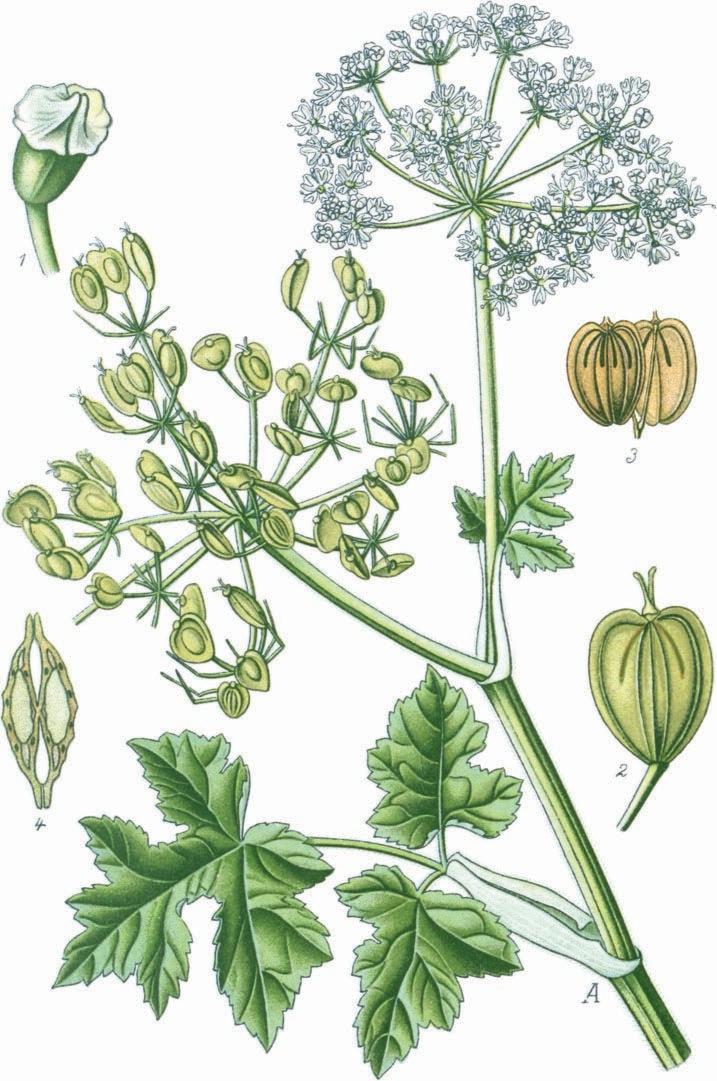
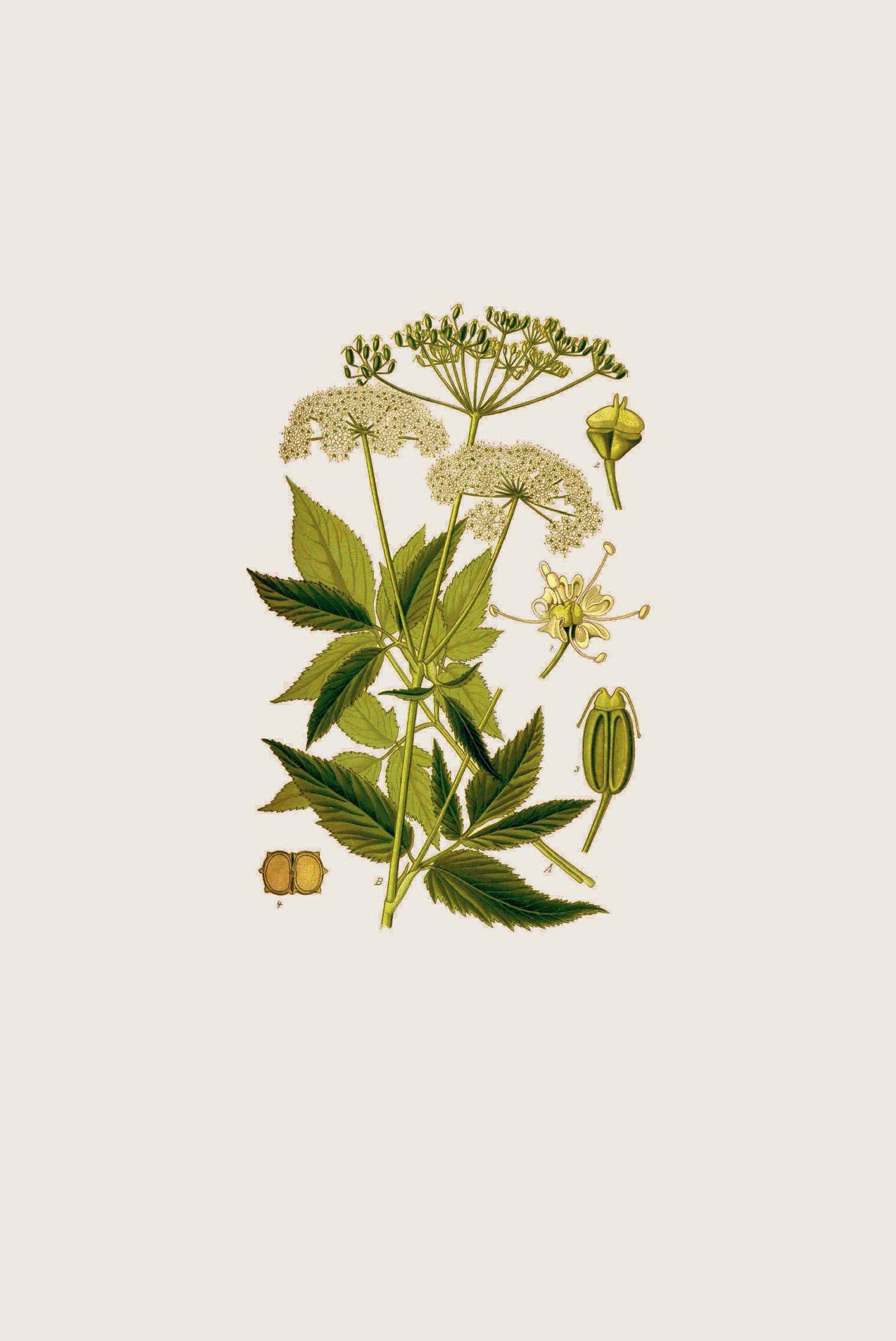
COMMON HOGWEED
Heracleum sphondylium
DUTCH: GEWONE BERENKLAUW
FRENCH: BERCE SPHONDYLE
GERMAN: WIESEN-BÄRENKLAU
FAMILY: UMBELLIFERS ( APIACEAE ) Also in this family: dill (Anethum graveolens), parsnip (Pastinaca sativa), wild carrot (Daucus carota), ground elder (Aegopodium podagraria).
DESCRIPTION
1. Perennial.
2. Grows to a height of 1.5 m (a good bit smaller than the giant hogweed).
3. Blooms from June to September.
4. Flowers in white umbels of 15-18 rays.
5. Stalk is rectangular and grooved, heavily hair-covered and does not have red spots.
6. Leaves are leaf green and of varying shapes (in budding form).
7. Leaf stems are very swollen at the leaf axils.
8. A hogweed fruit is oval, about 1 cm long, and winged.
EDIBLE PARTS
Flowers, leaf, root, seeds.
CONSTITUENT COMPOUNDS
Common hogweed is rich in sugar, bitter substances, beta-carotene, protein, iron and potassium.
All that, and vitamin C to boot, make this plant quite extraordinary. The essential oil in hogweed contains furocoumarins, which may cause skin irritation after contact followed by exposure to sunlight. Be careful when collecting and storing this plant; incompletely fermented coumarins can be converted into dicoumarol, which has a powerful blood-thinning effect that can potentially cause internal bleeding.
WHERE TO FIND IT
This plant is very common and prefers nutrient-rich, moist soil. You can find hogweed in grasslands, along forest paths and at the edges of pine forests and waterways.
TASTE
Broadly speaking, hogweed tastes something like a sweet carrot. When they are young, you can use the leaves as a vegetable for a stir-fry. The root of this plant tastes a little spicier, and the seeds are aromatic.
GROUND ELDER
Aegopodium podagraria
DUTCH: ZEVENBLAD
FRENCH: L’ÉGOPODE PODAGRAIRE
GERMAN: GIERSCH
FAMILY: UMBELLIFERS ( APIACEAE )
Also in this family: common hogweed (Heracleum sphondylium), wild parsnip (Pastinaca sativa), cow parsley (Anthriscus sylvestris).
DESCRIPTION
1. Hardy perennial.
2. Grows to a height of up to 1 m.
3. White umbrella-shaped flowers that bloom from May to September.
4. Produces a compound umbel (group of flowerheads).
5. Stalks are triangular; upper stems are grooved.
6. 7 leaves (although 5 and 9 are also seen).
7. Top leaves are ternate (compound); leaves below are often fused.
8. Leaves slightly serrated at edges with pointed tip, lightly haired and bright green.
EDIBLE PARTS
Leaf, flower, and seed.
CONSTITUENT
COMPOUNDS
Ground elder contains essential oils and is relatively high in beta-carotene, vitamin C, and minerals. The top parts of the plant contain furocoumarins, toxins common in this family.
WHERE TO FIND IT
Ground elder will be found in partially shaded areas of forests, forest edges, verges, watersides, and gardens. Generally prefers moist and nutrient-rich soil; this is where you will find the biggest leaves and juiciest stalks. Ground elder also thrives at the edges of fields that are strongly fertilised. Spreads aggressively with powerful rhizomes, which is why whole “fields” of them are sometimes reported. Found pretty much everywhere in our part of the world.
TASTE
Tender plant parts taste like a combination of carrot and parsley. The stalks and buds are very juicy. The flowers taste sweeter, and the seeds more tart. The leaf and stalk are the most popular parts to use; they have a vegetal flavour similar to carrot. As with most wild plants, the young leaves are milder in flavour.
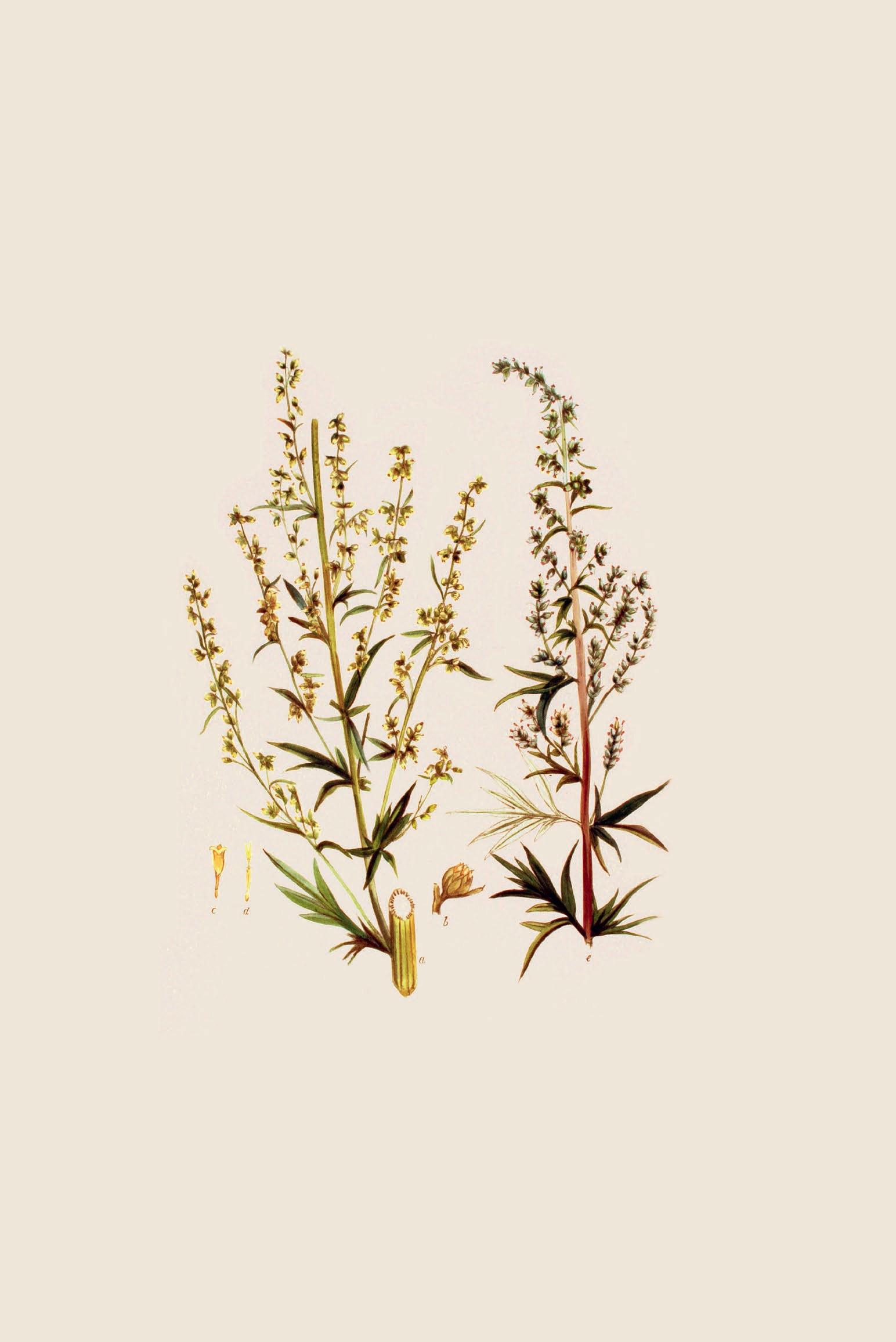
COMMON MUGWORT
Artemisia vulgaris
DUTCH: BIJVOET
FRENCH: L’ARMOISE COMMUNE / ARMOISE CITRONELLE
GERMAN: GEMEINE BEIFUSS
FAMILY: DAISY FAMILY ( ASTERACEAE ) Also in this family: tansy (Tanacetum vulgare), common yarrow (Achillea millefolium), chamomile (Matricaria recutita).
DESCRIPTION
1. Red-brown stalks.
2. The tops of the leaves are generally dark green, with the undersides whitish.
3. The leaves are slightly toothed and tapered.
4. Blooms from June to September.
5. The flowerheads are yellow or red-brown, and are 2-3 mm in size.
6. At the end of the bloom, there will be a nut 1 mm long.
7. Grows to a height of up to 120 cm.
EDIBLE PARTS
Above-ground parts, leaf and flower.
CONSTITUENT COMPOUNDS
Essential oils, thujone (low quantity, so relatively safe to consume), bitter substances, flavonoids, tannins.
WHERE TO FIND IT
Very common plant in temperate climates in the Northern Hemisphere. Can be found in various environments, but primarily along verges. Grows well on disturbed soils, and can thrive in both dry and moist soils.
TASTE
Herbal, aromatic, cardamom-like, bittersweet.
GENERAL
Some sources say that this plant was historically used to repel moths (moughte, a word for moth).
Foragers know it as our own local rosemary or thyme. Its sweet to bitter cardamom-like flavour lends itself to many different types of preparation in many different dishes. On our “wild chefs” weekends, Pieter-jan Lint and I used to make a cardamom-mugwort ice cream, which was always a guaranteed hit.
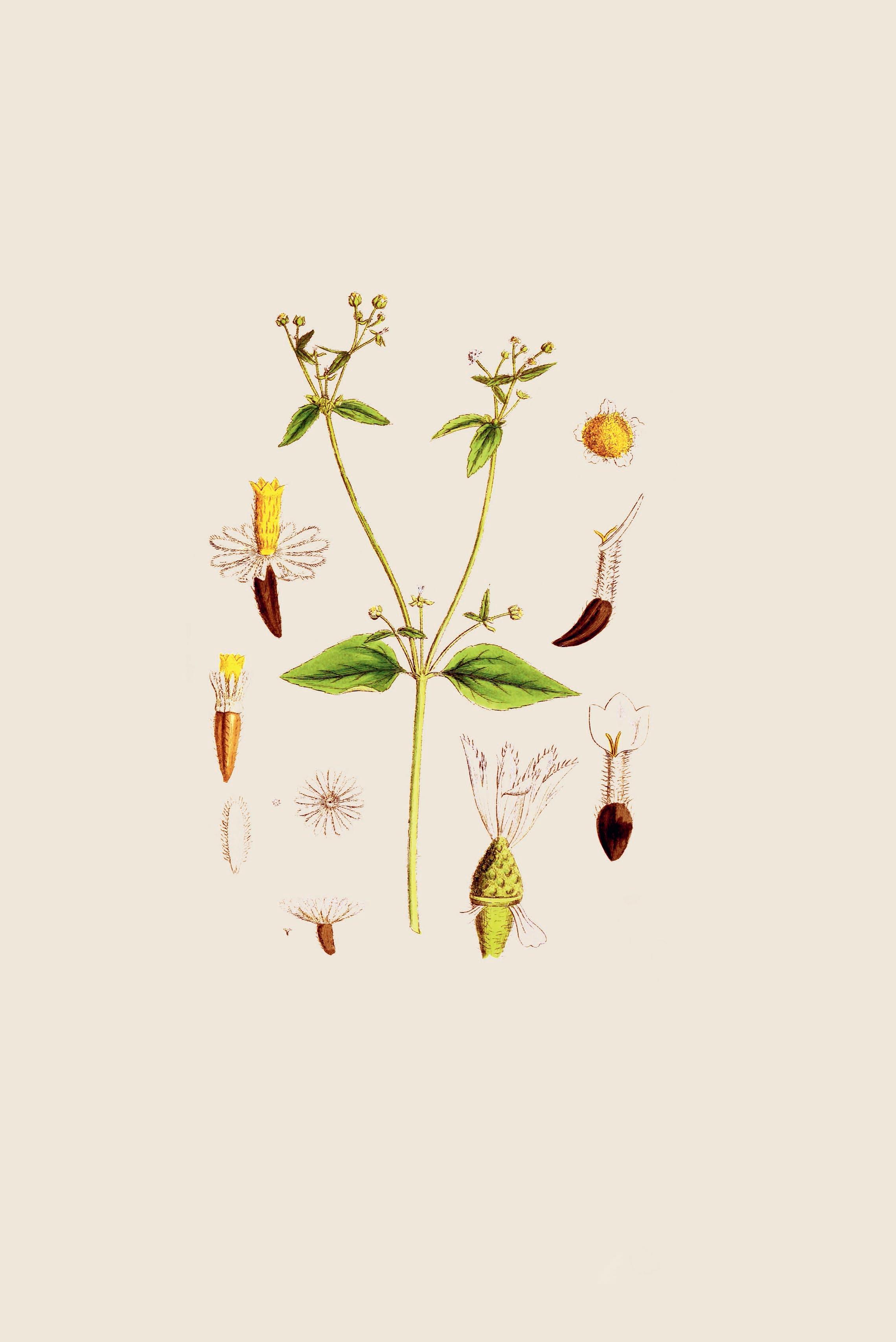
SHAGGY SOLDIER
Galinsoga quadriradiata
DUTCH: HARIG KNOPKRUID
FRENCH: GALINSOGA CILIÉ
GERMAN: BEHAARTES KNOPFKRAUT
FAMILY: DAISY FAMILY ( ASTERACEAE ) Also in this family: dandelion (Taraxacum officinale), chamomile (Matricaria recutita), daisy (Bellis perennis).
DESCRIPTION
1. Two side shoots at every node.
2. Toothed, hairy leaves that are long and pointed.
3. Flowerheads at the end of the branches.
4. White ray florets with yellow disc florets in centre.
EDIBLE PARTS
Leaf, flower, and seed.
CONSTITUENT COMPOUNDS
Vitamins A and C, manganese (relatively high quantity), calcium, iron, and magnesium.
WHERE TO FIND IT
So-called “weed” found between agricultural parcels. A classic pioneer plant.
TASTE
The whole plant has a spinach-like flavour.
GENERAL
Originating from Central America, and native to Peru (in some places it’s known as the “Peruvian daisy”), the shaggy soldier probably came to Europe via Paris, where it was brought to a botanical garden in the late eighteenth century, and from there spread east, in parallel with Napoleon and his soldiers (which is why in our region it’s sometimes called “the French herb”).
Today, this plant and its primary variants being the “hairy soldier” and the “gallant soldier” (Galinsoga parviflora), have marched across the whole world: Europe, Africa, the Middle East... I even found them in Nepal.
A survey in Valles Centrales, Oaxaca, Mexico, of 175 women revealed that Galinsoga quadriradiata was one of the four plants most heavily
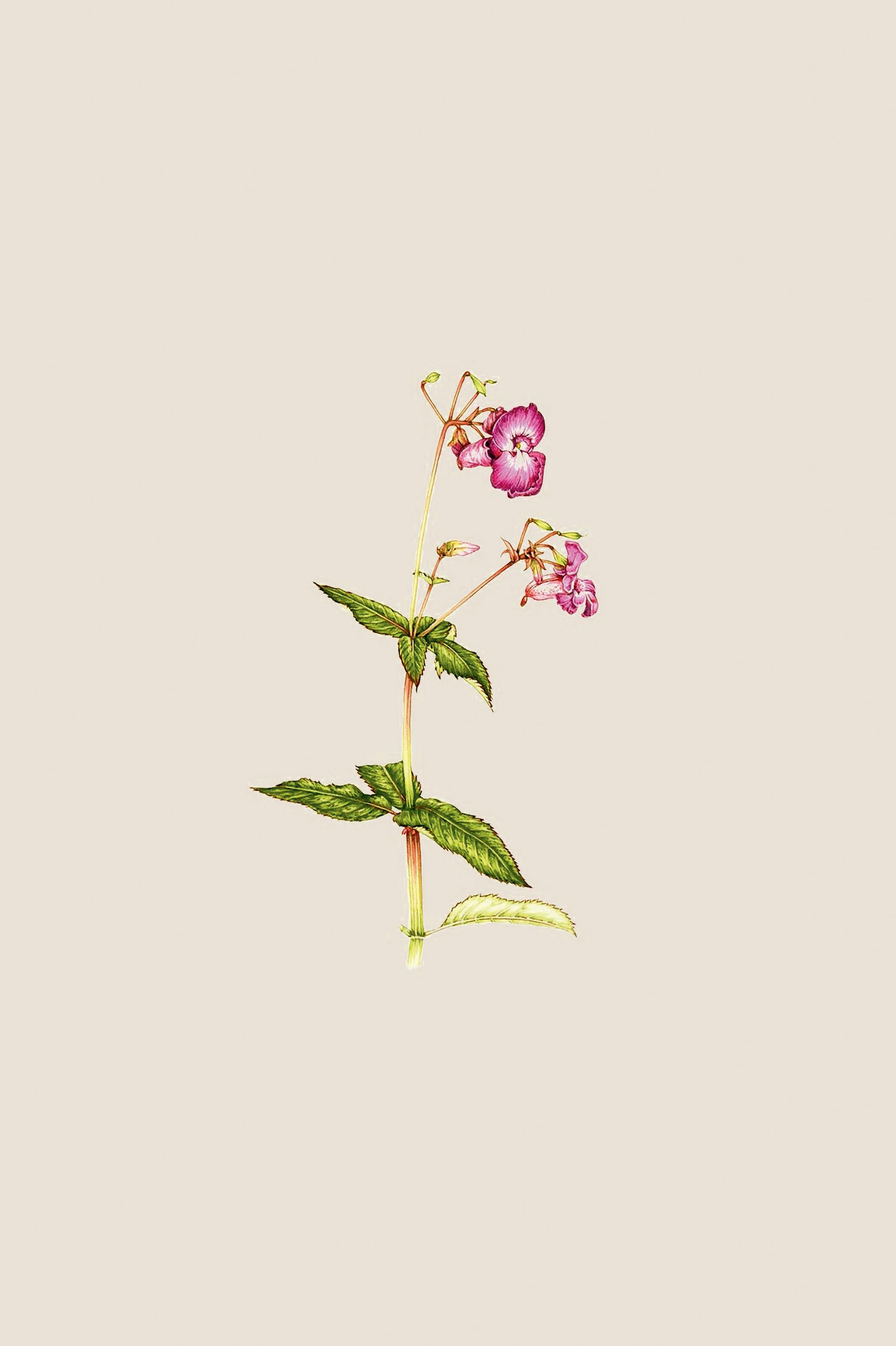
HIMALAYAN BALSAM
(KISS-ME-ON-THE-MOUNTAIN)
Impatiens glandulifera
DUTCH: SPRINGBALSEMIEN (REUZENBALSEMIEN)
FRENCH: BALSAMINE DE L’HIMALAYA
GERMAN: DRÜSIGES SPRINGKRAUT
FAMILY: BALSAMS ( BALSAMINACEAE )
Also in this family: touch-me-not balsam (Impatiens noli-tangere), small balsam (Impatiens parviflora), orange balsam (Impatiens capensis).
DESCRIPTION
1. Annual.
2. Grows up to 2.5 m high.
3. Leaves are elongated, lanceolate, and toothed (5-23 cm long).
4. The leaves grow in whorls around the angular stems, which are often branched.
5. The stem is pale green or sometimes reddish.
6. Blooms from July to September.
7. The flowers are lilac, pink, pale yellow or white and grow in bunches of 2-14 in the leaf axils.
8. The five petals form a tunnel or hooded shape that has been compared to a helmet.
9. After flowering, the seed pods form, and these “explode” when ripe.
10. The seeds can be fired up to 7 metres from the plant.
EDIBLE PARTS
Leaf, flower, seed.
CONSTITUENT COMPOUNDS
Glycosides, essential oil, tannins, and organic acids. Seventy-six different compounds (substances) have been identified in the essential oils of this plant, and ninety-four in the essential oil in the root.
WHERE TO FIND IT
Often to be found in shaded, moist areas and at the edges of creeks and rivers. Very common. Himalayan balsam is on the invasive plant list and cannot be planted.
TASTE
The flower tastes sweet and floral. The seeds taste nutty.
GENERAL
Impatiens glandulifera is native to the temperate climate of the moist western Himalayas. From northern Pakistan (Chitral, Swar, Hazara) east to Kashmir in northwestern India (from Himachal Pradesh to the Garhwal
WOODLAND HAWTHORN
Crataegus laevigata
DUTCH: TWEESTIJLIGE MEIDOORN
FRENCH: L’AUBÉPINE
GERMAN: ZWEIGRIFFELIGER WEISSDORN
FAMILY: ROSES ( ROSACEAE )
Also in this family: wild strawberry (Fragaria vesca), dog rose (Rosa canina), meadowsweet (Filipendula ulmaria).
DESCRIPTION
1. Small tree, averaging 6 m tall when grown (sometimes up to 12 m), usually a shrub and often to be found in hedges.
2. Dark brown bark with slightly orange streaking.
3. The branches are heavily thorned.
4. Leaves are 5-7 cm long, with one-half divided into three to seven lobes serrated on the top side.
5. The white flowers with 5 sepals, which appear from late April to June, are arranged in clusters of 5-25 flowers.
6. The flowers smell nice from a distance, but from up close smell more like fish.
7. Also has red stamens that, as is typical of this family, far outnumber the petals themselves.
8. Has multiple styles in the centre of the flower; the single-seeded hawthorn (Crataegus monogyna) has a single style in the centre of the flower.
9. The fruits are small, berry-like pomes about the thickness of a finger, dark red, floury and yellow-white on the inside.
EDIBLE PARTS
Leaf, flower, and fruit.
CONSTITUENT COMPOUNDS
Tannins, flavonoids, phenolic acids. The fruits contain pectin and sugars.
WHERE TO FIND IT
Generally semi-shaded areas in deciduous and mixed forests. Often to be found at the edge of the forest; also a very popular shrub in hedges. Grows on more or less every type of soil, but prefers chalky to loamy soils; does less well on salty soils. Very common across the temperate climates of the Northern Hemisphere. In Australia, woodland hawthorn is growing rampant around the city of Melbourne, where it is clearly an invasive exotic.
TASTE
The leaves taste tangy in the early spring. The flower has a sweet to fishy taste. The berries are floury and sweet; cooking improves their flavour.
WWW.FORESTTOPLATE.COM
If this book has inspired you to some foraging fever, check out our courses and workshops on www.foresttoplate.com! We offer a variety of activities, an accessible online learning package, and an intensive study programme with us in the Ardennes in Belgium.
WWW.LANNOO.COM
Register on our website, and you’ll receive our newsletter informing you of our latest books and interesting exclusive offers.
All rights reserved. No part of this publication may be duplicated, saved in electronic format, and/or released in any form or in any manner, whether electronic, mechanical, by photocopying or in any other way without the prior consent of the publisher in writing. The publisher has endeavoured to the best of its ability to identify and reference the sources of the engravings used in this book. All rights are reserved, including those for text and data mining, AI training and similar technologies.