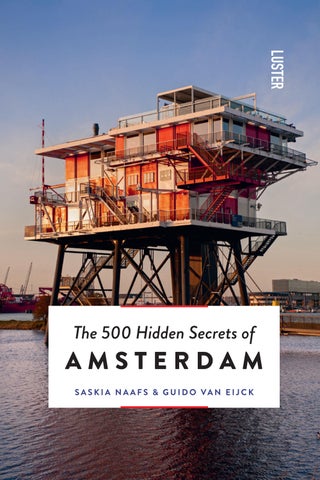
The 500 Hidden Secrets of AMSTERDAM
GUIDO VAN EIJCK
SASKIA NAAFS &
INTRODUCTION
This is a guide to the Amsterdam that almost no one knows. It takes you off the beaten track to discover the city’s hidden gardens, unknown museums and small coffee bars. Within these pages, you will find the five places to eat the best ‘bitterballs’, five of the most crooked canal houses and five of the best independent bookstores.
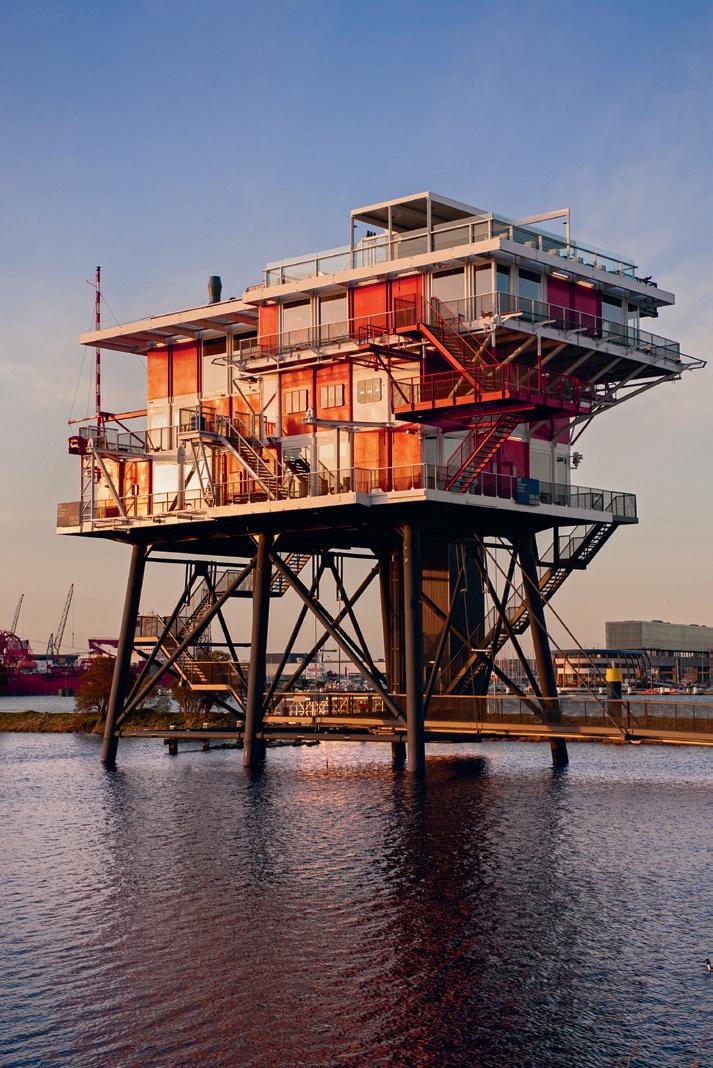
The aim is to take the reader to unexpected places that are different in some way from the obvious tourist destinations. This book encourages you to set out to find a 1950s Russian submarine, a Maria altar in a hotel garden, or secretly placed statues by an anonymous sculptor. You will also be guided to a restaurant located in a former pirate radio station, through a museum alley that houses a 17th century giant, and into a cinema located in an old pathological anatomy laboratory.
If you want to experience some of Amsterdam’s more unusual sides, this is the perfect guide for you. Visit a secret ‘clandestine church’ in the middle of the red light district, venture out of the city centre to sample the best Indonesian cuisine, or try some home made ‘jenever’ at a distillery that’s deeply hidden in a park.
This book doesn’t mention everything there is to see in the city. There are already enough guidebooks and websites that cover the familiar sights. The aim was to create an intimate guide to the places the authors would recommend to a friend who wants to discover the real Amsterdam.
HOW TO USE THIS BOOK?
This book contains 500 things about Amsterdam in 100 different categories. Some are places to visit, others are random bits of information. The aim is to inspire, not to cover the city from A to Z.
The places listed in the guide are given an address, a district and a number. The district and number allow you to find the locations on the maps at the beginning of the book. The maps are not detailed enough to navigate around the city, but you can pick up a good city map at one of the ‘I amsterdam’ Visitor Centres – either at the Stationsplein, directly across from Central Station, or at Amsterdam Airport Schiphol (Holland Tourist Information), by Schiphol Plaza at Arrivals 2.
You need to bear in mind that cities change all the time. The chef who hits a high note one day can be uninspiring on the day you happen to visit. The hotel ecstatically reviewed in this book might suddenly go downhill under a new manager. The bar considered one of the 5 best places for live music might be empty on the night you visit.
This is obviously a highly personal selection. You might not always agree with it. If you want to leave a comment, recommend a bar or reveal your favourite secret place, you can contact the publisher at info@lusterweb.com.
AMSTERDAM overview
Rembrandtpark
Westerpark
Westerpark Quarter
Vondelpark
1 Negen Straatjes De Jordaan
River IJ
Haarlemmer Quarter Westelijjke Eilanden Plantage Quarter 2 3 2 5
Canal Belt South
Central station
Waterlooplein Quarter 1
Oosterpark Quarter Old Center
Oostelijke Eilanden De Pijp North
Indische Buurt
River IJ
Watergraafsmeer
NieuweWesterdokstraat
DE JORDAAN NEGEN STRAATJES
Westerstraat Bloemgracht
Lauriergracht
Looiersgracht
Leidsegracht
264 DE GAPER
Herenstraat 7
Old Center ➁
From the seventeenth century onwards, gapers (yawners) were attached to the front of an apothecary to draw customers. They depict a figure with an open mouth who’s not actually yawning, but ready to take medicine. If you look closely you’ll see that this gaper has a pill resting on his tongue. The gapers were often Moors with turbans on their head, a reference to the exotic origin of the medicine.
265 IN OBJECTEN
Oude Braak 21
Old Center ➁
Not all gable stones are centuries old, there are still craftsmen who make modern stones on demand, like Hans ‘t Mannetje. He spent some time training with the famous sculptor Hildo Krop, and has made hundreds of gable stones. The one at Oude Braak 21, the former site of a construction company, depicts an electric drill. Notice the tiny hole it has made in the right hand corner.
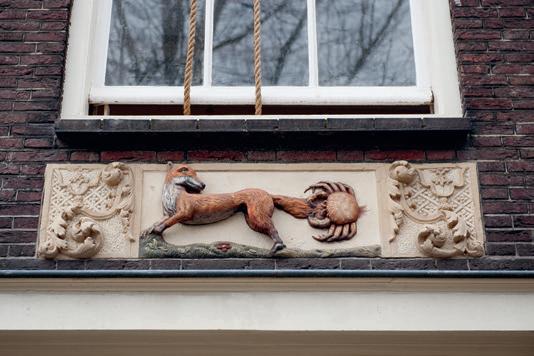
261 THE FOX AND THE CRAB
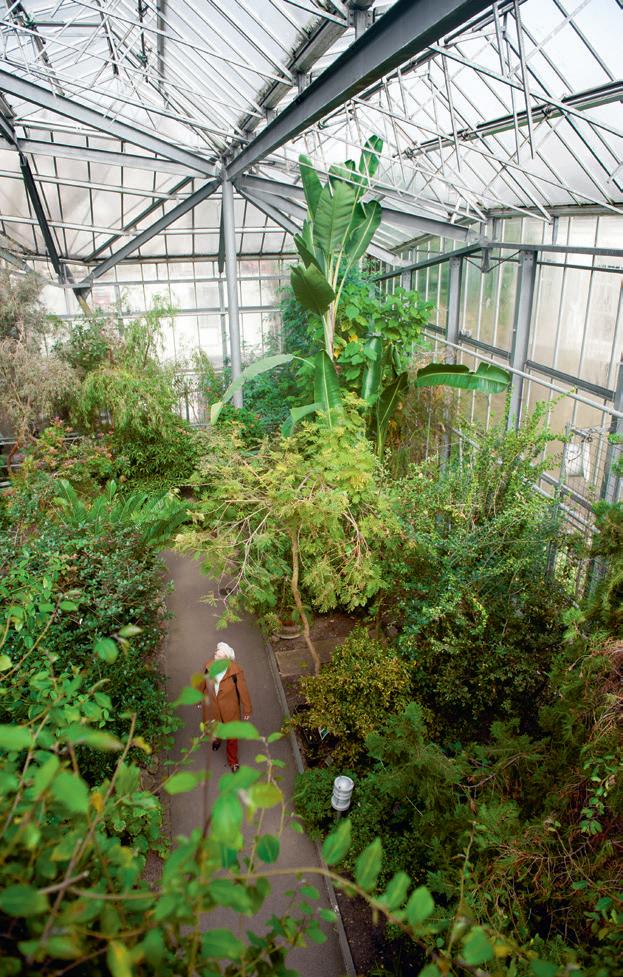
HORTUS BOTANICUS
The 5 most PEACEFUL SPOTS
266
HORTUS BOTANICUS
Plantage Middenlaan 2-A
Plantage Quarter ➁
+31 (0)20 625 90 21 www.dehortus.nl
267
DE PAPEGAAI
Kalverstraat 58
Old Center ➁
+31 (0)20 623 18 89 www.nicolaas-parochie.nl
The botanical garden of Amsterdam University opened in 1638 and has over 4,000 different plant species. This quiet and isolated green paradise was a centre for study and innovation. Take the first plant of the widely distributed Brazilian coffee: it was bred in the Hortus, after arriving in Amsterdam from the Middle East in 1706. The rare Victoria water lily is another eye-catcher.
This tiny church, surrounded by high street shops, offers a silent refuge from the busy Kalverstraat. Its history goes back to the seventeenth century and the aftermath of the Reformation, when it was founded as a conventicle where Catholics could convene in silence. It was located behind a bird shop, hence the name ‘De Papegaai’ (the parrot).