Contents Preface
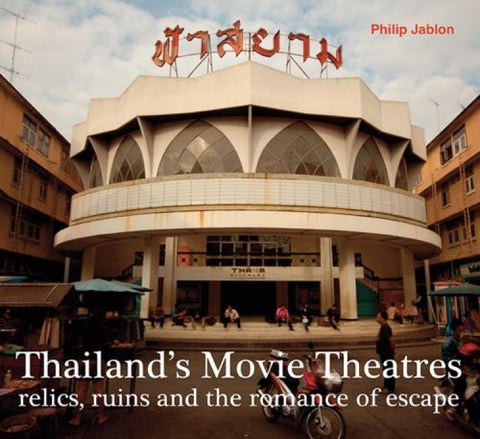
First published in Thailand in 2019 by River Books Co., Ltd. 396 Maharaj Road, Tatien, Bangkok 10200 Tel: 66 2 225 4963 | 66 2 224 6686 E-mail: order@riverbooksbk.com www.riverbooksbk.com Copyright collective work © 2019 River Books Copyright text © Philip Jablon Copyright photographs © Philip Jablon All rights reserved. No part of this book may be reproduced or transmitted in any form or by any means, electrical or mechanical, including photocopying, recording or by any information storage or retrieval system without the written permission of the publisher. Editor: Sarah Rooney Design: Ruetairat Nanta Production: Paisarn Piemmettawat Publisher: Narisa Chakrabongse ISBN 978 616 451 023 4 Front cover: Fah Siam theatre, Suphanburi Back cover: Scala theatre, Bangkok Page 3: Wik Kru Thawee theatre, Ratchaburi province Opposite: Projector at the Luna theatre,Yala Printed and bound in Thailand by Sirivatana Interprint Public Co., Ltd.
9
Introduction
11
Chapter 1 – Early Days of Cinema: From Siam to Thailand Pre-World War II Theatres State-built Theatres
16 18 30
Chapter 2 – The Boom Years: 1961-1981 Double-feature Cinemas
36 110
Chapter 3 – The Latecomers of Isan
134
Chapter 4 – Over the Mekong: Laos
144
Chapter 5 – Behind the Scenes The Projectionists The Dubbers The Painters
160 162 170 176
Epilogue
190
Acknowledgements
192
Index to Movie Theatres
194
Index to Movie Posters
196
Contents Preface
First published in Thailand in 2019 by River Books Co., Ltd. 396 Maharaj Road, Tatien, Bangkok 10200 Tel: 66 2 225 4963 | 66 2 224 6686 E-mail: order@riverbooksbk.com www.riverbooksbk.com Copyright collective work © 2019 River Books Copyright text © Philip Jablon Copyright photographs © Philip Jablon All rights reserved. No part of this book may be reproduced or transmitted in any form or by any means, electrical or mechanical, including photocopying, recording or by any information storage or retrieval system without the written permission of the publisher. Editor: Sarah Rooney Design: Ruetairat Nanta Production: Paisarn Piemmettawat Publisher: Narisa Chakrabongse ISBN 978 616 451 023 4 Front cover: Fah Siam theatre, Suphanburi Back cover: Scala theatre, Bangkok Page 3: Wik Kru Thawee theatre, Ratchaburi province Opposite: Projector at the Luna theatre,Yala Printed and bound in Thailand by Sirivatana Interprint Public Co., Ltd.
9
Introduction
11
Chapter 1 – Early Days of Cinema: From Siam to Thailand Pre-World War II Theatres State-built Theatres
16 18 30
Chapter 2 – The Boom Years: 1961-1981 Double-feature Cinemas
36 110
Chapter 3 – The Latecomers of Isan
134
Chapter 4 – Over the Mekong: Laos
144
Chapter 5 – Behind the Scenes The Projectionists The Dubbers The Painters
160 162 170 176
Epilogue
190
Acknowledgements
192
Index to Movie Theatres
194
Index to Movie Posters
196
Preface W
e have heard the analogies. To the devout, the movie theatre is a temple, a holy sermon hall where the congregation prays for transcendence. To the sensuous, it is a gladiatorial arena, loud and unholy, where the crowd cheers and laughs and claps and sobs at the spectacle. And to the surrealist, the cinema is a coffin, a very large coffin, dark except for the screen, sealed off and removed from reality, a collective coffin where the dead dream of heaven and the living dream of light. Lately, movie theatres – the standalone structures photographed in their glorious dereliction in this book – have become something else for almost everyone in Thailand: nostalgia. Or worse, a fading memory, a sepia album slowly disintegrating in an age where worshippers pray to the moving-image deities, not in the collective blackness of cinemas but in private – at home, on their little personal screens – or in artificially bright, neon-smeared multiplexes that value plasticity over elegance. The coffin metaphor becomes an ironic self-prophecy, for the graveyard of architecture is now stacked with the ruins of standalone cinemas, the rubble of marquees, discarded chandeliers and defaced facades, as old movie temples have been replaced by megamalls, parking garages and high-rise condos. Empire, King, Queen, Prince, Krung Kasem, Mackenna, Colesium, Paramount, Hollywood, Athens, Siam Theatre, Lido – the movie houses of those glorious days are now just names and reminiscences. In Bangkok, only the Scala remains as the last standalone cinema (standing alone, it is) and no one knows for how much longer. The disappearance of these grand dames, which flaunted palatial, art-deco, cubist, and a mongrel of mid-century design, provokes more than just a bitter nostalgia: it’s proof of a monumental shift, for better or worse, in our economic behaviour and consumerist impulses.We used to go to the movies; now we go to malls that happen to have movie
screens in them. To some, it doesn’t matter. To others, it does: film was the art that shaped the consciousness of the 20th century, and the way we experienced it also shaped our childhood, our memories, our worldview and our social interaction. If that sounds like a naive ode to what is forever lost, then perhaps it is. If that sounds like romantic Marxism – come on, those ageing standalone theatres were no longer economically viable in capitalistic Thailand! – then I stand before the firing squad with my chest puffed up in pride, because one of my earliest cinematic memories was when my parents took me to watch King Kong (the Jessica Lange version, the original posters of which can be seen on pages 186 and 187) in that big, dark place – not like a coffin, but like a strange dream made up of atomised light – and since then there has been an odd pull that has compelled me to keep going back for more. I suspect that’s what Philip Jablon felt, too, when he trekked through the necropolis of forgotten movie houses to capture their splendid dereliction. He can’t resurrect the dead, no more than anyone can relive the golden era of standalone cinemas in Thailand. The temple has fallen and the coffin nailed. But at least on these pages their memory will not fade, their light will not be extinguished, and the congregation of worshippers, haunted by the dream of atomised light, will continue to pray. Kong Rithdee April 2019
Ticket collector at the Nakhon Non Rama theatre, Pracharat Road, Nonthaburi.
9
Preface W
e have heard the analogies. To the devout, the movie theatre is a temple, a holy sermon hall where the congregation prays for transcendence. To the sensuous, it is a gladiatorial arena, loud and unholy, where the crowd cheers and laughs and claps and sobs at the spectacle. And to the surrealist, the cinema is a coffin, a very large coffin, dark except for the screen, sealed off and removed from reality, a collective coffin where the dead dream of heaven and the living dream of light. Lately, movie theatres – the standalone structures photographed in their glorious dereliction in this book – have become something else for almost everyone in Thailand: nostalgia. Or worse, a fading memory, a sepia album slowly disintegrating in an age where worshippers pray to the moving-image deities, not in the collective blackness of cinemas but in private – at home, on their little personal screens – or in artificially bright, neon-smeared multiplexes that value plasticity over elegance. The coffin metaphor becomes an ironic self-prophecy, for the graveyard of architecture is now stacked with the ruins of standalone cinemas, the rubble of marquees, discarded chandeliers and defaced facades, as old movie temples have been replaced by megamalls, parking garages and high-rise condos. Empire, King, Queen, Prince, Krung Kasem, Mackenna, Colesium, Paramount, Hollywood, Athens, Siam Theatre, Lido – the movie houses of those glorious days are now just names and reminiscences. In Bangkok, only the Scala remains as the last standalone cinema (standing alone, it is) and no one knows for how much longer. The disappearance of these grand dames, which flaunted palatial, art-deco, cubist, and a mongrel of mid-century design, provokes more than just a bitter nostalgia: it’s proof of a monumental shift, for better or worse, in our economic behaviour and consumerist impulses.We used to go to the movies; now we go to malls that happen to have movie
screens in them. To some, it doesn’t matter. To others, it does: film was the art that shaped the consciousness of the 20th century, and the way we experienced it also shaped our childhood, our memories, our worldview and our social interaction. If that sounds like a naive ode to what is forever lost, then perhaps it is. If that sounds like romantic Marxism – come on, those ageing standalone theatres were no longer economically viable in capitalistic Thailand! – then I stand before the firing squad with my chest puffed up in pride, because one of my earliest cinematic memories was when my parents took me to watch King Kong (the Jessica Lange version, the original posters of which can be seen on pages 186 and 187) in that big, dark place – not like a coffin, but like a strange dream made up of atomised light – and since then there has been an odd pull that has compelled me to keep going back for more. I suspect that’s what Philip Jablon felt, too, when he trekked through the necropolis of forgotten movie houses to capture their splendid dereliction. He can’t resurrect the dead, no more than anyone can relive the golden era of standalone cinemas in Thailand. The temple has fallen and the coffin nailed. But at least on these pages their memory will not fade, their light will not be extinguished, and the congregation of worshippers, haunted by the dream of atomised light, will continue to pray. Kong Rithdee April 2019
Ticket collector at the Nakhon Non Rama theatre, Pracharat Road, Nonthaburi.
9
Pre-World War II Theatres M
otion picture made its debut in Siam (as Thailand was then known) on 10 June 1897 at the Mom Chai Alangkan theatre in Bangkok, approximately two years after the pioneering Lumière brothers premiered the medium in the basement of a Parisian café. Film was an instant success with Siamese audiences, a fact which was not lost on the enterprising eyes of entrepreneurs. As is often the case with new technologies, the medium was first popular among the aristocracy. The first motion picture camera to enter the country was purchased by Prince Thongtham Thavalyavong, a brother of King Chulalongkorn (Rama V), which he used to make his own movies. The first permanent motion picture theatre, however, was established not by a citizen of Siam, but by a Japanese immigrant who, judging by the success of motion pictures in his native Japan, wisely predicted the popularity they would receive in the Southeast Asian kingdom. In 1905, Watanabe Tomoyori opened the country’s first ever movie theatre in Bangkok, calling it “The Japanese Cinema”. From that point onwards, movies and movie theatres proliferated. Dome Sukwong, founder of the Thai Film Archive, estimates that more than 700 theatres were built across Thailand in subsequent years. While the vast majority of those built – and the vast majority of those still in existence – were contracted between the years 1961 and 1981 (see Chapter 2), the years leading up to World War II gave rise to a considerable number. Many of the earliest movie theatres built in Thailand, specifically in Bangkok, were tucked within the tight confines of trok (lane) communities. A fairly common physical configuration in many older Thai urban areas, the trok communities consisted of clusters of free-standing
Previous pages: Wik Kru Thawee theatre, Ratchaburi province.
18
wooden houses enclosed by brick-and-mortar shop-houses that lined the streets and canals. Thai communities usually occupied the former while Chinese traders occupied the latter. The interior settlement, where the theatres were built, was accessed through a series of narrow lanes that led from the main thoroughfares and evolved from pathways between the minor canals that interlaced the older areas of the city. These trok communities were the culmination of royally-financed road construction, mercantile activity among Chinese businesspeople and a growing number of labourers drawn in from the provinces.The placement of the early movie theatres within trok communities was done out of necessity more than anything else; as land on the streetside perimeters of each trok was generally occupied by brick shop-houses, the interior courts, interspersed with wooden Thai-style homes, offered sufficient space to build a movie theatre, even if it meant razing some of the houses to make room. For the trok communities, these early movie theatres became a dynamic part of the neighbourhood economy and social life. The theatres attracted crowds, who in turn spent money in the trok, purchasing snacks and beverages provided by local residents-cum-vendors. The early movie theatres of Thailand were essentially the living rooms of the communities they served. In a time before most households had electricity, let alone a radio or television, these theatres were their link to the outside world. In 21st-century Thailand, pre-World War II movie theatres are extremely rare; only a handful still exist nationwide. All of these are currently dormant, except for the Sala Chalerm Krung theatre (also known as the Royal Theatre, see page 26), which is still in use as a live theatre space.
Opposite: Prince theatre, Bangkok.
Pre-World War II Theatres M
otion picture made its debut in Siam (as Thailand was then known) on 10 June 1897 at the Mom Chai Alangkan theatre in Bangkok, approximately two years after the pioneering Lumière brothers premiered the medium in the basement of a Parisian café. Film was an instant success with Siamese audiences, a fact which was not lost on the enterprising eyes of entrepreneurs. As is often the case with new technologies, the medium was first popular among the aristocracy. The first motion picture camera to enter the country was purchased by Prince Thongtham Thavalyavong, a brother of King Chulalongkorn (Rama V), which he used to make his own movies. The first permanent motion picture theatre, however, was established not by a citizen of Siam, but by a Japanese immigrant who, judging by the success of motion pictures in his native Japan, wisely predicted the popularity they would receive in the Southeast Asian kingdom. In 1905, Watanabe Tomoyori opened the country’s first ever movie theatre in Bangkok, calling it “The Japanese Cinema”. From that point onwards, movies and movie theatres proliferated. Dome Sukwong, founder of the Thai Film Archive, estimates that more than 700 theatres were built across Thailand in subsequent years. While the vast majority of those built – and the vast majority of those still in existence – were contracted between the years 1961 and 1981 (see Chapter 2), the years leading up to World War II gave rise to a considerable number. Many of the earliest movie theatres built in Thailand, specifically in Bangkok, were tucked within the tight confines of trok (lane) communities. A fairly common physical configuration in many older Thai urban areas, the trok communities consisted of clusters of free-standing
Previous pages: Wik Kru Thawee theatre, Ratchaburi province.
18
wooden houses enclosed by brick-and-mortar shop-houses that lined the streets and canals. Thai communities usually occupied the former while Chinese traders occupied the latter. The interior settlement, where the theatres were built, was accessed through a series of narrow lanes that led from the main thoroughfares and evolved from pathways between the minor canals that interlaced the older areas of the city. These trok communities were the culmination of royally-financed road construction, mercantile activity among Chinese businesspeople and a growing number of labourers drawn in from the provinces.The placement of the early movie theatres within trok communities was done out of necessity more than anything else; as land on the streetside perimeters of each trok was generally occupied by brick shop-houses, the interior courts, interspersed with wooden Thai-style homes, offered sufficient space to build a movie theatre, even if it meant razing some of the houses to make room. For the trok communities, these early movie theatres became a dynamic part of the neighbourhood economy and social life. The theatres attracted crowds, who in turn spent money in the trok, purchasing snacks and beverages provided by local residents-cum-vendors. The early movie theatres of Thailand were essentially the living rooms of the communities they served. In a time before most households had electricity, let alone a radio or television, these theatres were their link to the outside world. In 21st-century Thailand, pre-World War II movie theatres are extremely rare; only a handful still exist nationwide. All of these are currently dormant, except for the Sala Chalerm Krung theatre (also known as the Royal Theatre, see page 26), which is still in use as a live theatre space.
Opposite: Prince theatre, Bangkok.
S
tarting around 1961, the construction of modernist standalone movie theatres, built primarily of brick and concrete (as opposed to wood), began in haste throughout Thailand. Their proliferation helped usher Thailand into the era of mass-market consumerism and industrialization. The year 1961 was important for Thailand for another reason: it was the year the governments of Thailand and the United States entered into a strategic partnership with the two-pronged aim of bolstering Thailand against communism, which had been gaining momentum across the region, and pushing back against communist forces in neighbouring countries. Central to this partnership was Thailand’s permission for the US Air Force to station aircraft at six Royal Thai Airforce bases, from where America would fly reconnaissance and bombing missions against targets in Laos and Vietnam. Many millions of dollars were poured into the Thai economy over the ensuing years, some of which were earmarked specifically for economic development programmes. Other money came through military spending, as R&R economies developed in towns hosting US military personnel. The influx of dollars stimulated wide-reaching social change, spurring infrastructure development and market integration in even the most far-flung corners of the country. With growing wealth and disposable incomes, a taste for cinema blossomed and, for the next 20 years or so, standalone movie theatres were constructed in nearly every district in every province of the country. In provincial towns nationwide, theatre owners were usually drawn from local business families of ethnic Chinese descent who had accumulated capital from years of dealing in various agricultural goods and services. As rural markets expanded, these countryside capitalists built movie theatres on land often located at or near rural trading centres. By the 1970s, a striking new movie theatre was a common feature of small towns across the Thai hinterland. The theatre boom provided international movie distributors with a healthy market in Thailand. Although dominated by imports from Hollywood, the international viewing fare included films from Hong Kong, Japan, India and Europe. Due to this diversity, the movie theatre became a wellspring of globalization for the average person in Thailand. Moreover, at no other period in Thai history was there
a more international assortment of films screening in Thai theatres at any given time. The domestic film industry also flourished, breaking with tradition in order to keep stride with technical innovations from abroad. An increase in the number and quality of films minted a fresh batch of superstars, as names like Mitr Chaibancha, Petchara Chaowarat, Lor Dok and Sombath Methanee – to name just a few – rose to prominence. But the biggest change came as 35 mm film began to replace 16 mm as the format of choice. Aside from the larger, more robust picture made possible by 35 mm, it also made it possible to record sound onto the film. During the 16 mm era, due to the lack of soundtrack on the film stock, a typical Thai film relied on live voice actors (see The Dubbers, page 172) to speak the parts of the on-screen cast and narrators. With 35 mm, live dubbers became unnecessary, forever changing the way Thai films were made and consumed. Bigger, more technologically advanced theatres were built to accommodate the increasingly sophisticated movies being made. As the 1980s rolled in, however, the theatre construction boom began to slow down. Changing technology and the rise of home entertainment diminished the need for massive, single-screen theatres. Ticket sales declined accordingly and theatres slowly began to close. In the 1990s, several theatre chains struck deals with shopping mall developers to include multiplex theatres on the top floors. The multiplex turned out to be a disruptive technology, cutting ever deeper into the market share of the older standalone variety. Additionally, the proliferation of home entertainment systems – TVs, VCRs and karaoke machines – combined with an increase in car ownership, made trips to local standalone movie theatres (which often did not provide parking) less appealing, if not altogether inconvenient. By the 2000s, shopping malls were all the rage in Thai urban centres, able to attract the car-driving consumer base with secure parking garages on location. Once inside, the added options of shopping and eating as well as seeing a movie at the multiplex theatre, all under one climate-controlled roof, pushed standalone theatres into the margins of consumer society. In short, the rise of the shopping mall marked the death of the standalone movie theatre in Thailand.
Previous pages: Charoen Rath theatre, Khon Kaen (courtesy Philippe Doro).
38
Opposite: Petch Siam theatre, Sukhothai province.
S
tarting around 1961, the construction of modernist standalone movie theatres, built primarily of brick and concrete (as opposed to wood), began in haste throughout Thailand. Their proliferation helped usher Thailand into the era of mass-market consumerism and industrialization. The year 1961 was important for Thailand for another reason: it was the year the governments of Thailand and the United States entered into a strategic partnership with the two-pronged aim of bolstering Thailand against communism, which had been gaining momentum across the region, and pushing back against communist forces in neighbouring countries. Central to this partnership was Thailand’s permission for the US Air Force to station aircraft at six Royal Thai Airforce bases, from where America would fly reconnaissance and bombing missions against targets in Laos and Vietnam. Many millions of dollars were poured into the Thai economy over the ensuing years, some of which were earmarked specifically for economic development programmes. Other money came through military spending, as R&R economies developed in towns hosting US military personnel. The influx of dollars stimulated wide-reaching social change, spurring infrastructure development and market integration in even the most far-flung corners of the country. With growing wealth and disposable incomes, a taste for cinema blossomed and, for the next 20 years or so, standalone movie theatres were constructed in nearly every district in every province of the country. In provincial towns nationwide, theatre owners were usually drawn from local business families of ethnic Chinese descent who had accumulated capital from years of dealing in various agricultural goods and services. As rural markets expanded, these countryside capitalists built movie theatres on land often located at or near rural trading centres. By the 1970s, a striking new movie theatre was a common feature of small towns across the Thai hinterland. The theatre boom provided international movie distributors with a healthy market in Thailand. Although dominated by imports from Hollywood, the international viewing fare included films from Hong Kong, Japan, India and Europe. Due to this diversity, the movie theatre became a wellspring of globalization for the average person in Thailand. Moreover, at no other period in Thai history was there
a more international assortment of films screening in Thai theatres at any given time. The domestic film industry also flourished, breaking with tradition in order to keep stride with technical innovations from abroad. An increase in the number and quality of films minted a fresh batch of superstars, as names like Mitr Chaibancha, Petchara Chaowarat, Lor Dok and Sombath Methanee – to name just a few – rose to prominence. But the biggest change came as 35 mm film began to replace 16 mm as the format of choice. Aside from the larger, more robust picture made possible by 35 mm, it also made it possible to record sound onto the film. During the 16 mm era, due to the lack of soundtrack on the film stock, a typical Thai film relied on live voice actors (see The Dubbers, page 172) to speak the parts of the on-screen cast and narrators. With 35 mm, live dubbers became unnecessary, forever changing the way Thai films were made and consumed. Bigger, more technologically advanced theatres were built to accommodate the increasingly sophisticated movies being made. As the 1980s rolled in, however, the theatre construction boom began to slow down. Changing technology and the rise of home entertainment diminished the need for massive, single-screen theatres. Ticket sales declined accordingly and theatres slowly began to close. In the 1990s, several theatre chains struck deals with shopping mall developers to include multiplex theatres on the top floors. The multiplex turned out to be a disruptive technology, cutting ever deeper into the market share of the older standalone variety. Additionally, the proliferation of home entertainment systems – TVs, VCRs and karaoke machines – combined with an increase in car ownership, made trips to local standalone movie theatres (which often did not provide parking) less appealing, if not altogether inconvenient. By the 2000s, shopping malls were all the rage in Thai urban centres, able to attract the car-driving consumer base with secure parking garages on location. Once inside, the added options of shopping and eating as well as seeing a movie at the multiplex theatre, all under one climate-controlled roof, pushed standalone theatres into the margins of consumer society. In short, the rise of the shopping mall marked the death of the standalone movie theatre in Thailand.
Previous pages: Charoen Rath theatre, Khon Kaen (courtesy Philippe Doro).
38
Opposite: Petch Siam theatre, Sukhothai province.
O
f all Thailand’s five regions, only Isan – the northeast part of the country – has experienced growth in the number of standalone movie theatres since Thailand’s movie theatre construction boom (1961-1981). Though this phenomenon has not extended much into the 21st century, it is a stark contradiction to what has happened in other parts of the country. The reasons are complex but there are two main components: one is related directly to the domestic film distribution industry, the other is a byproduct of Isan’s relationship with the rest of Thailand. Isan is one of the least geographically integrated parts of the country. Culturally and linguistically it tends to have more in common with Laos than the rest of Thailand. Geographical disconnect, combined with the highest rate of household poverty in the country has made the region less attractive for outside investors. Until the early 2010s, this held true for the nationwide theatre chains as well. The result was that local theatre operators in Isan were insulated from the capitalheavy competition out of Bangkok. Single-screen theatres in small towns and provincial capitals were thus able to retain enough of a movie-going market to stay in business. As for the film distribution component, Isan has a unique situation which makes it less prone to monopolization than other parts of the country; three different companies have distribution rights in Isan. In other regions of the country, a lone distributor has exclusive control over which movies play at which theatres resulting in theatre operators having less say over their content, not to mention unfavourable revenue-sharing schemes. For these reasons, a handful of standalone theatres have been built in Isan over the past two decades. Although two of them have since gone out of business, the trend represents a welcome anachronism in the movie theatre industry. These theatres also represent the only remaining operational standalone movie theatres in Thailand outside of Bangkok.
Previous pages: Rolling credits at the Sri Pong Cineplex, Phimai, Nakhon Ratchasima province. Opposite: the Det Udom Mini theatre, Ubon Ratchathani.
136
O
f all Thailand’s five regions, only Isan – the northeast part of the country – has experienced growth in the number of standalone movie theatres since Thailand’s movie theatre construction boom (1961-1981). Though this phenomenon has not extended much into the 21st century, it is a stark contradiction to what has happened in other parts of the country. The reasons are complex but there are two main components: one is related directly to the domestic film distribution industry, the other is a byproduct of Isan’s relationship with the rest of Thailand. Isan is one of the least geographically integrated parts of the country. Culturally and linguistically it tends to have more in common with Laos than the rest of Thailand. Geographical disconnect, combined with the highest rate of household poverty in the country has made the region less attractive for outside investors. Until the early 2010s, this held true for the nationwide theatre chains as well. The result was that local theatre operators in Isan were insulated from the capitalheavy competition out of Bangkok. Single-screen theatres in small towns and provincial capitals were thus able to retain enough of a movie-going market to stay in business. As for the film distribution component, Isan has a unique situation which makes it less prone to monopolization than other parts of the country; three different companies have distribution rights in Isan. In other regions of the country, a lone distributor has exclusive control over which movies play at which theatres resulting in theatre operators having less say over their content, not to mention unfavourable revenue-sharing schemes. For these reasons, a handful of standalone theatres have been built in Isan over the past two decades. Although two of them have since gone out of business, the trend represents a welcome anachronism in the movie theatre industry. These theatres also represent the only remaining operational standalone movie theatres in Thailand outside of Bangkok.
Previous pages: Rolling credits at the Sri Pong Cineplex, Phimai, Nakhon Ratchasima province. Opposite: the Det Udom Mini theatre, Ubon Ratchathani.
136
O
n the opposite bank of the Mekong river, Laos has had an equally variegated if not nearly as prolific movie theatre history as Thailand. The long riparian partition that comprises most of the Thai-Lao border has even helped to facilitate filmic exchanges, with reels of film moving back and forth to fill market demand as needed. Though largely imbalanced in favour of cinema exports from Thailand to Laos, an elderly theatre owner in Nong Khai, Thailand, claimed that the earliest films to reach her remote Isan province arrived not from Bangkok as might be expected, but from Laos. It’s interesting to speculate what route these films might have taken to reach Isan: they may have come via Vietnam or Cambodia, perhaps carried by an itinerant French merchant, and arrived in Isan by way of a trans-Laotian trade route; they may have first been screened in the royal Lao capital of Luang Prabang and then sailed down the Mekong to secondary port cities bound together through age-old trading networks; or they may even have come overland all the way from China.Whatever the answer, by the 1950s, the flow of films from Laos to Thailand had reversed course. No more than a handful of commercial Lao films were ever made, and even fewer of them were screened in Thai theatres, but that didn’t mean movie-going was any less popular in Laos than in Thailand. Movie theatres, some rivalling or even surpassing the comfort offered by those across the Mekong, sprang up in all of the larger towns in Laos. In the years after French decolonization
Previous pages: Tolaphap theatre, Xiengkhouang. Left: Discarded furniture in the lobby of the Lao Chaleun theatre, Savannakhet.
146
and before the ascension of the communist Pathet Lao government – an era defined in large measure by the Laotian Civil War – films were routinely exported from Thailand to Laos for exhibition in Lao movie theatres. Linguistic and cultural similarities made Thai films an easy sell among Lao movie-goers, with stars such as Mitr Chaibancha and Sombath Methanee becoming household names throughout the country. American involvement in the Laotian Civil War guaranteed Hollywood films a major role in Lao theatres, but Hollywood did not have a monopoly. French cinema in particular enjoyed privileged status in Lao theatres due to the relatively high number of Francophones in the country. Meanwhile, in the remote northeastern provinces of Houaphan and Phongsali, a markedly different kind of cinema was being screened. The communist Pathet Lao and their North Vietnamese allies had taken control of these provinces as early as 1955. Film was used as part of a propaganda effort to attract recruits and foment rebellion against the Royal Lao Government and their American backers. In one of the more famous cases, a theatre was set up within the Vieng Xai
cave complex in Houaphan province, where local cadre screened antiwestern, anti-royal propaganda films while in hiding during American carpet-bombing campaigns. (All known movie theatres in this area had been demolished before research for this book commenced.) After the defeat of the Royal Lao Government at the hands of the Pathet Lao, movie theatres were nationalized and the movies screened went through a drastic change. Films from countries in the American sphere of Cold War influence were banned, while Soviet, North Korean,Vietnamese and Indian films took their place. Movie-theatre construction, though very limited, continued into the communist era thanks to assistance from Soviet and Vietnamese allies. The few remaining theatres in Laos were built during the tumultuous years of the Laotian Civil War or shortly thereafter. None of them, however, are currently operating. After the collapse of the Soviet Union – the main patron of the Lao People’s Democratic Republic – the funds necessary to keep the theatres running were cut off. By the mid-1990s, not a single theatre in the entire country was active on a full-time basis.
FOND MEMORIES OF LAO CINEMA A former Lao national living in France since 1975 recalls the Odeon Rama theatre in Vientiane: “I don’t remember exactly when the Odeon Rama opened, but it was the last theatre built in Vientiane in the late sixties or early seventies. I used to live nearby. It was the biggest and most beautiful theatre in town, with comfy, red velvet seats. Like all countries in Southeast Asia at that time, Indian and Chinese movies were popular among the local people. It was there that I discovered Bruce Lee, Bollywood and my favourite of all, the Monkey King movies, based on the classical Chinese novel Journey to the West. They also played some Thai movies. I remember one night when my parents brought me to see a French comedy starring Yves Montand and Louis de Funès. The atmosphere was strange to me that night. The theatre was full of French people. It was the first time that I saw such a place filled with Europeans; so many white faces in one room. That night, the Odeon Rama was transformed into a movie theatre near Place de l'Odeon in Paris.”
O
n the opposite bank of the Mekong river, Laos has had an equally variegated if not nearly as prolific movie theatre history as Thailand. The long riparian partition that comprises most of the Thai-Lao border has even helped to facilitate filmic exchanges, with reels of film moving back and forth to fill market demand as needed. Though largely imbalanced in favour of cinema exports from Thailand to Laos, an elderly theatre owner in Nong Khai, Thailand, claimed that the earliest films to reach her remote Isan province arrived not from Bangkok as might be expected, but from Laos. It’s interesting to speculate what route these films might have taken to reach Isan: they may have come via Vietnam or Cambodia, perhaps carried by an itinerant French merchant, and arrived in Isan by way of a trans-Laotian trade route; they may have first been screened in the royal Lao capital of Luang Prabang and then sailed down the Mekong to secondary port cities bound together through age-old trading networks; or they may even have come overland all the way from China.Whatever the answer, by the 1950s, the flow of films from Laos to Thailand had reversed course. No more than a handful of commercial Lao films were ever made, and even fewer of them were screened in Thai theatres, but that didn’t mean movie-going was any less popular in Laos than in Thailand. Movie theatres, some rivalling or even surpassing the comfort offered by those across the Mekong, sprang up in all of the larger towns in Laos. In the years after French decolonization
Previous pages: Tolaphap theatre, Xiengkhouang. Left: Discarded furniture in the lobby of the Lao Chaleun theatre, Savannakhet.
146
and before the ascension of the communist Pathet Lao government – an era defined in large measure by the Laotian Civil War – films were routinely exported from Thailand to Laos for exhibition in Lao movie theatres. Linguistic and cultural similarities made Thai films an easy sell among Lao movie-goers, with stars such as Mitr Chaibancha and Sombath Methanee becoming household names throughout the country. American involvement in the Laotian Civil War guaranteed Hollywood films a major role in Lao theatres, but Hollywood did not have a monopoly. French cinema in particular enjoyed privileged status in Lao theatres due to the relatively high number of Francophones in the country. Meanwhile, in the remote northeastern provinces of Houaphan and Phongsali, a markedly different kind of cinema was being screened. The communist Pathet Lao and their North Vietnamese allies had taken control of these provinces as early as 1955. Film was used as part of a propaganda effort to attract recruits and foment rebellion against the Royal Lao Government and their American backers. In one of the more famous cases, a theatre was set up within the Vieng Xai
cave complex in Houaphan province, where local cadre screened antiwestern, anti-royal propaganda films while in hiding during American carpet-bombing campaigns. (All known movie theatres in this area had been demolished before research for this book commenced.) After the defeat of the Royal Lao Government at the hands of the Pathet Lao, movie theatres were nationalized and the movies screened went through a drastic change. Films from countries in the American sphere of Cold War influence were banned, while Soviet, North Korean,Vietnamese and Indian films took their place. Movie-theatre construction, though very limited, continued into the communist era thanks to assistance from Soviet and Vietnamese allies. The few remaining theatres in Laos were built during the tumultuous years of the Laotian Civil War or shortly thereafter. None of them, however, are currently operating. After the collapse of the Soviet Union – the main patron of the Lao People’s Democratic Republic – the funds necessary to keep the theatres running were cut off. By the mid-1990s, not a single theatre in the entire country was active on a full-time basis.
FOND MEMORIES OF LAO CINEMA A former Lao national living in France since 1975 recalls the Odeon Rama theatre in Vientiane: “I don’t remember exactly when the Odeon Rama opened, but it was the last theatre built in Vientiane in the late sixties or early seventies. I used to live nearby. It was the biggest and most beautiful theatre in town, with comfy, red velvet seats. Like all countries in Southeast Asia at that time, Indian and Chinese movies were popular among the local people. It was there that I discovered Bruce Lee, Bollywood and my favourite of all, the Monkey King movies, based on the classical Chinese novel Journey to the West. They also played some Thai movies. I remember one night when my parents brought me to see a French comedy starring Yves Montand and Louis de Funès. The atmosphere was strange to me that night. The theatre was full of French people. It was the first time that I saw such a place filled with Europeans; so many white faces in one room. That night, the Odeon Rama was transformed into a movie theatre near Place de l'Odeon in Paris.”
INSIDE THE BOOTH
I
n the context of cinema, the phrase ‘the show must go on’ would be moot without the projectionist.Who else would know how to thread the film (in the days of film), spark the carbon rod (in the days of carbon arc projectors) and time the changeover so that it picks up exactly where the previous reel left off? There is a Quasimodo quality to the projectionist’s trade. Much like the fictional French bell ringer, the projectionist is a phantom worker – an anonymous, often solitary, toiler stationed outside and above a cavernous sanctuary filled with the devoted. They are the least visible but most indispensable members of the movie-theatre guild. Nobody in the crowd gives them a thought until something goes wrong with the picture or audio, at which point the projectionist is transmogrified into the loathed hunchback up above. For a flawless screening, the projectionist receives no praise. During the boom era of the standalone movie theatre, most Thai theatres were equipped with American-made reel-to-reel, carbon-arc projectors, a technology named after the sparkler-like rods that provided the light source. Unlike the automated digital projectors common in today’s movie theatres, carbon-arc projectors required careful monitoring. As the rods burn down the mirror that reflects the light onto the screen needs to be adjusted lest the picture’s brightness fluctuate. A single 20-minute reel of film needs at least four inches of carbon rod to run its full cycle. A careless projectionist could very easily cause silver screen mayhem. By the 1970s, most of the world’s movie theatres had switched over to using xenon bulb projectors, doing away with the higher maintenance carbon arcs. This xenon-bulb revolution, while not eliminating the need for technically-savvy projectionists, greatly reduced their work load and made it much easier for a single person to monitor two projectors at the same time. But the xenon-bulb revolution did not reach most Thai movie theatres until the late 1980s, roughly the same time that standalone theatres in Thailand started losing money. Rather than make the costly transition from carbon arc to xenon-bulb, many theatre owners opted to close up shop. Projectionists employed at the few standalone theatres that survived into the 21st century had to be cavalier technicians, often working with decades-old projectors that required constant attention. At the twilight of the standalone era, the craft of the skilled projectionist was similarly on the brink of extinction.
165
INSIDE THE BOOTH
I
n the context of cinema, the phrase ‘the show must go on’ would be moot without the projectionist.Who else would know how to thread the film (in the days of film), spark the carbon rod (in the days of carbon arc projectors) and time the changeover so that it picks up exactly where the previous reel left off? There is a Quasimodo quality to the projectionist’s trade. Much like the fictional French bell ringer, the projectionist is a phantom worker – an anonymous, often solitary, toiler stationed outside and above a cavernous sanctuary filled with the devoted. They are the least visible but most indispensable members of the movie-theatre guild. Nobody in the crowd gives them a thought until something goes wrong with the picture or audio, at which point the projectionist is transmogrified into the loathed hunchback up above. For a flawless screening, the projectionist receives no praise. During the boom era of the standalone movie theatre, most Thai theatres were equipped with American-made reel-to-reel, carbon-arc projectors, a technology named after the sparkler-like rods that provided the light source. Unlike the automated digital projectors common in today’s movie theatres, carbon-arc projectors required careful monitoring. As the rods burn down the mirror that reflects the light onto the screen needs to be adjusted lest the picture’s brightness fluctuate. A single 20-minute reel of film needs at least four inches of carbon rod to run its full cycle. A careless projectionist could very easily cause silver screen mayhem. By the 1970s, most of the world’s movie theatres had switched over to using xenon bulb projectors, doing away with the higher maintenance carbon arcs. This xenon-bulb revolution, while not eliminating the need for technically-savvy projectionists, greatly reduced their work load and made it much easier for a single person to monitor two projectors at the same time. But the xenon-bulb revolution did not reach most Thai movie theatres until the late 1980s, roughly the same time that standalone theatres in Thailand started losing money. Rather than make the costly transition from carbon arc to xenon-bulb, many theatre owners opted to close up shop. Projectionists employed at the few standalone theatres that survived into the 21st century had to be cavalier technicians, often working with decades-old projectors that required constant attention. At the twilight of the standalone era, the craft of the skilled projectionist was similarly on the brink of extinction.
165
(Please check your personal belongings before leaving your seat.)