25
29
I
40
44
48
52
Preface Stephanie Kahnau Textile Practices: Art, Creativity, Design and Crafts Stephanie Kahnau FOUR PERSPECTIVES FROM THE THEORY OF TEXTILES
The Universal Language of Textiles and the Art of Connecting Christina Leitner Transgressing Tightly Knit Networks — Textile Matters. Contemporary Creation in Textile Art Silke Geppert Recto /verso or Sorry, is this the front? Sabine Flaschberger Come Weave with Us! Catrin Lorch
II
FORTY PERSPECTIVES FROM PRACTICES IN TEXTILE
57
40 Women from Europe
III
APPENDIX
220 228 230 232 233 234 235 236
INDEX MUSEUMS / GALLERIES / COLLECTIONS THE AUGSBURG TEXTILE AND INDUSTRY MUSEUM (TIM) TEXTILE STUDIES IN EUROPE STUDIOS / SHOPS / WORKSHOPS AWARDS / FOUNDATIONS / RESIDENCIES MORE TEXTILE LINKS AUTHORS BIOGRAPHIES
251030_DD_Kahnau.indd 22
06.11.25 16:00
25
29
I
40
44
48
52
Vorwort Stephanie Kahnau Textile Praktiken: Kunst, Gestaltung, Design und Handwerk Stephanie Kahnau VIER PERSPEKTIVEN AUS DER TEXTILEN THEORIE
Die universelle Sprache des Textilen und die Kunst der Verbindung Christina Leitner Vorstöße in dichte Geflechte — textile matters. Zeitgenössisches Schaffen in der Textilkunst Silke Geppert
Recto /verso oder: Wo ist hier die Schauseite, bitte? Sabine Flaschberger Komm weben! Catrin Lorch
II
VIERZIG PERSPEKTIVEN AUS DER TEXTILEN PRAXIS
57
40 Frauen aus Europa
III
APPENDIX
220 228 230 232 233 234 235 236
INDEX MUSEUMS / GALLERIES / COLLECTIONS DAS STAATLICHE TEXTIL- UND INDUSTRIEMUSEUM AUGSBURG (TIM) TEXTILE STUDIES IN EUROPE STUDIOS / SHOPS / WORKSHOPS AWARDS / FOUNDATIONS / RESIDENCIES MORE TEXTILE LINKS KURZBIOGRAFIEN DER GASTAUTORINNEN
251030_DD_Kahnau.indd 23
06.11.25 16:00
62
FORTY PERSPECTIVES FROM PRACTICES IN TEXTILE
251030_DD_Kahnau.indd 62
II
06.11.25 16:00
63
Caroline Achaintre
02
01 M.A.W. (2024) 262 × 180 × 44 CM HAND TUFTED WOOL
251030_DD_Kahnau.indd 63
02 MISSTIQUE (2019) 220 × 167 CM HAND TUFTED WOOL
06.11.25 16:00
86
FORTY PERSPECTIVES FROM PRACTICES IN TEXTILE
251030_DD_Kahnau.indd 86
II
06.11.25 16:00
87
Pauline van Dongen initiator of heliotex
02
01 SOLAR SHIRT (2015) VARIOUS SIZE THIN FILM SOLAR CELLS, TEXTILE
251030_DD_Kahnau.indd 87
02 HELIOTEX COLOUR TEST (2024) VARIOUS SIZES COLLAGE MIXED MEDIA
06.11.25 16:01
Cécile Feilchenfeldt is one of the most fascinat- Feilchenfeldt views herself more as a researcher or ing artists working today in experimental and arti- surface designer than as a classic textile designer. sanal knitting techniques. She develops unique tex- She relishes the mathematical element of knitting, tile creations for fields ranging from haute couture which she has perfected over the years, an approach to the automotive industry. Born in 1973, she went to technique that enables her and her team to work to Switzerland as a young adult to study textile de- spontaneously and at the same time creatively. sign at the Zürcher Hochschule der Künste. While Being prepared to a certain extent to take risks is still a student she acquired her first hand-operat- an essential part of the process: if a thread tears, an ed knitting machine and extended her knowledge entire work might have been in vain. An analogue of knitting techniques. On finishing her studies approach to work is a trademark of Feilchenfeldt’s. she was awarded the Micheline and Jean-Jacques Each row of knitting is comparable to a line designed Brunschwig Prize for Applied Arts and founded her by hand, in which she incorporates beads, feathers or studio in Paris, where she still lives and works. Her other materials. Her chief concern is to continue reworks in textiles are distinguished by her profound searching, taking volumes to the limit and creating understanding of techniques and materials – and ab- mobile sculptures. Chance and time are her constant ove all by her focus and acute power of observation. companions. They exact so much skill and are so time-consuming Alongside works done on commission, she develops that they cannot be industrially produced. Hence innovative techniques and combinations of matethey are realised in the studio on about ten semi-au- rials. Feilchenfeldt deliberately distances herself tomatic domestic knitting machines by Cécile Feil- from prevailing trends in fashion in order to make chenfeldt and her team in close collaboration with room for new ideas. their clientele. EN
03 SAMPLE RESEARCH (2016) 70 × 50 CM KNITWEAVE FOAM RUBBER, LYCRA
04 SAMPLE RESEARCH (2016) 80 × 40 CM 3D KNITTED MONOFILAMENT, PLASTIC TUBING, LYCRA
05 JOHANNA (2015) 80 × 35 CM 3D KNITTED PLISSÉ MONOFILAMENT, GLASS BEADS
03
104
FORTY PERSPECTIVES FROM PRACTICES IN TEXTILE
251030_DD_Kahnau.indd 104
II
06.11.25 16:01
04
05
DE Cécile Feilchenfeldt gehört zu den faszinie- Feilchenfeldt sieht sich selbst eher als Forscherin rendsten Strickkünstlerinnen der Gegenwart. Sie oder Oberflächendesignerin, denn als klassische entwickelt für den Bereich der Haute Couture bis Textildesignerin. Sie schätzt das mathematische hin zur Automobilindustrie handwerklich einzig- Element des Strickens, was sie über die Jahre perartige Textilien. Geboren 1973, ging sie als junge fektioniert hat, wobei ihr die Technik ein spontaErwachsene in die Schweiz, um Textildesign an nes und gleichzeitig kreatives Arbeiten ermöglicht. der Zürcher Hochschule der Künste zu studieren. Eine gewisse Risikobereitschaft ist dabei unerlässNoch während ihres Studiums erwarb sie ihre ers- lich: Reißt der Faden, kann die gesamte Arbeit te eigene Handstrickmaschine und vertiefte ihre schnell umsonst gewesen sein. Die analoge ArbeitsKenntnisse über die Technik des Strickens. Nach weise ist ein Markenzeichen von Feilchenfeldt. Jede ihrem Abschluss gewann sie den Prix Micheline Reihe im Strick wird, vergleichbar mit einer Linie, et Jean-Jacques Brunschwig und gründete An- von Hand gestaltet, wobei sie Perlen, Federn oder fang 2000 ihr Studio in Paris, wo sie bis heute lebt andere Materialien einarbeitet. Es geht ihr darum, und arbeitet. Ihre textilen Arbeiten zeichnen sich kontinuierlich weiter zu forschen, Volumen auszudurch ein tiefes Verständnis für Technik, Mate- reizen und bewegte Skulpturen zu erschaffen. Der rialien – und vor allem durch Konzentration und Zufall und die Zeit sind dabei stetige Begleiter. eine genaue Beobachtungsgabe aus. Sie sind so Neben den Auftragsarbeiten werden innovative aufwendig, dass sie nicht industriell umgesetzt Techniken und Materialkombinationen entwickelt. werden können. Daher werden sie an ca. zehn halb- Dabei löst sich Feilchenfeldt bewusst von aktuellen automatischen Handstrickmaschinen von Cécile Modetrends, um Raum für neue Ideen zu schaffen. Feilchenfeldt und ihrem Team in enger Zusammenarbeit mit den Auftraggeber:innen im Atelier realisiert. 105
CÉCILE FEILCHENFELDT
251030_DD_Kahnau.indd 105
06.11.25 16:01
110
FORTY PERSPECTIVES FROM PRACTICES IN TEXTILE
251030_DD_Kahnau.indd 110
II
06.11.25 16:01
02
01 TEXTILE ELEMENTS IN SPACE (1970/72) VARIABLE DIMENSIONS TENSION WOUND LINEN, SILK, WOOL, METAL
111
02 KLEINE SÄULE (1967) 85 × 18 × 11 CM COUCHED CORD, METAL LINEN, METAL THREAD, GOLD LUREX THREAD
Elsi Giauque
251030_DD_Kahnau.indd 111
06.11.25 16:01
114
FORTY PERSPECTIVES FROM PRACTICES IN TEXTILE
251030_DD_Kahnau.indd 114
II
06.11.25 16:01
I’m fascinated by the beauty of textiles, their extreme relevance in our daily lives and their constant interaction with the human body.
01 LIGHT TISSUE — LIGHT GARMENT (2021) 50 × 50 CM JACQUARD COTTON YARNS, CMC OPTICAL WAVEGUIDES
115
Sofía Guridi
251030_DD_Kahnau.indd 115
06.11.25 16:01
154
FORTY PERSPECTIVES FROM PRACTICES IN TEXTILE
251030_DD_Kahnau.indd 154
II
06.11.25 16:02
155
Aurélia Leblanc
01 TISSAGE DE VERRE (2024) 30 × 15 CM WOVEN GLASS FILAMENT, SILVER-PLATED METAL THREAD
Craftsmanship is a space of innovation. Unlike industrial processes, hand weaving offers total freedom: everything can be imagined, tested, created – guided by the hand rather than the machine. 251030_DD_Kahnau.indd 155
06.11.25 16:02
Karen Modrei’s oeuvre is an interdisciplinary own: slow, deliberate and sometimes querulous. To blend of textile art, sound experiments and per- work in this way, she intervenes in the manually formative process. Her works centre on machines set patterning of the knitting machine by means of that are at once tools and musical instruments and punchcards and manipulates them. She expands the on making what is inaudible visible. The knitting technology available by adding a component she has machine is pivotal for her artistic research – not developed herself that translates acoustic signals as a nostalgic piece of equipment but as a medium into binary codes and ultimately into knitting patfor expression. Modrei, born 1992, first trained as a terns. Thus the machine receives a ‘body extension’ bespoke tailor, then took a bachelor’s degree in ar- that enables her to design the pattern of a piece of chitecture at the Bauhaus-Universität Weimar. She knitting autonomously and in unmediated interfollowed up her studies in architecture with a mas- action with her surroundings. In this way Modrei ter’s degree in textile art at Konstfack in Stockholm. opens up her processes to participation in them The result of this interdisciplinary combination is – the aim is always the exchange of ideas as well as an idiosyncratic handling of materials, machines highlighting awareness of political and social issues. and narration. Textile practices appear here to be At a time when high-paced living, replaceability and a form of thinking – the kind of thinking that, if superficiality prevail, Karen Modrei provides with you will, sews, unravels seams and joins them again. her work resistance as an art form in which fabrics What makes Modrei’s work distinctive is her intel- are written on and machines speak. Her work reprelectual stance: she does not view textiles as mere sents an invitation to listen more attentively – and fabric: they are movement, resonance, resistance. not to take the surface for the whole. Her machines do not work in time with the beat of industrial perfection but operate in rhythms of their EN
03 DAS FLOSS DER MEDUSA (2024) INSTALLATION: 1200 × 1200 × 500 CM KNITTED PIECE: 7000 × 75 CM MACHINE KNITTED, PERFORMANCE COTTON, POLYESTER YARN
04 DAS FLOSS DER MEDUSA (2024) 7000 × 75 CM MACHINE KNITTED COTTON, POLYESTER YARN
05 DAS FLOSS DER MEDUSA (2024) INSTALLATION: 1200 × 1200 × 500 CM KNITTED PIECE: 7000 × 75 CM MACHINE KNITTED, PERFORMANCE COTTON, POLYESTER YARN
03
160
FORTY PERSPECTIVES FROM PRACTICES IN TEXTILE
251030_DD_Kahnau.indd 160
II
06.11.25 16:02
04
05
DE Das Werk von Karen Modrei oszilliert zwischen hadernd. Dafür greift sie in die manuelle MusterTextilkunst, Klangexperiment und einem performa- steuerung der Strickmaschine mittels Lochkarten tiven Prozess. Ihre Arbeiten kreisen um Maschinen, ein und manipuliert diese. Sie erweitert die vorhandie zugleich Werkzeug und Instrument sind, und um dene Technik, durch ein eigens entwickeltes Bauteil das Sichtbarmachen des Ungehörten. Die Strickma- das akustische Signale in binäre Codes und schließschine steht dabei im Zentrum ihrer künstlerischen lich in Strickmuster übersetzt. Dadurch erhält die Forschung – nicht als nostalgisches Gerät, sondern Maschine eine „körperliche Erweiterung“, die es ihr als Medium des Ausdrucks. Modrei, geboren 1992, ermöglicht, das Muster des Strickstücks autonom schloss zuerst eine Ausbildung als Maßschneiderin und in direkter Interaktion mit ihrer Umgebung zu ab und absolvierte anschließend ihren Bachelor in gestalten. So öffnet Modrei ihre Prozesse für BeteiliArchitektur an der Bauhaus-Universität Weimar. gung – im Zentrum stehen dabei stets der Austausch Im Anschluss folgte ein Master in Textilkunst an der sowie die Sensibilisierung für politische und soziale Konstfack – University of Arts, Crafts and Design in Themen. In einer Zeit, in der Schnelligkeit, ErsetzStockholm. Aus dieser Kombination entsteht ein barkeit und Äußerlichkeiten vorherrschen, bietet eigenwilliger Umgang mit Material, Maschine und Karen Modrei mit ihrer Arbeit eine widerständige Narration. Textile Praktiken erscheinen hier als Kunstform, in der auf Stoffen geschrieben und mit eine Form des Denkens – ein Denken, das, wenn man Maschinen gesprochen wird. Ihr Werk lädt dabei ein, so will, näht, auftrennt und wieder verbindet. Was genauer zuzuhören – und die Oberfläche nicht für Modreis Arbeit auszeichnet, ist ihre Haltung: für sie das Ganze zu halten. ist Textil nicht bloß Stoff – es ist Bewegung, Resonanz, Widerstand. Ihre Maschinen arbeiten nicht im Takt industrieller Perfektion, sondern in eigenen Rhythmen: langsam, bewusst und manchmal 161
KAREN MODREI
251030_DD_Kahnau.indd 161
06.11.25 16:02
170
FORTY PERSPECTIVES FROM PRACTICES IN TEXTILE
251030_DD_Kahnau.indd 170
II
06.11.25 16:02
171
Noushin Redjaian
01 DESIRE (2024) 168 × 42 CM FLOCKED CARPET OBJECT STYROFOAM, VARIOUS CARPETS, STAINLESS STEEL, POTASSIUM ALUMINIUM SULPHATE
Every carpet is a poem that can only be understood by the hand that wove it: a craft with centuries of tradition passed down from generation to generation. 251030_DD_Kahnau.indd 171
06.11.25 16:02
Larissa Schepers, born 1995, took a bachelor’s degree in textile design at the Koninklijke Academie van Beeldende Kunsten Den Haag in 2019. In her work she unites traditional and contemporary practices with a special focus on bead work, a design process she has borrowed from historic costumes and the crafts traditions that produced them. This technique, which she links with knitting, weaving and embroidery, enables her to explore the various features specific to textile design and the freedoms it allows. She is particularly fascinated with the contrast between the rigidity of design in knitting with beads and the freedom that embroidery offers her. Her work transcends the boundaries of classic textile art. Schepers uses glass beads, a material traditionally associated with textile art yet one that constantly challenges it, particularly when it comes to functioning on a large scale. By working with beads, she creates soft, ductile textures that evoke manifold visual impressions. Her works are completely handmade. This detailed, time-consuming production process is for Schepers of the utmost EN
03 TRIPPLE KILL (2020) 70 × 100 CM WOVEN ACRYLIC BEADS, COTTON
importance; the value of a work lies not in the rapidity with which it is completed but rather in intensive involvement with the material itself. Larissa Schepers lives and works in Tilburg, an important textile city in the Netherlands. Her work builds on traditional techniques and develops new approaches to tradition through an experimental, collaborative approach. To execute her works she collaborates with other artists and is particularly interested in communal projects. The way she works often entails beginning with small, explorative pieces with which she tests new materials and techniques before going on to larger works. Her largest work, Take Care (2024), which took about a year for the concept to be developed and realised, shows her ability to complete large, complex projects with patient dedication.
04 HEADSHOT (2020) 105 × 55 CM WOVEN ACRYLIC BEADS, COTTON
05 TAKE CARE (2024) 235 × 175 CM WOVEN ACRYLIC BEADS, COTTON
03
184
FORTY PERSPECTIVES FROM PRACTICES IN TEXTILE
251030_DD_Kahnau.indd 184
II
06.11.25 16:03
04
05
DE Larissa Schepers, geboren 1995, erlangte 2019 rufen. Ihre Werke sind komplett handgefertigt. ihren Abschluss als textile Künstlerin an der Ko- Diese detailreiche und langsame Produktion ist für ninklijke Academie van Beeldende Kunsten Den Schepers von zentraler Bedeutung – der Wert der Haag. In ihrer Arbeit verbindet sie traditionelle und Arbeit liegt nicht in der Geschwindigkeit, sondern zeitgenössische Praktiken mit besonderem Fokus in der intensiven Auseinandersetzung mit dem Maauf verschiedenen Arten der Perlenarbeit – gestal- terial. Larissa Schepers lebt und arbeitet in Tilburg, terische Verfahren, die sie historischen Kostümen einer bedeutenden Textilstadt in den Niederlanden. und deren Handwerkstraditionen entlehnt. Diese Ihre Arbeit baut auf den traditionellen Techniken Technik, die sie mit Sticken, Stricken und Weben auf und entwickelt durch ihr experimentelles, kollaverbindet, ermöglicht es ihr, die verschiedenen Ei- boratives Arbeiten neue Zugänge zur Tradition. Für genheiten und Freiheiten der Textilgestaltung zu die Ausführung ihrer Werke kooperiert sie mit anerforschen. Besonders fasziniert sie der Gegensatz deren Künstler:innen und ist besonders an Gemeinzwischen den festgelegten Designs beim Stricken schaftsprojekten interessiert. Ihre Arbeitsweise mit Perlen und der Freiheit, die die Stickerei ihr bie- beginnt oft mit kleinen, explorativen Stücken, mit tet. Ihr künstlerisches Schaffen geht über die Gren- denen sie neue Materialien und Techniken testet, zen der klassischen Textilkunst hinaus. Schepers bevor sie zu größeren Arbeiten übergeht. Ihr größverwendet Glasperlen, ein Material, das traditionell tes Werk, Take Care (2024), das etwa ein Jahr in der zwar mit Textilkunst in Verbindung gebracht wird, Konzeptentwicklung und Umsetzung benötigte, diese jedoch trotzdem immer wieder herausfordert, zeigt ihre Fähigkeit, große, komplexe Projekte mit besonders wenn es darum geht, in der großen Fläche Hingabe und Geduld zu realisieren. wie Textilien zu funktionieren. Durch das Arbeiten mit Perlen erschafft sie weiche, formbare Texturen, die eine Vielzahl von visuellen Eindrücken hervor185
LARISSA SCHEPERS
251030_DD_Kahnau.indd 185
06.11.25 16:03
202
FORTY PERSPECTIVES FROM PRACTICES IN TEXTILE
251030_DD_Kahnau.indd 202
II
06.11.25 16:03
I love to build with threads; the fluidity of the line is endlessly inspiring for me.
01 DANGEROUS FOOL (2022) ONE SIZE CROCHETED, TUFTED VARIOUS YARNS
203
251030_DD_Kahnau.indd 203
threadstories
06.11.25 16:03
© 2025 the authors, the artists, and arnoldsche Art Publishers, Stuttgart
EN
All rights reserved. No part of this work may be reproduced or used in any form or by any means without written permission from the copyright holders. www.arnoldsche.com Editor and author Stephanie Kahnau, Munich Translations Joan Clough, Penzance Copy editing Wendy Brouwer (ENG), Stuttgart Juliana Müller (DE), Offenbach Graphic designer Daily Dialogue, Munich Offset reproductions Paladin Design- und Werbemanufaktur, Remseck
Quotes All artists’ quotes are taken from correspondence with the author, with the exception of the following: p. 59, Magdalena Abakanowicz, statement on the occasion of the ceremony of conferring her the Lifetime Achievement Award of the International Sculpture Center, New York, 2005. p. 71, Gunta Stölzl: Pionierin der Bauhausweberei, ed. by Ingrid Radewald and Elke Beilfuß (Wiesbaden: Weimarer Verlagsgesellschaft, 2018), p. 64f. p. 83, Lucienne Day’s quote is taken from: Susan Mansfield, ‘Something Completely Different’, The Scotsman, September 2003; online: www.en.wikipedia.org/wiki/ Lucienne_Day.
Further photo credits: pp. 2, 4, 16, Julia Heuer, photos: Yahui Wang p. 3, Zuzana Vràbel’ová, Printed by photo: the artist Schleunungdruck, Marktheidenfeld p. 5, Stephanie Kahnau, photo: André Kirsch pp. 6/7, Cécile Feilchenfeldt, Bound by photo: Aurélie Cenno Schaumann, Darmstadt p. 8, Mae Engelgeer, photo: Hidenori Suzuki Paper 120 g/qm Ovol fine’s nature rough zartweiß p. 9, Hella Jongerius, photo: Roe van Tour p. 10, Sofía Guridi, arnoldsche project coordination photo: the artist Greta Garle p. 11, Stephanie Kahnau, Bibliographic information published by the photo: Julia Thünemann pp. 12, 14, Julia Ribic, Deutsche Nationalbibliothek The Deutsche Nationalbibliothek lists this photos: the artist publication in the Deutsche Nationalbiblio- p. 13, Marianne Kemp, photo: Eddy Wenting grafie; detailed bibliographic data are p. 15, Rebekah Johnston, available at www.dnb.de. photo: the artist p. 17, 21, Zoé Pignolet, ISBN 978-3-89790-742-3 photos: the artist Made in Germany, 2025 p. 18, Larissa Schepers, photo: Merlijn Spenkelink p. 19, Katja Stelz, photo: André Reuter p. 20, Lara Wernert / 13Rugs by Rohi, photo: Rohi Stoffe GmbH p. 43, photo: Benedikt Ganser p. 47, photo: © National Gallery of Art, Washington / CC0 1.0 Universal p. 51, photo: Umberto Romito & Ivan Šuta, Museum für Gestaltung Zürich / Zürcher Hochschule der Künste p. 55, photo: FF p. 230, photo: Eckhart Matthäus 238
251030_DD_Kahnau.indd 238
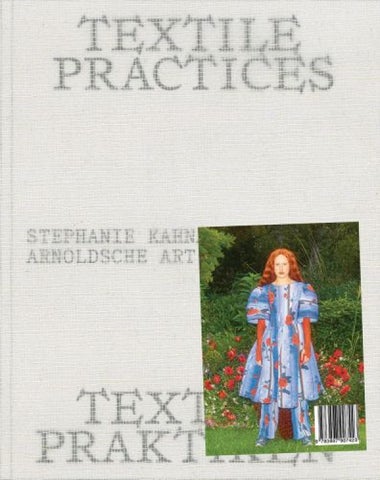
Cover illustrations One of four selected artists’ works is featured on the cover of the book: Julia Heuer: p. 118, 01 Hella Jongerius: p. 127, 02 Noushin Redjaian: p. 172, 02 and: Alfhild Külper, Prism Forest, 2024, 190 × 175 × 4 cm (detail)
All reasonable efforts have been made to identify copyright owners, contact them, and obtain their permission to use the copyrighted material. However, it was not possible to establish contact in every case. Such copyright owners, and those who may have been inadvertently overlooked, are requested to contact the publisher. Legitimate claims will be handled according to the usual agreements. This book has been produced with the generous support of: Danner Stiftung, Munich Curt Wills-Stiftung, Munich Rohi, Geretsried tim – The Augsburg Textile and Industry Museum
III
06.11.25 16:04