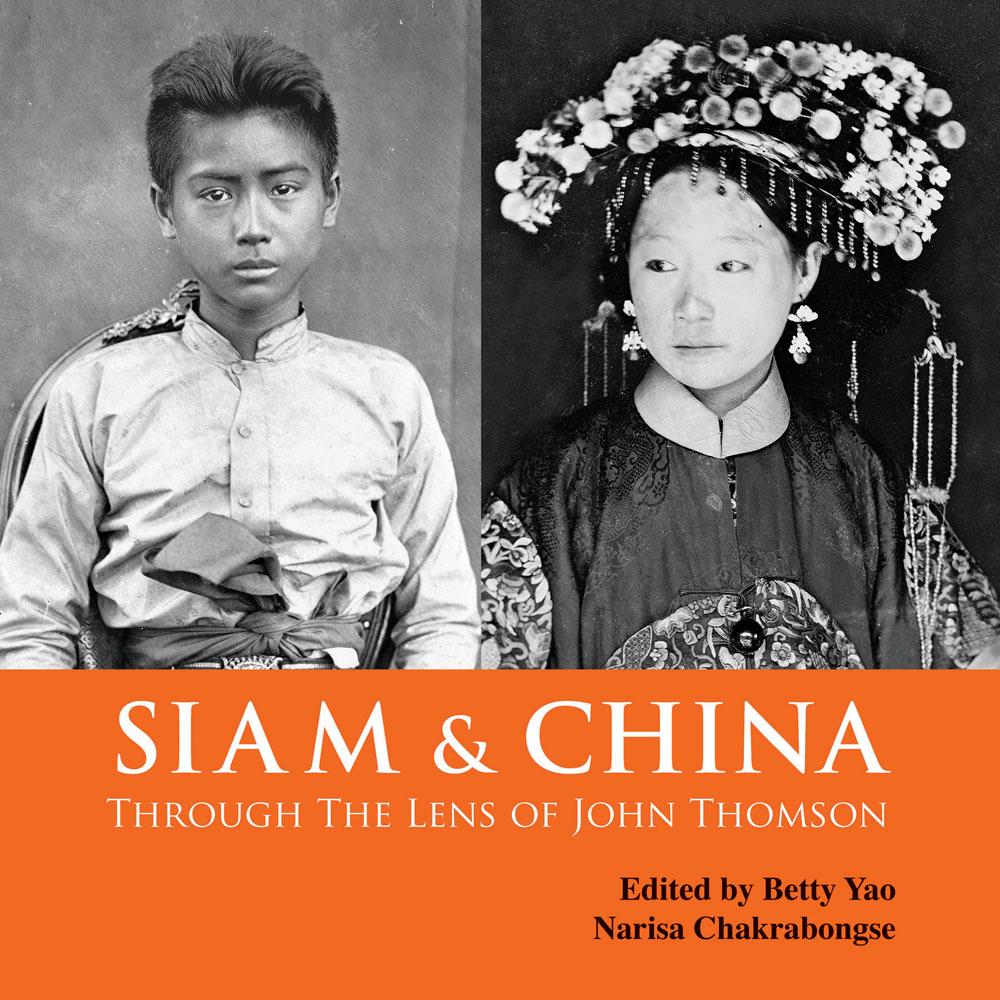
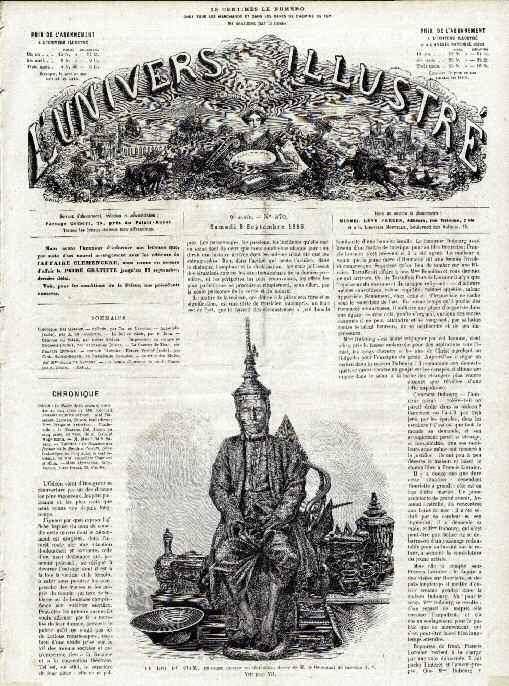
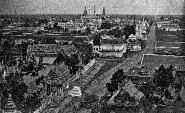
There are several ‘Firsts’ associated with John Thomson’s stay in Siam in 1865. At the time Angkor was par t of Siam and Thomson was the first to photog raph the r uins Before that he had also recorded monuments in and around the capital Bangkok When these were published as wood eng ravings in The Illustrated London News, these we re t h e f i r s t a c c u r a t e d e p i c t i o n s o f t h e c a p i t a l o f present-day Thailand to be seen by the English-speaking world In addition, one of his sensitive images of King Mongkut was even reproduced on the front page of an illustrated French newspaper1 (figure 1), an almost unimag inable compliment to Thomson consider ing the political tensions that existed between France and the United Kingdom regarding the possible colonisation of “the land of the white elephant” – as the countr y used to be called in a number of publications. Finally, due to the proverbial generosity and benevolence of King Mongkut, Thomson was g iven the oppor tunity to take pictures of royal ceremonies, something which no other Wester n visitor had been able to photog raph before
All these fir sts are especially sur pr ising, g iven that, in f act, Thomson was by no means the fir st Wester n photog rapher at the Siamese cour t Several other s had preceded him, notably from France and from Ger many. Strangely, however, these men seem to have been unaware of each other’s visits dur ing the photog raphically significant year of 1861. Perhaps the stor y is more complex than we are usually led to believe The picture is made even more confusing by the trade in negatives amongst these photog rapher s at a time when inter national photog raphic copyr ight did not exist
This then, is how it all star ted.
1 (Opposite) Front page from L'Univers Illustré, Paris, 8 September 1866.
On Febr uar y 7th, 1861, a Siamese embassy, consisting in all of 28 per sons among which were three ambassador s, left Bangkok to travel to France, where they were received by Napoléon III (r. 1852-70) on June 27th at the palace of Fontainebleau The embassy retur ned to Bangkok on December 10th 1861 2 There had been earlier Siamese embassies to Europe, but none attracted as much attention as this one The French press repor ted on its prog ress at regular inter vals, often accompanied by wood eng ravings showing member s of the mission. Even the Ger man press repor ted on it with an illustration of the royal reception 3
In Par is, the f amous photog rapher Nadar (GaspardFélix Tour nachon, 1820-1910) was their official photographer : “Nadar photog raphed them [i e member s of the Siamese embassy] frontally, in profile, in g roups or individually ”4 His photog raphs were to spark worldwide interest in the Siamese visitor s.
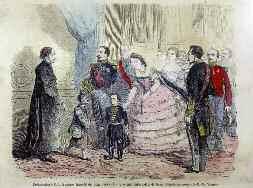
Dur ing the reception at Fontainebleau, g reat attention was paid to “Foskaï” aka Pho Chai, Rajikosa Thipusi or pho Xai, the son of the second Siamese ambassador Chao Mun Waiworanat, Phra Navaï aka Wor n Bunnag 5 The boy was even introduced to the only son of Napoléon III, the Pr ince Impér ial, Napoléon Eugène Louis Jean Joseph Bonapar te (1856-1879), an event which the
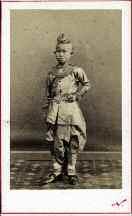
2 Nadar: Pho Chai, son of the second Siamese ambassador, Paris, 1861 © P&G collection, KarlsruheBerlin.
3 Ch Yriarte: Abbé Larnaudie, Pho Chai, Napoléon III, his son and the Empress Engraving from Le Monde lllustré, 6 July 1861, front page.
1 L'Univers Illustré 9e Année No 170 Samedi 8 Septembre 1866, front page and text p 571 This constitutes probably the earliest published photograph by J Thomson in France, not mentioned in Ovenden 1997, p 205
2 For details see Baffie 1999 and Le Bas 1999
3 „D e siamesische Gesandtschaft in Paris Illustrirte Zeitung XXXVII Band No 942, Leipzig 20 Juli 1861, p 41 (illustration) and p 42 (text)
4 Yriarte 1861 p 646 2nd column: „Nadar les a photographiés de face de profil, par groupe ou seuls “
5 For details about his career see Baffie 1999 p 115
6 Présentation à S A le prince impérial du jeune Foskaï, fils du second ambassadeur de Siam (D après un croquis de M Ch Yriarte) Le Monde Illustré Journal hebdomadaire Tome IX, 5me Année No 224, 6 Juillet 1861 p 417
39 Ironically the central monument of the temple of Phi-Mai province of Nakhon Ratchasima, photographed by F Chit, was sold and catalogued by Gsell as being „135 Angcor-tom: Vue interieure For details, see Bautze 2013a, p 65 figure 19 and Bautze 2013b p 272 no 135
40 Sp eß 1864, p 363f Werner 1863, p 282; Rose 1895 p 103 These authors still saw the ship with which the members of the Siamese embassy returned to Bangkok Le Bas 1999, p 109;
41 The S M S Elbe one of the three ships of the expedition in Siam left Bangkok earlier on December 24th 1861, while the Thetis had to leave on February 12th
42 Eu enburg 1900, pp 382-383: „Als ich ihn bat, er möchte sich doch von unserem Künstler photographiren lassen und gestatten, daß sein aus Damen bestehendes Orchester photographirt werde ließ er die 'Leipziger Illustrirte Zeitung' holen und ze gte mir in derselben sein Bild mit dem stolzen Bemerken daß er in Europa schon bekannt sei “
43 Illustrirte Zeitung XXVII Band Nr 960 Le pzig, 23 November 1861, p 376 (text) and p 377 (illustration) For the actual photograph see also Khana 2005, p 147, top
44 Werner 1863 p 276
45 For h s role during the expedition see Dobson 2011 p 258ff
46 Berg 1873 p 314, 345, 350 „Photograph“ in German corresponds to English „photographer “
47 Rose 1895, p 113 „Am folgenden Morgen gingen wir w eder zu dem Schlosse um zu photographiren “
48 Rose 1895, p 113f
49 Rose 1895, p 115: „ darauf photographirten wir sämtliche anwesenden M nister “
Gsell photog raphed the monuments of Angkor (then Siam, now Cambodia) only a few months after they were visited and photog raphed by John Thomson in 1866 Shor tly after, Gsell opened a studio in Saigon, Cochinchina (now: Ho Chi Minh City, Vietnam), the fir st commercial studio in this par t of Asia, where he marketed at least five of Rossier’s photog raphs showing Siamese actor s as well as at least three photog raphs or ig inally taken by F Chit 39 Unlike Chit, who was in possession of the same taken by Rossier, and Burger (who to fur ther confuse had also received plates from Chit), Gsell could not resor t to or ig inal negatives, i e glass plates A closer inspection of Gsell’s ‘Rossier-photos’ reveals that he had to produce an inter im negative by photog raphing Rossier’s or ig inal pr ints This resulted in a loss of reproduction quality and Gsell was hence compelled to produce pr ints, which were considerably smaller in size when compared to the or ig inals. Figure 23, a car tede-visite with Gsell's distinctive logo on the back (“E GSELL / PHOTOGRAPHE /A SAIGON / COCHINCHINE”) at its r ight-hand side reveals the texture of the wooden surf ace on which Gsell had placed Rossier’s or ig inal pr int while photog raphing it
Dur ing the night of the 15th to 16th December, 1861, five days after the ar r ival of the Siamese embassy to France in Bangkok, the SMS Arcona, flagship of the Pr ussian Eulenburg expedition dropped anchor at Paknam 40 In order to establish diplomatic and commercial relations with China, Japan and Siam, Count Fr iedr ich Albrecht zu Eulenburg (1815-81) conducted a diplomatic mission on behalf of Pr ussia and the Ger man Customs Union in 1859-62. Apar t from the official repor t published in 1873, several accounts were released by individual member s of this expedition, which stayed in Siam from December 15th, 1861 to Febr uar y 24th, 1862 41 In most repor ts relating to Siam, the frequency with which the word “Photog raphie” and “photog raphir t” (photog raph, photog raphed) appear s is so numerous that only a few examples can be g iven here
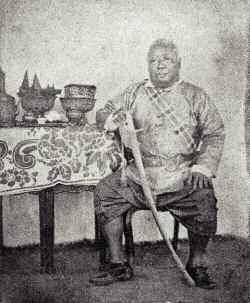
On Januar y 30th, 1862, Eulenburg, head of the expedition noted: “When I asked him (i e Pr ince Krom Luang Wongsa, 1808-71, figure 24) if he would ag ree to be photog raphed by one of our ar tists and per mit us to take photog raphs of his orchestra which consisted of a number of ladies, he sent for a copy of the Leipziger Illustr ir te Zeitung (Leipzig Illustrated Jour nal) and pointed at his picture therein along with the proud remark that
he is already known in Europe.”42 The illustration shown to Eulenburg is in f act a woodcut based on a photog raph (“nach einer Photog raphie”) published on November 23rd, 1861.43 A few weeks earlier, the same Pr ince Krom Luang Wongsa gave his photog raph to Reinhold Wer ner, captain of the S M S Elbe, who visited the pr ince at his home 44 The official photog rapher of this expedition to Siam was Carl Heinr ich Bismarck (1839-79), an [illeg itimate] son of Count Eulenburg,45 in the official repor t mentioned as “Her r Bismark”, “Photog raph Her r Bismark” or simply “Photog raph Bismark.”46 Bismark was apparently assisted by Her mann Rose, who frequently mentioned photog raphy in Bangkok, as per a few examples: “The following mor ning (Januar y 31st 1862) we went again to the Royal palace in order to take photog raphs ”47 When taking photog raphs near Wat Chaeng (Wat Ar un), Rose and Bismark had to protect their photog raphic equipment f ro m s t o n e s h u r l e d a t t h e m by m o n k s 48 “ We photog raphed all ministers present [dur ing the signing of the commercial ag reement on Febr uar y 7th] ”49
Bismark and Rose photog raphed the figure of a Buddha made of glass, four feet in height and, in the presence of the king, 20 royal women Both photog rapher and assistant, when taking photog raphs in the royal palace, were offered so much champagne that they got dr unk and had to inter r upt their work on the pretext that the chemicals would be rendered impure 50 Next came the Siamese orchestra and the band for med by member s of the Pr ussian expedition 51 On Febr uar y 16th, 1862, the king was photog raphed along with many of his children 52
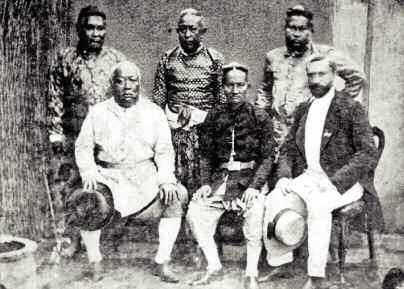
From all these photog raphs by Bismark, apparently only one pr int has been published so f ar, figure 25.53 It was made in the early after noon of Febr uar y 7th, 1862 in connection with the ratification of the treaty as mentioned in the official repor t as follows: “Later, also Her r Bismark rode with the envoy to the Pr ince [i e Krom Luang Wongsa] and at fir st photog raphed each and ever y author ised representative individually, followed by a photo of the same in a g roup, which was then also joined by Count Eulenburg Tired of all the delays, the latter impatiently shook his head and in the picture is somewhat blur red among the long-suffer ing Siamese ”54
Here is the incident recounted in Eulenburg’s own words: “Not until 12 o ’clock, after I had taken my breakf ast, I went to the Pr ince where I met all author ised representatives. I ordered them to be photog raphed individually and in a g roup ”55
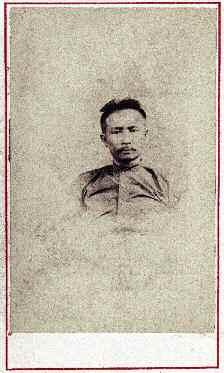
26 F Chit: assumed self-portrait of the photographer, about 1866 © Günter Heil collection, Berlin
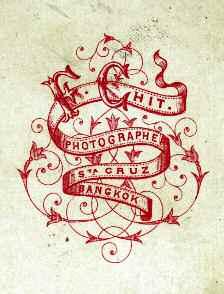
27 Back of a carte de visite by F Chit, before 1866. © P&G collection, Karlsruhe-Berlin
50 Rose 1895, p 115
51 Rose 1895 p 116: „Heute gingen wir nach dem Schoßhofe und photographirten sowohl das siamesische als auch unser Musikkorps “
52 Rose 1895, p 117: „Am 16 Februar begaben wir uns zum letzten Male zum König er mit einem großen Teil seiner Kinder wurde photographirt “
53 Khana 2005, p 196, bottom, with identification of all 6 persons present Pongrapeeporn 2001, p 124 no 218 For the names of the 6 authorised representatives who signed the contracts see Berg 1873 p 392 and p 394
54 Berg 1873 p 314: „Nachher fuhr mit dem Gesandten auch Herr Bismark zum Prinzen und photographirte zuerstjeden einzelnen Bevollmächtigten dann eine Gruppe derselben zu der sich auch Graf Eulenburg setzte; des Verzuges müde schüttelte Letzterer ungedu dig mit dem Kopf, und sass auf dem Bilde ganz unkenntlich zwischen den langathmigen Siamesen
55 Eulenburg 1900, p 390, letter dated February 7th 1862: „Erst um 12 Uhr, als ich gefrühstückt hatte begab ich mich selbst zum Prinzen wo ich alle Bevollmächtigten traf, d e ch einzeln und in einer Gruppe photographiren ließ “
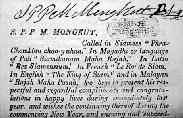
Signature of His Majesty King Mongkut on a letter sent to one of the foreigners with whom he corresponded He signed the letter S P P M Mongkut RS followed by his royal seal (Private Collection)
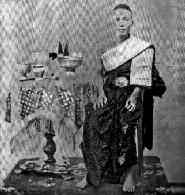
Photograph of HM Queen Debsirindra by Abbé Larnaudie She is in formal attire with a pleated silk scarf Items of regalia are on the table (Fontainebleau Palace Museum)
When news of his ingenious invention became known abroad, foreign scholar s, merchants and missionar ies wrote letter s expressing a desire to meet him He handwrote responses to all these letter s and signed them himself , in keeping with wester n conventions After his coronation, he continued this practice, maintaining cor respondence with his foreign acquaintances, as well as wr iting letter s in Thai
Traditionally, Thai monarchs would stamp their royal seal on top of their names King Mongkut was the fir st to adopt the wester n convention of using a signature He signed his letter s using his initials in Roman character s: S P P M M and S P P M Mongkut This is a custom still obser ved by Thai people today
King Mongkut was also a suppor ter of monogamy as practiced in Europe He took one new consor t at a time, not several simultaneously as his predecessor s had done He also gave the ladies of the cour t per mission to end their ser vice to the throne and leave the palace without punishment. They were allowed to mar r y or become the concubine of any other royal Only those consor ts who had bor ne the King children were excluded from these new freedoms.
With regard to flags, the inter national symbols of king and countr y, King Mongkut had a national flag designed w h i c h wa s f l ow n by S i a m e s e s h i p s a n d S i a m e s e consuls over seas He was the fir st to devise a flag for use specifically by the monarch, called the “Thong Jom Klao” flag It was flown on the mast of his royal barge dur ing jour neys by water and on the pole inside the Grand Palace dur ing his stay in the capital. If he was away, the flag would be flown at half-mast Later, the King devised another flag known as the “Thong Phandin” to signify his absence from the capital.
Royal decorations or insignia, wor n on the chest to indicate the wearer ’ s order or social rank, date back to many hundreds of year s in Europe However, in Siam they were introduced by King Mongkut in 1857, and insignia began to be confer red on royal f amily members, gover nment employees and foreigner s who had made contr ibutions to the countr y Different insignia were designed to indicate the var ious ranks.
The money most widely used at the beg inning of King Mongkut’s reign was the Pod Duang and cowr ies But both had drawbacks as cur rency. The for mer could be easily forged, while the latter was just a seashell, which was frag ile and whose value var ied While the
King sought a solution, the Kingdom’s money supply began to prove inadequate for the r ising foreign trade In 1856, King Mongkut allowed the public and merchants to trade using foreign coins, widely refer red to as Rien Nok (bird coins) However, they were never popular among the Siamese even after the King passed a law stipulating that they be used officially as Thai money To solve the problem, the King ordered that Pod Duang and cowr ies be replaced with metal coins in keeping with inter national practice In 1856, when the King sent a g roup of ambassador s on a mission to forge diplomatic ties with European countr ies, he ordered that they buy a minting machine Upon hear ing this, a Br itish consul, who happened to be visiting Bangkok at the time, presented King Mongkut with a machine as a g ift. The founding of the fir st mint enabled Siam to produce many other coins for circulation in the market Thanks to the King’s foresight, the cur rency refor m he initiated proved an economic boon to the countr y King Mongkut also moder nized several traditions and customs With regards to dress, cour t officials were instr ucted to cover the upper par t of their body when in audience with him, while in audiences foreigner s were allowed to stand close to His Majesty He also dressed in Wester n style, wear ing a hat he ordered from France or Br itain. As John Thomson wrote in his memoir, sometimes the King would dress in a French field mar shal’s unifor m, with stockings and a cape, when g iving a public audience to his cour t officials. At other times, he would put on French insignia, don a Scottish-style hat or wear a US naval officer’s unifor m Family member s and other people in the palace soon began to follow suit For example, his son Pr ince Chulalongkor n, and his concubines Chao Chom Manda Piem and Chao Chom Manda Sangwal spor ted Wester n-style clothes at the reception held in 1862 to welcome Lord John Hay, Br itish Royal Navy admiral of the Indian Ocean fleet. King Mongkut also ordered officials of the Depar tment of “Klone” (female palace guards) to wear Scottish militar y unifor ms These guards were later dubbed “Kangaroo Soldier s ” .
The new f ashion was also adopted by King Pinklao and his children, as Sir John Bowr ing once remarked, “Today, His Highness is wear ing a Wester n outfit ” King Mongkut ordered the constr uction of new palaces in Bangkok and other provinces. One, called Phra Apinao Niwet, was built in the Grand Palace compound and features in Thomson’s photog raphs; one was built in Petchbur i and another in Nakon Pathom. Repair s were ordered for the Narai Rajnivet Palace in Lopbur i Phra
Aphinao Niwet was beautifully fur nished and decorated with impor ted items from Europe such as lamps, candle holder s, and lanter ns made of cr ystal or Ger man silver Foreign visitor s, such as French Ambassador Montigny, spoke of the palace with admiration when he had an audience with the King there The palace of Siam’s Second King was also redecorated in European style
In front of Sutthai Sawan Throne Hall in the Grand Palace, King Mongkut had a row of large commercial buildings erected to house foreign gover nment officials and local businesses The King meant for the new str uctures to show Europeans that Siam was also a civilized countr y
Because of his g reat interest in astronomy, King Mongkut asked Sir John Bowr ing to purchase for him a high-quality telescope, instr uments of measurement and a book of astronomical symbols His exper tise in this field was exceptional, as was proven by his accurate prediction of the occur rence of a solar eclipse on 18th August 1868, in Tambon Wakor, Prachuab Kir ikhan province
Photog raphy had already been introduced to Siam in the reign of King Rama III, when Father Lar naudie, on the order s of Pallegoix, had brought in the fir st photog raphic equipment However, this new contraption was not met with much enthusiasm. It was not until the time of King Mongkut that interest in photog raphy star ted to take root in the Kingdom King Mongkut was the fir st Thai monarch to g ive per mission for foreign photog rapher s to take his picture Most notable among these was John Thomson who took his picture in the French field mar shal’s unifor m The King also had his photog raph taken dur ing the Kathin ceremony at Wat Phra Chetupon in 1865. As par t of his mission to forge relations with countr ies in Europe and with Amer ica, he saw to it that his cor respondence with foreign r uler s was customar ily accompanied by his photo, using this clever diplomatic tactic to make a statement to his foreign counter par ts that Siam was by no means a backward countr y. He also led by example because in suppor ting photog raphy, he wanted to dissuade the Siamese from indulg ing in super stitious belief and urge them to embrace moder n technology instead
In the field of medicine, he welcomed Wester n methods and ordered var ious medications from abroad including cough lozenges, which he really liked He had such tr ust in moder n medicine that he allowed missionar ies to collaborate with traditional Thai doctor s in treating Krom Meun Mahesuan Siwawilas, his eldest son, and one of his royal consor ts
He advised gover nment officials and his people to maintain cleanliness in and around their houses as well as within the city walls and around the city gates so that they would not become a breeding g round for ger ms or an eyesore to foreign visitor s. Royal f amily member s and senior gover nment officials were also urged to stop eating with their hands and to use spoons and forks instead As Sir John Bowr ing wrote in his memoir : “Four contract committee member s came to have dinner with me Somdet (pr ince) was ver y clumsy with spoon and fork ”
Finally, in keeping with European and Chinese customs, which called for a g rand celebration on a per son ’ s 60th bir thday, King Mongkut followed suit in 1864 A relig ious ceremony was held to bestow mer it on the King Other activities included plays and the lighting of lanter ns of var ious shapes. “Foreign customer s and consuls enjoyed making European-style lanter ns Flags were flown People from all walks of life hung br ightly lit lamps in front of their houses both on land and on water The entire land was filled with light ” Another highlight of the celebration was that the King gave each royal f amily member and gover nment official a gold coin with a crown design weighing one tamlung (38 11 g rams) as a souvenir He gave money to the handicapped and the elderly More impor tantly, for the fir st time ever, the King bestowed blessings on par ticipants and ever yone who helped organize the celebration for him.
Sadly, while pur suing one of his scientific interests and setting up camp to obser ve the solar eclipse in Prachuap Kir ikhun province in August 1868, King Monkut became infected with malar ia and passed away six weeks later on 1 October 1868 at the age of 65 He had reigned for 18 year s and had 82 children. He was succeeded by his son Pr ince Chulalongkor n, who as King Rama V was to reign for over 40 year s and continue the refor ms and g reat advancements of his f ather
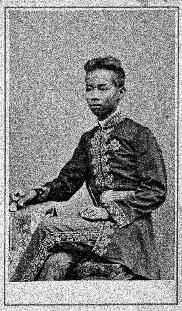
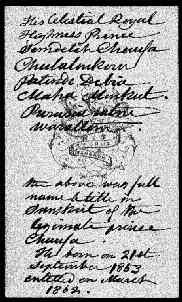
Above and right: Crown Prince Chulalongkorn (who later reigned as King Rama V) photographed by Francis Chit On the back HM King Mongkut has written the Crown Prince’s name, as well as recording his date of birth and when he was elevated to the rank of Crown Prince