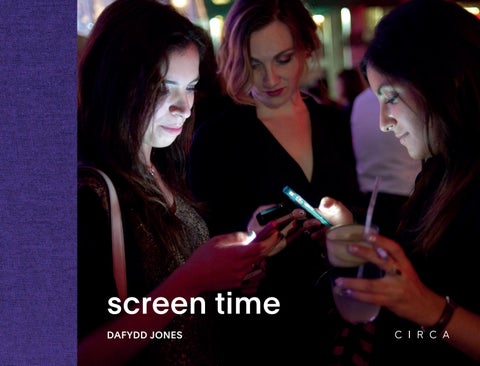
screen time DAFYDD JONES
London, 2015
Today almost everyone uses a smartphone, and most of us are addicted. In every social situation the smartphone is not only killing conversation, it’s changing the way we look at the world. Years ago, when I started photographing balls and parties in England for the Tatler magazine, I’d find young people chatting, observing one another and generally taking an interest in their fellow guests. Now I see them silently mesmerized by their iPhones, checking their Instagram feeds, their WhatsApps, or whatever it is they’re hooked on. They hardly seem to talk or make eye contact. In the eighties, social photography was the easiest way for an aspiring photographer to get work into print – parties and the upper classes had hitherto been rather overlooked as potential subject matter. Most photographers didn’t like the anti-social hours, or bridled at the snobbery they perceived – or sometimes imagined. Moreover, getting a decent picture of a party is actually very difficult. How do you photograph a room packed full of people holding drinks? My way of working has always been to try to capture the revealing moments. I sought out events that excited me, and although the resulting images were not always complimentary, they caused a stir. As the magazines I worked for prospered, I covered events all over the world, and for a while lived in New York. In 2008, I was sent to Miami to cover a party hosted by Vogue Italia during the Art Basel fair. Although it was one of the week’s most glamorous
Mayfair, London 2015
Frieze London 2013
Tate Modern, London 2012
Vesey St, Manhattan 2019
Battersea Power Station, London 2011
Battersea Park, London 2011
Battersea, London 2011
Mayfair, London 2011
Roundhouse, London 2019