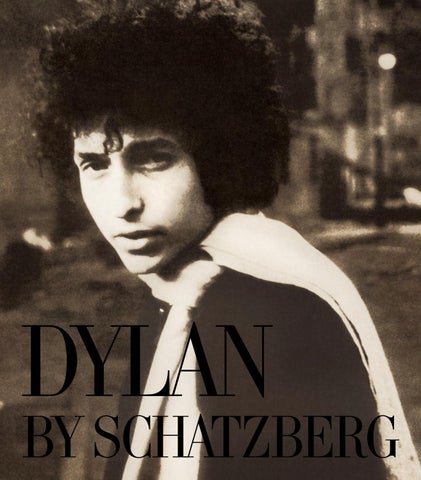
DYLAN
BY SCHATZBERG
3
54
he trust between you was very likely chemical — or alchemical. Two people who were responsive to one another’s mode of exploration through the world. But I’d bet it is also explained in some part by context and circumstance. The fact that you came from other worldly realms, and that you came late to Dylan, and that you were connected, even if it was slightly, by a chain of acquaintance — all of these things probably helped to dispel what must have been a relentless aura of myth and exaggeration around him at that time. He was being taken as a savior figure by the young and guileless, and endlessly prodded by journalists to explain what he meant or how he felt his own existence mattered in that period of intense change and revelation. He’d had to construct so many defenses just to cope, and carry on. Songs like “Ballad of a Thin Man” certainly record his response to this problem.
79
186
187
t’s funny to see the pictures of Dylan holding a cross. At the time, the image must have struck people as satirical, or ironic — he was regarded as so antiinstitutional. Yet once he was “born again,” at the end of the ’70s, it wasn’t hard to see clues in his song lyrics — “Sign On The Cross,” from The Basement Tapes, or “When The Ship Comes In,” from even earlier. JS: Do you remember the days of Dylan’s exploration into other religions? There was much written about it. Obviously, it was in my mind when I gave him the cross to hold in a photo. Whether it was conscious or subconscious, he was really representing the modern Dylan, a person of the same stock from what we all came from, who grew and grew to become “Dylan.”
214
258
£45.00 / $70.00