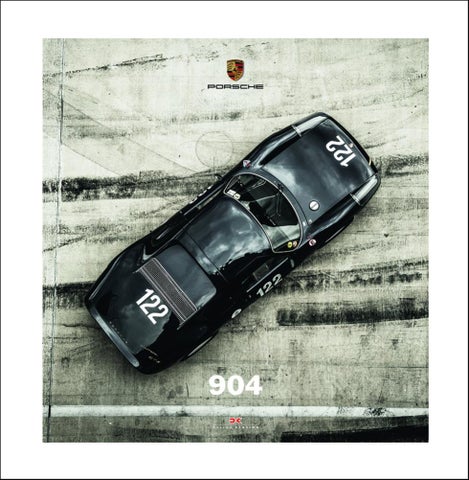
Die Zäsur – Wie der 904 die Marke Porsche veränderte Man ahnt nur ansatzweise, wie stark Automobilproduzenten, deren Reputation und Image mit dem Auftritt und den Erfolgen auf Rennstrecken assoziiert werden, vom Motorsport-Reglement abhängig sind. Es genügt, die wichtigsten und erfolgreichsten Modelle aufzuzählen, um zu sehen, dass stets dann neue Homologations-Bestimmungen ins Spiel kamen, die Porsche-Sieger schuf: 911 Carrera 2.7 RS, 911 Carrera 3.0 RSR, 934 und 935. Oder der 936, der, nach dem Gruppe-6-Reglement aufgebaut, Le Mans dominierte. Es folgten der 962 und der 956 – und um die Liste nicht zu lang werden zu lassen, sei noch der 919 erwähnt, der von 2015 bis 2017 ebenfalls die 24 Stunden von Le Mans gewann. Der 904 Carrera GTS war ebenfalls ein Kind eines neuen Reglements. Wenn der Automobil-Weltverband FIA nicht am 25. Juli 1962 eine Reform der Regeln der Homologationskommission und ein neues Reglement für Grand-Tourisme-Fahrzeuge ab 1964 beschlossen hätte, müsste die Geschichte des Hauses Porsche ohne diesen außergewöhnlichen Wagen geschrieben werden. Wir müssten aber nicht nur auf ein ästhetisches Meisterwerk und einen vielfachen Sieger und sicheren Titelträger verzichten, sondern auch auf ein Modell, das die Geschichte der Stuttgarter heftig durcheinanderwirbelte. Die Gründe dafür sind – wie so oft – vielfältig. Erstens erforderte die Freigabe des Reglements zum 1. Januar 1964 einen straffen Zeitplan: Nur ganze 18 Monate standen zur Verfügung. Zweitens gab es im Hause Porsche personelle Veränderungen, denn mit Ferdinand Alexander „Butzi“ Porsche war ein neuer, junger Styling-Chef
-4-
Porsche 904
in die Verantwortung genommen worden, dem mit Ferdinand Piëch ein außergewöhnlicher Techniker zur Seite stand – ein Mann, der von 1965 an die Entwicklungsabteilung leitete und den 904 Carrera GTS hautnah begleitete. Die Vorgabe, den neuen GT innerhalb von nur 17 Monaten auf die Räder zu stellen, erforderte höchste Konzentration, denn der neue Wagen hatte verschiedenste, einander widersprechende Vorgaben zu erfüllen. Er sollte in praktisch allen Motorsport-Kategorien erfolgreich antreten – auf der Rundstrecke, am Berg, bei Rallye-Einsätzen – und bei Sprint- ebenso wie bei Langstreckenrennen konkurrenzfähig sein. Dafür musste das neue Gefährt in allen Ländern straßenzulassungsfähig sein – also alle gesetzlichen Vorgaben erfüllen. Es war aber auch damit zu rechnen, dass es Käufer gab, die ihren Wagen nicht im Motorsport einsetzen, sondern ein ganz besonderen Porsche für ganz besondere Reisen besitzen wollten – also war auch die Porsche-typische Qualität und Alltagstauglichkeit gefragt. Und es mussten innerhalb von zwölf Monaten 100 Fahrzeuge fertiggestellt sein – womit der zeit- und finanzaufwendige Bau von 100 Rohrrahmen und 100 Aluminiumkarosserien ausschied. So kam der 904 GTS zu einer weiteren Neuheit: einem verwindungssteifen Kastenrahmen und einer auf ihn geklebten Kunststoff-Karosserie, die die im Rennsport so wichtige Torsionssteifigkeit deutlich erhöhte. Dass man bei Porsche mit dieser Technologie nur geringe Erfahrungen hatte, wurde zur Kenntnis genommen – die noch zu gewinnenden Erkenntnisse wurden mit zusätzlichen Überstunden erarbeitet. Der 904 GTS war eine schwere Geburt. Gut, dass Ferdinand Alexander Porsche auf Anhieb eine faszinierende Form schaffen konnte,
Vor wor t / Preface
die ihre Klasse und Perfektion bis heute unter Beweis stellt. „Butzi“ Porsche schrieb dazu im November 2002: „Es hat mir damals schon enorm viel Spaß gemacht, den 904 zu entwerfen.“ So war wenigstens die Form auf Anhieb klar und musste sich keinen zeitraubenden Retuschen und Überarbeitungen unterwerfen. Schwieriger war die Motorenfrage: Ferdinand Piëch hatte von Anfang an darauf gesetzt, dass der 904 Carrera GTS – als sportliches Pendant zum neuen 911 – natürlich auch über den neuen Sechszylinder des Elfers verfügen würde. Für ihn war klar, dass sich diese beiden Modelle vom 356, der für ihn Vergangenheit war, optisch und technisch abzusetzen hatten. Jedoch zog sich die Entwicklung und die Serienreife des 911 länger hin, als alle Beteiligten erwartet hatten. Der im Septem ber 1963 auf der IAA in Frankfurt gezeigte 901 kam erst im Oktober 1964 als 911 zu den Händlern – dementsprechend stand der Sechszylinder auch nicht für den 904 GTS zur Verfügung. Die Lösung, auf den bewährten Carrera-Vierzylinder zurückzugreifen, machte niemanden glücklich, war jedoch unumgänglich. Klar war aber auch, dass vor der Hinterachse genügend Platz für den neuen Sechszylinder gelassen, wurde – auch die bewährten Achtzylinder konnten hier montiert werden und bei den Prototypen mitfahren. So diente der 904 GTS in diver sen Spezialvarianten auch als Entwicklungsträger für den Carrera 6, der von Frühjahr 1966 an die Nachfolge des 904 GTS antrat. Was bleibt, ist einer der schönsten Rennwagen des Hauses Porsche, der nicht nur Design- und Technikgeschichte schrieb, sondern auch den Übergang der Marke zu einer jungen, neuen Design- und Entwicklungsmannschaft definiert, die das Stuttgarter Unternehmen in den nächsten Jahren radikal veränderte.
-5-
How the 904 changed the Porsche brand One can only slightly imagine the significance of sporting regulations for automobile companies whose reputation and image are closely connected with their presence and achievements at the race track. It suffices to name the most important and most successful models to see that Porsche always created winning cars, whenever new homologation rules came into force: 911 Carrera 2.7 RS, 911 Carrera 3.0 RSR, 934 and 935. Or the 936, built to Group 6 regulations, that dominated at Le Mans. Next up were the 956 and the 962 and, to prevent the list from becoming too long, we conclude with the 919 that also won the Le Mans 24 Hours three years in a row from 2015 until 2017. The 904 Carrera GTS was also the result of new regulations: had it not been for the FIA as motorsport’s worldwide governing body deciding in favour of a change in the rules by the homologation commission on 25 July 1962 and new regulations for Grand Tourisme cars coming into force for 1964, the history of the Porsche brand would have been written without this extraordinary car. And with that, we would not only have been missing out on an aesthetic masterpiece, a multiple race winner and a certain champion, but also on a car that had a considerable influence on the history of the brand from Stuttgart. The reasons for this, as ever so often, are varied. First of all, the date of 1 January 1964 for the regulations to come into force required a strict time frame: only 18 months were available. Secondly, there were personal changes within Porsche as Alexander ‘Butzi’ Porsche
-6-
Porsche 904
had joined the company as a new young head of styling, who, with Ferdinand Piëch, had an extraordinary technician at his side, a man who led the development department from 1965 onwards and was closely involved with the 904 Carrera GTS. The instruction to put the new GT car on its wheels within only 17 months required utmost concentration as the new car had to meet various opposing criteria: it was to be successful in nearly all motorsport categories – at circuits, in hill climbs, in rallies – and had to be successful both in sprint and endurance competitions. Moreover, the new car had to be road legal in every country, so it had to meet all the legal requirements. It also had to be expected that there would be clients who wouldn’t want to run their car in competition, but wanted to own a very special Porsche for very special journeys. So, the quality and ability for everyday use that were typical for Porsche had to be incorporated, too. And 100 cars had to be built within twelve months, so the time- and money-consuming construction of 100 tubular frames and 100 aluminium bodyworks was not an option. That was how the 904 GTS got another innovation: a rigid box frame and a plastic bodywork glued to it to further enhance the torsional stiffness that is so important in motorsport. It was taken into account that Porsche only had limited experience with this technology. Extra hours were put in to add to the know-how. The genesis of the 904 GTS was a difficult affair. Too good that Ferdinand Alexander Porsche had been able to create a fascinating design
Vor wor t / Preface
right away, one that has kept its class and perfection to the present day. In November 2002, ‘Butzi’ Porsche wrote: “Back then, I already really enjoyed designing the 904.” At least the shape was clear from the very beginning and there was no need for time-consuming retouches and modifications. The engine issue was rather more complex: Ferdinand Piëch had planned for the 904 Carrera GTS, as the sporting counterpart of the new 911, would also be powered by the 911’s new six-cylinder. For him, it was clear that, both optically and technically, these two models had to stand out from the 356 that, according to Piëch, was a thing of the past. However, development and the green light for series production of the 911 took longer than everyone involved had expected. The 901 unveiled at the Frankfurt Motor Show in September 1964 only arrived at the dealerships as the 911 in October 1964. Accordingly, the six-cylinder wasn’t available for the 904 GTS. The solution of getting back to the trusted Carrera four-cylinder engine wasn’t making anyone happy, but turned out to be the only option. It was also clear that enough room was left in front of the rear axle to accommodate the new six-cylinder. The proven eight-cylinders could be installed here as well and used for the prototype class. Like this, the 904 GTS in various special versions served as a development car for the Carrera 6 that came in to replace the 904 GTS in spring 1966. What remains is one of the most beautiful race cars from Porsche, one that not only wrote design and technology history, but also defines the transition of the brand to a young, new design and development team that was to change the Stuttgart-based company in a radical way in years to come.
-7-
Deutschland Germany
Über Jahrzehnte hinweg begeisterte Porsche mit seinen von Erich Strenger gestalteten Plakaten, die direkt nach gewonnenen Rennen und Titeln entstanden und an die Porsche-Autohäuser geschickt wurden. Sie kündeten von den Glanztaten auf den Rennstrecken, bei Rallyes und von Geschwindigkeitsrekorden – und dies direkt und unmittelbar dort, wo die Kaufverträge unterschrieben wurden. Eine 1951 gegründete Tradition, die natürlich auch die größten Erfolge des 904 Carrera GTS miteinbezog. Eine unendliche Geschichte. Eine moderne Interpretation des Themas stellt das Luftgekühlt-Plakat vom Juli 2018 dar.
Porsche Museum Zuffenhausen
For decades, Porsche stood out for its posters designed by Erich Strenger that were produced immediately after race and title wins and were dispatched to Porsche dealerships. They celebrated achievements at race tracks, in rallies and speed records, exactly at the venues where sales contracts were being signed. A tradition that started in 1951 that, of course, also included the 904 Carrera GTS. A sheer endless story. The ‘Luftgekühlt’ poster from July 2018 is a modern interpretation.
Unternehmensarchiv Historical Archive
-8-
Porsche 904
Deut schland / Germany
Porsche Museum Zuf fenhausen
Unternehmensarchiv / Historical Archive
-9-
- 10 -
Porsche 904
Deut schland / Germany
Porsche Museum Zuf fenhausen
Unternehmensarchiv / Historical Archive
- 11 -
- 10 -
Porsche 904
Deut schland / Germany
Porsche Museum Zuf fenhausen
Unternehmensarchiv / Historical Archive
- 11 -
- 12 -
Porsche 904
Deut schland / Germany
Porsche Museum Zuf fenhausen
Unternehmensarchiv / Historical Archive
- 13 -
- 12 -
Porsche 904
Deut schland / Germany
Porsche Museum Zuf fenhausen
Unternehmensarchiv / Historical Archive
- 13 -
- 20 -
Porsche 904
Deut schland / Germany
Porsche Museum Zuf fenhausen
Unternehmensarchiv / Historical Archive
- 21 -
- 20 -
Porsche 904
Deut schland / Germany
Porsche Museum Zuf fenhausen
Unternehmensarchiv / Historical Archive
- 21 -
Deutschland Germany Porsche Museum Zuffenhausen Unternehmensarchiv Historical Archive
- 28 -
Eigentlich sollte der 904 bereits die Renn-Version des neuen Sechszylinders, der im 911 zum Einsatz kam, erhalten. Jedoch wurde das Triebwerk nicht rechtzeitig fertig, weshalb man bei Porsche auf den bewährten 2-Liter-Vierzylinder mit vier obenliegenden Nockenwellen zurückgriff, dem legendären Carrera-Motor. Er stellte bei 7.000/min 180 PS zur Verfügung – später kamen dann auch Sechs zylinder- und Achtzylinder-Motoren zum Einsatz. Actually, the 904 was already meant to be powered by the competition version of the new six-cylinder engine used for the 911, but the engine wasn’t ready in time, so that Porsche returned to the proven two-litre four-cylinder with four overhead camshafts, the legendary Carrera engine. It delivered 180 hp at 7,000 rpm. Later, six- and eightcylinder engines were used as well.
Deut schland / Germany
Porsche Museum Zuf fenhausen
Unternehmensarchiv / Historical Archive
- 29 -
- 112 -
Or t unbekannt / place unknown
Nr. 160 = 904 108 Herber t Linge/Rober t Buchet, Tour de France 1964 (3. Gesamt / 3. overall, 1. Index)
- 113 -
- 112 -
Or t unbekannt / place unknown
Nr. 160 = 904 108 Herber t Linge/Rober t Buchet, Tour de France 1964 (3. Gesamt / 3. overall, 1. Index)
- 113 -
- 116 -
Nr. 160 = 904 108 Herber t Linge/Rober t Buchet, Tour de France 1964 (3. Gesamt / 3. overall, 1. Index, v.l.n.r./from the lef t: Buchet /Linge/Bar th/ WĂźtherich)
Nr. 160 = 904 108 Herber t Linge/Rober t Buchet, Tour de France 1964 (3. Gesamt / 3. overall, 1. Index)
- 117 -
- 116 -
Nr. 160 = 904 108 Herber t Linge/Rober t Buchet, Tour de France 1964 (3. Gesamt / 3. overall, 1. Index, v.l.n.r./from the lef t: Buchet /Linge/Bar th/ WĂźtherich)
Nr. 160 = 904 108 Herber t Linge/Rober t Buchet, Tour de France 1964 (3. Gesamt / 3. overall, 1. Index)
- 117 -
Vielen Dank / Thank you:
Concept: Stefan Bogner
Dr. Wolfgang Porsche Miles Collier L. Scott George Jürgen Boden Daniel Maier Jens Torner Unternehmensarchiv der Dr. Ing. h.c. F. Porsche AG Michael Daiminger »Ivan«
Layout & cover design: Stefan Bogner Creative Studio Text: Picture Book Story Book Jürgen Lewandowski Editorial collaboration: Monika Lewandowski Photos/Illustrations: Stefan Bogner The Roadtrip Crew (Art Series) Brian Kesling (Luftgekühlt Poster) Lithography: Michael Dorn Editor: Hanno Vienken Translation: René de Boer Project management: Jörn Heese, Axel Gerber Printed by: Firmengruppe APPL – aprinta druck, Wemding Printed in Germany 2019
Bibliografische Information der Deutschen Nationalbibliothek. Die Deutsche Nationalbibliothek verzeichnet diese Publikation in der Deutschen National bibliografie; detaillierte bibliografische Daten sind im Internet über http://dnb.dnb.de abrufbar. Bibliographic information published by the Deutsche Nationalbibliothek. The Deutsche Nationalbibliothek lists this publication in the Deutsche Nationalbibliografie; detailed bibliographic data are available in the Internet at http://dnb.dnb.de.
1. Auflage / 1st edition ISBN 978-3-667-11676-5 © Delius Klasing & Co. KG, Bielefeld Alle in diesem Buch enthaltenen Angaben und Daten wurden von dem Autor nach bestem Wissen erstellt und von ihm sowie vom Verlag mit der gebotenen Sorgfalt überprüft. Gleichwohl können wir keinerlei Gewähr oder Haftung für die Richtigkeit, Vollständigkeit und Aktualität der bereitgestellten Informationen übernehmen. While all reasonable care has been taken in the publication of the book, neither the author nor the publisher takes any responsibility for the use, the complexity and the actuality of the information given in this book. Alle Rechte vorbehalten! Ohne ausdrückliche Erlaubnis des Verlages darf das Werk weder komplett noch teilweise reproduziert, übertragen oder kopiert werden, wie z. B. manuell oder mithilfe elektronischer und mechanischer Systeme inklusive Fotokopieren, Bandaufzeichnung und Datenspeicherung. All rights reserved. The work may neither be entirely nor partially reproduced, transmitted or copied – such as manually or by means of electronic and mechanical systems, including photo-copying, tape recording and data storage – without explicit permission of the publisher. Delius Klasing Verlag Siekerwall 21, 33602 Bielefeld, Germany Telefon/Phone +49 (0)521 559-0 Fax: +49 (0)521 559-115 E-Mail: info@delius-klasing.de www.delius-klasing.de