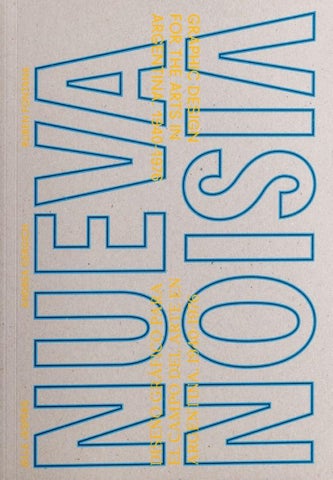
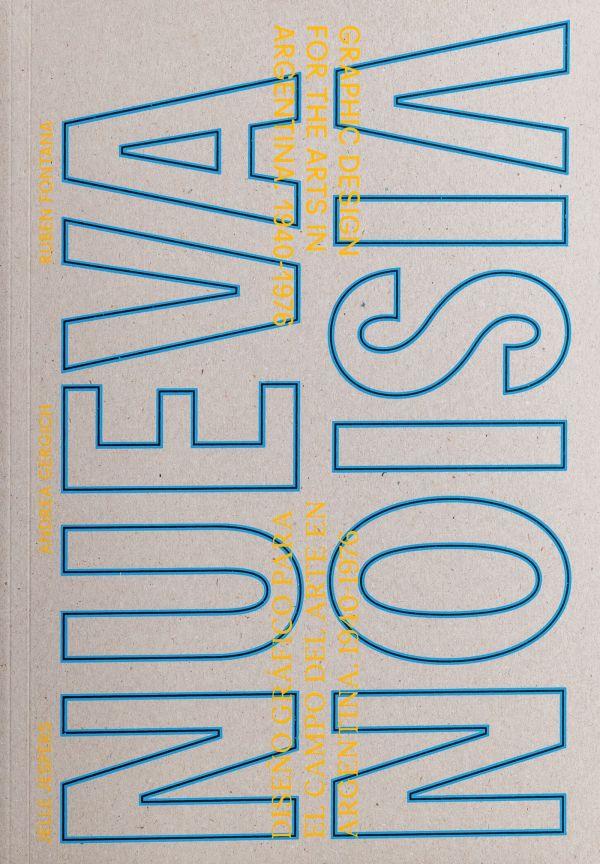
Concepto, edición y diseño gráfico:
Jelle Jespers
Textos capítulos: Andrea Gergich
Prólogo: Rubén Fontana
Concept, editing and graphic design: Jelle Jespers
Chapter texts: Andrea Gergich Foreword: Rubén Fontana
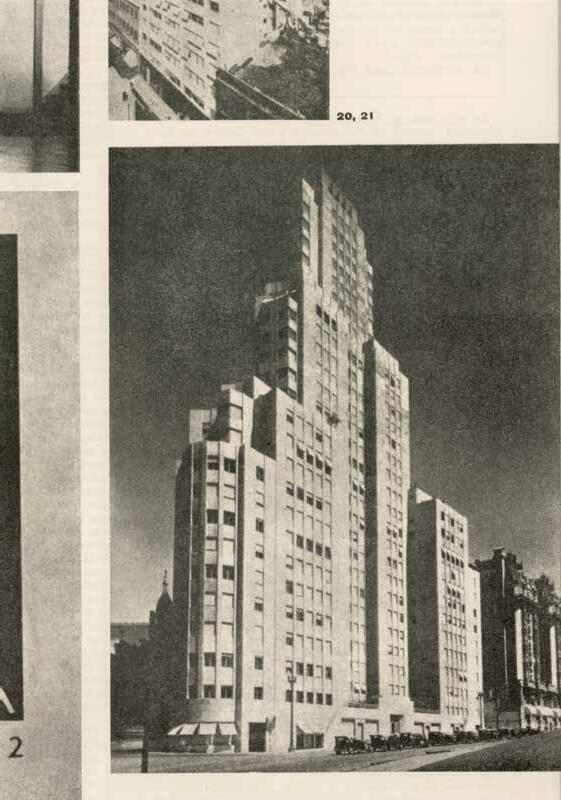
such as the Kavanagh—added to the World Heritage list of Modern Architecture (UNESCO) and a National Historic Monument—and other major monuments and works carried out to commemorate the fourth centenary of the city’s foundation, such as the Obelisk, and the widening of Avenida 9 de Julio.10
NEW VISION. TRANSITIONS TO MODERN GRAPHIC DESIGN
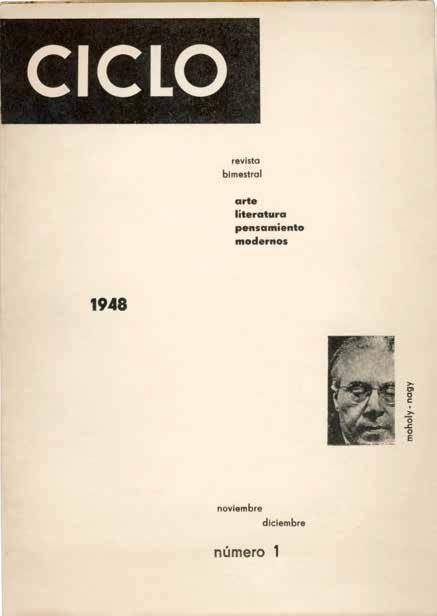
Towards the middle of the century, a new avantgarde movement updated the discussions on form. The same desire for novelty, the search for new modes in visual and material domains, characterised a group of artists who locally took up the premises of the European pioneers, forging their own path that derived in the definition of the new field of design. The magazine was therefore named after this “new vision”, which set out to circulate many of these ideas, images and texts, in a bid to rethink the forms and materialities of the design practice. Far from the other sphere linked to the graphic and publishing industry, this group, coming from the field of art and architecture, was taking the first steps in defining a new status for the visual. In the first issue, published at the end of 1951, it was defined as a “magazine of visual culture”, in a consistent low-case typographic composition, as stated in the premises of the New Typography 11 The reference to visual culture did not allude to the visual studies that were installed years later in the field of aesthetics and art (Mitchell, 2009; Mirzoeff, 2008; Brea, 2006). It was rather a reference to the universe of forms driven by the avant-garde innovations of the beginning of the century, fully expressed in the Bauhaus spirit, as a search for a universal language of forms, the “language of vision” (Lupton, 2019) 12 Exempt from any historical or cultural determination, this language provided a grammar of universal comprehension, independent also of the verbal-
rezaban las premisas de la Nueva Tipografía.11 La referencia a la cultura visual no aludía a los estudios visuales que se instalarían años más tarde en el campo de la estética y el arte (Mitchell, 2009; Mirzoeff, 2008; Brea, 2006). Era más bien una referencia a aquel universo de formas impulsado por las innovaciones vanguardistas de comienzos de siglo, expresado cabalmente en el espíritu Bauhaus, en tanto búsqueda de un lenguaje universal de las formas, el «lenguaje de la visión» (Lupton, 2019). 12 Exento de toda determinación histórica o cultural, este lenguaje proveería una gramática de comprensión universal, independiente asimismo del dominio de lo verbal-textual. Como ya comentamos, el mismo Moholy-Nagy buscó resumir estos conceptos en su libro, y así lo identificó Tomás Maldonado, director de la revista Nueva Visión cuando aclaraba, en la reseña sobre una biografía del artista húngaro entonces recientemente publicada: «Moholy-Nagy ha sido, como se sabe, una de las personalidades de mayor trascendencia en el período de nacimiento y consolidación de la nueva cultura visual o, como él hubiera preferido decir, de la ‘nueva visión’». 13
La expresión «nueva visión» que titula el presente libro daba nombre así a una disciplina de aun incipiente formalización en Argentina que, si bien puede identificarse en prácticas, procesos y productos muy anteriores como los que reseñamos, se iría definiendo y delineando como campo autónomo en los años subsiguientes. Esta cuestión nominal es en sí misma significativa, ya que expresa las tensiones y búsquedas presentes en las reflexiones en torno al dominio de lo visual, desde donde se va a recortar la especificidad del diseño gráfico contemporáneo (Devalle, 2018). 14 Lo cierto es que si bien estas concepciones rondaban
11 Entre las diez máximas enumeradas en su texto «Tipografía elemental», Tschichold proponía la composición tipográfica exclusivamente en minúsculas (Kinross, 2008: 117).
12 Según Ellen Lupton, en Bauhaus se entiende: «la ‘visión’ como un reino de expresión autónomo» (Lupton, 2019: 2).
10 1936 marked the 400th anniversary of the first foundation of the city of Buenos Aires by Pedro de Mendoza. To mark the celebrations, a number of major public works were built.
11 Among the ten maxims listed in his text “Elementary Typography”, Tschichold proposed typesetting exclusively in lowercase letters (Kinross, 2008: 117).
12 According to Ellen Lupton, in Bauhaus the “vision” was understood as “an autonomous realm of expression” (Lupton, 2019: 2).
13 Nueva visión, nº 1, diciembre 1951, pág. 2. Nos referimos aquí a la biografía escrita por su esposa, historiadora de la arquitectura y escritora, cuatro años después de su muerte: Sybil Moholy-Nagy. Moholy-Nagy, a Biography. Experiment in Totality. Cambridge/New York: Ed. Harper & Brothers, 1950.
14 Verónica Devalle (2018) analiza el concepto de «visión», en relación con estos antecedentes europeos, y sus derivas en Argentina a partir de la revista y editorial homónimas, y luego con la asignatura que adoptó este nombre, en las carreras de Arquitectura de nuestro país.
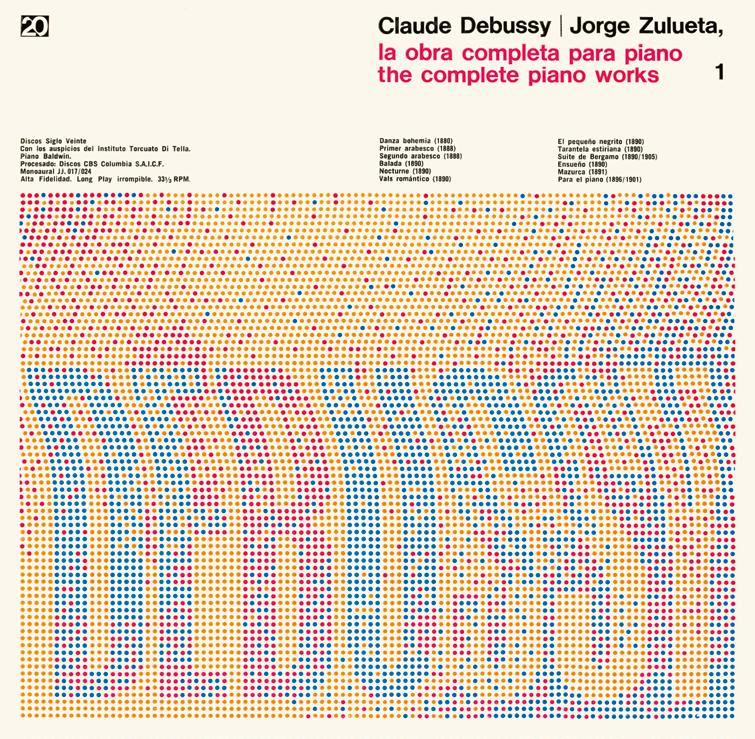
LA OBRA COMPLETA PARA PIANO V ol . 1, Instituto T. Di Tella, 1968.
PLAYING
design diseño Juan Carlos Distéfano & Rubén Fontana (30,5x30,5cm)
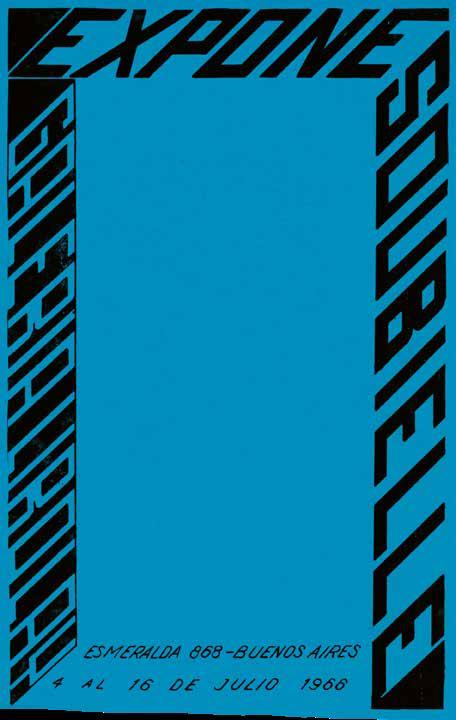
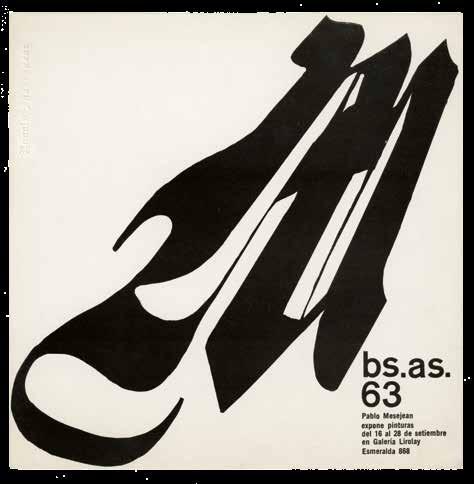
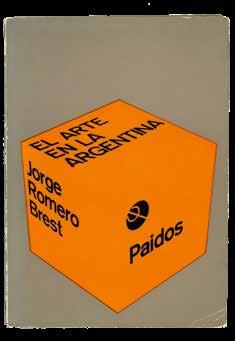
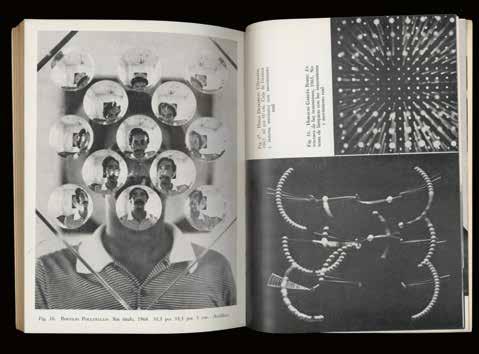
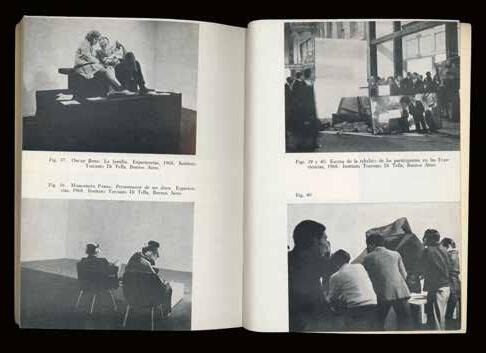
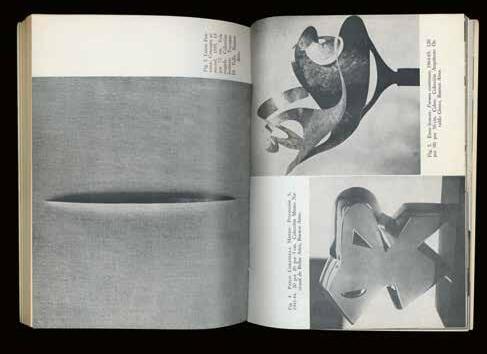
leaflet folleto EXPONE KSENIJA MILICEVIC. PINTURAS DE LA SERIE NAPOLEÓN BONAPARTE , Galería Lirolay, 1974. design diseño unknown desconocido
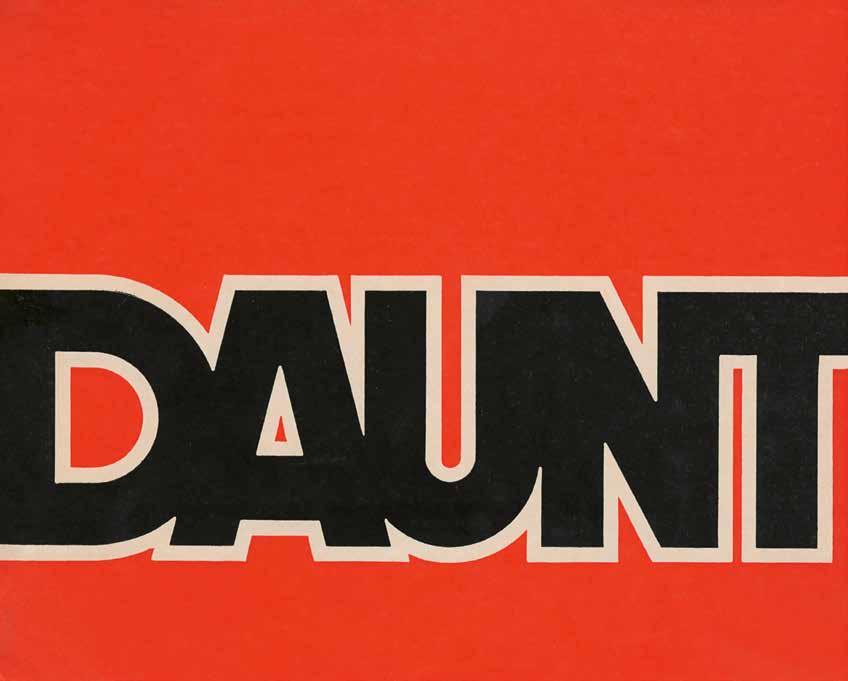
Jelle Jespers spent 12 years researching Argentine graphic design from the 1940s to the 1970s, focusing on printed materials related to art, poetry, architecture, and design. Collaborating with Andrea Gergich—who provides historical and conceptual framing—this book delivers a visually rich and intellectually sharp exploration of a field in transition.
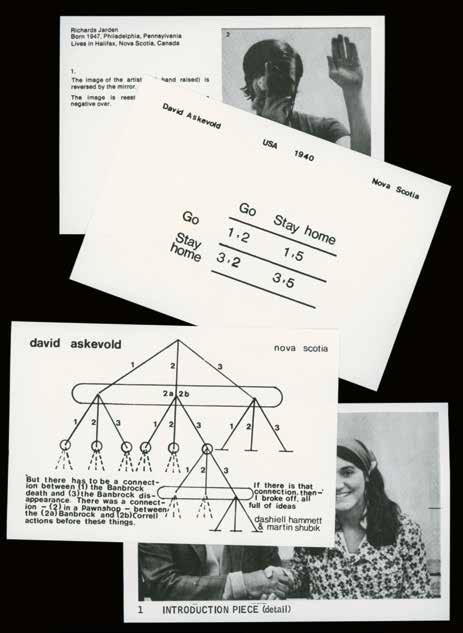
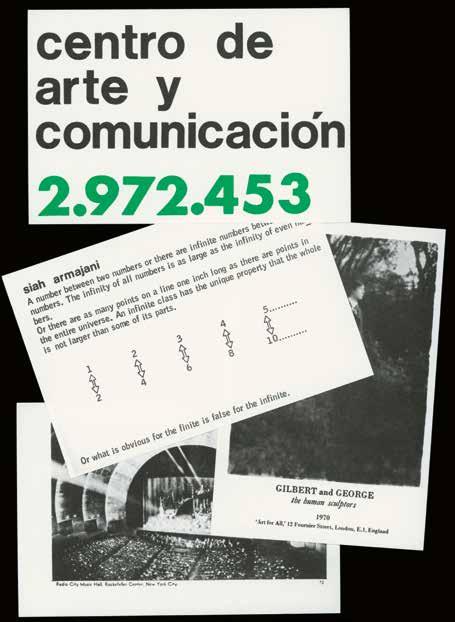
The story begins in the 1940s, when Argentine graphic design started to shift away from its roots in graphic tradition and embrace the principles of modern European design. A pivotal moment arrived in 1951 with the founding of Nueva Visión, a magazine inspired by László Moholy-Nagy’s Bauhaus concept of “The New Vision”, advocating the integration of visual arts and design in conformation under Tomás Maldonado’s direction. During the 1960s, Argentine design flourished with eclectic, innovative styles driven by figures like Rubén Fontana, Juan Carlos Distéfano, and Edgardo Giménez, influenced by contemporary art and evolving printing techniques. In the 1970s, while art was strongly influenced by Jorge Glusberg's CAyC movement, design became more conceptual, integrating visual language with critical discourse.
Featuring catalogues, invitations, and publications, this curated selection traces design’s evolution from artisanal craft to professional discipline. Typography serves as a connective thread, revealing intersections of aesthetics, discourse, and culture—offering not just a timeline, but a vivid narrative of design as a cultural force.
Jelle Jespers dedicó doce años a investigar el diseño gráfico argentino entre los años cuarenta y setenta, centrándose en materiales impresos relacionados con el arte, la poesía, la arquitectura y el diseño. En colaboración con Andrea Gergich, que aporta el marco histórico y conceptual, este libro ofrece una exploración visualmente rica e intelectualmente aguda de un campo en transición. La historia comienza en la década de 1940, cuando el diseño gráfico argentino comenzó a alejarse de sus raíces en la tradición gráfica para adoptar los principios del diseño europeo moderno. Un momento crucial llegó en 1951 con la fundación de Nueva Visión, una revista inspirada en el concepto Bauhaus de «La nueva visión» de László Moholy-Nagy, y que abogaba por la integración de las artes visuales y el diseño en conformación bajo la dirección de Tomás Maldonado. Durante la década de 1960, el diseño argentino floreció con estilos eclécticos e innovadores impulsados por figuras como Rubén Fontana, Juan Carlos Distéfano y Edgardo Giménez, influenciados por el arte contemporáneo y las técnicas de impresión en evolución. En la década de 1970, mientras el arte era fuertemente influido por el movimiento CAyC de Jorge Glusberg, el diseño se volvió más conceptual, integrando el lenguaje visual con el discurso crítico.
A través de catálogos, invitaciones y publicaciones, esta selección curada traza la evolución del diseño desde un oficio artesanal hasta la disciplina profesional. La tipografía sirve de hilo conductor, revelando las intersecciones entre la estética, el discurso y la cultura, ofreciendo no solo una línea de tiempo, sino una vívida narrativa del diseño como fuerza cultural.