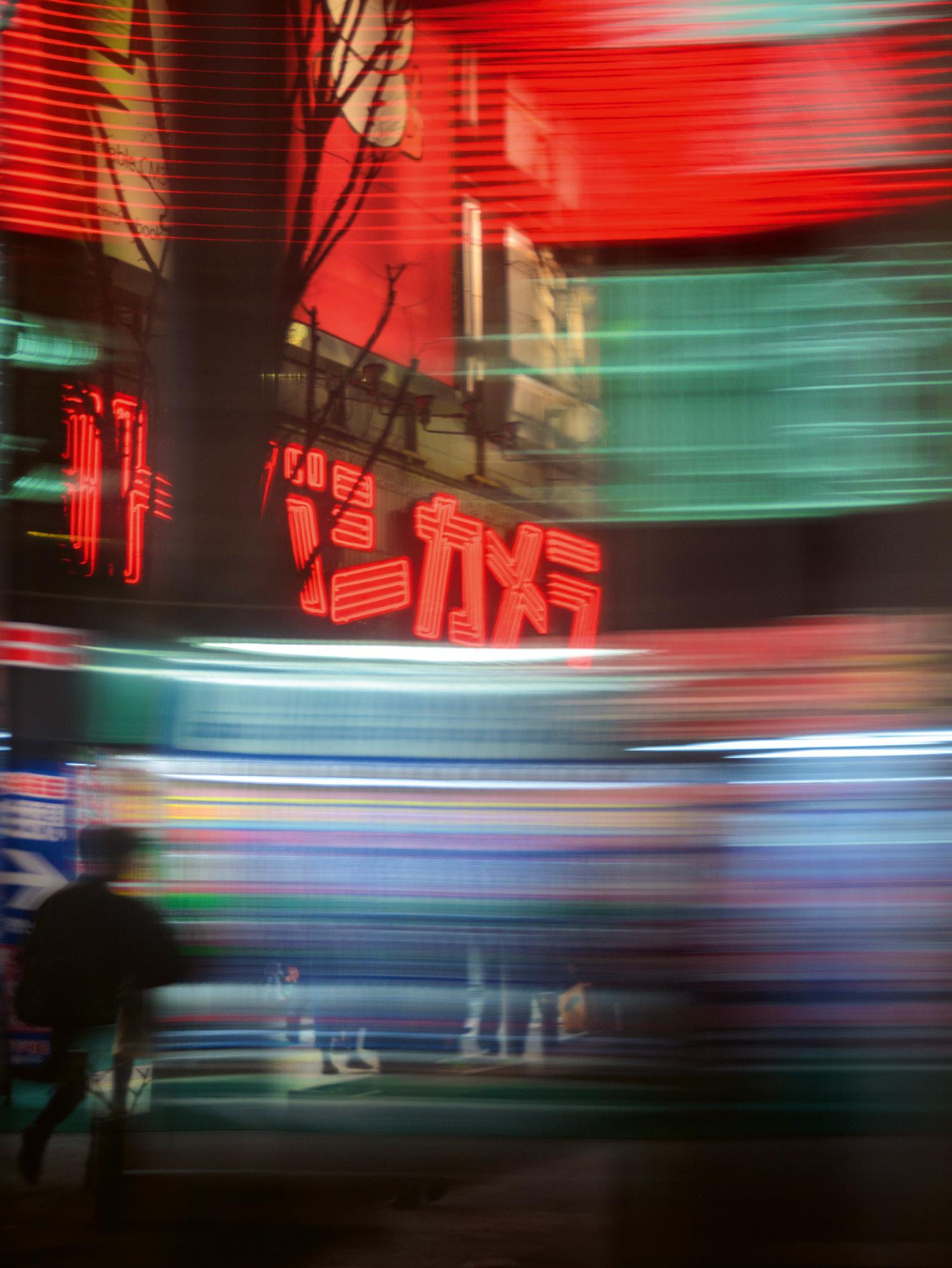
STREET PHOTOGRAPHY
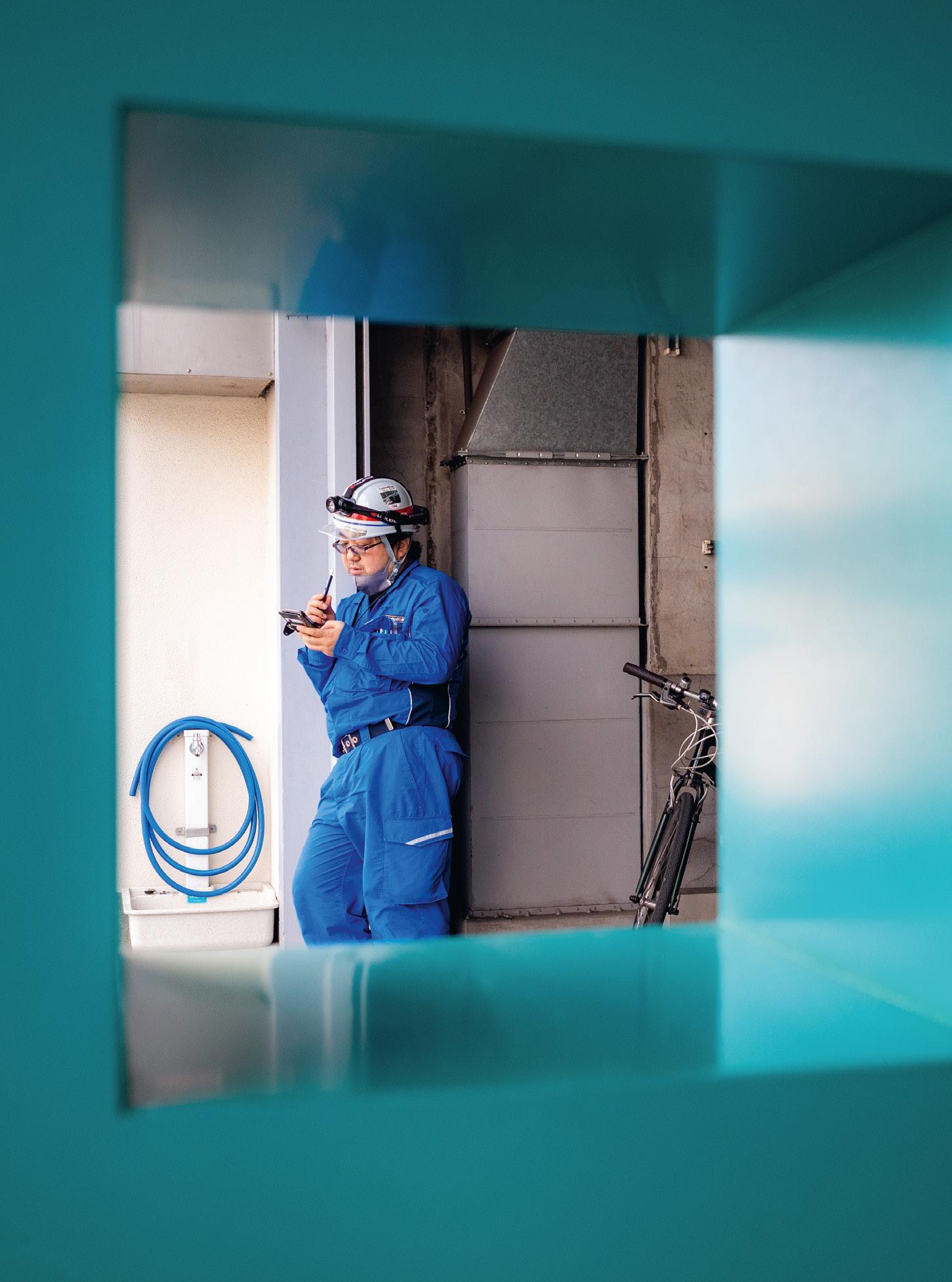
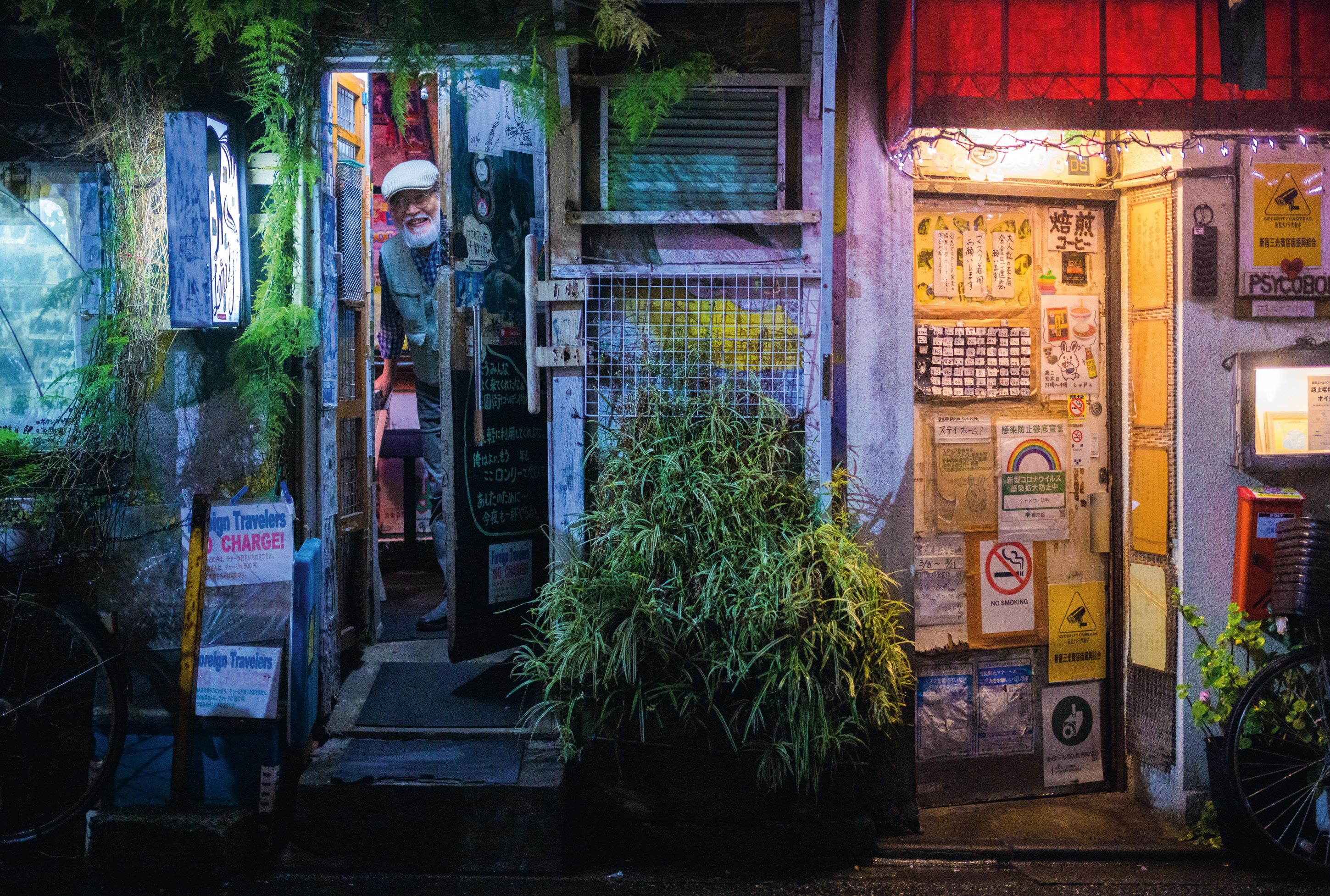
STREET PHOTOGRAPHY
What makes Tokyo so special for you as a photographer?
The bustle and diversity.
Is there a place in Tokyo that inspires you again and again?
Literally anywhere.
Do you tend to work spontaneously on the street or do you plan your photo walks specifcally?
I do a lot of impromptu shooting. Not exclusively, but primarily.
Is there a particular photo from Tokyo that tells a special story for you?
Rather than a single special photograph, I’d see Tokyo as a collection of images—a zine, or similar, with each photograph within it deeply moving as part of the whole.
What clichés about Tokyo would you like to break with your pictures?
Rather than breaking away from Tokyo itself, or the ways that others have photographed it, I’m constantly seeking new ways to express myself in order to break free from the sense of déjà vu in my own photography.
What does Tokyo mean to you—as a city, as a place to live, as a subject?
I simply think of it as a place to go out into the streets and shoot.
How do you experience the tension between tradition and the future in Tokyo—and does it fnd its way into your work?
Because of its relentless cycles of scrap-and-build, Tokyo rarely preserves tangible signs of tradition. Nor does it really offer a distinct vision of the future. Instead, what constantly emerges is the raw, fleeting reality of chaotic streets and crowds in the “here and now.” That’s precisely why I believe that capturing single moments as they pass is what’s so essential—both for myself and for my subjects.
In what mood or under what conditions do you prefer to photograph Tokyo?
I prioritize my own moods and emotions, and try to shoot in a way that allows those feelings to come through. I don’t think it’s specifically because of anything about Tokyo, but since it’s a city I’m so familiar with I find it easier to connect with my own emotions here.
Which sound of Tokyo would you most like to photograph?
Maybe not a specific Tokyo sound, but I do photograph with the constant thought in mind of expressing sound through images. Music has been a huge part of my life, so expressing it through photography is something I consider essential to my own practice.
Tokyo in three words? Chaos. Drifting. Isolation.
I’M CONSTANTLY SEEKING NEW WAYS TO EXPRESS MYSELF IN ORDER TO BREAK FREE FROM THE SENSE OF DÉJÀ VU IN MY OWN PHOTOGRAPHY.
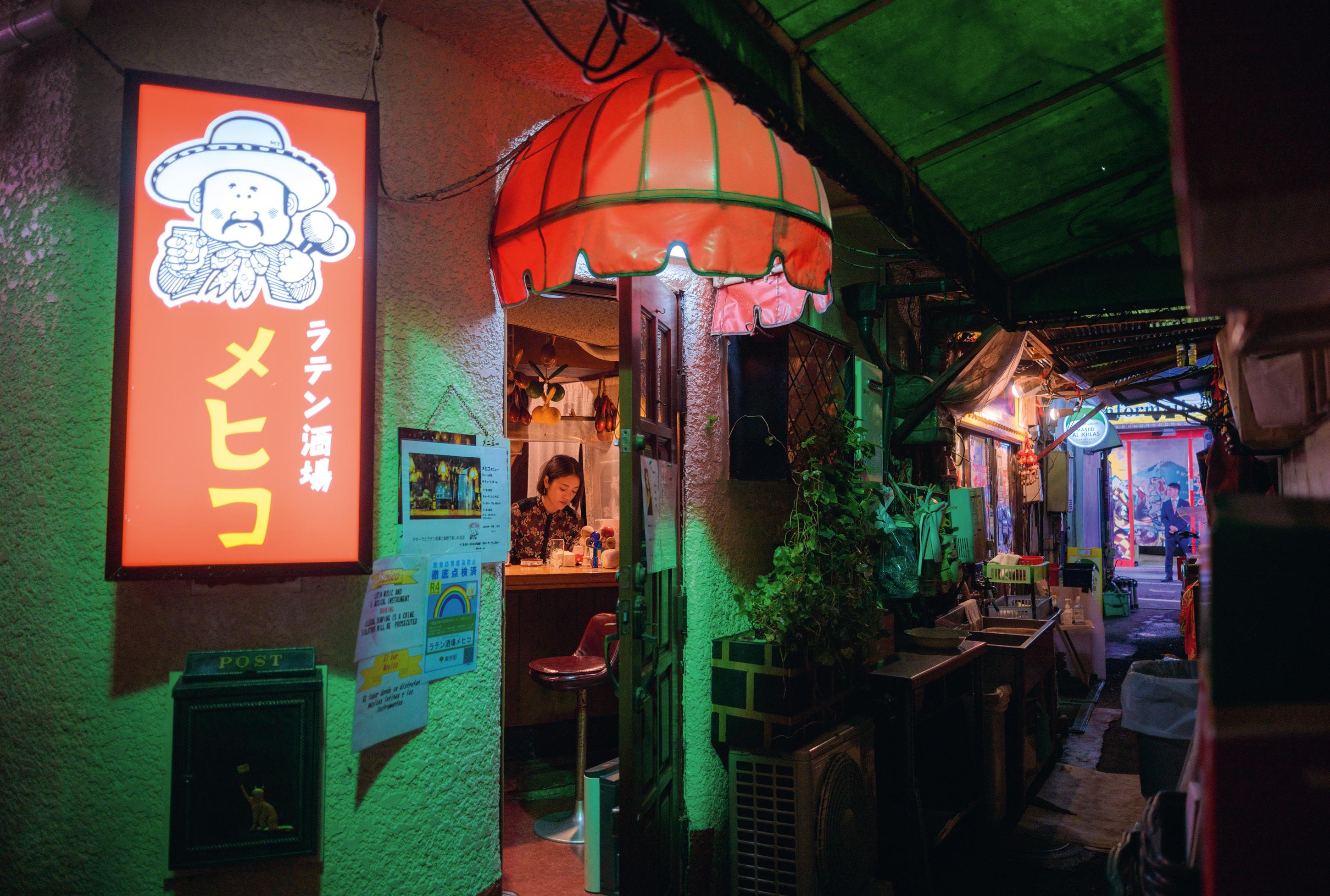
What makes Tokyo so special for you as a photographer?
It’s a bit hard to say why, but every day as I step out of my little apartment building in a lovely but nondescript corner of Tokyo, I get into this sort of aesthetic flow and start observing every little thing, every scene that unfolds in front of me. I feel that the light is incredibly beautiful in Tokyo, each microseason bringing a different kind of glow to the most mundane things. I’m very much a natural, daylight photographer, and for me having this beautiful light year-round is inspiring.
Is there a place in Tokyo that inspires you again and again?
The cluster of quiet yet lively and always-evolving neighborhoods that’s close to my home and that I cycle through as I get on with my day: GakugeiDaigaku, Yutenji, Shimouma, and then a bit further north Nakameguro and Daikanyama. I just love the changing scenery of little townhouses with their potted gardens at the front, the shotengai with the rice and mochi shops, the cool cafes and the izakayas , the rail tracks descending into the panorama of Shibuya, the cool concrete architecture of Daikanyama. That part of Tokyo can be quite upand-down, and I love the sense of 3D provided by the sudden, sometimes precipitous slopes.
Do you tend to work spontaneously on the street or do you plan your photo walks specifcally?
I prefer working spontaneously. I find that planning to go on a photo walk brings a certain pressure
that isn’t conducive to creating the kind of images I like. The only outings I really plan for photographic purposes are matsuri, because although I go there mainly to take pictures, somehow I immediately find my photography groove in that kind of joyous, colorful, messy (for Japan) environment. And people there don’t mind as much having their picture taken—it feels like you don’t have to explain yourself when you take a picture, which is liberating.
Is there a particular photo from Tokyo that tells a special story for you?
I do love the picture of the three ladies sitting at the counter of a small, very old and popular unagi joint in Jiyugaoka. For me it captures a feature of Tokyo life that I love: having a nice meal sitting at a counter, surrounded by old school but somewhat timeless decor (all the wood!), and just observing life unfolding, undisturbed (p. 67).
What clichés about Tokyo would you like to break with your pictures?
Tokyo isn’t just one thing. When I go to a new neighborhood, I immediately feel almost a different voice, a different pulse. Also, the particular Tokyo that I love rarely gets a mention in tourist guides, and as a result isn’t often represented in street photography. When I think of Tokyo life I see tiny, winding streets, a mish-mash of low-rise architecture, children laughing as they walk home from school, a little neighborhood park with a single stunning sakura tree right in the middle, one-person-run restaurants. This is the Tokyo that I portray in my pictures.
What does Tokyo mean to you—as a city, as a place to live, as a subject?
It’s the city that most inspires me. I’m a big people watcher and really into fashion, so I get very inspired by the care and creativity people of all ages, styles and walks of life demonstrate in their everyday dressing. It’s also a place where I feel deeply safe and comfortable, despite the enduring foreignness of it.
How do you experience the tension between tradition and the future in Tokyo—and does it fnd its way into your work?
This tension very often finds its way into my work—although I wouldn’t call it a tension, but rather a harmonious, anachronistic chaos. I love a tiny shrine stuck in between a new concrete building and a Shōwa-era tiled apartment block. I love the traditional school uniforms and the heavy randoseru on the kids’ backs: the classic, hand-made black leather ones, but also the new models, the lighter, pink ones with garish decorations. I love going to a dark kissaten that hasn’t changed in 60 years and is enjoyed just as much by groups of young people as the older gentleman in a tweed suit.
In what mood or under what conditions do you prefer to photograph Tokyo?
When I’m out and about with my kids on the weekend, on my way to a random playground in a random neighborhood, or during the many lonely hours I spend location-scouting for my fashion shoots. I’m not really looking for a shot, and I snap whatever stands out in the moment, whether it be a flower that glistens in the morning light or a funny kid doing something silly on the swings.
Which sound of Tokyo would you most like to photograph?
The sound of a tiny level-crossing at a neighborhood intersection. The ding-ding-ding that announces that a train is coming, and the microcosm of the neighborhood—salarymen, old ladies, children on their way back from school, mothers on bicycles—waiting there to cross the tracks. And then the silence when the ringing sound stops and the barrier lifts, replaced by the rushing sound of people making their way to the rest of their day.
Tokyo in three words?
Neighborhood. Style. Never-ending-inspiration.
THE PARTICULAR TOKYO THAT I LOVE RARELY GETS A MENTION IN TOURIST GUIDES, AND AS A RESULT ISN’T OFTEN REPRESENTED IN STREET PHOTOGRAPHY.
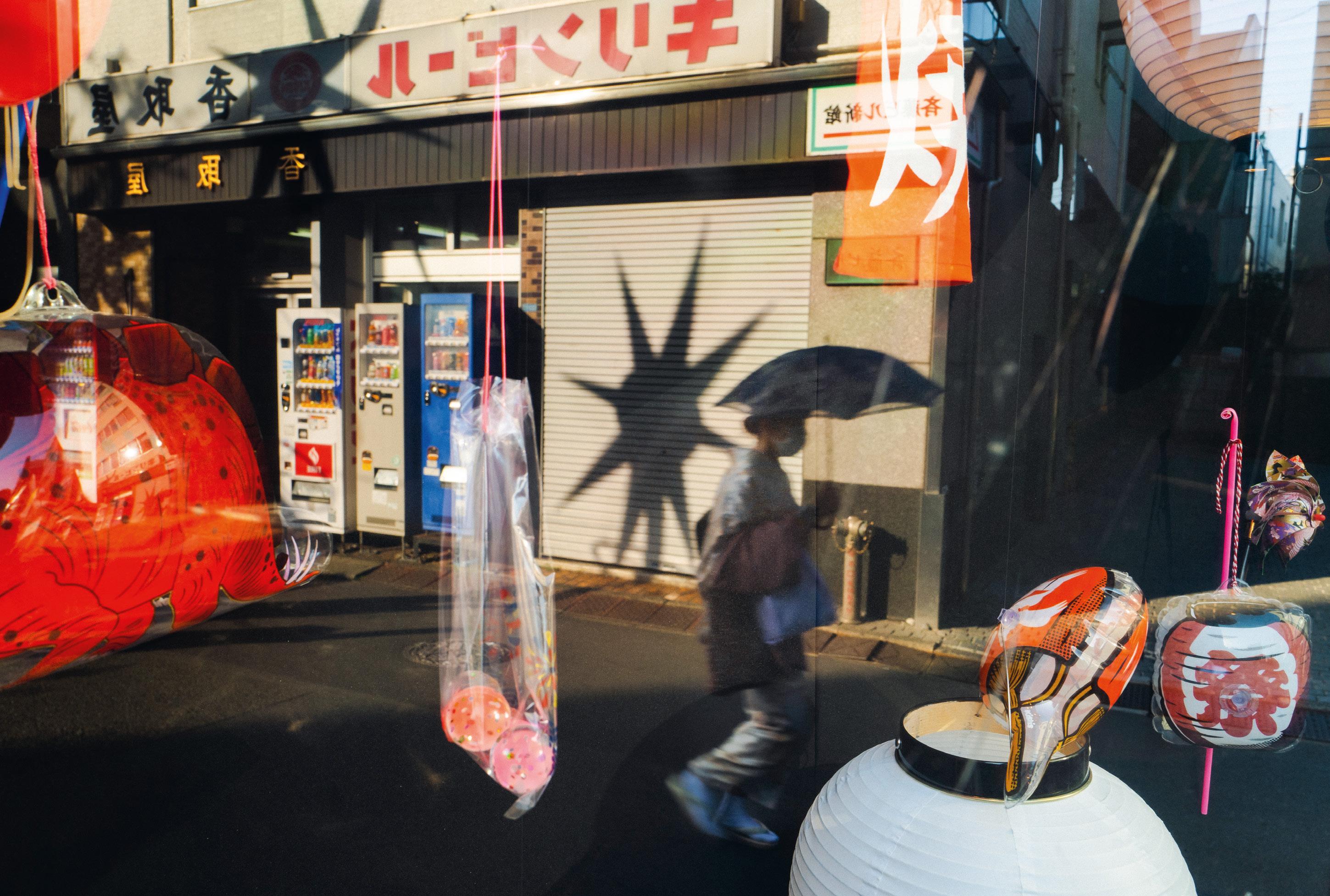
What makes Tokyo so special for you as a photographer?
Tokyo is among the world’s great metropolises, a place where diverse races come and go and where new discoveries await every day. It puts the latest architecture right alongside the old drinking districts, offering a blend of old and new that feels truly special.
Is there a place in Tokyo that inspires you again and again?
Shinjuku, Shibuya, Ginza.
Do you tend to work spontaneously on the street or do you plan your photo walks specifcally?
Sometimes I plan my shots, other times I shoot spontaneously. The flexibility allows me to shoot freely, unbound by location.
Is there a particular photo from Tokyo that tells a special story for you?
My signature photograph, Mother and Daughter at Sunset, holds a special place in my heart. It’s thanks to that photograph that my work in general makes such a feature of light and shadow.
What clichés about Tokyo would you like to break with your pictures?
Having researched the history and culture of a city, I try to capture its atmosphere in my photographs. I want to show the real Tokyo, as I experience and see it.
What does Tokyo mean to you—as a city, as a place to live, as a subject?
For me, Tokyo is first and foremost where I live, and my work tries to show scenes I witness during my daily life that otherwise might be overlooked.
How do you experience the tension between tradition and the future in Tokyo—and does it fnd its way into your work?
In addition to street photography, I make a point of photographing Tokyo’s traditional festivals. While it would be great if these festivals could continue, they face the threat of extinction due to issues like population decline, so I prioritize photographing these possibly passing traditions while I still can.
In what mood or under what conditions do you prefer to photograph Tokyo?
Since light and shadow are my overarching theme, I prefer sunny days.
Which sound of Tokyo would you most like to photograph?
The ever-changing cityscape and the people who live there.
Tokyo in three words?
Melting-pot. Tradition. Innovation.
SOMETIMES I PLAN MY SHOTS, OTHER TIMES I SHOOT SPONTANEOUSLY. THE FLEXIBILITY ALLOWS ME TO SHOOT FREELY, UNBOUND BY LOCATION.

What makes Tokyo so special for you as a photographer?
Its ability to constantly deliver the unexpected even if you’re somewhere you’ve been before. You inevitably haven’t found everything an area has to offer, so it often surprises you.
Is there a place in Tokyo that inspires you again and again?
I really like Shimbashi—night or day, the area has a lot to offer. It has Shiodome, which during the day is great for its modern architecture, with its glass and marble and well-dressed people. At night the station area comes to life, providing great nighttime street scenes. It’s also not too far from Ginza, which has the potential to produce something great at any time of day.
Do you tend to work spontaneously on the street or do you plan your photo walks specifcally?
Do I go out with a plan? Yes. Do I stick to the plan? Almost never. I think there are so many variables at play in Tokyo, so many spontaneous moments, that it’s hard to stick to a plan.
Is there a particular photo from Tokyo that tells a special story for you?
The photo of the lady with the blue dress and red shoes at the train station captures that moment when the train rolls in, pushing a cushion of air past the waiting commuters (p. 199). A lot of the time the wind doesn’t do much, but on this occasion I was lucky enough to capture a brief moment of chaos when it really had its way with this woman’s hair and attire. Sadly, with the ongoing roll-out of platform
safety barriers, moments like these will become harder to come by. Initially I wished the image was sharper, but now I think the camera shake makes the scene more compelling. The wind got me too!
What clichés about Tokyo would you like to break with your pictures?
Tokyo shoots amazingly at night, but I feel it’s maybe a little underappreciated for what it offers during the day. I do try to split my shots between day and night, though I’m not sure how successful I am.
What does Tokyo mean to you—as a city, as a place to live, as a subject?
As a city and a place to live Tokyo is a monument to how convenient a city can be. This makes for a diverse population busily living their lives, providing a great subject with a great backdrop.
How do you experience the tension between tradition and the future in Tokyo—and does it fnd its way into your work?
I certainly look for it, and I think a great example playing out at the moment is the slow fade of the iconic Tokyo taxi as the city moves toward a more almost London-style taxi. It interested me so much I wrote a piece on it.
In what mood or under what conditions do you prefer to photograph Tokyo?
I’m definitely a fan of the winter, and the bright sunny days that are so common then. It produces a quickly-changing show of hard sun, long shadows, strong contrasts and light that bounces off the mass of glass.
Which sound of Tokyo would you most like to photograph?
For me one of the major aspects of Tokyo—one of the inescapable sounds of Tokyo, certainly—is the trains.
Tokyo in three words?
Endless. Unique. Vibrant.
YOU INEVITABLY HAVEN’T FOUND EVERYTHING AN AREA HAS TO OFFER, SO IT OFTEN SURPRISES YOU.
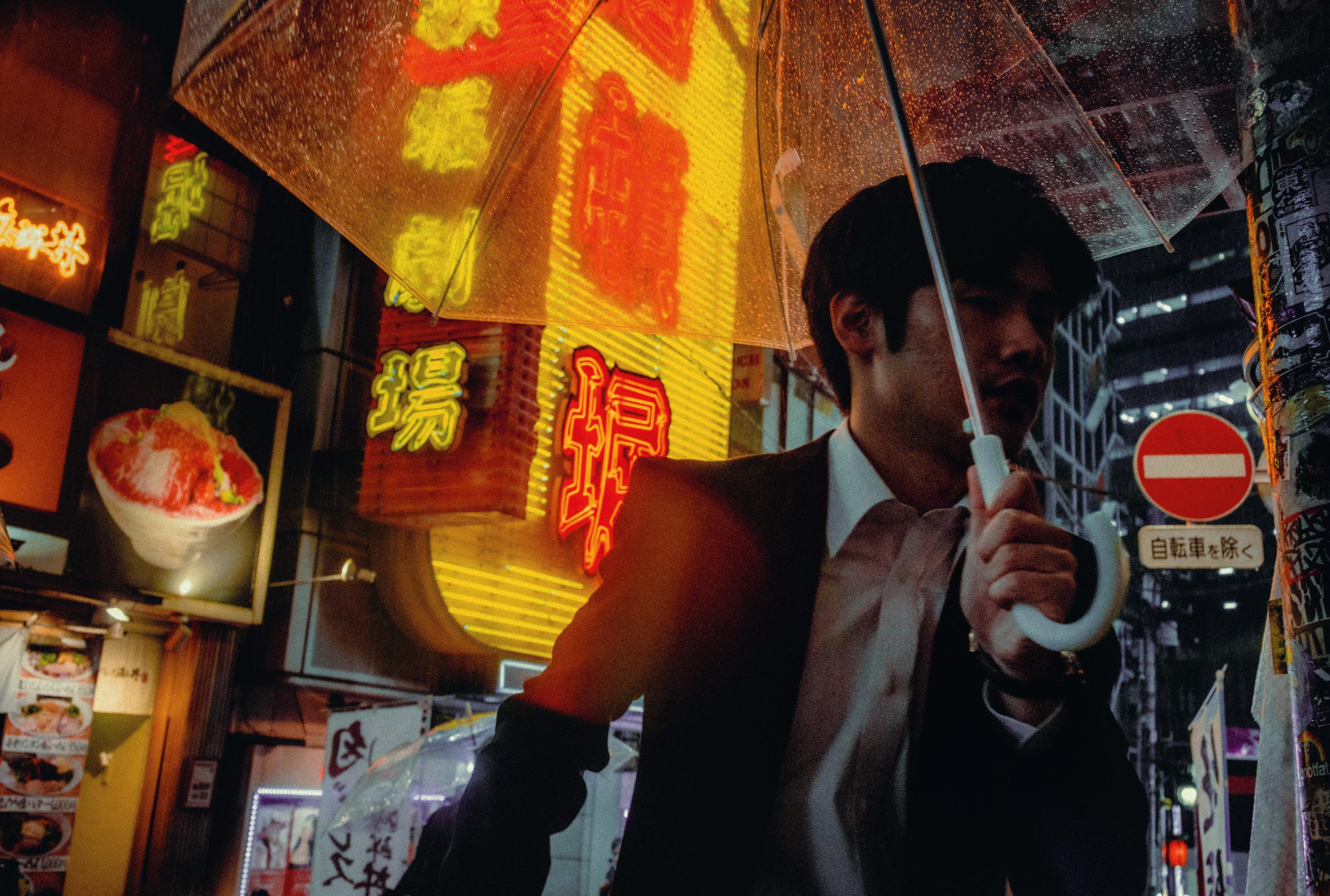
This book was conceived, edited, and designed by teNeues.
Edited
by
Lukasz Palka
Photos & texts by
© Lukasz Palka (cover, pp. 6/7, 36–49),
© Lee Chapman (pp. 8–21), © Tatsuo Suzuki (pp. 22–35), © Shin Noguchi (pp. 50–61), © Elisa Eymery (pp. 62–75), © Ulysses Aoki (pp. 76–87), © Laurence Bouchard (pp. 88–101); © Yusuke Nagata (pp. 102–113), Daiki Hosaka (pp. 114–125), © Jonny Dub (pp. 126–137), © James Suarez (pp. 138–149), © Bruno Quinquet (pp. 150–163), © Adam Benedicto (pp. 164–177), © Phil Penman (back cover, pp. 178–189), © Charles Elliot (pp. 190–201), © Soichiro Okamoto (pp. 202–213), © Adam Vincent (pp. 214–225), © Eren Sarigul (pp. 226–239)
Preface by Alain Roy
Copyediting by Abe Davies
Translation assistance Japanese by Chica Suzuki
Editorial Management by Stephanie Rebel, gestalten
Design & layout by Elise Castrodale
Production by Alwine Krebber, gestalten
Image editing by Robert Kuhlendahl, gestalten
Printed in Czech Republic by PBtisk a. s. (Hergestellt in Europa)
(Hergestellt in Europa) FSC LOGO
Published by gestalten, Berlin 2026
ISBN 978-3-96171-740-8
1st printing, 2026
© teNeues, an Imprint of Die Gestalten Verlag GmbH & Co. KG, Berlin 2026
All rights reserved. No part of this publication may be reproduced or transmitted in any form or by any means, electronic or mechanical, including photocopy or any storage and retrieval system, without permission in writing from the publisher. No part of this book may be used or reproduced in any manner for the purpose of training artificial intelligence technologies or systems. This work is reserved from text and data mining (Article 4(3) Directive (EU) 2019/790).
Respect copyrights, encourage creativity!
For more information and to order books, please visit www.teneues.com and www.gestalten.com
Die Gestalten Verlag GmbH & Co. KG
Mariannenstraße 9–10 10999 Berlin, Germany hello@gestalten.com
Krefeld Office
Uerdinger Str. 265 / Villa Pattberg 47800 Krefeld, Germany verlag@teneues.com
teNeues Press Department press@gestalten.com
Bibliographic information published by the Deutsche Nationalbibliothek. The Deutsche Nationalbibliothek lists this publication in the Deutsche Nationalbibliografie; detailed bibliographic data is available online at www.dnb.de