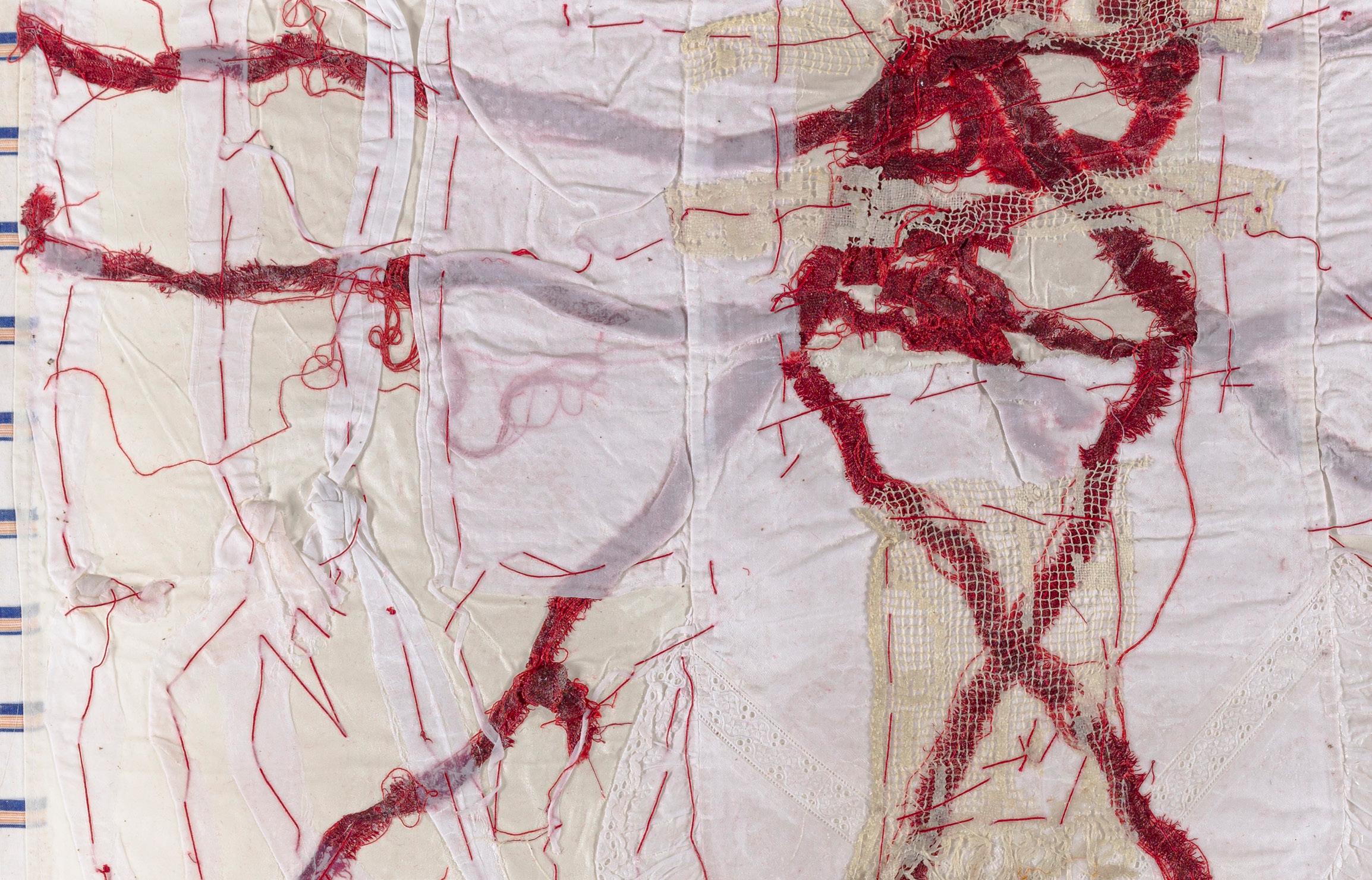
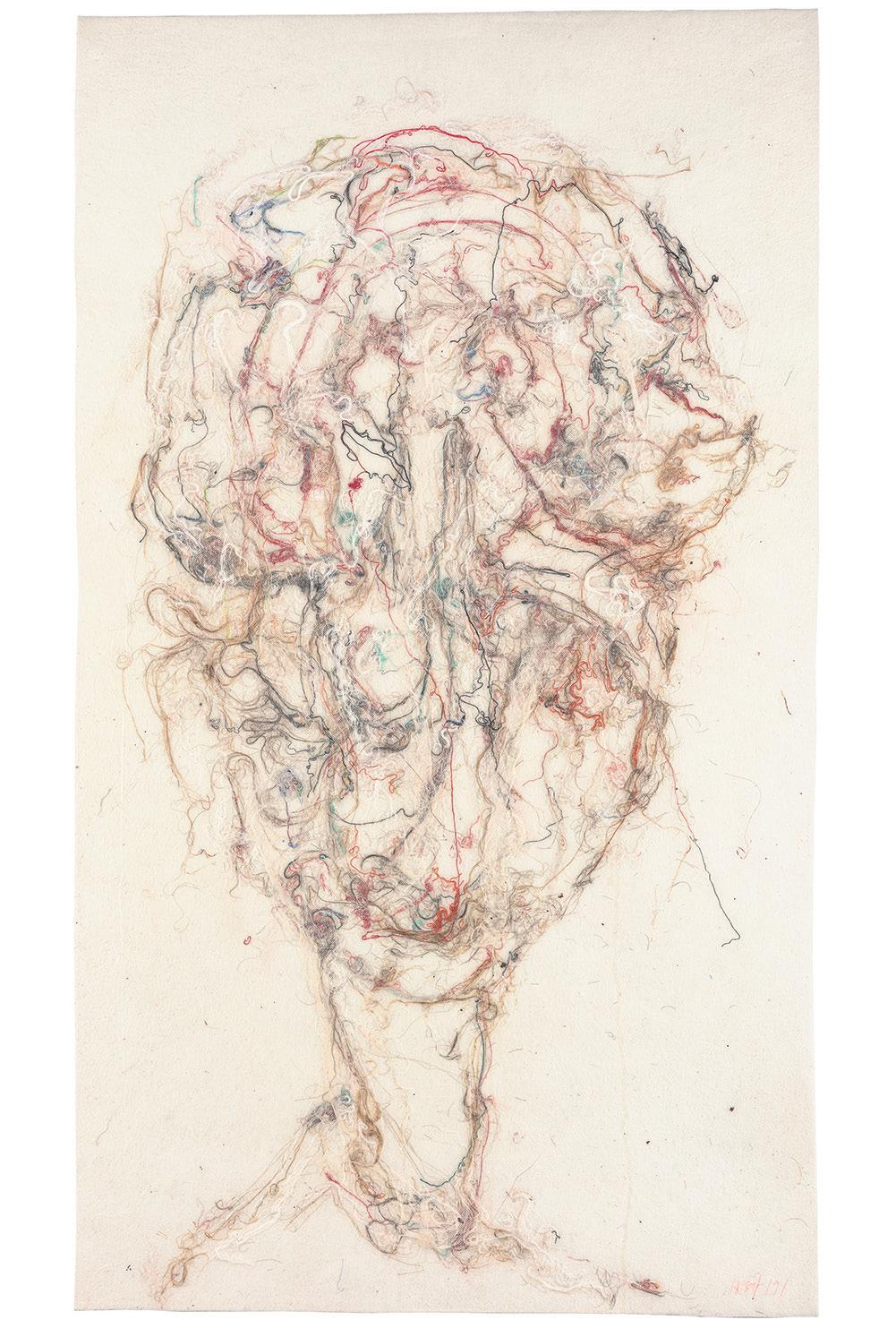
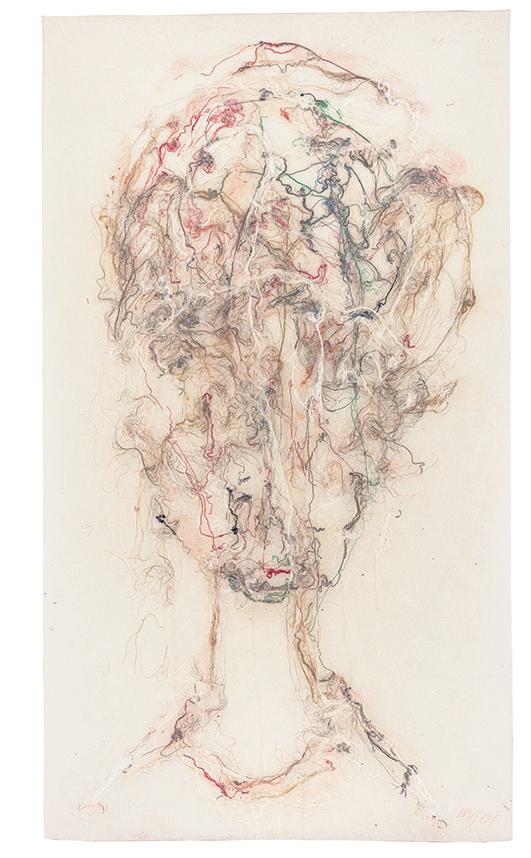
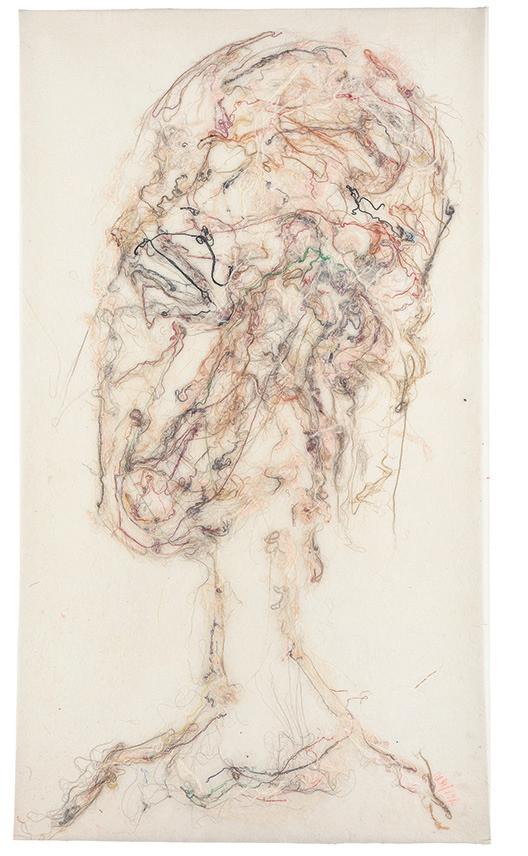
Aber auch das wäre nicht unbedingt der Grund gewesen, Nesa Gschwend zu einer nochmaligen Ausstellung an diesem Ort einzuladen: Gleiches gilt für die Tatsache, dass sie im Rheintal, in Altstätten aufgewachsen ist – und schon gar nicht wollten wir für die 1959 geborene Künstlerin eine Ausstellung zum 60jährigen Geburtstag einrichten. Das wäre zwar alles Anlass genug, aber doch – angesichts der Wirkkraft des Werks – irgendwie oberflächlich, äusserlich.
Im Jahr 2016 hatten wir im Rahmen der Ausstellung Wunder®N – Die Sammlung Mezzanin, Liechtenstein die Gelegenheit, ein Kabinett des Kunstmuseums Appenzell mit einer Werkserie der Künstlerin einzurichten. Die intensive Beschäftigung mit der Kunst Nesa Gschwends, aber auch der dadurch entstandene Kontakt mit der Künstlerin führte folgerichtig dazu, dass wir jetzt diese Überblicksausstellung zu unterschiedlichen Werkbereichen bewundern können: Bereiche, in denen sich durchaus das Gesamtwerk der Künstlerin spiegelt.
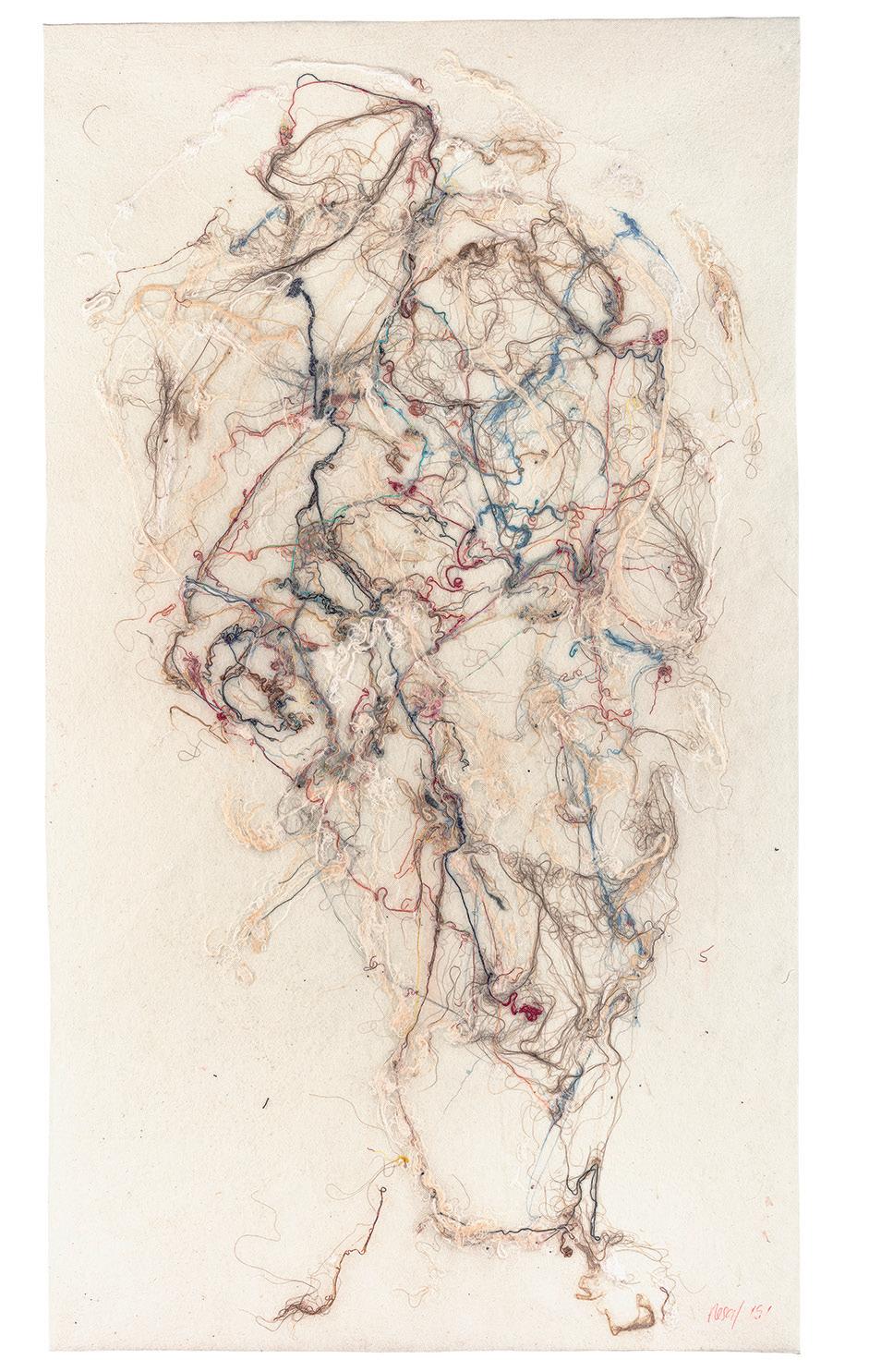
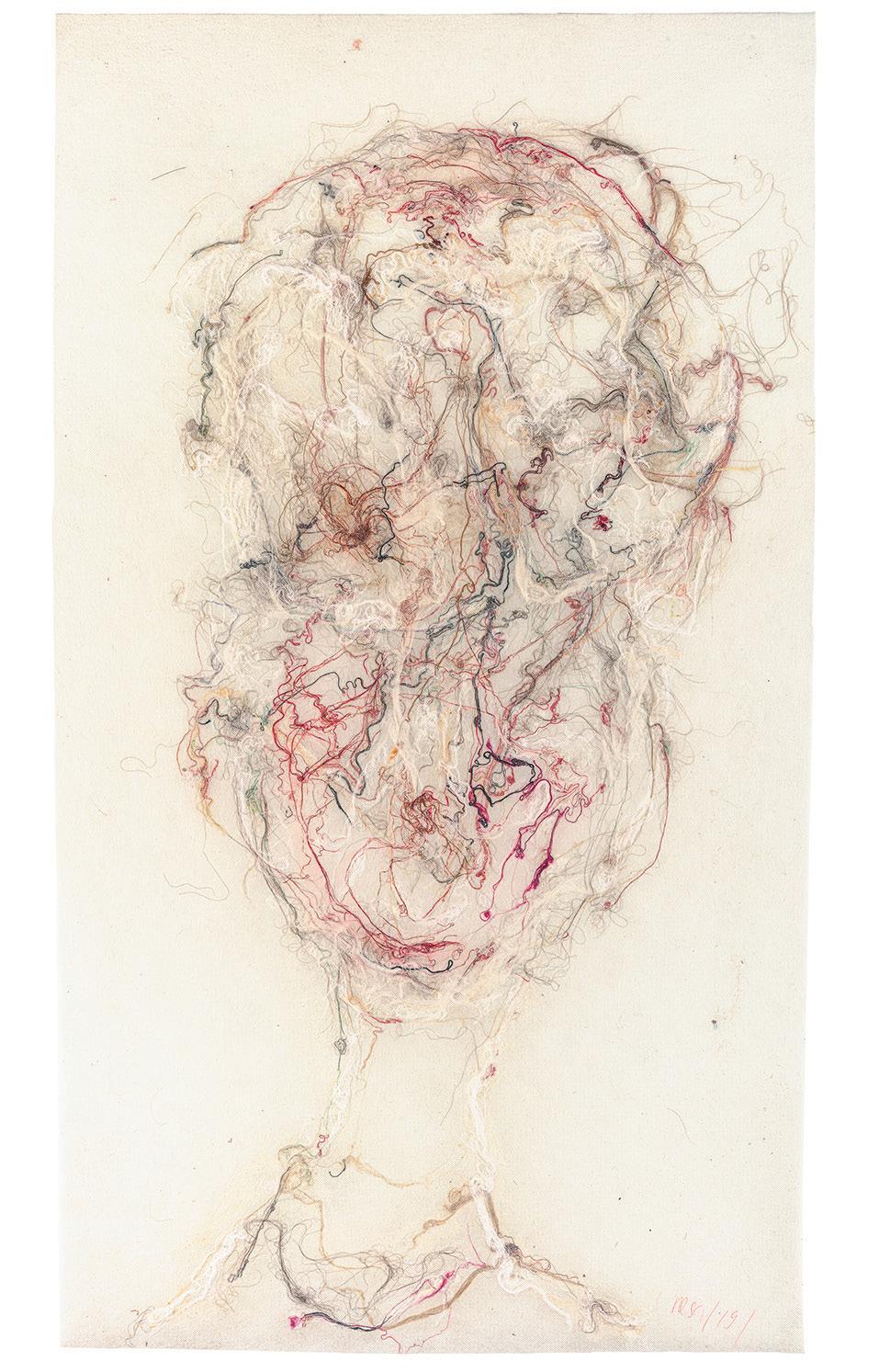
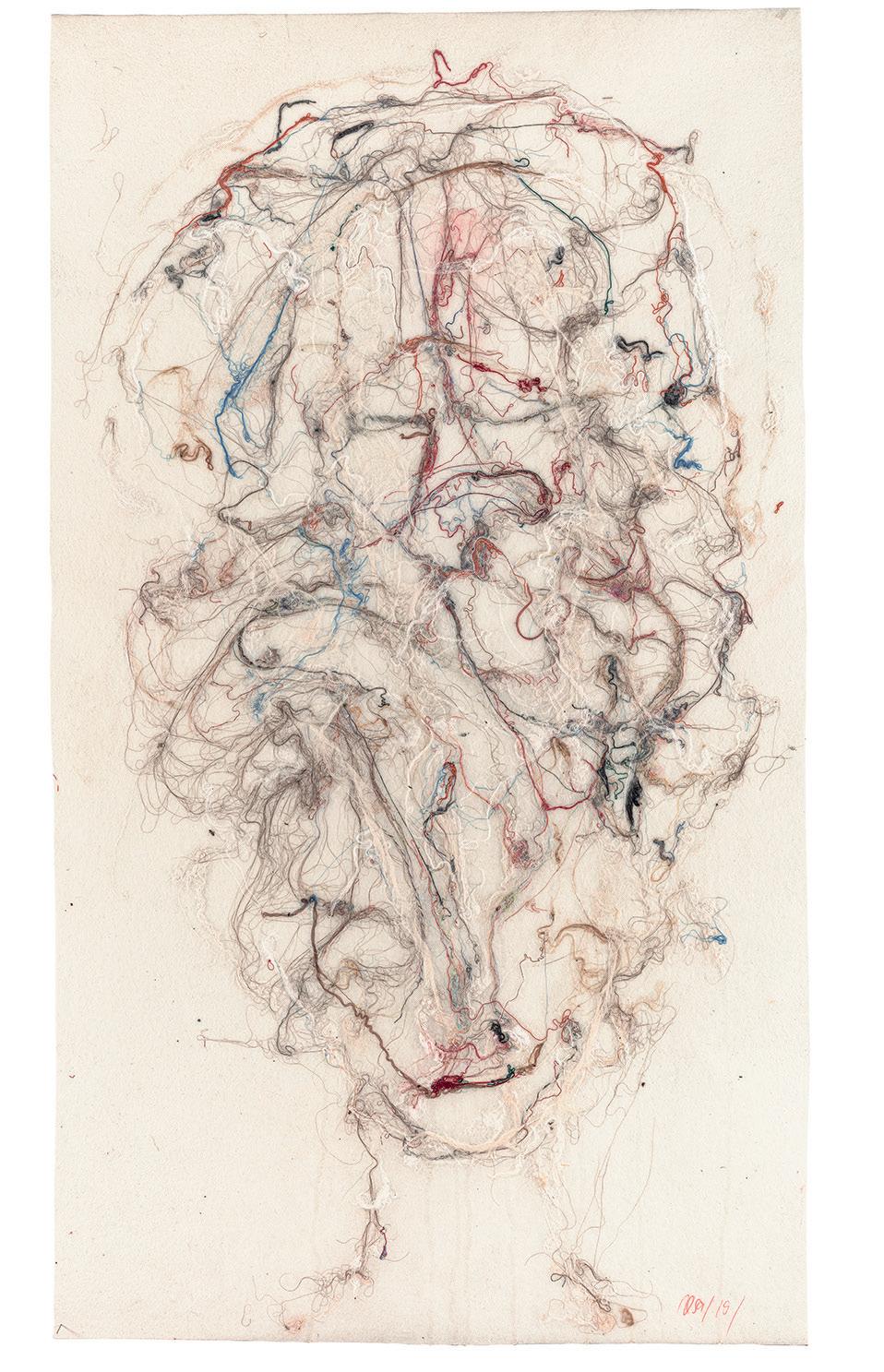
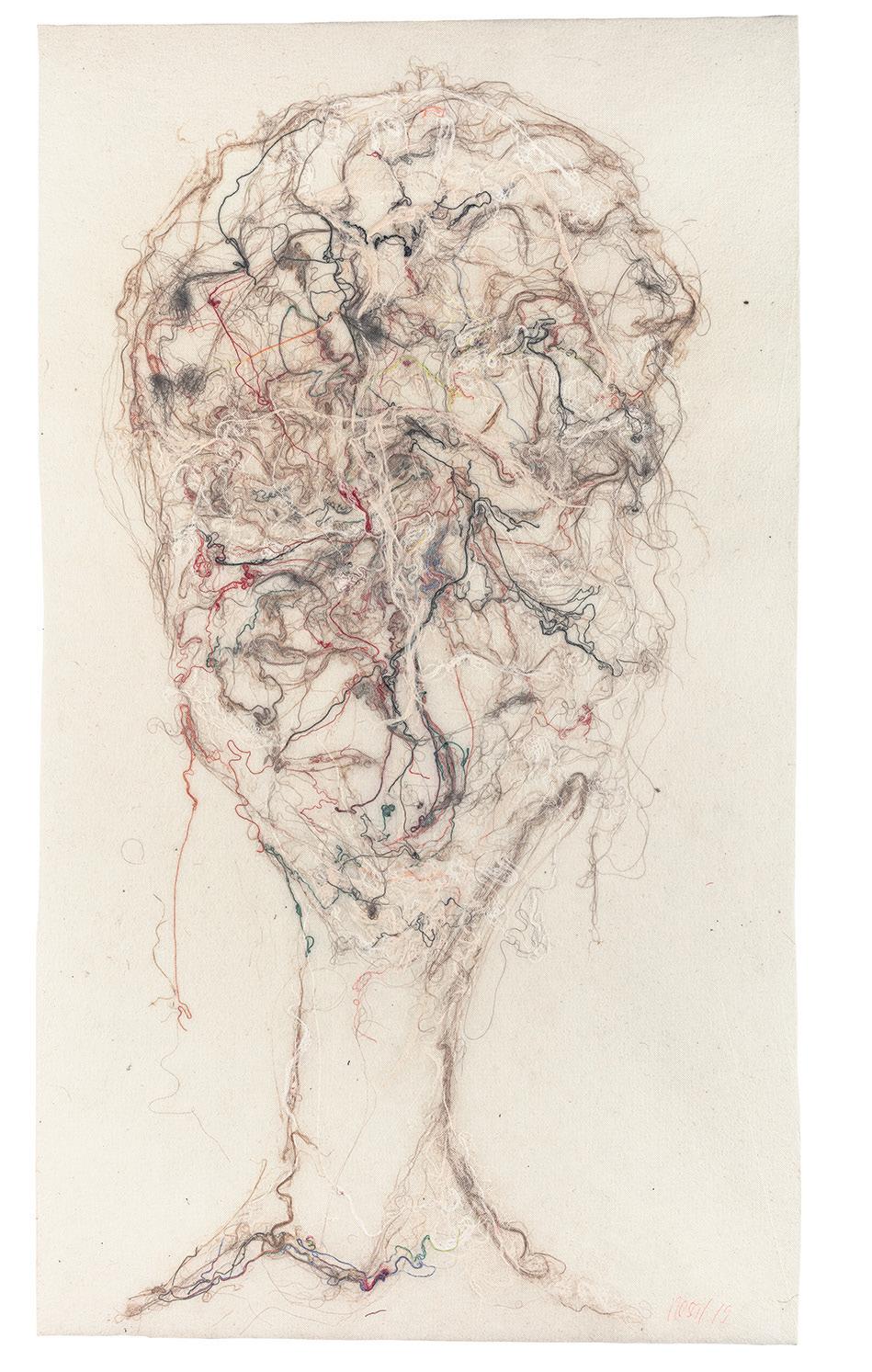
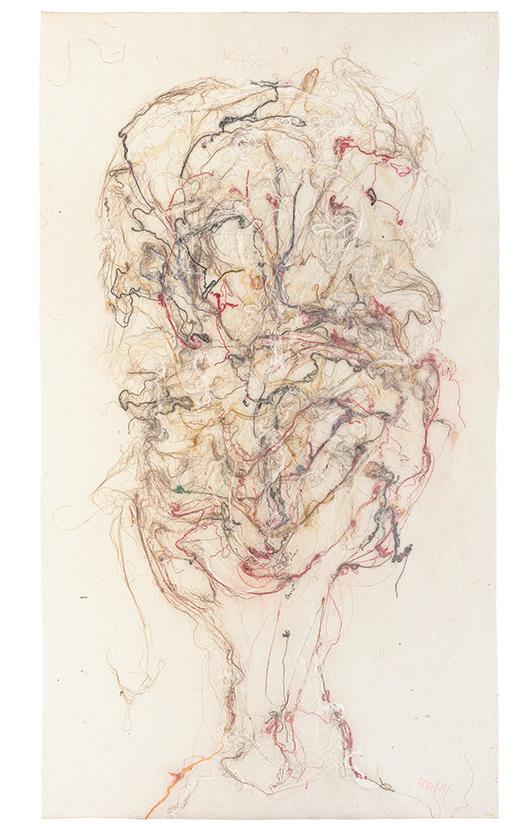
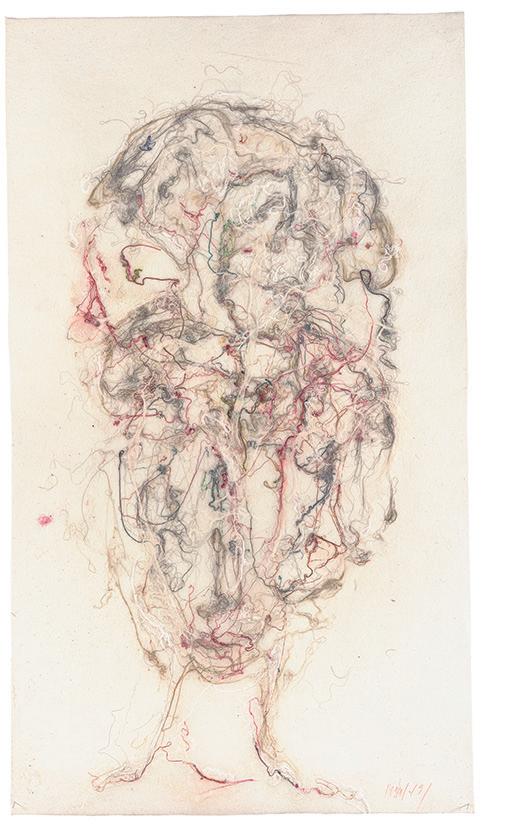
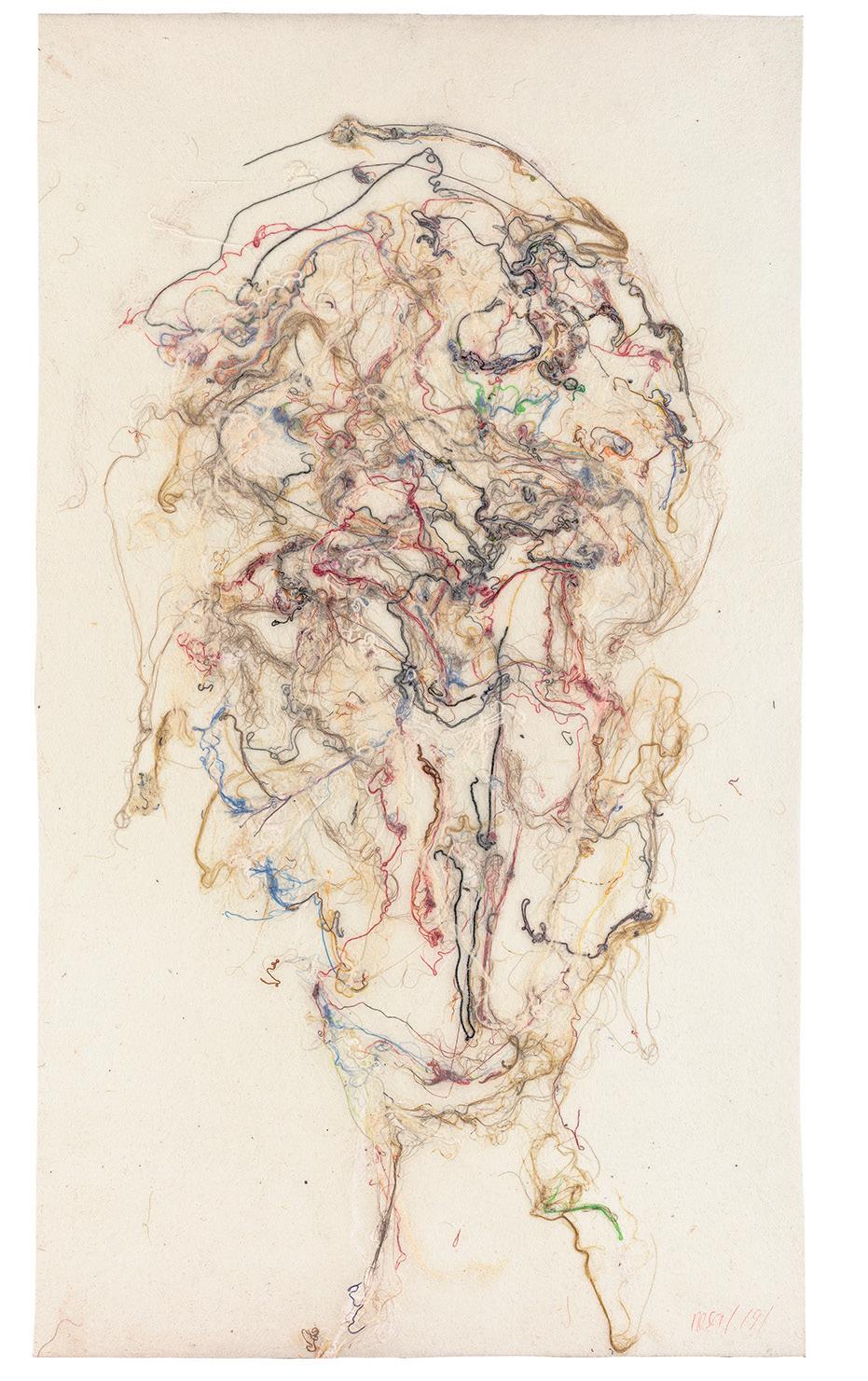
Auf drei Stockwerken stellen wir je einen Schwerpunkt vor. Im obersten Geschoss die Bildserie «Human»; im ersten Ober-
present an exhibition on the occasion of the sixtieth birthday of the artist, who was born in 1959. Though all of this would have been reason enough, it would nonetheless—in light of the effective force of the oeuvre—be somehow superficial, extrinsic.
Within the framework of the exhibition Wunder®N – Die Sammlung Mezzanin, Liechtenstein in 2016, we had the opportunity to present a series of works by the artist in one cabinet of the Kunstmuseum Appenzell. The intensive engagement with the art of Nesa
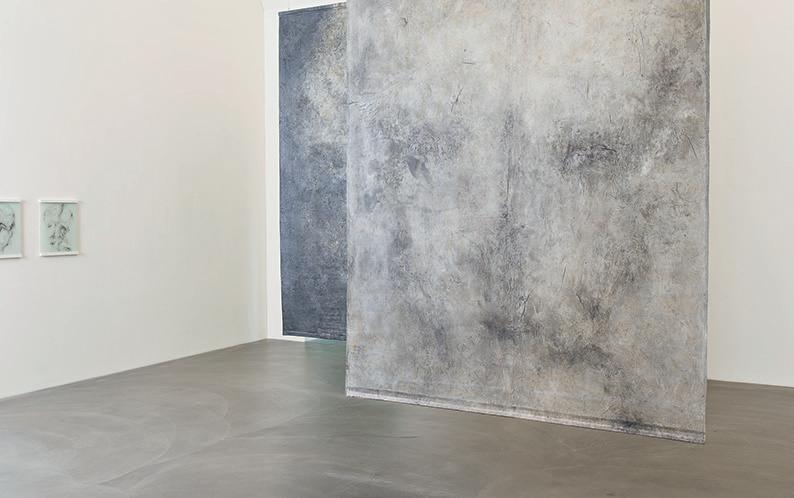
2, 10, 2005–2008 Kunstmuseum Appenzell 2016/17
geschoss die Werkgruppe«Relations» und im Erdgeschoss geben wir einen Einblick in das Werkfeld «Living Fabrics». Damit spannt die Ausstellung einen Bogen, dem Anspruch der Künstlerin folgend, mit ihrer Tätigkeiten heterogene Lebenswelten nicht nur zu entwerfen, zu spiegeln, nicht nur zu interpretieren, sondern «Geburt, Liebe, Gemeinschaft, Freude, auch Schmerz, Krankheit, Tod, Trauer» (Nesa Gschwend) mit ästhetischen Handlungen in Gestalt und Gehalt zu transformieren.
Gschwend, but also the contact with the artist that came about as a result, consequently led to the fact that we can now marvel at this overview exhibition of various work areas: areas in which the artist’s oeuvre as a whole is by all means reflected.
One focus is presented on each of the three floors: on the top floor, the picture series ‘Human’; on the first floor, the group of works ‘Relations’; and on the ground floor, we provide insights into the work area ‘Living Fabrics’. The exhibition spans an arc that satisfies the artist’s aspiration to not only design, not only reflect, not only interpret heterogeneous living worlds with her activities, but also to transform ‘birth, love, companionship, and joy, but also pain, illness, death, and grief’ (Nesa Gschwend) into form and content by means of aesthetic actions.
The exhibition and book show that even though it is possible to associate the ‘total artist’ Nesa Gschwend with terms such as ‘textile art’, ‘women’s art’, ‘expressive art’, ‘performative art’, and so on, what also becomes visible is the fact that these categorizations from art criticism, the art-historical corset, are much to narrow. Naming the individual techniques or genres with which one might associate individual works—
– – – Mit Nesa Gschwend – Memories of Textiles zeigt die Heinrich Gebert Kulturstiftung nach den Ausstellungen Margret Eicher – Radikal konstruktiv (2008) und Andrea Ostermeyer – White Collar (2015) in der Kunsthalle Ziegelhütte die dritte monographische Ausstellung einer zeitgenössischen Künstlerin, die sich in Ihrer Arbeit hauptsächlich mit Textilien beschäftigt. Wir können also zu Recht behaupten, dass die Beschäftigung mit der so genannten «Textilkunst» fast eine Tradition in unseren Häusern hat.
Vorwort | Dank
Dieses Interesse könnte sich dem besonderen Genius Loci, dem «Textilland Ostschweiz», verdanken – dem ist aber nicht so. Wir sind der Meinung, dass diese drei Künstlerinnen in ihrer Auseinandersetzung mit dem Material «Stoff» Wesentliches zur Geschichte der Kunst, der Plastik und der Bilder, beitragen.
Bei Nesa Gschwend kommt hinzu, dass sie seit ihrer legendären Performance «Häutungen» im damaligen «Kulturzentrum Ziegelhütte» in gewisser Weise sogar zur Geschichte des Gebäudes gehört.
Foreword | Acknowledgements
– With Nesa Gschwend—Memories of Textiles , the Heinrich Gebert Kulturstiftung, following the exhibitions Margret Eicher— Radikal konstruktiv (2008) and Andrea Ostermeyer—White Collar (2015), is presenting the third monographic exhibition on a contemporary female artist who mainly occupies herself in her oeuvre with textiles at the Kunsthalle Ziegelhütte. We can thus justifiably claim that engaging with so-called ‘textile art’ almost has a tradition at our institutions.
This interest could arise from the particular genius loci, Eastern Switzerland as a land of textiles—but that is not the case. It is our opinion that these three artists make a substantial contribution to the history of art, sculpture, and images with their examination of ‘textile’ as a material.
In the case of Nesa Gschwend, added to this is the fact that, since her legendary performance Häutungen (Moultings) at what was then the ‘Kulturzentrum Ziegelhütte’, she has, in a sense, even been part of the history of the building itself.
But that would not necessarily be a reason to invite Nesa Gschwend for another exhibition at this institution: the same applies to the fact that she grew up in Altstätten in the Rhine Valley—and we definitely did not want to
Ganz entscheidend haben Roswitha Gobbo, Börries Hessler, Christian Hörler, Claudia Reeb, Ursula Schmid und Niklaus Ulmann zum Gelingen beigetragen.
Im Rahmen des Buches ist die Autorin Stefania Pitscheider zu nennen, die in einem hellsichtigen Beitrag einen wichtigen Aspekt der künstlerischen Vorgehensweise Nesa Gschwends beleuchtet: die Partizipation. Für die Gestaltung der Reise durch die Kunst danken wir Sabine Hahn – und natürlich gilt der besondere Dank dem Verlag Scheidegger & Spiess für die hervorragende Betreuung der Publikation.
Denn wie der Autor Gerd Scobel in seinem Buch «Der fliegende Teppich – eine Diagnose der Moderne» sinngemäss formulierte: « Wir haben nur festen Boden unter den Füssen, wenn wir permanent an unserer Geschichte weben, wenn wir sie transformieren, umwandeln, erweitern, fortführen, wenn wir sie neu erfinden –und das alles nicht allein, sondern im Austausch mit allem und allen anderen»
– – – Roland Scotti
Kurator
Heinrich Gebert
Kulturstiftung Appenzell
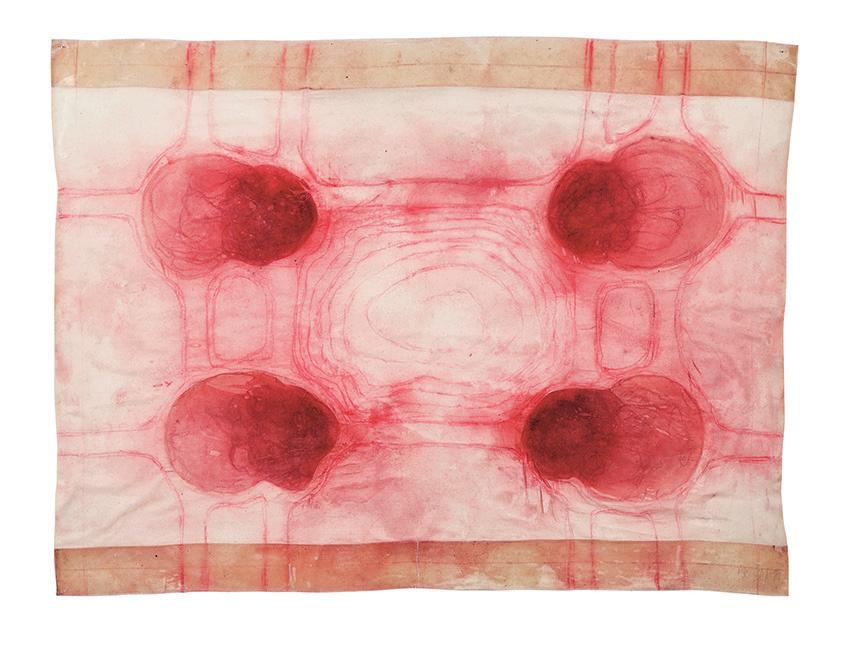
– – – Cells, 2010 Kunstmuseum Appenzell 2016/17
For designing the journey through her art, we thank Sabine Hahn—and naturally also express particular gratitude to the publisher, Scheidegger & Spiess, for its outstanding support for the publication. Since as the author Gerd Scobel articulates analogously in his book Der fliegende Teppich – eine Diagnose der Moderne : ‘We only have firm ground beneath our feet when we continue to weave our history, when we transform, metamorphose, expand, and carry our history forward, when we invent it anew—and do so not alone, but rather in exchange with everything and everyone else.’
– – – Roland Scotti
Curator
Heinrich Gebert
Kulturstiftung Appenzell
Ausstellung und Buch belegen, dass man mit der «Totalkünstlerin» Nesa Gschwend zwar Begriffe wie «Textilkunst», «FrauenKunst»,«expressive Kunst»,«performative Kunst» usw. assoziieren kann, aber sichtbar wird auch, dass die kunstkritischen Kategorisierungen, das das kunsthistorische Korsett viel zu eng sind. Ebenso wenig greifen Benennungen der einzelnen Techniken oder Genres, mit denen man einige Werken benennen könnte: Bildteppich, Zeichnung, Quilt, Thangka usw. Auch das sind Dinge und Traditionen, die zwar alle in die Arbeit der Künstlerin einfliessen – die von ihr zwar gekannt und respektiert werden, die von ihr aber immer zu etwas eigenem, zu einer eigenen Aussage über die Kunst, die Welt und das Menschsein verwandelt werden. Die Inszenierung der ästhetischen Transformation in Ausstellung und Buch war nur möglich dank der Hilfe und Unterstützung vieler. Zu nennen sind jene, die mit finanziellen Beiträgen unterstützt haben:
Kulturförderung St. Gallen, de Rheintaler Kulturstiftung, die Dr. Fred Styger Stiftung sowie die Stiftung Ostschweizer Kunstschaffen und das Aargauer Kuratorium. Die wesentlichste Arbeit leistete die Künstlerin, die mit mir zusammen die Ausstellung konzipierte – und sie dann mit unserem Team realisierte.
tapestry, drawing, quilt, thangka, et cetera— is of just as little help. Although these are also things and traditions that influence the artist’s work—and that she is also aware of and respects—she always transforms them into something individual, into her own statement about art, the world, and human existence.
Staging the aesthetic transformation in the exhibition and the book was only possible thanks to the help and support of many. They include those who supported the project with financial contributions: Kulturförderung St. Gallen, the Rheintaler Kulturstiftung, the Dr. Fred Styger Stiftung, and the Stiftung Ostschweizer Kunstschaffen | Ortsbürgergemeinde St.Gallen and the Aargauer Kuratorium. The main work was, however, done by the artist, who conceived the exhibition in cooperation with me—and then realized it collaboratively with our team. Roswitha Gobbo, Börries Hessler, Christian Hörler, Claudia Reeb, Ursula Schmid, and Niklaus Ulmann made crucial contributions to its success.
Within the framework of the book, the author Stefania Pitscheider should also be named. In her insightful text, she sheds light on an important aspect of Nesa Gschwend’s artistic approach: participation.
– – – Kunst ist ein Universum – und die künstlerische Welt von Nesa Gschwend ist wie jeder Kosmos nur annäherungsweise zu beschreiben. In ihrem Werk sind handwerkliche, philosophische, sozialpolitische und ästhetische Prozesse, Formfindungen und Sinnstiftungen, so eng verflochten, dass jede Verbalisierung eigentlich scheitern müsste. Im Rahmen der Publikation «Memories of Textiles» will ich nur auf vier Begriffe eingehen, mit denen ich angesichts der Arbeiten der Künstlerin konfrontiert bin: Körper, Kommunikation , Information , Identität
Einatmen und Ausatmen
Roland Scotti
Die Körper – der eigene, aber auch jene der anderen – werden im Gesamtwerk der Künstlerin zum Instrument, zum Träger und zum Vermittler einer «Message».
Breathing in and out
Roland Scotti
Art is a universe—and like every cosmos, the artistic world of Nesa Gschwend can only be described approximately. In her work, manual, philosophical, socio-political, and aesthetic processes, findings of form, and creations of meaning are so closely intertwined that any verbalization is virtually bound to fail. Within the framework of the publication Memories of Textiles , I would like to touch on just four of the concepts that confront me when seeing the artist’s works: bodies , communication, information , and identity.
Das Ineinander von Form und Gehalt, die ästhetische Entscheidung beginnt, bevor überhaupt ein Werk entsteht, beim Kopf und bei den Händen, bei der Bewegung der –
In the artist’s oeuvre, bodies—her own as well as those of others—become an instrument, a medium, and a mediator of a ‘message’. The interaction of form and content, the aesthetic decision begins even before a work is first created, in the mind and in the hands, in the movement of limbs, in the interplay of gesture and facial expression, in the merging of acting and thinking—no matter whether the artist works alone or whether many interact in a participative performance. It continues with the concrete movement, the respective action with and in materials. The touching and being touched connected with this can easily be described as the ‘raw material’ of Nesa Gschwend’s art. This is shown
Impressum / Imprint
Publikation / Publication
Dieses Buch erscheint anlässlich der Ausstellung / This book is published on the occasion of the exhibition Nesa Gschwend—Memories of Textiles in der / at the Kunsthalle Ziegelhütte Appenzell, 17. November 2019 bis / to 15. März / March 2020.
Herausgeber / Editor
Roland Scotti im Auftrag der / on behalf of the Heinrich Gebert Kulturstiftung Appenzell.
Scheidegger & Spiess AG Niederdorfstrasse 54 8001 Zürich Schweiz www.scheidegger-spiess.ch
Der Verlag Scheidegger & Spiess wird vom Bundesamt für Kultur mit einem Strukturbeitrag für die Jahre 2016-2020 unterstützt. / Scheidegger & Spiess is being supported by the Federal Office of Culture with a general subsidy for the years 2016–2020.
Alle Rechte vorbehalten; kein Teil dieses Werks darf in irgendeiner Form ohne vorherige schriftliche Genehmigung des Verlags reproduziert oder unter Verwendung elektronischer Systeme verarbeitet, vervielfältigt oder verbreitet werden. / All rights reserved; no part of this publication may be reproduced, stored in a retrieval system or transmitted in any form or by any means, electronic, mechanical, photocopying, recording, or otherwise, without the prior written consent of the publisher.