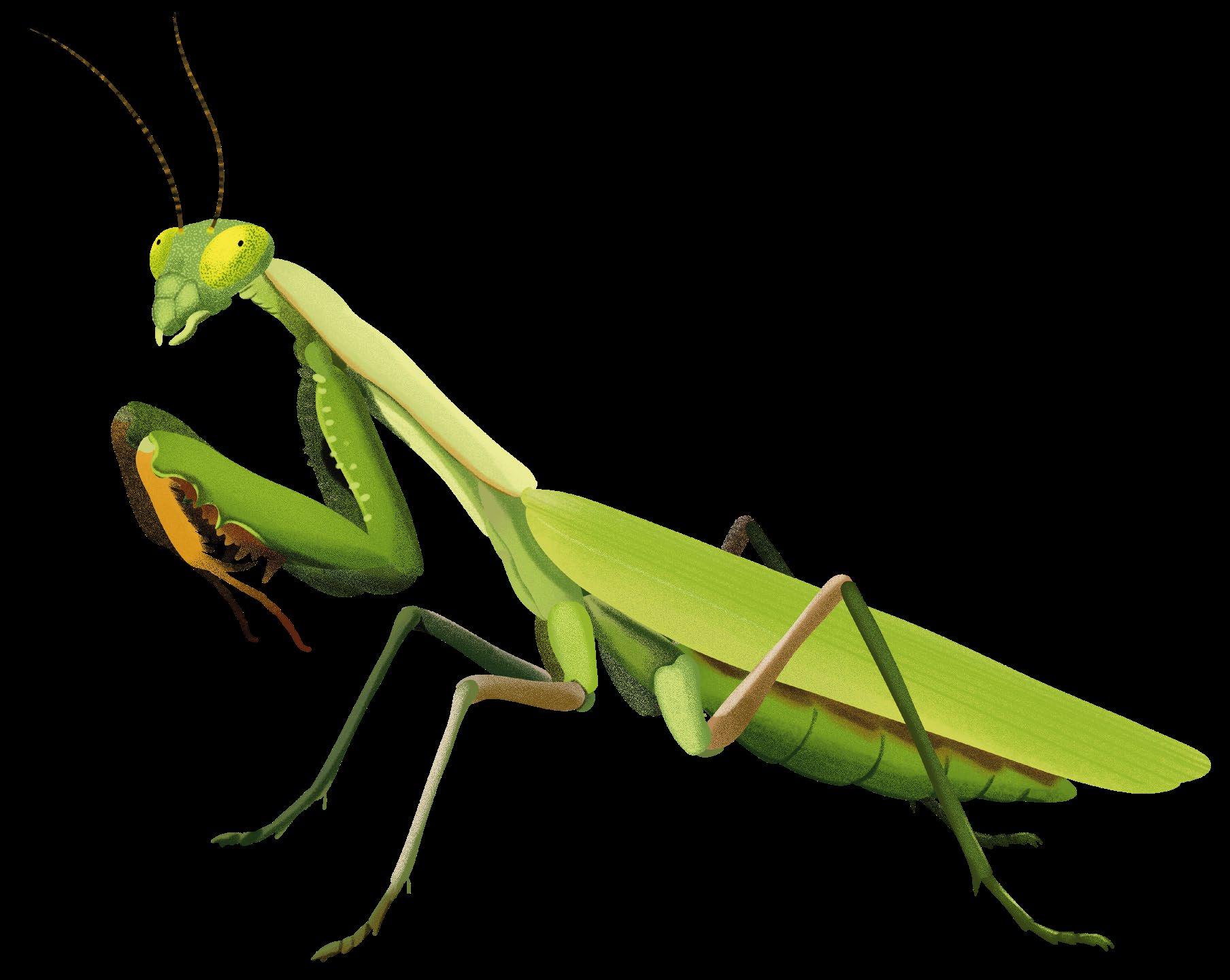
The praying mantis is a large green insect that blends perfectly into the surrounding vegetation. Its posture is unmistakable, resembling a person in prayer, hence the name “praying.” The mantis is a highly skilled predator, and its forelegs are specially adapted for grabbing and holding onto its prey.
Spiders
Predators with eight legs and eight eyes, often spinning webs.
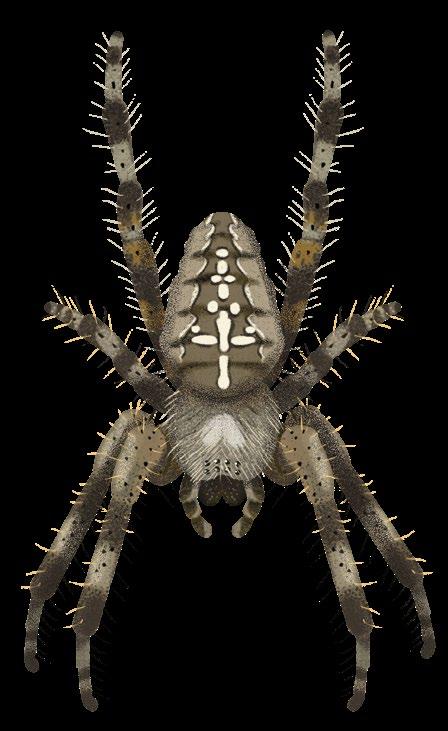
Cross Spider Araneus diadematus
Order Araneae
The European garden spider, or cross spider, is known for the characteristic white cross - shaped pattern on its back. It lives in open spaces among vegetation, often near humans, on fences, or outside buildings. At night, it consumes the web it built the previous evening and spins a new one, then sits in the center, waiting for insects to get caught. In spring, the young spiders leave their birthplace by releasing a thread of silk and letting the wind carry them away.
Female body length
About 0.6 inch ( 16 mm )
Habitat
Gardens, hedges
Lifespan
Nearly one year
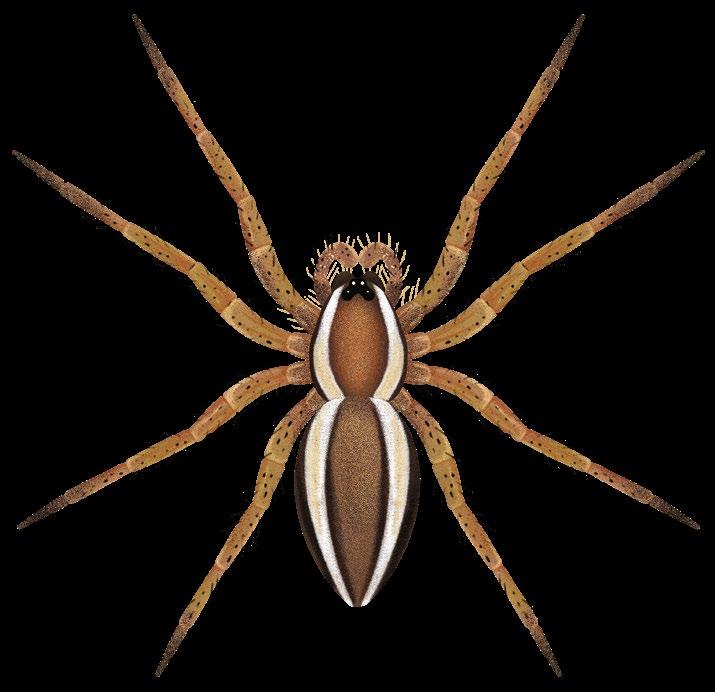
Raft Spider
Dolomedes fimbriatus
The raft spider inhabits ponds, marshes, and wetlands. It is fairly large and has a dark body with white stripes. This spider can run across the water’s surface and dive underwater, either to escape a predator or to hunt tadpoles and small fish. When hunting, it perches on a plant near the water’s surface and rests its legs on the water, sensing vibrations to detect every movement and locate its prey.
Order Araneae
Length About 0.9 inch ( 22 mm )
Habitat
Flooded forests
Lifespan 1–2 years
Terrestrial mollusks with no shell.
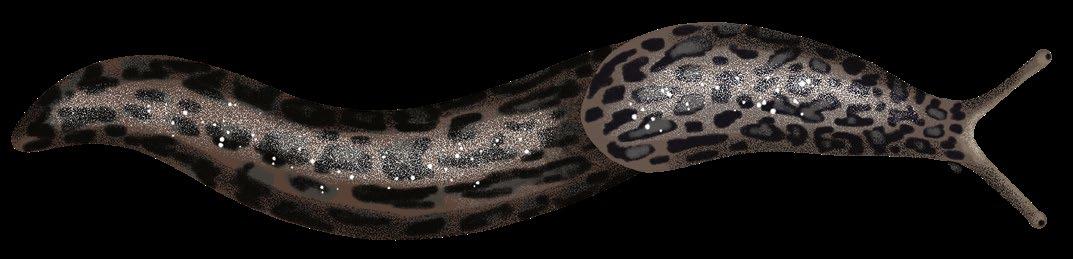
Leopard Slug
Limax maximus
The leopard slug is one of the largest slugs. Its graybrown body with irregular black spots helps it blend in with vegetation. It does have a shell, but it is tiny and hidden under the skin. This slug prefers moist and sheltered environments, and it is nocturnal.
It feeds on debris, as well as living plants, and will even eat other slugs.
Order Slugs
Length 8 inches ( 200 mm )
Habitat
Woodlands and gardens
Lifespan
Nearly one year
Slugs
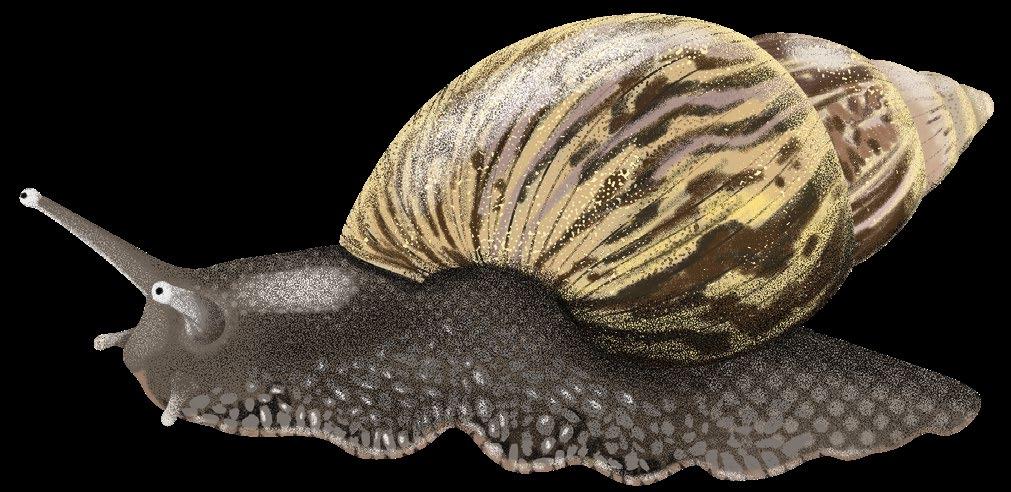
Giant African Snail
Lissachatina fulica
The largest land snail species lives in Africa, south of the Sahara Desert. It has an elongated, pointed shell. It feeds on debris and on young, tender plants, and its appetite is hard to ignore. During the dry season, like many other snails, it burrows into the soil and emerges again with the first rains.
Order Stylommatophora
Length About 6.3 inches ( 160 mm )
Habitat
Forests, gardens, and cultivated fields
Lifespan
6 years
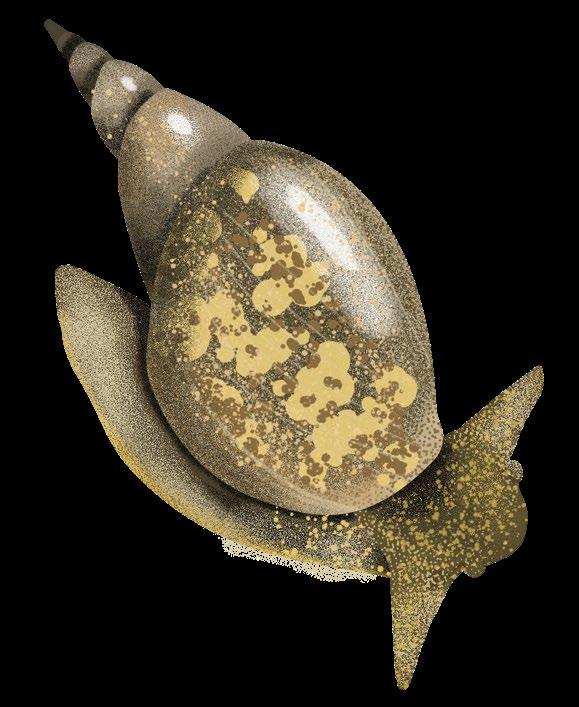
Great Pond Snail
Lymnaea stagnalis
The great pond snail is a freshwater snail found in Europe and Asia. It feeds on algae and tender, submerged plants. It lives underwater but occasionally rises to the surface or crawls just below the water surface to fill its lung with air.